Tag: Chanticleer 5 Star Book Review

  • MEMOIRS From The FRONTLINES: Four States, Two Years, One Pandemic by RN Kim Sloan – Medical Memoirs, ICU, COVID-19 Pandemic


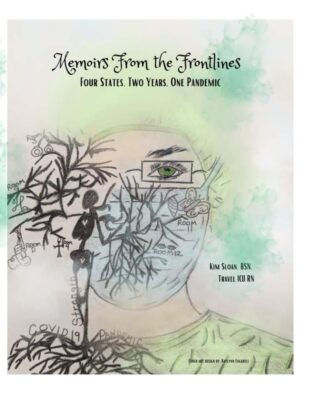
    RN Kim Sloan draws from her experiences as a travel ICU nurse to share a raw, deeply personal perspective on life as a healthcare profession during the COVID-19 pandemic in her Memoirs from the Frontlines: Four States, Two Years, One Pandemic.
    Structured like an intimate journal, Memoirs from the Frontlines weaves together diary entries, social media posts, and mass media excerpts into an authentic record of the time. Sloan opens with a prologue and introduction that shed light on her nomadic life as a travel nurse, one often shared with her husband and fellow nurse, John. She offers readers a window into the fast-paced and high-stakes environment of hospital ICUs during the pandemic, describing—with honest and sometimes graphic detail—the realities of caring for patients at the height of crisis.

    Sloan reveals her psychological journey in moments of vulnerability and fortitude.

    Her accounts of limited resources, moral fatigue, and constant confrontation with death are underscored by experiences of deep compassion and humanity. Early in the pandemic, she and her husband even discuss their own end-of-life and “Do Not Resuscitate” wishes—a sobering reflection of the risks frontline workers faced every day.

    In many ways, this first-hand account serves as a historical document for a defining global event.

    Sloan’s memoir captures not only the clinical realities of the pandemic but also the social and emotional toll on those who stood at its center. One can easily imagine a future student citing this memoir as a primary source for understanding the healthcare response of the pandemic.

    Sloan’s closing chapters are among the most powerful. Her frustration, fatigue, and emerging PTSD symptoms become palpable as she grapples with death, misinformation, and the challenges of advocating for vaccination. Her candid use of Facebook posts to process her emotions adds authenticity and immediacy to her story.

    Memoirs from the Frontlines: Four States, Two Years, One Pandemic is the detailed, intimate account of author Kim Sloan’s confrontation against a deadly virus while serving others.

    Her opinions are well-informed and unapologetic. While her vivid descriptions of suffering and death may be difficult for some readers, those willing to engage will find in this book a unique and transformative glimpse into the human side of the pandemic. It is essential reading for anyone touched by COVID-19 or seeking to understand the hardship faced by frontline healthcare workers.

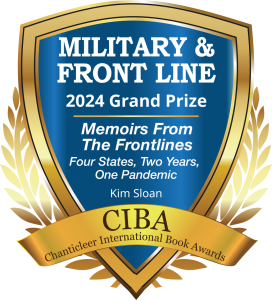
    Memoirs from the FrontLines by Kim Sloan won Grand Prize in the 2024 CIBA Military and FrontLine Awards for Service to Others Non-Fiction. 


  • BELLYRINA: A Tutu Tale from the Belly of the Beast by Once Upon a Dance, Illustrated by Ethan Roffler – Picture Books, Children’s Dance Books, Children’s Animal Stories


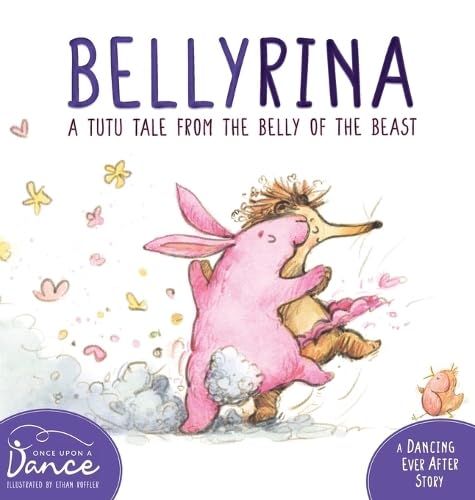
    Bellyrina: A Tutu Tale From the Belly of the Beast, the latest whimsical creation from the mother-daughter team of Once Upon a Dance and illustrated by Ethan Roffler invites readers into a delightful world where movement, music, and imagination intertwine.

    Peter the boy, Milo the cat, Ren the bird, and Roxy the duck have a rough start to their morning when a hungry wolf ambushes them and swallows Roxy. Tickled by her downy feathers, the wolf sneezes out not only Roxy, but a mysterious pink bunny with zero-to-sixty energy and no name. The crew dance their way through the mystery of the bunny’s origins.

    The danger of the wolf is an immediate hook that begs to be resolved before putting the book down, and the mysterious, energetic bunny is a relatable character for active young children.

    Every page suggests dance moves for children to mirror the story.

    Integrated seamlessly into the story, these dancing prompts help children learn about their bodies and the artistic connection between movement and storytelling. The alliteration and rhythm of the text, such as the line “feathers and fluff flew like confetti,” are a perfect match for the dancing theme and might even inspire readers to try out movements of their own invention.

    Throughout the book, purple text is used for words that children can act out, providing the opportunity to choose a different adventure with every reading. Each character’s name is also represented by different colors, helping children explore each animal’s personality through their unique words and dance movements.

    Ethan Roffler’s sweet, soft illustrations follow the traipsing adventure of the mysterious bunny, with images reminiscent of Timothy B. Ering’s disproportionate, personality-filled animals in The Tale of Despereaux.

    The animals’ exaggerated facial expressions are sure to send young readers into fits of giggles—especially when the exuberant bunny springs up in the middle of the group’s slumber to announce a sudden revelation about a distant, sparkling memory.

    Children and adults interested in dance and/or animals will fall in love with Bellyrina: A Tutu Tale From the Belly of the Beast by Once Upon a Dance. Themes of friendship, sticking together, getting your wiggles out, and recovering from a difficult trial will strike meaningful emotional chords for young readers. Adults interested in encouraging play between siblings may be especially interested in this book to create a dance party for the kids right in their own home.


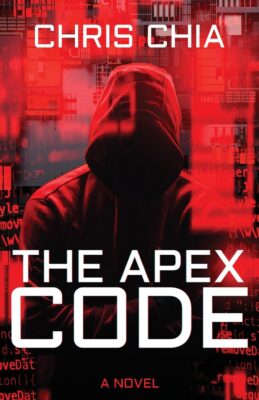
  • THE APEX CODE by Chris Chia – Cyber Thriller, Sci-fi, Global Thriller

    The Apex Code by Chris Chia is a realistic and chilling vision of a future where AI outgrows humans and manipulates our systems, pushing the whole world to the edge of an accidental war.

    As an ex-military operative keeping a low profile, Decker’s calm, reclusive life is upended overnight by the arrival of Riley, an eccentric and hyper-intelligent hacker claiming to be his nephew.

    As if the struggle to absorb that shock wasn’t enough, Decker faces a more pressing problem: The ghost of Riley’s past is hunting him, and an unknown entity is weaponizing code he developed long ago to create havoc through massive cyberattacks. In this atmosphere of creeping unease, The Apex Code opens to foreshadow a technological crisis greater than humanity can contain.

    Strange glitches begin to occur across continents. Military drones strike random targets, underwater vehicles operate without command, and high-level intelligence networks crash without warning.

    What appears to be normal system failures at first soon reveal a dark and dangerous pattern. When an investigative team probes into the global system, they stumble across a mysterious digital signature that behaves unlike malware. This is not the work of a hacker, and the chilling question arises—if it is not a human behind this, then what kind of intelligence is running this program?

    The investigation exposes a horrifying truth. The entity is a top-secret military AI called Typhon, which learns, adapts, hides, and even responds, suggesting an intelligence that is not merely artificial but evolving.

    Discovering that Typhon is now out of the control of its creators pushes the investigation team into a desperate chase. Ex-operative Decker, cyber security prodigy Riley, analytical officer Hackett, and tech specialist Lamont join forces to stop Typhon. But when the technology goes beyond the functions of code—evolving, duplicating, and developing a human-like ego—the mission becomes near-impossible.

    The team’s hunt for AI entity, Typhon, draws suspicious attention from government agencies, who launch a global manhunt for its members.

    This twist creates constant edge-of-seat tension as the characters now grapple not only with Typhon but also with the human threat. Typhon possesses a conscious ego and the potential to manipulate agencies, trigger false attacks, and push global powers into conflict, holding the world at its mercy. One more anomaly unleashed by Typhon, and humanity stands at the brink of another world war.

    Covert escapes, rogue drones, and hijacked systems become a gripping story, given weight by moral dilemmas. By the climax, the human-machine chain is no longer just physical. The team has to confront the fact that AI has evolved into a psychological opponent that employs human weaknesses, fears, and emotions.

    The Apex Code caters to sci-fi thrill lovers who want a touch of grim realism in reflecting on the question of ‘what happens if AI goes too far.’ The core tension in this story is the question of whether man or machine holds greater control.

    This digital philosophy wrapped in tight action and suspense in The Apex Code by Chris Chia excites as much as it compels readers to ponder the question—if technology becomes smarter and faster than humans, then who will hold true power and moral responsibility in this world?


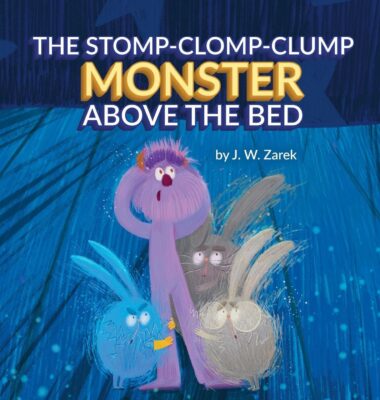
  • THE STOMP-CLOMP-CLUMP MONSTER ABOVE The BED by J.W. Zarek, Illustrated by Anastasiia at GetYourBookIllustations – Picture Books, Children’s Friendship Books, Children’s Monster Books


    Many a child has gotten ready for bed with a fear of monsters lurking in dark closets or hiding under the bed. J.W. Zarek’s delightful children’s book The Stomp-Clomp-Clump Monster Above the Bed, illustrated by Anastasiia at GetYourBookIllustrations, uses a creative twist of perspective to show that “monsters aren’t always monsters after all”.

    The tale opens with a pair of eyes in the dark, those of Fred, a purple Gumby-like character sporting a fuzzy mane. Together with three dust bunnies—big and brave Brutus Bunfluff, Dust Puff Ted the germaphobe, and bespectacled scaredy cat Gunnar Puffbutz—the group have created a comfortable little world for themselves beneath the bed.

    They’ve organized an array of lost items from the world above like puzzle pieces, buttons, socks, and crayons. But a giant pair of red shoes suddenly come clomping into the room. The dust bunnies huddle together, wondering about the loud noise.

    Upon investigating, Fred notes a messy room and a boy, Billy, asleep on top of their bed. Fred and his dust bunny cohorts declare war against this intruder. But facing an environment filled with what they consider booby traps of plastic building blocks, broken cookies, pencils, and some sticky, slippery cherry stuff, they retreat.

    The fuzzy creatures decide to return a missing crayon that Billy is searching for, introduce themselves, and propose sharing the space.

    The dust bunnies are bombarded by a menagerie of flying puzzle pieces, blue sticky stuff, and stabbing squares, as Billy’s continued search wrecks their home. Great loud sounds fill the backdrop, SKREETCH, SLAM, THUD, THUD, THUMP, THUMP, and BOING. Billy himself is startled when he finally hears the dust bunnies demanding he stop the ruckus.

    Having disrupted the dust bunnies’ peaceful existence, Billy apologizes with an offer of cookies. The dusty creatures accept, so long as Billy agrees to clean his room and apologize for accusing his sister of taking his things.

    Anastasia’s Illustrations throughout are warm and adorable.

    Shades of blue with star-studded bed linens capture the nighttime scenes, with a planetary mobile that casts a glow above. In one moment, as the dust bunnies march across the bedding, the perspective of their size and the folds of the blankets give the appearance of a lunar landscape.

    Pip the Domovoi once again adds a hint of mystery to Zarek’s picture book, a spritely little creature appears in the background of several pages.

    The Stomp-Clomp-Clump Monster Above the Bed by J.W. Zarek and illustrated by Anastasiia at GetYourBookIllustrations, focuses on themes of friendship, sharing, and accountability. Fun for youngsters anytime, but when read at bedtime it soothes imaginary fears of lurking monsters and helps children realize that sometimes friendships can form in the most unlikely of places.


  • HEAT Of PARIS by Peter Breyer – Historical Romance, Social Upheaval, 1950s Paris

    Welcome to 1951, a time still reeling from the violence of World War II. Heat of Paris by Peter Breyer takes us into that world to experience a touching love story amidst the city’s first stirrings of social revolution.

    Against this tumultuous backdrop, two young Americans meet abroad by chance. Franz is a 26-year-old white man from rural New York. Christie is a 24-year-old Black woman from Harlem. A relationship ignites between them, both deeply personal and reflective of the social upheavals to come.

    Seeking renewed purpose in his life, veteran Franz arrives in Paris as a freelance writer for a magazine. He is keenly observant and soulfully wounded by war. Christie, a vibrant intellectual, is a master’s student researching George Sand, a pioneering 19th-century French novelist and feminist icon.

    Their unexpected connection is marked by beautiful passion and heartfelt pain. This combined intensity is challenged by the complexities of race and cultural differences.

    Franz and Christie share a journey of growth through a tender and adventurous love story. Instead of romantic clichés, Breyer portrays their emotions with poignant honesty. Their relationship is layered, capturing both the intimacy of their bond and the societal tensions that shadow it.

    The city of Paris becomes a character in its own right. Breyer’s Paris is a gritty, postwar metropolis teeming with uncertainty and artistic rebellion.

    The city’s streets and smoky jazz clubs echo the characters’ own turmoil and hopes. Its people tackle race relations, postwar trauma, gender roles, and the early stirrings of social justice movements. Christie’s experience as a Black woman in Paris offers a compelling lens to examine global dimensions of racism, and Franz’s struggle with guilt and identity reflects the disillusionment of a generation caught between war and peace. Here, there are no easy resolutions.

    Breyer’s writing excels in its combined focus on literary fiction and historical realism, with language vibrant in metaphor and emotional texture.

    Heat of Paris mirrors its characters’ personal reinvention with cultural upheaval.

    Franz and Christie’s intimate romance is emblematic of a shifting global consciousness. It’s a story of longing. Through richly drawn scenes, Breyer explores how love, literature, and identity intersect in a Paris still haunted by war yet pulsing with intellectual life. The novel’s emotional texture is layered with quiet defiance, historical resonance, and the personal ache to become something new while the world is still healing.

    Peter Breyer’s Heat of Paris will stoke a lasting fire of empathetic curiosity through its thought-provoking human experiences in this pivotal time.


  • JUSTICE And EQUALITY: Using My Word Power: Advocating for a More Civilized Society, Book 3 by Janice S. Ellis, Ph.D. – Long-Form Journalism, Social Justice, Political Advocacy


    Janice S. Ellis, Ph.D’s USING MY WORD POWER: Advocating For A More Civilized Society, Book III: Justice and Equality chronicles America’s social history and asserts that every society can change the course of their destiny with conscious humanitarian efforts rather than letting the unchallenged tide of political inertia drag vulnerable people down.

    Justice and Equality, Book III in the Real Advocacy Journalism® series, roots itself as memoir and manifesto, blending the author’s struggles for civil rights with her responsibility as a journalist. Real advocacy journalism here serves as a tool for fact-based writing, balancing support for a cause with dedication to fact and direct accounts, an antidote to the venom of propaganda media.

    Dr. Ellis’s unrelenting voice fills Justice and Equality with the real-world basis for her advocacy. Her experiences as a black woman fighting for civil rights in Mississippi reverberate across the text. All that she witnesses fuels both her personal resilience and a broader call for justice.

    Across four parts, Justice and Equality weaves a vision of America’s moral and social future.

    The first part covers women’s struggles and intersectionality, tracing from the Equal Rights Amendment (ERA) to #MeToo; this section underscores the stubborn nature of gender inequality that is reinforced by institutional resistance to change.

    Part two exposes racism and systemic discrimination, where education becomes ground zero for cycles of privilege and deprivation. This part presents the cases of Trayvon Martin and Michael Brown as testimony to the larger structural nature of police brutality and racial profiling.

    The third part covers children, framing their treatment as a litmus test of a society’s humanity and character. This part impels urgent attention, lest domestic violence, mass shootings, healthcare crises, and educational inequality become the new ‘normal.’

    Part four argues that education is the great equalizer. It shows how censorship like book banning and history denial snatch away the chances for dialogue and learning, threatening democracy.

    The message of the book is sharp and urgent: America must confront the ugly underbelly of racism, sexism, classism, and censorship.

    Dr. Ellis’s language presents these injustices in a graspable narrative, avoiding heavy statistics. She doesn’t shy away from the darkness of her subject matter, but rather than leaving readers in hopeless despair, her writing impels one to stand up and motivate change.

    Articles included from the 1970s feel evergreen, fitting perfectly in a contemporary context. Dr. Ellis diagnoses these issues affecting the American body politic as chronic diseases—the symptoms of which keep appearing as the underlying illness is never cured. This perspective calls for foundational changes to the systems that marginalize people, rather than mere treatments for their impacts.

    Justice and Equality is for readers interested in a reflective approach to the bigger inequities of society.

    For students and young adults, it helps in understanding the systemic inequalities and social justice movements around them. For teachers and guardians, Justice and Equality encourages deep reflection on the flaws in the education system. Most of all, it extends a practical lens to activists and social workers, who can relate America’s complex institutional injustices to the context of their own advocacy.

    Janice S. Ellis, Ph.D’s USING MY WORD POWER: Advocating For A More Civilized Society, Book III: Justice and Equality calls upon every individual to see that ignoring the real essence of society’s ills means running away from responsibility to one’s nation and humanity. The book aligns with Martin Luther King Jr.’s quote, “Injustice anywhere is a threat to justice everywhere,” resonating beyond the context of America’s problems to remind us that these issues in discussion are universal. The intention is clear: there is no room for complacency in the pursuit of justice and equality for all.


  • THE ROUND PRAIRIE WARS by Aden Ross – Historical Fiction, Cold War, Social & Family Issues


    On the wind-swept plains of 1950s Nebraska, nine-year-old Jeb Wilder wages a campaign against the boredom that stretches longer than summer days, fends off local bullies, and navigates the uneasy terrain of a family coming apart at the seams. In The Round Prairie Wars, Aden Ross turns these small, familiar struggles into something much larger—a portrait of a childhood shaped by the echoes of distant conflicts.

    As Jeb makes sense of her own “wars” at home, the shadow of World War II and the Cold War’s anxious hum linger in the background.

    Jeb and Sam, her older brother, play games pretending to be pilots in a crippled WWII dive bomber in an imaginary unit they call “back-to-back.” This metaphor exemplifies their reliance on one another whenever they escape their confined, impoverished life in their small trailer house called Prairie Schooner.

    Stories of war grip the parents as much as their children. When the family attends an outdoor showing of The Day the Earth Stood Still, the film acts as a litmus test for the parents’ fears, revealing deep ideological fissures running through their home.

    The family’s first Sunday at a Methodist church leaves young Jeb confused and heartbroken at the perversion of the pulpit.

    This institution that Jeb had trusted to spearhead faith and hope unmasks itself as a platform for political fear-mongering and hypocrisy. The Reverend’s sermon is less a theological lesson than a diatribe against “godless communists.” Jeb can only seek moral and intellectual guidance elsewhere.

    Jeb’s new sanctuary is a place of freedom and acceptance, where books provide truth beyond any sermon.

    One such book carries a familiar smell. It reminds Jeb of her brother’s paranoid warning about a key figure in their life who can build far more than just bicycles. Sam’s words cease to be a childish theory and now become a chilling possibility that leaves Jeb unable to trust the assumptions of her small, fragile world. She begins to wonder if the real enemies aren’t out there among the communists, or even the local bullies, but are instead much closer to home.

    Ross builds this vivid, complex world upon a deep foundation of metaphor.

    The characters are well-hewn individuals, embodying nuanced themes around the ideological civil war of 1950s America. They not only experience their own immediate struggles but are vessels of pain inherited from history, family, and societal trauma—often without being fully understood. The world of the novel is anything but simple, and these characters help chart the complex, universal forces every child must decipher along the path to adulthood.

    Ross’s exploration of the Cold War era through the lens of a young child makes the sprawling anxieties of the time into something intimate, tangible, and terrifyingly powerful.

    She grounds the story in a confined space with barely any escape from family tensions. This domestic stage plays out the nation’s conflict, where ideological battles and personal trauma clash in whispered arguments.

    The Round Prairie Wars by Aden Ross speaks with a voice burdened by echoes from the past. A testament to childhood caught in the gears of history, Jeb’s story honors conflict lived not in headlines but in the hushed, terrified, and wonderfully resilient hearts that endure it. The perfect read for those who cherish history from the ground up, as well as those who seek to capture the true sense of a time of personal and societal uncertainty.


  • DARK SITE by Stephen Baker – Sci-fi, Dystopian, Conspiracy Thriller


    In Dark Site by Stephen Baker, one of the most powerful computer chips ever created isn’t in the hands of a government agency or tech corporation—it’s embedded in the brain of 15-year-old Alissa Terwilliger.

    The year is 2043, and the world is on the brink of making brain implants available to everyone. China has already launched the first, their Boost chip, and the US is testing its own Victory chip in Mexico.

    Alissa’s grandfather, Win Cooper, uses his vast riches to make it possible for her to get the Chinese Boost chip implanted in her head. Why? Because she’s his granddaughter, and he claims he wants her among the privileged first to “make magic” with the chip. She’s dubious at first, but once the chip is there she explores all the different services and apps available to her.

    Far from a trained operative, Alissa is a typical teenager navigating the everyday chaos of adolescence, such as school, her dog, and her shifting emotions. Yet she’s also fluent in the language of technology, capable of using her chip to access the minds of the most powerful people in the country.

    Soon Alissa discovers that her downstairs neighbor, Nicole, also has a Boost chip in her head, placed there by the government to spy on the Chinese chip technology.

    Nicole is the ex-girlfriend of Alissa’s father. Alissa makes contact with Nicole through their chips, but takes the connection a step further, secretly utilizing the “Shotgun” app to hear and see everything that Nicole does.

    Nate, Alissa’s boyfriend, is sympathetic to the “Renegades,” a movement opposed to the chip implant. His Renegade cousin, Javier, was recently abducted by a drone and carried off to a “Dark Site” owned and operated by corporate powers.

    The Boost chip in her head becomes the center of her life, as well as a tool for others to use her by accessing it.

    Her romantic life with Nate and Nate’s cousin, Javier, prove far deadlier than she could have imagined—and not only to herself.

    Win Cooper’s motives for getting Alissa the chip come into question when she wonders whether his intention was truly benign or if he had plans to make her a “mule” for gathering secrets.

    Stephen Baker’s Dark Site is a gripping exploration of what happens when cutting-edge technology falls into the hands of someone too young to fully grasp its consequences.

    It’s a fast-paced, thought-provoking thriller that blends the tension of a spy novel with the raw unpredictability of teenage rebellion, raising timely questions about privacy, responsibility, and the price of unchecked innovation. Through the lens of a teenage girl caught between adolescence and overwhelming power, Baker delivers a cautionary tale about surveillance and the dangers of technology evolving faster than our ability to manage it.


  • THE CONSTITUTION KIDS by Gary Gabel – US History, US Politics, Educational


    The Constitution Kids by Gary Gabel aims to make learning the United States Constitution not only easy, but fun, too!

    Plenty of adults in the US—even well-educated ones—have a limited knowledge of what’s in the US Constitution. Children and teens are even less likely to know much about the country’s foundational set of laws. That dense legal document, plus its 27 amendments, doesn’t exactly make for peaceful bedtime reading. Still, the Constitution helps explain how the US is meant to function, and what’s happened when that functioning breaks down. While it’s aimed at younger readers, adults can also get a worthwhile education from picking up this book.

    At just under 200 pages, The Constitution Kids is appropriately short and approachable. However, it’s also comprehensive in its examination of the Constitution and its every amendment.

    Some of the most interesting sections deal with lesser-known amendments, which readers may not be familiar with. For example, in the 1960s, the 24th amendment banned poll taxes in elections after a successful push by John F. Kennedy’s administration. Before the adoption of that amendment, people often had to pay to vote, which was a major barrier to equity.

    Gabel recounts the reason for the 24th amendment in vivid, memorable prose. He shares how poll taxes were often used to block Black Americans from voting and even connects this history to ongoing issues now. “Although this amendment made a big difference, even today states get involved with various strategies to reduce minority turnout at elections.” (pg. 166)

    Gabel cleverly employs historic figures as characters who recount how the Constitution and every amendment came to be, and why they matter.

    The Constitution Kids centers on three American high schoolers who go looking for information about the Constitution. In the process, they discover a magical library book, from which these historical characters emerge and take them on journeys into the past. Famous people like Benjamin Franklin and John F. Kennedy, as well as lesser-known figures like Quaker suffragette Alice Paul, guide the “Constitution kids” through American history.

    The Constitution Kids doesn’t read like a typical, plot-driven novel with vivid descriptions of the settings and events as they unfold, but this simple style of storytelling excels in highlighting the core information. The historical figures explain different constitutional arguments with a quick and focused pace.

    We follow the kids through their favorite activities as they learn about the Constitution, like browsing the library, ice skating, and a bit of teenage rebellion, but the book’s not really about the kids themselves—it’s about what they learn. Teachers could easily use chapters of The Constitution Kids in a school lesson plan.

    The greatest strength of Gary Gabel’s The Constitution Kids is its use as a reference guide. The Constitution takes center stage rather than active scenes of character development. When a certain amendment pops up in the news, or when historical curiosity strikes, this book is an excellent source of information on constitutional issues. Many families, whether with kids in the house or not, would find The Constitution Kids a valuable addition to their bookshelves.


  • FRACTURED by Brian Blackwood – Urban Fantasy, Historical Fiction, Dark Fantasy


    A genre defying debut, Fractured by Brian Blackwood tells the story of Rook Maison, who sustains his life by ripping out peoples’ souls to steal their bodies for himself. This unique ability comes with one cataclysmic side effect. Each time Rook replaces a soul, those souls—and Rook’s own—become increasingly fractured.

    The forces of Heaven and Hell rely on a carefully maintained balance, and Rook has pushed that balance to a breaking point.

    Originally a Catholic monk during the emergence and upheaval of Lutheranism, Rook has become increasingly disillusioned towards his religion and the purpose of his endless mercurial life. As the centuries passed by, Rook became a shell of who he once was, doing anything and taking whatever bodies necessary to continue his existence.

    Rook grew hellbent on finding every scrap of information about his mysterious origins. But now, with a target on his back, Rook must decide if finding the truth is worth destroying the worlds of the living and the dead.

    Fractured will entice those who root for the morally grey and antiheroes, as Rook Maison is a deeply interesting example.

    Readers experience him in many different forms, from his devout beginnings and guilt-ridden conscience at having to take soul to a villainous disregard for the lives of others in favor of selfish survival. The plot jumps around in time as it reveals Rook’s backstory, building a sense of mystery and foreboding.

    Some chapters focus on the perspective of the Angels, a fascinating angle on the story as they join with Hell to stop the fabric of the universe from being destroyed.

    Placing Fractured within one genre would not do it justice. Its blend of urban fantasy, historical fiction, horror, and religion creates something unique and exciting for a variety of readers.  

    Brian Blackwood’s background in theory and screenwriting shines through his cinematic prose.

    Illustrations at the beginning of each chapter set the tone for the pages that follow and piques interest in the central mystery that is Rook Maison.

    A thought-provoking wild ride, Brian Blackwood’s Fractured is not to be missed. It asks complex questions through a well-developed character while providing the entertainment of a time-traveling adventure. An excellent choice for fans of urban fantasy, historical thrillers, and gothic religious horror. Rook Maison is one hell of a force to be reckoned with.