Tag: Chanticleer 4 Star Book Review

  • THE INTREPID: Dawn of the Interstellar Age by Arnie Benn – Hard Sci-fi, Mystery Suspense, Colonization Sci-fi


    Two interstellar missions encounter something beyond their understanding in Arnie Benn’s sci-fi novel, The Intrepid: Dawn of the Interstellar Age.

    The Intrepid begins a century after Apollo 11. Aksel Bolt, mission commander aboard the Centaurian, wakes too early – seven years into a projected twenty-eight-year sleep on the voyage from Earth – to find Mission Control ordering the crew to rendezvous with another incoming spacecraft. But details are scarce, due in part to being too far from home for two-way communication. What is this other ship, who crews it, and how is it even able to catch up? Will this change their peaceful mission of exploration? And what might be waiting for them at their destination?

    The crewmembers are forced to pivot in order to survive their continued mission.

    Bolt also finds that a member of his crew did not survive hibersleep. Was it simply a mechanical error, or was it sabotage? Was it murder? Did the crew member know something they shouldn’t have? Benn’s story twists and turns, tightening the suspense aboard this historic mission.

    The Intrepid boasts strong general pacing paired with the intensive exposition often necessary in hard sci-fi. The central dangers aboard the Centaurian will drive readers onward, the growing awareness that the crew is alone, far from familiarity, struggling with their growing apprehension. It doesn’t help that disturbing things seem to be going on back home, light years away.

    Full of refreshing surprises that will drive readers toward an unexpected and satisfying conclusion.

    There is so much packed into The Intrepid as it is that it delivers the questions and plots of multiple novels in one. A bonus to this is that the book includes an extensive glossary of scientific terms to complement the intended realism of the science in the story.

    “I’m on the surface now,” Kihumba says. “The human race… has officially reached the stars.” She tries to swallow but her mouth is dry; she is live to the entire solar system, or will be, when the signal finally reaches home 4 years from now. Her heart is pounding. Don’t forget the rest, Kioni. “Welcome, Earthlings, to the dawn of a new age.”

    Part suspense, part future history, a tiny bit romance, and all hard-driving science fiction, Arnie Benn’s near-future space exploration tale is a thoughtful and exciting journey into the wonders and mysteries that humanity has to look forward to…

    Or beware of.
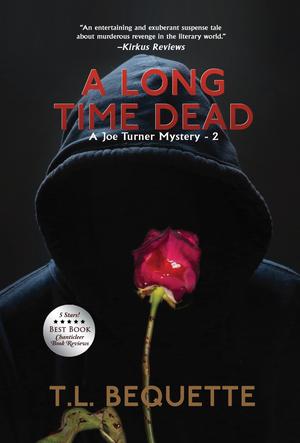


  • A LONG TIME DEAD by T.L. Bequette – Mystery, International Crime, Legal Thriller


    T.L. Bequette’s thrilling Joe Turner Mystery series continues in A Long Time Dead.

    This book echoes the style of Earle Stanley Gardner’s early whodunits, where there are two possibilities. The authorities see only one, and Jake will have to use his special brand of savvy to find the explanation for his client’s innocence.

    Joe, a California criminal defense lawyer, moves into his new Oakland office. As he unpacks a box labeled “Red Sox”, containing memorabilia for display, he comes upon an envelope containing two 2013 Red Sox ticket stubs, a credit card receipt, and a picture of him and his mom. The memories come flooding back.

    Joe hasn’t seen his friend, Owen Prescott, in ten years—not since the afternoon he gave Joe that envelope. Not since Owen fell off the radar.

    In 2013, 24-year-old Owen Prescott becomes a newly celebrated author, having produced a best-seller during graduate school. In the process, he acquires a lawsuit filed by an envious, disgruntled professor, and an admiring stalker against whom he secures a restraining order.

    When the professor turns up dead, everything hits the fan.

    Upon the advice of his wealthy father’s attorneys, Owen fled the country on the day of the Red Sox game. He went underground, and no one has seen him since. Now Joe wonders about his friend and begins to ponder what really happened. Was Owen capable of murder? If not, who killed the professor?

    When he begins to delve into those questions, acquiring the police files on the case, Joe learns that Owen was recently sighted in Europe. Meanwhile, an FBI cold-case investigator follows the same trail, trying to close a net and capture Owen so he can be tried for the murder.

    Where Owen is, who he has become, and what he has been doing for ten years add additional dimensions to this mystery. His assumed safety falls apart around him, and surprising individuals both threaten and protect his secret. For one such character, the reader can only wonder what’s next.

    Bequette’s yarn introduces a plethora of multi-dimensional characters. Everyone’s motives help shape and move this convoluted plot forward to an unexpected and satisfying answer to “who done it?”

    From the very beginning, this story will hook readers. Fast pacing, clever plot twists, and intercontinental flavor make A Long Time Dead difficult not to finish in one sitting.

    5 Stars! Best Book Chanticleer Book Reviews

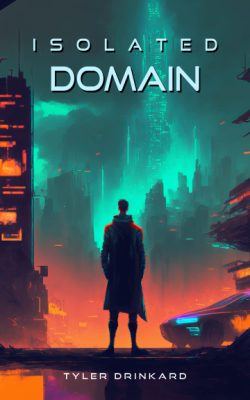
  • ISOLATED DOMAIN by Tyler Drinkard – Sci-fi, Dystopian, Action & Adventure


    Harry Hardacre, better known as Hare to his few friends, hunts for a score big enough to lift him out of poverty, in Isolated Domain by Tyler Drinkard.

    Hare hopes to leave his disreputable business contacts and desperate neighbors behind in the decaying slum known as the Conurb. He yearns for the bright lights of the Central City, where the streets are paved with the possibility of high-paying jobs, and more importantly, highly skilled doctors who can replace his broken-down prosthetic leg and free him from its pain.

    But every resident of the Conurb shares his hope, always just one great scheme away from exactly the same dream – and they’re always disappointed when they wake up to grind away another day in the dark and grime.

    Hare’s score turns into his worst nightmare, as his partner disappears with the seed for their new “business” while setting the local law on Hare’s trail.

    Fleeing from the relatively safe, if downtrodden, Conurb, Hare struggles through a hellish dystopia with no end of novel threats. From endless deserts to carnivorous plant life and cannibal bikers, Hare’s trail ends in a terrible truth that is determined to use him for its own ends – even if it ends him.

    Isolated Domain begins as a pulse-pounding wild ride of a caper story, as Hare and his best friend Chunk hunt for that one big score. But their dream takes them to the brink of dissolution and destruction. The story doesn’t relent, each dark turn leading to one darker yet – over and over, in myriad visions of a dystopian future.

    Hare will compel readers to follow his journey and empathize with him throughout his tribulations.

    His world may be vastly different from the reader’s, but his goals and his dreams still feel familiar. He wants a better life but fears it will only get worse. His descent into pain and struggle lands with a heavy emotional impact. Hare’s quest for that big score toys with his hope and refuses to fulfill it. Anyone searching for a light at the end of the tunnel for Hare and his world may close the book feeling a bit depressed.

    Readers looking for an odyssey of misfortune will find Hare an engaging and (mostly) good man as he tries to navigate the layers of chaos and despair. His story finishes with a twist that will leave those readers in a state of dark astonishment.

  • EVERYTHING THAT WAS by Conon Parks, Chris Sempek, Mike MacNeil, Larry Knight – Terrorism Thriller, Satire, Political Fiction


    The Grand Prize Somerset Badge for Everything That Was by Conon ParksEverything That Was
    echoes myriad broken emotions born of the world in turmoil after 9/11, intricate and politically bold, and as disturbing in its brutal humanity as it is satisfying with witty jests.

    The 9/11 terrorist attack has shattered the psyche of the American people. A volcanic eruption of questions demands the whys and hows of the attack. From this anger, a massive war on terror begins. This historical fiction reflects the chaos of 9/11 and its ensuing global chaos – resulting in a series of violent endeavors and events. Throughout Everything That Was, one can find a swarm of fragmented ideologies, mini memoirs of war veterans, and witness accounts – all screeching reasons for the attack, the ensuing war, and its consequences: political, ideological, and theological.

    The book’s very structure expresses the central ideas of its content, making for an affecting read.

    The prose presents fragments of thoughts from the characters, broken grammar cutting sentences together and leaving emotions unexplained. Using a similar framework, Larry Knight’s introspective poetry gives an alternative form of expression to this story’s deep thoughts. In both forms, this structure points towards the lack of clarity in human conscience and the unsettling nature of a world riddled with war and havoc.

    The characters appear to be in a trance, and several of their comments end in interrogative or rhetorical questions. Andre joins the National Guard, furious at the loss of innocent lives. But when he arrives at the camp, he has no idea what he signed up for or what the day is. There is no finality or closure to these pluralities of thought; each moment only flows until another idea or rhetorical question replaces it.

    Everything That Was faces readers with the automation of war and its devastating impact on individuals.

    In a variety of concepts, the book suggests that the fears of being taken over, perceived as powerless, or overrun by women regulate human societal behavior regardless of character. Instinctive and unconscious support for the war grows, as does widespread confusion and skepticism. Andre muses on the battle at hand, questioning whether it is “WWII? Korea? The Viet Cong? Sandinista? Drug War? A War on Drugs?”

    Everything That Was represents both the separation and simultaneity of consciousness prevalent in the world. No single meaning can claim to be the ultimate answer in a plethora of conflicting notions. Many internal and external battles result from the interplay between religion and politics, and the diverse interpretations of those aspects by different characters.

    As the book unfolds, its discourses allude to several historical events. In its desire to reach emancipation through infinite perspectives, this story proves its attention to the details of history. As a classic example of gonzo journalism, a literary form used by Hunter S. Thompson, the text is a frazzled amalgamation of first-person experiences that rouse incredulity at the brutality and defamiliarization of war and its chessmen in the religious and political spheres. All of these complex internal reactions to external horrors come wrapped in biting irony, peppered with tragicomedy.

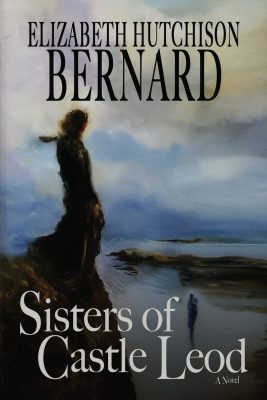
  • SISTERS Of CASTLE LEOD by Elizabeth Hutchison Bernard – Historical Fiction, Sisterhood, Women’s Biographies


    Sisters of Castle Leod by Elizabeth Hutchison Bernard tells the story of Lady Sibell Mackenzie, Countess of Cromartie by her own rights, and the implacable, lifelong sibling rivalry between Lady Sibell and her younger sister Constance, in a fictionalized biography.

    The two sisters became equally famous – if not equally wealthy or respected – in early 20th century Britain in entirely separate spheres while sniping at each other all along the way. As their story moves from their childhood rivalries to the adult consequences of their actions, the sisters grow further apart and more resentful of each other. Or so it seems. The story is told entirely from Sibell’s point of view. The reader never learns Constance’s true motives, only what Sibell believed they were.

    They were opposites in every way.

    Sibell was a serious intellectual who took her many responsibilities – including those to her younger sister – equally seriously. While Constance seemed to be a person of action without thought to consequence. It seems the younger sister expected someone else to always take responsibility for her actions – her father when they were children, and her sister now that they are adults.

    Their divide was exacerbated by the conflict between Constance’s inability to believe in anything that she couldn’t see or touch while Sibell held a deep and abiding respect for spiritualism. Sibell pursued her beliefs ardently, shaping the course of her life. When their story comes to an end, the best hope that Sibell has for reconciliation with her often estranged sister lay only in the next life.

    The most fascinating part of this story of sibling rivalry is that, at its heart, it’s all true.

    Sibell and Constance Mackenzie were not only real people, but they truly were famous in their day, if in opposite ways, for the historical events told in Sisters of Castle Leod.

    While there are brief periods of rapprochement, Sibell and Constance are too different in nearly every aspect of their personalities to overcome the initial rivalry over who held the most of their father’s affection. Each believed it was the other and never moved on from that belief.

    The reader’s sympathies lie with Lady Sibell, as hers are the eyes through which the story is told. At the same time, Lady Constance is a much more vivid and active character, but because Lady Sibell sees all of her sister’s actions and motivations through the lens of their long-held resentments, the reader never knows whether Constance was quite the villain her sister made her out to be.

    Many of Sibell’s thoughts, motivations, time, and attention are paid to her spiritualist beliefs.

    She was certain that the spiritual world influenced the material world around her. Readers who share her beliefs or who are open-minded about spiritualism may find her digressions compelling. However, readers who, like Constance, confine their beliefs to the pragmatic aspects of the world may wish that the story had focused more on the world as Sibell actually saw it than the world that she believed was unseen but revealed only to her.

    In either case, the story of the Sisters of Castle Leod presents a compelling portrait of two very real women in the early years of the 20th century who were famous – not on account of who they married but because of what they, themselves thought, believed, and did. Even if, in spite of their sisterhood, they never did manage to believe in each other.

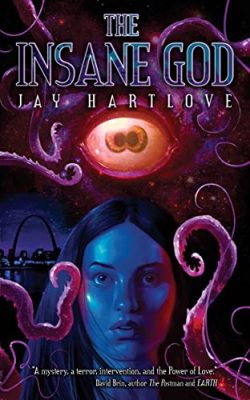
  • THE INSANE GOD by Jay Hartlove – Cosmic Horror, Paranormal Mystery, LGBT+ Fiction


    Sarah, a transgender schizophrenic teenager, has spent the past seven years in a psychiatric ward. When all her symptoms of schizophrenia disappear after receiving a special necklace from a nurse, she must learn to live in a world that moved on without her, in The Insane God by Jay Hartlove.

    She receives strange visions of two opposing gods in battle with each other, which Sarah and her brother Nate work together to understand. The reality of these visions threatens to endanger the lives of everyone on Earth unless they change the course of an eternal battle.

    The Insane God touches on topics such as mental illness, mental health, gender identity, and racism.

    While the author tells a complex story with these subjects, he doesn’t fully address them all to a satisfying degree.

    What Hartlove does well with The Insane God is create a surreal horror novel. Sarah and Nate quickly accept their strange new reality, contending with surreal visions of these monster-like gods in a cataclysmic struggle of the cosmos. The Insane God will appeal to readers who like their expectations subverted.

    Sarah shows remarkable strength in keeping herself together despite everything she has to endure. Because she is dealing with present and past struggles, her character development suffers within the confines of the story’s length and pace. The chapters that focus on Sarah generate the most interest through strong emotional engagement. Her gift is given by the necklace she wears; Sarah can just take it off and walk away from the conflict, but she chooses to face the gods, hoping that she can make a difference.

    The Insane God is fast-paced, driving readers on with an excited curiosity to know what strange thing will happen next.

    As the story reaches its climax and Sarah’s dreams are rapidly defying the laws of time and reason, it seems the threat is insurmountable. Will Sarah be able to fulfill her part in the workings of the universe? A strong current of humor balances this horror, even until the end.

    Jay Hartlove’s The Insane God is a surreal science fiction journey that struggles at times to find its rhythm, but nevertheless tells an enthralling story like none other. Readers will be left wanting to see Sarah continue to grow, hoping that her story does not end here.


    Chanticleer Book Reviews 4 star silver foil book sticker

  • BOONE and JACQUE: Cytrus Moonlight by A.G. Flitcher – Urban Fantasy, Mystery, Psychological Thriller

    A.G. Flitcher’s Cytrus Moonlight continues the Boone and Jacque series (book 4 of 4) with a thrilling journey through fear for the young characters – an exploration of psychological traumas and the uncanny manifestations in the surrealistic setting of Cytrus.

    Disasters can stir up a society’s darkest fears, spurring suspicion and ignorance. Cytrus Moonlight grows and evolves from its character’s obsessive worries. Boone, Jacque, and Shammy have moved to Cytrus and are living reasonably normal lives until an inexplicable murder disrupts their peace. Jacque’s uncle Leon is killed by poison. As the evidence of the murder case is revealed, more underlying tunnels of unrest come to light in Cytrus.

    The circumstances underlying Leon’s murder are unknown. However, Boone has a strange foreboding: he unexpectedly finds himself driving Leon’s car and feels a burning feeling on his neck. Boone begins to feel as if he is being watched – as if there are “a thousand eyes on him.”

    Soon, a psychedelic drug is loosed on the town, driving its recipients to witness their greatest fears and embrace repressed emotions.

    Mayor John Winterson invites the friends to a Christmas party, where the drug renders everyone into naked fools. The key suspect looks to be the eccentric, maniacal Dr. Button. However, the doctor’s own inexplicable death flips everything upside down.

    Jacque notices a monster while detectives are trying to locate the key to the puzzle of death and fear. He is cautioned not to ask questions that draw the wrong kind of interest. Cytrus’ many secrets, and Jacque and Boone’s tendency to attract trouble, make them susceptible to certain people – people who want to prevent them from “causing history in town to repeat itself” just as they did in their former town Saddleton.

    This story’s Magical Realism presents a farcical and satirical tone, with dark humor that never leaves the narrative’s surface.

    There is a consistent appearance of a bathos element in the YA urban fiction – a quick transition from a serious topic to dramatic dry humor. This ambiguity in the gravity of certain events implies a reflection of the traumatic brains of characters, which manifest themselves much more in a bizarre and topsy-turvy Cytrus. The combination produces an unreal atmosphere throughout the story – much like Terry Gilliam’s Brazil (1985).

    This thriller gently explores the idea of free will vs. fate.

    Boone and Shammy want to live a calm existence free of the turbulence and trauma they tend to attract, but numerous circumstances lead them along a path that looks to take them to their fate.

    Likewise, trauma remains an underlying theme throughout the story, as the novel sheds light on some of the characters’ psychological anguish. Be it Boone’s attempt to overcome past traumas, Jacque and Xantia’s explicit acknowledgment and embrace of their identities as pansexual and transgender, or Myamirah’s fear of Cytrus’ peace, the pent-up emotions spill out profoundly.

    Boone and Jacque: Cytrus Moonlight introduces some new bizarre characters while recalling some old ones from the prequel. Flitcher fills the novel with scenes and an atmosphere that is visually and auditorily stimulating, letting characters voice up their innermost thoughts and feelings. The mystery persists till the end as Cytrus’ Pandora’s Box of puzzles keeps readers guessing about the whys of many events and what awaits Boone and Jacque inside.

    The Boon and Jacque series achieved Finalist status in the OZMA Fantasy Fiction, 2021 CIBA Awards.

    Book Series Finalist sticker

    Chanticleer Book Reviews 4 star silver foil book sticker

  • THE FOX: Mike, Hilda, and the Green Emerald Cafe Inferno by Battalion Chief John J. Mandeville and John J. Valentino – Fire Fighters, ’60s & ’70s, Action & Adventure

    Blue and Gold Somerset First Place Winner Badge for Best in CategoryIn The Fox, a unique fictional work, Chief John J. Mandeville presents a creative tale that focuses on the various daydreams, successes, and defeats of a lieutenant with the NY Fire Department.
    Moving between the ’60s and ’70s, these collective chapters surround strange connections between a bevy of unexpected characters and their chance meetings at a showplace café that unfortunately produces tragic consequences.

    Lieutenant Mike “Rooter” Mose is introduced as a Kevin James look-a-like who enjoys the variety of covering assignments for those on leave from different fire stations. While on a trip to Atlantic City with his wife, Rooter glimpses an older restaurant patron wearing a fur coat, which brings to mind a strange recollection. The ensuing chapters then reveal a mixture of storylines surrounding the birth of a fox pup and its fight for dominance and survival, a fur trapper dealing with economic decline and his determination to catch the vulpine that got away. and a younger woman enticed by both the wealth of her older peers and her desire to own a luxurious fur.

    In Mandeville’s effort to present a dog-eat-dog world, readers see the casualties that abound in both the animal and human domains.

    Here the thematic crossover showcases elements of wealth and desire, jealousy and envy, and a commonality of survival of the fittest.

    Within the ranks of his firefighting career, Rooter faces unusual and precarious situations, whether a raucous fiasco created by a brotherhood group helping their fellow fireman with his move to an upscale neighborhood; the tragic mishap of a chief’s aid; the jocular transport of a 750-plus lbs. person; or an unforgettable call to the Green Emerald Cafe.

    Here the atmosphere is laced with the likes of  transvestite entertainment, irate chefs, obnoxious patrons, art thieves, and a shy coat check girl just trying to do her job.

    “Fire can be your friend, but it’s a shaky relationship,” clearly ignites the heroic efforts of those on the front line staring down “The Red Monster.”

    Likened to a drooling red devil; an owl after its prey; or “Señor Rojo” enjoying a meal of oxygen, heat, and fuel; detailed descriptions paint a vibrant picture of fire’s destructive power.

    Mandeville draws us into the visual realm of his stories, often likening a character’s looks to a known actor or celebrity. The narrative also offers up human and animal comparisons with comments directed to the reader, i.e. a fox escaping into a tree trunk is like ball player Pete Rose diving into first base.

    This book includes a character list, a glossary of fire terms, and a diagram of the Green Emerald Cafe that helps to evoke the action for readers.

    The story comes together in a circuitous path, combining its disparate people and conflicts.

    Through an engaging blend of humor and pathos, the writing is rich in both character and action and driven by a strange group of interlocking storylines that reach an unexpected culmination.

    The Fox: Mike, Hilda, and the Green Emerald Cafe Inferno by John J. Mandeville and John J. Valentino won First Place in the 2016 CIBA Somerset Book Awards for Contemporary and Literary Fiction.

    Somerset Literary and Contemporary Chanticleer International Book Awards 1st Place Winner oval Gold Foil sticker

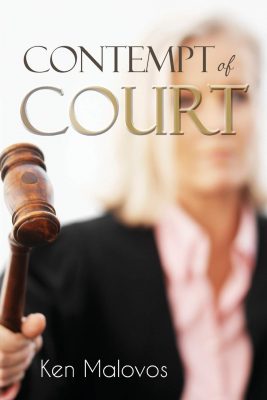
  • CONTEMPT Of COURT by Ken Malovos – Legal Thriller, Courtroom Procedural, Family

    M&M Blue and Gold 1st Place Badge ImageWhat happens when a judge orders you, an attorney, to do something that you cannot possibly do without putting yourself in even greater legal jeopardy? What happens when you’re threatened with contempt of court for failing to follow the judge’s demand? That’s the crux of the legal issue faced by Sacramento trial attorney Mike Zorich in Contempt of Court, the first novel in writer Ken Malovos’ series about the Sacramento, Calif. lawyer.


    The threat of contempt is only one piece of the troubles that surround Zorich. He’s mugged, his home is broken into, his computer is stolen, a stranger tries deliberately to run him off the road, and even more weighs on his shoulders.

    Why is this happening to him? And could all these issues be related? Is this punishment by a former client for unsuccessfully defending him when he was a legal defender? Maybe someone in a current civil case he’s representing has strong enough reasons to want him harassed. And why does the judge in that complex  case present him with an impossible issue: to hand over documents that another judge in the same case has ordered to be kept under seal or face contempt of court, including jail time?

    This is a good novel for readers who enjoy legal fiction told with a a deep dive into the law.

    Contempt of Court offers an intimate view of the everyday world of a working attorney. Readers get an insider’s glimpse of Zorich’s law practice as well as how he as an attorney works with a colleague who is defending him. One of the strongest parts of the book is Zorich’s recollection of how he dismantled a hostile witness in court through skillful interrogation. It’s a close-up look of how an attorney operates in court that is not often given enough time in TV shows and other legal dramatizations.

    Zorich is an emotionally compelling protagonist, struggling as he copes with the loss of his late wife to cancer, his relationship with his college-age son, and with a girlfriend who must walk the  difficult line of being the new woman in his life after his tragic loss. But primarily this is a book about the practice of law and how those who serve learn how to abide by and pervert the causes of justice.

    Contempt of Court by Ken Malovos won 1st Place in the 2014 CIBA M&M Awards for Cozy and Not-So-Cozy Mystery Novels.


    M&M 1st Place Gold Foil book sticker image

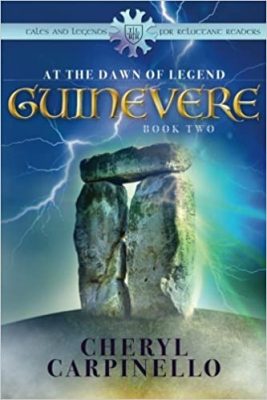
  • GUINEVERE: At the Dawn of Legend (Tales and Legends for Reluctant Readers) by Cheryl Carpinello – Children’s Arthurian Folk Tales & Myths, Children’s Ancient Civilization Fiction, Children’s Girls and Women Books

    What happens when a young strong-willed princess does not want to take the throne? Find out in the much-anticipated second book in the Middle-Grade fiction series, the Guinevere Trilogy by Cheryl Carpinello, in Guinevere: At the Dawn of Legend.

    Cedwyn & Guinevere return with even more adventures than in the first book. The first story ends with the dynamic duo bolting into the forest with their bows drawn; but now, Guinevere aims her arrows not at an enemy, but at everyone around her. She’s fighting with her father, her father’s magician, and even herself.

    Guinevere, it seems, is spoken for. Unlikely as it may seem, she is now engaged to be married to King Arthur.

    The thought of marriage to a man more than twice her age makes her anxious and upset. Guinevere tries to convince her father that she does not want the engagement, but all of her attempts are thwarted. In a form of rebellion, she sneaks out in the middle of the night to go for a ride on her horse. Riding her trusty steed always calms her nerves and helps her think.

    As she rides on, she encounters a magical beast – a unicorn and, of all people, her father’s magician and confidante, Merlyn. Does the chance meeting between the girl and the beast have any significance? Readers won’t be able to put the book down!

    Carpinello presents her Middle-Grade work with fast-paced action, stunning imagery, and characters that jump off the page.

    Descriptions of Guinevere riding on her horse in the moonlight, waves crashing against the beach as she goes, will work to enthrall young readers. Even more, Carpinello, a former educator, develops her series with the reluctant reader in mind, balancing scenes of action against those dealing with some tough, real-life issues such as death, marriage, and family relations.

    Carpinello sets her story firmly in the Middle Ages, where war, smoke and violence are common.

    Readers will enjoy the dynamic and believable characters contained within Guinevere: At the Dawn of Legend. The events and descriptions feel authentic to the time, as well, and are woven into the storyline seamlessly. Carpinello offers an extensive glossary in the back of the book to help readers gain insight and perspective into the story. There may be a few missing words from the glossary, but overall, young readers will be able to pick up clues to word meanings via the surrounding text. Make no mistake, this novel is compelling and will hook even reluctant readers immediately.

    Guinevere: At the Dawn of Legend belongs next to the other fun-loving Medieval tales for the Middle-Grade crowd. While there is no doubt the story benefits from reading the series in order, this book can and does stand on its own. All in all, this novel will find its audience with those who yearn for adventure and love the intrigue of the Middle-Ages.

    Guinevere: At the Dawn of Legend by Cheryl Carpinello won First Place in the CIBAs 2018 Gertrude Warner Book Awards for middle-grade fiction novels.

    Chanticleer Book Reviews 4 star silver foil book sticker