Tag: Chanticleer 4 Star Book Review

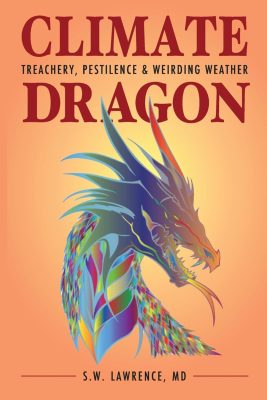
  • CLIMATE DRAGON: Treachery, Pestilence & Weirding Weather by S.W. Lawrence – Climate Fiction, Lab Lit, Thriller


    Climate Dragon by S.W. Lawrence offers a unique blend of climate fiction, thriller, and real scientific inquiry, setting the stage for an intriguing trilogy centered on dual crises—an impending climate catastrophe and the outbreak of a mysterious disease.

    Jake Harper, a newly minted engineering professor, and his romantic partner Abbey London, an infectious disease specialist, balance their burgeoning careers with their bustling inn outside Washington, D.C. But the demands of their lives are disrupted as the two crises draw in Jake and Abbey—the only people prepared to face them.

    Jake’s suspicions of a cyberattack on the North American power grid grow after attending a lecture at George Washington University. Meanwhile, Abbey discovers an alarming new bleeding disorder spreading among the drug-injecting population, raising the stakes for both her career and personal safety as she navigates the risks to her pregnancy.

    Climate Dragon splits into two threads: Jake’s investigation into the cyber-threat and Abbey’s race to stop a new plague.

    Jake zeroes in on a suspicious attendee at one of the lectures. When a consultant at the Department of Energy’s NEST (Nuclear Emergency Support Team) unit stays at the inn, Jake reports the shady man. Jake’s suspicions, we come to discover, are well-founded.

    At the same time, Abbey dives into her own mystery when the university’s infectious diseases department is called upon to consider a post-mortem patient who presented with unique and confounding bleeding disorder symptoms, including an inability for the body to coagulate blood-draw sites. More patients with the same symptoms soon arrive on the scene, suggesting a spreading hematologic disease. Cautious of her pregnancy but eager to abide by her medical oath to observe and treat the disease, Abbey risks exposure each time she engages with an infected patient.

    Lawrence’s integration of fact into fiction will be a highlight for the scientifically curious reader.

    The story thrives on discourse. Conversations between the guests at Jake and Abbey’s inn serve as a kick-off point to a discussion of how individual actions can be taken in response to the planet’s impending climate crisis, as seen when one couple shares their building process for an energy-efficient home.

    The stakes for both the protagonists and the society they inhabit are left somewhat ambiguous, leaving readers to interpret much of what’s at risk. This, coupled with pacing issues, occasionally detracts from the narrative’s momentum. However, Climate Dragon’s engaging world and likable characters give readers strong reason to care about the fates of both.

    Cli-Fi lovers will find Climate Dragon a rewarding read, especially through its intersection of science and storytelling.

    The audiobook version, with alternating male and female narrators, enhances the experience. The epigraphs at the start of each chapter add a thoughtful layer, enriching the themes and grounding the story in broader scientific and cultural contexts.

    With Climate Dragon, S.W. Lawrence lays a solid foundation for the trilogy to come. The novel concludes on a satisfactory and hopeful note while leaving enough threads to entice readers into the next installment of this thought-provoking series.
     

    Chanticleer Book Reviews 4 star silver foil book sticker

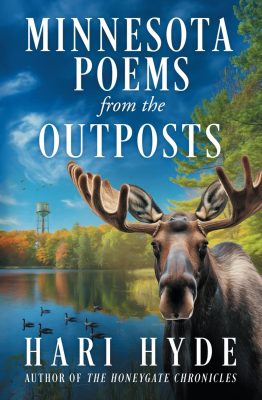
  • MINNESOTA POEMS From The OUTPOSTS by Hari Hyde – Poetry Collections, Spirituality, Natural World


    Hari Hyde reveals the mysticism of exploring chaotic nature and our human need to connect with it. He takes readers to sites of wonder, physical and conceptual, in his collection Minnesota Poems from the Outposts.

    “Part 1: Middle Rivers” illustrates the shared liminal states of people and the natural world.

    Aligning symbols of the turning seasons with people growing up in their communities, “Middle River, Minnesota” establishes our innate kinship with nature—as individuals and collectives. “School Bus” follows the transient days of childhood, while “Unruffled Railway” looks back from the end of an era, as the rails are now overgrown and unused. But, to be overgrown is to find life, and a new way of being after the end of that old cycle.

    Meanwhile, “Moon Over Thief Lake” illustrates the need to commune with nature through beautiful but distant imagery.

    Part 1 maintains a childlike playfulness in its use of language.

    “Goose Capital” and “Young’s Store” give in to flights of fancy about the little details of rural life, while a trio of poems “Ye Olde Depot Theater,  River Avenue”, and “Church Bell” fully immerse themselves in the charm of small communities.

    But Part 1 also touches on the difficult challenge of maturity. “Milking Holsteins” and “Angus Cattle” find peace in a world where each creature has a role to play. But, matching the use of rivers as a thematic force of eternal change, “Minnesota Highway 59” reckons with the fact that there are some deep yearnings a person will never be able to satisfy.

    These first poems open the book well, introducing both the setting of rural Minnesota and a focus on living in relation to its natural forces. Some of the themes in Part 1 could be expanded upon, but the warm poetic voice beckons readers to continue on.

    “Part 2: Smalltown Outposts” broadens its scope to include a variety of notable locations, embracing the culture and history of Minnesota.

    A mixture of compelling imagery and unique tones give each new location a sense of identity, especially in poems like “Split Rock Lighthouse (Lake Superior)”.

    This combines with whimsical renditions of local mythology in “Paulette Bunyan” and “Mankato Man and Nature’s Plan” to instill in readers Minnesota’s vital, defiant soul.

    Hyde also explores the human shadow of Minnesota’s history—the inner lives of those who made it—in “Minnesota’s Ten Millennial Girl” and “Blue Mounds State Park”. These poems describe the personality that history leaves to its locations but, at the same time, exposes the complexities that can’t be preserved over a long period of time.

    Where Part 1 embraced communion with nature, Part 2 creates a thematic duality by highlighting our inherent conflict with it.

    “Mankato Man and Nature’s Plan” puts this conflict in stark relief. The central figure defies his place as a tool in Nature’s hand. But “Red River Flood” shows how futile that fight can be, with the narrator choosing to become like the river itself rather than try to live in spite of it.

    The rhyming can create awkward lines sometimes, but this section’s beauty is in its clear familiarity with its locations, which maintain their grandeur.

    “Part 3: Inner Outposts” and “Part 4: Family and Faith” create another dichotomy—the inner self and its struggle to fit in with the outer world.

    “Private Ponds”, “Secret Snow Bones”, and “The Outside” encourage trusting the inner self, finding meaning beyond societal expectations and dogma. But “The Believable Distance” and “Last Love” both recognize the pain in being distant from others.

    These sections make playful use of metaphors, but in poems like “Guard Dog”, those become more complex and conflicted. The animal part of one’s mind tears and recoils at the chains that bind it.

    As a whole, Parts 3 & 4 step into darker territory. Pain and suffering are reframed as the necessary teachers of survival—from the mundane to the divine—in “Ancient Apathy”. “Corporal Counselor” grapples with pride and envy as truly inescapable sins, innate to the inner self.

    While there’s a return to some of the mysticism of childhood from Part 1, these later parts offer a more nuanced perspective on relationships.

    This is particularly true among the poems most concerned with death, “Elegy for a Nobody”, “Get Well Cards (Calibrated)”, and “A Little Light”. While the themes of family and faith don’t interact much in general, these death poems find interesting connections between how death changes our relationships to each other and the deep desire to understand one’s meaning in the universe.

    “Jonah and the Great Fish” stands out as a unique take on this section’s view of God. Here, animals are to humans as humans are to the divine. But the might of nature tests the boundaries of this metaphor. A great and terrible sturgeon reigns as a bloody demon, and it’s only through the help of nature’s small and wriggling things that the fish can be bested.

    This poem serves well as a transition point to the fifth and final part of the collection, “The Wild.” Here, the core ideas and writing style of Minnesota Poems from the Outposts both shine at their brightest.

    “Moose Head” grants intention and emotion to the forces of the natural world, while reinforcing its incompatibility with human society. This poem and “Arrowhead Northern Lights” create a compelling combination of descriptive language and poetic contrasts. All underscored by a palpable appreciation for the wilderness of Minnesota.

    “Into the Woods” and “Lake of the Woods” experiment most with structure and poetic flow, to fascinating effect.

    Both are much longer than any other poems in the collection, with lines and paragraphs shifting in size as they explore new parts of the wilds. They take this time to fully immerse a reader in their contrasting views of wilderness.

    The narrator finds that, to truly go “Into the Woods” and become a part of them, one has to give themselves up to the beautiful ways of nature. It’s a welcoming of the raw, physical world.

    “Lake of the Woods”, on the other hand, seeks divinity in the beasts of the water. Recurring symbolism aligns the lakes with the sky—a celestial realm, where humans can touch and even enter, but will find themselves reflected back in challenging ways.

    And yet, for all of the woodlands’ chaos and strangeness, people come.

    Here, in these final poems, Hyde returns to the incessant yearning. The distance between a person and the worlds of men and trees alike might be vast, but the quest to cross it is equally as meaningful.


    Chanticleer Book Reviews 4 star silver foil book sticker

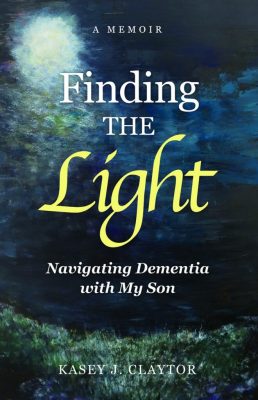
  • FINDING The LIGHT, Navigating Dementia with My Son by Kasey J. Claytor – Inspirational Memoirs, Living with Disease, Family & Relationships

    Some stories are impossible to look away from, and from its very first sentence, Finding the Light, Navigating Dementia with My Son by Kasey J. Claytor proves itself one of them. “…when my 49-year-old son, Justin, was first diagnosed with a form of early-onset dementia, I was stunned.” Without hesitation, the book draws readers into a saga of family, illness, and resilience.

    Although a memoir, Finding the Light is in many ways an instructional text, too. Readers don’t need similar medical situations to draw from Claytor’s lessons of improvement. The conversational, approachable writing style serves this purpose well.

    Although it’s in chronological order, this is an unconventional, modern text.

    Traditional scene-based paragraphs are offset by poetry, informative sidebars, and even the full text of letters sent throughout Justin’s illness. Claytor deftly shifts between these sections, building a cohesive narrative from which readers can easily learn.

    The past is vibrant and immediate: Claytor chronicles events in rich yet simple prose as Justin falls deeper into frontotemporal dementia, or FTD.

    Yet Claytor also pauses often to address readers directly with a reflective tone from the present day. This gives welcome context to the book’s main narrative. She uses everything she’s learned to help readers understand Justin’s illness. FTD is a progressive, terminal disease—and a mysterious one, with no known cause. Finding the Light explains FTD patiently, without delving too far into medical details or terminology.

    Claytor’s an adept records-keeper, combining her carefully recreated personal experience with thorough research.

    The details she offers, from specific dates to particular images (piles of unopened mail, drives along the river road), give the story a tangible quality, as though readers are having this experience alongside her. Yet sometimes, the details come in the stark form of a list or a set of bullet points instead. These breaks from traditional prose offer a sense of the fractured, clinical experience that a terminal illness can become.

    At times, Claytor’s emotions burn bright, particularly in her frustrations with the poor training and management at several care facilities. Yet she quickly pulls back from these moments of anger or frustration, letting her present-day self take over with calm reflection instead. She explains her calmness well, however, instructing readers, through example, on the deep value of patience and compassion.

    Claytor truly excels at “finding the light,” just as the book’s title suggests.

    “Every time I read these words like ‘horrible’ about FTD, it hurts like a paper cut,” she writes. This book offers consistent positivity without the emotional artifice that self-help or instructional books sometimes resort to. Claytor accepts Justin’s changing situation, watching him revert in many ways to his child self, and even finds beauty in this process. She finds true acceptance. And throughout this book, readers may learn how to accept similarly challenging situations in their own lives.

    Finding the Light often feels like a long and enthralling conversation over coffee with a friend.

    Between its accessible writing style and the unpredictable medical situation, the book becomes impossible to put down. At each turn readers will find a surprising development, such as when Justin contends with COVID, or when he must repeatedly move to new facilities. And each development is carefully contextualized with compassion for Justin, for his caretakers, and for everybody touched by the impacts of FTD. A literary rhythm emerges: touching scene, thoughtful reflection, clear information.

    As Justin’s tale with FTD comes to a close, Claytor addresses the reader one last time, with a message for the painful, difficult turns in life.

    The final sections of the book are written in the second person, as Claytor wraps up the narrative with a set of clear, actionable takeaways. The last chapter, “7 Survival Tips for Rough Times,” is a welcome reminder that while everyone’s challenges are different, we must all face them. The test is how we navigate these experiences. Thanks to Finding the Light, readers will have a roadmap for travelling through whatever dark paths life has in store with grace, acceptance, and love.


    Reviewed by Chanticleer Book Reviews 4 Stars! round silver foil sticker

  • SPLINTERED DREAMS: The Dare to Love Series Book 1 by Diana Lynn – Romance Fiction, Contemporary, Self-Discovery

    After decades spent in a loveless, broken marriage, Crisa wants another chance at love. In Splintered Dreams, a romance novella by Diana Lynn, she must first stumble through her own insecurities to find it.

    When Crisa’s husband, Alan, dies unexpectedly she is left with a stark emptiness inside her heart. Her marriage had been a sham. Her husband’s infidelity and lies crushed her idea of love and left her with questions about who she is, what she wants, and will she ever trust someone with her heart again. Casual sexual relationships can’t fill the void. She needs true love.

    Physical intimacy is only part of what Crisa desires. She yearns for the kind of love that lasts a lifetime.

    A chance at love falls in her lap when her friendly, affable coworker, Slade Doyle, finds her in the office cafeteria. Their friendly banter turns to flirting over coffee, followed by an intriguing invitation to dinner. The surprise relationship sprouts easily, but Crisa must push past her instincts to protect her vulnerabilities as she struggles to find a path to love once again.

    However, Crisa is not the only one who must tackle demons from the past. Slade’s had his own bumpy journey through a series of failed relationships and meaningless hook-ups.

    Splintered Dreams lays bare the familiar challenge of healing a heart and trusting yourself enough to love again.

    No matter how long it takes, or what mistakes are made along the way, Crisa and Slade begin to search for lasting love. By traveling this road together, they uncover layers of their own selves they would have otherwise never found.

    Older than most romance protagonists, Crisa and Slade develop a mature relationship based first on friendship. They stumble a few times in their decision-making, but don’t allow poor reasoning and motivation to stand in their way. Instead, communication leads them, and their conflicts opens the door to a deeper understanding of themselves, and each other.

    Crisa and Slade’s budding love draws readers in with unanswered questions behind the choices they’ve made in the past and how those same choices affect their own love story.

    Crisa chose to stay with her late husband after he offered her a more than generous divorce settlement twenty years before his death. And Slade, with his long history of short-lived, sometimes unhinged relationships leads us to wonder if something in his own personality was the cause of his failed adventures in dating.

    The journey to find these answers, and true love, makes Splintered Dreams a bright, thoughtful romance.

    Diana Lynn’s endearing love story explores the burgeoning relationship of two people who must break down the defenses they’ve erected through the years to protect their hearts so they can open the door to true love.


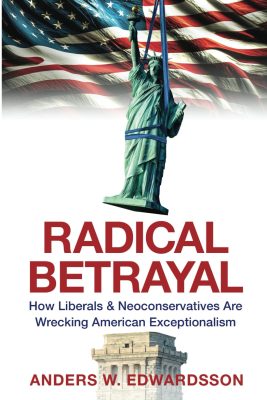
  • RADICAL BETRAYAL: How Liberals and Neoconservatives Are Wrecking American Exceptionalism by Anders W. Edwardsson – American Politics, Political History, Political Analysis


    Radical Betrayal by Anders W. Edwardsson explores American Exceptionalism and its echoes in today’s US politics and society. It offers a perspective on the nuances of the ideology and calls for its reworking towards a more united nation.

    Donald Trump’s unexpected win shocked a major segment of the USA populace in 2016, raising a big question about a complete neophyte’s victory. For some, he was a messiah to renew America’s standing. For others, he was a candidate with an unconventional campaign of blunt, rabble-rousing talk, who surprisingly took over the electoral term.

    What emerged as more remarkable is that, despite not winning the popular vote, the electoral college votes secured the 2016 US president his win. It added to the debate surrounding the election and highlighted the existing political divides in the states. Radical Betrayal examines why the 2016 election played out as it did, opening with its discussion of American Exceptionalism.

    American Exceptionalism is the belief in the unique global leadership of the USA. This book follows the evolution of this ideology, starting from the blend of the nation’s founding ideals of Enlightenment and Religion. It covers various historical periods and traces the idea’s development over several presidencies. This discourse presents the basis for the thesis, paving the way to answer the controversial win of the 2016 election.

    Radical Betrayal covers a labyrinth of movements like isolationism and interventionism in the 19th and 20th centuries, as well as the rhetoric of political leaders from George Washington and Theodore Roosevelt to Ronald Reagan and Donald Trump.

    What becomes clear is years-long tactic of harnessing American Exceptionalism to gain public support and justify policies. Not only this, the history highlights differences in how this strategy was approached, and its continued influence on shaping political takes and public views today.

    The work creates an inclusive argument for why Trump’s slogan “Make America Great Again” resonated with many people. To establish its position, Radical Betrayal works through the many political and cultural changes in American history that have created the appeal of this slogan. Different visions of Exceptionalism across history—inclusive and exclusive, active and passive—contribute to the debate on polarizing politics. They showcase a bridge between those conforming to two forms of this ideology—the more conservative form, and the broader, less focused version.

    This book invites readers to help shape the future discourse around American Exceptionalism and its influence on the US.

    Pointing to Trump’s presidency and the clear divisions in American identity during the era, Radical Betrayal suggests reassessing the power of Exceptionalism in shaping these national identities. It stresses the need to bridge historical ideals and modern realities toward a unified America. This journey to understand American Exceptionalism illuminates a potential for inclusivity in the nation’s rich tapestry of communities, races, and heritages.

    An analytical approach with an encouraging and didactic tone shapes the pages of this book. Idealistic and inspiring, it opens the opportunity for further enrichment with discussions on potential obstacles in the journey to political refinement and growth.

    The piece propels one toward reinterpretation and rejuvenation of American ideals, unity, and progress—the essence of American Exceptionalism itself.


    Reviewed by Chanticleer Book Reviews 4 Stars! round silver foil sticker

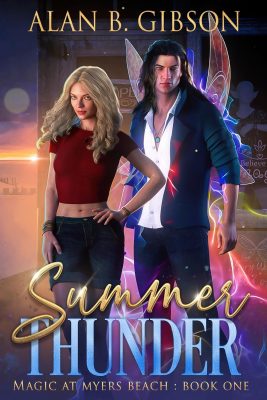
  • SUMMER THUNDER: Magic at Myers Beach Book 1 by Alan B. Gibson – Small Town Romance, Urban Fantasy, Fairy Romance


    Lily struggles to keep her business, her son, and her home. But in Summer Thunder, first book of the Magic at Myers Beach series by Alan B. Gibson, Lily’s luck begins to turn as she connects with the enigmatic beach king Theos.

    With the help of her friend and fellow business owner Greta “the Witch,” Lily tries to revitalize her fairy-themed decoration and figurine store. Her divorce from her abusive ex-husband Kelly is pending, and she must present a calm and reliable home to ensure full custody of her son Jamie. But when her kindly landlord, Ms. Coffey, passes away, she’s confronted with two options: lose her prime business location and upstairs apartment, or somehow make enough money to buy the building herself.

    Enter Theos, a kitesurfing champion with adoring fans. He shows true appreciation for Lily’s fairy figurines, bringing her many more sales. But more importantly, Theos becomes deeply interested in Lily herself. Their romance begins on rocky footing, as Theos has a strange air about him and seems to vanish whenever a storm comes into town. But when he begins modelling for a new fairy figurine– aptly named Theos, the King– the two are drawn inevitably closer.

    Though she succeeds at turns, Lily confronts ever-growing problems, testing her determination.

    She must keep Kelly from influencing her son and jeopardizing Lily’s chance at a happy family. And as Theos becomes a more serious figure in her life, Lily will have to decide how much of a leap of faith she’s willing to take–who she’ll end up becoming.

    Meanwhile, the town of Myers Beach is facing change of its own.

    This story keeps a tongue-in-cheek attitude as it tackles real-world issues. Powerful national banks sweep up local institutions, bullies wield the term ‘fairy’ against boys like Jamie who don’t follow their standards of masculinity, and the lives of people like Lily risk being seriously upended for the sake of someone else’s real-estate investments. While Summer Thunder keeps a lighter tone, it doesn’t shy away from serious topics.

    The two perspectives, Lily and Theos, create an engaging balance of information for the reader.

    While Lily tries to shape her own life, Theos shoulders an even more dire burden–the lives of his people. As crown prince of a true fairy kingdom, Theos deals with the aftermath of their most vital resource­–fairy dust–being poisoned. He must find a new source of its core components, but thankfully, he’s already noticed a few in Myers Beach.

    He works to set up a home for sick fairies around the town, while courting Lily and debating when–and how–to reveal his true nature. Often, readers will see the disconnect in Theos and Lily’s understanding of the world. Neither fully knows the other, especially as Theos presents such a larger-than-life persona, giving space for conflict to grow between them. Will they be able to overcome their differences, and truly connect as themselves?

    This story shines with a charming setting and lively cast of characters.

    Gibson’s descriptions place readers in the cool spray of kitesurfing and the quaint boardwalk of Myers Beach. Lily lives in a town of friendships and rivalries, with vibrant and unique characters to flesh out the story around her. While the prose sometimes explains more than it should, and dramatic threads don’t always have enough time spent building tension, the characters are driven and will pull readers easily into their schemes.

    For those interested in urban fantasy, beach-side romance, and the adventures of plucky local fairies, Summer Thunder will be a strong opening to the Magic at Myers Beach series.


    Chanticleer Book Reviews 4 star silver foil book sticker

  • PARALLEL SECRETS by ML Barrs – Murder Mystery, Small Town Mystery, Amateur Sleuths


    In the small Missouri town of Walkers Corner, it seems everyone has a dark secret. In Parallel Secrets by ML Barrs, a TV journalist comes to town to do a magazine piece on a missing girl and begins uncovering many of those hidden stories.

    Motivated by feelings of guilt for not following up on a previous unsolved case, Vicky Robeson’s joins the search for the missing child. She’s tenacious in her investigation. As a TV station journalist currently between jobs, she has well-honed investigative skills, specifically in her ability to wheedle stories from even the most reluctant people. She’s familiar with Walkers Corner; and  as a reporter for a St. Louis TV station, she covered the case of a never-identified mystery girl. She believes the two cases are connected. The similarities that link these cases to her own experiences as a child make her unable to let this new story go.

    Safe to say, her investigating is not welcomed by most of the locals in this close-knit town.

    But one by one, Vicky finds ways to pull details about both cases from virtually everyone, using her eye for detail to wedge people out of silence. Vicky’s quest is not without personal danger, however, as she finds long-buried secrets, crimes that some are willing to kill to keep buried.

    In the midst of her reporting, Vicky finds her relationship with Pete, her new love interest who has traveled with her in his RV, to be both a blessing and another challenge.

    Pete keeps wanting a deeper relationship, while Vicky is reluctant. In addition, she’s considering taking a TV job in Texas that would put an additional strain on the couple. Even though Pete is perfect for her now, she’s not sure he’s perfect when it comes to her future.

    Parallel Secrets is a literary jigsaw puzzle, the kind that remains unclear until the final piece is put in place. This is an enthralling read for anyone who enjoys a good-to-the-last-drop mystery.


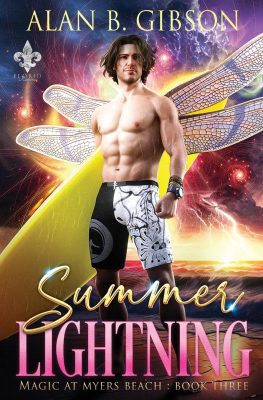
  • SUMMER LIGHTNING: Magic at Myers Beach Book 3 by Alan B. Gibson – Romance, Urban Fantasy, Mystery


    In Summer Lightning, the third book in Alan B. Gibson’s Magic at Myers Beach series, fairy prince Alias shoulders the weight of his people’s prejudice, but also their very lives.

    Someone has poisoned the natural reserves of fairy dust ingredients, lacing it with deadly iron. With many of his people already dead, and others terribly ill, King Theos relies on his younger brother Alias to devise the lost recipe with ingredients found at Myers Beach, a small human town. Alias helps house the sick in Myers Beach, and dedicates himself to his research, he loses much of his own comfort.

    Alias lives with his boyfriend, Christophe, a hero of the Third Kingdom– one of his own kingdom’s allies. He and Christophe can walk together freely in the human world, still Alias must worry about how his people see their prince. And now, with so many fairy eyes in his little town, he can’t even hold Christophe’s hand in public without the danger of being found out.

    As Alias worries about fairy eyes on him, humans catch sight of the mystical beings in their midst.

    Though Alias has created a functional fairy dust with only some of the ingredients, it leaves his peoples’ magical disguises unreliable. When famed actress and Alias’s childhood teacher, Dame Gabor, is found in her true form by a little girl, a media frenzy unleashes on the small town.

    Summer Lightning shines a satirical light on the fads of modern mass-media, with an online group, Friends of the Fairies, arriving in town to find evidence for their various blogs and podcasts. The story morphs from one of a fairy, to a small bird, to a seven-foot monster, all with opportunistic tour guides and business owners looking to cash in on the town’s tourists.

    More pressing than even keeping the true fairies hidden, however, is figuring out who poisoned the original dust.

    Calling back to earlier books in the series, Summer Lightning menaces the protagonists with hints of their old villain, a powerful and vengeful witch. But, more personally, Alias has to face the traumatic memories of his old tutor–from the days he spent growing up in the Third Kingdom. Though he’s certain he’s seen the last of the man, Györfi, who tried to molest him as a teenager and outed his forbidden relationship with the young Third King, Alias begins to discover possible connections between Györfi and the current trouble.


    Alias’s emotional journey will pull readers in, with his struggle between responsibility, personal connections, and the shadows of the past.

    His relationship with Christophe takes center stage as they deal with homophobia from both human and fairy society. Christophe tries to bridge the gap between them, but Alias doesn’t dare make his relationship public, especially with so much attention already on him as the only hope for his people’s survival. In this story, the word ‘fairy’ pulls double-duty, both as the name for Alias’s people, and one of the slurs thrown at him by bigots.

    Summer Lightning doesn’t shy away from darker subject matter, and as the story continues, readers will delve deeper into Alias’s memories of the cruelty he’s suffered–all while his old traumas resurface in new and dangerous forms.

    But he and Christophe aren’t alone, with characters like Dame Gabor standing as a staunch ally both to their relationship and Alias’s work. And though the fights between Alias and Christophe can feel a bit rushed, their connection remains heartwarming and empowering in the face of adversity.

    With a well-balanced mixture of comedy, intrigue, drama, and satire, Summer Lightning brings these magical characters to major crossroads as they try to keep up with the sinister forces ensnaring their homelands.


    Chanticleer Book Reviews 4 star silver foil book sticker

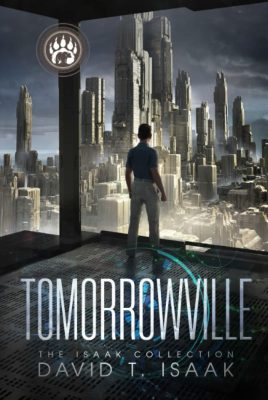
  • TOMORROWVILLE by David Isaak – Dystopian, Sci-Fi, Satire


    As Tomorrowville by David Isaak opens, it is in fact yesterday. 2008 to be specific. Toby Simmons, a Gen X programmer/engineer/hacker, is in the midst of something professionally fascinating but personally stupid.

    Toby uses a state-of-the-art virtual reality system to surreptitiously peek into the apartment of the woman across the street. But he’s three stories up, and loses track of where his real feet are walking as he’s too busy following his virtual eyeballs, leading him to one of Wile E. Coyote’s famous maneuvers. He discovers that there’s nothing underneath him but air and a three-story drop to the pavement.

    But just like that cartoon coyote, Toby comes back from the dead. It only takes a silly prank, a forgotten gin and tonic, and 80 years, as medical science makes great strides in bringing cryogenically frozen bodies back from formerly life-ending spinal destruction. Along with a whopping bill from the U.S. government– nearly five million dollars for all the many, many costs of Toby’s revival.

    It’s 2088, and Toby Simmons has unwittingly become Rip Van Winkle. The world has changed while he’s been sleeping– although not, perhaps, nearly as much as it should have.

    This compelling story follows along with Toby’s learning curve/adaptation to a not-nearly-so-brave new world. The government relies on asset reclamation for funding, and issues mandatory, automatically-dispensed mood enhancements to keep its population from noticing that fewer and fewer people manage to stay out of the prison industrial complex.

    The late 21st century that surrounds Toby has idealized the era from which he came to the point that, as much as they want to hear the account of the person who lived it, they are only interested in that account if it reinforces their mythology. At the same time, this new society’s faults are clear to both Toby and the reader– but concerns about safety and security eclipse all other concerns from the powers-that-be, leaving the U.S. a totalitarian regime that has lost ground to the rest of the world and has medicated itself into not caring about all that much.

    The world in which Toby has found himself is a dystopia without having ever experienced an apocalypse, made all the more fascinating because they did it to themselves, using tools that they claim the late 20th and early 21st century gave them.

    It’s a future that is all too easy to see from here. Toby begins to feel himself superior to those around him, and as he’s not drugged up to his eyeballs, it’s easy for readers to slide into his perspective on this world.

    In the end, Toby wants out of 2088, and the story leaves readers with the hope that he might manage to avoid the destination his journey is leading to– prison– by doing something professionally interesting but quite possibly, and quite personally, stupid, once again.


    Chanticleer Book Reviews 4 star silver foil book sticker

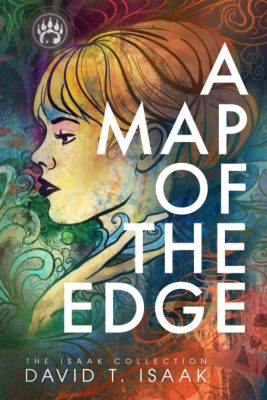
  • A MAP Of The EDGE by David T. Isaak – 1960s, Coming of Age, Psychological Fiction

    To say that fifteen-year-old Rick Leibnitz has had a difficult childhood would be an understatement. Abandoned by his mother when he was eleven and left with a physically and mentally abusive father, Rick’s teenage anger is justified in A Map of the Edge by David T. Isaak.

    After a violent episode with his father, Rick is caught holding drugs for a girl he hopes to impress and is sent to a juvenile detention center. There, he refuses to capitulate to the demands of his jailers until his probation officer offers him not only a possible reprieve but also, for the first time in his life, listens to Rick’s problems.

    When he is handed back to his father’s custody, his nightmare life continues until Rick is befriended by Lincoln Ellard. Linc finds Rick a place to stay after a vicious beating from his father, and the two quickly become inseparable, with Linc eventually bringing Rick in on his drug dealing business. In his adolescent mind, Rick has it made–drugs, girls, popularity, but the good times end abruptly when a rival drug dealer attacks Rick and Linc, leaving their relationship perpetually plagued. When a close friend nearly overdoses, Rick again finds himself in over his head.

    The novel’s title perfectly sums up Rick’s predicament. He is on the edge of everything.

    Rick hovers on the edge of adulthood in many ways. At fifteen, he is too young to get a job or to be on his own, stuck living with his cruel, angry father who takes out his own wasted choices on everyone else. Rick can remember the beatings his mother suffered, and he feels that her leaving him is justice for his lack of action to protect her. But now, he has become the target of his father’s wrath and can’t legally escape it. Eventually, he refuses to even try to get along with his father and chooses defiance, which leads to even worse treatment.

    Not physically big enough to stand up to his father, he seeks an escape in alcohol and drugs, a decision which leads to his first sexual encounter with the girl whose punishment he took on himself. Both the juvenile detention and that encounter push him again closer to the edge of adulthood. He romanticizes his imprisonment as a chivalrous gesture that is sure to lead to a grateful and lovesick Stacy. When she refuses him after his release, he’s pushed beyond his emotional capacity and turns to self-harm in multiple ways.

    After meeting Linc, Rick thinks his life is finally turning around.

    Linc convinced Rick that the drugs they sell and use aren’t really hurting anyone but instead are expanding their thinking. The two of them skirt the edge of reality and LSD-induced illumination. For a time, Rick lives on this edge of 1960s teenage idealism. He parties, with others and alone, has sex with lots of girls, and makes excessive amounts of money with little effort. He listens to Linc’s pontificating, believing him to be enlightened and knowledgeable.

    When the boys are attacked by rival drug dealers, Rick reaches the edge where the fun stops and danger becomes real. His entire perception changes, and he cleans himself up as he and Linc drift apart. When Lisby, one of Linc’s many girlfriends, tries to commit suicide, Rick finally takes the advice of his probation officer, Leo, seriously. As his only true champion, Leo has attempted to keep Rick on the straight and narrow throughout the novel, but it isn’t until this last near-tragedy that Rick seems to understand. While the edge is exciting, its precariousness leads to destruction.


    Chanticleer Book Reviews 4 star silver foil book sticker