Tag: Chanticleer 4 Star Book Review

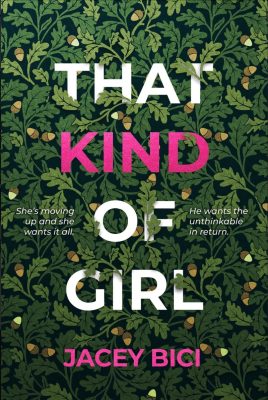
  • THAT KIND Of GIRL by Jacey Bici – Psychological Literary Fiction, Contemporary Fiction, Family & Relationships Fiction


    A doctor’s life is one of ease and luxury—a big house, nice clothes, and a fancy nanny, right? In Jacey Bici’s latest novel, That Kind of Girl, Opal Collins would disagree.

    Opal balances on the constant edge of a breakdown, with her marriage on the rocks and mounting professional pressure.

    Fox, Opal’s husband, wants to expand their family and pushes Opal desperately to pursue the hospital administrator position. Opal balks away from breaking the deep bonds she has with her patients. If she leaves her current job, she’ll be leaving behind the very reasons she chose to become a doctor. Besides, she can barely get to work on time in clean clothes now. She doubts she has what it takes to become “the boss.” But Fox’s insistence and the pressure to be a better mother push Opal down a treacherous path.

    Ronald Aberdeen, the owner of Doctors Inc, is tired of his life in the corporate world. Having conquered and merged two hospitals, Ronald seems to have it all—power, wealth, and the fear of his employees. But in truth he longs to return to cancer research and his life as a young New York doctor. Ronald sees a path to achieve at least part of his desires in Opal, a woman willing to do whatever it takes to become the medical director of Ocean Hospital. Ronald and Opal want something more from life, each other is the means to that end.

    Trying to outrun the past and build a life on lies could lead both Ronald and Opal to complete devastation.

    Through Opal, readers will feel many of the struggles mothers face.

    She longs to be at every parade, every class party, every early morning and every late night, but the adult world demands ever more of her attention. She worries over the expectation to always have the right clothes and shoes, perfect hair and makeup, and the respect of her coworkers and supervisor. In pursuit of her professional and home life, Opal finds herself floundering under both.

    Opal caves to Fox’s pressure and creates a quagmire in which she might suffocate.

    Opal begins an affair with Ronald, even as the older man brings up memories of an assault she experienced as a teenager. It’s a trauma that follows her daily as something impossible to push away. Opal believes she can control the situation, but the emotional turmoil begins to overwhelm her.

    Opal becomes chained to her bad choices, torn between Fox, her supposed soulmate, and Ronald, who’s more concerned with himself than her.

    Jacey Bici’s That Kind of Girl exposes the treacherous balance between personal bonds and career ambition. Both women and men may find themselves in Opal, who tries to make far too many pieces fit into the shape of her life. The emotional and moral tension surrounding Opal’s relationships only grows more complicated, but she keeps trying, as we all must, and might just find a better path through the fog of conflicting obligation.

     

    Chanticleer Book Reviews 4 star silver foil book sticker

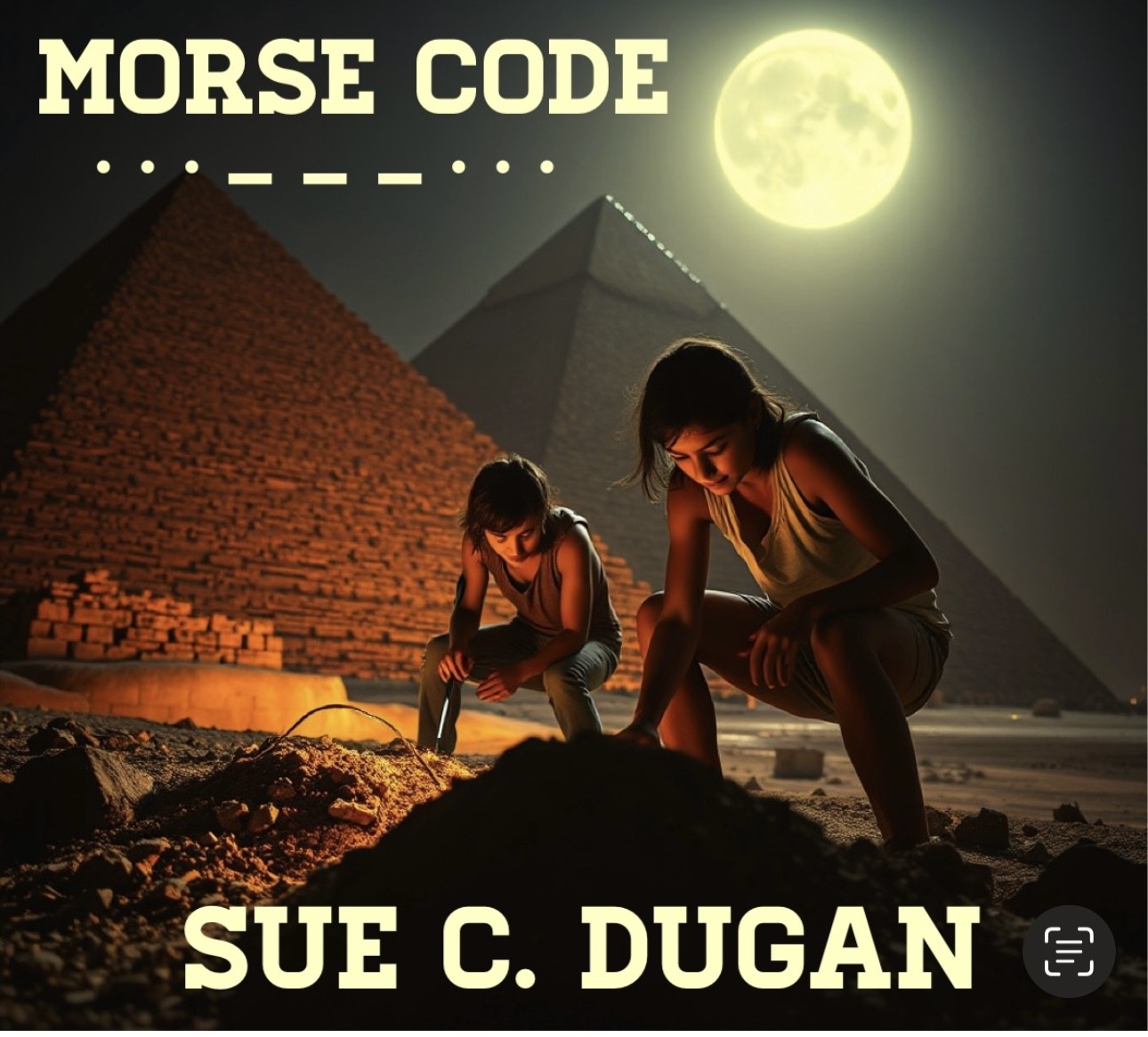
  • MORSE CODE: Land, Sea, and Air Book 3 by Sue C. Dugan – Middle Grade Adventure, Time Travel, Historical Fiction


    Morse Code, the third book in Sue C. Dugan’s the Land, Sea, and Air series, plunges readers into double-layered intrigue. It’s a riot of sleuthing, history, and time itself at play.

    At one end of the story, young British twins Dot and Dash Foxshire encounter three peculiar strangers around their parents’ archaeological dig in 1921’s Guatemala. Oddly overdressed for the jungle, the newcomers reveal they had just survived both the shipwrecks of the Titanic in 1912 and the S.S. Austria in 1858 (see Book One: Save Our Ships).

    Meanwhile, Morse Code picks up where Book Two: Mayday left off. Jessie, her father, and Ben make it home from a remote island in the past, unaware that Prince, a man native to that island, has secretly stowed away with them into the future.

    His presence in 2016 quickly attracts the government’s attention; a linguist studies Prince in quarantine and grows fascinated with his hybrid system of gestures and speech, identifying it as an extinct Mayan language. Having safely arrived home in 2016’s Florida, Jessie seeks guidance from Roberto, an attractive boy at her school whose knowledge of time-space travel gives Jessie a new theory about where Prince really came from.

    Jessie persuades the linguist to travel back into the Guatemalan jungle and return Prince to his home—with her older brother, Phil, acting as reluctant chaperone. However, their expedition takes an unexpected turn when an earthquake in Guatemala hurls Jessie and Prince into 1921, where they cross paths with Dot, Dash, and the Titanic trio.

    The delight of Morse Code lies in its willingness to let two plots collide head-on, embracing historical what-ifs with a sense of childlike wonder.

    As the mismatched group assembles a chronology of their overlapping stories, Jessie recalls Roberto mentioning that Albert Einstein would be in 1921’s New York City. If anyone can help untangle the mysteries of time, it’s him. With the Foxshire family’s help, the crew sets its sights on unraveling the mystery at the heart of their travels.

    Much like the Magic Tree House series, Morse Code, Book Three of the Land, Sea, and Air series by Sue C. Dugan, balances whimsy with a little history lesson, respecting the complexities of its ideas while keeping a brisk pace toward another suspenseful cliff-hanger. Middle-grade readers eager to puzzle out myths and mysteries lost to time will find Morse Code, along with the series as a whole, both rewarding and wildly entertaining.


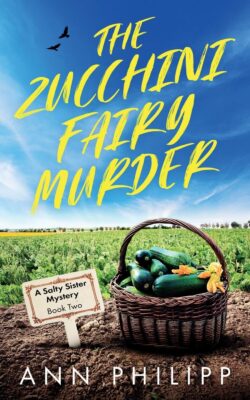
  • THE ZUCCHINI FAIRY MURDER: Salty Sister Mysteries Book 2 by Ann Philipp – Cozy Mystery, Amateur Sleuths, Murder Mystery


    Wherever zucchini grow, they grow with unstoppable vigor. Patricia Schuster and her mother face a legendary overabundance in The Zucchini Fairy Murder, Book Two in the Salty Sister Mystery series by Ann Philipp, but garden veggies are soon to be only a close second of their problems.

    They have more zucchini than any family, friends, neighbors, and possibly the entire population of the surrounding several counties could possibly go through in a season, no matter how much zucchini bread they make. Mrs. Schuster, in an absolute riot of an opening scene, cruises through their California hometown in the middle of the night looking for cars with open windows to drop bags of zucchini into.  

    This camouflaged, highly questionable type raid on the neighborhood distresses her daughter, who tries without success to discourage her mother from her nighttime activities. Such hilarity threads through the background action of the story, as Patricia does her best to calm her mother down, rein her in, and manage her crazy.

    Plot and humor merge when petty zucchini crime clashes with a murder investigation. 

    The mystery kicks into high gear as Patricia can’t resist trying to solve the case with the help of a group of golden-age ladies she inherited along with her grandmother’s house and antiques business. With nerves of steel, these formerly incarcerated elderly ladies now work for the FBI and are highly skilled in specialized areas like technology, firearms, languages, and psychology, and they have no problem breaking the law to solve a case.

    After Patricia’s first ‘case’, detailed in book one of the Salty Sister Mystery series, Grand Theft Death, Patricia and ‘the Ladies’ have got a way of getting to the heart of an investigation. Even when that way involves a bit of subterfuge, a lot of illicit snooping, and more than a few sets of lockpicks.

    In the best cozy mystery tradition, what makes The Zucchini Fairy Murder so much fun—besides the overabundance of summer squash—is the combination of spilling gossip about the small-town residents and their misdeeds with the one step forward, two steps back approach of an amateur sleuth.

    Along with humor and intrigue, this story builds eclectic but earnest bonds between its central women.

    We see sisterhood, motherhood, and cool aunt relationships between Patricia, her mother, and the four ‘Ladies’ of her grandmother’s generation who have taken both women under their wings. That web of relationships is sometimes nurturing, especially on the mornings when the Ladies make Patricia an excellent breakfast. 

    The Zucchini Fairy Murder by Ann Philipp is a zany romp where an amateur sleuth tries to figure out whodunit in spite of both herself, and the ladies who bring their specialized skills to the case.

    This is the sort of cozy small town setting more than a bit outside the modern problems of everyday life. A perfect read to leave the ordinary and go to a place where a little dash of luck and the lead to a happy outcome for everyone in spite of many false accusations, mistaken arrests, and midnight zucchini drops from an unseen “fairy” along the way.


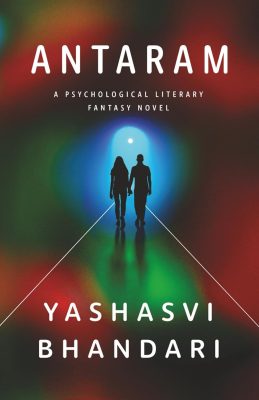
  • ANTARAM: A Psychological Literary Fantasy Novel by Yashasvi Bhandari – Psychological Fantasy, Literary Fantasy, ADHD


    Antaram: A Psychological Literary Fantasy Novel by Yashasvi Bhandari is a journey towards not just self-discovery but self-creation. Arjun, a struggling writer and single father, knows for certain that he doesn’t want to continue the life path he’s fallen into but has no idea how to change course or in what direction he should go.

    Nearing thirty and pushing a broom at a dead-end job that’s going nowhere—just as every other job he’s held since he left school —Arjun clings to fantasies of bigger and better things.

    He was a bright star in school, but as an adult he’s been drifting inexorably toward the bottom. Something is keeping him down and holding him back, but he doesn’t know what that something is. When he’s fired yet again, it feels like all hope is lost.

    Arjun uses the fantastic journeys of his dreams and states of altered consciousness to push himself forward into a life that will lift him up instead of constantly reminding him that his brain isn’t wired quite like everyone else’s.

    From inside Arjun’s head, the reader is able to experience the perspective of someone who lives with a particular form of ADHD, specifically ADHD-I (ADHD-Inattentive) that limits focus and attention to time, causing them to lose track of immediate responsibilities in daydreams and mental spirals. The narrative does a marvelous job illustrating how difficult it is for Arjun to navigate social structures of modern life, work, and interpersonal interactions.

    Arjun marches to the beat of a different drummer, an erratic drummer, and in his story the reader is able to hear those beats for themselves.

    This grounded real-world struggle takes on otherworldly heights when Arjun finds himself inexplicably catapulted into his mindscape, “Antaram,” which in Sanskrit means “within.”

    Antaram combines literary fiction with a mishmash of fantasy tropes and archetypes, borrowing from such classics as The Wizard of Oz and Alice in Wonderland.

    Through this world of imagination, Arjun finds inspiration for both life and work that allows him to use his differences as strengths instead of weaknesses.

    Yashasvi Bhandari offers a fascinating psychological exploration in Antaram, both in the character of Arjun and in how the writing of this novel helped expand Bhandari’s own understanding of himself. Life imitates art imitates life in a full circle that compels readers to keep turning the pages of this fantastic ride.


    *This book comes with a Content Warning for violence, sexual assault, and drug and alcohol addiction.


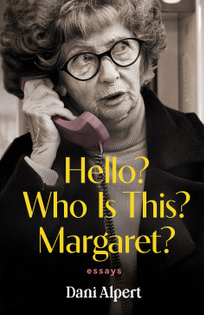
  • HELLO? WHO IS THIS? MARGARET? by Dani Alpert – Personal Essays, Memoirs, Writers & Entertainers


    In Dani Alpert’s Hello? Who Is This? Margaret?, she shares her story through a series of essays, each one a piece in the larger puzzle of who she is as a performer, writer, director, Pilates instructress, and unapologetic optimist.

    Throughout Hello? Who Is This? Margaret?, we follow the author as she learns the important lessons of life, laughing, shaking our heads, and taking away a few lessons for ourselves, too.

    Though these essays may seem unconnected at first, they ultimately weave together the story of a flawed woman who suffers through heartbreak and failure only to keep trying, and trying again. She writes with humor, honesty, and hope. Regardless of what is thrown Alpert’s way, she perseveres, finding new ways to plow through difficulties and chase after her dreams—even those that need to be dusted off and rearranged.

    From her very first performance at the age of seven, Alpert knew she wanted to be a performer, and international fame was her only acceptable outcome.

    Even when no one else believed in her, she stubbornly believed in herself. Despite all evidence to the contrary, she was certain her big break was just around the corner—and any corner would do.

    Along the way she got married, divorced, lived with a man with two kids and played at being a girlfriend mom—which, it turned out, was a role she was actually pretty good at. She moved to Prague to teach English to foreign students (something she was very pretty good at), and began to write.

    There, in writing, is where she flourished.

    Though she never gave up her dream of being an international superstar performer, writing—then Pilates—became her life. And how lucky we are that she found her voice and picked up her pen!

    With brutal self-awareness and sometimes dark humor, Alpert shares these stories of her life.

    From hanging with Chas Bono (now Chaz) in the hopes she’ll meet Cher, to failing to impress Norman Lear, finding Pilates and learning to pole dance, Alpert weaves along the many paths she took to find herself. At each and every turn, she is certain beyond a doubt that all will work out and she will succeed. She will be discovered. She will find fame. But in the end, what she finds is much more personal. Dani finds herself as we all must.

    Anyone who has struggled to believe in their dreams, and yet persevered, will relate to Alpert’s stories. Finding humor and truth in one’s life is not always easy, particularly when surviving a global pandemic or a heartbreaking relationship, but in Hello? Who Is This? Margaret? Alpert shows us how she did it—and leaves us wanting more.


    Chanticleer Book Reviews 4 star silver foil book sticker

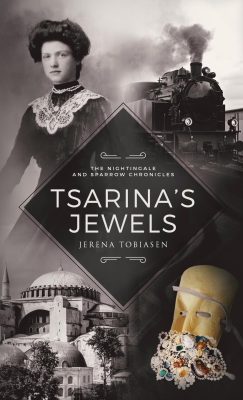
  • TSARINA’S JEWELS: Book 2 of The Nightingale and Sparrow Chronicles by Jerena Tobiasen – Historical Fiction, Historical Thrillers, 20th Century


    Viscount Simon Nightingale-Temple seeks a life of peace with his beloved Mary after the harrowing years of the Bolshevik Revolution. But in Tsarina’s Jewels, the second book in Jerena Tobiasen’s The Nightingale and Sparrow Chronicles, Simon is dragged back into global conflict through his very family.

    While serving in the British Embassy in Petrograd, Simon witnessed firsthand that bloody revolution and the assassination of the Tsar’s family—all but one daughter, Grand Duchess Maria Nikolaevna, the beautiful woman who became his wife.

    Maria, “Mary”, hides in plain sight among the British aristocracy, and the couple hope to settle into their lives with Simon’s parents. However, soon after his return, the highest levels of the British government force Simon into service for the newly minted MI6.  Under threat of being blamed entirely for the Romanov family’s execution, Simon has no choice but to accept.

    Little does Simon know he’ll soon be spying on his own brother.

    As the second son, Richard resents Simon’s success and future inheritance. After drinking and womanizing his allowance away, Richard is forced into a job by his father. Though he holds a respectable clerk’s position, Richard steals files concerning the British movements against the Ottoman Empire.

    In a bid to become his own man, Richard now races to sell his secrets to the Turkish government.

    Simon has to bear the weight of family obligation and looming treason all while trying to maintain his wife’s secret identity. When a threatening figure returns from his past and adds yet more pressure onto his shoulders, Simon’s life might well come crashing down around him.

    The characters of Tsarina’s Jewels develop with compelling emotion in the face of trauma and responsibility, most of all Mary.

    Mary, heir to the Russian throne, has lost everything—her home, her family, her very heritage. Still healing from her own physical wounds, she now contends with the full force of her grief. The Nightingale-Temple family helps to fill some of her emptiness, but nothing can entirely replace the family taken from her. Not only is she haunted by the happiness they shared, but also the image of their deaths in her dreams.

    Despite all of this, she takes up the mantle of nurse to join her mother-in-law Ann as a volunteer in the local hospital. Mary does what she can to comfort a flood of Spanish Flu victims. Many are Russian immigrants, but Mary refuses to let her fears of recognition stop her from tending to her countrymen—in essence her people had the crown not been stripped from her family. Her brave soul is a shining light throughout the novel.

    Even Richard shows a growing depth and capacity to change, although he can’t turn back from his crimes.

    Initially, Richard seems entirely loathsome, and the novel appears to move in the formulaic classic spy novel. However, even before Richard begins his life-altering exodus from England, the reader sees a shift in his character. Richard is deeply in love with Sally, an unassuming and hard-working woman. Though he doesn’t voice the feeling aloud, his actions clearly show his devotion angst at leaving her.

    As Simon gets closer to catching him, Richard weathers his clashing sentiments about the treasonous path to which he’s committed himself.

    Tsarina’s Jewels combines thrilling spycraft with the intricacies of 1918 European conflict, a fresh and fascinating continuation for this historical fiction series. Tobiasen explores the internal conflicts of her characters to build them up as familiar, inspiring, and rewarding to care for, giving emotional life to both suspense and history.


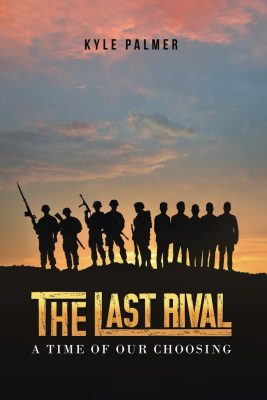
  • THE LAST RIVAL: A Time of Our Choosing by Kyle Palmer – Alternate History, Post-WWII, Action & Adventure

    The Last Rival: A Time of Our Choosing by Kyle Palmer is a modern take on the mid-20th century style of pulp-fiction, combining the genre’s brazen and entertaining storytelling with reflections on the deeper meaning behind all the action. This masculine romp through history dares to imagine the aftermath of World War II—in a slightly different world.

    The story opens in Washington, DC, in 1946, through the eyes of a fictionalized “Wild Bill” Donovan. The real Wild Bill was an American soldier and intelligence officer, perhaps best-known for founding the CIA. Author Kyle Palmer deftly weaves such historic details into his fictionalized account of American history, offering readers a chance to learn as they come along for the ride.

    From the machinations of government in Washington, DC, The Last Rival spirals into the wild resurgence of a World War II threat. The powers of the Third Reich haven’t truly been neutralized.

    A highly skilled team gathers to shut down the power of the lingering Nazis, and it must be done in the greatest secrecy. The project brings together characters like rugged veteran Jim Bolden, his former commanding officer Jack Powell, and the formidable physicist (and unapologetic womanizer) Lew Weinman. This small group of hand-selected men is whisked away to rural Montana for training—where the story really ramps up.

    As their mental and physical resolve is tested, personalities clash. But in the shadow of their common enemy, the men seem to unite as they learn more about what it will take to bring down this final threat.

    With the training in Montana complete, they travel south, taking on a cross-border journey to their harrowing destination.

    Along the way, Palmer brings up fascinating relics of the past, like “bat bombs,” incendiary devices strapped to hibernating live bats developed but never used during World War II. These strange-but-true historic details lend realism to a story that can veer toward the fantastical with the sheer bombast and undeterred strength of the main characters pushing past the realm of believable heroics.

    As the men close in on their target, they tangle with growing trouble and excitement. They’re assisted by a short list of allies, including two women who’ve been biding their time in Nazi country until help could arrive. Readers meet many more such characters who add complexity to the story.

    The Last Rival propels toward a climax of total action, complete with twisting loyalties.

    In some ways, the book’s denouement is its most lingering element. No end is left untied; every character has a clear finale, happy or not. But rather than wrapping things up summarily, Palmer leaves his characters with a fascinating reflection on philosophy and religion, calling back to earlier moments in the book. It’s such thoughtful and surprising moments of insight that set Kyle Palmer’s The Last Rival apart from its simpler pulp-fiction predecessors.


    Chanticleer Book Reviews 4 star silver foil book sticker

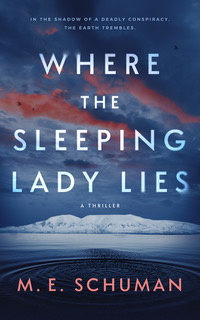
  • WHERE The SLEEPING LADY LIES by M.E. Schuman – Environmental Thriller, Mystery, Amateur Sleuth

    An Environmental Thriller inspired by the 9.2 Good Friday earthquake of 1964 in South Central Alaska, M.E. Schuman’s Where the Sleeping Lady Lies is a story of political espionage and environmental danger.

    The legend of the Sleeping Lady is a tale of a giant woman who falls asleep waiting for her lover to return from battle. When tragic news arrives that her lover was killed, the other women cannot bear to wake her, and to this day the Sleeping Lady still lies as part of the landscape.

    In the present day, Sam is on her way back to Alaska, a few weeks after a catastrophic earthquake has hit.

    She received a call from her friend Jackson, whose twin Jacob, is missing and presumed dead. Though Jackson is careful about what details he shares over the phone, there’s something not adding up about the earthquake and a mining operation his friend Camden was involved in.

    Sam soon learns that her best friend Shelby has also been missing since the earthquake. Urged to come home, Sam investigates a company called ARKose, who was conducting a highly secretive mining project in the area. As she and her comrades uncover more information about the company’s shady motivations, it becomes a race against time to stop future catastrophes that would cost countless lives.

    The chapters shift from focusing on different points-of-view, so readers get a wider scope of the actions and motivations of the characters.

    Author M.E. Schuman has traveled the world and has a master’s in environmental science and policy, which gives Where the Sleeping Lady Lies a strong understanding of the issues it tackles.

    There is quite a bit of science jargon in the dialogue, but Schuman does a good job at working explanations into the story. Sometimes this exposition can be a bit heavy, but this can be necessary in most cases when writing about complex scientific concepts.

    Where the Sleeping Lady Lies brings an interesting and refreshing scenario to the Eco-thriller genre, with plausible modern-day science rather than near-future or outlandish environmental circumstances.

    M.E. Schuman’s Where the Sleeping Lady Lies is a subtle yet exciting environmental thriller that skillfully explains scientific concepts and findings in a way that makes it accessible to readers without losing the details that are important to the plot. This makes Where the Sleeping Lady Lies an especially satisfying read for people interested in science.


    Chanticleer Book Reviews 4 star silver foil book sticker

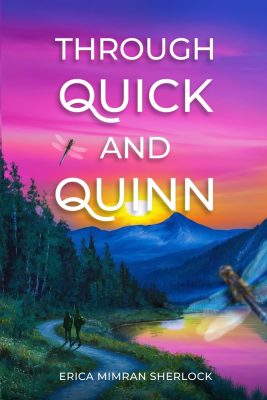
  • THROUGH QUICK And QUINN by Erica Mimran Sherlock – Contemporary Fiction, Friendships & Relationships, Grief & Loss

    Through Quick and Quinn, Erica Mimran Sherlock’s young adult novel, follows two intertwined journeys of grief, healing, and questioning the status quo.

    The titular characters Quick and Quinn both experienced family tragedies at a young age but deal with the aftermath in very different ways. After Quick’s family moves to a new town in an attempt to get away from so many memories of what they had lost, Quick and Quinn start attending the same school. Shortly thereafter, in their junior year, everything changes.

    While working together on a class assignment, Quick and Quinn find they share an interest in research. Their friendship slowly grows beyond their shared hobby and becomes the missing piece of each other’s healing journey.

    With graduation creeping ever closer, Quick and Quinn have many tough decisions ahead of them.

    They struggle to mend the wounds still present within themselves and their families and fear their friendship might not last. Much as Quick and Quinn hope to stay in each other’s lives, the natural course of adulthood threatens to turn adolescent relationships into mere fond memories.

    The characters of Quick and Quinn come alive through their shared but distinct experiences with grief and tragedy.

    Everyone deals with grief and trauma differently, with Quick retreating to the internet for his “digs” and Quinn drawing towards meditation and crystals. The supporting characters throughout Through Quick and Quinn are understated but support the narrative’s focus on the two protagonists.

    Young readers will relate to Quick and Quinn’s feeling of not belonging as they start high school, as well as how one teacher can make all the difference.

    The emotional focus of the story is very effective. Quick and Quinn are well fleshed-out and their interactions are complex and meaningful as their internal journeys through grief and healing grow organically from their similar pasts. This demonstrates how important their relationship truly is.

    Erica Mimran Sherlock’s Through Quick and Quinn is a debut young adult novel about growing up and growing out of grief, and how life-changing the power of love can be.


    Chanticleer Book Reviews 4 star silver foil book sticker

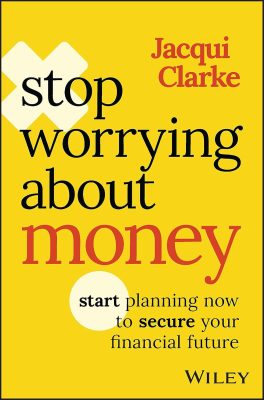
  • STOP WORRYING ABOUT MONEY by Jacqui Clarke – Financial Planning, Personal Finances, Money Management

    Stop Worrying About Money by Jacqui Clarke serves as a lucid and candidly insightful guide to understanding the cornerstones of financial literacy, whether for a working professional, business owner, or anyone seeking to better manage their savings and investments.

    This practical and insightful approach to financial awareness endeavors to decode the mystifying fundamentals of financial freedom, wealth management, and money psychology. Rather than merely presenting facts on numbers and investments, it adopts a holistic perspective, covering principles of earning, understanding, and wisely managing money.

    Written by an experienced professional and fiscal guardian to many, Clarke’s Stop Worrying About Money paves a clear and accessible roadmap for navigating the often-chaotic terrain of financial planning.

    The book begins by exploring how upbringing and personal experiences shape a person’s financial habits.

    Clarke underscores that financial literacy extends beyond earnings. From highlighting the benefits of early planning and discipline to acknowledging the commonality of financial mistakes—spending to impress, neglecting financial planning, and remaining unaware of personal expenses—Clarke’s real-life anecdotes add credibility to the book’s insights.

    Stop Worrying About Money introduces the concept of building a personal financial support system, or “finance village,” where trusted voices collaborate.

    Warning against the perils of blind trust, the text advocates for thorough verification, transparency, and the application of logic and research when assembling a financial network. The infamous Melissa Caddick Australian financial fraud case described in the book strengthens the argument for planning finances with a trusted advisor.

    Clarke’s perspective on financial freedom as a journey rather than a destination encapsulates the book’s core message.

    She equates financial freedom not merely with a bank balance but with a mindset rooted in conscious financial decisions, cautioning against lifestyle inflation where increased income leads to increased expenses. Clarke further emphasizes the importance of estate planning with a robust financial strategy to ensure the optimal utilization of future wealth.

    This timely guide gives due attention to the impact of financial issues on personal relationships.

    Exploring concepts such as financial infidelity and financial abuse, the text offers advice on fostering transparency and setting shared financial goals. It also highlights the value of side hustles as a means of securing long-term financial stability, illustrating how a well-planned sabbatical can serve as a reset for both mental health and career growth.

    The book culminates in a prudent approach to financial literacy, including advice for parents to instill financial wisdom in their children.

    By blending theoretical financial advice with pragmatic applications, the writing embraces simplicity and relatability, incorporating real-life examples, case studies, and interactive exercises. This approach transforms an otherwise dry subject into an engaging and accessible discourse, making financial literacy digestible.

    Stop Worrying About Money by Jacqui Clarke is an informative resource free from convoluted financial jargon. Whether for beginners or seasoned professionals, it provides a foundation for understanding and taking control of personal finances. Ultimately, the work is more than a financial guide—it is a journey in self-awareness that reaffirms money as a means of living, rather than the ultimate objective of life.