Tag: CBR writing competition

  • ONCE UPON A SCANDAL by Julie LeMense – Regency Romance/Historical Romance

    ONCE UPON A SCANDAL by Julie LeMense – Regency Romance/Historical Romance

    Since there’s no such thing as a perfect person, we can’t say that Julie LeMense has written a perfect Regency romance.

    Darn close, though.

    Once Upon a Scandal nails it on so many levels: plot and characters driven by the era they live in; smooth, clean writing; a fully realized heroine who’s smart, vulnerable, resourceful, flawed, compassionate, and funny; an aristocrat hero who’s believable as a man; and a fresh, twisty plot that demands pages be turned to find out what happens next.

    Because the story is a romance, we can expect a happy ending. How Jane and Benjamin are ever going to find it, however, remains a mystery until the end. Both are trapped in their roles in society and hide dangerous secrets behind their identities. Jane actually has to give up her identity and become a false person in order to escape poverty and shame. Her sacrifice, it turns out, helps save her country from a traitor—who just might be her own father.

    Operating in disguise creates a satisfying turnabout, wherein the honest woman rejected by society allures the snobs, doyennes, and chauvinists into eating out of her dishonest hand. Jane observes: “Their strict rules and codes of conduct had been instituted for one reason and one alone: to prove themselves superior. They didn’t judge a person’s suitability by intellect, achievement, or even kindness.”

    That thought forms the theme of the novel and the deceptions practiced throughout it.

    Jane’s identity switcheroo is engineered by Benjamin for his own noble yet selfish purposes, though he soon realizes he’s bitten off more than he can chew and falls crazy in love with the real Jane—jeopardizing both of their masquerades.

    The moral and behavioral strictures of society during England’s Regency period seem unbelievable to those of us reading about it generations later. But they were painfully real at the time and forced many a clandestine affair. This suppression gives plausibility to the characters’ secrets and skulduggery; and the era’s lack of technology as we know it allows them to get away with stunts that would be immediately caught, and widely broadcast, today. Thus, when modern anachronisms appear in the narrative, they draw attention to themselves. The word “feminist,” for example, used in conversation by Jane in 1813, was not actually coined until decades later. Bloopers like this in such a period-sensitive novel raise doubts about the rest in the reader’s mind.

    Fortunately, the story holds its own with romantic intrigue and close brushes with disaster. The result is a conflict parfait, with Jane and Benjamin’s impossible love at the top, overlying the contradictions and inequities of their society, which forms a harsh class division between the haves and have-nots, in a country deep at war. In this multi-layer mess, how can anyone dream that true love will conquer all?

    Jane and Benjamin give it their best shot in this classy, cork-screwy romance that turns scandal on its head.

     

  • Greylock by Paula Cappa – Mystery/Thriller/Paranormal

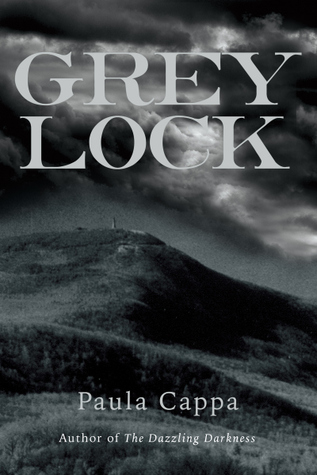
    Greylock by Paula Cappa – Mystery/Thriller/Paranormal

    What’s in the music we create? When we say it lives – when we say it breathes – when, for one fleeting moment it seems to bridge the gap between one soul and another – what kind of existence does it assume? What does it feel? What does it think? What does it want? Such questions may reside in theory for most, but not for piano virtuoso Alexei Georg in Paula Cappa’s Greylock.

    Hot off the release of what will surely be his magnum opus, October, Alexei has achieved the level of success found only in his wildest dreams. Hailing from a Russian family steeped in musical artistry, he has transcended all those before him and become something they never could: a legend. And that’s all thanks to October.

    There’s only one problem: he didn’t compose it.

    And that would have been fine for him, taking credit for pages found in an antique chest belonging to one of his ancestors, if it weren’t for the demons it conjured every time he plays those chords. If it weren’t for the shadowy figure haunting him, punishing him, coming for him. October may have surfaced through the Georg bloodline, but there is something far more sinister and mysterious hidden in each note that is threatening to break free from Alexei’s control.

    Alexei wants nothing more than to move on, but the past will not let him. Add to his troubles the threat of fraud exposure from those he’s closest to and a string of grisly murders within the Boston music community that brings the police knocking on his door, he can only come to realize just how much October is at the center of it all. He’ll have to confront three generations worth of Georg family demons to overcome this evil before it claims everything he has and hopes to achieve.

    Using music as a central motif and life force to drive the narrative, Paula Cappa defies the limitations of the written word and adds a new dimension in storytelling through the personification of music. The descriptions being so richly layered and animated, one might just imagine these nightmares dwelling in the punctuation, awaiting their chance to come alive themselves.

    With just enough integral characters in place to create conflict, Cappa creates a compelling mystery that allows the reader to virtually hear the machinations of the plot grind away before they inevitably crank up to a satisfying crescendo.

    5 Star Best Book Chanticleer Reviews round silver sticker

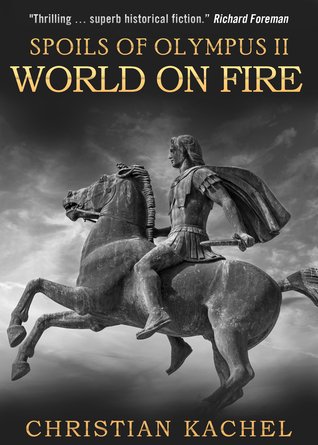
  • Spoils of Olympus II: World on Fire by Christian Kachel – Historical Fiction/War & Military/Post-Alexandrian Greece

    Spoils of Olympus II: World on Fire by Christian Kachel – Historical Fiction/War & Military/Post-Alexandrian Greece

    Spy-craft, betrayals, and bloody battles infuse this historical novel of Ancient Greece in the chaotic years following the death of Alexander the Great.

    World on Fire is the second novel in a complex historical saga narrated by Andrikos, a young man who started his fighting career on the streets of his hometown of Illandra. As a member of the underground cult, The King’s Hand, Andrikos and his traveling companion Vettias dedicate themselves to keeping Alexander’s lineage on the throne of Macedon. The pair is a study in contrasts: Vettias, the elder, is the more hardened soldier who teaches Andrikos the arts of espionage; while Andrikos maintains a youthful idealism that is sometimes at odds with the grim necessities of war.

    The lessons Andrikos learns from Vettias offer gripping scenes of surveillance, stealth, and expeditious killings. Together they must help restore Alexander’s dynasty, often posing as enemy operatives. This infiltration creates a multi-layered plot with far reaching implications on and off the battlefield.

    In addition to spy-craft and bloodletting, writer Christian Kachel makes room and time to establish Andrikos as a loyal, home-loving son whom his parents trust enough to guard Alexander’s widow Rhoxane and her young son, Alexander IV, within their household despite the obvious dangers.

    The arts of war form a central element of World on Fire, with vivid descriptions of ancient weaponry and hand-to-hand combat. To our delight, Kachel does not neglect the feminine, as he presents two powerful young women, both wise beyond their years: the teenage Queen of Macedon, Adea, who becomes a willing player in the plots against the enemies of Vettias and Andrikos; and Mara, Andrikos’ first love, to whom he made prior promises that he is now able to keep.

    By the end of ten years of travels and intrigues, Vettias and Andrikos will see the world differently and will have played their part in making positive changes.

    Kachel has staged this epic skillfully. Placing Andrikos as the narrator allows the reader to see many political and military viewpoints held by others through a young, albeit, sometimes naïve perception, and to enjoy periods of respite from war and treachery in scenes of romance, home life, and some moments of stolen passion.

    Kachel, three times deployed to fight in Afghanistan and Iraq, is a student of warfare who has chosen to concentrate his novelistic mastery on a sometimes neglected period of history—the aftermath of the death of Alexander the Great and resulting internecine struggles for dominance in the middle eastern region. Historians disagree on many details of this troubled era, giving Kachel free rein to explore possibilities clearly grounded in fact and research, but also informed by the author’s substantial imaginative gifts.

    5 Star Best Book Chanticleer Reviews round silver sticker

    “A master tactician and student of war, Christian Kachel brings history to life in The Spoils of War II: World on Fire; an engaging foray into the aftermath of Alexander the Great.” – Chanticleer Reviews

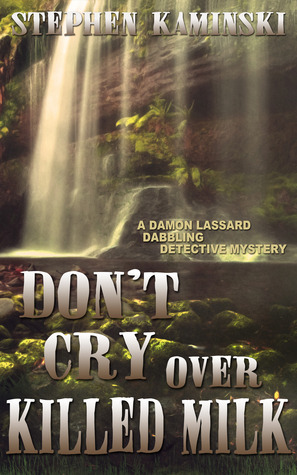
  • Don’t Cry Over Killed Milk: A Damon Lassard Dabblin Detective Mystery by Stephen Kaminski – Cozy Mystery/Amateur Sleuth

    Don’t Cry Over Killed Milk: A Damon Lassard Dabblin Detective Mystery by Stephen Kaminski – Cozy Mystery/Amateur Sleuth

    Amateur sleuth, Damon Lassard, has earned enough money in the Japanese professional baseball league that he retired at the age of 31. He now finds himself volunteering at the library, hiking around Tripping Falls State Park, and dabbling in solving mysteries much to the chagrin of the local law enforcement.

    And, yes, the title is a pun, and there are plenty more throughout this quick and entertaining read.

    He has the requisite female friend who would like to be more than friends but settles for being a sounding board for now, a love interest that is not interested in him, a police detective friend who would prefer Damon not get him into trouble any more by investigating crimes around town, and a keen knack for figuring out murders.

    The victim in this book is Jeremiah Milk, Damon’s hermit of a neighbor who suffered the tragic loss of his wife and infant son within hours of each other one fatal night.

    Damon first gets involved when Jeremiah comes to him at the library to get help for a suspicious recurring insect infestation of his and others neighbors’ crepe myrtle trees. Not much of a mystery to solve, but when Jeremiah’s body is found at Tripping Falls State Park where he worked, Damon starts his dabbling into the mystery even though his police friend – and his friend’s boss, Lt. Hobbes, have strongly forbidden Damon’s involvement. Well, any cozy reader knows that those kinds of instructions are meant to be ignored.

    The story takes several interesting turns that eventually lead to an unexpected ending. The writing is fast paced and the supporting characters all contribute to the realistic feel of the town of Hollydale near Arlington, Virginia. Many of the clues are extremely subtle and some didn’t come into the story until much later, requiring careful attention to all the details throughout the book.

    Because this book is the second in a series, some of the details about Damon, his friendship with Gerry, and his tense relationship with Lt. Hobbes may have been covered in more detail in the first book. Regardless, these missing details do not take away from the quick pacing and clever tone of Don’t Cry Over Killed Milk a satisfying cozy mystery read..

    “Who knew insect infestations lead to murder? But they can – especially if you’re Damon Lassard – amateur sleuth – with plenty of time on your hands to figure it all out. Don’t Cry Over Killed Milk by Stephen Kaminski will have you in tears – from laughter!” – Chanticleer Reviews

  • The Other Side of Life by Andy Kutler – World War II/Civil War, Time Travel

    The Other Side of Life by Andy Kutler – World War II/Civil War, Time Travel

    The Other Side of Life by the first-time author Andy Kutler will take you by surprise. This time-spanning book covers two major wars in United States history: World War II and the Civil War – but not how you might think. Kutler pulls this off with an intriguing storyline and well-orchestrated action sequences that put us in place and time.

    The story opens on the deck of the battleship Nevada, part of the U.S Naval fleet on December 7th, 1941. The Japanese fighters rip apart the battleships moored in place. During the attack, Commander Malcolm (Mac) Kelsey is severely wounded – and this is where the story gets interesting.

    Kelsey encounters a certain Mr. Leavitt who offers him a choice: stay right where he is in his broken condition; or, go somewhere else – a place known as The Other Side of Life – where all of his memories are wiped clean. A do-over, if you will.

    Kelsey chooses the latter, but this other side of life is no better – and in some respects worse – than before. He’s fighting for the Union Army in the Civil War. But something has gone wrong: he has retained all of his memories, making him a man outside his own time.

    For four years Kelsey fights for the Union Army, and throughout this period, he struggles (understandably so) with trying to make sense of why he is where he is, and how this all come to be. Upon the conclusion of the war, Kelsey encounters Mr. Kelsey again and faces another choice.

    That choice is perhaps the most interesting and most jarring aspect of the book. The author never does explain quite where it is that Kelsey has gone. A brilliant move! Any reader having even the slightest bit of religious background or spiritual awareness will quickly associate this with heaven – or maybe purgatory – or even nirvana. Using this ambiguous device enables readers to ponder questions like, what would they do in a similar circumstance – the same thing, or maybe something different?

    A captivating historical military story that blends genres and crosses through time and space. Kutler has a flare for describing situations at hand – his descriptions of the Pearl Harbor attack are impeccable – and he brings in multiple characters to help the story unfold. The story may be a  bit unwieldy at times, but in the end, Kutler manages it well even providing an unexpected twist making The Other Side of Life is a satisfying and worthy read. Highly recommended.

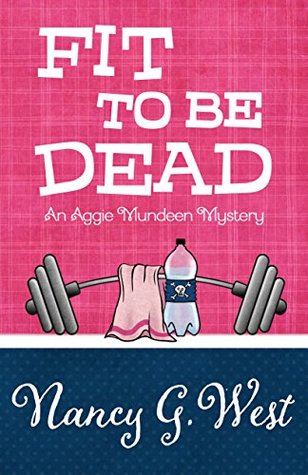
  • Fit to be Dead by Nancy West – Cozy Mystery for clue fans

    Fit to be Dead by Nancy West – Cozy Mystery for clue fans

    Aggie is the author of the “Stay Young with Aggie” column and today she decides to follow her own advice. After all, she’s well over 30, admits to a few extra pounds, and looks ahead to growing old with sheer fear. She pulls into the Fit and Firm Fitness Center with the thought that she might be able to improve her social life along with her figure. Once inside, she receives a guest pass and another kind of pass – from a gorgeous blond who introduces himself as Pete Reeves and offers her a tour of the club. She declines the latter and heads for the locker room.

    As she enters the swimming area, however, she spots something strange at the far end of the pool. It’s a body. And it isn’t moving! Aggie rushes to the rescue and not a minute too soon. Her yell for help brings instructor Sarah Savoy to revive the young woman, Holly. To their combined horror, the women spot an electric cord snaking across the pool. Hard to say what would have happened to Holly first – drowning or electrocution – if Aggie hadn’t been there. Was it an accident or…? Such questions always make Aggie’s feet itch.

    The next day at the gym Holly confesses to Aggie that she had recently given her newborn baby girl—born out of wedlock—to an adoption agency. Trying to swallow her concern and sorrow, Aggie goes to the locker room to shower and dress. But soon she’s hearing screams. She rushes outside just as the medics arrive. Aggie knows two things: it’s Holly and she’s dead.

    Aggie decides she owes it to Holly to find out what happened. She’s certain that the hit and run was a second—this time successful—attempt on Holly’s life. But questions remain: Who? Why? As the column writer becomes sleuth, her spunk and determination return, along with her unique madcap approach to life.

    As Nancy West finished her award-winning Nine Days to Evil (2012), something about one of the supporting characters, Aggie Mundeen, wouldn’t let her rest. This character seemed to demand that West make her the protagonist of a new book. Thus, Fit to Be Dead was created!

    West crafts her characters with considerable expertise and an extensive vocabulary. West knows how to turn a phrase and how to keep you turning the pages. Additionally, this author has the keen knack of slyly tucking in clues so that they slip past readers at first, then pop up later. Thank you, Nancy West for crafting the Aggie Mundeen mysteries!

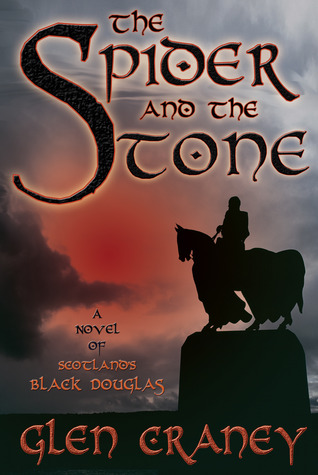
  • The Spider and the Stone: A Novel of Scotland’s Black Douglas by Glen Craney – Historical Fiction/Scottish War of Independence

    The Spider and the Stone: A Novel of Scotland’s Black Douglas by Glen Craney – Historical Fiction/Scottish War of Independence

    Steeped in the early struggles for Scottish independence, Glen Craney’s The Spider and the Stone combines fact, folklore, and imagination to recreate the life of one of the country’s most storied heroes, James Douglas.

    As a young teenager, James was confronted with the barbaric cruelty of the English occupiers. King Edward, known as Longshanks, would stop at nothing to quell Scottish rebellion—humiliating, torturing, and slaughtering innocent civilians along with Scottish combatants striving for the freedom and the right to rule themselves.

    Just as he begins to grapple with the reality of his country’s plight, he meets and falls in love with a girl named Isabelle Macduff and determines to win her, despite the fact that she is promised in marriage to a rival of the Douglas clan.

    The book opens in the middle of scenes depicting the exploits 0f William Wallace – Braveheart, followed by a heartbreaking loss to Longshanks at Falkirk, ending with the gruesome murder of Wallace.

    Cue the return of James, who is back from France where he learned the art of war from the Knights Templar and is ready to fight. He and Robert the Bruce step into the breach and continue the assault on the English invaders.This is the stuff legends are made of, and Glen Craney does an excellent job bringing the tale to life. Written in lush prose with battle’s gore informed by the historical record and a scattering of erotic scenes with the decorum appropriate to the times, Craney’s offering keeps the reader solidly immersed in the late 1300s-early 1400s. He deftly crafts the coldness of the castles and the warmth of campfires sprinkled with colloquialisms redolent of the time and place.

    Craney admits having taken some liberties with the known facts, which are few, about the Scottish Wars of Independence and the major players; he has matched Isabelle with James, for example, though others have postulated an affair between her and The Bruce.

    The book’s title references two important elements of Scottish lore: the Stone of Scone, a necessity for the crowning of monarchs and sometimes said to be the Biblical Jacob’s Pillow; and the “spider” whose industry and apparent refusal to stop spinning her web no matter what obstacles she encountered so impressed and inspired Bruce (and in this version, James also) while in captivity.

    Craney’s attention to detail in both high concepts and simple conversations, make history come alive.

    “Cinematically enthralling and historically compelling, Glen Craney’s The Spider and the Stone is a must read for lovers of James Douglas, the fight for Scottish Independence, Braveheart, or Robert the Bruce.” – Chanticleer Reviews

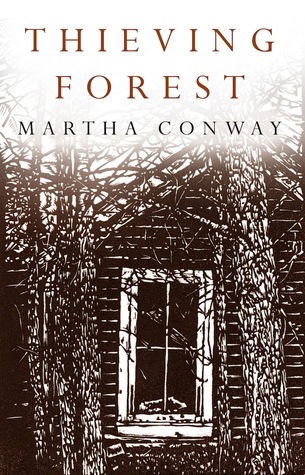
  • Thieving Forest by Martha Conway – Women’s Historical Fiction

    The story is set in 1806 and follows five sisters who are on their own after the recent passing of their parents. The five are faced with the choice to remain and run the family store in the tiny settlement along the edge of Ohio’s Great Black Swamp or pull up stakes and join the youngest sister living with their aunt in Philadelphia.

    By the banks of the Great Black Swamp, one woman fights to save her sisters caught between two cultures in Martha Conway’s tale, Thieving Forest.

    The world is filled with such events that when the right author develops characters and plunges them into a real-world timeline, history comes alive. Martha Conway has succeeded in doing this in her debut novel, Thieving Forest.

    Conway turns the story up a notch early as four of the older girls are kidnapped by a band of Potawatomi Indians who raid their home. Seventeen-year-old Susanna is left behind, and though shaken deeply, quickly comes to her senses and determines to rescue her siblings.

    Trust is the theme as the story unfolds. The kidnapping is somewhat of an unexpected occurrence as the family had good relations with the natives. The issue is complex and Susanna finds herself questioning who she can trust along with the sad realization that sometimes people are not always who they claim to be. The sisters are eventually reunited, but as is true in real life, things can never be the same.

    Martha Conway paints a stunning portrait of life in the early days of the United States expansion into the West. She has done her research, and it shows as she delves into Native American tribes and the relationship they have with the European settlers.

    Detailed descriptions of day-to-day life, including the hardships experienced, are fleshed out with complex and engaging characters. A tale of self-discovery, personal growth, romance, family ties, loyalty and more in this book readers will find hard to put down.

    5 Star Best Book Chanticleer Reviews round silver sticker

  • A River Divides by Michael J. Roueche – Historical Fiction/Civil War

    A River Divides by Michael J. Roueche – Historical Fiction/Civil War

    Like the first book in Beyond the Woods Series, the second, A River Divides, offers a complex view into life during the Civil War era. This multifaceted book has the same engaging characters found in the first and includes a few new ones, that when combined, will keep readers riveted to the pages.

    The story resumes in winter of 1864, where Betsy Henderson remains outside Staunton, Virginia with a freshly bruised face, worrying whether she’s revealed too much. Will the sheriff find out about her affair with Union soldier Hank? Does the sheriff have enough evidence to capture Walthorpe, the man who gave her the bruise and nearly made away with her fortune? Walthorpe, meanwhile, has another plan up his sleeve, one that will force Betsy to grapple with her southern loyalties, including the secret she’s keeping from Hank—one she won’t be able to hide for long.

    Author Michael J. Roueche does a great job introducing esoteric terms while giving them proper context, thereby helping present-day readers immerse themselves in the historical tapestry he’s created. All the characters in this story demonstrate authentic shades of good and bad, making their choices (and their consequences) even more intriguing. Especially William, the former slave from Betsy’s plantation, whose bond with a new family makes his objective of joining the Union Army a lot more complicated.

    Reading the first in the series isn’t required here but doing so will certainly enhance the experience. Roueche’s ability to sprinkle in enough detail to keep the interest of readers of Beyond the Wood while enticing those who are yet to pick through its pages makes this bittersweet story more than palatable. The sheriff’s point-of-view not only enlightens new readers to the necessary backstory found in the first book but also offers some surprises along the way. Readers will also get a glimpse into Walthorpe’s past and gain insight into his character that will suggest his villainy isn’t as cut-and-dried as it originally appears.

    Roueche writes each character’s voice so distinctly that the reader may not notice the point-of-view shifts within the scenes, a small, but present, distraction. On the whole, Roueche’s beautifully written imagery and ability to immerse readers in place and time will delight and hook readers from the very beginning to the very end.

    By the close of A River Divides, it’s clear that a river divides no more. And the cliffhanger in the final chapter will whet readers’ appetites for the next book in the series.

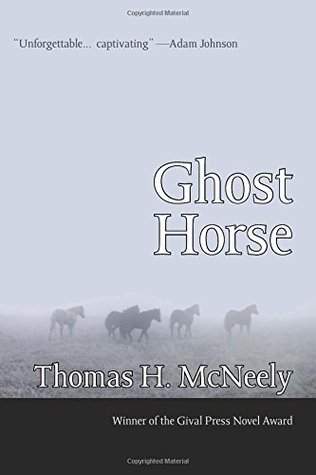
  • Ghost Horse by Thomas McNeely – Literary Fiction

    Ghost Horse by Thomas McNeely – Literary Fiction

    With a firm sense of place and time, Thomas McNeely creates a tableau of class and race segregation juxtaposed with the frailty of youth: One young boy exists in the tormenting forces of his own personal hurricane of a broken family and a broken society that throws him down and swirls him around without regard to their tragic effect on him.

    Eleven-year-old Buddy Turner’s understanding of what it means to be normal hangs in the balance. He’s facing the trials of growing up and a family unit in shambles and his whole world is about to change. It’s the 1970s, Houston, and most kids don’t expect to be thrown into the nasty realities of a broken home. However, this is Buddy’s reality in Thomas McNeely’s debut novel, Ghost Horse.

    Buddy’s mother spends much of her time working in a hospital laboratory while his absentee father comes back to town leaving Buddy with a fresh set of empty promises and his mother with a request for a divorce.

    Buddy’s only escape is working on an animated film with his best friend, Alex Torres. Together, the boys create a film about a ghost horse. Entering into the work helps Buddy avoid the painful realities at home and serves as a buffer for his heartache. Indeed, the movie the boys create is a metaphor for the upheaval Buddy is experiencing in the real world.

    McNeely expertly weaves an intricate and darkly complex story of a boy trying to gain a foothold in a world–a raw, and sometimes, painful coming-of-age story. The book took ten years to pen through the author’s own turbulent waters and his father’s untimely death and at points the reader can see his internal battle emerging in his writing in this heart-rending coming-of-age tale set in the turbulent  1970s.

    In the broader spectrum of the novel, McNeely unleashes his questions about class and racial prejudices, and how adult behavior informs children who are expected to follow suit. Ultimately, however, McNeely’s storytelling is rich with texture and the soulful portrayal of a lost boy, who is un-moored by those whom should care for him the most. Ghost Horse has the weighted emotional cache and heartfelt pertinence that enables the tale to tug at the reader for a very long time.

    5 Star Best Book Chanticleer Reviews round silver sticker