Tag: CAC17

  • The GERTRUDE WARNER Awards for Middle Grade Readers First Place Category Winners 2016

    The GERTRUDE WARNER Awards for Middle Grade Readers First Place Category Winners 2016

    Gertrude Warner Children's Chapter BooksThe Gertrude Warner Awards writing competition recognizes emerging new talent and outstanding works in the genre of  Middle Grade Readers. The Gertrude Warner Awards  is a division of the Chanticleer Awards International Writing Competitions.

    Congratulations to the 2016 Gertrude Warner Awards First In Category Award Winning Middle Grade Early Readers:

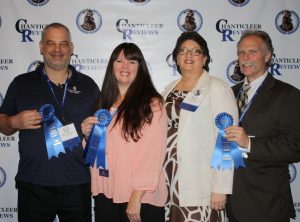
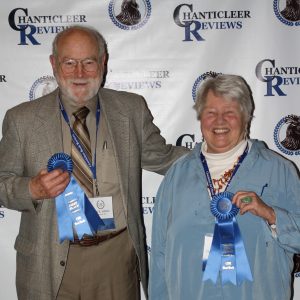
    Award-Winning Authors: Mike Hartner, Tara Ellis, Tom and Nancy Wise
    • Contemporary: Life On Base: Quantico Cave by Tom & Nancy Wise
    • SciFi & Paranormal: The Train from Outer Space by Alan Sproles and Lizanne Southgate
    • Mystery: The Mystery of Hollow Inn by Tara Ellis
    • Adventure: Ethyr by M.P. Follin
    • Historical: I, Mary by Mike Hartner    

    cac16The Gertrude Warner First Place  Category award winners have competed for the Gertrude Warner Grand Prize Award for the 2016 Young Adult Novel and were recognized at the  April 1, 2017 at the Chanticleer Authors Conference and Awards Gala, Bellingham, Wash.


    CONGRATULATIONS to Alan Sproles and Lizanne Southgate, the 2016 Gertrude Warner Award Winning Authors of The Train from Outer Space.

    We are now accepting entries into the 2017 Gertrude Warner Awards. The deadline is February 28, 2017. Click here for more information or to enter.

    Congratulations to those who made the Gertrude Warner Awards 2016 FINALISTS official listing and the SHORT LISTERS!

    More than $30,000 worth of cash and prizes will be awarded to the 2016 Chanticleer Novel Writing Competition winners! Fifteen different genres to enter your novels and compete on an international level.


  • The CHAUCER Awards for Historical Fiction Pre-1750s First Place Category Winners 2016

    The CHAUCER Awards for Historical Fiction Pre-1750s First Place Category Winners 2016

    Pre 1750 Historical Fiction Award

    The Chaucer Awards writing competition recognizes emerging new talent and outstanding works in the genre of pre-1750s Historical Fiction. The CHAUCER Awards is a division of the Chanticleer Awards International Writing Competitions.

    Congratulations to the 2016 Chaucer Awards First In Category Award Winning Historical Fiction Novels:

    • Award Winning Authors – Bruce Gardner and Carol Cram

      The Towers of Tuscany by Carol M. Cram

    • Envoy of Jerusalem: Balian d’Ibelin and the Third Crusade by Helena P. Schrader
    • The Gilded Crown by Catherine T and Catherine A Wilson
    • Hope of Ages Past by Bruce Gardner
    • 1381: The Forgotten Revolt by Gina M. Bright
    • The Serpent’s Crown: A Novel of Medieval Cyprus by Hana Samek Norton

    CONGRATULATIONS to Carol M. Cram, author of the CHAUCER Awards Grand Prize Winner — The Towers of Tuscany! 

    The CHAUCER First Place  Category award winners competed for the CHAUCER Grand Prize Award for the 2016 Historical Fiction Novel. Grand Prize winners, blue ribbons, and prizes were announced and awarded on April 1, 2017 at the Chanticleer Authors Conference and Awards Gala, Bellingham, Wash.

    We are now accepting entries into the 2017 Chaucer Awards. The deadline is June 30, 2017.  Click here for more information or to enter.

    Congratulations to those who made the CHAUCER Awards 2016 FINALISTS and Official SHORTLISTERS!

    More than $30,000 worth of cash and prizes will be awarded to the 2018 Chanticleer Novel Writing Competition winners! Fifteen different genres to enter your novels and compete on an international level.

  • JOURNEY Awards for Narrative Non-Fiction First Place Category Winners 2016

    JOURNEY Awards for Narrative Non-Fiction First Place Category Winners 2016

    journey-126x1501.gifThe JOURNEY Awards writing competition recognizes emerging new talent and outstanding works in the genre of  Narrative Non-fiction. The Journey Awards is a division of the Chanticleer Awards International Writing Competitions.

    Congratulations to the 2016  JOURNEY Awards First Place Category Winners.

    Journey Award Winners: Nick K. Adams & Cyndy Shelton
    • Professional Experiences: Gestalt as a Way of Life by Cyndy Sheldon
    • Memoir: My Dear Wife and Children: Civil War Letters from a 2nd Minnesota Volunteer by Nick K. Adams
    • Enlightenment:  Cocoon of Cancer: An Invitation to Love Deeply by Abbe Rolnick
    • Self Help: The Romance Diet: Body Image and the Wars We Wage on Ourselves by Destiny Allison
    • Personal Experiences: The Silver Lining Encounters with Angels by Phoebe Walker

    cac16The Journey First Place  Category award winners  competed for the Journey Grand Prize Award for the 2016 Best Narrative Non-fiction work. The First Place Category Winners and the Overall Grand Prize Winner of the 2016 Journey Awards were announced at the annual awards banquet that was held on April 1, 2016 in Bellingham, Wash.


    Congratulations to Destiny Allison, the author of the JOURNEY Grand Prize Winner — The Romance Diet: Body Image and the Wars We Wage on Ourselves!

    We are now accepting entries into the 2017 JOURNEY Awards. The deadline is April 30, 2017 Click here for more information or to enter.

    More than $30,000 worth of cash and prizes will be awarded to the 2016 Chanticleer Novel Writing Competition winners! Fifteen different  genres to enter your novels and compete on an international level.


  • CYGNUS Awards for Science Fiction & Speculative Fiction FIRST PLACE Category Winners  2016

    CYGNUS Awards for Science Fiction & Speculative Fiction FIRST PLACE Category Winners 2016

    Cygnus1.pngChanticleer Book Reviews is honored to announce the First Place Category Winners for the Cygnus Awards 2016, the science fiction, speculative fiction, and steampunk fiction genre division of the Chanticleer Blue Ribbon Award Writing Competitions.

    The Cygnus Awards recognize emerging new talent and outstanding works in the genre of Science Fiction, Steampunk, and Speculative Fiction.  The Cygnus Awards is a genre division of Chanticleer Book Reviews Blue Ribbon Awards Writing Competitions.

    These Cygnus Awards for science fiction works 2016 First Place Category Winners were recognized on stage at the Chanticleer Authors Conference on April 1, 2017 Awards Banquet.

    CONGRATULATIONS to the 2016 CYGNUS First Place Award Winners!

    First Place Category Winners for the Cygnus Awards are:

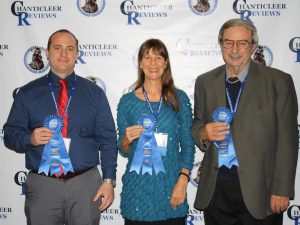
    CYGNUS Award Winners: Ryan London, Sara Stamey, & Dennis Clausen
    • Soft Sci-Fi/You​ng Adult: Over by Sean P. Curley
    • Speculative: Wizzy Wig by Tiffany Pitts
    • Apocalypti​c/Dystopia​n:  The Accountant’s Apprentice by Dennis M. Clausen
    • Science Fiction: The Ariadne Connection by Sara Stamey
    • Hard SciFi: Prophecy of the Immortals by Ryan London

    Congratulations to Sean Curley author of the 2016 Grand Prize Winner — OVER!

    The 1st Place Category Winners competed for the CYGNUS AWARDS 2016 GRAND PRIZE position. The CYGNUS Grand Prize Winner will be announced in the Grand Prize Winners post! Please check back.

    We are accepting entries into the 2017 Cygnus Awards Novel Competition for Science Fiction Works.

    To compete in the 2017 CYGNUS Awards or for more information, please click here.

    THE DEADLINE TO ENTER THE 2017 CYGNUS Novel Writing Competitions is April 30, 2017.

    Chanticleer Book Reviews & Media, L.L.C.  retains the right to not declare “default winners.” Winning works are decided upon merit only. Please visit our Contest Details page for more information about our writing contest guidelines.

    CBR’s rigorous writing competition standards are why literary agencies seek out our winning manuscripts and self-published novels. Our high standards are also why our reviews are trusted among booksellers and book distributors.

    Please do not hesitate to contact Info@ChantiReviews.com about any questions, concerns, or suggestions about CBR writing competitions. Your input and suggestions are important to us.

    Thank you for your interest in Chanticleer Book Reviews International Writing  Competitions.

  • Business Growth Applied to Authorship by Sara Dahmen

    Business Growth Applied to Authorship by Sara Dahmen

    We have a LOT of terrific sessions planned for CAC17, and we are still adding more. One of those amazing sessions will be:

    Bigger Than Books: Business Growth Applied to Authorship & Beyond – What more does it take to be a successful author?  Whether you’re represented or self-published or somewhere in between, using overarching business tools are a huge assistance in building success. How can the tools commonly manipulated by marketers, large and small companies, and retailers help you create a successful ‘business plan’ as an author?  From multi-pronged approaches, to developing a tiered ‘clientele’, to organization and presence, business is business, whether you’re an author or the manager of Apple.  Use those same tools to create yours.

    The presenter for this class, Sara Dahmen, a Chanticleer Grand Prize winner and business owner, took time out of her week to provide us with this article based on her session.


    If you’re an author, you’re also, by default, a self-employed business owner. I know many of us don’t take out LLC’s or even own our own URL, but the fact remains, if only on paper, that we are all business owners.  There’s a resounding ring to that.

    Business owner.
    Self-employed.
    My own boss.
    The plotter of my own destiny.

    Excellent.  So, once we’ve all recognized that fact…now what?

    Being a successful author is more than simply selling some (or a lot!) of books. Even getting 20,000 books out there is not going to be a sustainable career. Once those 20,000 books have been read (and unless you continually churn out best-sellers), you’re left with a bit of a hangover and half-formed additional ideas. None of these bode well to continue the business of “you.”

    Success is measured both by income and by long-term growth. It’s a bit hard, and not nearly as wonderfully artsy to say, but it’s the truth. If you’re going to be a successful small business owner, you need to pull up a chair with the left side of your brain and get to work.

    A multiple pronged approach is best, and each person’s strategy will vary widely depending on your audience, which should always be broader than a singular author’s platform. There are a myriad of business tools out there – some expensive, and some free – that can be harnessed to create a wide-scale business bigger than a book.

    A business owner will always have a product or a service. You have that already: your book. And a business owner will also have a marketing strategy (and we all know many of those…but many are also often forgotten or overlooked or we get in a rut and forget to think outside the box) that encompasses far more than a blog, a website and some social media. And a business owner will think long-term. A one-hit wonder will be lovely, but after that advance is gone and the shine has worn from those book covers, you’ll need to ask yourself: what now?

    Business is business, and books are business in many more ways than getting some readers and a publisher. Whether you write it down (pun intended!) or not, writers need some sort of a business plan that goes beyond writing the words “the end” and I’m not just talking about plastering a Twitter page with a bunch of book launch announcements.

    Authors should walk into the arena equipped with answers to the questions:

    What do you believe: about yourself, your book, your future plans?
    What are you going to do to make those future plans happen – and how?
    Who do you need to know to help you?
    And what kind of wacky ideas can you dream up for yourself…and then do?

    I plan to tackle much of this in a presentation (Bigger Than Books: Business Growth Applied to Authorship & Beyond) at the Chanticleer Author Conference in Bellingham WA the weekend of March 31 – April 2 where I promise I will be far less vague and incredibly specific. If I had my way, we’ll all be drinking a little booze while I talk, and then we talk.  Looking forward to it!


    Sara Dahmen: Author & Entrepreneur

    Sara Dahmen is a metalsmith of vintage and modern kitchenware in tin, copper and iron. Her debut novel, Doctor Kinney’s Housekeeper, won the Laramie Award Grand Prize for Western Historical Fiction, and inspired House Copper & Housekeeper Crockery – American-made cookware. She has published over 100 articles as a contributing editor for multiple magazines, book blogs and review blogs and spoke at TEDx Rapid City, at the Historical Writers of America inaugural conference in Williamsburg VA, and has co-chaired the Port Washington Literary Festival since its inception. Prior to her writing gigs, Sara was a print, radio and TV producer in Milwaukee and owns and has operated a nationally award-winning event planning company since 2006. When not writing or sewing authentic clothing for reenactments, she can be found hitting tin and copper at her apprenticeship with a master smith, reading the Economist and reference books, or playing with her three young children.

  • PARANORMAL Book Awards for Supernatural Fiction 2016 Short List (Semi-Finalists)

    PARANORMAL Book Awards for Supernatural Fiction 2016 Short List (Semi-Finalists)

    Paranormal Fiction Awards

    These titles are in the running for the 5 First Place Book Awards for the 2016 PARANORMAL Book Awards novel competition for Supernatural Fiction!


    The Paranormal Book Awards  Writing Competition recognizes emerging new talent and outstanding works in the genre of Supernatural Fiction. The Paranormal Book Awards is a division of Chanticleer International Book Awards and  Novel Writing Competitions.

    Chanticleer Book Reviews is looking for the best books featuring magic, the supernatural, weird other worldly stories, super humans, magical beings and supernatural entities, vampires, werewolves, angels, demons, Fairy, Magical systems and elements, we will put them to the test and choose the best among them.

    The First Place Category Positions in the Paranormal Awards are: Adventure/Mystery/Thriller, Paranormal Romance, Magical Beings & Creatures, Strange and Unexplained, and Supernatural Powers.

    These titles have moved forward in the judging rounds from SLUSH pile to FINALISTS LIST and now has moved forward to the SHORT LIST of the 2016 Paranormal Book Awards. They are now 2016 Paranormal Semi-Finalists as they compete for the limited First  Place Category Positions of the 2016 Paranormal Book Awards in the last rounds of judging.

    Congratulations to these authors for their works moving up from the 2016 Paranormal Finalists to the Short List (Semi-Finalists). These novels will now compete for the First Place Category Positions!

    • Angella Cormier & Pierre C Arseneault – Oakwood Island 
    • Derek Swannson – Crash Gordon and the Illuminati Underground
    • Alex E. Carey – Fire’s Love
    • Jessie Kwak – Shifting Borders
    • John D Trudel – Raven’s Redemption 
    • Ian M. Smith – Trace
    • Janet K. Shawgo – Archidamus
    • Joanne Jaytanie – Corralling Kenzie, Book 4 of The Winters Sisters
    • A.M. Manay – She Dies at the End (November Snow Book 1)
    • Carl S. Plumer – Shadows of Death
    • Harper L. Jameson – The Spirit
    • Ben Sharpton – 2nd Sight
    • Elizabeth Crowens – Silent Meridian
    • Christopher Leibig – Almost Mortal
    • Colleen Jiron/Colleen Golden – The Well

    All Short Listers in attendance to CAC17 will receive high visibility along with special badges to wear during the Chanticleer Authors Conference and Awards Gala.

    Good Luck to all of the Semi-Finalists as they compete for the coveted First Place Category positions.

    The PARANORMAL Grand Prize Winner and First Place Category Winners will be announced at the April 1st, 2017 Chanticleer Writing Contests Annual Awards Gala, which takes place on the last evening of the Chanticleer Authors Conference that will be held in Bellingham, Wash.

    We are now accepting submissions into the 2017 PARANORMAL Awards Book Awards writing competition. Please click here for more information.

    More than $30,000.00 dollars worth of cash and prizes will be awarded to Chanticleer Book Reviews 2016 writing competition winners!  Enter today!

  • OZMA Book Awards for FANTASY Fiction 2016 Short List (Semi-Finalists)

    OZMA Book Awards for FANTASY Fiction 2016 Short List (Semi-Finalists)

    Ozma Awards for Fantasy FictionThese titles are in the running for the 5 First Place Book Awards for the 2016 OZMA Book Awards novel competition for Fantasy Fiction!

    The OZMA Book Awards  Writing Competition recognizes emerging new talent and outstanding works in the genre of Fantasy Fiction. The OZMA Book Awards is a division of Chanticleer International Book Awards and  Novel Writing Competitions.


    These titles have moved forward in the judging rounds from SLUSH pile to FINALISTS LIST and now has moved forward to the SHORT LIST of the 2016 OZMA Book Awards. They are now 2016 OZMA Semi-Finalists as they compete for the limited First  Place Category Positions of the 2016 OZMA Book Awards in the last rounds of judging.

    Chanticleer Book Reviews is looking for the best books featuring magic, the supernatural, imaginary worlds, fantastical creatures, legendary beasts, mythical beings, or inventions of fancy that author imaginations dream up without a basis in science as we know it. Epic Fantasy, High Fantasy, Sword and Sorcery, Dragons, Unicorns, Steampunk, Dieselpunk, Gaslight Fantasy, Urban Fantasy, or other out of this world fiction, we will put them to the test and choose the best among them.

    The First Place Category positions in the OZMA Awards are: Magic, Heroes & Villains, Coming of Age, Steampunk/Dieselpunk/Gaslight, Historical Fantasy, Modern/Urban Fantasy, Fairy Tale/Fable/Myth & Legend.  

    Congratulations to these authors for their works moving up from the 2016 OZMA Finalists to the Short List (Semi-Finalists). These novels will now compete for the First Place Category Positions!

    • Susan Buffum – Black King Takes White Queen
    • Kristen and Daniel Sheridan – Elementals
    • Matt Kilby – The Road Cain Walks
    • Allie Mendelsohn – The Stone Keepers
    • Gary J. Hurtubise – Darksea
    • Murray Lee Eiland Jr – The Emperor of Babylon
    • Murray Lee Eiland Jr – The Sword of Telemon
    • Rebecca Lochlann – The Sixth Labyrinth
    • James Malone – Rainbow Gardens
    • Brad Farley – A Pallid Moon
    • Christopher Leibig – Almost Mortal
    • Nicole Evelina – Camelot’s Queen
    • Elizabeth Crowens – Silent Meridian
    • Alec Hutson – The Crimson Queen
    • Woody Carter – Narada’s Chldren: A Visionary Tale of Two Cities
    • Raven Oak – Amaskan’s Blood
    • Phillip Buchanon – Aquatic Bourne
    • Sam J. Charlton – Journey of Shadows
    • V. Lakshman – Mythborn 2
    • April Holthaus – Legend of the Fae
    • Sydney M. Cooper – Forsaken Lands Book 1: Tragedy
    • Elisabeth Hamill – Song Magick

    All Short Listers in attendance to CAC17 will receive high visibility along with special badges to wear during the Chanticleer Authors Conference and Awards Gala.

    Good Luck to all of the OZMA Semi-Finalists as they compete for the coveted First Place Category positions.

    The OZMA Grand Prize Winner and First Place Category Winners will be announced at the April 1st, 2017 Chanticleer Writing Contests Annual Awards Gala, which takes place on the last evening of the Chanticleer Authors Conference that will be held in Bellingham, Wash.

    We are now accepting submissions into the 2017 OZMA Awards Book Awards writing competition. Please click here for more information.

    More than $30,000.00 dollars worth of cash and prizes will be awarded to Chanticleer Book Reviews 2016 writing competition winners! Enter your manuscript or recently published book today!

  • Spotlight on: Chris Humphreys, Best Selling Author and CAC17 speaker

    If you want to know what professional success looks like for an author, look no further that Chris (C.C.) Humphreys – Author, Actor, Swordsman. And try not to look with too much green in your eyes! Chris exudes confidence after having published over ten books, enjoyed best seller status, and won multiple awards. He continues to enjoy high demand for his stories. Yet, amidst all this success he remains very genuine and down to earth. His writing craft presentations are the eye-opening kind that will inspire you to great feats of writing, and we were very excited that he agreed to be a presenter at the conference this year.

    Don’t miss out, register now for the Chanticleer Author ConferenceCAC17March 31st to April 2nd where he will be teaching: Write the Good Fight, and The Sex Scene: how much is too much? A Male novelist’s perspective.

    As part of our spotlight series, we asked Chris our five questions to get her perspective on professional success.

    1. When did you know what you really wanted to be?

    Still trying to decide. Is it too late to become a spy? (It’s the second family trade, aside from acting). I have two more answers with my two careers. I decided I wanted to be an actor when I was about 17. I’d been steered away from that path by my concerned mother who’d been the daughter of one and the wife of another. Was all set to read law at uni but then got cast as the lead in the school play. When I won the Best Actor award at a schools drama festival I was hooked.

    As a writer – well, I’d always known I wanted to write. Like everyone, I lacked the confidence and courage to pursue it. But I wrote lots and buried the results. Then I entered and won a 24 hour playwriting competition. They paid me $500 and I thought: I am a professional writer! My true love, historical fiction, took me another 6 years to get to. Never looked back.

    2. What was the biggest challenge you faced?

    Overcoming the self doubt. I’ve figured out that’s really to do with not understanding the process. It’s what I teach now: each stage is about something different and if you break it down into steps, you just have to take one after the other. It takes away a lot of the fear.

    3. How do you define success?

    That I’ve earned a living largely from my quill for 16 years.

    4. How long did it take to achieve your success?

    A lifetime apprenticeship in storytelling (Actor). Then, once I’d summoned the courage to begin my first novel… a little over a year from first sentence to contract.

    5. What is the best advice you have ever received?

    ‘You can always have more. You can never have less.’ (Amazing how many things this applies to!)

    If you have not registered for CAC17 yet, what are you waiting for? Chris Humphreys and more fantastic speakers (including yourself, possibly, if you register before the schedule is full) will be sharing their experience and knowledge about writing books, selling books, and everything to do with being a successful author.


    About Chris

    As an actor Chris (C.C.) Humphreys has performed on stages from London’s West End to Hollywood. A playwright, fight choreographer and novelist, he has written ten adult novels including ‘The French Executioner’, runner up for the CWA Steel Dagger for Thrillers; The Jack Absolute Trilogy; ‘Vlad – The Last Confession’; ‘A Place Called Armageddon’ and ‘Shakespeare’s Rebel’ – which he adapted for the stage and which premiered at Bard on the Beach, Vancouver, in 2015. He also writes for young adults, with a trilogy called The Runestone Saga and ‘The Hunt of the Unicorn’. The sequel, ‘The Hunt of the Dragon’, is published in Fall 2016. His recent novel ‘Plague’ won Canada’s Arthur Ellis Award for Best Crime Novel in 2015. The sequel, ‘Fire’ is a thriller set during the Great Fire, published Summer 2016. He is translated into thirteen languages. Last year he earned his Masters in Fine Arts (Creative Writing) from the University of British Columbia.

    The Hunt of the Dragon, is his most recently published book. The second in a YA fantasy series about a girl who travels to a magical world behind unicorn tapestries.

    “What is it you think I can do?” she whispered. “I’m no one.”

    The dragon’s thought came carefully, painfully. “No one? The maid who was given the gift of tongues? The girl who tamed a unicorn? Who saved then destroyed a world? Oh, Alice-Elayne, you are someone. And you are about to learn that your story is only half told.”

    His historical fiction of the real Dracula, Vlad, the Jack Absolute series and Shakespeare’s Rebel, among others, are also not to be missed!

    Chris’ classes:

    Write the Good Fight – In this hands-on, blades-drawn workshop, fight choreographer, actor and novelist C.C. (Chris) Humphreys will take you through the dangerous art of fight writing. Unashamedly admitting that he got into acting so he could ‘leap around with bladed weaponry’. He will demonstrate how to turn research, from walking the battlefields to wielding the weapons, into pages of exciting storytelling. Join Chris as he shares ways to get your characters into the hottest action – and out the other side.

    The Sex Scene: how much is too much? A Male novelist’s perspective – What is the objective of any scene? To arouse? To inform? To offend? For novelist C.C. (Chris) Humphreys a scene only works if it makes the reader want to read more! So in this workshop, he will explore the hot topic of sex while seeking an answer to the burning question: how much is too much? Chris will look at limits – the author’s and the reader’s. How sex can be funny as well as serious. How sensuality- engaging the six senses – is so important. A fun, engaging, hands-on workshop with an opportunity for play – with or without devices!

    Check out all the classes and sessions we have scheduled!

    Register for CAC17 NOW!

  • Rhythm and Cadence and Beats, Oh Yes! by Margie Lawson – Taking Your Writing to the Next Level

    Rhythm and Cadence and Beats, Oh Yes! by Margie Lawson – Taking Your Writing to the Next Level

    Rhythm Cadence and Beats
    Note from Kiffer Brown:  Margie Lawson is a psychologist-turned-editor. She uses her psychological expertise to analyze more passages and chapters than most people read in ten lifetimes. She developed deep editing techniques that help writers add power to each paragraph.

    Reading a book with flat-lined cadence is like watching a movie on mute. – Margie Lawson


    Most writers know about the power of rhythm and cadence and beats. But most don’t use that power in every sentence.

    A compelling cadence is more than varying sentence lengths. More than using ­­­­­standalone words.

    A compelling cadence carries power on the page. It propels readers through paragraphs and passages and pages.

    Read your work out loud, with feeling, and you’ll hear what beats work well, and what beats are missing.

    Many rhetorical devices are cadence-driven. Knowing which rhetorical devices boost cadence, pick up pace, make the read imperative, and 947 more cool things, loads your writing toolbox with super-powered tools.

    Check out these cadence-driven examples.

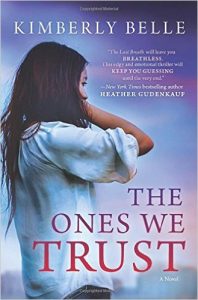
    The Ones We Trust, Kimberly Belle, Award-Winning MIRA Author, Multi-Margie-Grad
    1. Gabe’s good looks are real and rugged and raw, and now that I’ve seen both brothers up close, I’d choose Gabe over Zach any day.

    RD Combo: Polysyndeton (multiple conjunctions, no punctuation) and Alliteration

    2. The silence that spins out lasts forever. It’s the kind of silence that wraps around you like a shroud, the kind that turns the air thick and solid, the kind that makes you want to hear the answer as much as you dread it.

    Kimberly Belle could have written: The room went silent.

    I’m glad she decided to empower that emotionally-loaded scene dynamic.

    Rhetorical Devices: Amplification (silence) and anaphora (the kind, the kind, the kind)

    3. My heart races and my skin tingles and my blood pressure explodes like a grenade.

    Rhetorical Devices: Three visceral responses are powered with polysyndeton (multiple conjunctions, no punctuation) and a simile.

    The Blessing of No, Megan Menard, Multi-Margie-Grad

    1. Luke had a machine-gun laugh that fired about every third word.
    1. I picked up a French fry. It was a slender blonde, tall and weepy. I named the fry Tanya and chomped off its head.

    Those examples carry interest and power and are perfectly cadenced. The second example uses a metaphor and structural parallelism. It reveals a truth in a humor hit that could make us laugh or cry.

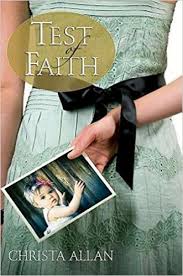
    Test of Faith, Christa Allan, Award-Winning Author, Multi-Margie-Grad 
    1. “If. Faith. Can. Come. Live. With Me?” I heaved every word out of my brain and into my mouth. I felt like someone regaining consciousness in an unfamiliar room or house or life.

    Christa Allan stylized that dialogue by using a Period. Infused. Sentence. That’s what I named it. Her dialogue cue is amplified, amplified, amplified stellar.
    She used an RD combo in the last sentence: polysyndeton and zeugma.

    What’s zeugma?

    I’ll SHOW not TELL. I know you’ll get it.

    My teaching-zeugma sentence:

    Margie grabbed her purse, her keys, and her steely resolve.

    You got it!

    This 2-point version is an example of zeugma too:

    Margie grabbed her purse and her steely resolve.

    Now you know the rhetorical device zeugma.

    1. This dinner was the Indy 500 version of returning to the track after a pit stop, except that the finish line was Logan, and there was only one first place.

    Ah… Metaphors and power words and hope all themed, propelled by a compelling cadence.

    Red-Headed Stepchild, Jaye Wells, USA Today Bestseller
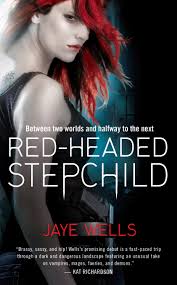
    Jaye Wells wrote this paragraph when she was in a full day workshop I taught for Dallas Area Romance Authors in 2007. I asked all the participants to write an example of anaphora.

    Anaphora — Repeating a word or phrase at the beginning of three or more successive phrases or clauses or sentences. The first three must be in a row.

    The paragraph she wrote in class became the first paragraph in the first chapter of Red-Headed Stepchild, her debut Urban Fantasy.

    Digging graves is hell on a manicure, but I was taught good vampires clean up after every meal. So I ignored the chipped onyx polish. I ignored the dirt caked under my nails. I ignored my palms, rubbed raw and blistering. And when a snapping twig announced David’s arrival, I ignored him too.

    Deep Edit Analysis:

    Anaphora: I ignored, I ignored, I ignored, I ignored

    Three Humor Hits:

      • Digging graves is hell on a manicure
      • good vampires clean up after every meal
      • I ignored him too

    Power Words — Words that carry psychological power: graves, hell, vampires, clean up, ignored, ignored, dirt, ignored, raw, blistering, arrival, ignored him

    What does the reader learn in those 53 words?

    1. She’s digging a grave. We can infer she killed someone.
    2. She’s a vampire.
    3. She gets manicures.
    4. She’s Goth.
    5. She’s been digging that grave for a while.

    She’s not concerned about David catching her digging a grave.

    In that one short, opening paragraph, Jaye Wells deepened characterization, shared a strong and fun voice, and made the reader want to read more. That’s smart writing. The kind that impresses agents and editors and readers and reviewers.

    Every example in this blog carries a compelling cadence. That pleasing cadence speaks to the reader’s subconscious. Cadence has the same impact on the reader that a movie sound track has on a viewer.

    Read the first sentence of this blog OUT LOUD:

                Reading a book with flat-lined cadence is like watching a movie on mute.

    Do you hear those perfect beats?

    I could have written:

                It is critical to pay attention to cadence.

    No cadence-driven power.

    Deep Editing Caveat:  Most of the examples I shared in this blog were amplified. I’m not suggesting that every sentence should be powered up, or made special in some way. That would be gag-ifying

    Not a word. But it carries the punch I wanted to share.

    We need plain writing. Writing that does it’s job without any amplification.

    We need fun, quirky, deep, stylistic, and tug-your-heart writing too.

    I teach writers how to add psychological power to their writing in hundreds of ways. No hype. No hyperbole. I’m just sharing what I do.

    I teach writers how to empower emotions.

    • How to avoid clichés and clichéd phrasing.
    • How to write fresh faces and voices and visceral responses.
    • How to use advanced stimulus-response patterns.
    • How to use my Four Levels of Powering Up Emotion. How to have the right emotional intensity in the right place.
    • How to create emotional authenticity on the page. How a character can act in an out-of-character way, and get the reader to buy it.
    • How to use six rhetorical devices to finesse backstory. Succinct, un-skimmable, beautifully cadenced backstory.
    • How to use my 20 Point Checklist for Openings, my 15 Point Checklist for Endings, my 12 Visceral Rules for Fiction Writers, my 10 Gems for Not Writing Your Mama’s Character Descriptions, and more.
    • How to deep edit analyze your scenes. I developed The EDITS System so writers can see what’s working, what’s not working, and what’s missing.

    I used to teach college. Graduate level psychology courses. I back up every teaching point with plenty of examples from a variety of genres.

    I shared a few of the twenty rhetorical devices I teach fiction writers here. I’ll cover all twenty in about 75 minutes in my full day master class. Some, like polysyndeton (…photographed and bagged and carried away…, The Last Breath, Kimberly Belle) may be new to you, but they’re easy to learn, and use. Handouts help.

    I’m looking forward to having fun in my Master Class on March 30. Join me, and you’ll leave with deep editing tips and techniques that will add power to your WIP.

    FIND OUT HOW TO ENTER Margie Lawson’s Contest to WIN a LECTURE PACKET by clicking here!

  • Deep Editing Power with Margie Lawson, CAC17 Master Class Presenter, Editor, and International Speaker

    Have you registered for our #CAC17 Master Class yet?
    Margie Lawson will present a full day Master Class on March 30th, the day before the conference. Make sure to plan to come early for this special session and REGISTER NOW.
    Enrollment is limited, and seats are starting to fill up.
    Margie has presented over a 150 full day master classes in the U.S., Canada, Australia, and New Zealand. Writers credit her innovative deep editing approaches with taking their writing to publication, awards, and bestseller lists.

    Margie took time out of her busy schedule (teaching around the world) to write a guest post on some of the topics she will cover in the #CAC17 full day Master Class.

    Do you have a question, a comment, or an editing experience to share? Post a comment and you have TWO CHANCES to WIN a lecture packet! 

    Scroll down below the related posts, and you’ll see the comments section.


    Rhythm and Cadence and Beats, Oh Yes!

    By Margie Lawson Editor, International Presenter

    Reading a book with flat-lined cadence is like watching a movie on mute.

    Most writers know about the power of rhythm and cadence and beats. But most don’t use that power in every sentence.

    A compelling cadence is more than varying sentence lengths. More than using ­­­­­standalone words.

    A compelling cadence carries power on the page. It propels readers through paragraphs and passages and pages.

    Read your work out loud, with feeling, and you’ll hear what beats work well, and what beats are missing.

    Many rhetorical devices are cadence-driven. Knowing which rhetorical devices boost cadence, pick up pace, make the read imperative, and 947 more cool things, loads your writing toolbox with super-powered tools.

    Check out these cadence-driven examples.

    The Ones We Trust, Kimberly Belle, Award-Winning MIRA Author, Multi-Margie-Grad

    1. Gabe’s good looks are real and rugged and raw, and now that I’ve seen both brothers up close, I’d choose Gabe over Zach any day.

    RD Combo: Polysyndeton (multiple conjunctions, no punctuation) and Alliteration

    2. The silence that spins out lasts forever. It’s the kind of silence that wraps around you like a shroud, the kind that turns the air thick and solid, the kind that makes you want to hear the answer as much as you dread it.

    Kimberly Belle could have written: The room went silent.

    I’m glad she decided to empower that emotionally-loaded scene dynamic.

    Rhetorical Devices: Amplification (silence) and anaphora (the kind, the kind, the kind)

    3. My heart races and my skin tingles and my blood pressure explodes like a grenade.

    Rhetorical Devices: Three visceral responses are powered with polysyndeton (multiple conjunctions, no punctuation) and a simile.

    The Blessing of No, Megan Menard, Multi-Margie-Grad

    1. Luke had a machine-gun laugh that fired about every third word.
    1. I picked up a French fry. It was a slender blonde, tall and weepy. I named the fry Tanya and chomped off its head.

    Those examples carry interest and power and are perfectly cadenced. The second example uses a metaphor and structural parallelism. It reveals a truth in a humor hit that could make us laugh or cry.

    Test of Faith, Christa Allan, Award-Winning Author, Multi-Margie-Grad 

    1. “If. Faith. Can. Come. Live. With Me?” I heaved every word out of my brain and into my mouth. I felt like someone regaining consciousness in an unfamiliar room or house or life.

    Christa Allan stylized that dialogue by using a Period. Infused. Sentence. That’s what I named it. Her dialogue cue is amplified, amplified, amplified stellar.
    She used an RD combo in the last sentence: polysyndeton and zeugma.

    What’s zeugma?

    I’ll SHOW not TELL. I know you’ll get it.

    My teaching-zeugma sentence:

    Margie grabbed her purse, her keys, and her steely resolve.

    You got it!

    This 2-point version is an example of zeugma too:

    Margie grabbed her purse and her steely resolve.

    Now you know the rhetorical device zeugma.

    1. This dinner was the Indy 500 version of returning to the track after a pit stop, except that the finish line was Logan, and there was only one first place.

    Ah… Metaphors and power words and hope all themed, propelled by a compelling cadence.

    Red-Headed Stepchild, Jaye Wells, USA Today Bestseller

    Jaye Wells wrote this paragraph when she was in a full day workshop I taught for Dallas Area Romance Authors in 2007. I asked all the participants to write an example of anaphora.

    Anaphora — Repeating a word or phrase at the beginning of three or more successive phrases or clauses or sentences. The first three must be in a row.

    The paragraph she wrote in class became the first paragraph in the first chapter of Red-Headed Stepchild, her debut Urban Fantasy.

    Digging graves is hell on a manicure, but I was taught good vampires clean up after every meal. So I ignored the chipped onyx polish. I ignored the dirt caked under my nails. I ignored my palms, rubbed raw and blistering. And when a snapping twig announced David’s arrival, I ignored him too.

    Deep Edit Analysis:

    Anaphora: I ignored, I ignored, I ignored, I ignored

    Three Humor Hits:

      • Digging graves is hell on a manicure
      • good vampires clean up after every meal
      • I ignored him too

    Power Words — Words that carry psychological power: graves, hell, vampires, clean up, ignored, ignored, dirt, ignored, raw, blistering, arrival, ignored him

    What does the reader learn in those 53 words?

    1. She’s digging a grave. We can infer she killed someone.
    2. She’s a vampire.
    3. She gets manicures.
    4. She’s Goth.
    5. She’s been digging that grave for a while.

    She’s not concerned about David catching her digging a grave.

    In that one short, opening paragraph, Jaye Wells deepened characterization, shared a strong and fun voice, and made the reader want to read more. That’s smart writing. The kind that impresses agents and editors and readers and reviewers.

    Every example in this blog carries a compelling cadence. That pleasing cadence speaks to the reader’s subconscious. Cadence has the same impact on the reader that a movie sound track has on a viewer.

    Read the first sentence of this blog OUT LOUD:

                Reading a book with flat-lined cadence is like watching a movie on mute.

    Do you hear those perfect beats?

    I could have written:

                It is critical to pay attention to cadence.

    No cadence-driven power.

    Deep Editing Caveat:  Most of the examples I shared in this blog were amplified. I’m not suggesting that every sentence should be powered up, or made special in some way. That would be gagifying. 

    Not a word. But it carries the punch I wanted to share.

    We need plain writing. Writing that does its job without any amplification.

    We need fun, quirky, deep, stylistic, and tug-your-heart writing too.

    I teach writers how to add psychological power to their writing in hundreds of ways. No hype. No hyperbole. I’m just sharing what I do.

    I’m a psychologist-turned-editor. I used my psychological expertise to analyze more passages and chapters than most people read in ten lifetimes. I developed deep editing techniques that help writers add power to each paragraph.

    I teach writers how to empower emotions.

    How to avoid clichés and clichéd phrasing.

    How to write fresh faces and voices and visceral responses.

    How to use advanced stimulus-response patterns.

    How to use my Four Levels of Powering Up Emotion. How to have the right emotional intensity in the right place.

    How to create emotional authenticity on the page. How a character can act in an out-of-character way, and get the reader to buy it.

    How to use six rhetorical devices to finesse backstory. Succinct, unskimmable, beautifully cadenced backstory.

    How to use my 20 Point Checklist for Openings, my 15 Point Checklist for Endings, my 12 Visceral Rules for Fiction Writers, my 10 Gems for Not Writing Your Mama’s Character Descriptions, and more.

    How to deep edit analyze your scenes. I developed The EDITS System so writers can see what’s working, what’s not working, and what’s missing.

    I created seven online courses for writers:

    1. Empowering Characters’ Emotions
    2. Deep Editing, Rhetorical Devices, and More
    3. Writing Body Language and Dialogue Cues Like a Psychologist
    4. Defeat Self-Defeating Behaviors
    5. A Deep Editing Guide to Make Your Openings Pop
    6. Visceral Rules: Beyond Hammering Hearts
    7. Fab 30: Advanced Deep Editing, A Master Class

    The first four classes each have 250+ pages of lectures. The next three classes have 180 – 230 pages of lectures.

    I used to teach college. Graduate level psychology courses. I back up every teaching point with plenty of examples from a variety of genres.

    I shared a few of the twenty rhetorical devices I teach fiction writers here. I’ll cover all twenty in about 75 minutes in my full day master class. Some, like polysyndeton (…photographed and bagged and carried away…, The Last Breath, Kimberly Belle) may be new to you, but they’re easy to learn, and use. Handouts help.

    I’m looking forward to having fun in my Master Class on March 30. Join me, and you’ll leave with deep editing tips and techniques that will add power to your WIP.


    About Margie

    Margie Lawson —editor, and international presenter – teaches writers how to use her psychologically-based editing systems and deep editing techniques to create page-turners.

    Margie has presented over a hundred fifty full day master classes in the U.S., Canada, Australia, and New Zealand. Writers credit her innovative deep editing approaches with taking their writing to publication, awards, and bestseller lists.

    Margie developed seven online courses she teaches through Lawson Writer’s Academy on her website. LWA has over 30 instructors and offers five courses most months.

    Margie also teaches fifteen 5-day Immersion Master Classes a year. Enrollment is limited to seven. In 2017 she’s teaching Immersions in Atlanta, Denver, Dallas, Amarillo, Calgary, Washington D.C., and in Melbourne, Sydney, Brisbane, Coffs Harbour, Canberra, and Hobart, Australia.

    What’s the Buzz? 

    Randy Ingermanson, Ph. D., award-winning author of Writing Fiction for Dummies:

    In the twenty years I’ve been writing fiction, two teachers have astounded me with their insights and taught me something radically new: Dwight Swain and Margie Lawson. Margie taught me new ways to empower my writing.

    Melanie Milburne, USA Today Bestseller

    I had 40 books published before I met Margie Lawson. It wasn’t until I started using her deep editing techniques that I won several writing awards. I have a library of how-to books, but none top Margie’s expertise.

    Laura Drake, RITA Winner, The Sweet Spot

    When I took my first Margie Lawson class, the paradigm shift I experienced was more like an earthquake — I saw everything differently. I took more of her classes and I got a three book deal with Grand Central. A few months later I got a contract for a fourth book. Several months after that, I got contracted for three more books! I sold seven books in fifteen months—before my first book was released. I have Margie to thank for teaching me how to deep edit to get power on every page.

    Allison Brennan, NYT Bestseller:

    Margie Lawson, a brilliant psychologist, teaches a class on editing that, ahem, truly tested me. She uses color-coding to dissect writing in order to empower your stories. I learned from Margie how to fix my prose. I think about her editing system and techniques, ways to add power, finding the emotional key of the scene. I use her lessons to add power to my writing.

    Romily Bernard, RITA Winner, Find Me

    Your classes (both online and at the Georgia writing conference) changed my life!! My YA debut sold in a three-book, pre-empt to Harper Collins. Phoebe was so very complimentary about the way I render emotion and tension on the page and I know I have you to thank!

    Alex Ratcliff, Daphne Finalist

    Margie’s online courses and Immersion Master Class have strapped me into a skill-building machine for writers. With her help, in one year I moved from a can’t-write-a-fresh-line beginner to a Daphne finalist. Wow!

    Karin Tabke, Bestselling author

    I had so many epiphany moments Saturday my head was twitching. It’s still twitching! I wish I had attended Margie’s Empowering Characters’ Emotions master class earlier. My writing is stronger, more vivid, more emotional. The effects of the workshop were immediate. I highly recommend if you have the opportunity to take Margie’s workshop in person, do it.

    Colleen Coble, CEO of ACFW and Bestselling author

    “The workshop I went to last month was the best I’ve ever been to, bar none. And I’ve been to plenty. Margie’s workshop was so awesome, I’m going over my notes from what she taught before I start my next book. She’s a genius, pure and simple.”

    Elizabeth Essex, RITA Finalist, The Danger of Desire

    I’ve attended one of Margie’s all-day seminars, taken all her online classes; attended her workshops at RWA conferences, flown to Colorado to attend her four-day Immersion class, and hosted an Immersion class in Dallas. Margie taught me to challenge and push myself to make the hard changes from the first page of a manuscript until the very last. Working with Margie, you’ll have the tools to make every single word count.

    Comment Contest Details

    Post a comment and you have TWO CHANCES to WIN a lecture packet!

    You’ll win the lectures (250+ pages) from one of Margie Lawson’s online courses listed here:

    1. Empowering Characters’ Emotions
    1. Deep Editing, Rhetorical Devices, and More
    1. Writing Body Language and Dialogue Cues Like a Psychologist

    The drawings will be Sunday, Feb. 5th, 8:00 PM Mountain Time.  

    Drawing reschedule due to SUPERBOWL! Time extended until Thursday, Feb. 9, 2017 at 6 p.m. PST.

    The winners names will be posted here.

    See you on the blog!

    KEEP SCROLLING DOWN UNTIL YOU GET TO THE COMMENTS SECTION ON THIS PAGE (the place to leave your comments for Margie’s  contest).  

    All smiles…………….Margie