Tag: Book Promotion

  • Part 2 Building Your Readership Community – Not Just for YA Authors by Jesikah Sundin

    Part 2 Building Your Readership Community – Not Just for YA Authors by Jesikah Sundin

    Dear YA Writer,

    In the previous blogisode, the YA Writer stumbled upon a gritty secret. A secret that revealed the often un-used marketing processor installed in every bonding animal who hawks bookish wares inside the All Powerful Cybersphere.

    Socializing.

    Now the YA Writer is forced to make a choice that may alter their impressions, clicks, and engagement foreverrrrrrr…

    <<dramatically clears throat>>

    We are gathered here today to witness the exchange between this author to this reader in meme-y internetrimony. Author, do you take this social media thing-a-ma-gig seriously? Do you solemnly swear to post interactive content and reply to comments until defective accounts do you part?

    Before you shout, “I object!” … THIS is what I believe most authors hear when told to engage their readers online. I’ve talked to hundreds of authors face-to-face on this subject. The reaction is typical­­––dear-in-headlights look, nervous laughter, shifting on their sudden cold feet.

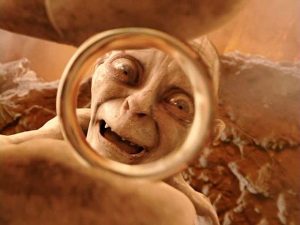
    Yeah, I know … commitment is a scary idea for many. Perhaps even a monstrous call-to-action for us please-dear-cat-gods-of-the-interwebs-don’t-make-me-small-talk introverts. Some view social media as a black vortex that will suck away their humanity until their cyber-Gollum alter ego hisses, “My preciousssss…,” whenever a notification chimes.

    Do not despair, fair YA Writer. Even if socializing with strangers is nothing but rainbows, unicorns, and kittens for you, I have encouraging news.

    You don’t have to love it, therefore you don’t have to marry it.

    You don’t even have to put a ring on it.

    But you do have to care. Because sharing is caring.

    Literally. What you share on your social media accounts reflects what you care about.

    So, what do you care about? Beyond book sales, that is. Dig deeper. Think broader. Embrace this exercise as a way to tone and sculpt your creative marketing muscles.

    Bring to mind a writer or celebrity you enjoy following on any social media platform. Then ask yourself, why? Why do you enjoy following them so much? Is it because they talk incessantly about buying the book you’ve already read and own? Doubt it. Maybe it’s their keeping-things-strictly-business posts that only announce events and new releases?  <<yawns>> Yeah, didn’t think so.

    Every once in a while? Sure. But if that’s all you share? #DontCare

    Make me care. Make them care. You know, your followers. The ones who clicked you into their newsfeed existence. Rise up and say, “My people!” and lead them into a conversation. Actual YA-aged readers long for this. It’s psychologically built into an adolescent and twenty-something to search for and declare “their tribe.” Give your audience, regardless of age or genre preference, a sense of belonging. You found me. You belong here. Welcome. Let’s discuss all the things! Let’s discuss YOU.

    The YA reading crowd is passionate. Intelligent. Lively. Transparent. Witty. And always on the hunt for immersive communities. They also care deeply about the characters and worlds you’ve created. They also care about the word magician behind the curtain who cast a spell over their imagination.

    True confession: I’m legit socially awkward. No, really. Small talk is my arch nemesis. I have a terrible habit of nervously laughing at just about everything. And if I’m not nervously laughing, I’m nervously rambling. Even when I recognize the social cue that I need to stop talking, I CAN’T STOP TALKING [-_-]

    If you’re socially awkward like me, take heart! The best form of caring is sharing the spotlight with another. Just remember, talk with people and not at them. Here are ideas on how:

    • I just finished reading [title] by [author name] and [gush about book]. Not sure what I should read next. What are YOU reading right now? I’ll add your answers to my TBR list on Goodreads.
    • So full. Just enjoyed [food]. Aaahhh, happiness. What’s your favorite comfort food? Bonus points for posting a recipe link!
    • Let’s play a game! [You can use a meme-ready prompt like, “What’s your Hobbit Name?” Or, you can provide your own prompt like, “Using only a meme or GIF, share your favorite female superhero.” Search through Pinterest or various fandom sites on your fave social media for more examples.]
    • [Share an image related to characters or worldbuilding in your book with a quote from said story. You can leave it as is for people to like, comment, and re-post. Or, you can end with a question.] “Is this how you imagined them?” “What would you do in this situation?” “Do you think [character] made the right choice?”

    Examples are endless! The point is to start conversations. People will begin interacting with each other’s comments, or tag their friends to participate, too. #SharingIsCaring

    First, the cautionary tale: Please, for the love of emoji reaction buttons, REPLY. If a friend invited you into a face-to-face discussion but ignored you, how would you feel? Right. That’s how your followers would feel, too. This isn’t a contest to see who has amused you the most. Don’t––I repeat––don’t ignore your followers when they’re taking time out of their busy lives to participate with your conversation prompt. A simple acknowledgement is all that’s needed with a blue thumbs up or a heart-like. Go the extra mile and interact further if you like. Make the reward centers in your follower’s brains light up wildly.

    OMG, she spoke with me!

    He thinks my recipe for pickled shark chops in a beet reduction sauce sounds yummy!

    The more you engage, the more your followers will engage, too.

    Socializing. It’s a thing.

    A thing you need to make time for, like in real life.

    Caring fosters loyalty. And that, folks, is the end goal. All customers for you are short-term. They read your book. They move on. But with a community to keep them company, they’ll stick around until you release your next title. The best launches are built from established reader pre-orders who are in-the-know because they stuck around on your social media to find out. *wink, wink*

    So how often should you post? Totally up to you and your followers. Honestly, I post 1-3 times a week on my author social media accounts, save Twitter. When not posting, I make time to participate in other accounts I follow. It’s a give and take, right?

    Share.

    Care.

    If you don’t? You might discover an intervention at your social media doorstep from fellow YA Writers 😉 But only because we care

    #SocializingWithInternetStrangersForTheWin

    Sincerely,

    Me


    A note from Chanticleer: 

    Many thanks to Jesikah Sundin for sharing her effective and fun social media techniques with us!

    Two words could describe Jesikah: books and coffee. She pours a cup of dark roast writer’s ambrosia before approaching her keyboard. And the forest is her happy place.

    Jesikah invites you to socialize with her on her website and social media pages (visit her website for direct links).

    Jesikah Sundin is the award-winning author of the Biodome Chronicles. 

    Biodome Chronicles

    Short Description of Legacy: Book One

    Siblings born and raised inside an earth-based experimental Mars biodome have only known a rustic medieval life rich in traditions and chivalry. Groomed by The Code, they have built a sustainable community devoid of Outsider interference––until the unthinkable happens.

    Cultures clash when the high technology of the Anime Tech Movement collides with the Middle Ages in a quest for truth, unfolding a story rich in mystery, betrayal and love.


  • BISAC Codes — Not just Alphabet Soup — Book Marketing Tools

    BISAC Codes — Not just Alphabet Soup — Book Marketing Tools

    Anyone producing a digital book or setting up an ISBN may come across the acronym BISAC. If you’re a self-published author wondering what a BISAC code actually is, here are some answers.

    Mysterious Coding – BISAC Codes

    Metadata For Your Book

    BISAC is an acronym for Book Industry Standards and Communications, a very helpful tool put out yearly by the BISG (Book Industry Study Group). The BISAC code system is an alpha-numeric system of book classification. The book industry (libraries, universities, Barnes & Noble, local bookstores, and online bookstores) use BISAC code numbers to categorize books.

    For example, if you’ve just written a graphic novel murder mystery, they have a BISAC code for that:

    CGN004010 COMICS & GRAPHIC NOVELS / Crime & Mystery

    In the BISAC code catalog, there are fifty-three (53) main categories with various sub categories – and in some instances, sub-sub categories.

    How do you access the BISAC codes?

    If you are buying an ISBN code for your book directly from Bowker, you will be prompted to select your BISAC code. When you set up your Bowker account when you purchase an ISBN, Bowker will ask you to identify or categorize your book. A list of 53 BISAC codes will appear (if Bowker is truly up-to-date) and you’re off to the races.

    Even if you’re not working with Bowker and using a third party to acquire your ISBNs, you can always access the BISAC code categories directly online.

    How do you determine your book’s BISAC code? 

    YES, you can unlock the secrets to BISAC Codes! 

    The first category you choose should be what the book is about, which genre category it fits into. Think of it as a funnel: a wide opening at the top, narrowing down to a spout at the bottom. Start large, go narrow.

    FICTION > ROMANCE > MYSTERY > PARANORMAL > VAMPIRES

    Don’t let the process intimidate you. Don’t be sidetracked. Get your BISAC codes down so you can start talking about your book in an intelligent manner. For example, when asked what your book is about you can say, “My book is a Sci-fi/Fantasy with elements of the paranormal and badass skateboarding.” Or, you could say that if you were author Jesse James Freeman talking about his book, Billy Purgatory: I am the Devil Bird.

    BIASC Codes and Discoverability

    BIASC codes are used by booksellers, librarians, teachers, and others who need to categorize and catalog your book. But as an author, you can use this coding system to understand your book in the context of all the other books out there.

    Third Party Keywords

    Please note that if you are letting a third-party such as Amazon’s CreateSpace, they have their own codes, some of which match to BISAC and others do not. For example, when you log in to CreateSpace and upload your book files you’ll be prompted to enter keywords. During this process – currently on CreateSpace, Step 3: Target Your Book to Customers > categories –  a screen will pop up and ask you for KEY WORDS. These, like BISAC codes, will help readers find your work. So the principles described below for BISAC codes apply to keywords as well.

    BISAC Identifiers = The Beginning of Interest

    You can also think of BISAC Identifiers as the bones for DISCOVERABILITY.

    Let’s take this wagon on another ride and construct a little scenario where you are attempting to purchase the perfect book for your grandma. You sit down with her and ask her what she likes to read. She tells you that she likes mysteries best – mysteries with a lot of vampire sex. Instead of screaming T.M.I. GRANNY! You smile and say, I will find you the perfect book!

    How? You now know about BISAC codes and how to wield them. You either visit your favorite brick and mortar store – or go online and search:

    Mystery, Erotic, Vampire

    And you’ll find J.D. Ward and Laurell Hamilton – two of the tops authors writing in this category – both of whose books will be perfect for your grandmother.

    Check your BISAC codes yearly

    The BISG is not a static group. They are constantly changing things up with BISAC codes – rearranging codes, creating codes, destroying codes – all in an attempt to make our books more discoverable.

    Once you’ve landed on the codes that best describe your book you will need to check back from time to time (yearly) to ascertain if your chosen codes are:

    • still accurate,
    • still active, and/or
    • if the BISG has come up with a better code for your book.

    In their most recent update,  the BISAC Subject Committee states that they never reuses inactivated codes and that they would never inactivate a code and then reuse that code for an unrelated literal. The committee continues that this has always been the case and inactivated codes have never been reused. So, that has never been a practice – apparent or otherwise. They do, however, “reactivate” codes as necessary. For example, GAR011000 was inactivated after the 2.3 edition (in 2001) and the reactivated for the 2016 Edition with the same exact literal.

    A Concise Context For Your Book  — Unlocking Publishing Secrets 

    Let’s be honest, the real reason you need to know your book’s BISAC Code: It gives you a fast way to describe your book.

    Can you imagine doing that to anyone in the book industry? No one has the time or inclination to listen to you prattle on about it. Base your book description on its BISAC code and everyone will have  a good solid context for its genre, content, and even the type of experience they’ll have when they read it.

    So when your all-too-well-meaning writer friends set your book down and ask in unison, “Yes, but where is this book going to be on the shelf?” Or agents at conferences ask you, “Who’s your audience? How am I supposed to sell this book?” Now you have something smart to say in return. Now you know BISAC codes!

    We will have more articles about BISAC codes and how to decide on which ones to use and how.

    The Chanticleer Authors Conference on April 20, 21, & 22, 2018 will offer BISAC codes workshop.


    This article is by Sharon E. Anderson

    Sharon Anderson is an award-winning author and Chief Reviews Editor for Chanticleer Reviews and International​ Book Awards. Creating and editing content – as well as editing/writing reviews – and outreach are just a few skills she brings to the table. An SPU graduate in Clothing Design and Textiles – something she barely uses in her day-to-day life – Sharon brings her textile know-how into her stories as often as possible. In her spare time, she serves as President of the Skagit Valley Writers League where she promotes authors, engages speakers, leads workshops, and more. She writes dark comedy, horror, short stories, articles, and essays whenever she gets the chance from her home in the Skagit Valley where she lives with her husband, two children, two dogs, a couple of cats, and a sketchy Guinea pig. Working with Chanticleer is like playing every day! Contact: editor@chantireviews.com

  • INTERVIEW with Grand Prize LARAMIE AWARD-WINNER, JACQUIE ROGERS!

    In honor of the Laramie Awards month, we decided to interview one of our very favorite authors, Jacquie Rogers. It should come as no surprise that Jacquie won the Laramie Grand Prize in 2016 for her rip-roaring, shooting, tooting, humorous Western that features Honey Beaulieu, Man Hunter!

    Jacquie Rogers is a regular contributor for the Western Fictioneers blog. She presents at RWA conferences and workshops, Chanticleer Authors Conferences, and  Western Writers of America. Her works are known for their hilarity, adventure, mistaken identities, and romance. Rogers’ books are  a hit for anyone who has a penchant for classic Westerns and Shakespearean comedies. She lassos the genres together in a most enjoyable way making her tales a true pleasure to read. From saddles sores and thorns from the trail, to finally being able to breathe when the last binding on the corset is released, even the most die hard Western readers will be impressed with Roger’s knowledge and expertise she portrays as she takes you back in time to the Old West.
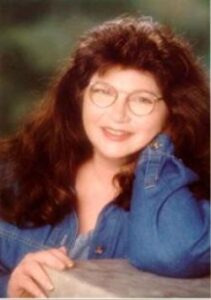
    Jacquie Rogers: Thanks for inviting me to the Chanticleer blog.  I’ve been privileged to be part of the Chanticleer family right from the get-go, so that makes it extra special for me to be here.  I had help, though—the folks at the Pickle Barrel Bar and Books on Facebook choose my questions, so here we go!

    Chanticleer: We’re so glad you have some time to spend with us. Let’s jump right in…What areas in your writing are you most confident in? What advice would you give someone who is struggling in that area?

    Rogers: Dialogue and chaos.  For dialogue, the advice is easy—listen to people talk.  Two nuances I’ve noticed is they rarely speak in complete sentences and seldom use the other person’s name.  More specifically, listen to people who are similar to your characters.  In the case of Honey Beaulieu, I draw strength from the old Missourians in our family, and mix in a little Owyhee County speak.  As for chaos scenes, the main thing to remember is that the first thing you think of is also the first thing the reader will expect, so turn left when expected to turn right.

    Chanticleer: That’s really good advice, Jacquie. How do you keep track of all the… left turns? Do you work with a storyboard? 

    Rogers: When a character turns left and it’s a better idea than what you’d planned, then it’s best to go with them.  However, that does cause a ripple effect on that particular thread, and sometimes several or all threads.  I try to veer into position so I don’t have to go back and change things, but very often that simply can’t happen.  Either way,  from the turn-left point forward, the whole plot needs to be tweaked.  I’m happy to take the fun route to the end, but I do have to know where and how the story is going to end, and all the characters need to be in the right spot for that to happen, and all (or most, in the case of a serial type series such as Honey Beaulieu – Man Hunter) threads need to be tied in a neat bow.  So it’s a matter of connecting the dots in a logical but relatively unpredictable manner that allows the reader to play along with you.  Because books are really a group activity—the interaction of characters, readers, and the author.

    Even with all that, continuity errors can and do occur.  My first line of defense is Your WorldKeeper, Diane Garland.  She has an eagle eye for continuity and can take me all the way through the thread so I can see what needs fixing  Or sometimes it can’t be fixed (e.g., in a previously published book), and we have to come up with a logical explanation for how things are in the current book.  I work with her as I’m writing, so she usually nails my hide to the wall before even the editor sees the story.

    Rogers: An author can’t keep writing unless readers buy the books—simple economics.  Books are expensive to produce.  So telling others about the author’s books is absolutely gold.  There are a variety of ways to do this, including sharing the author’s posts on social media, reviews (many advertising sites require a certain number of reviews before the author can purchase ads), and telling all your friends in real life to buy the book.  Visibility is the name of the game.  And keep reading!  Your enjoyment is a gift to me.

    Chanticleer: Thank you for mentioning the social media aspects and sharing. Very important. What are you working on now? What can we look forward to seeing next from you?

    Rogers:  My next book will be Hearts of Owyhee #6, Much Ado About Mail-Order Brides.  If you’ve read the third and fifth books of the series, you’re acquainted with the McKinnon brothers.  This book will be Bram’s book.  He’s the oldest brother and the hardest to place because he’s perfect.  Flawed heroes are much, much easier to write.  But since he’s perfect, he has to end up in an impossible situation, and I’ve definitely got him in a big to-do.  Believe me, he has a lot more help than he wants.  I’ll start writing next week and hope to have the book done by the end of the year.

    Chanti: Oh, we’ll be looking forward to that! We love it when characters get knocked around! Let’s move on to craft… It’s important to work on your craft. What do you do to grow your author chops?

    Rogers: I try new techniques.  For instance, I wrote I Heard the Brides on Christmas Day in four points of view—and it’s only a 15,000-word story.  I think I pulled it off but believe me, I won’t be doing that again!  Also, the Honey Beaulieu series is in first person point of view, and the narrative is written in Honey’s vernacular just as if she were actually speaking.  I did this because we think the way we talk, so the narrative can’t be in modern correct grammar.  My Hearts of Owyhee series is in the third person.  So I’m always switching back and forth, writing one book in first and one in third.  That gives me the opportunity to remember the strengths in each and apply them in both series.

    When I first started writing, I read a ton of craft books.  I was so hung up on the rules that I couldn’t write a word for nearly a year, so I tossed it all out and decided the only way to write is to let my hair down and go for it.  Then I heard an interview with Johnny Depp where he remarked that actors had to be brave enough to look stupid (paraphrasing).  I think that goes for writers, too.

    Chanti: We love that you were naturally brave enough to follow your gut on this one. And we love that Johnny Depp backed you up on this one… because, you know, Johnny Depp! Let’s switch gears a bit – give us your best marketing tips, what’s worked to sell more books, gain notoriety, and expand your literary footprint.
    Western Pioneeer Civil War Fiction Award

    Rogers: Depends on what year, month, time of day.  This business is changing fast.  When MySpace was king, I had a strong presence there.  I’ve never had much success on Twitter and only go there because I feel like I should.  Facebook is the place to be right now, which isn’t to say that it’ll still be popular next year.  It’s important to have a presence on social media that is personable (notice I didn’t say “personal”), where people see you and want to be your friend.  This is what marketing is all about these days—the personal touch.  Frankly, I think we’re moving on from social media to real people in the real world contact.  The pendulum is swinging back.  That’s why I put on the Silver City event every year, and try to get out as much as possible to meet my readers.

    I also think it’s important to hang out with other industry professionals—reviewers, publishers, and other authors.  Getting a Chanticleer review and entering the Chanticleer contest is great for raising the discoverability of your books.  Attend the conference and blast pictures all over social media.   The added bonus is that these conferences are lots of fun as well as informative.


    Chanticleer: Talk a little more about the Silver City event… What was that like? Who came? How did you set it up – C’mon, Jacquie! Spill the beans!

    Rogers: I enjoy getting together with my readers and fellow book lovers, and I had this bright idea that it would be fun to meet where the Hearts of Owyhee series is set, which is in Owyhee County, Idaho.  (Owyhee is pronounced oh-WYE-hee, and is the original anglicized spelling of Hawaii.)  Most of the books in the series have scenes in Silver City, and two of them are set there for most of the story.  Silver City is a treasure that few people know about.  It’s a genuine Old West town that still exists as it did in the 19thCentury.  There’s no power or telephones—although they did have telephones in the early 1880s.  The Idaho Hotel is a gem and staying there is like spending the weekend in a living museum, although it’s a soft landing because they did install flush toilets and showers.  The hotel restaurant has always been known for its fine cuisine and believe me, the current owners are living up to the historical standards.  Jerri Nelson’s pies are simply divine.

    There’s a lot more to say about the place, but I’ll go on to the event.  Keep in mind that Silver City is not a tourist town.  You won’t find staged shoot-outs or slot machines (that work).  People there live like folks did in the 1800s.  So visitors live like that, too.  What does it mean?  It means that whatever we do, we have to create ourselves.  If we want music, then we need to play it.  I can’t play anything so I enlisted the aid of fiddler Daria Paxton and her dad, Matt Paxton, who plays guitar and sings.  They’re both talented musicians and old family friends—my dad and Matt’s parents were in the same class.  Relationships were everything in the old days, and there, they still are today.

    The event in Silver City is for everyone, young and old.  In the olden days, families would come to a dance.  The musicians would play and everyone would dance, including the kids.  Then the kids would play and dance until they got tired, and the parents would put them to bed on the pile of coats while they continued to party into the night.  That’s the feeling I wanted to create at our event and we succeeded.  Wildly.  Some of us dressed in costume, others didn’t.  No one really cared because we all were there to have a rip-snortin’ good time.  Which we did.

    Poet Roberta Whittemore joined me at the book signing and that was fun.  Everyone raved about the melodrama, billed as the worst melodrama in history, which had a terrible script (I wrote it), and bad actors (except for Ichabod—he was great, and so were Curtain Rod #1 and Curtain Rod #2).  But the audience participated and had a great time.  The cool thing was that half the audience were walk-ins, not part of the event, and they loved it.  After that, we had an auction for charity.  Sherry Walker chaired the auction with Ken Walker as the auctioneer.  The gals in the kitchen soon learned not to bang pans or he’d call their bid.  We raised over $300 for the Children’s Tumor Foundation to find a cure for neurofibromatosis.

    So I’d like to invite everyone to join us next year.  The tentative date is July 20-21, 2018.  Information will be on my website at http://www.jacquierogers.com/silvercityevent.html.

    Chanticleer: What a terrific event! Thank you for letting us in on Silver City! What do you do when you’re not writing? Tells us a little about your hobbies.

    Rogers: Reading is my first love, make no mistake about it.  I was a reader long before I ever wrote a single word of fiction.  Other than that, I like rodeo, cooking (but not doing the dishes), and baseball.

    Chanticleer: Tell us more! What’s your favorite rodeo event? If we came to your house for dinner, what would you cook? and Who’s your favorite baseball team? 

    Rogers: Favorite rodeo event—well, that would be hard to pick.  Of course, I love the bull-riding but all of the events are fun to watch.  I like all the rough stock events, but then I’m amazed at the ropers, too.  And I know how hard it is to run the barrels without knocking one over.  I also look forward to the specialty acts they bring in.  At the Snake River Stampede, they had the Stampeders—a horseback drill team that performs in the dark so all you see is the lights on the horses and rides.  It’s pretty spectacular.

    If you came to my house for dinner, you’d get down home cookin’.  I cook everything from scratch—even yogurt and salad dressing.  I do buy mayonnaise, though, because we eat too much of it when I make it myself.  So what’s on the menu?  How about homemade bread bowls filled with genuine Idaho potato soup, salad with ranch dressing, and strawberry shortcake (with real shortcakes hot out of the oven) for dessert?  Or maybe you’d like Thai fried rice, spring rolls, and bok choy stir fry.  I’m willing to give just about anything a go.

    As for baseball, I’m a Mariners fan, unfortunately.  Go M’s!

    Chanticleer:  That all sounds good! What led you to write in the western humor genre?

    Rogers: Writing westerns was a simple choice—I grew up where the Old West is still alive so I didn’t have much to research.  Also, in light of the urbanization of our country and the vast change in communications, I want to do my part to keep the culture in people’s awareness.  It’s hard to explain to someone how people lived in the late 1800s without television and cell phones, and that’s why we have so much fun at the Silver City event.  We’re not connected, so we have to create our own entertainment and [gasp] actually visit with one another face to face.

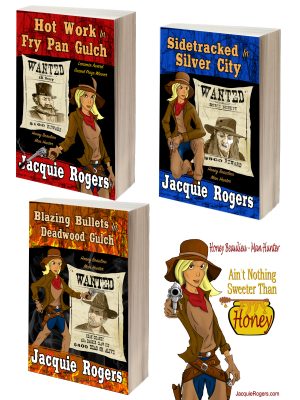
    Humor?  I don’t actually write humor.  Every time I do, no one laughs.  There’s one line in Blazing Bullets in Deadwood Gulch (Honey Beaulieu #3) that absolutely cracked me up, but not one person has laughed or even noticed it. [Update: one person finally got it!  Made my day.]

    Chanticleer: Really, no humor? Well, certainly situational, character driven humor. We love your books and love how you put your characters in situations they can’t possibly imagine! How structured are you in your writing work?
    Rogers: Horribly unstructured and unfocused.  My marbles are rattling around somewhere and they’re not even in the same room, or house, or state.  How I ever manage to finish a book is beyond me.  But when the deadline looms, I do hunker down and git ’er done.

    However, my approach to writing a novel is quite structured.  I don’t write a single word until I know the main and secondary characters inside and out.  The better I know the characters, the easier it is to throw obstacles in their way (that’s also called plotting).  I always have one scene in mind for the opener.  But I confess that the opening scene very rarely stays the opening scene.  The first scene I wrote in the Honey Beaulieu series will be in book #5.  The first scene I wrote in Much Ado About Miners is now in chapter 7.  I always start too far in, probably because I have little tolerance for backstory and I want to get on with things.

    Chanticleer: We appreciate that, Jacquie. How do you approach your writing day?

    Rogers: I always try to leave off in the middle of a scene so I don’t have to figure out what I’m going to write.  So after that scene is finished, then I check with my plot bones chart to see if I’m on track.  If not, I turn left.  Actually, I turn left a lot because sometimes things happen on the page that are too fun to throw out, so then I have to make it work with the rest of the story.  An example is Louie Lewie in Blazing Bullets in Deadwood Gulch.  He was supposed to be a throwaway character, but he kept coming into the story, so I resigned myself that he’s now part of it.  In fact, he’ll probably be in the next book, too.  So a lot of my day is thinking and while I’m thinking, the best way to come up with new ideas is to bake bread.  My extended family gets a lot of bread.

    Once everything’s figured out for the day, I fire up my laptop and use speech recognition to rough out a scene.  Believe me, “rough” is the right word considering when I said “bustier” it typed “buzzard ears.”  I end up with about 90% dialogue.  Then I send the scene to my desktop computer and edit using the keyboard.  If the scene starts out at 500 words, it’ll be 1,000 by the time I’m done adding the narrative.  A side note: I detest description and always skip it when I’m reading for pleasure, which means I have to make an extra effort to make sure I’ve created a picture for the reader.  This is by far my weakest area.

    Chanticleer: Ah, bread. Here’s the part where we wish we lived closer! The idea of using speech recognition software is pure genius – and time-saving, too. How do you come up with your ideas for a story?

    Rogers: I actually don’t know.  Usually, some phrase, prank, or predicament makes me laugh.  Then I put characters to it and voila! We have the concept for a new book.  Honey helps me out because I know that if I dig a hole big enough, she’ll keep me entertained.

    My entertainment is the determiner as to whether I use an idea or not.  If I’m entertained, then I hope the readers are, too.  But on the other hand, if I get bored writing, then you can bet that readers will also be yawning.
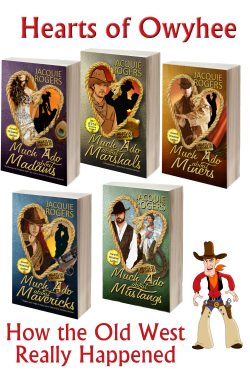
    A few of my ideas for books are identifiable, though.  In Sleight of Heart, I wanted to write a heroine who was as good at math as Aunt Grace, and I always wondered how she’d get along with Maverick.  So Lexie Campbell and Burke O’Shaughnessy were born.  The idea for Much Ado about Mustangs came from an article I read in The Owyhee Avalanche about the local theater group booking a national star to headline their local production.  Hence, we have Lady Pearl Montford and local rancher Josh McKinnon, whose heart’s desire was to raise Friesians.

    The next book I’m going to write, Hearts of Owyhee #6: Much Ado About Mail-Order Brides, came from the fact that the hero, Bram McKinnon, is perfect.  Perfect is boring.  Perfect makes for no conflict.  Unless he’s put in a situation where there’s absolutely no solution.  Bwahahaha.  Naughty me.

    As for Honey Beaulieu, what happens isn’t much of a surprise.  What’s interesting about her is the journey, so I’m always on the lookout for incidents that aren’t exactly your usual bill of fare.  Honey obliges by reacting in ways that surprise me every time.  Of course, she constantly changes the plot, too, which can get frustrating.  But I learned just to go along for the ride and let Honey take me with her.  We get along much better that way.

    Chanticleer: And what a ride! Thank you, Jacquie, for being our first interview of the year! We love what you do and love how you do it.

    Rogers: Thanks again for inviting me here today!

     

  • A QUICK GUIDE to PUBLISHING LESSONS that YOU NEED NOW by Sharon Anderson & Kiffer Brown

    A QUICK GUIDE to PUBLISHING LESSONS that YOU NEED NOW by Sharon Anderson & Kiffer Brown

    Writing is not the same as publishing.

    That may seem obvious to most. However, imagine a new writer, a hopeful author, with a lot to say – this person writes and writes, day after day. The diligent writer amasses 283,472 words exactly. This person then believes that everyone will want to read her story. Why not? The story is sent off to a literary agent – maybe two. Okay, the manuscript is sent off to five dozen literary agencies with query letters and synopsis. Our dear writer is no sloth; she has done her due diligence!

    And then the wait commences. Six weeks, three months, six months, a year later… no replies. No responses. Nothing – not even a generic letter or automated email response. Not unreasonable—really— when one considers more than two million new works are created each year in the English language. We can tell you this: The slush pile takes no prisoners. Only the best of the best will be noticed.

    Our author is crushed, heartbroken. Vows to never write again….

    THERE IS  A BETTER WAY! Below is a Quick Guide that outlines the crucial steps involved in successful publishing (read book sales). These mimic, for the most part, the tried and true methods of traditional publishing houses that work for Indie and Small Press authors—especially when the advantages of today’s new world of publishing are added into the mix.

    Let’s back up a minute and examine what our aspiring author could have done to have a better chance at succeeding in today’s publishing market: 

    1. Manuscript Overview. You’ve spent many hours writing your manuscript – It’s time to invest in a Manuscript Overview (MOV). What’s that? It’s a process whereby you send your work off to a trusted, experienced editor. This editor will read your work and give you professional, genre-specific feedback: tell you what’s good, what needs work, if your manuscript is ready to publish. If you have a literary agent or work with an acquisitions editor at a publishing house, you would send if off to them for feedback. If you don’t have one of these (yes, it is like trying to get a loan from a bank, the bank will loan you the money if you don’t need it…), then you may want to consider our manuscript evaluation service. It can be painful, but every author who has used it says that it is the only way to go. Most of our authors consider it like taking graduate courses in storytelling. A MOV really helps to hone a work.
    2. Build Your Online Digital Presence. At the same time as the Manuscript Overview is going on, begin strengthening your on-line presence through interactive social media. These days, even Fiction authors need a platform. Facebook is still a good way to do this, as is Instagram. If your book is science fiction, maybe you should try Reddit. Whatever you do, invite your targeted readership community into a relationship on the platform where they can be found. The thing to understand is publishers are looking for authors who already have a following who can be motivated to purchase books.
    3. Line Edit. After you’ve incorporated the suggestions from your Manuscript Overview into your work, and have had several trusted brutally truthful beta readers to thumbs up the story line and characters, it’s time to send it off to a Line Editor. What? Yes, you heard me. Your work will require a LINE EDIT that insures that each and every sentence makes the story move forward. Line Editing is defined as a thorough and focused reading of the manuscript on a line-by-line basis with suggestions, comments, and remarks noted for the author to consider. Take the extra time and send your work off to a professional, experienced editor who will examine your work to make sure you’ve hit all of the plot points, your characters are believable, your story is solid, that it doesn’t sag anywhere, and that the opening is a grabber. Take the time. Do this step.
    4. What’s next? While your work is with the Line Editor, we hope that you are developing  the next work in your series or researching your next story idea. Every agent, every publisher will want to know what you are working on next. Series sell.
    5. Cover Concept. Begin developing cover concepts for your work in progress (WIP) by selecting key elements of it. Your cover should convey time period, location, genre, targeted audience, and story elements. These cover elements should be reflected in your marketing collateral (biz cards, website background, social media elements, etc.).
    6. Fresh Eyes. After incorporating the LINE EDITS that were suggested, we advise that you have another set of fresh eyes read the work. Perhaps, a second independent manuscript overview. This can also fall under the responsibility of your literary agent or publishing house’s acquisitions editor. If you don’t have either of these, then use an independent consultant. See Item 1 above. Professional Fresh Eyes are the Traditional Publishing Houses secret weapon.
    7. Copy Edit. Now that the story is solid, it is time for a COPY EDIT. Copyediting is a very technical read of a work for flaws in grammar, punctuation, syntax, consistency in spelling, numerals, hyphenation, etc.; flagging any inconsistencies that have made it past the Copy Edit such as eye color, name spelling, location, timing from point A to point B. Copy editing also tracks any internal inconsistencies in the story (conflicting abilities or inabilities, location inconsistencies), etc. This is where the story is held accountable to the publisher’s style guide and to the story’s individual world building construct.
    8. Cover Design. If you are indie-publishing or even hybrid publishing, you will need to seriously consider investing in your cover design. Your book has less than 3 seconds – that’s THREE seconds to attract a potential buyer. If you have the chops to do this yourself, that’s awesome. But most authors don’t. Think about it. You have an awesome book. You’ve spent time and money making certain of it. Why wouldn’t you want to put as much time and attention into a cover that will work for you instead of against you? A good cover doesn’t have to cost thousands of dollars, but you do need to hire a professional cover designer who understands your genre. The cover will sell your first book. Your content will sell the second the book.
    9. Author Brand. Create your bio’s. You will need a 100-word, a 200-word, and a 500-word biography to send to agents and publishers, to slap on your sell sheets, to place on the back of your book. The three bio’s will work for different applications. Have these ready to go. You will need professional head shots that reflect your author brand. Get it done.
    10. Proofing. Proofreading is the final step of the writing process. It looks for purely grammatical errors, typos, and spelling errors only.
    11. ISBN Designation. BISAC CODES. Meta Data. The “alphabet soup’ part is extremely important in getting your books into the hands of booksellers and into libraries — more on this in a later post.
    12. Professional Formatting. This is a mystical process that takes your manuscript and transforms it into a book, digital and print. Lack of professional formatting is the reason booksellers can spot a self-published book (besides the cover). They can spot it at a hundred paces. It is best left to professionals—in our not-so-humble-opinion.
    13. ARCs. Advanced Reader Copies for Publishing Industry Professionals and for your Beta Readers. These are needed for launch reviews and for regional independent bookseller trade shows (SIBA, PNBA, NCBA, MPIPA, GLIBA, —more alphabet soup). Use your ARCs to start lining up book-signings, author events, promotional tours, and to create book buzz.
    14. Advance Reviews – make sure that you have professional publishing industry reviews ready to go for the launch (press releases, industry news, etc.) and for the cover blurbs (front and back!).
      Before you hit the publish button, send your work off for a professional, unbiased review. Traditional publishing houses know that advance professional reviews set the tone for consumer reviews. Reviews are considered to be the cornerstone of any book’s marketing strategy.
    15. Trade Shows & Distribution – Do you want your book to be available to independent book stores across the nation? Then it must be available in traditional distribution channels and on display at the regional independent bookseller tradeshows.  This cannot wait until the last minute. Shelf space is hard to come by and shows are not inexpensive.
    16. Proof and Edit again! Formatting issues discovered in the ARCs taken care of?
    17. Publish and Launch- Digital and Print! Do you have your promotional events on the calendar? Your social media postings calendar ready to go? See item 13.  How is that website looking? That is the first place any publishing professional (read literary agents, acquisition editors, etc.) will check if you garner their interest. What will they find when they google your name and the title of the book? Will they find a flurry of posts or will your info be on the eighth page down on a Google search?

    Imagine the polish that following these tried and true methods of traditional publishing will bring to your published work!

    The Secret to Successful Publishing

    Honestly, there are even more things an author can do to ensure that her book has the best chances for publishing success. Enter a writing contest, go to book events for other authors, arrange a signing at some place other than a bookstore, talk to people, take workshops, participate. It may feel overwhelming when you start, but when the connections and preparations start compounding and spreading, it can be life—and career—changing! You will be thankful that you took the extra effort. And your work will be ready for whatever may come its way!

    ***************************************************************************************

    Chanticleer Editorial Services (CES) is proud to have some of the best line editors, copy editors, proof readers, world construct editors, indexers, book formatting professionals, and others in the publishing business on our team. We have secured some of the best from the Big 5. All CES editorial work must start with a manuscript overview. It is the only way that our professional editors will proceed to edit a manuscript (that is how important they believe manuscript overviews are to a work’s commercial and literary success).

    Sharon E. Anderson is an award-winning author and Chief Reviews Editor for Chanticleer Reviews and International Book Awards. Creating and editing content – as well as editing/writing reviews – and outreach are just a few skills she brings to the table. She writes dark comedy, horror, short stories, articles, and essays whenever she gets the chance. She lives in Skagit Valley with her husband, two children, two dogs, a couple of cats, and a sketchy Guinea pig. We are so fortunate to have someone with her talent and experience on the Chanticleer Team! Contact: editor@chantireviews.com

    Kiffer Brown, founder of Chanticleer Reviews, is also founding partner in SillanPaceBrown Publishing + Production + Agency, LLC. SPB uses these tried and true traditional publishing methods to prepare intellectual properties to become fully actualized in the extremely competitive entertainment industry.

  • KATHY MURPHY the PULPWOOD QUEEN is Coming to Bellingham, Wash!

    KATHY MURPHY the PULPWOOD QUEEN is Coming to Bellingham, Wash!

    It will be Kathy L. Murphy, the Pulpwood Queen herself, all the time — at least in Bellingham, Wash. from Thursday, July 13th through July 15th, 2017.
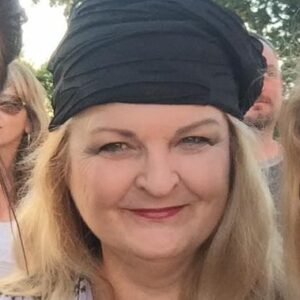
    Kathy is headlining the following three events, along with some surprise ones, when she visits the Pacific Northwest this summer for a long weekend sponsored by Chanticleer Book Reviews.


    1. The TimberRose and Timber Guys Chapter of The Pulpwood Queens International Book Club will meet on Thursday, July 13th. Check out the chapter’s Facebook event page 
    2. An Evening with Kathy L. Murphy at Village Books, Saturday, July 15th at 7 p.m. All Book Groups and Clubs are welcome!
    3. A Very Special WORKSHOP Creating Book Buzz and Building Your Author Brand – Saturday, July 15th, Kathy will present a three hour workshop and share her secrets of success from 9:30 in the morning until 12:30 in the afternoon. $55 per seat. Reservations required. Click here for more info and to register.

    TimberRose Queens and Timber Guys Chapter of the Pulpwood Queens Book Club

    We are pleased as punch to announce The TimberRose and Timber Guys Chapter of Kathy Murphy’s The Pulpwood Queen’s Tiara-Wearing, Book-Sharing Guide to Life Book Club is welcoming the Queen, herself, to the club’s first-ever meeting to discuss the books of the month and other important news on Thursday, July 13, 2017.

    The Pulpwood Queen Book Club began when Kathy Murphy wanted a seat in a local book club, but alas, there was no room. And apparently, there would not be one available for some time….

    Did that stop her?

    No way, no how! Kathy L. Murphy created her own book club – a fun, tiara wearing, book loving, festival of reading called The Pulpwood Queens, which now spans the continental United States plus Alaska and 15 foreign countries!

    Meet the Queen and become a member of the TimberRose and Timber Guys Chapter of the Pulpwood Queens at Nikki’s Bella Marina Bar & Restaurant from 7 – 8:30 pm.  Of course, there will be food and drink available for purchase. New members are always welcome!

    Seating is limited for the chapter meeting. Members who  have made reservations via the Facebook page will be given priority upon check-in. Reserve your seat today!


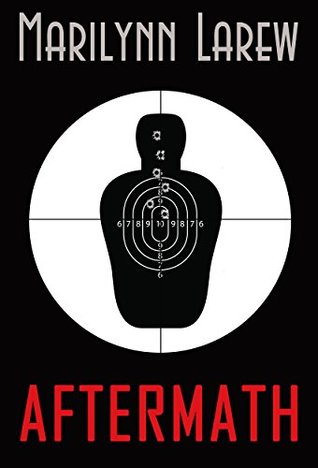
  • AFTERMATH by Marilynn Larew – Mystery Suspense/Thriller/Female Sleuth

    AFTERMATH by Marilynn Larew – Mystery Suspense/Thriller/Female Sleuth

    Mystery maven Marilynn Larew has devised a can’t-put-down thriller with a female lead who can handle everything from flying bullets, dead cats, and snakes in the jungle, with only the occasional meltdown in Aftermath.

    It’s a normal day for private investigator Annie Carter when handsome, Irish, and possibly crazy “Don’t call me Charlie” Magee shows up at her townhouse/office/home claiming someone is trying to kill him. For one thing, a body fell out of a window and landed near him. But even more convincing, someone shoots a hole through Annie’s front window just as Magee arrives on her doorstep – and not long after that, they find a dead cat on the stoop.

    But can Magee be for real? His stories are garbled, and sometimes he seems to be dodging the truth, but when she lets him move in (for his own protection) it turns out he’s a decent cook and, well, let’s say his interest in her is hard to resist.

    Meanwhile, Annie’s lawyer daughter Elizabeth is bugging her because her boyfriend wants to get married, which is against Elizabeth’s feminist principles, and for some reason, it’s all Annie’s fault. Added to this chaotic, action-crammed and often witty mix is Annie’s newest client, Vivian Rowlandson, whose husband has disappeared without a trace. A complex inheritance means the client must find her spouse or lose all financial support for her over-sized mansion and ten horses. And just as all these mysteries build, Elizabeth is kidnapped.

    Threading her way through other people’s bizarre problems is what Annie signed on for when she became a private investigator. It was the job best suited for a single parent. But now her mothering skills are questioned and her own life is in danger.

    Eventually, the hunt for Vivian’s errant husband will take Annie to the shadowy, steaming jungles of Southeast Asia where human and reptile killers lurk around every tree—and where the charming Magee will prove a stalwart bodyguard—in more ways than one.

    Practiced mystery novelist Larew (Dead in Dubai, The Spider Catchers) presents a plot that brings her expertise to the fore. With teaching and publishing credits in American and Vietnamese military history, she has also visited Hanoi and other far-flung places. Her Annie is a heroine for the mid-life generation: a gritty divorcee with a penchant for adventure and a secret passion for unruly older men. Larew sculpts Annie with just the right proportions of savoir-faire, guts, and a few moments of unabashed girly-ness.

    Sure to please Larew’s fans and attract new ones, Aftermath is a welcome addition to the female detective mystery/thriller genre steeped in exotic locales, alluring hints of romance, bullets flying, people disappearing, and just enough humor to wrap it all together for the perfect read.

    5 Star Best Book Chanticleer Reviews round silver sticker

  • The SOMERSET Awards for Contemporary & Literary Fiction 2016 First Place Category Winners

    The SOMERSET Awards for Contemporary & Literary Fiction 2016 First Place Category Winners

    The SMainstream Contemporary Fiction Awardsomerset Awards Writing Competition recognizes emerging new talent and outstanding works in the genre of  Contemporary and Literary Fiction. The SOMERSET Awards is a division of Chanticleer International Novel Writing Competitions.
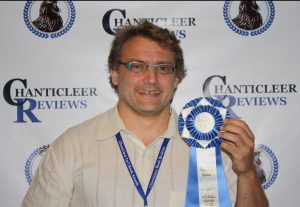
    Congratulations to the 2016 SOMERSET Awards First In Category Award Winning Contemporary/Literary Fiction Novels:

    • SOMERSET AWARD WINNERS: Meghan Clancy, Justin Bog, Annaliese Darr, Debu Majumdar, Fire Chief John J. Mandeville Alexander Boldizar, Bernard Manheim, M.D.

      Social/Psychological Themes: Wake Me Up by Justin Bog

    • Women’s Fiction: Believe by Annaliese Darr
    • Manuscript: Chhori by Megan A. Clancy
    • Adventure/Suspense: Sacred River by Debu Majumdar
    • Satire/Allegorical: The Ugly by Alexander Boldizar
    • Literary: Everydoctor by Bernard Mansheim
    • Connections: The Fox, Mike, Hilda, and the Green Emerald Cafe Inferno by Chief John J. Mandeville
    • Action/Adventure: The Improbable Journeys of Billy Battles: Book 2, Finding Billy Battles Trilogy by Ronald E. Yates

    CONGRATULATIONS to  Alexander Boldizar author of the SOMERSET GRAND PRIZE winner — The Ugly!

    And UBER CONGRATULATIONS to Alexander Boldizar for The UGLY taking home the OVERALL BEST BOOK for the 2016 Chanticleer International Writing Competitions – The Overall Grand Prize Winner!

    This is the second time that the Somerset Grand Prize Winner has taken home the Overall Grand Prize Ribbon!

    The 2016 SOMERSET Short-Listers competed for these First Place Category Positions. These First Place Category Award Winners’ novels have competed for the SOMERSET Grand Prize Award for the 2016 Contemporary and Literary Fiction. These winners were announced and recognized at the annual Chanticleer Authors Conference and Awards Gala, Bellingham, Wash., on April 1st, 2017.

    The First In Category award winning titles will receive an award package including a complimentary Chanticleer Book Review of the winning title, digital award badges, shelf talkers, book stickers, and more.

    Congratulations to those whose works made the SOMERSET Awards 2016 FINALISTS and SHORT-LISTERS lists.

    We are now accepting entries into the 2017 SOMERSET Awards. The deadline is November 30th, 2017  Click here for more information or to enter.

    More than $30,000 worth of cash and prizes will be awarded to the 2017 Chanticleer Novel Writing Competition winners! Fifteen different  genres to enter your novels and compete on an international level.


  • The PARANORMAL Awards for Supernatural Fiction 2016 First Place Category Winners

    The PARANORMAL Awards for Supernatural Fiction 2016 First Place Category Winners

    Paranormal Fiction AwardsThe Paranormal Awards Writing Competition recognizes emerging new talent and outstanding works in the genre of Paranormal and Supernatural Fiction. The Paranormal Awards is a division of Chanticleer International Novel Writing Competitions.


    Congratulations to the 2016 Paranormal Awards First In Category Award Winning Supernatural Fiction Novels:

    • Paranormal Award Winning Authors: Joanne Jaytanie, Janet K. Shawgo, and John Trudel

      Adventure/Mystery/Thriller: Archidamus by Janet K. Shawgo

    • What Lies Beyond: The Well by Colleen Golden
    • Strange and Unexplained: Almost Mortal by Christopher Leibig
    • Supernatural Powers: Raven’s Redemption by John D Trudel
    • Paranormal Romance: Corralling Kenzie, Book 4 of The Winters Sisters by Joanne Jaytanie

    CONGRATULATIONS to  Chris Leibig, author of the PARANORMAL GRAND PRIZE winner — Almost Mortal!

    The 2016 Paranormal Short-Listers competed for these First Place Category Positions. These First Place Category Award Winners’ novels have competed for the Paranormal Grand Prize Award for the 2016 Paranormal and Supernatural Fiction. These winners were announced and recognized at the annual Chanticleer Authors Conference and Awards Gala, Bellingham, Wash., on April 1st, 2017.

    The First In Category award winning titles will receive an award package including a complimentary Chanticleer Book Review of the winning title, digital award badges, shelf talkers, book stickers, and more.

    Congratulations to those whose works made the Paranormal Awards 2016 FINALISTS and SHORT-LISTERS lists.

    More than $30,000 worth of cash and prizes will be awarded to the 2017 Chanticleer Novel Writing Competition winners! Fifteen different genres to enter your novels and compete on an international level.

    We are now accepting entries into the 2017 Paranormal Awards. The deadline is October 31st, 2017  Click here for more information or to enter.

    More than $30,000 worth of cash and prizes will be awarded to the 2017 Chanticleer Novel Writing Competition winners! Fifteen different  genres to enter your novels and compete on an international level.


  • USING PINTEREST as an AUTHOR TOOL by  Claire McKinney P/R

    USING PINTEREST as an AUTHOR TOOL by Claire McKinney P/R

    Have some fun with

    Did you know that Pinterest is the world’s catalog of ideas and images? Millions of people are looking for books to read by imagery. Pinterest allows authors to connect with these potential readers.

    Add this powerful social media tool to your author platform!

     It’s hard not to immediately think about recipes, hair tutorials, or DIY projects when someone mentions the word “Pinterest,” and it can seem like there is no room for anything else when your own boards are filled with these exact objects. But as an author, you can take advantage of Pinterest—and most importantly, have fun with it.


    Does your main character that has a love of dresses and cute shoes? You can create a Pinterest board full of the exact clothing that she wears. Was there a specific playlist of songs that you listened to over and over again while you were writing your latest novel?

    It’s USER FRIENDLY

    You can make a board solely based on the songs and artists you listed to. Do you have a blog that you post to weekly? You can upload them onto a board based on your blog.

    Are there a number of quotes from your book that can be added to a graphic? Post them up on a colorful background. Are you participating in the Gilmore Girls/Rory Gilmore books challenge? Add a pin of each book you’ve read so far. (And good luck. That’s quite the goal!)

    There’s so much more that you can do with Pinterest, and the best part about it is that you aren’t just limited to one thing (140 characters, a photo, a status). You can make as many boards as you want, full of as many pins as you want.

    Another great aspect of Pinterest that makes it different from other social media is that it is a passive and harmless: it’s highly unlikely that you’ll come across a critical or a negative comment, and you don’t have to consistently keep others happy with tweeting, retweeting, liking, commenting, etc.

    Don’t Forget to PIN IT

    Make sure that you are maximizing Pinterest by adding a follow button to your website. If you have a blog, you can add a “pin it” button to your website. This allows someone who likes your blog posts to add them to one of their own boards, and it’s one more way that you can market your blog and website.
    One last warning, however: You might want to put a timer on though for how long you can spend on Pinterest each day, because Pinterest is an addiction like no other!

    A note from Kiffer Brown of Chanticleer Reviews:
    This blog post comes to us from Claire McKinney  Public Relations LLC, Communications Strategies for the 21st Century. 

    Claire McKinney PR, LLC

    I met Claire McKinney at Shari Stauch’s  PubSense Summit that was held in Charleston, S.C. several years ago. We were both on the faculty of presenters and were able to get to know each other and have since stayed in contact.

    Her company specializes in campaigns for books, authors, educational programs, websites, art, film, and other intellectual properties. They work carefully with clients to create messaging; branding concepts; and marketing and media strategies that integrate both traditional and new media opportunities.

    Chanticleer Reviews & Media contracts with  Claire McKinney Public Relations LLC for our company’s and client’s publicity and p/r needs.


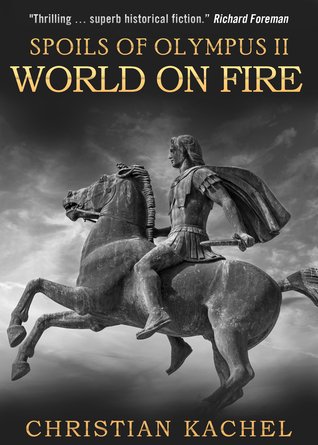
  • Spoils of Olympus II: World on Fire by Christian Kachel – Historical Fiction/War & Military/Post-Alexandrian Greece

    Spoils of Olympus II: World on Fire by Christian Kachel – Historical Fiction/War & Military/Post-Alexandrian Greece

    Spy-craft, betrayals, and bloody battles infuse this historical novel of Ancient Greece in the chaotic years following the death of Alexander the Great.

    World on Fire is the second novel in a complex historical saga narrated by Andrikos, a young man who started his fighting career on the streets of his hometown of Illandra. As a member of the underground cult, The King’s Hand, Andrikos and his traveling companion Vettias dedicate themselves to keeping Alexander’s lineage on the throne of Macedon. The pair is a study in contrasts: Vettias, the elder, is the more hardened soldier who teaches Andrikos the arts of espionage; while Andrikos maintains a youthful idealism that is sometimes at odds with the grim necessities of war.

    The lessons Andrikos learns from Vettias offer gripping scenes of surveillance, stealth, and expeditious killings. Together they must help restore Alexander’s dynasty, often posing as enemy operatives. This infiltration creates a multi-layered plot with far reaching implications on and off the battlefield.

    In addition to spy-craft and bloodletting, writer Christian Kachel makes room and time to establish Andrikos as a loyal, home-loving son whom his parents trust enough to guard Alexander’s widow Rhoxane and her young son, Alexander IV, within their household despite the obvious dangers.

    The arts of war form a central element of World on Fire, with vivid descriptions of ancient weaponry and hand-to-hand combat. To our delight, Kachel does not neglect the feminine, as he presents two powerful young women, both wise beyond their years: the teenage Queen of Macedon, Adea, who becomes a willing player in the plots against the enemies of Vettias and Andrikos; and Mara, Andrikos’ first love, to whom he made prior promises that he is now able to keep.

    By the end of ten years of travels and intrigues, Vettias and Andrikos will see the world differently and will have played their part in making positive changes.

    Kachel has staged this epic skillfully. Placing Andrikos as the narrator allows the reader to see many political and military viewpoints held by others through a young, albeit, sometimes naïve perception, and to enjoy periods of respite from war and treachery in scenes of romance, home life, and some moments of stolen passion.

    Kachel, three times deployed to fight in Afghanistan and Iraq, is a student of warfare who has chosen to concentrate his novelistic mastery on a sometimes neglected period of history—the aftermath of the death of Alexander the Great and resulting internecine struggles for dominance in the middle eastern region. Historians disagree on many details of this troubled era, giving Kachel free rein to explore possibilities clearly grounded in fact and research, but also informed by the author’s substantial imaginative gifts.

    5 Star Best Book Chanticleer Reviews round silver sticker

    “A master tactician and student of war, Christian Kachel brings history to life in The Spoils of War II: World on Fire; an engaging foray into the aftermath of Alexander the Great.” – Chanticleer Reviews