
Tag: Book Promotion

  • Creating Audiobooks and Podcasts have never been simpler – Find out how here!

    Creating Audiobooks and Podcasts have never been simpler – Find out how here!

    Creating Audiobooks has never been simpler than with the Hindenburg Audiobook Creator.

    • Creating audiobooks in DAISY 2.02 and NLS DTB.
    • Also, export standard Audio Book and EPUB 3 formats.
    • Record from your home. Create. Record. Edit and Export your Audio Books.

     

    Podcasting has never been easier than with the Hindenburg Journalist PRO – a multitrack audio editor designed for audio producers who are on the go.

    • You can record, edit, and share your story from anywhere. This cross-platform (window or Apple and exchange sessions from one platform to the other!)  audio editor requires no external hardware or state-of-the-art computer. 

    Hindenburg Systems is giving all those who register for the 2019 Chanticleer Authors Conference a FREE 3-month trial of either product.

    Hindenburg Systems is a Danish software company specializing in intuitive, portable audio production solutions for storytellers.

    BUT WAIT — there’s more! Keep reading and scrolling down this page for how to get your free 6 – month subscriptions of these two ground-breaking products. 

    Chris Mottes, CEO Hindenburg Systems


    Chris Mottes has produced uncountable radio & TV productions, primarily documentaries,  including the Danish Broadcasting Corporation and Swedish Radio. Before joining Hindenburg Systems in 2010 as CEO, he has successfully founded several media companies along with independent production companies.

    Chris Mottes will present and teach two-hour workshops on both of these products exclusively at CAC19!  

    • Audiobook Creation Workshop each attendee will receive a 6-month license to Audiobook Creator (HABC) upon completion of Chris’ workshop. 
    • Journalist Pro Workshop – each attendee will receive a 6-month license to Journalist Pro for Podcasters upon completion of Chris’ workshop.

    Creating Audiobooks and Podcasts have never been simpler.

    • Hindenburg Systems’ mission is to tear down the technical divide between storytellers and their audience by providing intuitive products to the storytelling community.
    • They provide innovative technological features that allow audio raconteurs to focus on telling great stories, while our software ensures broadcast quality results.
    • Hindenburg products are developed in close collaboration with professional and amateur users to ensure that our tools provide real solutions – today and in the digital future.
    Hindenburg’s innovative technological features that allow audio raconteurs to focus on telling a great story, while their software ensures portable broadcast quality results.

    Who uses the Hindenburg Systems for Audiobooks and Broadcasts?

    To name a few:

    Radio Broadcasters
    • Danish Broadcasting Corporation – Denmark ’s oldest and largest electronic media enterprise
    • Nordjuske Holding – Media & Communications Group – founded 1767
    • 24syv – daily and weekly culture, science, and debate programs
    • Radio Canada – CBC
    • WNYC – 93.9 FM and AM 820 New York’s flagship public radio stations (NPR, BBC, PRI, APM, & local programming)
    • KCBX – Central Coast Calif.
    • KSFR – Santa Fe, New Mexico
    • and many more…
    Universities
    • Duke University
    • Stanford University
    • Berkeley-University of California
    • Penn State
    • Santa Fe University
    • U MASS Boston
    • The University of Wollongong – Australia
    • University of Copenhagen
    • Danish School of Journalism
    • Roskilde University – Denmark
    • Syddansk University – Denmark
    • University of Iceland
    • Ilismaturasarfic University – Greenland
    • Umea University – Sweden
    • London School of Economics
    • EMB – Univerisity Berlin
    • IFP The French Press Institute (Journalism)
    • Sorbonne Nouvelle – Paris
    Plus many more organizations including sponsoring  these media initiatives:
    • Children’s Radio Foundation – more than 50 radio projects across five African countries
    • Radio Camp NYC for middle-grade and high school students.
    • Indigenous Media Foundation – Nepal
    • Gambia Press Union – Gambia, West Africa

    Why did Chris and company choose the name Hindenburg for their ground-breaking software?

    This is the one question that they are almost always asked. And here is their answer:

    In 1937, Chicago reporter Herbert Morrison witnessed The Hindenburg Disaster. The German passenger airship, the LZ 129 Hindenburg, caught fire and crashed while attempting to dock at the Lakehurst Naval Air Station located in Manchester, New Jersey. Covering the tragic accident, Mr. Morrison created radio history as he gave the world’s first eyewitness news report and made audio history and became the prototype for news broadcasting.

    His professional response and accurate descriptions combined with very emotional response to this unexpected disaster have made the recordings a seminal moment in audio history.
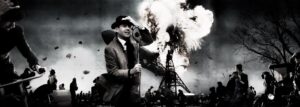
    The Hindenburg Disaster was a tragedy, but it marked the birth of mobile reporting and expanded the possibilities for global communication.

    “At Hindenburg, we are dedicated to supporting the production of great radio stories, and this is why we pay homage to the Hindenburg Disaster.”   Chris Mottes, CEO

    We at Chanticleer Reviews are honored to have Hindenburg Systems sponsor the Chanticleer International Book Awards and the 2019 Chanticleer Authors Conference.

    Don’t delay. Register for CAC 19 Today! 

     

  • How Do Football and Fiction Writing Connect? Read on to Find Out How with T.K. Riggins, Fantasy Author

    How Do Football and Fiction Writing Connect? Read on to Find Out How with T.K. Riggins, Fantasy Author

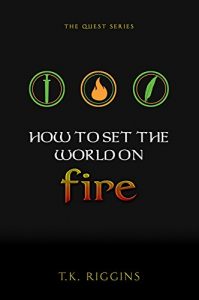
    T.K. Riggins, OZMA Grand Prize Winner for “How to Set the World on Fire”

    Ten Questions Interview with the OZMA Grand Prize Award Winner, T.K. Riggins, that shares his writing tips and tools with us.


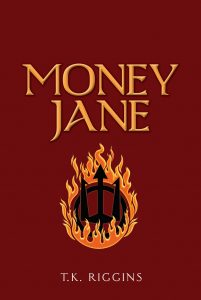
    Money Jane won First Place in the 2018 CIBAs OZMA Awards for Fantasy Novels. Congratulations!


    I first met T.K. Riggins at CAC18 where his novel, How to Set the World on Fire won Grand Prize in the OZMA Awards. T.K.’s a cool guy. He strikes up conversations with ease and doesn’t really seem to take himself too seriously. Maybe that’s because he started writing on a dare… but I’m getting ahead of myself.

    Meet the author, T.K. Riggins!

    Chanticleer: Tell us a little about yourself: How did you start writing?

    Riggins: I started writing because of a dare. My friend was searching for something new to read, but instead of recommending a book, I decided to write something for her. It was a ten-page short story that was based on a farming event from my past, and I turned it into a tale of fantasy. It was a fun experience, and my friend was so impressed that she wanted to read more, so I just kept going.

    Chanticleer: That’s kind of funny! When did you realize you that you were an author?

    Riggins: The first time I felt like an author was when a stranger read my work, critiqued it, and told me they wanted to read more. The recognition was nice and gave me the confidence to continue, but the major takeaway was being able to overcome the vulnerability that comes with giving my writing to someone that I didn’t know. It’s one thing to have friends and family read my story because I knew that they’d support me no matter what. It was entirely different to bare my soul to someone who wasn’t as obligated to spare my feelings.

    Chanticleer: Yes, check that thin-author-skin in for something a little thicker. I think we can all relate to that. Tell me, do you find yourself following the rules or do you like to make up your own rules?

    Riggins: I attended a seminar taught by Larry Brooks, the author of Story Engineering. In part of his lecture, he compared writing a novel to playing the game of football. He stressed how in football, there are certain rules that can’t be changed like the size of the field, how many downs there are, and how many players are on the turf at a time. However, the thing that can be changed is how the players play the game.

    Like the game of football, professional novels have elements that can’t be changed like how it’s formatted, where the inciting incident should be, how the story arc relates to the climax, etc. The thing that can be changed is how the writer tells the story.

    Football and Writing

    So in the end, it ends up being a little bit of both. I follow certain structural elements to make sure that readers easily enjoy the flow of the novel, but what I write about and how the characters evolve ends up following the rules that I make up.

    Chanticleer: It seems to be working for you. Hello OZMA Grand Prize! What do you do when you’re not writing? Tells us a little about your hobbies.

    Ozma Awards for Fantasy Fiction

    Riggins: I’m a big sports fan. I grew up playing basketball, baseball, soccer and hockey. Lately, my focus has been on Crossfit and beach volleyball. Crossfit has a reputation of being a fad workout program, but I love it because it preaches intensity, structure, and competition. Not only does it provide an escape from sitting in front of a computer screen, but it helps me improve both my physical and mental strength in a community filled with others that constantly work on maximizing their skillset.

    Chanticleer: I always envy those who can endure a single session of Crossfit. Me? I trip as soon as I walk in the door… Let’s change the subject… How structured are you in your writing work?

    Riggins: Because I still work a full-time job as an engineer, most of my writing occurs at night and on weekends, but I don’t worry about setting a certain time limit on the craft. Sometimes I write for fifteen minutes, other times I might go for hours. That’s not to say that I don’t think about my writing constantly. I make notes while at work, at the gym, or even if I wake up from a dream. I feel like it’s easier to sit down and write based on my notes rather than try to sit at a computer and force the words to come out.

    On the other hand, it’s useful to have deadlines in mind. I find that sometimes I get stuck trying to find the right words, perfect character names, or minor plot point.

    Instead of waiting for that lightning bolt of inspiration, I think it’s useful to push through a few paragraphs that I know are going to require editing later, just to keep the flow of the story going. First drafts are never perfect anyway, so sometimes I sacrifice a few little details in order to reach the broader goal of building the story.

    Chanticleer: I hope everyone is paying attention to what you just said. It’s so valuable to just keep writing, to let the creativity flow. Good job. It is important to work on your craft, though, so what do you do to grow your author chops?

    Riggins: I read everything. I read non-fiction articles ranging from creating tension in writing to marketing tips for self-published authors. I read fiction stories that are both inside and outside my genre. I read books that my peers recommend, and some that my young nieces and nephews are into.

    A lot of the time, my reading doesn’t translate into great ideas for my own writing, but I feel like hearing the voices of other authors helps strengthen my own. Even studying other artists in music and visual art helps inspire my own craft.

    Chanticleer: That’s really good. Thank you. Give us your best marketing tips, what’s worked to sell more books, gain notoriety, and expand your literary footprint.

    Riggins: The best marketing advice I ever received was to keep things simple. In every area of business, there are mountains of opportunities and strategies that are complex and overwhelming. There are even elements that may work for one business that end up being a complete failure for another. The key is to keep the focus on one thing at a time and try to take advantage of the opportunities that come your way, rather than tackling everything at once. Longevity is the ultimate goal, even when tasks seem quick, small, meaningful or useless.

    Chanticleer: I like that, keep it simple. What are you working on now? What can we look forward to seeing next from you?

    Riggins: I just released my second novel Money Jane. It’s the sequel to How to Set the World on Fire and is book two in a series of six. I’m currently writing the third book in the series, but I’m also involved with developing an indie video game app to be paired with my book series. It’s going to be really fun, and add another dimension to the How to Set the World on Fire franchise.

    Chanticleer: That is such amazing news! Six-book series AND a video game app! (Read our reviews of How to Set the World on Fire and Money Jane.) Who’s the perfect reader for your book?

    Riggins: My books are aimed towards middle-grade students, ages 8 – 12. However, I’ve had a lot of great feedback from my millennial friends and their baby boomer parents who enjoy reading my novels. My entire series is really for anyone who wants to feel good and escape into an adventure filled fantasy, where the main characters build relationships, overcome challenges, and live happily ever after.

    Chanticleer: What is the most important thing a reader can do for an author?

    Riggins: Tell someone about the books you’re reading, especially if it’s something you enjoy. Give it to a friend, family member, or someone you’ve just met. Recommend it at your library, write a review online, or share your thoughts on social media. Be a part of the community rather than just an outside spectator, because we’re all in this together!

    Chanticleer: Thank you, T.K., you are the best! 

    Okay, you know what to do next, right? Go check out T.K. Riggin’s website – take a look at his books, buy them! He’s a vetted award-winning author – and he’s one of our favorite people.

    T.K. Riggins can be found in these places:

    Website

    Instagram

    Twitter

    And his book can be found here: 

    How to Set the World on Fire   and here is the link to Money Jane


  • Five Reasons to Make Your Book Available in the Audiobook Format – The 411 Series about Audiobooks by Kiffer Brown

    Five Reasons to Make Your Book Available in the Audiobook Format – The 411 Series about Audiobooks by Kiffer Brown

    The Busy Booklover’s Friend – Audiobooks!

    Five Reasons to Make Your Book Available in the Audiobook Format, Article # 1 in the 411 Series

    1.  Audiobooks are a great way to fit in more time for books in our busy lives!

    Audiobooks = Hands-Free “Reading”

    Listen to your favorite authors’ works while you:

    • Drive
    • Commute
    • Do laundry
    • Make dinner
    • Take a walk
    • Garden
    • Rake leaves
    • Sail
    • Knit
    • Pet your cat (although Bruno, the Cat-in-Chief, requires one’s full attention)
    • Walk the dog
    • Paint your walls or just about anything
    • Pretend to nap
    • Clean the house, fill the dishwasher

    Your eyes can be open or closed. Your hands can be busy (not just holding a book or flipping pages) or not. 

    Hands-Free “Reading” with Audiobooks

    2. The Oral Tradition of  Listening to Stories and the Spoken Language

    There is also the age-old appeal of listening to stories. We all have memories of listening to stories from our favorite auntie or uncle, or around the proverbial campfire, or our favorite radio shows (such as Lake Woebegone by Garrison Keilor or Car Talk by Click and Clack and the Tappet Brothers, the commentary from your favorite DJ, or rekindle your love of having stories read to you or (like me) experience it for the first time.

    3. Increase and Develop Vocabulary and Spoken Syntax

    Listening to correctly spoken, grammatically correct language is the best way to improve our language skills—whether it is learning a new language or accent or improving one’s first language skills.

    A research paper on “The Impact of Audiobooks on Reading Comprehension and Enjoyment”


    4. Hone Listening Skills and Critical Thinking Skills

    The brain has to process information at the pace that the audiobook is played which gives the listener the time create and process imagery, create versions of characters, and scenes in stories – fiction and non-fiction. Keep in mind that a listener may slow down or speed up the recording.

    One has to listen carefully when there are no visual cues to rely on therefore increasing retention.

    An informative article with links:

    https://www.theatlantic.com/entertainment/archive/2015/04/podcast-brain-why-do-audio-stories-captivate/389925/

    5. The Growth of Audiobooks is Correlated with the Increase of Use of Voice Assistants: “Hey Siri” (Apple), “Ok Google” (Google), “Alexa” (Amazon), “Cortana” (Microsoft), etc.

    Voice assistants make the transition into audiobooks easy.

    Audiobooks & Voice Assistants
    Voice Assistants and Audiobooks

    Having natural conversations with the AI and technology in our lives is becoming a normal expectation. This has opened up new areas for content. fiction and non-fiction.  The “voice first” revolution reaches new audiences while leveraging a once-in-a-century opportunity to pioneer innovative forms of content delivery and a new opportunity to monetize your content.

    Did you know that Google now sells audiobooks? Those with an Android device can ask “Ok Google” to play an audiobook from your GooglePlay Library. You can ask basic questions, give the assistant a time limit for playing the recording (great for scheduling), and play it over your home speaker system if you would like.

    In Conclusion – The Publishing Industry’s Digital Audiobook Revenue Is Up 32.1 percent in 2018.

    According to this Forbes article, “Audiobooks now earn publishers more than mass market paperbacks—even as ebook sales fell 3.2% in 2018’s first quarter.

    In this article, “…Audiobooks increased their market share by 32.1% and accounted for $98.8 million in sales in the first quarter of 2018.”

    Audiobooks are the fastest growing area of publishing and have opened up vast new opportunities for publishers (and authors) to monetize their content. 


    Chanticleer Reviews and Technology – a love affair

    From the inception of Chanticleer Reviews, technology has been our “under-the-hood” superpower under the direction of Argus Brown, CEO of Chanticleer Reviews, and uber computer geek.
    Chanticleer Reviews has always focused on increasing the positive digital footprint of authors and publishers in today’s (and tomorrow’s) age of unbounded publishing.

    You can learn more about how we do this for our clients here.

    Kiffer Brown has just returned from the Digital Book World annual conference held in Nashville, Tennessee where she was asked to moderate two technology panels:

    1. Artificial Intelligence and Machine Learning in Content Production 
    2. Best Practices in Creation and Distribution of Audiobooks
    Chanticleer Reviews Audiobooks

    Did you know that Chanticleer Reviews Audio Books?

    We do! And our first audio reviews will be posted soon! The reviews will also be available in brief audio versions–for busy people. Links to the audiobook review and podcast will be listed with each Chanticleer Review and also on the Chanticleer Reviews podcast channel.

    Our reviews of audiobooks will also be available with the Chanticleer Reviews Video-blogs channel that will be available on YouTube, Instagram TV, Amazon channels, and other apps.

    Next in the Chanticleer Audiobooks series:

    How to go about creating an audiobook – best practices.  


  • 10 Questions Author Interview with KEITH TITTLE – 2016 CLUE Awards GRAND PRIZE WINNER

    10 Questions Author Interview with KEITH TITTLE – 2016 CLUE Awards GRAND PRIZE WINNER

    Meet Keith Tittle! 

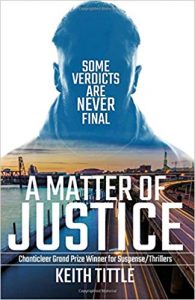
    Keith took home the 2016 Grand Prize in the CIBA CLUE category for A Matter of Justice.  He’s a quiet man whose chosen genre, Mystery/Thriller, fits well. He’s a baseball fan who writes with clarity and fleshes out his lead characters with believable determination and grit.


    Chanticleer: Tell us a little about yourself, Keith, how did you start writing?

    Tittle: I have been writing creatively for most of my life. In fact, there is a picture of four-year-old me sitting in front of my dad’s old portable typewriter, probably caught in the throes of my first case of writer’s block. But I never seriously considered the possibility of doing something with my writing until I took an Introduction to Writing Fiction course — taught by Sheila Simonson, the author of the Lark Dodge and Latouche County Mystery series — and came away with a much better sense of my abilities.

    Chanticleer: That’s a good way to start! When did you realize you that you were indeed an author?

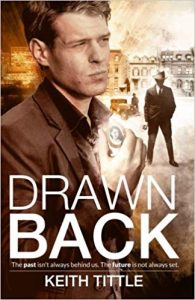
    Tittle: I don’t think the transition from writer to author happened for me until I held the proof copy of my first mystery, Drawn Back. It’s an amazing feeling to see your name on the cover of a book but, until that moment, I still harbored nagging self-doubts about my ability to see a novel through from beginning to end.

    Chanticleer: That’s a big fear for many authors. How to get from Beginning to End. But once you start writing, the answer comes. What genre best describes your work?

    Tittle: This should be a far easier question for me to answer than it is. I would classify both Drawn Back and A Matter of Justice as Mystery/Suspense at their core, and yet they are as different from each other as they are alike. A Matter of Justice dances on the edge of being a thriller. Drawn Back is a little more character-driven, and has elements of romance and time travel. But if you’re going to hold my feet to the fire, I’ll say I write Mystery/Suspense.

    Chanti: What led you to write in this genre?
    Tittle: I like to tell people that I wrote my first novel for a demographic of one; the only person I could be sure would buy my book was my mother, and she loved both mysteries and stories of time travel. But it’s also true that the plot for Drawn Back chose me, rather than the other way around. As the story unfolded for me I found that I loved the challenge of writing a complex mystery with so many moving parts. I also enjoyed the opportunities the genre offered to explore my characters’ motivations and morality in the darkest of circumstances.

    Chanti: Do you find yourself following the rules or do you like to make up your own rules?

    Tittle: Rules regarding genre make excellent guidelines, especially for new writers, but I think if you adhere to them too closely you risk being formulaic. My writing always begins with a basic premise, a general idea of where the story begins and where I think it will end. In the back of my mind, I have the details of the crimes being solved, the why and the how and the who. How the story then unfolds after that is dictated almost entirely by the characters I’ve put in place. There is no outline, no formula … and no rules.

    Chanti: That is fascinating. It takes a lot of trust in your author abilities to be able to do that. Give us some of your favorite authors and describe how they influence your work.

    Tittle: My approach to storytelling and dialogue has probably been more strongly influenced by my love of movies — particularly those of the 1930s and 40s — than by any specific author, but there are a few I would love to be favorable compared to.

    I’ve always been drawn to the humor and versatility of Terry Pratchett and Christopher Moore. Both excel at creating characters who are intensely human, entirely relatable, and completely individual. I certainly strive for that in my own books. Within my genre, I think Dashiell Hammett should be a required read for any writer who wants to join the ‘murder and mayhem’ club. From Red Harvest and The Maltese Falcon to the Continental Op short stories, Hammett was an absolute master. Another mystery writer I’m addicted to is Timothy Hallinan. I love the wit and humanity he instills into his revolving cast of characters, and his Junior Bender series is about as much fun as you can have in the world of crime fiction.
    Chanti: Love those authors. Good choices! You mentioned that you were influenced by the movies of the 30’s and 40’s; why that period, specifically?

    Tittle: I think it has to do with the Production Code that was in place at the time. The strict rules regarding sexuality, language and violence forced writers and directors to be more creative and subtle in their storytelling. The best of them, people like Preston Sturges and Howard Hawks, were geniuses at providing just enough detail for the audience to fill in the more salacious — or graphic — blanks for themselves. Moviegoers, as well as readers, are far more intuitive than they are sometimes given credit for.

    Chanti: Right. Good point. What areas in your writing are you most confident in? What advice would you give someone who is struggling in that area?

    Tittle: My approach to storytelling tends to be more cinematic, with multiple viewpoints and quick cuts. Because of that, I think I’ve had to become fairly adept at creating, and then inhabiting, a diverse cast of characters in each of my books. Male and female, Irish, Russian … I work hard to make each voice distinct and consistent, without seeming like a cliché or caricature.

    As for advice, I encourage new writers to become more active observers of the people around them. Tune into the way people speak, which words they emphasize, their cadence and inflection, their body language. Then, as an exercise, challenge yourself to write something — anything — from that person’s viewpoint. Try to capture their internal thoughts and spoken dialogue, as well as the physical ‘beats.’ To improve your dialogue, flip that exercise completely and write an entire scene with absolutely no physical beats or attributions. If you can still easily differentiate between your characters, you’re that much closer to writing tight scenes without all the unnecessary ‘he said/she said.’

    Chanti: That’s brilliant! And a great way to further character development. Thanks for that. What are you working on now? What can we look forward to seeing next from you?

    Tittle: I love exploring old crimes, and how they continue to affect people years later. The second book in the Jefferson Dawes series, The War on Cain, revolves around a decades-old, race-related murder in Portland that resurfaces. With current racial tensions running high, the DA’s office is reluctant to reopen the investigation, so it falls to Jeff to find the people responsible.

    Chanti: Sounds good! Who’s the perfect reader for your book?

    Tittle: Readers of mystery and suspense, certainly, but I think anyone who enjoys losing themselves in the characters they’re reading about — regardless of the genre — will probably enjoy the ride.


    You know what to do now, right? If you’ve enjoyed this 10 Question Interview with Keith Tittle, please “like” & “share” it!

    Check out Keith’s website at https://www.keithtittle.com/

    And check out his books

  • 10 Questions Interview with R.L. STELZER – 2017 GERTRUDE WARNER AWARD WINNER – Middle Grade Books, Sword and Stone Fantasy, Literacy

    10 Questions Interview with R.L. STELZER – 2017 GERTRUDE WARNER AWARD WINNER – Middle Grade Books, Sword and Stone Fantasy, Literacy

    Meet Rebekah Stelzer!

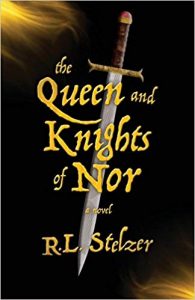
    Rebekah is a Gertrude Warner Awards winner for her middle-grade sword and stone fantasy, The Queen and the Knights of Nor.  She loves her family, her writing, and her community. Read on to hear how one author started her fantastic journey!
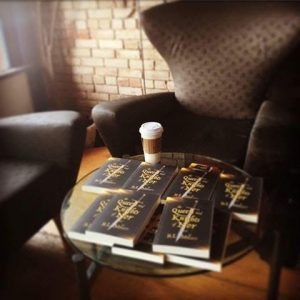
    Chanticleer: Tell us a little about yourself: How did you start writing?

    Stelzer: I have been writing stories since around fourth grade. I struggled in my early elementary years with reading, but once I got it, I loved it and began making up my own stories. This became an invaluable skill as an Army brat. Being able to make up my own stories as I looked out the window during our cross-country moves helped pass the time before tablets and in-car DVD players.

    Chanticleer: When did you realize you that you were an author?

    Stelzer: I realized that I could be an author when I started writing down the bed-time stories I was telling my daughters. Writing after they went to bed gave me a creative outlet. During this time, my kids were really little and as a harpist, practicing was difficult because my kids wanted to play to harp with me or climb on the soundboard. Practicing after bed-time was not an option because I did not want to wake them up. Writing became a way for me to connect with the arts. I realized I loved writing, I loved editing, and I did not mind constructive criticism. But I really felt like an author when I held a book in my hands with my name on the cover. It was a wonderful feeling.

    Chanticleer: I know the feeling! Nothing like holding the actual book in your hands and gazing at your name on the cover. Talk about genre. What genre best describes your work?

    Stelzer: I love to talk about genre. Being a newbie in the writing field, I assumed that my writing was geared towards young adults, but my wise mother told me it was better suited to younger readers. With a little research, I discovered MIDDLE-GRADE fiction. I realized that many of my favorite books fall into this category and several of my favorite authors wrote to this audience. The Chanticleer Gertrude Warner Award helped me to narrow down my focus as well by helping me to define the genre that suited my work best. This allowed me to establish a framework and focus for my writing overall.

    Chanticleer: What led you to write in this genre?

    Stelzer: I feel that middle-grade fiction tends to be less angsty than young adult fiction and tackles more complex issues than children’s fiction. I am drawn to the sense of hope that I have found in many middle-grade stories. It’s a genre where authors can tackle some tough concepts, like homelessness as seen in Crenshaw by Kathrine Applegate, or loss and redemption like in The Chronicles of Narnia by C.S. Lewis while balancing the seriousness of such topics with resilience.

    The kids I know in this age group want to know things. They want to know what is going on in the world around them. They are trying to piece together reasons for why the world is the way it is. They then try to create solutions to the problems they see with an innocence and hope that is refreshing to me as a grown-up. I enjoy writing and telling stories with that sense of hope, that has a satisfying, but not always perfect “happily-ever-after” ending.

    Chanticleer: That is really insightful. Do you find yourself following the rules or do you like to make up your own rules?

    Stelzer: I definitely make up my own rules. My mom, who is always my first reader, makes sure I follow basic English and grammar rules, but as far as storytelling goes, I’m not very formulated in how I go about things.

    Chanticleer: What do you do when you’re not writing? Tells us a little about your hobbies.

    Stelzer: As I said earlier, I am a harpist. At this point in my life, however, most of my time is spent homeschooling my daughters and taxiing them around to soccer, dance, harp lessons, and playdates. I also volunteer as a youth leader at my church.

    Chanticleer: You are busy! How structured are you in your writing work?

    Stelzer: I am not structured in many aspects of my life and that includes my writing. I will go months without doing much of anything with writing besides thinking about characters and plotlines, then spend every night for six weeks writing and editing. But I enjoy every minute of it.
    Chanticleer: Cute kitty! Name five of your favorite authors and describe how they influence your work.

    Stelzer: C.S. Lewis is hands down my favorite author. The Lion the Witch and the Wardrobe was one of the first books to capture my imagination and get me hooked on reading. I really love Lewis’ way of communicating very profound things in simple everyday ways. He also has a sarcastic bite to his writing that I greatly admire.

    George MacDonald won my heart with The Princess and the Goblin, and The Lost Princess. Particularly with The Lost Princess, I saw how an author could weave important life lessons into an engaging and entertaining tale. Nesbitt’s Enchanted Castle is so quirky, slightly strange, and completely imaginative. This work broadened my ideas of fantasy. Unlike Lewis who took the Pevensie children out of our world into another world, Nesbitt brought the magic to earth, and I loved that.

    Rebecca Davis is the author of a biography entitled With Daring Faith, the story of the life and service of Amy Carmichael. Carmichael was a woman who did not back down even in the face of death. She learned that her perceived flaws were actually God-given gifts that helped her to save countless children from slavery and prostitution and provide them with shelter, food clothing, education and medical care. I learned through Davis’ account, that each of us has something to contribute to our communities. Her retelling of Amy’s courage has helped me to have courage, on a lesser scale, and to not give up when the way ahead seems blocked. I think that is a lesson every writer needs.

    Jessie Sanders, author of the Grover Cleveland Academy series must be on this list. She was my childhood friend who, from the moment the question was asked of her, “What are you going to be when you grow up?”  she responded, “An author, of course!” and never deviated from it.

    When I began to look for publishers I reached out to her and she gave me great advice, and encouragement. It helped to know someone who had pursued writing and was succeeding in the field. She made the dream seem obtainable, and I am so grateful for that.

    Chanticleer: That’s an impressive list! What do you do in your community to improve/promote literacy?

    The biggest contribution at the moment is teaching my kids to love reading! My oldest is writing her own stories now, my middle-daughter read her first chapter book this summer and my youngest is really getting excited about learning to read in kindergarten.

    I have also had the privilege of encouraging a couple of young writers who are just beginning to pursue their dreams.

    For the last two summers, I had the privilege of chaperoning a youth trip to NYC. On these trips, we assist a permanent organization that teaches English to immigrants for free. I love watching the adults we work with learn to read. They come from all backgrounds. This summer I was able to work with a man who was a doctor in his home country, and an older woman who had never gone to school.  Teaching our adult students in New York is an amazing experience, but I get the double blessing of watching the teenagers I work with a weekly basis, teach others.

    Chanticleer: What are you working on now? What can we look forward to seeing next from you?

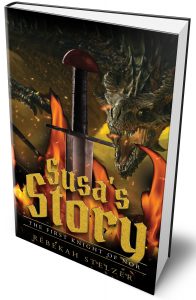
    I am currently in final edits on my second book Susa’s Story, the prequel to my first work The Queen and Knights of Nor.

    It follows Susa a young woman training to be a lady-in-waiting to the King’s betrothed, but her loyalties are torn as she has promised to help her childhood friend Draka win the King’s heart.  In her quest to become queen, Draka along with Susa and their friend Loeta, partner with Graken, a dragon with immense powers. Graken guides the young women in the magic arts, but these lessons do not come without a price. Susa has some hesitations along the way but feels justified because she is helping her friend. Little does she know that the consequences of their actions will plague the kingdom for generations to come. As two of the women pursue their newfound powers with reckless abandon, one will lose all that she loves most.

    In addition to editing, I’m learning about cover art, layout design, and formatting as I am going to indie publish this time around. I hope to release Susa’s Story this fall.

    Chanticleer: You parted ways with your publisher? How did that happen?

    Stelzer:  I parted amicably with my publisher in January. They were awesome in helping me to move over into an indie-type venture. They weren’t sure what to do with me, never having published middle-grade and I didn’t know about anything. So it was a clean split and I have nothing but good feelings towards them.

    Chanticleer: That is truly the best of all worlds! Thank you for spending some time with us today, Rebekah. Best of luck with Susa’s Story. We are looking forward to reading and talking about that!


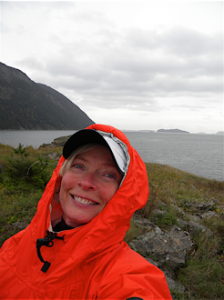
    If you love Middle-Grade Fantasy, you will absolutely be enthralled with R.L. Stelzer’s work!

    Pick up a copy of her award-winning book, The Queen and the Knights of Nor and write a review. Author’s love reviews.

    Check out Rebekah’s website here: Legendsofnor.com

    If you’ve enjoyed this 10-Question Interview, please comment, “like”, and share!
  • 2018 M&M Book Awards for Mystery & Mayhem – The Short List

    2018 M&M Book Awards for Mystery & Mayhem – The Short List

    Cozy Mystery Fiction AwardThe M&M  Book Awards recognize emerging new talent and outstanding works in the genre of  Mystery & Mayhem Fiction. The M&M Awards is a genre division of Chanticleer International Book Awards and Novel Competitions CIBA).

    These titles have moved forward in the judging rounds from Long Listers (Slush Pile Survivors) to the 2018 M&M Book Awards SHORT LIST. These entries are now in competition for the limited 2018 M&M  Semi-Finalists from which the First Place Category Positions will be chosen. The M&M Book Awards Semi-Finalists and First Place Positions along with the M&M Grand Prize Award Winner will be announced at the Awards Gala on Saturday, April 27th, 2019. 

    The M&M Book Awards competition discovers today’s  best books featuring “mystery and mayhem,” amateur sleuthing, light suspense, travel mystery, classic mystery, British cozy, hobby sleuths, senior sleuths, or historical mystery, perhaps with a touch of romance or humor, we will put them to the test and choose the best among them. (For suspense, thriller, detective, crime fiction see our Clue Awards)


    These titles are in the running for the next round – the SEMI-Finalist positions for the 2018 M&M Book Awards novel competition for Mystery & Mayhem Fiction! Good Luck to All!

    • B.L. SmithBert Mintenko and the Minor Misdemeanors
    • Mary AdlerShadowed by Death: An Oliver Wright WW2 Mystery Novel
    • Charlotte StuartWhy Me?
    • Becky Clark Fiction Can Be Murder
    • Alan ChaputSavannah Sleuth
    • Christine Evelyn VolkerVenetian Blood: Murder in a Sensuous City
    • Susan Lynn SolomonDead Again
    • Michelle CoxA Promise Given
    • Chief John J. MandevilleOld Dark and Dangerous
    • Traci AndrighettiCampari Crimson
    • Mark W StoubThe Fifth Trumpet: Fire in the Blood
    • M. Louisa LockePilfered Promises: A Victorian San Francisco Mystery
    • C.A. LarmerDo Not Go Gentle
    • C.A. LarmerEvil Under The Stars: The Agatha Christie Book Club 3
    • James MusgraveChinawoman’s Chance
    • James Scott ByrnsidePrisoners of the Past
    • Kate ValeOnly You
    • Nancy J. CohenHair Brained
    • Carl and Jane Bock  Death Rattle
    • C. C. Harrison Death by G-String, a Coyote Canyon Ladies Ukulele Club Mystery
    • Stone WinklerBlood on a Blue Moon: A Sheaffer Blue Mystery
    • Julie ChaseCat Got Your Secrets
    • Lo Monaco Lethal Relations
    • Donna Huston MurrayFor Better or Worse
    • Anna CastleMoriarty Takes His Medicine
    • Carl and Jane BockDeath Rattle
    • Deborah RichUnder the Radar
    • Kelly OliverFOX: A Jessica James Mystery
    • Susan Lynn SolomonDead Again

    Congratulations to these authors for their works moving up from the 2018 M&M Long List to the Short List.  These novels will now compete for the (Semi-Finalists) Positions!

    The M&M Short Listers will compete for the SemiFinalists positions that will compete for the M&M First-In-Category Positions.  First Place Category Award winners will automatically be entered into the M&M GRAND PRIZE AWARD competition.  The CBR Grand Prize Genre Winners will compete for the CIBA Overall Grand Prize for Best Book and its $1,000 purse.

    Good Luck to each of you as your work competes in the 2018 Mystery & Mayhem International Book Awards. 

    The M&M  Grand Prize Winner and the Five First Place Category Position award winners will be announced at the April 28th, 2019 Chanticleer Book Awards Annual Awards Gala, which takes place at the Chanticleer Authors Conference that will be held in Bellingham, Wash. 

    We are now accepting submissions into the 2019 M&M Book Awards writing competition. The deadline for submissions into the 2019 M&M  Book Awards is April 30th, 2019. Please click here for more information. 

    As always, please do not hesitate to contact us with any questions, concerns, or suggestions at Info@ChantiReviews.com. 

  • Quick Tips to Make Your Email Marketing Campaigns More Effective by Kiffer Brown

    Quick Tips to Make Your Email Marketing Campaigns More Effective by Kiffer Brown

    EMAILS – How to improve your “Open Rate” of Your Email Campaigns and E-newsletters that use MailChimp, Constant Contact, or Customer Relations Management software systems (CRM).

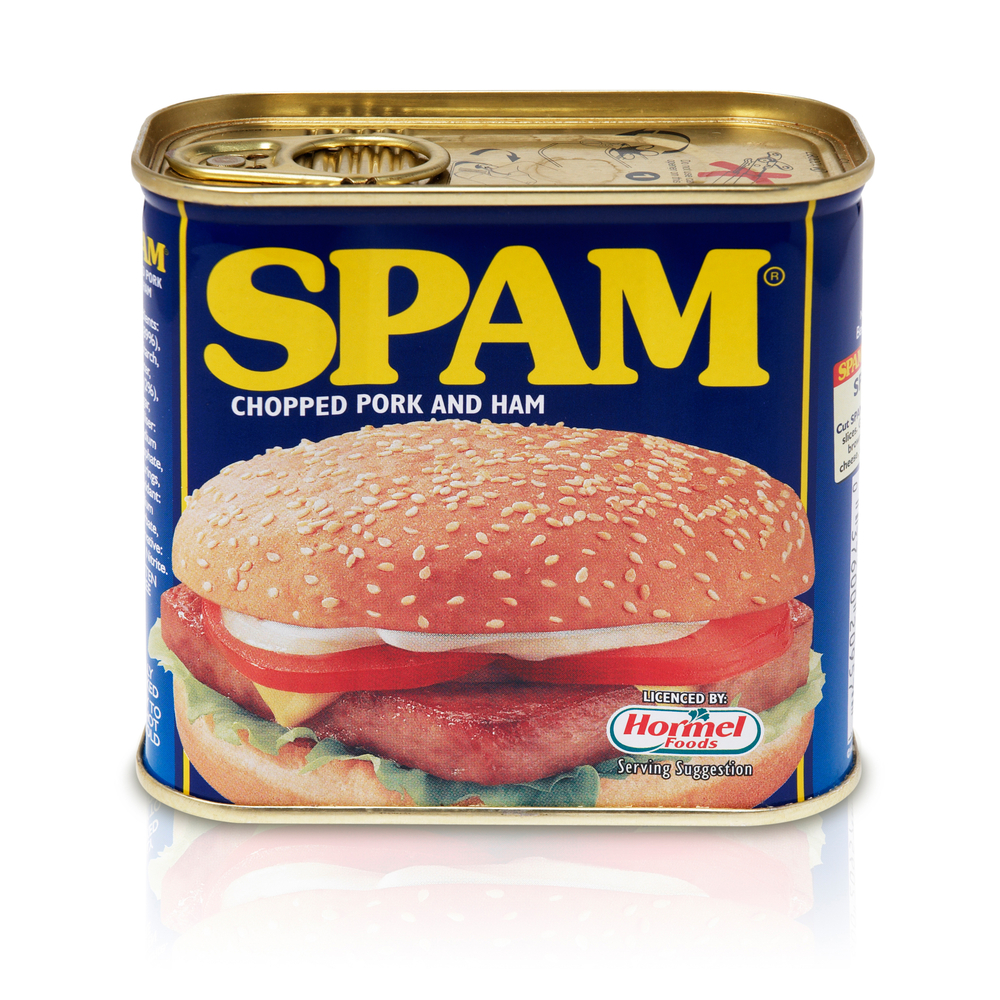
    Don’t let your emails to your subscribers end up in the dreaded SPAM folder!

    Make sure that you DO NOT use the following words in your emails’ subject lines or in the first line of your emails.

    These WORDS have been shown to decrease your “open rates” when used in the Subject Line and may have the ability to direct your email campaign into the SPAM folder/Junk Mail folder of your recipients’ inbox. How does this happen — the web crawlers try to determine what is “Spam” and what isn’t.

    • Hurry
    • Look inside
    • Free (but Freebie works!)
    • SALE or Sale
    • DEAL or Deal
    • Incredible Deal
    • This won’t last
    • Offer expires
    • Limited Time
    • Last Chance
    • Don’t use a  ? and ! in the subject line — this combo is known to redirect emails into the dreaded SPAM folder.
    • Don’t use ALL CAPS in the subject line because that is equivalent to YELLING at your recipient. However, do capitalize one or two words.

    Basically, make sure that your emails subject lines do not read like a sales pitch.

    The Dreaded SPAM Folder

    How to organize emails campaigns?

    1.  TARGET. Make sure that your list is targeted to correct recipients. I know this sounds like it should be common sense, but it is often the first obstacle.
      1. You can ensure that you have a targeted list by having a “subscribe” button on your website. Never buy email lists and we advise never selling your subscribers’ emails.
      2. BLUE Subscribe buttons have been found to be clicked more than any other color.
      3. All of your social media and marketing collateral should be targeted to drive potential readers and fans to your website (not your Amazon page or a book sales page). You want to engage your readers and potential readers to interact with you and your stories (your brand). To do this you must have a website that resonants with your targeted audience. (This will need to be a separate topic).
    2. FREQUENCY and TIMING. I would caution you to send out three or fewer email campaigns per week. Make sure that your email campaign is not getting lost in “Holiday” traffic. I have found that emails campaigns that land in our subscribers’ email boxes on holidays have a reduced open rate.
    3. UNLESS. If your campaign is  21 Days to a Better _____ campaign, then deliver what you promise!
    4. VALUABLE CONTENT. Only send out an email campaign when you have something of value to present to your targeted audience.
    5. SHORT and SWEET.  Remember to keep your message concise and interesting. Make sure that your email stands out from the rest of the emails in the recipient’s inbox.
    6. WORDSMITHING. Make your language entertaining (do this always because you are supposed to be a master word-crafter! )
    7. CONVERSATION. Make it a  two-way conversation by encouraging the recipients to ask questions, give feedback, or join the discussion about characters, events, or enter a contest specifically created to resonate with your readers. Here is a link to how (Ann Charles is a USA Today Bestselling author who writes award-winning sassy mysteries) Ann Charles offers contests on her website.  Notice that she doesn’t scream CONTEST. But it is there for her beloved fans. http://anncharles.com/2018-traveling-with-ann-calendar-contest/
    8. SUBJECT LINE. Spend some time crafting the subject line of your email. It will determine the “open rate” of your email campaign more than anything else that you could do. Subject lines are to email campaigns like covers are to books.
      1. Pique your readers’ interest
      2. Avoid ALL CAPS and exclamation points in the Subject line along with the dreaded sales words.
      3. Capitalize at least one word.
      4. Do keep it SHORT. Most people are reading emails on their mobile devices.
      5. Really think about what will intrigue your recipient to continue reading and to OPEN your campaign email.
      6. Make sure that the subject line matches the content of your email. Don’t “bait and switch’ because that leads to unsubscribes.
      7. What do you want your recipient to do? Keep the email focused on that. Is it engagement? Attend an event? Know that you have a new book in the works?
      8. What is the purpose of your email?
    9. TEST and REPEAT.  Keep track of what works and what doesn’t.

    What is a GOOD OPEN RATE for email campaigns?

    Open rates vary from industry to industry and purpose to purpose.  This is what MailChimp has to say about open rates. Click here to learn more. 

    Words that do work in the SUBJECT LINE and increase your email campaigns’ open rate are along the following veins: 

    • Announcements
    • Invitations
    • Thank you
    • Personalizing Subjects (are you emailing  “Quick Tips” or “How to” or “Announcing” )
    • Direct and to the point messages — >  The ONLY WITNESS to a tragic crime is Neema, (THEN this could go into the “preview text”>  Neema is a gorilla who can communicate  (Will this get your readers attention?) – Then the preview  continues…the latest eco-mystery by award-winning author Pam Beason.  (Notice how the power words are front-loaded in the Subject Line). Beason can then go on in the email body to say that her works on now on sale or where they are available or when she is doing an author event or that there is a new book in the series.
    • Make your recipients feel special.
      • For my readers and fans of Neema (subscribers would know about Neema, the communicating gorilla in a research project).
      • My gift to you
      • You’re invited
      • An exclusive offer only for my dear (insert name) subscribers
      • Did you know that Neema had a baby? (Subscribers, again, would know about Neema and her companion and that this email is just for them.)
    • Most email recipients do appreciate a good pun or a clever or quirky use of words.
    • IMAGES – studies have shown that having an image for every two-to-five hundred words of text makes for a more positive interaction with the email recipient.

    In conclusion, study what works with your target market, continue to evolve your email templates and campaigns, keep testing and analyzing your open rates and click rates. Discover what resonates with your readers.

    Freddie of MailChimp

    Crafting email campaigns is quite the art. Generators of  email campaigns must consistently try to improve “their game.” Fortunately, MailChimp has easy methods to test your email campaign effectiveness through A/B testing, analytics, and feedback.

    A word about A/B testing> Only test one A/B variable at a time. As I always say, “Today’s digital marketing is all about the long game.”

    I have read and researched many articles and posts on how to increase the effectiveness of Chanticleer Reviews email campaigns. To include all of the links would make this article cumbersome and longer than it already is. I hope that you don’t mind that I put the information in a more digestible format. For more information about how to make your email campaigns more effective, just “google it” and click on the links in this post.  Meanwhile, I hope that you have found some of the tidbits that I’ve shared with you interesting and valuable in promoting your brand and books.

    Remember to never forget that social media posts and comments, emails, and websites are you represented in the Internet of Things is akin to being in attendance of the Earth’s biggest cocktail party. Be the guest that always gets invited and not the one to be avoided at all costs.

    And now for inserting those images! One thousand words equal two-to-five images. Let me know what you think! Kiffer Brown, Chanticleer Reviews Team

    Chanticleer Book Reviews
  • ADVENTURES in SELF-PUBLISHING, #2: A PRIMER by Gail Noble-Sanderson – Marketing, Book Promotion, Self-Publishing

    ADVENTURES in SELF-PUBLISHING, #2: A PRIMER by Gail Noble-Sanderson – Marketing, Book Promotion, Self-Publishing

    Once you decide to embark on the adventure of self-publishing, take some time to clearly articulate your purpose and vision.  Is your writing a hobby or are you wanting to commit to something broader? Remember, this is your experience and you can craft it in any way that feels just right for you.

    If you decide to pursue going the distance, it is important that you accept the fact that there is a learning curve to self-publishing and to give yourself permission to feel occasionally overwhelmed and sometimes scrambled. Below are action steps and informational links to help us ink up our hands, Self-Publishers, and take on the task.

    Establish a Budget: 

    Some authors publish their work on a shoe-string budget doing their own editing, acquiring public domain images or designing their own cover designs, setting up their own files for printing, etc.  Others choose to spend more and hire a content and/or copy editor, professional cover artist, typesetting, etc. Depending on your piggy bank and your vision, you may spend anywhere from a few hundred to thousands of dollars.

    Acquire Your ISBN(s) – INTERNATIONAL STANDARD BOOK NUMBER(s):

    An ISBN is the most important identifier you can possibly give your book – that will assist book buyers worldwide to search and find your novel. The number (along with its barcode) will link to essential information, sales tracking, catalogs for bookstores, libraries, and online sellers. Each version of your book will need its own ISBN – in addition, if you are involved in a major rewrite, or you’ve just gotten your rights back from your publisher, you will need to acquire a new ISBN for your book. Take a deep breath, it’s not that difficult.

    Unless you are absolutely sure this will be your only book and you will never, ever revise it, I suggest buying multiple numbers. It is both convenient and economical to purchase ISBNs ( as a bundle (www.bowker.com ). There are providers out there who will offer to sell you ISBN numbers, but Bowker is the official source for the United States and worldwide, and well, why wouldn’t you go to the source?

    Work with a Skilled Editor:

    Some self-publishing authors choose to work with friends, family or other authors who serve as their editor. People often assume that editing is only about correct punctuation and spelling. That is a myth sometimes used to rationalize why we don’t need to spend money on a “professional” editor.  If you can jiggle some more coins from your publishing piggy bank, I believe it is of utmost importance to place your manuscript in well-seasoned, competent editorial hands. Nothing says “poor quality” and “I don’t believe my work is relevant” louder than a poorly edited book. Network with other authors who have established successful relationships with their editors and secure recommendations.

    Chanticleer Aside: Do you know that Chanticleer Reviews has a host of Industry-tested, skilled editors just ready and willing to work with you? Well, we do! We cover all aspects of editing from Manuscript Overviews, Proofreading, LineEditing, and Copyediting. Simply contact us for details, at: Editor@ChantiReviews.com

    Cover Art:

    What captures our attention when we are buying books? The cover! Good covers are the first point of a sale.  How many times have we read a book and as the story unfolds we go back, again and again, to look at the cover? Good cover art reflects the story. Again, network with your author friends and contacts to explore options. My sister, artist Kathleen Noble, (www.watercolorwonderpaintings.com) does the cover art for my books. Unless the artist is your sister or a talented, generous friend, working with a cover artist can cost more or less $300 – $600 to purchasing licenses for photography and artwork that can range in the thousands of dollars.

    Kiffer Brown says (along with many queried independent booksellers) that your book’s cover is the number one tool to selling your book. The content between the cover will sell your next book.

    Here is a helpful link titled FIVE ESSENTIAL BOOK COVER ELEMENTS or Effective Book Covers Deconstructed. 

    Here are some helpful links to explore for book covers:

    • SelfPubBookCovers This site walks you through their predesigned templates. You choose your picture array, your font, any quote you want on the cover. Once you settle on a design, the site promises the uploaded images that make up your design are yours and yours alone.
    • 99Designs Simply put, upload what you are looking for (your genre, character, setting) and in a few days, you will be able to choose from 99 designs for your cover. This site allows voting, so that is an interesting way to find out which cover resonates best with your potential readers.
    • Fiverr On the go since 2010, Fiverr is a site that offers competitive designs from an array of artists for a reasonable price.

    Choose Your Typesetter, Printer, & Distributor: 

    There are many venues to choose from in getting these steps accomplished. I suggest working with a  book production professional to layout your book. Most of us do not have the skills to do the nitty-gritty needed to execute a book’s final exterior, interior design, cover layout, typesetting, and formatting.  Once you have the final files then you can then upload them to book-selling platforms. If you want Indie Booksellers to sell your books in their brick-and-mortar stores, then you should consider uploading your books to IngramSpark (www.ingramspark.com) for print-on-demand and e-book publishing. Distribution is through Lightning Source, www.ingramcontent.com. CreateSpace is another on-demand publishing service that is owned by Amazon (www.createspace.com).  There are many options which you can view on the web. *You may wish t0 utilize artists and designers on 99 Designs and Fiverr to accomplish the typesetting for print and ebook. 

    Copyright, Library of Congress:

    A very informative site is www.loc.gov.  Don’t let the amount of information overwhelm you.  Just take your time and peruse as you learn.  You can call their helpline and very kind people will assist you.

    Protect your work by registering your work at the Writers Guild of America (WGA) Here is why you should:  “…The registration process places preventative measures against plagiarism or unauthorized use of an author’s material. While someone else may have the same storyline or idea in his or her material, your evidence lies in your presentation of your work. Registering your work does not disallow others from having a similar storyline or theme. Rather, registering your work would potentially discourage others from using your work without your permission.”

    Business License & Dept. of Revenue:

    I formed an LLC (Limited Liability Company), Noble Press, and submit quarterly tax reports. I have yet to pay a penny.  Guess you know what that means!  But now that my books have been out there a few years and selling, I am beginning to make money after expenses.  Not much and I certainly won’t quit my day job, but enough to say “Yahoo!”  These are a few helpful links: www.sba.gov, and www.irs.gov.  There are many sites online offering to take your money to set up your business.  I strongly urge you to do this yourself as it is important as a self-publisher and business owner to be educated on every aspect of setting-up, running and maintaining your self-publishing business. Remember, the business is a separate entity from your writing.  I find writing much more enjoyable but the business aspect is a necessity for meeting my goals and is proving rewarding in itself. Be patient with yourself as you learn, asking many questions.

    Final Thoughts: 

    In conjunction with finishing your final edits, allow four to six months to complete all the business pieces. I say, again, that it is important to be organized and to track where you are in each step of every process. In addition to my online and hard files, I keep a writing and publishing journal and make dated notes all along the journey.  It has helped me time and time again to look back and see when what occurred as well as my thoughts.

    Make a weekly and monthly schedule. For instance, two mornings a week tend to the business aspects, and three days a week focus on your editing and writing. You will change it up along the way as you figure out what works best for you but, if you can begin in an organized, systematic fashion, you will feel productive and not stymied by too much to do and losing your way. Well, you may still lose your way from time to time but you will never be lost! You will have a vision, a well thought out plan, and be ready to go! Next month we will discuss marketing and promotion.

    Remember, “Keep falling in love with the potential of what you are doing!

    • Gail Noble-Sanderson

    Read the conclusion to this article series here.


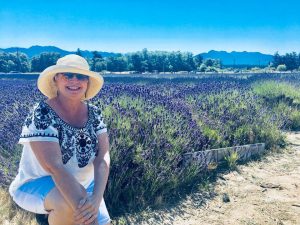
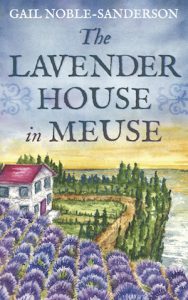
    Gail Noble-Sanderson is the author of two works of historical fiction, both of which are self-published under her own Noble Press.  The Lavender House in Meuse is an emotional, intriguing, and sensitive account of the crises of World War I and one woman’s journey towards recovery and growth. 
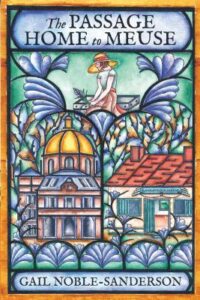
    Her second novel, The Passage Home to Meuse won 1st Place in the 2017 Chatelaine Awards, the Chanticleer International Book Awards (CIBA) for romantic fiction.

    Both books are available through Amazon and Village Books.


    She invites you to visit her website  http://gailnoblesanderson.com/ and to follow her on social media.


  • A QUICK GUIDE TO BOOK REVIEWS AND HOW TO USE THEM by Chanticleer – Book Reviews, Marketing, Discount Offer

    A QUICK GUIDE TO BOOK REVIEWS AND HOW TO USE THEM by Chanticleer – Book Reviews, Marketing, Discount Offer

    Book Reviews are tools every author can use – wisely!

    TYPES OF REVIEWS

    Generally speaking, there are four types of reviews you will encounter. Here they are:

    1. Trade/Editorial Reviews – These reviews are written by professionals in the publishing industry – quality matters here.
    2. Peer Reviews – Done by other authors or professional peers
    3. Manuscript Overviews – The professional writer’s first step in the editing process.
    4. Consumer Reviews – These are written by readers – quantity is what counts here search engine operations and algorithms.


    Editorial Book Reviews

    Each type of review serves a specific purpose, and each type resonates with different kinds of book buyers and serves different purposes.

    Editorial Reviews

    Editorial Reviews aka Professional Trade Reviews provide useful information for publishing professionals for preparing for book launches.

    Post Launch: Traditional Publishers and Book Publicists also know that editorial reviews set the tone for consumer reviews.

    Publishing Professionals know that editorial reviews give readers (and consumers) the language and terms to discuss books, thereby, making it easier for readers and fans to write reviews. Because more reviews generate more book buzz and trust me, book buzz is what you want, you will want to make it extremely easy for readers (aka book consumers) to leave a review.

    Make sure that blurbs of your book’s editorial reviews are listed in the Editorial Reviews section of your book’s Amazon page. Blurbs from Editorial Reviews are also handy to have when uploading your book’s information in the ISBN forms and in the information upload page of your book on digital platforms. Review blurbs also help Indie bookstores to determine if your book would sell in their stores.

    PEER REVIEWS 

    Peer reviews have run into some problems lately. While it’s tempting to trade review for review with your author friends, be careful where you post them. Some large retailers have caught onto the review-for-review and have subsequently pulled reviews they suspect come from other authors. I’m not saying you shouldn’t review your friends’ books – you should! In fact, you need to be fostering those relationships with other authors. But don’t be surprised if your reviews are pulled from the giant’s webpage. So, when you seek reviews, don’t just seek peer reviews only. Go for a mix!

    And remember to get peer reviews, you must give peer reviews. Make it part of your marketing checklist to read your peer writers’ books and then review them.  Remember the reviews do not have to be long — 25 -to- 50 words for a consumer review will work and will be just as effective as a 250 -to- 500-word review.  Quantity is what counts here.

    One hundred consumer reviews are what we hear it takes to get on Amazon’s radar for SEO and algorithms.

    A final word of advice regarding consumer reviews: If you do receive an unfavorable review or even a scathing review (it happens to even the most successful authors), do not react or respond especially if they fall into the “troll” category. Never interact with a “troll” — just don’t. No good will come from it. As hard as it may be to do, focus on the positive reviews. If writing craft issues (changing POV, grammatical errors, typos, etc..) are mentioned in the review, address the issues and correct them. In today’s digital world, there is no reason not to.

    MANUSCRIPT OVERVIEWS 

    Manuscript Overviews is dollar for dollar, one of the best writing tools you can utilize. Traditionally published authors receive great editing and feedback from agents and senior editors on early drafts,  a benefit that most self-publishing authors never receive. When feedback comes early in a work’s progress it allows the author to not only create a more polished final product but also publish more works and build their backlist.

    When working with an agent or publishers, the author works on a rough draft – the early drafts of a novel. He creates the theme, the characters, the setting, the tone, the story, the plot lines, the dialog style, and selects the genre and has an audience in mind (YA or mystery fans, fantasy or Science Fiction readers, etc.). After the author creates the story with a beginning, middle, and end, she then sends this early unedited draft of the story to his editor or agent to read and to get feedback.


    Editing a Manuscript

    This is exactly what a Chanticleer Manuscript Overview is: An objective evaluation of a story idea that is fully formed with a beginning, middle, and end, but still in an early draft stage. The Manuscript Overview comes before LINE EDITING and COPY EDITING.


    CONSUMER REVIEWS

    Consumer Reviews are awesome. Don’t we all like to hear what total strangers think of our work? I mean, cringe-worthy as these types of reviews can be, they are important. How do you get them? That’s an interesting question. My statistics show that for every 100 queries you send out to review your book, you may get 8-10 actual reviews in return. I’m talking about sending your books out to bloggers, reviewers and the like. But those reviews do drive the Average-Joe reviews. The more you get of one, the likely you will increase the other. This is where your mailing list comes in handy – a topic for another blog… sorry.

    Now that we’ve got the four types of reviews covered, what do you do with
    a review once you have it? 

    After getting your reviews, make sure you are using them effectively. By that, I mean, use them everywhere! Post them on your websites and your book covers. Splatter them all over your social media! Share them with your friends – use snippets of them in your marketing collateral. Use them as a way to introduce your book to your local libraries and brick and mortar stores.

    Let’s break it down.

    Online retailers (Amazon, Kobo, Apple) have specific places for you to insert editorial review blurbs. Many brick-and-mortar stores will place shelf-talkers with trade review excerpts near your displayed books.

    Click this  link to inform you on How To Post Reviews in the EDITORIAL SECTION on AMAZON

    Have a REVIEWS page on your website where you place quotes – or entire reviews. Insert links to the original reviews and always give attribution!

    The book cover is the place for trade/editorial and peer review blurbs. (It’s a cover – don’t cram an entire review on there!) Choose the top or bottom of your front cover to place awards, book stickers – some piece of information that draws the book reader to your book. Put the review blurbs on the back cover or if you have a lot of meaningful blurbs, you can use the first couple of pages of your book to place these. Again, don’t overwhelm the reader with the entire review. Be selective. It will pay off.

    What’s so different about a Chanticleer Editorial Review? 

    You may have known I was going to talk about Chanticleer Reviews, right? I mean, that’s what we do…

    Here’s the deal, a Chanticleer Editorial Review is professional, unbiased, and fair. We don’t compare cozies to thrillers. We compare the work, put it to the test, and write the review. We always send our authors a “Not for Publication – Awaiting Comments from Author/Publisher” copy. This way the author and publisher can read the review and approve it or kindly ask us to not publish. It’s your choice. Simply put, we are not in the business to embarrass anyone – only help. We love to help authors. It’s what we do.

    And one more thing… if you’re in need of a review and you would like to order a Chanticleer Review, here is our special offer for July. I repeat this offer is good until July 31, 2018 – midnight. Here’s what to do:

    1. Share this article THREE TIMES on three different social media sites
    2. Take a screenshot of your shares and post those in the comment section of this article with the phrase “I would like a $50 discount on my next Chanticleer Editorial Review!”
    3. OR tag us using @ChantiReviews  on Twitter and Facebook or Instagram!

    We will message you with your discount coupon code.

    Happy writing!

    Sharon Anderson  and the  Chanticleer Team