Tag: Book Discovery

  • The RELATIVITY of TIME and TRADE SHOWS by Sharon E. Anderson

    The RELATIVITY of TIME and TRADE SHOWS by Sharon E. Anderson

    I agree with Einstein: time is relative.

    I’m no scientist. I’m no brain expert.

    But here’s what I think, time passes quickly when we’re happy and productive or involved in something meaningful. Joy makes us buoyant and time, therefore, becomes lighter and easier to move.

    When we’re faced with something terrible or unpleasant, the opposite happens. We are weighed down by depressed thoughts or depressing situations. We feel every moment because the pain it causes is real and we cannot do anything else but live in it. Time slows because our focus is on the moment.

    Today, (I started writing this on the first flight of the fall trade show season) Kiffer and I are heading to New Orleans for the Southern Independent Booksellers Tradeshow (SIBA). We’re leaving a couple of days before the exhibit portion of the show begins. We’re crossing time-zones. Neither of us has been to NOLA and I have a list of things and places to see and experience. Little did I know, that we would be spending most of our time in the convention center. NOLA sights and sounds will have to wait for another time.

    It is important that we arrive ahead of the exhibit time because TWO of Chanticleer’s authors’ works have been selected for the prestigious SIBA events and everything must be PERFECT:

    • Bernard Mansheim, M.D.’s Somerset award-winning novel, A Doctor A Day was selected for the prestigious Moveable Feast event at SIBA
    • Gregory Erich Phillips’ Chanticleer Overall Grand Prize novel titled Love of Finished Years was selected for the prestigious  First 180 Days event for books that will be published in January 2018.

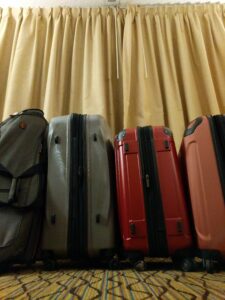
    Those of you who do a lot of traveling know that your bag cannot weigh more than 50lbs or you pay a hefty price. We had 3 fifty-pound bags plus personal luggage to lug around between the two of us. Our bags easily weigh more than the allotted fifty pounds each. However, eventually, we discover that a $20 tip to the Skycap helps to “lighten” the load.

    Bossy, Bertha, Betty, & Biff

    And those of you who read books know that they tend to be heavy. We’re representing 25 Chanticleer Authors and because books look better with a partner, I’ve packed two of each title. You might think that’s fifty books, but you’d be wrong. Most of our authors have two or three titles coming with us. Do the math.

    I drop Kiffer off at the departure deck at SeaTac with the bags and park my van in the garage. When I catch up to her, she’s at the Alaska counter unpacking the bags… One of the bags is overweight and shuffling of its contents is required. By the time we reconfigure, the agent has closed the counter and we have to move to the next aisle to check in.

    This is how our tradeshow adventure begins.

    We are learning things about ourselves and each other – things we didn’t know before. Kiffer has started calling the luggage by name:  Betty, Bertha, Bossy, Birdie, and Biscuit. I cannot drink McDonald’s coffee. I tried. I can’t. Kiffer thinks I’m a bit of a coffee diva. I guess I am. Kiffer has graciously upgraded our seats to premier economy class – which means more leg room for both of us tall gals and free drinks. She knows how to travel and I’m grateful. After everyone is clicked in and flight safety drill is given, we’re in the air. It will be six hours before we land. Six hours.

    This is the first tradeshow of the season. There will be three more plus auxiliary shows.

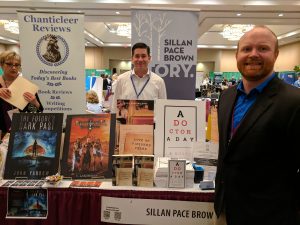
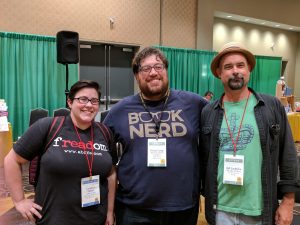
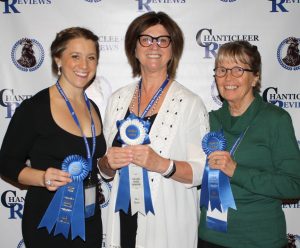
    Sharon Anderson, Editor in Chief of Reviews; Gregory Phillips, a Chanticleer Grand Prize Winner; Josh Floyd of Ingram.

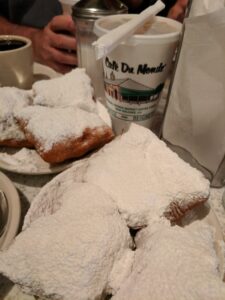
    NOLA is sultry. It’s a city that beckons the visitor to ease on in and sit for awhile. It hits the high notes of the most compelling song and doesn’t judge anyone for anything. The police ride horses whose backs are as tall as my minivan back home. It’s a different world. I love the vibe and the beignets – the coffee and the company.

    Beignets from Cafe du Monde, NOLA

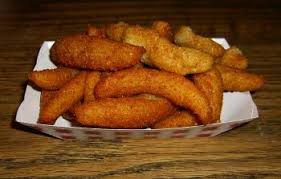
    In N’Orleans, all you have to do is pause for a second and someone will be around to chat you up on how your day is going and if you like the city they call home. It’s very Southern and for me, a Northwest native, it’s lovely. To Kiffer, well, being from the South, I can tell she’s feeling her roots as we venture from one restaurant to another looking for the perfect hush-puppy.

    Hush-puppies

    We’re off to Portland, OR next for the Pacific Northwest Independent Booksellers Tradeshow where two Chanticleer authors’ books were selected for the BUZZ BOOKs event. This time it was Kaylin McFarren of Portland for her Chatelaine award-winning romantic suspense Threads series and Seattle’s own Gregory Phillips, Love of Finished Years was selected – again!

    From there, we hop a plane in Portland to head to Chicago for the Heartland Fall Forum. These are bigger shows than SIBA and I’ve increased my load of authors I’m representing. More luggage is required. We borrow Andy’s orange suitcase and name it Biff.  Once again, Kiffer is the proud mother hen when the Laramie Grand Prize winner, Sara Dahmen’s Widow 1881 (renamed from Doctor Kinney’s Housekeeper) was selected for Heartland’s prestigious Moveable Feast Event! 

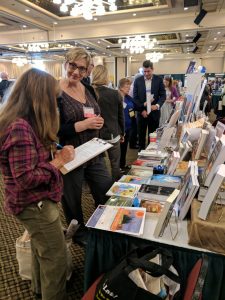
    Sharon hand selling to a PNBA book buyer!

    After the Heartland trade show, we will split up and Kiffer will take our authors’ books to San Francisco for the show there and I will travel up to Surrey for the SiWC for the weekend. For me, it feels odd not being a part of the last trade show, but Chanticleer has been at the Surrey conference for five years running – it’s no time to stop now.

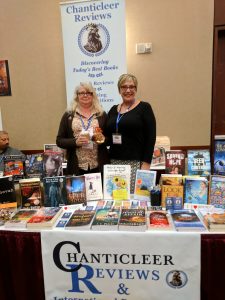
    Kiffer refueling with coffee and Sharon proudly showing off Chanticleer’s Best Books Collection at the Heartland Fall Forum, Lombard, Illinois

    Before leaving, my mother asked me why was I going away for such a long time. I had to smile, as long time means so many different things to so many people. It depends on what you’re doing, right? Spending a week in jail would be rough. Attending tradeshows? I know it will be over before I have had a chance to settle in.

    My mother’s  question is valid, though. What do I hope to gain from being away from my family for most of September and October?  First of all, I expect this time away will work to sharpen my professionalism and further my career in the book industry world. I expect to meet new people, build stronger connections and learn with a little more certainty that I am capable and ready for this new and exciting adventure.  It is exciting to meet the some of the top executives in the publishing industry and mingle with the “Big 5” publishers. There is always a lot to learn and many networking opportunities.

    Equally as well, I hope to increase the visibility of my (Chanticleer’s) authors’ work, widen their footprint, as it were, in the retail world of book-selling. I hope, through our efforts, they gain even more notoriety and, more importantly, benefit from more bookstores placing more orders for their work. I hope their books fly off those bookstore shelves because I’m not taking just anyone to these shows. I’m taking Chanticleer Award winners and those very special people who have earned the very highest scores from our professional reviewers. I’m taking the top books and the booksellers are pleased that we have vetted the books that we are exhibiting. We even had a Disney exec who was interested in Chanticleer’s YA and children’s book selections stop by the Heartland booth—she was looking for new content for Disney. She took away sell sheets and information—we will definitely stay in contact!

    Book buyers would be crazy not to snatch these books up! And we did connect many indie booksellers and book distributors with Chanticleer Reviews’ best books!

    We Discover Today’s Best Books! 

    Endnote: I started this article on the plane to New Orleans and I was right, the Fall trade show season is over before it began! Time does have a knack for passing quickly when you’re having fun and are passionate about what you do!

    Next up are the 2018 American Librarian Association trade shows and the Comic Cons—just around the corner…


  • SCIENCE FICTION BOOK AWARDS — 2017 CYGNUS SHORT LISTERS!

    SCIENCE FICTION BOOK AWARDS — 2017 CYGNUS SHORT LISTERS!

    [fusion_builder_container hundred_percent=”no” equal_height_columns=”no” hide_on_mobile=”small-visibility,medium-visibility,large-visibility” background_position=”center center” background_repeat=”no-repeat” fade=”no” background_parallax=”none” parallax_speed=”0.3″ video_aspect_ratio=”16:9″ video_loop=”yes” video_mute=”yes” overlay_opacity=”0.5″ border_style=”solid”][fusion_builder_row][fusion_builder_column type=”1_1″ layout=”1_1″ background_position=”left top” background_color=”” border_size=”” border_color=”” border_style=”solid” border_position=”all” spacing=”yes” background_image=”” background_repeat=”no-repeat” padding=”” margin_top=”0px” margin_bottom=”0px” class=”” id=”” animation_type=”” animation_speed=”0.3″ animation_direction=”left” hide_on_mobile=”small-visibility,medium-visibility,large-visibility” center_content=”no” last=”no” min_height=”” hover_type=”none” link=””][fusion_text]

    The Cygnus Book Awards recognize emerging new talent and outstanding works in the genre of Science Fiction, Steampunk, Alternative History, and Speculative Fiction.  The Cygnus Awards is a genre division of Chanticleer International Book Awards and Novel Competitions.

    These titles have moved forward in the judging rounds from Long Listers (Slush Pile Survivors) to the 2017 Cygnus Book Awards SHORT LIST.  These entries are now in competition for the limited 2017 Cygnus  First  Place Category Positions and will be announced at the Awards Gala on Saturday, April 21st, 2018. 

    [/fusion_text][fusion_text]


    [/fusion_text][fusion_button link=”https://www.chantireviews.com/services/Science-Fiction-Writing-Contests-Chanticleer-Book-Reviews-p21521218″ target=”_self” alignment=”center” hide_on_mobile=”small-visibility,medium-visibility,large-visibility” color=”default” stretch=”default” shape=”pill” icon_position=”left” icon_divider=”no” animation_type=”shake” animation_direction=”left” animation_speed=”0.3″]Enter Cygnus 2018 Today[/fusion_button][fusion_text]

    Chanticleer Book Reviews is looking for the best books featuring space, time travel, life on other planets, parallel universes, alternate reality, and all the science, technology, major social or environmental changes of the future that author imaginations can dream up. Hard Science Fiction, Soft Science Fiction, Apocalyptic Fiction, Cyberpunk, Time Travel, Genetic Modification, Aliens, Super Humans, Interplanetary Travel, and Settlers on the Galactic Frontier, Dystopian, we will put them to the test and choose the best among them.

    These titles are in the running for the First Place Category Positions Book Awards for the 2017 CYGNUS Book Awards novel competition for Science Fiction!

    Congratulations to these authors for their works moving up from the 2017 CYGNUS Finalists to the Short List (Semi-Finalists). These novels will now compete for the First Place Category Positions!

    • Jim Cronin – Hegira
    • Elizabeth Crowens – A Pocketful of Lodestones
    • Michelle Bryan – Strain of Resistance
    • Sara Stamey – Wild Card Run
    • MWAnderson – Breaching The Parallel
    • John Yarrow – The Future’s Dark Past
    • Pamela LePage – Virtuous Souls
    • Darrell Lee – The Gravitational Leap
    • David Neuner – Fear Factory
    • Chris Rasmussen – The Cat & The Fiddle
    • Rhett Bruno – From Ice to Ashes
    • Elizabeth Crowens – Silent Meridian
    • Magnus Victor – Oort Rising
    • Brian Cohn – The Last Detective
    • Julian North – Age of Order
    • Wende Dikec – Starr Valentine
    • Jerry Amernic – The Last Witness
    • Candace Sams – Galaxy Man
    • Cathy Parker – The Power of Three: The Novel of a Whale, a Woman, and an Alien Child
    • Matthew Buscemi – Schrodinger’s City
    • Darren D. Beyer – Casimir Bridge
    • KB Shaw – Neworld Papers: The Warrior’s Tale
    • Andrew Craven – Moshiah 
    • Alexander Weinstein – Children of the New World
    • Michael Simon – First Command
    • Michele Fogal – Root of the Spark
    • Sydney M. Cooper – Forsaken Lands Book II: Sacrifice
    • Dayna Ingram – All Good Children

    The CYGNUS Short Listers will compete for the CYGNUS First-In-Category Positions.  First Place Category Award winners will automatically be entered into the CYGNUS GRAND PRIZE AWARD competition.  The CBR Grand Prize Genre Winners will compete for the CBR Overall Grand Prize for Best Book and its $1,000 purse.

    All Short Listers will receive high visibility along with special badges to wear during the Chanticleer Authors Conference and Awards Gala.

    As always, please do not hesitate to contact us with any questions, concerns, or suggestions at Info@ChantiReviews.com. 

    Congratulations to the Short Listers in this fiercely competitive contest! 

    Good Luck to each of you as your works compete for the CYGNUS Awards  First Class Category Positions. 

    The CYGNUS Grand Prize Winner and the Five First Place Category Position award winners will be announced at the April 21st, 2018 Chanticleer Book Awards Annual Awards Gala, which takes place at the Chanticleer Authors Conference that will be held in Bellingham, Wash. 

    We are now accepting submissions into the 2018 CYGNUS  Awards writing competition. The deadline for submissions is January 31st, 2018. Please click here for more information. 

    [/fusion_text][/fusion_builder_column][/fusion_builder_row][/fusion_builder_container]

  • MYSTERY & MAYHEM 2017 Book Awards SHORT LISTERS

    MYSTERY & MAYHEM 2017 Book Awards SHORT LISTERS

    Cozy Mystery Fiction AwardThe Mystery & Mayhem Writing Competition recognizes emerging new talent and outstanding works in the genre of  Cozy Mysteries, Not-so-Cozy, and Classic Mysteries. The M&M Awards is a division of Chanticleer International Novel Writing Competitions.

     Congratulations to these authors for their works moving up from the 2017 M&M slush pile survivors to the Short List. The novels will now compete for the First Place Category positions!

    Each of the titles below have earned the M&M AWARDS SHORT LIST bragging rights!

    More than $30,000.00 dollars worth of cash and prizes will be awarded to Chanticleer Book Reviews 2017 writing competition winners!

    The M&M Book Awards FIRST IN CATEGORY sub-genres  are:  Amateur Sleuth, Romance, Animals, Cooking/Knitting/Hobbies, Blended Genre, Medical/Lab, Travel, Humorous, Historical, Classic British, and Y/A.

    The following titles will compete for the FIRST IN CATEGORY Positions and Book Awards Packages.

    NOTE: This is the Official List of the M&M 2017 SHORT LIST.

    The Finalists Authors and Titles of Works that have made it to the highly competitive Short-List (aka The Semi-Finalists) of the M&M 2017 Book Awards are:

    This is the Official 2017 Short List for the Mystery & Mayhem Book Awards – Dec. 7, 2017.

    • Carl and Jane Bock – Coronado’s Trail: An Arizona Borderlands Mystery
    • David Selcer – The Dream Catcher Murders
    • Sherrie Todd-Beshore – The Count Of Baldpate
    • Cherie O’Boyle – Missing Mom
    • Anna Castle – Moriarty Meets His Match
    • Jennifer Mueller – Never Turn Your Back on a Wolf
    • Cindy Sample – Dying for a Donut
    • Nancy G. West – River City Dead
    • Kim Hunt Harris – Unsightly Bulges, A Trailer Park Princess Cozy Mystery
    • Valerie Tate – Frog Legs
    • Betty Jean Craige – Fairfield’s Auction
    • Libi Astaire – The Moon Taker
    • Lucinda Brant – Deadly Peril: A Georgian Historical Mystery
    • J.L. Newton – Oink. A Food for Thought Mystery
    • Vee Kumari – DHARMA
    • D. J. Adamson – Suppose
    • M. K. Graff – The Golden Hour: A Nora Tierney English Mystery
    • Kathleen Kaska – Run Dog Run
    • Susan Breen – Maggie Dove’s Detective Agency
    • Elaine Orr – Demise of a Devious Neighbor
    • Michelle Cox – A Ring of Truth
    • Amy Boyles – Scared Witchless
    • Jeanette Hubbard – Chasing Nathan
    • Susan Boles – Cherry Cake and a Cadaver
    • Fred Shackelford – The Ticket
    • Dennis M. Clausen – The Sins of Rachel Sims
    • M. Louisa Locke – Deadly Proof: A Victorian San Francisco Mystery
    • Mollie Hunt – Cat’s Paw
    • Carol June Stover – Kenmore Square
    • Lonna Enox – Striking Blind
    • Suzette Hollingsworth – Sherlock Holmes and the Chocolate Menace
    • Traci Andrighetti – Amaretto Amber
    • Susan Boles – Death Of A Wolfman
    • Diane Weiner – Murder is Collegiate
    • Amy S. Peele – CUT
    • Catherine Bruns – Baked to Death
    • Richard T. Ryan – The Vatican Cameos: A Sherlock Holmes Adventure

    The M&M Semi-Finalists will compete for the M&M First-In-Category Positions, which consists of Seven Judging Rounds.  First Place Category Award winners will automatically be entered into the M&M GRAND PRIZE AWARD competition.  The CBR Grand Prize Genre Winners will compete for the CBR Overall Grand Prize for Best Book and its $1,000 purse.

    All Short Listers will receive high visibility along with special badges to wear during the Chanticleer Authors Conference and Awards Gala.

    As always, please do not hesitate to contact us with any questions, concerns, or suggestions at Info@ChantiReviews.com. 

    Congratulations to the Short Listers in this fiercely competitive contest! 

    Good Luck to each of you as your works compete for the M&M  Awards  First Class Category Positions. 

    The M&M Grand Prize Winner and the Five First Place Category Position award winners along with all Short Listers in attendance will be announced at the April 21st, 2018 Chanticleer Book Awards Annual Awards Gala, which takes place at the Chanticleer Authors Conference that will be held in Bellingham, Wash. 

    We are now accepting submissions into the 2018 M&M Awards writing competition. The deadline for submissions is March 31st, 2018. Please click here for more information. 

  • The LITTLE PEEPS 2017 Book Awards for Early Readers & Children’s Picture Books – Slush Pile Survivors

    The LITTLE PEEPS 2017 Book Awards for Early Readers & Children’s Picture Books – Slush Pile Survivors

    Early Readers and Picture booksThe LITTLE PEEPS Writing Competition recognizes emerging new talent and outstanding works for Early Readers and Children’s Picture Books.

    The Little Peeps Awards is a division of Chanticleer International Writing Competitions.

    More than $30,000.00 dollars worth of cash and prizes will be awarded to Chanticleer Book Reviews 2017 writing competition winners!

    The Little Peeps Book Awards for FIRST IN CATEGORY sub-genres are: Early Reader Chapter Books, Story Books, Picture Books, Activity Books, Educational Books.

    These Authors and their Works made it past the first rounds of the 2017 Little Peeps Early Reader Book Awards are:

    • Sandy Hill – Play Ball, Have Fun Read, Imagine, Draw
    • Kizzie Jones – A Tall Tale About a Dachshund and a Pelican: How a Friendship Came to Be
    • Deanna Edens – The Almost Cool Kids Club
    • Penelope Lagos – I Miss My Best Friend
    • Brian Estes – Flying Pigs & Dinosaurs & Things You’ve Never Seen Before
    • Sylva Fae – Rainbow Monsters
    • Lori Mullen – The Horrible, Nasty, Fire-Breathing Dragon Named Achoo!
    • Marshall Cobb – River Tree
    • Wanda Carter Roush – Angel on Assignment
    • Amy Mae Boreman – Maggie’s New Home
    • Lauren Mosback – Frightened in Friendship Grove
    • Stacie Sullivan Simon – I Am Me & You Are You
    • Laura Tritt – Big Hope
    • Shana Hollowell – Little Mouse’s Sweet Treat
    • Heather Pallotta – Wishes and Kisses
    • Rita Kaye Vetsch – The Many Colors of Friendship
    • Peggy Sullivan – Midnight and Moonlight
    • Peggy Sullivan – The Moon and Star

    These Little Peeps 2017 authors and their works  will compete for the Little Peeps Short-List Positions.

    As always, please do not hesitate to contact us with any questions, concerns, or suggestions at Info@ChantiReviews.com. 

    The Little Peeps Grand Prize Winner and First in Category Winners will be announced at the April 21st, 2018 Chanticleer International Writing Contests Annual Awards Gala, which takes place on the last evening of the Chanticleer Authors Conference that will be held in Bellingham, Wash. 

    We are now accepting submissions into the 2018 Little Peeps Book Awards writing competition. The deadline for 2017 submissions was May 31st, 2017. We are now accepting submissions into the 2018 Little Peeps writing competition. Please click here for more information. 

    Pictured on the left are the 2016 Little Peeps Book Award winners: Sara Dahmen, Denise Ditto Satterfield, & Donna Washington with their blue ribbons on April 1st, 2017 Chanticleer Reviews awards banquet ceremony.


  • BISAC Codes — Not just Alphabet Soup — Book Marketing Tools

    BISAC Codes — Not just Alphabet Soup — Book Marketing Tools

    Anyone producing a digital book or setting up an ISBN may come across the acronym BISAC. If you’re a self-published author wondering what a BISAC code actually is, here are some answers.

    Mysterious Coding – BISAC Codes

    Metadata For Your Book

    BISAC is an acronym for Book Industry Standards and Communications, a very helpful tool put out yearly by the BISG (Book Industry Study Group). The BISAC code system is an alpha-numeric system of book classification. The book industry (libraries, universities, Barnes & Noble, local bookstores, and online bookstores) use BISAC code numbers to categorize books.

    For example, if you’ve just written a graphic novel murder mystery, they have a BISAC code for that:

    CGN004010 COMICS & GRAPHIC NOVELS / Crime & Mystery

    In the BISAC code catalog, there are fifty-three (53) main categories with various sub categories – and in some instances, sub-sub categories.

    How do you access the BISAC codes?

    If you are buying an ISBN code for your book directly from Bowker, you will be prompted to select your BISAC code. When you set up your Bowker account when you purchase an ISBN, Bowker will ask you to identify or categorize your book. A list of 53 BISAC codes will appear (if Bowker is truly up-to-date) and you’re off to the races.

    Even if you’re not working with Bowker and using a third party to acquire your ISBNs, you can always access the BISAC code categories directly online.

    How do you determine your book’s BISAC code? 

    YES, you can unlock the secrets to BISAC Codes! 

    The first category you choose should be what the book is about, which genre category it fits into. Think of it as a funnel: a wide opening at the top, narrowing down to a spout at the bottom. Start large, go narrow.

    FICTION > ROMANCE > MYSTERY > PARANORMAL > VAMPIRES

    Don’t let the process intimidate you. Don’t be sidetracked. Get your BISAC codes down so you can start talking about your book in an intelligent manner. For example, when asked what your book is about you can say, “My book is a Sci-fi/Fantasy with elements of the paranormal and badass skateboarding.” Or, you could say that if you were author Jesse James Freeman talking about his book, Billy Purgatory: I am the Devil Bird.

    BIASC Codes and Discoverability

    BIASC codes are used by booksellers, librarians, teachers, and others who need to categorize and catalog your book. But as an author, you can use this coding system to understand your book in the context of all the other books out there.

    Third Party Keywords

    Please note that if you are letting a third-party such as Amazon’s CreateSpace, they have their own codes, some of which match to BISAC and others do not. For example, when you log in to CreateSpace and upload your book files you’ll be prompted to enter keywords. During this process – currently on CreateSpace, Step 3: Target Your Book to Customers > categories –  a screen will pop up and ask you for KEY WORDS. These, like BISAC codes, will help readers find your work. So the principles described below for BISAC codes apply to keywords as well.

    BISAC Identifiers = The Beginning of Interest

    You can also think of BISAC Identifiers as the bones for DISCOVERABILITY.

    Let’s take this wagon on another ride and construct a little scenario where you are attempting to purchase the perfect book for your grandma. You sit down with her and ask her what she likes to read. She tells you that she likes mysteries best – mysteries with a lot of vampire sex. Instead of screaming T.M.I. GRANNY! You smile and say, I will find you the perfect book!

    How? You now know about BISAC codes and how to wield them. You either visit your favorite brick and mortar store – or go online and search:

    Mystery, Erotic, Vampire

    And you’ll find J.D. Ward and Laurell Hamilton – two of the tops authors writing in this category – both of whose books will be perfect for your grandmother.

    Check your BISAC codes yearly

    The BISG is not a static group. They are constantly changing things up with BISAC codes – rearranging codes, creating codes, destroying codes – all in an attempt to make our books more discoverable.

    Once you’ve landed on the codes that best describe your book you will need to check back from time to time (yearly) to ascertain if your chosen codes are:

    • still accurate,
    • still active, and/or
    • if the BISG has come up with a better code for your book.

    In their most recent update,  the BISAC Subject Committee states that they never reuses inactivated codes and that they would never inactivate a code and then reuse that code for an unrelated literal. The committee continues that this has always been the case and inactivated codes have never been reused. So, that has never been a practice – apparent or otherwise. They do, however, “reactivate” codes as necessary. For example, GAR011000 was inactivated after the 2.3 edition (in 2001) and the reactivated for the 2016 Edition with the same exact literal.

    A Concise Context For Your Book  — Unlocking Publishing Secrets 

    Let’s be honest, the real reason you need to know your book’s BISAC Code: It gives you a fast way to describe your book.

    Can you imagine doing that to anyone in the book industry? No one has the time or inclination to listen to you prattle on about it. Base your book description on its BISAC code and everyone will have  a good solid context for its genre, content, and even the type of experience they’ll have when they read it.

    So when your all-too-well-meaning writer friends set your book down and ask in unison, “Yes, but where is this book going to be on the shelf?” Or agents at conferences ask you, “Who’s your audience? How am I supposed to sell this book?” Now you have something smart to say in return. Now you know BISAC codes!

    We will have more articles about BISAC codes and how to decide on which ones to use and how.

    The Chanticleer Authors Conference on April 20, 21, & 22, 2018 will offer BISAC codes workshop.


    This article is by Sharon E. Anderson

    Sharon Anderson is an award-winning author and Chief Reviews Editor for Chanticleer Reviews and International​ Book Awards. Creating and editing content – as well as editing/writing reviews – and outreach are just a few skills she brings to the table. An SPU graduate in Clothing Design and Textiles – something she barely uses in her day-to-day life – Sharon brings her textile know-how into her stories as often as possible. In her spare time, she serves as President of the Skagit Valley Writers League where she promotes authors, engages speakers, leads workshops, and more. She writes dark comedy, horror, short stories, articles, and essays whenever she gets the chance from her home in the Skagit Valley where she lives with her husband, two children, two dogs, a couple of cats, and a sketchy Guinea pig. Working with Chanticleer is like playing every day! Contact: editor@chantireviews.com

  • Building Your Readership Community – Not Just for YA Authors

    Building Your Readership Community – Not Just for YA Authors

    #SocializingWithInternetStrangersForTheWin

    Dear YA Writer,

    You know that moment right before you hit “Post”? The seconds seem to still, like a roller coaster summiting a steep incline. Click. Movement. A loading bar appears. Aaaaand, plunge. Self-promotion rockets into cyberspace on the wings of a WiFi prayer to the cat gods of the interwebs.

    Then the wait.

    Refresh! And still no notification. Doubt creeps in and whispers error messages from your social media past. But you’ve changed. You no longer join the horde of desperate town criers who scream into the void “buy my book!” with every tweet. Your contribution is now a diverse portfolio of hooks and calls to action with appropriate yet ironic hashtags.  

    A notification pops up. Someone has engaged! Impressions increase.

    Inhale relief. You did it! Exhale negativity. Whew, you spelled there/their/they’re right.


    Yeah, that moment.

    Lather. Rinse. Repeat.

    This is authordom. This is #amwriting about #writerslife and #writerproblems. Because, let’s face it. For all our word-slinging bravado, marketing via social media is not our best use of wordsmithery. OK, some of you are seriously boss when it comes to online engagement. Most of us, though, are introverted, please-dear-god-don’t-make-me-have-small-talk-with-strangers types who require naps to recharge our social anxiety batteries. Shooting proverbial fish in a cyberspace barrel cuts into our writing time. <<inserts angry eyebrows>>

    So what do we do? We sin against the Internet by cluttering newsfeeds with our amateur attempts at marketing. Why talk with strangers when we can talk at them?

    No, YA Writer. Just, no. Better to not Internet at all.

    I know, I know, I know… You’ve changed. A reformed self-promotion junkie. I believe you. But revision is the theme song of writing, amirite? And when it comes to engaging young adult readers, one thing is critical.

    Socializing.

    Yeah, you read correctly. I said socializing. Some of you just cringed. Sorry-not-sorry. Strange as it may sound, social media is designed for community and relationship building, not marketing. The kind of place where you talk with people, not at them. YA readers (especially actual YA-aged YA readers) are sensitive to this online phenomenon, too.   

    Get to know your readers and potential readers. Ask them questions about what they like. Be silly. Be serious. Be everything in-between. Share strange but true tidbits about you.

    While plunking away at this blog, shoulders hunched and face pinched with all the feels, my elbow bumped a book stack where an unsuspecting gummy cinnamon bear rolled off the edge and met an untimely end in a cup of tea. Not bad. I think I just found my new favorite sweetener. #RIP #GummyBear2017 #NeverForget

    What is the strangest thing you’ve drank in your coffee or tea?

    What is the strangest thing you've drank in your coffee or tea?
    What is the strangest thing you’ve drank in your coffee or tea?

    See what I did there?

    Did I mention my books? Nope.

    Did I direct someone to my website or Amazon page? Negatory.

    Did I ask them to comment? You betcha.

    But I chose a safe topic. Neutral ground. No sales pressure here. Instead, I’m building a community for my followers and establishing a thread of conversation. Interact with comments. Like, heart, wow, and laugh. Weep with your followers when they give you a piece of their troubled heart. Be outraged when they describe crimes against humanity.

    Be you.

    Socializing.

    You totally got this.

    True confession: I don’t always post like a saint. Sometimes I sin against the Internet with shameless plugs and yadda-yadda-yadda about my product rather than engaging my community. Sometimes this is necessary. Sometimes it’s too much, and my followers show me by ignoring my attempts for attention.

    The best combo is 75% community building and 25% self-promotion.

    Hey, don’t worry. I’m still learning this, too. We’ll do this social media thing together.

    First, a cautionary tale: Please, for the love of cat GIFs, don’t bore your followers with business details. Your readers don’t care. Your younger readers care even less. Authordom is not the Dow Jones Industrial Average, and readers are not brokers waving money and shouting at machines with fluctuating values. OK, so they sorta are, and the giant AI that is Amazon oscillates prices like Oprah. Here’s a saving for you. And a saving for you. Savings for everyone! You get the gist. They don’t need the gritty details of your sales or the publishing industry. <yawns> Plus, people notice when other people stop looking at them as fellow humans and blink $$$ instead.

    Don’t be that author.

    Join the resistance! I’ll stand beside you fellow #YAlit writer as we lift our keyboards and Smart tech in solidarity to reclaim our followers and engagement!

    Click.

    Plunge.

    #SocializingWithInternetStrangersForTheWin

    Sincerely,

    Me


    P.S. Pssst. This isn’t goodbye. Oh, no. You’re stuck with me for a few more blog conversations. So stay tuned!

    P.P.S. Many of us have day jobs or other duties outside of writing. Since we’re getting to know each other here: Using only GIFs, comment on what you do for a living.


    A note from Chanticleer: 

    Many thanks to Jesikah Sundin for sharing her effective and fun social media techniques with us!

    Two words could describe Jesikah: books and coffee. She pours a cup of dark roast writer’s ambrosia before approaching her keyboard. And the forest is her happy place.

    Jesikah invites you to socialize with her on her website and social media pages (visit her website for direct links).

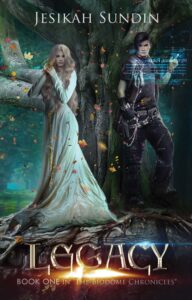
    Jesikah Sundin is the award-winning author of the Biodome Chronicles. 

    Biodome Chronicles

    Short Description of Legacy: Book One

    Siblings born and raised inside an earth-based experimental Mars biodome have only known a rustic medieval life rich in traditions and chivalry. Groomed by The Code, they have built a sustainable community devoid of Outsider interference––until the unthinkable happens.

    Cultures clash when the high technology of the Anime Tech Movement collides with the Middle Ages in a quest for truth, unfolding a story rich in mystery, betrayal and love.

  • INTERVIEW with Grand Prize LARAMIE AWARD-WINNER, JACQUIE ROGERS!

    In honor of the Laramie Awards month, we decided to interview one of our very favorite authors, Jacquie Rogers. It should come as no surprise that Jacquie won the Laramie Grand Prize in 2016 for her rip-roaring, shooting, tooting, humorous Western that features Honey Beaulieu, Man Hunter!

    Jacquie Rogers is a regular contributor for the Western Fictioneers blog. She presents at RWA conferences and workshops, Chanticleer Authors Conferences, and  Western Writers of America. Her works are known for their hilarity, adventure, mistaken identities, and romance. Rogers’ books are  a hit for anyone who has a penchant for classic Westerns and Shakespearean comedies. She lassos the genres together in a most enjoyable way making her tales a true pleasure to read. From saddles sores and thorns from the trail, to finally being able to breathe when the last binding on the corset is released, even the most die hard Western readers will be impressed with Roger’s knowledge and expertise she portrays as she takes you back in time to the Old West.
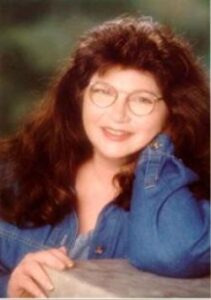
    Jacquie Rogers: Thanks for inviting me to the Chanticleer blog.  I’ve been privileged to be part of the Chanticleer family right from the get-go, so that makes it extra special for me to be here.  I had help, though—the folks at the Pickle Barrel Bar and Books on Facebook choose my questions, so here we go!

    Chanticleer: We’re so glad you have some time to spend with us. Let’s jump right in…What areas in your writing are you most confident in? What advice would you give someone who is struggling in that area?

    Rogers: Dialogue and chaos.  For dialogue, the advice is easy—listen to people talk.  Two nuances I’ve noticed is they rarely speak in complete sentences and seldom use the other person’s name.  More specifically, listen to people who are similar to your characters.  In the case of Honey Beaulieu, I draw strength from the old Missourians in our family, and mix in a little Owyhee County speak.  As for chaos scenes, the main thing to remember is that the first thing you think of is also the first thing the reader will expect, so turn left when expected to turn right.

    Chanticleer: That’s really good advice, Jacquie. How do you keep track of all the… left turns? Do you work with a storyboard? 

    Rogers: When a character turns left and it’s a better idea than what you’d planned, then it’s best to go with them.  However, that does cause a ripple effect on that particular thread, and sometimes several or all threads.  I try to veer into position so I don’t have to go back and change things, but very often that simply can’t happen.  Either way,  from the turn-left point forward, the whole plot needs to be tweaked.  I’m happy to take the fun route to the end, but I do have to know where and how the story is going to end, and all the characters need to be in the right spot for that to happen, and all (or most, in the case of a serial type series such as Honey Beaulieu – Man Hunter) threads need to be tied in a neat bow.  So it’s a matter of connecting the dots in a logical but relatively unpredictable manner that allows the reader to play along with you.  Because books are really a group activity—the interaction of characters, readers, and the author.

    Even with all that, continuity errors can and do occur.  My first line of defense is Your WorldKeeper, Diane Garland.  She has an eagle eye for continuity and can take me all the way through the thread so I can see what needs fixing  Or sometimes it can’t be fixed (e.g., in a previously published book), and we have to come up with a logical explanation for how things are in the current book.  I work with her as I’m writing, so she usually nails my hide to the wall before even the editor sees the story.

    Rogers: An author can’t keep writing unless readers buy the books—simple economics.  Books are expensive to produce.  So telling others about the author’s books is absolutely gold.  There are a variety of ways to do this, including sharing the author’s posts on social media, reviews (many advertising sites require a certain number of reviews before the author can purchase ads), and telling all your friends in real life to buy the book.  Visibility is the name of the game.  And keep reading!  Your enjoyment is a gift to me.

    Chanticleer: Thank you for mentioning the social media aspects and sharing. Very important. What are you working on now? What can we look forward to seeing next from you?

    Rogers:  My next book will be Hearts of Owyhee #6, Much Ado About Mail-Order Brides.  If you’ve read the third and fifth books of the series, you’re acquainted with the McKinnon brothers.  This book will be Bram’s book.  He’s the oldest brother and the hardest to place because he’s perfect.  Flawed heroes are much, much easier to write.  But since he’s perfect, he has to end up in an impossible situation, and I’ve definitely got him in a big to-do.  Believe me, he has a lot more help than he wants.  I’ll start writing next week and hope to have the book done by the end of the year.

    Chanti: Oh, we’ll be looking forward to that! We love it when characters get knocked around! Let’s move on to craft… It’s important to work on your craft. What do you do to grow your author chops?

    Rogers: I try new techniques.  For instance, I wrote I Heard the Brides on Christmas Day in four points of view—and it’s only a 15,000-word story.  I think I pulled it off but believe me, I won’t be doing that again!  Also, the Honey Beaulieu series is in first person point of view, and the narrative is written in Honey’s vernacular just as if she were actually speaking.  I did this because we think the way we talk, so the narrative can’t be in modern correct grammar.  My Hearts of Owyhee series is in the third person.  So I’m always switching back and forth, writing one book in first and one in third.  That gives me the opportunity to remember the strengths in each and apply them in both series.

    When I first started writing, I read a ton of craft books.  I was so hung up on the rules that I couldn’t write a word for nearly a year, so I tossed it all out and decided the only way to write is to let my hair down and go for it.  Then I heard an interview with Johnny Depp where he remarked that actors had to be brave enough to look stupid (paraphrasing).  I think that goes for writers, too.

    Chanti: We love that you were naturally brave enough to follow your gut on this one. And we love that Johnny Depp backed you up on this one… because, you know, Johnny Depp! Let’s switch gears a bit – give us your best marketing tips, what’s worked to sell more books, gain notoriety, and expand your literary footprint.
    Western Pioneeer Civil War Fiction Award

    Rogers: Depends on what year, month, time of day.  This business is changing fast.  When MySpace was king, I had a strong presence there.  I’ve never had much success on Twitter and only go there because I feel like I should.  Facebook is the place to be right now, which isn’t to say that it’ll still be popular next year.  It’s important to have a presence on social media that is personable (notice I didn’t say “personal”), where people see you and want to be your friend.  This is what marketing is all about these days—the personal touch.  Frankly, I think we’re moving on from social media to real people in the real world contact.  The pendulum is swinging back.  That’s why I put on the Silver City event every year, and try to get out as much as possible to meet my readers.

    I also think it’s important to hang out with other industry professionals—reviewers, publishers, and other authors.  Getting a Chanticleer review and entering the Chanticleer contest is great for raising the discoverability of your books.  Attend the conference and blast pictures all over social media.   The added bonus is that these conferences are lots of fun as well as informative.


    Chanticleer: Talk a little more about the Silver City event… What was that like? Who came? How did you set it up – C’mon, Jacquie! Spill the beans!

    Rogers: I enjoy getting together with my readers and fellow book lovers, and I had this bright idea that it would be fun to meet where the Hearts of Owyhee series is set, which is in Owyhee County, Idaho.  (Owyhee is pronounced oh-WYE-hee, and is the original anglicized spelling of Hawaii.)  Most of the books in the series have scenes in Silver City, and two of them are set there for most of the story.  Silver City is a treasure that few people know about.  It’s a genuine Old West town that still exists as it did in the 19thCentury.  There’s no power or telephones—although they did have telephones in the early 1880s.  The Idaho Hotel is a gem and staying there is like spending the weekend in a living museum, although it’s a soft landing because they did install flush toilets and showers.  The hotel restaurant has always been known for its fine cuisine and believe me, the current owners are living up to the historical standards.  Jerri Nelson’s pies are simply divine.

    There’s a lot more to say about the place, but I’ll go on to the event.  Keep in mind that Silver City is not a tourist town.  You won’t find staged shoot-outs or slot machines (that work).  People there live like folks did in the 1800s.  So visitors live like that, too.  What does it mean?  It means that whatever we do, we have to create ourselves.  If we want music, then we need to play it.  I can’t play anything so I enlisted the aid of fiddler Daria Paxton and her dad, Matt Paxton, who plays guitar and sings.  They’re both talented musicians and old family friends—my dad and Matt’s parents were in the same class.  Relationships were everything in the old days, and there, they still are today.

    The event in Silver City is for everyone, young and old.  In the olden days, families would come to a dance.  The musicians would play and everyone would dance, including the kids.  Then the kids would play and dance until they got tired, and the parents would put them to bed on the pile of coats while they continued to party into the night.  That’s the feeling I wanted to create at our event and we succeeded.  Wildly.  Some of us dressed in costume, others didn’t.  No one really cared because we all were there to have a rip-snortin’ good time.  Which we did.

    Poet Roberta Whittemore joined me at the book signing and that was fun.  Everyone raved about the melodrama, billed as the worst melodrama in history, which had a terrible script (I wrote it), and bad actors (except for Ichabod—he was great, and so were Curtain Rod #1 and Curtain Rod #2).  But the audience participated and had a great time.  The cool thing was that half the audience were walk-ins, not part of the event, and they loved it.  After that, we had an auction for charity.  Sherry Walker chaired the auction with Ken Walker as the auctioneer.  The gals in the kitchen soon learned not to bang pans or he’d call their bid.  We raised over $300 for the Children’s Tumor Foundation to find a cure for neurofibromatosis.

    So I’d like to invite everyone to join us next year.  The tentative date is July 20-21, 2018.  Information will be on my website at http://www.jacquierogers.com/silvercityevent.html.

    Chanticleer: What a terrific event! Thank you for letting us in on Silver City! What do you do when you’re not writing? Tells us a little about your hobbies.

    Rogers: Reading is my first love, make no mistake about it.  I was a reader long before I ever wrote a single word of fiction.  Other than that, I like rodeo, cooking (but not doing the dishes), and baseball.

    Chanticleer: Tell us more! What’s your favorite rodeo event? If we came to your house for dinner, what would you cook? and Who’s your favorite baseball team? 

    Rogers: Favorite rodeo event—well, that would be hard to pick.  Of course, I love the bull-riding but all of the events are fun to watch.  I like all the rough stock events, but then I’m amazed at the ropers, too.  And I know how hard it is to run the barrels without knocking one over.  I also look forward to the specialty acts they bring in.  At the Snake River Stampede, they had the Stampeders—a horseback drill team that performs in the dark so all you see is the lights on the horses and rides.  It’s pretty spectacular.

    If you came to my house for dinner, you’d get down home cookin’.  I cook everything from scratch—even yogurt and salad dressing.  I do buy mayonnaise, though, because we eat too much of it when I make it myself.  So what’s on the menu?  How about homemade bread bowls filled with genuine Idaho potato soup, salad with ranch dressing, and strawberry shortcake (with real shortcakes hot out of the oven) for dessert?  Or maybe you’d like Thai fried rice, spring rolls, and bok choy stir fry.  I’m willing to give just about anything a go.

    As for baseball, I’m a Mariners fan, unfortunately.  Go M’s!

    Chanticleer:  That all sounds good! What led you to write in the western humor genre?

    Rogers: Writing westerns was a simple choice—I grew up where the Old West is still alive so I didn’t have much to research.  Also, in light of the urbanization of our country and the vast change in communications, I want to do my part to keep the culture in people’s awareness.  It’s hard to explain to someone how people lived in the late 1800s without television and cell phones, and that’s why we have so much fun at the Silver City event.  We’re not connected, so we have to create our own entertainment and [gasp] actually visit with one another face to face.

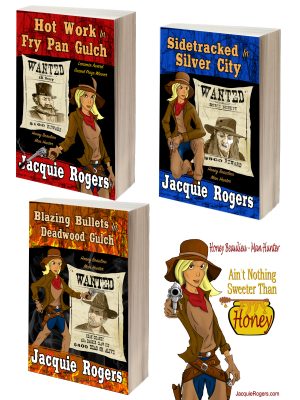
    Humor?  I don’t actually write humor.  Every time I do, no one laughs.  There’s one line in Blazing Bullets in Deadwood Gulch (Honey Beaulieu #3) that absolutely cracked me up, but not one person has laughed or even noticed it. [Update: one person finally got it!  Made my day.]

    Chanticleer: Really, no humor? Well, certainly situational, character driven humor. We love your books and love how you put your characters in situations they can’t possibly imagine! How structured are you in your writing work?
    Rogers: Horribly unstructured and unfocused.  My marbles are rattling around somewhere and they’re not even in the same room, or house, or state.  How I ever manage to finish a book is beyond me.  But when the deadline looms, I do hunker down and git ’er done.

    However, my approach to writing a novel is quite structured.  I don’t write a single word until I know the main and secondary characters inside and out.  The better I know the characters, the easier it is to throw obstacles in their way (that’s also called plotting).  I always have one scene in mind for the opener.  But I confess that the opening scene very rarely stays the opening scene.  The first scene I wrote in the Honey Beaulieu series will be in book #5.  The first scene I wrote in Much Ado About Miners is now in chapter 7.  I always start too far in, probably because I have little tolerance for backstory and I want to get on with things.

    Chanticleer: We appreciate that, Jacquie. How do you approach your writing day?

    Rogers: I always try to leave off in the middle of a scene so I don’t have to figure out what I’m going to write.  So after that scene is finished, then I check with my plot bones chart to see if I’m on track.  If not, I turn left.  Actually, I turn left a lot because sometimes things happen on the page that are too fun to throw out, so then I have to make it work with the rest of the story.  An example is Louie Lewie in Blazing Bullets in Deadwood Gulch.  He was supposed to be a throwaway character, but he kept coming into the story, so I resigned myself that he’s now part of it.  In fact, he’ll probably be in the next book, too.  So a lot of my day is thinking and while I’m thinking, the best way to come up with new ideas is to bake bread.  My extended family gets a lot of bread.

    Once everything’s figured out for the day, I fire up my laptop and use speech recognition to rough out a scene.  Believe me, “rough” is the right word considering when I said “bustier” it typed “buzzard ears.”  I end up with about 90% dialogue.  Then I send the scene to my desktop computer and edit using the keyboard.  If the scene starts out at 500 words, it’ll be 1,000 by the time I’m done adding the narrative.  A side note: I detest description and always skip it when I’m reading for pleasure, which means I have to make an extra effort to make sure I’ve created a picture for the reader.  This is by far my weakest area.

    Chanticleer: Ah, bread. Here’s the part where we wish we lived closer! The idea of using speech recognition software is pure genius – and time-saving, too. How do you come up with your ideas for a story?

    Rogers: I actually don’t know.  Usually, some phrase, prank, or predicament makes me laugh.  Then I put characters to it and voila! We have the concept for a new book.  Honey helps me out because I know that if I dig a hole big enough, she’ll keep me entertained.

    My entertainment is the determiner as to whether I use an idea or not.  If I’m entertained, then I hope the readers are, too.  But on the other hand, if I get bored writing, then you can bet that readers will also be yawning.
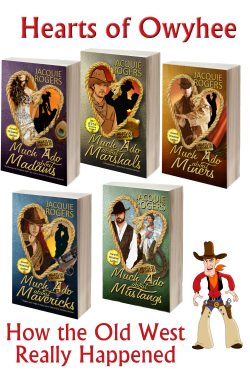
    A few of my ideas for books are identifiable, though.  In Sleight of Heart, I wanted to write a heroine who was as good at math as Aunt Grace, and I always wondered how she’d get along with Maverick.  So Lexie Campbell and Burke O’Shaughnessy were born.  The idea for Much Ado about Mustangs came from an article I read in The Owyhee Avalanche about the local theater group booking a national star to headline their local production.  Hence, we have Lady Pearl Montford and local rancher Josh McKinnon, whose heart’s desire was to raise Friesians.

    The next book I’m going to write, Hearts of Owyhee #6: Much Ado About Mail-Order Brides, came from the fact that the hero, Bram McKinnon, is perfect.  Perfect is boring.  Perfect makes for no conflict.  Unless he’s put in a situation where there’s absolutely no solution.  Bwahahaha.  Naughty me.

    As for Honey Beaulieu, what happens isn’t much of a surprise.  What’s interesting about her is the journey, so I’m always on the lookout for incidents that aren’t exactly your usual bill of fare.  Honey obliges by reacting in ways that surprise me every time.  Of course, she constantly changes the plot, too, which can get frustrating.  But I learned just to go along for the ride and let Honey take me with her.  We get along much better that way.

    Chanticleer: And what a ride! Thank you, Jacquie, for being our first interview of the year! We love what you do and love how you do it.

    Rogers: Thanks again for inviting me here today!

     

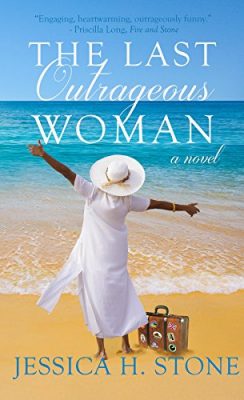
  • THE LAST OUTRAGEOUS WOMAN by Jessica Stone – Contemporary Women’s Fiction

    THE LAST OUTRAGEOUS WOMAN by Jessica Stone – Contemporary Women’s Fiction

    Life is meant for living – outrageously in Jessica Stone’s latest novel, The Last Outrageous Woman.

    Eighty-six-year-old Mattie’s life is dwindling away at Florida’s Restful Palms Retirement facility but she has a plan—an outrageous plan. And it just might work. Taking advantage of a crisis situation, Mattie tricks a staff member into signing a release paper that will be their ticket out.

    Each woman has a secret longing to be fulfilled. For Mattie, it’s a sea voyage as described to her by a long-lost lover; food-obsessed Dolores wants to honor her Irish heritage by kissing the Blarney Stone; quiet, easily dominated Edna has a dream of riding a camel—in Egypt; Rose never got to say goodbye, her way, to her deceased brother buried somewhere in Wisconsin; and Helen remembers how her two sons, both killed in military service, loved Australia, leaving her with the desire to go there and pet a kangaroo.

    To accomplish their mad scheme, the women who will become known to the world as “the grannies” enlist the help of Edna’s young bohemian niece Katie, who will make connections for them—not just on flights, but with people in all the places they touch down. Sneaking out of Restful Palms with passports and very little luggage (they share necessities and take only one change of clothing each) the grannies head first for Wisconsin.

    By the time they reach Ireland they have become a phenomenon on Facebook, and once their trek takes them to Australia, they have hundreds of thousands of “friends” who watch their exploits and cheer them on via YouTube. They become so admired by global social media fans that a dance is invented in their name, hoisting them to overnight Facebook fame—even though none of them quite understand what Facebook is, or even exactly how to use a cell phone.

    But not all their adventures are fun. The grannies are hunted by a pair of greedy sisters trying to make sure their aging mother does not waste “their” inheritance and are swindled by con men who see them as easy marks. Their ramblings wind down in Cairo, but the reader senses that for Mattie, the “last outrageous woman,” the trip will never really end.

    Each woman finds what she seeks, but in ways very different than anticipated, in this rollicking tale of spirit and spunk. One of them enjoys true love for the first time; one will get long-sought revenge; one will find herself while getting lost; one will let the experience of reunion with her departed loved ones carry her away; and Mattie will discover that the sea can have a far different look and meaning than she had expected.

    Told by best-selling author (Doggy on Deck) Jessica H. Stone, The Last Outrageous Woman transports the reader along with the grannies, to exotic locales that Stone herself has explored. Both a skilled and imaginative writer, the author surely knows that her own exploits, borrowed for this amusing, fast-paced yarn, would give her the well-earned title of “outrageous woman.”

    She also deserves extra kudos for showing that older folks are still fully human—capable of dancing, loving and celebrating life—while not side-stepping some of the undeniable pitfalls of aging—aches, fears, and memory loss.

    Five run-away grannies prove that dreams are worth pursuing, life is worth celebrating, and you’re never too old for true love in Jessica H. Stone’s engagingly fun and poignant tale of women pursuing their hopes and dreams in spite of society’s so-called best intentions.

  • A QUICK GUIDE to PUBLISHING LESSONS that YOU NEED NOW by Sharon Anderson & Kiffer Brown

    A QUICK GUIDE to PUBLISHING LESSONS that YOU NEED NOW by Sharon Anderson & Kiffer Brown

    Writing is not the same as publishing.

    That may seem obvious to most. However, imagine a new writer, a hopeful author, with a lot to say – this person writes and writes, day after day. The diligent writer amasses 283,472 words exactly. This person then believes that everyone will want to read her story. Why not? The story is sent off to a literary agent – maybe two. Okay, the manuscript is sent off to five dozen literary agencies with query letters and synopsis. Our dear writer is no sloth; she has done her due diligence!

    And then the wait commences. Six weeks, three months, six months, a year later… no replies. No responses. Nothing – not even a generic letter or automated email response. Not unreasonable—really— when one considers more than two million new works are created each year in the English language. We can tell you this: The slush pile takes no prisoners. Only the best of the best will be noticed.

    Our author is crushed, heartbroken. Vows to never write again….

    THERE IS  A BETTER WAY! Below is a Quick Guide that outlines the crucial steps involved in successful publishing (read book sales). These mimic, for the most part, the tried and true methods of traditional publishing houses that work for Indie and Small Press authors—especially when the advantages of today’s new world of publishing are added into the mix.

    Let’s back up a minute and examine what our aspiring author could have done to have a better chance at succeeding in today’s publishing market: 

    1. Manuscript Overview. You’ve spent many hours writing your manuscript – It’s time to invest in a Manuscript Overview (MOV). What’s that? It’s a process whereby you send your work off to a trusted, experienced editor. This editor will read your work and give you professional, genre-specific feedback: tell you what’s good, what needs work, if your manuscript is ready to publish. If you have a literary agent or work with an acquisitions editor at a publishing house, you would send if off to them for feedback. If you don’t have one of these (yes, it is like trying to get a loan from a bank, the bank will loan you the money if you don’t need it…), then you may want to consider our manuscript evaluation service. It can be painful, but every author who has used it says that it is the only way to go. Most of our authors consider it like taking graduate courses in storytelling. A MOV really helps to hone a work.
    2. Build Your Online Digital Presence. At the same time as the Manuscript Overview is going on, begin strengthening your on-line presence through interactive social media. These days, even Fiction authors need a platform. Facebook is still a good way to do this, as is Instagram. If your book is science fiction, maybe you should try Reddit. Whatever you do, invite your targeted readership community into a relationship on the platform where they can be found. The thing to understand is publishers are looking for authors who already have a following who can be motivated to purchase books.
    3. Line Edit. After you’ve incorporated the suggestions from your Manuscript Overview into your work, and have had several trusted brutally truthful beta readers to thumbs up the story line and characters, it’s time to send it off to a Line Editor. What? Yes, you heard me. Your work will require a LINE EDIT that insures that each and every sentence makes the story move forward. Line Editing is defined as a thorough and focused reading of the manuscript on a line-by-line basis with suggestions, comments, and remarks noted for the author to consider. Take the extra time and send your work off to a professional, experienced editor who will examine your work to make sure you’ve hit all of the plot points, your characters are believable, your story is solid, that it doesn’t sag anywhere, and that the opening is a grabber. Take the time. Do this step.
    4. What’s next? While your work is with the Line Editor, we hope that you are developing  the next work in your series or researching your next story idea. Every agent, every publisher will want to know what you are working on next. Series sell.
    5. Cover Concept. Begin developing cover concepts for your work in progress (WIP) by selecting key elements of it. Your cover should convey time period, location, genre, targeted audience, and story elements. These cover elements should be reflected in your marketing collateral (biz cards, website background, social media elements, etc.).
    6. Fresh Eyes. After incorporating the LINE EDITS that were suggested, we advise that you have another set of fresh eyes read the work. Perhaps, a second independent manuscript overview. This can also fall under the responsibility of your literary agent or publishing house’s acquisitions editor. If you don’t have either of these, then use an independent consultant. See Item 1 above. Professional Fresh Eyes are the Traditional Publishing Houses secret weapon.
    7. Copy Edit. Now that the story is solid, it is time for a COPY EDIT. Copyediting is a very technical read of a work for flaws in grammar, punctuation, syntax, consistency in spelling, numerals, hyphenation, etc.; flagging any inconsistencies that have made it past the Copy Edit such as eye color, name spelling, location, timing from point A to point B. Copy editing also tracks any internal inconsistencies in the story (conflicting abilities or inabilities, location inconsistencies), etc. This is where the story is held accountable to the publisher’s style guide and to the story’s individual world building construct.
    8. Cover Design. If you are indie-publishing or even hybrid publishing, you will need to seriously consider investing in your cover design. Your book has less than 3 seconds – that’s THREE seconds to attract a potential buyer. If you have the chops to do this yourself, that’s awesome. But most authors don’t. Think about it. You have an awesome book. You’ve spent time and money making certain of it. Why wouldn’t you want to put as much time and attention into a cover that will work for you instead of against you? A good cover doesn’t have to cost thousands of dollars, but you do need to hire a professional cover designer who understands your genre. The cover will sell your first book. Your content will sell the second the book.
    9. Author Brand. Create your bio’s. You will need a 100-word, a 200-word, and a 500-word biography to send to agents and publishers, to slap on your sell sheets, to place on the back of your book. The three bio’s will work for different applications. Have these ready to go. You will need professional head shots that reflect your author brand. Get it done.
    10. Proofing. Proofreading is the final step of the writing process. It looks for purely grammatical errors, typos, and spelling errors only.
    11. ISBN Designation. BISAC CODES. Meta Data. The “alphabet soup’ part is extremely important in getting your books into the hands of booksellers and into libraries — more on this in a later post.
    12. Professional Formatting. This is a mystical process that takes your manuscript and transforms it into a book, digital and print. Lack of professional formatting is the reason booksellers can spot a self-published book (besides the cover). They can spot it at a hundred paces. It is best left to professionals—in our not-so-humble-opinion.
    13. ARCs. Advanced Reader Copies for Publishing Industry Professionals and for your Beta Readers. These are needed for launch reviews and for regional independent bookseller trade shows (SIBA, PNBA, NCBA, MPIPA, GLIBA, —more alphabet soup). Use your ARCs to start lining up book-signings, author events, promotional tours, and to create book buzz.
    14. Advance Reviews – make sure that you have professional publishing industry reviews ready to go for the launch (press releases, industry news, etc.) and for the cover blurbs (front and back!).
      Before you hit the publish button, send your work off for a professional, unbiased review. Traditional publishing houses know that advance professional reviews set the tone for consumer reviews. Reviews are considered to be the cornerstone of any book’s marketing strategy.
    15. Trade Shows & Distribution – Do you want your book to be available to independent book stores across the nation? Then it must be available in traditional distribution channels and on display at the regional independent bookseller tradeshows.  This cannot wait until the last minute. Shelf space is hard to come by and shows are not inexpensive.
    16. Proof and Edit again! Formatting issues discovered in the ARCs taken care of?
    17. Publish and Launch- Digital and Print! Do you have your promotional events on the calendar? Your social media postings calendar ready to go? See item 13.  How is that website looking? That is the first place any publishing professional (read literary agents, acquisition editors, etc.) will check if you garner their interest. What will they find when they google your name and the title of the book? Will they find a flurry of posts or will your info be on the eighth page down on a Google search?

    Imagine the polish that following these tried and true methods of traditional publishing will bring to your published work!

    The Secret to Successful Publishing

    Honestly, there are even more things an author can do to ensure that her book has the best chances for publishing success. Enter a writing contest, go to book events for other authors, arrange a signing at some place other than a bookstore, talk to people, take workshops, participate. It may feel overwhelming when you start, but when the connections and preparations start compounding and spreading, it can be life—and career—changing! You will be thankful that you took the extra effort. And your work will be ready for whatever may come its way!

    ***************************************************************************************

    Chanticleer Editorial Services (CES) is proud to have some of the best line editors, copy editors, proof readers, world construct editors, indexers, book formatting professionals, and others in the publishing business on our team. We have secured some of the best from the Big 5. All CES editorial work must start with a manuscript overview. It is the only way that our professional editors will proceed to edit a manuscript (that is how important they believe manuscript overviews are to a work’s commercial and literary success).

    Sharon E. Anderson is an award-winning author and Chief Reviews Editor for Chanticleer Reviews and International Book Awards. Creating and editing content – as well as editing/writing reviews – and outreach are just a few skills she brings to the table. She writes dark comedy, horror, short stories, articles, and essays whenever she gets the chance. She lives in Skagit Valley with her husband, two children, two dogs, a couple of cats, and a sketchy Guinea pig. We are so fortunate to have someone with her talent and experience on the Chanticleer Team! Contact: editor@chantireviews.com

    Kiffer Brown, founder of Chanticleer Reviews, is also founding partner in SillanPaceBrown Publishing + Production + Agency, LLC. SPB uses these tried and true traditional publishing methods to prepare intellectual properties to become fully actualized in the extremely competitive entertainment industry.

  • CYGNUS BOOK AWARDS for Science Fiction 2017 – Slush Pile Survivors

    CYGNUS BOOK AWARDS for Science Fiction 2017 – Slush Pile Survivors

    Cygnus Award for Science FictionThe Cygnus Book Awards recognize emerging new talent and outstanding works in the genre of Science Fiction, Steampunk, and Speculative Fiction.  The Cygnus Book Awards is a genre division of Chanticleer Book Reviews Blue Ribbon Awards Writing Competitions.


    The following titles and their authors have made it past the initial “Slush-Pile Rounds” and will compete in the next rounds to see which titles will make it to  the 2017 CYGNUS Book Awards Short-List.

    • Lou Dischler – Meet Me Under the Comet
    • Jim Cronin – Hegira
    • Elizabeth Crowens – A Pocketful of Lodestones
    • Michelle Bryan – Strain of Resistance
    • Sara Stamey – Wild Card Run
    • Andrew P. Blaber – Fallow
    • MWAnderson – Breaching The Parallel
    • John Yarrow – The Future’s Dark Past
    • Pamela LePage – Virtuous Souls
    • Darrell Lee – The Gravitational Leap
    • Victoria Vass – Eleven: 1
    • David Neuner – Fear Factory
    • Chris Rasmussen – The Cat & The Fiddle
    • Rhett Bruno – From Ice to Ashes
    • Elizabeth Crowens – Silent Meridian
    • Magnus Victor – Oort Rising
    • Brian Cohn – The Last Detective
    • Julian North – Age of Order
    • Wende Dikec – Starr Valentine
    • Jerry Amernic – The Last Witness
    • Candace Sams – Galaxy Man
    • Leonard S. Tate – Journey to Nirvana
    • Cathy Parker – The Power of Three: The Novel of a Whale a Woman, and an Alien Child
    • Matthew Buscemi – Schrodinger’s City
    • Darren D. Beyer – Casimir Bridge
    • Marcus Julian Carbo – The Path to Arcadia: The Great Crisis
    • KB Shaw – Neworld Papers: The Warrior’s Tale
    • Andrew Craven – Moshiah 
    • Alexander Weinstein – Children of the New World
    • Carl S. Plumer – Demon Days 
    • Sencer Turun- Requiem for Ignorance
    • Andrew Craven – Wintercity Crossing
    • Michael Simon – First Command
    • Michele Fogal – Root of the Spark
    • Sydney M. Cooper – Forsaken Lands Book II: Sacrifice
    • Dayna Ingram – All Good Children

    Good Luck to each of these Science Fiction writers! 

    We are accepting entries into the 2018 Cygnus Awards Novel Competition for Science Fiction Works.

    To compete in the 2018 CYGNUS Awards or for more information, please click here.

    THE DEADLINE TO ENTER THE 2017 CYGNUS Novel Writing Competitions was April 30, 2017.

    Chanticleer Book Reviews & Media, L.L.C. retains the right to not declare “default winners.” Winning works are decided upon merit only. Please visit our Contest Details page for more information about our writing contest guidelines.

    CBR’s rigorous writing competition standards are why literary agencies seek out our winning manuscripts and self-published novels. Our high standards are also why our reviews are trusted among booksellers and book distributors.

    Please do not hesitate to contact Info@ChantiReviews.com about any questions, concerns, or suggestions about CBR writing competitions. Your input and suggestions are important to us.

    Thank you for your interest in Chanticleer Book Reviews International Writing Competitions.