The Dante Rossetti Book Awards recognize emerging new talent and outstanding works in the genre of Young Adult. The Dante Rossetti Book Awards is a genre division of Chanticleer International Book Awards (#CIBA).
Rossetti Book Awards is looking for the new best books featuring stories of all shapes and sizes written to an audience between the ages of about twelve to eighteen. Science Fiction, Fantasy, Dystopian, Mystery, Paranormal, Historical, Romance, and Literary.
Information about the #CIBA Long Lists and Short Lists
These titles have moved forward in the judging rounds from SLUSH pile to the 2018 Rossetti Book Awards LONG LIST (aka the Slush Pile Survivors). We incorporate the Long List when the judges request an additional round of judging to accommodate the number and/or quality of entries received. These entries are now in competition for the 2018 ROSSETTI SHORT LIST. Short Listers will compete for the Semi-Finalists positions. Semi-Finalists will compete for the coveted First Place Category Winners of the 2018 Rossetti Book Awards in the final rounds of judging. The First Place Category winners will automatically be entered into the Dante Rossetti GRAND PRIZE AWARD competition. The 16 CBR Grand Prize Genre Divisions Winners will compete for the CBR Overall Grand Prize for Best Book and its $1,000 purse. First Place Category and Grand Prize Awards will be announced and recognized at the Chanticleer Awards Banquet and Ceremony on Saturday, April 27th, 2019, Bellingham, Washington.
These titles are in the running for the SHORT LIST of the 2018 ROSSETTI Book Awards novel competition for Young Adult Fiction.
2018 Dante Rossetti Book Awards for Young Adult Fiction – The LONG LIST
Andrea R. Smith – Ensnared
Janeen Swart – The Hidden Truth
JoAnna Rowe – Flowers & Fire
Olivia Bernard – The Balance and the Blade
Averil Drummond – Gloam
Jennifer Healey – Speak American
Alexander Edlund– Keelic and the Pathfinders
KB Shaw –From the Shadows
Dan Morales –The Scouts of St. Michael Operation Archangel
Carmela A. Martino – Playing by Heart
Robert Wright Jr – Unwanted
David L. Carter – From the Edge of the World
Gina Detwiler – Forlorn
Cheryl G. Bostrom – Climb, Run, Drown
Alex Paul – Tookan Attack
Annaliese Plowright – Bleeding Hearts
D.C. Carlisle – Surviving Eros: The Paradox of Jayne Le Faye
Susan Miura – Healer
Lynn Yvonne Moon – Whispers
Leslea Wahl – An Unexpected Role
Anne Sweazy-Kulju – Grog Wars, Dos
Tiffany Brooks – Reality Gold
C.A. Gray – Uncanny Valley
Molly Lazer – Owl Eyes: A Fairy Tale
Luke Jacket – Stuck-up Scumbags of the Eighth Grade
Tom Edwards – The Honourable Catherine
Andrea and William Vaughan – 2nd Gen
Denise Lammi – Lucid World
Mara Gan – Joined
P. L. Hamilton – League of Potioneers
Jacinta Jade – Change of Chaos
Chuck Vance – Sneaking Out
Andrea Murray – Something New
Andrea Murray – White Knight
Susan Faw – Soul Sacrifice
Sarah Mendivel – Sam’s Theory
Christy Nicholas – The Enchanted Swans
Jennifer Alsever – Ember Burning: Trinity Forest Book 1
All Short Listers and SemiFinalists will receive high visibility along with special badges to wear during the Chanticleer Authors Conference and Awards Gala.
Good Luck to each of you as your works compete for the Dante Rossetti Book Awards Short List.
To view the 2017 Rossetti Book Awards winners, please click here.
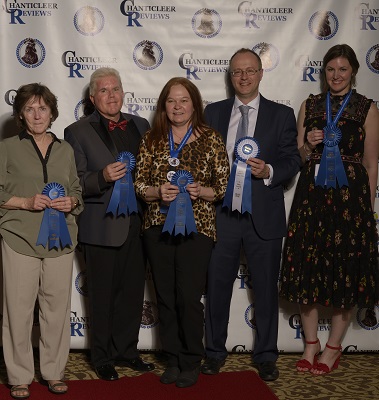
PJ Devlin, Deen Ferrell, Susan Faw, DJ Munro, Rebekah N. Bryan, 2017 Dante Rossetti Book Award Winners
The Dante Rossetti Grand Prize Winner and the First Place Category Position award winners will be announced at theApril 27th, 2019 Chanticleer Book Awards Annual Awards Gala,which takes place at the Chanticleer Authors Conference that will be held in Bellingham, Wash.
We are now accepting submissions into the 2019 Dante Rossetti Book Awards writing competition. The deadline for submissions is May 30th, 2019. Please click here for more information.
As always, please do not hesitate to contact us with any questions, concerns, or suggestions at Info@ChantiReviews.com.
Book Reviews are tools every author can use – wisely!
TYPES OF REVIEWS
Generally speaking, there are four types of reviews you will encounter. Here they are:
Trade/Editorial Reviews – These reviews are written by professionals in the publishing industry – quality matters here.
Peer Reviews – Done by other authors or professional peers
Manuscript Overviews – The professional writer’s first step in the editing process.
Consumer Reviews – These are written by readers – quantity is what counts here search engine operations and algorithms.
Editorial Book Reviews
Each type of review serves a specific purpose, and each type resonates with different kinds of book buyers and serves different purposes.
Editorial Reviews
Editorial Reviews aka Professional Trade Reviews provide useful information for publishing professionals for preparing for book launches.
Post Launch: Traditional Publishers and Book Publicists also know that editorial reviews set the tone for consumer reviews.
Publishing Professionals know that editorial reviews give readers (and consumers) the language and terms to discuss books, thereby, making it easier for readers and fans to write reviews. Because more reviews generate more book buzz and trust me, book buzz is what you want, you will want to make it extremely easy for readers (aka book consumers) to leave a review.
Make sure that blurbs of your book’s editorial reviews are listed in the Editorial Reviews section of your book’s Amazon page. Blurbs from Editorial Reviews are also handy to have when uploading your book’s information in the ISBN forms and in the information upload page of your book on digital platforms. Review blurbs also help Indie bookstores to determine if your book would sell in their stores.
PEER REVIEWS
Peer reviews have run into some problems lately. While it’s tempting to trade review for review with your author friends, be careful where you post them. Some large retailers have caught onto the review-for-review and have subsequently pulled reviews they suspect come from other authors. I’m not saying you shouldn’t review your friends’ books – you should! In fact, you need to be fostering those relationships with other authors. But don’t be surprised if your reviews are pulled from the giant’s webpage. So, when you seek reviews, don’t just seek peer reviews only. Go for a mix!
And remember to get peer reviews, you must give peer reviews. Make it part of your marketing checklist to read your peer writers’ books and then review them. Remember the reviews do not have to be long — 25 -to- 50 words for a consumer review will work and will be just as effective as a 250 -to- 500-word review. Quantity is what counts here.
One hundred consumer reviews are what we hear it takes to get on Amazon’s radar for SEO and algorithms.
A final word of advice regarding consumer reviews: If you do receive an unfavorable review or even a scathing review (it happens to even the most successful authors), do not react or respond especially if they fall into the “troll” category. Never interact with a “troll” — just don’t. No good will come from it. As hard as it may be to do, focus on the positive reviews. If writing craft issues (changing POV, grammatical errors, typos, etc..) are mentioned in the review, address the issues and correct them. In today’s digital world, there is no reason not to.
MANUSCRIPT OVERVIEWS
Manuscript Overviews is dollar for dollar, one of the best writing tools you can utilize. Traditionally published authors receive great editing and feedback from agents and senior editors on early drafts, a benefit that most self-publishing authors never receive. When feedback comes early in a work’s progress it allows the author to not only create a more polished final product but also publish more works and build their backlist.
When working with an agent or publishers, the author works on a rough draft – the early drafts of a novel. He creates the theme, the characters, the setting, the tone, the story, the plot lines, the dialog style, and selects the genre and has an audience in mind (YA or mystery fans, fantasy or Science Fiction readers, etc.). After the author creates the story with a beginning, middle, and end, she then sends this early unedited draft of the story to his editor or agent to read and to get feedback.
Editing a Manuscript
This is exactly what a Chanticleer Manuscript Overview is: An objective evaluation of a story idea that is fully formed with a beginning, middle, and end, but still in an early draft stage. The Manuscript Overview comes before LINE EDITING and COPY EDITING.
CONSUMER REVIEWS
Consumer Reviews are awesome. Don’t we all like to hear what total strangers think of our work? I mean, cringe-worthy as these types of reviews can be, they are important. How do you get them? That’s an interesting question. My statistics show that for every 100 queries you send out to review your book, you may get 8-10 actual reviews in return. I’m talking about sending your books out to bloggers, reviewers and the like. But those reviews do drive the Average-Joe reviews. The more you get of one, the likely you will increase the other. This is where your mailing list comes in handy – a topic for another blog… sorry.
Now that we’ve got the four types of reviews covered, what do you do with
a review once you have it?
After getting your reviews, make sure you are using them effectively. By that, I mean, use them everywhere! Post them on your websites and your book covers. Splatter them all over your social media! Share them with your friends – use snippets of them in your marketing collateral. Use them as a way to introduce your book to your local libraries and brick and mortar stores.
Let’s break it down.
Online retailers (Amazon, Kobo, Apple) have specific places for you to insert editorial review blurbs. Many brick-and-mortar stores will place shelf-talkers with trade review excerpts near your displayed books.
Have a REVIEWS page on your website where you place quotes – or entire reviews. Insert links to the original reviews and always give attribution!
The book cover is the place for trade/editorial and peer review blurbs. (It’s a cover – don’t cram an entire review on there!) Choose the top or bottom of your front cover to place awards, book stickers – some piece of information that draws the book reader to your book. Put the review blurbs on the back cover or if you have a lot of meaningful blurbs, you can use the first couple of pages of your book to place these. Again, don’t overwhelm the reader with the entire review. Be selective. It will pay off.
What’s so different about a Chanticleer Editorial Review?
You may have known I was going to talk about Chanticleer Reviews, right? I mean, that’s what we do…
Here’s the deal, a Chanticleer Editorial Review is professional, unbiased, and fair. We don’t compare cozies to thrillers. We compare the work, put it to the test, and write the review. We always send our authors a “Not for Publication – Awaiting Comments from Author/Publisher” copy. This way the author and publisher can read the review and approve it or kindly ask us to not publish. It’s your choice. Simply put, we are not in the business to embarrass anyone – only help. We love to help authors. It’s what we do.
And one more thing… if you’re in need of a review and you would like to order a Chanticleer Review, here is our special offer for July. I repeat this offer is good until July 31, 2018 – midnight. Here’s what to do:
Share this article THREE TIMES on three different social media sites
Take a screenshot of your shares and post those in the comment section of this article with the phrase “I would like a $50 discount on my next Chanticleer Editorial Review!”
OR tag us using @ChantiReviews on Twitter and Facebook or Instagram!
We will message you with your discount coupon code.
The Gertrude Warner Book Awards recognize emerging new talent and outstanding works in the genre of Middle-Grade Readers. The Gertrude Warner Book Awards is a genre division of Chanticleer International Book Awards (CIBAwards) and Novel Competitions.
Chanticleer Book Reviews is looking for the best Chapter Books and Middle-Grade Readers featuring stories of all shapes and sizes written to an audience between the ages of about eight to twelve. Science Fiction, Fantasy, Mystery, Paranormal, Historical, Adventure we will put them to the test and choose the best Middle-Grade Books among them.
These titles are in the running for the SHORT LIST of the 2018 GERTRUDE WARNER Book Awards writing competition for Middle-Young Adult Fiction Novels!
Alexander Edlund – Keelic and the Pathfinders of Midgarth
Rebekah Stelzer – Susa’s Story
M. P. Follin – Dakota Joy and the Traveling Stones
Joanna Cook – The Life of Bonnie Dickens
Victoria Adler – Emma and Mia
Ginger Heller – The Boy Who Rode the Tiger
Beth Cahn – Duncan Dogood: The Journey of the Would-Be Hero
Cheryl Carpinello – Guinevere: At the Dawn of Legend
Jules Luther – The Portals of Peril
James Sulzer – The Card People
T. L. Frances – The Bird Queen’s Book
Vezna Maria Gottwald – Blue-Green Corduroy
Verity Byrne – Charmers and the Blood Red Candy
Patricia M Ahern – Pondlife: Blue Moon Eclipse
Patrick Thornton – Stepping Up
Elizabeth Doyle Carey – Junior Lifeguards: The Test
Kay M. Bates – The Adventures of Rug Bug: The Revolution
Diane Rios – Bridge of the Gods
P.H.C. Marchesi – Shelby & Shauna Kitt and the Dimensional Holes
Gloria Two-Feathers – Tallulah’s Flying Adventure
Pamela Hartley – The Final Rue of Naveena Bleu
Aric Cushing – Vampire Boy
These titles have moved forward in the judging rounds from SLUSH pile to the 2018 Gertrude Warner ti Book Awards LONG LIST (aka the Slush Pile Survivors). We incorporate the Long List when the judges request an additional round of judging to accommodate the number and/or quality of entries received.
These entries are now in competition for the 2018 Gertrude Warner SHORT LIST. Short Listers will compete for the Semi-Finalists positions. Semi-Finalists will compete for the coveted First Place Category Winners of the 2018 Gertrude Warner Book Awards in the final rounds of judging. The First Place Category winners will automatically be entered into the 2018 GERTRUDE WARNER GRAND PRIZE AWARD competition.
The 16 CBR Grand Prize Genre Winners will compete for the CBR Overall Grand Prize for Best Book and its $1,000 purse. First Place Category and Grand Prize Awards will be announced and recognized at the Chanticleer Awards Banquet and Ceremony on Saturday, April 27th, 2019, Bellingham, Washington.
#CIBAwards
All Short Listers will receive high visibility along with special badges to wear during the Chanticleer Authors Conference and Awards Gala.
Grand Prize Ribbons!
Good Luck to each of you as your works compete for the Gertrude Warner Book Awards Short List.
Bek Castro, Paul Aerkter, Murray Richter
The Gertrude Warner Grand Prize Winner and the First Place Category Position award winners will be announced at theApril 27th, 2019 Chanticleer Book Awards Annual Awards Gala,which takes place at the Chanticleer Authors Conference that will be held in Bellingham, Wash.
We are now accepting submissions into the 2019 Gertrude Warner Book Awards writing competition. The deadline for submissions is May 30th, 2019. Please click here for more information.
As always, please do not hesitate to contact us with any questions, concerns, or suggestions at Info@ChantiReviews.com.
The Journey Book Awards recognize emerging new talent and outstanding works in the genre of Narrative Non-Fiction and Memoir. The Journey Book Awards is a genre division of Chanticleer International Book Awards and Novel Competitions (CIBAwards).
These titles have moved forward in the judging rounds from SLUSH pile to the 2018 Journey Book Awards LONG LIST (aka the Slush Pile Survivors). We incorporate the Long List when the judges request an additional round of judging to accommodate the number and/or quality of entries received. These entries are now in competition for the 2018 Journey Semi-Finalists List known as the SHORT LIST. Short Listers will compete for the limited First Place Category Winners of the 2018 Journey Book Awards in the last rounds of judging and will be announced at the Awards Banquet and Ceremony on Saturday, April 27th, 2019.
Chanticleer Book Reviews is looking for the best books featuring true stories about adventures, life events, unique experiences, travel, personal journeys, global enlightenment, and more. We will put books about true and inspiring stories to the test and choose the best among them.
These titles are in the running for the SHORT LIST of the 2018 JOURNEY Book Awards novel competition for Non-fiction Fiction and Memoir!
Joy Ross Davis – Mother Can You Hear Me?
Cheryl Aguiar – Great Horned Owlets Rescue: Where There’s a Will, There’s a Way…
Sean Dwyer – A Quest for Tears: Overcoming a Traumatic Brain Injury
Philip Muls – Mind on Fire: A Case of Successful Addiction Recovery
H. Alan Day with Lynn Wiese Sneyd – Cowboy Up! Life Lessons from Lazy B
Andrew Jurkowski and Lisa Wright – Between The Swastika and the Bear: A Polish Memoir 1925 – 1948
Reanne Hemingway-Douglass – Baidarka Diaries: Voyages and Explorations: British Columbia andAlaska, 1992 – 2003
Donna LeClair – Waking Reality – Overcoming the Heartache of Abuse
Janice S. Ellis – From Liberty to Magnolia: In Search of the American Dream
Julie Morrison – Barbed
Kayce Stevens Hughlett – SoulStroller: experiencing the weight, whispers, & wings of the world
Liberty Elias Miller – The Heart of the Runaway
Jody Rae – Criminy Sakes Alive: And Other Generational Curses
Karen A. Anderson – The Amazing Afterlife of Animals; Messages and Signs From Our Pets on the Other Side
Kevin Howard – The Evolution of a Man
Abby Wilton – Machiavellian Bluff
Jeff O’Driscoll, MD – Not Yet
Dr. Rick Scarnati – Soul Explosion 2nd Edition
R. Scott Decker – Recounting the Anthrax Attacks: Terror, the Amerithrax Task Force, and the Evolution of Forensics in the FBI
Ellen Krohne – We Lost Her
GySgt L Christian Bussler – No Tougher Duty, No Greater Honor – a memoir of a Mortuary Affairs Marine
Terry Milos – North of Familiar: A Woman’s Story of Homesteading and Adventure in the Canadian Wilderness
Nick Delmedico – Biography
Carolyn Porter – Marcel’s Letters: A Font and the Search for One Man’s Fate
Dennis M. Clausen – Goodbye to Main Street
Russell Vann – Ghetto Bastard, A Memoir
Diane Pomerantz – Lost in the Reflecting Pool: a memoir
Rebecca Brockway – Miss Matched at Midlife: Dating Episodes of a Middle-Aged Woman
Austin M Hopkins – The Loose Ends Became Knots
Janis Couvreux – Sail Cowabunga! A Family’s Ten Years at Sea
Katrina Shawver – HENRY: A Polish Swimmer’s True Story of Friendship from Auschwitz to America
Carol Folbre, Ph.D. – Edge of Abundance: Asian Sketchbook
Donna LeClair – IMMUNITY: Entitlement of Wealthy Political Notables
Lou McKee – Klee Wyck Journal
Cheryl Hughes Musick – The Day the Musick Died
The JOURNEY Long Listers will compete for the 2018 JOURNEY Short List. Short Listers will then compete for the First Place Category positions. The First Place Category winners will automatically be entered into the JOURNEY GRAND PRIZE AWARD competition. The CBR Grand Prize Genre Winners will compete for the CBR Overall Grand Prize for Best Book and its $1,000 purse.
All Short Listers will receive high visibility along with special badges to wear during the Chanticleer Authors Conference and Awards Gala.
As always, please do not hesitate to contact us with any questions, concerns, or suggestions at Info@ChantiReviews.com.
Grand Prize Ribbons!
Good Luck to each of you as your works compete for the JOURNEY Awards Short List.
The JOURNEY Grand Prize Winner and the Five First Place Category Position award winners will be announced at theApril 27th, 2019 Chanticleer Book Awards Annual Awards Gala,which takes place at the Chanticleer Authors Conference that will be held in Bellingham, Wash.
We are now accepting submissions into the 2019 JOURNEY Awards writing competition. The deadline for submissions is April 30th, 2019. Please click here for more information.
We are excited and honored to officially announce the Grand Prize Winner and the First Place Category Winners for the 2017 JOURNEY Book Awards for Narrative Non-fiction Books at the fifth annual Chanticleer Authors Conference and Chanticleer Book Awards Ceremony. This year’s ceremony and banquet were held on Saturday, April 21st, 2018 at the Hotel Bellwether by beautiful Bellingham Bay, Wash.
We want to thank all of those who entered and participated in the 2017 Journey Book Awards for Narrative Non-fiction, a division of the Chanticleer International Book Awards.
When we receive the digital photographs from the Official CAC18 photographer, we will post them here and on the complete announcement that will list all the genres and the Overall Grand Prize Winner for the 2017 Chanticleer International Book Awards. Please check back!
Click here for the link to the 2017 Journey Shortlisters! An email will go out within three weeks to all Shortlisters with links to digital badges and how to order Shortlister stickers.
Christine Smith,the author of the 2014 JOURNEY Grand Prize Winner, More Faster, Backwards: Rebuilding David B, announced the First Place Award Winners and the Grand Prize Winner for the 2017 Journey Book Awards at the Chanticleer Awards Banquet and Ceremony.
Congratulations to the First Place Category Winners of the 2017 Journey Book Awards for Narrative Non-fiction.
An email will go out to all First Place Category Winners and Grand Prize Winners with more information, the timing of awarded reviews, links to digital badges, and more by May 21st, 2018 (four weeks after the awards ceremony). Please look for it.
2017 Journey Book Awards for Narrative Non- Fiction First in Category Winners
Broken Places by Rachel Thompson
Getting to Heaven by Going Through Hell by Dr. Scot Hodkiewicz
Inside: One Woman’s Journey Through the Inside Passage by Susan M. Conrad
Immunity by Donna LeClair
Refractionby Bruce Rettig
Fishing With Hyenas by Theresa Mathews
And now for the 2017 JOURNEY Grand Prize Book Award Winner for Narrative Non-Fiction:
Inside: One Woman’s Journey Through the Inside Passage
Chanticleer: Give me a little bit about your background – Who is Jessica Morrell?
Jessica Morrell: I’m the author of six traditionally-published books, five which teach authors how to write. I’ve written hundreds of columns, articles, blog posts, and my work appears in 8 anthologies about writing. I’ve been teaching writers for more than 25 years and work as a developmental editor. This means a writer or author sends me a manuscript and I dissect it and then help him or her put it back together so it’s publishable. I bring a discriminating, ruthless eye to manuscripts, and fix plot holes and wayward dialogue and everything in between. I learn each time I work on a manuscript and some days my brain feels close to bursting. I love what I do.
Chanticleer: Tell me a little bit about the Master Class you will be offering next Sunday during #CAC18, Learning from the Greats. Who would benefit most from taking this class?
Jessica Morrell: Any fiction writer can benefit from this workshop. Writers have 2 main tasks: writing whenever possible and reading often. But reading as a writer requires a special focus and analysis. You need to understand why authors make choices and decisions along the way; why their details are important, how the ending resonates or doesn’t quite satisfy. Close reading teaches us narrative and scene structure, how to create authentic dialogue, how to insert tension and subtext, and how themes underscore drama.
Chanticleer: This is going to be an important class for all authors. Tell me, what’s the best way to prepare for this class?
Jessica Morrell: The workshop will open by outlining the many techniques that writers have at their disposable. From there we’ll be discussing Harper Lee’s To Kill a Mockingbirdand 3 contemporary short stories (Silver Water, Amy Bloom, For Something to Do, Elmore Leonard, and Stone Mattress, Margaret Atwood.)
Chanticleer: At the end of this article, Jessica has provided us with titles and links to these stories. It would be wise to familiarize yourself with these works before class next Sunday. So, Jessica, why these authors? Why these books?
Jessica Morrell: Mockingbird, also a film, has remained a beloved American classic over the decades. We’re going to dissect why it’s so esteemed and memorable. The other authors Elmore Leonard, Amy Bloom, and Margaret Atwood are simply fabulous writers with techniques we can all emulate. Or at least try to.
Chanticleer: Jessica, our attendees will learn so much from your workshops. Your classes are unlike any other I’ve seen. You really do put authors to work – and the payoff is exponential!
Jessica Morrell: To paraphrase Stephen King, reading is your job. Or a big part of your job. If you breeze through stories without thought or analysis, you’re missing both the joys of insider knowledge and the lessons you’ll always need. Reading inspires and is a cheap, private pleasure. And because writers never stop learning.
Learning from the Greats
A Master Writing Craft Class taught by Jessica Morrell
To succeed as a writer you need to write a lot and read from a writer’s perspective. Without this level of analysis writers simply don’t have all the tools at their disposal. In this workshop, we’ll work together to uncover the secrets of great authors, reveal the intricacies of craft, and trace authors’ influences and habits. We’ll further analyze how great authors reflect their time period and find fresh ways to manipulate language.
Amy Bloom has been a fresh, urgent voice in American fiction since her first collection of short stories; Come to Me was published in 1998. Bloom is also a novelist, but her short stories are particularly insightful in their brevity and often track marginalized people and uncomfortable issues like sexual identity and mental illness. A former psychotherapist, she brings keen insights into her characters, imbuing them with tiny, yet penetrating brushstrokes that nail their struggles and psyches. Writers can learn her art of compression, her authentic character voices, featuring flawed but fascinating characters.
An American classic, To Kill a Mockingbird is the story of a Southern family and small-town embroiled in a racially-charged scandal and trial. Readers can learn so much from the story—a searing history lesson, how to teach your kids valuable life lessons, how outsiders and kids see society. Through analysis, writers can learn how to capture a child’s sensibility, how to teach morality without being preachy or gooey, and how to stage a surprise ending. Other techniques we’ll study: the role of the narrator POV, writing a compelling static character, and how coming-of-age meets character arc with young characters.
Elmore Leonard was a wildly popular writer who wrote more than 40 novels, dozens of short stories, movie adaptations, and a popular TV series including, Justified. Stephen King called him, “The great American writer,” and The New York Times called him, “The greatest crime writer of his time, perhaps ever.” He’s known for tightrope tension, crackling, realistic dialogue, and memorable, bad ass characters up to their ears in serious trouble. But a closer look reveals other techniques worthy of emulating: how to depict pathos in a character, how honor and morality can found in unexpected places, how subtext works in a dialogue scene, how to stage twists, and how conflict is layered and always simmering.
Besides her many novels, some now turned into televisions series, Atwood is a prolific short story writer. In this story, a woman meets an old friend 50 years after their high school days, she plots his murder. Or will she go through with it? We’re going to analyze this story for its delicious use of details, suspense, and subtext, along with her deft inclusion of backstory, and an overall tone of disquiet. We’ll discuss how Atwood pulls us in from the first sentence: “From the onset, Verna never intended to murder anyone. What she had in mind was a vacation, pure and simple.”
Here is the second half of a two-part series onHow to Write a Synopsis. The first part deals with synopsis development and the second part will discuss the mechanics of a synopsis.
Every sentence matters and pushes your story forward.
Typically a synopsis completes a sales package that includes your first three chapters and sometimes a letter of introduction. Since at times editors read the synopsis first, it must be comprehensive, comprehensible, and compelling, forcing them to then peruse your chapters. Hopefully, your synopsis will be read not only by an agent and editor but if it passes muster, the marketing and art department will read it too. A synopsis will also be used in the publishing house meetings where decisions are made about what titles will be published in an upcoming season.
SYNOPSIS CHECKLIST
A synopsis is written in the same order as the novel and is written in the style and tone of the manuscript—a witty, fast-paced novel requires a witty, fast-paced synopsis. If the story is literary, your synopsis will be more serious, but keep in mind that your dazzling prose goes into the manuscript, not the synopsis. Don’t leave major questions unanswered such as who killed the victim, as well as how Malcolm solves his internal conflict, and how the subplot was resolved after he lost his job when he was arrested. A synopsis keeps the reader’s interest, but it’s not a tease and is not written with cliffhangers and such devices. It’s particularly important to demonstrate that your ending provides a satisfying conclusion to the plot and ties up loose ends.
A synopsis demonstrates that your characters are in jeopardy and what is at stake and why this matters. It introduces your main characters and their conflicts and agendas. It is not a list of characters or character sketches, and it usually does not describe physical attributes of characters, although the main characters are given some sort of tag. For example, you might want to refer to a character as the leading citizen in a small Southern town, or a respected doctor or frustrated novelist. Antagonists are always introduced, but secondary characters are mentioned only if they are involved with the protagonist’s inner or outer conflict. A synopsis is also written with a careful attention to flow—ideas follow each other logically and one paragraph leads to the next. This means that transitions will be important in connecting the dots.
Is or Does Your Synopsis Questions:
Is it reflective of a thoughtful writer at work?
Is it reflective of the mood and tone of the manuscript submitted?
Does it portray an enthralling story?
Does it highlight a gripping main conflict?
Does it highlight the intriguing motivations of the main players?
Does it lead the reader logically from inciting incident to end with:
major plot points along the way?
turning points along the way?
Does it provide a satisfying conclusion to the plot and ties up loose ends?
Does it connect the dots and progress logically?
Mechanics
Write the synopsis in the present tense
The first time you introduce a character, type his or her name in ALL CAPS
The synopsis should be written in the same order as the novel
The synopsis should be written in the same style, tone, and pace of the manuscript
HEADER PAGE should be single-line spaced
On the first page in the upper-right hand corner write Synopsis
The next line should state the type of Genre
The next line should state the Word Count
The left-hand margin first line should state your name followed by your contact information (digital, voice, and delivery address)
Do not number your first page
TITLE PAGE
Don’t number your first page, but scroll down to about one-third of the page and center your title in ALL CAPS. Then leave four lines after the title and begin with your hook.
BODY of MANUSCRIPT FORMATTING
Use 1-inch margins
Do not justify the right margin
After the first page use a header (or slug line) on the upper left-hand corner that looks like this: MORRELL/DOOMED FOR DEATH/Synopsis
The page number goes on the same line as the header
Do not use fancy fonts
Remember that you are summarizing, not copying
Begin a new paragraph if you are introducing a new scene or plot twist
You may want to note one or two short dialogue exchanges to illustrate a point
Rule of thumb for spacing: over two-pages, double-spaced is preferred; if it’s one or two pages, single space
LENGTH
Since most agents and editors are notoriously pressed for time and read so much for their jobs, the five-page synopsis is appreciated by most. However, in the past, the wisdom about length went like this: one double-spaced page of synopsis for each 10,000 manuscript words. If you wrote an 80,000-word manuscript you’d write an 8-page synopsis.
Finally, here’s a checklist that you might want to use to verify that you’ve covered all these points:
Have you printed it out and then edited it for spelling, grammar and punctuation mistakes?
Does the opening paragraph contain a hook that raises a question and forces the reader to keep reading?
Does the synopsis prove that the story is based around a single, dramatic question?
Have you shown the protagonist taking charge of events, making choices and decisions, but also stumbling and dealing with internal conflict?
Have you introduced your main characters and defined their conflicts, desires, and motivations? Are the protagonist’s dominant traits demonstrated?
Have you covered the major scenes and plot points?
Are reversals, twists, and surprises depicted?
Is the setting and timeframe of the story clear?
Does the synopsis include the places in the story where the protagonist changes? If your characters are changing, are you briefly explaining why?
Have you shown the protagonist’s darkest moment that comes near the end of the story? Does he or she hit bottom or is there a moment of truth? Are emotional or internal changes evident during this dark moment?
Is the ending revealed and does it clarify how the main conflicts are resolved? Have you briefly explain what the protagonist has won or lost?
Resources: Jack and Glenda Neff and Don Prues, authors of Formatting & Submitting Your Manuscript, suggest double spacing.
LINKS and other INFO
Instructional and Insightful Books by Jessica Page Morrell to add to your Writer’s Toolkit.Click here.
A few weeks ago, a wonderful and talented author named Debu Mujumdar contacted me about how to begin creating an effective book cover. Effective cover meaning one that will sell itself to readers, bookstores, agents, distributors, librarians…He knows that his current cover is not serving his novel well, but where to start. “What are the first steps to create an effective book cover? Where do I begin?” he asked.
You see, Debu’s novel, Sacred River: A Himalayan Journey, has won multiple prestigious awards. You can read the Chanticleer review by clicking this link. He published it in 2016. However, from what I could surmise from his email, he isn’t pleased with its sales or readership reach. The story is unique and exceptionally well written and has a suspenseful climax. It is filled with tense sub-plots that are engrossing and the stakes are high!
But the cover he now has reflects very little about the story within. We discussed his cover at last year’s Chanticleer Authors Conference session on book covers. I think I will call the session this year THE GREAT CHANTICLEER COVER “Bake-Off” (with a nod and a hat tip to The Great British Bake-Off TV show). At these sessions in the past, brave authors (self-published) have lain their books on the Cover Altar to be scrutinized—and not just by me, which would be tough enough, but by their peers.Debu was one of the brave authors who laid his book on the Cover Altar for judgment.
I then would hold up the targeted book for about 3 to 5 seconds to the group and ask the following question: “What is the genre of this book?”
Notice, that I did not ask, “Do you like this cover?” An effective book cover is not necessarily “pleasing.”
An effective book cover communicates information. And not just the basics—that is a given.
Most of the time (99% I’d say), not one person in the group could tell the genre of the (self-published) books laid on the Cover Altar —much to the chagrin of the books’ authors.
Village Books Bellingham, Wa
Why 3 – 5 seconds? That is the time that the cover has to attract a potential readers’ attention.
Potential Readers being booksellers at tradeshows, librarians at the ALA shows, shoppers on Amazon, shoppers at your local bookstore, shoppers at WalMart or Barnes & Nobles or at the airport … Well, you get the picture.
In this 3 to 5 seconds, your cover must communicate quickly and effectively the following 5 Elements:
The Genre (Historic? Thriller? SciFi? Romance? Cozy Mystery? Literary? etc.)
The Primary Targeted Age Group (Adult for the Trade? Guys? (think Tom Clancy) or Gals? (think Rebecca Wells), General Audience? Young Adult? Middle-Grade? Clean reads market? (think Jan Karon) etc.)
Place or Cultural Reference (India? New York? Africa? Outer Space? California? Paris? Russia? Japan? etc.)
An effective book cover will convey all of this information (or enough of it) to capture a potential reader’s attention in less than 5 seconds—three seconds really. It will garner enough interest to have the potential reader to pick it up or click on the link to find out more. If it does not, your book is invisible to potential readers. And yes, that is a publishing industry’s insider’s term.
Invisible books rarely sell.
Effective covers sell the first book. The content between the covers sells the second book. And you can quote me on that.
Here are some examples of before and after covers that have been lain upon the Book Cover Altar:
Example No. 1
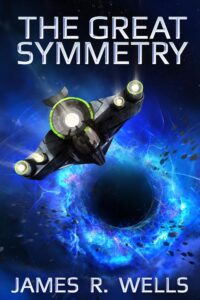
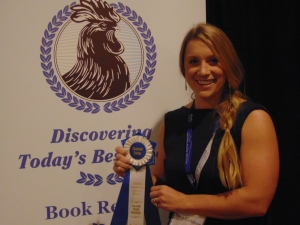
James R. Wells Awarded the Cygnus Grand Prize for THE GREAT SYMMETRY
Is it a biology book? Is it a math biology book? I dunno? Is it a non-fiction book?
Point made.
Bookbub picked up The Great Symmetry with its new cover. ‘Nuff said.
Does the new cover communicate quickly the 5 Elements above:
Genre – yes. Clearly Science Fiction
Primary Age Target Group – yes. General Audience for the Trade (i.e. commercially viable, a plus!)
Mood – yes. Suspenseful with Action — Is that a black hole? Looks scary!
Timeframe – yes. Futuristic with high technology
Place or Cultural Reference – yes. OuterSpace — possibly intergalactic.
Example Number 2
Sara Dahmen’s Doctor Kinney’s Housekeeper, Laramie Grand Prize Winner for Western Fiction
Sara Dahmen awarded Laramie Grand Prize for DR. KINNEY’S HOUSEKEEPER
BEFORE AFTER
The comments made during the Great Cover Bake-Off regarding the original cover were:
Is it a cookbook for baking? Is it a book about a baker? Again: I dunno? Is it a non-fiction book?
Point made.
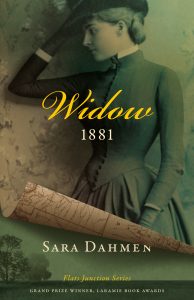
Dr. Kinney’s Housekeeper was picked up by a publisher because it had an interesting storyline and commercial potential (read, TV series). After some rewriting to pose the book as a series, a new cover was created that reflected the storyline along with a new title Widow 1881: Flats Junction Series
Does the new cover communicate quickly the 5 Elements above:
Genre – yes. Clearly Historical Fiction, the late 1800s
Primary Age Target Group – yes. General Audience for the Trade – female-focused
Mood – yes. Change is coming. The fancy wallpaper from city life Back East to the map of the territory clearly shows this. The cultured young woman standing in front of fancy wallpaper is wearing clothes that do not allow for much movement or made for working. Note the tiny waist from wearing a corset, her fine gloves, the fine wool flannel, and her hair arrangement, her hat. This young woman is heading out alone to a place where there will be little refinements that she has become accustomed to. Will she survive? What awaits her?
Timeframe – yes. 1881 (And what was it like being a young widow in 1881 going out to unknown territory alone)
Place or Cultural Reference – yes. North America West against Back East culture in the late 1800’s
Sara is happy to report that book sales are brisk and the novel (first in the Flat Junction series) is under consideration for film options.
Example No. 3
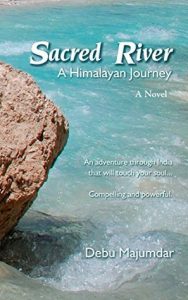
Now let’s go back to Debu‘s award-winning novel, Sacred River: A Himalayan Journey.
Click on the link above if you want to visit Debu’s website.
The tags for the book are Literary Fiction, Multiculturalism Issues, Mystery, Thriller/Suspense, India.
Here is the novel’s cover:
Now let’s apply the 5 Elements. What does the cover tell you in less than 5 seconds?
The Genre: Travel? Non-fiction?
The Primary Targeted Age Group: General Audience? Probably. Literary audience? Probably not. Suspense/Thriller audience? No way.
Mood: Don’t know.
Timeframe: No idea.
Place or Cultural Reference: No idea?
Does the cover convey any of the following (blurbs from the Chanticleer Review of it)?
“A tour de force of India’s history, religion, culture, philosophy, anthropology, sociology, and politics are neatly packaged as a mystery…”
“…As speculation of a golden hoard hidden in the sacred temples arises, Chetti and his associate scheme to locate and plunder treasure for a noble cause…”
“An engrossing and tense subplot unfurls, one that will ensnare a temple swami along with some of the pilgrims to the Ganges. This adventure, which culminates in an enormously suspenseful climax…”
“Readers will feel they are in a marketplace, on the side of the mountain, in a temple, and bathed in light and water. Especially lovely are the passages noting religious rituals and the spiritual significance of the Ganges. The author weaves in Indian legends and morality stories, artfully juxtaposing parallels between ancient tales and his characters’ modern lives.”
Nope.
Make your book stand out in a sea of books!
Debu’s award-winning novel deserves a cover worthy of the time and writing craft that he invested into it. His cover has to intrigue potential readers and booksellers to pick it up wherever it is displayed. The cover must convince the web surfer to click on the image.
But how?
My advice to Debu is to begin collecting visual elements of people, objects, paintings, locations, symbols, ideas, etc. that reflect the content of the work. Take several weeks to do this. Enlist friends, family, and readers to help with this. Gathering visual elements would make a great social media campaign. Ask readers to post photos or graphics of images that remind them of the novel.
Dig deep. Come up with at least 30 elements, if not more.
Lay the visual printouts where you can see the elements from far away, close up, upside down. Such as writing the novel, exploring the cover concepts will take time. Deciding on the cover concept will take more time and feedback.
In a few weeks of letting ideas percolate, particular visual elements will begin to resonate. Then you will have something to explore.
Update! Debu has re-released his book with this cover
Don’t let your book become invisible to its potential readers!
Effective covers sell the first book. The content between the covers sells the second book. And you can quote me on that. (And yes, I am repeating myself. )
I will continue with another blog post that discusses what comes next—How to Put the Elements Together for an Effective Book Cover.
Here is a link to Canva. It is a FREE graphic-design tool website that is easy to use. It is a great way to explore cover ideas and to play with visual elements to discover what will resonate cover-wise with your readers.
We are excited to announce the Instructional and Insightful Non-Fiction Book Awards 2017 Shortlisters. The I&I’s Books Awards focus on guides, how-to, self-help, and instructional non-narrative non-fiction works. The I&I Book Awards is a division of the Chanticleer International Book Awards and Writing Competitions.
Congratulations to the Official 2017 Instruction and Insight Non-Fiction Book Awards Shortlisters!
Nicole Evelina – The Once and Future Queen: Guinevere in Arthurian Legend
Mark Devro – Forever in Bloom
Andrés T. Tapia – The Inclusion Paradox: The Obama Era and the Transformation of Global Diversity
Robert Rodriquez, Ph.D. & Andrés T. Tapia – Auténtico: The Definitive Guide to Latino Career Success
Gustavo J. Gomez, Ph.D. – Private Money Lending: Learn How to Consistently Generate a Passive Income Stream
Christopher Zoukis – Federal Prison Handbook: The Definitive Guide To Surviving The Federal Bureau Of Prisons
P.J. Frick – Pizza With Jesus (No Black Olives)
Fiza Pathan – CLASSICS: Why and how we can encourage children to read them
Kelly Tan Peterson – Keto East: Cooking Asian Cuisine Ketogenically
Deeann Callis Graham –Head-On, Stories of Alopecia
Barbara McNally – Wounded Warrior, Wounded Wife
Good luck to all the I&I Book Awards Short List as they compete for the First Place Category Positions. First Place Category Positions will be announced on Saturday, April 21st, 2018 at the annual Chanticleer International Book Awards ceremony.
More than $30,000 dollars in cash and prizes are awarded to Chanticleer International Blue Ribbon Awards Winners annually.
We are now accepting entries into the 2018 I&I Book Awards for Non-Fiction. The deadline is December, 31st, 2018.Please clickherefor more information:
The SOMERSET Book Awards recognizes emerging new talent and outstanding works in the genre of Literary, Contemporary, and Mainstream Fiction. The Somerset Book Awards is a division of Chanticleer International Novel Writing Competitions.
More than $30,000.00 dollars worth of cash and prizes will be awarded to Chanticleer Book Reviews 2017 writing competition winners at the Chanticleer Authors Conference April 21st, 2018!
This is the Official Semi-Finalists List of the Authors and Titles of Works that have been SHORT-LISTED for the Somerset 2017 Book Awards. These titles will now compete for the First In Category positions.
Stephanie C. Lyons-Keeley & Wayne J. Keeley – Going All In
Julie Carrick Dalton – Four Degrees
Lou Dischler – Too Pretty for a Hit Man
John Herman – The Counting of Coup
J.P. Kenna – Joel Emmanuel
Gregory Erich Phillips – The Exile
Gayle Hanratty – Gray Hampton
Toni Wilbarger – Words Will Never Hurt Me
Lou Dischler – The Benzene Carnival
Blaine Beveridge – A Bit of Candy in Hard Times
Samuel Winburn – Ten Directions
Justine Avery – The One Apart: A Novel
Judith Kirscht – The Camera’s Eye
Kaylin McFarren – Twisted Threads
David B. Seaburn – Parrot Talk
C.L. Ogilvie – Skipping Out on Henry
Elizabeth Crowens – Dear Mr. Hitchcock
Chuck Gould – The Rabbi’s Gift
James Gregory Kingston – The City Island Messenger
Malcolm Ivey – On the Shoulders of Giants
Michelle Rene – Hour Glass
Yorker Keith – The Other La Boheme
J.L. Skirvin – Rollins of Stone House
Jessica Dainty – The Shape of the Atmosphere
Richard Barager – The Atheist and the Parrotfish
J. Argo – The Blackest Crow
Carol June Stover – Kenmore Square/ A Novel
Sarah Houssayni – Fireworks
Beth Wareham and Jason Davis – Hair Club Burning
Conon E Parks – Empty Bottle of Smoke
Kathleen M. Rodgers – Seven Wings to Glory
Good Luck to all of the 2017 SOMERSET Short-Listers as they compete for the First Place Category positions.
First In Category announcements will be made at the Awards Ceremony. The SOMERSET Grand Prize Winner and First Place Category Winners will be announced at theApril 21st, 2018 Chanticleer Writing Contests Annual Awards Gala, at the Chanticleer Authors Conference that will be held in Bellingham, Wash.
We are now accepting submissions into the 2018 SOMERSET Book Awards for Literary, Contemporary, and Mainstream Fiction. Pleaseclick herefor more information.

 The Dante Rossetti Book Awards recognize emerging new talent and outstanding works in the genre of Young Adult. The Dante Rossetti Book Awards is a genre division of Chanticleer International Book Awards (#CIBA).




 The Journey Book Awards recognize emerging new talent and outstanding works in the genre of Narrative Non-Fiction and Memoir. The Journey Book Awards is a genre division of Chanticleer International Book Awards and Novel Competitions (CIBAwards).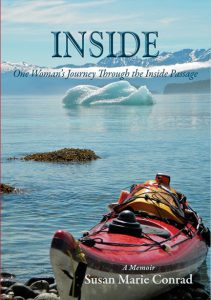
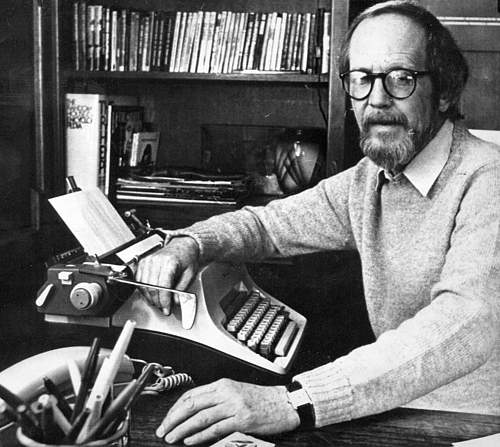

 For Something to Do, Elmore Leonard
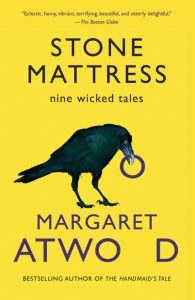 Stone Mattress, Margaret Atwood
 part deals with synopsis development and the second part will discuss the mechanics of a synopsis.

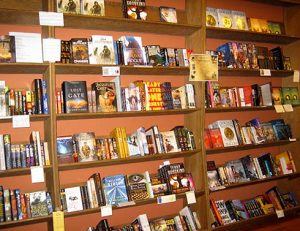







 We are excited to announce the Instructional and Insightful Non-Fiction Book Awards 2017 Shortlisters. The I&I’s Books Awards focus on guides, how-to, self-help, and instructional non-narrative non-fiction works. The I&I Book Awards is a division of the Chanticleer International Book Awards and Writing Competitions.
 The SOMERSET Book Awards recognizes emerging new talent and outstanding works in the genre of Literary, Contemporary, and Mainstream Fiction. The Somerset Book Awards is a division of Chanticleer International Novel Writing Competitions.