The Mark Twain Book Awards recognize emerging new talent and outstanding works in Humor and Satire. The Mark Twain Book Awards is a division of the Chanticleer International Book Awards (The CIBAs).
Chanticleer International Book Awards is looking for the best books featuring satire, humor, political ideology, parody, fantasy, and allegory or fable. These books have advanced to the next judging rounds. We will put them to the test and choose the best among them.
These titles have moved forward in the judging rounds from the 2021 Mark Twain Humor and Satire Fiction Long List to the 2021 Mark Twain Book Awards SHORT LIST. The Short Listers will compete for the Finalist positions.All FINALISTS will be announced and recognized at the Chanticleer Authors Conference (CAC22).
The First Place Category Winners, along with the CIBA Division Grand Prize winners, will be selected from the 24 CIBA divisions’ Finalists.
We will announce the 1st Place Category winners and Grand Prize Division Winners at the CIBAs Banquet and Ceremony on Saturday, June 25th, 2022 at the luxurious Hotel Bellwether in Bellingham, Wash. sponsored by the 2022 Chanticleer Authors Conference–whether virtual, hybrid, or in-person.
These titles are in the running for the FINALISTS of the 2021 Mark Twain Book Awards novel competition for Humor and Satire!
Join us in cheering on the following authors and their works in the 2021 CIBAs.
Linda Stewart Henley –Waterbury Winter
Murray Richter –Fishing for Luck
David Bush –General Jack and the Battle of the Five Kingdoms
Anne Pfeffer –Binge
Chief John J. Mandeville –The Admiral of Bolivia
Charlie Suisman –Hot Air
Roger Wilson-Crane –Certified
Barry Robbins –Oh Daddy Chronicles
Pamela Hamilton –Lady Be Good: The Life and Times of Dorothy Hale
Andy Becker –The Kissing Rabbi: Lust, Betrayal, and a Community Turned Inside Out
Elizabeth Crowens –Babs and Basil, and the Hounds of the Hollywood Baskervilles
John Prather– The Jesus Nut
Lou Dischler –My Only Sunshine: Getting Straight with the Bomb
M. Funk –The Book of True Believer
David Perlmutter –Orthicon
PROMOTING OUR AUTHORS!
This post has been posted on the Chanticleer Facebook Page. We try to tag all authors listed here in the FB post. However, for FB to allow us to tag an author, that author must LIKE our page and Follow Chanticleer Reviews. FB rules — not ours.
We are now accepting submissions into the 2022 Mark Twain Book Awards for Humor and Satire Fiction. The 2022 CIBA winners will be announced at CAC 2023.
FLEXIBLE REGISTRATIONS ARE AVAILABLE for these challenging times.
Seating is Limited. The esteemed WRITER Magazine (founded in 1887) has repeatedly recognized the Chanticleer Authors Conference as one of the best conferences to attend and participate in for North America.
Life is full of ups and downs, but you know that it’s those things that inspire and uplift us, that hearten us so we can make it through each day and onto the next. This doesn’t mean every day is easy, but it does follow the idea that every cloud has a silver lining.
The Hearten Awards came into existence thanks to the Journey Awards. In addition to burgeoning submissions of narrative Non-Fiction and Memoirs, our six Non-Fiction Awards have been exploding in popularity. The competition has never been steeper, and the time to submit has never been better. You can see the full list of Non-Fiction Awards here.
We saw the Hearten Awards as a necessary addition due to the high number of stories we receive that inspire us to live a life full of love and joy as best we can. These stories are heartwarming, empowering, and help show us a world where we are our best selves.
Tenets of Uplifting Fiction
While this fiction often has religious undertones, that isn’t alway the case, and even when there is religious inspiration at work in the text, it doesn’t proselytize or distract from the narrative at hand. The work is still meant to engage and delight readers with or without a faith background.
Handholding is a-okay in Heartwarming Non-Fiction
What the work does not include is violence, profanity, or explicit sexual content. Despite this, the emotional impact and journey taken in most inspirational texts can often lead the reader to tears, so don’t take that light-heartedness lightly. Also, don’t count out romance! Inspirational fiction has it all!
If you love writing inspirational fiction or are interested in learning to write more of it, reading it is a great way to learn more. Here are heartwarming books that we’ve read and would recommend!
A YEAR of LIVING KINDLY
By Donna Cameron
First Place Winner in I&I Awards
Donna Cameron’s guide,A Year of Living Kindly: Choices That Will Change Your Life and the World Around You, invites readers to live more richly, thoroughly, and fruitfully.
Perhaps the best way to enjoy Cameron’s guide to kindness is to drink it in slowly, for a year, as its structure suggests. Savoring one of its 52 meditations – thoughtful, introspective, resonate, and wide-ranging discussions – each week. She turns to a new topic grouping with the advent of each new month, traversing the four parts, the “seasons,” as the year progresses.
Dan Juday’s memoirWaltzing A Two-Stepis a humble and compassionate look at his formative years.
Born a few years after the second world war, Dan experiences a peaceful and happy childhood in rural Indiana, moving frequently before the family settles on a rural area of land named Springwood in Clinton County, Indiana. The Juday family were devout Catholics and enrolled Dan and his siblings in Catholic schools until the family moved to Springwood. Public school became the only option for the siblings. There Dan does his best to fit in but his status as a minority Catholic in a mostly Protestant community in the 1950s brings its own challenges.
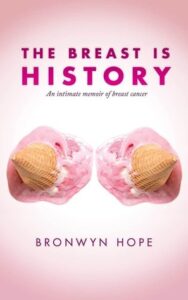
A realistic, up-close look at life as a cancer patient and survivor. The Breast Is History is a strong tool of hope and humor in the darkest days of any woman’s life.
In September 2011, Bronwyn Hope received her initial diagnosis of breast cancer; by March 2013 she had had both breasts removed, had gone through numerous chemo and radiation treatments, taken thousands of pills, and come out of it with a gritty, positive philosophy.
Odyssey of Love: A Memoir of Seeking and Finding by Linda Jämsén is an utterly charming Eastern European take on Eat – Pray – Love.
This odyssey begins with its 40-something author exchanging her job and dead-end relationship in Boston for two years in Budapest. The goal? To explore new career opportunities, live an adventurous life as an American expat in Europe, and, possibly, hopefully, find her soulmate.
Looking to submit to our other Non-Fiction Divisions? See them all here!
When you’re ready,did you know that Chanticleer offers editorial services?We do and have been doing so since 2011.
Our professional editors are top-notch and are experts in the Chicago Manual of Style. They have and are working for the top publishing houses (TOR, McMillian, Thomas Mercer, Penguin Random House, Simon Schuster, etc.).
If you would like more information, we invite you to email Kiffer or Sharon at KBrown@ChantiReviews.com or SAnderson@ChantiReviews.com for more information, testimonials, and fees.
We work with a small number of exclusive clients who want to collaborate with our team of top-editors on an on-going basis.Contact us today!
Chanticleer Editorial Services also offers writing craft sessions and masterclasses. Sign up to find out where, when, and how sessions being held.
A great way to get started is with our manuscript evaluation service, with more information availablehere.
And we do editorial consultations for $75. Learn more here.
If you’re confident in your book, consider submitting it for a Editorial Book Reviewhereor to one of our Chanticleer International Awardshere.
And remember! Our 10th Anniversary Chanticleer Authors Conference (CAC22) will be April 7-10, 2022, where our 2021 CIBA winners will be announced. Space is limited and seats are already filling up, so sign up today! CAC22 and the CIBA Ceremonies will be hosted at the Hotel Bellwether in Beautiful Bellingham, Wash. Sign up and see the latest updates here!
Writer’s Toolbox
Thank you for reading this Chanticleer Spotlight Article.
Spiritual guidance is often difficult to talk about
No matter who you are, there’s probably some baggage in your life tied into your personal development in terms of your mind and spirit than we’d like to admit.
Have you had a spiritual journey or advice for people in their own quest for well-being?
As Self-Help books become more and more popular with books about enlightenment and well-being have made mindfulness a household term. Publisher’s Weekly puts it nicely:
“Mindfulness” is everywhere in publishing — and in American society. Its roots are in Buddhist religious practice around meditative attention — focusing on fully inhabiting the present moment without attachment to external experiences or inner emotions and thoughts. But it is also grounded in modern scientific research into the mind-body connection. Thus “mindfulness” has become fertile ground for books across multiple categories, including health, spirituality, popular science, and self-help.
Of course, there’s some overlap between the Mind & Spirit Book Awards and the I&I Book Awards. You are always welcome to submit to both, but the question of spirituality is really what drives home the difference between the two divisions.
No matter what kind of spiritual book you are writing, experience is often key
Offering support, care, and advice to people in a book is huge undertaking that should be treated seriously. In writing, be sure to be mindful of the practices you borrow from and where they lead. In teaching, the strongest instructors know how to admit they don’t know something while inexperienced teachers will often try to conceal their lack of knowledge. When people read a Mind & Spirit book, they are offering the author vulnerability, and it can help for the author to be vulnerable in return.
Publishers Weekly also offers a word of caution:
The term mindfulness can be “very fraught,” agreed Lil Copan, senior acquisitions editor at Broadleaf Books, particularly if it has been “diluted in its origin” in Buddhism. Christian authors often want to avoid acknowledging the Buddhist roots of mindfulness as a practice, connecting it instead with Christian contemplative practices they trace to the early church, or merely using “mindfulness” as a substitute for words like “presence” or, in the Quaker context, “quietude.” Still, Copan said that even amid concern about using the term, mindfulness is “such a good word. It does so much work that I can’t think of another word in which you aren’t saying 30 words or long sentences to get at what most people think of as mindfulness.”
It makes sense that such a thoughtful genre would require serious thought before jumping in, but luckily, at Chanticleer, we work with serious authors who approach their writing with care.
As always, reading in a genre helps writing in that genre. Check out our recommendations below!
GUIDED to WISDOM: The JOURNEY to EMOTIONAL HEALING
By Susan D’Agostino
Susan D’Agostino has wisdom to share, garnered from a lengthy battle with cancer and the medical establishment. This is her intimate story.
“In 2002 I found a lump in my breast, maybe the size of a pea.” Like anyone faced with a possible dire diagnosis, D’Agostino was scared and confused. Her encounters with medical people left her feeling like a statistic, and when she got the dreaded prognosis after a painful biopsy, it was accompanied by the standard recommended next steps: months of chemo and radiation treatment. Fearing the treatment almost as much as the cancer, she sought alternative healing methods.
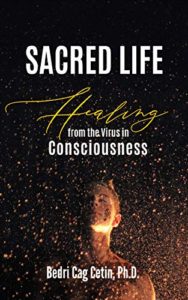
SACRED LIFE: Healing from the Virus in Consciousness
By Bedri Cag Cetin
In his biographical work, Sacred Life: Healing from the Virus in Consciousness, Bedri Cag Cetin, Ph.D. explains his version of “The Golden Key,” a phrase he uses to formulate an “Inner Guide” which seeks above all else “…peace, happiness and harmony for all involved.”
Cetin uses his advanced education, world travels, failed and then healed personal relationships, business dealings, and training under spiritual leaders to formulate his thoughts. According to Cetin, decisions based on or that cause fear, chaos, or blame reflect Ego-driven actions in one’s journey toward inner peace; whereas using one’s Inner Guide to make decisions will result in peace and harmony.
InThe YOU beyond you – The knowledge of the willing, Ramzi Najjar addresses his audience with the contemplative calm of a mystic guru and the fervor of an old-time evangelist, in a how-to guide to good health, happiness, and inner peace as a personal philosophic treatise addressing the physical and spiritual quality of life in the 21stcentury.
In the Preface, Najjar quickly captures readers’ attention with the question, “In a chaotic world, and a life of prevalent restlessness, how can we make sense of the non-sensical?”
The Druids are not just a fictional group of magic wielders in funny hats, but a people of ancient Celtic cultures that prosper to this day. If you are looking for a short, accessible guide to the history and way of life of the Druid people, Ilene Birkwood offers an easy to understand introduction to Druidry in The Druids: An Informal Read. Druidry is not a religion like some may think, but a way of life through peace and preservation of nature.
Druids have seen a surge in numbers in recent years as a result of people around the globe feeling dissatisfied in a world continually damaged by pollution, greed, and war. These people wish to promote a more peaceful and simpler way of life. Birkwood’s guide touches on different areas of the culture throughout the long history of the druids, such as their education system, various sacred sites, history of persecution, and, yes, their roles as witches. Birkwood even shows us how Druidry is practiced today.
COCOON of CANCER: an INVITATION to LOVE DEEPLY
By Abbe Rolnick & Jim Wiggins
When author Abbe Rolnick’s husband Jim Wiggins slipped off a ladder in 2013, he was told he had osteopenia and would need to rest his back. He and Abbe went to Africa, but the pain persisted, in fact, got worse. Finally, the author “…got the call, the one every person dreads.” Jim had cancer, a rare, aggressive form called Multiple Myeloma. The plasma in his bone marrow had increased, taking over the normal cells, causing anemia and acidity that began to eat away at his spine. Life for Abbe and Jim would never be the same. What followed was a total disruption: for Jim it involved chemo, radiation, stem cell implants, pain, weight loss, and even height loss; for Abbe, an exploration of basic fears, and, of course, the deepest terror of loss of a loved one.
Rolnick’s book is told for the most part in a series of emails among friends and family. Since she is a fiction writer (River of Angels, Color of Lies) she was able to express her feelings to others, especially to Jim, in a manner both poignant and poetic. She recounts the couple’s simple acceptance, the moments of despair, and the daily activities and routines they shared despite the discouraging limitations of Jim’s medical necessities. Whenever possible, the couple cuddled at night, exchanged kisses, watched funny, upbeat fare on television. The memoir is remarkable for these moments, balanced by the necessary, at times dreadful and dire medical information that impinged on their lives every day for a year. The couple had to live away from home, ask family for help, including cells donated by a brother, and rely on the kindness and expertise of strangers. As Rolnick puts it, “Cancer explodes with ramifications.” Jim’s round-robin emails form an especially touching piece of the narrative as he attempts to apply logic, masculine bravado and a mild sense of humor to the horrors he is experiencing.
Looking to submit to our other Non-Fiction Divisions? See them all here!
When you’re ready,did you know that Chanticleer offers editorial services?We do and have been doing so since 2011.
Our professional editors are top-notch and are experts in the Chicago Manual of Style. They have and are working for the top publishing houses (TOR, McMillian, Thomas Mercer, Penguin Random House, Simon Schuster, etc.).
If you would like more information, we invite you to email Kiffer or Sharon at KBrown@ChantiReviews.com or SAnderson@ChantiReviews.com for more information, testimonials, and fees.
We work with a small number of exclusive clients who want to collaborate with our team of top-editors on an on-going basis.Contact us today!
Chanticleer Editorial Services also offers writing craft sessions and masterclasses. Sign up to find out where, when, and how sessions being held.
A great way to get started is with our manuscript evaluation service, with more information availablehere.
And we do editorial consultations for $75. Learn more here.
If you’re confident in your book, consider submitting it for a Editorial Book Reviewhereor to one of our Chanticleer International Awardshere.
And remember! Our 10th Anniversary Chanticleer Authors Conference (CAC22) will be April 7-10, 2022, where our 2021 CIBA winners will be announced. Space is limited and seats are already filling up, so sign up today! CAC22 and the CIBA Ceremonies will be hosted at the Hotel Bellwether in Beautiful Bellingham, Wash. Sign up and see the latest updates here!
Writer’s Toolbox
Thank you for reading this Chanticleer Spotlight Article.
“You should be a teacher!” “You do that so well!”
“I love how much you know about that!”
If you hear things like this often, there’s a good chance you should be submitting to our I&I Book Awards! The I&I Awards look at the best Instructional & Insightful work featuring How-To, Guidance, and Self-Help.
You can see all six of our Non-Fiction Divisions here. While these days, the How-To and Self-Help genres are ubiquitous, what do we really know about their origins?
A Closer Look at Instructional Literature
Ani’s Heart is weighed against a feather before Anubis in The Egyptian Book of the Dead
The first recorded genre that could be described as self-help was called “Sebayt” an Egyptian style of reading that translates as “teaching.” You can even think as far back as The Egyptian Book of the Dead which is an instructional guide for Ani as he begins the journey through the afterlife.
But do they work?
Aristotle believed that reading had healing capabilities. While self-help book buyers may not be cured of whatever ails them, feeling better is not to be entirely discounted. People hate their jobs, fail at love, fear getting old, worry about their weight; self-help books address and try to assuage these problems. Life hurts, and the promise that self-help books make is a relief of that hurt. (read more from Publishing Perspectives here)
Carnegie never made it as a fiction writer, and his initial idea to give lectures based on what would become his bestselling work was laughed at by universities. However, he certainly can be said to have succeeded as a writer as people continue to live by his suggestions to this day.
The self-improvement industry has been analyzed in a variety of academic disciplines, but its literary import has not received the attention it demands. The omission is even more glaring in light of the fact that self-help guides are among the most lucrative book genres of the past 30 years, with approximately 150 new self-help titles published every week.
The competition for book sales is sky high!
Like the entire publishing industry since the Kindle came out in 2007, the Self-Help industry is blowing up! With Chanticleer’s goal of Discovering Today’s Best Books, we aim to shine a light on the best How-To books, becoming a link in the circle that helps those books find their way into the hands of readers everywhere! We do this through our Chanticleer Int’l Book Awards and through Editorial Book Reviews.
I remember when working at Village Books the book that was sold back the most was Marie Kondo’s The Life Changing Magic of Tidying Up. It always came in with at least three other bags full of books from the same household. It seemed to be working! – David
Marie Kondo is an incredible success story with her lifestyle changes and instructions on organization. She did so well that she had her own Netflix series!
Kondo recommends keeping 30 books max in your house. We can’t quite bring ourselves to do that at Chanticleer.
Instructional & Insightful Books That Have Done Well at Chanticleer
Read on to see what we recommend from books that fit into the I&I Division.
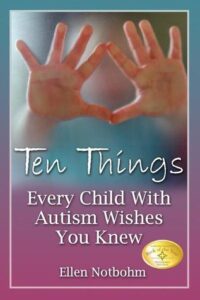
TEN THINGS EVERY CHILD WITH AUTISM WISHES YOU KNEW
By Ellen Notbohm
Grand Prize Winner in I&I Awards
Renowned author and mother of a son with autism, Ellen Notbohm here writes from both a personal and a studied viewpoint.
Not so long ago, autism was considered incurable, hopeless, a sort of dead-end diagnosis. But with time and attention to real people on the spectrum, we know now that children with autism can become positive, productive adults. The author’s son, Bryce, decided early on to “be happy” despite his differentness. For parents initially facing the diagnosis, there will undoubtedly be challenges, often on a daily, hourly basis, but Notbohm’s diligent exploration assures us that “autism is not awful.”
The SUBURBAN MICRO-FARM
By Amy Stross
First Place Winner in I&I Awards
Author, educator, and urban farmer Amy Stross offers a comprehensive look at how to repurpose a small yard in the city for basic sustenance and so much more.
Award-winning writer Stross has composed a thoroughly practical guide to everything a reader would need to know to do what she did: transform a yard into a farm. Acknowledging that the ground surrounding a town dwelling is hardly what one thinks of when one thinks farmland, Stross draws from her personal experience to show precisely how the transformation can take shape. Her colorfully illustrated manual gives the basics for managing an ample garden space, or micro-farm, almost down to the minute (in fact, seven minutes twice a day).
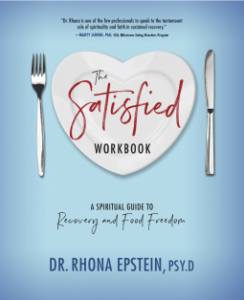
The SATISFIED WORKBOOK
By Dr. Rhona Epstein, PsyD, CAC
Dr. Rhona Epstein, PsyD, CAC is the leading expert on Food Addiction Recovery.
She is a therapist who has recovered from the problems she now focuses on, seeking to help those who suffer from food addiction to recognize their problem and solve it with spiritual guidance.
Epstein has based this manual around the 12 Steps, a program originally geared to alcoholism and based on Christian principles, but gradually secularized to facilitate outreach to a broader group. The 12 Steps take the addict, of whatever sort, through a series of deepening inner questions and resolutions. Initially, the addict must admit he or she has an addiction – in this case, to food and overeating, resulting in bingeing and other disorders such as bulimia. From that point, there will be a diligent search for relief, aided by faith in God’s care, and concluding with the possibility of helping others with the same problems.
Author and entrepreneur Kris Kelso made a discovery about himself that he shares with others in his book,Overcoming The Impostor: Silence Your Inner Critique and Lead with Confidence.
The author was surprised in a first meeting at a new job to be referred to as an “expert.” It raised doubts in his mind about whether he had earned such a title, but it also forced him to do things he’d never done before and succeed in the process. But the voices in his head persisted, even as he went from accomplishment to accomplishment. His shadow, The Impostor, told him he didn’t know how to do a certain thing; moreover, he was making it up. The Impostor relentlessly mocked him, saying that just been lucky, he wasn’t a “real” businessman at all. When he learned about “Impostor Syndrome” – “a psychological pattern in which people doubt their accomplishments” – he realized that we all have an “Inner Impostor” that needs to be recognized, dealt with, and banished.
SAVORING the OLDE WAYS SERIES
By Carole Bumpus
First Place Winner in I&I Awards
The retired family therapist turned travel writer and culinary memoirist, Carole Bumpus shares the delicious first book in her new series,Savoring the Olde Ways: Searching for Family and Traditions at the French Table.
In this first book, Carole takes readers on an intimate food tour of the Champagne, Alsace, Lorraine, and Paris regions of France. After being introduced by a mutual friend, Carole builds a special friendship with Josiane and her mother. Wanting to understand what brings and keeps European families glued together through generations of happiness and hardship, Bumpus begins by interviewing Josiane’s mother. Hearing about traditions passed down and the challenges of cooking during the war, the plan for a culinary tour of France is born among the women. Unfortunately, after travel delays out of their control, Josiane’s mother passes away before they can make the trip. Determined to make a dream trip a reality, Carole and Josiane set off to start a journey of a lifetime in honor of the woman who inspired it all.
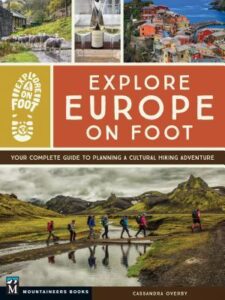
EXPLORE EUROPE on FOOT
By Cassandra Overby
Grand Prize Winner in I&I Awards
Due to COVID-19 sweeping across continents, travel restrictions are at an all-time high. With the general population being placed on lockdown, the need for social distancing, and hunkering down moving towards an indefinite timeframe, some much-needed armchair travel adventures couldn’t come at a better time.
Here in Cassandra Overby’s encyclopedic guide Explore Europe On Foot, readers are taken through a step-by-step process of dreaming, planning, and hopefully soon experiencing memorable, slow travel ventures of a lifetime. Whether it’s choosing a route and destination, deciding what to pack, finding appropriate accommodations and food options, or dealing with inevitable challenges, Overby supplies a world of information in this informative foot (and bike) travelers’ guide.
Looking to submit to our other Non-Fiction Divisions? See them all here!
When you’re ready,did you know that Chanticleer offers editorial services?We do and have been doing so since 2011.
Our professional editors are top-notch and are experts in the Chicago Manual of Style. They have and are working for the top publishing houses (TOR, McMillian, Thomas Mercer, Penguin Random House, Simon Schuster, etc.).
If you would like more information, we invite you to email Kiffer or Sharon at KBrown@ChantiReviews.com or SAnderson@ChantiReviews.com for more information, testimonials, and fees.
We work with a small number of exclusive clients who want to collaborate with our team of top-editors on an on-going basis.Contact us today!
Chanticleer Editorial Services also offers writing craft sessions and masterclasses. Sign up to find out where, when, and how sessions being held.
A great way to get started is with our manuscript evaluation service, with more information availablehere.
And we do editorial consultations for $75. Learn more here.
If you’re confident in your book, consider submitting it for a Editorial Book Reviewhereor to one of our Chanticleer International Awardshere.
And remember! Our 10th Anniversary Chanticleer Authors Conference (CAC22) will be April 7-10, 2022, where our 2021 CIBA winners will be announced. Space is limited and seats are already filling up, so sign up today! CAC22 and the CIBA Ceremonies will be hosted at the Hotel Bellwether in Beautiful Bellingham, Wash. Sign up and see the latest updates here!
Writer’s Toolbox
Thank you for reading this Chanticleer Spotlight Article.
Do you have money on your mind and your mind on money?
The Origins of the Harvey Chute Awards
Harvey Chute (1962-2015)
The Harvey Chute Awards hold a special place in our hearts as Harvey was a presenter at Chanticleer in the past. We named the Awards after him to honor his contributions and the business savvy that he brought to all interactions.
An author in his own right, Chute wrote Stone and Slit, a cozy historical mystery set during the gold-rush in British Columbia, just across the border. What he was most well know for though were his guides in the For Dummies series.
This is generally what they look like
For those who might not know: The For Dummies books are a series published by Wiley that break down difficult tasks into approachable, friendly how-to guides. Chute worked on a series detailing how to best use the Amazon Kindle.
Let’s take a closer look at KBoards, one of the many legacies left behind by Chute.
KBoards
KBoards.com is a lot like what you’d expect from a Reddit forum, but everything is related to Kindle and Amazon publishing. It reads like a community run FAQ for best practices. And speaking of, they have an FAQ to help use the platform right here. It’s a remarkable tool for any author willing to invest the time into making it work.
Speaking of authors trying to make it work…
Business & Finance
One of the toughest questions facing authors is how to maximize their book sales. Discounting a global pandemic, this was already hard enough to manage between digital sales and physical hand sales, not to mention author websites, social media, online presence, tours, events, and everything else! Writers are entrepreneurs, whether their books are independently or traditionally published.
If you’re not sure where to get started marketing your book, consider this article here written by Kiffer Brown and Sharon Anderson as your starting point!
Want to write better about business and finance? The best place to start is by reading what others have already written!
You can see some of our reviews of entrepreneurial literature below
RETIRE SECURELY: Insights on Money Management from an Award-Winning Financial Columnist
By Julie Jason
First Place Winner in I&I Awards
If you’re wondering what the difference is between a Roth IRA and a traditional IRA, then you’ll want to pick up Julie Jason’s Retire Securely: Insights on Money Management from an Award-Winning Financial Columnist. You will be treated to a crash course on financial terms like these and get inside information on saving and investing thanks to scores of conversations she’s had with her readers over the years.
Plenty of titles on financial planning and investing exist on bookstore shelves, but what makes Jason’s compilation different is that hers is culled from more than 1,000 columns she has written over the years for the Connecticut newspapers, Greenwich Time and the Stamford Advocate. In 2013, King Features syndicated her “Retirement Planning and Investment” column, where she explores topics like 401(k) investing, choosing a financial adviser and how to determine if sending your kid to college is a good value. Jason, who worked as a Wall Street lawyer, money manager, and investment counselor, really knows her stuff: whether it’s unraveling the complicated world of market trends or explaining estate planning, her columns are worth reading and applying to your financial life. Her column has recently moved from King Features to Andrews McMeel Syndicate [Chanticleer Reviews was notified about this change on April 3, 2020].
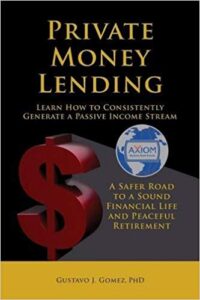
PRIVATE MONEY LENDING: How to Consistently Generate a Passive Income Stream
By Gustavo J. Gomez, Ph.D.
Are you in retirement, or close to it, wondering how you’re going to make ends meet pulling from your portfolio? Well, you’re not alone if you’re staying up at night thinking about how low-interest rates are killing your investments.
In a practical and easy to read format, Gomez explains to investors the particulars of a little known, yet potentially lucrative investment technique that can handle the ups and downs of the stock market. Unlike stocks, the underlying security of private money lending is a tangible asset – brick and mortar, so there is another layer of protection for you, the investor.
But what is Private Money Lending? According to Gomez, it refers to a private individual or organization that lends money. Typically, when you’re looking for financing, you would go to a bank. With private funds, on the other hand, you’re going to an individual or organization that specializes in this type of lending. The upside of private money lending is that it’s less regulated, which means less red tape. The icing on the cake, he says, is that these investments have consistently generated 9 to 12 percent returns* – not bad considering stock market investments have averaged closer to 7 percent, and with much more fluctuations. We can’t forget the economic crash of 2008 when many stock market investments plummeted close to 40 percent.
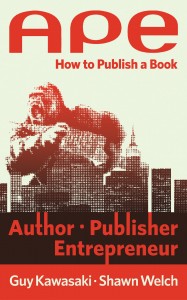
APE: Author, Publisher, Entrepreneur
By Guy Kawasaki and Shawn Welch
APE is the how-to compendium for today’s self-publishers.
Authors will findAPEan indispensable resource. Guy Kawasaki passes along his publishing experience in his “no-shitake,” but affable manner. Imagine having an extremely successful uncle in the publishing biz who also has a tech-wizard pal (co-author Shawn Welch) of digital publishing magic. Fortunately for us, this dynamic duo decided to share their publishing know-how.
APE’s premise is that publishing is a parallel process “that requires simultaneous progress along multiple fronts.” Hence, self-publishers are challenged with how to: market, brand, design, promote, publish, distribute, and finance a book–all at the same time. Oh, and don’t forget the time required for actually writing the book. Indisputably, each self-publisher is an:Author, Publisher and Entrepreneur.
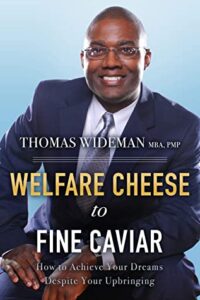
WELFARE CHEESE to FINE CAVIAR
By Thomas Wideman, MBA, PMP
Thomas Wideman, the author of this dynamic self-help manual,Welfare Cheese to Fine Caviar: How to Achieve Your Dreams Despite Your Upbringing, rose from poverty and dismay to a life of security and personal achievement through techniques he shares with readers who can incorporate them into their own life plans.
Wideman came from an impoverished African American family wracked by confusion, chaos, and, at times, criminality. His mother had three sons by three fathers, and he would come to know his own father only peripherally, eventually learning that the man murdered people and subsequently died in prison. The boy grew up in tough neighborhoods and ate “welfare cheese” (a block of pre-sliced heavy American cheese that supposedly melted well). Every month, making ends meet became more and more difficult. In an early chapter of this finely woven chronology, we see him taking food from trains parked along the railroad tracks and running from the authorities. In this, as in each new chapter, he speaks of confronting severe issues and finding ways to resolve them. In the case of the theft and other childhood incidents of fighting, experiencing bullies, and battling racism, he speaks of making up his mind that “my circumstances need not be my limitation.”
Looking to submit to our other Non-Fiction Divisions? See them all here!
When you’re ready,did you know that Chanticleer offers editorial services?We do and have been doing so since 2011.
Our professional editors are top-notch and are experts in the Chicago Manual of Style. They have and are working for the top publishing houses (TOR, McMillian, Thomas Mercer, Penguin Random House, Simon Schuster, etc.).
If you would like more information, we invite you to email Kiffer or Sharon at KBrown@ChantiReviews.com or SAnderson@ChantiReviews.com for more information, testimonials, and fees.
We work with a small number of exclusive clients who want to collaborate with our team of top-editors on an on-going basis.Contact us today!
Chanticleer Editorial Services also offers writing craft sessions and masterclasses. Sign up to find out where, when, and how sessions being held.
A great way to get started is with our manuscript evaluation service, with more information availablehere.
And we do editorial consultations for $75. Learn more here.
If you’re confident in your book, consider submitting it for a Editorial Book Reviewhereor to one of our Chanticleer International Awardshere.
And remember! Our 10th Anniversary Chanticleer Authors Conference (CAC22) will be April 7-10, 2022, where our 2021 CIBA winners will be announced. Space is limited and seats are already filling up, so sign up today! CAC22 and the CIBA Ceremonies will be hosted at the Hotel Bellwether in Beautiful Bellingham, Wash. Sign up and see the latest updates here!
Writer’s Toolbox
Thank you for reading this Chanticleer Spotlight Article.
You can hear the clicking of keys as you type up your next report, desperate to make tomorrow’s press.
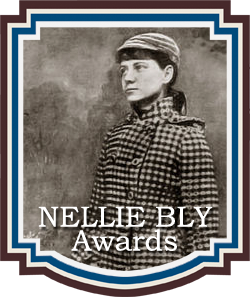
You know what’s coming. It’s the Nellie Bly Awards deadline at the end of November, and you have a book that will stop the presses! The Nellie Bly Book Awards for Investigative, Long-form Journalism, and Biographies.
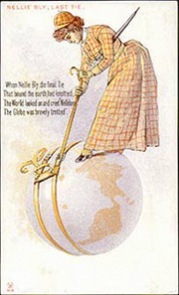
The Nellie Bly Awards are named for an American investigative journalist. Born Elizabeth Jane Cochran, Bly launched her career into the spotlight by posing as a mental patient to enter the insane asylum on Blackwell’s island. Writing her exposé on the abuses being committed there cemented her role as a leading name in investigative journalism.
Illustration of Blackwell’s Asylum
Her work had an immediate effect:
Approximately one month after her articles ran in print, many of the most glaring problems she reported had improved: better living and sanitary conditions were instituted, more nourishing meals were provided, translators were hired for the foreign born who were not necessarily mentally ill but simply could not understand their keepers, and the most abusive nurses and physicians were fired and replaced (PBS.org).
Nellie Bly – Early Life and Legacy
Before that, she began writing under the name Nellie Bly after being invited to write a regular for the Pittsburgh Dispatch. WomensHistory.org lays more of her life out here. One thing noted in several articles is that Nellie Bly chose her name from a song by Stephen Foster. You can listen to the song and see the lyrics here:
https://www.youtube.com/watch?v=fOcVjq67CsA
Bly “became renowned for her investigative and undercover reporting, including posing as a sweatshop worker to expose poor working conditions faced by women” (Biography.com). In addition to her excellent reporting and support for civil rights, Bly was also a bit of an adventurer. Inspired by the book Around the World in Eighty Days, her newspaper, the New York World sent her to see if she could break the fictional record. She succeeded, making the journey in only 72 days! A record that would last until 1890.
Around the World in 72 Days by Nellie Bly
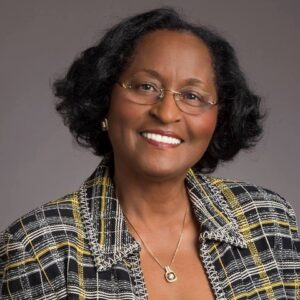
Dr. Janice Ellis on The Importance of Journalism
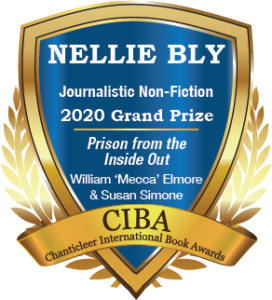
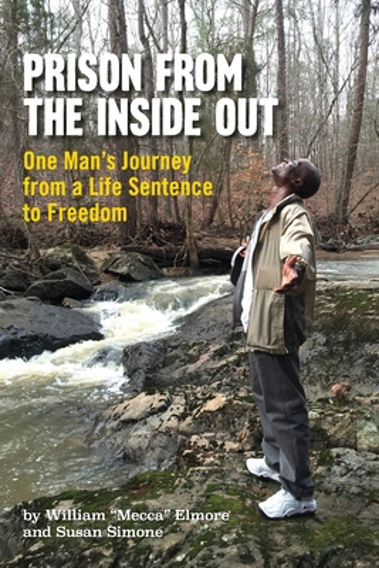
We’ll link to the review of her book soon, but we thought we would let Janice Ellis, PhD and Nellie Bly Grand Prize winner, talk about the importance of journalism. Here’s what she has to say:
Dr. Janice Ellis
With all of the divisive and false information being communicated, the public needs Real Advocacy Journalism today more than ever. There is a growing, if not urgent, need to understand the difference between the advocacy journalism being practiced today and Real Advocacy Journalism™. More importantly, we all need to readily recognize when one or the other is at play in trying to influence public opinion, or urge a hopeful, trusting public to take a particular action.
What is the difference between advocacy journalism as it is practiced today and Real Advocacy Journalism™? Much of the advocacy journalism occurring is partisan, biased, and often blurs the lines between truth and lies, facts and fiction, and often presents fake news as real news. The purpose and objectives of this advocacy journalism constitute propaganda to gain public support for the interest and agenda of a few, a special interest group, or a small constituency rather than for the good of the majority. The public needs Real Advocacy Journalism today to put America back on the right course.
With all that in mind, let’s dive into some of the best Journalism books reviewed by Chanticleer!
SHAPING PUBLIC OPINION: How Real Advocacy Journalism™ Should be Practiced
By Janice Ellis, Ph.D.
Grand Prize in Nellie Bly Awards
Janice S. Ellis, Ph.D., introduces the journalistic theories of Walter Lippmann in her new non-fiction work,Shaping Public Opinion: How Real Advocacy Journalism™ Should be Practiced.
Walter Lippmann, considered one of the foremost journalists in the field over the last 100 years, was a mentor in absentia of Dr. Ellis in the art of advocacy journalism. During Lippmann’s 40+ year career, his columns were syndicated in over 250 newspapers nationwide and over 25 other international news and information outlets. Lippman focused on the ethical dissemination of information, especially about communities, society, and the world. A theory, which Dr. Ellis calls Real Advocacy Journalism™.
An intensely personal and compelling narrative, Waking Up Dying offers an insider’s perspective of the passage through cancer beginning with Duke’s wife’s diagnosis of stage IV glioblastoma brain cancer—typically a fatal condition.
Duke found the entire caregiving experience an agonizing, non-stop emotional rollercoaster: unbelievably frustrating, emotionally searing and increasingly chaotic.
The author’s story of his dedicated and loving role as caregiver entails four phases of this tortuous journey: the couple’sdaily copingwith the disease; the author’sstruggle through the health care system; theemotional realityof caregiving his dying wife; and thecarefully documented materialput forward as a basis for reforming the care system.
THE WINTER OLYMPICS: An Insider’s Guide to the Legends, Lore, and the Games
By Ron C. Judd
Flashbacks, gruesome accounts, victories relived, analysis, and competitors’ profiles of the Winter Olympics are revealed in Ron C. Judd’s captivating compendium titledThe Winter Olympics: An Insider’s Guide to the Legends, Lore, and the Games.
Judd doesn’t just report the scores, the times, the winners and the losers. He relays the human drama that unfolds during the Games—the glorious victories and, yes, the gut-wrenching agonies—the very stuff that becomes tomorrow’s lore and legends.
Ron C. Judd is like a Joseph Campbell of the Olympic Games. He writes of transcendent experiences, of impossible feats, and, he says, “of moments that are beyond description.” But describing these moments is exactly what he does. Judd deftly captures and vividly relates the escalation of emotions, the split-second moments that separate the winners from the losers after decades of day-in and day-out grueling training, the sweaty reality of the Olympics along with the heady glory and magic he has witnessed and experienced first-hand.
FIRE CALL! Sounding the Alarm to Save Our Vanishing Volunteers
By George DeVault
In his first job as a newspaper reporter, DeVault attended many emergencies – and firefighters were always on the scene. Gradually he discovered that the vast majority of America’s firefighters are volunteers, often leaving their regular jobs by prearrangement or rushing out from home in the middle of the night to respond to every conceivable crisis, from a simple kitchen fire to a multi-car crash to the cataclysmic events of 9-11-01.
With the encouragement of empathetic wife Melanie, also a reporter, De Vault joined the firefighting ranks as a volunteer in Emmaus, Pennsylvania, while fully immersed in his journalistic career with Rodale Inc. He answered every call, about 5,000 over a thirty year period, no matter what else was going on in his life – even on a day when Melanie was in the hospital dealing with her own emergency.
Looking to submit to our other Non-Fiction Divisions? See them all here!
When you’re ready,did you know that Chanticleer offers editorial services?We do and have been doing so since 2011.
Our professional editors are top-notch and are experts in the Chicago Manual of Style. They have and are working for the top publishing houses (TOR, McMillian, Thomas Mercer, Penguin Random House, Simon Schuster, etc.).
If you would like more information, we invite you to email Kiffer or Sharon at KBrown@ChantiReviews.com or SAnderson@ChantiReviews.com for more information, testimonials, and fees.
We work with a small number of exclusive clients who want to collaborate with our team of top-editors on an on-going basis.Contact us today!
Chanticleer Editorial Services also offers writing craft sessions and masterclasses. Sign up to find out where, when, and how sessions being held.
A great way to get started is with our manuscript evaluation service, with more information availablehere.
And we do editorial consultations for $75. Learn more here.
If you’re confident in your book, consider submitting it for a Editorial Book Reviewhereor to one of our Chanticleer International Awardshere.
And remember! Our 10th Anniversary Chanticleer Authors Conference (CAC22) will be April 7-10, 2022, where our 2021 CIBA winners will be announced. Space is limited and seats are already filling up, so sign up today! CAC22 and the CIBA Ceremonies will be hosted at the Hotel Bellwether in Beautiful Bellingham, Wash. Sign up and see the latest updates here!
CAC22 will feature Cathy Ace, Robert Dugoni, Scott Steindorff and more! We are excited!
Writer’s Toolbox
Thank you for reading this Chanticleer Spotlight article.
The Somerset Awards: Understanding Literary Fiction
Ah yes, literary fiction, often thought of as the highest form of writing. If only people could define exactly what it means.
Here are a few of Somerset Maugham’s work that typify literary fiction:
Of Human Bondage
The Razor’s Edge
The Moon and Sixpence
And far too many to list here.
Let’s start with some writing tips from Somerset Maugham himself.
There are three rules for writing a novel. Unfortunately, no one knows what they are.
Every production of an artist should be the expression of an adventure of his soul.
I always find it more difficult to say the things I mean than the things I don’t.
The fact that a great many people believe something is no guarantee of its truth.
To acquire the habit of reading is to construct for yourself a refuge from almost all the miseries of life.
Impropriety is the soul of wit.
When I read a book I seem to read it with my eyes only, but now and then I come across a passage, perhaps only a phrase, which has a meaning for me, and it becomes part of me.
We do not write because we want to; we write because we have to.
I write only when inspiration strikes. Fortunately it strikes every morning at nine o’clock sharp.
If you can tell stories, create characters, devise incidents, and have sincerity and passion, it doesn’t matter a damn how you write.
What a start! We still need to figure out this Literary Fiction business though. Before we dive into that, if you want to read more about Somerset Maugham, consider looking out our previous spotlight here where we discuss him at length!
To read more about the time he wrote in, click here.
So What is Literary Fiction?
The easiest way to attempt to answer this question is to start with what Literary Fiction is being defined in opposition to. Literary Fiction is not Genre Fiction.
So what’s Genre Fiction?
Genre Fiction is written for people to enjoy it generally. It often follows a formula that uses conventional storytelling. The stories are meant to entertain, are plot driven, and they usually have a happy ending. As a result, there’s almost never a question of how to market genre fiction, making it easier to sell.
So, if we take the opposite of all those and apply them to literary fiction, what do we get?
It doesn’t follow a formula
Uses unconventional storytelling
Examines what it means to be human
It can be difficult to read
Character focused (not plot)
Endings vary or can even be uncertain
LIterary Fiction isn’t an exact science
That’s a tough sell! Of course, not all of these elements need to apply
Many literary fiction books are the kinds that stay with us for years after we read them. Chances are the longtime favorite that changed your life is a literary fiction book, or at least possesses some elements of it.
Here’s some contemporary Literary Fiction you may have heard of:
The term “literary fiction” is controversial and for good reason. As more “literary” writers venture into genre fiction, the lines of distinction have blurred. Sometimes, it’s not always clear. Perhaps, it is genre fiction that’s just pushing its own boundaries.
It’s clear that Literary Fiction is a complex genre, worthy of being written and read. We’re happy to say that we’ve done our fair share here at Chanticleer! Check it out below!
HARD CIDER By Barbara Stark-Nemon Grand Prize Winner in Somerset Awards
Abbie Rose Stone is a woman determined to follow her newly discovered dream of producing her own craft hard apple cider while navigating the ups and downs of family life with her grown sons and husband.
Abbie Rose knows how to deal with adversity, and dives headfirst into this new chapter of her life with energy and passion. She describes her early adulthood years of infertility struggles and the hardscrabble way she built her young family through invasive medical procedures, a surrogate attempt, and adoption barriers.
MARTHA By Maggie St. Claire First Place Winner in Somerset Awards
In the unique and compelling voice of an aging woman teetering on the edge of financial ruin, Maggie St. Claire’sdebut novel,Martha,takes the reader from affluent residential areas of Los Angeles to its urban streets of despair, shadowing a 71-year-old, retired bank teller as she comes to grips with the challenges and adversities that threaten her existence.
This is the story of Martha Moore, many years divorced, estranged from her only child, and living a lie, as she enters her golden years. The most important things in her life, outside her pride in her desirable Hancock Park bungalow, are her book club friends. She attends their meetings dressed in her finest, projecting what she hopes is the image of a well-educated, well-to-do, Los Angeles dowager. The three wealthy women who comprise the remainder of the group are her best, perhaps only friends, and sometimes that’s a stretch.
MOURNING DOVE By Claire Fullerton First Place Winner in Somerset Awards
Camille Crossan appears to be living an idyllic life in Claire Fullerton’s poignant, evocative novel,Mourning Dove. Living in a superbly appointed mansion in “magnolia-lined and manicured” Memphis during the 1960s and 1970s, Camille’s family life shimmers with Southern charm. Her mother, Posey, usually outfitted in a Lily Pulitzer shift, Pappagallo shoes, and a signature shade of pink lipstick, is a beauty with the wryest sense of humor and steel determination.
As a young girl, Camille, known as Millie, sees how those in her mother’s social orbit are captivated by her aura, how men are easily seduced by her flirtatious charm. Society is a game played by those who know its rules, and Posey means to win. Every time. She, however, isn’t even the charismatic one in the family – that’s Finley, Millie’s older brother, who brims with intelligence, startling good looks, and messianic magnetism. A peek beneath the shiny surface of gracious Southern living, however, reveals enormous cracks in the foundation of the Crossan family. One of the first things the adult Millie tells us about her brother is that he is dead. She takes the reader back, though, to their childhood and coming of age, a tumultuous journey that both binds and separates the siblings.
Judy Keeslar Santamaria’s skillfully crafted debut novel, Jetty Cat Palace Café, takes the reader from the sophisticated urban areas of Washington state to its remote cranberry coast, accompanying professor Morgen Marín on a life-altering quest.
Like a present-day recipient of a DNA test gone wrong, when 34-year old Morgen, celebrated pianist and music professor, leaves after visiting her elderly grandmother Eleanor, her mind is spinning. Eleanor, preparing for the inevitable, shared family history, documents, and longstanding questions, which blindsided her granddaughter.
JOEL EMMANUEL By J.P. Kenna First Place Winner in Somerset and Clue Awards
Set in the Pacific Northwest in the 1970s, Joel Emmanuel by JP Kenna rewards its readers with the story of a boy coming of age and how he understands the changes around him. Kenna’s style echoes the English novels of the 19th century.
Young Joel Emmanuel Webber, named for a Wobbly executed long ago in 1915, lives with his mother, Nance Raindance, in a cabin on the Skagit River near Seattle before it was a technopolis. Their world is antiquated even for the 1970s and defined by farming, fishing, and basics like a woodburning cookstove, kerosene lamps, and candles. Joel calls his mother by her given name, doesn’t know his father, and lives an open life free of school and, even occasionally, clothing. He is sensitive and easily succumbs to tears.
When you’re ready,did you know that Chanticleer offers editorial services?We do and have been doing so since 2011.
Our professional editors are top-notch and are experts in the Chicago Manual of Style. They have and are working for the top publishing houses (TOR, McMillian, Thomas Mercer, Penguin Random House, Simon Schuster, etc.).
If you would like more information, we invite you to email Kiffer or Sharon at KBrown@ChantiReviews.com or SAnderson@ChantiReviews.com for more information, testimonials, and fees.
We work with a small number of exclusive clients who want to collaborate with our team of top-editors on an on-going basis.Contact us today!
Chanticleer Editorial Services also offers writing craft sessions and masterclasses. Sign up to find out where, when, and how sessions being held.
A great way to get started is with our manuscript evaluation service, with more information availablehere.
And we do editorial consultations for $75. Learn more here.
If you’re confident in your book, consider submitting it for a Editorial Book Reviewhereor to one of our Chanticleer International Awardshere.
And remember! Our 10th Anniversary Chanticleer Authors Conference (CAC22) will be April 7-10, 2022, where our 2021 CIBA winners will be announced. Space is limited and seats are already filling up, so sign up today! CAC22 and the CIBA Ceremonies will be hosted at the Hotel Bellwether in Beautiful Bellingham, Wash. Sign up and see the latest updates here!
Writer’s Toolbox
Thank you for reading this Chanticleer Writer’s Toolbox article.
It might seem odd, but Franz Kafka and his friends reportedly sat around at bars reading excerpts of The Metamorphosis with tears of laughter streaming down their faces.
Franz Kafka (1883-1924)
While he might not seem like a natural pairing with Mark Twain, Kafka certainly had a sense of humor. We may not quite understand his early 1900s thought process that would cause him to need to stop in the middle of reading “The Trial” due to laughing so hard (read more from The Guardian here), but we definitely can still appreciate a healthy dose of humor.
Fun Fact: Franz Kafka’s writing was known to deal with modernism, existentialism, Surrealism, and is considered a precursor to magical realism. Despite his fame, he never finished a single novel (unless you count The Metamorphosis as a short novel).
The Mark Twain Awards, named after the famous satirist, are still a fairly new division of The Chanticleer Int’l Book Awards. You can see a full write up on Mark Twain’s relationship with Bellingham, WA here.
Do you have a book that features Humor, Satire, or Allegory? Submit it here before the end of November to be entered into the 2021 Mark Twain Book Awards!
Let’s do a quick breakdown on the three main categories of Mark Twain books.
Satire: The Dangerous Tool
Probably one of the most difficult genres to write in, Satire can have trouble with rubbing people the wrong way. One of the most commonly known pieces of satire is “A Modest Proposal” by Jonathan Swift, made ubiquitous by English courses teaching it for decades. You can read the full essay here.
Jonathan Swift is best known as the author of Gulliver’s Travels. Above, Gulliver is restrained by the Lilliputians
The essence of it is that Swift proposes eating Irish children instead of feeding them, as it will save more money for England in the long run, and cause less suffering for the kiddos in the long run. This obvious, garish suggestion highlights the ways in which England may as well be eating the children in a way that both shames those who have acted poorly, and serves as a call to action to offer better care to the poor.
Satire in literature is a type of social commentary. Writers use exaggeration, irony, and other devices to poke fun of a particular leader, a social custom or tradition, or any other prevalent social figure or practice that they want to comment on and call into question.
Contemporary writers have used satire to comment on everything from capitalism (like Brett Easton Ellis’s American Psycho, which uses extreme exaggerations of consumption, concern with social status, and masculine anger and violence to skewer American capitalism) to race (Paul Beatty’s The Sellout, for example, features a young black male protagonist in Southern California who ends up before the Supreme Court for trying to reinstate slavery).
As you can see, satire is a sharp tool that must be wielded carefully to avoid cutting yourself on accident. A good rule of thumb when writing satire to always aim at those who are in power. Trying to poke fun or ridicule people who are already disadvantaged or targeted in some way will often leave a bad taste in your audience’s mouth, and that’s the fastest way to have your book closed.
Here are some classic examples of Satire:
Matt Groening – The Simpsons, Futurama
David Sedaris – Naked, Me Talk Pretty One Day
Chuck Palahniuk – Fight Club
Douglas Adams – The Hitchhiker’s Guide to the Galaxy
Kurt Vonnegut – Slaughterhouse-Five
Evelyn Waugh – Brideshead Revisited
“Get outta my sky!”
Now let’s talk allegory.
Allegory: Not Just for Kids!
When you want to talk around something or use a stand in to describe it you might try allegory.
The word “allegory” comes from the Latin “allegoria,” meaning speaking to imply something else. An allegory is a simple story that represents a larger point about society or human nature, whose different characters may represent real-life figures. Sometimes, situations in the story may echo stories from history or modern-day life, without ever explicitly stating this connection.
Allegories are similar to metaphors in that both illustrate an idea by making a comparison to something else. However, allegories are complete stories with characters, while metaphors are brief figures of speech.
Note: We are not affiliated with MasterClass in any way, we simply believe in sharing our sources, and they do great work with genre definitions.
One popular example of allegory is Aesop’s Fables. As you may know, the fables tend to follow animals as they make decisions regarding moral dilemmas, and then face the consequences – whatever those may be. Of course, those moralistic fables directed at children always run the risk of sounding paternalistic. Here are some great examples of allegory:
Allegory examples
Chaucer’s The Canterbury Tales
George Orwell – Animal Farm, 1984
Frank Baum’s – The Wonderful Wizard of Oz
Arthur Miller – The Crucible
C.S. Lewis – The Chronicles of Narnia
Finally, we have Humor.
Humor Writing
The key to humor writing is simple: it should make you laugh! There are countless different takes on what makes something funny – just try watching someone explain humor to the android Data in Star Trek.
Data experiencing laughter for the first time as a gift from the omnipotent being Q
So rather than go on too long, we’ll share our Editorial Reviews of books that make us laugh!
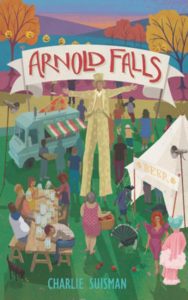
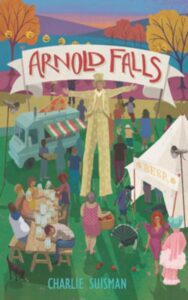
Arnold Falls By Charlie Suisman Grand Prize Winner in Mark Twain Awards
Charlie Suisman’s debut novel is a wonderful escape to a small fictional community in upstate New York. Here a melting pot of quirky residents brings Arnold Falls to life, a town with a unique history and charming inhabitants whose lives are intimately intertwined.
Settled in 1803 by the unscrupulous Hezekiah Hesper, the town for unknown reasons was named after Benedict Arnold. Adding to the oddities, the closest waterfall is twenty miles away. The area is known for sudden bursts of crab apple-size hail pelting the landscape without any scientific explanation. Hence the incentive for “Hail Pail Day,” a neighborly tradition surrounding the distribution of galvanized bucket head-coverings.
Lou Dischler delivers an intricately woven story about one well-meaning boy who tries to make sense of the crazy he’s been born into. Get ready for one belly laugh of an adventure in My Only Sunshine.
Welcome to the Louisiana low country, home of 9-year-old Charlie Boone, a kid growing up in 1962. Charlie, a most unreliable narrator, concerns himself with giant wingless wasps and biting red velvet ants. Combine his critter-concerns with the legend of the giant slugs, the story of his mother taken up by a hurricane, and the episode of the puddle he and his brother dug that grew into a pond, then turned into a lake, and we have one wildly imaginative ride well-worth taking.
A bitingly funny collection of life-stories from Christie Nicholls – stand-up comedian, actor, and writer – made all the more piquant by her repeated insistence that she has no short-term memory. Fortunately for us, her long-term reminiscences more than make up the deficit.
Nicholls has divided the book into four parts. In the first, “A Broad Abroad,” she recalls her experiences of traveling to far-flung places, beginning with a summer in Belém, Brazil as a child. She and her brother, for some reason nicknamed Beluga, slept in hammocks and played in a swimming pool, but much of her cherished time involved a German Shepherd named Ferdinand, from whom she learned dog talk. Raucous family bowling in Bologna, Italy, is contrasted with attendance at a staid English wedding. At a later period, Nicholls and her mother went to Sweden, where the budding comic tried her hand at stand-up in newly acquired Swedish, leading to an amusing mix-up of jargon.
Honey Beaulieu is going to get her man–no matter how many tries it takes. Determined to capture the elusive Boyce McNitt, Honey is off to Deadwood Gulch despite the warnings that the dangerous road is plagued by thieves and natives. But before she can pursue the $500 bounty, she needs to take care of issues at home, including finding a shop for a pregnant seamstress, sixteen-year-old Emma, a home for eight-year-old Myles Cavanaugh, his two younger sisters, and their pregnant mother. Between her do-gooding, denying her blossoming feelings for Deputy US Marshal Sam Lancaster, and a run-in with a herd of escaped pigs determined to destroy Fry Pan Gulch, Honey barely has time to get out of town before she gets trapped by winter. Once on the road, she comes face-to-face with Sean Chaney, the Badger Claw Kid, a bounty worth $400, and is intent on capturing him, as well. With a little otherworldly, albeit not entirely helpful, advice from her ghost guide Roscoe, Honey will have to take down two dangerous fugitives. But, when she runs into a fireball-throwing ghost bent on revenge, her real adventure begins.
Kiffer loves the undercurrent of a Shakespearean slant to Jacquie Rogers’ works. Sublime.
When a banged-up old bus pulls into his family’s driveway, Charlie has no idea that the rattling junker would be his ride to freedom. For years he’d been suffering under the thumb of a cold-hearted mother and a vindictive twin sister, while his father languished behind bars for tax fraud. The only family member with whom the young man held a loving bond was his grandfather, Opa Bill. Since Bill’s recent death, Charlie has been holding it together by listening to the music he and his grandfather loved. That musical thread weaves its way throughout the story as a sort of narrative jukebox.
Now Charlie’s respectable Oma Ruth has careened back into his life in a shocking new incarnation: a freewheeling hippie in kaftan and beads, unafraid to swap barbed words with her appalled daughter, nor to insist that Charlie accompany her on her road trip. He’s dead-set against it – he’d just found his dream job at a record store – and is disgusted when his mother dumps him on her mother without hesitation.
When you’re ready,did you know that Chanticleer offers editorial services?We do and have been doing so since 2011.
Our professional editors are top-notch and are experts in the Chicago Manual of Style. They have and are working for the top publishing houses (TOR, McMillian, Thomas Mercer, Penguin Random House, Simon Schuster, etc.).
If you would like more information, we invite you to email Kiffer or Sharon at KBrown@ChantiReviews.com or SAnderson@ChantiReviews.com for more information, testimonials, and fees.
We work with a small number of exclusive clients who want to collaborate with our team of top-editors on an on-going basis.Contact us today!
Chanticleer Editorial Services also offers writing craft sessions and masterclasses. Sign up to find out where, when, and how sessions being held.
A great way to get started is with our manuscript evaluation service, with more information availablehere.
And we do editorial consultations for $75. Learn morehere.
If you’re confident in your book, consider submitting it for a Editorial Book Reviewhereor to one of our Chanticleer International Awardshere.
Also remember! Our 10th Anniversary Chanticleer Authors Conference (CAC22) will be April 7-10, 2022, where our 2021 CIBA winners will be announced. Space is limited and seats are already filling up, so sign up today! CAC22 and the CIBA Ceremonies will be hosted at the Hotel Bellwether in Beautiful Bellingham, Wash. Sign up and see the latest updates here!
Featuring Cathy Ace and Robert Dugoni!
Writer’s Toolbox
Thank you for reading this Chanticleer Writer’s Toolbox article.
Chanticleer’s new Division for 20th Century Wartime Fiction: The Hemingway Awards
The US fought five wars during the 1900s: World War I, World War II, the Korean War, the Vietnam War, and the Gulf War.
Many of us have deep connections to these wars built into our family trees and history of military service. It’s no surprise that there are so many stories that delve into wartime fiction that we needed to create a new category for it this last year.
Why Hemingway?
Young Hemingway
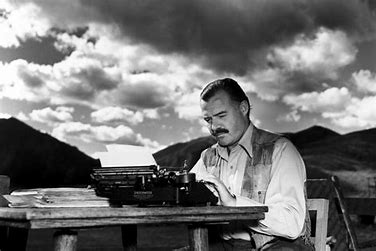
Ernest Hemingway was one of the defining voices of his generation, especially in relation to The Great War where so many had to reconcile their lives as they were with the horrors of war they had experienced.
“When you go to war as a boy you have a great illusion of immortality. Other people get killed; not you… Then when you are badly wounded the first time you lose that illusion and you know it can happen to you.” (read more here)
While it’s well-known that Hemingway served in WWI and was honored for his bravery by the Italian government as an American Red Cross worker, it is less known that when Hemingway returned to post-war Europe he became a respected war correspondent. His grandson, Seán Hemingway describes the author’s reporting as “written in a new style of reporting that told the public about every facet of the war, especially, and most important, its effects on the common man, woman, and child.”
For those of you who know little about one of the most prolific war writers on the 20th century, he’s well worth a read, and shockingly modern in his thought. He was an early anti-fascist, being one of the first to decry Benito Mussolini.
For all that Hemingway can dazzle and impress, there is another view of him.
He was selfish and egomaniacal, a faithless husband and a treacherous friend. He drank too much, he brawled and bragged too much, he was a thankless son and, at times, a negligent father. He was also a great writer.
Hemingway’s writing is reported to be the thing that he held above all else. More than his wives or the children he had, his writing and author platform always came first.
Beyond that, his criticism of other works is scalding and harsh, beyond what anyone would reasonably consider helpful. This flies in direct contrast to a quote from LitHub where Hemingway opens up about the experience of being a new author, trying to break into the literary world:
“The rejection slip is very hard to take on an empty stomach,” Hemingway later told a friend. “There were times when I’d sit at that old wooden table and read one of those cold slips that had been attached to a story I had loved and worked on very hard and believed in, and I couldn’t help crying.”
We all know that he was published, many times:
The Torrents of Spring (1926)
The Sun Also Rises (1926)
A Farewell to Arms (1929)
Death in the Afternoon (1932)
Green Hills of Africa (1935)
To Have and Have Not (1937)
For Whom the Bell Tolls (1940)
Across the River and into the Trees (1950)
The Old Man and the Sea (1952)
A Moveable Feast (1964)
Now we’d like to dive into some of the best books we’ve reviewed at Chanticleer with a focus on Wartime Fiction in the 20th Century.
The QUISLING FACTOR By J. L. Oakley Grand Prize Winner in Hemingway Awards
During World War II “quisling” became a byword for a particular type of traitor, one who not only betrays their own country but also actively collaborates with the invaders. The origin of the term was taken from an actual person, a Norwegian named Vidkun Quisling, who didn’t merely cooperate with the Nazis but actually headed a collaborationist regime in his own country.
The Quisling Factor takes place in the immediate post-war period, as the Nuremberg Trials are gearing up in Germany. Norway is conducting its own post-war legal purge of collaborators at all levels of government.
HEART of the FEW By Jon Duncan First Place Winner in Hemingway Awards
It is said that all is fair in love and war. In this wartime historical romance, young love is put to the ultimate test, and the love of family is strained to the breaking point. During World War II, the occupants of a ravaged England understand that all can be lost in a moment’s hesitation or in a hasty decision. Here, love is under attack by enemies seen and unseen. It’s the uncommon courage of many and theHeart of the Fewthat can hope to turn the fate of England during these dark days.
Passion drives both sides in this wartime mystery/thriller about people who are determined to make a difference in the outcome of World War II. Like all powerful forces, passion has two sides. It’s a wondrous and beautiful emotion when applied to good purpose, but it becomes horrific and deadly when twisted and corrupt. The question author Jon Duncan asks amidst all the turmoil, treachery, death and desolation of war is: can love find a way?
The ACK-ACK GIRL (Love and War #1) By Chris Karlsen
Chris Karlsen’s new work,The Ack-Ack Girl, is the first in her World War II series, Love and War, and serves up plenty of story on both sides of that equation in its portrayal of Ava Armstrong, the “Ack-Ack” girl of the title. And what a story it is!
Bombs are dropping on London in the heat and fire of the infamous Blitz. Shells are falling, as are the buildings that surround them, while fires spring up in the wake of the bombs that never seem to end. But when they finally stop, Ava and her friends are determined to get their loved ones somewhere safe and to find a way to serve up some revenge on the Germans.
WHERE EAGLES NEVER FLEW By Helena P. Schrader First Place Winner in Hemingway Awards
The Royal Air Force struggles for control of the British sky, facing down the daunting numbers of Luftwaffe aircraft across the English Channel. At the forefront of these battles, the Royal Air Force’s young pilots fight to survive under mounting pressure and deadly German Messerschmitts.
Where Eagles Never Flew follows the Battle of Britain as squadrons of the RAF must make do with undertrained pilots and little sleep if they want any chance at repelling the Luftwaffe bombing raids that become more and more frequent as the battle rages on. Operations rooms plot and direct the paths of aircraft, with members of the WAAF—Women’s Auxiliary Air Force—fielding waves of communications to and from the skies. Robert “Robin” Priestman flies on the front lines, dedicated to the fight despite weeks of unending tension and the great challenge of keeping his squadron awake and alive despite sortie after sortie.
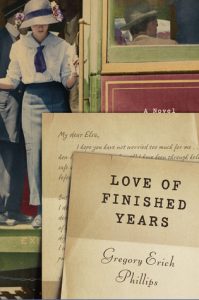
An immigrant’s journey, a forbidden love, a war to end all wars collide on the pages of a beautifully written historical fiction, Love of Finished Years by Gregory Erich Phillips.
At twelve years of age, Elsa Schuller carries no expectations when she reaches Ellis Island in 1905. In fact, she has no idea why her father insists on leaving Germany for this supposed Land of Opportunity. Riddled with nothing less than challenges and hardship working in the sweatshops in lower Manhattan, Elsa’s only ray of hope is learning how to read and write English.
When you’re ready,did you know that Chanticleer offers editorial services?We do and have been doing so since 2011.
Our professional editors are top-notch and are experts in the Chicago Manual of Style. They have and are working for the top publishing houses (TOR, McMillian, Thomas Mercer, Penguin Random House, Simon Schuster, etc.).
If you would like more information, we invite you to email Kiffer or Sharon at KBrown@ChantiReviews.com or SAnderson@ChantiReviews.com for more information, testimonials, and fees.
We work with a small number of exclusive clients who want to collaborate with our team of top-editors on an on-going basis.Contact us today!
Chanticleer Editorial Services also offers writing craft sessions and masterclasses. Sign up to find out where, when, and how sessions being held.
A great way to get started is with our manuscript evaluation service, with more information availablehere.
And we do editorial consultations for $75. Learn more here.
If you’re confident in your book, consider submitting it for a Editorial Book Reviewhereor to one of our Chanticleer International Awardshere.
And remember! Our 10th Anniversary Chanticleer Authors Conference (CAC22) will be April 7-10, 2022, where our 2021 CIBA winners will be announced. Space is limited and seats are already filling up, so sign up today! CAC22 and the CIBA Ceremonies will be hosted at the Hotel Bellwether in Beautiful Bellingham, Wash. Sign up and see the latest updates here!
Writer’s Toolbox
Thank you for reading this Chanticleer Spotlight article.
The Dante Rossetti Book Awards recognize emerging new talent and outstanding works in Young Adult Fiction. The Dante Rossetti Book Awards is a genre division of the Chanticleer International Book Awards (#CIBAs).
Named in honor of the British poet & painter Dante Gabriel Rossetti who founded the Pre-Ralphaelite Brotherhood in 1848.
Chanticleer International Book Awards is looking for the best books featuring stories of all shapes and sizes written to an audience between the ages of about twelve to eighteen (imaginary or real). Science Fiction, Fantasy, Dystopian, Mystery, Paranormal, Historical, Romance, Literary, we will put them to the test to discover the best. (For Middle Grade Fiction see our Gertrude Warner Awards, and for Children’s Literature see our Little Peeps Awards.)
These titles are in the running for the Finalists of the 2020 Dante Rossetti Book Awards for Young Adult Fiction.
Michelle Rene –The Canyon Cathedral: The Witches of Tanglewood,Book Two
Strider S. R. Klusman –Within Reach
Sue C Dugan –Suppressed
B. L. Smith –The Fall of the Axe
Liana Gardner –Speak No Evil
Sara Hosey –Iphigenia Murphy
Susanne Dunlap –The Paris Affair
Susan Wingate –How the Deer Moon Hungers
Felicia Farber –Ice Queen
PJ Devlin –The Chamber — A Wissahickon Monsters Story
Dallas Woodburn –The Best Week That Never Happened
Kelly Vincent –Finding Frances
Chynna Laird –Just Shut Up and Drive
L.L. Eadie –Yearning for the Unattainable
Jodi Lea Stewart –Blackberry Road
Denis Olasehinde Akinmolasire –The Mission to End Slavery
Tory Gates –Searching for Roy Buchanan
Cris Harding –Red Wing
Brooke Skipstone –Someone To Kiss My Scars
Good Luck to All as your works compete for the FINALIST rounds of the CIBAs!
We will announce the Finalists of the 2020 CIBA divisions April 22, 23, & 24, 2021.
The 22 divisions of the 2020 CIBAs’Grand Prize Winners and the Five First Place Category Position award winners will be announced at theApril 25th, 2021 Chanticleer International Book Awards Annual Awards Gala,which takes place at the Chanticleer Authors Conference that will be held in virtually Bellingham, Wash.
The Semi-Finalists’ works will compete for the First Place Winner positions, and then all will be recognized in the evenings at VCAC21 April 22-24th from 6-8 p.m. PST.
The First Place Category Winners, along with the CIBA Division Grand Prize winners, will be selected from the 23 CIBA divisions Finalists. We will announce the 1st Place Category Winners and Grand Prize Division Winners the CIBAs Ceremonies June 5th, 2021 virtually (Free) and LIVE at the luxurious Hotel Bellwether in Bellingham, Wash.