Tag: Black Women in US History

  • Commemorating the 19th Amendment on its 103-year-old Anniversary of Women’s Rights, Voting Rights, Suffrage

    On August 18, 1920, the Nineteenth Amendment to the United States of America Constitution was ratified and signed into law on the 26th that same month.
    Commemorating the 19th Amendment's 103rd anniversary

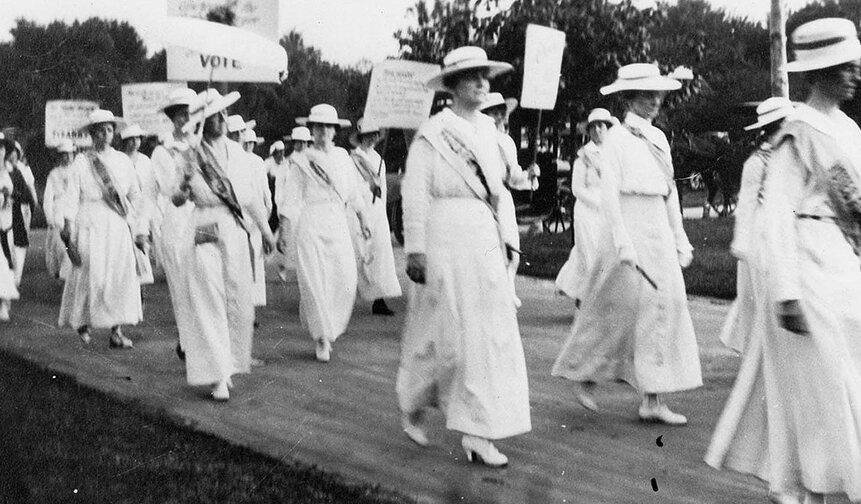
    Celebrating  the 103rd Anniversary of the 19th Amendment: A Triumph of Perseverance and Equality

    In the tapestry of history, some threads are woven with courage, resilience, and indomitable will. This year, as we commemorate the 103rd anniversary of the 19th Amendment to the United States Constitution, we honor the relentless dedication of those who paved the path to gender equality and universal suffrage.

    Join us in celebrating this significant milestone, reflecting on the arduous journey that spanned over seven decades. The suffrage movement wasn’t a mere campaign; it was a movement that transformed society and opened doors to empowerment.

    This commemoration takes us back to the historic victory that marked the amendment’s ratification on August 18, 1920, forever engraving the right for women to vote into the framework of American democracy. The amendment stood as a testament to unity, courage, and the conviction that change is attainable.

    The Nineteenth Amendment was the capstone of that fight, but it took over seventy years to achieve it.

    We are celebrating the 103rd anniversary of the Nineteenth Amendment’s adoption into the U.S. Constitution: the amendment that guarantees citizens the right to vote regardless of their gender, and the victory of the American Suffrage Movement. It took more than seventy years of protesting, picketing, and struggles for women to gain the civil right to vote in US elections. And many more decades passed before other disenfranchised groups  were systematically denied the right to vote.

    And still, the vote was not granted to Black women and men. That right came about much later than most people realize, June 6, 1965, when President Lyndon Johnson signed the Voting Rights Act, which outlawed the discriminatory voting practices that some Southern states adopted after the Civil War.

    Women’s suffrage was not just a long fight, but one taken on by many pivotal figures. But the story of the suffrage movement is best told by remembering many of its impactful suffragists, such as Alice Stone Blackwell, Elizabeth Cady Stanton, Matilda Joslyn Gage, Ida B. Wells, Mary Church Terrel, Josephine St. Pierre Ruffin, and Harriet Tubman whose unwavering dedication rallied people to challenge oppressive norms. Their legacy echoes through the ages, inspiring us to continue championing justice and equality.

    Suffragists were physically attacked by mobs of angry men and boys while police looked the other way. They’d been roughly arrested; been held in fetid, cold, vermin-infested cells; been shackled to the wall; and endured abuse and even torture in jail. When they went on hunger strikes, they were force-fed, tubes rammed up their noses. The Christian Science Monitor. 
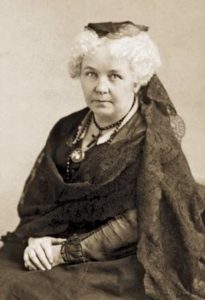
    Elizabeth Cady Stanton, c. 1880

    Elizabeth Cady Stanton was one of the women who first crystallized the Suffrage Movement, having helped organize the Seneca Falls Convention. Her unique background was pivotal in formulating the first demand for women’s suffrage in 1848.

    As the movement grew and drew public attention, Stanton proved herself to be a skilled orator and writer, working closely with Susan B. Anthony throughout the years; Stanton actually wrote some of the speeches that Anthony delivered, and– along with Anthony– was one of the founders of the National Woman Suffrage Association. Stanton wrote for a more equitable future in more than voting; in addition to the question of suffrage, she championed a broader view of women’s freedoms, supporting labor rights, property rights, and the right to divorce. She saw that women should have the chance to lead their own lives, taking part in all aspects of society equally to men.

    Movements don’t just happen, they come alive when a group of people decides to take action against injustice, and even small beginnings can lead to sweeping change.

    Elizabeth Cady Stanton came from a privileged background and used her position and means to propel her views. Her father was a prominent attorney, Congressman, and a judge. He also was a slave owner. Elizabeth was exposed to the study of law and the government mechanisms that govern by her father. She was particularly against how religion was used to justify the oppression of women. She penned The Woman’s Bible to tackle misogynistic traditions rooted in religious dogma after being sent to a seminary at the age of sixteen.

    She became an adamant abolitionist to end the practice of slavery in the United States in 1839 at the age of 24. Many historians believe that the Abolitionist Movement to End Slavery experiences and lessons were essential to pave the way for the Women’s Suffrage Movement.

    Stanton wasn’t the only suffragist who saw the reality of sexist injustice throughout her society, and one of her contemporaries joined her in drawing attention to these wrongs. Matilda Joslyn Gage was considered a radical in her time, having fought against traditionalist views as Stanton had. Matilda was on the revising and editing committee for Elizabeth’s  highly controversial The Woman’s Bible. 
    Matilda Electa Joslyn March 24, 1826

    This right to vote was a battle, fought and won 103 years ago by women we will never know, but by what they have written, what others have written about them, and what they have done for all of us.
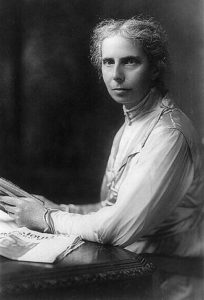
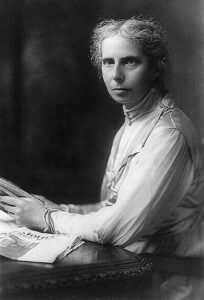
    Alice Stone Blackwell

    One of the women who played a significant role in uniting these two groups was Alice Stone Blackwell.

    She was in a position to do so because of her connection to the AWSA: her mother was Lucy Stone. Along with Alice’s father, Henry Browne Blackwell, they were some of the primary organizers of the group. As Alice Stone Blackwell grew up, she worked with her parents on their paper, theWoman’s Journal, and eventually ran the paper. Once the AWSA and NWSA had merged, Blackwell served as the NAWSA’s recording secretary.

    Publisher and founder of the Woman’s Era Club (which laid the foundation for NAACP), Josephine St. Pierre Ruffin, an activist at heart, a community leader, and a national organizer,  grew up surrounded by the abolitionist ideals of justice, equality, and political representation. Her earliest public service dates to the Civil War, during which Ruffin recruited African American men for the 54th and 55th Massachusetts infantry regiments. After the war, Ruffin served on several charities that helped Southern Blacks. Ruffin dedicated her life to bettering the lives of women and Black Americans both locally and nationally.  NPS.Gov/People/Josephine-St-Pierre-Ruffin.
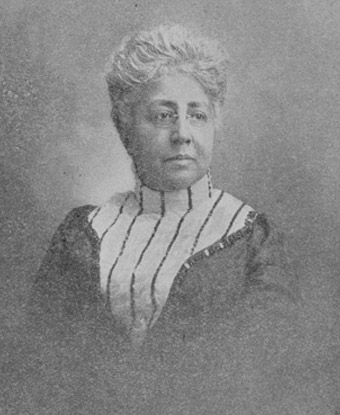
    A black and white portrait of Josephine St. Pierre Ruffin.
    Josephine St. Pierre Ruffin

    While the centennial celebrates the federal adoption of women’s suffrage, we shouldn’t forget the smaller victories and works that punctuated the movement’s length, those who spoke out against injustice in many forms, while seeking the vote. One such woman was Ida B. Wells, who played an active role in the suffrage movement of Chicago. The city had given partial suffrage to women. Wells, along with a fellow suffragist Belle Squire, started the Alpha Suffrage Club to advance women’s suffrage further and educate women on civic involvement.
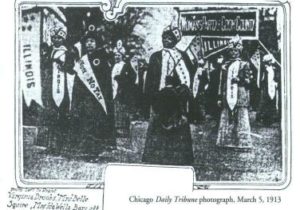
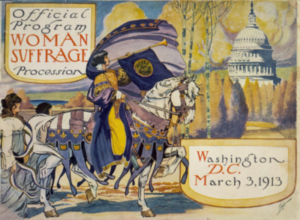
    Ida Wells & Belle Squire marching in 1913

    The club especially supported African American candidates for the city’s elections, working to break down multiple unjust barriers in politics. Wells participated in one of the NAWSA’s best-remembered marches, set in Washington D.C. the day before the inauguration of President Woodrow Wilson. At the beginning of the rally, she was told to walk at the back, but she refused. Ida B. Wells marched with her sister suffragists from Illinois at the front. The power of social change comes from unified work between many people, and Wells refused the idea that she, as a suffragist, could be divided from anyone else.

    Along with women like Wells and Ruffin, Mary Church Terrel was an advocate for racial equality. She was entwined with gender equality, which shows throughout her work with the NAWSA, where she frequently met with Susan B. Anthony and Elizabeth Cady Stanton. She insisted that the movement fight for the rights of black women alongside those of white women, and spoke highly of the suffragists who fought for everyone oppressed by the political and social systems of the time. She spoke at NAWSA meetings, delivered speeches, and called for the suffragists to remember all of the women whose vote they worked so hard to gain.
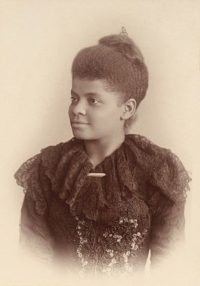
    Ida Wells

    Let’s not allow their work to be forgotten – and let us never give up our full Rights as U.S. Citizens to carry out this all-too-important privilege.

    Despite the NAWSA’s issues with racism, some black women did act within that organization, such as Mary Church Terrel, who was an advocate for racial equality entwined with gender equality, which shows throughout her work with the NAWSA, where she frequently met with Susan B. Anthony and Elizabeth Cady Stanton. Mary insisted that the movement fight for the rights of black women alongside those of white women, and spoke highly of the suffragists who fought for everyone oppressed by the political and social systems of the time. She spoke at NAWSA meetings, delivered speeches, and called for the suffragists to remember all of the women whose vote they worked so hard to gain.
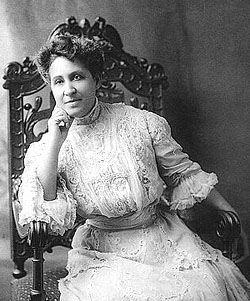
    Mary Church Terrel Sept 23, 1863

    Women’s suffrage had a complex relationship with black civil rights in large part thanks to the period of history in which the suffrage movement began: the Seneca Falls Convention took place in 1848, seventeen years prior to the abolition of slavery. This meant that the women’s rights movement was progressing and focusing at the same time that black people across were achieving freedom and directing themselves in a country that, while changing dramatically, still marginalized them.

    Harriet Tubman’s work is an example of how black women fought on both fronts; she’s a figure best remembered for her work as a liberator, freeing slaves prior to and during the civil war, but she took part in the suffrage movement as well. During the time of the NAWSA, she traveled to meetings and demonstrations to give speeches, telling of her experiences fighting for freedom and facing down oppressive and dangerous power structures during the time of slavery, and how important the struggle for freedom is. She bridged her advocacy for equality into the fight for the vote, and during this time, Ruffin’sThe Woman’s Erawrote a profile on Tubman, as the country’s attention was once again drawn to her fight.
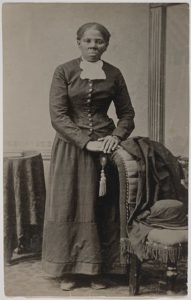
    Harriet Tubman after the Civil War

    All of these histories show that the suffrage movement’s victory– the adoption of the nineteenth amendment– was the result of disparate people, dedicated and idealistic people coming together and fighting hard for their rights. They gave time, energy, and passion to a movement that would, eventually, provide them with the right to participate in the democracy of their country. The fact that the suffrage movement stayed strong for 70 years united its two significant organizations, tackled legislation at both the national and local levels, is a testament to the people who refused to give up, and whose worked– together– to win the fight.
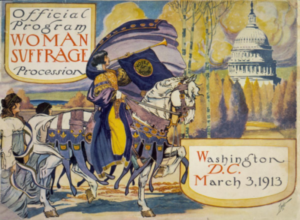
    It’s been a century since women won the right to vote, and more than 170 years since the American suffrage movement started in earnest. This movement has a lot it can teach us: the value of working together, across the country, to bring about change; the importance of remembering that there is always more than one fight for progress and rights, that we should listen to the voices of everybody who’s been pushed down and denied their rights and opportunities; and, of course, that even in the face of a power structure that calls rebellion and the fight for equal freedoms’ radical’, that fight is a good one, and worth taking on.

    At the Seneca Falls Convention, the call for women’s suffrage rang out in America, whereas before it had been considered a fringe idea, or even impossible. The fight was long, but after seventy-two years, the suffragists made what was ‘radical’ a reality.

    So, in the spirit that the right to vote is something that all people deserve, and should never have been restricted to any one group over another, let’s celebrate the centennial of a victory that brought America one step closer to the ideals of equality, freedom, and the rights of all. The power of the vote has shaped America’s history. We must all understand the importance of voting, and today we recognize those who fought for our rights. We are thankful for those brave suffragettes, for it is their struggle that has given us the right to participate in our democracy regardless of gender.

    It required three generations of fearless activists over a span of more than seven decades working in more than 900 state, local, and national campaigns to finally win the vote for American women. And that active verb – win – is important: Women were not given the vote; they were not granted the vote. As one commentator so aptly describes it: “They took it.” Christian Science Monitor

    This year holds a special place in our hearts as we also celebrate the exceptional work of Nicole Evelina, whose groundbreaking book, ‘America’s Forgotten Suffragists: Virginia and Francis Minor,’ sheds light on the indelible contributions of lesser-known suffragists. Evelina’s meticulously researched biography illuminates the lives of Virginia and Francis Minor, who, alongside their better-known contemporaries, shaped the course of women’s rights and equality. Their story, like many others, exemplifies the unyielding spirit that fueled the suffrage movement.
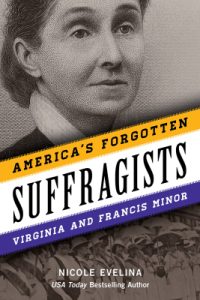
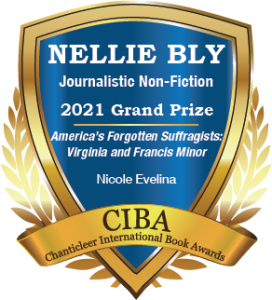
    America's Forgotten Suffragists CoverGold and Blue Badge for the Nellie Bly Awards Grand Prize Winner Nicole Evelina's book The Forgotten SuffragistsRead the Chanticleer review here! 

    As we honor the remarkable journey that brought us to this juncture, we are reminded that progress is a collective endeavor. The road to universal suffrage was marked by sacrifices, courage, and a shared vision of a more just world. The fight for equality continues to resonate, urging us to safeguard the rights that were hard-fought and won.

    Join us in commemorating the 103rd anniversary of the 19th Amendment, a testament to the power of determination, unity, and the enduring spirit of change. Let us remember the past, honor those who blazed the trail, and carry forward their legacy as we champion equality and justice for all.

    Links to Sources and Resources:

    A Timeline of Voting Rights Actshttps://www.businessinsider.com/when-women-got-the-right-to-vote-american-voting-rights-timeline-2018-10#1965-congress-passes-the-historic-voting-rights-act-removing-discriminatory-barriers-that-kept-many-people-of-color-from-voting-12

    Sources:US Department of JusticeBrennan Center for Justice,Business Insider

    19th Amendment: The six-week ‘brawl’ that won women the vote https://www.csmonitor.com/USA/Politics/2020/0803/19th-Amendment-The-six-week-brawl-that-won-women-the-vote

    Why Celebrate the Centennial of the 19th Amendment?

    Britannicahttps://www.britannica.com/biography/Elizabeth-Cady-Stanton

    History.com

    https://www.history.com/topics/black-history/abolitionist-movement

    https://www.history.com/topics/womens-history/elizabeth-cady-stanton

    https://www.history.com/topics/womens-history/the-fight-for-womens-suffrage?li_source=LI&li_medium=m2m-rcw-history

    Brooklyn Museum – Alice Stone Blackwell: https://www.brooklynmuseum.org/eascfa/dinner_party/heritage_floor/alice_stone_blackwell

    Americans Who Tell the Truth – Elizabeth Cady Stanton   

    https://www.americanswhotellthetruth.org/portraits/elizabeth-cady-stanton

    https://socialwelfare.library.vcu.edu/woman-suffrage/gage-matilda-joslyn/

    NPS – Josphine St. Pierre Ruffin

    https://www.nps.gov/people/josephine-st-pierre-ruffin.htm

    NPS – Ida B. Wells

    https://www.nps.gov/people/idabwells.htm

    Blackpast – Josephine St. Pierre Ruffin

    https://www.blackpast.org/african-american-history/ruffin-josephine-st-pierre-1842-1924/

    Wikipedia – Josephine St. Pierre Ruffin

    https://en.wikipedia.org/wiki/Josephine_St._Pierre_Ruffin

    National Womens’ History Museum – Mary Church Terrell

    https://www.womenshistory.org/education-resources/biographies/mary-church-terrell

    Blackpast.org – Mary Church Terrell

    https://www.blackpast.org/african-american-history/terrell-mary-church-1863-1954/

    Harriet Tubman Historical Society – Harriet Tubman

    http://www.harriet-tubman.org/women-rights-suffrage/

    National Parks Foundation – Harriet Tubman

    https://www.nationalparks.org/connect/blog/beacon-resilience-and-love-harriet-tubman
    Alice Stone Blackwell, between 1880 and 1900
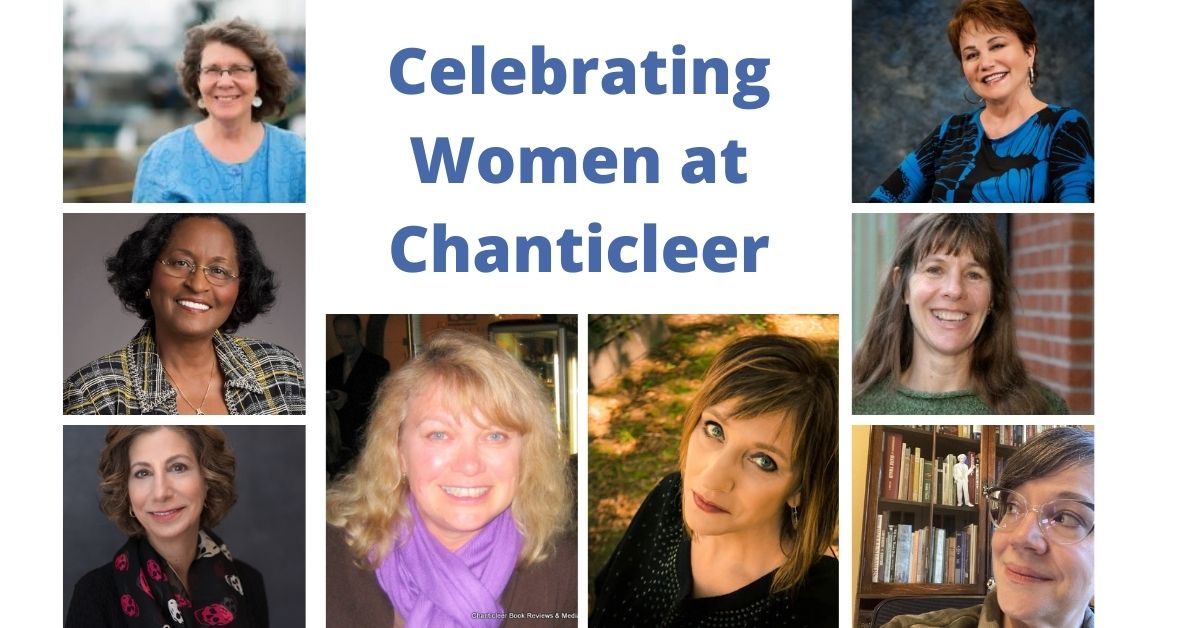
  • Celebrating Women’s History Month 2022 at Chanticleer

    Happy Women’s History Month from Chanticleer

    Women’s History Month began being celebrated nationally in just 1981

    And back then it was only Women’s History Week! As a woman owned company, Chanticleer is a big proponent of Women’s History Month. Generally the month is about celebrating and recognizing the accomplishments of women throughout history. It also is the month where we celebrate International Women’s Day on March 8th. You can read more about current events happening with Women’s History Month here.

    The 2022 National Women’s History Theme
    “Women Providing Healing, Promoting Hope”

    President Jimmy Carter issued the first Presidential Proclamation in February 1980 declaring the Week of March 2nd – 8th 1980 as National Women’s History Week.

    “From the first settlers who came to our shores, from the first American Indian families who befriended them, men and women have worked together to build this nation. Too often the women were unsung and sometimes their contributions went unnoticed. But the achievements, leadership, courage, strength and love of the women who built America was as vital as that of the men whose names we know so well.” President Jimmy Carter’s Message to the Nation.

    What Exactly is International Women’s Day?

    The origins of the holiday may surprise you. The Socialist Party of America celebrated decided February 28, 1909 would be the first National Women’s Day. The day was meant to honor immigrant women who went on strike.

    The day gained international recognition just the following year, and has focused in the last century on equal rights for women and suffrage, and then evolved to include a greater focus on working class women of color. For an excellent deep dive into a fuller history of International Women’s Day you can read this article from the Washington Post here.

    This year’s theme for International Women’s Day is Break the Bias — #BreakTheBias – focusing on creating a gender equal world.

    Women in Words

    One of the most famous recent examples of a woman in the world of words is Amy Schneider on the hit show Jeopardy! She made history not only as the second longest streak holder (behind Ken Jennings), but also is the first openly transgender contestant to qualify for the Tournament of Champions and as the most successful woman to grace the show with both a 40-game streak and $1.3 million in winnings!

    When asked why she specifically did so well at the wordplay questions Schneider said, “I think a lot of it comes from doing crosswords for years, it’s given me practice at thinking of words as both a concept and a collection of letters at the same time.”

    Now Amy has quit her former job as a software engineering manager. She’s sitting down to focus on one of our favorite activities: writing a book! It’s wonderful to see a woman go so far in such a popular television program.

    Women at Chanticleer

    Recently we were excited to share the good news of Dr. Janice Ellis being featured across the nation as she discussed the recent decision surrounding the next Justice for the Supreme Court. If Judge Ketanji Brown Jackson is confirmed, she will be the fourth woman on the court and the first Black woman ever appointed to the US Supreme Court. You can read our report on Dr. Ellis’s full article here.

    Here is a link to our Homage to the Suffrage Centennial – Women’s Rights, Suffrage, the 19th Amendment post that celebrates the 100 Year Centennial Celebration of the 19th Amendment.

    Click on the above link to read more about these amazing women: Elizabeth Cady Stanton, Matilda Electa Joslyn, Alice stone Blackwell, Belle Squire, Ida B. Wells, Mary Church Terrel, and Harriet Tubman.

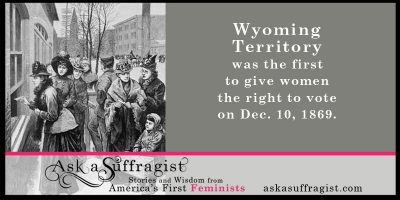
    Wyoming Territory Women could vote in 1869.

    It would take until 1920 for the 19th Amendment to pass that would allow women to vote.  ANOTHER 51 YEARS!


    Now let’s dive into some of our favorite recent reviews of books written by women:

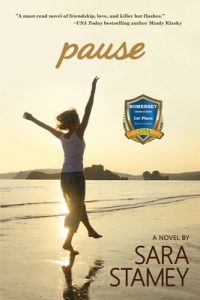
    PAUSE
    By Sara Stamey
    First Place Winner in Somerset Awards

    Pause Cover

    Sara Stamey’s Pause features a hero who defies gravity, a scintillating setting, and a lovely backdrop for this riveting story.

    This story is about women: strong, weak, abused, cherished, divorced, cancer survivors, mothers, sisters, friends, frenemies. It is a book about survival and hope, about getting back to self to reemerge into a life worth living.

    Meet Lindsey, a fifty-two-year-old divorced woman going through menopause, living alone with her two cats, and worrying about her 1 and ¾ breasts. Readers will be hooked from the very beginning with the first of many poignant and funny journal entries. Here is Lindsey’s reality: a middle-aged woman suffering hot flashes that sear her skin and cause spells of nausea, who suffers PTSD from an abusive spouse.

    Continue reading here.

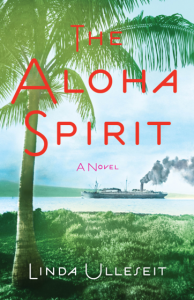
    THE ALOHA SPIRIT
    By Linda Ulleseit
    Grand Prize Winner in Goethe Awards

    Cover of The Aloha Spirit by Linda Ulleseit

    In Linda Ulleseit’s novel The Aloha Spirit, we meet the plucky heroine, Dolores, as her father leaves her.

    “Dolores’s father deemed her useless when she was seven. Neither he nor her older brother, Pablo, ever said that, but every detail of their leaving told her so. Papa had tried to explain the Hawaiian custom of hānai to her. All she understood was the giving away, leaving her to live with a family not her own.”

    Her story starts in 1922; the place, multiethnic, multilingual Hawaii. Papa, a sugar cane cutter from Spain who worked in Hawaii, decides to take his son Pablo with him to seek his fortune in California. His wife died five years earlier. He leaves 7-year-old Dolores with a large family on Oahu in an arrangement called hānai, an informal adoption. Dolores doesn’t know the family well. She feels abandoned, with no idea when or if her father will send for her or return.

    Continue reading here.

    MYSTERY in HARARE
    By M.J. Simms-Maddox
    First Place Winner in M&M Awards

    Mystery in Harare Image

    In M.J. Simms-Maddox’s atmospheric thriller, Mystery in Harare: Priscilla’s Journey into Southern Africa, a former legislative aide’s wedding day turns deadly.

    As the second installment of The Priscilla Trilogy opens, Priscilla J. readies to walk down the aisle in an American church to marry Jonathan. Not the man of her dreams, but the man she believes may be right for her. Love isn’t exactly on the table, but Priscilla hopes it will be in the future.

    Before she can even take her vows, her soon-to-be husband is murdered in cold blood in front of her and those in attendance. Priscilla catches a glimpse of the murderer before succumbing to unconsciousness. She’s been drugged, and the kidnappers will confound and surprise readers.

    Continue reading here.

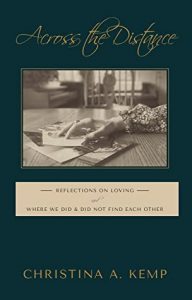
    ACROSS the DISTANCE
    By Christina A. Kemp

    In her nonfiction debut Across the Distance, Christina Kemp showcases a collection of eight personal stories that delve into the most poignant relationships throughout her life.

    The well-crafted narratives encompass relationships with her parents, brother, childhood friends, boyfriends, and mentors as they moved in and out of her life. Themes of love, loss, distance, self-preservation, and healing rise to the surface.

    Within the book, Kemp ponders the course of a romantic relationship as she realizes that love cannot make underlying differences disappear. At thirteen years old, her father died, and Kemp analyzes how she was able to come to terms with his death, reflecting on his kindness and heroic deeds. Several years later, she is diagnosed with the same condition that took her father; she feels as if she carries her father’s memory in the cells of her own body.

    Continue reading here.

    SOULMATED
    By Shaila Patel
    First Place Winner in Paranormal Awards

    Soulmated Cover

    Eighteen-year-old Liam Whelan must balance the pressure and danger of his new role leading his entire empath clan while searching for a fabled ‘soulmate’ in Shaila Patel’s paranormal romance novel, Soulmated.

    Since the age of six, guided by his father’s visions, Liam and his family have traveled across the United States, moving from town to town searching for the girl destined to “join” with Liam. However, no empath in centuries has found a soulmated union. No one knows what joining actually means. Liam tires of his parents’ search for what he considers a fantasy girl, but he agrees to give up one more year of his life. The family moves to North Carolina for Liam’s senior year.

    Continue reading here.

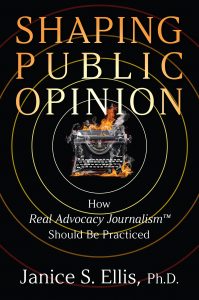
    SHAPING PUBLIC OPINION
    By Janice Ellis, Ph.D.
    Grand Prize Winner in Nellie Bly Awards

    Shaping Public Opinion Book Cover Image

    Janice S. Ellis, Ph.D., introduces the journalistic theories of Walter Lippmann in her new non-fiction work, Shaping Public Opinion: How Real Advocacy Journalism™ Should be Practiced.

    Walter Lippmann, considered one of the foremost journalists in the field over the last 100 years, was a mentor in absentia of Dr. Ellis in the art of advocacy journalism. During Lippmann’s 40+ year career, his columns were syndicated in over 250 newspapers nationwide and over 25 other international news and information outlets. Lippman focused on the ethical dissemination of information, especially about communities, society, and the world. A theory, which Dr. Ellis calls Real Advocacy Journalism™.

    Real Advocacy Journalism™ theory pertains to foundational behavior and ethical standing for those who report on, translate, and share information with the masses. This theory identifies the tension between individualism and collectivism, the private sector and public sector, the ruling elite, and the dormant masses.

    Continue reading here.


    Thank you for joining us on this adventure of books, and we hope you found a read that will help you celebrate the women in your life!

    Looking for more quality time with us?

    VCAC22 Sparkles

    VIRTUAL and IN-Person –  June 23 – 26, 2022! Register Today!

    FLEXIBLE REGISTRATIONS ARE AVAILABLE for these challenging times.

    Seating is Limited. The  esteemed WRITER Magazine (founded in 1887)  has repeatedly recognized the Chanticleer Authors Conference as one of the best conferences to attend and participate in for North America.

    Join us for our 10th annual conference and discover why!

    Featuring: International Best Selling Authors: Cathy Ace and  Robert Dugoni along with A+ list film producer Scott Steindorff.

  • HOMAGE to the SUFFRAGE CENTENNIAL – Women’s Rights, Voting Rights, Suffrage, the 19th Amendment

    HOMAGE to the SUFFRAGE CENTENNIAL – Women’s Rights, Voting Rights, Suffrage, the 19th Amendment


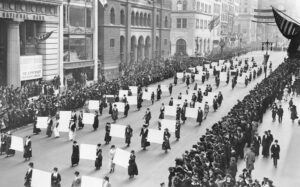
    Suffragists parade down Fifth Avenue, 1917.
    Advocates march in October 1917, displaying placards containing the signatures of more than one million New York women demanding the vote. The New York Times Photo Archives.

    On August 18, 1920, the Nineteenth Amendment to the United States of America Constitution was ratified and signed into law on the 26th that same month.

    We are celebrating the 100th anniversary of the Nineteenth Amendment’s adoption into the U.S. Constitution: the amendment that guarantees citizens the right to vote regardless of their gender, and the victory of the American Suffrage Movement. It took more than seventy years of protesting, picketing, and struggles for women to gain the civil right to vote in US elections. And many more decades passed before other disenfranchised groups  were systematically denied the right to vote.

    The Nineteenth Amendment was the capstone of that fight, but it took over seventy years to achieve it.

    And still, the vote was not granted to Black women and men. That right came about much later than most people realize, June 6, 1965, when President Lyndon Johnson signed the Voting Rights Act, which outlawed the discriminatory voting practices that some Southern states adopted after the Civil War.

    During this election season, we call all Chanticleerians to Vote Your Conscious and to not let anything get in your way!

    Women’s suffrage was not just a long fight, but one taken on by many pivotal figures. But the story of the suffrage movement is best told by remembering many of its impactful suffragists, such as Alice Stone Blackwell, Elizabeth Cady Stanton, Matilda Joslyn Gage, Ida B. Wells, Mary Church Terrel, and Josephine St. Pierre Ruffin.

    Suffragists were physically attacked by mobs of angry men and boys while police looked the other way. They’d been roughly arrested; been held in fetid, cold, vermin-infested cells; been shackled to the wall; and endured abuse and even torture in jail. When they went on hunger strikes, they were force-fed, tubes rammed up their noses. The Christian Science Monitor. 

    Elizabeth Cady Stanton, c. 1880

    Elizabeth Cady Stanton was one of the women who first crystallized the Suffrage Movement, having helped organize the Seneca Falls Convention. Her unique background was pivotal in formulating the first demand for women’s suffrage in 1848.

    As the movement grew and drew public attention, Stanton proved herself to be a skilled orator and writer, working closely with Susan B. Anthony throughout the years; Stanton actually wrote some of the speeches that Anthony delivered, and– along with Anthony– was one of the founders of the National Woman Suffrage Association. Stanton wrote for a more equitable future in more than voting; in addition to the question of suffrage, she championed a broader view of women’s freedoms, supporting labor rights, property rights, and the right to divorce. She saw that women should have the chance to lead their own lives, taking part in all aspects of society equally to men.

    Movements don’t just happen, they come alive when a group of people decides to take action against injustice, and even small beginnings can lead to sweeping change.

    Elizabeth Cady Stanton came from a privileged background and used her position and means to propel her views. Her father was a prominent attorney, Congressman, and a judge. He also was a slave owner. Elizabeth was exposed to the study of law and the government mechanisms that govern by her father. She was particularly against how religion was used to justify the oppression of women. She penned The Woman’s Bible to tackle misogynistic traditions rooted in religious dogma after being sent to a seminary at the age of sixteen.

    She became an adamant abolitionist to end the practice of slavery in the United States in 1839 at the age of 24. Many historians believe that the Abolitionist Movement to End Slavery experiences and lessons were essential to pave the way for the Women’s Suffrage Movement.

    Stanton wasn’t the only suffragist who saw the reality of sexist injustice throughout her society, and one of her contemporaries joined her in drawing attention to these wrongs. Matilda Joslyn Gage was considered a radical in her time, having fought against traditionalist views as Stanton had. Matilda was on the revising and editing committee for Elizabeth’s  highly controversial The Woman’s Bible. 

    Matilda Electa Joslyn
    March 24, 1826

    This right to vote was a battle, fought and won 100 years ago by women we will never know, but by what they have written, what others have written about them, and what they have done for all of us.

    Alice Stone Blackwell

    One of the women who played a significant role in uniting these two groups was Alice Stone Blackwell. She was in a position to do so because of her connection to the AWSA: her mother was Lucy Stone. Along with Alice’s father, Henry Browne Blackwell, they were some of the primary organizers of the group. As Alice Stone Blackwell grew up, she worked with her parents on their paper, the Woman’s Journal, and eventually ran the paper. Once the AWSA and NWSA had merged, Blackwell served as the NAWSA’s recording secretary.

    While the centennial celebrates the federal adoption of women’s suffrage, we shouldn’t forget the smaller victories and works that punctuated the movement’s length, those who spoke out against injustice in many forms, while seeking the vote. One such woman was Ida B. Wells, who played an active role in the suffrage movement of Chicago. The city had given partial suffrage to women. Wells, along with a fellow suffragist Belle Squire, started the Alpha Suffrage Club to advance women’s suffrage further and educate women on civic involvement.

    Wells & Squire marching in 1913

    The club especially supported African American candidates for the city’s elections, working to break down multiple unjust barriers in politics. Wells participated in one of the NAWSA’s best-remembered marches, set in Washington D.C. the day before the inauguration of President Woodrow Wilson. At the beginning of the rally, she was told to walk at the back, but she refused. Ida B. Wells marched with her sister suffragists from Illinois at the front. The power of social change comes from unified work between many people, and Wells refused the idea that she, as a suffragist, could be divided from anyone else.

    Along with women like Wells and Ruffin, Mary Church Terrel was an advocate for racial equality. She was entwined with gender equality, which shows throughout her work with the NAWSA, where she frequently met with Susan B. Anthony and Elizabeth Cady Stanton. She insisted that the movement fight for the rights of black women alongside those of white women, and spoke highly of the suffragists who fought for everyone oppressed by the political and social systems of the time. She spoke at NAWSA meetings, delivered speeches, and called for the suffragists to remember all of the women whose vote they worked so hard to gain.

    Ida B. Wells

    Let’s not allow their work to be forgotten – and let us never give up our full Rights as U.S. Citizens to carry out this all-too-important privilege.

    Despite the NAWSA’s issues with racism, some black women did act within that organization, such as Mary Church Terrel, who was an advocate for racial equality entwined with gender equality, which shows throughout her work with the NAWSA, where she frequently met with Susan B. Anthony and Elizabeth Cady Stanton. Mary insisted that the movement fight for the rights of black women alongside those of white women, and spoke highly of the suffragists who fought for everyone oppressed by the political and social systems of the time. She spoke at NAWSA meetings, delivered speeches, and called for the suffragists to remember all of the women whose vote they worked so hard to gain.

    Mary Church Terrel September 23, 1863

    Women’s suffrage had a complex relationship with black civil rights in large part thanks to the period of history in which the suffrage movement began: the Seneca Falls Convention took place in 1848, seventeen years prior to the abolition of slavery. This meant that the women’s rights movement was progressing and focusing at the same time that black people across were achieving freedom and directing themselves in a country that, while changing dramatically, still marginalized them.

    Harriet Tubman’s work is an example of how black women fought on both fronts; she’s a figure best remembered for her work as a liberator, freeing slaves prior to and during the civil war, but she took part in the suffrage movement as well. During the time of the NAWSA, she traveled to meetings and demonstrations to give speeches, telling of her experiences fighting for freedom and facing down oppressive and dangerous power structures during the time of slavery, and how important the struggle for freedom is. She bridged her advocacy for equality into the fight for the vote, and during this time, Ruffin’s The Woman’s Era wrote a profile on Tubman, as the country’s attention was once again drawn to her fight.

    Harriet Tubman after the Civil War

    All of these histories show that the suffrage movement’s victory– the adoption of the nineteenth amendment– was the result of disparate people, dedicated and idealistic people coming together and fighting hard for their rights. They gave time, energy, and passion to a movement that would, eventually, provide them with the right to participate in the democracy of their country. The fact that the suffrage movement stayed strong for 70 years united its two significant organizations, tackled legislation at both the national and local levels, is a testament to the people who refused to give up, and whose worked– together– to win the fight.

    It’s been a century since women won the right to vote, and more than 170 years since the American suffrage movement started in earnest. This movement has a lot it can teach us: the value of working together, across the country, to bring about change; the importance of remembering that there is always more than one fight for progress and rights, that we should listen to the voices of everybody who’s been pushed down and denied their rights and opportunities; and, of course, that even in the face of a power structure that calls rebellion and the fight for equal freedoms’ radical’, that fight is a good one, and worth taking on.

    At the Seneca Falls Convention, the call for women’s suffrage rang out in America, whereas before it had been considered a fringe idea, or even impossible. The fight was long, but after seventy-two years, the suffragists made what was ‘radical’ a reality.

    So, in the spirit that the right to vote is something that all people deserve, and should never have been restricted to any one group over another, let’s celebrate the centennial of a victory that brought America one step closer to the ideals of equality, freedom, and the rights of all. The power of the vote has shaped America’s history. We must all understand the importance of voting, and today we recognize those who fought for our rights. We are thankful for those brave suffragettes, for it is their struggle that has given us the right to participate in our democracy regardless of gender.

    It required three generations of fearless activists over a span of more than seven decades working in more than 900 state, local, and national campaigns to finally win the vote for American women. And that active verb – win – is important: Women were not given the vote; they were not granted the vote. As one commentator so aptly describes it: “They took it.” Christian Science Monitor

    Links to articles and sources are listed at the end of this blog post.

    We want to thank Scott Taylor, our newest member of the Chanticleer Team, for his research for the blog post in this collaborative effort of honoring and remembering the women who struggled and worked for ratifying the 19th Amendment on August 18, 1920.


    We thought you might enjoy viewing some of our very favorite books about Suffrage and Strong Women we admire: 

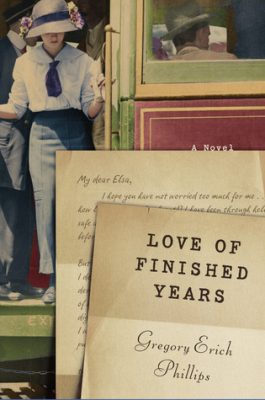
    Love of Finished Years by Gregory Erich Phillips

    Love of Finished Years is one of Kiffer’s favorite novels as it tackles workers rights, women’s suffrage, the looming shadow of World War One, the plight of immigrants, and the horrors of wars from the trenches. Phillips reminds us that love, light, and perseverance can help us find a way to overcome almost any obstacle. Love of Finished Years won the Chanticleer Overall  Grand Prize for Best Book while it was still in manuscript form. 

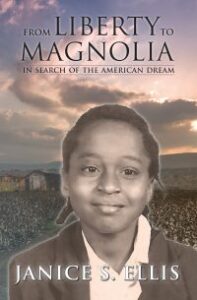
    From Liberty to Magnolia: In Search of the American Dream by Dr. Janice S. Ellis

    This pivotal work serves as an historical record which serves as a historical record amid one of the most tumultuous yet empowering eras in American history. Complete with a discussion guide in the Appendix, the book can serve as a text for a college course or a community book club exploring themes of race and gender.

     Janice’s overarching message is to stay true to oneself and continue to follow your heart, no matter how unpopular or uncomfortable your choices. From Liberty to Magnolia was awarded the Journey Book Awards Grand Prize. 


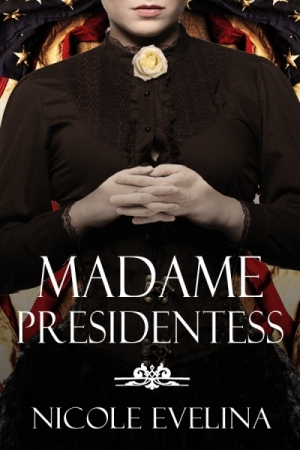
    Madame Presidentess by Nicole Evelina

    A story based on the mysterious, mystical Victoria Woodhull, a free-thinking woman well ahead of her time with a rags to riches story. Woodhull was the first woman to run for president of the United States, at a time when, with the full support of the law, most American men did not even regard their mothers, wives and daughters as citizens. She was also the first woman to own a brokerage firm on Wall Street. Nicole Evelina brings Victoria Woodhull vividly to life in this award winning novel. 

    Chanticleer Non-fiction Award-winning Books — just click on the link to read our reviews.

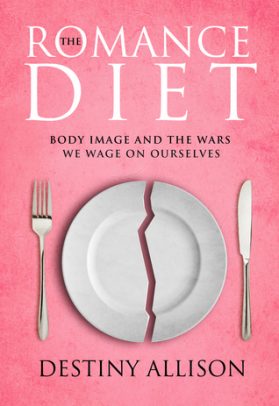
    The Romance Diet: Body Image and the Wars We Wage on Ourselves by Destiny Allison


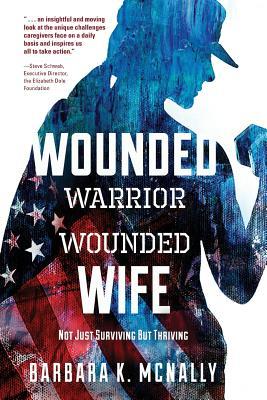
    Wounded Warrior, Wounded Wife: Not Just Surviving, but Thriving by Barbara McNally


    Inside: One Woman’s Journey Through the Inside Passage by Susan Marie Conrad


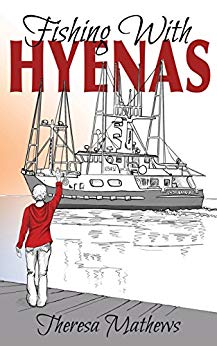
    Fishing With Hyenas  by Teresa Matthews


    Links to Sources and Resources:

    A Timeline of Voting Rights Actshttps://www.businessinsider.com/when-women-got-the-right-to-vote-american-voting-rights-timeline-2018-10#1965-congress-passes-the-historic-voting-rights-act-removing-discriminatory-barriers-that-kept-many-people-of-color-from-voting-12

    Sources: US Department of Justice Brennan Center for Justice, Business Insider

    19th Amendment: The six-week ‘brawl’ that won women the vote https://www.csmonitor.com/USA/Politics/2020/0803/19th-Amendment-The-six-week-brawl-that-won-women-the-vote

    Why Celebrate the Centennial of the 19th Amendment?

    Britannica https://www.britannica.com/biography/Elizabeth-Cady-Stanton

    History.com

    https://www.history.com/topics/black-history/abolitionist-movement

    https://www.history.com/topics/womens-history/elizabeth-cady-stanton

    https://www.history.com/topics/womens-history/the-fight-for-womens-suffrage?li_source=LI&li_medium=m2m-rcw-history

    Brooklyn Museum – Alice Stone Blackwell: https://www.brooklynmuseum.org/eascfa/dinner_party/heritage_floor/alice_stone_blackwell

    Americans Who Tell the Truth – Elizabeth Cady Stanton   

    https://www.americanswhotellthetruth.org/portraits/elizabeth-cady-stanton

    https://socialwelfare.library.vcu.edu/woman-suffrage/gage-matilda-joslyn/

    NPS – Ida B. Wells

    https://www.nps.gov/people/idabwells.htm

    Blackpast – Josephine St. Pierre Ruffin

    https://www.blackpast.org/african-american-history/ruffin-josephine-st-pierre-1842-1924/

    Wikipedia – Josephine St. Pierre Ruffin

    https://en.wikipedia.org/wiki/Josephine_St._Pierre_Ruffin

    National Womens’ History Museum – Mary Church Terrell

    https://www.womenshistory.org/education-resources/biographies/mary-church-terrell

    Blackpast.org – Mary Church Terrell

    https://www.blackpast.org/african-american-history/terrell-mary-church-1863-1954/

    Harriet Tubman Historical Society – Harriet Tubman

    http://www.harriet-tubman.org/women-rights-suffrage/

    National Parks Foundation – Harriet Tubman

    https://www.nationalparks.org/connect/blog/beacon-resilience-and-love-harriet-tubman
    Alice Stone Blackwell, between 1880 and 1900