Tag: Biography

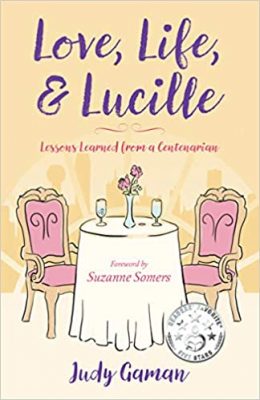
  • LOVE, LIFE and LUCILLE: Lessons Learned from a Centenarian by Judy Gaman – Biography, Women’s Memoirs, Aging

    Blue and Gold 2020 Badge for the Hearten Grand Prize for Inspiring & Uplifting Non-Fiction Love, Life, and Lucille by Judy Gaman

    Award-winning author, motivational speaker, and podcast host Judy Gaman befriends a fun-loving and feisty centenarian in her CIBA Grand Prize-winning novel, Love, Life, and Lucille.

    The list of titles and accolades Judy Gaman has accrued begin to pale when she encounters Lucille Fleming for the very first time. The whole reason for the meet-up with the centenarian was specifically to get her opinions on “aging gracefully,” the featured topic of a new book Judy planned to write. What was scheduled as an hour-long interview turned into an absolutely delightful, near three-hour visit. Lucille turned the tables and began asking questions about Judy’s life with compelling earnestness—something Judy rarely experienced. She was unprepared yet exhilarated.

    Judy couldn’t stop thinking about this “dressed to the nines” woman with an ear-to-ear smile and a sturdy, affectionate hug. Her contact with this larger-than-life woman was so infectious, Judy made up an excuse—so that she could see her again. During that second meeting, the two became fast friends as they set Fridays aside as their day to get together. Before their next planned meeting, Judy learned that Lucille had gone into cardiac arrest. She was dead for three minutes before she came back full of vim and vigor as if nothing had happened. Five months later, Lucille was more than ready for TV interviews. With that, Judy made plans to write a second book about Lucille and their relationship.

    Once Lucille agreed to Judy’s literary plans, their Friday get-togethers morphed into long, memorable, eye-opening, and at times, heart-wrenching lunch outings. 

    The two would share their life experiences—many happier Lucille memories than Judy’s dark, divorced-riddled childhood recollections. At the same time, those outings provided valuable lessons for Judy. She realized she had stopped thinking about her work to-do list but, instead, was “simply living in the moment” when she was around Lucille. “With every lesson, she taught me, she was making me stronger, both mentally and emotionally.” Judy had no idea that her newfound strength from her newfound best friend would carry her through a series of unforgettable roller-coaster events.

    Award-winning author Judy Gaman retells the remarkable, life-changing story of her relationship with Lucille, the woman who profoundly changed her life. 

    Life, Love, and Lucille reads more like fiction than nonfiction. A true storyteller, Gaman enthralls her audience by taking common scenarios—visiting a friend; going to restaurants—and turning them into significant unanticipated spiritual encounters. During those moments, Gaman realizes that Lucille’s optimism came from years of perseverance through life’s ups and downs, which gave her optimism and determination, qualities severely lacking in Gaman’s life. Little by little, Lucille’s passion for life and people began to penetrate the carefully-protected recesses of Gaman’s heart. 

    Gaman’s first-person narration delicately weaves a consistent theme highlighting the pair’s incredibly close relationship: Lucille’s stories; how Lucille’s stories affected Gaman; Gaman’s personal, gut-wrenching struggles with family members; and the testing and strength of their faith in God that led to wholeness. 

    Drawing each chapter to a cliffhanging close further heightens the storyline. From one human-interest situation to the next, Gaman fills her narrative with a sequence of circumstances, slowly evolving from lighter, happier junctures to more heart-rending ones. Judy Gaman masterfully weaves her story, heartfelt, funny, outrageous – all to a compelling must-read narrative. 

    Through Gaman’s Love, Life, and Lucille, Judy Gaman gifts us all with the experience of what it is like to meet a woman who chose hope, love, and life above all else. Highly recommended!



    5 Stars! Best Book Chanticleer Book Reviews


  • BLOSSOM — The Wild Ambassador of Tewksbury (Audiobook Review) by Anna Carner – Animal Rights, Friendship, Environmental & Naturalist Biographies

    BLOSSOM — The Wild Ambassador of Tewksbury (Audiobook Review) by Anna Carner – Animal Rights, Friendship, Environmental & Naturalist Biographies

    One woman’s encounter with a rescued deer turns into an unanticipated life-changing experience in Blossom — The Wild Ambassador of Tewksbury, the audiobook.


    Author Anna Carner lived in a horse-friendly farming area of New Jersey in 1999, when she encountered a newborn fawn, barely breathing, near her home. The animal seemed to be communicating its need to her, and, with some experience of animal and human care, Carner set out to revive the fawn. She took the baby deer into her house and nursed her back to health. When she and her husband, Pino, saw the fawn curled up asleep with the family dog, the couple knew they had a new pet. Her name, Blossom, seemed suited to her sweetness and soft, gentle beauty.

    Caring for animals was not uncommon nor unfamiliar to Anna, who, with her husband Pino, housed horses and raised alpacas on their property. But bringing in a fawn was different because some community members considered deer a nuisance and hunting a sport to be enjoyed. As Blossom grew, she would venture farther away from home for more extended periods. Anna and Pino circulated “please, don’t shoot Blossom” posters to bring awareness and compassion for not just the friendly deer but for all deer. While many championed Blossom’s safety, others did not.

    Narrator Petrea Burchard breathes life into the audio adaptation of Anna Carner’s captivating and moving memoir. Setting the tone from the get-go, Burchard’s soft, silken voice immediately draws readers in as she deftly prepares the groundwork of bucolic Tewksbury scenes that are mere façades to the danger lurking in its midst. Carner’s memoir functions more like a mystery thriller; its well-balanced mix between the first-person narrative and engaging dialogue and emotional roller-coaster scenes provides Burchard plenty of room to use the full range of her vocal skills.

    Carner’s encounter with Blossom pushes her to recall childhood memories she’d rather leave behind. She can’t since the parallels of victim and rescuer between her present and past are too powerful to dismiss. While much of the story centers on the present, Carner appropriately shifts to disturbing but at the same time thought-provoking moments from her dysfunctional youth. The alterations may not be unusual from a reader standpoint but challenging for a narrator since Carner’s memoir includes a full cast of mostly secondary characters—neighbors, hunters, veterinarians, supporters—many of whom play critical roles in the direction of the story.

    However, from a listener standpoint, three characters besides Anna take the front-and-center stage to shape the narrative. When Burchard morphs into Caruso, the Carner’s opera-loving and chattering parrot, her comical voice provides a definite mood change that lightens the story’s continual underlying tension focused on Anna’s incessant worry that a hunter will take Blossom down. The story’s tenor shifts again with the introduction of children’s voices, particularly Viola, one of the young burn-unit patients whom Anna befriends while in the hospital. Burchard’s attention to narrative details enhances the innocence and compassion as the girls converse with one another, discussing life issues. Lastly, another voice change, when Anna receives phone calls from a creepy stalker. Burchard’s gravelly tone against the terror in Anna’s voice could easily make one think the story was a Stephen King novel; it’s that spine-chilling.

    Audience listening level: Light profanity and sexual references (mainly dealing with animals) make this perfect for middle-graders on up.

    Riveting from beginning to end, Blossom—The Wild Ambassador of Tewksbury audiobook is a powerful story of love, determination, and hope for the betterment of wildlife conservation that won First in Category in the CIBA 2019 Journey Awards for Memoirs and Biographies.  A highly recommended listen!

  • HINDSIGHT: Coming of Age on the Streets of Hollywood by Sheryl Recinos, MD – Medical/Professional Biographies, Memoir, Teen Abuse/Homelessness, Mental Health/Family

    HINDSIGHT: Coming of Age on the Streets of Hollywood by Sheryl Recinos, MD – Medical/Professional Biographies, Memoir, Teen Abuse/Homelessness, Mental Health/Family

    Hindsight: Coming of Age on the Street of Hollywood by Sheryl Recinos presents a childhood fraught with family dysfunction caused by mental illness and emotional and psychological abuse. The two formative figures in Recinos’ life were negligible participants instead of the supportive, loving parents all children need to grow and thrive into adulthood.

    While this memoir takes place in the 1980s and 90s, we can only hope the services that support runaways and dysfunction within families have improved. For example, her father’s main go-to plan for dealing with his daughter was to commit her to an asylum instead of doing the hard work of parenting.

    Homelessness, a significant theme in this memoir, is continuously in the news, an issue that plagues every major city in America and occurs even in small towns and rural settings. Homelessness is one of those issues that many in America turn a blind eye to and ignore, but Recinos shines a light, bright and clear, on this issue, and knowing her story helps us understand this issue in a new way. It brings a face to embody homelessness and a possible answer to the question, why?

    Why do people choose the street? Why do people refuse shelter? Why do some kids become flight risks? The answers may surprise you.

    Recinos never places blame, of which there seems plenty to go around. Never blames her mentally ill mother, who, during a psychotic episode, put her and her brother in danger. She never blames her father and portrays him as a figure that we can sympathize with at times. She never blames the legal system that failed her time and again, penalizing her but never breaking her spirit. And she never condemns any of the men that rape or attack her. She doesn’t blame drugs or alcohol or any “friends” she meets along the way who rob her or worsen her situation.

    Instead, Recinos tells the story of her teen-years with a pragmatic focus on the events. She never imposes her adult understanding of this world but focuses on her mental state at the time. What she produces is a raw and unapologetic story of a girl misunderstood, trying to survive in a world of neglect and abuse.

    That she survives is a miracle. That she finds her way out of homelessness to become a successful contributing member of society, becoming a loving parent with no role model for such a thing is another.

    Recinos breaks the cycle of abuse that drove her to the streets. She has become a champion of homeless teens. Her ability to see the injury she suffered through an unfiltered lens, and not accept it or be shaped by it, is why we love Dr. Recinos and her story.

    This memoir is a page-turner, a tour de force, a blockbuster read that will have you laughing, crying, cringing, and hoping for something better for this young woman. You won’t be disappointed. Recinos delivers, and she does so with grace and talent. We highly recommend this intense and eye-opening memoir.


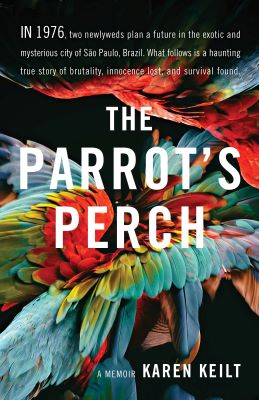
  • The PARROT’S PERCH: A Memoir of Torture and Corruption in Brazil by Karen Keilt – Memoir, Dysfunctional Families, True Crime Biographies

    The PARROT’S PERCH: A Memoir of Torture and Corruption in Brazil by Karen Keilt – Memoir, Dysfunctional Families, True Crime Biographies

    A blue and gold badge for the 2020 Grand Prize Winner for Journey Narrative Non Fiction The Parrot’s Perch by Karen KeitKaren Keilt led a life of privilege, a life that most of us only dream of, but she turns the dream upside down in her memoir The Parrot’s Perch: A Memoir of Torture and Corruption in Brazil, where she exposes the seamy underside of that life and the corrupt government under which she lived. Keilt takes us from her childhood filled with the horses she loved, to her marriage to a man she adored, to the fatal incident that destroyed the world she knew.


    The memoir moves between New York and Sao Paulo as Keilt sets the stage for an incident that occurs shortly after her marriage. Keilt places no blame, but tells her story with an objective eye, while expressing the confusion she held of her experiences: the kidnapping, torture, rape, and interrogation by the police for “…forty-five days of hell. Three million, eight hundred and eighty-eight seconds.”

    Karen Keilt presents a memoir that is tough and unapologetic. She sandwiches her story within an interview at the UN, which is smart because some of the events are so intense and violent, they call for a breathing space where readers can decompress.

    The sign of a good memoir, like any other piece of literature, is readers cannot put the work down. Here, Keilt has crafted her story in a plot that flows, and characters who are sympathetic and despicable. We follow her through her vivid, active setting in beautiful Brazil, to the prison, to New York, and California. Her struggles are heartfelt right up to the satisfying ending.

    When she receives the call from the Truth Commission, she is willing to help her beloved Brazil in any way she can, even if it means resurrecting her past and the recurring nightmares. She’s interviewed by a political scientist and investigator who is building a case against the Brazilian government for crimes against human rights that had been perpetrated for decades by its savage police force and military dictatorship. These interviews, held at the UN in New York City, envelope the story she relates.

    Keilt’s page-turning memoir takes readers on a journey we might be reluctant to travel, but compelling and essential, nonetheless. We must see how she gained her freedom from the oppression and how she lived the nightmare of those forty-five days. Her story is too real, too raw, too vital to simply set aside.

    This action-packed memoir exposes international affairs, historical events, and human rights abuses. For some, Keilt’s story will hit a rather delicate nerve and serve to remind us why it is crucial to protect our democracy, to be vigilant and aware of those forces that seek to unravel our freedom of speech and freedom of the press. Indeed, we must all work towards a democracy that puts the lives of its citizens before those of a few powerful politicians who may have their own agendas.

    In corresponding with the author, she reflects, “The truth is, I was sooo very lucky. I was, by the grace of God, a dual citizen. I was welcomed to the US when I made my escape. I had with me the only precious thing I could never have left behind. My son. Also a dual citizen. Today, when I hear the echo of those words, ‘Welcome home, Mrs. Sage,’ uttered by the passport control agent, I truly understand how blessed I was. My experience gives me more empathy for the agonizing fear of today’s immigrants who flee terror, starvation and tyranny often journeying through untold dangers for weeks or months only to finally arrive in the US and be turned away or worse, imprisoned and separated from their children. If that had happened to me, I would not have survived.”

    Keilt shines a bright light on the horrors of what happens when corruption infiltrates the highest levels of a governing body, something we should all pay attention to and be outraged by. The Parrot’s Perch won Grand Prize in the 2020 CIBAs for Overcoming Adversity Non-Fiction works. 

    Journey Grand Prize Gold Foil Book Sticker Image

  • IMMUNITY: Entitlement of Wealthy Political Notables by Donna LeClair – Biography, White Collar Crime, Child Abuse

    IMMUNITY: Entitlement of Wealthy Political Notables by Donna LeClair – Biography, White Collar Crime, Child Abuse

    Immunity, the latest offering by award-winning author Donna LeClair, recounts one woman’s struggles to maintain her sanity during a long nightmarish sojourn among the wealthy and powerful.

    Emma, a sixty-something Midwesterner, signs on as a personal assistant to the family of David and Pauline Gram and their four children, in a far off land that Emma comes to think of as “Hollow Wood.” She is told that anything the family does is okay and strictly confidential. On Day One Emma watches as Pauline consumes an illegal substance and tosses her a few hundred-dollar bills to purchase enough pasteurized goat’s milk for Pauline’s bathing pool. When she meets Luke, the only male heir to the Gram fortune (his twin having been forcibly aborted to guarantee he’d have no competition), she sees that he is cute, chipper and totally unaware of anyone’s needs but his own. Her first car ride with David is terrifying as he drives in the emergency lane at top speed and when stopped by the highway patrol, makes it clear that he can’t be given a ticket. In the Grams’ world, it’s not so much who you know but who you own.

    Trying to control her reactions to this selfish splendor, Emma discovers aspects of life with the Grams that are even worse than she could have possibly imagined. Pauline’s vast wardrobe never includes any outfit worn more than twice. David makes connubial visits to his wife, whom he keeps looking like a teenager by paying for the magic of the surgeon’s knife, on a strict schedule. Both parents snort, smoke and sip the best addictive substances, and when Emma hears the precise nature of their drug-related activities, she fears for her own safety. A romance keeps her temporarily soothed, but Emma will soon have to choose between her caring for the family and her culpability as a witness to their many nefarious dealings.

    LeClair is a prodigious wordsmith who uses the writing craft to good effect. Whether it is a drug-induced temper flare-up, the destruction of a motel room, or a brief erotic interlude, the author weaves a rich tapestry. She has made fiction, it seems, of a painfully recalled set of reminiscences, changing the names to protect the innocent and avoid the wrath of the guilty. She examines the word “immunity” in its many guises:  protection from penalty, entitlement of the very wealthy and well-connected, exemption from “an old love,” denial of responsibility, and “declaration protecting honorably truth.”

    Through Emma’s eyes, we see all of these definitions playing out. By stepping into daily life as the Gram family understands it, Emma must make sacrifices that she may later regret. Thankfully, LeClair has ensured an ending that will give Emma the new chance she deserves and take away some of the weapons of power wielded by the Grams and their ilk.

    Immunity won First Place in the 2017 CIBAs, in the JOURNEY AWARDS for narrative nonfiction.