Tag: Biographical Fiction

  • TROUBLE the WATER by Rebecca Dwight Bruff – Black & African American Historical Fiction, Biographical Fiction,

    TROUBLE the WATER by Rebecca Dwight Bruff – Black & African American Historical Fiction, Biographical Fiction,


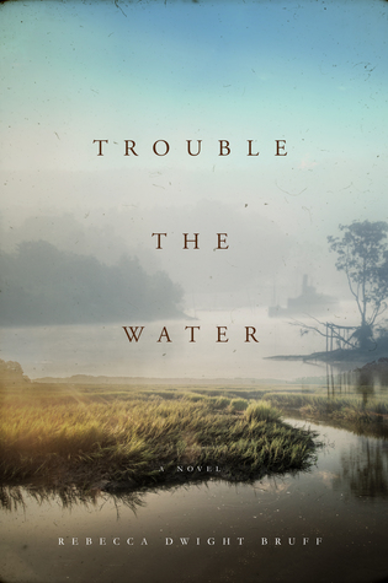
    The 202 Best Book Grand Prize Badge for Trouble the Water by Rebecca Dwight BruffRobert Smalls’ life should have been one for the history books.

    Smalls was born a slave in Beaufort, South Carolina, in 1839. When the first shots of the Civil War were fired upon Fort Sumter, Smalls was an experienced helmsman aboard a small cargo ship plying the coastal waters of South Carolina and the neighboring states. Once the war broke out, he found himself working to support a cause that kept him, his wife, and their children locked in chattel slavery.

    But in a daring escapade that fell somewhere between a raid and a rescue, Smalls planned, with the help of his fellow crew members (also slaves) aboard the CSS Planter, to abscond with the ship, its cargo of munitions taken from Fort Sumter, and bring their families. The plan was to sail the ship as though its white officers were still on board, pretending to be carrying out their orders—at least until the ship was out of the reach of Fort Sumter’s guns.

    If they failed to fool the Confederate batteries as they passed by in the night, the crew planned to set fire to the munitions in the hold rather than return to slavery. If they didn’t manage to strike down the Rebel colors and raise a white flag of surrender before they reached the Union blockade of the harbor, they’d be killed.

    But no price was too high to pay for the hope of freedom.

    This is the story of Smalls’ life from his childhood enslaved to Henry McKee through his hiring out in Charleston to his well-planned, well-executed and incredibly lucky escape, told in this fictionalized autobiography as if seen through the eyes of Robert Smalls himself.

    The reader is inside the protagonist’s own thoughts and feelings as he grows from a childhood of slavery under the watchful eyes of his mother to learn at a very young age that the world in which he lives is designed to keep him in a cage. The unfairness of his world is in the very air that everyone around him breathes. To the point where those who benefit from that unfairness don’t even recognize that they are perpetuating the problem—no matter how good or how righteous or God-fearing they believe they are.

    The lessons are hammered home as Smalls grows up to be a man who can never chart the course of his own destiny or make his own decisions—until he takes that destiny in his own hands at the wheel of that ship.

    Smalls’ well-planned escape is the pivotal point of this true story. That desperate night makes for gripping, edge-of-the-seat reading as the small ship and its anxious crew, along with their praying families, ride the edge between hope and terror for a chance at freedom—no matter the cost.

    But the heart and soul of the story are in the hero’s journey from a childhood as he grasped the cruel institution of slavery through growing consciousness of his precarious place in a world set against him. It’s not just that the reader is able to walk with him, but in this first person perspective his thoughts are laid bare and the reader can feel him reach for his own truth – and his own answers. Rebecca Dwight Bruff wrote a timely and brilliant debut novel that captures the lion-hearted Congressman Robert Smalls who continued to push boundaries for the political rights of African Americans.

    Trouble the Water is an inspiring story of courage and grace under fire in its many forms. It rings with a voice of heroism along with thoughtfulness and sincerity. Stories matter.

    Trouble the Water won the Chanticleer Int’l Book Awards Overall Grand Prize for 2020. 

    5 Stars! Best Book Chanticleer Book Reviews

  • SAXON HEROINES: A Northumbrian Novel (Women of Determination and Courage, Book 3) by Sandra Wagner-Wright – Medieval Historical Biographies,

    Sandra Wagner-Wright’s Saxon Heroines is a three-part historical fiction work that transports readers to seventh century Northumbria, exploring the lives of several women and their important title roles in recorded history. Here she uncovers the powerful influence of queens over kings, their relationships with sons and daughters, the movement of Christianity across the region, and the significant role of abbesses and their religious holds throughout the land.

    Whether Queen Ethelberga intent on converting her husband King Edwin to Christianity; her daughter, Enfleda, who must accept marriage to King Oswy; or granddaughter, Elfleda, who will be trained to become an abbess, following in the footsteps of Hildeburg, the king’s niece; such women, capable of negotiating a united church between royalty and religious leaders, prove decisive and dedicated contributors to a traditionally male-dominated society. Wagner-Wright gives each woman a voice in important matters.

    In the audio version, Deepti Gupta’s mildly accented narration sets the stage for an ancient, medieval storyline capturing a particular time frame (624 – 706 AD). Her diction is well-suited to the material in a mixture of quiet tones and firm directives.

    In a chronological format, events of the day are intricately detailed. Against a landscape where Anglo Saxon states attempt to assert dominance and gain power, listeners will absorb and visualize the likes of plans against the enemy, illustrious banquet halls, wedding celebrations, marital beds, the use of a birthing chair, baptisms, battles, and death.

    While the narration informs us of character changes, and vocal inflections help distinguish the individuals, these can sometimes be a bit too subtle. Some listeners may be challenged with key character names, which are pretty similar. This often occurs within a family lineage, thus making it particularly hard to distinguish within the realm of a generational saga. Name pronunciation, itself, can also prove a tricky.

    As chapters play out in a timely fashion, the title notations provide the year and the focal event happening within that time frame.

    While listening time is nearly 8 hours (7 hours and 57 minutes), pausing throughout the narrative will help listeners absorb the information, allowing them a chance to recognize and place characters within the context of the story. Wagner-Wright’s final notes include facts about the characters and subsequent eighth-century events in Northumbria. An initial visual reference chart of names, places, and dates that a listener could access on their device would be of tremendous use.

    Saxon Heroines audiobook will greatly appeal to those who enjoy the medieval history of the mid to late seventh century, including its religious conflicts, and particularly those interested in the role of critical female figures involved in the spreading of Christianity. While primarily research-based, Wagner-Wright aptly weaves human interest elements into the story and laces the narrative with descriptive characteristics that color and bring life to these inspiring heroines in history.

    Sandra Wagner-Wright is an impressive historian who brings these forgotten women into the 21st-century limelight. For those who wish to read the book along with the audiobook, follow this link to our review of Saxon Heroines.


    Chanticleer Book Reviews 4 star silver foil book sticker

  • FORTUNE’S CHILD: A Novel of Empress Theodora by James Conroyd Martin – Ancient History Fiction, Middle Eastern Literature, Biographical Fiction

    FORTUNE’S CHILD: A Novel of Empress Theodora by James Conroyd Martin – Ancient History Fiction, Middle Eastern Literature, Biographical Fiction

    2019 Best Book Grand Prize Blue and Gold BadgeJames Conroyd Martin brings to life one woman we should all know better in his multi-award-winning, epic novel, Fortune’s Child: A Novel of Empress Theodora. 

    Like Cleopatra, Empress Theodora was a legend in her own time. And also, like Queen Cleopatra before her, Empress Theodora’s life and accomplishments were distorted and maligned by the male historians of her own time. Even after death, men who couldn’t bear or couldn’t believe that a woman, particularly a woman of the lower classes as Theodora was, could possibly have accomplished the things she did or wield the power she had.

    Fortune’s Child, the first book of a projected duology, Theodora, near death, determines to leave behind an accurate chronicle of her life and work. She’s desperate to get a step ahead of the official biography already being written by a man who hates her, everything she came from, and everything she stands for.

    What’s an empress to do? 

    As Claudius does in Robert Graves’ landmark I, Claudius, Theodora intends to tell her own story before it is too late. A terrible cancer that will eventually claim her life significantly weakens Theodora. She lacks the strength to write the biography herself. So she commissions an old friend, the scribe, historian, and palace eunuch Stephen, to write it for her. 

    After all, he was there for a great deal of it. So much of it, in fact, that Theodora placed him into prison to keep him quiet about it all and has now released him to have him set the record straight.

    An empress in the making.

    As Theodora tells Stephen details of her past, both before they met and after, the reader experiences her hardscrabble childhood. One comes to understand that before all else, Theodora was a survivor. 

    Everything she did, every decision made, every hard path she took, points to a woman who wanted to survive. In the truest form of survival, Theodora wanted to make a better life for herself, and if possible, for the women who came after her.

    James Conroyd Martin masterfully brings the 6th century Eastern Empire to life. From Africa to the Levant to the glittering gem of Constantinople, the reader sees the sprawling successor to the Roman Empire through the eyes of a woman whose story began at the bottom as an actress and a prostitute. Despite the humble background, the Empress determines to rise to the top by any – and every – means available to her.

    Empress Theodora’s story will resonate with modern readers.

    The determination to make a far better life for herself, based on her own gifts and on her own, Theodora’s proto-feminism makes her an easy character for contemporary readers to identify with as she rises to dizzying heights and unprecedented power. As she discovers loyal friends and makes desperate enemies on all sides.

    The facts and figures of Martin’s masterpiece are not hidden. They are for all to uncover. Theodora’s life and accomplishments are not nearly well enough known. The adventure, the danger, the drama, and the glitter swallow readers whole into this recreation of a world that is long gone and an empress who should be better remembered.

    Fortune’s Child is a brilliant historical biography rendered in full color, vibrantly animated by its author, James Conroyd Martin. Theodora’s life story is so significant, in fact, that it will take more than one volume to tell all there is to tell. And that is simply glorious. 

    James Conroyd Martin won the Overall Grand Prize in the 2019 CIBA Awards, the Best Book of the Year, for Fortune’s Child: A Novel of Empress Theodora.  


    5 Star Best Book Chanticleer Reviews round silver sticker

  • PELSAERT’S NIGHTMARE by Gregory Warwick Hansen – Maritime Historical Fiction, Mutiny & Shipwrecks, Biographical Historical Fiction

    PELSAERT’S NIGHTMARE by Gregory Warwick Hansen – Maritime Historical Fiction, Mutiny & Shipwrecks, Biographical Historical Fiction

    To fully understand this rich immersive novel about a 17th Century mutiny and its murderous aftermath – a prime candidate for a “crime-of-the-century” label – it’s best to understand the true story of what happened in 1629 off the coast of what is now Indonesia.

    The Batavia was a treasure-laden fleet ship of the powerful Dutch East India Company, the global Amazon of its time, with more than 300 men, women, and children on board. But the Batavia’s fate was sealed by a greedy captain and a mysterious pharmacist who hijacked the ship for its booty and crashed it on a speck of an island off the Australian coast.

    When survivors of the shipwreck landed, Jeronimus Cornelisz the pharmacist, and his followers were said to have murdered upward of 100 of them. Historians believe that some were brainwashed to kill one another, take women survivors as sex slaves, and slaughter several children. Some individuals place Cornelisz in the same evil company as serial killers Charles Manson, Ted Bundy, and Jeffrey Dahmer.

    The most complete historical record of the massacre came from Francisco Pelsaert, the Company’s senior representative on board the wrecked ship. His diary, written shortly after the Batavia tragedy occurred, is the basis for this novel.

    We are taken deep into Pelsaert’s story who is dying as the book opens. We get to know him as a Company man, no less dedicated to commerce than any globe-traveling corporate soldier of our own times. But as the story of the Batavia unfolds, we also see the politics of the era, an understanding of the competing political forces in the 1600s ransacking the world for treasure and spices – the Dutch, Spanish, and English – entities no less complicated but far more vicious and venal than today’s international trade warriors. The truth be told, these times were hellish. Deaths, almost unimaginable tortures, and barbarism were rampant in this era, and the novel spares the reader few details of them.

    Even as Pelsaert provides us with a detailed accounting of the Batavia disaster, written in graphic and often profane language, he also stares deeply into his own complex past, jumping in time from past to present and back again. We see how a road warrior of those times thought and acted, as unsparing of himself as he is of his contemporaries. You may not ultimately like the Company man, but he will treat you to a reading experience of a world both far removed from our own and yet sadly familiar.

    Pelsaert’s Nightmare won First-Place in the CIBAs 2018 Chaucer Book Award for pre-1750s historical fiction.

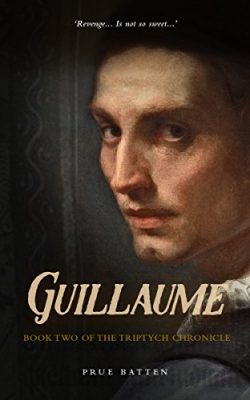
  • GUILLAUME (The Triptych Chronicle, Book Two) by Prue Batten – Biographical Fiction, Medieval France Geopolitics, Literary

    GUILLAUME (The Triptych Chronicle, Book Two) by Prue Batten – Biographical Fiction, Medieval France Geopolitics, Literary


    Welcome to Lyon, France, circa 1193. Battle-hardened veterans, returned from the Third Crusade, serve as loyal guards and spies for wealthy merchants. Some have crossed into the world of the bourgeoisie.

    Across Europe, monarchs are restless, the Church is ruthless, and trade is flourishing, bringing in rare, sought-after commodities from faraway markets, and fueling cutthroat competition in the burgeoning economy.

    In Guillaume: Book Two of The Triptych Chronicle, Prue Batten reimagines the life of one such upwardly mobile trader/merchant who lives in this socio-political chrysalis and is unwittingly caught up in issues and events that will change the future.

    Guillaume de Gisborne is an archer recently returned from the Third Crusade. He helps manage de Clochard, a small textile house struggling to survive after the death of its founder. When an arson fire threatens the property and merchandise of this already struggling business, Guillaume keeps watch over the premises and the prized, purple-dyed, velvet and fine wool fabric from Al-Andalus that is slated to go to the Holy Roman Emperor. During the night, he is attacked by strangers who are searching for something on the property.

    Subsequently, Guillaume learns that a copy of the heretical Vaudès Bible, which the Church wants to destroy, may very well be hidden somewhere on the de Clochard premises. This is, perhaps, what the assailants were seeking.

    Guillaume, assisted by Ariella Ben Simon, the beautiful Jewish daughter of a textile merchant in Venezia, and several of Sir Guy of Gisborne’s most trusted guards, seeks to find the book hoping to save it and return it to its rightful owners, the Poor Men of Lyon, proponents of the Vaudès’ dogma.

    While working together, Guillaume and Ariella learn to understand, rely upon, and eventually love one another. They begin to plan their future—but Destiny has something else in mind.

    After getting through the prologue and a long, (9,293 word) first chapter, the pace never slows. The amount and complexity of information included in chapter one may seem overwhelming, but the reward of gaining powerful knowledge that will enable the reader to relate to and understand Guillaume’s world is simply indispensable.

    Overall, Batten’s rich sensory imagery, engaging characters, and authentic voice, combined with meticulous research and attention to detail add depth and dimension to a cleverly crafted, multi-layered plot. The writing is both gritty and lyrical, creating a moving, memorable story.

    But wait! There’s more! Batten’s research notes at the end of the book are an absolute gift for history buffs and historical fiction fans.

    Guillaume (The Triptych Chronicle, Book Two) by Prue Batten won 1st Place in the CIBA 2017 Chaucer Awards for Early Historical Fiction.