Tag: Best Books

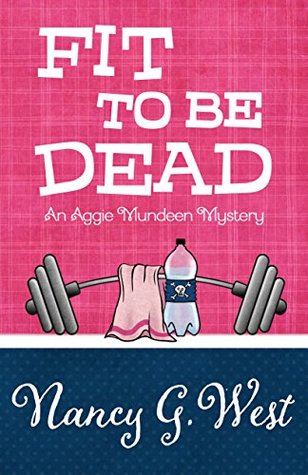
  • Fit to be Dead by Nancy West – Cozy Mystery for clue fans

    Fit to be Dead by Nancy West – Cozy Mystery for clue fans

    Aggie is the author of the “Stay Young with Aggie” column and today she decides to follow her own advice. After all, she’s well over 30, admits to a few extra pounds, and looks ahead to growing old with sheer fear. She pulls into the Fit and Firm Fitness Center with the thought that she might be able to improve her social life along with her figure. Once inside, she receives a guest pass and another kind of pass – from a gorgeous blond who introduces himself as Pete Reeves and offers her a tour of the club. She declines the latter and heads for the locker room.

    As she enters the swimming area, however, she spots something strange at the far end of the pool. It’s a body. And it isn’t moving! Aggie rushes to the rescue and not a minute too soon. Her yell for help brings instructor Sarah Savoy to revive the young woman, Holly. To their combined horror, the women spot an electric cord snaking across the pool. Hard to say what would have happened to Holly first – drowning or electrocution – if Aggie hadn’t been there. Was it an accident or…? Such questions always make Aggie’s feet itch.

    The next day at the gym Holly confesses to Aggie that she had recently given her newborn baby girl—born out of wedlock—to an adoption agency. Trying to swallow her concern and sorrow, Aggie goes to the locker room to shower and dress. But soon she’s hearing screams. She rushes outside just as the medics arrive. Aggie knows two things: it’s Holly and she’s dead.

    Aggie decides she owes it to Holly to find out what happened. She’s certain that the hit and run was a second—this time successful—attempt on Holly’s life. But questions remain: Who? Why? As the column writer becomes sleuth, her spunk and determination return, along with her unique madcap approach to life.

    As Nancy West finished her award-winning Nine Days to Evil (2012), something about one of the supporting characters, Aggie Mundeen, wouldn’t let her rest. This character seemed to demand that West make her the protagonist of a new book. Thus, Fit to Be Dead was created!

    West crafts her characters with considerable expertise and an extensive vocabulary. West knows how to turn a phrase and how to keep you turning the pages. Additionally, this author has the keen knack of slyly tucking in clues so that they slip past readers at first, then pop up later. Thank you, Nancy West for crafting the Aggie Mundeen mysteries!

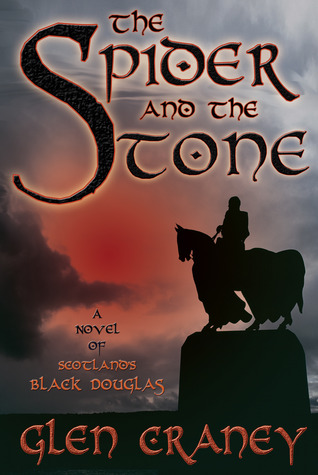
  • The Spider and the Stone: A Novel of Scotland’s Black Douglas by Glen Craney – Historical Fiction/Scottish War of Independence

    The Spider and the Stone: A Novel of Scotland’s Black Douglas by Glen Craney – Historical Fiction/Scottish War of Independence

    Steeped in the early struggles for Scottish independence, Glen Craney’s The Spider and the Stone combines fact, folklore, and imagination to recreate the life of one of the country’s most storied heroes, James Douglas.

    As a young teenager, James was confronted with the barbaric cruelty of the English occupiers. King Edward, known as Longshanks, would stop at nothing to quell Scottish rebellion—humiliating, torturing, and slaughtering innocent civilians along with Scottish combatants striving for the freedom and the right to rule themselves.

    Just as he begins to grapple with the reality of his country’s plight, he meets and falls in love with a girl named Isabelle Macduff and determines to win her, despite the fact that she is promised in marriage to a rival of the Douglas clan.

    The book opens in the middle of scenes depicting the exploits 0f William Wallace – Braveheart, followed by a heartbreaking loss to Longshanks at Falkirk, ending with the gruesome murder of Wallace.

    Cue the return of James, who is back from France where he learned the art of war from the Knights Templar and is ready to fight. He and Robert the Bruce step into the breach and continue the assault on the English invaders.This is the stuff legends are made of, and Glen Craney does an excellent job bringing the tale to life. Written in lush prose with battle’s gore informed by the historical record and a scattering of erotic scenes with the decorum appropriate to the times, Craney’s offering keeps the reader solidly immersed in the late 1300s-early 1400s. He deftly crafts the coldness of the castles and the warmth of campfires sprinkled with colloquialisms redolent of the time and place.

    Craney admits having taken some liberties with the known facts, which are few, about the Scottish Wars of Independence and the major players; he has matched Isabelle with James, for example, though others have postulated an affair between her and The Bruce.

    The book’s title references two important elements of Scottish lore: the Stone of Scone, a necessity for the crowning of monarchs and sometimes said to be the Biblical Jacob’s Pillow; and the “spider” whose industry and apparent refusal to stop spinning her web no matter what obstacles she encountered so impressed and inspired Bruce (and in this version, James also) while in captivity.

    Craney’s attention to detail in both high concepts and simple conversations, make history come alive.

    “Cinematically enthralling and historically compelling, Glen Craney’s The Spider and the Stone is a must read for lovers of James Douglas, the fight for Scottish Independence, Braveheart, or Robert the Bruce.” – Chanticleer Reviews

  • A River Divides by Michael J. Roueche – Historical Fiction/Civil War

    A River Divides by Michael J. Roueche – Historical Fiction/Civil War

    Like the first book in Beyond the Woods Series, the second, A River Divides, offers a complex view into life during the Civil War era. This multifaceted book has the same engaging characters found in the first and includes a few new ones, that when combined, will keep readers riveted to the pages.

    The story resumes in winter of 1864, where Betsy Henderson remains outside Staunton, Virginia with a freshly bruised face, worrying whether she’s revealed too much. Will the sheriff find out about her affair with Union soldier Hank? Does the sheriff have enough evidence to capture Walthorpe, the man who gave her the bruise and nearly made away with her fortune? Walthorpe, meanwhile, has another plan up his sleeve, one that will force Betsy to grapple with her southern loyalties, including the secret she’s keeping from Hank—one she won’t be able to hide for long.

    Author Michael J. Roueche does a great job introducing esoteric terms while giving them proper context, thereby helping present-day readers immerse themselves in the historical tapestry he’s created. All the characters in this story demonstrate authentic shades of good and bad, making their choices (and their consequences) even more intriguing. Especially William, the former slave from Betsy’s plantation, whose bond with a new family makes his objective of joining the Union Army a lot more complicated.

    Reading the first in the series isn’t required here but doing so will certainly enhance the experience. Roueche’s ability to sprinkle in enough detail to keep the interest of readers of Beyond the Wood while enticing those who are yet to pick through its pages makes this bittersweet story more than palatable. The sheriff’s point-of-view not only enlightens new readers to the necessary backstory found in the first book but also offers some surprises along the way. Readers will also get a glimpse into Walthorpe’s past and gain insight into his character that will suggest his villainy isn’t as cut-and-dried as it originally appears.

    Roueche writes each character’s voice so distinctly that the reader may not notice the point-of-view shifts within the scenes, a small, but present, distraction. On the whole, Roueche’s beautifully written imagery and ability to immerse readers in place and time will delight and hook readers from the very beginning to the very end.

    By the close of A River Divides, it’s clear that a river divides no more. And the cliffhanger in the final chapter will whet readers’ appetites for the next book in the series.

  • Ghost Horse by Thomas McNeely – Literary Fiction

    Ghost Horse by Thomas McNeely – Literary Fiction

    With a firm sense of place and time, Thomas McNeely creates a tableau of class and race segregation juxtaposed with the frailty of youth: One young boy exists in the tormenting forces of his own personal hurricane of a broken family and a broken society that throws him down and swirls him around without regard to their tragic effect on him.

    Eleven-year-old Buddy Turner’s understanding of what it means to be normal hangs in the balance. He’s facing the trials of growing up and a family unit in shambles and his whole world is about to change. It’s the 1970s, Houston, and most kids don’t expect to be thrown into the nasty realities of a broken home. However, this is Buddy’s reality in Thomas McNeely’s debut novel, Ghost Horse.

    Buddy’s mother spends much of her time working in a hospital laboratory while his absentee father comes back to town leaving Buddy with a fresh set of empty promises and his mother with a request for a divorce.

    Buddy’s only escape is working on an animated film with his best friend, Alex Torres. Together, the boys create a film about a ghost horse. Entering into the work helps Buddy avoid the painful realities at home and serves as a buffer for his heartache. Indeed, the movie the boys create is a metaphor for the upheaval Buddy is experiencing in the real world.

    McNeely expertly weaves an intricate and darkly complex story of a boy trying to gain a foothold in a world–a raw, and sometimes, painful coming-of-age story. The book took ten years to pen through the author’s own turbulent waters and his father’s untimely death and at points the reader can see his internal battle emerging in his writing in this heart-rending coming-of-age tale set in the turbulent  1970s.

    In the broader spectrum of the novel, McNeely unleashes his questions about class and racial prejudices, and how adult behavior informs children who are expected to follow suit. Ultimately, however, McNeely’s storytelling is rich with texture and the soulful portrayal of a lost boy, who is un-moored by those whom should care for him the most. Ghost Horse has the weighted emotional cache and heartfelt pertinence that enables the tale to tug at the reader for a very long time.

    5 Star Best Book Chanticleer Reviews round silver sticker

  • Sati and the Rider by Winslow Eliot – Cozy Mystery/Woman Sleuth

    Sati and the Rider by Winslow Eliot – Cozy Mystery/Woman Sleuth

    Do you need a little mystery in your life? It may be in your cards with Winslow Eliot’s new book, Sati and the Rider!

    Just when she thinks she’s lost her juju, Satyana, the heroine of Winslow Eliot’s new mystery series, finds it in a most unexpected way.

    Satyana and the Rider opens with Satyana – just Satyana – a fortune teller, coming to grips with the possibility that she has lost her ability to tell fortunes. After a horrendous loss, misdirection, and failed attempts to rescue a child, she has packed her bags and moved into a brownstone smack dab in the center of a posh neighborhood in New York City. How does she afford the home? A wealthy client willed it to her when she died.

    But with no money to speak of, no clients lining up on her steps, and grappling with her gift that seemingly has flown the coop, Satyana is lonely and depressed – until a sexy young delivery man slips on her stairs and fractures his ankle.

    Cue motherly instincts – or a keen sense of responsibility – or an instant attraction – cue whatever you like, Sati (Satyana) is bound to care for the hapless delivery man, Percy is his name, until he can to walk up the five flights of stairs to his apartment across town… which, you know, he never does!

    This is the set-up for Winslow Eliot’s first book in the Satyana Mystery Series. A cozy, fast-paced, fun read, Eliot has set the stage for future adventures. Is it perfect? Not quite. There are some continuity issues, but not enough to stop a reader cold. The author, a card reader herself, utilizes the troupe of cards in her title and throughout the book. Here, the Rider indicates the following: News, a delivery, a young man, perhaps a lover. A new person or situation entering your life. A visit. A horse, a car, or other means of transportation. Opportunity. Things moving quickly. A vibrant social life. Elegance. Energy. Comings and goings. 9 of Hearts: a wish fulfilled. Timing: Soon, in a day, next week, in January.

    The above description is mentioned at the beginning of the book and skillfully woven in throughout the work. Ultimately, Sati and the Rider is well-written and engaging. A perfect escape from reality for readers of the cozy mystery genre.

  • Fire Call! Sounding the Alarm to Save Our Vanishing Volunteers by George De Vault – Memoir/Fire Science

    Fire Call! Sounding the Alarm to Save Our Vanishing Volunteers by George De Vault – Memoir/Fire Science

    In his first job as a newspaper reporter, DeVault attended many emergencies – and firefighters were always on the scene. Gradually he discovered that the vast majority of America’s firefighters are volunteers, often leaving their regular jobs by prearrangement or rushing out from home in the middle of the night to respond to every conceivable crisis, from a simple kitchen fire to a multi-car crash to the cataclysmic events of 9-11-01.

    With the encouragement of empathetic wife Melanie, also a reporter, De Vault joined the firefighting ranks as a volunteer in Emmaus, Pennsylvania, while fully immersed in his journalistic career with Rodale Inc. He answered every call, about 5,000 over a thirty year period, no matter what else was going on in his life – even on a day when Melanie was in the hospital dealing with her own emergency.

    He describes such harrowing experiences as realizing that the blazing floor he was standing on was about to collapse, to loading corpses into body bags after the mid-air crash of two small planes, to rescuing many traumatized victims, their children, and their pets from burning homes. One of the more memorable and terrifying incidents described did not involve fire: the author was called upon to pull out a man stuck in a pond drain, battling pressure that threatened to suck him and the man he was rescuing into watery oblivion. Some events involved animals, notably the blaze in a pet store where volunteer firefighters gave mouth-to-mouth resuscitation, chest compressions, and oxygen to puppies and a chimpanzee.

    DeVault, most recently the local Fire Chief and an eco-conscious family farmer, uses this action-packed memoir to make us aware that if a fire or other disaster should strike our home or place of work, the people who rush to our rescue will almost certainly be volunteers. They will have gone through exceedingly rigorously training, including chopping a log with a 14-pound sledgehammer, carrying a fifty-pound weight 400 feet, and “wrestling a 100-pound rescue dummy out a second-floor window and down a ladder by yourself, while wearing bunker gear and an air pack.”

    Unfortunately, it has become nearly impossible to attract young people into this work that involves great personal sacrifice; many of our first responder volunteers now are over 50.  DeVault hits us with the facts: every 23 seconds, there’s a fire call somewhere in our country, or about 1.6 million calls a year. He lists at least 16 jobs that we can perform voluntarily to assist the firefighters in their valiant and valuable efforts, from grant writer to cook to performing the duties of a chaplain. Or, he suggests, “write a bigger check the next time your fire department has a fundraising drive.”

    George DeVault is a former reporter/writer who has turned his volunteering into a full-time job and now, a one-man crusade to fire up national interest in our firefighters – who they are, what they do, and why they merit our support. Readers will be thrilled, and at times chilled, by this up-close view of the sacrifice, guts, and skill displayed on an everyday basis by volunteer firefighters who perform their duties with no thought of recognition or reward. Professionally composed, fast-paced and thought-provoking, Fire Call! has already garnered the Charles A. “Chet” Henry Fire Service Advocacy Award in recognition of the book’s important message.

  • A SEASON for KILLING BLONDES by Joanne Guidoccio – Cozy Mystery

    A SEASON for KILLING BLONDES by Joanne Guidoccio – Cozy Mystery

    Gilda has been absent from her hometown for 30 years, and when she returns with a pocket full of cash (19 million from a lottery win), she opens up a business. Everything is ready for the opening night – except the dead blonde in the dumpster out back wasn’t part of the plan. What’s worse, that dead blonde was Gilda’s first client! This is just the start – dead blondes seem to drop everywhere Gilda goes!

    In A Season for Killing Blondes, author Joanne Guidoccio introduces a bevy of Italian friends and relatives who are loving, clever, talented, overbearing, overprotective, erratic, abusive, etc., and who try to “help” Gilda manage her life, whether she wants their input or not. Some of the characters have double names—think of The Waltons 2.0—that in combination with some cousins, a few Aunts, and an Uncle, may initially seem confusing, but the author handles it with a deft touch. The names and behaviors add depth, texture, and suspects to the story.

    When lead detective, Carlo Fantin, comes onto the scene with a lot of pressure from the city to solve the crimes, he’s all business until he realizes that he knows Gilda from high school…30 years ago.  On the plus side, she accepts his dinner invitation to reconnect. On the negative, she’s a prime suspect who has a huge problem with alibis.

    But honestly, who wouldn’t love a relative willing to create a handy alibi on the fly?

    “Relax, Gilda. You’re not going to jail. I provided you with an alibi for last night. All those times that Roberto and I rehearsed worked.” Sofia (her mother) glanced over at me. “Aren’t you pleased? You’ve said very little since we left the station.” 

    or how about this:

    “I called Detective Fantin and left a message on his machine,” Uncle Paolo said. “When he calls back, I’ll make sure that he knows you and Sofia were with us Saturday night.”

    Talk about a support network.

    A Season for Killing Blondes is well crafted with solid character and setting descriptions that do not get in the way of pacing. For those readers who enjoy a good humorous mystery and whodunit, along with Italian food, Guidoccio’s cozy does not disappoint. Clues, hints, and some foreshadowing are mixed in with a few curve balls (and meatballs) that keep you guessing until the end.

  • Age of Order by Julian North – YA Dystopian SciFi

    Age of Order by Julian North – YA Dystopian SciFi

    In the not too distant future, one girl races to save the ones she loves in Julian North’s Age of Order.

    Daniela Machado, a young Latina from Bronx City, is smart and successfully athletic – especially on the track – but she has more than a few secrets.  She’s learned to be very protective of herself and those she cares about, her blood, in an environment where others frequently die. Aba, her grandmother, and her older brother Mateo, along with her sister of choice, Kortilla, are the only ones she fully trusts.

    Daniela knows something must be behind the sudden offer she receives to attend a very prestigious and selective school in another part of the Five Cities, and she’s reluctant to accept. Attending the new school and leaving Kortilla behind, however, may be the only chance Daniela has to save Mateo’s life.

    In this school environment, North skillfully weaves in multiple references to other dystopian works frequently taught in high school. The reader will be reminded of Orwell, Huxley, and William Golding, as Daniela reads them for class. Something else becomes abundantly clear: Daniela and most of her classmates don’t get along.

    It’s more than just a question of money and social standing, though. It’s genetics.

    Set in the near future of the United States, the action is often thrilling, complete with high-tech rivalries, partisan politics, chase scenes, and class conflicts. While most of the major characters are teens, North’s insights into their thoughts and feelings can apply to any age, lending an ageless quality to this otherwise clear morality tale. Their conflicts, confusions, and pain are more than any child should have to encounter. But in this world, those lucky enough to survive must grow-up quickly.

    Daniela finds her one solace in running, and she fights her way onto the school track team. No one, not even the school star, can easily beat her when she runs. Daniela, it becomes apparent, has a gift which, after being honed throughout childhood, is now formidable.

    It’s on the track when she feels completely free, even when the competition seems unfairly rigged against her. North does a fine job of writing these athletic scenes and the reader will feel their feet pounding and gasping for breath as Daniela runs against others – and her hidden past.

    As that past comes into conflict with what she is experiencing at school, Daniela and her allies (the other misfits at school) begin to see the true shape of the reality around them. Only through courage and steely resolve will they be able to do what must be done to prevent the genocide those in power have already begun. It’s up to Daniela to find her true self, when she needs it most, to save the people she loves.

    Age of Order is powerfully charged with rich characters and a dynamic storyline. One of the BEST new YA books we’ve reviewed!

  • Love, Loss, and Awakening: (Mis)adventures on the Way Back to Joy by Dennis Freed – Non-Fiction/Memoir

    Love, Loss, and Awakening: (Mis)adventures on the Way Back to Joy by Dennis Freed – Non-Fiction/Memoir

    A heartfelt and profound account of confronting the death of a beloved spouse, Love, Loss, and Awakening combines pathos, humor, and gutsy truth from a survivor’s direct vantage point.

    When Dennis Freed married Hope, they were young. They had two sons, lived in the same house for years, and weathered many crises—until Hope contracted cancer and after several years of struggle, passed away. This is Freed’s frank, heart-rending tale of bereavement and recovery, and as such, it is also a paean to his devotion to Hope.

    As can be seen, even the names are charged with significance. Hope was a person with a positive nature who enjoyed helping others; who was determined to avoid discouragement even as her body was ravaged by disease, and who after her passing seemed able to advise and comfort her grieving spouse. But Dennis knew that in order to be truly “freed” he must, somehow, move on.

    At first, he battled with suicidal ideations, bouncing from despair and loneliness to anger–why did his wife “leave” him? Tormented by memories of Hope, he seized, perhaps prematurely, perhaps to excess, on the notion that other women could save him from his hellish grief state. This wasn’t easy for him because he’d met Hope at age 21 and married her soon after; he had to relearn the art of dating. He took on the search for women like a job. He visited dating websites, studied how to create a profile, and took pictures of himself in various poses and outfits. He had problems with his sexual apparatus and sometimes turned to a certain kind of female to relieve his aches and longings. He experimented with hair removal products to re-image himself for dating.

    Yet, as he remembered Hope, he knew what he wanted: not just a date – but a real partner. He went through all the recommended rituals: writing a letter of apology to Hope and burning it, scattering her ashes, connecting with his old memories and new aspirations through music and meditation, attending focus groups.

    In an especially poignant segment, he describes in vivid detail his wife’s one last tear. At times he even believed he had “seen” Hope, or “heard” her counseling him. But widower Freed finally realized that he had to take life as it came at him, not try to orchestrate the next moves; it was then that he found a new companion, someone he could accept and love fully, without guilt or regret.

    Freed, a developer, construction executive, and part-time university lecturer displays a remarkable gift for creating rich, emotionally tinged prose. Anyone who’s been through, or envisions ever having to go through, even a small part of what Freed experienced, will be moved because his story elicits vividly painful and, ultimately, a broad redemptive spectrum of emotions.

    Too personal to be a how-to manual, Love, Loss, and Awakening is more akin to a vivid portrayal of someone desperately stumbling in the dark desperately fumbling for a light switch, a flashlight, even a match to show the way out despair and hopelessness, and, then after a lot of bumps and scrapes, finally finding what he was seeking–happiness.

    5 Star Best Book Chanticleer Reviews round silver sticker

  • The Breast is History: An Intimate Memoir of Breast Cancer by Bronwyn Hope – Inspirational Non-Fiction

    The Breast is History: An Intimate Memoir of Breast Cancer by Bronwyn Hope – Inspirational Non-Fiction

    A realistic, up-close look at life as a cancer patient and survivor. The Breast Is History is a strong tool of hope and humor in the darkest days of any woman’s life.  

    In September 2011, Bronwyn Hope received her initial diagnosis of breast cancer; by March 2013 she had had both breasts removed, had gone through numerous chemo and radiation treatments, taken thousands of pills, and come out of it with a gritty, positive philosophy.

    When she was first diagnosed, a close friend advised her to start a blog, something very far from her mind at that moment. But, her friend reasoned, she could inspire others with her story. This was not a fanciful idea, given that Bronwyn was and is a powerhouse—an avid athlete, media maven, entrepreneur, activist, mother, and writer. She took her friend’s advice and this book is the result, a sometimes day-by-day journal of her battle with a disease she admits we often think of as a death sentence.

    Through the blog and, one suspects, because of her generally extroverted nature, Bronwyn discovered a very positive aspect of her illness: the immediate outpouring of warmth, good wishes, gifts and visits from a host of friends and family members. But as time passed, and her treatments, especially chemo, took their toll, she records many days of lonely suffering, struggling with nausea, pain in every part of her body, the loss of all body hair, and feelings of profound weakness and despair.  Yet she constantly, remarkably, tries to recoup her pre-cancer strength and endurance.

    A visit to a Catholic church and a later whirlwind trip to India provide spiritual insights. During her own cancer challenge, Bronwyn’s sister Fiona was also diagnosed with cancer. Helping Fiona through what she had already experienced became a sustaining factor for Bronwyn.

    The author does not shy away from tough issues, or from the occasional use of profanity when appropriate. She displays a secure knowledge of many complex medications and their effects and side effects. By detailing how her illness progressed, she provides a guideline for others. Her account is not without humor: she had been a large-breasted woman and had named her breasts Nicky and Paris. Nicky was the first to go, early on, and Paris about two years later. Photographs show the author with her once-straight hair, then hairless (with husband and dog getting a shave in sympathy) and then with the incongruously curly hair that grew in later.

    There will be no doubt as one reads this honest account, that Hope has walked the walk and is also very capable of talking the talk. Her wisdom, based on a long, harrowing experience, is anything but saccharine. She concludes, “I am not angry or depressed or saddened by what cancer has taken away from me. I am instead, empowered and strengthened by what it has given me: lessons that are priceless.”

    5 Star Best Book Chanticleer Reviews round silver sticker