CHANTICLEER 10 QUESTION AUTHOR INTERVIEW SERIES
with Award-Winning Author, Dave Mason
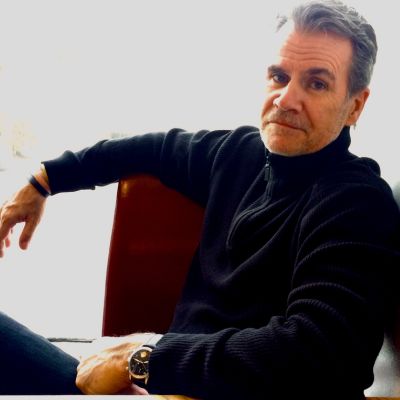
Hello friends, we have another fabulous interview for you today. In 2021, Dave Mason took home the Grand Prize in the Hemingway Awards for his fascinating novel, EO-N. Here, he tells us how EO-N came to be and the subsequent heights it is now reaching! Take a minute or two and get familiar with Dave. You won’t be sorry!
Chanti: Tell us a little about yourself: How did you start writing?
Mason: In my day job, I’m a partner in a strategic design firm, so I write for my clients pretty much every day. For eleven years, my business partners and I hosted Cusp Conference — an annual conference “about the design of everything” — and one of our 2018 presenters suggested writing for fun as a way to reduce stress. I hadn’t written for anything like fun since about third grade, but that somehow made sense at the time, and I just started, mostly on the train to and from downtown, and mostly random stuff at first, but pretty soon my pattern-seeking brain began to put things together (news articles and my own sense of “what if”) and before I knew it, I had what seemed like the beginning of a novel. After sharing with some people who gave the rough manuscript an enthusiastic thumbs up, the damned thing took on a life of its own, and here I am, doing an author interview. Who knew?
Chanti: That’s funny. We knew! When did you realize that you were an author?
Mason: Still not sure that has been internally acknowledged!
Mason’s report card showing his writing chops early on.
Chanti: You’re cracking me up! Let’s talk about genre. What genre best describes your work? And, what led you to write in this genre?
Mason: Historical fiction / mystery? Is that a genre? Both EO-N and the works I have in progress are a little history, a little mystery, and a little contemporary social commentary. Maybe not a typical combination, but it gets me going.
Chanti: YES! Historical Mysteries or Mystery / Historical Fiction is certainl a genre! Owen Parry’s Call Each River Jordan: A Novel of Historical Suspense, Love in the Time of Cholera by Gabriel García Márquez, to name a couple. There are more, trust me. HUGE genre here. Do you find yourself following the rules or do you like to make up your own rules?
Mason: I didn’t realize there were rules. As I said, I never set out to write a novel in the first place. I just wanted some form of relaxation. That didn’t work out too well!
Chanti: You’re killing me. Seriously. Okay, how do you come up with your ideas for a story?
Mason: I’ve been fascinated with history my entire life. I spent my early childhood years in a small village in England, walking to a two-room school through the spooky graveyard of a church built somewhere around the 13th century. I’m the child of parents whose cities were bombed by the Germans, and my father was training to be an RAF pilot when the war ended (lucky for me!). When my family moved to Canada when I was eight, that opened up a whole new world of history to fire my imagination – stories of the Iroquois and Algonquin and Mohawk and coureur de bois were like gold to me. Plus, some archeologists uncovered an entire Roman fort in my little English village just after I moved away! So now I’m drawn to news articles and stories that pertain to newly discovered pieces of history, and I’m also highly aware of current world events and societal trends. So my guess is that my personal worldview + history resulted in EO-N, and is definitely embedded in new work I have on the go.
Chanti: What are you working on now? What can we look forward to seeing next from you?
Mason: I’ve got a couple of things going (Vikings meet Nazis meet NASA, for example), but just like EO-N, I have no idea if they’re any good or not. So as I did with EO-N, I’ll ask my wife if they’re any good (and she’ll say yes) then I’ll ask my siblings for unvarnished feedback (they have no problem providing that!) and will go from there. Both works in progress are in the same vein as my first book — history + mystery + contemporary societal themes, so I’m thinking maybe that’s my thing. Guess I’ll find out.
Chanti: How structured are you in your writing work?
Mason: I write when I feel like writing. And I don’t follow a structure. I recently learned the terms “plotter” and “pantser,” so I’ve tried to figure out which of those I am, and have come to the conclusion that I’m both — a “plantser”? I find I begin with an end in mind, then start, and figure it out along the way, doing all the necessary research and making adjustments as I go. Sometimes I feel as if the characters pretty much tell me what they should do, and I’m just along for the ride. Sort of. I have to admit that as a control freak in real life, it’s pretty cool to be able to create people and have them do crazy things. And kill them.
Chanti: That’s a lot of fun, I do have to admit! How do you approach your writing day?
Mason: With coffee. I like to write early in the morning. Like really early.
Chanti: I get it. When the house is still asleep. What areas in your writing are you most confident in? What advice would you give someone who is struggling in that area?
Mason: I’m not sure I’d say I’m fully confident in any area, but people tell me that my characters are real to them, that my plotting is solid, and that my research is sound. And maybe it’s my visual design background, but the people who ended up acquiring EO-N for film and TV told me they thought the book was “cinematic” — that they could see every scene and element in enough detail to make it real-ish. I have a friend in the live theater business, and he told me once that theater doesn’t happen on the stage, that it happens in the audience’s minds. That’s what I was shooting for with my novel. I didn’t realize it was called worldbuilding until someone used that word, and I googled it! So, my advice? That’s a tough one. The entire storytelling process is complex, and it seems to me you can get 95% of it right and still fail if the 5% takes the reader out of the world you’re trying to put them into temporarily. So it may seem obvious, but get it all as right as you can. Then have a bunch of people whose opinions you trust read it. Then make it even more right. And repeat that until you know you’re done. The grind is part of the fun. And words are a visual medium.
Chanti: I like that. Well said! It’s important to work on your craft. What do you do to grow your author chops?
Mason: I write more, and I listen to the people whose opinions I trust. Lather. Rinse. Repeat.
Chanti: Give us your best marketing tips, what’s worked to sell more books, gain notoriety, and expand your literary footprint.
Mason: I received interest in EO-N from a couple of publishing houses, but when they asked how I was going to market the book I have to admit I was taken aback. I naively assumed that’s what they would do, since I wrote it, my design firm formatted and designed it, and I had connections to editors. In the end, after learning more about the process (I knew nothing) I elected to self-publish. In my day job, I help people market their services and products, so it wasn’t a stretch to take that on. The usual mechanisms — substantial email lists, substantial social media usage (including advertising), and of course, gaining positive recognition in the form of reader reviews and of course awards such as The Hemingway Award (thank you!) are all fuel for the fire. Through those and other more mysterious factors like luck, EO-N ended up being acquired for film and television, which has also spurred interest, and to my continued amazement it has been a bestseller in the US, Canada, the UK, and Australia. My tip is: be good, be noisy, and be visible, because no one cares about your book until they do.
Chanti: Now, that’s what I call a success story! Congratulations to you!Who’s the perfect reader for your book?
Mason: I’m finding that out. EO-N is partly set in WW2, and involves some pretty dark stuff that’s historically accurate. In places it’s pretty action-oriented, and in others it’s pretty emotional. So, it really runs the gamut, and I’m finding out that it appeals to a wide range of people for different reasons. I’ve spoken with readers who are pilots in real life who’ve told me the flying scenes are spot on in terms of the technical stuff and riveting in terms of action. And I’ve spoken with a few book club members who admitted that EO-N was not a book they might have normally picked up, but that the emotional punch of it made them so glad they did. That surprise factor is a wonderful thing to hear.
Chanti: I think that’s what you call a book for just about everyone. Do you ever experience writers block? What do you do to overcome it?
Mason: This isn’t my day job, so I just don’t put that kind of pressure on myself. If it’s there, it’s there. If it isn’t, I’m somewhere else. It’ll happen when it happens.
Chanti: That’s very cool and probably helps a lot. What excites you most about writing?
Mason: I think it’s that I discovered (rediscovered?) something that I really enjoy. And that it actually does the thing that the Cusp Conference speaker said it would do. It relaxes me, while it energizes me. That’s a win-win. And if what I do gives someone a world they can immerse themselves in for a few hours, and they can come back to this one a little better for it, I’m happy.
Chanti: What is the most important thing a reader can do for an author?
Mason: If they enjoy the thing, talk it up! If they don’t, well, we can just keep that between us.
About Dave Mason:
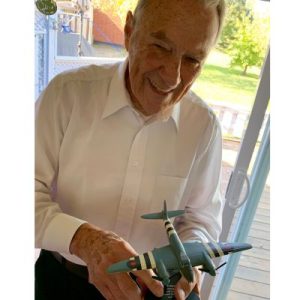
Born in England and raised in Canada, Dave Mason is an internationally recognized graphic designer, a Fellow of The Society of Graphic Designers of Canada, and a co-founder of a number of software companies. He divides his time between Chicago, Illinois and Lunenburg, Nova Scotia. EO-N is his first novel.
CHANTICLEER 10 QUESTION AUTHOR INTERVIEW SERIES
with Award Winning author, E.E. Burke
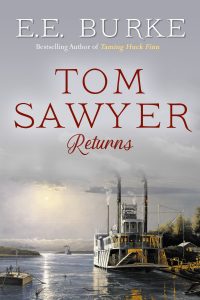
Two of my greatest honors came in succession last year when I won the Laramie Award for Tom Sawyer Returns and was featured by the Mark Twain House & Museum. Both honors were beyond my hopes and they fulfilled a dream. Leigh S. Stites w/a E.E. Burke
I’m excited for you to get to know award-winning author and historical maven, Leigh S. Stites aka (E.E. Burke) read on.
Chanti: Tell us a little about yourself: How did you start writing?
Stites: I’ve been an avid reader from an early age. My mother likes to tell the story of how I went to bed with books instead of my teddy bears. As a journalism major, I wrote for newspapers, and later, in public relations and advertising. Storytelling is my passion, but I didn’t start producing fiction professionally until I was nearly 50. I prefer to call it a midlife metamorphosis rather than a crisis.
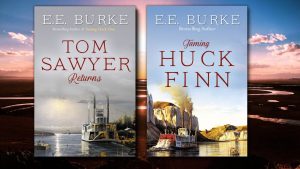
Two of my greatest honors came in succession last year when I won the Laramie Award for Tom Sawyer Returns and was featured by the Mark Twain House & Museum. Both honors were beyond my hopes and they fulfilled a dream.
Chanti: Those are mighty fine honors, indeed! Congratulations! Let’s chat a bit about genre. What genre best describes your work? And, what led you to write in this genre?
Stites: All of my novels have historical settings, primarily the American frontier. I’ve been fascinated with that period since I was in grade school. In fact, my novel Tom Sawyer Returns was born out of a burning need to know what happened to the two boys I read about when I was in seventh grade.
Huck and Tom had grown up, what professions would they have pursued? What great historical events would they get caught up in? What kind of women would they fall in love with? I envisioned a future for them as adults. It took me ten years to finish the two novels (Taming Huck Finn and Tom Sawyer Returns), but I think they represent the type the writing I do best—historical fiction with adventure, romance, and mystery. I recently released the 5th in my Steam! series, which is inspired by stories of the Katy Railroad, as it expanded across the Southwest. If you loved historical classics like James Michner’s Centennial or John Jakes’ North and South, you’ll enjoy this expansive, romantic saga.
Chanti: How do you come up with your ideas for a story?
Stites: From history mostly, and characters I read about, both fictional and real. After I came up with the idea of writing Tom and Huck as adults, I went beyond the facts in Twain’s classics for backstory. I delved into autobiographical elements from his life that inspired much of his fiction. For instance, Samuel Clemens’ adventures as a pilot shaped his love of the river and inspired Huckleberry Finn. Riverboat pilot seemed a perfect choice for Huck’s profession.
I approached Tom’s book in a slightly different way. Tom is the eternal adventurer. In a sense, he will never completely grow up. If he married, the woman he chose would have to stand toe-to-toe with him in courage and have an independent nature, or risk being left behind. Would the original Becky be right for Tom, I wondered. Could calamitous events bring forth her strengths and transform the spoiled girl into an independent woman? Do you see? This is how I come up with story ideas. I find characters, place them in historical situations, and then I ask myself, “What if…?”
Chanti: I swear, asking the “What if…” is a powerful tool in any author’s tool chest! How structured are you in your writing work?
Stites: Probably not as structured as I should be, but this is true of my entire life. As a writer, I worked for years to find a structure that works with my creative process. If there is one thing I’d advise writers, it is this: do not assume you can template someone else’s process and it will work for you in the same way. You can borrow tools, but how you apply them should serve your own unique gifts and proclivities.
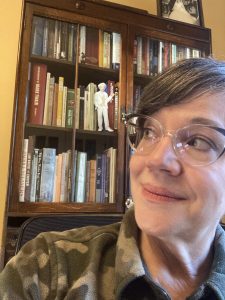
E.E. Burke & Mark Twain!
For example, all those craft books on plotting. There are too many to list, but I’ve probably read them all. For a long time, I felt stupid because I couldn’t follow their structure precisely and come out with a good book. I would veer drunkenly off the path and then experience weeks of despair, as I flayed myself for not being a bright enough pupil to get the lesson right. I finally gave up on being the best student in someone else’s structure and began to insert the most helpful parts into my own messy process. I do the same thing with recipes and drinks. I taste, test, borrow and experiment. Some efforts fail. Others are amazing.
Chanti: I think we are kindred spirits. I could never follow a pattern or a recipe to save my life. Do things turn out? Better than expected! Well, tell us, how do you approach your writing day?
Stites: With at least two cups of coffee under my belt. If I’ve had a good writing day, I end it with a cocktail 😉
Chanti: Now, that’s what I’m talking about!
Readers, did you know? Tom Sawyer Returns is a double finalist in the 2022 M&M AND the Chatelaine Awards? Congratulations – and best of luck moving forward!
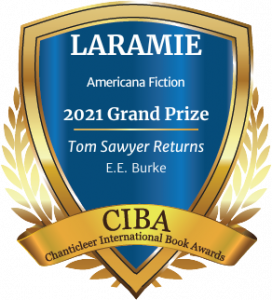
CIBA Multi-Awarded Book!
Give us five of your favorite authors and describe how they influence your work.
Stites: Mark Twain—his brilliance at characterization, his portraits of American culture in the 19th century, and of course, his biting humor. Charlotte and Emily Bronte—their tortured, romantic heroes. Michael Shaara—how to weave historical facts into spellbinding fiction. Charles Fraser—creating a world that does more than serve as a setting. Jill Marie Landis—the importance of emotion and how to convey it. Mary Oliver—observing and writing about nature, poetic language. Ok, I’ll stop at seven if I must. My favorites list is much longer.
Chanti: It’s important to work on your craft. What do you do to grow your author chops?
Stites: Read books by authors whose skills far exceed my own.
Chanti: Excellent! What craft books have helped you the most?
Stites: So many I can’t list them all without exceeding your word count. Scene & Structure by Jack M. Bickham taught me how to write the critical building block for a novel—the scene. GMC: Goal, Motivation & Conflict by Debra Dixon taught me how to keep readers turning the page. The Artist’s Way by Julia Cameron inspired me to pursue my dream of becoming an author. Bird by Bird by Anne LaMott is simply a must-read. My copy of The Art of Fiction by John Gardner was passed on by one of my favorite authors. It is an absolute classic on writing fiction. Pay particular attention to the chapter: Common Errors.
Chanti: Good ones. What are you working on now? What can we look forward to seeing next from you?
Stites: At the moment, I am stretching my Mystery Muscles and working on a Noir novel set in the 1930s in Kansas City, the town that gave birth to Scarface, the Pendergast machine, and modern jazz. I’m in the research process now so it will be a while before the book is written.
Chanti: That sounds exciting! I hope we get to see it in our upcoming CIBAs. Who’s the perfect reader for your book?
Stites: Someone who is historically engaged, with a literary interest, who doesn’t mind the mushy stuff. Put another way, a multi-genre reader with a romantic soul.
Chanti: I love that… What is the most important thing a reader can do for an author?
Stites: Write an honest review. At the very least, recommend a book you like to someone else.
Chanti: That’s so important! Word travels fast these days. What excites you most about writing?
Stites: I get to play God for a few hours a day.
Chanti: There you have it, dear readers! A day in the life of a highly talented, on-fire author. If you would like to reach out and read some of these delightful books, go to her website here and follow the directions.
Join us for the Chanticleer Authors Conference held at the Hotel Bellwether, April 27 – 30, 2023. CAC23 is the proud sponsor and host of the 2022 Chanticleer Int’l Book Awards Banquet and Ceremony that will be held on Saturday evening of the conference.
The excitement builds as the 2022 CIBAs Best Book and Grand Prize Winners are determined and announced at this annual gala event!
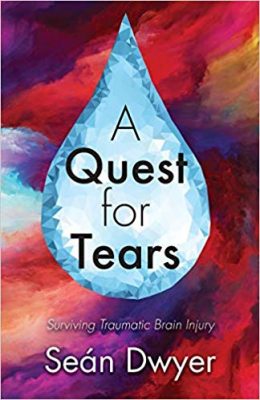
A Quest for Tears by Sean Dwyer is a captivating memoir written four years after the author suffered a Traumatic Brain Injury (TBI) as the result of a rear-end car collision.
While such casualties often foster long-term, unpredictable damage and seem a medical mystery, here Dwyer’s goal is to share his unique roadmap of struggles and experiences, while also advocating for fellow TBI survivors.
At age fifty-four, Dwyer was a college educator, fluent in Spanish, and a creative writer who had authored two novels and a work of nonfiction. A prolific songwriter, he was also blessed with an excellent memory, supportive of the talent of colleagues, and was always able to display his emotions easily. But in the aftermath of his January 29, 2015 accident, life changed.
Initially diagnosed with whiplash, back sprains, a leg wound, and soft-tissue damage to his arm, subsequent tests revealed a concussion and TBI. Now, in addition to dealing with the expected discomfort of his outer physical injuries, Dwyer was forced to navigate the arduous, mired path of debilitations faced by those dealing with head trauma. From a first-person perspective showcasing determination and resilience, Dwyer journeys through a slow, laborious labyrinth towards recovery. With a touch of wit, he applies the moniker
“Sean 2.0” to his injured self, and like a software upgrade, he begins to explore the new cognitive alterations of his brain.
Dwyer now faces life with an extreme sensitivity to light. Also, there is the absence of the familiar “earworm” that once inspired music and stories. His now quiet brain struggles for words has difficulty reading and lost the sense of musical enjoyment. Minimal laughter and a noticeable inability to shed tears lead him to wonder, “Am I going to be an emotional zombie for the rest of my days?”
Dwyer went from being a man with high regard for hygiene and fashion standards to an individual preferring comfortable attire and choosing vibrant novelty socks that delighted his injured brain. Painful head movements during a simple haircut caused him to eliminate the grooming event for two years. This was the new Dwyer.
Dwyer seeks numerous treatments over several months, from physical therapy and acupuncture to neuropsychologists and craniosacral practitioners. During a visit with a priest, he looked for help from the sacrament of healing. Attending conferences with fellow TBI survivors proves an essential part of his recovery, as he learns progress can still occur well beyond the one-year mark of the initial injury. Lightening the intensity of this autobiographical account, Dwyer distinguishes the one-year “smashiversary” of his accident with a celebration at a local Mexican restaurant. Along with a cathartic, hanging car pinata, a gifted plaque featuring the accident photo Dwyer was always quick to produce in conversation, is humorously preserved with the fitting caption “stronger than steel.”
The importance of the much-needed understanding and support he received from his wife and family, the medical community, and a vast tribe of friends, students, and colleagues continues to be imperative in Dwyer’s recovery.
Mock classroom set-ups helped him acclimate to possibilities for teaching, while fellow writers proved compassionate in fueling his need to find new pathways for creative expression. Dwyer weaves poignant moments throughout his story, including an unexpected conversation with a wheelchair-bound boy who inspired him to push through his newfound obstacles. He also highlights the guiding force of his beloved elder feline companion, Sophie, who proved the utmost source of comfort throughout his ordeal.
Written primarily as a resource for TBI survivors, their caregivers, and members of the medical community who often fail to distinguish the difference between intelligence and brain health, Dwyer’s A Quest For Tears is a remarkable achievement. Ultimately it proves a positive affirmation of the human spirit, focusing on the ability to learn and adapt when faced with the unique challenges brought on by sudden brain injury — a powerful and inspiring read.
A Quest for Tears won First Place in the CIBA 2018 Journey Awards for Memoir/Biographical works.

 Hello friends, we have another fabulous interview for you today. In 2021, Dave Mason took home the Grand Prize in the Hemingway Awards for his fascinating novel, EO-N. Here, he tells us how EO-N came to be and the subsequent heights it is now reaching! Take a minute or two and get familiar with Dave. You won’t be sorry!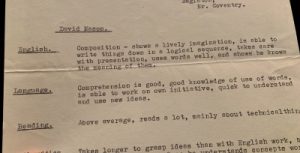

 Born in England and raised in Canada, Dave Mason is an internationally recognized graphic designer, a Fellow of The Society of Graphic Designers of Canada, and a co-founder of a number of software companies. He divides his time between Chicago, Illinois and Lunenburg, Nova Scotia. EO-N is his first novel.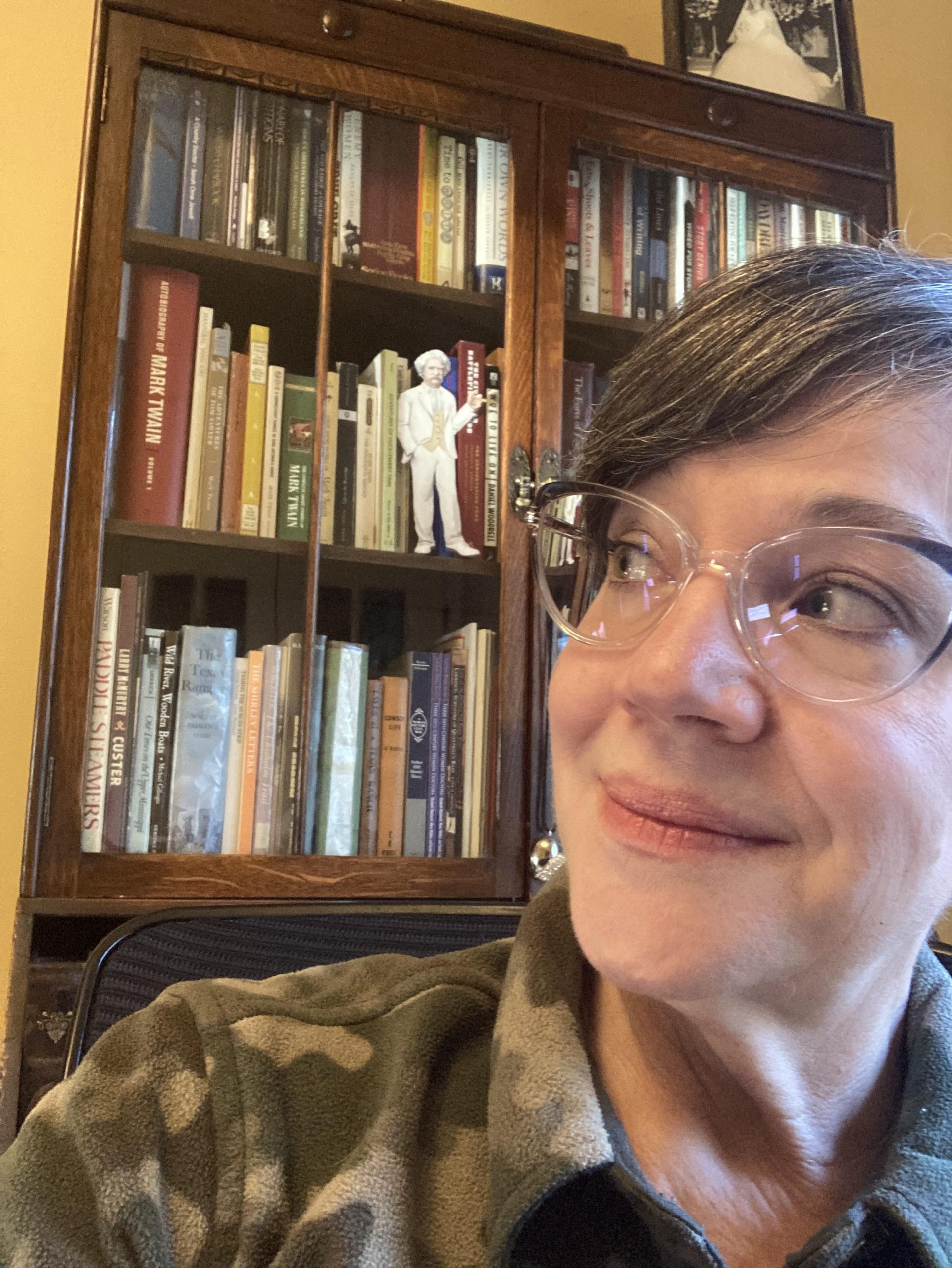
 Congratulations! Let’s chat a bit about genre. What genre best describes your work? And, what led you to write in this genre?