CHANTICLEER AUTHOR 10 QUESTION INTERVIEW SERIES
With Alex Sirotkin
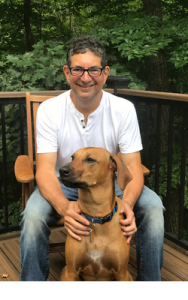
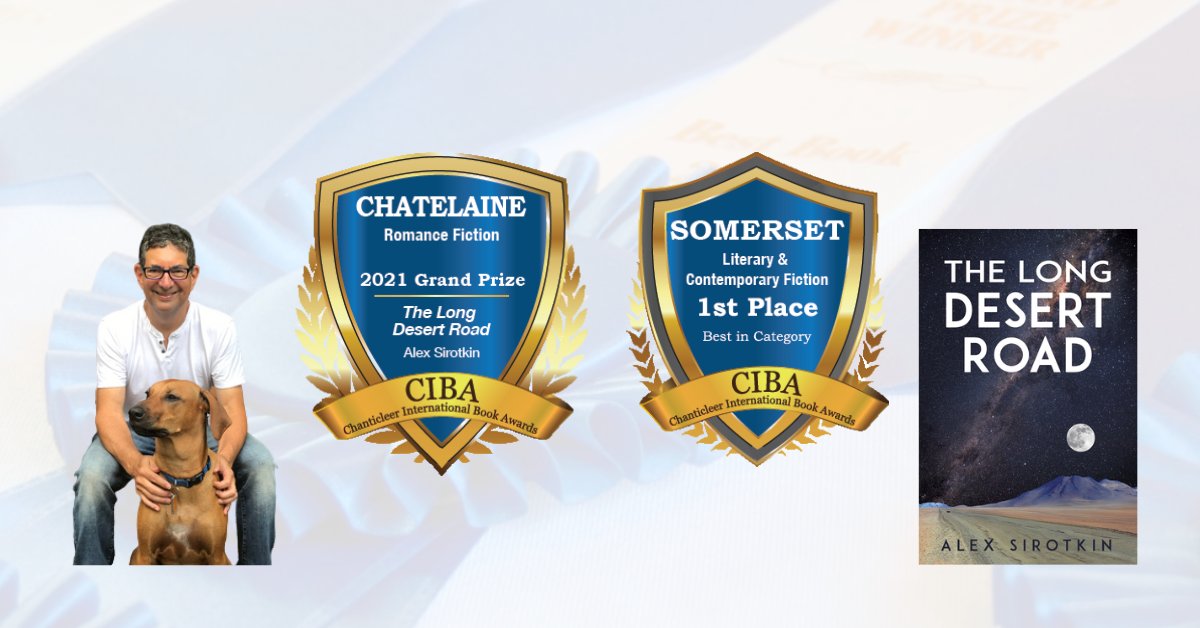
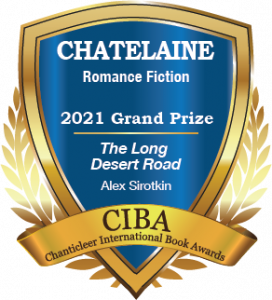
Alex Sirotkin is a kind man with intelligent humor tucked in around the edges. He saves his angst for his writing and his law practice. And, boy, does he ever deliver! The Long Desert Road earned a 5-Star rating from our reviewers and went on to take home the 2021 CHATELAINE GRAND PRIZE! (As far as his law practice, one would do well having him on your side.) We are so proud of him for his outstanding work and being a Chanticleerian. I know you will love him as much as we do. So, without further ado, let me introduce you to award-winning author, Mr. Alex Sirotkin.
Chanti: Tell us a little about yourself: How did you start writing?
Sirotkin: Sure. I’m pretty old. I didn’t start writing until 2016, so that would have made me about 60. At first, I wanted to write a screenplay. I love movies, to be honest, more than books, which maybe makes me a lousy novelist. But, but…at the same time, I find that most movies are terrible! Over the years, I’d walk out of the movie theater and say to myself “Damn, I could have written a much better story than that!” So, I promised myself to try one day. And that I did.
It didn’t take me long to realize that I didn’t know the first thing about writing a screenplay, and the apps that would assist me just seemed too complicated. I had a good idea for a story, so I wrote a book instead. My background is in law – so I can write. But it doesn’t come easily or quickly to me. Sometimes it’s painstaking. Being older, okay old, also provided the time to have many life experiences. You write what you know, and I’ve experienced a whole lot in my life, so I know a lot about which I can write. Conversely, it must be so hard for a young person in his/her twenties to be a fiction writer. For them, everything must be made up!
Finally, I had a particular experience with my daughter that served as the underpinnings for much of the story. You see, she was bipolar and addicted to heroin. I was her primary supporter, mentor, cheerleader, and disciplinarian for the ten years prior to her death from an overdose in October 2020, during the pandemic. It was the most rewarding, uplifting, stupefying, frustrating, busy, and devastating period of my life. Obviously, it ended in disaster, but I wrote the book when she was doing well, when I had a lot of hope. The novel, therefore, is uplifting. I finished the book in January 2020 or so, and she died ten months later. My book was released three months after that. It was quite surreal.
Chanti: That juxtaposition must have felt so strange. I cannot imagine. Thinking of the places you drew inspiration from, let’s talk a bit about genre. What genre best describes your work? And, what led you to write in this genre?
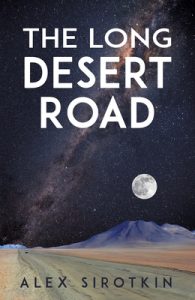
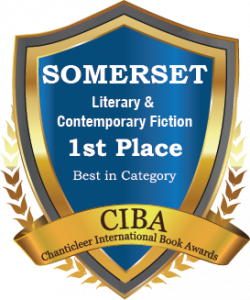
Sirotkin: I won my Grand Prize in Romantic literature. I won (the lesser) First Prize in Literary and Contemporary Fiction. To be honest, my book fits best into the latter genre. Sure, my book is a love story. But it’s not your typical sexy beach read, with scantily clad models on the front cover. In fact, some of my witty friends complained that there wasn’t enough (or any) sex in the book at all. (There was some, but I just didn’t go into the hot details.) I had certain things to say – call it a message – in my book, and those would be best said via literary fiction, which to me is a catch-all genre that is not the other more specific areas of writing. And it connotes, I suppose, a focus on the words, more so than one would expect from a who-done-it, or science fiction, although don’t tell that to Isaac Asimov, one of my favs. My book is therefore a slower more-deliberate read.
Chanti: First in Category for Literary Fiction is nothing to sniff at, my friend, given the sheer numbers of entries in that division! In terms of writing, do you find yourself following the rules or do you like to make up your own rules?
Sirotkin: Other than the law, and the Golden Rule, in writing, as in life, I’m not a big believer in hard and fast rules. In terms of writing, like any creative medium, rules might be a guide to the inexperienced novelist (like me) but ultimately one must go with his gut. I was told not to write in present tense. But I did. I was told to limit points of view, but I wrote partly in first person, and partly in third person from two POVs. I was told not to write at such a high level. In fact, someone told me that Stephen King writes at a 5th grade level. Even if I had believed this, I didn’t care. I wrote as I was trained to write, and my possible audience would hopefully appreciate the art of wordcraft, even if they had to refer to Merriam Webster from time to time. And in fact, some told me they kept a dictionary at their side while reading my book.
My best line (top of page 161) in my eyes, took me hours to perfect, yet I think it was missed by most. Talking about Hubble the scientist (who lived in the early twentieth century) my main character, Henry said “If Hubble himself had but one character flaw, it was his inability to be humble, and such was his reputation.” Get it? Lastly, I never had an outline for this novel. I pretended for a while to develop one, but I gave up and just started to write. What I had was a beginning and an end. Somehow I managed to meander my way through the desert to finally reach my intended resolution. I think I was a bit lucky to get there.
Chanti: What do you do when you’re not writing? Tells us a little about your hobbies.
Sirotkin: I certainly don’t earn a living as a novelist. I’m too poor a marketer, and I don’t write enough. So, I work in my own business. But for fun, I’ve got a lot going on. Like my main character, Henry, I always have a tune in my head. So, I whistle a lot, which annoys the heck out of my wife. And I play piano – I was trained for 9 years in classical piano, but now I just like to sound things out and improvise. I play tennis. I was really a good club player once, until age finally caught up with me. I still play, but not the man I used to be. So it goes. My wife and I hike locally with our two 90 lb. Rhodesian Ridgebacks. Finally, we love to travel, and one of our trips lay the foundation for much of my novel.

Chanti: Alex, you keep talking about age, and here we are contemporaries… I’m starting to get a bit nervous! Let’s move on – quickly. How do you come up with your ideas for a story?
Sirotkin: The ideas come from the heart. A work of literary fiction (as opposed to a detective novel, for example) has to come from within. The ideas are already there. You only must recognize them. Personally, I had difficult experiences with my daughter, a bipolar drug addict, over a ten-year period. But my story is not what you think it is. These experiences framed only a part of the story. The bigger picture for me (in terms of a novelist, and not necessarily as a dad) relates to the concept of perspective. It’s been my mind’s mantra for as long as I can recall. Whether one is talking about mental health, politics, or just getting along with one another, the key in my mind has always been a healthy perspective. The size or importance of something in relation to something else. Thinking about your problems in relation to how much worse things can be. Thinking about the positives in your life in relation to the negatives. Then grasp at the size of the Cosmos. Try to wrap your head around the enormity of the Universe. You begin to realize how each of us, and our issues, are so small. And then there’s G-d, as you know him/her/it, or some higher power, or something else, that might bind us together in a natural world. These thoughts and feelings were all there, all along while trying to deal with my daughter’s inescapable issues. The story sprang from these concepts – the hard part was putting them all together in a cohesive tail. I can’t tell you how that happened. It just did, writing with passion.
Chanti: And you did it all so beautifully. Well said, sir. Thank you for that. What areas in your writing are you most confident in? What advice would you give someone who is struggling in that area?
Sirotkin: A difficult, yet interesting question. I can’t say that there is one area in particular. But what comes to mind is doing the research. I intended the book to be a piece of fiction based as much in reality as I possibly could. The book in large part was about the Truth. I couldn’t base a book about the Truth, on something that wasn’t real. So, to understand certain areas of “reality” I needed to do a lot of research. Some of it surrounded the nature and mysteries of the Cosmos, what we understand of it, what we don’t, and what we are learning today. I’m no scientist, but I’m just smart enough perhaps to wrap my head around these issues sufficiently to convey them within a story. And the trick was to do the telling as efficiently as possible so as not to lose the reader in confusing detail. Me thinks I could have done that better, having heard from a few readers that they flipped through the science stuff. (And this is why you need a good editor, who tells you when enough is enough.) In any case, the internet is a limitless source of information. To understand how Hubble the scientist was able to determine that the Universe was expanding back in 1928 or so, I had to sift through dozens of articles, many of which were inconsistent with what I read in the others. I also found myself pouring over YouTube videos, or Google Maps of places I needed to describe in utter detail. My advice? Patience, Yoda. And don’t take anything for granted. Facts are facts, there are no alternative facts, and it may take a while to piece it all together. But you’ll get there.
Chanti: Who’s the perfect reader for your book?
Sirotkin: Let me answer this question by telling you who will likely not appreciate my novel: someone with certain expectations, someone without an open mind, someone that only likes a certain genre, and/or finally someone that wants to read a story without thinking. My book is a thinking person’s book. If you have an open mind, if you want to experience something out of the ordinary, if you want to learn about something you’ve never even heard of, then you should read my book. If you like delving into the developing personality and motivation of a character, then you will like my book. If you have a sense of humor, and are compassionate about those in dire straits, you will like my book. Most people who read it do. No writer can please everyone.
Chanti: I like how you answered that question. What excites you most about writing?
Sirotkin: I would write each chapter a hundred times. This is without exaggeration. I love to see the improvement with each pass. My first draft of a chapter would literally suck. Pardon that word. So, what excites me the most is seeing this evolution take place.

Chanti: Fascinating! Do you ever experience writers block? What do you do to overcome it?
Sirotkin: No, I would not describe it as writer’s block. On many days, I didn’t have the time to write, attending to more mundane issues, or my work. But when I sat at my keyboard, I could always write something. The question for me was the quality of that something and was it worth keeping. How much work would be required to rehabilitate it. If you’ve ever been down, or depressed (and who hasn’t) the key for me to move on from such a state is to take action. A conversation, a confrontation if needed, a long walk, whatever. Don’t sit and brood. The same with “writer’s block.”
Take action and write. Write anything. Write about something different. Write a letter. Write a silly poem. Or write another chapter but don’t worry about the quality. Just keep writing. And don’t think about it too much. Get back up on that horse. It will find its way home without you.
I watch a lot of tennis. It’s amazing how badly a pro could be playing in the first set, only to make a tremendous comeback in the second. He keeps at it, playing the game. As in writer’s block, the setback was all mental! Suddenly, he’s back at the top of his game, often without a clue as to what caused his initial lapse.
Chanti: What is the most important thing a reader can do for an author?
Sirotkin: This is an easy one. Love his book and rave about it to him and everyone else in the world. Since I won’t make any money from this experience, at least my ego should be boosted. Big time. Sorry, I’m just mostly kidding here. Seriously? The most important thing a reader can do is to give the work the attention it deserves. If it’s a slow read, like mine might be, read it slowly. Afterward, thoughtful criticism and evaluation is most appreciated, especially if I’m to write another one. And yes, if you like the book, pass it on. The most important thing for me is that people read my book and hear what I had to say.
Chanti: Okay friends, you heard it! If you love nothing more than a well-built, eloquent novel that addresses the hard issues of life with a strong sense of the human soul, look no further! Read Alex Sirotkin’s Award-Winning novel, The Long Desert Road. Be sure to contact the author and share your thoughts – send the book along to others with similar loves. Tell the World! You will be doing all of us a tremendous favor because good books simply must be read.
Find our review of The Long Desert Road by Alex Sirotkin here, and buy it from Bookshop, Amazon, or Barnes and Noble! Remember, Reader Reviews really help your favorite authors!
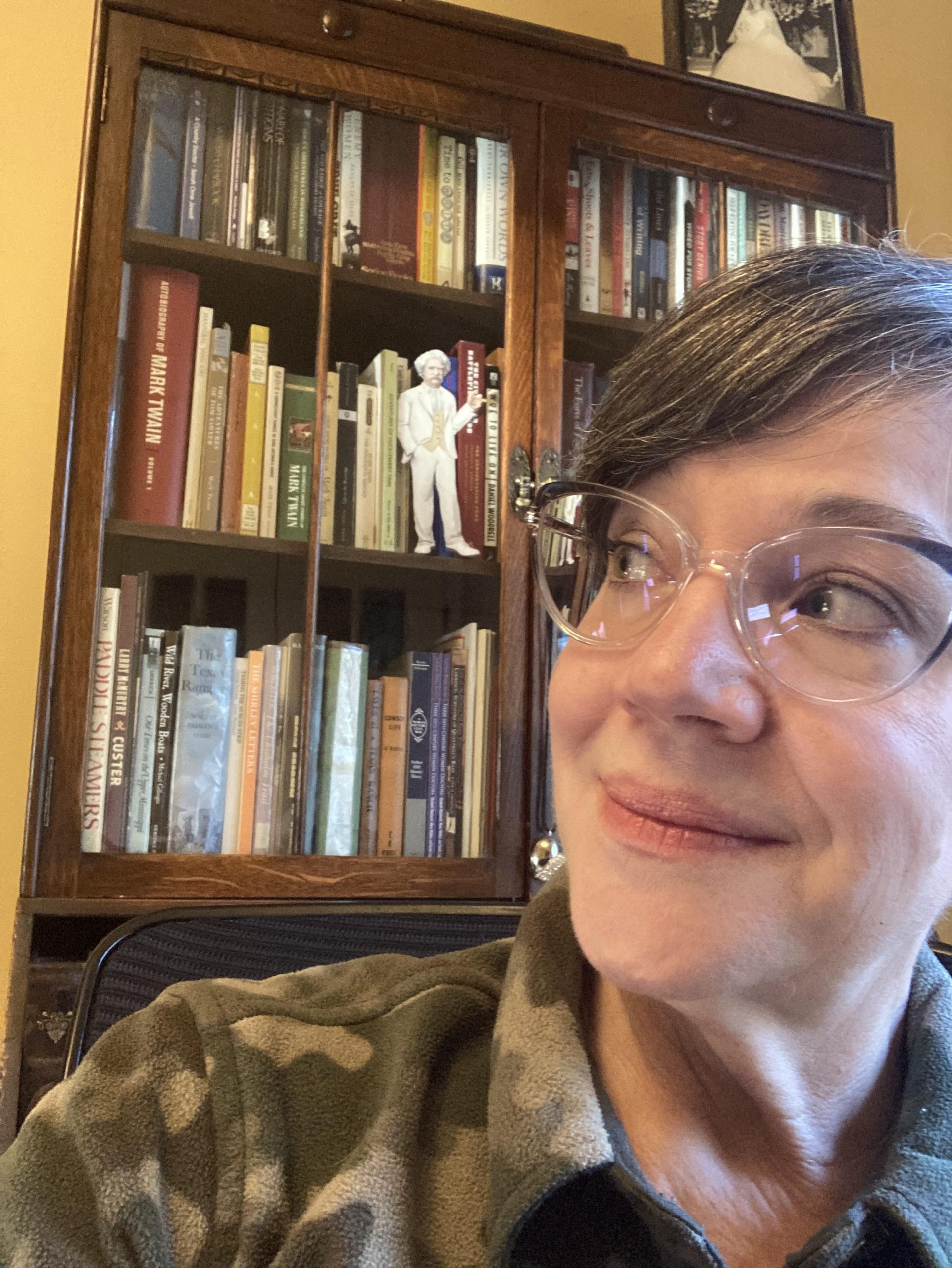
 Congratulations! Let’s chat a bit about genre. What genre best describes your work? And, what led you to write in this genre?