Tag: Author Interview

  • Chanticleer 10 Question Interview Series with Science Fiction Author Jayson Adams – Grand Prize Award-winning Author of Ares

    CHANTICLEER 10 QUESTION AUTHOR INTERVIEW SERIES

    with Award-Winning Author, Jayson Adams

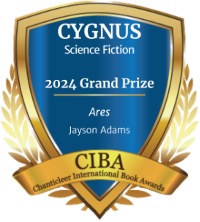
    Author of the 2024 Cygnus Grand Prize Winner Ares
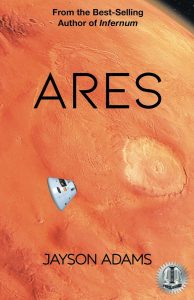
    Ares Cover

    Blue, Gold, Badge, CIBA

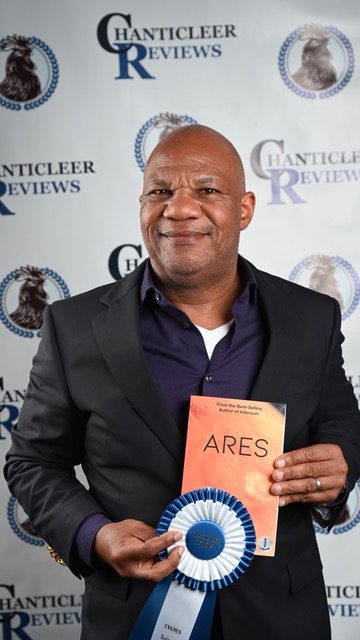
    Hello friends! We have another wonderful interview for you today, with author Jayson Adams! His book Ares took home the Chanticleer 2024 CIBA Grand Prize Award in the Cygnus Division, and we are excited to share with you the steps he took to becoming an award-winning author and what he’s planning next.

    Take a minute or two and get familiar with Jayson and his incredible journey to becoming award-winning author!
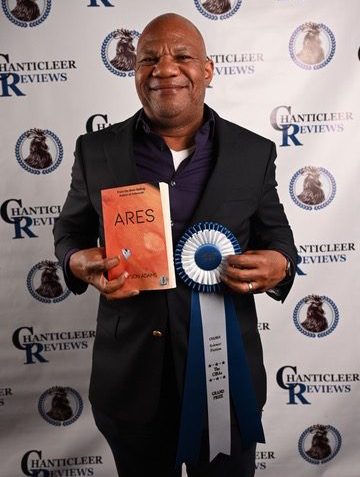
     

    man, ribbon, bald, blazer, book, ares, ciba, award

    Chanti: Jayson, let’s start with your background. Tell us a little about yourself—have you always dreamed of being a novelist, or did writing come into your life in a different way?

    Adams: I’ve been a science fiction fan since I was kid, but I had never really imagined myself writing novels. My passion leaned more toward computers. Even though they’re deeply technical, I saw the computer screen as a blank canvas—it was my creative outlet. I started several software companies and had the freedom to build whatever I could imagine.

    About ten years ago, I joined Google as an engineer on the Chrome browser. Over time, I grew frustrated with the division of labor in that space: product marketers decided what the product should do, designers decided how it would look and feel, and engineers were expected to bring it all to life—no questions asked. A few years in, I realized I needed a new creative outlet and turned to writing. I figured that with enough practice and a relentless drive to learn the craft, I could eventually become a decent writer.

    Chanti: We’ve definitely seen the shift from tech to writing frequently. That need for a creative outlet is undeniable. When it comes to the strengths you brought from your previous jobs to your new skills as a writer, can you talk about where you feel most confident and maybe offer some advice to anyone who struggles with that?

    Adams: Coming up with interesting plot twists. My advice to anyone who struggles in that area is the same lesson I find myself relearning from time to time: just write. When I get stuck wondering what should happen next, if I force myself to sit down and write what I do know, the ideas start to flow. And more often than not, they’re ideas I never would’ve discovered if I hadn’t put something on the page.

    Chanti: That’s such practical advice about pushing through the uncertainty! Your novel Ares has received incredible recognition. When did it really hit you that you’d become an author—not just someone who writes, but truly an author?

    Adams: It really sank in after I published my second novel, Ares. My first novel, Infernum, was well received, but who could say if that was just a fluke. With Ares earning similar acclaim, I can’t deny it anymore: I’m a writer.
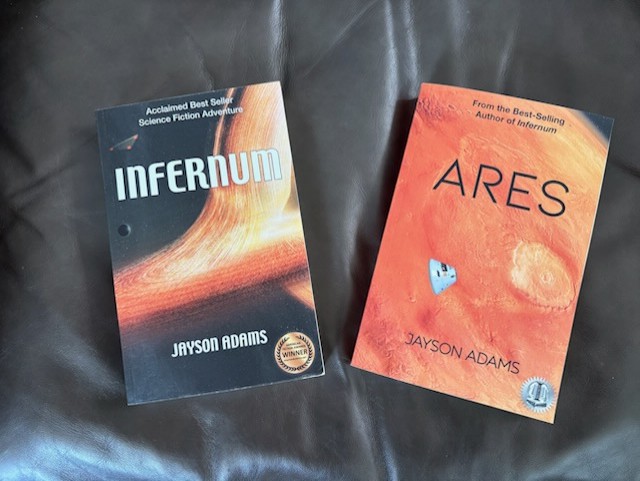
    Man, blazer, bald, book

    Chanti: Two successful novels definitely prove it wasn’t beginner’s luck! You’ve established yourself firmly in science fiction. Is that where you plan to stay, or do you explore other genres as well?

    Adams: Broadly speaking, I write science fiction, but after publishing my second novel, I realized I’m straddling two sub-genres. Infernum is a space opera set a few hundred years in the future, while Ares is grounded sci-fi rooted in the near future. The tricky part is that fans of one don’t always enjoy the other. The novels I’m working on now lean toward grounded sci-fi, but I’ll likely return to space opera before long.

    Chanti: Managing reader expectations across subgenres is a challenge! When it comes to your writing approach, are you someone who follows established storytelling conventions, or do you prefer to break the rules and forge your own path?

    Adams: I follow the rules. They’re an unspoken set of agreements between author and reader that allow the reader to relax into a story. They signal what kind of world they’re entering, what matters, and what to expect. If I hand them something I’m calling a novel, they know it won’t fizzle out at 30,000 words. If I say it’s a mystery, they know there’ll be resolution. Following the rules doesn’t make you predicable, it makes you trustworthy.

    I once read The Hollow Man by Dan Simmons. The bulk of the book was the main character drifting from one random situation to the next. I kept waiting for a through line—some deeper meaning or connection to emerge. But all those events turned out to be filler, just killing time until the ending, which was probably the whole reason Simmons wrote the book. He broke the rule that says everything in the story should matter. When events don’t connect or build toward something, the reader feels tricked. I was so frustrated, I actually threw the book away.

    Chanti: That’s a compelling argument for honoring the reader contract! When you’re not crafting these intricate sci-fi worlds, how do you spend your time? What are your hobbies and interests outside of writing?

    Adams: Outside of reading, most of my time goes into writing software. I’m currently building out an app idea, though my long-term goal is to leave the tech world behind and focus entirely on writing. I’m also an artist and plan to return to life drawing, something I’ve missed.
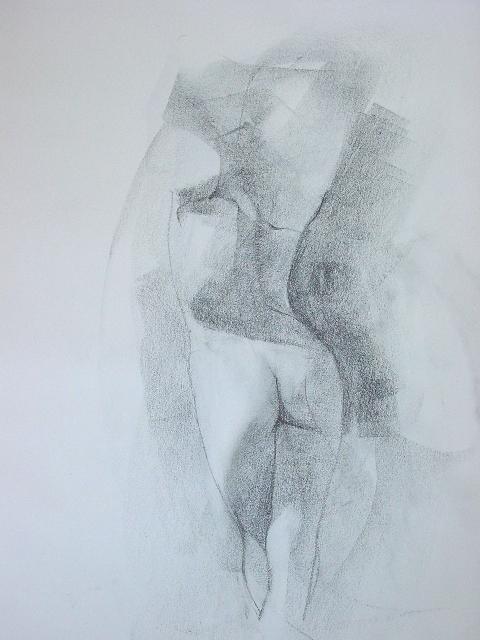
    Jayson Adams, figure drawing, pencil sketch
    Copyright © 2000 Jayson Adams. All rights reserved.

    Chanti: It sounds like creativity flows through everything you do! Writing is definitely a craft that requires constant learning. Which books on the craft of writing have been most helpful to you?

    Adams: Understanding Show, Don’t Tell, by Janice Hardy. Before I read this book, I had a general understanding of show vs. tell. This book was fantastic as far as explaining all the different ways telling can creep into a section of prose.

    I also love The Emotional Craft of Fiction by Donald Maass. Maass says that readers may not remember every plot point, but they’ll remember how a story made them feel. This is the power of emotionally resonant fiction. He does a great job of explaining how to tap into it on the page.
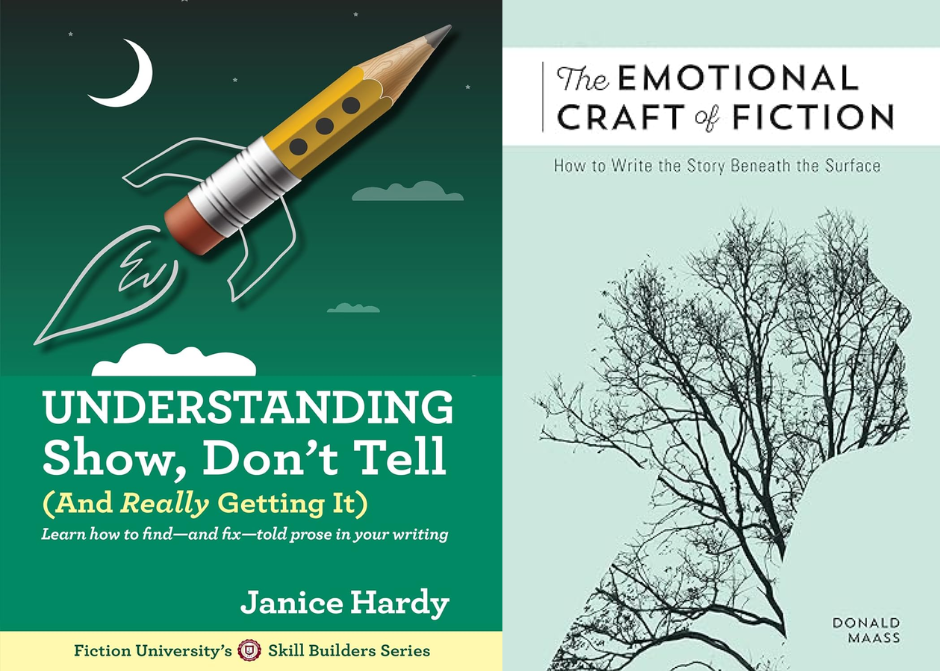
    Show don't tell, book, green, pencil

    Chanti: Both of those sound incredibly valuable! Marketing can be one of the trickiest aspects of being an author. What strategies have you found most effective for selling books and building your readership?

    Adams: A well-performing BookBub ad is incredibly valuable, but can be tricky to build. Ares has been out for awhile now, so Amazon lists about 100 other titles that readers also bought. I used ChatGPT to turn that list into a spreadsheet, with info like author, summary, and more, and then fed it back into ChatGPT to identify recurring themes and tropes that define an Ares reader.

    From there, I built ad copy around four tropes that resonated the most. I also had ChatGPT identify authors from that list whose work aligned with each trope. Then I created BookBub ads for each trope that targeted fans of the corresponding authors. That approach was far more effective than my earlier “try this headline” style of experimentation.

    Another thing I’ve explored is using negative reviews as a marketing tool—not to win over critics, but to help misaligned readers recognize the book may not be for them. I took screenshots of all my 1-, 2-, and 3-star reviews and fed them into ChatGPT, then asked it to gently distill the criticisms. (Screenshots let me avoid even glancing at what might be painful feedback, while still giving the AI everything it needed.) My goal was to add a line to the book description that would help readers who probably wouldn’t like the book self-select out.

    From that effort, I learned that many of Ares’s low-star reviews came from people who expected hard sci-fi and were disappointed to get something that leaned more toward mystery/thriller instead. ChatGPT crafted a short blurb that lets potential readers know that if they’re looking for hard sci-fi, Ares may not be the book for them.

    Jayson Adams, office chair, office, desk, window, computer, couch

    Chanti: That’s a genius use of AI for market research! I’m going to have to try that out! Looking ahead, what projects are you working on now? What can your readers look forward to next?

    Adams: I started working on a sequel to Ares, called King of the Moon. It follows Commander Praviraj Anand and Lieutenant Jack Bremmer from the moonbase featured in that story. But along the way, I found myself pulled into a new, unrelated novel called The Quantum Mirror, which centers on a rescue mission to a decrepit Russian space station. I plan to finish both, though The Quantum Mirror will likely arrive first.
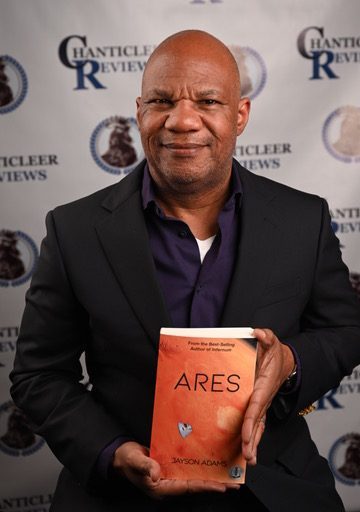
    jayson Adams, Ares, book, Chanticleer

    Chanti: We can’t wait for either of them! Ares was such a treat, and we can’t wait to read more! As we wrap this up, we’d love to end with some advice for readers: What’s the single most important thing a reader can do to support an author they enjoy?

    Adams: If they enjoy a book, please, please, PLEASE leave a rating for it wherever they bought it. As a reader, I always look at the average rating, the number of star ratings, and the release date (how long it took to earn those star ratings). That alone tells you so much about a book’s appeal. Ratings may seem like a small thing, but they make a huge difference.

    Thank you, Jayson, for sharing your writing journey with us and for creating thought-provoking, thrilling science fiction! 
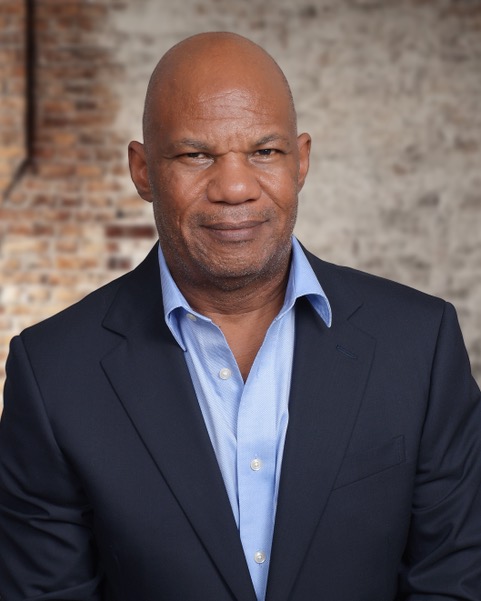

    blazer, blue, shirt, bald, man


    Jayson Adams began his career as a tech entrepreneur, achieving his dream of starting a software company, which he did at the age of 24, and retiring by the age of 30. He has worked for notable figures like Steve Jobs and has founded several successful startups, including one sold to Netscape. After a successful career in technology, he transitioned to writing science fiction around 2018, finding a new creative outlet in storytelling.

    After traveling through Europe and taking up music, he returned to computers with another start-up. He is currently working on a sequel to his award-winning novel, Ares.
  • Chanticleer 10 Question Author Interview Series with Rae Knightly – Grand Prize Award-winning Author of Exostar

    CHANTICLEER 10 QUESTION AUTHOR INTERVIEW SERIES
    with Award-Winning Author, Rae Knightly

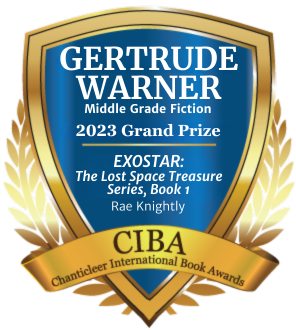
    Gertrude Warner 2023 GP Winner Exostar Rae Knightly

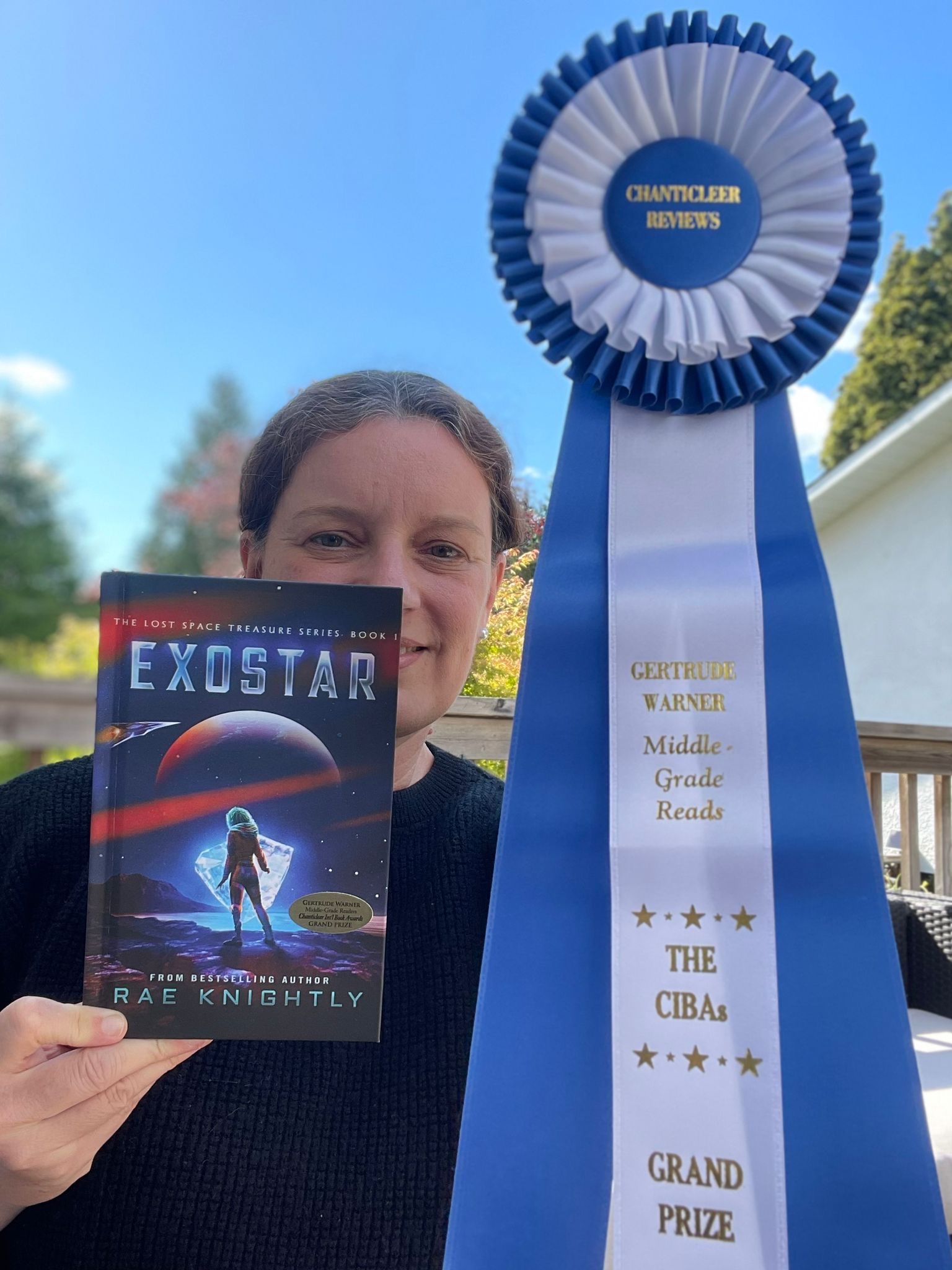
    Hello friends! We have another fabulous interview for you today, with author Rae Knightly! Her book Exostar took home the Chanticleer 2024 CIBA Grand Prize Award in the Gertrude Warner Division for Middle Grade Fiction, and we are excited to share with you the globe-trotting, star-gazing journey she took to becoming an author and what she’s planning next. Take a minute or two and get familiar with Rae and her incredible journey to becoming award-winning author!


    Chanti: Like all great heroes, we’d love to start with your origin story. Have you always considered yourself a writer, or was that an identity that developed over time?

    Rae Knightly, book, scarfKnightly: I was a reader before I became a writer. As a single child, I would devour books up until my teenage years. Fictional characters were my friends. I would go to my local library on Fridays after school, pick out three books (the maximum allowed) and read those until it was Friday again. The problem was that, after a while, I felt like I had gone through the middle-grade section. It was time for me to head downstairs to the adult section. Unfortunately, the switch proved too big of a step. I couldn’t find anything to my liking among the big boring-looking adult books. Where was the fantasy, science fiction and adventure section for my age? I guess “young adult” books weren’t a thing back then. So, instead, I turned to my imagination and carried on the stories I liked or created new ones in my mind.
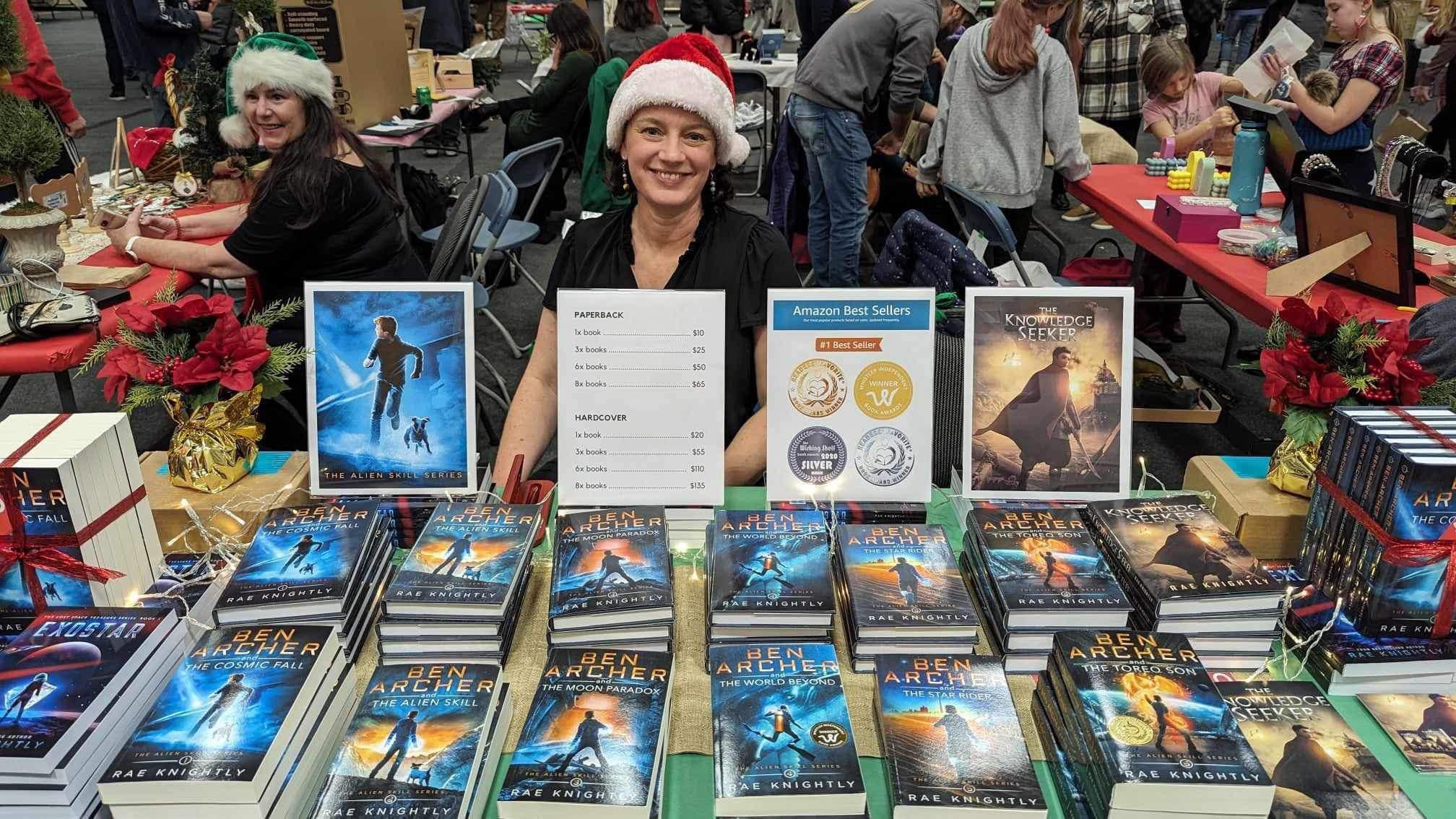
    It would be another thirty years before I got the chance to write these stories down. Once I had penned my first book, Ben Archer and the Cosmic Fall, I felt like a fish in water and knew that this was what I was born to do. You could say the books I am writing today strive to recreate the sense of wonder that I experienced as a middle-grade reader.

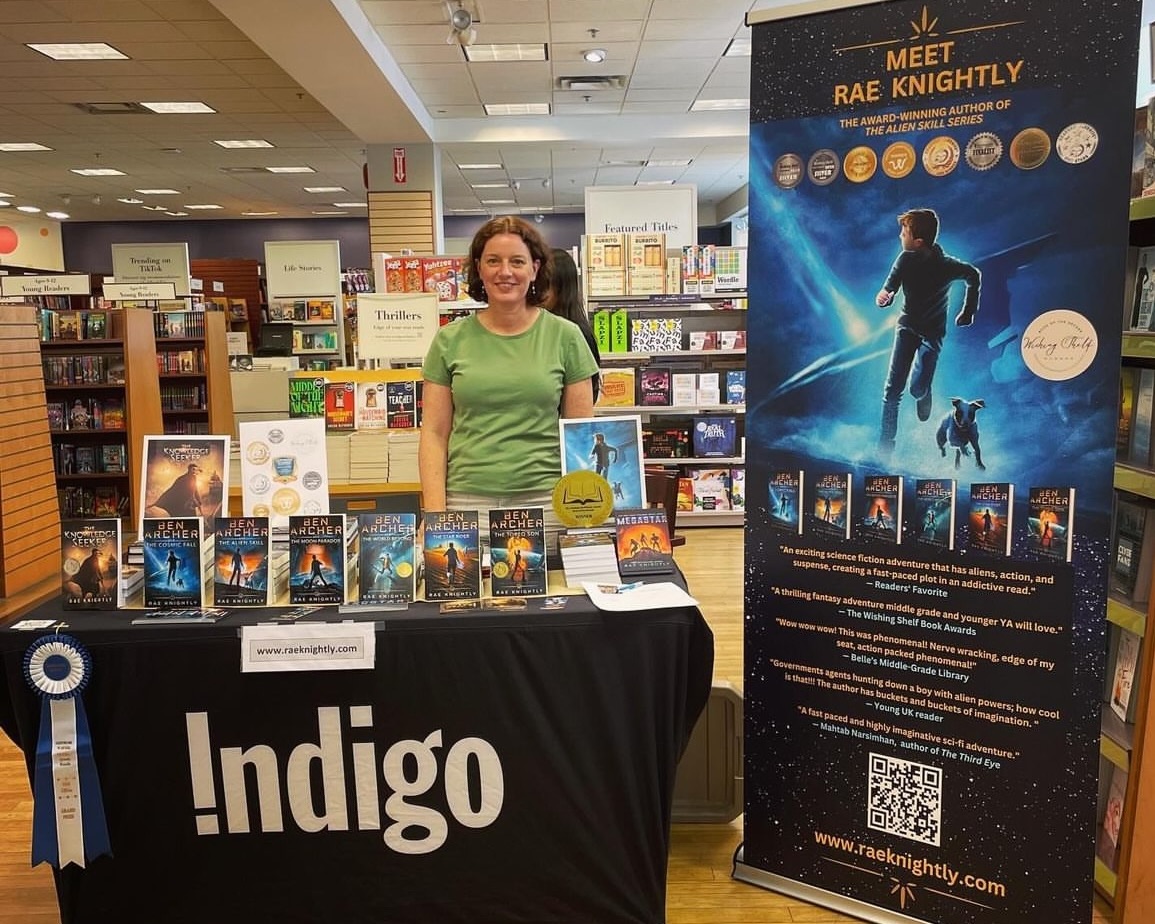
    Rae Knightly, bookstore, books, poster

    Chanti: What a beautiful way to describe it—recreating that sense of wonder! That really is the “write what you love” philosophy in action. What specifically inspires your science fiction storytelling?

    Knightly: I grew up in Africa where I became fascinated with the night sky. It made me ask profound questions: What is out there? Who are we? Why are we here? Are we alone in the Universe? Is there something beyond the Universe?

    Science fiction can be just as magical as fantasy and—in my mind—is even more so because this type of ‘magic’ might be real. Aliens might exist, we might settle on Mars one day, interstellar travel might be invented in the future, a young reader might invent clean energy when he/she grows up… I think it is vital in this day and age to inspire young people through science fiction because this could lead them to become compassionate scientists, inventors and politicians who will find answers to today’s challenges.

    I understand, though, that topics such as aliens, destructive inventions and climate change can be scary to young readers, so I strive to incorporate them in page-turning, thrilling adventures that are easier to absorb and understand. In this way, I hope to awaken a fascination for the marvels of our world and beyond—just as I was fascinated and inspired by the night skies as a child.

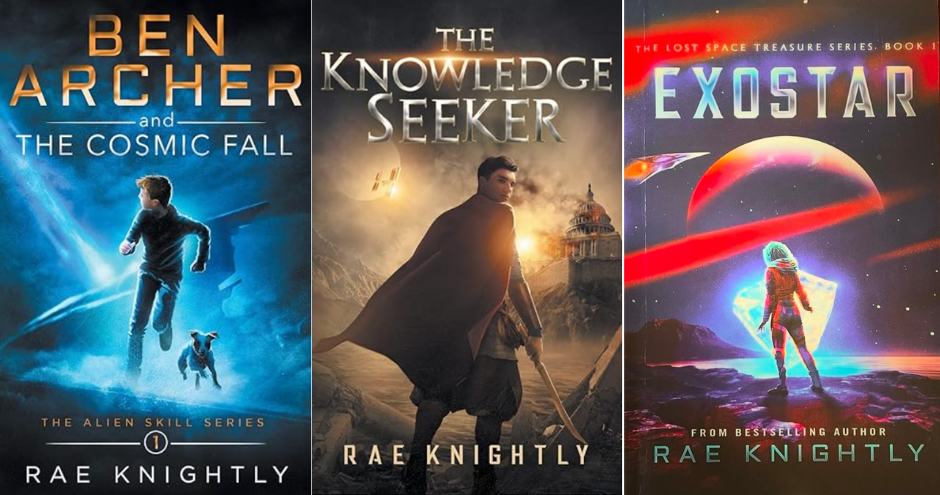
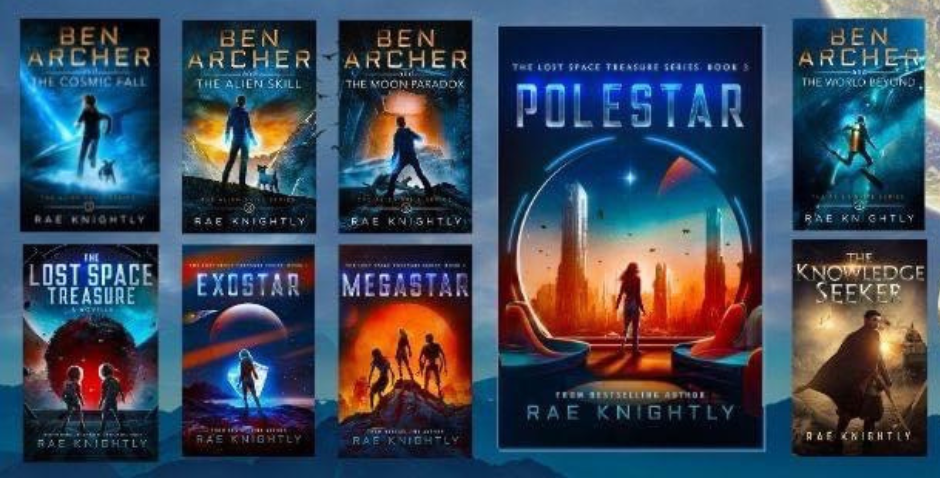
    I’m best known for the Ben Archer Series, which includes aliens, UFOs, superpowers and messages about how we treat our environment. My other series, The Lost Space Treasure, is a fun space opera in its purest form and appeals to fans of Star Wars. Exostar is book 1 in this series.

    Rae Knightly, books, awards, badges

    Chanti: That mission to inspire future scientists through storytelling is incredible! Do you find yourself following conventional writing rules, or do you prefer to chart your own course?

    Knightly: I highly doubt that I follow the rules. Middle-grade science fiction is not a common genre and I knew I was taking a big risk by writing it. But this was the genre I enjoyed above all as a child and I was disappointed when I couldn’t find more options to read. I also write from multiple points-of-view, which is not typical for middle-grade, and my main characters are loners. They don’t have a Hermione Granger or Ron Weasley tagging along.

    Adults play a huge role in my stories. This goes against the norm where middle-grade characters find themselves battling evil on their own, without adults around to help. Note that most middle-grade characters are orphans. Ben Archer is not one of them. In fact, the dad-figure in his adventures is a pretty big deal! As for Trin Moonrise in Exostar, she is a unique hero. Not only does she travel from one planet to another and encounter all kinds of alien civilizations, but she faces a hundred challenges while wearing a prosthetic leg.

    Rae KNightly, santa hat, books, people

    Chanti: Including adults and having more solo characters definitely pushes back against what we often seen in middle grade. When you’re not creating these amazing worlds and characters, how do you spend your time? What do you do to recharge and find inspiration?

    Knightly: I used to love exploring and got a lot of inspiration from visiting different places—especially ancient ones. I love reading about archeological and astronomical discoveries. The history of humankind fascinates me and I believe we still have a lot to discover when it comes to what our ancestors were capable of.

    I also love walking in nature and stopping every two minutes to take a picture of a leaf, a sunset, a landscape… I never make it very far because beautiful details are everywhere if you learn how to look. However, my walking and exploring days have been drastically reduced after I was diagnosed with a chronic illness called moderate ME/CFS. This mysterious illness has made it difficult for me to leave the house and I am currently spending most of my time learning how to manage symptoms.

    Fortunately, writing about superheroes has taught me what it means to be brave: it means that you have to stay true to yourself in the face of adversity. You can’t let the bad things that happen to you define you. I can still write and enjoy the company of my family. Also, my imagination allows me to travel way beyond the boundaries of Earth and I have explored many distant planets from the comforts of my sofa as I wait to get better.

    book covers, science fiction, rae knightly, blue, gold, red, black

    Chanti: The kind of resilience definitely shows up in your book and storytelling. When it comes to creative process, where do you say your ideas for those stories come from?

    Knightly: I get most of my ideas from small newspaper articles. Ben Archer and the World Beyond pulled inspiration from different newspaper articles related to our oceans. Some years ago, Keith Davis—a marine biologist—mysteriously disappeared while out at sea. He was researching factory ships that empty the oceans of fish (tuna, in this case). Another article revealed that, in 2019, Russia released hundreds of beluga whales and orcas from an illegal whale jail located in Srednyaya Bay, where they were being trained or sold. Unfortunately, this type of news does not hit the headlines much.

    The Knowledge Seeker was inspired by a short newspaper article reporting that several countries had restricted access to the internet. It made me wonder how a small group of people could take away access to knowledge to millions of citizens. The plot of The Knowledge Seeker—which takes place in the distant future—took form based on these questions: should everyone have access to all information everywhere and all the time? And, if not, who should have the right to decide what should/shouldn’t be made available? The main character, Eodain, fights to return knowledge to the people, while his arch-nemesis wants to keep knowledge for himself because knowledge is power. But even Eodain struggles with the meaning of free knowledge when he is forced to provide instructions on how to build a deadly weapon.

    And, lastly, Exostar and its sequels dive into the wonders of science and the Universe. Could we travel between the stars using quantum mechanics? What color is the sky on other planets? What do aliens on other planets look like according to their environment, gravity, evolution, etc.? Do exploding stars (supernovas) provide the necessary elements to create life? When you have civilizations where robots, androids, ancient aliens, and mortal beings interact, what does it mean to be human?

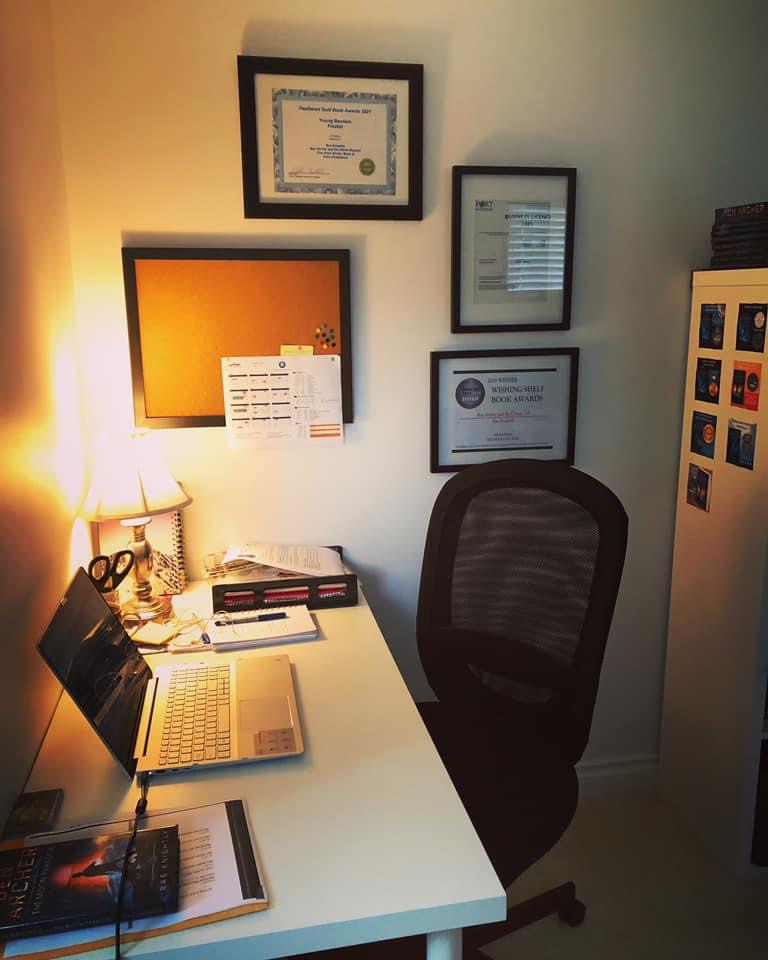
    office, chair, pictures, computer

    Chanti: Fascinating how you transform real-world issues into compelling science fiction! When it comes to your actual writing process, how organized are you? Do you plan everything out, or do you discover the story as you write?

    Knightly: By the time I sit down to write a new book, I have the full story well laid out in my head. It is very important to me to know the ending of a story and I will rarely start writing until I have figured that out. In fact, I often come up with the ending of a story first and then work my way backwards! This was crucial when I wrote The Knowledge Seeker, as the plot twist at the end had to blow the reader’s mind. The final sequel in the Exostar series will also have a mind-boggling ending.

    Since I have the plot all laid out, I am able to write a first draft in a short amount of time. I can write a 50,000 word book in five weeks. However, that’s when the hard work starts. This is when I go over the manuscript multiple times, one sentence at a time, one paragraph at a time, and back-and-forth and back-and-forth with the help of my editor, Cristy Watson. I also seek advice from beta readers who follow my work, know the characters and can point out errors in the manuscript. I will do seven or eight complete edits of the story before I’m satisfied, and this can take several months.

    book covers, science fiction

    Chanti: Working backwards from the ending makes a lot of sense! Can you talk a little bit about some of your literary influences, and how have they shaped your work?

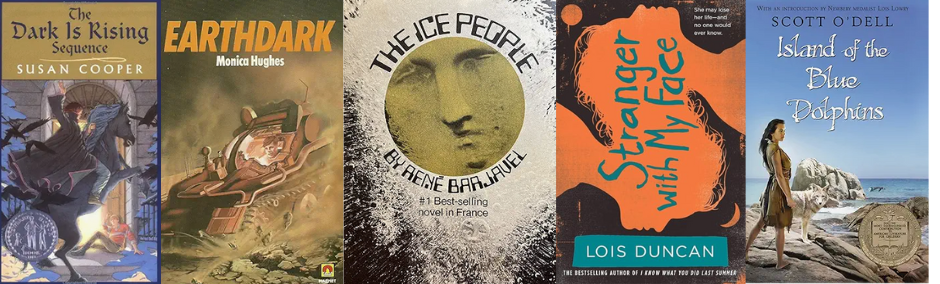
    Knightly: The Dark is Rising Trilogy by Susan Cooper opened my eyes to the power of imagination. Why? Because this Arthurian fantasy story took place in the real world and made me want to find ‘magic’ everywhere. It made me wonder if ‘magic’ was just around the corner, or hiding in the mist, or lost deep under the ocean. I love fantasy and science fiction stories that take place in the real world because they make the reader wonder, “What of this were true?” I sought to recreate this sense of ‘magic in the real world’ in my Ben Archer books.

    Monica Hughes was my go-to author while growing up. She wrote thrilling middle-grade science fiction like Earthdark, Space Trap or Ring-Rise, Ring-Set. The stories are exciting and ask interesting questions. They inspired me to write Exostar.

    The Ice People by French author Rene Barjavel is one of those books that stays with you long after you’ve finished it. It leaves you with the question: if humans have been around for tens of thousands of years, would it be possible that they developed advanced civilizations that are now lost and buried under the Arctic ice, under the dunes of the Sahara desert or in the deep trenches of the ocean? This fascinating question also lingers in the back of the Ben Archer and Lost Space Treasure Series.

    Lois Duncan’s Stranger with my Face is another of those stories that takes place in the real world but has elements of mystery in it. The characters in the author’s books face haunting topics such as telepathy, astral projection, spirit channeling, eternal life, etc. These themes make you wonder about the limits of the human mind and elements of this have seeped into Exostar and its sequels.

    Island of the Blue Dolphins by Scott O’Dell was a heart-shattering story that stayed with me for years. However hard the story, I believe that tough subjects in middle-grade books can teach young readers to better face real-life hardships as adults. For example, learning to deal with a fictional death might prepare readers to deal with it a little better in the real world. I channeled some of those raw, heart aching feelings in Ben Archer and the Alien Skill.

    Chanti: That is a rich tapestry of influences! With such a creative imagination constantly at work, do you ever hit those dreaded writer’s block moments?

    Knightly: Yes, I experience writer’s block. I guess it’s the bane of every author’s existence.

    However, I no longer shy from this debilitating fear of the blank page. I find that if I am unable to write, it usually means that my brain is saturated and I need to take a break. This break can last from a couple of days to several months, but I have learned to trust the process. Once an author, always an author, is my motto! Imagination never really leaves you. Creativity can come and go, like the ebb and flow of waves crashing on a beach, and if my characters are not talking to me, then perhaps it’s time to do something else for a while.

    Rae Knightly, CIBA winner, ribbon, exostar, book

    Chanti: That’s such a healthy perspective on the creative process! You’ve achieved remarkable success with your award-winning books. What marketing advice can you share with other authors?

    Knightly: The things that have helped sell over 120,000 books:

    • Paying for great, on-target book covers
    • Knowing who my readers are (10 to 14 year olds)
    • Always delivering as promised in a regular, timely manner
    • Learning to run Amazon ads
    • Creating clean, fun adventure stories that captivate readers
    • Joining joint book promotions and doing newsletter swaps
    • Creating excitement for the next book on social media
    • Putting up the next book for pre-order and adding links in the back-matter

    rae knightly, books, cover, science fiction

    Chanti: All fantastic, practical advice! As we wrap up, what exciting projects are you working on now? What can your devoted readers look forward to next?

    Knightly: The Lost Space Treasure Series continues. After writing book 1, Exostar, I published books 2 and 3: Megastar and Polestar. I am currently editing book 4: Grimstar.

    Trin Moonrise travels the stars in search of her identity which might be hidden on a legendary spaceship thought to hold the greatest treasure in the known galaxy. However, her arch-nemesis, the evil Remnant Supreme Leader, is always one step behind.

    Next, I plan on delving deeper into my young adult dystopian series, The Knowledge Seeker, and my readers have let me know that they would love to read more Ben Archer books.

    Even though middle-grade science fiction is less popular, I hope to continue exploring the genre for many years to come.

    Thank you, Rae Knightly, for sharing your writing journey with us and for bringing great young adult sci-fi to readers around the world! 


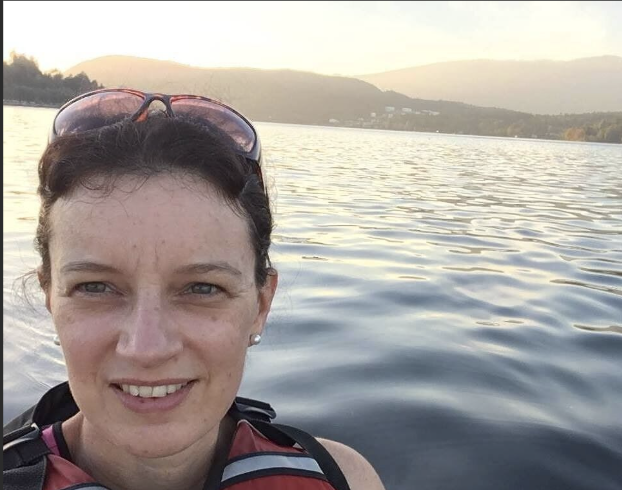
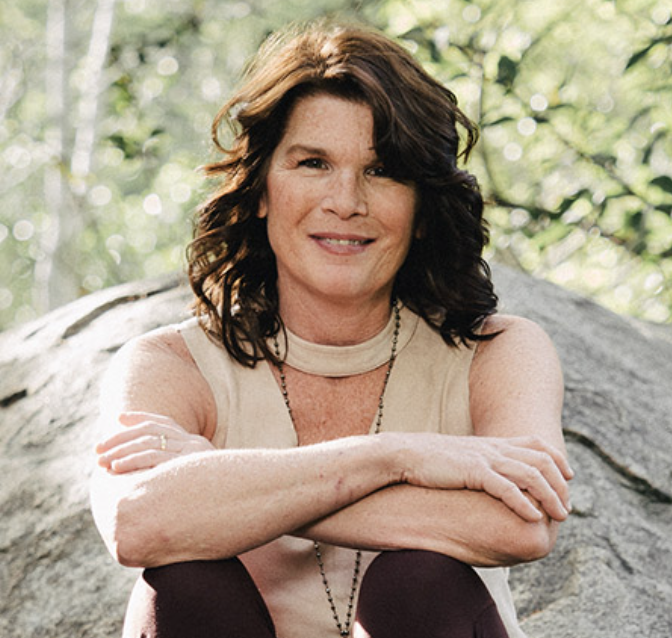
    Rae Knightly, water, woman, mountains

    Rae Knightly is an award-winning and Amazon bestselling author specializing in middle-grade and young adult fiction, with over 160,000 books distributed. She is the author of The Alien Skill SeriesThe Lost Space Treasure Series, and The Knowledge Seeker. Knightly was raised in various locations on Earth, during which time she picked up four languages and came to appreciate this blue pebble floating in the confines of space. Her current human mission is to keep the stars shining in her two children’s eyes, while hopefully igniting new ones within others across the globe. Rae spends her time spirit travelling to distant galaxies or exploring the breathtaking landscapes of British Columbia, Canada, before returning with more adventures for her Alien Skill Series.

  • Chanticleer 10 Question Author Interview Series with Steven Mayfield – Grand Prize Award-winning Author of Delphic Oracle

    CHANTICLEER 10 QUESTION AUTHOR INTERVIEW SERIES
    with Award-Winning Author, Steven Mayfield

    Happy Summer Chanticleerians! We’re thrilled to bring you another fantastic interview with Humor & Satire Grand Prize Winner Steven Mayfield!

    From writing “bad poetry” at age nine to authoring award-winning novels, Steven Mayfield has taken quite the journey—including a two-decade detour through medical school and scientific writing. Here, he shares how that medical training actually made his fiction stronger, where he finds his story ideas (hint: be careful what you say around him!), and why he believes readers should give stories more than just one page to capture their attention.

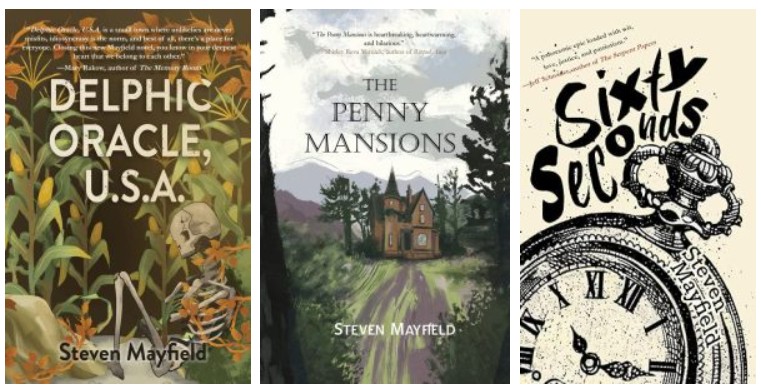
    While Mayfield won the Humor & Satire Grand Prize for his book Delphic Oracle, he also received Chanticleer recognition for his book The Penny Mansions, and his new book Sixty Seconds is available now!

    Chanti: Steven, let’s start at the very beginning. Can you tell us a little about yourself and how your writing journey first began?

    Mayfield: I began writing bad poetry when I was nine years old and started a novel at twelve. I drew from that history to create the protagonist of my next book. He also starts a novel at a tender age, which he describes it as “plagiarism by paraphrase.” That pretty much nails my early efforts, as well. In college and for a couple of years afterward, I wrote more poetry and short stories, began another novel, and wrote sketch comedy. I then gave up creative writing and went to medical school. Over the next two decades I authored or co-authored a number of medical and scientific pieces, and as a result, when I resumed writing fiction in the early ’90s, my work was tighter and more disciplined. I’ve been solely a writer for the last twenty years.

    Chanti: That’s such an interesting path from medicine back to creative writing! There’s often a moment when writers truly believe they can do this professionally. When did that realization hit for you—when did you truly believe you were an author?

    Mayfield: For me, the question is “When did I believe I could write?” After completing a sophomore college assignment to write a book review, the professor asked me if I’d ever thought about writing as a profession. I had but didn’t think it realistic until that moment. A year later, one of my short stories won the Mari Sandoz competition. After that, I always thought of myself as a writer, regardless of what I did to make a living.

    Chanti: The support from our educators can truly be all it takes to have that pivotal moment. Your background in medical writing is fascinating. Do you find that scientific training makes you more of a rule-follower, or do you like to break the conventional writing rules?

    Mayfield: Writing for the scientific and medical literature forced me to strictly adhere to rules of grammar and syntax. As a result I think it’s important to know those rules so that when you break them, it’s for a reason; e.g. using sentence fragments for emphasis or rhythm.

    red, pen, paper

    Chanti: That’s such a smart approach—knowing the rules so you can break them intentionally. I’m curious about your creative process. Where do your story ideas come from? How do you find those sparks of inspiration?

    Mayfield: I shamelessly exploit things people say or do. I’m being flippant but not entirely inaccurate. I wrote Treasure of the Blue Whale (Regal House 2020) after some friends told me an apochryphal story over dinner about the alleged discovery of whale ambergris on a beach in Northern California back in the 1920s; The Penny Mansions (Regal House 2023) was inspired by the Italian towns that are trying to stabilize their populations by offering one Euro houses for renovation; and Sixty Seconds (Regal House, July 2025) was prompted after I saw the movie, A Royal Night Out. My current work-in-progress, “The Bank House, was born from a conversation with a neighbor in my old Portland neighborhood who grew up in an Irish village where the bank was part of a residence provided to the bank manager. So…people should be careful about what they say when I’m within earshot. They might end up in a book.

    Chanti: I love that you’re constantly mining conversations and experiences for material! When it comes to the actual writing process, how structured are you? Do you have a daily routine or specific approach?

    Mayfield: I think I’m fairly structured. When I begin a book, I set up a log to track my daily word counts. I aim for a minimum of 250 words/day, a modest goal, but one that keeps me going on days when I don’t feel inspired. I then try to write every day, beginning by revising what I wrote the previous day and then adding new material. As the story builds, the daily word count builds with it, and once the first draft is done, I have typically averaged about 750 useable words/day.

    Chanti: That’s a strong and sustainable approach. Every writer has their literary heroes. Can you share five authors who have really shaped your work and tell us how they’ve influenced your writing?

    Mayfield: Muriel Spark: Does more with the simple declarative sentence than anyone I’ve read.

    Sinclair Lewis: Unmasks puffery, hypocrisy, and injustice.

    Kurt Vonnegut: Gives other writers permission to stray off-point as long as the reader is kept beside you and you don’t waste their time.

    Jean Shepherd: Like me, a yarn-spinner.

    From left to right we have Muriel Spark, Sinclair Lewis, Kurt Vonnegut, and Jean Shepherd

    A cumulative fifth choice comprised of several writers who share my publisher, Regal House: 1. Barbara Quick, whose elegant prose blends history and fiction, 2. Michael Strelow, whose command of language awes me, 3. Richard Martin, whose prose is inimitable, wise, and hilarious, 4. Michael Bourne, who has the ability to make unlikeable protagonists likeable, 5. Mimi Herman who is funny and understands how to mine small towns for literary gold.

    Chanti: What a diverse and thoughtful group of influences! I love the shoutout to your follow authors! Writing is definitely a craft that requires constant development. Beyond reading great authors, what do you do to keep growing and sharpening your skills?

    Mayfield: I listen when someone gives me feedback. If a reader is lost or bored, it’s my job to fix my work, not their job to guess what I was thinking when I wrote it. It’s also important to read work by other people and to workshop material in progress. I’ve been in the same workshop group for thirty-one years and their input is invaluable.

    Chanti: Thirty-one years with the same workshop group is incredible dedication! What exciting projects are you working on now? What can your readers look forward to seeing from you next?

    Mayfield: I’ve been engaged in final editing and pre-release marketing for Sixty Seconds (Regal House, July 2025) and I’ve just finished a sixth draft of a new novel, The Bank House. It follows a few months in the life of a thirteen-year-old boy who moves to a new town where his family will live in a former mansion that now has a bank in its living room. It’s a coming-of-age novel with my usual brand: heart, humor, and a dash of crime. I’m hoping for a spring/summer 2027 release.

    Chanti: The Bank House sounds absolutely intriguing, and I’m looking forward to reading Sixty Seconds now that it’s come out. You mentioned earlier that it’s the writer’s job to make things clear to the reader, but what is the most important thing a reader can do to support a writer they enjoy?

    Mayfield: Give us a chance. Agents would have us believe that a reader must be captured in the first page, but that’s marketing advice and doesn’t necessarily relate to good story-telling. It took me 100 pages to get into A Soldier in the Great War by Mark Helprin, one of my favorite books.

    Chanti: That’s such wise advice about patience with storytelling! Finally, on a more personal note—what excites you most about the actual process of writing?

    Mayfield: I can create a world where everyone does exactly what I want. Such power has always been restorative, but in our present climate of political chaos and heartlessness, it’s better and far cheaper than psychotherapy.


    Steven Mayfield is a past recipient of the Mari Sandoz Prize for Fiction and the author of over fifty scientific and literary publications. After a short stint as a sketch writer in Los Angeles, he attended medical school at the University of Nebraska followed by post-doctoral training and teaching/research appointments at the University of Iowa, Brown University Program in Medicine, and the University of Texas Southwestern in Dallas. After a hiatus away from creative writing that lasted almost twenty years—during which he published forty-two scientific articles, abstracts, chapters, and reviews—Steven began to again write fiction in 1993 with short stories appearing in literary journals and anthologies since 1994. He retired from medicine in 2004 and spent several years working as a free-lance editor before publishing Howling at the Moon in 2010 (Mount Parnassus Press). Regal House has been his publishing home since 2020 for three novels: Treasure of the Blue Whale (2020), Delphic Oracle, U.S.A. (2022), and The Penny Mansions (2023). A fourth novel, Sixty Seconds, is out now from Regal House!.
    Steven’s books have been honored with numerous awards, including an IBPA Benjamin Franklin Silver Medal, a CIBA Mark Twain Book Awards Grand Prize ribbon, and an Independent Publishers Group Gold Medal. His last three novels were all Foreword Indies Finalists.

    Steven currently resides in Oregon with his wife, Pam. He can order beer in four languages. His wife can say, “Pay no attention to this man” in five.

  • Kevin Miller 10 Question Interview with Chanticleer – Military History, Historical Fiction, and WWII Air Combat

    blue and gold badge recognizing The Silver Waterfall by Kevin Miller for winning the 2023 Hemingway Grand Prize

    CIBA 2023 Grand Prize award-winning Author Kevin Miller sat down for a 10-Question Interview with Chanticleer!

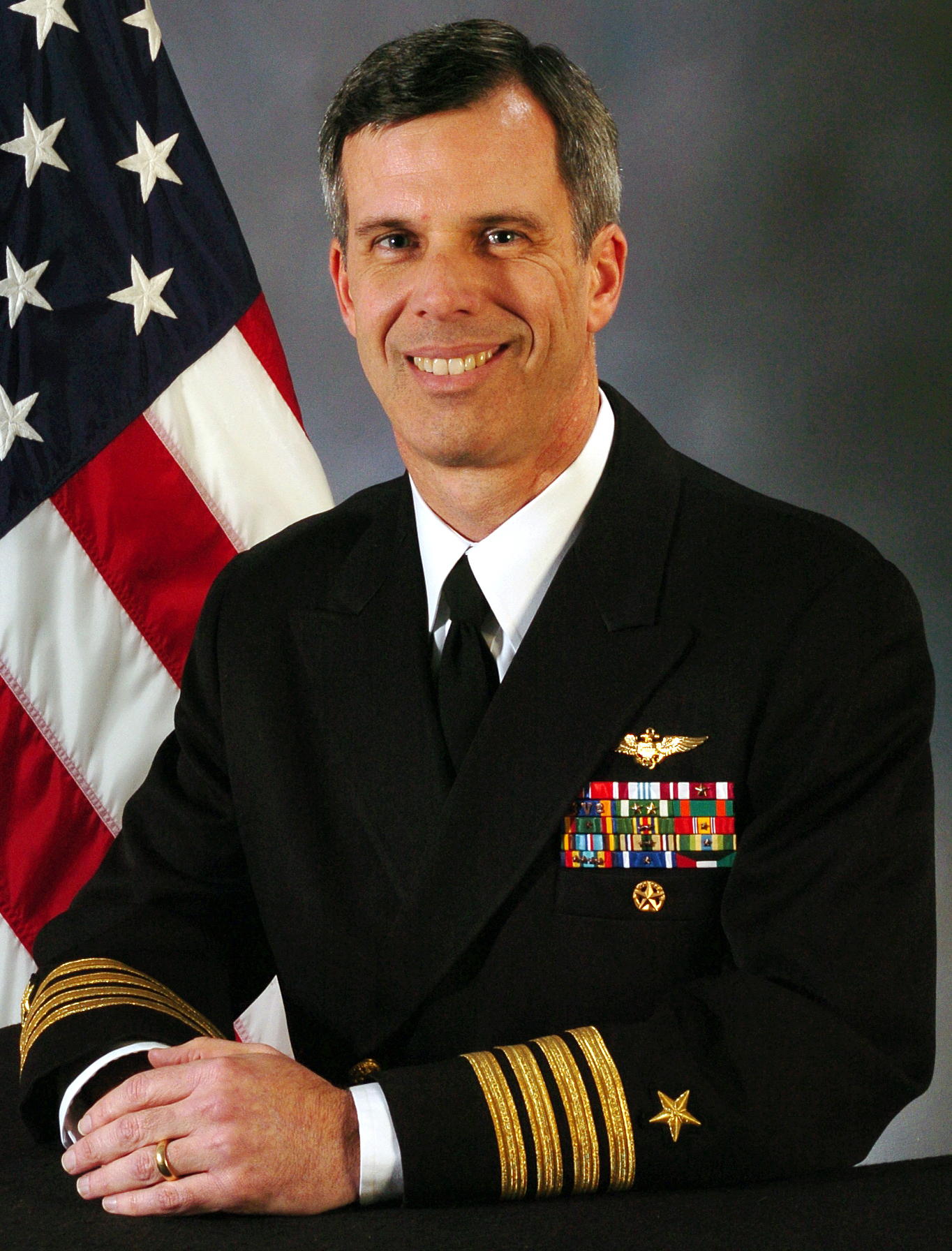
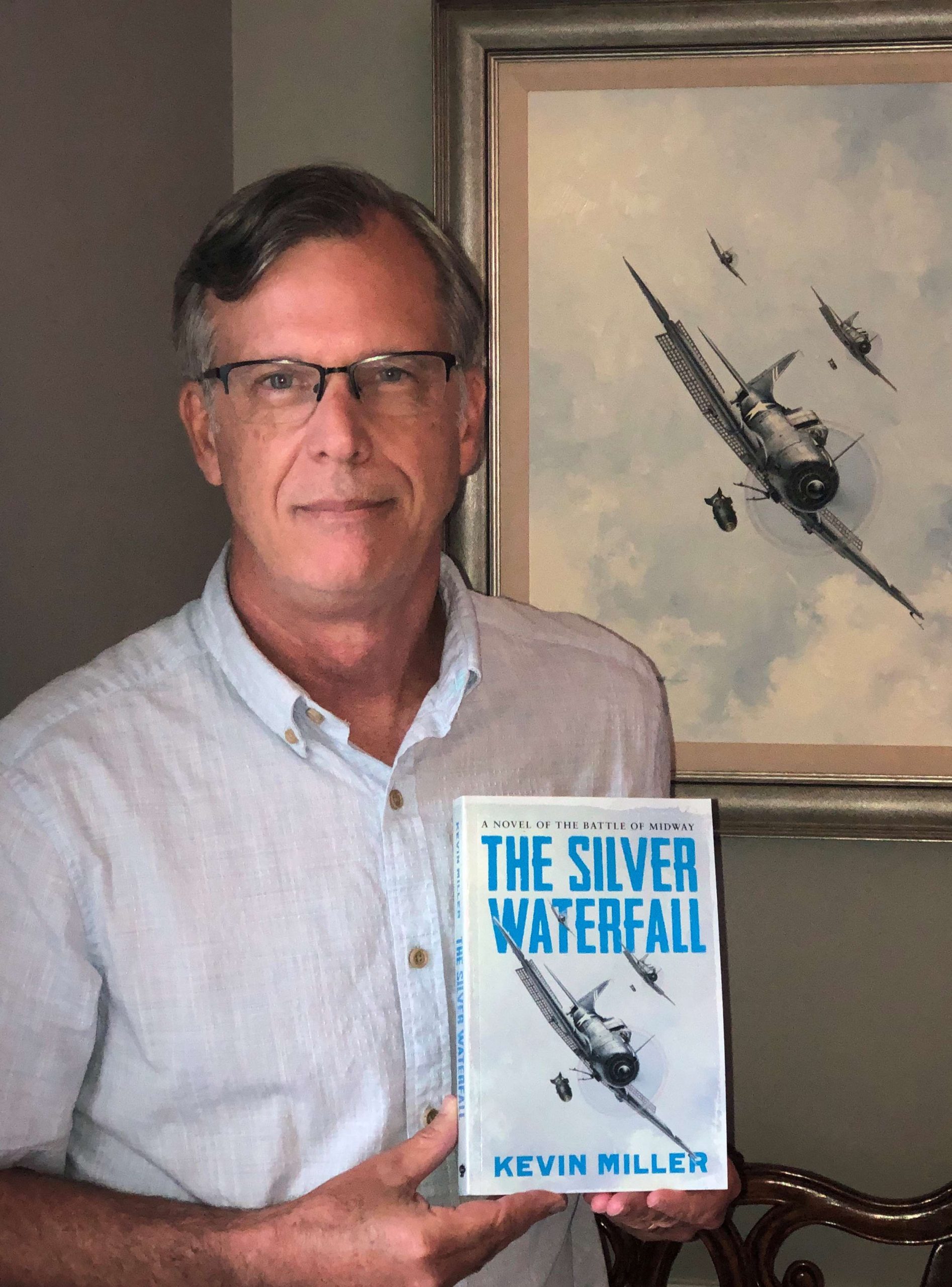
    Recently, Chanticleer had the pleasure of speaking with Kevin Miller, former US Navy fighter pilot and author of  The Silver Waterfall. Miller takes readers into the cockpit of the world’s most powerful military aircraft in his four book series, Raven One. Miller’s award-winning fictional account of the Battle of Midway, The Silver Waterfall, took home the 2023 Hemingway Grand Prize for Military Fiction. Miller is an expert in combat air battles and literacy advocate and I know you’ll enjoy learning more about him and his thrilling novels!

    Here’s what we talked about:

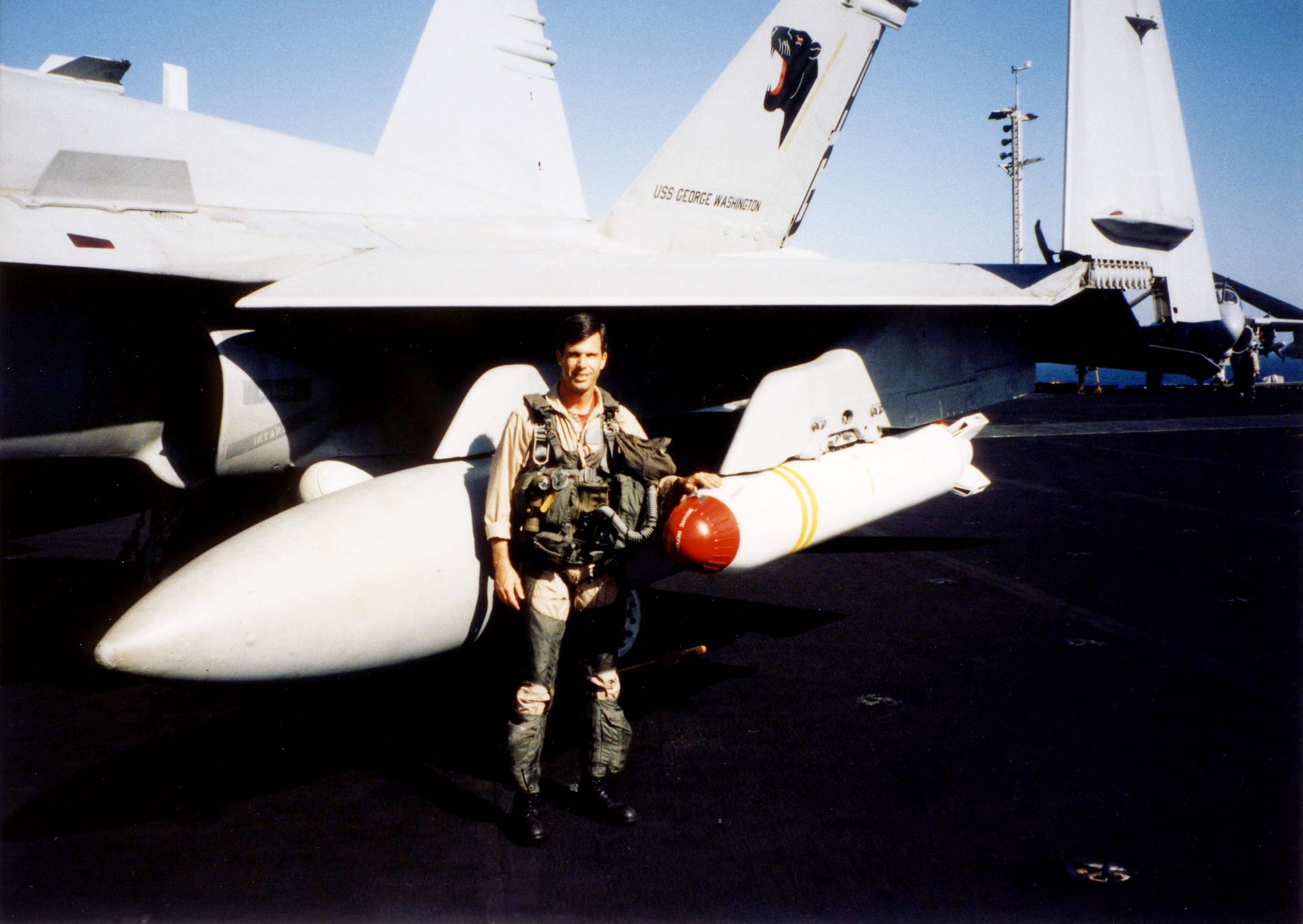
    Fighter pilot, flight jacket, dockers, jet, 362

    Chanticleer: Your specialized military knowledge is the subject of your writing. Tell us a little about yourself. What led you to write about the Battle of Midway?

    Miller: In a previous life I was a career Navy fighter pilot, with most of my time in the F/A-18 Hornet. To viewers of TOP GUN and TOP GUN II… yep, I did that. My career took me to command a carrier-based fighter squadron that I led in combat. Wrapping it up at the Pentagon, I retired with the rank of captain after serving 24 years, logging over 3,600 hours and 1,000 carrier landings on numerous extended deployments.

    At my retirement ceremony a fellow aviator suggested that I write a book, a suggestion I immediately waved off. Undeterred, he pressed me – hard – and told me that I have stories. Later I gave it some thought. Yes, I do have sea stories, and a passion to answer the question I was asked so often when people found out what I did for a living; Wow! What is that like? Having no idea where to start or what writing entailed, I figured why not? At least my manuscript could be something for the kids. So, months later in the summer of 2005 I began writing what would become Raven One.

    Kevin Miller, navy, pilot, medals, american flag

    Before I wrote the first sentence, I had never considered writing a novel, considering it something that mere mortals could never attain. The discipline! As I wrote – seat of the pants – a story formed, and after fits and starts (setting it aside in frustration for months then picking it back up and writing in a flurry of activity) I finished Raven One in late 2009… and knew that I had something.

    Querying literary agents to represent me, despite the encouragement of many to keep writing, proved a failure. However, Kindle Direct Publishing was coming into its own, and publishing as an independent author became more attractive with each rejection from “New York.” Networking led me to fellow aviation thriller author George Galdorisi, who led me to his micro-publisher and military thriller author Jeff Edwards of Stealth Books which is now Braveship Books. Under their guidance, Raven One was published in the summer of 2014. The novel peaked at #29 in all of Amazon by the spring of 2015.

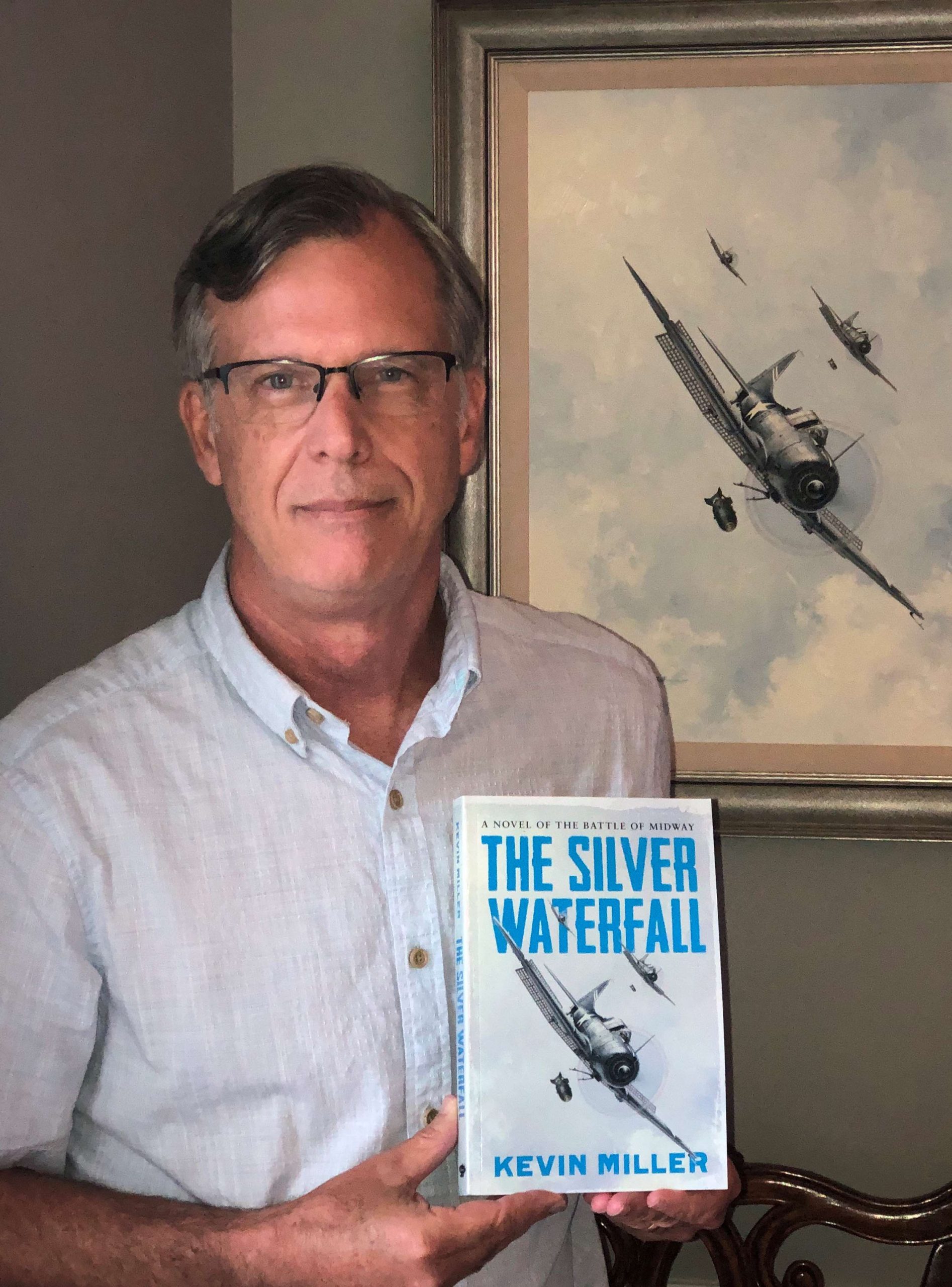
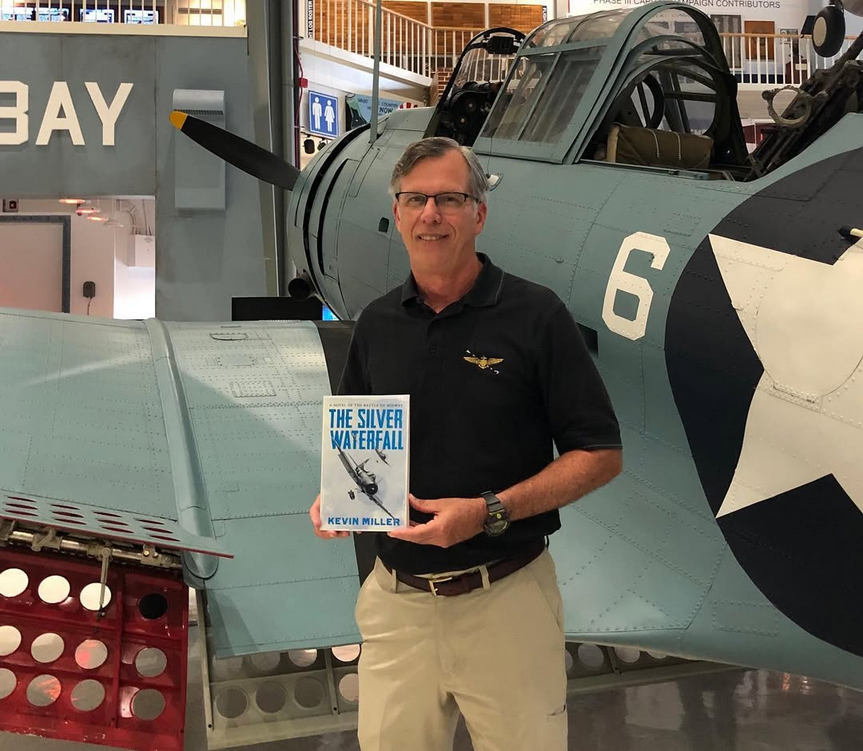
    Kevin Miller, The Silver Waterfall, painting

    Chanticleer: That’s a huge journey and a familiar one for many. Was there a point where you realized you had become an author?

    Miller: Yes, holding that first copy of Raven One in my hands was a special moment. I wrote – and published! – a novel! But it was weeks later as the novel gained a following that I noticed the comments in the review section. The glowing reviews were from strangers who loved the book – comparing the writing to Clancy and Coonts – and encouraged me to write more. Soon I heard from my friends, many of them former squadron mates who know how to give and receive honest feedback. They were blown away by the story and how I told it, and they met me at gatherings with copies for me to sign. Gratifying! And that’s when I knew Raven One was not a one-off, and that I had to keep writing

    Chanticleer: That’s wonderful! Likewise, your Chanticleer award winner, The Silver Waterfall, is a great story full of action, suspense, history, and so much more. Can you talk more about your relationship with your genre?

    Miller: Writers typically write what they know about, so for me the military action-adventure genre is a natural. My Raven One series novels are military technothrillers, a genre first made popular by Tom Clancy. They are found in War Fiction, War and Military Action, Sea Stories, Sea Adventures, and the like. Amazon allows authors great specificity in genre selection, and I could probably keep my latest novel High End as a perennial #1 in an Authentic and Contemporary Carrier Aviation Fiction Above the Arctic Circle genre but playing games like that is not for me as I want my books to compete and earn their accolades honestly. That said, I often see romance books in War Fiction when the only “war” part is that the love story is set in a wartime setting. We know why authors do this; all’s fair in love and war.

    The Silver Waterfall: A Novel of the Battle of Midway, for which I was honored to receive the 2023 Chanticleer Hemingway Award, is pure historical fiction. To me, historical fiction provides the human emotion to a true event without changing any of the facts of that event, such as Shaara’s Pulitzer-winning masterpiece The Killer Angels. Our novels put the reader there, amid the real men who fought these battles, giving these historical figures voice as to what they experienced. Some historical fiction authors are too loose with facts and invent facts, even going so far as to impugn the reputations of the real men who were there. I could not live with myself if I did that, especially for an event like Midway, already full of drama and amazing chance.

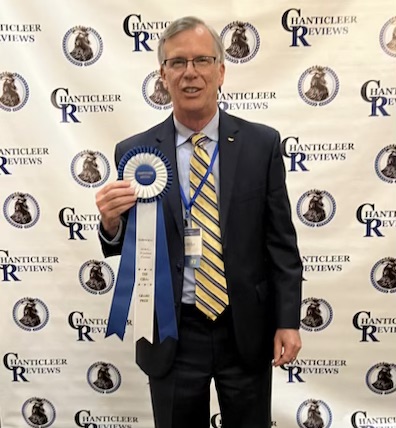
    Kevin Miller, author, CIBA Grand Prize, Ribbon, man, tie, suit
    Just won the CIBA Grand Prize in the Hemingway/Military Fiction division!

    Chanticleer: We’re always astounded at the commitment to veracity of our historical fiction authors. The amount of research that goes into that is incredible. For your own writing day, how do you stay on track to finish your books?

    Miller: Stephen King says that 1,000 words of writing is a good day of writing. If I get to a break in the story and stop for the day at 950 or 875 words I don’t beat myself up, but 1K per day works, especially if you have other activities (I do business consulting and teach middle school history) to fill your day. Promotion is part of my writing workday, as of course is research for my type of technical and historical writing.

    Outlining? Yes and no. I have one in my head and follow it, but because it’s not written down, I can ride along on those magical moments when my writing takes me someplace I had never expected. The Silver Waterfall involved a historic event that has been written about extensively and that I knew well, but even in that novel I could “ride” when the muse took me to a new place when describing the human experience of a known historic event.

    As Stephen King suggests, I’m one of those who writes and sets it aside for a few weeks to germinate, then prints it out to go over it with a pen to fix/improve. Several cycles: read it “fresh” after several months and you’ll unearth little gems to spice it up and rough patches you missed to sand and polish.

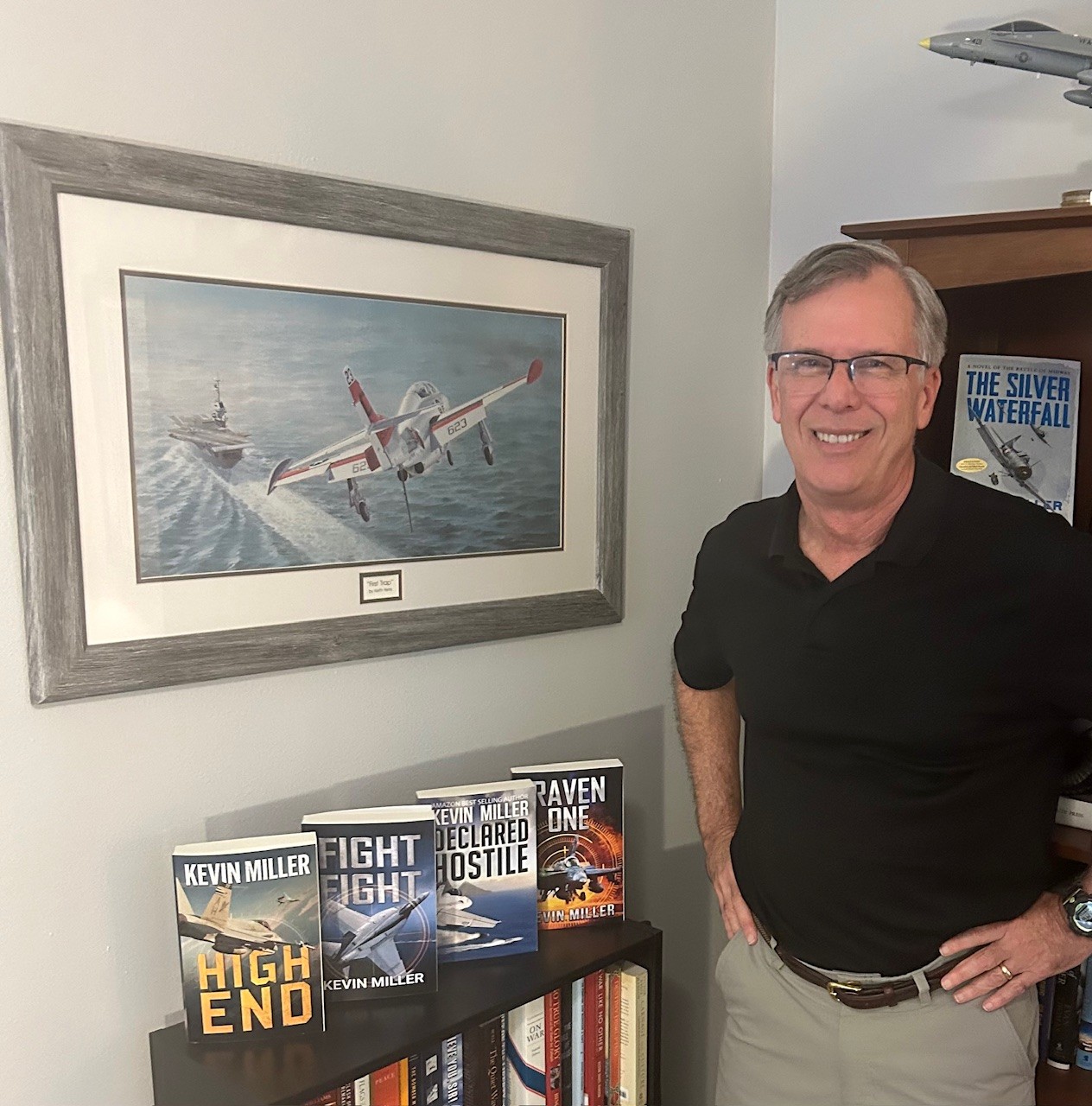
    Kevin Miller, books, painting, dockers, black shirt, man

    Chanticleer: You’ve talked a bit about Tom Clancy and Stephen Coonts as comp titles for your work earlier on, but which authors do you for inspiration, advice, or just because you like their work?

    Miller:

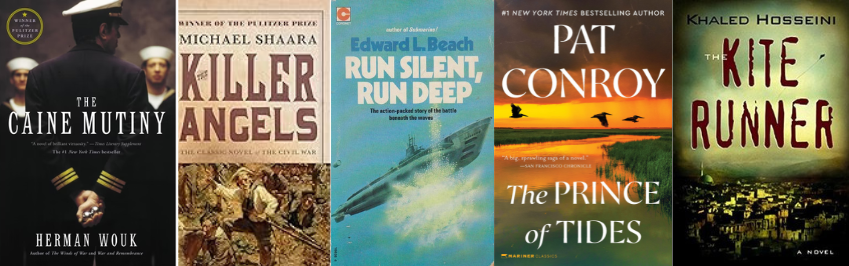
    Herman Wouk

    Wouk is an absolute badass of a writer, from his unflinching views of human nature to his superb research of his subject. As a Midway historian with a carrier aviation background, Wouk – who was an officer but not an aviator in WWII – wrote passages in War and Remembrance about the carrier pilots at Midway that impress me not only by their accuracy in flying the airplane but their human emotions in the middle of deadly aerial combat. His fictional German historical commentator von Roon – a brilliant character – gives context to the history the characters are living inside. The Caine Mutiny is a masterpiece in human conflict and the unfairness of life. Wouk puts you inside the mind of a three-dimensional character like no one else.

    Michael Shaara

    Many are not familiar with this name from 50 years ago, who at the time received a Pulitzer for The Killer Angels, the classic historical fiction novel of the Battle of Gettysburg. Shaara – who was an Army veteran but not a noted Gettysburg historian – brought Lee, Longstreet, Chamberlain and Pickett to life without changing any facts of the battle, giving the reader the honest insights and impassioned pleas of the real men who fought at Gettysburg as to how they should deal with the enemy across the field. Shaara was 100% my inspiration for The Silver Waterfall. As the country was recovering from its Vietnam War trauma, The Killer Angels was not successful when published in the mid 1970’s. Shaara did not live to see it adapted into the movie Gettysburg and the commercial success Angels has subsequently received. Another of his works was published posthumously and adapted into a movie: For the Love of The Game.

    The Cain Mutiny, The Killer Angels, Run Silent Run Deep, The Prince of Tides, The Kite Runner

    Captain Edward L. Beach

    Ned Beach was a WWII submariner who after the war and while still on active duty wrote the novel Run Silent, Run Deep, an immediate hit with post-war audiences that was adapted into a movie starring Clark Gable. The story is of conflict inside the control room of the submarine between two officers who each want the same woman back home but must cooperate to lead the crew against the enemy above them. This human tension centered in pride is a feature of all my novels. Beach wrote more novels including Dust on the Sea and Cold is the Sea, both to critical acclaim. During this time, he was given command of the nuclear submarine Triton that circumnavigated the world while submerged, an incredible feat in the day. Sadly – and not surprisingly to this naval officer – Beach was not selected for promotion to admiral as the higher ups were jealous of his fame and considered his creative pursuits unseemly.

    I write in his third-person style, calling my protagonist by his last name while placing the reader on the bridge of a ship or in the cockpit of an airplane as it really is, and expecting the reader to keep up.

    Pat Conroy

    Pat Conroy grabs you and does not let you go with the raw human power of his writing. Just wow. Like all the greats, he is honest – and fearless. Known best for The Prince of Tides and Beach Music, for me as an aviator, The Great Santini will always be my favorite. However, it is far from a military technothriller. It is a human story as all of his are about the reality of the most sinful of the deadly sins, pride. The Lords of Discipline is another unforgettable work which, like Santini, is more memoir than fiction. Pat Conroy had a rough upbringing, and as they say in sports, left it all on the field in his writing, holding nothing back. Just wow.

    Khalid Hosseini

    I’ve never visited or even flown over Afghanistan – my time in the fleet was before that – but I have been there thanks to the writing of Khalid Hosseini. Like millions of readers, I too was enthralled by The Kite Runner and his sequel A Thousand Splendid Suns. Hosseini’s vivid descriptions of place, the detail, and of course his insights of human nature and the fascinating culture of Afghanistan – both lovely and horrifying – are unforgettable. He explained Afghanistan to foreign readers in a no-nonsense style, unapologetic and fresh. We recoil at the cruelty and betrayal – I cannot believe they treat their fellow human beings like this! – but turn the page anyway as Hosseini assures us, yes, they do. I seek to describe and explain my former world with verbal images like Hosseini did his.

    Flight gear, jet, pilot, helmet

    Chanticleer: That is an amazing personal canon to draw from. Do you also enjoy craft books, and do you have any you would recommend?

    Miller: The classic Bird by Bird by Ann Lamott was enjoyable, but Stephen King’s On Writing, Pat Conroy’s My Writing Life, and especially Steven Pressfield’s Do the Work and Nobody Wants to Read Your Sh*t were each helpful to me and I would recommend them to anyone who writes creatively. People often ask me for my insights as they prepare to write a book. I explain that writing, at the bestselling and award-winning level, is hard, hard work and there’s no escaping it. While I cannot explain how I write – I just let it rip! – these giants have written helpful guides. Enjoy.

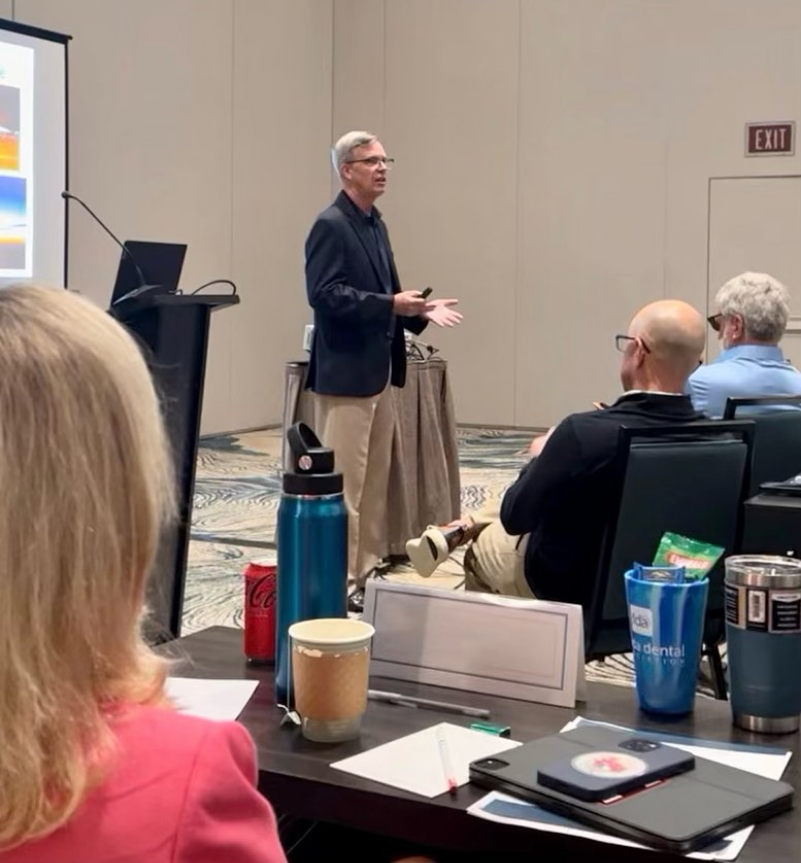
    Speaker, Kevin Miller, bald head, conference room

    Chanticleer: While most people think of writing as a solitary activity, we often find it has far reaching impacts. How has being an author affected your involvement in the community?

    Miller: Author implies authority, and I am an authority on the Battle of Midway, now recognized by all in my circle because of the success of my historical fiction novel. Two years ago, I spoke at a gathering of all the U.S. Navy admirals in naval aviation about the lessons of the battle, lessons they can use today, and next year I’ll speak at a large event to commemorate the battle. Because I am also connected to today’s fleet, my Raven One series novels are prescient for today, especially my last two that involve China and Russia, and I’m often invited to give talks at Rotary Clubs and veterans groups to educate the public about the need for strong sea services. Publicity earned from the CIBA recognition of The Silver Waterfall cemented my position as an authority on Midway.

    Chanticleer: That’s incredible! Becoming an expert of such an important historical event is really quite an accomplishment! And we at Chanticleer are very happy to know your CIBA award has helped to bring more attention to the Battle of Midway and your wonderful novel. Are there any activities you are involved in that improve or promote literacy?

    Miller: I teach middle school history at the honors level, one day per week. My honors students are above average readers, and during the semester I assign reading. The novels Around the World in 80 Days for 6th grade geography, and The Red Badge of Courage in 8th grade U.S. history are examples, and after they complete the reading, I have them write essays about them in class. They grumble of course, but where else will they read these classics of literature?

    Jet, The Silver Waterfall, author, Kevin Miller, dockers
    Chanticleer: Being a teacher is such a gift to the future. Thank you for doing that work. Your students sound lucky to have you. If we can bend your ear for us for a teachable moment, what are some marketing tips that you would recommend to our authors?

    Miller: My publisher says there is nothing like writing a new book to sell your current one, however paid FB and Amazon ads work, as do email lists. Promo stacking with services such as Amazon, BookBub, Robin Reads, ENT and others is an effective strategy. While I’ve snagged three BookBub featured deals (all for Raven One) I’m still struggling with breaking the code on what works (regarding Canva creatives) for BookBub advertising. Posting on social media almost daily about my flying days and sometimes me with my book is effective; Chanticleer author D.D. Black does this very well on Instagram. So does Tony Selimi, who says authors must get famous to get a larger audience. Get a Facebook business page with others on social media to gain follows. LinkedIn is good, Pinterest during the Christmas gift giving season, and, of course, email. Recommend investing in KDP Rocket, and David Gaughran is a superb follow for indie writers on all aspects of publishing and promoting.

    Chanticleer: That is a wealth of excellent information for authors. What about for readers, what help can readers be to authors?

    Miller: Receiving a kind email from a reader is gratifying, and I always write back thanking them, and then ask them to leave a review. WE all know and crave the social proof of reviews, but my sense is that only 1-2% of readers leave one. Wish that Amazon allowed us to thank them when they do. Passing the word of course is nice of readers. Word-of-mouth advertising can’t be beat. Then there’s good old-fashioned encouragement. Writing as we know is hard drudgery, and for me the end-product is what drives me, not any joy or “rush” in the act of writing. Doing the work as Pressfield says and producing something that people can appreciate today and decades from now is my “why.” Thank you to the readers, known and unknown to me personally, who have encouraged that.


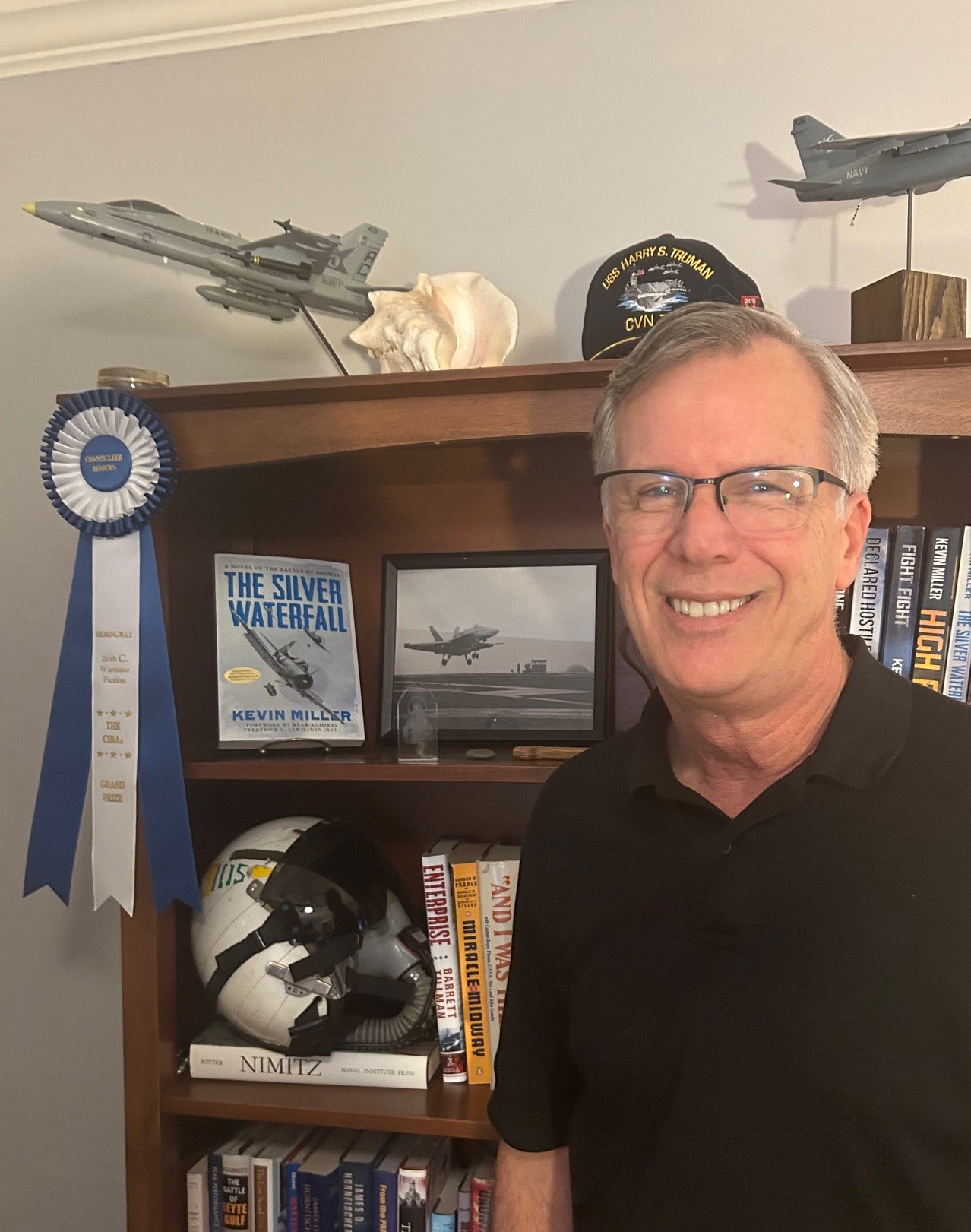
    Kevin Miller, bookshelves, helmet, pictures, CIBA Grand Prize ribbon, Model jet

    Retired U.S. Navy Captain Kevin Miller graduated from the University of Mississippi and was designated a Naval Aviator in August 1983. He flew the A-7E Corsair II and FA-18C Hornet operationally and commanded a deployed strike-fighter squadron. He finished his career in the Pentagon serving on the staff of the Secretary of the Navy, retiring in 2005.

    After leaving the service Kevin was employed as an associate at two Washington DC defense consulting firms, then as a not-for-profit executive, and today is the Owner/Principal of MPK Defense Consulting. He is also the Best-Selling and Award-Winning author of the Raven One military action-adventure series and the historical fiction novel The Silver Waterfall: A Novel of the Battle of Midway that was awarded the 2023 CIBA Hemingway Award for excellence in 20th Century Wartime Fiction.

    Kevin lives in Pensacola, Florida and is working on his next novel. Find out more about Kevin and his novels on his website.

  • Chanticleer 10-Question Author Interview Series with David Calloway – Historical Fiction, African American History, Slavery & the Civil War

    CHANTICLEER 10-QUESTION AUTHOR INTERVIEW SERIES

    with Award-Winning Author, David Calloway

    Hello friends, we have another fabulous interview for you today.

    In 2024, David Calloway took home the 2023 Chanticleer Grand Prize in the Goethe Awards division for his fascinating novel, If Someday Comes. Here, he tells us how he was inspired by his own family’s history to write If Someday Comes and the subsequent heights it is now reaching! Take a minute or two and get familiar with David to learn more about his ancestors’ amazing story. You won’t be sorry!

    Chanti: Your writing is very personal. What drove you to tell your family’s history?

    Calloway: The heart of my wish to write and to tell my family’s story was to record for the coming generations the stories I heard from the old folks as I was growing up. I wanted to preserve the struggles, hardships, and triumphs of my ancestors’ American lives.

    I think I always wanted to write, but put no real effort into it early in my life, as I was filled with self-doubts about my ability. Eventually I would overcome my inertia through the feedback and encouragement of close friends and family. In my professional life, I was in the motion picture and TV business, first as a cinematographer, then as a director, and then a producer. From day one, I read every screenplay – all revisions – and watched the words come to life on the screen.

    Slowly, I learned what worked to tell stories economically, so some story sense came by osmosis, some by study, some by practice. I took story structure classes, studied Robert McGee. I read Bird by Bird by Ann Lamott and On Writing by Stephen King. I talked with working writers about series and story arcs, plotting, character, and foreshadowing. I also attended writer workshops, retreats, and read other successful novelists.

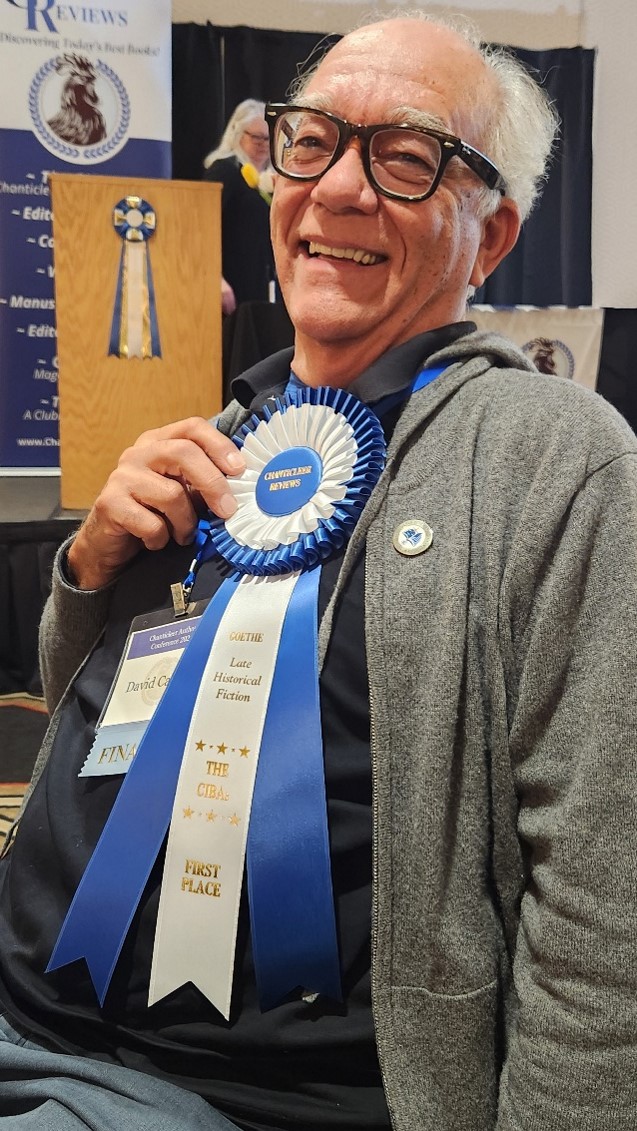
    CIBA award, Grey sweater, David Calloway, black shirt, conference, awards banquet

    Chanti: When did you finally feel you were an author and add that to your extensive resume?

    Calloway: The day I opened the box that brought the proof copy of If Someday Comes! Up to that point, there were many moving parts, the manuscript, the proof reading, the cover art, the endless formatting. Here in my hand was a real book, something anyone might buy. Unbelievably, it had my name as writer on it. It’s been published for many months, and I still find it hard to introduce myself as an author.

    Chanti: Your ancestor’s story is so compelling. What genre best describes your book?

    Calloway: If Someday Comes is historical fiction, closely based on the true story of my great-grandfather’s life during the American Civil War. I grew up knowing where people were during that period, but their exact relationships were lost in time, so I filled out the characters and created the tone of the plot as I went. Comments from the old folks like “he was a nice man” are not enough. It’s hard to avoid retroactively applied values to those times, and I’m sure some of my twenty-first century “I have judgement” slipped in there somewhere, but the goal of getting his story into a book was my true goal.

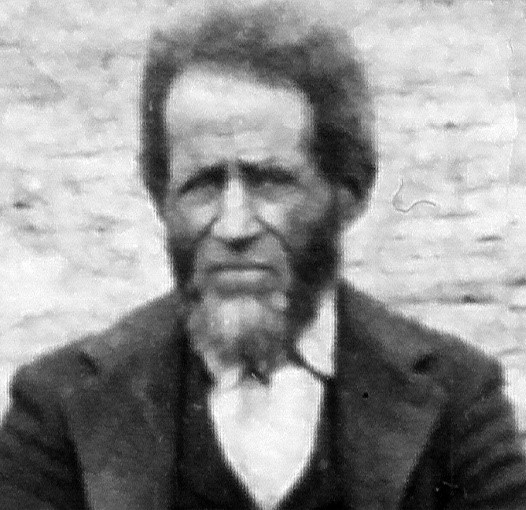
    Old photograph, African America, slavery, beard
    George Calloway

    Chanti: How did find the information you used to fill in the background of the story?

    Calloway: I read historical accounts of the period and subject, then added in my family’s tales of the past. I also created an outline of events for the story, and I used incidents I read about in books, letters, and newspapers for inspiration. The motivations of people never change for as far back as written history will allow us to see. Well-worn are the old trials of the human condition, and how often do we quote the Romans and Greeks on sex, greed, love, and jealousy. And of course, my own feelings on the same subjects.

    Chanti: That’s a rich way to develop both character and story! How do you approach your writing day? What is your routine?

    Calloway: “Sporadic” is my routine. I’ll write for several days, then none, then return to the page, then realize I need input, then read more history and other people’s work, stare at the blank screen, castigate my own procrastination, remind myself that no one is going to read this if I decide to cut it-so don’t worry. Then I despair that none will read the book anyway, convince myself that I’m hungry and a snack will get me going. I’ll check my email, take my dog for a walk, and then have lunch with old friends whom I’ve convinced my book is going great.

    Ad infinitum.

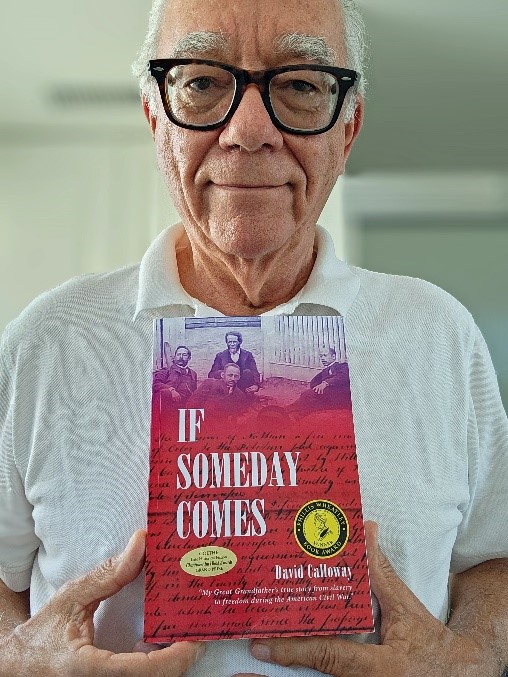
    David Calloway, If Someday Comes, White shirt, black glasses

    Chanti: What about writer’s block? How do you handle it when the words just won’t come to you?

    Calloway: Staring at an empty page with no ideas popping is tough. I write whatever comes to mind. It may have nothing to do with the book, or it may have a connection later on in the story. Some days are two sentence days, some are two-page days. I concentrate on my rights as an editor and will change or eliminate any thoughts, so I just jump right in.

    If I’m really stuck, taking a walk helps. I leave the phone at home, as I find stepping away from it resets the brain. Sometimes I imagine your main character with walking with me. And the phrase “I’ve got to sleep on it” is a maxim I refer to often, because problems are solved and ideas are generated by whatever part of the brain is working at night. It’s an approach that work for me… sometimes.

    Chanti: Those are great pieces of advice for breaking out of a block. Beyond writing, what sort of marketing tips do you have for authors?

    Calloway: Online ads are the only strategy that has worked for me. Spending lots of money in trade magazines has been a complete bust. I advertise on Amazon and Facebook. Set a budget and see how it works for you. Even so, It’s a struggle. Contacting public libraries, local papers, community clubs (Rotary, Elks, Chamber of Commerce) help – they always need luncheon speakers. I also make a point of being available for online book clubs and chats, and I have a website that has book reviews, awards, and links to other websites. www.IfSomedayComes.com. And I always encourage readers to write reviews online. It really helps others to decide to read the book.

    David Calloway, water, cap, grey, sky, land

    Chanti: What is your next project? Another story about a member of your family?

    Calloway: Yes! I am working on my Grandfather James’ story as historical fiction. He was born a slave in 1860, and grew up to become a surveyor and farmer. James and his brothers – all graduates of Fisk University – worked for and with Booker T. Washington in the building of Tuskegee Institute. James ran the farms and also taught farming. He was Tuskegee’s representative sent to Washington, DC to lobby for land grants to help finance the school. Later, James was hired by the German government and traveled to Togo to teach cotton farming.

    Chanti: Who are the perfect readers for If Someday Comes?

    Calloway: The book is a story of family, both before and during the Civil War. It highlights the close relationships between owner and slave, and as was so often the case, is about one large family separated by race and class.

    The story includes the good stuff, like love, courage, ingenuity, as well as the bad stuff of violence, cruelty, famine. Everyone suffered during the war; but remarkably, George (my Great Grandfather) kept everyone alive on both sides of the color line.

    It will be a book for anyone interested in the Civil War, the experience of slavery in East Tennessee, and the relationship of whites and blacks in the South.


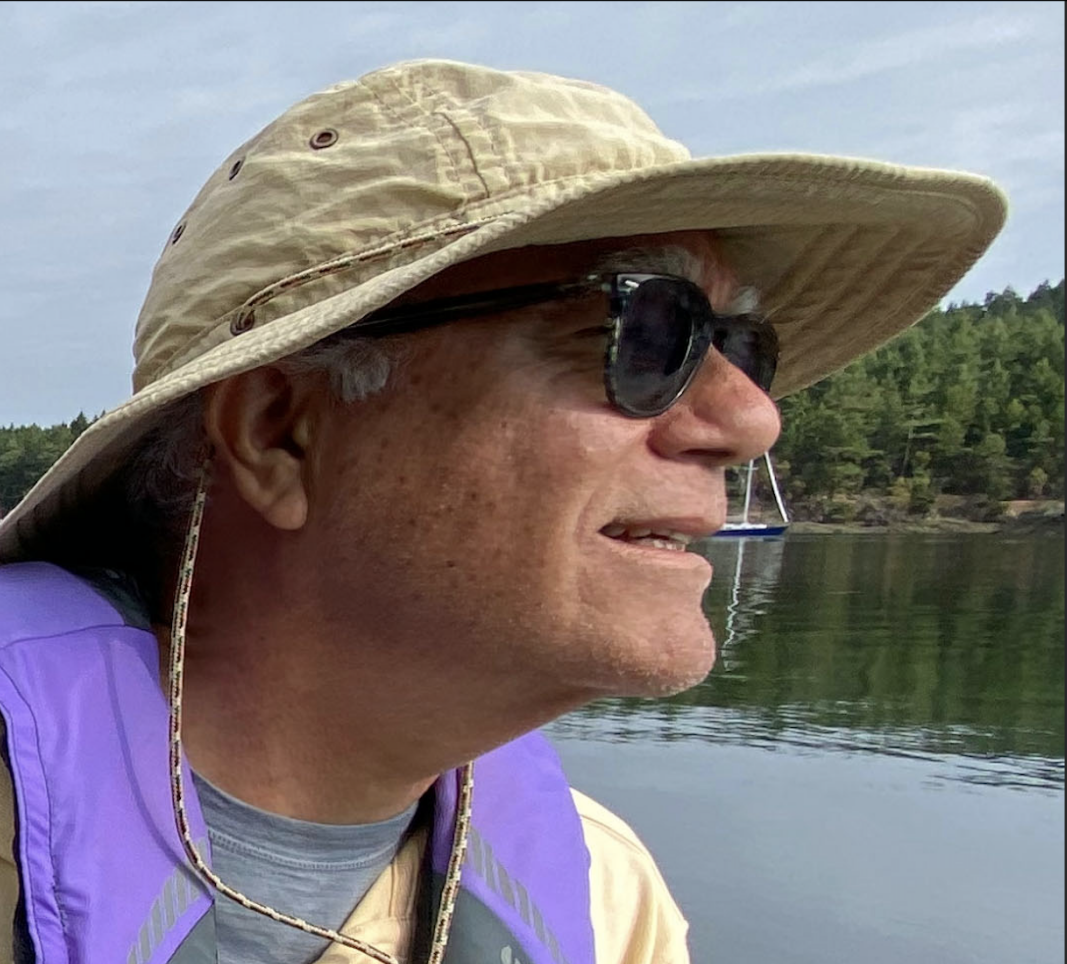
    man, hat, yellow shirt, water, land, sky, David Calloway David Calloway was born in Chicago and grew up in Palo Alto and Berkeley. Calloway holds an MFA from UCLA in Film Production. His first job was as an Editor, progressing to Cinematographer, then a Producer of features and television. He is a member of the Producer’s Guild, the Director’s Guild, and the Academy of Television Arts and Sciences.

    Calloway is a Director on the board of the Angel’s Gate Cultural Center and on the board of the Offshore Racing Outreach Foundation.

    Calloway lives and works in Los Angeles, California. You can find out more about David Calloway’s writing on his website.

    If Someday Comes available on Amazon in print and Kindle, and as an Audible book.

  • Chanticleer 10 Question Author Interview Series with Kevin G. Chapman – Award-winning book, The Other Murder, Clue Grand Prize Award, Author Life

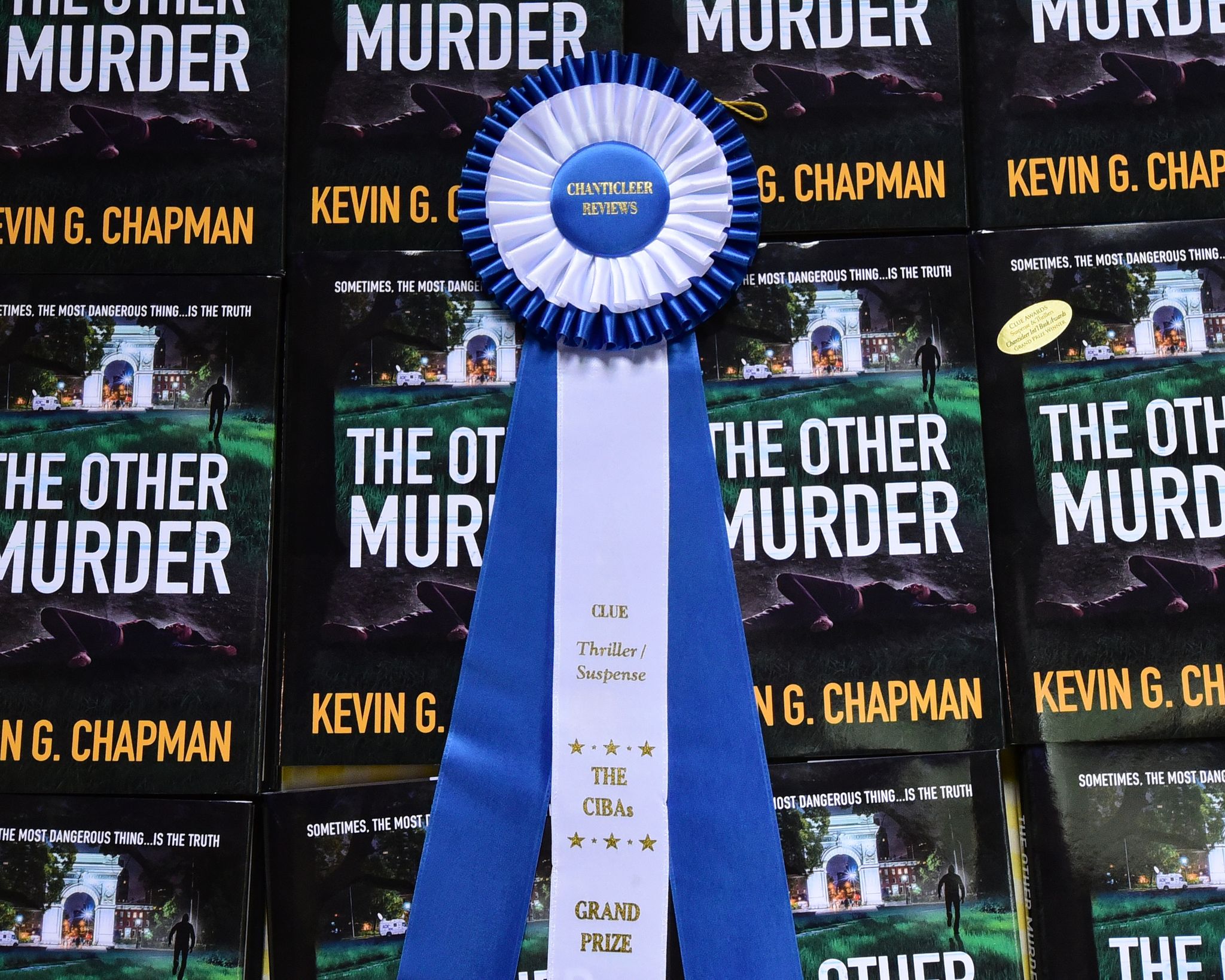
    The Clue Award Badge for Thriller Suspense Fiction and True CrimeFrom the 2023 Clue Division Grand Prize Winner for Suspense/Thriller for his book The Other Murder, we have a brand new Chanticleer Author Interview!
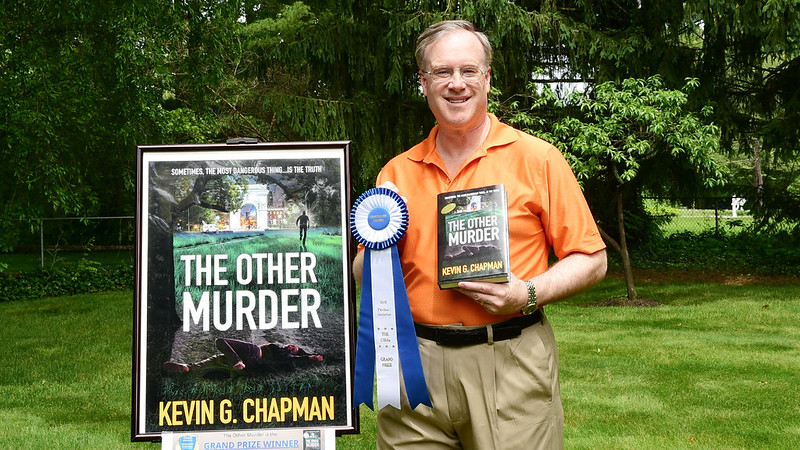
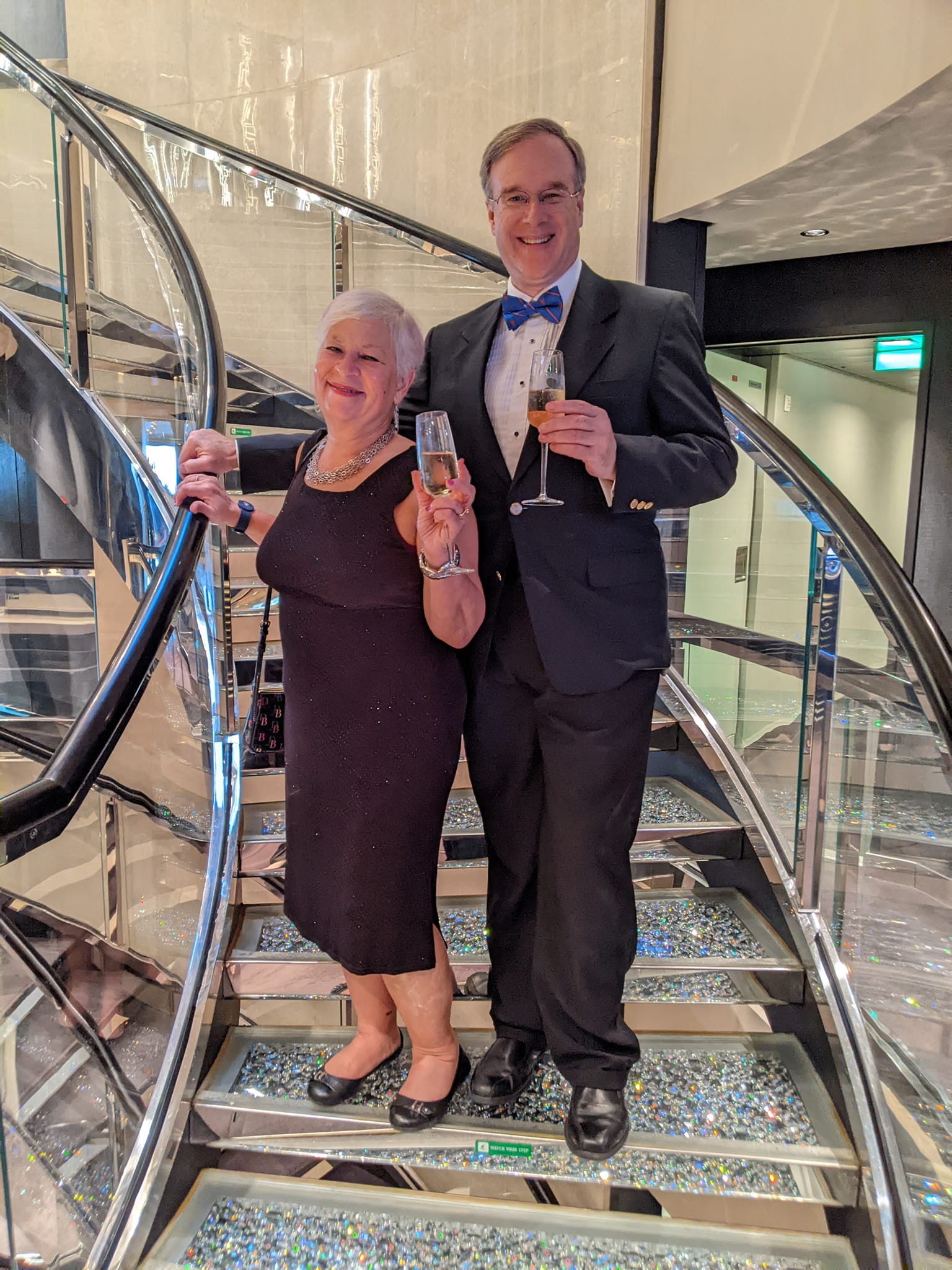
    Kevin G. Chapman won the Grand Prize in the Clue Division of the 2023 Chanticleer International Book Awards for his novel, The Other Murder. The Clue Division includes books in the categories of:

    • Detective / Crime
    • Suspense / Thriller
    • Private Eye / Noir
    • Legal /  Medical / Police Procedural
    • US Political Thriller
    • Spy / Espionage / Undercover
    • True Crime / Investigations

    That’s a lot of ground and a lot of books! The Other Murder was the first place category winner in the suspense/thriller category, and was awarded the Grand Prize as the Best Book among all the CLUE entries

    blue and gold badge recognizing The Other Murder by Kevin G Chapman for winning the 2023 Clue grand prize

    Kevin sat down with the Chanticleer Book Review to talk about his writing and his new novel, Double Takedown, coming out this fall!

    Chanti:  Thank you so much for joining us Kevin! Tell us a little about yourself and how you started writing?

    Chapman:  Normally I’m explaining to my lawyer colleagues that the unusual thing about me is that I’m a mystery writer on the side. For mystery readers, you might be interested to know that I’ve been an in-house attorney for a major media company for the past 29 years. I’m a labor lawyer and former chairperson of the Labor & Employment Law section of the Association of Corporate Counsel. The L&E section consists of over 7000 in-house lawyers. I led the ACC section and oversaw our educational programs and publications. I even wrote an article for the ACC magazine on a radical plan for improving how companies run their employee evaluation programs! Yeah, I’m a law nerd (and proud of it).

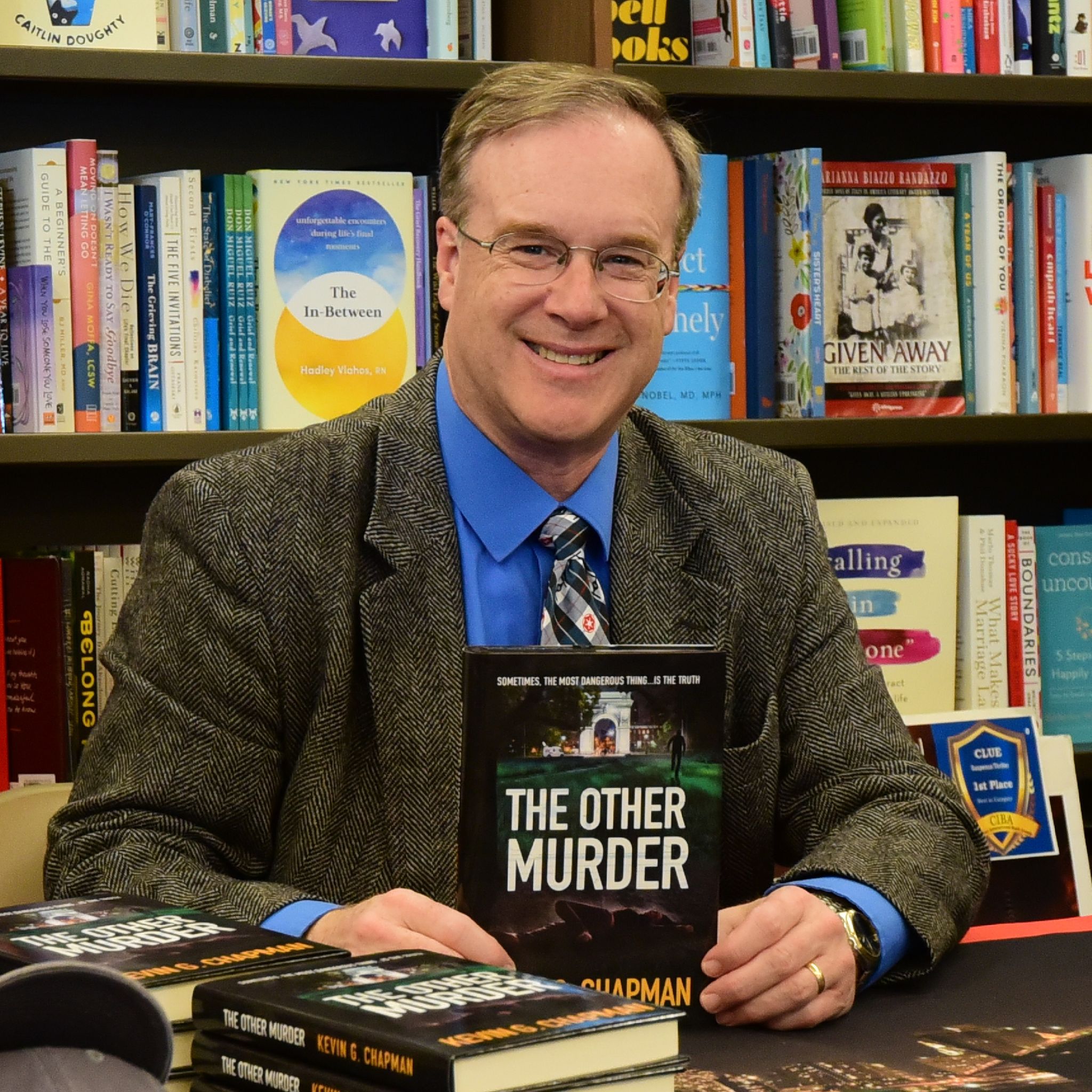
    Kevin Chapman, Orange shirt, the other murder, ciba award, clue division, garden, park

    Chanti: We all are nerds about something! How did you develop the idea for your current novel, The Other Murder, (Winner of the CLUE Award Grand Prize this year) and what inspired you to explore the intersection of media and law enforcement?

    Chapman: Because I’m a lawyer who works for a media company and writes crime thrillers, the most significant elements of my professional life all come together in The Other Murder. The story sprang from my non-original observation that pretty, affluent white girls who are missing or killed tend to dominate the news cycles. We often hear statistics about the number of murders and violent crimes in a particular city. We seldom (if ever) see significant media coverage given to a minority victim who isn’t rich and famous.

    This phenomenon could be called “unconscious bias,” but is likely more a conscious choice by producers and media executives focused on getting the biggest ratings. Particularly in broadcast news, including 24-hour cable news networks, getting eyes on your story is the most important thing. The story that can be made sensationalistic and involves a victim that will garner sympathy and is relatable is the story you feature. That’s good economics, but leads to a slanted presentation of the world. I wanted to make this murder mystery a story that gets inside that culture and lets readers see all sides of the story as it unfolds.

    Kevin G Chapman, Sharon Chapman, event, awards
    Kevin and Sharon Chapman

    Chanti: The story of The Other Murder involves two journalists and two homicide detectives. How did you approach developing these characters, and what challenges did you face in creating complex relationships between them while navigating the intricacies of the murder mystery?

    Chapman:  The real “leads” of this story are the two journalists. Each of them has positive and negative attributes and each makes choices that are both selfish and noble – the two being not mutually exclusive. I wanted my cable news producer to be understood in the context of her job, her bosses, and her ambitions. I wanted the print journalist to be understood as someone who could have a “better” job, but who has a calling both to journalism and to his community. Their interactions disclose their similarities and differences as well as the nature of the business in which they work. And, of course, it’s a murder story so there must be cops. Here, the cops don’t have all the information and need the help of the journalists.

    CIBA award, Clue division, grand prize, the other murder, bookshelves, blue and white ribbon, Chanticleer Book Review

    The two partners have their own problems, including a recent incident that set them at odds. Through their eyes, the reader learns things the journalists don’t know and sees the way the media coverage affects the police investigation. Making the characters the focus of the story lets me tell the mystery story through interesting eyes.

    I have always loved the mysteries of Sara Paretsky, whose characters are the heart and soul of her books. In the Mike Stoneman Thriller series, I had a fixed set of main characters be my narrators. They, and their minor-character companions, gave me a universe of backstories to weave into the mysteries. This stand-alone story has brand new characters for my readers to relate to and care about.

    My goal, like Ms. Paretsky, is to make my readers as interested in the stories of the players as they are about the underlying “main” plot. The plot needs to hold them together, but the characters need to behave in a way that is both realistic and interesting.

    Kevin G Chapman, The Other Murder, table read

    Chanti: Many of your stories feature important social issues, woven into your murder mystery plots. Why do you do that, and what message do you hope readers will take away from this aspect of the story in The Other Murder?

    Chapman: I always want my books to be entertaining, but I also want to make my readers think about issues that exist in the world and which often influence the stories I’m telling. Jason Dickson, Mike Stoneman’s partner, is a Black detective. He (and Mike) encounter racism inside and outside the NYPD and those issues play naturally into my plots. I try to let my readers make up their own minds about things, but also confront them with situations they need to think about.

    Kevin G. Chapman, Fatal Infraction, football, money, Chanticleer Book Reviews, stadium, Mike Stoneman

    In Fatal Infraction, for example (Mike Stoneman #4), the Black quarterback of a New York pro football team is murdered. The racially charged environment of pro football and the reaction of the community to a murder that may have been racially motivated is a big part of the plot.

    In The Other Murder, the main plot involves subtle racism that permeates the media and, to some extent, the police and the city officials, who are driven by publicity (positive or negative) and public perception. When the media tells the public that a situation is a horrible tragedy and an example of a huge problem that needs to be fixed, crowds gather, memorials are created, politicians and activists make speeches. This causes the media feed on itself as it amplifies the story.

    Government officials like the mayor and the police commissioner react by prioritizing that crime and devoting resources to solving it. Catching that killer matters because everyone is watching. In this story, the second murder involves a Latino boy with a history of gang membership. It garners no media attention and generates minimal police interest until cops discover that Javier Estrada’s murder may be connected to the white girl, Angelica Monroe. The immediately reported story is that Angelica was an innocent victim of urban gun violence. She becomes a saint. Javier Estrada is ignored.

    Kevin G. Chapman, The Other Murder, NY Jets, Football

    Meanwhile, the two detectives on the cases are a white man and a Hispanic woman. Mariana is the only character involved in the police investigation who cares about Javier’s story. Similarly, only Paulo Richardson, the local newspaper reporter, cares about Javier’s portrayal in the press. Paulo wants to make people see the truth about Javier. Mariana wants her colleagues to see that the white girl isn’t always the victim and the Latino boy is not always the criminal. The investigation also lays bare the recent rift between Mariana and her partner, Dru Cook, arising from an incident of police brutality. Was that incident racially motivated? Dru didn’t think so. Mariana saw it differently.

    In the end, once the reader has all the facts (or, at least all the different versions of the facts), the question of who is a little bit racist and where motives and biases get mixed together makes things a lot less clear cut. My hope is that the reader not only enjoys the story and cares about the characters, but that the tale makes them think a little bit about their own perceptions.

    Chanti: The Other Murder challenges readers to guess what happened. How do you craft the tension in a narrative, and what techniques did you employ to keep readers engaged in solving your mystery?

    Chapman: Each book has its own requirements. In Dead Winner, my stand-alone romantic mystery from 2022, the protagonist was entranced by a woman who induced him to both protect her and help her recover her lost lottery ticket. The suspense was what would happen and who was really pulling the strings. In the Mike Stoneman books, typically the mystery is who the killer is and whether/how Mike and Jason will catch them.

    Kevin Chapman, Work space, Shirt and tie, working, postcards, office

    In The Other Murder, the mystery is what really happened. In the first draft of the story, chapter one gave the reader a view into all the events that happened leading up to and including the murders of Angelica and Javier. I realized after the first draft was done that letting the reader know what happened and then following the investigations by the police and the journalists with that knowledge was not fully satisfying as a mystery. The story was: “how are they going to figure it out?” rather than “what happened?”

    So, I went back and deleted most of that first chapter and re-wrote the story so that the journalists and the police (along with the reader) are piecing together the facts, without knowing for sure who is giving them good information, which of their assumptions are correct, and what information they are missing. This allows the reader to guess where the characters have it right, and what might be wrong. Even at the end, nobody (including the reader) can be 100% sure they know the whole truth.

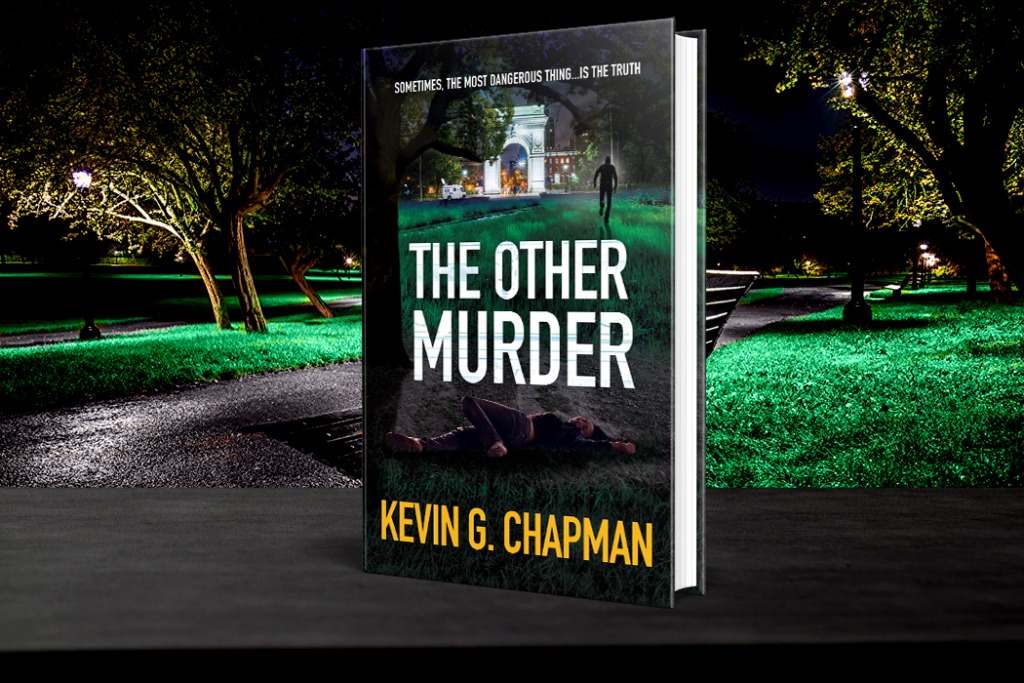
    Kevin G. Chapman, The Other Murder, Park, book cover, trees, grass, city nature

    Chanti: The novel highlights the danger of the truth. Can you elaborate on the significance of this theme and how it plays into the challenges faced by the characters, particularly Hannah and Paulo, as they uncover disturbing facts?

    Chapman: The tag line of the book was one of the first things I wrote after outlining the basic story. “Sometimes, the most dangerous thing…is the truth.” It is a common observation that humans are significantly influenced by what is called in psychology “recency bias.” Your strongest memories and emotions are attached to the things that happened most recently. It is also true in media that the first story is the one that gets imprinted in people’s memories, particularly if it sparks strong emotions. When asked whether one of two things is true, the one you heard first is the one you are more likely to believe.

    One of the core messages of The Other Murder is that people need to be careful about believing the first narrative they hear. But the reality is that, once a set of facts is in your head, it is hard to push it out. This is especially true when the original narrative reinforces your personal views and political objectives. Telling people who are emotionally, financially, and politically invested in one version of a story that the story they heard and want to believe is really a false narrative – is a dangerous thing to do.

    In the media world, once you have established your narrative and “hooked” your audience, it’s hard to switch gears and retain your viewers if you suddenly try to tell them that what you had been telling them is false and that there’s a new truth they should switch to. They are likely to switch – to a different news source that will reinforce their belief in the original story. That is part of the challenge facing Paulo and Hannah.

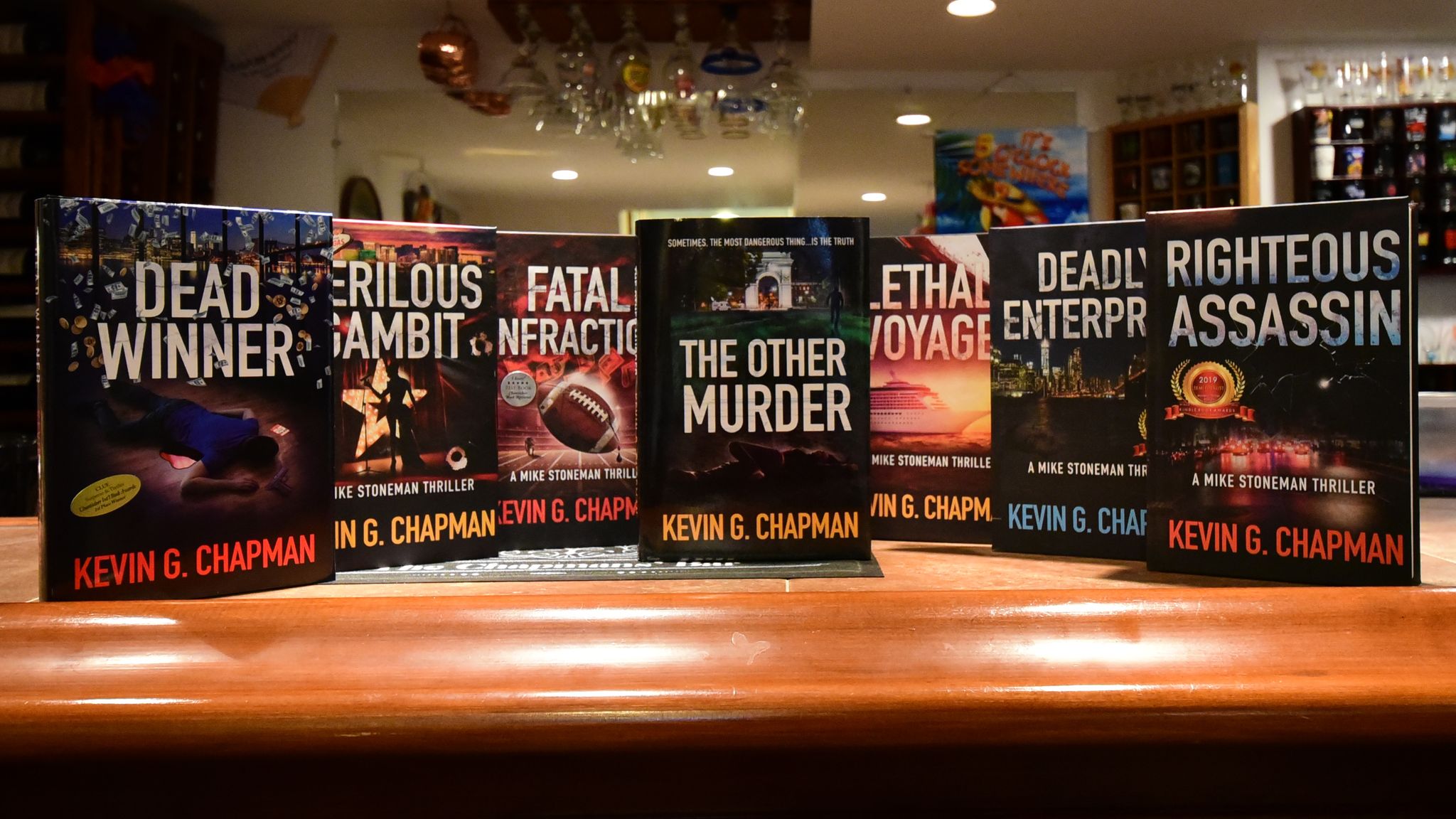
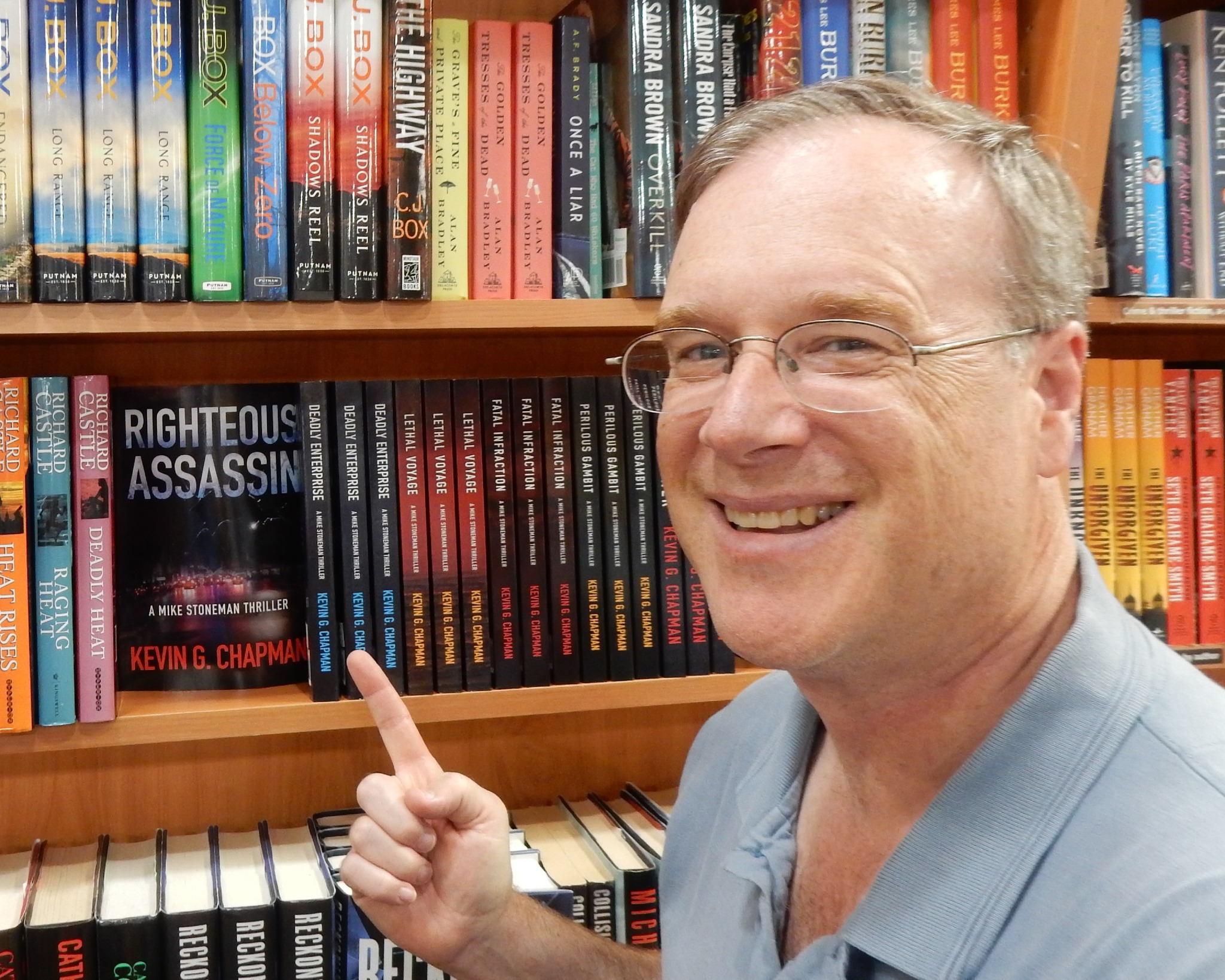
    Kevin Chapman, Mike Stoneman series, author, bookshelves, Pointing

    Chanti: That is so interesting! Do you find you often learn things from writing your books?

    Chapman: I’m always doing research to make sure that I’m getting the facts right in my stories, which can lead me to strange places. Like into the on-board morgue on a cruise ship (of course they have one!) or into the intricacies of how the NFL players’ association collective bargaining agreement treats the bonus money paid to a player who later dies. It’s fun to figure it out, but I almost always need volunteer consultants to help me and keep me honest.

    For The Other Murder, I researched the operation of a cable news network and consulted with a few experts in order to get the details and the terminology correct. I knew the print journalist world already, but merging them together with the police procedural story was a challenge and was fun for me.

    In my next book, I’ve been consulting with a pharmacist friend about drug interactions and how a murderer might use easily available drugs to induce a fatal reaction if you know what other drugs your victim is already taking. Cool stuff!

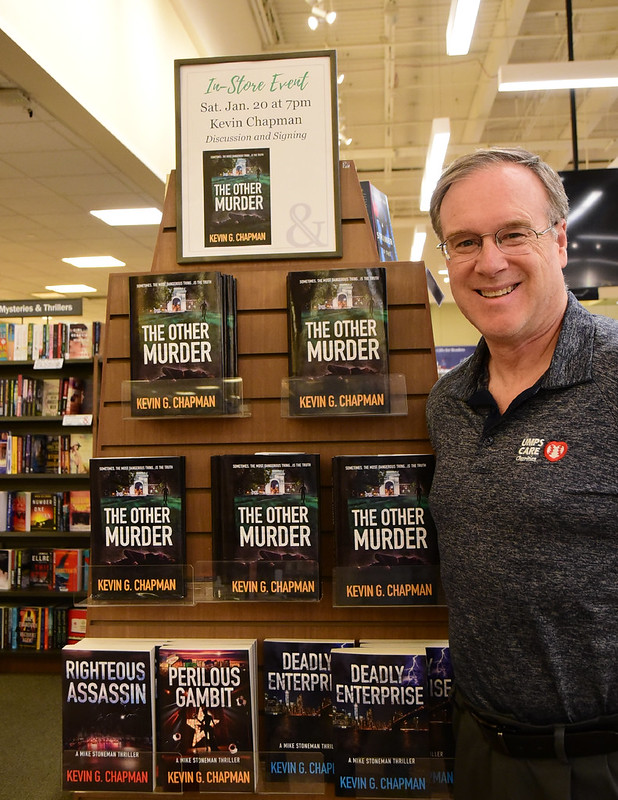
    Kevin G Chapman, Barnes and Noble, Book display, The Other Murder

    Chanti: Are there any secrets in your books that only a few people will find?

     Chapman: Oh, yes! Leaving Easter Eggs that will amuse a few readers who get the joke or the reference is great fun. Even if it’s only my wife and I who laugh. Sometimes it’s a name, a location, or a line of dialogue.

    In The Other Murder, there are several references to things from my last book (Dead Winner). There is a location where key events happened in the last book, and an object that found its way from that book into this one. There are also references to characters from the Mike Stoneman books.

    In the next book, there will be references to the two detectives from The Other Murder, who work in the same homicide division as Mike and Jason. I was even able to put a reference in Mike Stoneman #3 to a character who would be the murder victim in book #4. That’s so much fun.

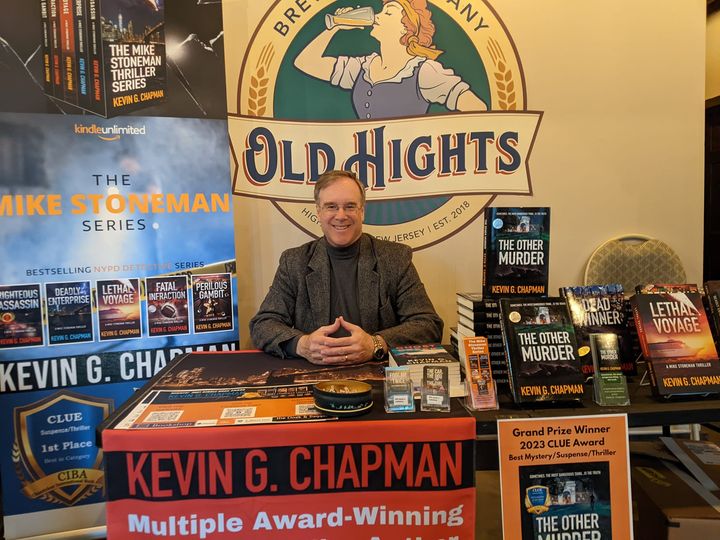
    Kevin G. Chapman, Table read, Old Hights, bookstore

    Chanti: With that in mind, who is the perfect reader for your book?

    Chapman: Lovers of murder mysteries, police procedurals, and romantic suspense will like my books. But what’s more important to me is that my readers be thinkers. If you don’t want anything in your books that raises difficult social/political issues and doesn’t make you examine your own biases and attitudes, then my books may not be for you. I don’t mind if you don’t agree with my characters, and I won’t be offended if you decide you didn’t like my subplots, but I want readers who accept a challenge. I also love readers who like to be surprised and who think they can figure out any mystery. Think you can figure out what happened? I dare you!

    Kevin Chapman, Audiobooks, recording, studio, Teal polo shirt, headphones, microphone
    Kevin G. Chapman recording his audiobook

    Chanti: It’s always a joy to try and figure out the next step as a reader. And speaking of which, what are you working on now? What can we look forward to seeing next from you?

    Chapman: I’m currently in the final editing stage of the next book in my Mike Stoneman thriller series, titled Double Takedown. I left off with Mike, Jason, and the other characters from the series in Las Vegas in January of 2020. I decided that I did not want to write those characters living through the COVID-19 pandemic (interviewing witnesses while wearing masks, etc.). So I wrote two stand-alone books that are not set in any particular year, including The Other Murder. Now, I’m picking up Mike and Jason in the fall of 2023 as they are preparing for a trial stemming from a murder from May of 2022 and investigating a new murder from September of 2023. This story includes a character who is a social media “influencer” and explores what happens when the police develop “tunnel vision” during an investigation. Look for Double Takedown this fall.


    Kevin G Chapman, white man with blue shirt and glasses, CIBA 2023 Clue Award Grand Prize winner for The Other Murder Kevin Chapman writes award-winning suspense/thriller/crime fiction. His books, including The Other Murder, are now available on Amazon in both hardcover and print, and as an ebook on Kindle via Amazon.com at https://www.amazon.com/dp/B0CJN6W5NJ.

    Paperbacks and hardcovers of all his books are also available through select independent bookstores and via Bookshop.org, which supports local bookstores. The audiobook version is available via CHIRP, iTunes, Googleplay, Roku, Nook (Barnes & Noble), LIBRO.FM (which also supports independent bookstores) and on Audible.

    Readers can contact Kevin Chapman, see all his content, and download two free short stories and a free novella at www.KevinGChapman.com.

  • Interview with Grand Prize CHATELAINE AWARD Winner, Mary Ann Clarke Scott by Sharon E. Anderson

    Interview with Grand Prize CHATELAINE AWARD Winner, Mary Ann Clarke Scott by Sharon E. Anderson

    Author Spotlight Series focuses on M.A. Clarke Scott, an Award-Winning Women’s Lit Author

    Mary Ann Clarke Scott took home the Grand Prize ribbon for the Chatelaine Book Awards in 2016. She not only writes women’s fiction – but sci-fi and fantasy, too! Who knew? I had a chance to catch up with Mary Ann recently to chat about writing and reading and life. Here’s what she had to say. Enjoy!

    Mary Ann Clarke Scott

    Chanticleer: Tell us a little about yourself: How did you start writing?

    Clarke Scott: I was always an avid reader and a daydreamer. There were voices in my head, alternate realities playing out in my imagination, and I’ve always loved words. I tried to write my first novel at the age of nine, but abandoned it for other pursuits until 2005, once my son was in preschool and I’d pretty thoroughly given up on architecture as a career. Then I started seriously to learn to write, with purpose and discipline.

    Chanticleer: Oh, that sounds so familiar! You either talk to yourself or talk to your characters… it makes more sense to talk to your characters! So, Mary, what do you do when you’re not putting words on the page?

    Clarke Scott: I like to hike on mountain trails and I do Pilates and yoga. These things keep me limber and healthy, but also centered. I read a great deal. As I’ve got older I’ve become a bit indifferent to things I used to love, like gardening and cooking, but that may be because my focus is on writing. I still enjoy those things. I love to travel, and I love art and history and metaphysics. Recently we were in Europe for the summer, so I had my fill of museums for a while, but I never really tire of that. I aspire to be a visual artist, but never prioritize it with regard to time. It’s for ‘someday’.

    Chanti: How do you come up with your ideas for a story?

    Clarke Scott: Stories come to me primarily via character, but also through place and, what I guess I’d call ‘situation’ as a starting point. I put these elements together and the story grows up out of them, out of necessity, logically, as a response to what the character needs to grow.

    Chanti: Do you find yourself following the rules or do you like to make up your own?

    Clarke Scott: Both, I guess, but mostly I’m a rebel. I’m an Aquarian, and we tend to be rule-breakers. I’ve never been a conformist with regard to story or genre, but at the same time, I’m quite passionate about universal story structure. But I don’t see that as rules so much as patterns, and I love patterns. I think they have meaning.

    Chanti: I totally agree with you! How structured are you in your writing work?

    Clarke Scott: The stories are structured; my workflow is not. I work organically, which is to say, often

    Mary Ann’s writing room.

    chaotically and in an undisciplined, random way. I procrastinate. I binge. I don’t recommend it!

    Chanti: I’m so glad to hear you say that – as I am the same way…. So, how do you approach your writing day?

    Clarke Scott: I don’t have writing days, per se. I have a writing life. I know coffee is involved, though. I’m trying to incorporate meditation and visualizations into my process, to get a bit of control and rhythm. I’m also experimenting with dictation. It might not work because I rather enjoy touching my keyboard. But we’ll see.

    Chanti: Name five of your favorite authors and describe how they have influenced your work.

    Clarke Scott: Only five! I’m a great fan of Barbara O’Neal. I love the way she builds and paces a story gradually, and layers in so many strands of character and relationship, history and mystery. Nothing is wasted or gratuitous. She makes excellent use of the objective correlative. I admire her use of colour as symbol and leitmotif and the way she weaves vaguely spiritual and mystical elements into her stories, as an element of psychology almost, more than ideology, or anything overtly paranormal. For similar reasons, I’m a huge fan of Canadian author Susanna Kearsley, although the magical elements are often more explicit in her work. I love Georgette Heyer, and Mary Balogh, for their rich and well-researched Regency romances, populated by very believable characters. Classically, I adore Jane Austen, for the same reasons. The way they all paint a universal picture of humanity in a very singular social, political and economic context. I admire British authors Freya North and JoJo Moyes I think because they both take vulnerable, flawed protagonists and build them up through adversity, but make it all very ordinary and relatable (Oh, you poor thing…. Uh oh, don’t do that… Fight back, damn you!) and yet extraordinary in terms of character growth, pushing the readers’ emotional boundaries.

    Chanti: I can see that. Good choices, M.A.! How does being an author influence your

    Mary Ann with her critique group.

    involvement in your community?

    Clark Scott: I think a lot of writers are introverts. But publishing means you must build a platform and build an author presence, both online and in the physical, local community. It’s forced me to embrace who I am, what I create and be willing to advocate for that. Becoming more comfortable online has also made me less shy in person. I’m also able to share my knowledge with other writers and support them because I know how hard it is, and that we need each other. Writers are an incredibly warm, generous and supportive community, so it’s easy to feel a sense of belonging. It’s hard to find that anywhere else.

    Chanti: I agree, it’s so important to find your tribe! What areas in your writing are you most confident in? What advice would you give someone who is struggling in that area?

    Clarke Scott: I suppose my strengths would be story structure, character arc and description of setting. It’s hard to give advice. Those are just things that come more naturally to me. I struggle with other things. About description I’d say, use your senses. Creative visualization helps. It also helps to keep the description filtered through the point of view character and limit what you describe to what is important to them and to the story. I’ve had to learn to do this, to limit my description from ‘everything.’ I think my training and work as an architect made me very observant, but perhaps too much so. So filter it. Story structure is something that comes through study and analysis, reading, but also interest and desire. And about character arc, I’d say, study archetypes, and use the structure of stories to make sure your characters go where they need to go, but that you challenge them enough to change them.

    Chanti: Give us your best marketing tips, what’s worked to sell more books, gain notoriety, and expand your literary footprint.

    Clarke Scott: Well I’m pretty active on social media, and continue to build a community and an online brand that way. I’ve entered and won a few contests (like the Chanticleer Chatelaine!), and I think that helps build familiarity and credibility with readers as well as a presence in the writer’s community. I’ve taken a two-pronged approach to marketing my books: the first is to follow all the advisors and use loss leaders (freebies, giveaways, etc.) to build my email list – although my efforts in this area are in their infancy – and as yet I’m not very good at newsletters and blogging; and secondly, creating an author profile and posting samples of work on reader sites such as Bublish, iAuthor and Goodreads. I think my approach so far has been: try everything! At the moment I believe publishing more books to build my backlist is pretty important to build my credibility as an author, and leverage what marketing I do, so that’s what I’m focused on.

    Chanti: Backlist is so important. Thank you for mentioning that. #tryeverything I think we can make that a thing! Speaking of building a backlist, what are you working on now? What’s next?

    Clarke Scott: The WIP I’m focused on right now is called Coming About (although I’m still searching for a better title), and it’s Book 2 in my Having it All series. It’s been 75-80% complete for several years, so I’ve been working on finishing and releasing it in 2017. After that, I have two virtually complete books in the Life is a Journey series that need a little attention before they’re ready to publish. One thing at a time. Life interferes a fair bit.

    Chanti: Life does interfere! Who’s the perfect reader for your book?

    Clarke Scott: I think I write primarily for women, though men who’ve read my books say they enjoy them a lot. My audience ranges from quite young women to older women. Readers who are looking for experiences that are a little deeper and more thoughtful, rather than glossy, glamourous or action-packed dangerous fictional situations. There are no murderers or spies in my stories (not yet, anyway) and I’m not drawn to psychological thrillers. I write about real life, real people, and real relationships and hope that my stories are engaging at an emotional, psychological and maybe even a philosophical level. My stories are romantic and entertaining but also hopefully channel healing and personal growth. I believe the human heart is really the last frontier. Fiction is a powerful tool that enables learning and empathy, and therefore can help people reexamine their lives, and the lives of people they know, and hopefully understand that everyone suffers in their own way, and that human beings can always change, grow and move toward enlightenment, contentment, fulfillment and love no matter what lies they were told, what pain they’ve suffered, no matter their handicaps. I’m not writing self-help or how-to books. But I’ve always processed life through narrative and I believe others do, too. It’s in our DNA. So I think I’m looking for readers who aren’t afraid of this conversation.

    Chanti: What is the most important thing a reader can do for an author?

    Clarke Scott: Review and rate their books on Amazon and Goodreads and other sites. Such a tiny percentage of readers actually leave reviews, something like 1%, it’s extremely difficult for authors, even with excellent books, to build up social proof. And yet this is a significant part of what book buyers use to make their choices. And of course, if you admire an author’s work, tell other people about her! Obscurity is the curse of most authors in today’s overcrowded marketplace.

    Chanti: Look for Mary Ann Clarke Scott’s books at Powell’s, Indigo, Barnes & Noble, AbeBooks, IndieBound, Blackwell’s, TheBookDespository, and even Amazon!