
Tag: Asian American Literature

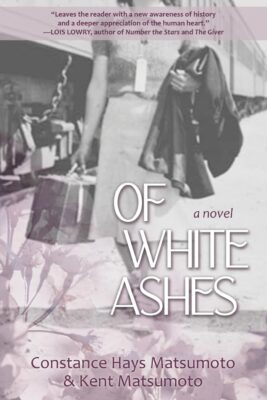
  • OF WHITE ASHES by Constance Hays Matsumoto and Kent Matsumoto – WWII Historical Fiction, Asian American Literature, Romance


    When the world is upended by war, the important pieces of your life fall around you, victims of a swirling wind. This is the story of Of White Ashes by Constance Hays Matsumoto & Kent Matsumoto.

    Just as radioactive ashes smothered Hiroshima after the United States dropped its first atomic bomb on Japan in August 1945, the unimaginable effects of war press down on Ruby and Koji, two kids on opposite sides of the Pacific.

    Ashes caught in swirling wind become a metaphor for the romantic story of these two children. Their mirrored journeys reveal layers of their identities they never knew existed, while the demands of their warring countries reshape their lives.

    Grounded in historical accuracy and part love story, Of White Ashes begins in 1939 with Ruby and Koji both living happily, Ruby in a beachfront Hawaiian town and Koji on his family’s farm near Hiroshima. Both will have their carefree childhoods taken from them after the 1941 attack on Pearl Harbor.

    Ruby and Koji share Japanese heritage and American citizenship, but far divergent attitudes to both.

    Ruby is an all-American girl, only vaguely aware of her heritage, largely from Japanese-American community. Koji, in contrast, only finds out about his American citizenship when he discovers his parents’ secret history of living several years in the U.S. All the while, Japan, the country he calls home, plunges headlong into the war.

    Ruby is ripped from her peaceful life, first by her mother’s sudden death and her father’s quick remarriage, then by forced incarceration due to the United States’ Executive Order 9066.

    Made a prisoner because of her race, Ruby grows embittered about her government’s willingness to persecute rather than protect all U.S. citizens because of its entrenched racism. Her fight is both philosophical and personal, and becomes more extreme when she is told by her father that she must emigrate with him back to Japan after the war. As a child she is powerless to make her own decisions.

    Koji, on the other hand, is curious and fascinated about his American heritage even though he must act like the standard-issue, politically faithful child expected by Japanese government and society.

    He sees his government’s harsh demands for people to scrimp for the war effort, taking every scrap of metal in their households for weaponry, and forcing children to leave school to make rifles in factories. Once the war ends, he manages to immigrate to the U.S. where he learns to speak English, goes to college, and even volunteers to serve in the U.S. Army during the Korean War. Despite the horrors of World War II, and his early life in Japan, he emerges as a proud U.S. citizen.

    Constance Hays Matsumoto and Kent Matsumoto’s Of White Ashes develops a beautifully complex love story through Ruby and Koji dealing with their deeply held differences.

    Their diametrically opposed philosophical stances cause years of heartache and stress after they meet and fall for one another. There is no easy path to pave over their conflicts no matter how many years have passed. However, as they couple, uncouple, and finally find a lasting path together, their story becomes a warm, relatable search for the goodness deep within themselves and each other that makes being together possible.

    Of White Ashes by Constance Hays Matsumoto and Kent Matsumoto won Grand Prize in the 2024 CIBA Hemingway Awards for 20th Century Wartime Fiction.


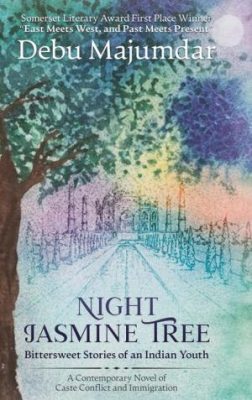
  • NIGHT JASMINE TREE by Debu Majumdar – Asian American Literature, Multi-Cultural and Interracial, Multi-Cultural Romance

    NIGHT JASMINE TREE by Debu Majumdar – Asian American Literature, Multi-Cultural and Interracial, Multi-Cultural Romance


    Somerset Blue and Gold First Place Badge


    Shankar, a recently retired professor of physics, and his wife, Durga, have left Michigan to resettle on Long Island with their son’s family in Debu Majumdar’s award-winning novel, Night Jasmine Tree.

    While the migration from the Midwest to the East Coast is a small one, considering both characters moved from India decades before, the move spurs Shankar to ponder the life he left behind and to reassess his relationship with his sisters and parents.

    In India, there are many different cultures, the main sprouting from the Hindu faith and political structure, the caste system.

    In the West, we may be familiar with this caste system, we mostly are all aware of the ‘untouchables.’ However, what we may not understand, is how rigid the caste systems truly are. Durga and Shankar are not from the same caste. Shankar is Brahmin, his wife is of a lower caste. This difference is enough for Shankar’s family to reject her outright and disown him.

    The pain he sustains by their rigid beliefs hurts him deeply, and that pain sustained years of estrangement. Now, however, a letter from his sister causes him to reassess his own role in the dissolution of his family even as he enjoys spending time with his son, daughter-in-law, and young grandchildren.

    Carefully organized, the novel is arranged into five parts with the chapters designating a time and place.

    Since the plot occurs on two continents, this framework is helpful to the reader. The author adroitly dovetails the past and present by having Shankar share stories of his own childhood with his grandchildren. And what stories they are! Sweet and funny, often involving animals, and the children are riveted by their grandfather’s tales of a childhood spent in India. Shankar was a good student but not above getting into mischief or naively causing trouble. India comes alive for the children as they hear about an encounter with a tiger, the annual celebration involving kite fights, and a haunting but hilarious ghost story. The reader turns the pages as eagerly as the children beg to hear another story.

    Consideration of Shankar’s past also involves his having grown up in a household in which the ancient traditions of Hinduism are sacred duties, and any failure to adhere to them is a moral failing.

    It is difficult for Shankar to come of age wanting to do what makes him happy but feeling tremendous fear that he won’t live up to his father’s exacting standards. Will he become a “tejya putra,” a son who is rejected by his own father? There’s no worse fate for a Brahmin male. And, yet, shouldn’t his father love him simply because children deserve love, and not because Shankar will one day perform the essential funeral rites for his parents?

    Regardless of how affectionate and attentive Shankar’s mother is toward him, he knows that she will always defer to her husband. She will let him dictate the terms of his sisters’ marriages, and she will never allow Shankar to disobey his father. The classic tension between duty and desire is artfully and affectingly rendered. All readers will be able to relate to the hold the past has on us. And like us, until Shankar resolves old animosities with his family, he’ll never indeed be free.

    The author is a master craftsman of descriptive writing, especially when contemplating natural settings.

    Debu Majumdar deepens characterization by connecting Shankar’s interior and exterior worlds. While contemplating existence through his main character’s eyes, the author gives us a work of lush and searing beauty, wondrously told with compassion, empathy, and truth. Night Jasmine Tree is a highly recommended reading for all.

    Night Jasmine Tree won 1st Place in the 2018 CIBAs in the Somerset Awards for Literary Fiction.


    Somerset Literary and Contemporary Chanticleer International Book Awards 1st Place Winner oval Gold Foil sticker

    Chanticleer Book Reviews 5 Star Best Book silver foil sticker