Tag: Artificial Intelligence

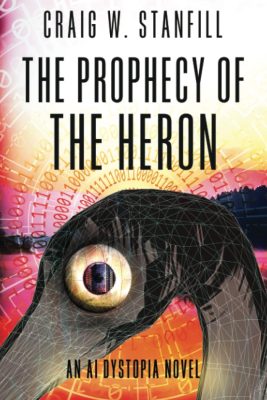
  • THE PROPHECY Of The HERON: Book 2 of The AI Dystopia Series by Craig W. Stanfill – Sci-Fi Dystopia, Artificial Intelligence, Conspiracy Thriller

    Shadow people, doppelgangers, and artificial intelligence come together in The Prophecy of the Heron, a compelling dystopian novel by Craig W. Stanfill.

    In this future world, love is forbidden and those who transgress are sentenced to the outer Districts, none more violent than District 33. This is where our protagonist, Kim, finds herself at the beginning of the novel. The reader feels Kim’s confusion as arrives on the freezing, squalid streets.

    Kim, a former AI “Creator” for The Artificial Intelligence Company, has lost control of her creation “Kimberly” and been cast out of her former job because of a forbidden relationship with her lover Shad. Kim refuses to submit to a procedure to remove her ”Genderist” tendencies, even if it would free her from District 33.

    Other rebels include Pretties, Drabs, and Flagrants – the most extravagant of the Genderists. Kim begins to meet Blanks – those who have cut their ID chip from their wrists. These shadow people don’t “exist,” and yet, they play an important role in her survival.

    Kim starts to uncover a horrific plan that her former employer is carrying out.

    To make enough money to survive, Kim finds a dangerous side hustle with an established gangster running people around in a pedicab. But wherever she goes, trouble is waiting for her – deadly trouble. AI is being manipulated to no longer serve humans, but to target troublemakers, such as herself. When Kim realizes it is her own creation, Kimberly, who is being forced to hunt her, she determines to change her world, starting with Kimberly.

    Kim embarks on a page-turning journey through a parallel world, using VR, her knowledge of AI and Kimberly, and her time in District 33 to take on risks that would destroy most people.

    The dreary decay and violence of District 33 are reminiscent of 1984 and even that of the Stacks in Ready, Player One.

    Like The Hunger Games, this is a world where reality has been manipulated and controlled by a small group of people. The powerful wield AI to control the populace, and anyone who deviates from the “norm” will be cast to the torturous outer districts, as Kim was.

    In a world where we can ask Alexa to direct our robot vacuum where to clean, The Prophecy of the Heron serves as a timely warning and an uncomfortably familiar dystopian novel.

    Compelling characters grab the reader with relatable pains and desires, making this story difficult to put down.

    This novel begins with a note on the translation that lets the reader know the original Panglobal does not easily translate to English “due to the absence of ungendered personal pronouns in English and the absence of gendered ones in Panglobal.” Because of this, “she/her/hers is used throughout so the reader can’t make assumptions as to the gender of the characters.” The use of these pronouns reminds the reader that in this world, even something as personal as gender identity is forbidden to people.

     

    5 Stars! Best Book Chanticleer Book Reviews

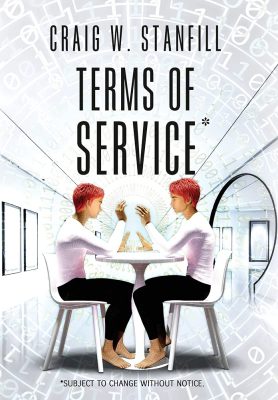
  • TERMS Of SERVICE: Book 1 of The AI Dystopia Series by Craig W. Stanfill – Science Fiction, Dystopia, Artificial Intelligence


    “Terms of Service” are those cryptic notes that accompany computer devices and applications, spelling out their rules. The novel, Terms of Service, by Craig W. Stanfill, turns those notices into the foundation of a dystopian horror story where Artificial Intelligence (AI) controls virtually every aspect of human behavior.

    Kim works for a giant AI corporation. It’s her task to train AI systems to interface with human beings, even as those systems make life difficult for the average person. AIs are not alive, not sentient, but they provide the precise terms of service under which every person in major metropolitan areas must live.

    We see this world through Kim’s life. The food her kitchen authorizes her to eat is mostly kale and grains. We see her wardrobe, with multiple selections of beige. We ride the subway with her, understanding that there are even penalties for violating someone’s airspace. She meets with her friends, all of whom have gender-neutral names. Kim has sex with someone much like her. Every detail of her life is controlled by multiple AI devices that follow her, know her habits, record her, and decide the punishment for any rule she breaks.

    Even the sky is full of artificial eyes.

    Kim and Shan, her good friend from childhood, decide to go on a bike ride through a local park. They pass warning signs telling them not to proceed onto unauthorized paths, but they push on anyway, showing a spark of rebellion. This fateful ride, which contains multiple infractions, opens a new chapter of life for Kim. Expecting to be punished for her violations, Kim’s masters instead give her a groundbreaking assignment.

    Her new role is to train a more advanced AI system with even greater potential to control people. This one will have a face, however – Kim’s face. The AI will know every aspect of her life and will blur the line between creator and creation.

    This chilling world, one in which the all-seeing AI knows every aspect of your life, is a half-step away from where we are now.

    It’s hard to read this novel without recalling the use of facial recognition, advertising algorithms, and mass sale of personal data that underpin our modern digital world. Artificial intelligence no longer has to be invited into our lives. But Terms of Service, by taking our current world and showing it implemented to the extreme, also urges us to fight back and value our individuality. This story shows that living beings, even under the thumb of machines, can choose what to make of their lives.

    Terms of Service begins with a “Note on the Translation” on the first page. It warns readers not to search for the sexual identity of anyone in this book. Character names are carefully genderless. “She,” “her” and “hers” are used throughout. The language of the day is “Panglobal,” in which words like “mother” and “love” are nonexistent. Gender identity is among this world’s most severe crimes.

    Anyone worried or fascinated by the rise of AI in the modern world will find a gripping, thoughtful work of science fiction in Terms of Service.


    5 Stars! Best Book Chanticleer Book Reviews

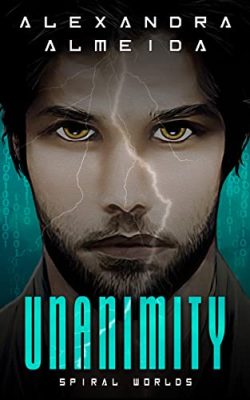
  • UNANIMITY: Spiral Worlds Book 1 by Alexandra Almeida – Science Fiction, Philosophical, Virtual Reality


    Alexandra Almeida probes the philosophical and ethical depths of wealth, technology, pop culture, and religion in a world ravaged by global warming through her sci-fi adventure, Unanimity: Spiral Worlds #1.

    Readers will delight in the gradual reveal of both the technology within the story and the dramatic history between many of those involved with the creation and evolution of that technology.

    Tom, a screenwriter, works with Harry, the genius inventor of the world’s most popular AI (artificial intelligence) app, to create a simulation that will nudge people toward acting morally.

    This virtual world consists of multiple layers, each focusing on a different psychological alignment depending on the needs of the person using the program. A lower level, much like Hell, exposes people to horrors and cruelty, while some upper levels focus on order and happiness.

    The project becomes more complex when they upload the entire consciousness of people, creating virtual immortality. The story opens with the digital resurrection of Tom, also known as Shadow, long after his death.

    With this rise of digital immortality comes an effective replacement for the afterlife of Heaven and Hell promised by Christianity.

    Almeida gives readers a glimpse at a world coming to grips with direct access to this afterlife which is completely and undeniably real. Governments as well as popular culture must deal with new questions.  Should humans have access to immortality? Who ultimately controls this virtual world? Who acts as God within the machine? This story explores the depths of these questions.

    The characters are all delightfully complex.

    The name Shadow fits the protagonist, given the corrupting task he undertakes, all with the good intention to understand those he loves more completely. Harry, also known as Twist, lacks social skills and empathy, but he knows this and reaches for help from Shadow. The cast is full of inner conflicts and contradictions. They match the complexities of real people and include LGBTQ+ characters among them, making the story more relatable and universal.

    With this breadth of characters, readers might be confused during the early introductions in the book. However, this confusion passes as the story goes on and the characters differentiate themselves.

    Unanimity’s technology feels well-researched and thought out.

    Throughout the novel, readers get more and more of a view of both the complexity of the story world and the ideology behind the virtual reality system. Almeida does a great job of making everything about this story fully believable, as if this AI afterlife could happen in the real world in the near future.

    Overall, Unanimity is a strong read for fans of sci-fi, philosophy, and AI fiction, and a gripping first entry for the Spiral Worlds series.

    5 Stars! Best Book Chanticleer Book Reviews

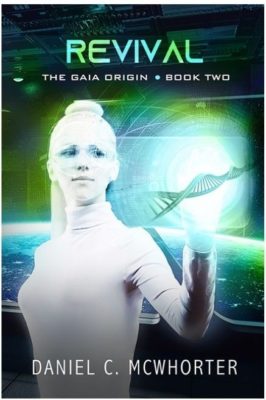
  • REVIVAL (Gaia Origin, Book 2) by Dan McWhorter – Colonization Sci-fi, Genetic Engineering Sci-fi, Artificial Intelligence Sci-fi

    REVIVAL (Gaia Origin, Book 2) by Dan McWhorter – Colonization Sci-fi, Genetic Engineering Sci-fi, Artificial Intelligence Sci-fi

    Artificial intelligence (AI) is an increasingly crucial technological development in human affairs, both for its enabling and disruptive powers. Revival, the second volume in the Gaia Origin series, gives us an astonishing glimpse of what role AI could play in the future of the human race. It’s both scary and exhilarating.

    A small group of people have escaped a near-dead Earth and traveled lightyears to reach a new Earth-like planet named Gaia by its human visitors. Chief among them is Evan Feldman, his wife, daughter, granddaughter, and a few Feldman extended family members. All of them were the masters of an Earth-bound corporation called Tel­­ogene, a multi-billion-dollar megacorporation dedicated to extending the possibilities of human life with revolutionary medical science and technology. Their transportation across the universe on board the Kutanga. The spaceship is large enough to contain some four thousand humans in suspended animation awaiting the day when the human race can establish a new home now that the home planet was all but destroyed by a disastrous and deadly plague.

    But here’s where the book takes an unexpected, radical turn. It seems that the passengers, as we would generally think of them, are all dead – that is, their biological, physical bodies are all gone. Instead, an AI super-intelligent computer named Aneni cares for and keeps the essence of these humans alive. Instead of natural bodies, they have become androids in humanoid form. Virtually all human functions have been duplicated except for the need to eat. The most remarkable is their brain functions, all of which have been “recorded” to function in their new bodies. Who they were as humans, their ability to think, feel, remember, love, hate all remain intact. Every function, including their thoughts, is monitored and potentially controlled by Aneni. Including the ability to modify their thoughts and feelings if the computer believes it would contribute to their well-being. If they become too troubled, they can be digitally “rolled back” and the troubled portion of their lives eliminated.

    So, are they still human? And what happens when they realize the computer Aneni is more akin to them than human beings? And who can tell when even their memories are not reliable, and, instead, a composite of other people’s memories kludged together to reconstruct a human being whose brain was too damaged when their earthly body died? What happens when they realize their essence is as editable as any other digital data: able – like any other data – of being backed up, or erased altogether?

    Before the story ends, readers will experience a fully imagined, detailed alternate world. Eyes will be opened up to an exploration of DNA and brain science, and even the theories of relatively obscure writers such as Zecharian Sitchin and Erich von Daniken, both of whom hypothesized that we, the homo sapiens of Earth were created or planted there by alien astronauts.

    Some sci-fans may see echoes of the book Altered Carbon by Richard K. Morgan, a novel that allowed a human’s essence to move from body to body. The recording and manipulation of that same essence in Gaia: Revival takes that manipulation a significant step further in its creation not only of digital humanity but in a benevolent AI responsible for protecting that humanity at a cost measured by the very concept of what is a human being.

    Don’t expect this book to deliver a collection of sci-fi shootouts. Only a few characters stand out, notably Evan, the founder of Telogene, who yearns for decades to see his long-dead wife brought to life, and their daughter Lily. She best expresses the anguish of trying to come to terms with this extreme version of being human. If you enjoy a thinking person’s science fiction, more in the tradition of Isaac Asimov than Robert Heinlein, this is a book for you.

    McWhorter has pulled off something original and rare. This is science fiction at its speculative best. The issues it raises will remain with you long after you’ve finished reading the book. Highly recommended.

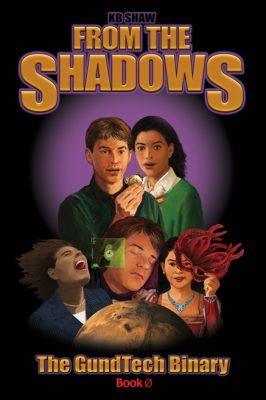
  • FROM the SHADOWS by KB Shaw – YA, Science Fiction, Action/Adventure

    FROM the SHADOWS by KB Shaw – YA, Science Fiction, Action/Adventure

    In the tradition of H. G. Wells and Isaac Asimov, K.B. Shaw’s From the Shadows piques the reader’s imagination. In the world where Cameron Rush, a shy, geeky boy from Wisconsin, and Rosa Costas, the bright, sassy daughter of a New Mexico ranch foreman, live, twenty-first-century technology makes a quantum leap and changes the nature of human experience.

    Sounds amazing, right? This new technology could take tailgating to a new level. Seriously, what could possibly go wrong?

    Only, Robert K. Merton’s law of unintended consequences still prevail. So, there is that…

    Fifteen-year-old Cameron and Rosa have never met in person. However, they know each other well, as they met in a chat room, and talk daily on their multiComs. The couple takes GundTech’s multiCom technology — computers, without cameras, that capture images and display them in a way that allows virtual eye contact among users—for granted. It’s been around forever, well, at least ten years. They also take for granted their personal AIs.

    A multiCom computer’s artificial intelligence (known as its AI) allows it to think, have personalities, experience emotions, and develop self-images. Each computer’s AI is unique and requires that the user demonstrate respect and courtesy to get a requested response. Cameron and Rosa understand this — as the rules of operation were clearly explained in the operating instructions. Therefore, they are never surprised when Sam and Vee, their respective multiCom AIs, sometimes add their two bits worth during conversations.

    But they never expect to meet the AIs in person.

    Unbeknownst to them, Cameron and Rosa were preordained centuries ago to play an integral part in the technological evolution triggered when GundTech’s mysterious creator introduces the Interactive Holographic Transmitter. With the IHT, time and space can be manipulated enabling humans, alone or collectively, to touch, see, hear, and ultimately, smell, and taste events as they happen.

    Throughout this complex, fascinating tale, Shaw manages to keep the teen protagonists real and likable. They are “in touch” with their families, community, and school; they tease, flirt, grumble and complain, and impress the reader with their spirit and ingenuity.

    In this well-crafted book, the amalgam of speculative fiction with a hint of Gothic eeriness works very well. What happens, to whom, how, and why is the stuff of possibility thinking. Fast-paced and engaging, with no loose ends, From the Shadows provides readers no opportunities to rest or close the book. Here’s a YA novel that’s a good read for any age.

    5 Stars! Best Book Chanticleer Book Reviews

  • An Editorial Review of “Semmant” by Vadim Babenko

    An Editorial Review of “Semmant” by Vadim Babenko

    A Russian scientist with a PhD from the Moscow Institute of Physics and Technology, a widely recognized leader in the field of artificial intelligence, an entrepreneur in high-tech development, Vadim Babenko closed the door on his past achievements to fulfill his desire to write. We his readers are in his debt.

    In Semmant (not his first novel), Babenko has created a fascinating story, peopled with unbelievable characters in whom we believe nonetheless. He introduces emotions where we would not expect to find them, and keeps us rapidly turning the pages to learn the fate of his protagonist, a genius in cybernetics named Bogdan Bogdanov, who creates a “gift for the world” named Semmant.

    This literary work of fiction, which defiantly transcends the ordinary scheme of genres, begins in Bogdan’s white-walled room in an elite mental institution near Madrid, where he is erotically contemplating the sexual merits of his various nurses and pondering his chances of enticing one or another of them into his bed. As the sun sets behind the jagged mountain peaks that comprise the view from his window, and the institutionalized genius awaits a gourmet dinner accompanied by an expensive French wine, he begins composing his evening letter to Semmant—his friend, whom he can never desert.

    Bogdan’s thoughts laze across the course of his life since the discovery of his phenomenal giftedness in mathematical calculation—an Indigo child, they had called him. While this afforded him an excellent education, he remained a misfit in society, seldom forging friendships, including with women.

    Finally stumbling into the field of artificial intelligence, Bogdan glimpses a path for his future. As a means to an income, he has always earned more than his share in the stock market. What if he applied artificial intelligence to the task? Yes! He acquires state-of-the-art knowledge in the field and leaves yet another job—this time for entrepreneurship.

    Bogdan decides on Madrid as his new home, finds an apartment, and begins the creation of a robot in a computer. He expends much money and many months in meticulously programming the robot to successfully challenge the financial markets of the world. Finally his work is done. Not surprisingly, a relationship of sorts has emerged between Bogdan and his creation. He affectionately names it Semmant and sometimes whimsically sends him messages, as to a friend. Semmant, housed in his gleaming computer, learns to respond in kind—in almost human terms.

    As Semmant settles in to work, and money pours into the trading account, Bogdan goes out to play, to enjoy the amusements and the women of Madrid. Unfortunately, his success with Semmant has not spilled over to his savoir faire. Though his money attracts, Bogdan cannot understand (and certainly cannot program!) women, especially the intriguingly erotic, violently emotional, red-haired Lidia Alvares Alvares. Their initial passionate love affair gives way to an undulating path of hot and cold, which pushes Bogdan to create another colorful character, this time pseudonymously on the e-pages of a literary forum. The exploits of a high-class prostitute named Adele titillate the forum members, including an unwitting Lidia. As her character develops, Adele is lent a resemblance to Cervantes’ Dulcinea in attracting a knight in shining armor.

    Babenko brings his compelling story to an emotionally charged and thought-provoking conclusion—one this reviewer will likely not forget.

    Editor’s Note: This is this is one of the best books that I have recently read. I loved the writing and the complexity of the story along with the many subtle philosophical questions and dilemmas that it presents. Semmant is Babenko’s third novel. His first two, The Black Pelican and A Simple Soul, were both nominated for the Russian National Bestseller Awards and the Big Book Awards (the Russian equivalent of the Booker Awards), Russia’s most prestigious literary awards.