Tag: Antagonists

  • The INCITING INCIDENT:  STORY, SETBACKS and SURPRISES for the PROTAGONIST – A Writer’s Toolbox Series from Jessica Morrell’s Editor’s Desk

    The INCITING INCIDENT: STORY, SETBACKS and SURPRISES for the PROTAGONIST – A Writer’s Toolbox Series from Jessica Morrell’s Editor’s Desk

    Fiction features a problem that needs solving and only the protagonist can solve it.

    In short stories, the problem is often introduced by the inciting incident–an event that triggers or launches what follows.

    In longer fiction, the inciting incident might lead to the problem. This event will disrupt the status quo, demand response, and set actions in motion. It’s a threat that unbalances the story world and creates dilemmas that must be dealt with.

    The Wizard of Oz – Inciting Incident

    A simple plot structure is a protagonist struggling to solve an intolerable problem and re-establish order. Jessica Morrell

    No matter when the problem begins (it’s always in Act One) the problem is weighty and vexing, perhaps insurmountable. If the problem is not immediately personal, it should become so that it will create a bond (connection) between the protagonist and antagonist. (A classic example is the connection between Sherlock Holmes and Jim Moriarty).
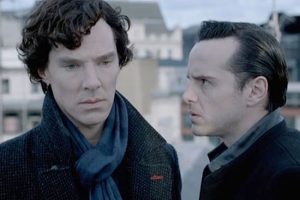
    Sherlock Holmes and Jim Moriarty

    As you know, in real-life problems are sometimes unsolvable and don’t fit neatly into a satisfying narrative arc. Across the globe, there are ‘forever’ problems of climate change, financial inequities, immigrants who need homes, corporate greed, and fascism. No shallow fixes will work, though incremental changes can chip away at underlying issues.

    Closer to home, you might be dealing with a job that drives you crazy, but you cannot leave; family members who refuse to reconcile; health or mental health issues that can only be coped with, not cured; or agonizing decisions about caring for elderly family members. In fact, studies have shown that depression can be linked to seemingly unsolvable problems.

    This is why some people turn to fiction. Where love wins in the end, crimes are solved and justice is served, and friends or families reconcile. But in well-told tales, success never comes easy and it always exacts a toll. Often success comes from the protagonist tapping into inner resources he or she hadn’t accessed before.
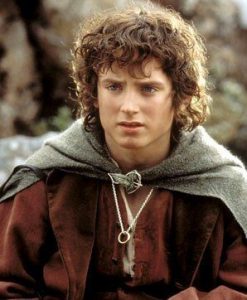
    Frodo and the Ring – LOTR

    A FEW STORY  TIPS and HANDY REMINDERS from Jessica Morrell

    • As the story progresses the protagonist forms a plan. Now the plan can be shaky, untested, or desperate, but readers need a  strategy at work.
    • Force your character to solve smaller problems along the way to resolving the major story problem. A detective can dig up a much-needed witness or help a vulnerable street kid.
    • Endow your protagonist with specific, interesting skills and personality attributes that won’t waver and make him or her suited to the task.
    • Create a protagonist who is somehow lacking in something he or she needs for happiness or fulfillment.
    • Burden him or her with emotional baggage and needs, personal demons or addictions, then toss in cast members and subplots that distract, undermine, or hinder.
    • Understand how the problem makes the protagonist feel in each scene: hesitant, unaware, outgunned, overwhelmed, weak, unqualified, terrified.
    • Setbacks and surprises should be baked into the plot.

    Oh, and the protagonist should fail, fall on his face at least a few times along the way to the climax. Because your job as the master manipulator (aka author) is to blindside, torment, and thwart your characters. Again and again, so the outcome is in question and your readers are compelled to keep turning the pages.

    Jessica Page Morrell
    Jessica Page Morrell


    Keep writing, keep dreaming, have heart.  – Jessica 

    Jessica Morrell is a top-tier developmental editor and a contributor to Chanticleer Reviews Media and to the Writer’s Digest magazine. She teaches Master Writing Craft Classes at the Chanticleer Authors Conference that is held annually along with teaching at Chanticleer writing workshops that are held throughout the year. 


    Chanticleer Editorial Services

    Did you know that Chanticleer offers editorial services? We do and have been doing so since 2011.

    Our professional editors are top-notch and are experts in the Chicago Manual of Style. They have and are working for the top publishing houses (TOR, Macmillan, Thomas Mercer, Penguin Random House, Simon Schuster, etc.).

    If you would like more information, we invite you to email Kiffer or Sharon at KBrown@ChantiReviews.com or SAnderson@ChantiReviews.com for more information, testimonials, and fees.

    We work with a small number of exclusive clients who want to collaborate with our team of top-editors on an on-going basis. Contact us today!

    Chanticleer Editorial Services also offers writing craft sessions and masterclasses. Sign up to find out where, when, and how sessions being held.

    A great way to get started is with our manuscript evaluation service. Here are some handy links about this tried and true service:

    https://www.chantireviews.com/manuscript-reviews/

    Writer’s Toolbox

    Thank you for reading this Chanticleer Writer’s Toolbox article.

  • Villains and Antagonists – Know the Difference and Don’t Confuse Them – Writing Toolbox Series  by Jessica Morrell

    Villains and Antagonists – Know the Difference and Don’t Confuse Them – Writing Toolbox Series by Jessica Morrell

    Antagonists are the main force that shapes the protagonist’s character arc.

    Sometimes the antagonist isn’t as important as the protagonist; in some stories, the antagonist is a threat so potent that he/she shapes the trajectory and tone of the story. 

    But let me clarify before we go further:

    The antagonist isn’t necessarily a bad guy or villain, though he/she can be.

    Is Darth Vader an Antagonist? or a Villain? or Both?

    A villain is a subset within the antagonist role,  identified by his values, morals, and methods, along with direct antipathy toward the protagonist.

    The villain is the most potent threat to the protagonist and perhaps even to the antagonist.

    A villain’s actions will always have huge ramifications and create hardships and danger. A villain in the story means it has a darker tone and aura.

    The antagonist doesn’t have to be a villain in the story.

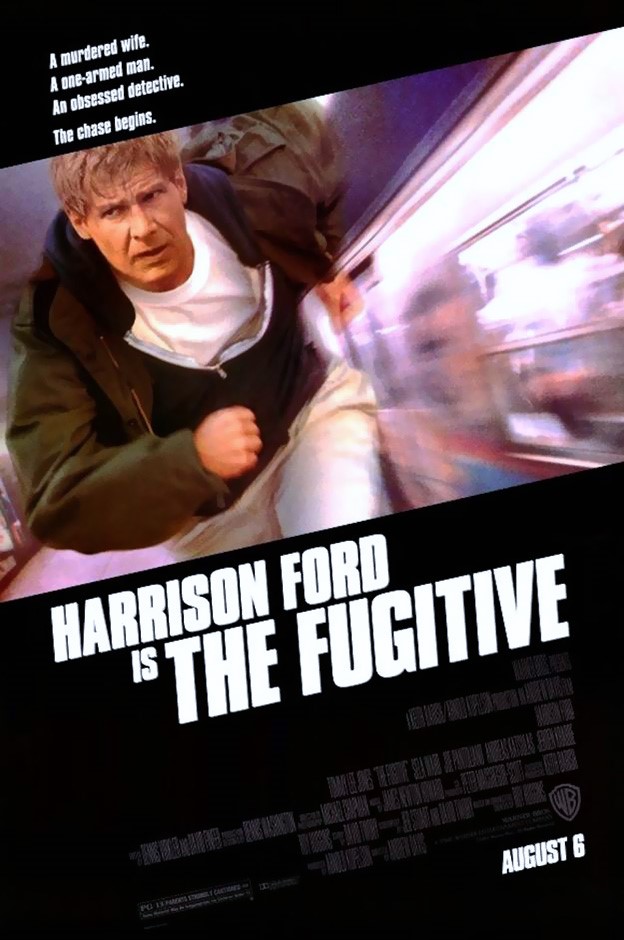
    Editor’s Example: a great example of the statement above are the characters in The Fugitive storyline by author David Twohy starring Harrison Ford and Tommy Lee Jones.

    Richard Kimble, the wrongly accused doctor who was charged with murdering his wife, is the protagonist. He escapes while being transported to prison to receive the death penalty. Kimble believes that he is the only person who can prove his innocence of the crime.

    The protagonist’s antagonist is the unrelenting US Marshall Samual Gerard who is intent on doing his job of tracking down an escape who was convicted for murder. He is relentless in his pursuit of Kimble, but he is not a villain, but he sure makes Kimble’s life a nightmare.

    The villain is the true murderer of Kimble’s wife – the elusive one-armed man named Sykes.

    U.S. Marshall Gerard is not a villain. he is the one that is doing his job and chasing down the escape convicted murderer, Kimble, making Kimble a wanted outlaw fugitive on the run. The villain, Sykes, is always lurking trying to kill Kimble before he is exposed as the murderer of Kimble’s wife (and probably to fulfill his contract). The clock is ticking.

    The Differences between Villains and Antagonists

    The Villain

    The main difference between villains and antagonists is that the villain’s presence in the story will always cause fear and apprehension in the reader. If the reader is not afraid of him/her, then the character is not an effective villain. Fear in humans is much more complex and unsettling than it is in animals. It has many degrees, physical reactions, and can be linked with other emotions that are activated while reading. Fear is unpleasant and yet thrilling, and a villain’s role in the story is to stir these emotions to the boiling point.

    The Antagonist

    The antagonist is the person who forces your protagonist to change in the way he or she most needs to change. Antagonists are the main force that shapes the protagonist’s character arc. They teach the protagonists the lessons needed to grow and they accomplish this via conflict and opposition.

    Here are some suggestions for writing the all-important antagonist:

    Introduce the antagonist with flair. From the first words, this character must be memorable, charismatic, and intriguing.

    The first quarter of your story sets your antagonist in motion. This means his or her first moves create consequences and a messy aftermath. These actions further push the plot rolling along or set up the rising action–events leading up to the climax.

    The antagonist also exists to reveal as much about the protagonist as possible, showcasing the protagonist’s primary traits in events that force him to act in specific ways. So while revealing the protagonist’s flaws and weaknesses, the antics of the antagonist also reveal his strengths and over the course of story events serves as the catalyst that reshapes the protagonist’s self-concept. The main antagonists in the Harry Potter series–Malfoy and Snape—and Voldemort is a villain and an antagonist—are great examples while Voldemort’s death-eaters are villains.

    The antagonist also exists as a contrast to the protagonist, to provide an opposing or at least different morality, viewpoint, and values. When an antagonist starts messing with your main character, then questions arise: Will the protagonist rise to the occasion, muddle through despite doubts and misgivings, falter, or succeed despite flaws and fears?

    The more potent your antagonist, the more you need to know what makes him or her tick. As in backstory, motives, and goals. All need to add up to a seemingly unstoppable, unbeatable force and serious opposition.

    You are setting the stage for a showdown or stand-off between the antagonist and protagonist. This is the major component of rising action.

    You can create more than one antagonist. A good example of this is found in The Fault in our Stars. It has three: cancer and its grim realities, Peter van Houten, an author who has lost his daughter to cancer and wrote a novel about it, and Augustus Waters who shows Hazel how to love and really live with a fatal illness.

    They all force Hazel, the protagonist, to rethink her values, outlook, and concerns. In other words, they force her character arc to unfold.

    Keep writing, keep dreaming, have heart. ~ Jessica

    Jessica Page Morrell
    Jessica Page Morrell

    Jessica Page Morrell is a top-tier developmental editor and a contributor to Writer’s Digest magazine, and she teaches Master Writing Craft Classes at the Chanticleer Authors Conference that is held annually along with teaching at Chanticleer writing workshops.

    Jessica will teach  Master Writing Classes and advanced writing craft sessions at CAC19. Click here to learn more.  

    Jessica understands both sides of the editorial desk. She is known for explaining the hows and whys of what makes for excellent writing and for sharing very clear examples that examines the technical aspects of writing that emphases layering and subtext. Her books on writing craft are considered “a must have” for any serious writer’s toolkit. For links for her writing craft books, please click on here.

    Chanticleer Reviews and OnWord Talks will interview Jessica for more of her writing tips and advice. Stay tuned! ~ Chanticleer (who hails from Chaucer’s Canterbury Tales).