Tag: Ancient World

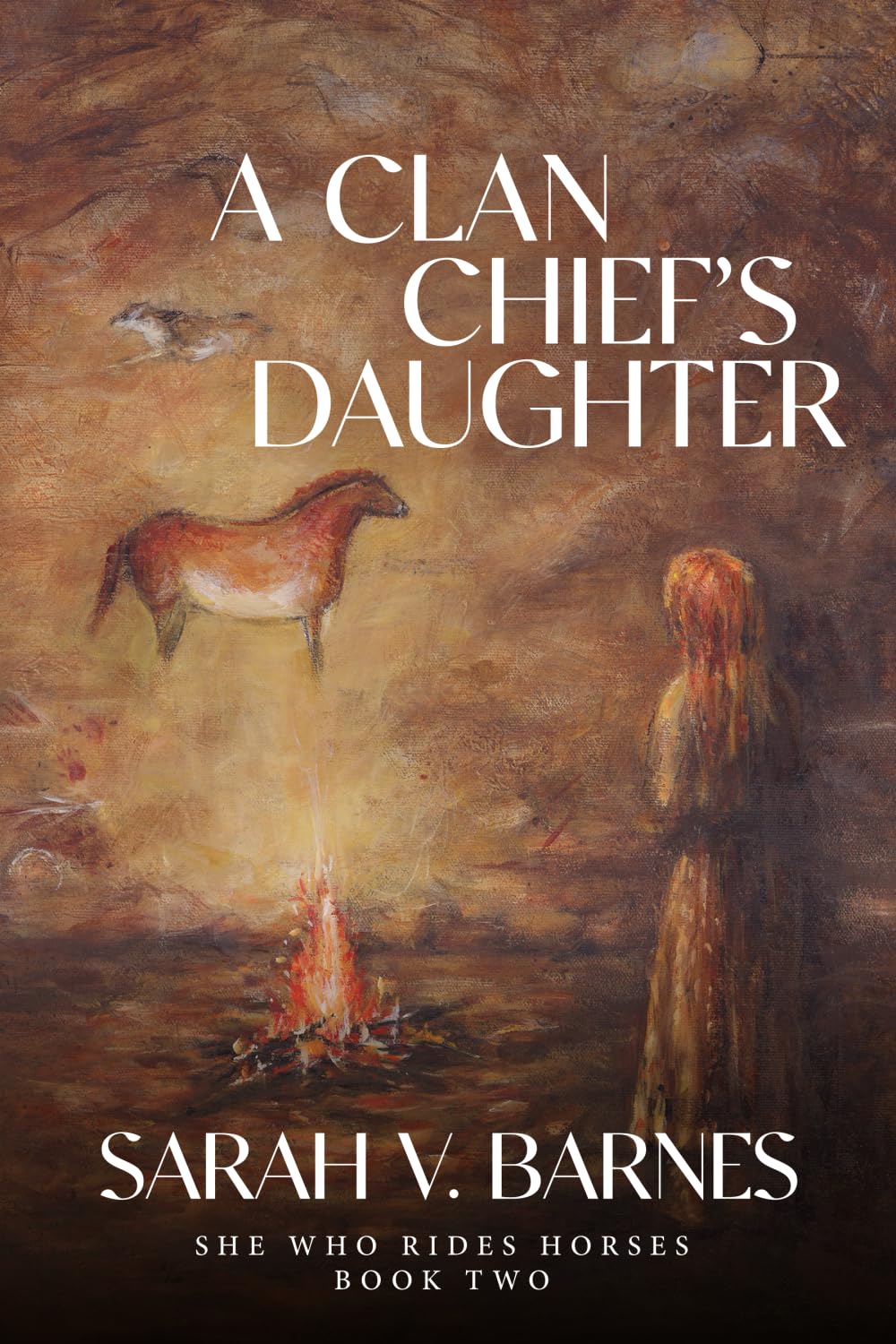
  • A CLAN CHIEF’S DAUGHTER: She Who Rides Horses Book 2 by Sarah V. Barnes – Historical Fiction, Ancient World, Metaphysical Fiction

    Caught in the midst of a succession crisis, Naya sacrifices much of herself to be the dutiful girl she thinks her father expects. In A Clan Chief’s Daughter by Sarah V. Barnes, Naya’s kept in the dark while enemies plot her family’s downfall.

    In the previous book of the series, She Who Rides Horses, Naya began the monumental task of bonding with the wild horses of the Pontic-Caspian Steppe. Guided by dreams of purpose alongside the red filly Réhda, they’d gone so far as to gallop free together. But returning to her clan after a winter apart, Naya finds a terrible captivity waiting for both her and the horses she loves.

    A confluence of tragedy and treachery leaves Naya’s father, Potis, vulnerable in his role as Chief.

    The clans of the Plānos tribe are soon convening for their annual Gathering. As this year’s host, Potis is expected to supply a plentiful animal sacrifice, especially since he hopes to claim his late father’s position as Plānos Chief of Chiefs. That would be hard enough after a brutal winter, but without warning much of the clan’s livestock are slaughtered in a senseless and suspicious attack.

    The stage set, a captivating young man arrives as the clan’s seeming savior. Wailos, son of Potis’s main rival, helps the clan capture a herd of horses that had become habituated to humans—the very same whose trust Naya earned. They are to be sacrificed in place of the clan’s missing livestock.

    Wailos shows interest in Naya, who’s begun preparations to be presented as a young woman at the Gathering. He promises a rich bride price of livestock, and such a marriage could prove a valuable political alliance in itself. Naya disregards her own reservations about Wailos in the hopes of helping her father and maybe even sparing the horses.

    Naya’s self-denial extends to her loved ones and her very purpose, as she holds herself responsible for the suffering of the horses in captivity.

    She refuses her grandmother Awija’s lessons on the importance of dreams and following one’s own heart. Visiting the horses is more than she can bear, especially as it brings her close to Aytal. While Naya holds deep resentment towards the young man, she can’t forget the connection and affection that grew between them over the winter.

    Naya’s mother Sata leaves the clan for her childhood home alongside Oyuun, Aytal’s father, and Naya refuses to see it as anything but a betrayal of her and Potis. She turns away from the pain of her conflicted feelings and into the role of a clan chief’s daughter.

    When the promises of that role unravel around her, she risks losing her freedom, her loved ones, and her heart’s deepest desire forever.

    Barnes builds a societal conflict with complicated systems of alliance and tradition, enriching the story and historical detail through their combination.

    The contest for power as Plānos Chief of Chiefs is well-grounded in the immediate and daunting challenges Potis faces as he struggles to stabilize his people. All the while, threads of conspiracy close in around Potis and Naya alike, with the villains always a step ahead. Potis decides not to reveal the danger Wailos poses to Naya, building a powerful sense of dread as Wailos uses the social expectations of their tribe to draw her into a cruel trap.

    This conflict revolves around a theme of cooperation versus competition. Potis understands the necessity of maintaining peaceful bonds within and beyond their tribe, but he faces people who are willing to destroy anyone to grasp power.

    A Clan Chief’s Daughter shows the injustice of strict gender roles and the vital importance of fighting against them. Barnes uses her rich characters to illuminate different facets of this oppression.

    Awija and Sata both hope to turn Naya away from accepting what is expected of her—to be traded away as a commodity through marriage. But though Sata’s struggle to understand her desires against social stricture mirrors Naya’s own, Naya can’t listen without confronting the parts of herself she wants only to escape.

    Throughout Naya’s preparation for the Gathering, Awija tries to instill an understanding of self-possessed womanhood in her and the other girls. Having come from a different culture in her youth, Awija contrasts the beliefs of the Plānos. She implies how such gender roles are not essential facets of nature but rather tools of control and power consolidation—tools that this story’s villains wield to harrowing effect.

    After months trying to put her wants and fears aside to better serve her expected role, Naya is betrayed completely. She hopes that there might yet be friends she can turn to, but will only reach them if she learns to trust herself again.

    Naya’s inner journey takes her through despair at how much she loses, but also an enlightening catharsis. She sacrifices her connection to the horses in a way that mirrors Aytal’s earlier sacrifice of his skill as a bowman, making A Clan Chief’s Daughter an effective rejoinder to the themes established in She Who Rides Horses.

    Once Naya accepts that she cannot separate her love, anger, and grief from one another, she can finally begin to brave her nightmares to recover her own destiny.

    In its well-crafted combination of vulnerable personal journey, well-researched ancient setting, and commentary on social roles that still manifest in our world today, A Clan Chief’s Daughter by Sarah V. Barnes will fascinate and satisfy in equal measure. A worthy successor to the first book in the series, She Who Rides Horses.

    Buy it now through Bookshop.org!
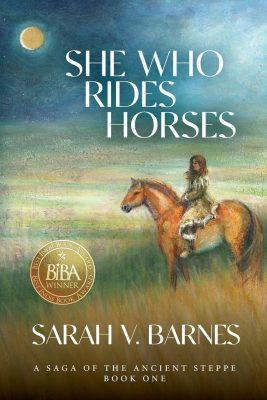
  • SHE WHO RIDES HORSES: A Saga of the Ancient Steppe Book One by Sarah V. Barnes – Historical Fiction, Ancient World, Horse Fiction


    Wild horses race across the ancient Pontic-Caspian Steppe, hunted by predators and pastoral clans. But in Sarah V. Barnes’s She Who Rides Horses, Naya, daughter of a clan chief, ventures beyond the understanding of her people to form a bond of true partnership with a young filly.

    Naya spends day and night watching a wild herd, drawn to a filly who shares her burning red hair and a dream of purpose to be found between them. But, nearing adulthood, Naya will soon be expected to marry and likely leave her clan for another. Her mother Sata and grandmother Ajiwa conspire to give Naya the chance to prove that she can forge a bond with the wild horses like those her people treasure with their livestock.

    Though she has a vibrant will and the promise of a mystical vision behind her, Naya risks much more than social standing to ride the red filly.

    An accident leaves Naya terribly injured, separated from most of her clan on their migration south, and caught on the steppe as winter winds howl. Sata has only two mistrusted strangers—travelers Oyuun and Aytal—and a few sleds of spare supplies to watch over her daughter throughout moons of cold and hunger. But in the midst of the snow, a familiar band of horses draws near their camp.

    Through the wondrous vistas of the spirit world, the precarity of survival, and the choice whether to forgive the young man who wounded her, Naya reawakens to her dream of becoming She Who Rides Horses.

    Barnes fleshes out the Pontic-Caspian Steppe of 4000 BCE with complex and well-researched societies.

    Naya’s people live with a palpable connection to the natural world. Their relationships to plants, animals, and the landscape itself show how comprehensively their pastoral lifestyle shapes both daily life and culture. She Who Rides Horses explores the power structures in such a society, with Naya’s father Potis balancing his influence against that of the clan’s priests who claim sole access to the realm of the spiritual—something which Naya herself could threaten.

    Barnes builds this story on an impressive foundation of historic research for such a long-gone time. Drawing from archaeological and genomic findings, she presents a fictional but realistic setting for such a monumental development as the early domestication of the horse. The words and names of her characters even reference the Proto-Indo-European language, among those of other nearby cultures. For lovers of ancient history, Barnes includes a list of references on her author website.

    This historical detail comes through in colorful descriptions of every location and the tasks required to live within them. Wilderness and pockets of human settlement alike become palpable. As this world flows through the senses of each character, it reveals more about them both.

    She Who Rides Horses stands out for its central cast caught between conflicting burdens and desires.

    Naya and Sata share a painful distance from their own culture. Sata yearns for the far-away people of her childhood, and Naya bucks against patriarchal limitations while hoping that her elders can learn to appreciate the horses as she does. Oyuun, having lost his beloved many years ago, finds a connection growing between himself and Sata that could tear the bonds of both of their lives. Aytal gives up everything that he can in pursuit of forgiveness, even if it means turning away from his own purpose.

    Each must find their true path forward, and decide which responsibilities to drop from their shoulders—or which to take on.

    She Who Rides Horses switches between these characters’ perspectives, showing a more rounded view of their ancient world. No two have the same thoughts on their societies or relationships. The more readers learn of these disparate people along their shared journey, the more deeply they’ll care for each of them.

    For anyone interested in ancient history, nuanced character-driven stories, or of course our world-changing equine companions, She Who Rides Horses by Sarah V. Barnes will satisfy and fascinate in equal measure.

    Readers will gladly bound right into the second book of the Saga of the Ancient Steppe, A Clan Chief’s Daughter.


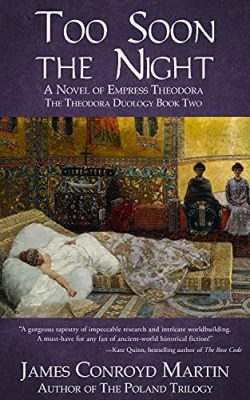
  • TOO SOON The NIGHT: A Novel of Empress Theodora (The Theodora Duology Book 2) by James Conroyd Martin – Historical Fiction, Eastern Roman Empire, Women Leaders

    Too Soon the Night by James Conroyd Martin shows the thrilling heights to which Empress Theodora rose and the crushing depths to which she fell, in the latter half of her life. This story picks up from Fortune’s Child, the first volume of this epic duology.
    This half of Theodora’s incredible journey opens at its close – as she succumbs to the cancer that drove her to dictate the record of her life. She left the task of recording her meteoric rise from actress to empress in the hands of the scribe and historian Stephen, even though she imprisoned him for several years out of fear that he would reveal her greatest secrets.

    But as much as Stephen should hate her for her cruelty, he has his own axe to grind against the man who would slander Theodora after her death with a scurrilous character assassination disguised as biography. So he takes up his pen and continues his recording of – if not Theodora’s unvarnished truth – at least something closer than whatever her enemies would conjure to blacken her name.

    Where Fortune’s Child focused on Theodora’s early years and her rise to power with Emperor Justinian, Too Soon the Night follows her many attempts to consolidate power, protect Justinian, and secure their legacy – even with no direct heir for their throne.

    In spite of the chasm of time between the mid-first century A.D. and the early 21st century, Theodora’s drives and fears are easy to empathize with and understand, even as her complex machinations push the story forward.

    The story is split between Theodora’s history as she tells it to Stephen, and Stephen’s perspective of Theodora as he carries out her will.

    He provides insight into Theodora’s motives and the court and city in which she lives, allowing the reader to see the Empress both as she wants to be seen and as she truly is.

    The story’s setting shows people jockeying for positions in Justinian’s court, unrest among the populace, and the Emperor’s unrealistic dreams of turning the Mediterranean back into a Roman sea. These struggles and desires give the story its tension, framing the life of a singular woman, uniquely powerful for her time.

    This is a long and complex journey, befitting an equally long and complex saga. Those who start at the epic’s beginning will be rewarded with an utterly compelling immersion in a fascinating life.

    Too Soon the Night by James Conroyd Martin won Grand Prize in the 2021 CIBA Chaucer Awards for pre-1750s Historical Fiction.


    Gold Foil Book Sticker Chaucer Grand Prize

    5 Stars! Best Book Chanticleer Book Reviews

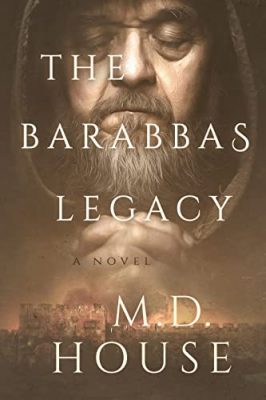
  • The BARABBAS LEGACY by M.D. House – Christian Historical Fiction, Historical Fiction, Ancient World Historical Fiction

    The Roman Empire rules much of the world but faces unrest in its leadership and opposition from the growing movement of Christianity, in this conclusion to the Barabbas Trilogy, M.D. House’s historical fiction novel, The Barabbas Legacy.

    God has a plan for the Barabbas family, and their travels have only just begun. The tense conflict between Roman forces and the Jewish community in Jerusalem comes to a head. Leaders of Christianity rush to help their Jewish brothers and sisters.

    Cornelius, a once-celebrated centurion of the Roman army, stands on trial for believing in God over the Roman Empire. Emperor Nero shows uncharacteristic leniency and exiles Cornelius from the Empire. Cornelius flees before any senators have him assassinated. Once out of Rome’s reach, Cornelius feels called to help grow the Christian community.

    In the introduction to the novel, M.D. House recounts his writing journey.

    He explains how he came to write about a biblical figure we know very little about. Initially wanting to write science fiction and fantasy, House shifted to Historical Christian Fiction after reading a particular bible story. House wondered about the life of Barabbas. He imagined what had led the man to become a prisoner and how his life changed after being freed.

    Very little knowledge of Barabbas has survived, which opens the opportunity for House to create Barabbas, the character. House builds a whole life by using his few brief mentions in the gospels as a jumping point. He developed his protagonist so well that an entire trilogy was needed to tell the complete story.

    The Barabbas Legacy sees Barabbas as an older man with his children grown. Some start families of their own, while others help the evangelical efforts of Christianity in its infancy.

    M.D. House’s The Barabbas Legacy, as well as the first two books in the series, I Was Called Barabbas and Pillars of Barabbas, will appeal to readers of historical fiction and general readers of Christian fiction. The Barabbas Legacy could also be a good book for a Christian book club or Bible study. It features themes about the relationship between people of different faiths and the importance of bravery in one’s beliefs.

    The Barabbas Legacy concludes Barabbas’ tale that started with curiosity and grew into a complete series. M.D. House succeeds in telling the story of Barabbas, a rebel and murderer turned strong follower of Jesus.

    Chanticleer Book Reviews 4 star silver foil book sticker


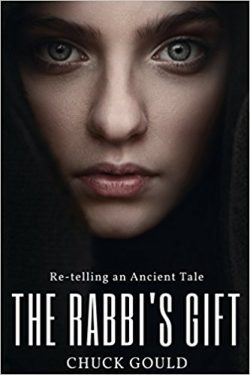
  • THE RABBI’S GIFT by Chuck Gould – Ancient Historical Fiction, Heartwarming Romance

    THE RABBI’S GIFT by Chuck Gould – Ancient Historical Fiction, Heartwarming Romance

    Faith and fact weave together in a beautifully rich tapestry of fiction and fantasy set in ancient times that presents plausible answers to long-standing mysteries in Chuck Gould’s The Rabbi’s Gift.

    When the wealthy merchant Eli encounters master builder Yakob and his impetuous son Yusuf in a dispute with the despotic ruler Herod, he intervenes, saving them by employing them to work on a project of his own. They will help construct a new mansion for Eli’s son, Aban, who is soon to be married.

    But what will become of Aban’s twin, Miriam? Miriam is the first-born and as custom demands, should marry first, but what man would want her? With her quick-wit, unconventional bent, and a strong rebellious streak, everyone knows she is unsuitable for the position of dutiful wife. Besides, every suitor her father presents to her, she stubbornly rejects.

    Yusuf and his father work diligently for Eli. Yusuf constructs stunning mosaic courtyard imbued with astrological and scientific significance. As the work continues, Miriam clandestinely assists Yusuf and before long, the two fall in love. Of course, such a match could never be. Miriam is wealthy, and Yusuf is only a humble tile setter. But, some prophecies and priestly visions are far more powerful than worldly considerations. What obstacles must be overcome to allow twists of faith, fate, and fortune to fall into place and open the door for the couple’s true and epic love?

    Author Chuck Gould has created a remarkable blend of Biblical characters, legends, and speculations in this star-crossed romance between Miriam and Yusuf. He depicts Miriam as a healer whose remedies are nothing short of miraculous, and Yusuf as an unschooled savant in mechanical, scientific, and philosophical knowledge. Gould also draws on a myriad of dramatic players – some of whom are firmly set in historical accounts, which serves to create a multiple viewpoint story, widening the scope of his novel without distracting the reader.

    Gould’s handling of this grand drama shows a true grasp of the writer’s craft. He deftly combines various elements from lore throughout his storytelling making The Rabbi’s Gift a powerfully rich tale. Using older spellings and secular text, along with Gould’s strategic planting of clues along the way, fortifies the story and draws the reader in.

    Babylonian astrology and Jewish mysticism combine with Roman history to create a timeless story of passion and fate in Chuck Gould’s The Rabbi’s Gift.

    5 Star Best Book Chanticleer Reviews round silver sticker