Tag: #amwriting

  • CREATING UNFORGETTABLE SECONDARY CHARACTERS – Part Two of ESSENCE of CHARACTERS from Jessica Morrell’s Editor’s Desk – Writer’s Toolbox Series

    CREATING UNFORGETTABLE SECONDARY CHARACTERS – Part Two of ESSENCE of CHARACTERS from Jessica Morrell’s Editor’s Desk – Writer’s Toolbox Series

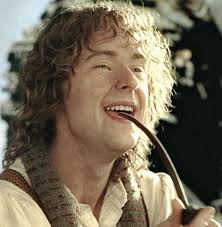
    Many writers struggle to create vibrant and complex secondary characters. After all, complicated main characters are hard enough to create. Memorable secondary characters, however, can make or break a story.  Think about Yoda (Star Wars), Pippin (LOTR), Jane Bennet (Pride and Prejudice), Thomas Pullings (the Aubrey – Maturin series by Patrick O’Brian), and …

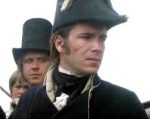
    Jane Bennet – Pride and Prejudice
    Thomas Pullings of the Aubrey-Maturin Patrick O’ Brian series

    I always view secondary characters as a measuring stick for a writer’s prowess. Jessica
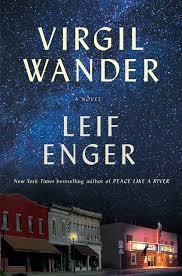
     

    Here’s a vivid example of a memorable secondary character from Leif Enger’s beautiful Virgil Wander

    His name is Rune–so here’s a simple trick, give your characters resonant names.

    In this case, rune has mystical, mysterious associations. The day after the protagonist Virgil survives a car accident in the opening moments of the story he walks to the waterfront of the forbidding, ever-changing Lake Superior. Enger is introducing an oft-used device: a mysterious Stranger comes to town.


    I ended up at the waterfront. It’s not as though there’s any other destination in Greenstone. The truth is that I moved here largely because of the inland sea. I’d always felt peaceful around it–a naive response give it fearsome temper, but who could resist that wide throw of horizon, the columns of morning steam? And the sound of a continual tectonic bass line. In a northeast gale this pounding adds a layer of friction to every conversation in town.

    At the foot of the city pier stood a threadbare stranger.  He had eight-day whiskers and fisherman hands, a pipe in his mouth like a mariner in a fable, and a question in his eyes. A rolled-up paper kite was tucked under his arm–I could see bold swatches of paint on it.

    There was always a kite in the picture with Rune, as it turned out.

    He watched me. He carried an atmosphere of dispersing confusion, as though he were coming awake. “Do you live in this place?” he inquired.

    I nodded.

    “Is there are motor hotel? There used to be a motor hotel. I don’t  remember where.”

    His voice was high, with a rhythmic inflection like short smooth waves. For some reason it gave me a lift. He had a hundred merry crinkles at his eyes and long-haul sadness in his shoulders.

    “Not anymore–not exactly.” If I’d had more words, I’d have described Greenstone’s last operational motel, the Voyageur, a peeling L-shaped heap with scraggy whirlwinds of litter roaming the parking lot. Though technically “open,”  the Voyageur is always full, its rooms permanently occupied by the ower’s grown children who failed to rise on the outside.

    “Oh well,” he said,shaking himself like a terrier. He peered round at the Slake International taconite plant, a looming vast trapezoid which had signified bustling growth in the 1950s and lingering decline ever since. Its few tiny windows were whitewashed or broken; its majestic ore dock rose out of the water on eighty-foot pilings and cast a black-boned reflection across the harbor. No ship had loaded her in so long that saplings and ferns grew wild on the planking. We had a little forest up there. I looked at the  kite scrolled under his arm. He’d picked the wrong day for that, be then he looked like a man who could wait.

    He said, “You here a long time?”

    “Twenty-five years.”

    At this something changed in him. He acquired an edge. Before I’d have said he looked like many a good-natured pensioner making do without a pension. Now in front of my eyes he seemed to intensify.

    “Twenty-five years? Perhaps you knew my son. He lived here. Right in this town,” he added looking round himself, as though giving structure to a still-new idea.

    “Is that right. What’s his name?”

    The old man ignored the question. He pulled a kitchen match from his pocket, thumbnailed it, and relit his pipe, which let me tell you held the most fragrant tobacco–brisk autumn cedar and coffee and orange peel. A few sharp puffs brought it crackling and he held it up to watch smoke drift off the bowl. The smoke ghosted straight up and hung there undecided.


     

    Writer’s Toolbox

    Did you notice how this small scene multi-tasks? 

    Techniques to borrow:

    • Sharply observed first impressions (carried an atmosphere of dispersing confusion as though coming awake, a good-natured pensioner making do without a pension, looked like a man who could wait)
    • Props (kite and tobacco, kitchen match, pipe)
    • Smells (tobacco)
    • Iconic or mythic comparisons (rune, mariner in a fable)
    • Indelible physical features: (fisherman’s hands, question in his eyes, a hundred merry crinkles as this eyes and a long-haul sadness to his shoulders)

    Here’s a tip: When you need to describe a character or objects or setting ask yourself what does this remind me of?

    As you walk around your world, really notice your surroundings and ask yourself the same question.

    The next post will be about noticing and nurturing your imaginings with paying attention to small details with a novelist’s eye.

    Here is the link to Part One of the Essence of Characters series: https://www.chantireviews.com/2019/06/01/essence-of-characters-part-one-from-the-jessica-morrells-editors-desk-writers-toolbox-series/


    Until then, Keep writing, keep dreaming, have heart.  Jessica

    Jessica Morrell is a top-tier developmental editor and a contributor to Chanticleer Reviews Media and to the Writer’s Digest magazine. She teaches Master Writing Craft Classes at the Chanticleer Authors Conference that is held annually along with teaching at Chanticleer writing workshops that are held throughout the year. 


    A Chanticleer Reviews – Writer’s Toolbox blog post on Character Development by Jessica Page Morrell

    Did you know that Chanticleer offers editorial services? We do and have been doing so since 2011.
    And our professional editors are top-notch and are experts in the Chicago Manual of Style. They have and are working for the top publishing houses (TOR, McMillian, Thomas Mercer, Penguin Random House, etc.) and elite indie presses.

    We work with a small number of exclusive clients who want to collaborate with top-editors on an on-going basis.

    Contact us today! If you would like more information, we invite you to email Kiffer or Sharon at KBrown@ChantiReviews.com or SAnderson@ChantiReviews.com

     

  • DECLUTTERING SENTENCES by ELIMINATING JUNK WORDS – from Jessica Morrell’s Editor’s Desk – Writing Toolbox Series

    DECLUTTERING SENTENCES by ELIMINATING JUNK WORDS – from Jessica Morrell’s Editor’s Desk – Writing Toolbox Series

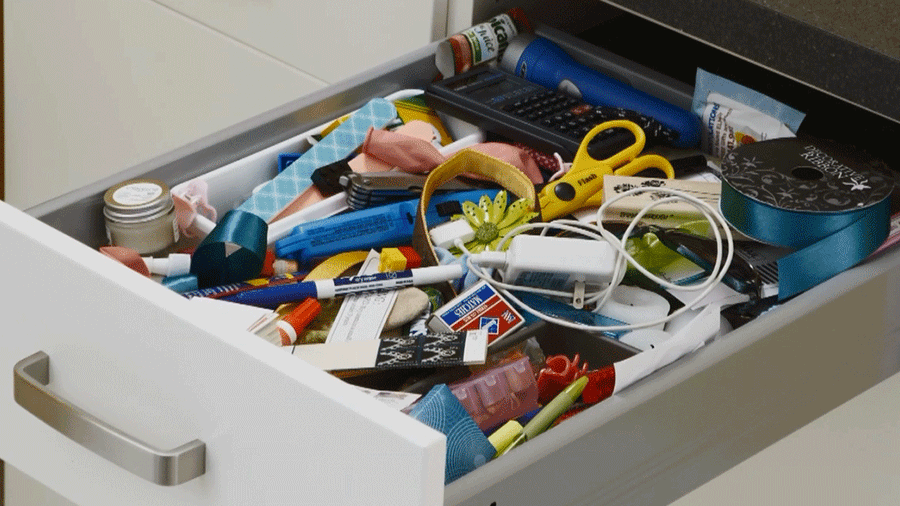
    Declutttering sentences give me the same thrill that Marie Kondo (author of The Life Changing Magic of Tidying Up) experiences when she organizes sock drawers or attacks a kitchen’s junk drawer. I believe she calls this feeling “sparking joy.” Not only do I want sentences to be grammatically correct, but I want to make sure that every word counts toward moving the story forward. And that definitely sparks joy in me.  

    The Ubiquitous Junk Drawer

    Most of us use go-to words that aren’t necessary to tell the story. We use them out of habit or laziness, or because no one has pointed out that you don’t need them. In the spirit of writing clean, crisp, and intelligently here’s a reminder about words you usually don’t need.

    Declutter Your Sentences by Eliminating These Junk Words

    Breathingdeep breathsbarely breathinginhalingexhaling, and other lung movements.  Many writers of all levels reveal their characters’ emotions and reactions using their breath, lack of breath, breathlessness, or as their main method of reacting and showing emotion. “I took a deep breath” is a phrase I’ve seen so often it’s a cliche.  Unless a character has the breath knocked out of him or is in the midst of childbirth, avoid focusing on breathing as your main means to create emotion. Instead collect a variety of mannerisms, reactions, gestures, and body language individual to each character.

    Down or up. As in Rachel sat down. Now Rachel can collapse into a chair, or sidle into an empty seat in a dark theater, or ease onto a sofa, or flump onto a bed. Sit and sat means a person is lowering himself or herself.  As in down. More accurately sit means supporting your weight on your buttocks.

    Question your use of up. It seems so innocent, doesn’t it? Blithe stood up. Stood means up because standing means a person is upright, supporting himself on his feet.  Denzel stood, joining the screaming fans. Also, do not write grabbed up; grabbed suffices. Avoid appending up to spoke, hurry, lift, climb, and rose.


    Really. I mean really? Do you need it? Is the weather really cold or is it frigid or dangerously cold?

    Really?

    Literally means exactly as described or in a literal or strict sense. It does not mean quite, actually or really. Wrong: I was so mad I was literally shaking like a leaf and red-faced. Or, I was so terrified I literally jumped out of my skin. Or, Her death literally brought me to my knees.  Better: The playoffs were watched by literally millions of fans.

    Basically, essentially, obviously, basically, totally. Hint: question every adverb you use with an -ly ending because many are so overused they’ve become meaningless. However, the larger issue is many people sow these words into their stories without understanding their correct meanings mostly to maximize or intensify. Over time many adverbs have become meaningless. Basically means at a basic level or fundamental sense, not almost or mostly. Essentially means the essence of something or in an essential manner, not almost or often.  Practically means in a practical manner not almost or mostly. Totally means completely, in every part, not really.

    Just. No, I’m not just kidding. Too many of us (guilt-hand raised) use this one out of habit.

    Moments. I’ve read manuscripts where characters pause or think or kiss for only a moment hundreds of times throughout the story. There are plenty of ways to describe brief actions or thoughts.

    That. If a sentence works without that, ditch it. Easy, right?

    Suddenly. Because if you’re reading fiction you assume that actions, twists, and surprises will happen abruptly. They are devices used to increase tension and suspense. No need to announce it.

    Hopefully doesn’t mean ‘I hope.’ But it might convince an editor you’re not the wordnik he or she wants to work with.

    Bleeding Manuscript

    Towards, backwards, forwards, upwards, downwards.  Replace with toward, backward, forward, upward, downward.

    A note from Kiffer: A handy tool to help you recognize if these egregious junk words have infiltrated your manuscript is the “Find and Replace” tool that  can be found in WORD or other word processors. This tool finds and highlights specific words so that you can replace if needed to insure that every word counts.

    Chanticleer’s Writer’s Toolbox Series


    Jessica Page Morrell
    Jessica Page Morrell

    Jessica Morrell is a top-tier developmental editor and a contributor to Writer’s Digest magazine, and she teaches Master Writing Craft Classes at the Chanticleer Authors Conference that is held annually along with teaching at Chanticleer writing workshops.

    Keep writing, keep dreaming, have heart. Jessica Morrell

  • TAPPING the EXPERTS – Researching for Your Works in Progress by Carol M. Cram

    TAPPING the EXPERTS – Researching for Your Works in Progress by Carol M. Cram

    Guidelines for Connecting with Sources and Experts While Researching Novels

    Editor’s Note: Whether or not you write Thrillers, Science Fiction, Mysteries, Contemporary Social Themes, YA,  Historical, or any genre, these guidelines for connecting with sources and tapping experts will come in handy.

    One of the questions I get asked frequently when people discover I like to write historical novels is “How do you do your research?” I don’t have a pat answer (I wish I did!). The reality is that I “do my research” as I’m writing a novel and that, for me, it’s my least favorite part of the process. There, I said it!

    I know many historical novelists who adore research, who like it even more than writing, but I’m not one of them. I like research. I enjoy prowling through dusty libraries and doing endless Internet searches and reading stacks of books, but most of the time I’d rather be writing my story.

    That said, I have picked up some techniques over the past few years that I’ll share in this blog to help you find your feet when you’re researching and writing a novel set in the past. Getting the facts right is very important. You discover that the first time a reader finds a mistake (and tells you about it).

    In my novel set in early 19th Century London, I had a character refer to the third season of the year as “Fall.” A British reader set me straight, in no uncertain terms. Thank goodness she was a Beta reader and I was able to catch the error before the novel was published!

    Books are great, the Internet can’t be beaten for looking up and verifying facts quickly, and libraries are awesome. But even better are the academics who write all those books and articles. In other words, the experts. Many experts are happy and eager to share what they know with you. And many go well beyond just answering questions.

    Following are some tips and advice for reaching out and working with subject matter experts.

    Do your homework before contacting a subject matter expert. You don’t want to waste an expert’s time asking questions that you could easily answer yourself with a bit of reading. Consult books and articles to become as conversant as you can with the subject and then prepare a list of specific questions to focus the discussion. Experts who see that you’ve made an effort to understand their field are usually very generous with their time and interested to hear about your Work in Progress.

    Keep the number of questions reasonable. A half-hour interview is about right, although if your expert wants to go on longer, sit back and enjoy! You never know what great information you’ll get—often on a subject you weren’t looking for but that will fit beautifully into some part of your story. Experts are often fascinated by the creative process and may suggest plot ideas based on their more in-depth understanding of the period. When an expert says something like “What if you have your character do such and such…”, listen up!

    Experts care a great deal about their fields of expertise and as a result, most welcome the opportunity to work with a novelist to bring their knowledge to a wider audience. An academic I consulted for The Muse of Fire told me how thrilled he was that someone apart from his students was interested in early 19th Century British theater.

    Make sure you end an interview with a request for additional book and research recommendations. Most experts are happy to provide you with more references than you’ll probably have time to read.

    Find experts by looking up faculty lists at universities, consulting bibliographies, conducting searches for specialist groups, and asking for recommendations. You can click the Ask a Librarian link on any Library website to get all sorts of academic questions answered. Before contacting experts—generally by email—familiarize yourself with their credentials and read at least some of their articles and books. When you take the time to read their writing, you’re more likely to ask intelligent questions.

    Photo Credit: Myrabella / Wikimedia Commons
    Soldiers in front of the wood of Hougoumont during the reenactment of the battle of Waterloo (1815)

    Another place to find experts, particularly in specific historical eras, is to seek out re-enactment groups and themed events such as Renaissance Fairs. Here you’ll find experts who have really steeped themselves in your period and are eager to share what they know.

    Approach experts with a polite email that includes a short description of your Work in Progress and a few sample chapters. In my experience, experts are most eager to help when I give them an opportunity to first read my work. Many want to be sure they are associating their names with writing that they personally like.

    For all three of my novels, I’ve been fortunate to have experts give me advice during the writing process and then to read drafts of my novel to catch stray errors. Several of them became almost as invested in the accuracy of my novel as I was and are now fans!

    In your introductory email to an expert, make sure you include your own web address in your signature line and a short summary of your own background and credentials. I know that several of the experts I’ve reached out to told me they checked out my website before replying to my request. They understandably wanted to verify my background and learn about my books before connecting with me.

    Thank experts in your acknowledgments. I always include historical notes at the end of my novels to cite books I consulted while writing. I also personally thank experts with whom I’ve connected personally. Everyone appreciates being thanked.

    Send complimentary copies of your novels to experts who have provided you with significant help. I think it’s money well spent to let the people who have helped me know how much I appreciate them.

    We are incredibly fortunate as novelists to be able to easily connect worldwide with experts in a dizzying array of subjects. I’ve visited with the curator of the Narrenturm—an anatomical museum housed in Europe’s first insane asylum in Vienna; taken tea in London with an expert on 19th Century women composers; become good friends with a professor of medieval art history, and connected with several wonderful specialists in early 19th Century British theater. Each of them did much more than just answer my questions. They actively contributed ideas about plot and character motivation appropriate to the era I was writing in and inspired me to explore all sorts of new ideas.

    You never know what might come from your interactions with experts once you get the nerve to approach them – respectfully and after having done your homework.

    And then all you need to do is weave what you’ve learned into a compelling novel that people will not want to put down. Easy, right?


    Carol M. Cram, CIBA Award-Winning Author (both Goethe and Chaucer Historical Book Awards) for these outstanding novels:

    Carol M. Cram will announce the new CHAUCER Book Awards winners on Saturday, April 27, 2019, at the Chanticleer International Book Awards ceremony. She is also presenting at the sixth annual Chanticleer Authors Conference. Her award-winning historical fiction books will be available in the CAC19 Books By the Bay Book Fair hosted by Village Books on April 27 & 28, 2019.