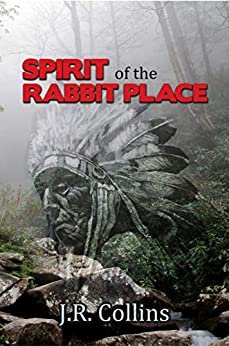
When gold miners discover Choestoe Valley, Jebediah Collins must fight for his family – whether blood-related or not – in J.R. Collins’ historical adventure, Spirit of the Rabbit Place
Fourteen-year-old Jebediah Collins lives in paradise, also known as Choestoe Valley, or to the Cherokee as the “land where the rabbits dance.” The Collins consider Dancing Bear, a Cherokee elder, and his relatives as family. They share with and help each other in good times and bad.
When Jeb’s grandfather settled in the valley after immigrating from Ireland, he quickly learned the benefits of befriending the Native Americans living in the area. Now Jeb’s father, Thompie, gives freely of his farm’s bounty to the Cherokee, who help work the land and teach the Collins how to survive in this beautiful but deadly landscape. Cain, Jeb’s older brother even marries Rose, Dancing Bear’s daughter, and becomes a full-fledged Cherokee warrior in his own right. Dancing Bear symbolically adopts Jeb, who shares an age with his own son, Wolf. Jebediah and Wolf become blood brothers, learning to be Cherokee warriors together and taking on any and every adventure that comes their way.
Their adventures take a darker turn with the arrival of gold miners to their sacred valley.
These unscrupulous men threaten their very way of life. The ruthless miners capture Wolf and force him into slavery, pushing Jeb to risk himself for the chance to rescue his friend.
The third novel in the Choestoe series builds on a theme of unity. Jeb’s family and nearly all of the settlers in the valley honor and respect the Cherokee who inhabited this area long before the settlers arrived. From plowing fields to hunting game, the Collins family and Dancing Bear’s clan work seamlessly, easily with each other. Under the age-old adage, “treat folks how you want to be treated,” Jeb understands that what he does and says will be returned to him tenfold. Though the white man’s greed threatens to change his home forever, he would never make an enemy of the Cherokee, a people so much more knowledgeable than his own. He trusts implicitly and without question, and with that comes the need to protect and love his family.
The people of Choestoe take responsibility for one another.
Their hearts beat as one; their minds think as one. When any neighbor needs help, neither the settlers nor their Cherokee brethren forsake them, chasing down murderous outlaws and helping free slaves. More people than just Jeb’s family show this amazing generosity of spirit. Throughout the valley, families return in kind the goodness shown to them. Mrs. England, for example, takes in orphaned children, especially those with disabilities and special needs.
The settlers not only want to fight for their way of life, but also for the ancient ways of their Cherokee neighbors, who the gold seekers and US government treat more cruelly every day. This community defines the emotional journey of Spirit of the Rabbit Place.
Spiritualism plays an important role as well, with a mixture of and deep respect for Cherokee and Christian beliefs.
Jeb’s faith often brings him comfort and strength, and many times, the Cherokee turn to prayer for direction and guidance on huge decisions. Though he fears evil when he comes face-to-face with it, Jeb knows the Great Creator protects him and finds solace in the idea that no evil can hurt someone who is protected by the Peace of Jesus. All of the Cherokee warriors repeatedly assure Jeb, whose Cherokee name is Spirit Filled One, that he should trust in and heed the voice of the Spirit that comes to him; that very faith not only saves him and George Black Oak, Wolf’s blood uncle, but also shows them some much-needed information in the midst of an important emotional struggle. This faith shines through in Jeb’s loving nature and brings light to all those around him.
Recognizing and Celebrating Indigenous Peoples Day and Discussing our Laramie Awards.
It’s October 11th, which in Bellingham, Wash. means it’s Indigenous People’s Day. We believe in recognizing the rich history and contributions of native peoples here in the Americas, and are always working to expand our knowledge and understanding. To that end, we would like to acknowledge that our company is located in downtown Bellingham which is the ancestral home of the Coast Salish Peoples who lived and still live here today. They have a strong connection with the Salish Sea—the marine ecosystem that spans the United States-Canada coastal waterways from Olympia, Wash. to Comox, British Columbia, Canada.
Coastal Salish Annual Tribal Journey on the Salish Sea. Approximately 100 canoes participate in the Potlatch.
There are more than 65 Tribes and First Nations who have lived here for tens of thousands of years. Primarily, the Lummi and the Nooksack Nations reside here in Whatcom County by the Salish Sea. Whatcom is Salish for “noisy water.”
The name Salish Sea was officially recognized by the United States in 2009 and Canada in 2010. Click here if you would like to know more about the Tribal Canoe Journeys: Paddle to Lummi
Members of the Lummi Tribe in the PNW
Indigenous People’s Day began to be celebrated as far back as 1991, with people suggesting it be celebrated as far back as 1977! Of course as most people know, the holiday was intentionally created to overlap, and in some places, replace Columbus Day. Why? History.com offers an answer:
Some may ask why replace Columbus Day with Indigenous Peoples’ Day? Activists have long argued that holidays, statues, and other memorials to Columbus sanitize his actions—which include the enslavement of Native Americans—while giving him credit for “discovering” a place where people already lived.
While there’s no denying that the bloody history of Columbus that has been sanitized throughout historical retellings, the original origin of Columbus Day was never meant to celebrate the brutalization of the people who lived on this side of the hemisphere. Within 60 years after Columbus landed, only a few hundred of what may have been 250,000 Taino were left on their island (currently known as the Dominican Republic in the Caribbean). History.com
The holiday originated as an annual celebration of Italian-American heritage in San Francisco in 1869. In 1934, at the request of the Knights of Columbus and New York City’s Italian community, President Franklin Delano Roosevelt declared the first national observance of Columbus Day. (Smithsonian Magazine)
President Franklin Delano Roosevelt
Of course, as we learn more, we always aim to improve and progress as a society and as a country, working for the betterment of all, we can make updates and changes to reflect history more accurately and remember those who have been wronged in the past. Toward that end, we’d like to take a look at our Laramie Awards.
Spotlight on Laramie Awards
This artwork is from a 1907 postcard. The artist is unknown. The Laramie Awards recognize the best in Americana fiction.
The word Laramie has French origins, meaning The Leafy Grove. However, Kiffer named the Laramie Book Awards after Laramie, Wyoming when she lived just south of there when in Fort Collins, Colorado. Laramie was named for Jacques LaRamie, a French-Canadian trapper. He was one of the first Europeans to visit the area (1820s). He disappeared into the local mountain range. Laramie was founded in the 1860s as a “tent city” as a stopover on the Overland Stage Trail that was needed for the development of the first transcontinental railway.
In spite of having stores, houses, a school, and churches, Laramie was known for its rough frontier town lawlessness led by the town’s first marshal (Big Steve Long) who was a notorious gunman and a brutal bully who murdered dozens of Laramie’s people. It wasn’t until October 28, 1868 that some of the townspeople led by the county’s sheriff and fellow rancher, N.K. Boswell, fought back and lynched the marshal and his accomplices, thereby bringing some sort of law and order to Laramie.
It is also said that it was the women who tamed Wyoming.
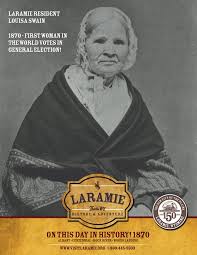
In 1869, Wyoming with Laramie leading the way, was the first legislature led entirely of men that empowered women with voting rights and to hold office. In March 1870, five Laramie women became the first women in the world to serve on a civil jury. It was a Laramie woman, Louisa Swain, who was the first woman to cast a legal, recognized vote in a United States general election on September 6, 1870.
In 1890, when Wyoming petitioned Congress to for statehood the U.S. Congress pushed back stating that Wyoming’s woman suffrage was obstacle and was delaying approval. The legislature, via a telegram from Joseph M. Carey (who later became governor of Wyoming), replied to the threat, “We will stay out of the Union a hundred years rather than come in without our women.” It was a very close vote in the U.S. Congress of 139 for – 127 against.
In 1890, Wyoming became the 44th state—with the women.
And those weren’t the only female firsts that took place in Wyoming. The first female governor was elected in Wyoming and the nation’s first woman to be appointed to public office was done so in South Pass City, Wyoming. In addition, the Equality State is home to the first female jurors, the world’s first female bailiff and the first town that was governed entirely by women.
Native Americans in their traditional attire holding American flag at the Lincoln Memorial building. STUNNING images of the indigenous Native Americans have been brought back to life through vivid colorization. The remarkable pictures show the group during the 1920s, with some of the leaders meeting with then American president, Calvin Coolidge, at the White House.
The Indian Citizenship Act still didn’t offer full protection of voting rights to Indians. As late as 1948, two states (Arizona and New Mexico) had laws that barred many American Indians from voting, and American Indians faced some of the same barriers as Blacks, until the passage of the Civil Rights Act of 1965, including Jim Crow-like tactics and poll taxes.
The last state to guarantee voting rights Native people was Utah in 1962.
The Voting Rights Act of 1965 was the most significant statutory change in the relationship between Federal and State governments in the area of voting since the Civil War. The act prohibited poll taxes, intimidation tactics, harassment, physical violence, or economic reprisals for voting in civil elections. OurDocuments.gov
Sadly, tragically, Laramie is also known for the inhuman murder of Matthew Shepard on October 12, 1998. It seems that bullying can still find cracks to rear its ugly head. Yet, once again the people of Laramie were not going to put up with it. Law and justice were served.
Americana Fiction
We recently changed the description of the Laramie Awards from “Western Fiction” which could mean a great many things, to “Americana Fiction.” A quick search for Western Fiction shows that it refers the American Old West that takes place anywhere from late 18th to the late 19th century. While this covers our categories of Pioneer and Civil War (the pioneer period is often referred to as 1760-1850 with the Civil War raging from 1861-1865). Also, great contemporary Western Fiction such as New York Time’s bestselling author and the basis for the hit Netflix series, Craig Johnson’s (a Wyoming author) Longmire Series.
And we can’t forget Jim Harrison’s works. You might be familiar with one of his stellar works—Legend’s of the Fall.
Legends of the Fall book cover before the film was made of it.
On the other hand, Americana Fiction is defined by Goodreads as “Novels that help tell the history, culture and folklore of what makes Americans uniquely American.” You can even see a list here of what they consider to be Americana Fiction, which really shows the wide, incredible expanse, that Americana Fiction and history can transcend, though we tend to consider it more of a historical genre than some of these incredible books are.
We made this change to promote a more accurate and inclusive representation of what we are accepting for the Laramie Awards.
So what are some excellent reads featuring indigenous identities that have already been vetted by Chanticleer you might enjoy? We’re glad you asked!
Jerkwater
By Jamie Zerndt
Somerset Award Winner
Three friends in Mercer, Wisconsin find ways to deal with their problems amid a racist town in Jamie Zerndt’s Jerkwater.
Shawna Reynolds’ life changed when her white stepdad murdered her Ojibwa mother. Now living with her Naan (grandmother), Shawna surrounds herself with those who make her feel most comfortable. Besides Naan, she clings to her horse Seven, her behind-the-scenes Ojibwa boyfriend Elmer, and two white friends: Kay O’Brien and her son Douglas. But racial tension cuts through the town of Mercer itself, galvanized by a fight over fishing rights.
Dr. Nerida Green travels across Australia, tending to struggling communities and connecting with her wife Mari—as well as the three spirits who Mari channels through her body, in Miki Mitayn’s climate-fiction novel The Conscious Virus: An Aedgar Wisdom Novel.
Nerida works sporadic jobs as a doctor, from the mining community of Newman to the small town of Fitzroy Crossing, and back east to a disappointing stint at a naturopathy clinic in Byron Bay. Between her working hours, Nerida speaks with M’Hoq Toq, the Native American medicine man, Bartgrinn the Celtic druid, and Aedgar, an ancient being of the Earth. Nerida asks the spirits for their opinions on topics as broad as climate change and as narrow as her personal matters, engaging them in deep conversation.
Wanders Far
By David Fitz-Gerald
Laramie Award Winner
An engaging history of ancient Native American peoples is brought to magical life by author David Fitz-Gerald.
In the early 1100s, in a region now known to us as the Adirondack Mountains of northern New York, a small band of tribal people is living in longhouses, growing crops, fishing, hunting, and enjoying certain rituals such as face and body painting, occasional migration for food survival, and even seasonal “vacations,” all while willingly obeying a simple form of governance with elements of basic democracy. In this tribe, we meet Wanders Far, a child who earns his nickname after showing a propensity to disappear and explore since he could walk. His mother, Bear Fat, is the recognized chieftainess of their group, mother of a large brood, one of whom is stolen as the book opens. Wanders Far would be considered an unusual child in any society, gifted with a highly accurate memory and the ability to visualize future events. He can also run like the wind, and with his love for travel, he is often the first to see and warn his people of danger, such as a cadre of warriors from a hostile tribe heading towards his home settlement.
Buck: Keeper of the Meadows
By Gloria Two-Feathers
In this engaging children’s tale by author Gloria Two-Feathers, a young colt named Buck will learn how to obey, how to defend, and how to strike out on his own.
The scene is set in the Great Plains, where a river named Minisose divides a sea of tall green prairie grass. Many animals call that grassland their home, and the most magnificent is the herd of wild horses led by a dark stallion named Plenty Coups and his chosen mate, the lovely cream-colored mare, Cloud. By tradition and instinct, Plenty Coups protects the herd from attackers, while Cloud leads them to safety.
When you’re ready,did you know that Chanticleer offers editorial services?We do and have been doing so since 2011.
Our professional editors are top-notch and are experts in the Chicago Manual of Style. They have and are working for the top publishing houses (TOR, McMillian, Thomas Mercer, Penguin Random House, Simon Schuster, etc.).
If you would like more information, we invite you to email Kiffer or Sharon at KBrown@ChantiReviews.com or SAnderson@ChantiReviews.com for more information, testimonials, and fees.
We work with a small number of exclusive clients who want to collaborate with our team of top-editors on an on-going basis.Contact us today!
Chanticleer Editorial Services also offers writing craft sessions and masterclasses. Sign up to find out where, when, and how sessions being held.
A great way to get started is with our manuscript evaluation service, with more information availablehere.
And we do editorial consultations for $75. Learn morehere.
If you’re confident in your book, consider submitting it for a Editorial Book Reviewhereor to one of our Chanticleer International Awardshere.
Also remember! Our 10th Anniversary Chanticleer Authors Conference (CAC22) will be April 7-10, 2022, where our 2021 CIBA winners will be announced. Space is limited and seats are already filling up, so sign up today! CAC22 and the CIBA Ceremonies will be hosted at the Hotel Bellwether in Beautiful Bellingham, Wash. Sign up and see the latest updates here!
We are deeply honored and excited to continue to announce the 2019 Winners of the Chanticleer International Book Awards (The CIBAs).
The winners were recognized at the Virtual Chanticleer Authors Conference and Awards Ceremonies that were held on during VCAC September 8 – 13, 2020 by ZOOM webinars based at the luxurious Hotel Bellwether, Bellingham, Wash.
We cheered on the CIBA Premier Finalists with our bubbly of choice from wherever we were Zooming!
The CIBA announcements were made LIVE with Chanticleerians participating and interacting from around the globe and North America. A virtual happy hour was held following each evening’s announcements.
We want to thank all of the CIBA judges who read each and every entry and then comment, rate, and rank within each of the 17 CIBA Divisions. Without your labors of love for books, the Chanticleer International Book Awards would not exist. THANK YOU!
We want to thank all of the authors and publishers who participated in the 2019 Chanticleer International Book Awards (the CIBAs). Each year, we find the quality of the entries and the competitiveness of the division competitions increasing exponentially. We added a new level to the judging rounds in 2019—the premier Level of FINALIST per each CIBA Division. The CIBA judges wanted to add the Finalist Level of Achievement as a way to recognize and validate the entries that had outstanding merit but were not selected for the very few First Place Award positions within each genre division.
Grand Prize Ribbons!
We are honored to present the
2019 Chanticleer International Book Awards
Grand Prize Winners
The 2019 CIBA Winners!
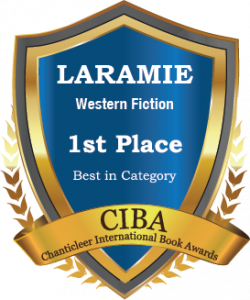
The LARAMIE Book Awards for American, Western, Pioneer, Civil War, and First Nation Novels
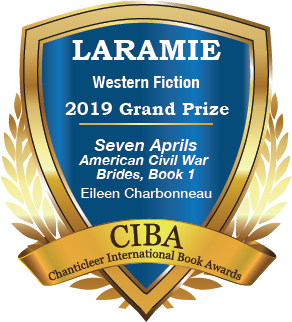
The Grand Prize Winner is
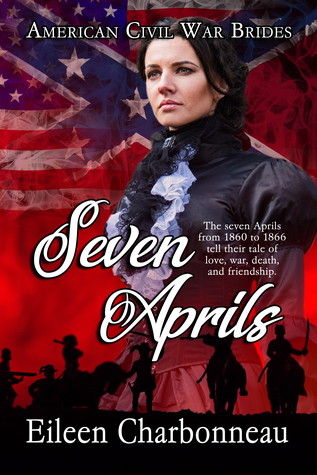
SEVEN APRILS by Eileen Charbonneau
E. Alan Fleischauer – Rescued
Lynwood Kelly – The Gamble: Lost Treasures
David Fitz-Gerald– Wanders Far-An Unlikely Hero’s Journey
Juliette Douglas – Bed of Conspiracy
John Hansen –Hard Times
J. R. Collins – Spirit of the Rabbit Place
The CHAUCER Book Awards for
Pre-1750s Historical Fiction
Grand Prize Winner is
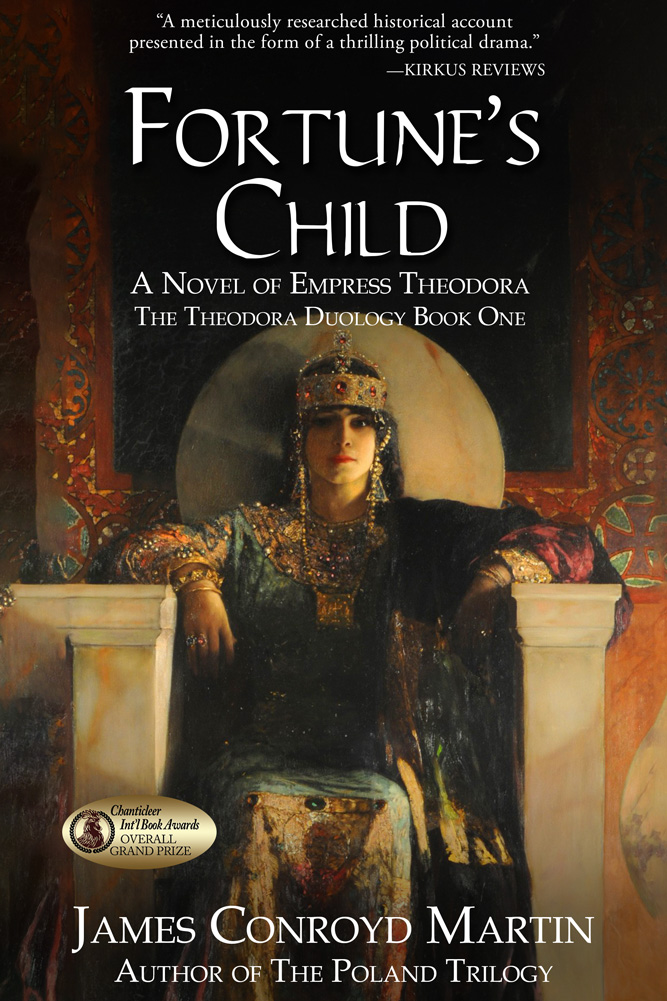
FORTUNE’S CHILD: A Novel of Empress Theodora
by James Conroyd Martin
Gail Avery Halverson for The Skeptical Physick
Linda Cardillo for Love That Moves the Sun: Vittoria Colonna and Michelangelo Buonarotti
June Hall McCash for Eleanor’s Daughter: A Novel of Marie de Champagne
James Hutson-Wiley for The Sugar Merchant
Catherine Mathis for Death in Coimbra
Patricia J. Boomsma for The Way of Glory
A.L. Cleven for 26.2
The GOETHE Book Awards for
Post-1750’s Historical Fiction
Grand Prize Winner is
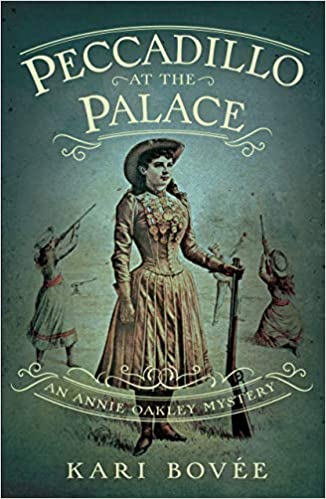
PECCADILLO at the PALACE by Kari Bovee
Vanda Writer for Paris, Adrift
PJ Devlin for Wissahickon Souls
Mary Adler forShadowed by Death: An Oliver Wright WWII Mystery
Mike Jordan forThe Runner
J.G. Schwartz forThe Pearl Harbor Conspiracy
LITTLE PEEPS Book Awards for
Early Readers and Picture Books
Grand Prize Winner is
GALDO’S GIFT: The Boovie
by Trevor Young & Eleanor Long
Sylva Fae and Katie Weaver forElfabet
Lauren Mosback forMy Sister’s Super Skills
Norma Lewis for Totem Pole
Kizzie Jones for A Tall Tale About Dachshunds in Costumes: How MORE Dogs Came to Be
Justine Avery forWhat Wonders Do You See… When You Dream?
Kasey J. Claytor for Pinky and The Magical Secret He Kept Inside
Robert Wright Jr forMummy in the Museum
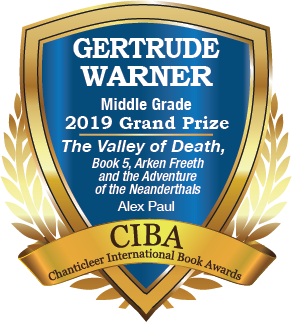
GERTRUDE WARNER Book Awards for
Middle-Grade Books
Grand Prize is
The VALLEY of DEATH, Book 5 by Alex Paul
Amber L. Wyss – Phoenix Rising
M.J. Evans – PINTO!
Beth Stickley – Tarnation’s Gate
Rey Clark – Legends of the Vale
Laura M. Kemp – Burnt Feathers
Alex Paul – The Valley of Death, Book 5, Arken Freeth and the Adventure of the Neanderthals
C.R. Stewart – Britfield and the Lost Crown
Trayner Bane – Windhollow and the Axe Breaker (Windhollows, Book 3)
Carolyn Watkins – The Knock…a collection of childhood memories
The DANTE ROSSETTI Book Awards
for Young Adult Fiction
Grand Prize Winner is
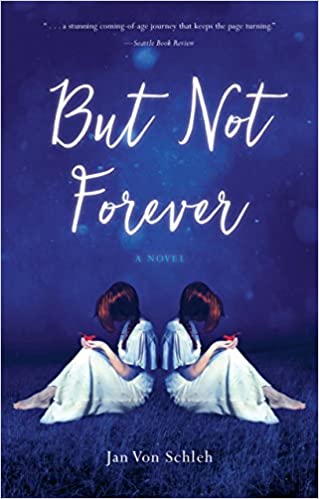
BUT NOT FOREVER by Jan Von Schleh
Michelle Rene–Manufactured Witches
Nancy Thorne–Victorian Town
Susan Brown–Twelve
Sandra L Rostirolla–Cecilia
David Patneaude–Fast Backward
John Middleton–Dillion & The Curse of Arminius
Congratulations to ALL!
We will email each winner with more information about their prize packages and more information.
Be sure to FOLLOW and LIKE us Facebook and on Twitter @ChantiReviews
Please standby for our next posts that will honor:
As always, if you have any questions, concerns, or suggestions, please email us at Chanticleer@ChantiReviews.com We will try to respond within 3 business days.
Thank you for joining us in celebrating the 2019 CIBA Winners! – The Chanticleer Team
We titled the Chanticleer International Book Awards (CIBAs) division for Western American Fiction and all things that gather around the campfire singing a lonesome tune, the Laramie Awards, after the county and city in Wyoming. You know the one, tucked into the lower right-hand corner of the state…
Yes, but why Laramie?
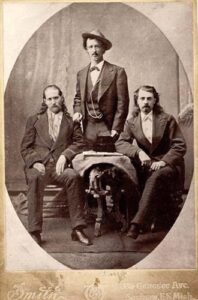
There are several reasons we chose Laramie for our iconically American Book Awards. For us, and those in the know, Laramie, Wyoming immediately calls to mind the image of a Wild West town filled with rough-and-tumble cowboys. At one point, the only law in Laramie was “lawlessness. Wild Bill Hickok was even known to visit from time to time.
Here’s a picture of the man, himself, on the left with his friends, Texas Jack Omohundro (center), and Buffalo Bill Cody on the right.
But that’s not the only reason we chose Laramie.
And, yes, there is yet one more reason we love Laramie!
The WOMEN!
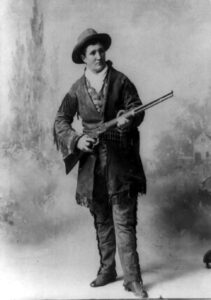
Calamity Jane hails from Laramie, Wyoming – a skilled sharpshooter who was born to a gambler and a prostitute. She cared for her five younger siblings in Utah before traveling on to Wyoming in search of a better life. There she found work as a dance hall girl and then as a prostitute at Fort Laramie. It was there that she reinvented herself by wearing buckskins and dressing like a man. She was also known for her swearing and hard-drinking ways, but Calamity Jane was also known even more for her kind heart and helping folks out of calamities–thus her nickname.
Calamity Jane
While the men were wrestling in the streets and shooting up the place, it was really the women who brought civilization to Laramie and Wyoming Territory. They established the first school in 1869, served on a formal jury in the Spring of 1870, and were the first to gain the vote; which is exactly what Louisa Swain and 92 of her friends did on September 6, 1870 – 150 years ago!
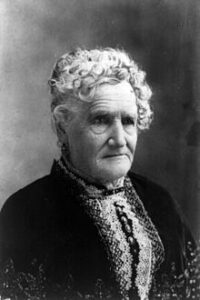
Louisa Swain – she was made of stern stuff!
Early in the morning on September 6, 1870 in Laramie, Wyoming Louisa Swain became the first woman in the world to cast a ballot under democratically enacted laws granting women equal political rights with men. In the fall of 2008, 138 years later, the U.S. Congress passes a resolution proclaiming September 6th as “Louisa Swain Day” in recognition of this historic event. The Loiusa Swain Foundation
In 1870, Esther Hobart Morris (59 years old) became the first female Justice of the Peace. She served in South Pass City, Wyoming, which is to the northwest of Laramie.
Esther Morris “to pettifoggers she showed no mercy.” Wyoming Tribune
The Union’s first all-female jury was assembled in Wyoming in 1870.
Later, in 1894, Estelle Reel Meyer became Superintendent of Public Instruction, the country’s first female statewide elected official.
And the grand coup d’etat was when in 1889 when Wyoming vied for statehood—and refused to join the Union if the laws giving equality to women were not upheld, telling Congress (which wanted the suffrage law rescinded) via telegram,
“We will remain out of the Union 100 years rather than come in without the women.”
Wyoming is also the first state in the USA to allow women to own property and sign legal documents.
Quotes are from the Smithsonian Magazine
Read more: https://www.smithsonianmag.com/travel/women-voting-wyoming-150-years-here-how-state-celebrating-180971263/#6UKzMfMeCQsmbIIQ.99
Give the gift of Smithsonian magazine for only $12! http://bit.ly/1cGUiGv
Follow us: @SmithsonianMag on Twitter
That, Chanticleerians, is why we love Laramie and have championed the name for our most iconic American awards group, The LARAMIE AWARDS. There is nothing better than the Wild West, Women’s Suffragette Success stories, Cowboys and Indians, History and Adventure all coming together with a true sense of the American West!
So, it is with pride we sponsor the LARAMIE Book Awards for American Western Fiction
Painting by C.M. Russell
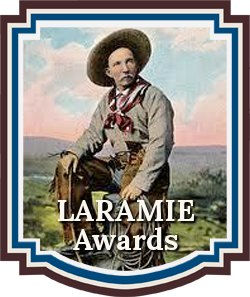
Charles M. Russell painted the cowboy seen on Chanticleer’s very own Laramie contest badge. It is one of many such paintings he did that encompassed the Old American Wild West. An advocate for the Native Americans, Charles M. Russell also helped establish a reservation in Montana for the Chippewa people.
The Laramie Book Awards for American Western Fiction Hall of Fame First Place and Grand Prize winners!
2018 Laramie Book Awards for American Western Fiction First in Category Winners
Living Where the Rabbits Dance by Jr. R. Collins
Promise of Tomorrow by TK Conklin
Chasing Demonsby John Hansen
A Female Doctor in the Civil War–Richard Alan
Splinteredby Curt Locklear
The 2018 Laramie Book Awards Grand Prize:
Blood Moon: A Captive’s Tale by Ruth Hull Chatlien
2017 Laramie Book Awards for American Western Fiction First in Category Winners
Want to be a winner next year? The deadline to submit your book for the 2019 Laramie awards is July 31, 2019. Enter here!
Grand Prize and First Place Winners for 2019 will be announced on April 18, 2020.
Any entries received on or after July 31, 2019, will be entered into the 2020 Laramie Book Awards. The Grand Prize and First Place for 2020 CIBA winners will be held on April 17, 2021.
As our deadline draws near, don’t miss this opportunity to earn the distinction your American Western readers deserve! Enter today!
The LARAMIE Book Awards is a division of the Chanticleer International Book Awards – the CIBAs.
The 2019 winners will be announced at the CIBA Awards Ceremony on April 18, 2020, that will take place during the 2020 Chanticleer Authors Conference. All Semi-Finalists and First Place category winners will be recognized, the first place winners will be whisked up on stage to receive their custom ribbon and wait to see who among them will take home the Grand Prize. It’s an exciting evening of dinner, networking, and celebrations!

 When gold miners discover Choestoe Valley, Jebediah Collins must fight for his family – whether blood-related or not – in J.R. Collins’ historical adventure, Spirit of the Rabbit Place