
Tag: American Gothic

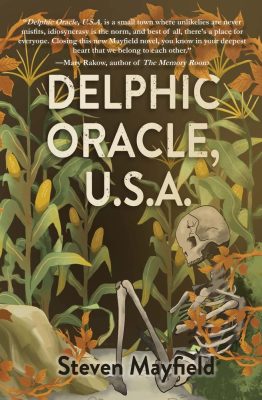
  • DELPHIC ORACLE, U.S.A. by Steven Mayfield – Small Town Fiction, Family Saga, Contemporary Fiction

    The Mark Twain Grand Prize for Steven Mayfield and his book Delphic Oracle U.S.A.The Coen Brothers meet Garrison Keillor in Steven Mayfield’s quirky, offbeat, and often hilarious Delphic Oracle, U.S.A.

    One June afternoon in 1925, seventeen-year-old Maggie Westinghouse, out walking alone as was her custom, comes upon a stranger in a railroad switch-house asleep on a pile of gunnysacks. Maggie, who has always stood a little apart from the town, has recently begun to experience visions that come upon her “in a leisurely way,” ending in a swoon and a restless sleep filled with exotic talk of which she later has no memory. No one knows what to make of it, but they soon will. After this afternoon’s chance encounter with July Pennybaker, a charming grifter on the lam, her world will never be the same. Neither will the town of Miagrammesto Station.

    Eighty-nine years later, in the days leading up to and following the July 4th weekend, domestic dramas are playing out across Delphic Oracle, Nebraska (nee Miagrammesto Station).

    Teddy Goodfellow, given to periodic fits of restlessness, has done a runner only days before the Fourth of July parade. Francis Wounded Arrow, attempting to change the battery in his nearly cherry 1929 Chevy pickup, has gotten his arm stuck and remains there at Peaseblossom Implement & Auto Parts throughout the afternoon, chatting nonchalantly with the various townsfolk, some of them family who wander by. Beagle Gibbs embarks upon his Religious Period and begins interviewing the different denominations in the town, to see which might suit.

    When Teddy bolts, the town responds as it always does. They hold a pool, friends and neighbors, and family each predicting a date and time for his return. The countdown begins. When Francis holds court in Big Bob’s garage, pretending that nothing is amiss—and after he’s privately called upon the Great Father and several of the pantheon of Blessed Uncles to no avail—the entire Delphic Oracle Fire Department is galvanized into action and very nearly saves the day. And Beagle, after a tour of all that the different churches in town have to offer, loses his religious ardor in an unfortunate and rather painful mishap with a nail-gun on the roof of his mother’s house.

    But what happens is only part of the fun. It’s how it all happens—the droll language, the turns of phrase, the reactions of the townspeople—that makes the story.

    This is not a novel to be rushed. This is a novel for those who love tall tales, yarns, sitting on a summer evening on the wide porch, fanning against the heat, and passing the time telling stories. It’s a novel of reflection and escapade. A novel to be savored.

    Structurally, the story is a twist of two timeframes, two narratives. In one, a story that began three generations in the past unfolds. In the other, a bustling town is brought to life through the concurrent stories of several members of the same extended family. The historical strand drives relentlessly forward, those two lives unfurling and intertwining, time passing. The contemporary strand ripples outward, taking in the town and its inhabitants in a luxurious and unhurried manner over a period that encompasses, in storytime, only a few weeks, but that covers, in reflective time, much more than that.

    Time, too, is in a twist.

    It sieves back and forth and collapses in on itself. The past informs the present; and the present (for us readers), the past. Most of our primary present-day characters, the ones we live with over the course of a few weeks in July and August of 2014, remain anchored solidly in time. But the many characters who move like constellations about those steady poles—those we often encounter plucked out of their own timelines—are typically out of sequence.

    This is a novel where a child new to the world, a toddler wailing in a crib, is elsewhere in the tale of the grandfather, long deceased. The stalwart man remembered in the present as the founder of the town puts in an appearance in the past, sixty-odd years after that founding, as a doddering grandfather who’s soiled himself. Another of those long-ago individuals was the flesh and blood precursor to the decades-old human skeleton partially unearthed by Regretful Peasebottom’s dog in a nearby vacant lot two days before the parade.

    The same events sometimes reappear from different perspectives, and we put the full stories together like puzzle pieces, fitting now a future piece, now a past. A prism-puzzle, these pieces twirl and refract the light off themselves and one another, until we understand that the story of one forms a part of the story of all and the story of all reaches into the story of each.

    The effect is a fully fleshed-out town of long acquaintance, filled with people who seem to live and breathe on the page. The author becomes not so much a novelist, as through his narrator an amanuensis. And to spend time with this novel is not so much to read a story as to take up residence in the town for several madcap weeks, every bit at home as though, like the narrator, you’d never truly lived anywhere else.

    Delphic Oracle U.S.A won Grand Prize in the 2022 CIBA Mark Twain Book Awards for Humor and Satire.

     

    5 Stars! Best Book Chanticleer Book Reviews

  • STORM ISLAND: A Kate Pomeroy Mystery (The Kate Pomeroy Gothic Mystery Series, Book 1) by Linda Watkins – American Gothic, Amateur Sleuth Mysteries, Horror/Suspense

    STORM ISLAND: A Kate Pomeroy Mystery (The Kate Pomeroy Gothic Mystery Series, Book 1) by Linda Watkins – American Gothic, Amateur Sleuth Mysteries, Horror/Suspense

    Mayhem, murder, and magic—Linda Watkins’ thriller, Storm Island, is a 21st-century gothic mystery replete with a damsel in distress, villains, romance, and inexplicable, supernatural happenings. And, of course, a spooky old mansion on an island off the coast of Maine provides the perfect setting.


    The story begins with “just another day at the office” for Katherine Pomeroy, daughter of the Chief of Staff at Memorial Hospital in Los Angeles, where she is a second-year surgical resident. Although she is a stereotypical privileged California girl with a prestigious pedigree, budding career, powerful lover, and trust fund on hold as she is not a product of nepotism. Katherine is smart, savvy, and hardworking, making her bones on her own behalf. Overall, her life can’t get much better.

    Until the day Katherine ducks into the quiet refuge of a hospital laundry supply room for quick a catnap to refuel, and everything changes. Shortly after dozing off, Katherine is awakened by a private conversation between Dr. James Conway, Assistant Chief of Psychiatry at Memorial, and a rough-looking stranger. The men are arguing—and not over a tee-time.

    The die is cast.

    Katherine dismisses the incident as none of her business—but not Dr. Conway.

    Later in the day, while prepping for surgery, Katherine suffers a seizure-like episode resembling a bad acid trip. Her next lucid moment is awakening in the hospital’s Emergency Room being treated by Dr. Conway, who has sedated her. He orders tests and ultimately diagnoses her as having a psychogenic disorder. By virtue of her father’s position and the fact that her aunt, a renowned psychiatrist, is willing to treat her, Katherine dodges commitment to a long-term psychiatric facility. Instead, she’s sent to her aunt’s summer home on Storm Island off the coast of Maine—a familiar place filled with memories.

    Katherine, who learned, with the help of a loyal friend on staff, that she was being drugged, arrives on the island with mixed emotions and finds it fraught with physical, psychological, and supernatural landmines, forcing her to continue the fight for her life and sanity.

    Storm Island is an entertaining read with smart, relatable characters in a setting that is dark and mysterious. A good mixture that will leave readers feeling comfortably sated.

    Linda Watkin’s won First Place in the CIBAs 2018 Paranormal Awards for Storm Island.


  • The EDGE of FARALLON by Peter Skinner – Literary, Thriller/Suspense

    The EDGE of FARALLON by Peter Skinner – Literary, Thriller/Suspense

    Sam came to Jade Cove to kill someone. The question is who.

    A mountain lion refuses to leave Big Sur’s ferocious coast while a family on the brink of foreclosure clings to their land. But the real danger might not be what Lulu Willis or her uncle Angus expects. Enter Sam a man with a checkered past, a significant stint in the military, and, at present, marred with PTSD and alcoholism. Lulu suspects that Sam is there to kill her ailing uncle and she will do anything to stop him, even if it means killing Sam.  However, as the wind continues to shift along the coast, it becomes apparent that Lulu’s volatility and past issues might bring everyone, including Sam, further to Farallon’s edges.

    As a playwright, Skinner (The Bells of Moses Henry, White Buffalo) uses words and dialogue in an undoubtedly poetic way. The dialogue, in particular, is intricately varied—snappy one minute and lyrical the next. It provides each character with their own unique thumbprint, with each fighting a different set of demons. Angus’s dementia, Sam’s grapple with humanity, and Lulu’s struggle toward forgiveness all tie together in a tangled mosaic that makes any type of resolution seem improbable.

    In addition, Skinner’s skillful use of imagery and metaphor gives both his characters and setting a delicious complexity. This is especially true in the descriptions of local flora and fauna, including “wandering micro-plates,” “tide pools ripe with purpose,” “a Steller’s Jay with deep blue feathers” and even a “phalanx of rusty mailboxes.” Readers will completely immerse themselves in these textures, especially since Skinner reintroduces plot threads with just enough variance to keep readers guessing.

    From a suspense standpoint, Skinner includes just enough detail to keep readers intrigued, while not revealing too many clues at once. This sprinkling of detail ratchets up the tension and makes it impossible for the reader to put the book down. And while the language and implications can become a bit esoteric at times, the twists and turns, shifting points of view, and varying textures will keep readers engaged.

    With traces of Gothic flare, Peter Skinner’s The Edge of Farallon is a brilliantly dark and satisfying read, exposing truths about family, life, and death. A story for those looking for complex character development, unique imagery, and a breathless plot.

    Additional Note from Reviewer: Those interested in the dialogue might also think about reading the play version, available on Skinner’s website.

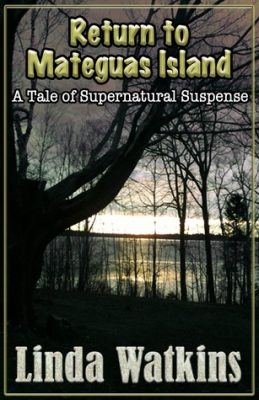
  • RETURN to MATEGUAS ISLAND by Linda Watkins – Literary Thriller/Paranormal/Occult

    RETURN to MATEGUAS ISLAND by Linda Watkins – Literary Thriller/Paranormal/Occult

    Return to Mateguas Island picks right up with the same intrigue, suspense, drama and mystery that Mateguas Island contained. A page turner from the beginning, this is a tale you will not want to walk away from. The story begins years later with, Karen Anderson along with her new husband Dex and her two teenage daughters returning to the island. Karen goes quite reluctantly, but daughters, Sophie and Terri, are on a mission to find out the truth about their father who went missing and subsequently declared dead.

    Return to Mateguas Island would fit nicely in the supernatural genre but has enough suspense throughout to lean toward this genre as well. This mixture of the two genres makes the story more complex and holds the reader’s interest throughout.

    In this second novel, author Linda Watkins has already established and developed her characters and yet goes deeper into development within these pages. The books do stand alone, but to get a full picture, it is advised to start at the beginning with Mateguas Island to fill in backstory and ascertain each character’s story arch as the tale continues.

    This story answers many of the questions from the first book. By the end of Return to Mateguas Island, however, you are left with just as many new questions and just as hungry for a third installment.

    Upon their return, Karen and the girls find the island relatively unchanged from the day they had left it behind. A day Karen hoped would have been the last they would see of this mysterious venue. The memories were too painful and too jarring for Karen and this quickly bubbled to the surface. As with the previous book, there is something just beneath the surface of things that happen on the island, subsequently, as readers dig into the second book, they will find themselves in a familiar environment.

    The story unfolds rather quickly as Karen once again displays odd behavior as the family returns to their old home. The intense story continues as a well-paced read with many twists and turns. The book holds its own next to the first novel and carries the tale, skillfully and smartly weaving in events that serve to whet readers appetites for the third book.

    High suspense and flashes of horror beckon American Gothic readers to Return to Mateguas Island, the second book in Linda Watkins trilogy –a stunning success leaving readers posed in anticipation for the next installment.

    5 Star Best Book Chanticleer Reviews round silver sticker

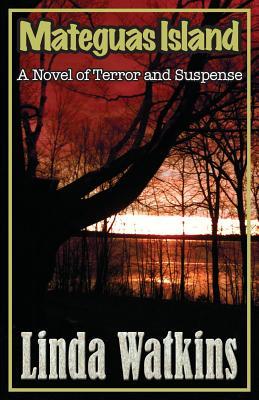
  • MATEGUAS ISLAND: A novel of Terror and Suspense (Book 1)- by Linda Watkins

    MATEGUAS ISLAND: A novel of Terror and Suspense (Book 1)- by Linda Watkins

    The author, Linda Watkins, brings a magical, edge-of-your-seat horror in the first book of her series, “Mateguas Island.” This is an engrossing tale that will captivate readers from start to its climatic finish with remarkable character development and a thoroughly gripping plot.

    The story begins when Bill and Karen Anderson land on Mateguas Island in dire straits. Bill has lost his job due to an indiscretion and as a result, lost the house in California, and the lifestyle Karen enjoyed. If Bill’s aunt hadn’t willed her island home to him, he and Karen would be living on the streets. The night of their arrival, a blustery storm hits the small island and sets the dark stage for the story.

    Karen is deeply dismayed by the loss of their high-end home and her comfortable life. She struggles with the close-knit community, the rusty old car she now drives, the non-existent stores, an inferior school system in which she must place their twin daughters, and a husband with whom she struggles to find common ground. In fact, the only that keeps her from leaving is the anguish it would cause their children. If the book were simply about that, you will probably find the story pretty run of the mill. It’s what is operating in the background that makes this tale special.

    In essence, Mateguas Island, is a classic suspense-thriller-horror tale. The story ebbs and flows, dropping hints of something not quite right on the island, and in the home. The twin daughters find a locked box in their room with odd carvings etched in the surface. Bill finds aged drawings on the foundation walls in the home’s basement. The school kids tell the girls their inherited home is haunted, the neighbors tell them a horrific tale. The suspense builds slowly but, tantalizing purposefully as the supporting characters reveal the island’s secrets.

    The stories of the Native American Indians who once dwelled upon the island feel real and honest. When mysterious events begin occurring around the property, the relationship between the two main characters, Bill and Karen, fairs no better. Watkins subtly introduces the beautiful island school teacher, Maggie, and handsome local fisherman, Dex, who, in their own way, add additional turmoil to Bill and Karen’s already strained marriage.

    Linda Watkins is a gifted author who creates believable characters and paints a story with every scene. This book is a must read for fans of American Gothic and suspense novels!