Tag: am writing

  • COMMON FICTION ERRORS – a Checklist from Jessica Morrell’s Editor’s Desk and Kiffer Brown – a Chanticleer Writer’s Toolbox post

    COMMON FICTION ERRORS – a Checklist from Jessica Morrell’s Editor’s Desk and Kiffer Brown – a Chanticleer Writer’s Toolbox post

    Sometimes knowing what not to do is helpful in writing your work-in-progress.

    Jessica Morrell, top-tiered developmental editor, and Kiffer Brown share with us on what to keep in mind as you create your work with this handy list.

    • Not knowing your ending as you write.
      • This lack of  direction not only makes the process more difficult, but results in missed opportunities to insert foreshadowing and clues.
    • Hooks: The opening hook does not raise a compelling question and relate to the whole.
      • Do the individual chapters contain their own hooks to compel the reader to turn the page?
    • Inciting Incident. Not having a catalyst for your story. What is yours?

      Your readers waiting for the inciting incident.
    • Flat Characters. Not understanding your main character, especially how he or  she is  shaped by the past, and using these factors from the past along with motivations as the basis for the plot. Causality.
      • Not giving your main character tangible goals and motivations.
      • Are your characters introduce
    • Lack of Tension. Not making the stakes high enough.
      • Without high stakes, the reader won’t care.
    • Smooth Sailing—does not make for great storytelling. Not creating obstacles for the character to struggle against.
      • Without obstacles, the story will not have enough tension or suspense—even it is a light-hearted romance or a humorous piece.
    • Whatever. Not involving your readers emotionally.
      • It’s important that the reader take on the character’s goals while entertaining them with the events of the story.

    • Yada Yada Yada. Adding needless flashbacks. Dumping backstory.
      • Use flashbacks only if they add drama and reveal information that cannot be told through present action.
      • Are the first 40 pages for your benefit and not the reader’s?
    • Dialogue: Do your characters all sound alike?
      • Dialogue is generally too long, mundane or  stilted. Do your characters tend to give speeches? Don’t let this happen.
      • Remember, most dialogue exchanges should contain conflict. As Robert Dugoni states: “Dialogue is Action. Action is Dialogue.”
    • Development: Not understanding that fiction requires introducing change throughout the story.
      • Insert enough complications, surprises, reversals, and new elements to create tension, suspense, and to force the reader to discover how these complications turn out.
    • Saggy Middle? Not inserting a major complication or reversal in the middle of the story to push the plot into a fresh direction and increase the reader’s interest. Just when you your reader thinks she knows what happens next, the unthinkable happens.
    • White Room Syndrome. Not writing enough setting details  to create a vivid, real world.
    • Lack of Atmosphere. Not realizing that  setting can interact with plot and character and affect the mood and tone.
    • Dearth of Causality. (Yes, again) Do not forget that causality is a prime factor in plotting.
      • A plot is not a series of random scenes, but connected through a chain of causal, interrelated events.
    • Unsatisfactory ending. Does  your conclusion fail to offer a big pay off.
      • As the plot concludes, tensions are unbearable, and a point of no return is reached. The conflicting forces should meet in a face-to-face contest that resolves the issues, reveals a winner, or at least changes how things look. The ending does not have to be happy, but it does need to be satisfying—even if there is more story to come and more plot questions to answer.

    The best fiction touches the deep layers in us. A writer achieves this effect by embedding dozens of techniques into his or her story. An intimate story takes us to a specific place and coaxes us to remain there. An intimate story is lifelike and feels as real and complicated as the world the reader inhabits. When he finishes the final pages, and leaves the story world, he should feel the satisfaction of the ending, but also a huge sense of loss. Like a friend has moved to another town just when the friendship had reached a level of closeness and trust. — Jessica P. Morrell


    Jessica Page Morrell

    Keep writing, keep dreaming, have heart. Jessica

    Jessica Morrell is a top-tier developmental editor and a contributor to Chanticleer Reviews Media and to the Writer’s Digest magazine. She teaches Master Writing Craft Classes at the Chanticleer Authors Conference that is held annually along with teaching at Chanticleer writing workshops that are held throughout the year. 



    Kiffer Brown

    Keep creating magic! Kiffer 

    Kathryn (Kiffer) Brown is CEO and co-founder of Chanticleer Reviews and Chanticleer Int’l Book Awards (The CIBAs) that Discover Today’s Best Books. She founded Chanticleer Reviews in 2010 to help authors to unlock the secrets of successful publishing and to enhance book discoverability. She is also a scout for select literary agencies, publishing houses, and entertainment producers.


    When you’re ready, did you know that Chanticleer offers editorial services? We do and have been doing so since 2011.

    Our professional editors are top-notch and are experts in the Chicago Manual of Style. They have and are working for the top publishing houses (TOR, McMillian, Thomas Mercer, Penguin Random House, Simon Schuster, etc.).

    If you would like more information, we invite you to email Kiffer or Sharon at KBrown@ChantiReviews.com or SAnderson@ChantiReviews.com for more information, testimonials, and fees.

    We work with a small number of exclusive clients who want to collaborate with our team of top editors on an on-going basis. Contact us today!

    Chanticleer Editorial Services also offers writing craft sessions and masterclasses. Sign up to find out where, when, and how sessions being held.

    A great way to get started is with our manuscript evaluation service, with more information available here.

    And we do editorial consultations for $75. Learn more here.

    If you’re confident in your book, consider submitting it for a Editorial Book Review here or to one of our Chanticleer International Awards here.

    Our 10th Anniversary Chanticleer Authors Conference (CAC22) will be April 7-10, 2022, where our 2021 CIBA winners will be announced. Space is limited and seats are already filling up, so sign up today!  CAC22 and the CIBA Ceremonies will be hosted at the Hotel Bellwether in Beautiful Bellingham, Wash. Sign up and see the latest updates here!


    Robert Dugoni
    Robert Dugoni is one of our most popular speakers

    Writer’s Toolbox

    Thank you for reading this Chanticleer Writer’s Toolbox article.

    Writers Toolbox Helpful Links: 

    At Its Core, the ‘Twilight’ Saga Is a Story About ________

    The INCITING INCIDENT: STORY, SETBACKS and SURPRISES for the PROTAGONIST

    BEATS & CONFLICT: The Engine for Your Book

  • You’ve Finished Your Work In Progress or NaNoWriMo or Perhaps Not – That is Okay by David Beaumier

    You’ve Finished Your Work In Progress or NaNoWriMo or Perhaps Not – That is Okay by David Beaumier

    You’ve finished NaNoWriMo!

    Or perhaps not — that is okay! 

    You have more words than you did at the beginning of November. Congratulations!

    Or perhaps you are one of the ones who will do February or June Writing Month. If so, bookmark this post for future use.

    Or, you are creating your work-in-progress? This post may be of particular interest to you.

    The first thing to do is to take a deep breath, maybe take an Epsom salt bath, massage your wrists, roll out those shoulders, and maybe let out a primordial scream into the darkness. You know, whatever helps you relax.

    Finish, Celebrate, Plan

    Now, let’s say you haven’t quite finished— Give yourself some time to relax, and brainstorm the ways you’re going to now fit writing into your life. For me, having a daily word goal of 1667 is great for short periods, but really what I need is time boxes to get the work down. I usually tell myself that I can shut myself away for at least twenty minutes a day writing until I finish, with the only rule being I write. Even if I need to struggle through something and get really meta in the writing process, I know that will come out later. Don’t forget to reward yourself, maybe with a day off, that fancy mocha you never spring for, or chocolate.

    So, whether you NaNoWriMo or not, if you are writing, be sure to reward yourself!

    Treat Yourself!

    Edit, Space, Edit

    Once you’ve finished your novel on your new schedule (or maybe you skipped that last paragraph because you’re so gosh darn prolific), the next stage will be editing. You know yourself better than I do, so if you need space from your writing, take that space.

    Before you hide it away though, consider taking the time to write what you know to be true about it now. Note down what parts mean a lot to you that you don’t want to change later, explain to yourself where you know you’ve decided you want to expand things, and then make a quick list of items that you know will need to be fixed (for me, I always need to fix the fact that my characters have very little interiority, so the reader doesn’t know why they do what they do.

    My other big struggle is setting, (everyone just exists in an empty void where their heads can talk). Leave yourself these notes and then get some space by taking Stephen King’s advice and hiding your work in a drawer or somewhere out of sight for at least six weeks.

    Meanwhile, start conjuring your next writing creation.

    Allowing your work to “rise” in a drawer while you start your next project.

    David’s Self-Editing “Trick” — He shares it with you, dear Chanticleerians.

    When the six-plus-weeks of letting your work “rise or proof” in a drawer somewhere is up, David offers this advice:

    For the next editing step, I treat myself like I would any other editorial client. I take the first ten pages of my work, and then skip ahead to the middle and grab ten pages from there. For many of us, the start and end of the book already appear clearly in our mind, and for something like NaNoWriMo, we start out fresh and excited to get the job done. So you can notice what you do well in your first ten pages, and if anything pops up that you know you need to fix, write those down as well. Then, in the section from the middle of your book, look at what parts that worked well in the beginning are still there, and what maybe fell out as the story weighed itself down in the middle of the month, heavy from the expectations and reaching that week three or week four point of exhaustion.

    We imagine this is David

    Having taken notes one what worked and didn’t work at the beginning and middle, I write myself a letter explaining what I should watch out for as I move through my own work, and how I recommend shoring up the strengths and how I can correct any weak points. For me, again, this usually means taking time to give every setting and character a unique description, and then to make sure that I use my strengths, like dialogue, especially if I notice there’s a section where I skipped over dialogue in favor of narrative description.

    Then, I connect this letter with the note I left for myself when the story was still fresh in my mind, and I buckle down and do my first read through and selection of edits.

    Manuscript Overview or Peer Review, Rewrite, Repeat

    Now it’s time to get some other eyes on your work. This may be the time to have a manuscript overview if you are serious about publishing your work. Do this before you get into editing (line or copy editing). Click here if you would like to read more about this process:

    https://www.chantireviews.com/manuscript-reviews/

    If you are undecided about whether or not to publish your work-in-progress, this might be a good time to bring in a few Beta Readers for their general impressions—how do they see the structure of the story? What do they think of my character development? And what do they see as the heart of the story? That last question nets me some really interesting answers that help me better understand the themes of the story that maybe weren’t clear to me initially. Then I compile these notes into another letter of sorts to myself, and go through the entire book again. I would recommend doing this one more time, and this time asking for more specific feedback on theme, plot, characterization, dialogue, structure, world building (as applicable), and then just anything that just stands out as a hold up for the reader.

    Remember, when receiving peer review or manuscript overview, you are the author and no one else can force you to make changes. Even if a suggestion really bothers you and gets under your skin, reframing it as a question of why the reviewer gave you that feedback can always help. For example if someone hates your character, Beth, because “she just doesn’t seem real.” Ask yourself what you’ve done to develop Beth as a character. Read her dialogue aloud. Figure out why you love Beth (even if she’s actually awful—which is often a reason we back away from loving our bad characters), and put that love into her character. She can still be unsympathetic, but at least now she’ll draw your reader in.

    What should you do if you are not wanting to proceed with your w-i-p. Our suggestion here at Chanticleer is to print it and file it away. Also, save it digitally in at least two other places such as your computer or a USB stick plus some place off premise such as in the “cloud.” Never throw any writing away…just squirrel it away because you never know…

    Squirrel away your cuts and works that you are not moving forward on. Don’t toss them away.

    Let’s get Professional – You’ve Decided that You Want to Publish Your Work-In-Progress 

    At this point, if you still want to move forward with your story, which I’m imaging is quite good, it’s time to bring in a professional. Chanticleer can provide you with a Manuscript Overview, which is a great first step, and then you can work on finding an editor who understands your vision and whose style matches with the way you respond to feedback. Go through it with your editor, and then proceed with the editorial and cover design process. Remember, your cover has the greatest influence on whether or not a potential reader will choose your book to to consider.

    Line editing, copy editing (you can save $$ by creating and developing your own Style Guide and Story Bible).

    Here is a link about creating your Story Bible/ Story Guide by Continuity Editor Diane Garland.

    SERIES or Not to Series 

    In the process that you’ve been going through with your Work-In-Progress (w-i-p), are you considering turning it into a series? Indie Booksellers, Entertainment Producers, Literary Agents, etc. and especially READERS, enjoy book series.

    Do you need to reconsider your story structure in order to sustain a book series? 

    You may want to read this blogpost by mystery series award-winning author Wendy Delaney. https://www.chantireviews.com/2020/02/29/writing-a-series-primer-by-award-winning-author-wendy-delaney-a-chanticleer-writers-toolbox-article/

    To Series or Not to Series– What is Your Strategy?

    Publication? 

    This, for many people is seen as the big goal, and it deserves an article all on its own for the different facets of self-publishing versus traditional publishing, how to market, what to do about cover design, contests, book reviews, and so much more. At this point, the important thing to realize is that you are entering a period of extraordinary fine-tuning and a different kind of work with your book, from making it come to life to putting it in people’s hands. Good luck!

    On a final note, don’t forget about the COVER!

    THE COVER – The Number One Marketing Tool to Sell More Books – Don’t Sell Yourself Short. Start on your cover design as soon as you are serious that you want to publish your story then start working on the cover and the brand (Stories are products!)

    Here is link for you to take a look at on Five Essential Book Cover Elements by Kiffer Brown

  • COMPONENT LAYERS of SUCCESSFUL FICTION – A Chanticleer Writer’s Toolbox blog post by Jessica Morrell

    COMPONENT LAYERS of SUCCESSFUL FICTION – A Chanticleer Writer’s Toolbox blog post by Jessica Morrell

    Elements of successful fiction layer and fold back in on each other to create resonance, nuance, subtext, and undercurrents of great storytelling. – Kiffer Brown

    In this enlightening and instructional blog post by top-tiered editor and one of Chanticleer’s exceptional Master Writing Craft teachers, Jessica Morrell, will expand on the following components of exceptional fiction.

    Elements of Successful Fiction

    • The Dramatic Question
    • An Intimate Simmering World
    • Characters Built from Dominant Traits
    • Emotional Needs
    • Significance
    • Motivation Entwined with Backstory
    • Desire
    • Threat
    • Causality
    • Inner Conflict
    • Midpoint Reversal
    • Satisfying Ending

    Dramatic Question 

    Compelling fiction is based on a single, powerful question that must be answered by the story climax. This question will be dramatized chiefly via action in a series of events or scenes. If you are writing a romance, the question always involves whether the couple will resolve their differences and declare their love. In a mystery the dramatic question might be will Detective Smith find the serial killer in time to prevent another senseless death? In The Old Man and Seathe dramatic question is will Santiago catch the big fish and thus restore his pride and reputation?

    An Intimate, Simmering World 

    An intimate world isn’t created by merely piling on details. It means your story world has the resonance of childhood memories, the vividness of a dream, and the power of a movie. It’s filled in with shadows and corners and dogs and ice cubes and the sounds and smells of a dryer humming on wash day and a car blaring past, rock and roll music shaking the windows. Details lend your story authority, potency, and a palpable physical existence.

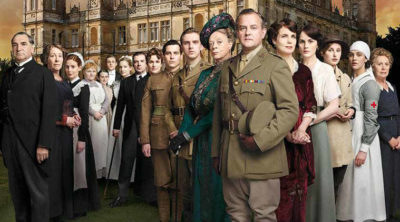
    Downton Abbey by Julian Fellowes — definitely an “intimate simmering world”

    An intimate story takes us to a specific place and coaxes us to remain there. An intimate story is lifelike and feels as real and complicated as the world the reader inhabits. When a reader finishes the final pages and leaves the story world, the reader should feel the satisfaction of the ending, but also a huge sense of loss. Much like a friend has moved to another town just when the friendship had reached a level of closeness and trust.

    Characters Built from Dominant Traits

    Create main characters with dominant and unforgettable traits as a foundation of personality. These traits will be showcased in the story events, will help him achieve or fail at goals, and will make the story person consistent. For example, Sherlock Holmes’ dominant traits are that he is analytical, Bohemian, opinionated, and intelligent. These traits are showcased in every story he appears in along with secondary and contrasting traits. When the character first appears in the first scene, the character should arrive in the story with dominant traits intact.

    Sherlock Holmes and Jim Moriaty – enduring characters since 1892.

    Emotional Needs

    Protagonists and the main characters are people with baggage and emotional needs stemming from their pasts. These needs, coupled with motivation, cause characters to act as they do. For example, in Silence of the Lambs Clarisse  Starling is propelled by childhood traumas to both succeed and heal the wounds caused by the death of her father.

    The EXPANSE by James S.A. Corey went from a Sci-Fi book series to one of Amazon’s top video series. One reason is that the characters have some major emotional baggage.

    Significance 

    The storyline focuses on the most significant events in the protagonist’s life.

    Kiffer’s Note: As we were taught in journalism school, this is the “So what?” that our professors would continuously ask us. What were, are, and will be the significant events? Your story will show the “why and how.” Make your readers care. Make your readers interested and keep them caring.

    Crazy Rich Asians by Kevin Kwan  –  3 Perspectives Cubed makes for a complex story.

    Motivation Entwined with Backstory 

    Motivation, the why? of fiction, is at the heart of every scene, fueling your character’s desires and driving him to accomplish goals. It provides a solid foundation for the often complicated reasons for your character’s behaviors choices, actions,  and blunders.  Motivating factors provide trajectories for character development, as a character’s past inevitably intersects with his present. Your character’s motivations must be in sync with his core personality traits and realistically linked to goals so that readers can take on these goals as their own.

    See The Expanse SciFi series above. It said to be the current Game of Thrones of TV series streaming.

    Names convey emotional baggage and foreshadowing

    Desire 

    Desire is the lifeblood of fictional characters. Not only do your characters want something, but they also want something badly. Santiago, in The Old Man and the Sea desperately wants to restore his reputation and also wants his friendship and partnership with the boy to resume. And in the lonely hours when he is far out at sea, desperately struggling to hang on to the fish and fighting off sharks, we see his fierce desire acted out and the price he pays for it.

    The classic A League of Their Own – to be rebooted on Amazon 2021

    Here is a fun link to: 25 Things You Might Not Know About A League of Their Own 

    You can bestow on your character flaming red hair, an endearing, crooked grin, and a penchant for chocolate and noir movies, but if she doesn’t want something badly, she’s merely a prop in your story, not a driving force. But if she wants to win the Miss Florida contest, take over her boss’ job, or become the first female shortstop for the Atlanta Braves, then you’ve got a character who will make things happen and a story that will be propelled by desire.

    Threat

    Fiction is based on a series of threatening changes inflicted on the protagonist. In many stories, these threats force him or her to change or act in ways he or she needs to change or act. Often too, what the protagonist fears most is what is showcased in a novel or short story. It can be fear of losing his family, job, or health with this dreaded outcome providing interest, action, and conflict.

    The Martian by Andy Weir – one big ticking clock on so many different levels.

    Causality 

    Events in fiction are never random or unconnected. They are always linked by causality with one event causing more events later in the story, which in turn causes complications, which cause more events, which cause bad decisions, etc.

    Causality – the physics of writing

    Inner Conflict 

    A fictional character doesn’t arrive at easy decisions or choices. Instead, he is burdened by difficult or impossible choices, particularly moral choices, that often make him doubt himself and question his actions. Inner conflict works in tandem with outer conflict—a physical obstacle, villain, or antagonist–to make the story more involving, dramatic, and events more meaningful.

     Complications   A story builds and deepens by adding complications, twists, reversals, and surprises that add tension and forward motion. Plots don’t follow a straight path, instead, there are zigzags, dead ends, and sidetracks. Complications create obstacles and conflict, cause decisions to be made, paths to be chosen.

    12 Years A Slave – based on the memoir of Solomon Northrup, published in 1854

     Midpoint Reversal 

    The middle of a novel comprises more than half its length. At about the midpoint of most novels, a dramatic reversal occurs. The hunter becomes the hunted; a second murder occurs proving the detective has been wrong in his suspicions; a former lover arrives in town to complicate a budding romance. This reversal keeps the middle from bogging down and becoming predictable and also breathes new life and often a new direction into the story.

    Mid-point Reversal of Bride and Prejudice, an adaptation of Jane Austen’s Pride and Prejudice. Published in 1813, it is still relevant.

    Satisfying Ending 

    Every story needs an ending that satisfies the reader while concluding the plot. The final scenes, when the tensions are red hot and the character has reached a point of no return, must deliver drama, emotion, yet a logical conclusion. This is not to suggest that every plot ends with a shoot-out or physical confrontation because some endings are quieter, more thoughtful. Some endings are ambivalent, some a dramatic or a violent clash of wills. But there is always a sense that all the forces that have been operating in your story world have finally come to a head and the protagonist’s world is forever changed.

    Below is a scene from The Martian that heralds that maybe—just maybe—our protagonist may make it home—alive. It is a fun and creatively acted scene.  What a scene stealer! – Kiffer Brown

    A reversal of fortune in The Martian by Andy Weir

    The end is just the beginning…

    A Note from the Editor: A satisfying ending is one of the top, if not the top, reasons why books go viral and what will make your reader want to read your next work. Make sure that the you put as much effort in to a satisfying ending as you do into your opening hook. Kiffer Brown

    I hope that you found the visual examples enlightening. Determining and then searching for my favorite ones was fun! – Kiffer


    Jessica Page Morrell

    Jessica Page Morrell is a top-tier developmental editor for books and screenplays. Her articles have appeared in Writer’s Digest and The Writer magazines. She is known for explaining the hows and whys of what makes for excellent writing and for sharing very clear examples that examine the technical aspects of writing that emphasizes layering and subtext. Her books on writing craft are considered “a must have” for any serious writer’s toolkit.

    Jessica will teach Master Craft Writing Classes at the Chanticleer Authors Conference VIRTUAL Conference that will be held from Tuesday, Sept 8 – Sunday, Sept. 13, 2020. She will present sessions and Master Classes on September 17, & 18,  2020 in conjunction with the virtual conference. She and Kiffer will also host a fun kaffeeklatch for Word Nerds at VCAC20.

    Did you know that Chanticleer offers editorial services? We do and have been doing so since 2011.

    And that our professional editors are top-notch and are experts in the Chicago Manual of Style. They have and are working for the top publishing houses (TOR, Macmillan, Thomas Mercer, Penguin Random House, etc.) and award-winning independent presses. If you would like more information, we invite you to email Kiffer or Sharon at KBrown@ChantiReviews.com or SAnderson@ChantiReviews.com.

    Click here to read more about our Editorial services: https://www.chantireviews.com/services/Editorial-Services-p85337185

    A great way to get started is with our manuscript evaluation service. Here are some handy links about this tried and true service:

    https://www.chantireviews.com/manuscript-reviews/

    We work with a small number of exclusive clients who want to collaborate with our team of top-editors on an on-going basis. Contact us today!

    Writer’s Toolbox

    Thank you for reading this Chanticleer Writer’s Toolbox encore edition article. 

    We encourage you to stay in contact with each other and with us  during this stint of practicing physical distancing to prevent the spread of COVID-19 — especially at this time of re-opening.

    Let us know how you are doing, what is going on where you live, how are you progressing on your writing projects.

    I invite each of you to join us at The Roost – a private online Chanticleer Community for writers and authors and publishing professionals. You are welcome to email me for more info also.

    We are active on Facebook, Twitter, and Instagram. You can find us by using our social media handle @ChantiReviews

    Minimize physical contact! Maximize social connecting!

    Be well. Stay safe. Keep writing! Keep Creating! Kiffer 

  • Part Two: LANGUAGE and NAME-CRAFT in WRITING FICTION – a Chanticleer Writers Toolbox Blogpost – Jessica Morrell and Kiffer Brown

    Part Two: LANGUAGE and NAME-CRAFT in WRITING FICTION – a Chanticleer Writers Toolbox Blogpost – Jessica Morrell and Kiffer Brown

    Using names as foreshadowing clues and smart plotting devices is indicative of finely honed writing craft.

    Picking up an author’s or director’s foreshadowing clues can be a fun exercise when you read and watch films or TV series. It can also distinguish smart plotting from hack plotting. In fact, I’ve written a whole chapter on the hows and whys of foreshadowing in my book Between the Lines. It’s necessary so the character’s actions, especially those in Act 3, are credible. Foreshadowing is part of creating a character arc and defining personality traits. It’s also the necessary set-up for the biggest events of your stories.

    Think of the names that are now part of dinner conversations and social media memes.

    As a Game of Thrones fan, (more the books than the HBO series) I could have warned parents not to name their daughters Daenerys. Unlike many people, she was my least favorite character, but there was also a great deal of foreshadowing from the get-go indicating she was damaged, unstable, and blood-thirsty. And, of course, her father Aeyrus II Targaryen was called the Mad King. Hint. Hint.  Oh, and his wife Rhaella, was also his sister.

    The name Daenerys broken down into its parts is ‘Daen’ (Hebrew for god is my judge (and no other human is) and the Greek ‘Eris’ – goddess of discord and destruction…

    Here is a link to George RR Martin’s Symbolic Character Name Choices by Jamie Adair http://history-behind-game-of-thrones.com/characters/grrm-symbol-names

    Two clever examples of George R.R. Martin’s name-craft prowess:

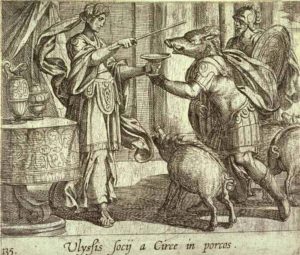
    Cersei/Circe — in Greek mythology, Circe was a sorceress who fed men wine and then changed them into pigs (which Cersei certainly did with Jaime). And she was instrumental in having her husband, King Robert Baratheon, killed by a wild boar on a hunting trip when he was induced to drink too much wine while participating in the dangerous sport by one of her agents.

    Bran is Welsh for raven and a Bran was crowned king over the island (Britain) in Celtic mythology. And here is another link to go down the proverbial rabbit hole about ravens and Celtic mythology:  https://druidry.org/resources/bran-the-sleeping-guardian

    The list of names with their subtext and foreshadowing goes on. The best character names are suggestive and indelible. They have weight and suffuse the character’s identity with meaning. When writers choose a character’s name its the readers first impression of the character and comes with associations and impact. The best character names have weight and meaning. 

    Here are some more examples of excellent name-craft in fiction.

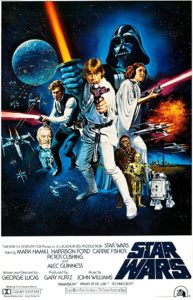
    • Star Wars by George Lucas:  Luke Skywalker, Darth Vader, Han Solo

    • Breakfast at Tiffany’s by Truman Capote: Holly Golightly, Cat, Rust Trawler, Emily Eustace Failenson

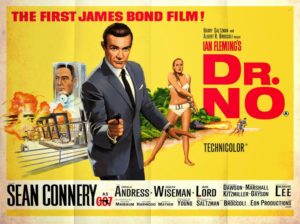
    • James Bond series originated by Ian Fleming: James Bond, M, Auric Goldfinger, Pussy Galore, Oddjob, Q, Honey Ryder

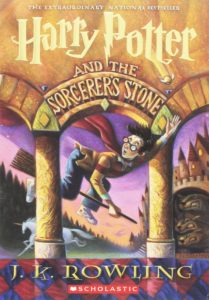
    • Harry Potter series by J.K. Rowling: Severus Snape, Hermione Granger, Belatrix Lestrange, Draco Malfoy

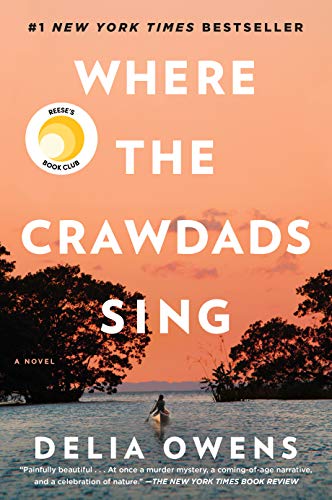
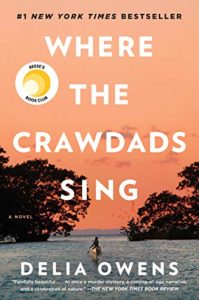
    • Where the Crawdads Sing by Delia Owens:  Kya, Chase Andrews, Jumpin’ , Mabel, Miss Pancy Price, Sunday Justice, Rodney Horn

    Character names deepen the world of the story, lending it authority and verve. I’ve recently read a manuscript where characters born in the early 21st century, all had names made popular in the 1940s and 1950s. When I pointed this out to the writer, he hadn’t thought of the implications or accuracy of these names. – JM

    In Stephanie Meyer’s Twilight Series, Meyers had to make sure that the vampires who were originally born anywhere from 1640 into the late 1800s, had appropriate names, but not enough to be distracting. Hence, the names Edward Cullen, Esme Cullen, Alice Cullen. And could Bella Swan’s name be anything else besides Bella Swan?

    Can your characters’ names add subtext to your work-in-progress? 

    To circle back around…

    Language sets the tone and creates the author’s voice.

    Names make characters memorable.

    Historical words allows for the cadence of past times to emerge.

    New words transport you to a different place and time.

    Nouns create time and place.


    Handy Reference Links

    Part One of Language and Name-Craft in Writing Fiction

    A website that focuses on language diversity with a Language Planisphere:  Soroscoro: So the languages of the world may live on!  

    And just for fun, here’s a link to a glossary list of sci-fi terms from  Writers Write website.

    A Game of Tongues: Why George R.R. Martin is a Linquist After All by WordJazz  (very insightful and interesting article with 20 points).

    How many languages are there in the world? Linguistic Society of America

    Here is a link to George RR Martin’s Symbolic Character Name Choices by Jamie Adair http://history-behind-game-of-thrones.com/characters/grrm-symbol-names


    Our Next Posts

    Chanticleer’s next Marketing blog post will address a more deep dive into Hashtags and Social Media (How to Expand Your Social Media Reach to Increase Online Book Sales).

    Our next Editorial blog post will address creating potent beginnings by Jessica Morrell.

    So please stay tuned…


    Jessica Page Morrell is a top-tier developmental editor for books and screenplays. Her articles have appeared in Writer’s Digest and The Writer magazines. She is known for explaining the hows and whys of what makes for excellent writing and for sharing very clear examples that examine the technical aspects of writing that emphases layering and subtext. Her books on writing craft are considered “a must have” for any serious writer’s toolkit.

    Jessica will teach the Master Craft Writing Classes at the Chanticleer Authors Conference on Thursday, Sept. 3, 2020  and will present sessions during the conference. She and Kiffer will also host a fun kaffeeklatch for Word Nerds at CAC20.


    Did you know that Chanticleer offers editorial services? We do and have been doing so since 2011.

    Our professional editors are top-notch and are experts in the Chicago Manual of Style. They have and are working for the top publishing houses (TOR, Macmillan, Thomas Mercer, Penguin Random House, etc.) and award-winning independent presses. If you would like more information, we invite you to email Kiffer or Sharon at KBrown@ChantiReviews.com or SAnderson@ChantiReviews.com.

    Click here to read more about our Editorial services: https://www.chantireviews.com/services/Editorial-Services-p85337185

    A great way to get started is with our manuscript evaluation service. Here are some handy links about this tried and true service:

    https://www.chantireviews.com/manuscript-reviews/

    We work with a small number of exclusive clients who want to collaborate with our team of top-editors on an on-going basis. Contact us today!

    Writer’s Toolbox


    Thank you for reading this Chanticleer Writer’s Toolbox article. 

    We encourage you to stay in contact with each other and with us  during this stint of practicing physical distancing to prevent the spread of COVID-19 — especially at this time of re-opening.

    Let us know how you are doing, what is going on where you live, how are you progressing on your writing projects.

    I invite each of you to join us at The Roost – a private online Chanticleer Community for writers and authors and publishing professionals. You are welcome to email me for more info also.

    We are active on Facebook, Twitter, and Instagram. You can find us by using our social media handle @ChantiReviews

    Minimize physical contact! Maximize social connecting!

    Be well. Stay safe. Keep writing! Keep Creating!