Give a huge round of applause to all of the Chanticleer Int’l Book Awards (CIBAs) Finalists!
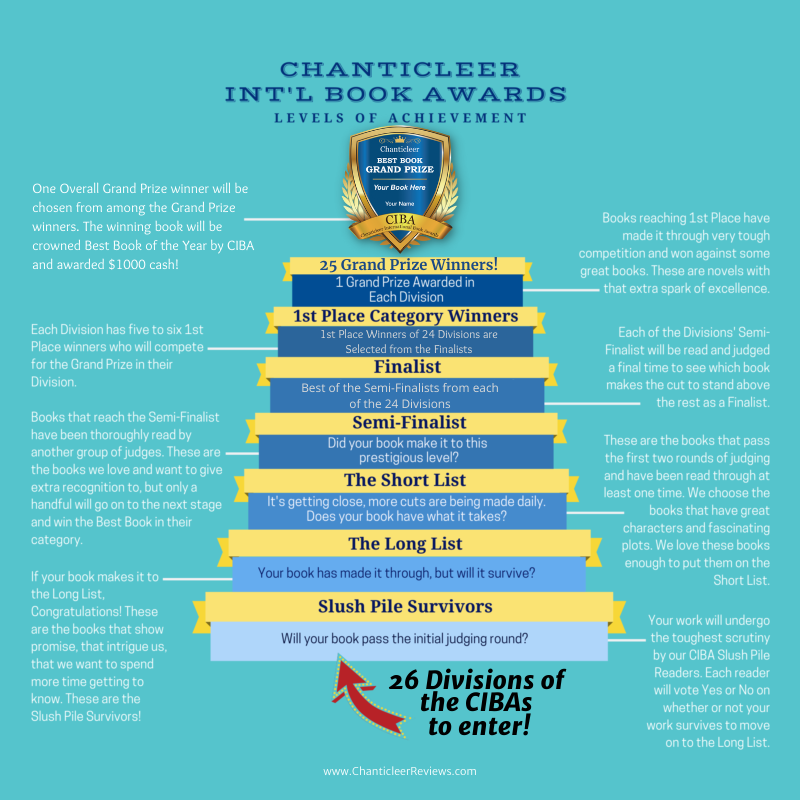
Every tier of the CIBAs is an important one, though few manage to rise this far in the ranks.
For our Fiction Authors, this post has links to all of the Finalist Awards for the CIBA Divisions we have for fiction. We will have a separate post for Non-Fiction and one more post for the Shorts Awards and Series Awards where you can find all the 2024 Finalists!
All Finalists in attendance will be recognized at the Chanticleer Authors Conference, and we will announce the Winners at the CIBAs Ceremonies on Saturday, April 5th at the Chanticleer Banquet. Banquet Only Tickets will open soon, and a limited number will be available!
Now let’s take a step back and look at where we came from to make this happen.
The remaining tiers are the First Place Winner, the Grand Prize Winners, and finally, the coveted Overall Grand Prize Winners. The Overall Grand Prize Winner takes home the $1000 and more! See the Book Award details here.
Now, presenting the links to the Fiction Awards Finalists
The Official 2024 CIBA Lists of the First Place and Grand Prize Winners for all Divisions of the CIBAs will start to be posted starting on Wednesday, April 9th, 2025.
We have badges available starting with the Short List. If you need a digital badge reflecting your tier level, please email info@ChantiReviews.com with your division and rank, and we will send you one as soon as possible.
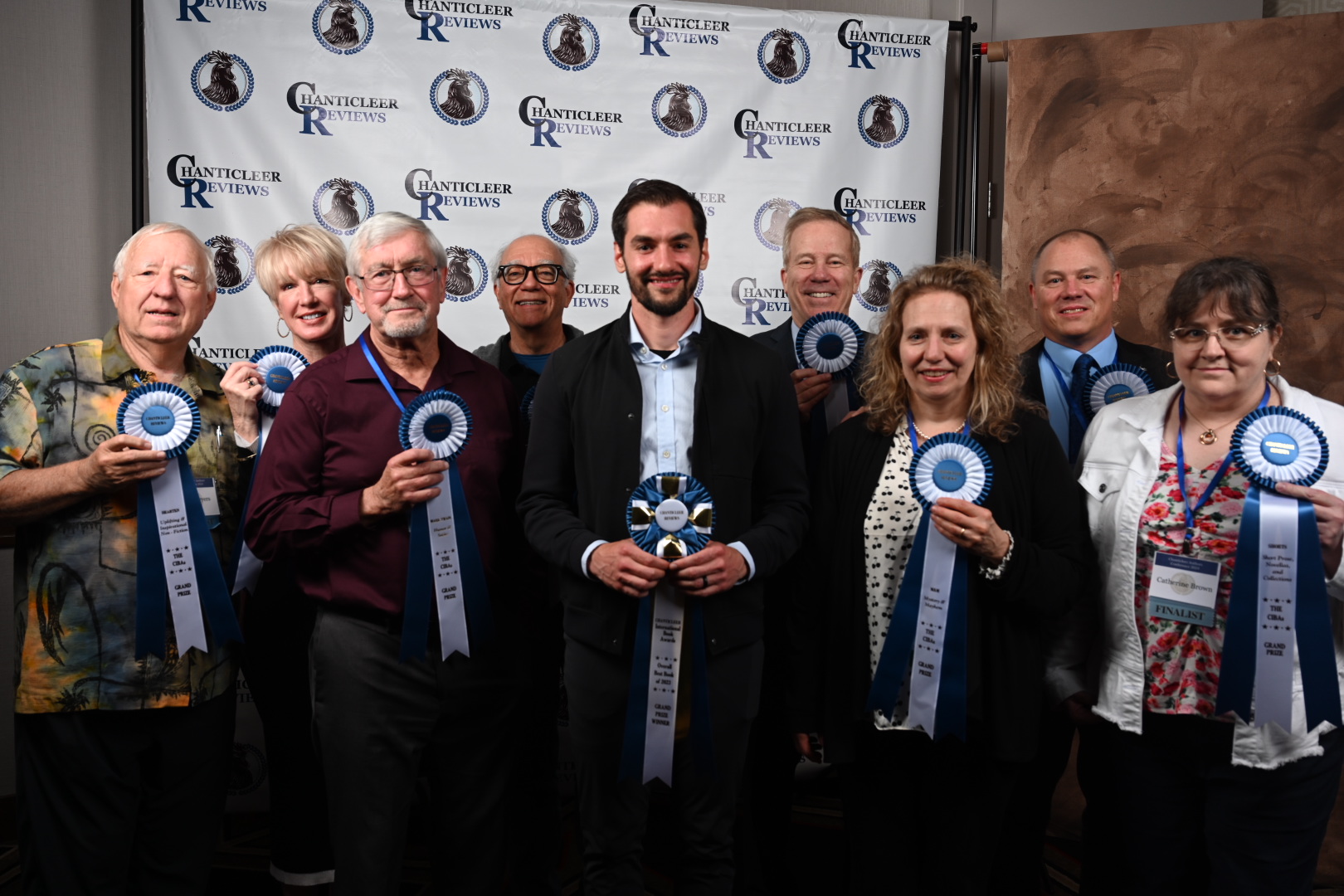
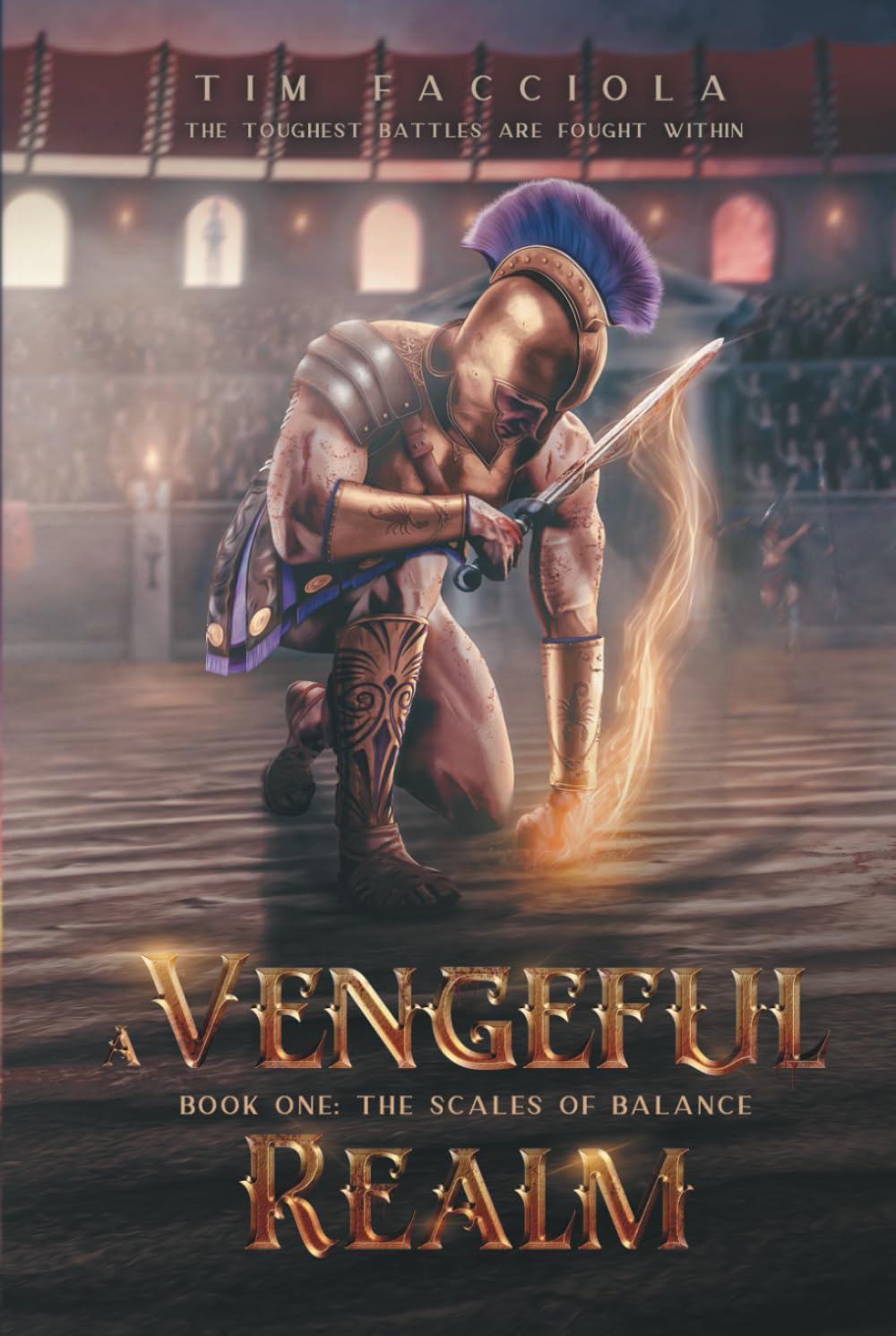
The 2023 CIBA Grand Prize Winners!
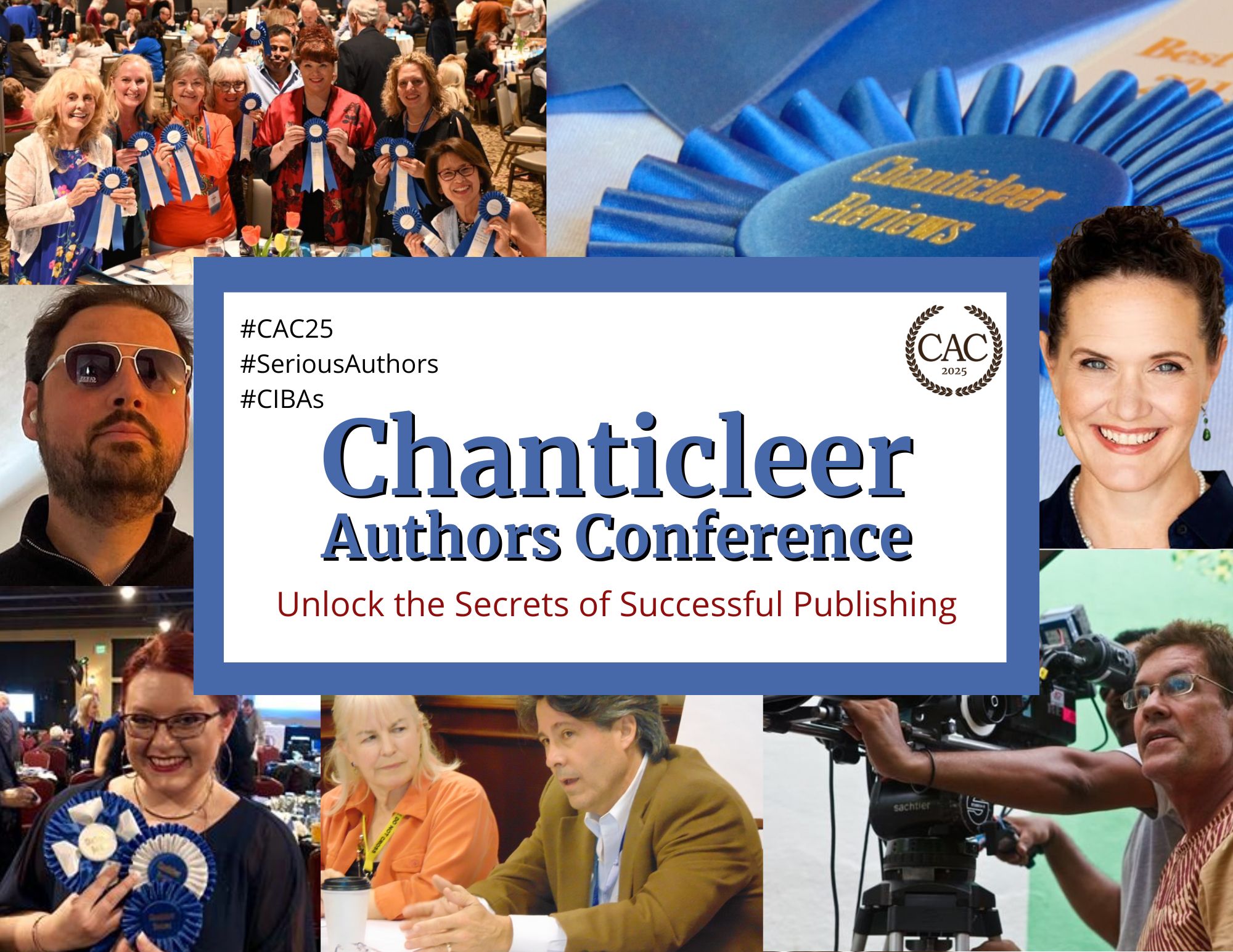
The Annual Chanticleer Authors Conference is April 3-6, 2025
Make sure your Award gets the attention it deserves on Goodreads.com
In the Librarian Manual on Goodreads, you can go to your Book Edit Page — Literary Awards.
You want to list the Award for Chanticleer International Book Awards (CIBA) Winners, and be sure to include the year and what place you received. For example:
The year Long List, Short List, Semi-Finalist, or Finalist.
Note from Goodreads: “To add a new award or edit an existing award, you’ll need help from one of our volunteer librarians or a staff member.” For assistance, post in the Goodreads Librarians Group.
Always double check that you’ve written everything correctly before posting it. The search function for Awards on Goodreads is both case and punctuation sensitive.
Remember, you don’t have to be present to win, but it sure is a lot more fun!
The esteemed WRITER Magazine (founded in 1887) has repeatedly recognized the Chanticleer Authors Conference as one of the best conferences to attend and participate in for North America.
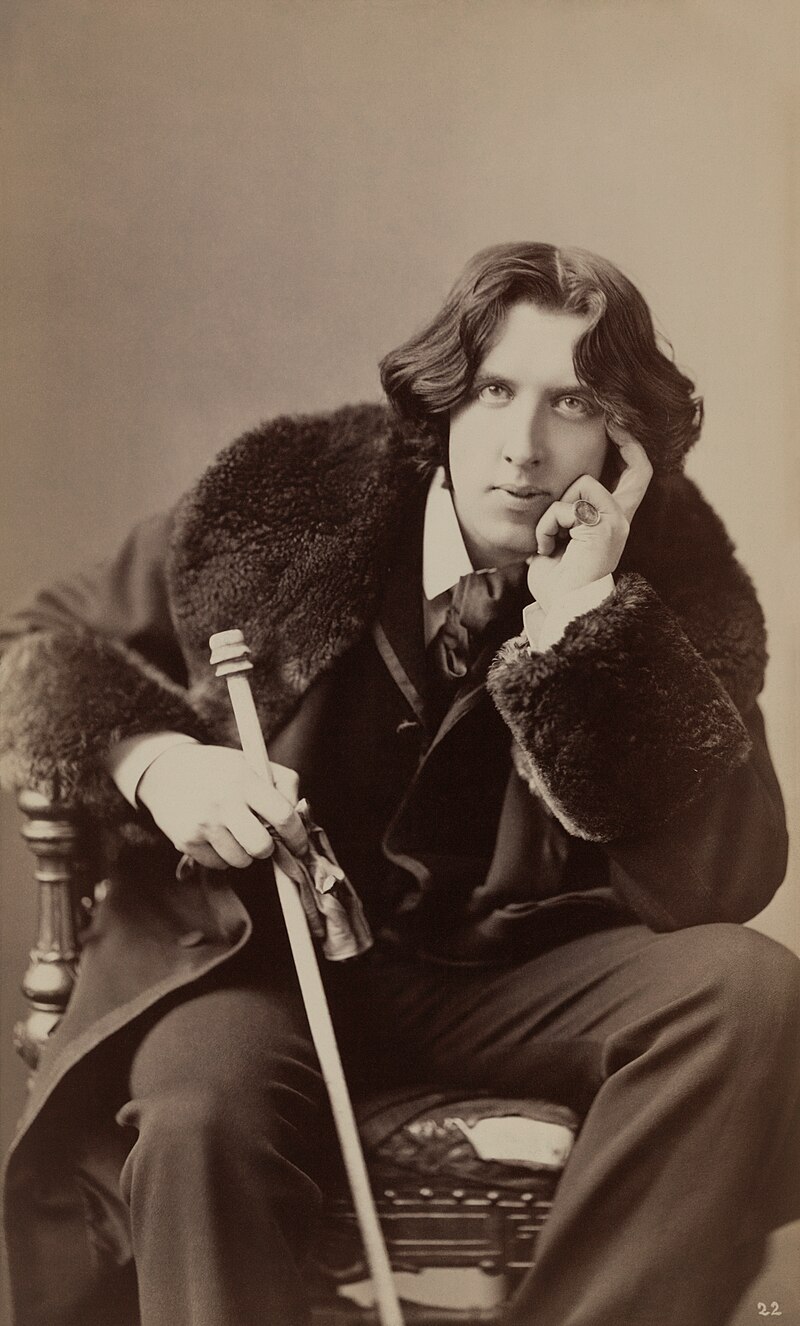
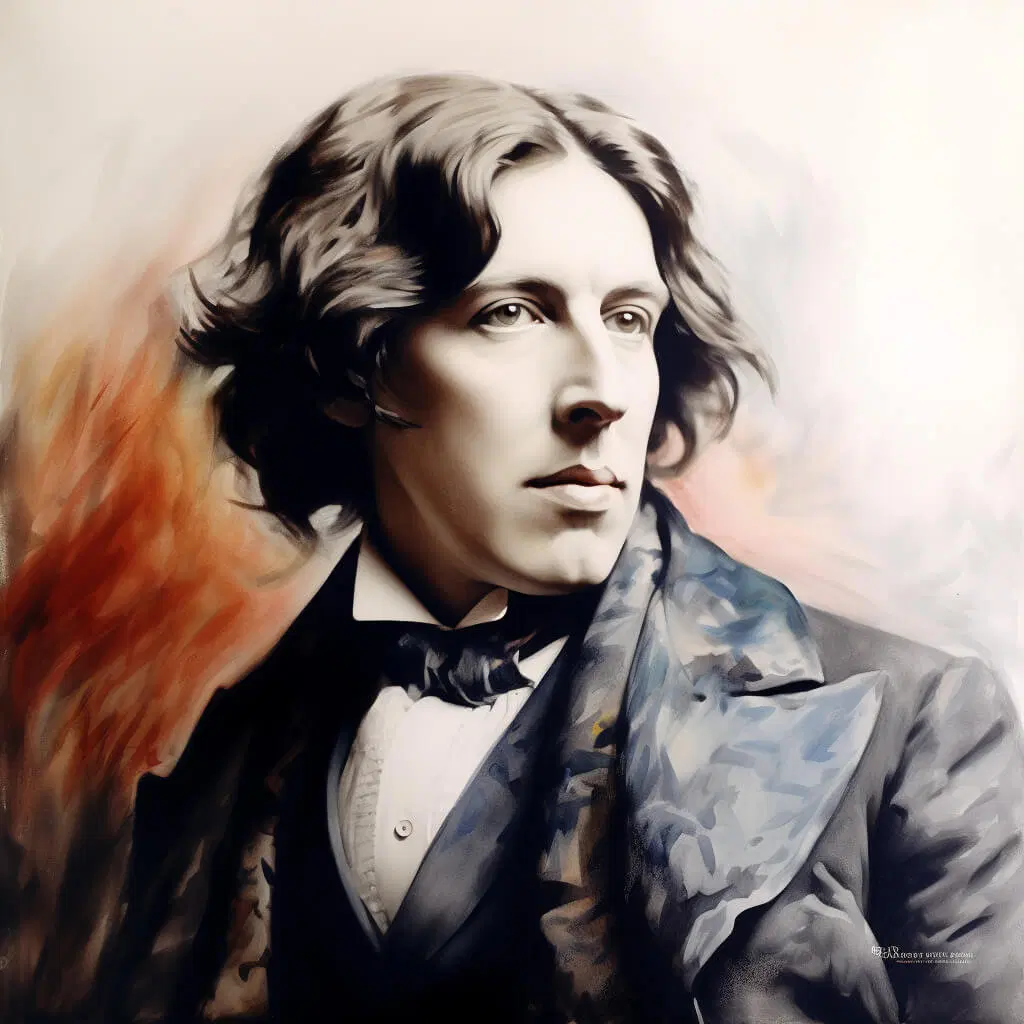
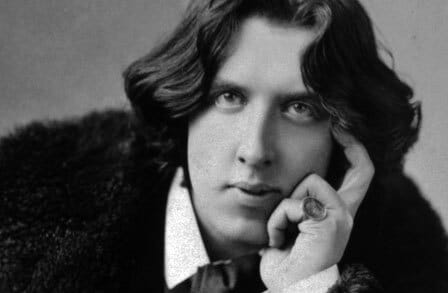
A celebrated playwright, poet, novelist, and journalist, Oscar Wilde was famous for his superior intellect, wry sense of humor, and profound insights into human nature. He relied on these traits to bring levity to the deeper themes within the story—a tactic that made the his darker points more palatable and made his stories resonate as strongly today as they did in his time. The themes he wrote about are still part of our world today, and writers look to his writing to find inspiration and lessons in storytelling.
In celebration of his 170th birthday, let’s take a look at how his life shaped his views and what lessons writers can learn from him today.
Drawn to Beauty and Art
Born Oscar Fingal O’Flahertie Wills Wilde in Dublin, Ireland on October 16, 1854, Wilde’s life was a colorful and complicated as his name. As a member of the city’s elite, he lived a privileged life. He studied the classics at Trinity College in Dublin, then studied at Madgalen College in Oxford, England where he became enamored with the aesthetic movement, which emphasized an appreciation of beauty in all things and the creation of art for the sake of art alone. This set the course for him to challenge the austere societal norms of the Victorian Age. With his armor of witty commentary, eloquence, and pointed irony, Wilde created a way to speak to the truth of what he was experiencing as an observer and a talented artist through the themes of identity, morality, and the complexity of human relationships.
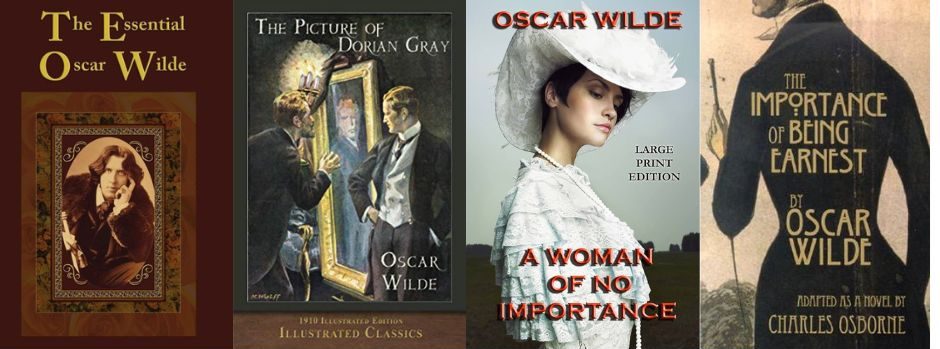
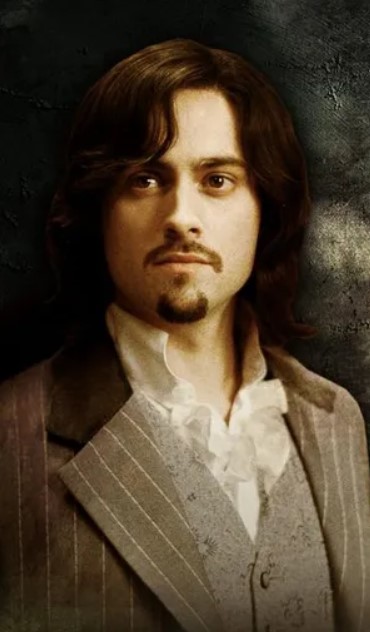
Wilde’s works, including The Picture of Dorian Gray, A Woman of No Importance, The Importance of Being Earnest, and numerous poems and essays continue to influence writers and challenge readers to this day. His work and their characters have opened the door to a reinterpretation of what it means to be human, as seen in the case of The Picture of Dorian Gray. The “monster” that his main character changes into has been compared to Mary Shelley’s Frankenstein in that the authors see a monster in the people around them when they recognize the true fear of determining one’s own identity. The lesson: If the creator can not handle the responsibilities of the creation process, then the creation will fail. If the creation fails, then ultimately the creator fails and the true colors of mankind are revealed.
Stuart Townsend as Dorian Gray in The League of Extraordinary Gentlemen
Oscar Wilde’s birthday is not just a celebration of his life but an invitation for writers to embrace their own creativity, challenge the norms of the day, and explore the intricacies of human nature. As you reflect on his contributions, consider how his legacy can inspire your own writing journey. Dive into the wit, beauty, and complexity that Wilde championed, and let it be your guide as you pick up your pen!
Join in the laughter with the authors of humor and satire Chanticleer has worked with over the years!
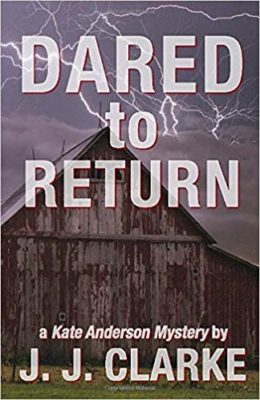
Dared to Return: A Kate Anderson Mystery (Book 2) By J.J. Clarke
Kate Anderson has an exciting new life in Tampa Bay, Florida. An aspiring writer with a new book recently released, she’s left behind her old life as a court investigator in Kingseat, Missouri. But when she receives a frantic call from her ninety-two-year-old grandfather, Theodore, she hops on a plane back home.
Just five weeks earlier, Kate’s step-grandmother, Helen, died. Not long after Helen’s death, Kate’s grandfather was thrown out of his house and sent to the Squaw Valley Nursing Home, a place where old people go to die. Unbeknownst to Kate, most of Helen’s two-million-dollar estate has been left in trust – and not to her husband of twenty-five years. The trustee is a corrupt secret society known as HOGG, a group of important town officials who con elderly citizens out of their money, distribute it to charities and take a considerable percentage for themselves.
The essential message of this satiric volume is that most people tend to nurse false notions about their lives and the universe in general – notions that the authors rapidly and thoroughly debunk. They take the stance of a drunk hanging out at a bar, hearing about everything that goes on in people’s minds. In forty-eight segments, various human problems are examined, derided, and substituted for what many readers will consider far more rational viewpoints.
Some issues raised seem trivial – “Celebrities” who do not, as might be supposed, get to enjoy their fame since the general attitude toward them is “shut up and entertain us or else.” Other matters are significant. One of the longer treatises focuses on “Gods,” with the authors asserting that God is merely an imaginary projection, and religion only a means of seeing and believing what people want, “even if it’s not real or makes no sense.” A true, non-superstition-based belief system would impel people to help others more and take full responsibility for their actions.
Insynnium By Tim Cole
Winner of the Cygnus CIBA Award
The dramatic premise explored in a new novel,Insynnium, is a wild, immersive leap into a world-changing (but fictional) drug. In other hands, what could be a dystopian thriller goes one step further in author Tim Cole’s capable hands. He focuses on the humans who first discover and use the drug and weaves his story with a devilish charm.
This is somewhat Bill Murray/“Groundhog Day” territory, a film exploring one man’s reliving a day in his life over and over until he learned new behaviors, new skills, and came out of it a better man. Unlike “Groundhog,” Max McVista takes multiple doses of the drug against all advice, then somehow expands time itself in what he calls an “AUE” or “Alternative Universe Experience,” enabling him to spend months and sometimes years becoming or experiencing whatever he wishes. When returning to real-time, he’s only missed a day or two. (For E=MC squared fans, it’s basically reverse engineering of Einsteinian physics.)
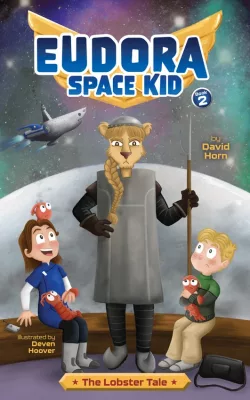
In Eudora Space Kid: The Lobster Tale, author David Horn continues the spell-binding adventures of a third-grade girl living on a massive spaceship in the year 4021. Eudora Jenkins enjoys using her very sharp mind to play tricks on the grown-ups – but her latest one may backfire and cause an interplanetary crisis.
As The Lobster Taleopens, Eudora, the narrator and mastermind of her sometimes disastrous but always hilarious gambits, is in a tunnel on the AstroLiner Athena. The plan? Just a few minorcomputer alterations. She is aided in this naughty but essentially harmless prank by her sometimes nervous buddy Arnold. Her changes will be revealed later when she and Arnold visit the ship’s bridge. Both are excited to watch the regularly scheduled battle training exercises they will view on the main computer.
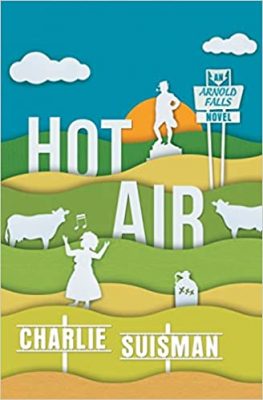
Arnold Falls bristles with zany events, quirky locals, and colorful newbies. Above all, this memorable enclave buoys its people through heart, soul, wit, and a true sense of collective spirit.
Jeebie Walker returns as the story’s central narrator.
The successful voice-over artist stands as a solid fixture in the town, now in a loving relationship with his partner Will. A volunteer fireman, illustrator, and candidate for an MA in Conservation Biology, Will jokingly claims that Jeebie makes “bossing others around” a superpower.
In the midst of a mid-life crisis, Jeebie takes on a project of implementing little library cabinets throughout the town. Due to some unscrupulous financial administrators, he also worries about the sudden lack of funding for arts programs at the local hospital.
Thank you for joining us in celebrating the genius of Oscar Wilde!
Do you have a book that deserves to be discovered? You can always submit your book for an Editorial Review with Chanticleer!Chanticleer Editorial Review Packages are optimized to maximize your digital footprint. Reviews are one of the most powerful tools available to authors to help sell and market their books. Find out what all the buzz is about here.
Is your book an Award Winner?
Submitting to Book Awards is a great way to get your book discovered! Anytime you advance in the Chanticleer Int’l Book Awards, your name and book are promoted right here on our website, through our newsletter, and across social media. One of the best ways to engage in long tail marketing!
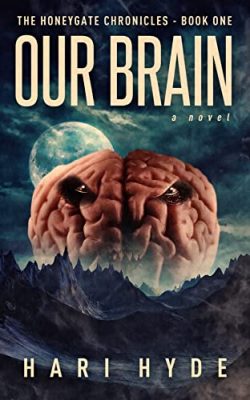
Our Brain, the first in a three-volume series, is an epic fantasy adventure in a bizarre, allegorical world.
This world is ruled by Our Brain, also known as The Guv’ner, a huge pinkish mass seated in a mountain range that came about through the collective will of its people. It leaped into reality from the realm of thought. And the particular thoughts that birthed Our Brain were, in the novel’s language, to “ever grow and strengthen the righteous power of government to control our lives for the common good.”
The people that benefit from this collective thinking are the Soose. Yes, pigs, but a mutated form that, while still loving mud baths, walk on their hind legs, go to college, and carry “snappers” or what we might call personal computers. Their opposite numbers are the Nags, descended from horses, who champion individualism and want to wipe out the collective sentiments of the ruling tribe.
Four Nags hatch a plan to change the direction of Our Brain and create a world of their liking.
The hero of the book, a Soose named Hennie Honeygate, sets out to discover their plan and, to his great surprise, finds himself following them inside the fleshy mass of Our Brain. Hennie and the Nags embark on a picaresque adventure.
Be prepared to have an illustrated anatomy source at hand as Honeygate chases the villains through the neurological pathways. Portions of the brain take on personalities of their own, such as a demon named Obex, labeled here as the “fabled ruler of hell” in the mythology of the Soose. The obex, in anatomy, is a canal-like structure in the upper part of the brainstem that connects the fourth ventricle to the third.
Our Brain offers political thought, social satire, and sheer nuttiness.
This story will likely appeal to those with conservative political views. Readers will find fantasy adventure mingling with satire such as that of Orwell’s Animal Farm, Swift’s Gulliver’s Travels, and traces of George Will, Michael Crichton, and Terry Gilliam in these pages.