Thursday morning, April 18th. Registration Required. Seating is Limited.
Morning Master Class will address Advance Writing Craft with D.D. Black, Amazon Best-selling Author
“D.D. Black evokes comparisons to John Grisham’s finest —The Firm and The Pelican Brief— with a touch of Woodward and Bernstein’s All the President’s Men.” ROBERT DUGONI – #1 Amazon and New York Times Bestselling Author of My Sister’s Grave“
Incorporating Mystery and Suspense Techniques Into Any Genre—Fiction OR Memoir
Learn How to Create Tension, Pacing, and Interest in your works no matter the genre by incorporating Mystery and Suspense Elements along with elevating Scene Level Craft Elements in your writing.
Using examples from best-selling literary fiction, mysteries, fantasy, and even memoirs, you’ll learn professional techniques for weaving compelling mystery and suspense into your book, regardless of genre. In the class we will:
Discuss how to incorporate the mystery novel structure into non-mystery genres, such as literary fiction, memoir, sci-fi, and fantasy
Study the use of the elements of mystery in wildly different award-winning and best-selling books, such as: “The Round House” by Louise Erdrich, “Harry Potter and the Sorcerer’s Stone” by J.K. Rowling, and “Dreams from My Father” by Barack Obama
Learn to ask questions both big and small to keep readers intrigued
Talk about how to craft clues, red herrings, plot twists, and cliffhangers for maximum intrigue
“Mystery is a whisper, not a shout.” – Kate Atkinson, best-selling literary crime novelist whose works have been adapted to a BBC One Series
Adam is a full-time author with more than 30 published books under two different names — A.C. Fuller and D.D. Black. Previously, he was an adjunct professor of journalism at New York University and has taught writing and book marketing at conferences and libraries all over the country and internationally. He lives with his wife, son, and three dogs in Kitsap County.
Click here to register for D.D. Black’s Master Writing Craft Class, CAC24, Thursday morning at 9:15 – 1 p.m., Coffee, tea, and drinks will be provided in class.
As many Chanticleerians have learned over the years, we rarely can list our presenters six-months or even four-months, two-months in advance. Why? Because many of the experts we have had the honor and privilege of them presenting at the annual Chanticleer Authors Conferences are contingent upon us being flexible with our schedules and accommodating with their schedules.
This year is no different, especially with everything opening back up. We are thrilled to have Maggie Marr along with Eric Lucas and Reenita Mohltra Hora presenting at CAC23 as well as a few more other surprise presenters that we are awaiting confirmation.
So, please stay tuned for more info! Meanwhile, REGISTER TODAY – Seats are limited!
Book to Film Workshop – presented by Maggie Marr, Atty, Creative Representation
Maggie has negotiated deals and has worked with Netflix, HBO, Amazon Prime, Universal, Warner Brothers, Disney, Paramount, Hallmark Channel, Universal, BET, and Hulu.
Eric Lucas is a long-term professional writer and editor; former Associate Editor atAlaska AirlinesMagazine. His work is published in venues with millions of readers each month, around the world. He has eight books to his credit, including Michelin Travel Publications, MSN.com, and other travel guides.
He is presenting sessions at CAC23 on:
Essentials of Good Writing for Professional Contributors
How to Successfully Approach Magazine Editors
How to Use Magazine Features as Incredibly Useful Springboards to Books
Travel Writing Kaffeeklatsch
Copy Writing – Editing Tips
and more!
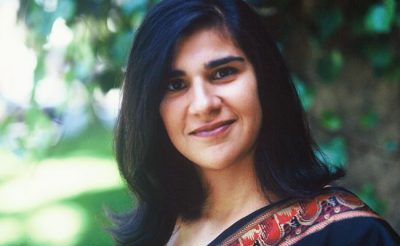
REENITA MALHOTRA HORA – Podcaster & Broadcast Journalist & Contributor
Reenita Malhotra Hora is the CEO of Chapter by Episode Productions. She has years of experience growing organizations from startups to medium-sized businesses through storytelling, creative marketing and business strategy. Hora has also written seven books.
She has contributed to Reuters, the South China Morning Post family section, the Wall Street Journal, New York Times, CNN, Asian Investor, Times of India, Business Line, Bloomburg on-air news reporter, writer, and producer, Rolling Stone, and the Economic Times.
Reenita will present sessions on podcasting, finding your audience, how to write interesting content to expand readerships, marketing tips and tools for authors, and more.
Please do not hesitate to contact Kiffer at KBrown@ChantiReviews.com or David (Author Outreach) at DBeaumier@ChantiReviews.com with any questions or concerns.
As a developmental editor, I help writers in many ways, including layering in sensory data to make their stories more immersive.
I’m always gleaning information and trying to understand how the brain and nervous system work. I’m learning that it’s easy to use the latest neuroscience research and you can too.
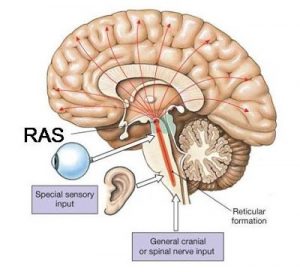
The brain works hard to protect humans from risk. Risk assessment happens via thereticular activating system, a gatekeeper between your conscious and unconscious mind. It filters through all the information coming in from your sensory organs including possible dangers, then reacts.
RAS is the GATEKEEPER between our conscious and unconscious.
Our brain is inundated with millions of messages whenever we’re awake. Without the RAS we’d be overloaded with stimulus, our heads noisy and cluttered, always on the alert, never able to focus. When messages slip past the reticular activating system, they become conscious thoughts, emotions, or both. So again, the RAS works to keep us safe and sane in a sometimes dangerous world.
What I love about studying the brain is how possible it is to change our thoughts, the way we see the world, and ultimately our brains.Because we can train and reset our brains. Another reason to learn about the reticular activating system is that it can help us focus when we most need to focus.
The RAS can filter out the white noise of your life while you write away.
Editor’s Note: An example of RAS is how parents can filter out the extremely loud noise of a plane taking off, but can hear if their baby is stirring. Or how a student can study in a loud cafeteria, but is disturbed by pages being rustled or someone tapping their fingers or clicking a pen in the next carrell while in the library.
But the RAS has many tasks. It manages what information {stimulus} you receive, arousal, and motivation. As you can imagine, is a huge job, but the brain has so many responsibilities such as regulating the body and creating memories. The RAS is located in the brain stem, the most primitive part of our brain. It is responsible for fight-or-flight responses, our wakefulness, and our ability to focus. It shapes how we perceive our world, dangers and all.
Learning about the RAS means writers can tap into its powers.
RAS can help us focus, remember, and achieve goals. One simple trick is to focus on what you want to achieve, not what youcannotdo, or what is clouding your attention. Stop worrying about the extra five pounds you’ve gained, or gray hairs and wrinkles, and how your neighbor doesn’t mow his lawn. Stop telling yourself your latest chapter or draft sucks.
The RAS listens to our signals and prioritizes the ones that are most important. If you focus on negative thoughts, the RAS will deliver more reasons to worry and fret. So, feed your RAS signals that are most helpful to your writing goals. Spend time mulling over your stories instead of fretting about them. Imagine that your characters are hanging out with you. Search for the good in your work and life and the RAS will notice. And you’ll be creating new neural pathways.
So, let me repeat this easy hack if you don’t already employ it:
Take mental snapshots throughout your days. But don’t focus on sights only–weave in all your senses. Last night I could hear the wind in the trees and smell wood smoke which has natural cozy associations which further imprinted the moment in my memory.
Let me give you a quick example.
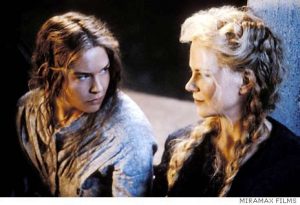
Charles Frazier’sCold Mountain–one of the most immersive novels I’ve ever read–has two main characters separated by war. New to the Cold Mountain region, Ada, a minister’s daughter and genteel lady, is struggling to survive the Civil War after her father dies. Trouble is, she has no practical survival skills and is slowly starving, but too proud to ask for help. This is when another young woman, Ruby, comes into her life and teaches her the exhausting array of skills and tasks needed to keep them fed and warm. After Ruby’s arrival, gone are Ada’s mornings of sleeping in. Here’s a small segment of Ada adjusting to Ruby’s new regime:
So Ada would walk down to the kitchen in her robe and sit in the chair in the warm stove corner and wrap her hands around a cup of coffee. Through the window the day would be starting to take shape, grey and loose in its features. Even on days that would eventually proved to be clear, Ada could seldom make out even the palings of the fence around the kitchen garden through the fog. At some point Ruby would blow out the yellow light of the lamp and the kitchen would go dim and then the light from outside would rise and fill the room. It seemed a thing of such wonder to Ada, who had not witnessed many dawns.Cold Mountain, Charles Frazier
The Swangers notice Ada is struggling to maintain the farm so they send Ruby Thewes to help out. Cold Mountain by Charles Frazier
There are only a few simple details here, yet the sense of dawn arriving is powerful, isn’t it? And it’s Frazier demonstrating the beginning of Ada’s character arc.
Think in pictures, vignettes, and scenesso you can re-create them on the page.
Strive to always capture meaningful moments. This is why it helps to stop time whenever possible by focusing your attention and deliberately storing images. Train yourself to become a visual thinker. If you’re ‘not a visual type’, then study how other people do it from advertisers to public speakers.
Pay attention to your dreams and write them down if possible. Take notes on books you read, films you watch and hikes you take.
Here is a scene from my RAS moment last winter:
Foggy, drizzly weather here in the Pacific Northwest. Last night I stepped out onto my porch to see if the moon was visible. The current moon phase is a waxing crescent. Low clouds had moved in obscuring the moon and stars, the air was cold enough to be bracing, and snow was falling in the higher evaluations. Walking into a coldish reality is such an easy jolt to the senses.
I came back indoors and sat for a minute replaying the night scene I’d just witnessed. Deliberately storing it away.
Do you do this too? Small habits and tweaks can be so useful to writers.
If you stop to focus on things that are important to you, it sharpens your perceptions and teaches your brain what you value.
And work at giving your RAS a jolt, like stepping out into a cold night or dancing in warm summer rain showers. Play music to either soothe or energize while you write. Recently I suggested here that like me, you visit a library or bookstore, go to the shelf where your future books will be housed, and imagine your titles there. It’s a simple trick to cue your reticular activating system.
Vivid, clear intentions communicate to your conscious mind which in turn speaks to your RAS and subconscious. In turn, they help you achieve goals because they expect the goals to happen.
Keep writing, keep dreaming, have heart. – Jessica
Jessica Page Morrell
Jessica Morrell is a top-tier developmental editor and a contributor to Chanticleer Reviews Media and to the Writer’s Digest magazine. She teaches Master Writing Craft Classes along with sessions at the Chanticleer Authors Conference that is held annually along with teaching at Chanticleer writing workshops that are held throughout the year.
Be sure to click on her name above to visit her website that has a wealth of writing craft advice.
Let’s discuss using closeup “shots” of your characters in fiction. Filmmakers have a large repertoire of techniques that writers are wise to study and borrow. Closeup camera angles are powerful in film and an important technique fiction writers need to emulate throughout their stories.
When to Use a Wide Angle in Your Scenes
I write many, many notes and suggestions to my editing clients, some within the pages of the manuscript, some included in a long, detailed memo. At times I suggest a wide angle or establishing shot to introduce setting and atmosphere–especially helpful when a character arrives at a new place or when major action is about to go down.
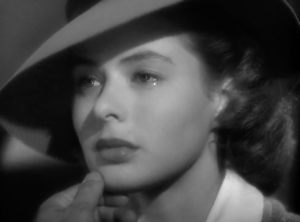
“We’ll always have Paris.” Casablanca Original Book: Everyone Comes to Rick’s by Murray Bennett and Joan Alison in 1940.
When to Use Closeups
However, I’m certain that every story I’ve worked on needed more ‘closeup’ shots of characters, so I suggest when to bring the viewpoint– fiction’s camera lens–closer. In film or television the director and cameraman have lots of choices about how to use distance to achieve drama. There are full shots, medium, long, POV, closeup and extreme closeups. A closeup shot tightly frames the actor’s face and signals significance. They’re typically used to portray deep emotions and create connection between audience and actor. There are also ‘extreme close-ups’ where the camera lingers on a subject, usually the actor. But close-ups can also focus on hands and body parts, props, jewelry, or other objects of interest.
Be Cognizant of What You Are Revealing to Your Readers in Your Closeups
Obviously closeups are intimate because they’re revealing. They showcase significant emotions, realizations, decisions, and important moments or actions. They also reveal when characters have something to hide.
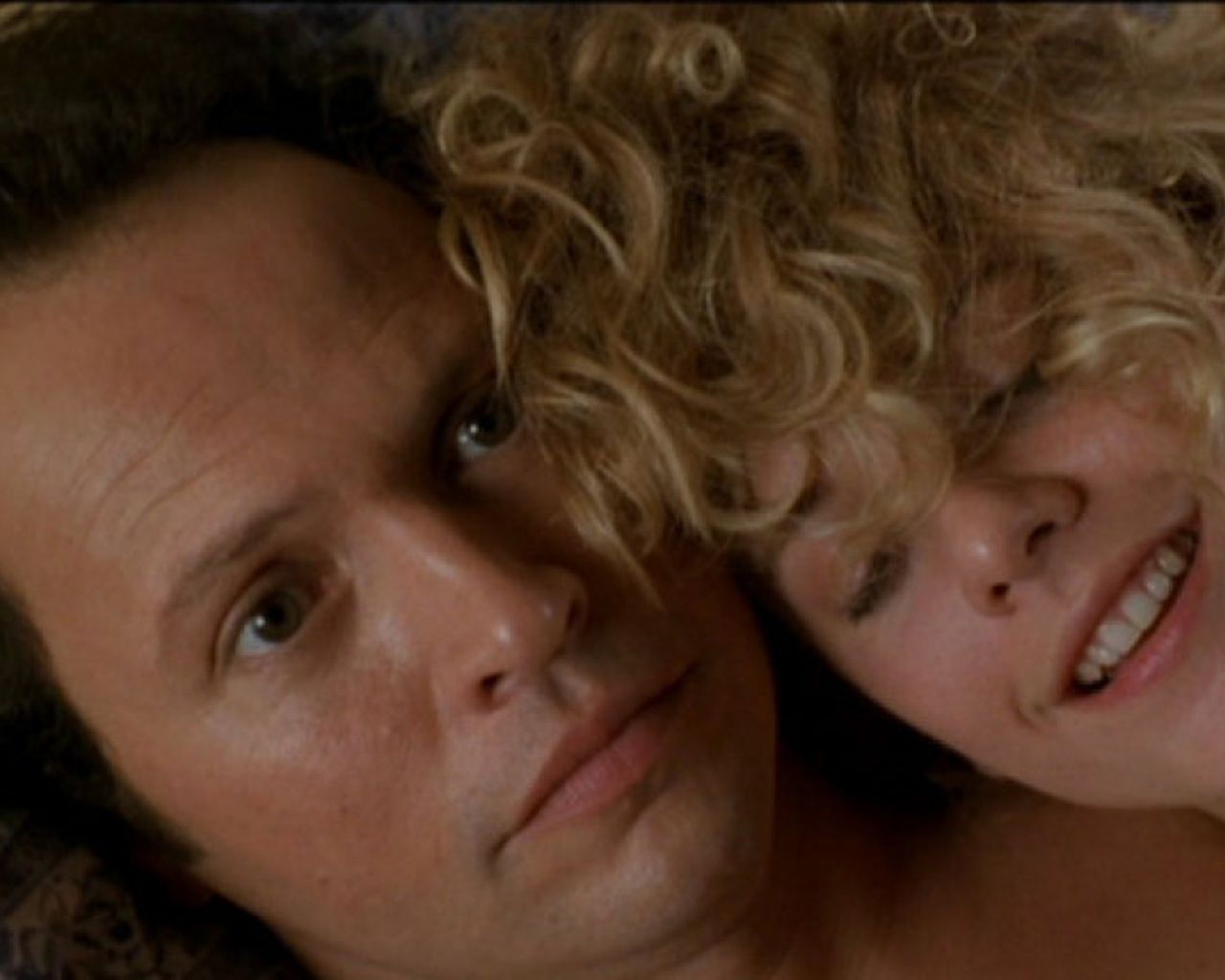
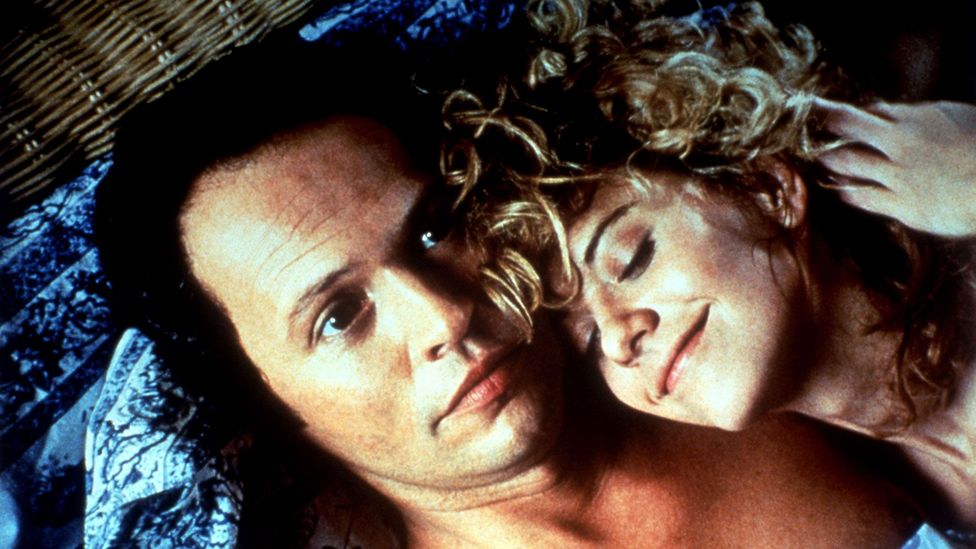
When Harry Met Sally – The SCENE that set the story. By Nora Ephron
Romance films and dramas employ these shots especially when characters are surprised, shocked, filled with dread, or when feelings shift. Closeups, naturally, are often used in horror and suspense films to increase the audience members’ heartbeat. Alfred Hitchcock was fond of using them, such as in the grisly shower scene inPsycho. You know the one.
Convey important moments, reversals, revelations.
Enhance threat and danger.
Enhance evil and malevolence.
Shock value as when a monster or villain is in the frame.
Focus on, reveal a character’s state of mind.
Slow the pacing.
Portray damage, pain, the cost paid by characters.
Allow readers to see the world through the character’s eyes. * See The Eyes Have It post link below.
Reveal closeness, intimacy, estrangement, coldness between characters.
Suggest or define character arc.
Show other ‘sides’ of a character, including subtler traits.
Illustrate a character’s emotional bandwidth, as in how she or he handles the best of times and the worst of times.
In scenes that contain violence, brutality, or horror, a closeup amplifies the dangers as in the ‘here’s Johnny’ moment inThe Shiningwhen Jack Torrence, played by Jack Nicholson is terrorizing his family. Notice how it’s clear that he’s sunk into madness.
The unforgettable “Here’s Johnny” scene in The Shining.
As you’re revising, make sure that during the most poignant moments in the story, readers are pulled in. Allow your readers to witness emotions flickering across the character’s face. Let them sense what’s churning beneath a character’s exterior.
Notice Beth’s hands, her eyes, her posture. The juxtaposition of the watch she wears versus the clock on the wall. Her black and white dress adjacent to the black and white chess board. See how she is capturing the white pawns.
Beth Harmon knows she will win several moves out in this scene of Queen’s Gambit
Jessica Morrell is a top-tier developmental editor and a contributor to Chanticleer Reviews Media and to the Writer’s Digest magazine. She teaches Master Writing Craft Classes along with sessions at the Chanticleer Authors Conference that is held annually along with teaching at Chanticleer writing workshops that are held throughout the year.
Jessica Classes and Workshops at CAC22
Using Film Techniques for Fiction Writers– Camera angles, method acting for getting into a character’s pov, and creating subtext and tight dialogue
Your Brain on Writing
Captivating Co-Starsthat add depth to your work-in-progress
Each one of our conferences have been very special,
but this one – but This One will be EXTRA SPECIAL!
June 23 – 26, 2022
We moved the 10th Chanticleer Authors Conference from the originally scheduled dates of April 7 – 10, 2022 to JUNE 23 – 26, 2022 so that more of you will be able to attend CAC22 In Real Life (IRL).
Because of the Covid Pandemic, the CAC 2020 and CAC 2021 had to be held virtually. We based the Zoomed operations out of the Hotel Bellwether with a few of local Chanticleerians joining us with safety protocols. It was starting to look as if CAC 2022 would also need to be held virtually also.
Additionally, crossing the border between Canada (Vancouver, B.C.) Canada and the U.S. (Bellingham, Wash.) was complicated and expensive for Canadians.
So, after doing some research, asking health experts, and tracking Covid numbers, we decided to ask the Hotel Bellwether if other dates were available to hold the conference. Fortunately, the last weekend of June was available. The rest of the summer was booked with weddings, which is wonderful! June 23 – 26, 2022!
And it is going to be our 10th Conference!We have plans to make it extra special!
Most importantly, the attendees! You are what makes this conference so special.
Learning from the experts – Learn from the Best!
Learning from each other
Networking and making new friends and connections
Our Keynote Speakers – CAC22 will feature CATHY ACE, international best-selling crime author with 2 TV shows in production.
And our SESSIONS on the Business and Marketing Side of Being an Author with the latest in Technology and Trends.
KICKSTARTER for Publishing – Explore how writers and publishers are using Kickstarter to bring new literature, audiobooks, podcasts, and more to life.
Writer’s Law School – Protecting Your Artistic Rights
TikTok & BookTok – Intro for Authors and Publishers and How to Get Started
Book to Film Sessions
Pitches and Log-lines
Alphabet Soup for Authors – SEO, AISEO, Meta Data, Keywords, & more
Branding for Authors
Long-tail Marketing for the Internet Age
Amazon Love – How to Get More
Selling Platforms – How to Reach a Global Market
Increasing Your Email List – How To
How to Hit the USA Today Bestseller List
Audio-Books for Authors – Tried and True methods without breaking the bank
How to Think like Amazon and Utilize Direct to Consumer Trends to Grow Your Audience
Elements of Effective Book Covers that SELL Your Book
and more to come!
Advanced Writing Sessions
Using Film Techniques for Fiction Writers – Camera angles, method acting for getting into a character’s pov, and creating subtext and tight dialogue
Your Brain on Writing
World Settings and Atmosphere
Creating Memorable Characters using Gert Hofstede’s Theory of Communication Dimensions
Captivating Co-Stars that add depth to your work-in-progress
Fractured Time Lines and Sustaining a Series
Five Things You Need to Know about POV
and more to come!
And this is just the start of the Sessions that CAC22 will offer.
The curriculum and quality of presenters at CACs is why the Chanticleer Authors Conference is considered to be one of the top conferences in the U.S. by Writer Magazine year after year!
Networking and Collaboration Opportunities
CAC’s KaffeeKlatches round-table discussions
Two Networking Cocktail Parties
BOOK FAIR – open to the general public on Sunday
ASK the PROs sessions – individual sign-up mini-sessions
Two Luncheons with Keynote Speakers
Live Music on Friday and Saturday Evenings with no-host bar
Evening Banquets
And much more!
And the Grand EVENING for the 2021 Chanticleer International Book Awards Banquet and Awards Gala!