Tag: 5 Star Book Review

  • TEN THINGS EVERY CHILD WITH AUTISM WISHES YOU KNEW by Ellen Notbohm – Autism, Children’s Health, Parenting Hyperactive Children & Children with Disabilities

    A Blue and Gold Badge that reads: I & I Instructional and Insightful Non-Fiction 2019 Grand Prize 10 Things Every child with Autism Wishes you Knew Ellen NotbohmRenowned author and mother of a son with autism, Ellen Notbohm here writes from both a personal and a studied viewpoint.

    Not so long ago, autism was considered incurable, hopeless, a sort of dead-end diagnosis. But with time and attention to real people on the spectrum, we know now that children with autism can become positive, productive adults. The author’s son, Bryce, decided early on to “be happy” despite his differentness. For parents initially facing the diagnosis, there will undoubtedly be challenges, often on a daily, hourly basis, but Notbohm’s diligent exploration assures us that “autism is not awful.”

    The ten messages from your child are 1. “I am a whole child.” My autism is part of me. Even the word “autistic” can classify me negatively. 2. “My senses are out of sync.” I may have heightened, sometimes terrifying sensations that keep me from engaging in ordinary activities. 3. “Distinguish between won’t and can’t.” Just because I balk at a new task, even something simple like riding a bus, doesn’t mean I’m defiant – maybe just scared. 4. “I am a concrete thinker, I interpret language literally.” Don’t speak to me in roundabout ways; just tell me what to do plainly. 5. “Listen to all the ways I’m trying to communicate.” My communication barriers make it hard for me to learn to socialize. Study my body language. 6. “Picture this! I am visually oriented.” Visual cueing really helps. 7. “Focus and build on what I can do rather than what I can’t do.” Watch what I do well; encourage my neatness, my ability to occupy myself without outside stimulation. 8. “Help me with social interactions.” Recognize that sociability will be one of my toughest challenges. 9. “Identify what triggers my meltdowns.” Yes, I may explode sometimes; you can help. 10. “Love me unconditionally.” Don’t base approval on an “if.”

    Notbohm examines each of these simple revelations in fascinating and practical detail, using numerous examples and referencing many authorities, including autistic notable Dr. Temple Grandin. As part of her own mothering experience, Notbohm recalls a lovely, lively example of telling Bryce to “stick to his guns”- an idea that horrified his literal mind. Then he cleverly concludes that she must have meant “gum.”
    Parents, educators, social and community workers should read this dynamic take on an often confusing and misunderstood aspect of human consciousness and development. Notbohm poses common viewpoints about autistic children and offers real strategies for improvement in the child’s outlook and abilities and the parent’s understanding and broader perspective.

    Ten Things Every Child with Autism Wishes You Knew won GRAND PRIZE in the CIBA 2019 I & I Awards for Non-Fiction: Insight and Instruction books.



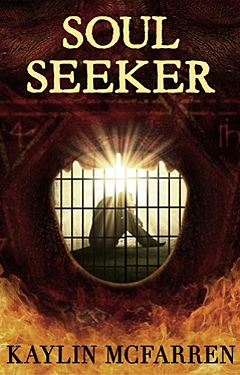
  • SOUL SEEKER by Kaylin McFarren – Occult Horror, Paranormal Romance, Occult Fiction

    SOUL SEEKER by Kaylin McFarren – Occult Horror, Paranormal Romance, Occult Fiction

    Blue and gold Grand Prize Winner Badge for Paranormal Supernatural Fiction Soul Seeker by Kaylin McFarrenThe realms of demons and angels clash, as the possibility of romance, plunges the beings of Hell into chaos. Kaylin McFarren’s Soul Seeker follows the otherworldly set as they flee for their lives, uncover millennia-old secrets about one another, and face the possibility of love in a very dangerous world.

    But first, the demon, Crighton, wreaks havoc on his human target, a man named Poe, devastating the man and his family. You could say, Crighton’s at home collecting wicked souls for his boss, Lucifer. His villain persona is put into question when he meets the angel, Ariel. At first, Crighton believes the angelic Ariel would make an excellent prize for the prince of darkness, as the demon is well aware that his master adores ruining pretty things. However, when an undeniable attraction emerges between them, they wrestle with each other, pitting strength against strength. Beware any who would do anything to tear these two apart—that would spell certain death.

    McFarren leads us into Hell through the mechanisms of secret societies and across the earth’s crust, ever raising the stakes for her leading duo. Crighton and Ariel discover what a union between angel and demon truly means, and what has been conveniently left out of their histories.

    Soul Seeker paints an intimate view of a supernatural world, seen through the eyes of characters who know it well—though not so well that there aren’t mysteries to yet uncover. In McFarren’s world, demons are more than just evil beings, but as those who suffer, desire, and ones with whom we empathize. More than any character, Crighton embodies the conflict between cruelty and mercy. Angels aren’t monolithic either. Indeed, McFarren portrays her cast of heavenly dwellers with their own doubts and failures that make them real and emotionally affecting characters, especially as Ariel learns that Crighton isn’t quite the monster she first sees him as.

    Ariel and Crighton run through a thrilling and fast-paced narrative, full of ever-present tension and half-victories. The story keeps a brisk pace, and Kaylin McFarren builds on this momentum as the pages seem to turn by themselves, creating a sophisticated and remarkable otherworldly conclusion.

    At its heart, this story is concerned with the personal thoughts and feelings of its characters. Crighton and Ariel become the emotional heart of the story as they slowly try to grow to accept each other, and change to meet their new challenges, but many of the characters are given space to grow and understand one another, providing a heartwarming journey alongside the fighting of demons, the family turmoil, and the enticing mysteries of Soul Seeker. In short, Kaylin McFarren has done it again! Those looking for a new, otherworldly thriller series, need look no further than Soul Seeker.


    Order here.

  • DARLENE by Karl Larew – Literary Saga, Mystery, Romantic Literature

    DARLENE by Karl Larew – Literary Saga, Mystery, Romantic Literature

    In a propelling follow-up to Karl G. Larew’s captivating novella Catari, where love, history, and family drama become intertwined within an investigative murder mystery, the story continues in Darlene, an artfully crafted literary sequel.

    Having uncovered the mystery of Catari’s death, inquisitive BFFs and comrades Maxwell Roux and Darlene Wolfe reunite to deal with the conflict-driven wrath of Catari’s stepfather, Hugh Fontane, and her half-brother Jeffrey. They seek to gain control over the Fontano family estate, as well as Catari’s reputation. However, the historic Italian villa and burial crypt have been left in Max and Darlene’s hands, as per the wishes and dictum of Catari’s baronial grandfather’s will.

    Early on, readers learn that Max had a former relationship with Catari. Bisexual Darlene, who lives as a lesbian, was also involved with Catari. Clearly, the unique friendship delivers an interesting trio, though now with Catari’s passing, the remaining duo seems duty-bound to keep their relationship at a platonic level, because Darlene wishes to remain a committed lesbian; however, desires undoubtedly bubble beneath the surface. Initially, Larew weaves charming hand-holding and shared beds, with Darlene robed in oversized PJs, to suggest proper, old-fashioned decorum, yet the sensation of underlying lust and desire prevails.

    Catari’s family members’ intentions are brought to light via written correspondence, agitated encounters, and lively meetings that reveal the father and son desire to turn the villa and family crypt into a tourist rental site and attraction for ghost hunters. The Fontanes levy their plans with threats to expose Catari’s romance with Darlene and slander her reputation with untruths regarding risqué photos, problematic drinking, and “casting couch” insinuations.

    Larew’s sophisticated narrative style quickly draws readers into the story. He allows Max to break the fourth wall and ask the audience difficult questions about ESP, ghosts, and sex. From the straight-forward opening directive that asks, “Do you believe in precognition?” to admonishments to readers hoping to glimpse Max and Darlene’s potential sexual interludes, Larew also allows Max to go further with intimate asides. The use of these creative tropes helps create a tangible atmosphere and hook readers immediately.

    There is a certain air of old-world formality in Larew’s language and intonation that speaks directly to these central characters’ refinement. With Max’s love of music and Darlene’s career in the field, classical and operatic references are well placed throughout the story. From Caruso’s “Pour un Baiser” (For a kiss) announced as a bookend in Max’s life, to the strains of “La Bohème,” music suggests itself as a fitting landscape for the Catari, Darlene, Max three-fold drama. Indeed, such melodies offer a complimentary balm for the emotional upheaval of these characters and their situations.

    Against detailed backdrops of New York apartments, shared meals at ethnic eateries, and the sprawling estate in Italy, Max and Darlene navigate their way through the mire of tensions, threats, questions, and concerns in their effort to preserve the sanctity of the villa, and uphold the legacy of their beloved Catari.

    Darlene is clearly a provocative and arresting work that can stand freely on its own. With notable characters and well-defined interactions, the familial drama proves a delightful and compelling read. Those who want more may wish to pick up Catari, the novella that started it all.


  • BISHOP’S LAW by Rafael Amadeus Hines – African American Urban Fiction, War Fiction, Thriller/Suspense

    BISHOP’S LAW by Rafael Amadeus Hines – African American Urban Fiction, War Fiction, Thriller/Suspense

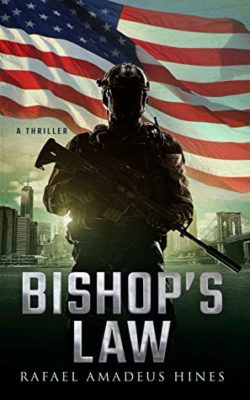
    GLOBAL THRILLERS HIGH STAKES THRILLERS 1ST PLACE Best in Category CIBA Gold and Blue BadgeSlow is smooth. Smooth is fast. This is the code that John Bishop, one of America’s most decorated military heroes, teaches his men to follow whether they’re on a mission in the heat of the Middle East or in the jungle that is New York’s Lower East Side in Rafael Amadeus Hines’ novel, Bishop’s Law.

    To say his life is complicated is putting it mildly. In this second volume of the John Bishop series, several high-level assassins are hell-bent on killing him for his actions as a soldier. At the same time, he’s deep in his crime family’s military-style battles against various opponents’ groups. All these forces are closing in on him simultaneously, even as the United States government had hired him and his family to protect the country from bad guys using whatever means necessary.

    Complicated? You bet. But if you crave non-stop action, ultra-violence, and high body counts in your novel-reading this fall, this is a great place to start.

    Part Panamanian, part Jamaican with amber eyes, his face forever scarred in an assassin’s attack that killed his parents when he was nine, Bishop is related by blood to the powerful Valdez crime family. He learned from them—the ability to act, lead, protect his men at all costs—served him well as a Special Forces soldier who fought in the Middle East against a host of bad actors. By the time the story begins, Bishop has returned from overseas, living with Maria, his childhood sweetheart, and about to become a father. He dreams of leaving his military life behind but instead finds himself helping the Valdez family in a significant military-style action against Russians on New York’s Lower East Side.

    The complications are only starting.

    While setting up the military engagement with the Russians, he also finds out that his previous actions in the Middle East have earned him the wrath of some of the world’s most dedicated killers from Russia, Pakistan, ISIS, and even a corrupt U.S. billionaire. Not great if you want to stay alive.

    While this book is clearly an action thriller, with deep roots in military-style combat, detailed weaponry descriptions, and sustained action scenes, the human story comes front and center even as the mayhem continues. Bishop is no superhero. His emotions are of a man who experiences sizeable loss and yet must keep his feelings bottled up as the beloved leader of his band of brothers. While he is wounded several times throughout the book, we feel his determination to continue doing his duty under the circumstances, few of us could sustain.

    In other hands, a story of this complexity could have been cartoonish, a video game. But the book maintains a careful balance between the go-go action and the humanity of its characters.

    Bishop’s Law is the second in a series on John Bishop. A third book is in development as of this writing. Readers may want to consider reading the first volume, Bishop’s War, before reading Bishop’s Law. While the book stands on its own, a richer reading experience might be had by reading the two books in sequence.


    5 Stars! Best Book Chanticleer Book Reviews Round Silver Foil Sticker

  • The SELAH BRANCH by Ted Neill – African American Science Fiction, African American Thriller/Mystery/Suspense, Time Travel

    The SELAH BRANCH by Ted Neill – African American Science Fiction, African American Thriller/Mystery/Suspense, Time Travel

    The Selah Branch combines two surprising stories into one enthralling whole.

    It begins with a ripped from the headlines feel, diving deeply into issues of race, class, poverty, and hopelessness in Selah Branch, WV. A town whose brighter future of uplift, integration, opportunity, and prosperity was wiped out one summer night in 1953 when a chemical explosion destroyed the promising university town and replaced it with a hazardous waste site. Like Chernobyl, only with a smaller footprint and chemical residue substituting for nuclear waste. But just as deadly.

    The story views Selah Branch through the eyes of Kenia Dezy, an African-American public health student on a summer practicum. She’s to determine if a simple app can steer people towards healthier food choices and better health outcomes in a town empty of jobs, filled with poverty and hopelessness, marooned in the middle of a food desert.

    At first, the current state of Selah Branch and its sharp contrast with the hopefulness of its past confuses Kenia. Then she finds herself there, in that past, with the ability to re-write the history that she sees as already written in her present.

    A past that contains not the tragic accident that everyone believes destroyed the town, but instead a deliberate act of sabotage designed to eliminate the beacon of hope and integration, Selah Branch. The participants mostly wanted to obliterate a place where blacks and white really were treated equally. Although some wanted to end a centuries-long family feud by murdering the bodies and the dreams of those they despised.

    It is up to Kenia to use her un-schedulable, unplannable trips to that past nexus point to change the future. But there are descendants of that past who are just as willing to kill to maintain the status quo. Even if it only brings them death and destruction.

    These are two great plots that shouldn’t blend well together, and yet they do, as all of the action in both the past and the present is seen through Kenia’s sharp eyes. The reader experiences her despair at the conditions in the 21st century Selah Branch and feels both with and for Kenia as she comes to the depressing conclusion that no matter how much she wants to, there are some things she simply cannot do. The situation they are living in is just too big for one person to even make a dent in, no matter how well-intentioned she might be.

    And as a well-educated and relatively affluent black woman in a poverty-stricken, rural, mostly white town, Kenia is confronted with the contradiction of her economic privilege and racial and gendered lack of it at the same time.

    The reader feels for Kenia’s hopelessness in the present and is swept away with her into a past where there is one desperate chance to make things better. Kenia’s journey in 1953 becomes a dangerous but determined thrill ride, facing enemies at every turn while finding surprising friends along her fast and furious way.

    Readers can’t help but be caught up in Kenia’s there and back again quest to change the past and shift the present, to bring about a hope for a brighter future. Readers will cheer for her and despair with her, but they will desire, more than anything, that she succeeds.

    The Selah Branch won 1st Place in the CIBA 2018 CYGNUS Awards for Science Fiction novels.


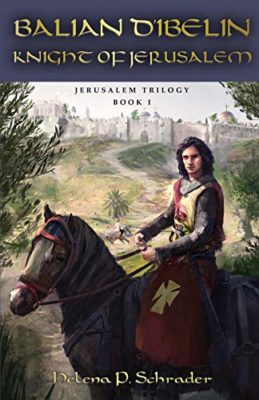
  • BALIAN d’IBELIN: Knight of Jerusalem (Book 1 of the Jerusalem Trilogy) by Helena P. Schrader – Biographical Historical Fiction, Medieval Historical Fiction, Crusader States

    BALIAN d’IBELIN: Knight of Jerusalem (Book 1 of the Jerusalem Trilogy) by Helena P. Schrader – Biographical Historical Fiction, Medieval Historical Fiction, Crusader States

    Welcome to the Outremer, where fealties are solemn, rivalries deadly, and intrigue is served up daily along with the wine. Here, well-connected women are worth their weight in gold, and the rules of primogeniture, along with the whims of a king or mandates from the Church can determine a person’s fate.

    In Balian d’Ibelin: Knight of Jerusalem (Book 1 of the Jerusalem Trilogy), Helena P. Schrader has re-created people, places, and events in the latter 12th-century kingdom of Jerusalem for the reader’s edification and enjoyment. With an elegance of language, detail, and setting rivaling that of Doctorow’s Jazztime or Tolstoy’s War and Peace, Schrader takes the reader on location to savor the world of Balian d’Ibelin in the times before he emerged as a pivotal player in the politics of the Crusader states.

    Young Balian d’Ibelin, while possessing the pedigree, social graces, and knightly skills of one raised to rule, has few prospects when his eldest brother, Hugh, dies unexpectedly.  Although Hugh’s stated desire that the Lordship of Ibelin title and holdings go to Balian, they fall to Balian’s next older brother, Barry, through rights of succession.

    Barry, Lord of Ramla, offers Balian only the position of Constable of Ibelin. Rather than accept this powerful, but subservient post, Balian seeks a future serving Amalric, the King of Jerusalem. The king, who owes Hugh a debt of honor, proffers a court position with some risk – tutor his son Baldwin in the arts of horsemanship, swordsmanship, and sport, as the debilitating infirmity of leprosy, has put the boy behind in this training.

    Accepting this offer moves Balian into the spheres of William, the Archdeacon of Tyre, Baldwin’s academic tutor, and Queen Maria Comnena, the boy’s young, educated, and savvy step-mother, people destined to be essential parts of his life.

    When Amalric dies young, and Balian swears fealty to Baldwin as the new king, the die is cast.  While honoring his oath, he earns the love of the queen, experiences the power of commitment, and learns the cost of honor.

    Balian d’Ibelin: Knight of Jerusalem (Book 1 of the Jerusalem Trilogy) is a joy to read. As in all of Schrader’s novels, the forward to this story is a must-read that serves to ground the reader in the time, place, and cultural multiplicities of the period. By interpreting, hypothesizing, and imagining motivations, actions, conversations, and events that may have occurred as Balian stepped forward into his future, Schrader has turned a narrow slice of history into a panoramic virtual reality that will surely delight fans of historical biographies and Crusader states – and give us something to look forward to in the release of books 2 and 3.

    Readers, brew a pot of tea and snuggle in, for Helena P. Schrader has cast her spell of intrigue and sent her invitation wide. In other words, prepare to get hooked!


  • PATH of the HALF MOON by Vince Bailey – Historical Fantasy, Supernatural Thrillers, Historical Thrillers

    PATH of the HALF MOON by Vince Bailey – Historical Fantasy, Supernatural Thrillers, Historical Thrillers

    Paranormal Supernatural Fiction 1st Place CIBAAfter being charged with burglary and attempted arson, fifteen-year-old African American boxer, Curtis Jefferson, has been sent to Fort Grant, a juvenile detention area in Arizona in Vince Bailey’s Path of the Half Moon.
    All of the creepy stories and whispered warnings about the former US military outpost used by the US cavalry to eliminate the Apache a hundred years ago pale in comparison to the truth Curtis finds there. Curtis faces racism from both inmates and guards, to make matters worse, he is also very aware of the presence of something not of this world. He quickly discovers (though he doesn’t want to admit it) that he is sentient to the fort’s bloody past atrocities. As the site where Pinal and Aravaipa Apaches were slaughtered, the fort seems to be a crossroads where past and present meet. From mournful coyotes to hundreds of circling vultures, Curtis can’t escape the strange visions and events inside and outside the fort. When he attracts the unwanted attention of Harvey Huish, an inmate with unusual abilities, Curtis creates a powerful enemy bent on revenge and humiliation.

    A major theme of the novel is the power of language.

    It appears in numerous aspects of the plot from the Apache cursing the white man’s cunning use of his complicated and deceitful tongue to Randy’s appreciation of Howard Cosell’s elevated vocabulary. The frame-story technique within the novel establishes the concept of storytelling and the influence of words. Curtis’s story is narrated by Vince, Curtis’s new friend, who relays it to the reader at the same time Curtis is telling him. As a natural-born storyteller, Curtis is the storyteller in town, and Vince sees the story as a treasure, a jewel, that Curtis has seen fit to share with him and thus sees himself as somehow honored in receiving the tale. Vince values the story as more than just words; it makes him more significant for having heard it. Though the story is unbelievable at times, Curtis does what all great storytellers do – he creates a suspension of disbelief, granting the listener the right to believe, to feel that “[a]ll things are possible,” an idea repeatedly given by various characters within the story. Through the telling, Curtis finds solace in giving his outlandish tale an authentic voice.

    The theme of language also appears later in the character of Will Farnsworth, Harvey’s tortured attorney. As the newest and most talented attorney in the firm that represents the Huish family, Will has been given the unachievable task of pacifying Harvey during his imprisonment at Fort Grant. Like many lawyers, Will uses words in “purposed profusion,” trying unsuccessfully to befriend Harvey and later intimidating him with language. He attempts to use his words as weapons, rather than tools for communication, a failure which leads to his enslavement to the abhorrent Harvey.

    Another aspect of the novel is the blurring of time.

    The sinister fort itself is one part of this theme because it seems to exist in two time periods, its tragic past and its purposeful present. Curtis repeatedly sees images of days past that cross into his present-day 1960s. In fact, his first day at the fort, he witnesses a hanging from the Indian uprising days. Later, Curtis crosses this boundary himself and crosses paths with a murdered Apache boy. The Headmaster, Roy Whitcomb, known by all as the Lieutenant, never leaves the fort but is stuck it seems within Fort Grant’s time loop, effectively becoming “the man in the maze,” the Pima tribal emblem. He is forever trapped within the maze’s limitations and obstacles, unable to make the right choices and find his way into the next plane, the gift of a better existence. The very retelling of Curtis’s story symbolizes this blurring of time as well. During the entire story, Vince’s watch remains fixed when Curtis begins his tale, time seemingly suspended along with his disbelief.

    Path of the Half Moon won First Place in the CIBA 2018 Paranormal Awards for supernatural novels.


    Paranormal 1st Place Winner Sticker

    5 star book award sticker


  • BLIND SPOTS by Patrick Garry – Thriller/Suspense Urban Life, Courtroom Drama, Inner City Life

    BLIND SPOTS by Patrick Garry – Thriller/Suspense Urban Life, Courtroom Drama, Inner City Life

    In a rundown Minneapolis neighborhood, a woman and her three children are shot to death by someone using an automatic weapon. The city is shocked. The police department goes on full alert.
    It isn’t long before the police discover the actual killer is a 12-year-old. The identity of the killer doesn’t change the civic pressure on the police to come up with a suspect that could have put an automatic weapon in the hands of a child. An early suspect turned out to be Milo Krantz, a despised rent collector for the slum lord who owns the building where the killings occurred, a nasty piece of work with a criminal record.  Now it’s up to police detective Gunther Mulvaney to build the case against Milo, but he soon discovers that there’s not much of a case against him. Nevertheless, Milo is taken to court where the judge sets bail at $200,000 and is sent back to jail.

    The judge is Donna Davis, a smart, glamorous attorney married to Steven Davis, the state’s attorney general who is also a candidate for the U.S. Senate. But Donna and her marriage are not without complications. Coping with her husband’s ongoing unfaithfulness, and she with a lover of her own, Donna nonetheless recognizes the value of her relationship to her husband and the necessity to keep all the pieces of her life together for both of their careers. With Steven’s success, there might be a federal judgeship waiting for her.

    The couple understands her handling of Milo Krantz will be heavily scrutinized in view of the prominence of the case and the possible impact on the future of the power couple’s mutual careers.

    Unexpectedly, Milo throws a bombshell into his case. He will not testify. He declares he is guilty and refuses to attend any further hearings. Police detective Gunther is blind-sided. He knows Milo is innocent but cannot understand why Milo is willing to destroy his life when justice would demand he be set free.

    This is where Blind Spots finds its unique voice. It becomes the story of a chance meeting in a hospital where one of them is healing following a devastating car accident. Two people from different worlds to explore a pure love, a chance for each to become someone better than they were before they met and a closeness that heals both of them on multiple levels. But for reasons best left to reading the novel, it is both real and unreal, life-changing and yet impossible. It is temporary. It ends abruptly. It only reemerges when Milo is about to go on trial, with Shakespearean consequences on them both that no one could have foreseen.

    This well-crafted, clear-eyed novel will make you wonder anew about the power of love, both good and bad, and ask you to consider what your heart, mind and, yes, ethics would have you do under similar circumstances. Blind Spots is a gem. Highly recommended.

    Blind Spots by Patrick Garry won First Place in the 2015 CLUE Awards for suspense and thriller novels.


    Blind Spots is available in paperback format. Please click here for more information.

    Patrick Garry is a law professor with a Ph.D. in Constitutional History. He has written fifteen scholarly and popular audience books in the areas of law, history, politics, and religion. Those books have received numerous awards and have been featured in hundreds of media interviews, academic conferences, and book reviews. His general audience books alone have been the subject of dozens of radio and television news programs.

    In addition to his works of nonfiction, he has also published eight highly acclaimed books of fiction. Garry’s novels have not only been reviewed by hundreds of professional book reviewers, but they have also received more than 75 different literary awards.

    Learn more about Patrick Garry here.


  • FACING the DRAGON: A Vietnam War Mystery Thriller by Philip Derrick – Serial Killers, Military Crime Thrillers, Vigilante Justice Thrillers

    FACING the DRAGON: A Vietnam War Mystery Thriller by Philip Derrick – Serial Killers, Military Crime Thrillers, Vigilante Justice Thrillers

    Facing the Dragon by Philip Derrick explores the Vietnam War era through the eyes of an extraordinary high school student named Jim Peterson, who at fifteen made the varsity football team as a freshman. He’s intelligent as well as physically fit as he begins his journey in the backseat of a station wagon with his sister on their way to a family vacation, seemingly a typical teenager.

    In the first couple of pages, his dad picks up a hitchhiker in an Army uniform, and the story takes off from there. Jim ends up separated from his family and tries to reunite with them in the Carlsbad Caverns; instead, he is the only witness to their murders.

    Jim watches in horror as their bodies are disposed of in the Deep Pit of the Carlsbad Caverns, and shortly thereafter makes the decision to become the young soldier and follow the murderer to Vietnam where he will enact his revenge for his family.

    Thus begins the shift to the extraordinary world of military life for our high school freshman, from a boy on vacation with his family to a young man on a mission as sleuth and soldier. The seamless way Derrick identifies the patches and medals given by the military provide clues about Jim’s father, PFC Travis Nickels, and the mystery man Ross, in a unique and interesting manner.

    We learn about the importance of a crossed-double sword and a parachute on a patch. We learn a great deal about paying attention to the tiniest detail on a patch to help find clues, which our hero does several times. These subtle clues build interest in the story. The stakes are high for Jim, who takes matters into his own hands and follows the suspect to Vietnam, believing that based on the man’s patches, finding him in Vietnam won’t be an issue.

    It seemed implausible for a fifteen-year-old to be deployed with the paperwork of another soldier. Jim Peterson becomes PFC Travis Nickels. Our quick-minded protagonist lies when he has to and loses important fingerprint documents at crucial checkpoints. If a corporal thinks he’s an imbecile, he doesn’t care as long as he obtains his objective.

    Derrick takes us through bases and onto transports that finally bring us to the landscape of the Vietnam War, up close and personal. We are with Jim as mines are exploding all around him, as Huey helicopters are blown out of the sky right above his head, as he catches malaria and is assigned the foulest job for getting sick, which Sargent Strode believes he’s done on purpose.

    We can feel the sweat trickling down backs, smell the foul orders, and see the bark split as bullets hit the trees around him.

    Derrick splits the POV between Ross and the man who Jim is impersonating, taking us back to WWII Germany. The research Derrick had to do to pull this off is mind-boggling. Ross, a German soldier, the same age/era as Jim’s father, lies about who he is to escape Germany, enlists in the US military, and begins a quest to enact revenge for his brother. He is the foil to Jim who takes Nickel’s place, goes to Vietnam, to seek revenge for his family.

    Theirs becomes a twisted relationship of coincidences, but a fascinating one as the truth unfolds in the tiniest hints and innuendos. The tension on every page is palpable, as Nickels finds himself fighting in a war, where race riots in Vietnam erupt off the page like something off our news feeds today. The unpopularity of the Vietnam War and the soldiers who fought in it are also examined, as well as the division in attitudes the war caused at home. The author leaves no controversial topic left unexamined.

    This novel will keep readers turning pages and reading into the night. Derrick sprinkles so many interesting facts about the US military, the Vietnam War, WWII after the fall and the liberation of one concentration camp in particular. Derrick shows the daily grind of humping through the jungle, the mind-numbing boredom of waiting for battle, and then the chaos in the very-all-too-real life or death battles.

    Philip Derrick does not disappoint in this military thriller. He takes us on a wild ride that hangs just this side of “what the hell?” He’s a talented author with a deft ability to capture the historical and logistical aspects of this story without losing credibility or the reader’s confidence. Facing the Dragon is a book for all readers, not just those who love a great mystery/thriller or historical war story. One of our favorites!

    Facing the Dragon won First Place in the CIBAs 2018 CLUE Awards for mystery/thriller novels.

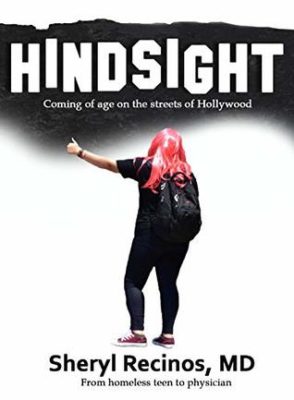
  • HINDSIGHT: Coming of Age on the Streets of Hollywood by Sheryl Recinos, MD – Medical/Professional Biographies, Memoir, Teen Abuse/Homelessness, Mental Health/Family

    HINDSIGHT: Coming of Age on the Streets of Hollywood by Sheryl Recinos, MD – Medical/Professional Biographies, Memoir, Teen Abuse/Homelessness, Mental Health/Family

    Hindsight: Coming of Age on the Street of Hollywood by Sheryl Recinos presents a childhood fraught with family dysfunction caused by mental illness and emotional and psychological abuse. The two formative figures in Recinos’ life were negligible participants instead of the supportive, loving parents all children need to grow and thrive into adulthood.

    While this memoir takes place in the 1980s and 90s, we can only hope the services that support runaways and dysfunction within families have improved. For example, her father’s main go-to plan for dealing with his daughter was to commit her to an asylum instead of doing the hard work of parenting.

    Homelessness, a significant theme in this memoir, is continuously in the news, an issue that plagues every major city in America and occurs even in small towns and rural settings. Homelessness is one of those issues that many in America turn a blind eye to and ignore, but Recinos shines a light, bright and clear, on this issue, and knowing her story helps us understand this issue in a new way. It brings a face to embody homelessness and a possible answer to the question, why?

    Why do people choose the street? Why do people refuse shelter? Why do some kids become flight risks? The answers may surprise you.

    Recinos never places blame, of which there seems plenty to go around. Never blames her mentally ill mother, who, during a psychotic episode, put her and her brother in danger. She never blames her father and portrays him as a figure that we can sympathize with at times. She never blames the legal system that failed her time and again, penalizing her but never breaking her spirit. And she never condemns any of the men that rape or attack her. She doesn’t blame drugs or alcohol or any “friends” she meets along the way who rob her or worsen her situation.

    Instead, Recinos tells the story of her teen-years with a pragmatic focus on the events. She never imposes her adult understanding of this world but focuses on her mental state at the time. What she produces is a raw and unapologetic story of a girl misunderstood, trying to survive in a world of neglect and abuse.

    That she survives is a miracle. That she finds her way out of homelessness to become a successful contributing member of society, becoming a loving parent with no role model for such a thing is another.

    Recinos breaks the cycle of abuse that drove her to the streets. She has become a champion of homeless teens. Her ability to see the injury she suffered through an unfiltered lens, and not accept it or be shaped by it, is why we love Dr. Recinos and her story.

    This memoir is a page-turner, a tour de force, a blockbuster read that will have you laughing, crying, cringing, and hoping for something better for this young woman. You won’t be disappointed. Recinos delivers, and she does so with grace and talent. We highly recommend this intense and eye-opening memoir.