Like most fifteen-year-olds, Sonnet McKay loves a good adventure. Still, when she, her siblings, and cousins discover a deserted Victorian mansion in the middle of the woods outside a ghost town near Seattle, they get much more than they bargained for. In an upstairs bedroom, Sonnet inadvertently steps inside a time travel portal and is whisked away to 1895. In her place stands Emma Sweetwine, an identical doppelganger for Sonnet.
Emma’s family was prominent when Monte Cristo was a booming mine town, but life is not what it seems for the oldest of the Sweetwine children. With a mother who seems to despise her and a secret engagement, Emma’s life is oppressive and controlled – a sharp contrast to the spirited, independent Sonnet. With no idea how or why they were switched, Sonnet and Emma must quickly adjust to their new environments and rely only on their closest friends and family. But like any good story, time is running out for the girls as both of their lives rush in opposite directions. They must find a way back to their own times before their chance is gone forever.
Family, both those of birth and those of choice, is a significant theme of this novel. Sonnet has a close familial support system in her twin brother Evan, older sister Jules, cousin Niki, and best friend and cousin Lia. She has been surrounded by a loving family her entire life and spends part of each summer with her Aunt Kate, her father’s sister. Without doubt or hesitation, Evan, Jules, Niki, and Lia spring into action to both cover Sonnet’s absence and find the impossible path back to 1895. Rapp, a boy who has only known Sonnet for a day before her disappearance, is also a seamless part of the rescue brigade. This group instantly takes Emma into their embrace and makes her feel safe and loved, a first in her life. Though Sonnet has little help from Emma’s family, she quickly builds that friendship network she enjoys in her modern life. It is only with the support of the sixteen-year-old Sweetwine family nanny Kerry; Maxwell the teenage family driver; and Tor Emma’s secret betrothed, that Sonnet will hatch an escape plan. Both groups vow to take care of each girl, respectively, and help them keep the faith to make everything possible.
The difference between Sonnet and Emma will highlight the struggle and growth of women in the world. Sonnet isn’t burdened by the many stifling rules, both spoken and unspoken, that Emma must endure. Emma is forced to hide her true self, her true feelings, none so much as those she has for Tor. As an immigrant tasked with a life of menial labor, Tor should never be a part of Emma’s social circle, much less her fiancé. She has no close female friends and must remain docile and meek even when her mother demeans and abuses her. She is stifled by all who should love and support her. Sonnet, with her modern mind and outspoken nature, fights all of those restrictions and leaves Emma’s life better.
Sonnet makes Emma stronger, and Emma teaches Sonnet how to appreciate love in her life. In the very oppression, Sonnet finds the enjoyment of her freedom, and Emma’s liberation will create a connection to Sonnet that she can’t even imagine.
But Not Forever won the CIBA 2019 Grand Prize in the DANTE ROSSETTI Division for Y/A novels.


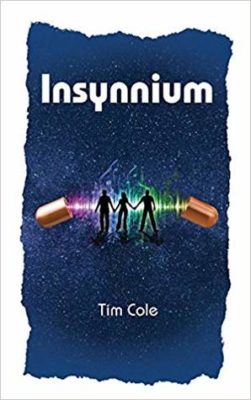
 The dramatic premise explored in a new novel, Insynnium, is a wild, immersive leap into a world-changing (but fictional) drug. In other hands, what could be a dystopian thriller goes one step further in author Tim Cole’s capable hands. He focuses on the humans who first discover and use the drug and weaves his story with a devilish charm.
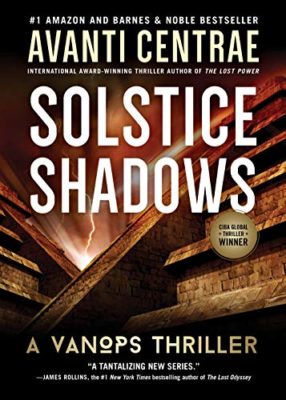
 Something really nasty is afoot in the world as the Russians attempt to build a super quantum computer so powerful that it will be able to hack into America’s computer capabilities, bypassing even our most advanced protection and control or shut down every computer in the U.S.
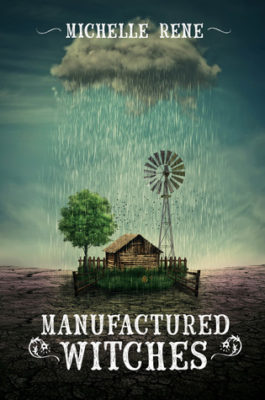
 Sixteen-year-old Nat is a boxcar kid. It’s the Dust Bowl era, and Nat has lost everything: his grandmother, his family home, and a sense of belonging. He hops trains across Texas in search of a place for himself amid so much loss. Outside of Amarillo, Nat feels a peculiar sensation, a tug from destiny, that pulls him toward the small town of Tanglewood. However, instead of finding a job and some much-needed food, he discovers Polly Jones, a teenager like himself, chained to a post with a sign above her reading, “Thou shalt not suffer a witch.”




 In the first several pages of Chasing Demons, a novel of the Old West not long after the American Civil War, the following happens to U.S. Army Private Gus O’Grady: he kills two Apache Indians, saves the lives of a troop of U.S. soldiers, kills two more Indians, kills a bad guy, winds up being mistaken for a man who may have robbed a bank of $20,000 in gold, and gets arrested for possibly being the man who raped a lass in an Arizona town populated by Mormons, and meets a woman he thinks is far too good for him. Oh yes, and he deserts the Army after 13 years.
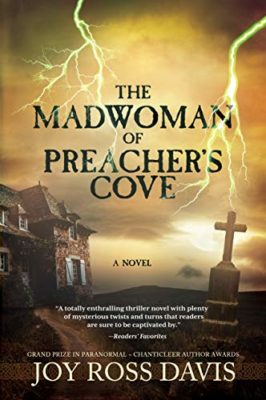
 Award-winning author, Joy Ross Davis’ latest work, The Madwoman of Preacher’s Cove, ventures beyond the paranormal into the surreal. Like Medusa on a bad hair day, the lives of characters are intertwined and twisted in a snaky snarl of conflicting human desires, terrifying inexplicable events, and the lingering afterlives of ancient, supernatural beings.
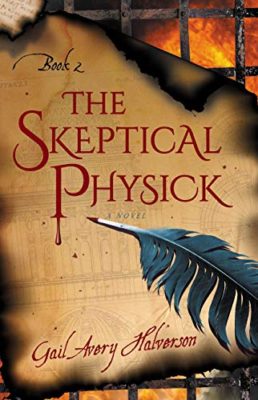
 In the second in a series by author Halverson, an aristocratic, intellectually curious young woman has fallen in love with a young physician, a commoner whose radical experimentations have jeopardized his reputation. The couple is just recovering from the professional and personal rigors of dealing with London’s plague victims when the city is overwhelmed by fire. Their services are needed now more than ever.