Tag: 5 Star Book Review

  • The ART of ENCHANTMENT by M.A. Clarke Scott – Contemporary Women’s Fiction, Heartwarming Romance

    The ART of ENCHANTMENT by M.A. Clarke Scott – Contemporary Women’s Fiction, Heartwarming Romance

    Are you ready to be whisked away to a romantic Italian villa? Seduced by a brilliant – and sexy – architect? Not doctoral candidate Clio Sinclair McBeal. The red-haired beauty is nose down, struggling valiantly to complete her Ph.D. thesis and has no time for a social life – even with a gorgeous Italian lover. But here’s the great news, she finally has a topic for her dissertation, one that will give her project momentum: passion, ecstasy, bliss as portrayed in religious art of the Italian Renaissance.

    Armed with a fresh idea and an adorable Fiat 500, Clio zips down a provincial Italian road anticipating meeting with her thesis adviser to share the updates. Instead, she finds herself in a roll-over accident that leaves her sans car, stuck in the mud and in need of assistance. Readers will swoon at who comes to her rescue, the dashing Guillermo Gabriel d’Aldobrandin. Clio recovers fast but can she resist his charms? How will she be able to handle this interesting and oh-so-handsome man in her life at the same time she’s attempting to complete her thesis? And holy cow – are her parents in town?

    M.A. Clarke Scott’s The Art of Enchantment starts at a low simmer but rises to a body-searing burn as Clio and Guillermo find themselves pushed together repeatedly by both fate and the desire to save Guillermo’s family villa. Clio, however, must also cope with her own family legacy, one of academic excellence. Satisfying her dominating parents seems to be an uphill battle, however. And to complicate the situation, Guillermo mistakes her intense desire to meet with her thesis adviser as evidence of a deep love of scholarship.

    Clarke Scott delivers fine, white-hot love scenes along with the opportunity to pick up some random Italian swear words that are fun to say, like stronzo! Aside from sex and swearing, Clarke Scott uses archetypes to woo her audience: the destructive rock star, the sexy, bold Italian, the shy, studious American attempting to please her parents. And these archetypes work well in this story, giving readers much of what they come looking for in romantic fiction.

    M.A. Clarke Scott is an artist with words and paint. She writes women’s fiction as well as steampunk and science fiction, screenplays, novels, and essays. White walls, blank canvases and the empty page are all invitations for her to fill them with her exceptional creations.

    A well-paced escape for those hungering for art, history and a hot ride with a handsome Italian hero.

    5 Star Best Book Chanticleer Reviews round silver sticker

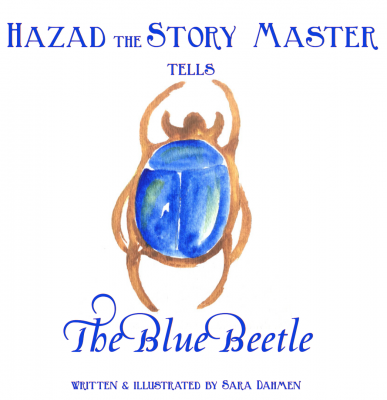
  • HAZAD the STORY MASTER TELLS the BLUE BEETLE by Sara Dahmen – Children’s Literature, Belief in Self, Work, and Others, Determination/Drive

    HAZAD the STORY MASTER TELLS the BLUE BEETLE by Sara Dahmen – Children’s Literature, Belief in Self, Work, and Others, Determination/Drive

    A beautiful story of determination, dedication, and drive to fulfill one’s goals, even when those goals seem impossible to achieve, wrapped up in love for family and belief in self and others.

    Renni dreams of becoming a scribe, but his family is too poor to afford school. Renni’s father, Pentu, wants to give his son the education he craves; however, he has no job, and finding a way to earn the money proves nearly impossible for Pentu because he doesn’t have the strength required for most of the jobs in the city. After trying and failing at farming and fishing, Pentu returns home dejected, but Renni greets him each time with a reassuring hug.

    When he finally tries his hand at carving, Pentu is noticed by the local goldsmith who gives him a job. Pentu excels at making scarabs, a much-valued part of Egyptian culture. His favorite is a large, expensive lapis lazuli scarab, and Pentu knows that selling the jewel will give him the money needed to educate Renni for as long as he likes. When a traveling merchant finally buys the blue beetle, Renni will be able to make his dream come true.

    In this third volume of the Story Master series, Hazad, the storyteller, transports children to ancient Egypt where education is a privilege. With Pentu’s repetitive trials, this beautifully illustrated frame story is a bit like a cumulative tale. No matter how hard Pentu tries, he endures disappointment after disappointment; however, he never stops trying. His “never give up” attitude is inspiring. No matter the hardship, he will overcome anything to give his son the education he desires.

    The lesson about the value of education isn’t lost on the reader either. Children often undervalue the opportunity to learn while Renni yearns for only that, but even in the midst of Pentu’s disappointments, Renni remains positive. With every failure, he supports his father, reassuring Pentu of his love and never berating his father for being unsuccessful as he searches for his niche.

    In this celebration of artistry, The Blue Beetle will touch and inspire children to appreciate what they have, never stop trying regardless of the obstacles, and dream big.

    Sara Dahmen has worked in numerous facets in the publishing industry, including editing trade publications. Not only does she write children’s books, she also illustrates them and her historical fiction series, Flats Junction. However, publishing isn’t Sarah’s only talent. She is a copper and tinsmith apprentice, a wedding planner, and creator of her own cookware line. Throughout all of her many successful ventures, Sara cherishes life with her children and her husband.

    5 Star Best Book Chanticleer Reviews round silver sticker

  • The TOOTH COLLECTOR FAIRIES: Batina’s Best First Day by Denise Ditto – Children’s Literature, Early Reader Chapter Book, Fantasy & Magic

    The TOOTH COLLECTOR FAIRIES: Batina’s Best First Day by Denise Ditto – Children’s Literature, Early Reader Chapter Book, Fantasy & Magic

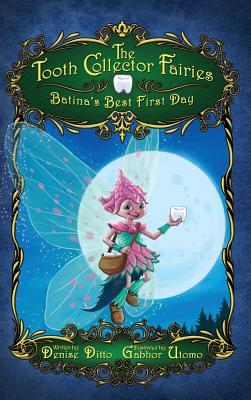
    Blue and white First place winner badge for The tooth collector Fairies, batina's best first day by Denise DittoIn Denise Ditto’s The Tooth Collector Fairies: Batina’s Best First Day, Batina wants one thing, to be the best Tooth Collector in all of Brushelot. Batina is a Tooth Fairy, and she can’t wait to get her first collecting assignment. Unfortunately, her first day doesn’t go quite as she planned. With her huge wings (three times the size of most of the fairies), she’s clumsy and a little awkward, but Batina has a job to do, collecting well-brushed teeth which can be turned magically into the rainbow dust that gives all of the fairies the ability to fly.



    Despite the sneers of Jolene, an unhappy fairy who isn’t allowed to gather the precious teeth, Batina and her friends, Lulu and Lainey, can’t wait to begin their tasks, and each of them hopes to win the Best First Day ribbon awarded by Crown Mistress Molar. However, gathering the teeth from under the pillows of sleeping children is only the first step. When Batina returns with her prized first tooth, she must find a way to help the Tooth Inspector with a sabotaged conveyor belt and to fix the Super-Duper Magic Dust-Making Machine, or her first day might be ruined.

    Batina’s story is one of determination and teamwork. Again and again, she must overcome her problems and celebrate her differences. Those huge wings often get in her way, but she remains undaunted. Instead, she finds a way to make the wings work in her favor. She also values the role of her friends and calls on them to help her solve the day’s problems. She recognizes the importance of their individual talents and even finds a way to help Jolene the bully, stop being a bully, and be her friend. The positive message of working together and embracing diversity makes this early-level chapter book, illustrated by Gabhor Utomo, shine.

    Young and not-so-young readers alike will be happy to learn that Batina’s Best First Day is the first in the Tooth Collector Fairies series. There is more adventure waiting for all!

    Author Denise Ditto not only loves writing children’s books, but she is also the Executive Director at Houston Writers House, a position she shares with her business partner Rebecca Nolen, and is the former Director of the Houston Writers Guild. A graduate of the University of Houston-Downtown, she has also published an award-winning short story. She lives in Texas, her home state, with her husband.

    The Tooth Collector Fairies: Batina’s Best First Day won Grand Prize in CIBAs 2016 LITTLE PEEPS Awards for Children’s Literature. Follow this link to the Chanticleer Review of the second book in the series, Home from Decay Valley.

  • The BODY NEXT DOOR by Gay Yellen – Cozy Mystery, Female Sleuth, Romantic Thriller

    The BODY NEXT DOOR by Gay Yellen – Cozy Mystery, Female Sleuth, Romantic Thriller

    Samantha’s lost practically everyone important in her life, her self-made career now lay in ruins, the romantic dream man she’d found had suddenly disappeared, and then, of course, there’s also The Body Next Door.

    As Samantha Newman ponders the steps to put her life back on track, murder and intrigue come knocking close to home. Now she’ll need to follow her instincts and gather clues, like a child tracks a summer ice cream truck, and lick this mystery.

    As the girl next door to the body, Samantha’s intelligence, generosity, and engaging humor combine to delight all amateur sleuths reading along. First, she wants to help calm and soothe others living in the condominium. That leads to some interesting clues and suspects begin to surface. But with the police investigation in full swing, will Samantha and her mystery man/love interest be able to coax their relationship into full bloom? That’s a lot to handle when your life is in tatters.

    Readers will fall for Yellen’s wonderfully light, conversational writing and fall for Samantha as she tells the story. Of course, she doesn’t always come to the right conclusions, but she’s a very honest spirit who always reaches out to do the right thing. Wherever Samantha goes, she goes with all her heart. While you can certainly dive right in with this second book in the Samantha Newman series, the recommendation is to start at the beginning with The Body Business because you won’t want to miss any of Samantha’s exciting adventures, and romantic entanglements.

    Yellen creates dynamic and interesting characters, a skill, no doubt she honed as she gained her start as an actress in theater and film. Later she moved behind the camera as Assistant to the Director of Production at the American Film Institute. Her writing background comes as a former magazine editor and national journalism award winner, now an award-winning novelist. The best news is that she’s currently working on the third book in this series.

    A cozy mystery with exceptional heart. A satisfying read to curl up with this Fall.

    5 Star Best Book Chanticleer Reviews round silver sticker

  • OLYMPUS NIGHTS ON THE SQUARE, Book 2 of the JULIANA SERIES by Vanda Writer – LGBT Coming of Age, Post WWII New York City

    OLYMPUS NIGHTS ON THE SQUARE, Book 2 of the JULIANA SERIES by Vanda Writer – LGBT Coming of Age, Post WWII New York City

    Alice Huffman is an interesting young woman. She likes to go by the name of Al, likes to wear tuxedoes when she’s allowed to and has a burning desire to run a nightclub in NYC where beautiful men and women can mix, mingle, sing, and dance in whatever way they please.  World War II has just ended. People should be ready to celebrate!

    But Al has other burning desires as well, some she’s not quite ready to talk about. After all, she tells herself, having these kinds of feelings for one gorgeous woman doesn’t really make her one of those sexual perverts other people are talking about, or does it?  Luckily, she has close friends, more like family, to help her deal with these questions during the tumultuous decade following the war. With them by her side, Al becomes the woman she was meant to be.

    The extended title, or subtitle, LGBT Life in the Early Post War Years 1945-1955 is really the best description of this work. The novel begins immediately after the war and is chock full of specific details that may not have made it into the history books. In just one example, if a man like Al’s friend Max, was discovered to be homosexual while serving in the army, he was given a “blue discharge,” a piece of paper that would limit his employment possibilities for life.

    We learn that freedoms for women, more public during the war, are severely curtailed as the men returning from overseas expect the home life they remember. In this tale, husbands exert control over their wives and women like Al are immediately suspected of “perversion” if they choose not to marry. It’s a tense time, growing more violent across the decade as McCarthyism and fear of communists in a Cold War with the Soviets becomes interwoven with the public campaign against all homosexuals, men and women alike. Every manner of insult is thrown at them. Al and Max understand they could lose everything they’ve worked for should either of them be discovered.

    It’s against this historic backdrop that Vanda develops her characters. In this second book of the Juliana series, the singer figures prominently, but in many ways, it’s Al cast as her young, secret, confused lover and eventual career director, who steals the floor show. The tension between Al and Juliana’s legal husband, Richard, is tragic and powerful and continues to grow throughout the work. Al herself is growing in every chapter, and changes from a terrified girl with an impossible dream, to a businesswoman who has earned the grudging respect of many powerful men.

    In this way, Olympus Nights can be seen as a Lesbian coming-of-age story with all the recognizable dangers present in the past that a more modern audience can still feel. Yet, even though the story really is centered on the women, the men in Al’s life also have important roles to play. We’re treated to historical glimpses of stars, such as Walter Winchell, Liberace, and Mayor O’Dwyer; and squirm with Max, Al’s mentor and ally, and Marty, a former soldier and aspiring actor, as they struggle to be their true selves. In every chapter, Vanda highlights the political climate of the times and brings forth a wealth of information describing the anti-Gay, anti-People of Color, anti-Communist, anti-Jew, and anti-Woman policies in New York City and America, during that decade.

    It isn’t hard to make the connections Vanda wants the reader to see, that these intolerant policies are making a resurgence years later, and that they have an ugly history of repression and violence effecting real people. Her creation of characters we care about, struggling to be themselves against every threat, every unjust law, attempts to remove the stigma of “other” and “pervert” and every other horrible name homosexual individuals have been forced to live under.

    5 Star Best Book Chanticleer Reviews round silver sticker

  • THE CAMERA’S EYE by Judith Kirscht – Mystery, Family Saga, Pacific Northwest

    THE CAMERA’S EYE by Judith Kirscht – Mystery, Family Saga, Pacific Northwest

    A peaceful home in the San Juan Islands turns perilous when two women are persecuted by residents who have plenty to hide when The Camera’s Eye is turned on them. Master storyteller Judith Kirscht presents a thrilling mystery with heart, ripe for today’s environment and rich for readers.

    Veronica and Charlotte considered themselves unlikely targets of hate crimes, after all, who wouldn’t like two nice white-haired ladies who share a home for economy and company on an island in Washington’s Puget Sound? Both women have tragic family histories which they thought they’d left behind, but trouble never really lies quietly for long.

    Veronica has the gift of capturing the truth with her constant companion, Constance, her beloved Nikon camera. When she captures an uncomfortable truth in their new neighborhood, the eye of persecution turns and focuses on her and Charlotte. In The Camera’s Eye, the reader comes face to face with how perception encourages action, and how action can either heal or destroy.

    From the beginning scene, Veronica and Charlotte are in jeopardy as a rock is thrown through their window in the middle of the night. Who would do such a thing? With pasts that cultivated their own sets of demons, the friends have their own ideas, and the field is rife with possibilities. However, when the local law enforcement shows up and suggests that their lifestyle is to blame for the attack, the women go on the defense and start their own investigation as to who and why they have suddenly become targets.

    This story is not to be confused with a cozy. Kirscht opens the story with violence and forces the reader to examine the many results of hard decisions made with the best intentions, and question philosophies based on the letter of the law rather than on love. It’s a mystery, certainly, but with an unrelenting grip and careful sleuthing that feels more sinister as the plot unfolds.

    Rich with superb dialogue and beautifully penned scenes, The Camera’s Eye is typical of Kirscht’s style and readers will be hard-pressed to set this book down. As one event leads to another escalating event, our characters wits and wills are tested as they struggle to make sense of the violent hatred surrounding them and the blatant disregard for their well-being at the hands of the authorities who are supposed to protect them.

    A Chicago native and multi-award-winning author, Judith Kirscht makes her home on an island in the Puget Sound in Washington state where she spends her time taking her dogs for walks, discussing dinner plans with friends, and penning her next literary masterpiece. The Camera’s Eye is Kirscht’s fifth novel.

    “In a world where too many rocks are thrown at those who represent anything other than the norm in middle-class white America, two friends decide to take matters into their own hands and stand up to the hatred with which they are targeted in order to save their home and ultimately their lives. Hot off the shelf from the literary award-winning author, Judith Kirscht, The Camera’s Eye will challenge the reader to focus on what they believe and how their beliefs inform their actions. A very important book for our times.”

    5 Star Best Book Chanticleer Reviews round silver sticker

  • The ALEXANDRITE: A HOLLYWOOD TIME-TRAVEL NOIR by Rick Lenz – Magic Realism, Hollywood, Time Travel

    The ALEXANDRITE: A HOLLYWOOD TIME-TRAVEL NOIR by Rick Lenz – Magic Realism, Hollywood, Time Travel

    Time-travel Noir becomes High Art with a wicked sense of humor in this fast-paced novel that offers up alternate views of Hollywood’s past and present.

    Washed-out and with the doors of opportunity slamming shut on all sides, actor Jack Cade is the poster boy for the “bad things happen in threes” mantra. Getting cut from a crappy, no-pay play was just the tip of his career-crushing iceberg. His agent, who lost faith in Jack way back in another epoch, manages to dig up a temporary life preserver – an audition for a part that has Jack written all over it. An audition he misses. And Jack’s wife, no longer able to stay afloat in his sinkhole of alcohol and “bleeding actor’s ego,” jumps ship.

    Just when it starts looking like it’s lights-out for Jack, an anonymous envelope lands in his mailbox. Inside is a pawn ticket that leads him to an Alexandrite ring and a psycho-physicist who claims to hold the secret of time travel. With Jack’s personal and professional lives collapsing in on him like a black hole, he walks out of 1996 and into the heyday of mid-Century Hollywood. He also walks into another man’s shoes, not to mention the scene of his recurring nightmare. Armed with “fore-knowledge” Jack has a chance to make things right in two different time periods. The only question is, how many times will he have to jump across the spectrum of an alternate reality to get it right?

    Drawing from his extensive experience in the entertainment industry, author Rick Lenz delivers a stellar and believable cast of characters. From Jack Cade, whose love-hate relationship with the movie industry keeps him on the razor’s edge of failure, to Jack’s 1956 incarnation – or possibly alter-ego – Richard Blake, a movie-star handsome gemologist, whose an angry alcoholic wife and sultry, mentally impaired sister-in-law set the stage for their own rendition of a sweaty Tennessee Williams play. And there’s the incomparably complex, multi-faceted Marilyn Monroe, at the peak of her career—the golden thread that weaves everyone’s story together.

    Steeped in Hollywood history and culture, The Alexandrite  entices the reader with snippets of iconic set locations, facades, meeting places, studios, and stars. But the novel is more than a torch song to the movie industry. It is also a paean to hard-working actors whose careers, like Jack’s, straddle a razor.

    Somerset Grand Prize award winner for Literary and Contemporary Fiction along with multiple other literary awards, The Alexandrite by Rick Lenz playfully challenges the reader to ask questions about a world that exists outside of the four dimensions in which we live. A must-read for anyone and everyone who has been touched by the magic of Hollywood.

    5 Star Best Book Chanticleer Reviews round silver sticker

  • COME the WIND by Alexander Edlund – Fantasy, War, Coming of Age Y/A

    COME the WIND by Alexander Edlund – Fantasy, War, Coming of Age Y/A

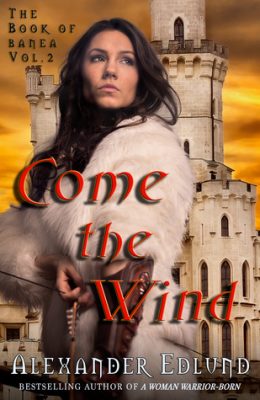
    With Come the Wind—the second in his series, The Book of Banea—author Alexander Edlund creates a lush tapestry of fantasy, coming of age story that links the power of one woman to the skills and talents of all women.

    Breea Banea, born to the Library of Limtir, became aware of her destiny as an Alach “weaver” or manipulator of etheric energies in A Woman Warrior Born, causing her to take up arms against the mysterious Oregule threatening her people. In Come the Wind we learn that the Oregule are in fact evil shapeshifters manipulated by an ancient enemy of Limtir. In her attempt to overcome the Oregule, Breea must free the regions they dominate. She will do so both as a warrior, and more reluctantly, as a queen, a role she adopts in order to recruit the Kultash and other peoples to her side in battle.

    In her new role as “Chosen,” Breea, a natural leader, will meet war victims needing help, consider the possibly duplicitous priest, Duyazen, and convene with leaders of all the region’s armies whose support she needs, but who mistrust her new edict that women can fight alongside men. But most significantly perhaps, she is approached by a stranger who speaks her Limtir tongue and advises her of a great prophecy concerning “six Alach-born children who are destined each to destroy an Oregule.  A child each of earth, wind, life, light, fire, and  song.”

    Unknown to Breea, even as this fateful prediction is uttered two of her own faithful followers, the lord Taumea and his companion Valenia are already on the trail of Alach sisters, Anila and Spe, who though young, display mighty powers not unlike those to which Breea herself is heir. Together they will take on the nefarious Oregule.

    Edmund’s prose is potent, with no wasted words and many splendid ones. He celebrates Breea’s warrior nature along with her wisdom and the extraordinary abilities she has been given while showing her “human” failings and self-doubts for balance. She is always willing to take advice from her servant Dori and the refugee Simarn, who is proving herself to be as strong and fearless as her new queen. Though at times seeming burdened with holding together the fabric of his fantasy through every conceivable situation, Edlund is as faithful as he can be to the powers and limitations of every character and creature he has created. His book would benefit with a brief precis of the first volume in the series to bring the reader up to speed, even a glossary of terms would be useful. This is no slight – it is indicative of an exceptionally intricate world and readers will not want to miss a beat.

    In this war and weapon-filled coming of age fantasy, one woman’s strengths and aspirations prove her worthiness as a leader. Exceptionally intricate world building and potent prose — readers will not want to miss a beat of this epic fantasy!

    5 Star Best Book Chanticleer Reviews round silver sticker

  • A WOMAN of NOTE by Carol Cram – Historical Fiction, Literary, Vienna

    A WOMAN of NOTE by Carol Cram – Historical Fiction, Literary, Vienna

    Isabette Gruber is in a panic. If only her sister were still with her to steady her hands on the keyboard as she plays Beethoven’s Eighth Sonata, known as the “Pathetique,” in her first public concert at Vienna’s Hofburg Palace. Then she hears Johanna’s voice in her head, and her poise and confidence return. The nineteen-year-old Isabette raises her hands, shapes her fingers above the keyboard, and launches into the “Pathetique.” Her powerful performance thrills the audience, whose applause continues through a third bow, and does honor to its composer, Ludwig van Beethoven, whose funeral took place in Vienna that very day, March 29, 1827.

    Filling Isabette’s heart more than the applause, however, are the words of praise from her beautiful, new American friend, eighteen-year-old Amelia Mason, who received four bows for her extraordinary vocal performance. Afterward, Amelia asks the young virtuoso pianist to become her accompanist. Isabette is eager to hear more about this enticing proposition, but Mama arrives with her cloak. Herr Dietrich (her indecorous manager) is waiting with their carriage. “Hurry, Isabette!”

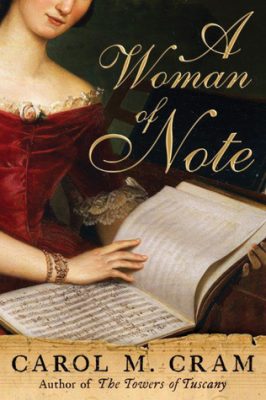
    In A Woman of Note, Carol Cram has crafted a second brilliant female artist, this time a pianist and composer in 19th-century Vienna. Isabette must fight to establish her position in the male-dominated European world of classical music, much as Cram’s Sofia had to do in 14th-century Italy’s world of painting, in The Towers of Tuscany (2014). Cram’s precise, colorful writing enables us to hear the young Isabette playing the “Pathetique” in Hofburg Palace, see her enjoying a stroll with Amelia in the Prater, feel her pain over the loss of father and sister, and appreciate her determined efforts to convince music publisher Herr Weissel to accept her compositions, under the pseudonym of Anson Kruetzer. (Weissel roars with laughter, but agrees!)

    Once home from the Hofburg, Isabette thinks back to her practice session that morning in the small, dusty parlor of the apartment where she lives with her mother. With a heavy heart, she remembers what a happy home this had been when her sister Johanna and she shared both a talent and a love for music and were skillfully taught to play and compose by their proud father. Now Papa is dead, Johanna is in an asylum, and Mama seems to think of Isabette more as a means to an income than as her younger daughter. The tall, lanky girl with a plain face and dull, straight hair never gives a thought to her social life or the possibility of marriage and children. Her every moment is devoted to practicing. Tonight, though, she thinks of a new life with Amelia in it. Soon, they are together every day practicing, but also developing their friendship as they go for long walks around Vienna.

    When piano teacher Josef Hauser, who fancies himself a superior composer, meets the two young women, the story’s complexity grows. Josef is enamored with Amelia’s beauty but enthralled with Isabette’s talent. (In fact, he agrees to become her teacher if she revises his compositions so they will be accepted for publication.) Isabette treasures every minute she spends with the vibrant, cheerful Amelia, but feels uncomfortable when Amelia strokes her arms and kisses her neck. Amelia is jealous of Josef’s attention to Isabette during her piano lessons. Isabette realizes she could love Josef but knows that he is passionate about Amelia and could never feel that way about her. Then Josef’s flutist/poet friend Daniel Leitner joins the threesome. Gentleman that he is, he maintains a discreet distance from the ladies at least for a time.

    Readers will love Carol Cram’s colorful writing and attention to the minute details of daily life at this time in European history. Even more enjoyable, however, will be finding out where her intertwining love stories lead as the characters mature. The book never loses its pace. and readers will be rapidly turning the pages until the very end.

    While the cameo appearances and mentions of such famous musicians as Johann Hummel, Carl Czerny, Franz Schubert, Fredric Chopin, Robert Schumann and his wife Clara, and Louise Farrenc are of course fictional, they add drama and reality to the story, which is based on Cram’s meticulous research. An Author’s Note provides background on actual women composers of the time and place.

    A young virtuoso pianist rises above the many musicians of her time, blazing a path of passion for music and love that is hers and hers alone in nineteenth-century Vienna.

    5 Star Best Book Chanticleer Reviews round silver sticker

  • MY DEAR WIFE and CHILDREN: CIVIL WAR LETTERS FROM a 2nd MINNESOTA VOLUNTEER by Nick K. Adams – Civil War Memoir, Family Letters

    MY DEAR WIFE and CHILDREN: CIVIL WAR LETTERS FROM a 2nd MINNESOTA VOLUNTEER by Nick K. Adams – Civil War Memoir, Family Letters

    Collected and annotated by the great-great-grandson of a Union soldier, these recollections of the Civil War take on new life and meaning in current times.

    Nick K. Adams, a retired schoolteacher and Civil War re-enactor, was fortunate to have access to letters written by his ancestor, Brainard Griffin. A Minnesota farmer, Griffin volunteered to fight for the Union, leaving behind his wife Minerva, their two young daughters and baby son. His first letter home was written on September 30, 1861. The letters, 100 in all, express his longing to be back home while describing in often minute detail the life of an ordinary combatant.

    Griffin wrote the letters in quiet times, holding a board or his knapsack on his lap as a table. The repeated themes are poignant: loving messages to his wife and children, advice for the management of the farm, even bits of gossip.

    Money worries were constant; at one point Griffin washed the clothes of other soldiers so he could send more of his pay back to his family. Around the mid-point in his service he avows that, “experience is a good school,” assuring “Nerva” that when he returns, he will “prize” his time with family and home.

    Griffin’s regiment traveled extensively through Kentucky, Tennessee, and Alabama, constantly on the alert, experiencing battles, sickness and the travails of heat, mud, and snow. He observed the ravages of war in the farming communities and burned-down towns he passed through and saw firsthand the horrors of a field hospital. He met slaves and engaged them in personal conversation. He often lamented “the curse of slavery” and vowed to fight to end it. From the outset, he believed that the war would soon be over—in a few months, or a year at the most. His accounts of mealtimes indicate the increasing stress on the army’s resources: from coffee twice a day, pancakes, beef, fresh fruits, even pies, to half rations for months at a time, and towards the end of his accounts, mostly salted meat and crackers.

    Despite his optimism that the war would soon end, and his repeated visions of returning to Minerva and the children, Griffin was killed in the first few moments of the savage Battle of Chickamauga, two years after his first letter home, and was buried by Confederate soldiers in a mass grave.

    Adams has taken care to present the letters in their original form. Before each section, he highlights the coming contents and includes a map of troop movements. Though there is repetition, it seems fitting that almost every letter begins and ends with loving greetings to Griffin’s wife and children (some written directly to the girls), and that all express the simple daily trials of the foot soldier. Griffin had illnesses, lost teeth, grew a beard, and never ceased encouraging his wife in her work on their homestead.

    His homey remarks and even a bit of good-natured joking show him as a strong-willed, positive person, and his views on the progress of the national struggle reveal him as a thoughtful patriot with a mind to the future of his country and all its inhabitants.