Tag: 5 Star Book Review

  • The SHAPE of the ATMOSPHERE by Jessica Dainty – Literary, Psychology, Women’s Fiction

    The SHAPE of the ATMOSPHERE by Jessica Dainty – Literary, Psychology, Women’s Fiction


    Jessica Dainty’s, The Shape of the Atmosphere is remarkable for its startling realism, its gritty young heroine, and its hopeful conclusion.

    When Gertie’s father and sister are killed in an accident on Gertie’s sixteenth birthday in 1957, she is left with one cherished memory: viewing the heavens with her father on the night of the world-changing Sputnik flight.

    After the funerals, Gertie wounds herself as a way of coping with her inner anguish, after which her alcohol-addicted mother commits her to an insane asylum. Such institutions were considered modern and scientifically advanced for their time, but as author Jessica Dainty frankly depicts, Gertie’s new home is a combination prison and torture chamber. The naïve but intelligent girl soon becomes acquainted with such therapies as immersion in icy cold water and electroshock (both designed to calm the inmates), as she gradually gets to know her fellow patients, the women on Ward 2.

    Gertie observes that some of her companions are not mentally ill at all: one has a speech defect that he is struggling on his own to correct, and another has Down Syndrome. Yet such people – anyone not wanted by family – are consigned to such asylums and often get lost in its labyrinthine system. Gertie slowly gains inner resolve, becomes an advocate for her rights and those of her companions, and starts an in-house newsletter that tells their stories. But when her compositions find their way outside the walls of the asylum, she is forced to take even bolder measures.

    Dainty writes this traumatizing tale as though she’d lived it, so starkly painful and remarkably poignant are her portraits of Gertie and her fellow sufferers. She portrays the doctors as caring only up to a point, mainly interested in maintaining a full house of captive mental “cases” to keep the income rolling in. One staff member is sympathetic toward Gertie, but most are cold and indifferent, strictly allowing only 3-minute bathroom breaks, a single towel at communal shower times, and almost no time spent unmonitored.

    Treatments such as electroshock (Electro Convulsive Therapy, ECT) are performed differently today for the treatment of severe depression, treatment resistant depression, severe mania, catatonia, and agitation and aggression in dementia patients (Mayo Clinic: https://www.mayoclinic.org/tests-procedures/electroconvulsive-therapy/about/pac-20393894), for example. But today, this treatment is done under general anesthesia and at reduced levels. This was not the case in the 1950s or in Dainty’s harrowing novel. ECT was conducted without any form of anesthesia and often without patient’s consent.

    Reminiscent of the less enlightened times also is the blatantly denigrating attitude shown towards people of color and other minorities. The author’s descriptions of daily life in a mental institution of the 1950s are filled with scenes of mistreatment tantamount to torture. But many readers will find the story inspiring, especially as Gertie, sustained by images of space travel, finds her own stars to aspire to and reaches out to help others. Debut novelist Dainty is a high school teacher with many points of contact with the teens she hopes to engage with this evocative coming-of-age saga.


    The Shape of Atmosphere won First Place in the 2022 Goethe Book Awards for Post-1750s Historical Fiction.

  • WINDHOLLOW and the AXE BREAKER, Windhollows Book 3 by Trayner Bane – Children’s Books, Action/Adventure, Fantasy

    WINDHOLLOW and the AXE BREAKER, Windhollows Book 3 by Trayner Bane – Children’s Books, Action/Adventure, Fantasy

    Part Three of the Windhollows series takes off with a bang, as we find an evil female on our hero’s trail and a sneaky scientist up to his old nefarious tricks.

    The book opens with a stirring encounter between the glimmering being who was once Billy Molskin’s girlfriend, Skylar, in a contest of wills with Nila Windhammer. Nila previously transformed the schoolgirl into a monster called the Spent of Jealousy, using Dr. Rip Stinker’s toxic Essence of Ripinum.

    Into the fray comes Blast, a once-powerful creature who had been given the task of guarding Skylar. His failure makes him more determined than ever to intervene, but Nila forces him out into the Formidable Fields where he is doomed to lose his memory or his freedom. To accomplish his banishment, Nila wields the Malus wand, a gift from her father and her weapon of eternal vengeance against those who killed her parents.

    Meanwhile, Stinker and his faithful pet Pootrick are entering the Silent Pass where Stinker plans to enslave its inhabitants, the nomadic Silencians. But after disabling some of them with Ripinum, he is confronted by Nila, who informs him that they have a far more important mission. They must locate Billy, who is on a quest to find a mystical staff that contains powers she wants for herself.

    Billy, with help from his friends Teddy and Wendy, is indeed looking for the staff, finding clues from ancient books and soon realizes he also needs to get possession of four magic stones. Could these be connected to a bracelet of three orange cubes found by Stinker when he attacked the Spent of Hatred? Could they be the work of the immortal Stonehammer?

    Billy’s determination is temporarily sapped by the lingering illness of his father, who may have a clue to the missing stone collection. When his father passes away, Billy will finally access the inner strength he needs to put the legendary weapon, Axe Breaker, to its proper use and win a momentous victory.

    Fans of the Windhollows series will note this story is taking on topics of significant proportions. Themes of the death of a parent, the coming-of-age of the young hero and the hard-fought triumph over evil give this volume greater gravitas, perhaps moving it towards a perception of Billy as a kind of Beanian Hobbit: ready to take up the call to duty, even if it means putting himself in harm’s way.

    All in all, this is a perfect read for those seeking adventure!


    *Special note: Author Trayner Bane has a delicious recipe for BackFire Cookies on his website! He’s requesting his readers try the recipe and post a photo on the Windhollows Facebook page: https://www.facebook.com/TheWindhollows

    This book can be ordered here.

    Please follow the links to read the Chanticleer Reviews for Air of Vengeance and Darkness Falls

  • RESUMED INNOCENT (A Sam Tulley Novel, Book 1) by Rene Fomby – Legal Thriller, Mystery/Suspense, Contemporary Literature

    RESUMED INNOCENT (A Sam Tulley Novel, Book 1) by Rene Fomby – Legal Thriller, Mystery/Suspense, Contemporary Literature

    Rene Fomby’s gripping novel, Resumed Innocent, is both a courtroom drama and a personal drama. In the book’s forward, Fomby tells readers that the story is “semi-autobiographical,” noting that as a criminal law attorney, he has found that “The reality of day to day criminal practice in Texas is simply too unreal to be believed.”  And, yet, he manages to convince the reader of the gruesome reality of crime scenes as well as the harsh reality of courtroom politics.  The guilty aren’t always those being held in jail cells; attorneys and judges don’t escape Fomby’s scrutiny, and the reader is made aware of just how complicated criminal law in Blair County, Texas, truly is.

    Fomby opts for a female protagonist to relay what’s just and unjust in a criminal law attorney’s daily life. Samantha Tulley, Sam for short, a widow with a small daughter, is as sharp as they come. She’s savvy enough to detect when a defendant is being railroaded or a judge is being underhanded. Her intelligence and wit, however, put her at risk for reprisals, acts of vengeance that will put her life at risk and have the reader turning pages as quickly as possible to keep up with a plot that escalates with action and suspense.

    Her clients, people accused of heinous crimes, are beyond fortunate to have Sam representing them. She defends a woman accused of plunging a knife into her former boyfriend multiple times and a man accused of murdering his wife and two small children. In one of the most riveting chapters of the book, the reader observes voir dire, jury selection, and witnesses Sam calculating who will and won’t support her client, all the while maintaining an expression that would sink her most formidable opponent at the poker table. This chapter alone would make the book a worthy read, but it’s packed with fascinating nuggets of courtroom drama throughout.

    Sam’s personal life is equally fascinating but also fraught with danger. Her deceased husband was the son of an eccentric member of the Catholic Traditionalist Movement, a group that rejects Vatican II and believes mass should be celebrated only in Latin. William Tulley didn’t approve of his son’s marriage to Sam, a Jewish woman, and is now demanding that a paternity test to be done on Sam’s young daughter. His first wife, Luke’s mother, resides in Italy and holds information that will enlighten Sam as to her father-in-law’s motives. Sam has enough enemies, in and out of the court system, to keep the reader guessing who is attempting to harm – even kill her. She has an advocate, however, in Harry, her intern who is a law student at Baylor University and whose family has had their own run-ins with Sam’s father-in-law.

    This book will certainly appeal to lawyers and law students, but also to anyone who loves a good courtroom drama. It’s also for readers drawn to strong female characters. Sam Tully is a working mother, a widow, an advocate for the wrongfully accused, and the friend you’ve always wanted.  You’ll finish this novel eager to continue her adventures in a forthcoming book.


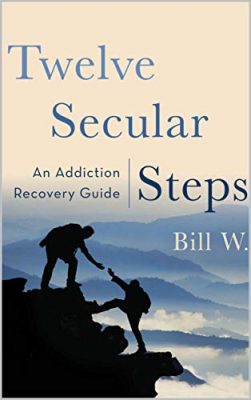
  • TWELVE SECULAR STEPS: AN ADDICTION RECOVERY GUIDE by Bill W. – Twelve-Step Program, Addiction/Recovery, Self-Help

    TWELVE SECULAR STEPS: AN ADDICTION RECOVERY GUIDE by Bill W. – Twelve-Step Program, Addiction/Recovery, Self-Help

    If you’re familiar with Alcoholics Anonymous, then you’ve heard the phrase, “One day at a time,” “Keep it simple,” and “This too shall pass” – slogans designed to help the alcoholic resist the urge to drink. Borrowing another popular AA slogan, “Take what you need and leave the rest,” alcoholic Bill W. (not the co-founder of AA) lays out his version of the AA steps in Twelve Secular Steps: An Addiction Recovery Guide.

    A biologist with a Ph.D. and 20 years in research and education, Bill W. knew he needed help with his addictions. He followed the AA program but was uncomfortable with the “God” language, so he created his own path, rejiggering the steps as a secular version shifting the focus from a “Higher Power” to himself. In Chapter 1, he explains his critical moment: “I froze when I looked into the mirror, for I didn’t recognize the face looking back. The veil of denial was lifted, and I saw clearly what I had become: a pathetic addict, slowly killing myself day by day. I realized that the problem, truly, was ME.”

    Unfortunately, some folks who enter “the rooms” of AA or other 12-Step recovery programs are turned off by the spiritual connection required. In this thought-provoking and well-designed guide, Bill W. tries to show that by altering the faith-based language of the traditional AA steps, there is incredible value for anyone wanting to get a grip on their addiction. The latter part of the book is devoted to the design and implementation of such a plan, getting the addict or alcoholic to build 90 days of sobriety.

    Twelve-Step recovery was introduced in 1939 when Bill Wilson published a primary text Alcoholics Anonymous, often called “The Big Book.” Of course, detractors have argued that the secular version is not considered the AA program, but Bill W. (author of this book) knew the value of the work as he was surrounded by alcoholics and addicts who desired a non-religious version or pre-existing relationship with God.

    Drawing from his science and medical background too, Bill W. devotes an entire chapter to the Biology of Addiction, showing an illustration of how dopamine affects the brain and explaining how the brain’s limbic system and frontal cortex change significantly during an addiction spiral.

    The conversational tone peppered with personal anecdotes from the author’s life makes for an easy read. After reviewing the 90-day plan and how to work the traditional steps with a secular flair, this reviewer had hoped the author might supply a final word of encouragement. Instead, Twelve Secular Steps ends with a challenge, which when all is said and done, is appropriate.

    This book is intended for anyone uncomfortable with the religious aspect of AA’s fundamentals yet ready to take personal responsibility for their recovery. Bill W. assures his readers that the three ingredients to successful recovery are adhering to a “One day at a time” attitude, following the steps and leaning on a support network of family and friends.

    Twelve Secular Steps is an alternative path rooted in the individual rather than God, and has been helpful for some recovering addicts assembling a recovery toolbox. Friends and family members with a loved one suffering from addiction can also benefit greatly by learning how gut-wrenching yet wonderful the lifelong path of recovery can be.

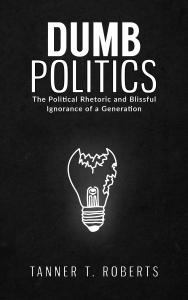
  • Dumb Politics: The Political Rhetoric and Blissful Ignorance of a Generation by Tanner T. Roberts

    Dumb Politics: The Political Rhetoric and Blissful Ignorance of a Generation by Tanner T. Roberts

    In these days of turmoil and bickering in Congress, far too little time is being spent on the job for which citizens elect their senators and representatives—working cooperatively to make sensible laws to guide our country toward reasonable progress. The Capitol Building itself seems to have become a battleground of clashing voices, with violence waiting on its flanks.

    What do Americans think of this? Some are angry, whether at one political party or the other. Others have given up, because of the absolute mess of politics in general, seeing it as nothing but rhetoric, with little concern for the future of the United States or its citizens. Many citizens become apathetic; feeling they have no power to change the situation, they choose to ignore it.

    In Dumb Politics: The Political Rhetoric and Blissful Ignorance of a Generation, Tanner T. Roberts focuses on the people he calls the “blissfully ignorant,” whom he says merely do not understand what is happening. These people—seemingly with little knowledge of our country’s history, the content and meaning of its Constitution, the functions of its government, the workings of its politics, or the practices of its business and financial institutions—respond emotionally to whatever someone, guided by ‘dumb politics’, tells them is the right or wrong way to run things, and then act and vote accordingly.

    The “blissfully ignorant” include people of all ages, races, religious beliefs, cultural backgrounds, and degrees of education. Roberts seeks to show his readers that large numbers among the younger generation dominate this group’s ranks today. From among those now being educated under the precepts of ‘dumb politics,’ he tells us, will emerge many of tomorrow’s leaders. He hopes to turn this situation around.

    Roberts defines ‘dumb politics’ as “the act of promoting policies and ideas that subsidize groups[sic] at the expense of others”; it becomes “hypocritical in equity and equality… uses emotional responses over rational analysis… and uses derogatory vernacular to promote class and social warfare.” In the first chapter, he illustrates his definition by applying it to the Women’s March 2018 founders’ official Twitter contending that the shutdown of “Backpage” classified ads was an “absolute crisis for sex workers.” He points to their apparent ignorance that “some [Backpage] ads included minors as young as 14 and women forced into sex trafficking,” labels their action as “the epitome of what I call ‘dumb politics,’” and pointedly remarks that “recognizing the irony of this situation requires cognitive thinking.” He names many Democrats and liberals as exemplifiers of dumb politics, but also acknowledges that its practice is far from absent among Republicans.

    A primary focus of the book is the comparative examination of the principles of individualism and collectivism. Noting how these reflect conservative vs. liberal ideologies; Roberts then points out that dumb politics prefers the collective approach, and its adherents seek to assimilate groups willing to follow a collective norm.

    Chapters 2-6 examine how the precepts of dumb politics turn up in the practices of Dumb Name Calling (e.g., fascists), Dumb Immigration (loose borders), Dumb Economics (tax strategies), Dumb Education (ideology imposition), and Dumb Culture (media tactics), and spell out the dangers of these practices for our future well-being.

    Roberts is passionate about his subject, which may leave some readers with information overload. Dumb Politics will undoubtedly attract conservatives, and it offers considerable food for thought for liberals with an open mind who might like to (re)consider their understanding of what is tearing our government, and our nation, apart.

  • THE BUBBLE: Everything I Learned as a Target of the Political, and Often Corrupt, World of Youth Sports by Maya Castro – NonFiction, Youth Sports, Soccer

    THE BUBBLE: Everything I Learned as a Target of the Political, and Often Corrupt, World of Youth Sports by Maya Castro – NonFiction, Youth Sports, Soccer

    Maya Castro, the daughter of a Puerto Rican father and Anglo mother, mixes memoir and personal essay styles in a passionate narrative describing her experiences as a minority soccer player on an elite, mostly white, high-school soccer team.

    Castro joined her middle-school soccer team in seventh grade, in order to avoid dodgeball in regular PE. She soon finds playing soccer better than “roller-coaster rides, a sugar-rush, or a present on Christmas day.” From that innocuous beginning, playing the game becomes her passion, and by the end of middle school, she develops advanced skills in the sport.

    At the end of eighth grade, Maya opts to transfer to a high school in a different part of town which has a highly-rated soccer program, where she hopes to learn more about the sport and further improve her skills. That decision leads to personal growth as an athlete but also results in a painful, profound loss of innocence relative to the roles and motives of adults associated with this program dominated by school politics, “entitled” students, and hints of racism.

    Castro cites detailed descriptions of events and her perceptions. These often engender reader empathy and raise reader awareness of the emotional fragility of early adolescence. They also suggest that a “wink and a nod” are still alive and well in many areas of competitive team sports.

    This story works well and carries with it a social statement. The voice is strong and unique, often written in vernacular. It reveals interesting aspects of the author’s personality—passion, humor, and a well-defined sense of right and wrong–someone the reader would like to know, and someone we will want to hear from again.

    Maya relates her experiences to those of other athletes whose stories have recently been “front page” news. She provides a strong indictment of individuals who “… overlook misconduct (for their own personal gain) rather than correct it.”

    Her concluding words will resonate with many parents, coaches, and fans. “The sooner the ‘grown-ups’ on the sidelines understand that to overlook corruption, in all of its stages of severity is to enable it, the safer and more meaningful the youth athletic environment will be.”

    The Bubble:  Everything I Learned as a Target of the Political, and Often Corrupt, World of Youth Sports by Maya Castro is a strong statement, reflective of one young woman’s experience in youth sports, a treatise that coaches, parents, and young players will do well to note. Recommended.


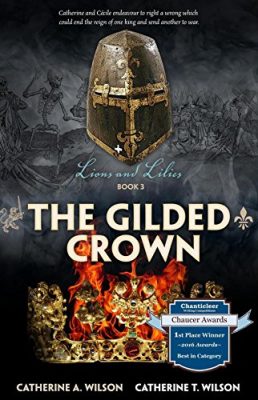
  • THE GILDED CROWN – Book 3, Lions and Lilies Saga by Catherine T. Wilson and Catherine A. Wilson – Medieval Europe, Historical Fiction, Romance

    THE GILDED CROWN – Book 3, Lions and Lilies Saga by Catherine T. Wilson and Catherine A. Wilson – Medieval Europe, Historical Fiction, Romance

    Cécile d’Armagnac and Catherine Pembroke first found each other through letters. The sisters then battled complications while on the run— Cécile, pregnant with a baby from Edward, the Black Prince, a relationship consummated to save her sister, fled with Gillet de Bellegarde, a disgraced knight she grew to love. Meanwhile, Catherine fell for the ever-shy Lord Simon Marshall of Wexford, and together, they managed to escape the Earl of Salisbury and his deadly schemes.

    Now, in The Gilded Crown, both sisters are happily married to their respective suitors. The mission that Gillet was presented in The Order of the Lily must now come to fruition while he resides in an English-occupied France. Meanwhile, Cécile strives to ensure the world, especially a mysterious woman named Adéle, does not find out baby Jean Petit is actually the rightful heir of Edward. Catherine, meanwhile, in Edinburgh after the safe return of Lady Scotland, is still fostering baby Gabriel, the son of her former maid, Anaïs. However, Catherine discovers a surprise of her own: she’s pregnant with Simon’s child.

    Like the other books in the series, the two sisters and their journeys, though taken separately, intertwine in unexpected ways. The Duc Jean de Berri, Cécile’s former suitor, hopes to convince Gillet to entice the Albrets of Bordeaux back to a French throne. Unfortunately, he also assaults Cécile as soon as Gillet leaves. Cécile’s misfortune continues on the way to Bordeaux–she nearly loses her cousin Armand-Amanieu d’Albret to the Black Plague, is captured by no other than the mysterious Adéle, who in turn, kidnaps Jean Petit and takes him to Scotland. In Scotland, meanwhile, Catherine has gotten to know Lady Agnes Dunbar (also known as Black Agnes) and discovers they share a common enemy. The question is whether this foe can be stopped—and if Jean Petit can be kept from danger.

    Catherine and Cécile are forced to further develop the maturity they sharpened in the previous books—but this time, with unexpected losses. Their paths remain uncertain, and it’s unclear where the next book in the series, The Traitor’s Noose, will take them.

    The authors are very skilled at weaving in authentic historical texture to an engaging plot with a lot of unexpected twists. The historical realities, including the treatment of women, like in the previous installments, is very brutal—particularly Cécile’s assault and capture. These parts of the plot can, at times, weigh the story down; however, they also add a visceral element of suspense. The book is not without its light-hearted moments either, particularly in the playful banter between brothers Roderick and Simon, and the very Scottish maid, dubbed, ‘English Mary.’ Readers will also delight in seeing pet antics between Cécile’s cats and an unprepared papillon—indicating that the authors’ authenticity stretches beyond historical accuracy.

    This series is suited to a historical fiction audience looking for an authentic dip into Medieval European life. However, to get the full impact of the overall story arc, readers will do well to start with the first two books in the series before getting their hands on this one.

  • INFANTS OF THE BRUSH – A Chimney Sweep’s Story by A.M. Watson – Historical Fiction, Chimney Sweep/Child Labor, Georgian Era

    INFANTS OF THE BRUSH – A Chimney Sweep’s Story by A.M. Watson – Historical Fiction, Chimney Sweep/Child Labor, Georgian Era

    A little boy is sold into an apprenticeship as a chimney sweep in eighteenth-century London, and soon learns the horrors of that profession.

    Six-year-old Egan lost his father from an accident at sea, and now, may lose his little sister from illness. The only way his penniless mother can save her daughter is to sell Egan into an apprenticeship in order to purchase medicine. As a small boy, he will make an ideal “broomer;” a businessman named Armory gladly takes Egan into the fold. Under Armory’s absolute dictatorship he will sleep with other wretched boys on soot sacks, eat gruel, get bloody beatings for the slightest infraction, and risk his life almost daily.

    One small comfort is an older boy named Pitt who empathizes with the new boy’s homesickness and instructs him, strictly but not unkindly, in the tricks of the trade. The lads find ways to cheat Armory when possible, striving to save up money to buy themselves out of his domination. But the dangers are real and terrifying. Broomers work inside chimneys and on rooftops, sometimes naked to make themselves even smaller in order to fit inside flues as confining as nine by nine inches. Many a boy, Egan learns, has been burned to death or horribly disfigured, crippled for life or asphyxiated inhaling poisonous gasses.

    The only protection the boys receive is a periodic bath with brushes and brine to “toughen” their skin. When Egan finds a valuable piece of jewelry, he believes he has a way out. But to make it happen he must deal with a larcenous silversmith, and in the end, finds himself dependent on the greedy Armory for assistance.

    Debut novelist Watson was drawn to compose this gripping tale when she studied a 1722 legal case – Armory v. Delamirie – on which she has based Infants of the Brush. She felt compelled to examine the conditions endured by chimney sweeps, most of them children, in that era; her fictional hero Egan and his cohort emerged from that research. She depicts the London street scene with an ear for the dialect and an eye for the unsavory aspects that made life for all poor people at the time depressing and disastrous. An occasional visit by the sweeps to a grand home shows the contrast; Watson writes of an instance when a rich boy sees Egan and runs screaming from the room. There are some kind faces, though, such as the church folk Egan encounters one lonely Christmas and a sympathetic sea captain who is able to change his circumstances for the better.

    Watson, a teacher and an attorney, has clearly made a serious investigation into the general conditions of London in 1720, regulations regarding chimney cleaning, monetary values and other vital elements needed to construct this vibrant story. The characters of Egan, Pitt, Armory, and others are skillfully drawn, and the harrowing images of young children forced into brutal, life-threatening labor are unforgettable.

    Infants of the Brush offers a disturbing but elucidating glimpse into a time and place when, even in a civilized country, poor children’s lives were shockingly undervalued, and their labor exploited. In the author’s skillful hands, though, there is a welcome ray of hope shining through to the conclusion of this haunting saga.


  • WATCH OVER ME (Code Talker Chronicles, Book 2) by Eileen Charbonneau – Historical Romance, Espionage, Native American, WWII, Thriller/Mystery

    WATCH OVER ME (Code Talker Chronicles, Book 2) by Eileen Charbonneau – Historical Romance, Espionage, Native American, WWII, Thriller/Mystery

    Twenty-four-year-old Kitty Charente is trying to put her life back together. Working as a switchboard operator for a perfumer based in New York City, Kitty wants to put the death of her husband, Phillipe, and the miscarriage of her baby behind her and move forward. But when her boss, Jack, gives her the task of wining and dining an out-of-town salesman, Luke Kayenta, Kitty’s world is turned upside down overnight.

    Luke isn’t like Jack’s usual salesmen. In fact, Kitty’s certain he’s much more when she secretly watches him perform a strange ceremony on the eighty-sixth floor of the Empire State Building.

    Unbeknownst to Kitty, Luke has come for her. Charged with delivering a deathbed letter from Philippe, Luke is drawn to more than Kitty’s grief. Beyond his promise to deliver the smuggled letter, the stories Philippe shared of his beautiful dark-haired wife helped Luke escape his imprisonment in Spain and brought him halfway around the world to find her. Now that he’s found her, he doesn’t want to let her go, despite the danger surrounding him.  Kitty follows his reckless path through the twisting, wartime streets of New York, but will their newfound love be able to protect them from Luke’s pursuers?

    The rebirth of Luke’s tormented soul is the real jewel in this novel, book two of the Code Talker Chronicles. Luke isn’t a Spaniard as Kitty’s been told but a Navajo code talker, and he’s keeping more secrets than the forbidden letter. Tortured in Spain at the hands of Nazis, Luke has yet to truly escape his persecutors and have his mind released to live–and love–again.

    Luke yearns for the simple life of a rancher back in his home state of Arizona. His invaluable work in the intelligence service has cost him more than a pound of flesh, but his chance at love and life with Kitty, his continual inspiration, is built upon a fragile ledge of espionage and the memories of her heroic husband, and now the woman he loves is charged with the task of testing whether his very mind has been compromised.

    In a world of half-truths, crooked policemen, spies, and impersonators, the real question is who to trust. Watch Over Me shows a lively caricature of 1940s New York spinning wildly in the madness of espionage, where secrets and sacrifices threaten the bond of love and the hope of family.

    Watch Over Me by Eileen Charbonneau won First Place in the 2017 CHATELAINE Awards.

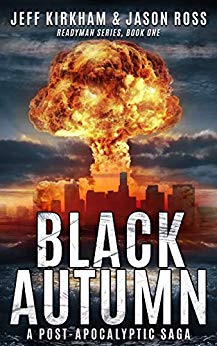
  • BLACK AUTUMN by Jeff Kirkham and Jason Ross – Post Apocalyptic America, Thriller/Suspense, Military

    BLACK AUTUMN by Jeff Kirkham and Jason Ross – Post Apocalyptic America, Thriller/Suspense, Military

    Imagine what would happen if a handful of unrelated mistakes, errors in communications, misguided actions, and natural disasters sparked a worldwide tragedy, an apocalypse… Would you be ready to handle the fallout?

    Here’s the story of a rogue nuke in the wrong hands explosively starting a Black Autumn, as authored by Jeff Kirkham and Jason Ross. Like other post-apocalyptic literature, it’s the people who don’t survive the initial explosion who may be the lucky ones. But those who follow the Ross/Kirkham way of life have an edge. A most vital edge in surviving and thriving in this new world order.

    Jason Ross and Jeff Kirkham cast themselves as characters in the book: Jeff, a highly- experienced American Special Forces operative, and Jason Ross as the well-prepared owner of the expansive Ross Homestead property. In the novel, they organize a group of families who have spent years preparing for the possibility of a tragic event requiring sustained emergency survival. Some members of the group view their membership in the group as a social activity, with the possibility of a cataclysmic event as improbable. Others, however, understand such an event is not just plausible but probable, and any chance of survival will fall to those who are well prepared.

    This book begins with separate, spontaneous and unrelated, terror-filled actions on the world scene. These actions have unintended and catastrophic consequences. These families must now work together in earnest, in primitive circumstances, to forge any sort of a future.

    But like most post-apocalyptic novels, there are the “haves” and “have-nots.” Masses of unprepared and desperate people on the outside threaten to steal Homestead’s provisions, and they will do anything to get their hands on even a morsel. Likewise, the local governments beg Ross and Kirkham to enter into negotiations for supplies under the threat of moving in and taking what they want.

    Tactical planning and confrontations are detailed, fascinating, and deadly. But this book goes beyond the maneuvers and weaponry, exposing the fragility of human emotions and endurance. Complex loyalties and relationships are tested, with thought-provoking debates over the most important questions surrounding life and death.

    In case you think this is a survivalist guide disguised as a novel, think again. From the first page to the last, readers will step into a world that is currently not their own, but perhaps, may be one fateful day.

    These authors live what they write. Jeff Kirkham served nearly three decades as a Green Beret and is the proverbial brains behind ReadyMan’s survival tools and products. Co-author Jason Ross has dedicated twenty years to mastering preparedness in raising sustainable crops, composting, shooting, small squad tactics, solar power, and animal husbandry. In other words, these guys know from what they speak.

    Black Autumn could be a revelation of what is to come. The catalysts of the novel are based on scenarios much of our population may scoff at, but others, foresee as a certainty. Whatever side of the fence you fall on, Black Autumn is a chilling portrayal of humankind’s possible future, and one that readers will not easily be able to put down without asking, “Am I ready?”