Tag: 5 Star Book Review

  • WHAT THEY DON’T KNOW by K. V. Scruggs – Medical Thriller, Medical Mystery, Conspiracy Thrillers

    WHAT THEY DON’T KNOW by K. V. Scruggs – Medical Thriller, Medical Mystery, Conspiracy Thrillers

    Global Thriller Blue and gold badgeAuthor K. V. Scruggs proves that What They Don’t Know can kill. When left unchecked, public policy propelled by the best of intentions is still subject to the greed and corruption of those with the power to implement it. Scruggs takes us on a frightening journey where pervasive technology paired with behind-the-scenes corruption can hide grave results from the trusting, and now vulnerable, citizenry.

    Cheyenne Rose lives a glamorous life as a Talk Show Host who sensationalizes the stories of the guests interviewed on her program titled, ‘The Stories That Matter.’  The unexpected adventures of one family on her show irrevocably touch Cheyenne’s heart. She has no idea that her own life is about to be inextricably tied to them and their troubles.

    This young family’s infectious innocence and zest for life spread through Cheyenne and her audience. They attribute their blessings to the new government health care system that has implemented complete access to health care for all – including a life-saving surgery for one of their sons. Cheyenne reports that streamlined efficiencies built into this medical care solution are celebrated by patients, doctors, nurses, and practitioners. It almost seems too good to be true.

    In order to have the peace of mind that comes with such effective health care, small intrusions into individual privacy, hardly noticeable, are necessary. For example, the technology tracking your vital medical signs can dispense pharmaceuticals you may need. In addition, this miracle tech monitors an individual’s activities to ensure they get enough sleep, exercise, and, well, maybe also keeps track of other personal information.

    When an ugly surprise lay ahead for the guest family on Cheyenne’s show, events prompt her to ask questions that government officials don’t want to answer. But how can she stay one step ahead of a political adversary who knows her perhaps better than she knows herself? Now Cheyenne is plunged into the midst of a dangerous struggle that threatens the lives of those close to her, and ultimately her own.

    The author, a physician by day, threads her mastery of medical knowledge throughout this thrilling novel, making it terrifyingly believable. Her writing is suspenseful and exciting, with dynamic characters who heighten the fast-paced mystery.  K.V. Scruggs enjoys writing about thought-provoking medical issues, and the outcome is nothing short of a heart-pounding thriller.

    This dramatic tale explores what can be hidden within the deep, dark crevices of getting what you want.

    What They Don’t Know won 1st Place in the 2017 CIBAs in Global Thrillers Awards!



  • BECOMING JONIKA by PJ Devlin – Coming of Age, Multiculturalism, Historical Fiction/Young Adult

    BECOMING JONIKA by PJ Devlin – Coming of Age, Multiculturalism, Historical Fiction/Young Adult

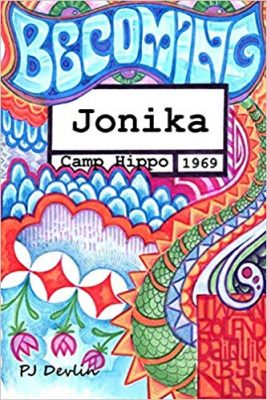
    Immersed in the nostalgia of classic summer camp experiences, Becoming Jonika is the coming-of-age story of Joni Byrnes, who, after finding herself on the wrong side of the law, receives a second chance at St. Augustine of Hippo’s summer camp in the trouble-ridden summer of 1969.


    Set against the backdrop of the Vietnam War and the aftermath of Martin Luther King Jr.’s assassination, Joni Byrnes is just trying to live a normal teenage life. At the cusp of high school, Joni’s parents send her to Redwood Academy, where they believe Joni will become their ideal daughter. In reality, Joni is quickly labeled by her elite classmates as a loser and an outcast, and the only place Joni feels like herself is in a swimming pool.

    One day after practice, she meets Ishmael, who used to be on her neighborhood swim team and is now recently returned home after being discharged from the military. Ishmael treats Joni like she is special, and because of her insecurities and desire to be loved and accepted by others, she falls head-over-heels for him and follows him down a dangerous path that lands her in a courtroom at the mercy of a judge.

    Instead of sending her to Juvie, the judge gives Joni the opportunity to make amends. She becomes the swimming instructor at a camp for young African-American children. Becoming an outcast yet again as the only white counselor, Joni learns about of her campers’ and co-counselors’ home lives. She sees their courage and perseverance and tries to move on from her own past; becoming her own person in the face of expanding generational and racial divides.

    The hand-drawn look of the cover and the journal-like appearance of the interior create a physical representation of Joni’s report to the judge, pulling readers in and immersing them into the story. The descriptions of the inescapable humidity of summer, the coolness of pool water, and the sweetness of bug juice all feel within reach. In addition to the rich descriptions of Joni’s surroundings, PJ Devlin achieves authentic characterization in the development of Joni and those she encounters throughout the novel.

    Joni’s feeling of being an outcast and a loser hits her upon arrival to Camp St. Augustine of Hippo, where she is different in every way from the people around her. In a heart-to-heart with Joni, one of the counselors’ is explicit about what being at camp means, “For us, that’s freedom. For you, camp’s a prison. That’s the difference.”

    As the summer progresses, Joni is given the name Jonika and finds herself surrounded by people who like her despite their differences. Jonika describes these feelings in her report, “We were different on the outside but not on the inside.”  By summer’s end, she’s uncertain about returning to her old life, but takes courage from the powerful lessons she learned at summer camp. She leaves Joni’s problems and insecurities in the past and instead becomes the person she chooses to be — Jonika.

    Becoming Jonika by PJ Devlin won 1st Place in the 2017 Dante Rossetti Awards for Young Adult Fiction.


  • WARSHIP POSEIDON (The Adventures of Jonathan Moore, Book 1) by Peter Greene – Coming of Age, Maritime War, Treasure Hunt – Action / Adventure

    WARSHIP POSEIDON (The Adventures of Jonathan Moore, Book 1) by Peter Greene – Coming of Age, Maritime War, Treasure Hunt – Action / Adventure

    Author Peter Greene often read to his two children at bedtime. But one night, the bookshelf held nothing that enticed them. So, as he explains in the Acknowledgements to this book, he decided to tell them a story. The first words that came out of his mouth were: “Twelve-year-old Jonathan Moore lived in a three-sided wooden box at the end of a dark and filthy alley.” Thus was born the title character of The Adventures of Jonathan Moore, who Greene decided should be “as normal and as human as any real child,” whether in the nineteenth or the twenty-first century.

    In England of the early 1800s, help for orphans was the duty of family or church. When twelve-year-old Jonathan Moore’s mother dies, and he hears nothing from his father, a Navy captain, he shuns appealing to either family or church. Thus, he finds himself homeless on the streets of London. Fortunately, he makes friends with a boy of similar age, Irish-born Sean Flagon. Together, the boys manage to sweep enough London chimneys to keep them from starving, until one rainy day when first Sean and then Jonathan are snatched by a group of men and soon find themselves in a cage strapped to a cart headed for the Chatham docks. They’ve been “pressed” into service on one of His Majesty’s warships, the Poseidon, which they soon discover isn’t such a bad lot at all.

    The two boys look in awe at the rows of cannon (cannon being both singular and plural in England). And when shown to the closet of a room that is to be their new quarters, they realize that, though tiny, it’s dry, and there are rope hammocks to sleep in, wrapped in blankets. That certainly beats a leaky wooden box in an alley, with a piece of board for a cover. Better yet, they’re soon sitting at tables on the main deck, where hot fish stew is served for dinner (as it is most days, they soon learn), accompanied by hardtack or softtack (hard bread or rolls). The next morning Jonathan awakes to see huge white sails unfurled in the wind. The Poseidon is underway.

    Much adventure and not a little danger await them, from one side of the North Atlantic to the other. After all, England is at war against France, and Napoleon Bonaparte has many fine French warships. One of them is the Danielle, which the Poseidon and her crew encounter more than as they make way from Lisbon to the Bahamas.

    The aim of both these enemy warships is to search for an ancient Spanish treasure chest, which an equally ancient map indicates is buried on Skull Eye Island. On peaceful days at sea, there are lessons to be learned about being a seaman—taught aboard ship by experienced sailors, junior and senior officers, and even Captain Walker. The boys’ lessons also include fencing and swordsmanship, which stand in good stead when they must battle the French crew aboard the Danielle.

    This thrilling tale of high adventure is not without an element of poignancy, however. Jonathan senses that several on board the Poseidon knew or know about his father, Captain Nathaniel Moore, who the boy had assumed was dead. They seemed to recognize him by name, and they treat him with more caring and respect than the other young boys, including his friend Sean. Yet, they consistently change the subject when he tries to question them.

    Exciting and fast-moving as Warship Poseidon is, the tale is rendered even better by its author’s skill as a storyteller. Greene has thoroughly researched this era—including its shipbuilding, the administrative management of both English and French Navy vessels, the design of the warships themselves, and how their crews lived aboard them and battled from them. The story is presented in infinite detail, painted in vivid color, and written in a literary style. Much care has gone into the characters’ speech—emulating the language of the time while ensuring that it can be understood by its twenty-first-century readers, whether they be young or old—since this tale is one to be read with pleasure by all generations.

    To Peter Greene we would say—in British parlance both then and now—”Huzzah! Huzzah! Huzzah!” So, have great fun reading Warship Poseidon and then proceed without delay to Books Two and Three: Castle of Fire and Paladin’s War. But don’t stop there! Mr. Greene declares there may be a prequel in the works as well as another type of series beginning!


  • WISSAHICKON SOULS: A Wissahickon Creek Story (Vol. 1) by PJ Devlin – U.S. Historical Fiction, African American Fiction, African American Romance

    WISSAHICKON SOULS: A Wissahickon Creek Story (Vol. 1) by PJ Devlin – U.S. Historical Fiction, African American Fiction, African American Romance

    Claire Penniman, a free black born in the Germantown section of Philadelphia in the early 1800s, is only six years old when she’s indentured to Raymond and Anna Williams, white landowners who have known her family for years. Elizabeth and Moses, Claire’s parents, have already indentured their older son, Samuel, to the Williams in hopes that both children will learn reading, writing, and arithmetic as well as valuable life skills in exchange for working the land and tending the animals.

    Wissahickon Farm quickly becomes part of Claire. She immediately befriends five-year-old Lawrence, the youngest Williams son. As Claire and Lawrence grow older, so does their bond. Anna agonizes over her son’s attachment to the black girl, and her relationship with Claire suffers. Near the end of her twelve-year indenture, Claire and Lawrence’s love leads to pregnancy. The teenagers marry and run away to Haiti, a newly independent country of liberated slaves, to live together in peace as man and wife. Over time, however, hardship and disaster chip away at their love, and Lawrence struggles to find his place in a country where he’s called, the blanc.

    Set in the early 19th century when trains are new and steamboats rule, Wissahickon Souls spans thirty years in the life of Claire Penniman. She grows from an impetuous, daring little girl to a strong, independent woman. Claire’s journey, both physically and mentally, showcases the trials of African Americans in the 1800s. Though Claire’s family has a long history of living in freedom in a Northern city, they are far from free. Prejudice lurks around every bend in Germantown and Philadelphia, and the Penniman family keeps a dangerous secret – the family “business.”

    For decades, the Penniman family has helped runaway slaves find safe havens by delivering hundreds of “packages” farther north, giving permanent refuge to some of the runaways they save. Through the fictional Penniman family, Devlin shows the commitment and courage of people who risked much in the cause of freedom.

    An important motif of Wissahickon Souls revolves around sewing. Claire’s sewing skills become the tie that binds and the fix for broken things. She learns her craft from her mother and grandmother, just as she learns to help slaves to freedom from her father. Claire not only sews clothing to support her family, but she’s also adept at stitching together wounded flesh. Respect for her skill leads to repeated calls for help. Her excellent hand proves racial division can be transcended.

    Lawrence and Claire’s love story is a tragedy reminiscent of Romeo and Juliet. The innocence of their first love becomes victim to profoundly rooted racism, including the subtle but soul-sapping racism of Lawrence’s righteous mother. From vicious white men to a raging flash flood, Lawrence repeatedly saves Claire but is unable to stand beside her in public.

    In childhood, Claire’s spirit and friendship blind Lawrence to their racial differences. Her pregnancy forces him to confess their love to his parents, who refuse to accept the relationship. After marrying and traveling to Haiti, the teenage couple faces unimaginable daily hardships – made worse by Haitians acceptance of Claire while mocking Lawrence as the blanc.

    Lawrence’s increasing alienation drives him to drink and gamble, and he loses Claire’s respect. During ten years of exile, they and their two children struggle to find their place, and their love falters. The death of Lawrence’s father, Raymond, provides the impetus to return to Philadelphia and separate lives – Lawrence to Wissahickon Farm; Claire and the children to her family home.

    Though this is Claire’s story, Lawrence’s mother, Anna, plays a crucial role. Despite her recognition of Claire’s intelligence and savvy, Anna’s world is ruled by the impregnable boundaries of cultural presumptions about the African race. The theme of Wissahickon Souls plays out fully through Anna’s soul searching and her ultimate decision.

    Even in graphic scenes depicting racism’s horror, Devlin’s writing is beautiful and professional. The historical setting is authentic. Readers will walk alongside Claire on her sprawling journey as a freeborn black in the early 19th century when slavery was the rule of the land.


  • The TIME TRAVELER PROFESSOR, Book One: SILENT MERIDIAN by Elizabeth Crowens – Steampunk, Sherlockian, Time Travel

    The TIME TRAVELER PROFESSOR, Book One: SILENT MERIDIAN by Elizabeth Crowens – Steampunk, Sherlockian, Time Travel

    A budding concert pianist delves into the realms of spiritism, sexuality, and scary foreshadowing through his time travel adventures in Elizabeth Crowens’ steampunk novel, Silent Meridian.

    John Patrick Scott, a conservatory student, meets with Arthur Conan Doyle in Edinburgh, Scotland under unusual circumstances because of an elusive and mysterious red book. Arthur, lacking inspiration and tired of his Holmes character, covertly employs John as a ghostwriter. The two also indulge in the transmigration of souls and time travel. The latter topic is of high interest to the young aspiring musician since he has already accrued a handful of time-travel experiences via a mechanism of his creation. Although Arthur introduces John to nightly practices of communicating telepathically, John doesn’t include the beloved author in his time-traveling adventures until years later.

    John’s time-traveling skills sharpen to the point that he no longer needs his device and uses his grandfather’s timepiece instead. He becomes particularly fixed on exploring his past, especially his school days at the Underground University; he includes Wendell Mackenzie, his old schoolmate, on his adventures—some of which John escapes just in the nick of time. Over time, John finds it difficult to distinguish between time travel and dreams and seeks the help of Sigmund Freud and Carl Jung. His adventures take a dark turn when they predict an impending war.

    Sherlock Holmes’ enthusiast, Elizabeth Crowens, spins a wild tale riddled with glimpses of stories and themes from the early 20th century. Crowens’ quirky narrative, which covers sixteen years, could easily befit behind-the-scenes to John’s ghostwriting connections to Doyle’s published works: The Man with the Twisted Lip, The Adventure of Charles Augustus Milverton, and The Adventure of the Greek Interpreter, to name a few.

    Scenes regularly flip from John’s music studies and his time-travel quests, and are heavily punctuated with references to prominent historical figures and their thematic connections of the era, such as H.G. Wells, J.M. Barrie, Jules Verne (fantasy and sci-fi); Sigmund Freud, Carl Jung (psychology); and Aleister Crowley, Theodore Reuss (metaphysical). While sexual identity plays a close second to the last parenthesized theme scenes, providing only innuendos. John continuously processes his particular leanings, weighing his feelings as a woman in some of his time-travel ventures and amid affairs against Doyle’s and Wells’ free-love beliefs.

    Crowens balances nonfiction with fiction by incorporating memorable characters, such as Whit, John’s annoying tutor, and Finn (who John dubs Sherlock), John’s “Jiminy Cricket” guide who is only visible to John and comes and goes as he pleases. Sure to be a new favorite for Sherlock Holmes’ aficionados, Silent Meridian’s cliff-hanging closure is a perfect segue to the second book in Crowens’ The Time Traveler Professor series, A Pocketful of Lodestones.


  • PINKY and the MAGICAL SECRET HE KEPT INSIDE by Kasey J. Claytor – Early Readers, Children’s Books, Fantasy & Magic

    PINKY and the MAGICAL SECRET HE KEPT INSIDE by Kasey J. Claytor – Early Readers, Children’s Books, Fantasy & Magic

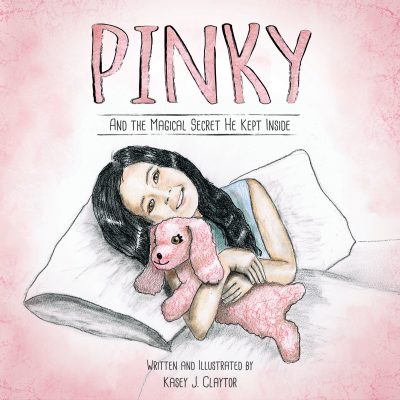
    *Reviewer’s note:  I read the book to a little girl who, upon seeing the photo, exclaimed, “The real Pinky!”  Indeed, this extraordinary story is derived from the true story of when the author was a small child. When she fell ill, her grandmother brought her a furry pink, stuffed puppy, and a story was born.

    Pinky, a stuffed toy puppy, made of pink corduroy, is given to a little girl, Francesca, after a brief visit to the hospital. She loves her stuffed friend, and the feeling is mutual. Pinky does all he can to show Francesca this after her other stuffed animals tell him of a secret award ceremony at which a prize will be given to the toy that is most loved by a child.

    One night, while Francesca is asleep, Pinky and the other toys journey to the ceremony where he is elated to win the most coveted award. A medal is sewn inside his chest in the spot where humans carry their hearts. Francesca and Pinky grow old together, and one day she decides to clean and repair the stuffed dog, inside and out. In doing so, she discovers the secret medal that has been inside her stuffed friend for decades. The discovery prompts her to recall a dream she had as a little girl in which Pinky won a medal for loving her so much. The final scene is that of an elderly Francesca snuggling with her favorite childhood toy. How sweet, then, to turn the page and view a photo of the author with a stuffed pink dog.

    Claytor’s prose is comprised of brief declarative sentences, appropriate for young children. The tale underscores the security and affection stuffed animals offer little ones, but also invites them to consider the reverse. Told from Pinky’s point of view, the stuffed dog learns that all toys “. . . are loved, but what is most important is your loving of humans.” He strives to show that affection by snuggling with Francesca, watching her as she dances around her room, and always being where she can see him.

    The illustrations are beautiful, imbued with warmth and affection. Stuffed animals smile at the reader, the backgrounds of the pages splashed in dreamy, pastel shades of pink, aqua, and yellow. Pinky looks especially huggable and, if the author chose, would be an excellent model for a stuffed animal marketed with the book. Of course, it would have to have a secret compartment that would hold a tiny medal, one that could be held by a little hand after each reading of this delightful book.


  • BRAINWASHED: Crime Travelers Spy School Mystery & International Adventure Series, Book 1 by Paul Aertker – Children’s International Spy Thriller, Children’s Books, Children’s Mystery

    BRAINWASHED: Crime Travelers Spy School Mystery & International Adventure Series, Book 1 by Paul Aertker – Children’s International Spy Thriller, Children’s Books, Children’s Mystery

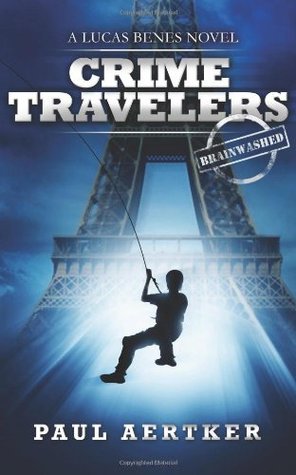
    Gertrude Warner Grand Prize Award for BrainwashedIn this first installment from the Crime Travelers series, an adventurous reading line-up that takes middle-grade readers around the globe, Paul Aertker’s Brainwashed delivers a story with exciting espionage and action-packed thrills.

    A group of young teens is caught up in the nefarious dealings of a tyrannical woman and her powerful child kidnapping organization. With tenacity, courage, and determination, these members of the aptly named “New Resistance” use their backgrounds, knowledge, and skill sets to counter their powerful foe’s evil offenses.

    At the center of the story is the likable, but often struggling thirteen-year-old Lucas Benes. As a young toddler, he was the sole survivor of a ferry boat explosion that killed his adoptive mother. Under his father’s guidance, Lucas has grown up at the Globe Hotel, an establishment that has evolved as a safe house for young people brought out of harm’s way from around the world. These individuals ultimately come together from various walks of life, gain skills and training to embark on missions to challenge global concerns.

    This latest high alert “Call to Legs” pits the group against the notorious Siba Gunerro, the icy, pink poodle-toting, a ruthless leader who heads the ironically named Good Company. She’s infamously known for her brainwashing and kidnapping tactics. Soon Lucas and his multi-cultural band of cohorts depart from their high-tech Las Vegas hotel base and travel in a private luxury aircraft to the City of Lights, Paris, determined to take on Gunerro and her motley crew of henchmen.

    With colorful refinement, Aertker delivers a multi-faceted ensemble of characters. In a mix that includes a surfer dude, a fashionista from India, and a Swiss Goth, among others, these are smart, multi-talented, multi-lingual personalities who, if were a t-shirt wearing group of crime fighters, the t-shirts might well read: “Grownups have messed up the world … it’s our job to make things right.”

    As a newcomer joining the group, Lucas appears a vulnerable yet relatable individual who worries about stuff like sibling rivalry, parental approval, and has to deal with general angst. Ultimately, this here’s a first-class coming-of-age story with Lucas demonstrating confidence and proving his heartfelt loyalties and a willingness to step up and break the rules to help those in need.

    Amidst the attention-grabbing likes of rooftop rappels, motorcycle chases, surprise abductions, rescues, a harrowing sacrilegious ceremony attempt at the time-honored landmark of Notre Dame cathedral and a wild bus ride, the nonstop action here moves the story steadily forward. Tension builds with this young group’s creative efforts to thwart the enemy and tackle each new deterrent in their path.

    Whether you’re a preteen intrigued by the heroic activities of a well-trained group of spy kids or an older armchair traveler who can appreciate the sights and sounds of a major European mecca rich in history and culture brought to life as an enticing backdrop for fun, smart, and engaging entertainment, Brainwashed truly hits the mark.

    Brainwashed: Crime Travelers Spy School Mystery & International Adventure Series, Book 1 by Paul Aertker won Grand Prize in the 2017 CIBAs – Gertrude Warner Awards for Middle-Grade Fiction.


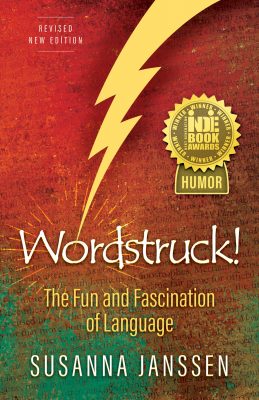
  • WORDSTRUCK! by Susanna Janssen – Pop Culture Encyclopedias, Language Humor, Phonetics & Phonics Reference

    WORDSTRUCK! by Susanna Janssen – Pop Culture Encyclopedias, Language Humor, Phonetics & Phonics Reference

    As Susanna Janssen notes in this eclectic and fabulously fun study of all things language-related, “The world of words is ever-changing, dynamic, and alive with the times as we constantly invent vocabulary to talk about new realities.” And she proves just that in this book that overflows with wit, wisdom, humor, and an infectious love of spoken and written words and phrases.

    Janssen warmly engages the reader to take an etymological adventure with her, one that has me listening for new words in conversations and scanning newspaper articles for recent additions to the English language. Her book is a potent reminder that language is not static, that at this very moment it’s evolving. Yes, it’s alive!

    Consider some of the words used in the second decade of the 21st Century:  Beatbox. Catfish. Frenemy. Geocache. Selfie-stick. Quinzhee (I confess, I had to look this one up). Could we have anticipated their advent? No, just as we can’t say with certainty what new words will enter our vocabulary with the next generation. Children will be asking Santa for gifts with names that currently elude us. The uncertainty, though, only underscores how wondrous language is as it chronicles and shapes life around the globe.

    Wordstruck! is brimming with research (check out the impressive list of sources consulted), anecdotes, charming and often hilarious footnotes that chart the author’s efforts to bring us this enthusiastic celebration of language and its evolution. For example, did you know that Homer used a total of 9,000 different words to write the Iliad and the Odyssey?  Shakespeare, centuries later, used 30,000 to write his plays, although part of the reason he was so much wordier than Homer is that the Bard birthed new words right and left and gave older words a new versatility. He did amazing things by simply adding “un” to the front of a noun. We may use words like “clean” and “unclean” without thinking today, but at one time, flipping the meaning of a word was both a novelty and an innovation.

    If you’re a grammar nerd like I am, you’ll love Janssen’s observations of people who “overcompensate” and use “I” when “me” is the correct pronoun. And is there a more beautiful definition of a preposition than “…just a handy little word that usually tells us the relationship between what precedes it and what follows it”? Words migrate with people; they morph when cultures bump up against each other via war (M’aidy! For “Aid Me” becomes Mayday!), religion (consider the Diet of Worms, eeeew!  Papal Bulls?!), and love (Do you prefer, “Will you be my valentine”? or “Will you be my little poopsie?”)  And why does the color yellow evoke different feelings in Germany than it does in the United States?  Yes, language is the vehicle for humans loving, fighting, worshipping, and feeling. Language is the thread that connects and weaves together every aspect of life.

    In the second half of the book, the author shares her story and how she first came to write the chapters as articles for a local paper. Her stint as a journalist followed a career as a professor of Spanish with a lifelong bent for all things related to the Romance languages. Her upbringing in a Catholic family of Dutch and Italian origins put her on a path to a lingual life. She would love her readers to share her joy, and she urges all to study a second language to reap countless benefits, including keeping a sharp mind as we age.

    There are just too many gems to fit into a single review of this book, and that is precisely why you must read Wordstruck! and experience its subtitle, The Fun and Fascination of Language, firsthand. Be ready to learn, to laugh, and to love language in all its complexity!


  • RAISING the BOTTOM: Making Mindful Choices in a Drinking Culture by Lisa Boucher – Alcoholism Recovery, Self-Help, Parenting & Relationships

    RAISING the BOTTOM: Making Mindful Choices in a Drinking Culture by Lisa Boucher – Alcoholism Recovery, Self-Help, Parenting & Relationships

    A mother’s wish for her daughter brought this guidebook into being; in it, author Lisa Boucher recounts her struggles and conquest of alcoholism, with specific advice for women trapped in the clutches of the disease.

    Boucher provides ample autobiographical proof of her addiction. When growing up, her mother was “drowning in booze” and many childhood memories center on her mother wrecking the car, burning the supper, or just being nonfunctional. Her father reacted by acting the tyrant, using fear tactics in hopes that he could control his wife’s drinking. By the time she was twelve, Boucher was smoking, using pot, and drinking. Her first early marriage ended in divorce.

    Most alcoholics begin slowly, perhaps drinking only on weekends, using booze as a reward, imagining the warm glow that the drink can provide and gradually spreading weekends out to include the entire week. It took Boucher years, and a dedicated, disciplined adherence to the 12 Step program, to realize that she was better off without drinking.

    Ultimately, she says, alcoholics have a thinking problem – distortion, delusion, and denial constantly crowd in, and drinking suppresses those negative feelings. Her book focuses on women with alcohol addiction, and the first story in her collection of sobriety is perhaps the most poignant: her mother’s account of her years of alcoholism and road to recovery. After a rewarding phase of sobriety and dedication to helping others, her mother began to urge Boucher to chronicle her own experiences on the path up from the bottom.

    Boucher’s work provides direct advice delivered in an accessible manner by someone who has walked the walk to recovery and is well qualified to talk the talk. She understands, for example, that some people can control their drinking, but she offers many clues as to how that perception can also be a deception. She urges a realistic approach: to quit drinking; you have to prepare yourself for the possibility of “losing friends, maybe losing your marriage, maybe losing everything.” Thus far, she has enjoyed nearly 30 years of sobriety spent in a professional and personal quest to assist other women who are carrying the burden of alcoholism. Her journey has led her to present ten stories from other women like herself, whose lives are peppered with violence, arrests, loss of jobs, partners and self-esteem, who now can proudly announce a “sobriety date” and a recovered existence.

    Boucher examines the particular problems of women in the struggle against alcoholism, though her book would have realistic outreach for men also. She writes from hard experience that will be recognizable to anyone who has flirted with or entirely fallen for the false promise of the bottle. Her book can and should be read by women in the throes of the disease as well as those who seek to counsel and assist their sisters in need.


  • PERSUADING LUCY by Tammy Mannersly – Contemporary Romance, Australia, New Adult & Coming of Age Romance

    PERSUADING LUCY by Tammy Mannersly – Contemporary Romance, Australia, New Adult & Coming of Age Romance

    Lucy Spencer has everything, a successful career in advertising, good friends, and a quiet life. For fourteen years, she’s pushed aside her feelings for a childhood friend, Callum Hawthorne, and become a strong, independent woman, burying her hurt over his betrayal and creating her own life free of the drama of Cal’s womanizing ways–that is until he saunters back into her life.

    Callum Hawthorne only wants one thing, to reconnect with his former best friend, Lucy. Cal has done everything he can think of to worm his way back into his Lucy’s life even enlisting the help of one of their mutual friends, but he can’t get Lucy to agree to meet him. With no idea what he did to create the rift between them, Cal doesn’t know how to make amends, but he does know one thing for sure: His life will never be complete without Lucy.

    When his father’s first acquisition, a failing resort on the Gold Coast, is threatened, Cal hires Insight Marketing to help him save the crippled business. Lucy has no idea who the new, ultra-rich client is until she sees Callum. With no choice but to do the job she was hired to do, Lucy must find a way to put aside her old hurt and work with Cal, who hopes his high school crush can evolve into a grown-up relationship.

    Friendship is an endearing theme in this well-written, fast-paced novel. It exists in every form, long-time friends, new friends, the kind of friends who will help drown your sorrows in wine, and the kind who will literally and figuratively rescue you from yourself. Lucy’s friends often ride to her defense. From Madison’s refusal to divulge Lucy’s whereabouts to Mia and Steph showing up at her door, pizza and booze in hand. Lucy’s female friends make a strong nexus, but the entire premise is based upon the friendship of Lucy and Cal, a lasting friendship that holds both love and hate.

    Cal is the typical hot, rich protagonist (yes this is a familiar trope), but his friendship with Lucy sets him apart from the norm. He realizes quickly that he must win her back through that friendship. In order to win her, he must set aside the fiery passion he feels every time they are together and re-establish their friendship. He vows to gain her friendship, then her love, a love for which he’s pined most of his life. In fact, his surface philandering began as his way to preserve their friendship, fearing that admitting his feelings in high school would push her away.

    Lucy quickly realizes she can’t just give up on Cal’s friendship again. He was once her closest confidant and letting that go proved to be a huge mistake. Nearly every happy memory she has includes the delectable Cal, and her traitorous heart refuses to release him without trying to be what they once were (and maybe more). They both have to take a headlong plunge into something that could prove heart wrenching and disastrous, but isn’t that the duality of this crazy emotion called love? The ability to heal and kill all in one.

    With only one month to save their childhood memories and to resurrect a dead friendship, Cal and Lucy will take the reader on a face-paced, romantic adventure.

    Persuading Lucy won 1st Place in the 2018 CIBA in the Chatelaine Awards for Contemporary Romance.