Tag: 4 Star Book Review

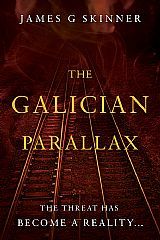
  • THE GALICIAN PARALLAX by James G. Skinner – Spies & Politics, Thriller, Terrorism

    THE GALICIAN PARALLAX by James G. Skinner – Spies & Politics, Thriller, Terrorism

    Lieutenant Sergio Quiroga of the Civil Guards has smelled something fishy brewing in the northwestern autonomous community of Spain known as Galicia for some time, and it’s not the world-renowned Port of Vigo.

    Not directly, anyway. It’s the cartels that are using the port to funnel drugs into Europe via the yachting enterprise, but what’s worse, the cartels have ties to the terrorist faction known as Al-Qaeda. The deeper Sergio delves into the latter organization by way of the former, the more he learns of their shifting plots to attack on European soil. Without the support of his superiors, Sergio must immerse himself in the Galician underworld in order to stay ahead of this thing. He eventually enlists the aid of British consul Stan Bullock to decipher exactly where and when the onslaughts are to take place.

    Largely set against the backdrop of northwest Spain following the 9/11 attacks, Skinner capitalizes on factual events to craft his narrative, such as the Madrid train bombings of 2004 and the bombings in London of 2005, to name a couple. And even more often he peppers in smaller-scale acts of aggression dually to punctuate the characterizations of Sergio and Stan and keep the looming threat they both face alive and machinating. To that point, Skinner also fills in the blanks of his international playing field by briefly focusing on the subsidiary parties such as the cartel leaders, Sergio and Stan’s superiors, and even the then President George W. Bush and Osama bin Laden.

    The Galician Parallax is certain to make a shrewd birthday gift for your diplomatically savvy uncle who likes to read about the second Bush administration and the concurrent War on Terror as if he were reading a series of dailies. The author maintains that he uses information based on facts to inform his readers rather than just trying to keep them entertained. On the other side of the coin, those readers more inclined to pick up a tight-knit character drama with some thrills here and there may be left wanting. Ultimately, Skinner, in his didactic world-building, challenges his readers and forces them to decide if they want to be informed or entertained. On the fiction side of things, Skinner imbues Sergio and Stan with their own personal struggles and desires to keep the reader caring about the story’s primary focal points.

    Make no mistake, The Galician Parallax is strong message serving to expose the cartel involvement in well-known terrorist organizations around the world. A timely and informative thriller set in Galicia, Spain. Shrewd writing about the international playing field of cartels by James G. Skinner!

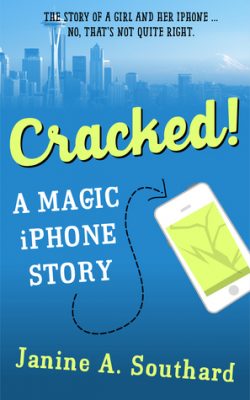
  • CRACKED! A MAGIC iPHONE STORY by Janine A. Southard – Seattle, Cyber-Punk, Fantasy

    CRACKED! A MAGIC iPHONE STORY by Janine A. Southard – Seattle, Cyber-Punk, Fantasy

    Can a middle-aged, hip statistician find the perfect boyfriend in Washington’s Emerald City? Maybe with the help of her magic iPhone!

    On this quirky journey through and around Seattle our heroine, Morena’s accompanied by two strange, but well-meaning sidekicks. Morena’s best friend/roommate, Suzyn, a twenty-something, aspiring photographer from New York, who likes to dance, get drunk, and get high; Magic Man, is an undercover, 6,000-year-old elf, who only wants to fit it with the humans around him. Also, a mysterious Green Man, who seems to be nearby wherever Morena goes, but whom she never notices, adds a note of mystery.

    After a breezy false start in which the narrator chats the reader up, like a neighbor over mid-morning coffee and Danish, the real story begins.

    One morning, Morena discovers a package on her kitchen table. Her ex-boyfriend, who “never sent her a single gift,” before their “horrid break-up,” has now sent her an iPhone—and it just so happens the phone is magic. It has only one app, designed for finding the right mate—and Morena, with her biological clock ticking, longs for love. She is searching for a soul mate—as long as it doesn’t take a lot of effort. She enjoys her current lifestyle, so, the right man would have to not only conveniently drop into her life, but also fit into her life. That iPhone may have been the perfect gift.

    The reader journeys with Morena, her magic phone in hand, on Seattle’s buses and light rail, into various neighborhoods, coffee shops, pubs, and restaurants, as well as to neighboring communities. Cracked! . . . introduces a plethora of geeks, freaks, “funky hipsters,” story gamers, “hipsters playing at being gamers  . . . ,” anonymous drug dealers, and more. Along the way, the reader may learn some street slang while being apprised of the go-to (for whatever you want) places in that urban area.

    Particularly entertaining and interesting are the forays into the story gaming world, where the gaming part counted as a respectably nerdy pursuit, and the story part counted as creative . A fun feature of the story is that it is a microcosm of Seattle life: giving its readers a chance to interact with some odd characters, but still not have to be friends with them.”

    While some may find Cracked! to be somewhat thin on plot, it’s heavy on atmosphere and setting, which is captivatingly authentic. Southard’s hip and cool characters are multi-dimensional and memorable. As a stylistic technique, the intrusive and opinionated omniscient narrator is sometimes informative and amusing, but at other times, can be distracting. However, always fun!

    Overall, Cracked! A Magic iPhone Story provides an insider view of Seattle, its denizens, and some of their various activities and belief systems, that contribute to its unique culture. It’s a fun read in a much too serious world.

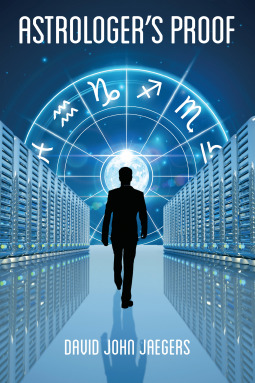
  • ASTROLOGER’S PROOF by David John Jaegers – Metaphysical Techno-Thriller Fiction

    ASTROLOGER’S PROOF by David John Jaegers – Metaphysical Techno-Thriller Fiction

    David John Jaegers’ Astrologer’s Proof is all about the steps leading to utopia, involving both ephemeral and cosmic mechanisms, balancing on the edge of an ethical paradox.

    The science fiction/fantasy author Orson Scott Card wrote a book titled “Characters & Viewpoint” in which he posited that all novels divide broadly into four different story types: Milieu, Idea, Character, and Event. He dubbed these categories the “MICE” Quotient, and each sets up specific expectations in the reader.

    Within that framework, Astrologer’s Proof qualifies as an Idea novel. It is Book 2 of the Astro-theologian Series, a metaphysical techno-thriller trilogy in which a Big Idea is explored.

    What’s the Big Idea? Simply put, it’s the search for an empirical proof that astrology is a valid science that defines and guides human nature and destiny, dovetailing with all religions into a unified cosmic truth that can positively change the world.

    That’s a lofty promise which author David John Jaegers delivers.

    Of course, proving the premise takes serious work – and a lot of illegal maneuvers to gather the necessary data. Astrologer’s Proof thus becomes an end-justifies-the-means story, where honest, moral, well-intentioned philanthropists break laws, invade privacy, deceive their loved ones, and establish front organizations, all to gather the information they need to demonstrate they’re right—in scientific, indisputable terms.

    Some series fiction forms the continuing adventures of one or more characters. Astrologer’s Proof, conversely, is the middle segment of a grand epic covering the Big Idea. Book 1 (Astrologer’s Apprentice) establishes the situation and players; Book 2 (Astrologer’s Proof) describes the process of making the Big Idea happen, and Book 3 (A Virtual Life) will reveal the repercussions. In other words, this book is the fat juicy middle of a delicious Po-boy, worth every bit of effort to digest.

    In Astrologer’s Proof, Jaegers unfolds the Big Idea and patiently tells us how it is transformed into action. Here the author demonstrates his depth of knowledge with the material and impresses the reader with the story’s thoroughness, technical veracity, rationality, and fascinating possibilities.

    In many ways, this book is an experimental novel, with the traditional elements of storytelling over-arching the trilogy, spreading across multiple characters in the telling. Jaegers brings his skill to the forefront here and invites his audience deeper, into a complex world that he skillfully weaves.

    For sophisticated readers who yearn for a multifariously inspired scenario that stretches the psychic mind and challenges beliefs, look no further. Astrologer’s Proof is your perfect match. This is a story with exceptional intelligence and visionary quality. It cleaves to the author’s heart, and those who read the book will be affected by its positive energy.

  • The EDGE of FARALLON by Peter Skinner – Literary, Thriller/Suspense

    The EDGE of FARALLON by Peter Skinner – Literary, Thriller/Suspense

    Sam came to Jade Cove to kill someone. The question is who.

    A mountain lion refuses to leave Big Sur’s ferocious coast while a family on the brink of foreclosure clings to their land. But the real danger might not be what Lulu Willis or her uncle Angus expects. Enter Sam a man with a checkered past, a significant stint in the military, and, at present, marred with PTSD and alcoholism. Lulu suspects that Sam is there to kill her ailing uncle and she will do anything to stop him, even if it means killing Sam.  However, as the wind continues to shift along the coast, it becomes apparent that Lulu’s volatility and past issues might bring everyone, including Sam, further to Farallon’s edges.

    As a playwright, Skinner (The Bells of Moses Henry, White Buffalo) uses words and dialogue in an undoubtedly poetic way. The dialogue, in particular, is intricately varied—snappy one minute and lyrical the next. It provides each character with their own unique thumbprint, with each fighting a different set of demons. Angus’s dementia, Sam’s grapple with humanity, and Lulu’s struggle toward forgiveness all tie together in a tangled mosaic that makes any type of resolution seem improbable.

    In addition, Skinner’s skillful use of imagery and metaphor gives both his characters and setting a delicious complexity. This is especially true in the descriptions of local flora and fauna, including “wandering micro-plates,” “tide pools ripe with purpose,” “a Steller’s Jay with deep blue feathers” and even a “phalanx of rusty mailboxes.” Readers will completely immerse themselves in these textures, especially since Skinner reintroduces plot threads with just enough variance to keep readers guessing.

    From a suspense standpoint, Skinner includes just enough detail to keep readers intrigued, while not revealing too many clues at once. This sprinkling of detail ratchets up the tension and makes it impossible for the reader to put the book down. And while the language and implications can become a bit esoteric at times, the twists and turns, shifting points of view, and varying textures will keep readers engaged.

    With traces of Gothic flare, Peter Skinner’s The Edge of Farallon is a brilliantly dark and satisfying read, exposing truths about family, life, and death. A story for those looking for complex character development, unique imagery, and a breathless plot.

    Additional Note from Reviewer: Those interested in the dialogue might also think about reading the play version, available on Skinner’s website.

  • The SPANISH CLUB by Danielle Burnette – Y/A, Fiction

    The SPANISH CLUB by Danielle Burnette – Y/A, Fiction

    Seven Chicago teens spend one eventful week on a chaperoned field trip to Mexico. Traveling with the intention of cultural immersion, they instead learn love, forgiveness, and some serious life lessons.

    St. Francis High School Spanish Club members Brianna and her BFF Dana, along with five other friends are on a field trip that they won’t soon forget. It’s the summer before their senior year, and adulthood—with all of its attendant major decisions—looms. Flying into Mexico City accompanied by teachers Mrs. Fritz and Miss Yancy, they meet Miguel the guide, who ushers them through La Ciudad’s myriad monuments, cathedrals, and markets, as well as Teotihuacán, Guanajuato, and Guadalajara. It’s quite the whirlwind trip, with Miguel’s impassioned recounting of history adding meaning and depth for students and readers alike. Indeed, the rich imagery of the hi about astorical landmarks blossom on the page, and the descriptions of the people, the food, and the art should fire the imaginations of teen readers and instill in them a desire to travel to Mexico City and beyond.

    That said, The Spanish Club is not a travel essay, but a young adult drama, stocked with classic teen yearnings, choices, vanities, and pranks. Author Burnette does a marvelous job of imbuing the narrative with colorful angst: “At once, every blemish on Brianna’s body itched and squirmed for Enrique’s attention, and she stiffened under the weight of all her imperfections.” Her characters embody every emotional high and low – especially protagonist Brianna Garrett.

    Brianna is inseparable from her BFF, Dana Tate, until she discovers, with equal parts shock and delight, that heartthrob Enrique has shared her distant admiration since freshman year. A rift grows between the girls, and not only because of Enrique. Dana is jealous of Brianna’s growing friendship with dance team leader Stacia.

    But boys and BFFs aren’t the only things commanding Brianna’s attention.

    Before the trip, Brianna needed to acquire her passport. What she soon discovered forces a rift between the parents she always counted on for the truth. Brianna was adopted. And her parents never once disclosed the information. Now in Mexico, she rages against them and shuns their long-distance calls. But what brings eventual forgiveness is not her identity but her friend Dana.

    Throughout the story, the World Cup serves as a foreboding backdrop, with the alarming zeal of local news reports of fan-related tragedies. This culminates in a frightening confrontation that departs from the story’s general lightheartedness to make a sobering point, but also, brings Brianna and Dana back together, making The Spanish Club a very good summer read for Y/A audiences.

  • GRAND THEFT DEATH: A Salty Sisters Mystery by Ann Philipp – Cozy Mystery, Women Sleuth, Suspense/Thriller

    GRAND THEFT DEATH: A Salty Sisters Mystery by Ann Philipp – Cozy Mystery, Women Sleuth, Suspense/Thriller

    Grand Theft Death is best read when you need a break from reality. Don’t read it if your two feet are firmly placed in all things serious. In fact, don’t read it if you are even thinking of going to the serious side of life. This book is as realistic as a Saturday morning cartoon – and twice the fun.

    The characters are delightfully quirky, the situation fun and surprising, and the action as snappy as popping corn. The heroine, Patty Schuster, is kind, sincere, wry, and unique, at the same time so easygoing that she can roll with the endless punches the plot throws at her and carry on with a good heart.

    Good thing, since the plot treats Patty like a punching bag.

    She starts out in jail, falsely arrested for car theft, then gets tangled up with thieves, spies, forgers, smugglers, bad cops, good cops, sleazy hoteliers, double-crossing gangsters, nosy neighbors, felonious grannies, and divorcing parents—not to mention murder of the friend in trouble she tried to help, which led to her arrest.

    Meanwhile, she’s trying to learn the antique business she inherited from her grandmother. Being a fine artist and a surfer, Patty has zero knowledge of furniture and collectibles. However, she needs income and was unhappy as a graphic artist, so she’s motivated to keep the enterprise alive despite the nuttiness going on around her.

    It’s harder to keep herself alive, given trouble she gets into. Most of it revolves around the rare, valuable Cadillac she was accused of stealing, and which keeps getting re-stolen by half the cast while the other half tries to get it back or figure out what’s going on or save each other’s skin. This gives the feel of the Keystone Cops scrambling through a Doris Day comedy, with Patty as the naive “straight man.” In the middle of it all, she meets a nice fellow who adds the possibility of romance if she can get out of the mess she’s in.

    Whichever way you take the humor, you’ll find the writing smooth and Patty’s voice appealing. It gives her credibility in a lunatic world. The novel is billed as a “Salty Sister” mystery—a name that makes sense by the end—and is first in Philipp’s Salty Sisters series. Readers whose funny bones are tickled by zany capers will be lining up for the next volume.

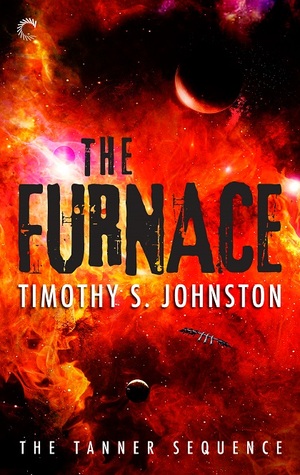
  • The FURNACE: The Tanner Sequence, Book 1 by Timothy S. Johnston – SciFi/Thriller/Suspense

    The FURNACE: The Tanner Sequence, Book 1 by Timothy S. Johnston – SciFi/Thriller/Suspense

    Accidents happen on a space station. But when a body’s head and hands go missing, that’s when top investigator, Kyle Tanner rushes in to solve the heinous crime before more of the crew lose their heads. More detective mystery than sci-fi, Timothy S. Johnston’s hero is the only one who can stop the villain before he or it destroys everything in The Furnace.

    The year is 2401. Homicide investigator Kyle Tanner has seen his fair share of the galaxy’s obscenities. Most notably he’s responsible for the capture of its most infamous rogue, popularly dubbed the “Torcher,” in a manhunt that propelled him into the cultural consciousness, though he couldn’t care less. In fact, he’s never felt more alone in the universe after his oversight led to the death of a fellow investigator, and the closest thing to a friend he has ever had.

    But it’s his former exploit that will forever mark his career, and ultimately what has him assigned to investigate SOLEX One, a space station collecting solar energy on the warmer side of Mercury. The case: Jimmy Chin, a crewman aboard SOLEX, killed outside the station when his vac-suit is mysteriously lacerated and decompression finishes the job. Not the grisliest of murders, but when the head and hands are removed from the body twelve hours later, the case falls within the realm of complication Tanner is known for untangling.

    Now Tanner has fourteen remaining suspects aboard the station, any of whom could potentially be guilty of the crime. And though the rest of the crew widely consider Jimmy’s death an accident and the tampering of the body a prank, albeit an odd one, Tanner doesn’t share their sense of humor. He also knows something else: if there is indeed a murderer on the station, he’ll have to work fast to find them as their surroundings are far too claustrophobic and perilous for the potential victims, including himself, to rest easy.

    Sure enough, the bodies begin piling up, and Tanner’s life is directly threatened. Were it the work of another maniac like the Torcher, Tanner might be able to get his head around the situation. Only there’s a secret that makes this case different than anything he’s ever experienced, and with implications that reach far beyond an isolated space station. It soon becomes clear that any one of them would count themselves lucky to make it out alive.

    With a premise that’s virtually Agatha Christie’s And Then There Were None meets John Carpenter’s The Thing meets Danny Boyle’s Sunshine, there’s some cross-pollination that could appeal to enthusiasts of multiple genres. This is not a straight Sci-fi, and it isn’t a straight mystery.

    The author does face a challenge of blending a meaningful and entertaining story. Though there is plenty of intrigue piled into the first half of the book, the unwinding during the second half does take on a different pace. Some readers may find the technical aspects of the plot that point to plausibility a bit over complicated, lessening the tension and strength of the work. However, for those who crave Sci-fi/Thriller/Romance with the dial turned up to violent, this is your perfect read.

    Don’t lose your head – even if someone or something tries to take it! Timothy S. Johnston’s The Furnace will have you checking your spacesuit for lacerations and keep you looking over your shoulder for what goes bump in outer space.


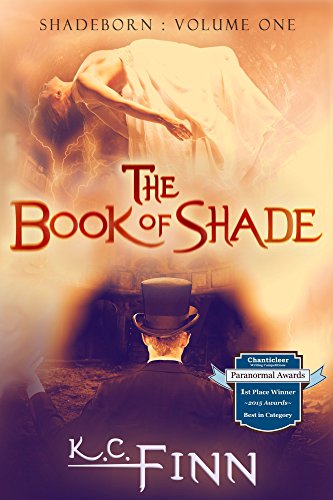
  • The BOOK of SHADE by K.C. Finn – Paranormal/Fantasy/New Adult/Contemporary Gothic/Literature

    The BOOK of SHADE by K.C. Finn – Paranormal/Fantasy/New Adult/Contemporary Gothic/Literature

    A world of intrigue, magic, and danger awaits Lily Coltrane in K.C. Finn’s The Book of Shade.

    On her very first day at university, Lily and her roommate enlist in the IMLS (Illustrious Minds Literary Society) at the student fair and, despite warnings from her history professor, take one step further and visit the Theatre Imaginique.

    The show seems too real – the lightning, levitation, and the fact that Lemarick Novel, the theater’s top showman and proprietor, keeps locking eyes with her. She tries to put it out of her mind, but a month later, Lily and her roommate return to the show, and this is where author K.C. Finn puts her character in delicious jeopardy.

    Lily learns she’s a shade – a being with the ability to generate and control the natural elements (earth, air, fire, and water). This revelation sets her off down a rabbit hole of mystique and magic. Novel is also a shade, one who is fairly accomplished in his abilities, and he decides to train Lily in her newfound abilities. What follows is an adventure woven with trials, romance, danger, and a whole world of the unknown.

    K.C. Finn does an excellent job of weaving the paranormal and magic in with the modern-day world. She introduces concepts that we’re all familiar with, such as voodoo, vampires, werewolves, but does it in a way that doesn’t feel overly stereotypical.

    Finn takes her time with world building in The Book of Shade, and the reader’s patience is rewarded. Finn develops her characters very well, even foreshadowing here and there. The characters and the story itself are slightly more important to the author than the setting.

    Once the author reveals the world of shade, any reader will find it virtually impossible to put the book down. The book does contain some grammatical errors which could and should be corrected, but the writing, on the whole, is good, which is appreciated. From featuring “playbills” for Theatre Imaginique inserted at the beginning of each chapter to the care Finn takes in creating this imaginative world, this title remains a good read.

    Magic and intrigue throw Lily Coltrane’s world all kinds of upside-down when she discovers she isn’t who she thought she was in K.C. Finn’s The Book of Shade.

  • The ANGEL KILLER: Book Two of the Watcher Saga by Lisa Voisin – Young Adult/Urban Fantasy/Horror

    The ANGEL KILLER: Book Two of the Watcher Saga by Lisa Voisin – Young Adult/Urban Fantasy/Horror

    High school is a little more complicated for Mia and her unusual boyfriend, Michael Fountaine. Miraculously recovered from a coma only a few months earlier, Michael has many secrets that only Mia truly understands. But love and understanding aren’t always enough to stay sane when the world outside is changing before their eyes.

    These two never know when a day might include demons from the darkest pit, minions of despair, or hellhounds looking for a fresh kill. A battle of supernatural dimension is coming ever closer to the heart of their hometown of Seattle, and Mia will soon have her burgeoning power put to the ultimate test. If only she could believe in it more and trust in the strength of angels! Current and past struggles are interwoven for both of them when a powerful nemesis returns wielding a sword like no other. It’s unique, it has a name, and it’s lethal.

    In book two of author Lisa Voisin’s The Watcher Saga, Mia and Michael reunite when Raguel returns with vengeance on his mind.  With special abilities of her own, Mia is able to see Michael for what he really is and to aid in his battles while keeping his identity secret even from her best friends, and it isn’t easy! If only she could concentrate on more normal things, like Fiona and Dean, and enjoy the school’s wrestling matches. But her destiny is more complicated than that, and she knows it. She also knows that her love for Michael is worth anything to her, just as it has always been across the many lifetimes she is just now beginning to remember.

    In The Angel Killer, certain details are prominent. Actual Seattle locations make strategic appearances, like the Smith Tower and the Underground, and the weather as described will be familiar to any Western Washingtonian. Voisin’s proper names, as well, are made to fit the character and mood. Each Angel, for example, has a name that ends with a similar sound, whether it’s Arielle, Turiel, Damiel, or Michael. These are beautiful beings with beautiful names.

    Another character in Voisin’s book, Mia’s good friend Fatima, is described as a person with visions and her name is equally evocative, reminiscent of the little children of Fatima, a popular Catholic story. But it is with Fatima and her twin brother, Farouk, that Voisin veers from her narrative of Angels and Demons to one of more Middle Eastern content when Fatima is unwittingly possessed by a Djinn, and only the Angel Michael can help. The author’s attempt to meld these two very different descriptions of embodied evil may be unsuccessful for some readers expecting a more strictly Christian storyline, and yet, as early as page one it is Fatima’s gift of a Hamsa necklace that buzzes a warning for Mia when unseen Demons are near.

    Overall, The Angel Killer: Book Two in the Watcher Saga is full of colorful Seattle locations and symbolic characters in this addition to Voisin’s continuing saga of Good vs. Evil. If you’ve already met Mia and Michael, or are just making their acquaintance for the first time, you’ll want to know how this battle ends.

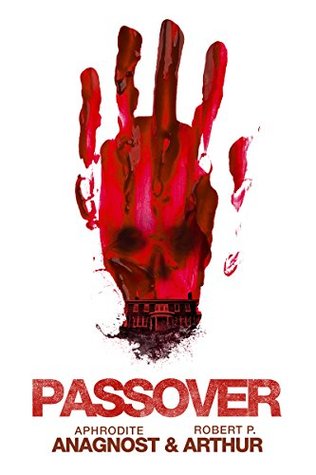
  • PASSOVER by Aphrodite Anagnost and Robert P. Arthur – Horror/Psychological Thriller/Ghost Story

    PASSOVER by Aphrodite Anagnost and Robert P. Arthur – Horror/Psychological Thriller/Ghost Story

    This novel is a multi-dimensional excursion into the paranormal. Its twists and turns take the reader on a circuitous route, where the impossible is ordinary, and there is no safe place.

    Authors Aphrodite Anagnost and Robert P. Arthur have created a fast-paced, well-written read to challenge even the most hard-core fans of mystery and the supernatural. The writers use a mosaic of imaginative ideas, sensory detail, and historic events to move the reader through a morass of implausible events, to a chilling conclusion.

    For the residents of Zebulon, a tiny, historic Virginia town on the Delmarva Peninsula, the world has become surreal. For the last three months, a serial murderer has been at work. On the night of the full moon, moving from house-to-house on Burnt Chestnut Road, this creature has committed atrocious acts.

    Inexplicable smells, sights, and quirks of weather impinge upon the police investigation of these, driving most of Zebulon’s residents to flee in fear.

    If the killer remains consistent, the next house in line is the home of Dr. Rachel Shelton and her family. One, or all of them, is destined to be the next victim, and tonight is the night. Rachel and her husband, Dave, try to prepare for the onslaught. Little do they know that sharp knives and loaded rifles cannot protect them.

    Sheriff Phil Wise revisits the murder sites and struggles to make sense of the mayhem that occur at each, when “…all explanations seemed stranger than the crime scene itself…” Beatricia, Rachel’s mother, senses the truth, and her revelations help keep the reader engaged.

    The frequency of multiple motifs, e.g., the unexplained smell of burnt wood, levitation of furniture, dis- and re-appearance of objects, random cold spots, and intermittent cessation of normal sound can work to distract the reader. Inconsistencies within the narrative, such as a kitchen floor that is described as linoleum, then tile, and then linoleum in the span of two pages, a discordant timeline of the murders, and a geographic site for one of the serial murders that contradicts the described pattern, detract from the storyline. However, Passover’s plot has “good bones,” and those who enjoy the genre will devour this work. The well-developed character of Beatricia, Rachel’s mother, goes a long way in helping maintain reader engagement.

    Beatricia is not only a learned scholar but also a gifted medium, who views the horrendous events through the lens of spirituality. It is only after she enters the investigation with Lev, a Jewish apostate, that those old truths begin to reveal themselves, and the pieces begin to coalesce. Rachel must acknowledge and utilize her innate psychic abilities if they are to defeat the evil supernatural forces that surround and threaten them.

    “Passover” by Aphrodite Anagnost and Robert P. Arthur takes the reader to a universe where the mundane meets the mystical. Here, the power of “animal magnetism” enables the dead to reanimate and materialize, and a charming teen-aged ghost attempts to seduce Rachel’s adolescent son.

    In this altered reality, symbolism, echoes of ancient religions and myth, memories of age-old bondage, savage twentieth-century anti-Semitism, and ghosts and apparitions collide with everyday family conflict and strife. “Passover” is a paranormal mystery on steroids!