
 That was quite an incredible review, and I appreciate the time and dedication so much! – Tyler Drinkard, author of Isolated Domain
Tag: 4 Star Book Review
-
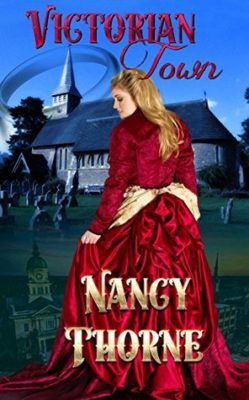
VICTORIAN TOWN by Nancy Thorne – Y/A Time Travel, Y/A Historical Fiction, Y/A Historical Romance
 There isn’t much to do in Little Current, Abby Parker’s hometown. Desperate to escape her alcoholic mother and absentee father’s drama, Abby Parker takes her dog Riley for a walk near the local tourist attraction, Victorian Town, a restored settlement from the 1800s. When Riley unearths a silver filigree ring engraved with the initials “BB,” Abby doesn’t hesitate to slip the ring onto her finger. In a haze of white, Abby is transported back to 1876.
Abby’s strange clothes and unfamiliar words quickly warrant a visit to the town doctor, Albert Edgecombe, where she meets Martha, his teenage daughter. With Martha’s kindness and easy nature, the girls form a fast friendship despite Abby’s confusion and constant questions. Soon she realizes when the ring is removed from her finger, she returns to her own time. Though warned repeatedly by her modern friend Jess, Abby cannot resist returning to 1876 and Martha’s family. Martha’s older sister, Elizabeth, seemingly left town though no one can confirm her leaving. The mystery of the missing Edgecombe sibling and a connection to the local blacksmith, Ben Dunstone, piques Abby’s interest until she can’t resist defying the laws of nature and returning frequently. However, the ring’s power is draining, and Abby will soon have to choose between the twenty-first century and the new family she has found.
The place of women in 1876 creates an issue for Abby and a theme within the novel. Abby is clearly a modern girl, independent and opinionated. In typical late-teen fashion, she arrives unabashed and uncensored in the quiet Victorian town. Even after she finally understands her “transport,” she refuses complete conformity, continuing instead to both shock and scandalize Martha Edgecombe. Her struggles exemplify most women’s lives and are symbolized in many ways by the simple task of dressing to fit in. In a time of corset, pantalettes, and bustles, Abby is a “shorty-short” girl. Just as she fights her garments in what should be an easy task–dressing for the day–she fights the notion that women should settle, not in their attire and certainly not in their life choices. When Martha mentions women’s roles, those of mother and wife, Abby scoffs and is even disgusted by the suggestion that that should be a good life for a woman. Repeated references to the fairytale Cinderella and Abby’s refusal to want the rescue of a handsome prince highlights her feelings and her appreciation of the place of modern women.
Friendship is another important notion within the novel. Jess, Abby’s modern bestie, is a significant part of Abby’s life. Abby has little to no family support; her mother is an alcoholic, while her father stays gone most of the time. Even Abby’s brothers, who are adults, are absent from Abby’s life. Other than her sheltie, Riley, Abby is alone. Jess is her only real human connection until she develops a close bond with Martha. Both friendships mean more to Abby than anything. She turns to Jess for advice in her time travels. Martha becomes a sister to her when the Edgecombe family welcomes Abby into their family after her abrupt arrival in 1876.
Abby’s closeness to Martha keeps her returning to the past, though her chances of being stuck there increase with each trip. Moreover, she is hurting Jess by venturing into the past. This pull keeps bringing Abby back to the present even when she begins to feel drawn to the past. Though she must eventually choose between Jess and Martha, both girls have a firm claim on Abby’s heartstrings and give her the family she chooses instead of the one into which she was born.
Abby’s sense of purpose is an admirable trait that gives her character a strong, heroic feel. Abby cannot let go of Elizabeth’s disappearance. She refuses to stay safely tucked into her own time when a possible murderer is wandering around in the distant past. Nearly from the first trip, Abby feels she was “chosen” for a reason and beyond determined to discover what that might be even at significant physical and mental risk to herself. What begins as a mystery becomes a rescue mission when Abby finds her friends’ fate through historical documents. Abby cannot leave the fate of Martha and Ben to chance.
Victorian Town won First in Category in the CIBA 2019 Dante Rossetti Awards for Young Adult fiction novels.


-
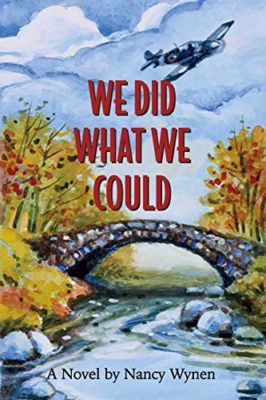
WE DID WHAT WE COULD by Nancy H. Wynen – Historical Fiction, WWII Women’s Fiction, Literary Fiction
Nancy Wynen’s We Did What We Could is a well-conceived, smart, character-driven novel set across a grand European landscape. Here a formidable trio of young women, groomed for mere social status, demonstrate their strength, endurance, and courage as they move beyond the walls of academia to experience careers. The three must also deal with relationships, family expectations, and life issues amidst the often devastating and upending climate of war.
Lady Archer is a widow from the Great War. As Assistant Head Mistress at St. Martin’s School, she feels girls should receive solid educations and prepare for real professions. With her high level of social ties, Archer looks for “future perfect leaders” within each new graduating class, possessing ideal traits of intelligence and creativity. In May of 1936, Archer sets her sights on three such proteges whose memorable antics foretell their potential for more significant life accomplishments.
In this three-part literary work, Wynen moves the narrative between the interconnected lives of these central characters. In the mind of their individual goals, natural-born leader Maggie Shelford obtains a job at the London Times, Agnes Fletcher heads for nursing school, and creative Ellie DeWever prepares to join the Netherlands foreign services. Ellie’s kindred spirit Gran, another select alumna of St. Martin’s, offers up smart advice to the tune of, “Be prepared, and then you can adjust to whatever happens … Improvise as you go along.”
From royal debutante ceremonies where these three friends sneak an outsider into high society’s ranks to Agnes’ innate ability to bluff her advancement through nursing school, imagination and talent help these women forge ahead. With the continuing influence of Lady Agnes, Maggie finds herself a member of the RAF (Royal Air Force), reporting for the Union Jack, and ultimately a chief press camp officer. Events of the day fill the storyline. With Ellie the first in the group to marry and start a family, Maggie and Agnes begin to contemplate their own destinies and opportunities to find love, romance, and a “real deal” relationship.
As expected, the backdrop of war predominates in a story playing out within a 1936-1945 timeframe. During this uncertain time, life is likened to a ballet where each step was delicate, and “losing one’s balance was costly.” Here towns are destroyed, families are forced from their homes, secrets are buried, and love and loss are intertwined. But the narrative isn’t always frayed with hardship. Wynen aptly weaves humor throughout her work that serves well to balance tension and storyline.
When a significant twist in the plot occurs, Lady Archer’s hard work with her proteges pays off. Here Wynen cleverly brings the story full circle with the re-enactment of an ingenious prank incorporated from their school days. A detailed wrap-up highlights these characters’ futures and leaves Lady Archer hoping for post-war generations instilled with equally creative and indomitable spirits.
For those readers drawn to stories filled with the harsh realities of a war era and the emotional triumphs and tragedies of those involved, We Did What We Could proves a lively and entertaining exploration that showcases the fine art of determination and will power during the best and worst of times.
-
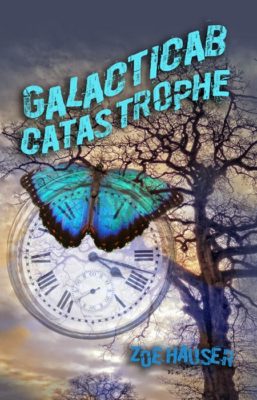
GALACTICAB CATASTROPHE by Zoe Hauser – Young Adult Fantasy, Sci-Fi, Time Travel
Time travel isn’t just for Dr. Who! When four teens try to solve the puzzle of the mysterious wormhole at their school, friendships are tested, reality is checked, and danger is never far away. Hauser delivers a fast, fun debut novel for the YA crowd.
Something extraordinary is going on at the Cuniculum Performing Arts Middle School. Well beyond the emotions of the artistic kids trying to find their own direction as artists and performers, far beyond the raging hormones of kids falling in, out and through the throes of first love, some other-worldly happenings are making life at the St. Augustine, Florida school more than a bit weird.
For example, circus animals abruptly appear in the school’s hallways. A 17th Century French courtesan, smelling like a skunk, slaps a student in front of the girl’s horrified mother. Let’s not forget the disappearance of the school’s beloved principal. Then, to top it off, the Bubonic Plague sweeping out of the school’s science labs and forcing the school to close for a month to be disinfected.
To four students, Sephie, Zander, Rori and Iggy, the events are not only abnormal but super-normal, a situation that could only be explained as a wrinkle in time, or more appropriately a wormhole, that allows these strange figures from the past to travel in time to their school. Even more exciting, and perhaps a bit disturbing, the students go back in time using one of the wormholes buried in the school. But can they return to the present, or will they be trapped in the past? Will they ever get home?
This Y/A novel is a clever mixture of facts, fantasy, and teenage angst, plus a healthy dollop of Greek mythology. As strange events keep the school on high alert, the four students plus a teacher travel through time. Some loop to the site of a 1942 circus disaster in Cleveland; others are held hostage in a 1915 entrapment by a nefarious group of astrophysicists. The scientists know the students are from the future but want to keep time travel to themselves.
Sephie, short for Persephone, the Greek goddess of the spring, more or less narrates the book, infusing the novel with her deep attachment to mythology. Her personal story ties the book together. It’s complicated by the complexity of her love life—she loves a boy who loves someone else—but even more pressing is her desire to use the wormhole to go back in time and try to prevent her mother’s death.
Y/A readers will admire this book on several levels. One is the sheer audacity of a book that ties puppy love angst with time travel. Another side is the insertion of historical events and an ongoing treatise about the lives of the ancient Greek gods.
Part of the fun in reading this novel is its inventive characters and locations. Many readers will find their Internet browsers heating up as they check out whether certain situations were authentic and characters were real. (Hint: This reviewer especially liked a character named Alfred Ulixes. Look it up!)
Enjoy reading Galacticab Catastrophe – but watch out for the snakes in Morocco.

-
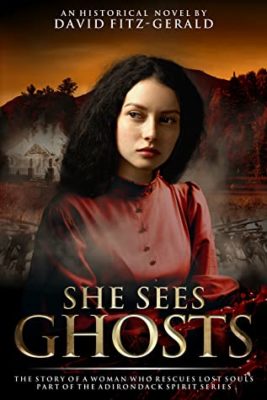
SHE SEES GHOSTS – Part of the Adirondack Spirit Series by David Fitz-Gerald – Historical Fiction, Paranormal Fiction, Civil War Fiction
 A gentle and patient story, She Sees Ghosts is a unique addition to the historical fiction genre. Take a break from the hectic modern world and get transported to a simpler time where the full effect of the industrial revolution has yet to change America’s face forever.
Mehitable lives with her large loving family in a small town in New England and has been hiding a secret her whole life. She sees the spirits of the departed and wishes they would leave her alone. The town is busy getting ready for the upcoming New Year celebration, which will not only mark the start of a new century but also happens to be Mehitable’s sixteenth birthday. On the cusp of adulthood, all around Mehitable, there is talk of love and marriages, but she does not feel ready and wants to keep enjoying her current life.
After Mehitable rejects the troublesome Anson Smudge, tragedy strikes. Anson accidentally starts a fatal fire that claims Mehitable’s family’s lives, leaving her to face the turn of the century alone. Years pass, and she slowly learns to live with her grief but is still visited by the ghost of Anson every night. After moving with her friend Polly and her husband Reuben to rural upstate New York, Mehitable begins to see countless souls of soldiers from past wars, and there she finds her calling. By helping these lost souls, will Mehitable find a way to move on?
She Sees Ghost is a perfect choice for readers who like multifaceted stories with paranormal elements, historical fiction, and Christian influences. Fans of coming-of-age stories will especially like She Sees Ghosts as the story centers around Mehitable’s struggles and her journey to help lost souls. Some books are driven by action, while others allow the characters to unveil the truth behind their pain. This is a story more akin to the latter. Fitz-Gerald weaves characters that will live in readers’ hearts long after putting the book down.
David Fitz-Gerald has a knack for writing historical fiction with supernatural influences. She Sees Ghosts is the second in the ongoing Adirondack Spirit Series. In this installment, time is a big theme. Mehitable’s story begins at the turn-of-a-century, where she grows up hearing stories of the fight for independence. She experiences a cultural tradition for storytelling where people look into the past for lessons to bring into the future.
A story about love, loss, and the various forms grief can take over the years, Fitz-Gerald’s She Sees Ghosts is a compassionate tale about a woman using her unique gifts to help those around her, living or long passed.
-
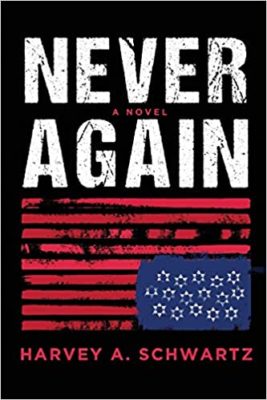
NEVER AGAIN by Harvey A. Schwartz – Alternative History, Terrorism Thriller, Historical Thriller

Given recent world events (from COVID-19 to the murder of Floyd George and the subsequent civilian marches, even the boomeranging price of oil), Schwartz’s tale of Holocaust II is far, far too believable to be a work of fiction.
Imagine Tel Aviv being virtually obliterated by an atomic bomb; imagine one woman—a former NYC TV journalist—as the last one standing with three atomic bombs of her own – complete with the codes and crew to use them in the Negev Desert; imagine deciding to send one of those WMDs to obliterate Damascus. Imagine saving one of those bombs to fight another day: even if that fight happens to be in the USA.
Welcome to Israeli minster Debra Reuben’s evaporating world. Soon joining her on this incredible journey is Israeli Navy officer Chaim Levi who happens upon a luxury yacht in Spain – only to have it become the means of transport across the Atlantic to Massachusetts once he makes acquaintance with Reuben—the remaining bomb safely stowed on board.
Once stateside, it’s a matter of what to do with the radiation-oozing device. Fortunately, there are many in the Jewish community ready to help, from civil rights lawyer Ben Schapiro (also a sailplane—upscale glider—enthusiast), militant activist Abram Goldhersh and his pacifist wife, Sarah. Together, they set their minds against the president of the United States (Lawrence Quaid) and his somewhat estranged, more sympathetic spouse, Catherine. With more people arriving to join the cause, gather to join a huge protest march slated in front of the Washington Monument. But Quaid and his hawks soon decide to send over 400,000 Jews (mostly Americans—all declared “enemy combatants”) to 21st-century concentration camps.
Schwartz’s inventive fiction feels as if it’s been ripped from today’s headlines. When this review was first penned, the Toronto Star’s front page shouted this: “Trump Threatens to Use Military Force.” We all know what happened next. Never Again might be too close for comfort for some, but others may find the story cathartic. The writing, itself, is strong and well-balanced with more than a few end-of-chapter cliffhangers. Schwartz’s novel is well worth a read—especially now as his fictional vision slips closer and closer to fact.
Never Again won 1st in Category in the CIBA 2018 Global Thriller Book Awards.

-
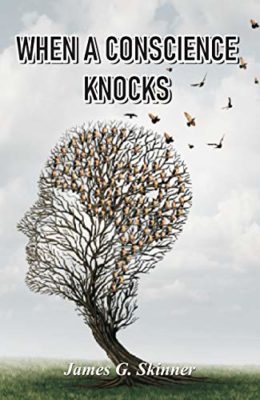
WHEN a CONSCIENCE KNOCKS by James G. Skinner – Romantic Literature, Marriage/Relationships, Alzheimer’s disease
One woman’s life follows a roller-coaster ride of love, political turmoil, and tragedy in James G. Skinner’s novel When a Conscience Knocks.
Jenny Robinson enters a confessional and falls apart. Sensing her distress, the Catholic priest encourages her to divulge her story, which she does. In 1976, at the age of twenty-two, Jenny left her hometown of Richmond, England, and took a teaching job in Iran.
It’s during this time where she meets Juan Miguel Ochoa, a Gallaecian. A diplomat at the Spanish Embassy, Juan is near twenty years her senior. Romance ensues, and within less than two years, Jenny and Juan marry.
Jenny has no idea what she’s getting into as she blindly trusts Juan’s lead throughout his diplomatic career. During their marriage, Juan’s work takes them to numerous trips through Europe, Central and South America, and the USA amid political tensions, wars, and terrorism. But as they approach their twenty-fifth anniversary, life throws a disturbing curveball. Juan’s erratic behavior heralds the early onset of Alzheimer’s. While Jenny’s life abruptly fills with uncertainty, the last thing she expects is to be involved in an affair.
New author James G. Skinner opens with a conflicting scene as his principal character, Jenny Robinson Ochoa, confesses to committing adultery. At the same time, her husband slowly succumbs to Alzheimer’s disease in a nursing care facility. What follows in the twenty-plus chapters is the account she discloses to a Catholic priest.
Jenny’s feelings and thoughts about her husband’s involvement with the chaotic global events surrounding them dominate Skinner’s first-person British narrative. Her continual ponderings, covered within a chronological list of backstories, capture her personality’s development amid the ebb and flow of their marriage, travels, and political upheavals. Conversations between Jenny and Juan focus on explanations of world history and Juan’s diplomatic involvement to a politically uninterested wife. Although the many dialogue scenes that present facts tend to be a bit dry, Skinner does a decent job weaving in historical events.
As stated in the Dedication, the purpose of When a Conscience Knocks is to provide readers with an example of how Alzheimer’s affects intimate relationships. No one would dispute that Alzheimer’s disease is devastating to both victims and loved ones, and Skinner’s fictional character is not exempt. Rather than placing the debilitating disease front and center, Skinner pivots the attention upon the partner. Indeed, this is a coming-of-age tale—one’s woman’s struggle to find her identity, her voice amid conflict and relational codependency.
When a Conscience Knocks takes an alternate route, describing the pain and torment those on the sidelines experience when their partners succumb to Alzheimer’s disease’s devastation.
-
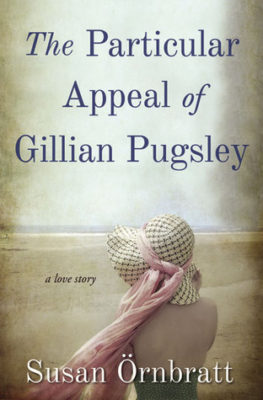
The PARTICULAR APPEAL of GILLIAN PUGSLEY by Susan Örnbratt – 20th Century Historical Fiction, Coming of Age Fiction, Historical Romance
 Irish-born Gillian McAllister knew she was meant for bigger things than a quiet life among her large extended family. Leaving home at seventeen against her protective father’s wishes, Gillian is looking for adventure – and that’s exactly what she finds. She was a nanny for a maharaja, a caretaker for WWII internees, and a nurse on the Isle of Man before finally becoming a wife, mother, and grandmother in London, Canada, where she spent the majority of her eighty-nine years.
However, with only weeks to live after being stricken by cancer, she knows her time with her beloved granddaughter and namesake is truly precious. Before she goes, she wants to pass on the poems that capture her long, adventurous life to the junior Gilly in hopes the girl will use the poems to write about her adventure – her hidden love story.
While on vacation in Canada, the teenage Gillian meets and falls madly in love with Christian Hunter. Her love of Christian consumes her, but she leaves him at the cusp of a war that soon alters the world’s course. Destiny isn’t finished with the pair, and they reunite after the carnage to find their love is as fiery and fierce as ever. However, even a love this strong can’t outrun fate, and Gillian is determined to find a way to show her beloved granddaughter the truth before it is too late.
The character relationships between Gillian and others is a perfectly developed part of the novel. Gillian’s attachment to her granddaughter is more than just a name. Young Gilly is an aspiring novelist. Both women understand the importance of storytelling and the impact of words. From the moment Gilly was born, Gillian felt the connection between them and believes only Gilly can breathe life into her adoration of Christian Hunter. She entrusts her poems to Gilly without disclosing the story, allowing the girl to uncover the secret hidden for over fifty years. Watching their last days together unfold is touching and reminiscent for any reader who has shared a bond with a grandparent.
Gillian’s secret love, Christian, is another meaningful relationship. From the time she was young, Gillian knew someone was waiting for her, someone drawing closer with each day, someone staring at the same moon and longing for another. When she meets Christian, she just knows as does he, and though, ultimately, Gillian comes to realize that devoting herself to one man when the world is waiting may not be what she truly wants. But Gillian cannot deny the connection between them. The two are the epitome of opposites attract with his easy-going, unrushed personality, but he immediately sees the effect she has on others, her zest for life. No matter how hard either tries to drown out the thought of the other, they can’t escape their entwined destinies, and their contrary natures create a perfect balance. The dance of fate between Christian and Gillian is thrilling and will keep the reader wondering until the end.
The gorgeous settings of Gillian’s life are an integral part of her history. The richly painted scenes are beautiful and inspiring for the character as well as the reader. From the sweeping sea cliffs to the serenity of Gillian’s cottage on the Isle of Man, the setting becomes its own character. Gillian both embodies and is affected by the scenery. In the quiet of a winter-draped meadow and the countryside teeming with life, Gillian sees herself and the many lives she’s lived.
A beautiful theme within this novel is the simple notion of loving life. Even before she steps out into the adult world and leaves Ireland, Gillian knows that life is for living. She wants to squeeze every drop of adventure possible from the time she is given and feast on all that it has to offer. Her ingenuity, spunk, and spicy attitude create an unquenchable need to travel, to meet people, and, most importantly, to make the world a better place. She refuses to settle for a mediocre life and rejects the moderation others preach and try to instill in her. Her “magnificent obsession” isn’t diminished by anything – not heartbreak, a world war, or even death. She lives with passion and gusto, fostering the belief in others that love and laughter, stories and adventures, make life worth living. Her sprawling life’s story is more than just survival and lost love. It’s about finding joy and purpose amongst death and destruction.
The Particular Appeal of Gillian Pugsley won 1st Place in the CIBAs 2015 CHATELAINE Awards in the category of 20th Century Historical Fiction.

-

APEX FIVE by Sarah Katz – Colonization Science Fiction, Post-Apocalyptic Sci-Fi, Epic Sci-fi Series
 The first book in the Plane series, Apex Five, begins with a catastrophic storm hellbent on ending all life on the Plane. Many escape into the Void, leaving all who remain to perish. Now 12,000 years later, civilization is once again thriving on the Plane, but not without rivaling nations, political tensions, and religious persecution. The Tabiran government is the ruling body of the Plane, and they have been working for years to eradicate religious belief in the Zaam and the culture surrounding the megaliths found in each nation of Tabira, Lir, and Garo. The origins of these megaliths are forgotten and transformed into myth.
 During a diplomatic mission from neighboring Lir, First Lasha Nasin meets with Tibira’s leader Mak Eta when the accomplice of the recent usurper is caught. That night Nasin finds the prisoner to be a young boy named Rohem, who never sleeps and only needs sunlight as sustenance. Around this time, Mak Eta’s sister Vata and her two children Inad and Ara, are journeying to the primitive colony Ayam intending to dissuade the Ayam people of their religious beliefs. Almost two decades pass, and the unrest between nations under the guise of partnership with Tabira has come to a breaking point. Efforts towards suppressing religion have seen technological and scientific advancement soar in Tabira. In Ayam, a deadly curse reigns that cause all inflicted to transform into monstrous creatures each night. To prevent war, Tabira sends a group from Lir and Garo that includes Rohem and Avithia, to find a solution to the curse. Rohem has felt an increasing pull towards the megaliths, and while in Ayam, he finds answers about himself and the Plane that will change the world forever.
Apex Five manages to pack a lot of big ideas into a small package. At first, the worldbuilding is very dense, but the story flows a lot smoother once the groundwork is there. Fans of Ursula K. Le Guin’s Left Hand of Darkness will likely enjoy Apex Five because the story also takes place in a world of stark political and cultural differences where resulting tensions are reaching a high point. Another similarity with Le Guin’s Left Hand of Darkness is Avithia, who fluctuates between male and female on a bi-weekly basis. Katz manages to engage in the tradition of science fiction to explore divergences from what is considered normal. Avithia is a gender-fluid character judged by almost everyone on the Plane except a few close loved ones. Another character faces tragedy and persecution for having a sexual orientation that is illegal in their society. Oria balances a line trying to bridge the worlds of religion and science, hoping to better understand both.
Katz creates a lot of compelling and multilayered characters in a relatively short amount of time. With over a dozen different perspectives, Katz attempts the impossible task of fleshing out everyone equally. Fortunately, Apex Five is only the first book, and the story is far from over.
Sara Katz builds a foundation for a complex science fiction world in Apex Five and invites readers to connect with many characters in what will likely be an epic journey. There is something else about this book, Katz manages to touch on all-too-human themes of science versus religion, sexual orientation, and a possible messiah figure that just might be able to save the evolution of humankind. All in all, it’s no wonder Apex Five won 1st in Category in the CIBA 2018 CYGNUS Awards for Science Fiction!

-
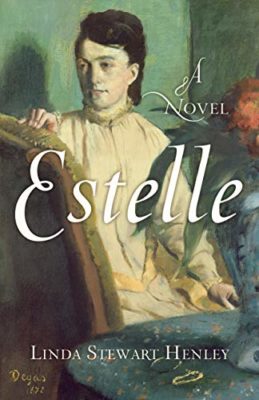
ESTELLE: A Novel by Linda Stewart Henley – American Historical Romance, Southern Fiction, City Life Fiction
 Twenty-two-year-old museum intern and unknown artist, Anne Gautier, has undertaken a significant project, restoring an elegant house on one of the most beautiful streets in New Orleans. The grand old Creole home has been in her family for many generations, and, when her grandfather died, he left her the house on Esplanade Avenue, where all the best French Creole families once lived.
There’s only one stipulation: She must restore the property or ownership will revert to the city. Even though the house is not in the best part of town, Anne is determined to celebrate the historical home not only because of her own family, but also because it was an integral part of New Orleans’ history during the visit of Edgar Degas in 1872. In fact, in Anne’s attic, Degas’s notebook gives her the money she needs to begin the restoration.
Her plans go sideways when someone breaks in and vandalizes the home, leaving behind a threatening note and a mystery to solve. On top of this, Anne is trying to reconcile her feelings about Stella, the half-sister Anne recently met. Is Stella behind the vandalism? She was left out of their grandfather’s will. Anne tries to rely on her new boyfriend, Sam, for advice, but he has begun acting strangely, sneaking around behind her back and hedging his answers to her questions. With no one to lean on, a demanding job, and her own artistic-inspiration waning, Anne may never see her beautiful home and its essential history revived.
The dual settings of New Orleans in 1870 and 1970 give this novel a unique perspective. The juxtaposition of the Musson and De Gas families’ issues to the modern trials of Anne and her own family provides perspective and education for the reader. Though their struggles seem completely unalike, the parallel stories are paradoxically similar. Estelle De Gas, sister-in-law and cousin of Edgar Degas, is a strong woman trying desperately to hold her marriage to a cheating husband together. At the same time, maintaining the expected appearance of a well-to-do Creole family while knowing the family’s fortunes have fallen.
Anne is struggling to find her place in the world and to hold together what family she has left while dealing with her own untrustworthy partner, Sam. Though Sam admonishes her for refusing to look at the practical realities of life, she seeks to make her surroundings beautiful, just as Estelle does in encouraging Degas to find his inspiration in la Nouvelle-Orléans. Anne wants desperately to make her own way in the world. Though Estelle isn’t an unmarried young woman, she understands the integral role she plays within her sphere of familial influence. The more Anne learns about Estelle, the more she realizes she needs to take a leaf from her ancestor’s playbook and find her own strength.
Art plays a huge role in this novel. Edgar and Anne share a similar notion that the life of an artist is not one easily shared with another. Both are suffering from a lack of inspiration and direction. During the time Degas spent in America, he had achieved little recognition, and his brothers hoped he would take an interest (and make an investment) in the family cotton business. Anne has given up her art for her busy internship and her flailing love life. Though the museum job isn’t her dream, she understands art is not an easy way to make a living. She avoids facing the truth just as Degas begins to feel he must help his family by selling his work and sending them much-needed money. Eventually, New Orleans offers both a new subject matter for their art. Anne, with her new-found sympathy for the poor of the city and Edgar with his own family’s business.
The growth of Anne’s relationship with her half-sister, Stella, is an interesting subplot in conjunction with Anne’s realization about the struggles of poverty-stricken New Orleanians. Anne has only recently learned of her sister’s existence because Stella, the product of a teenage dalliance, was given up for adoption immediately after her birth. Anne’s overwhelming guilt over her half-sister’s lost inheritance haunts her, and though she wants to share, giving up a portion of her estate is not the easiest thing to do. But the hard truth is, Stella is facing eviction from a Section C housing, a slum where the houses are more like shacks. Anne could offer Stella a home in their grandfather’s former home, but will she?