Viscount Simon Nightingale-Temple seeks a life of peace with his beloved Mary after the harrowing years of the Bolshevik Revolution. But in Tsarina’s Jewels, the second book in Jerena Tobiasen’s The Nightingale and Sparrow Chronicles, Simon is dragged back into global conflict through his very family.
While serving in the British Embassy in Petrograd, Simon witnessed firsthand that bloody revolution and the assassination of the Tsar’s family—all but one daughter, Grand Duchess Maria Nikolaevna, the beautiful woman who became his wife.
Maria, “Mary”, hides in plain sight among the British aristocracy, and the couple hope to settle into their lives with Simon’s parents. However, soon after his return, the highest levels of the British government force Simon into service for the newly minted MI6. Under threat of being blamed entirely for the Romanov family’s execution, Simon has no choice but to accept.
Little does Simon know he’ll soon be spying on his own brother.
As the second son, Richard resents Simon’s success and future inheritance. After drinking and womanizing his allowance away, Richard is forced into a job by his father. Though he holds a respectable clerk’s position, Richard steals files concerning the British movements against the Ottoman Empire.
In a bid to become his own man, Richard now races to sell his secrets to the Turkish government.
Simon has to bear the weight of family obligation and looming treason all while trying to maintain his wife’s secret identity. When a threatening figure returns from his past and adds yet more pressure onto his shoulders, Simon’s life might well come crashing down around him.
The characters of Tsarina’s Jewels develop with compelling emotion in the face of trauma and responsibility, most of all Mary.
Mary, heir to the Russian throne, has lost everything—her home, her family, her very heritage. Still healing from her own physical wounds, she now contends with the full force of her grief. The Nightingale-Temple family helps to fill some of her emptiness, but nothing can entirely replace the family taken from her. Not only is she haunted by the happiness they shared, but also the image of their deaths in her dreams.
Despite all of this, she takes up the mantle of nurse to join her mother-in-law Ann as a volunteer in the local hospital. Mary does what she can to comfort a flood of Spanish Flu victims. Many are Russian immigrants, but Mary refuses to let her fears of recognition stop her from tending to her countrymen—in essence her people had the crown not been stripped from her family. Her brave soul is a shining light throughout the novel.
Even Richard shows a growing depth and capacity to change, although he can’t turn back from his crimes.
Initially, Richard seems entirely loathsome, and the novel appears to move in the formulaic classic spy novel. However, even before Richard begins his life-altering exodus from England, the reader sees a shift in his character. Richard is deeply in love with Sally, an unassuming and hard-working woman. Though he doesn’t voice the feeling aloud, his actions clearly show his devotion angst at leaving her.
As Simon gets closer to catching him, Richard weathers his clashing sentiments about the treasonous path to which he’s committed himself.
Tsarina’s Jewels combines thrilling spycraft with the intricacies of 1918 European conflict, a fresh and fascinating continuation for this historical fiction series. Tobiasen explores the internal conflicts of her characters to build them up as familiar, inspiring, and rewarding to care for, giving emotional life to both suspense and history.
The fight against tyranny grips readers and obsesses authors to this day.
“Soldiers, Sailors and Airmen of the Allied Expeditionary Force!
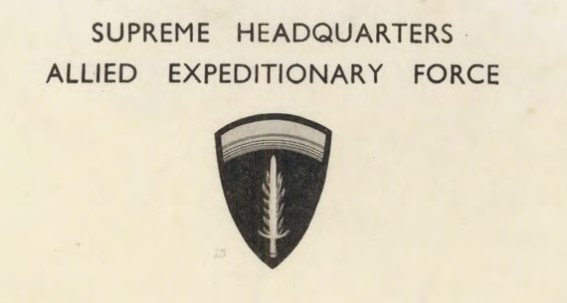
You are about to embark upon the Great Crusade, toward which we have striven these many months. The eyes of the world are upon you. The hopes and prayers of liberty-loving people everywhere march with you. In company with our brave Allies and brothers-in-arms on other Fronts, you will bring about the destrruction of the German war machine, the elimination of Nazi tyranny over the oppressed peoples of Europe, and security for ourselves in a free world.” — Order of the Day from Supreme Headquarters Allied Expeditionary Force given before the Invasion of Normandy
Chanticleer’s Personal Connection to WWII
At Chanticleer we often take particular care to honor veterans and those who serve.
Kiffer’s father retired after 36 years of service in the Unites States Merchant Marines & Marine Corps where he served in the WWII, Korean War, and the Vietnam War. He died in 1981 from one hundred percent service related injuries.
From left to right we have Kiffer’s brother Tony, her father, and Kiffer herself in Hawaii during the territory days. Her mother, Antha May, is taking the photo
David’s grandfather also served during WWII, stationed in France as a first generation Quebecois transplant in the United States
Robert Gerard Beaumier Sr. who served in WWII
My father would often tell the story of how his grandfather, Robert, was in France during World War II. At one point a dog came and wouldn’t stop barking at his unit, no matter how much they told it to go away. Finally, Robert said “Va t’en!” and immediately the dog ran off. Everyone was suitably impressed that the dog spoke French! — David
The National World War II Museum in New Orleans has an excellent summary of the lead up and importance of D-Day which we recommend you read here.
Most chilling perhaps is the closing of their thoughts that emphasize how important the landing on Normandy was:
The Normandy invasion was one of great turning points of twentieth-century history. An immense army was placed in Nazi-occupied Europe, never to be dislodged. Germany was threatened that same month by a tremendous Soviet invasion from the east that would reach the gates of Berlin by the following April. The way to appreciate D-Day’s importance is to contemplate what would have happened if it had failed. Another landing would not have been possible for at least a year. This would have given Hitler time to strengthen the Atlantic Wall, harass England with the newly developed V-1 flying bombs and V-2 rockets, continue to develop jet aircraft and other so-called “miracle weapons,” and finish off his killing campaign against ethnic and sexual undesirables.
It is our pleasure to share these wonderful WWII books with you from authors who have written about this time.
The JøSSING AFFAIR
By J. L. Oakley
At a time when true identities are carefully protected and information can get you killed, heroes emerge to fight the evils of Nazi-occupied Norway in J.L. Oakley’s highly suspenseful and beautifully penned historical fiction novel, The Jøssing Affair.
In a quiet Norwegian fishing village during the Nazi occupation, risk lurks everywhere. Most residents are patriotic members of the resistance, “jøssings,” but there are “quislings,” too. Those who collaborate with the Germans and tout the Nazi propaganda of Nordic brotherhood between the nations. Mistaking the two is a matter of life and death.
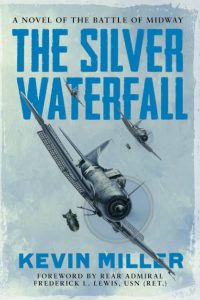
THE SILVER WATERFALL: A Novel of the Battle of Midway
By Kevin Miller
In The Silver Waterfall, author retired U.S. Navy Captain Kevin Miller reveals the intricate and deadly turns of the Battle of Midway, a combat shaped by transforming warfare, and one that would in turn shape the rest of WWII’s Pacific Theater.
After their surprise attack on Pearl Harbor, the Japanese Navy seeks to draw American aircraft carriers into an ambush, to secure Japanese power over the Pacific. In a time of great upheaval for warfare technology, aircraft carriers dominated both sea and sky. So, to destroy the USS Enterprise, Yorktown, and Hornet, Chūichi Nagumo— commander of the Japanese First Air Fleet— brings to bear his own four carriers, HIJMS Akagi, Hiryū, Kaga, and Soryu.
GENERAL in COMMAND – The Life of Major General John B. Anderson
By Michael M. Van Ness
Michael M. Van Ness, the grandson of “the general in command,” has created a remarkable biography chronicling the adventures of a farm boy who rose high rank in the US military and served with distinction in two world wars as a combatant, officer, and sage observer.
Born in 1891, John Benjamin Anderson must have had considerable intelligence as well as patriotism and grit, since he was accepted at West Point Military Academy at age 19, an honor conferred on only 130 applicants per year—and finished in the top third of his class. He would soon serve under General Pershing in the Mexican War, giving him the experience of combat and coincidentally, his first ride in an automobile. That deployment earned him inclusion in Pershing’s ranks in World War I. It was then his diaries began, and though he protested humorously that “I hate to write,” these personal recollections give readers an up-close picture of the devastation of warfare.
COLD PEACE: A Novel of the Berlin Airlift, Part 1
By Helena P. Schrader
Amidst the ruins of Post-WWII, Berlin struggles to rebuild from the ashes, torn apart and facing down the promise of another bloody dictator. A myriad cast, all shaped by that same war, become entwined with the broken city as its hour of need approaches.
Just as Germany is divided between the Americans, British, French, and Soviets, Berlin has been cut into pieces. But the balance of the occupation powers tips eastward as the Soviet Zone surrounds the city, giving them control of all ways into and out of Berlin – save for the air. The occupation currency is worthless thanks to Soviet over-printing, leaving Berlin on a barter system of cigarettes and black-market trading. In order for Germany to recover, the Western Allies plan to introduce a new currency, even if it angers the Soviet bear.
A young boy in Norway makes a discovery while playing with his dog, opening the mystery of EO-N by Dave Mason, a detective story spanning multiple decades and both sides of the Atlantic, a deep dive into the horrors of Nazi Germany, and a heartfelt love story.
A small metal fragment leads to the discovery of a downed WWII twin-engine Mosquito fighter-bomber hidden in snow and glacial ice for nearly 75 years. The crash site yields an initial set of clues, one of which finds its way across the world to Alison Wiley, a biotech CEO in Seattle. Having recently lost her mother, and, a few years earlier, her brother in Afghanistan, she finds her days full of despair, but the discovery makes a distant connection to her long-lost grandfather, and she flies to Norway. There, she meets Scott Wilcox, a Canadian researcher assigned to investigate the discovery after his government learned that the crashed aircraft belonged to the Royal Canadian Air Force. Their attraction is both intellectual and emotional, but the quest to uncover the plane’s mysteries and the fate of Alison’s grandfather place any romance to the side.
In The Sower of Black Field, Katherine Koch’s historical fiction novel, Father Viktor Koch— a 67-year-old Catholic priest— presides over a monastery in a small German village, as the Nazi regime sweeps through the country.
The time is April, 1941. Fr. Viktor’s order, the U.S.-based Passionists, built the monastery eight years prior, providing employment for most of the villagers and remaining a symbol of their faith.
DEAR BOB: Bob Hope’s Wartime Correspondence with the G.I.s of World War II
By Martha Bolton with Linda Hope
During World War II, Bob Hope traveled almost ceaselessly to outposts large and small, entertaining US troops – and inspiring them; Martha Bolton brings the extent of this work to light in Dear Bob.
Writer Martha Bolton worked with and for comedian Bob Hope. Now, with Hope’s daughter Linda, she has gathered and organized the letters written to Bob by the soldiers he helped.
Hope, English born, and born to entertain, once said he could not retire and go fishing because “Fish don’t applaud.” Among his sizzling lines – and there are hundreds recorded here – he told one audience that he’d gotten a wonderful welcome when he arrived at their camp: “I received a 10-gun salute… They told me on the operating table.”
Eighty Years later, and the sacrifices made in WWII still matter and the fight for a more just world continues. Thank you to everyone who has submitted books to us and been a part of our own journey and learning.
Brooding Château du Freudeneck, just outside Strasbourg, France has villains in the drawing rooms, stolen art hidden in the cellars, and bats in the belfry – all the best elements for a 19th-century Gothic mystery.
However, in Michelle Cox’s novel, A Spying Eye it’s the 20th century. The Great War is passed, but the next war already looms on the horizon. The people of Strasbourg feel the growing conflict sharply, at the heart of Alsace-Lorraine, a fertile region that has been contested between France and Germany since time immemorial.
Which means those bats are in the unfortunate head of the elderly Baron Von Harmon, the current lord and master (as much as he’s still able to be, at least) of the Chateau, while the stolen art is pursued by both the villainous Nazis and the only slightly-less villainous agents of Britain’s MI5.
Amongst this strife, Clive and Henrietta Howard visit the Chateau, at the behest of both his mother and his country. They’re filled with conflicting hopes about a second honeymoon after their disastrous first attempt in A Promise Given, while conducting a wild goose chase for a missing occult art masterpiece in the home of Henrietta’s long-lost relations.
The game is afoot from the very first page of this sixth entry in the award-winning series – long before Clive and Henrietta even know that they are being played by both sides, neither of whom intends for them to survive.
While Inspector Clive Howard is certainly the more experienced investigator of this pair, the focus in A Spying Eye is firmly on Henrietta, particularly in contrast to the trials and tribulations faced back home by her sister Elsie and her sister-in-law Julia.
The Strasbourg troubles in which Henrietta finds herself mired combines a search for the roots her family left behind generations ago with an utterly riveting and thoroughly researched investigation into the early years of the Nazi movement, Hitler’s seemingly endless search for mystical and mythical artworks to feed his obsession with the occult, and a real-life mystery wrapped around just what happened to the panel of the Ghent Altarpiece that the Howards oh-so-briefly managed to hold in their hands.
The pace of the story is relentless on both sides of the Atlantic, as Henrietta, Julia, and Elise all face personal, professional, and even criminal crises, in a world marching towards World War II.
Readers who have fallen in love with the detective duo of Howard and Howard will be in rapture over this latest entry. Fans of the bestselling Maisie Dobbs series by Jacqueline Winspear or the Elena Standish series by the late Anne Perry will find just the kind of character-driven, meticulously researched historical mystery that they are craving, set in the fascinating period between the wars.
As A Spying Eye ends, Henrietta gets her hat on the way out the door to her next adventure, A Haunting at Linley, scheduled for release in late October 2023.
Miguelito’s Confession by Miguel A. De La Torre shows the resonate struggle of escaping the generational cycle of poverty and injustice.
Human nature is a product of circumstance, interwoven with the impact of one generation on the next. Sometimes history teaches people lessons of pain, cruelty, and inhumanity. How can someone rise above the disadvantages they’re raised in, the pressures that hold them hostage from their own goals and wishes? Especially at risk are the innocent children caught in the midst of a maniacal battle within the corrupt powers of society. Can an illegal immigrant find success and happiness despite the brutalities of life? And what is the personal cost of pursuing justice?
Manuel de la Cruz is dying, and he is alone.
At the end of his life, he suffers from dementia, a mixed blessing that releases him from the violent slice of history he had fully participated in. It allows him to forget the cruelty and violence he inflicted as part of the police force during the 1959 Cuban Revolution. Even the times that followed are lost to him, all he did to escape from the consequences of his actions by escaping to the U.S.
Yet suddenly, in his final moments, Manuel is granted the ability to think clearly again, a sign that justice is possible. As Manuel leaves this world, he is haunted by what his life has been, his impact upon others and his family, and especially the psychological inheritance he leaves his son Miguelito.
Now, this is Miguelito’s story, and he takes a difficult journey.
As a young boy, his family lived in the slums of New York. It’s a filthy, dangerous place to grow up, and its threats are magnified many times over for an illegal immigrant boy who is despised for being Latino. The author is masterful in his portrayal of this revolting setting.
Miguelito seeks out ways to survive his painful world. He learns from others who dwell in the corners of humanity, minorities who are punished for not being what the majorities require. Playing the social games forced upon him, Miguelito discovers some peace, persistence, and answers through his secretive worship of African gods. It’s an unexpected friend who introduces him to this path, helping him weather the turmoil that his mere existence incites around him.
Author and Professor Miguel A. De La Torre lifts conventional history out of a single point of view. Miguelito’s Confession brings to life the complex past settings, and the lessons revealed both sting and inspire.
This is history shown without glorification. Readers will be engaged by the author’s ability to mold multi-dimensional characters with complex motives. The backdrop slice of life is described artfully within a foundation built by preceding generations. Vivid pictures of human interaction drive the present and shape the future, holding the reader in a thought-provoking trance.
Empathy for the characters pulls the reader deeper and deeper into the story, in pursuit of hope. Will they uncover the hidden answer to what can make life worth living, and what can finally bring justice?
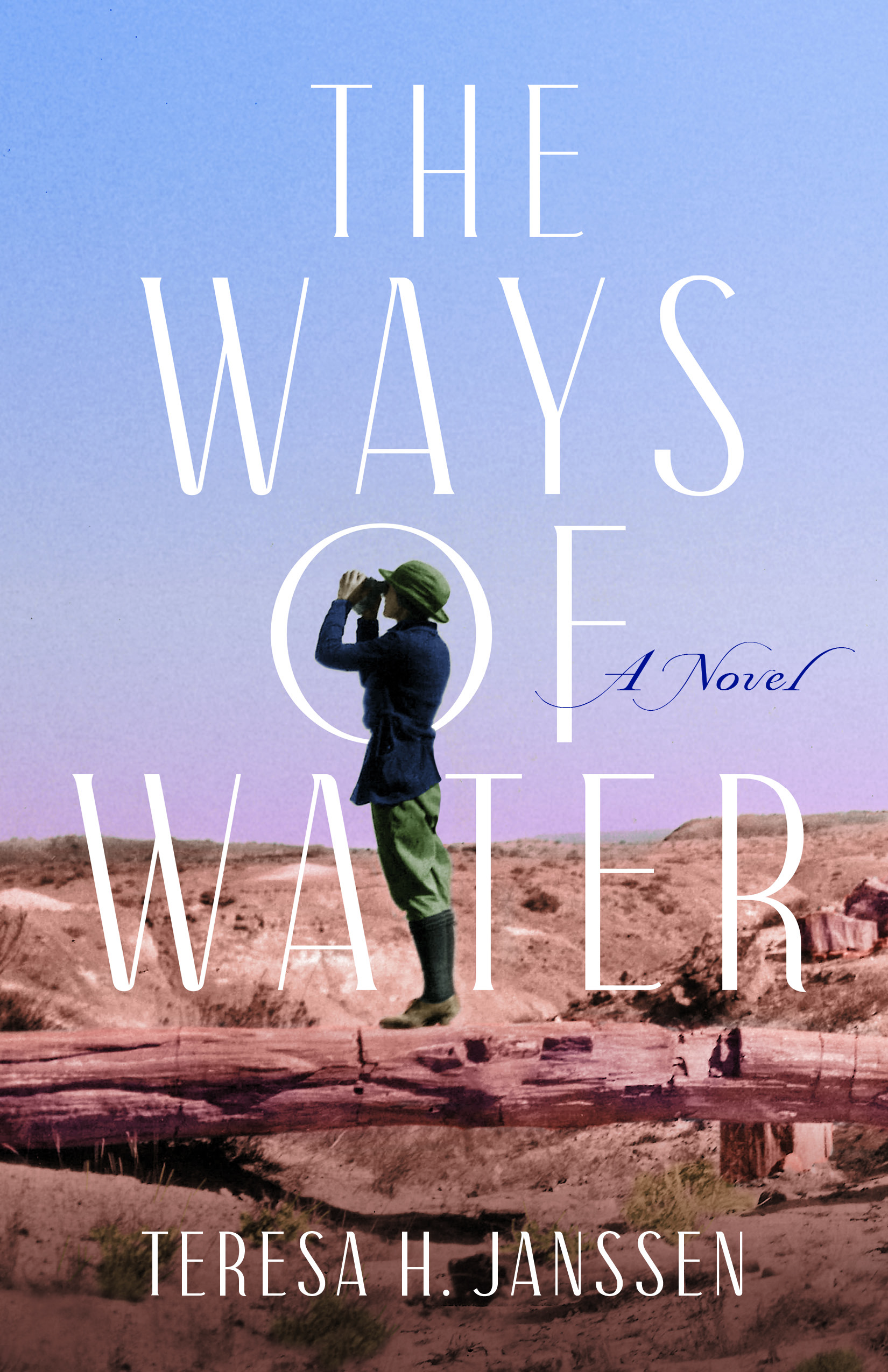
In The Ways of Water, a meticulously crafted coming-of-age novel, author Teresa H. Janssen drops the reader a hundred years back in time, into the American southwest where water is scarce and the survival of the fittest is a reality.
In this place, “Life is a kettle of sadness, but along with it comes lumps of sweetness that are so exquisite… they give a girl courage to dream.”
Josie Belle Gore was only four when, in 1906, she traveled with her mother and three siblings from Texas to their new home in the Arizona desert to live the life of a railroad family.
Over time, her family wandered from desert to desert—in Arizona, New Mexico, Texas, and Mexico—wherever Papa’s job took them. The interplay of those harsh, yet enchanting lands of the American southwest with the human condition during the beginning of the twentieth century molded Josie’s character. Early on, she understood “…nothing on this earth comes easy. You just have to do what needs doing.”
For Josie, it seems natural and expected that after her mother dies, she, as the eldest daughter in the home, assumes responsibility for her siblings. However, when her father decides to marry her off at age fifteen to a much older man, Josie can do nothing else but run away. Drawing upon her own internal resources and wits, she makes friends, travels to new places, gains useful skills, and ultimately finds her destiny in post-WWI California.
This story flows with twists and turns much like those of a river.
Although atypical in regard to story structure, character development, and denouement, it works well. The authentic voice, rich sensory imagery, and often lyrical, poetic language create an emotional and descriptive feast. Inspired by the life of the author’s grandmother, this is a skillfully presented fictional autobiography.
In many ways, Janssen’s book echoes Mary Antin’s sentiment in The Promised Land (1911) “…We love to read the lives of the great, yet what a broken history of mankind they give, unless supplemented by the lives of the humble…”
Maya Radelis has spent the last seven months running from herself. After the death of a patient, she abandons her pediatric residency in New York City for the jungles of Guatemala and the Family Health Volunteers Mission. However, after exhausting her six-month leave, she still cannot bring herself to return to New York. Instead, Maya ends up in Edinburgh, Scotland, where fate intervenes.
In a small antique shop, an inscribed ring somehow “calls” to her. Unwilling to part with it, Maya purchases the ring and traces its history. She has seven days before she must return to the university and face the consequences of her absence, as well as the investigation of her patient’s death. Fearing she will no longer be allowed to pursue a medical career and dreading the meeting where her fate will be revealed. Maya wants to make the most of her search for the ring’s previous owner, especially after she begins to have strange dreams and memory-like episodes of the woman she thinks owned the ring. Enlisting the help of Pauline, her French friend, she traces an odd, twisting path through Paris then Bern, Switzerland. The more she discovers, the more she begins to question her destiny.
With its alternating narration, Elena Mikalsen’s Wrapped in the Stars shows two women’s worlds, so far apart and yet so similar. Maya Radelis, an American medical student, is shown in parallel with the life of a Swiss medical student in the years leading up to World War I, Rebecca Miller. Though the obstacles for Rebecca are vastly different than the ones facing Maya, their feelings of uncertainty and their love of medicine are very much the same. Rebecca’s desire to become a doctor comes from a family heritage of medicine and, in some part, from the death of her brother, Karl. Maya is also following a family legacy while hoping to somehow erase the guilt she feels for the childhood death of her twin sister, Ella. Both of these accomplished women have this need to “[e]arn [their] right to be alive” and somehow validate their own existence through medicine.
Both women share a Jewish ancestry, and neither woman sees the need to marry, desiring instead their independence in a world they have built, instead of the one handed to them through family ties and marriage bonds. While fearing the lonely paths before them, Maya and Rebecca doubt their abilities and often wonder if their sacrifices are truly worth the pain of disappointing others. However, each find men strong enough to understand them both and love them eternally.
“Synchronicity,” or “meaningful coincidences” plays an enormously important role in the novel. Readers will enjoy following Maya’s story, the twists and detours that create such an interesting plot as her history and future entwine. A tactic Mikalsen skillfully employs to make one wonder just how much we choose for ourselves and how much the universe decides for us.
Eternal love is the most touching aspect of Maya’s and Rebecca’s stories. The German inscription Maya finds in Rebecca’s ring says it best with its message of living within the heart of another and being forever “therein.” It’s a beautiful message, a love strong enough to defy death and reclaim the lovers a century later. Something is reassuring and peaceful in believing love cannot die. And when all is said and done, what lovers wouldn’t want such a legacy?
Wrapped in the Stars received First Place in the CIBAs 2018 CHATELAINE Awards for Romantic Fiction.













 Brooding Château du Freudeneck, just outside Strasbourg, France has villains in the drawing rooms, stolen art hidden in the cellars, and bats in the belfry – all the best elements for a 19th-century Gothic mystery.



 Maya Radelis has spent the last seven months running from herself. After the death of a patient, she abandons her pediatric residency in New York City for the jungles of Guatemala and the Family Health Volunteers Mission. However, after exhausting her six-month leave, she still cannot bring herself to return to New York. Instead, Maya ends up in Edinburgh, Scotland, where fate intervenes.