Tag: 1st Place Winner

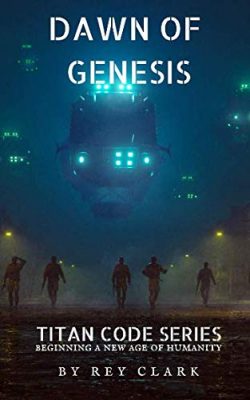
  • DAWN Of GENESIS: Titan Code Book 1 by Rey Clark – Sci-Fi, Post-Apocalypse, Young Adult


    Cygnus Science Fiction 1st Place Blue and Gold CIBA BadgeDawn of Genesis: Titan Code Book 1 by Rey Clark portrays a near future Earth that is dying by inches, feet, and yards.

    Specifically, yards and acres of crops are choked to death by a constant dust-bowl. Only a small human population has so far managed to survive the collapse of both the environment and the economy of the entire world.

    The desperate circumstances of most of humanity are exacerbated by the rise of mutated super-humans with powers to rival those of typical superheroes. But the “Evos,” evolved humans, are missing the moral compass that directs those comic book superheroes, and the government that has arisen to “protect” the remaining non-Evo population isn’t much better.

    The reader’s perspective on that boiling stew is teen Tessa Jones, still in school and trying to pretend that her combat and engineering skills aren’t nearly as excellent as she knows they are.

    If she shows what she’s really capable of, she’ll be whisked away from her family’s farm by a government that uses – and uses up – every available person in order to defeat the Evos.

    But Tessa’s dreams of remaining with her family explode when she manifests her own Evo powers to save her little sister’s life. Unable to hide what she really is, Tessa becomes a pawn, caught between forces that plan to use her for their own ends, either as a warrior for the Evos or a lab rat for a government planning to make more super-soldiers just like Tessa.

    Because Tessa is still learning about the world and her place in it, she provides an eye-opening perspective on this post-apocalyptic world, as well as giving the story crossover appeal to readers of young adult and new adult fiction.

    Tessa is on the cusp of adulthood, facing decisions that will set the course of her life. She is still facing all the issues of being in school: boredom, bullying, trying to fit in and desperate not to stand out too much. Even in the post-apocalypse, these issues are easy for readers to identify with.

    She also tries to find her truth, to find a way of coping with the dying world she has been born into. She’s aware that what she hears about the larger world is all propaganda, and she doesn’t know which way to turn or what to believe because she has no idea where to find the truth.

    She’s naive, she’s uncertain, and she’s desperate because she’s trapped in terrible circumstances facing equally terrible choices, none of them of her making. But she is the one person who might be able to fix at least some of her world, if she is willing to take the reins of the future into her own hands.

    Dawn of Genesis is a post-apocalyptic survival story. And it’s a story about one young woman making a place for herself on a dying Earth. But it’s also a story about training and learning to be the most that one can be, and it’s a kick-ass adventure story about grabbing a better future.

    Dawn of Genesis by Rey Clark won 1st Place in the 2019 CIBA Cygnus Book Awards for Science Fiction.

  • COGNITION by Jacques St-Malo – Technothrillers, Philosophical Fiction, Genetic Manipulation

    Cygnus Science Fiction 1st Place Blue and Gold CIBA Badge

    A scientific thriller by Jacques St-Malo, Cognition draws from a variety of sources – from Middle East royals to Asians, corporate tycoons from the US and UK to the Chinese and US administrations – to create a canvas as broad and fascinating as the philosophical and moral speculations it presents.

    Cognition moves along in the span of a few decades, with its many facets of people in search of the child entrusted with the full capability of germinal-choice technology – to finish off the exclusive child before its countrymen could claim the genius mind for themselves. Meanwhile, an agitation based on the rage of those denied this germline manipulation is being waged against the richly endowed children of the privileged. The tug-of-war between the several factions throughout the book, each with their own set of interests and ideologies, creates numerous opportunities for philosophical debates among these genetically engineered children, educating the reader on the many ramifications of genetic manipulation that results in mental and physical enhancement.

    Upon the fall of the last monarch’s regime in Turkey, the royal child prince is taken away to a foreign land to live with his mother’s maidservant for safety of life.

    The Chinese Code Seagull is under operation to locate the child entrusted with the full Prometheus module —alpha and beta complement. Ethan, the sought-after child, is growing up away from his regal life and knowledge of real identity as a housekeeper’s son in the home of billionaire business mogul Bruce Taylor. Valerie Taylor, Bruce’s daughter, is another ‘extra somatic’ or genetically tailored child whose fate intersects with Ethan’s. Their course is eventually altered by the gap in their familial genealogy.

    Driven by resentment against privileged for the lack of opportunities, Connor Dashaw becomes a rolling force in populist Aamon Wade’s political party fighting against germ line-treatment, which is only affordable by the rich.

    All the big players in the novel – political, business, and administration – enact a cat-and mouse game to get grip of a clue puzzle to gain greater power. The collision of many motives results in a chain reaction that consumes everyone in its radar – those seeking a countermeasure to humanity’s predetermined DNA on the one hand, and arbitrariness on the other.

    The novel explores, through the psyches of three children, the feeling of estrangement.

    Ethan and Connor, in their own ways, embody the estrangement: one is a prince who is oblivious of his identity, while the other is socially deprived of prospects. Ethan feels at ease in the peaceful seclusion of tycoon Taylor’s historic palace-like property. However, his position as a servant’s son stings him, and he considers it humiliating to spend his life “tending to another’s leisure.” Connor, on the other hand, becomes a staunch supporter of political ideology against extrasomatics. The feeling of not belonging returns to Ethan, along with genetically modified Valerie, when they do not find friends or partners who share their “eccentric” views.

    Each chapter of the story begins with a quote and introspection about the topic of the chapter.

    The author’s tone is upbeat and open about his various philosophies as well as current technologies, which demonstrates his extensive knowledge and necessitates thought. A subtle critical tone accompanies the ardent tone: there is an occasional commentary on the human urge to exert control over others and his own fate, however unethical it may be.

    Cognition mixes a wealth of material – from science and technology to business and philosophy, and politics – to create an enthralling fiction about modern evolution. A heavy-read that requires time and consideration, Cognition will especially appeal to tech nerds due to the abundance of scientific discussion that it presents.

    Cognition by Jacques St-Malo won 1st Place in the CIBA 2019 Cygnus Book Awards for Science Fiction.


    Chanticleer Book Reviews 4 star silver foil book sticker

    Cygnus 1st Place gold foil book sticker image


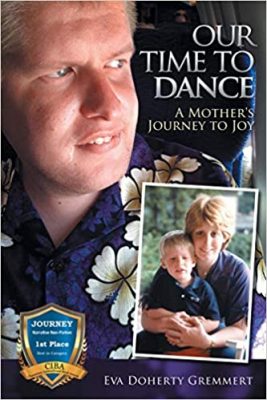
  • OUR TIME to DANCE: A Mother’s Journey to Joy by Eva Doherty Gremmert – Epilepsy, Biography, Parenting

    Our Time to Dance: A Mother’s Journey to Joy by Eva Doherty Gremmert demonstrates the importance of advocacy for those who are disabled, intellectually or otherwise.

    In the early morning of August 18th, 1979, Eva Doherty Gremmert awoke with a contraction. A young mother already, Eva is worried about how she will cope with caring for two infants. She tried to calm her concerns by remembering that babies typically arrive easier and more quickly the second time around; however, the delivery ends up being long and exhausting. Once her son Nick arrived, Eva could not shake the feeling that something might be wrong. For the first several months of Nick’s life, doctors actively ignored her concerns and told her nothing was wrong with her son.

    A mother knows best, and with a lot of courage and determination, Eva and her husband Arden finally find a doctor that listens and agrees with their concerns.

    Their world becomes full of physical therapy and pediatric neurological appointments. When Nick reaches school age, Eva and Arden also become very involved in ensuring he receives the right educational program. Sometimes, a whole new program needed to be created. The road is often tricky, but Nick is full of life and love, and of course, dancing.

    Eva crafts Our Time to Dance into a beautiful story of a mother’s unyielding love. She holds nothing back as she describes her fears of motherhood and the emotional toll of caring for her intellectually and physically disabled son. This book ultimately is not just about Nick’s particular story but also about the importance of advocating for those with disabilities and their families. Eva describes many instances where educational professionals could not provide Nick with the proper program and, subsequently, underestimated his unique abilities and potential to learn.

    The structure of the book has two timelines that transition back and forth.

    One timeline begins just before Nick is born – the other picks up when Nick reaches adulthood and experiences more severe seizures. This results in his doctor’s suggestion that they prepare for the possibility of his passing. Eva and Arden decide to take a big road trip so that Nick can visit friends, possibly for the last time. As they depart, Gremmert reflects on the many challenges throughout Nick’s life, from physical therapy and his education. On every page of this story, readers see Nick’s abundant love and joy with everyone he meets.

    Eva hopes that by writing Our Time to Dance, readers will “find the strength and hope they need and the joy they desire.” Finding the good in difficult situations makes going through them a little easier.

    The powerful message contained in Our Time to Dance makes the book a treasure, and is sure to help those who live with and work with persons with disabilities. Gremmert won First Place in the CIBA 2019 Journey Book Awards for narrative non-fiction for her inspirational work. Highly recommended!


    5 Stars! Best Book Chanticleer Book Reviews


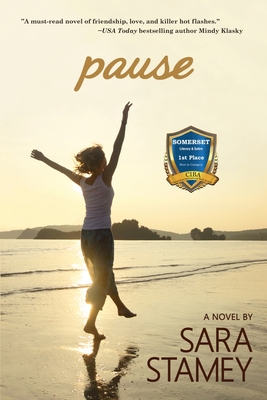
  • PAUSE by Sara Stamey – Contemporary Women’s Fiction, Family Fiction, Literary Fiction

    Blue and Gold Somerset First Place Winner Badge for Best in Category


    Sara Stamey’s Pause features a hero who defies gravity, a scintillating setting, and a lovely backdrop for this riveting story.

    This story is about women: strong, weak, abused, cherished, divorced, cancer survivors, mothers, sisters, friends, frenemies. It is a book about survival and hope, about getting back to self to reemerge into a life worth living. 

    Meet Lindsey, a fifty-two-year-old divorced woman going through menopause, living alone with her two cats, and worrying about her 1 and ¾ breasts. Readers will be hooked from the very beginning with the first of many poignant and funny journal entries. Here is Lindsey’s reality: a middle-aged woman suffering hot flashes that sear her skin and cause spells of nausea, who suffers PTSD from an abusive spouse. 

    Lindsey never thought of herself as a victim, though.

    The fact that she walked on eggshells around Nick becomes a reflection of Lindsey’s parents’ relationship. Her father’s abuse of the mother and the mother’s frailty combined with her refusal to accept help and get out of the situation leave Lindsey feeling helpless and trigger her PTSD. 

    A certifiable mess, Lindsey seeks out an old flame, Newman. And at least for her, the flame ignites, and Lindsey finds herself falling in love. Newman, however, never opens up to her or becomes more available than a part-time lover. When she meets Damon, she is torn between being treated like a queen by a man ten years younger than her or as a booty-call by Newman. 

    Stamey weaves these issues and more into her novel, giving her protagonist a chance to try on life again after surviving cancer and divorce. 

    Lindsey’s spiritual awakening occurs as she works as a medical transcriber at a local hospital. While typing up a rush job on an emergency case, she discovers that a friend’s son was admitted with head trauma. The doctor who did the neurosurgery regularly botches the surgery, either killing his patients or leaving them vegetables. She informs the parents of her fears about this doctor while launching a full-scale lawsuit against the hospital that knowingly kept this doctor on staff and destroyed their son’s chances for recovery. 

    She gets fired for breach of confidentiality and finds herself unemployed, but her original plan to pursue environmental writing, essays, articles, and books after graduating from college beckons. She finds her first topic while riding through a park slated to become a hospital parking lot. She submits her essay about endangered owls living in the trees there; the piece is published and becomes instrumental in saving the space. The paper’s editor recognizes her talent and approaches her with another project with an environmental theme, and Lindsey agrees. A new career blossoms for her, which builds her up instead of tearing her apart. 

    Stamey develops Lindsey as a woman who won’t succeed until she takes charge and stands up for herself and her dreams. 

    Lindsey must learn to heal and move beyond cancer, the divorce, and the PTSD of the abuse. Readers will adore Lindsey for all of it. Powerfully written with melodic imagery, Stamey draws her readers in. Be prepared to cry, laugh, and cheer for Linsey as she finally takes the leap of faith necessary to begin believing in herself.

    Stamey’s Pacific Northwest backdrop is captured in her skillfully crafted narrative. Readers are with Lindsey on the rapids, riding bikes through a maple forest, or walking beside a salmon-filled stream. We sit with her looking out over the Pacific Ocean at sunset and watching eagles as they hunt along the shore. Stamey’s brush strokes are deft, and her palette is rich as she creates this story’s world.

    Stamey’s Pause is a riveting tale of one woman’s exploration to discover herself in a world where she has been dominated and controlled. She learns to take back control and finds herself whole and healed. 

    Pause is beautiful and thought-provoking and comes highly recommended.  This title won 1st Place in the 2020 CIBA Somerset Book Awards for Contemporary and Literary Fiction.


    Somerset Literary and Contemporary Chanticleer International Book Awards 1st Place Winner oval Gold Foil sticker

      5 Stars! Best Book Chanticleer Book Reviews


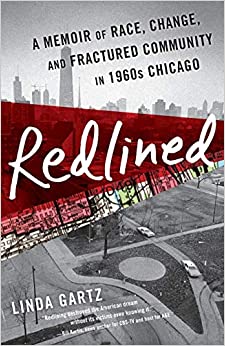
    • REDLINED: A Memoir of Race, Change, and Fractured Community in 1960s Chicago by Linda Gartz – Memoir, Racial Segregation, Sexual Liberation

      Author Linda Gartz tells of her childhood and early adulthood amidst social upheaval in the city of Chicago in her memoir, Redlined: A Memoir of Race, Change, and Fractured Community in 1960s Chicago.

      Gartz grew up the second child of second-generation immigrants to the US. Her father’s father boldly made the trip to the land of opportunity at age 21. She spent much of her childhood in cramped quarters with her parents and her older brother, living alongside strangers. They paid this price for the “dream” – the couple bought a house in a decent neighborhood; keeping roomers, even living in the same flat with them, helped pay expenses.

      Gartz’s grandmother, a talented dressmaker, helped out with childcare and other chores while her mother worked to manage all the finances, tenants, and repairs in their rooming house; she had to do this alone half the year while Gartz’s dad traveled for his job. But Grandma K suffered mental illness and abused Gartz’s mother and father, sometimes violently. Gartz’s father felt oppressed by her presence, which caused ongoing, if mostly unspoken, conflict in the home.

      Chicago’s social and economic upheaval served as a microcosm for national change, and as backdrop for the Gartz family drama.

      African Americans fled the dangerous and economically dead-end South for more promising prospects in places like Chicago. But majority white cities and regions resisted their incursion through restructuring and re-designating neighborhoods and school districts. All the while, the civil rights movement sought large-scale change amidst peaceful protests, riots, and violent reprisals from the law.

      The influx of black workers into her own neighborhood affected Gartz’s choice of schools and friends. Civil rights struggles incited her sympathies while her parents expressed their older prejudice. They feared that all of their hard-earned investments would vanish if “the colored” came in. Still, the teen had black friends and neighbors. She felt touched by the spirit of rebellion in a new testing of societal limits: sexual freedom.

      Gartz felt driven to compose this intelligent account of the changing times when she and her brother “found our gold” in the attic of their parents’ home: diaries, letters, cards, calendars and notebooks reaching back to the couple’s own youth.

      The undercurrent of family tensions became clear. Grandma K’s psychosis put the house on edge. Gartz’s father struggled to balance his home and work life, needing to earn money with a job that required six months of travel across each year, and also supporting his over-burdened wife with the demands of their rooming house with as many as eleven tenants. Her mother saw her behavior in the sexual revolution as shocking. Gartz includes details of the subtleties of “redlining” that allowed cities and regions to keep African Americans down and poor by limiting their ability to own property. Family photos pepper her book, lending emotive touches. The result is a vibrant look at the coming of age of a nation through the eyes of a frank, freethinking woman.

      Redlined: A Memoir of Race, Change, and Fractured Community in 1960s Chicago by Linda Gartz won 1st Place in the 2019 CIBA Journey Book Awards for Narrative Non-Fiction and Memoir.


      5 Star Best Book Chanticleer Reviews round silver sticker

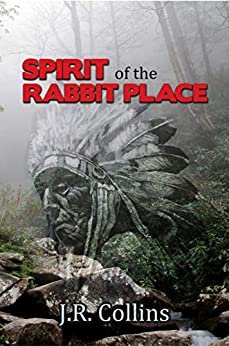
    • SPIRIT of the RABBIT PLACE (Choestoe Book 3) by J.R. Collins – Native American Literature, American Western Fiction, Historical Action & Adventure

      SPIRIT of the RABBIT PLACE (Choestoe Book 3) by J.R. Collins – Native American Literature, American Western Fiction, Historical Action & Adventure


      Laramie Western Fiction 1st Place Best in Category CIBA Blue and Gold BadgeWhen gold miners discover Choestoe Valley, Jebediah Collins must fight for his family – whether blood-related or not – in J.R. Collins’ historical adventure, Spirit of the Rabbit Place

      Fourteen-year-old Jebediah Collins lives in paradise, also known as Choestoe Valley, or to the Cherokee as the “land where the rabbits dance.” The Collins consider Dancing Bear, a Cherokee elder, and his relatives as family. They share with and help each other in good times and bad.

      When Jeb’s grandfather settled in the valley after immigrating from Ireland, he quickly learned the benefits of befriending the Native Americans living in the area. Now Jeb’s father, Thompie, gives freely of his farm’s bounty to the Cherokee, who help work the land and teach the Collins how to survive in this beautiful but deadly landscape. Cain, Jeb’s older brother even marries Rose, Dancing Bear’s daughter, and becomes a full-fledged Cherokee warrior in his own right. Dancing Bear symbolically adopts Jeb, who shares an age with his own son, Wolf. Jebediah and Wolf become blood brothers, learning to be Cherokee warriors together and taking on any and every adventure that comes their way.

      Their adventures take a darker turn with the arrival of gold miners to their sacred valley.

      These unscrupulous men threaten their very way of life. The ruthless miners capture Wolf and force him into slavery, pushing Jeb to risk himself for the chance to rescue his friend.

      The third novel in the Choestoe series builds on a theme of unity. Jeb’s family and nearly all of the settlers in the valley honor and respect the Cherokee who inhabited this area long before the settlers arrived. From plowing fields to hunting game, the Collins family and Dancing Bear’s clan work seamlessly, easily with each other. Under the age-old adage, “treat folks how you want to be treated,” Jeb understands that what he does and says will be returned to him tenfold. Though the white man’s greed threatens to change his home forever, he would never make an enemy of the Cherokee, a people so much more knowledgeable than his own. He trusts implicitly and without question, and with that comes the need to protect and love his family.

      The people of Choestoe take responsibility for one another.

      Their hearts beat as one; their minds think as one. When any neighbor needs help, neither the settlers nor their Cherokee brethren forsake them, chasing down murderous outlaws and helping free slaves. More people than just Jeb’s family show this amazing generosity of spirit. Throughout the valley, families return in kind the goodness shown to them. Mrs. England, for example, takes in orphaned children, especially those with disabilities and special needs.

      The settlers not only want to fight for their way of life, but also for the ancient ways of their Cherokee neighbors, who the gold seekers and US government treat more cruelly every day. This community defines the emotional journey of Spirit of the Rabbit Place.

      Spiritualism plays an important role as well, with a mixture of and deep respect for Cherokee and Christian beliefs.

      Jeb’s faith often brings him comfort and strength, and many times, the Cherokee turn to prayer for direction and guidance on huge decisions. Though he fears evil when he comes face-to-face with it, Jeb knows the Great Creator protects him and finds solace in the idea that no evil can hurt someone who is protected by the Peace of Jesus. All of the Cherokee warriors repeatedly assure Jeb, whose Cherokee name is Spirit Filled One, that he should trust in and heed the voice of the Spirit that comes to him; that very faith not only saves him and George Black Oak, Wolf’s blood uncle, but also shows them some much-needed information in the midst of an important emotional struggle. This faith shines through in Jeb’s loving nature and brings light to all those around him.

      Spirit of the Rabbit Place (Choestoe Book 3) by J.R. Collins won 1st place in the 2019 CIBA Laramie Book Awards for Western and Americana fiction.

      Click on these titles to read our reviews of the first two books in this powerful series, The Boy Who Danced with Rabbits and Living Where the Rabbits Dance.

      5 Star Best Book Chanticleer Reviews round silver sticker

      Laramie Americana Fiction gold foil book sticker image

    • CELIA’s HEAVEN by Nancy Canyon – Magic Realism, Family Saga, Contemporary Literature

      CELIA’s HEAVEN by Nancy Canyon – Magic Realism, Family Saga, Contemporary Literature

      It’s as if a large chunk of her heart was wrenched away in an instant. Celia’s twin sister died suddenly in a terrible accident. Now Celia is haunted by this dear sister who is gone forever. Moreover, the emotional distance between herself and her parents, the only family that’s left behind, is painful. From her hell on earth, she yearns for her own, Celia’s Heaven, where all could be right again. But the road to Heaven is paved with broken promises and a shattering revelation.

      Celia leads an unsatisfying life. The residents in her town are repulsed by her because she works as a stripper. Her father berates her for her life choices. She gets it, but she makes good money, and money is hard to turn down. Although Celia’s boyfriend asks her to marry him, she still likes to be with other men and acts on her impulses. Amid the emotional chaos, Celia continues to look for a miracle. The only thing on the horizon, however, is the worst winter snowstorm in years, and it could be deadly.

      On the anniversary of her twin’s death, Celia reminisces about the times the two shared together.  But something weird is happening, she is seeing glimpses of her twin – even hearing messages from her. What is she trying to say? Is there some warning to communicate? Or is it some secret she needs Celia to know? Her sister’s spirit is restless, and Celia is trying to understand and help. Perhaps by helping her sister, she will be helping herself as well.

      Nancy Canyon’s beautifully written story has a smooth, crisp, surface tone with an underlying, pulsing energy. Fascinating, conflicted characters will grab any reader’s interest right from the start. Even the dialogue is masterful for what is said and what is left unsaid. All in all, Canyon shines at painting detailed, intense character portraits that spring to life and find their way right into the heart of the reader. Each character struggles to reconcile the choices they’ve made that affect them and those around them. But now they face fears about what is to come. The powerful writing takes the reader into the intimate journeys of Celia, her boyfriend, and others including her sister. These are women and men who live in quiet desperation, and thoughtfulness, praying for a better life and hoping to survive.

      Set against a backdrop of a nightmarish snowstorm, Canyon’s characters are put to the test, trying to survive the current situation that seems to have supernatural strength and the emotional turmoil they each face. Is peace a possibility? Is happiness and love too much to hope for? Celia’s twin may know something that will change lives forever if only Celia discovers the key to unlock her message.

      Celia’s Heaven won First in Category in the CIBAs 2013 PARANORMAL Awards.