Tag: 1960s

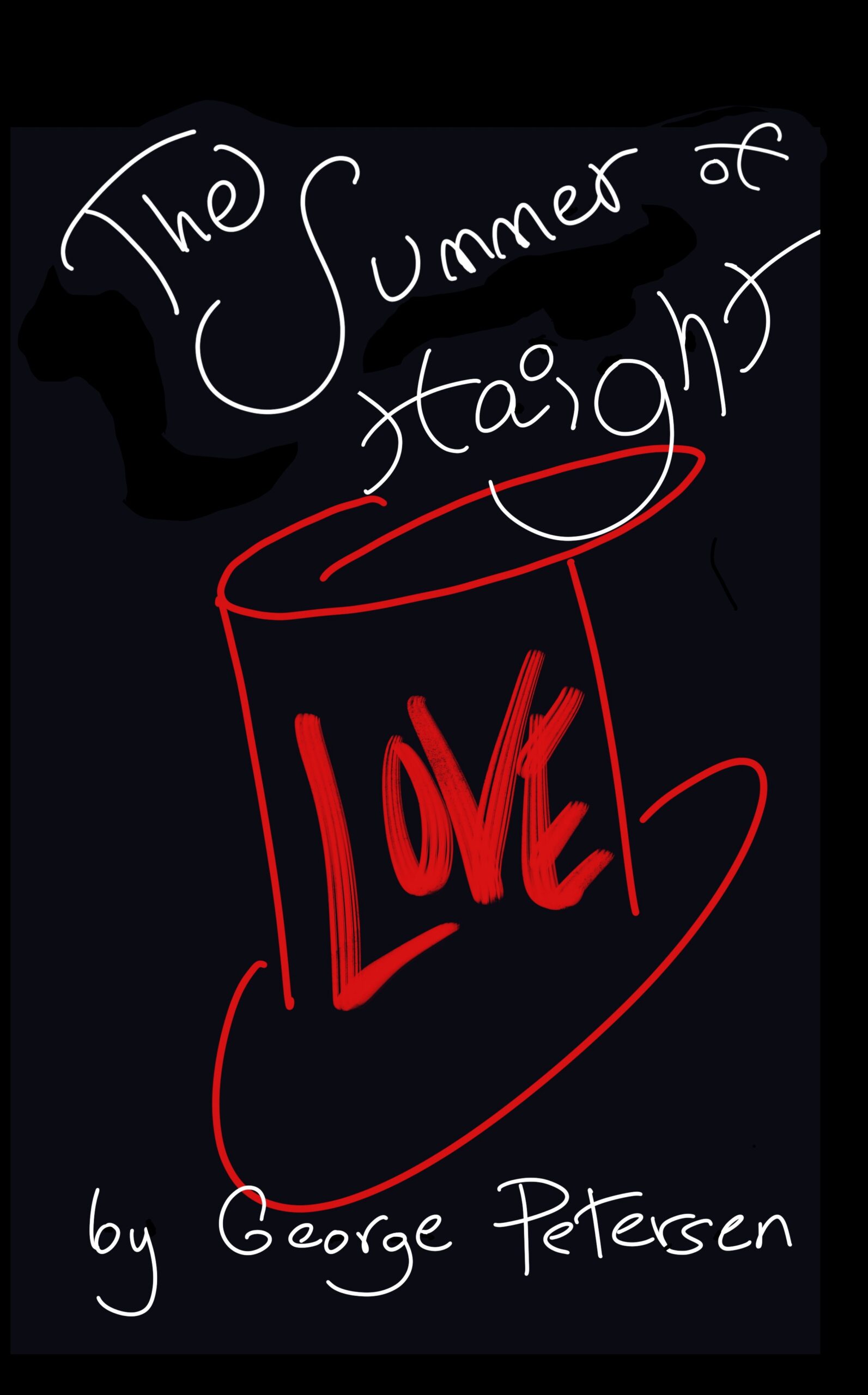
  • THE SUMMER Of HAIGHT by George Petersen – Surreal Fiction, 1960s, Literary Fiction


    In The Summer of Haight, George Petersen opens a doorway into the hallucinatory dreamscape of 1967 San Francisco, where the counterculture’s bright ideals are shadowed by something far more sinister.

    Forget the peace signs and flower crowns. This isn’t a nostalgic romp through Haight-Ashbury. It’s a slow-burning gothic mystery where the air smells of something rotting just beneath the incense, and reality unravels one eerie page at a time.

    The Summer of Haight centers on Longfellow, a straight-laced, impeccably dressed British lawyer living in San Francisco. He’s logical, loyal, and just rigid enough to feel like he’s constantly one step out of place in the groovy chaos of 1960s counterculture. His best friend, the brilliant and eccentric scientist Dr. Jonathan St. Amour, seems to be riding high—hosting elite parties, building a private laboratory under his Victorian mansion, and showing off his mysterious new pet cat, Zelda, who wears a custom-cut diamond in the shape of a cat’s eye.

    Things start to tilt sideways when Jonathan suddenly asks Longfellow to draft a new will—one that leaves everything to a man named Dr. Asmodeus Youngblood.

    This ‘Youngblood’ is nobody Longfellow has ever met, and Jonathan refuses to introduce them. In fact, he makes Longfellow promise not to investigate him. Naturally, this only makes Longfellow more suspicious.

    What follows is a descent into something much stranger than legal drama. Youngblood isn’t just a mystery; he’s a walking contradiction, a man who looks like a flamboyant hippie but moves with something menacing in his step. He sleeps during the day, unnerves everyone in the house, and seems to have an unnatural hold over Jonathan. Even Zelda is terrified of him.

    As Longfellow breaks his promise and trails Youngblood through the fog-choked streets of the Haight, the novel morphs into a fever dream.

    There are LSD-drenched parties, glowing body paint, hallucinatory visions, and ominous signs that Youngblood may not be entirely human. The scenes at the Fillmore Auditorium—strobe-lit nudity and shadowy faceless figures—feel like a cross between Eyes Wide Shut and a haunted lava lamp. At one point, the atmosphere turns almost otherworldly: “Wide-eyed and anxious, I climbed the stairs to the auditorium, a red apple in one hand, a bright yellow balloon in the other… Janis Joplin belted out ‘Summertime’ on stage… tie-dye backdrops bathed in luminous liquid colors… A puppeteer hung a life-size marionette from the balcony so it could dance with the flower girls on the floor below…”

    Despite the surrealism, The Summer of Haight is also about aging, longing, and identity.

    Jonathan’s longing to be young again, to break free from the restrictions of respectability and embrace something primordial, is familiar but also terrifying. Readers will find the story clearly depicts how simple it is to lose oneself while pursuing the illusion of independence.

    The prose is moody, poetic, and at times playfully gothic.

    There’s fog, firelight, hidden blades, secret cellars, and symbolic snakes. But the pace is deliberate; it doesn’t sprint. Rather, it creates a dense atmosphere that allows the reader to feel the dread.

    If you like stories where a seemingly rational world starts to fray at the edges—where one must question not only the nature of the villain but that of reality itself—then The Summer of Haight by George Petersen might be your kind of delirium. It’s haunting, heady, and more than a little hypnotic.

     

  • RED HERRINGS RADIO: The Media Mysteries Series Book 6 by Gail Hulnick – Murder Mystery, 1960s, Amateur Sleuths

    From its very first page, Red Herrings Radio, from Gail Hulnick’s Media Mysteries series, evokes the classic mystery novels of days gone by. We meet protagonist Lillian on September 7, 1964, in the pre-dawn hours as she heads to work. The early shift at a bustling radio station may seem like excitement enough, but soon Lillian’s faced with unexpected and unpleasant thrills: there’s a dead body at work, and it’s one of her best friends.

    Red Herrings Radio uses many elements of classic mystery, even down to the noir lighting of the early-morning streets. Yet it also diverges from mystery-novel tradition in interesting ways.

    Unlike many older mystery books, it has not only a female sleuth, but a focus on the challenges and barriers faced by a woman in the 1960s. The book is studded with authentic period details, from Beatles mania and folk music to the Royal Tour and the World’s Fair. It also doesn’t shy away from the weightier topics of the era. As Lillian investigates Susan’s death, she finds herself grappling with looming issues like abortion and gender equality. Author Gail Hulnick gives these issues their due complexity, painting a realistic picture of the 1960s as an era of global change and growing pains.

    Red Herrings Radio also breaks from mystery tradition by featuring a reluctant and inexperienced sleuth. Lillian’s no cop, though she’s certainly willing to work with the police if it’ll help her get answers about Susan’s untimely end. She doesn’t like being mixed up in the drama of investigating what’s starting to look like a murder. Still, her sense of duty to Susan’s memory overcomes her reluctance. When everyone else seems to be giving up on finding the answer, Lillian never quite lets go of hope.

    The search takes Lillian to unexpected places and introduces her to unusual suspects. The doctor is hiding something, and the professor and ex-boyfriend too. Now her coworker is suddenly acting suspicious. Red Herrings Radio lives up to its name as it introduces a growing list of suspects, each with complex motivations. The more Lillian learns about Susan’s life, the stranger things get. As it turns out, her close friend wasn’t really that close after all. Did Susan’s own secrets lead to her murder?

    Alongside the mystery, this is also a tale of female friendship.

    Lillian starts enlisting her and Susan’s mutual friends in the investigation but starts to feel resentful as she learns she’s been left out of Susan’s major life events. Susan even had a mysterious new boyfriend who Lillian didn’t know about. As she navigates both betrayal and loss, Lillian must grow through these challenges. For her, forgiving the friends who’ve apparently shut her out is almost as big a challenge as the unofficial murder investigation.

    Along the way, Lillian’s career grows too. She deftly navigates barriers at work, beginning to outshine her more-experienced colleagues and landing choice reporting assignments. Readers get a fascinating inside look at the 1960s media industry.

    As the radio station sends Lillian to exciting places like the New York World’s Fair, she sneaks in opportunities to continue sleuthing. Cold War tensions are running high, and the appearance of several stern and mysterious Russians further complicates Lillian’s investigation. She has countless leads, but no certainty. Though she finds a helpful police officer who’s willing to listen, she has little to offer him. In the end, Lillian must face the fact that she cares more about the investigation than anyone else, even the professionals.

    Maybe it’s because she saw Susan’s lifeless body that morning at work. Maybe it’s a desire to redeem her place in a circle of friends who have grown apart. Whatever it is, Lillian can’t quite bring herself to let go.

    This book moves fast. While there are points where it would have been nice to slow the action and delve deeper into Lillian’s complex life, Red Herrings Radio rewards its readers well in the end. When things look most hopeless for her investigation, the novel takes an unexpected leap.

    Lillian’s answers don’t come when she wants them to, but through patience, attention, and a willingness to forgive, she at last has a chance to put the pieces together. What she discovers is shocking, yet strangely inspiring: solving the mystery also reveals something crucial about Susan’s character. Red Herrings Radio by Gail Hulnick is an excellent read for anyone looking for approachable thrills, unexpected twists, and an intelligent lens on history and human connection.


  • THE FROG-EYED GOSPEL: A Texas Exodus by Leslie DeBrock – Historical Fiction, 1960s, Coming of Age


    Blue and Gold Somerset First Place Winner Badge for Best in CategoryIn his debut novel The Frog-Eyed Gospel: A Texas Exodus, Leslie DeBrock weaves together the inspiring yet complex stories of a diverse cast of characters, all making their way through a tense Texas summer in 1965.


    Peter Loucas is the boy at the center of this story, a senior in high school bent on going to college and becoming the newest preacher in the Bible belt. His faith in God is passionate and strong — until his father is killed in an oilfield accident. In his grief, Pete finds himself suddenly questioning the teachings to which he had given himself blindly for years.

    The setting of the story couldn’t be more poised for conflict: Sabine Gap, a small town with religious intimidation and racism everywhere you look. The Vietnam war rages and veterans flock home traumatized. Supporters and protestors clash nationwide. The residents of Tin Cup —Sabine Gap, a small town replete with religious and racial rigidity. While protests roil the nation, veterans return, some walking; some not.

    As Pete begins to question his faith, he finds his world suddenly colliding with others.

    He works the summer at a wax plant, falls in love, and sees new sides of Sabine Gap. Witnessing firsthand the atrocities that Black Americans face gives him insight into the racist foundation of his town. And as Pete continues his journey to redefine himself and his beliefs, he is pressured by the threat of being drafted if he doesn’t attend college.

    This novel offers a look into the violence of the 1960’s. DeBrock does not shy away from hard truths of the times yet captures bittersweet moments in pockets of tragedy.

    Any reader who has escaped a stifling hometown can relate to Pete’s development as he learns the life he was born into is not one he can live with.

    The end of Pete’s journey not only captures the changes and traumas that he has gone through with emotional maturity and development, but also through a drastic change in setting.

    Fans of historical fiction, literary fiction, and suspense will find their favorite genres swirled together as DeBrock walks them through a tale of questioning the society around you. Pete may still be uncertain of his place in an open-minded world, but he knows that his own transformation is inevitable.

    The Frog-Eyed Gospel: A Texas Exodus captures the difficult journey of carving your own path in an intolerant town. DeBrock’s vivid and passionate characters seem like they’ve stepped right out of 1965 Texas, and each one brings perspectives that enlighten and inspire.


  • A MAP Of The EDGE by David T. Isaak – 1960s, Coming of Age, Psychological Fiction

    To say that fifteen-year-old Rick Leibnitz has had a difficult childhood would be an understatement. Abandoned by his mother when he was eleven and left with a physically and mentally abusive father, Rick’s teenage anger is justified in A Map of the Edge by David T. Isaak.

    After a violent episode with his father, Rick is caught holding drugs for a girl he hopes to impress and is sent to a juvenile detention center. There, he refuses to capitulate to the demands of his jailers until his probation officer offers him not only a possible reprieve but also, for the first time in his life, listens to Rick’s problems.

    When he is handed back to his father’s custody, his nightmare life continues until Rick is befriended by Lincoln Ellard. Linc finds Rick a place to stay after a vicious beating from his father, and the two quickly become inseparable, with Linc eventually bringing Rick in on his drug dealing business. In his adolescent mind, Rick has it made–drugs, girls, popularity, but the good times end abruptly when a rival drug dealer attacks Rick and Linc, leaving their relationship perpetually plagued. When a close friend nearly overdoses, Rick again finds himself in over his head.

    The novel’s title perfectly sums up Rick’s predicament. He is on the edge of everything.

    Rick hovers on the edge of adulthood in many ways. At fifteen, he is too young to get a job or to be on his own, stuck living with his cruel, angry father who takes out his own wasted choices on everyone else. Rick can remember the beatings his mother suffered, and he feels that her leaving him is justice for his lack of action to protect her. But now, he has become the target of his father’s wrath and can’t legally escape it. Eventually, he refuses to even try to get along with his father and chooses defiance, which leads to even worse treatment.

    Not physically big enough to stand up to his father, he seeks an escape in alcohol and drugs, a decision which leads to his first sexual encounter with the girl whose punishment he took on himself. Both the juvenile detention and that encounter push him again closer to the edge of adulthood. He romanticizes his imprisonment as a chivalrous gesture that is sure to lead to a grateful and lovesick Stacy. When she refuses him after his release, he’s pushed beyond his emotional capacity and turns to self-harm in multiple ways.

    After meeting Linc, Rick thinks his life is finally turning around.

    Linc convinced Rick that the drugs they sell and use aren’t really hurting anyone but instead are expanding their thinking. The two of them skirt the edge of reality and LSD-induced illumination. For a time, Rick lives on this edge of 1960s teenage idealism. He parties, with others and alone, has sex with lots of girls, and makes excessive amounts of money with little effort. He listens to Linc’s pontificating, believing him to be enlightened and knowledgeable.

    When the boys are attacked by rival drug dealers, Rick reaches the edge where the fun stops and danger becomes real. His entire perception changes, and he cleans himself up as he and Linc drift apart. When Lisby, one of Linc’s many girlfriends, tries to commit suicide, Rick finally takes the advice of his probation officer, Leo, seriously. As his only true champion, Leo has attempted to keep Rick on the straight and narrow throughout the novel, but it isn’t until this last near-tragedy that Rick seems to understand. While the edge is exciting, its precariousness leads to destruction.


    Chanticleer Book Reviews 4 star silver foil book sticker


  • LIAR, ALLEGED: A Tell-All: Celebrities, Sex and All the Rest by David Vass – Memoirs, LGBTQ+ Humor, 1960s

    Liar, Alleged: A Tell-All: Celebrities, Sex, and All the Rest is a raw and mature memoir, the account of a resilient individual, David Vass, who had felt ‘instinctively’ different and shunned since he was a child.

    Vass was born in Baltimore as the seventh child of eight. His large family knew nothing more than chaos and absurdity, biting poverty, a violent father, and an eternal hand-to-mouth crisis. At an early age, he had recognized his inextinguishable fascination with other males, a discovery that he would later bring himself to express to his mother. He was pretty confident that being gay was core to who he would become.

    By the time he was twenty-four, David’s parents had already passed on. But as fate would have it, he would come to meet ‘the mother he never had’ in the jazz legend Anita O’Day. She dealt with problems of alcohol, drugs, and men; the outcome had been nine abortions, stubborn guilt, and infamy as a heroin addict. Nevertheless, the two would become close confidantes until Anita’s demise at the age of eighty-seven.

    Author Vass exemplifies his background in a forthright and emotional manner that will bring readers to laughter and tears alike.

    He tells of a tightly wound household, and carefree buddies eager to determine whether he was male or female before answering his sexual longings and plea for companionship. In this book, readers get to learn of the prevalent suicide rate in the gay community around the late 50s and early 60s, with particular true stories narrated in articulate but bare street language.

    Carol, one such true individual, revealed eye-opening details such as a little-known disorder that left her unable to feel remorse or guilt as she engaged in indecipherable sexual activities. In the setting of 1966 Baltimore, clubs paid politicians to allow underage workers, and Vass would greatly benefit from the arrangement. Readers may find their emotions stirred by such ordeals of the young teenager, who had started working in one of the shadiest, mafia-owned cross sections of America.

    Liar, Alleged: A Tell-All: Celebrities, Sex, and All the Rest delivers a roller coaster of emotions that delves into the highs and lows of a resilient and warm human being.

    The narrative is intense and unapologetically honest, leaving a lasting impact, with unfiltered, vulnerable storytelling. Vass refuses to hold back, offering readers a front-row seat to all the dark, raw, and unflattering drama. This memoir is conclusively enticing and well-crafted, and a worthy recommendation to those seeking a blunt and well-told experience of the world.


    5 Stars! Best Book Chanticleer Book Reviews

  • ABOMINATION CHILD by Erika Shepard – LGBT Fiction, 1960s, Social & Family Issues


    Somerset Blue and Gold First Place BadgeAbomination Child is a coming-of-age novel, a piece of historical fiction, and a lesson to us all. Erika Shepard tells the story of Brianna, a young girl growing up in Missouri during the 1960s, struggling to be accepted.
    Within her community, Brianna is seen on the outside as a boy, and everyone knows her as Brian. She confides in her older sister Liz, who supports her and helps her face a world that doesn’t understand. Spanning many years, Abomination Child follows Brianna’s journey of survival, hoping that one day she’ll be able to live freely as herself.

    Brianna’s – known then as Brian – troubles start after his father learns that he dressed in girl’s clothes at a school Halloween dance. Deeply conservative and religious, Brian’s father hits him for what he believes is an abominable perversion caused by the Devil. For Brian, it’s as simple as knowing he is really a girl, a girl named Brianna.

    But just being Brianna is not that simple. Besides Liz, no one else understands, so Brian has little choice but to remain Brian to survive a bigoted world. As he enters adolescence, Brian slowly gains a few other allies who help him through his darkest moments until the day Brianna can become a reality.

    Shepard doesn’t shy away from the realistic experience of Brianna’s life.

    Brian lives through a difficult and authentic adolescence. As he finds varying degrees of understanding from those around him, he must work through his own confusion about his emerging identity.  Readers’ hearts will go out to Brian as he struggles, nearly alone.

    Brian’s mother has an affecting journey of her own. At first, she feels she’s failed as a mother, saddened at the truth of her daughter. But she works through her fears and does the research to understand Brian and accept Brianna. Shepard expertly captures the truth and complexity of one family member learning to accept another.

    Despite being set in decades past, Abomination Child shows why affirmative care and support systems are essential in our world today.

    The multiple perspectives in this story offer a thoughtful view to the difficulties faced by each character.

    Only seeing Brian’s thoughts throughout the novel would not be the entire story. Abomination Child shows the growth – or lack thereof – in each family member. There are some questions left unanswered by the end of the story, and that too is true to life. Brian’s story might end here, but Brianna’s is just beginning.

    Many people have stories like Brianna’s. Some end happily, while many others don’t. Abomination Child considers that even when happiness seems impossible, things may one day change for the better, and you should stick around for that chance to be your true self.


    5 Stars! Best Book Chanticleer Book Reviews

  • JUS BREATHE by B. Lynn Carter – Black Historical Fiction, 1960s Historical Fiction, Family Life Fiction


    A young woman strives to survive without a home, even as she must fight herself and her instincts, in Jus Breathe by B. Lynn Carter.

    “It’s more like I walked away,” I said, fractured memories of the day I left surging into my mind. “My mother married herself a husband. It’s like the tale of the evil stepfather, I guess.” The words were spilling out. “On the first day that we moved in with him, he almost broke my jaw. So I left. She had to let me; you know – the survival thing. She knew. We both knew.”

    In New York City during the tempestuous 1960s, Dawn flees an abusive family situation after her father leaves the family and her mother remarries. Determined to stay in education, she couch-surfs with friends and explores her contacts through school. Dawn manages to live and even graduate. With the help of sympathetic teachers and a social worker who believes in her, she goes to college. Dawn finds friends and boyfriends and makes her own way toward adulthood.

    And then her life goes awry again, though this time, she has a harder time choosing whether to run.

    An overwhelming and toxic relationship with handsome Danny, a low-level drug dealer with ambitions, has Dawn making mistakes and second-guessing her plans, a journey made more complex with an accidental pregnancy. Throughout her young life, she’s had a term, “leaving time,” a point wherever she is and whomever she is with that indicates she has to gather her belongings and find a new situation. With a new life to take care of, Dawn finds that Danny ignores her own ambitions. Is it leaving time?

    Despite the obstacles that she encounters on her journey toward adulthood, Dawn establishes her goals and works toward them, even though at times she seems to work against her best interests.

    Dawn’s struggles to get through school and become an adult are harrowing and draw the reader to experience those struggles with her.

    She remains relatable, with complicated reasons for the decisions she makes. Dawn’s world – specifically, her friends, her foes, and the people around her – are fully fleshed out, and the mysteries and surprises that she encounters, both pleasant and unpleasant, all work toward helping her grow into her own power.

    Author B. Lynn Carter’s tale about a young woman growing up in a time of social unrest in a city in turmoil is heartwarming and thought-provoking, giving a glimpse into the trials and tribulations of young adulthood.


    5 Stars! Best Book Chanticleer Book Reviews

  • REDLINED: A Memoir of Race, Change, and Fractured Community in 1960s Chicago by Linda Gartz – Memoir, Racial Segregation, Sexual Liberation

    Author Linda Gartz tells of her childhood and early adulthood amidst social upheaval in the city of Chicago in her memoir, Redlined: A Memoir of Race, Change, and Fractured Community in 1960s Chicago.


    Gartz grew up the second child of second-generation immigrants to the US. Her father’s father boldly made the trip to the land of opportunity at age 21. She spent much of her childhood in cramped quarters with her parents and her older brother, living alongside strangers. They paid this price for the “dream” – the couple bought a house in a decent neighborhood; keeping roomers, even living in the same flat with them, helped pay expenses.

    Gartz’s grandmother, a talented dressmaker, helped out with childcare and other chores while her mother worked to manage all the finances, tenants, and repairs in their rooming house; she had to do this alone half the year while Gartz’s dad traveled for his job. But Grandma K suffered mental illness and abused Gartz’s mother and father, sometimes violently. Gartz’s father felt oppressed by her presence, which caused ongoing, if mostly unspoken, conflict in the home.

    Chicago’s social and economic upheaval served as a microcosm for national change, and as backdrop for the Gartz family drama.

    African Americans fled the dangerous and economically dead-end South for more promising prospects in places like Chicago. But majority white cities and regions resisted their incursion through restructuring and re-designating neighborhoods and school districts. All the while, the civil rights movement sought large-scale change amidst peaceful protests, riots, and violent reprisals from the law.

    The influx of black workers into her own neighborhood affected Gartz’s choice of schools and friends. Civil rights struggles incited her sympathies while her parents expressed their older prejudice. They feared that all of their hard-earned investments would vanish if “the colored” came in. Still, the teen had black friends and neighbors. She felt touched by the spirit of rebellion in a new testing of societal limits: sexual freedom.

    Gartz felt driven to compose this intelligent account of the changing times when she and her brother “found our gold” in the attic of their parents’ home: diaries, letters, cards, calendars and notebooks reaching back to the couple’s own youth.

    The undercurrent of family tensions became clear. Grandma K’s psychosis put the house on edge. Gartz’s father struggled to balance his home and work life, needing to earn money with a job that required six months of travel across each year, and also supporting his over-burdened wife with the demands of their rooming house with as many as eleven tenants. Her mother saw her behavior in the sexual revolution as shocking. Gartz includes details of the subtleties of “redlining” that allowed cities and regions to keep African Americans down and poor by limiting their ability to own property. Family photos pepper her book, lending emotive touches. The result is a vibrant look at the coming of age of a nation through the eyes of a frank, freethinking woman.

    Redlined: A Memoir of Race, Change, and Fractured Community in 1960s Chicago by Linda Gartz won 1st Place in the 2019 CIBA Journey Book Awards for Narrative Non-Fiction and Memoir.


    5 Star Best Book Chanticleer Reviews round silver sticker