Tag: 10 Question Interview

  • Kevin Miller 10 Question Interview with Chanticleer – Military History, Historical Fiction, and WWII Air Combat

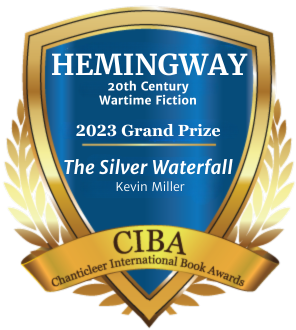
    blue and gold badge recognizing The Silver Waterfall by Kevin Miller for winning the 2023 Hemingway Grand Prize

    CIBA 2023 Grand Prize award-winning Author Kevin Miller sat down for a 10-Question Interview with Chanticleer!

    Recently, Chanticleer had the pleasure of speaking with Kevin Miller, former US Navy fighter pilot and author of  The Silver Waterfall. Miller takes readers into the cockpit of the world’s most powerful military aircraft in his four book series, Raven One. Miller’s award-winning fictional account of the Battle of Midway, The Silver Waterfall, took home the 2023 Hemingway Grand Prize for Military Fiction. Miller is an expert in combat air battles and literacy advocate and I know you’ll enjoy learning more about him and his thrilling novels!

    Here’s what we talked about:

    Fighter pilot, flight jacket, dockers, jet, 362

    Chanticleer: Your specialized military knowledge is the subject of your writing. Tell us a little about yourself. What led you to write about the Battle of Midway?

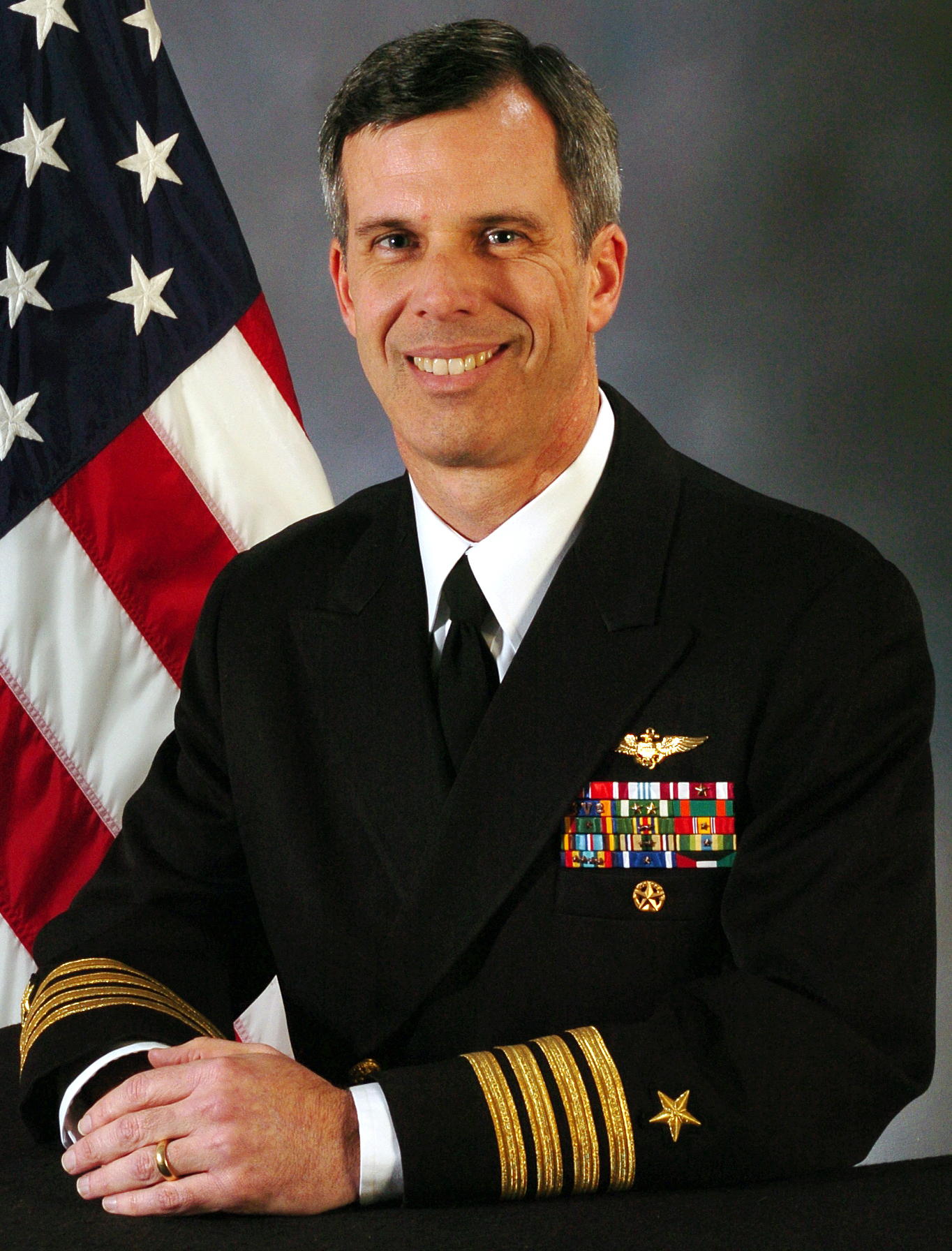
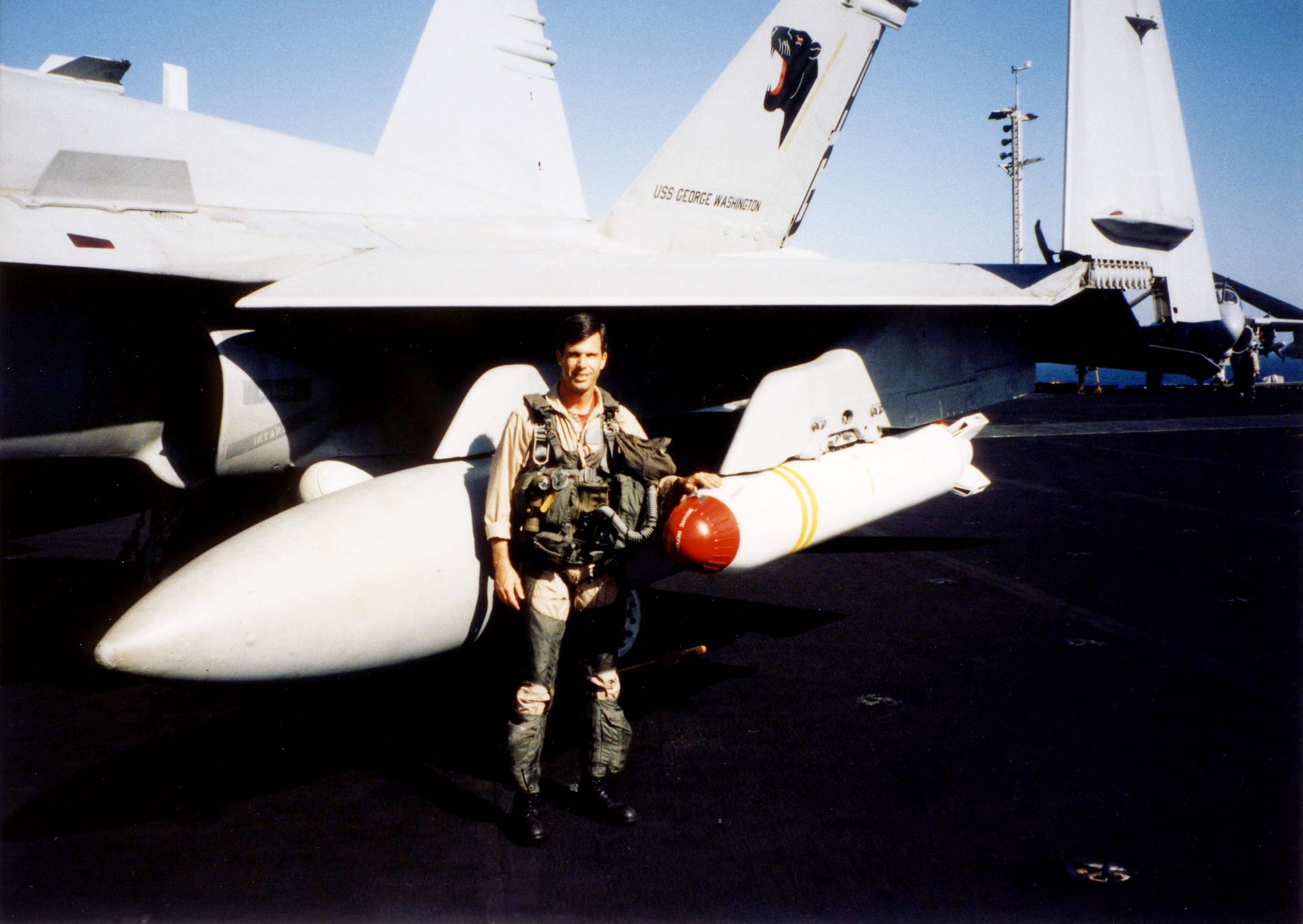
    Miller: In a previous life I was a career Navy fighter pilot, with most of my time in the F/A-18 Hornet. To viewers of TOP GUN and TOP GUN II… yep, I did that. My career took me to command a carrier-based fighter squadron that I led in combat. Wrapping it up at the Pentagon, I retired with the rank of captain after serving 24 years, logging over 3,600 hours and 1,000 carrier landings on numerous extended deployments.

    At my retirement ceremony a fellow aviator suggested that I write a book, a suggestion I immediately waved off. Undeterred, he pressed me – hard – and told me that I have stories. Later I gave it some thought. Yes, I do have sea stories, and a passion to answer the question I was asked so often when people found out what I did for a living; Wow! What is that like? Having no idea where to start or what writing entailed, I figured why not? At least my manuscript could be something for the kids. So, months later in the summer of 2005 I began writing what would become Raven One.
    Kevin Miller, navy, pilot, medals, american flag

    Before I wrote the first sentence, I had never considered writing a novel, considering it something that mere mortals could never attain. The discipline! As I wrote – seat of the pants – a story formed, and after fits and starts (setting it aside in frustration for months then picking it back up and writing in a flurry of activity) I finished Raven One in late 2009… and knew that I had something.

    Querying literary agents to represent me, despite the encouragement of many to keep writing, proved a failure. However, Kindle Direct Publishing was coming into its own, and publishing as an independent author became more attractive with each rejection from “New York.” Networking led me to fellow aviation thriller author George Galdorisi, who led me to his micro-publisher and military thriller author Jeff Edwards of Stealth Books which is now Braveship Books. Under their guidance, Raven One was published in the summer of 2014. The novel peaked at #29 in all of Amazon by the spring of 2015.
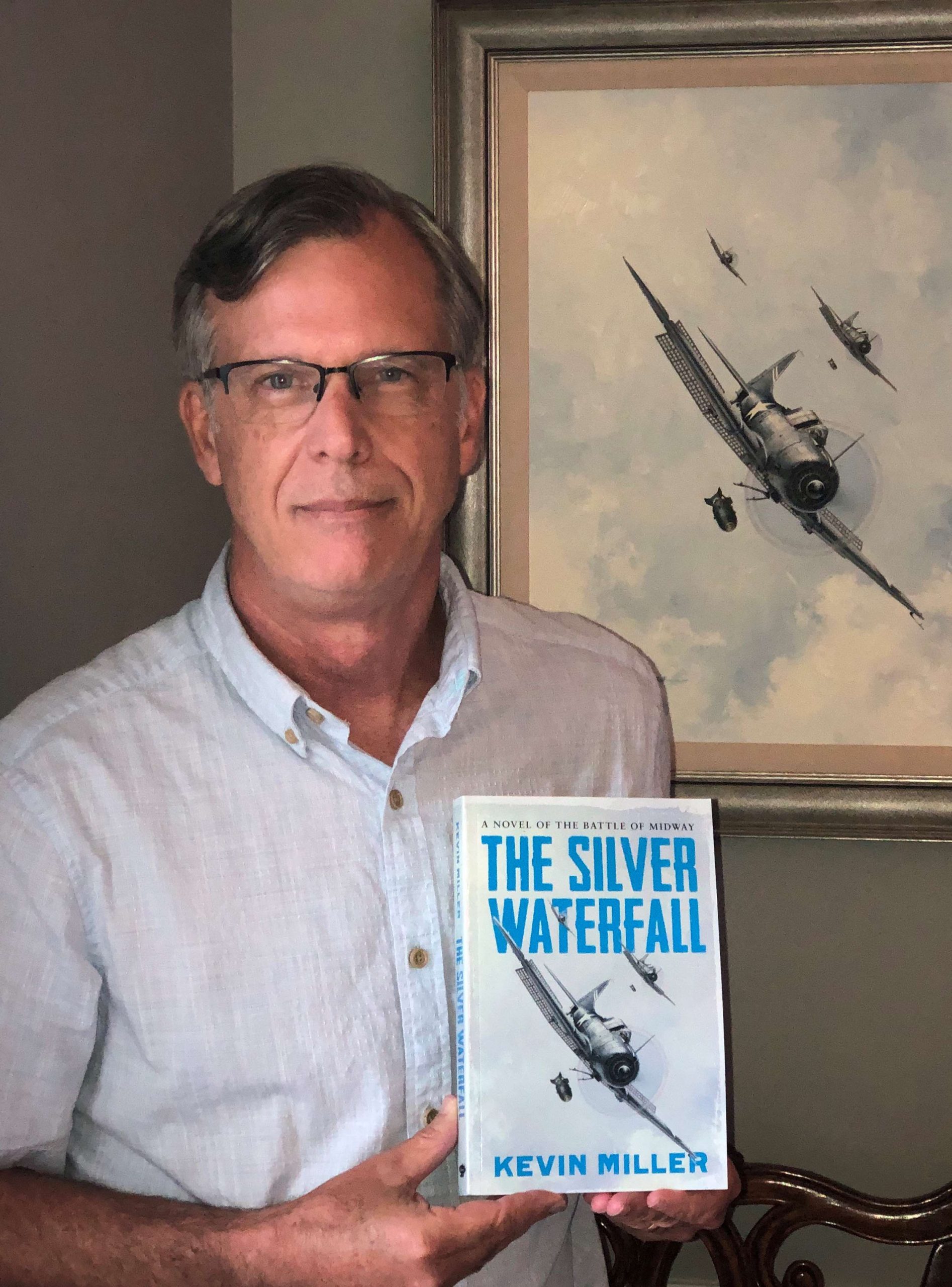
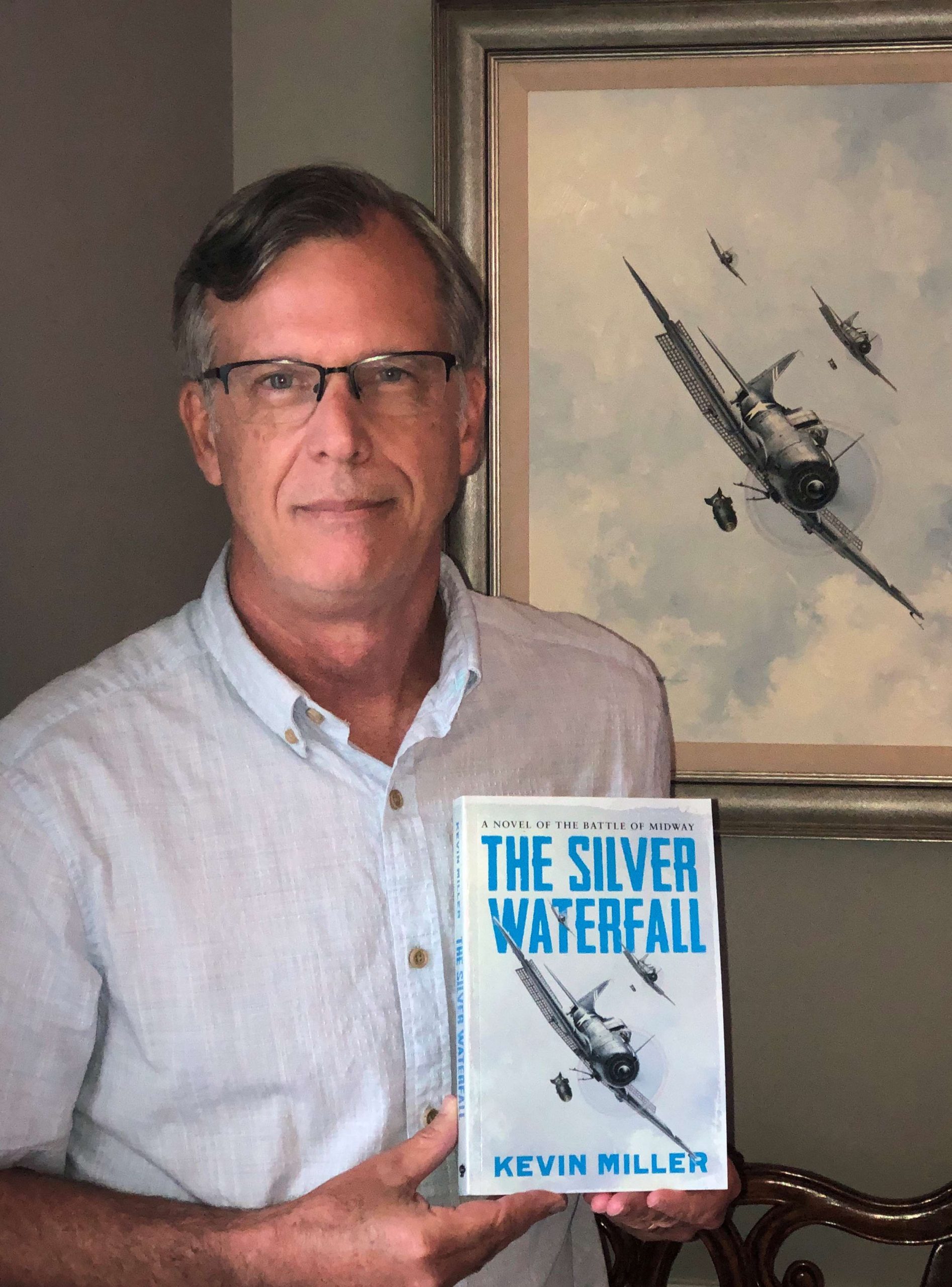
    Kevin Miller, The Silver Waterfall, painting

    Chanticleer: That’s a huge journey and a familiar one for many. Was there a point where you realized you had become an author?

    Miller: Yes, holding that first copy of Raven One in my hands was a special moment. I wrote – and published! – a novel! But it was weeks later as the novel gained a following that I noticed the comments in the review section. The glowing reviews were from strangers who loved the book – comparing the writing to Clancy and Coonts – and encouraged me to write more. Soon I heard from my friends, many of them former squadron mates who know how to give and receive honest feedback. They were blown away by the story and how I told it, and they met me at gatherings with copies for me to sign. Gratifying! And that’s when I knew Raven One was not a one-off, and that I had to keep writing

    Chanticleer: That’s wonderful! Likewise, your Chanticleer award winner, The Silver Waterfall, is a great story full of action, suspense, history, and so much more. Can you talk more about your relationship with your genre?

    Miller: Writers typically write what they know about, so for me the military action-adventure genre is a natural. My Raven One series novels are military technothrillers, a genre first made popular by Tom Clancy. They are found in War Fiction, War and Military Action, Sea Stories, Sea Adventures, and the like. Amazon allows authors great specificity in genre selection, and I could probably keep my latest novel High End as a perennial #1 in an Authentic and Contemporary Carrier Aviation Fiction Above the Arctic Circle genre but playing games like that is not for me as I want my books to compete and earn their accolades honestly. That said, I often see romance books in War Fiction when the only “war” part is that the love story is set in a wartime setting. We know why authors do this; all’s fair in love and war.

    The Silver Waterfall: A Novel of the Battle of Midway, for which I was honored to receive the 2023 Chanticleer Hemingway Award, is pure historical fiction. To me, historical fiction provides the human emotion to a true event without changing any of the facts of that event, such as Shaara’s Pulitzer-winning masterpiece The Killer Angels. Our novels put the reader there, amid the real men who fought these battles, giving these historical figures voice as to what they experienced. Some historical fiction authors are too loose with facts and invent facts, even going so far as to impugn the reputations of the real men who were there. I could not live with myself if I did that, especially for an event like Midway, already full of drama and amazing chance.
    Kevin Miller, author, CIBA Grand Prize, Ribbon, man, tie, suit
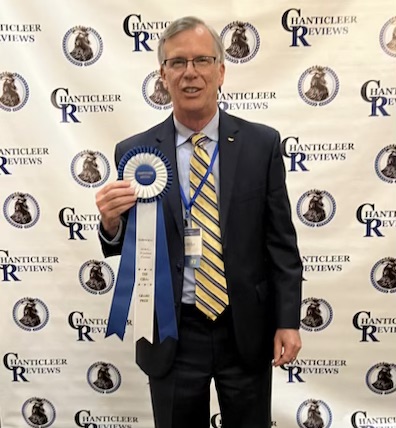
    Just won the CIBA Grand Prize in the Hemingway/Military Fiction division!

    Chanticleer: We’re always astounded at the commitment to veracity of our historical fiction authors. The amount of research that goes into that is incredible. For your own writing day, how do you stay on track to finish your books?

    Miller: Stephen King says that 1,000 words of writing is a good day of writing. If I get to a break in the story and stop for the day at 950 or 875 words I don’t beat myself up, but 1K per day works, especially if you have other activities (I do business consulting and teach middle school history) to fill your day. Promotion is part of my writing workday, as of course is research for my type of technical and historical writing.

    Outlining? Yes and no. I have one in my head and follow it, but because it’s not written down, I can ride along on those magical moments when my writing takes me someplace I had never expected. The Silver Waterfall involved a historic event that has been written about extensively and that I knew well, but even in that novel I could “ride” when the muse took me to a new place when describing the human experience of a known historic event.

    As Stephen King suggests, I’m one of those who writes and sets it aside for a few weeks to germinate, then prints it out to go over it with a pen to fix/improve. Several cycles: read it “fresh” after several months and you’ll unearth little gems to spice it up and rough patches you missed to sand and polish.
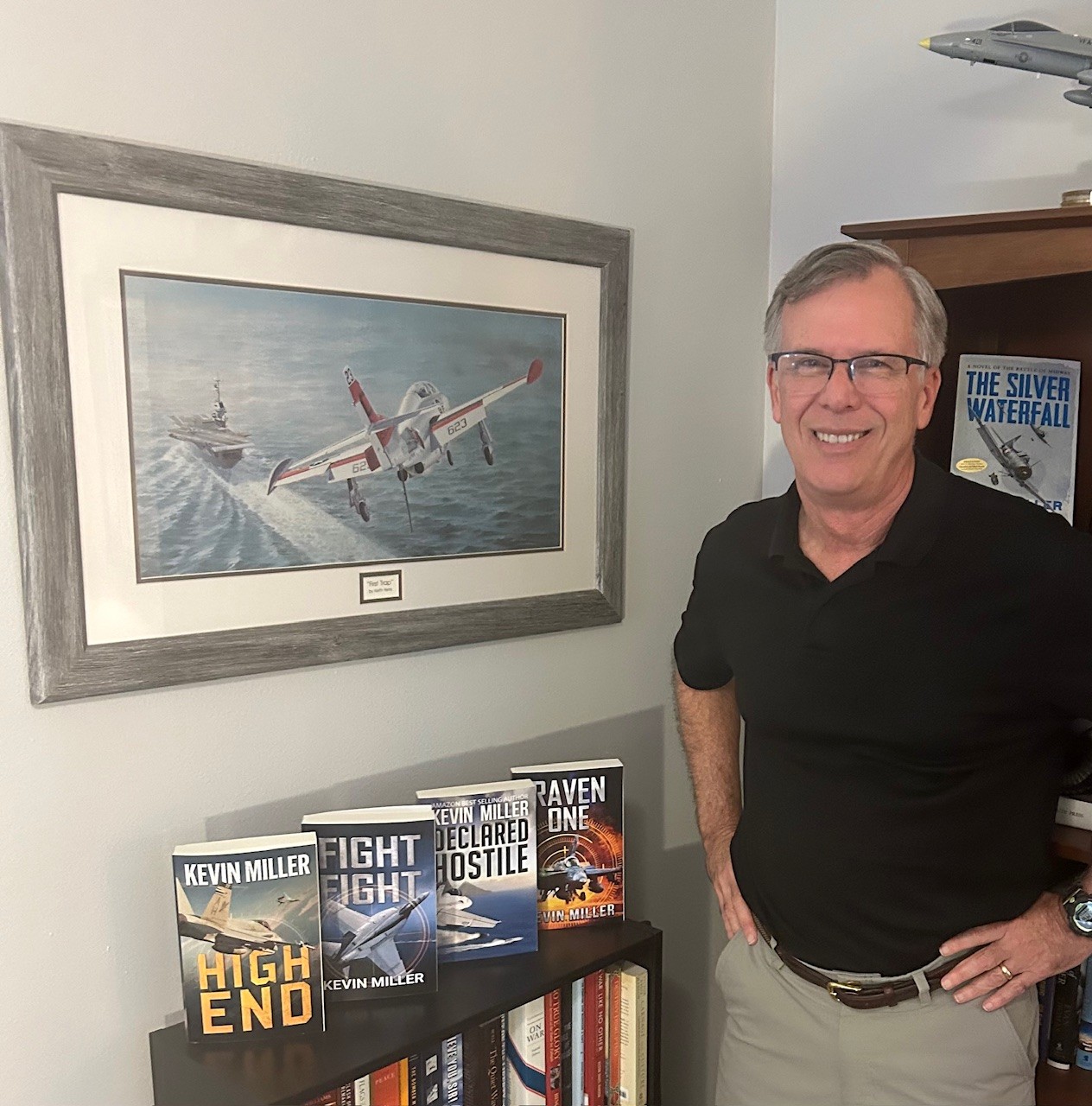
    Kevin Miller, books, painting, dockers, black shirt, man

    Chanticleer: You’ve talked a bit about Tom Clancy and Stephen Coonts as comp titles for your work earlier on, but which authors do you for inspiration, advice, or just because you like their work?

    Miller:

    Herman Wouk

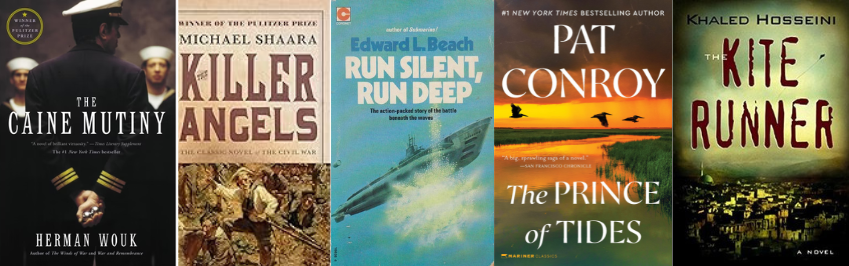
    Wouk is an absolute badass of a writer, from his unflinching views of human nature to his superb research of his subject. As a Midway historian with a carrier aviation background, Wouk – who was an officer but not an aviator in WWII – wrote passages in War and Remembrance about the carrier pilots at Midway that impress me not only by their accuracy in flying the airplane but their human emotions in the middle of deadly aerial combat. His fictional German historical commentator von Roon – a brilliant character – gives context to the history the characters are living inside. The Caine Mutiny is a masterpiece in human conflict and the unfairness of life. Wouk puts you inside the mind of a three-dimensional character like no one else.

    Michael Shaara

    Many are not familiar with this name from 50 years ago, who at the time received a Pulitzer for The Killer Angels, the classic historical fiction novel of the Battle of Gettysburg. Shaara – who was an Army veteran but not a noted Gettysburg historian – brought Lee, Longstreet, Chamberlain and Pickett to life without changing any facts of the battle, giving the reader the honest insights and impassioned pleas of the real men who fought at Gettysburg as to how they should deal with the enemy across the field. Shaara was 100% my inspiration for The Silver Waterfall. As the country was recovering from its Vietnam War trauma, The Killer Angels was not successful when published in the mid 1970’s. Shaara did not live to see it adapted into the movie Gettysburg and the commercial success Angels has subsequently received. Another of his works was published posthumously and adapted into a movie: For the Love of The Game.
    The Cain Mutiny, The Killer Angels, Run Silent Run Deep, The Prince of Tides, The Kite Runner

    Captain Edward L. Beach

    Ned Beach was a WWII submariner who after the war and while still on active duty wrote the novel Run Silent, Run Deep, an immediate hit with post-war audiences that was adapted into a movie starring Clark Gable. The story is of conflict inside the control room of the submarine between two officers who each want the same woman back home but must cooperate to lead the crew against the enemy above them. This human tension centered in pride is a feature of all my novels. Beach wrote more novels including Dust on the Sea and Cold is the Sea, both to critical acclaim. During this time, he was given command of the nuclear submarine Triton that circumnavigated the world while submerged, an incredible feat in the day. Sadly – and not surprisingly to this naval officer – Beach was not selected for promotion to admiral as the higher ups were jealous of his fame and considered his creative pursuits unseemly.

    I write in his third-person style, calling my protagonist by his last name while placing the reader on the bridge of a ship or in the cockpit of an airplane as it really is, and expecting the reader to keep up.

    Pat Conroy

    Pat Conroy grabs you and does not let you go with the raw human power of his writing. Just wow. Like all the greats, he is honest – and fearless. Known best for The Prince of Tides and Beach Music, for me as an aviator, The Great Santini will always be my favorite. However, it is far from a military technothriller. It is a human story as all of his are about the reality of the most sinful of the deadly sins, pride. The Lords of Discipline is another unforgettable work which, like Santini, is more memoir than fiction. Pat Conroy had a rough upbringing, and as they say in sports, left it all on the field in his writing, holding nothing back. Just wow.

    Khalid Hosseini

    I’ve never visited or even flown over Afghanistan – my time in the fleet was before that – but I have been there thanks to the writing of Khalid Hosseini. Like millions of readers, I too was enthralled by The Kite Runner and his sequel A Thousand Splendid Suns. Hosseini’s vivid descriptions of place, the detail, and of course his insights of human nature and the fascinating culture of Afghanistan – both lovely and horrifying – are unforgettable. He explained Afghanistan to foreign readers in a no-nonsense style, unapologetic and fresh. We recoil at the cruelty and betrayal – I cannot believe they treat their fellow human beings like this! – but turn the page anyway as Hosseini assures us, yes, they do. I seek to describe and explain my former world with verbal images like Hosseini did his.
    Flight gear, jet, pilot, helmet

    Chanticleer: That is an amazing personal canon to draw from. Do you also enjoy craft books, and do you have any you would recommend?

    Miller: The classic Bird by Bird by Ann Lamott was enjoyable, but Stephen King’s On Writing, Pat Conroy’s My Writing Life, and especially Steven Pressfield’s Do the Work and Nobody Wants to Read Your Sh*t were each helpful to me and I would recommend them to anyone who writes creatively. People often ask me for my insights as they prepare to write a book. I explain that writing, at the bestselling and award-winning level, is hard, hard work and there’s no escaping it. While I cannot explain how I write – I just let it rip! – these giants have written helpful guides. Enjoy.
    Speaker, Kevin Miller, bald head, conference room

    Chanticleer: While most people think of writing as a solitary activity, we often find it has far reaching impacts. How has being an author affected your involvement in the community?

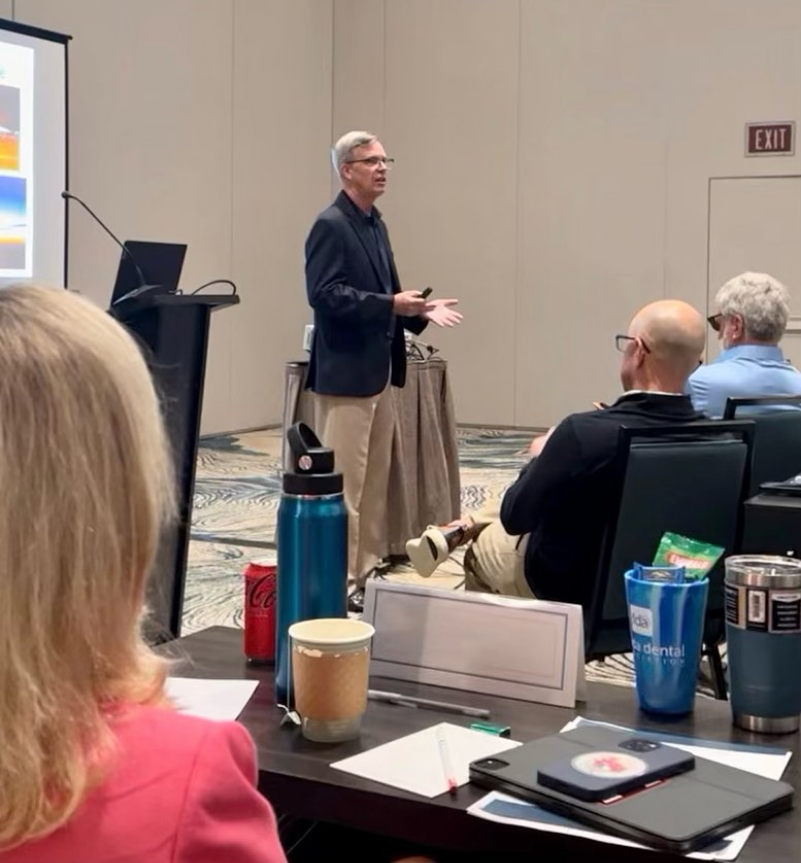
    Miller: Author implies authority, and I am an authority on the Battle of Midway, now recognized by all in my circle because of the success of my historical fiction novel. Two years ago, I spoke at a gathering of all the U.S. Navy admirals in naval aviation about the lessons of the battle, lessons they can use today, and next year I’ll speak at a large event to commemorate the battle. Because I am also connected to today’s fleet, my Raven One series novels are prescient for today, especially my last two that involve China and Russia, and I’m often invited to give talks at Rotary Clubs and veterans groups to educate the public about the need for strong sea services. Publicity earned from the CIBA recognition of The Silver Waterfall cemented my position as an authority on Midway.

    Chanticleer: That’s incredible! Becoming an expert of such an important historical event is really quite an accomplishment! And we at Chanticleer are very happy to know your CIBA award has helped to bring more attention to the Battle of Midway and your wonderful novel. Are there any activities you are involved in that improve or promote literacy?

    Miller: I teach middle school history at the honors level, one day per week. My honors students are above average readers, and during the semester I assign reading. The novels Around the World in 80 Days for 6th grade geography, and The Red Badge of Courage in 8th grade U.S. history are examples, and after they complete the reading, I have them write essays about them in class. They grumble of course, but where else will they read these classics of literature?
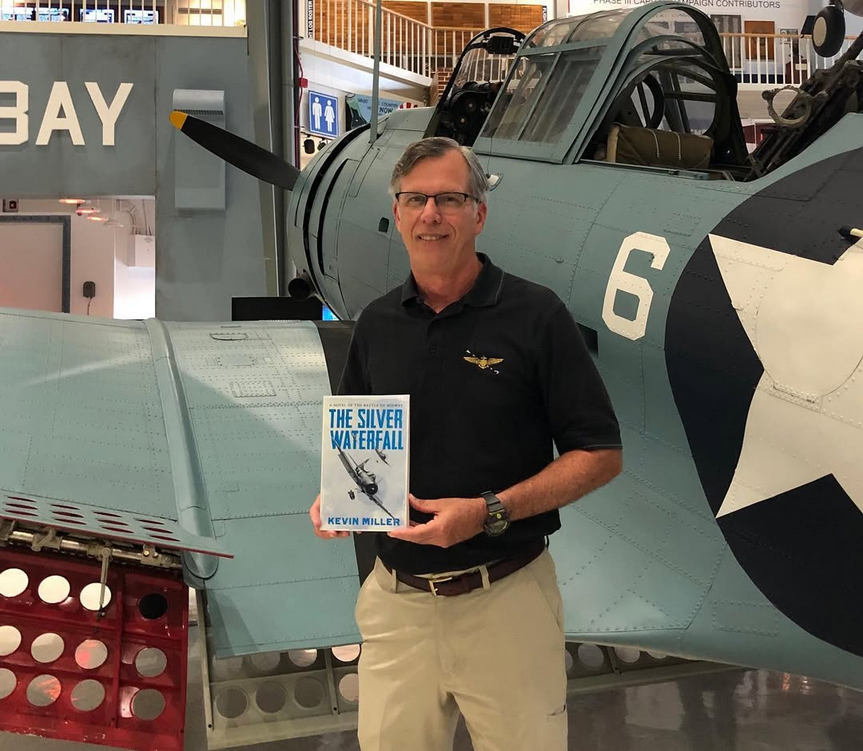
    Jet, The Silver Waterfall, author, Kevin Miller, dockers
    Chanticleer: Being a teacher is such a gift to the future. Thank you for doing that work. Your students sound lucky to have you. If we can bend your ear for us for a teachable moment, what are some marketing tips that you would recommend to our authors?

    Miller: My publisher says there is nothing like writing a new book to sell your current one, however paid FB and Amazon ads work, as do email lists. Promo stacking with services such as Amazon, BookBub, Robin Reads, ENT and others is an effective strategy. While I’ve snagged three BookBub featured deals (all for Raven One) I’m still struggling with breaking the code on what works (regarding Canva creatives) for BookBub advertising. Posting on social media almost daily about my flying days and sometimes me with my book is effective; Chanticleer author D.D. Black does this very well on Instagram. So does Tony Selimi, who says authors must get famous to get a larger audience. Get a Facebook business page with others on social media to gain follows. LinkedIn is good, Pinterest during the Christmas gift giving season, and, of course, email. Recommend investing in KDP Rocket, and David Gaughran is a superb follow for indie writers on all aspects of publishing and promoting.

    Chanticleer: That is a wealth of excellent information for authors. What about for readers, what help can readers be to authors?

    Miller: Receiving a kind email from a reader is gratifying, and I always write back thanking them, and then ask them to leave a review. WE all know and crave the social proof of reviews, but my sense is that only 1-2% of readers leave one. Wish that Amazon allowed us to thank them when they do. Passing the word of course is nice of readers. Word-of-mouth advertising can’t be beat. Then there’s good old-fashioned encouragement. Writing as we know is hard drudgery, and for me the end-product is what drives me, not any joy or “rush” in the act of writing. Doing the work as Pressfield says and producing something that people can appreciate today and decades from now is my “why.” Thank you to the readers, known and unknown to me personally, who have encouraged that.
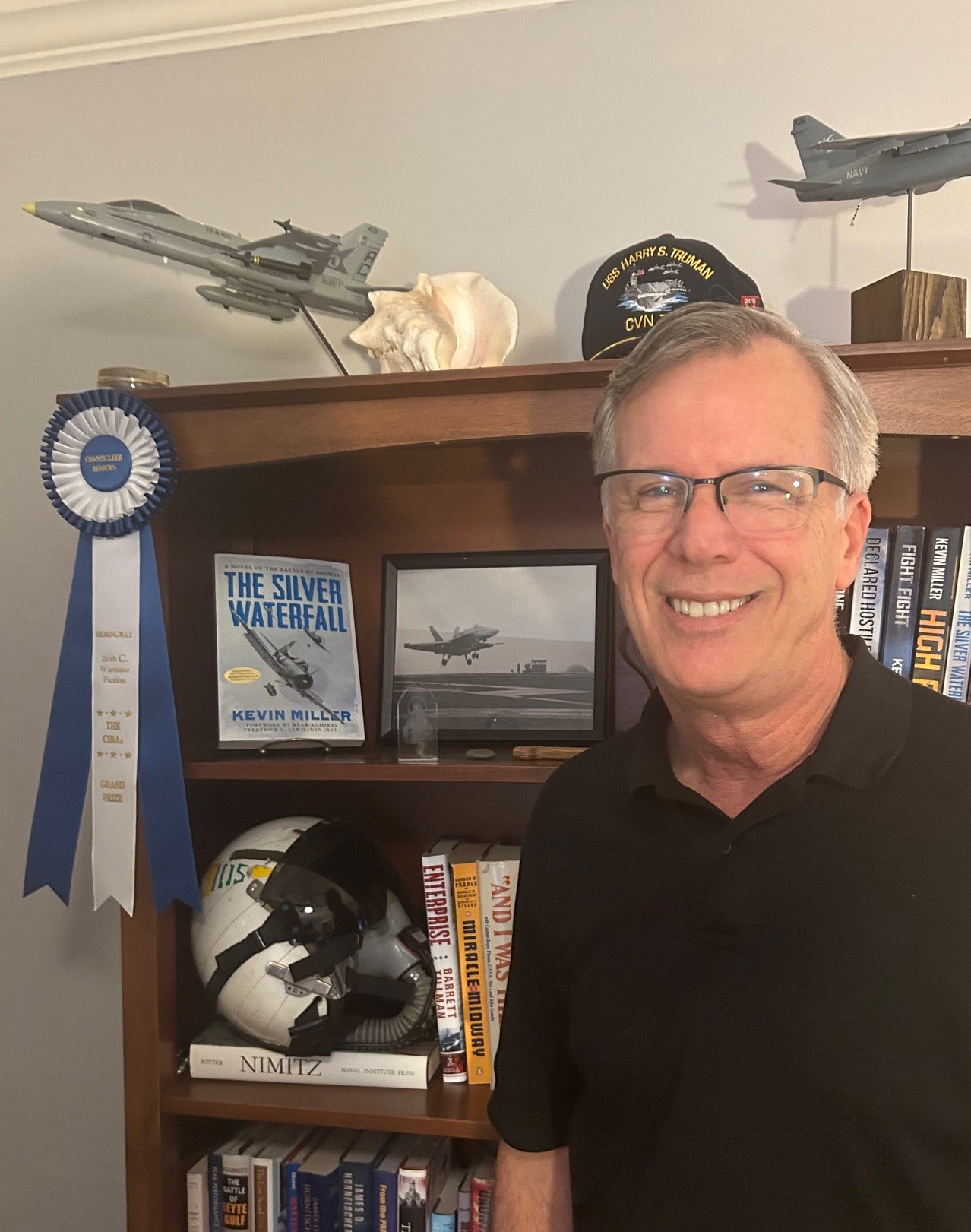

    Kevin Miller, bookshelves, helmet, pictures, CIBA Grand Prize ribbon, Model jet

    Retired U.S. Navy Captain Kevin Miller graduated from the University of Mississippi and was designated a Naval Aviator in August 1983. He flew the A-7E Corsair II and FA-18C Hornet operationally and commanded a deployed strike-fighter squadron. He finished his career in the Pentagon serving on the staff of the Secretary of the Navy, retiring in 2005.

    After leaving the service Kevin was employed as an associate at two Washington DC defense consulting firms, then as a not-for-profit executive, and today is the Owner/Principal of MPK Defense Consulting. He is also the Best-Selling and Award-Winning author of the Raven One military action-adventure series and the historical fiction novel The Silver Waterfall: A Novel of the Battle of Midway that was awarded the 2023 CIBA Hemingway Award for excellence in 20th Century Wartime Fiction.

    Kevin lives in Pensacola, Florida and is working on his next novel. Find out more about Kevin and his novels on his website.
  • Chanticleer 10-Question Author Interview Series with David Calloway – Historical Fiction, African American History, Slavery & the Civil War

    CHANTICLEER 10-QUESTION AUTHOR INTERVIEW SERIES

    with Award-Winning Author, David Calloway

    Hello friends, we have another fabulous interview for you today.

    In 2024, David Calloway took home the 2023 Chanticleer Grand Prize in the Goethe Awards division for his fascinating novel, If Someday Comes. Here, he tells us how he was inspired by his own family’s history to write If Someday Comes and the subsequent heights it is now reaching! Take a minute or two and get familiar with David to learn more about his ancestors’ amazing story. You won’t be sorry!

    Chanti: Your writing is very personal. What drove you to tell your family’s history?

    Calloway: The heart of my wish to write and to tell my family’s story was to record for the coming generations the stories I heard from the old folks as I was growing up. I wanted to preserve the struggles, hardships, and triumphs of my ancestors’ American lives.

    I think I always wanted to write, but put no real effort into it early in my life, as I was filled with self-doubts about my ability. Eventually I would overcome my inertia through the feedback and encouragement of close friends and family. In my professional life, I was in the motion picture and TV business, first as a cinematographer, then as a director, and then a producer. From day one, I read every screenplay – all revisions – and watched the words come to life on the screen.

    Slowly, I learned what worked to tell stories economically, so some story sense came by osmosis, some by study, some by practice. I took story structure classes, studied Robert McGee. I read Bird by Bird by Ann Lamott and On Writing by Stephen King. I talked with working writers about series and story arcs, plotting, character, and foreshadowing. I also attended writer workshops, retreats, and read other successful novelists.

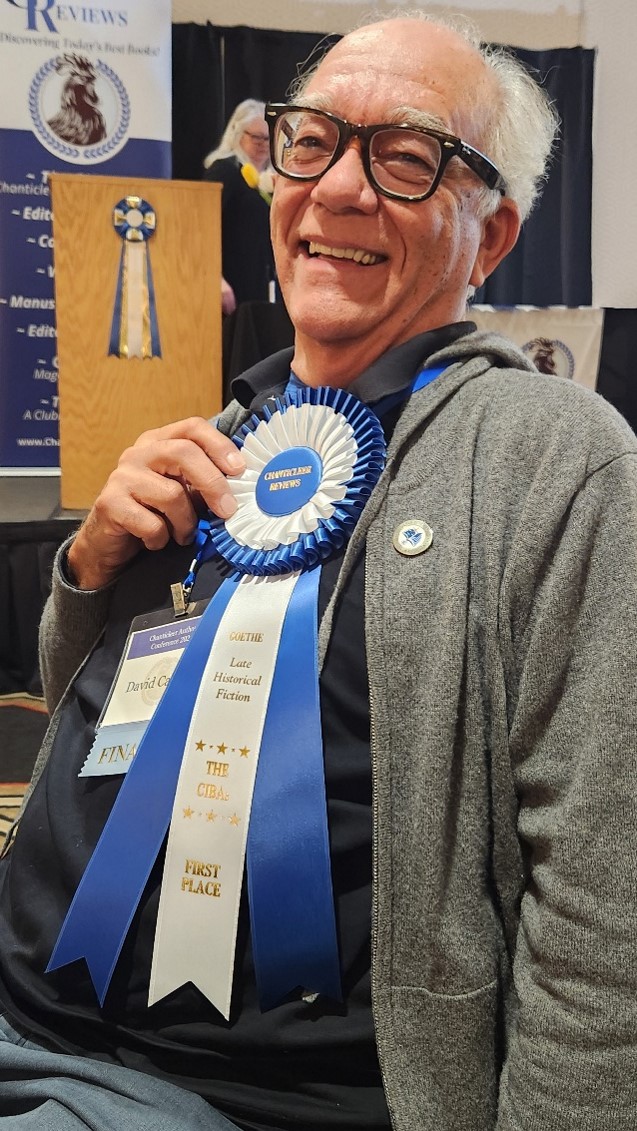
    CIBA award, Grey sweater, David Calloway, black shirt, conference, awards banquet

    Chanti: When did you finally feel you were an author and add that to your extensive resume?

    Calloway: The day I opened the box that brought the proof copy of If Someday Comes! Up to that point, there were many moving parts, the manuscript, the proof reading, the cover art, the endless formatting. Here in my hand was a real book, something anyone might buy. Unbelievably, it had my name as writer on it. It’s been published for many months, and I still find it hard to introduce myself as an author.

    Chanti: Your ancestor’s story is so compelling. What genre best describes your book?

    Calloway: If Someday Comes is historical fiction, closely based on the true story of my great-grandfather’s life during the American Civil War. I grew up knowing where people were during that period, but their exact relationships were lost in time, so I filled out the characters and created the tone of the plot as I went. Comments from the old folks like “he was a nice man” are not enough. It’s hard to avoid retroactively applied values to those times, and I’m sure some of my twenty-first century “I have judgement” slipped in there somewhere, but the goal of getting his story into a book was my true goal.

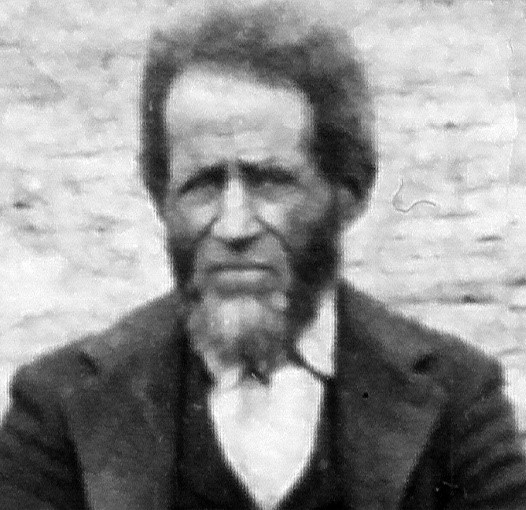
    Old photograph, African America, slavery, beard
    George Calloway

    Chanti: How did find the information you used to fill in the background of the story?

    Calloway: I read historical accounts of the period and subject, then added in my family’s tales of the past. I also created an outline of events for the story, and I used incidents I read about in books, letters, and newspapers for inspiration. The motivations of people never change for as far back as written history will allow us to see. Well-worn are the old trials of the human condition, and how often do we quote the Romans and Greeks on sex, greed, love, and jealousy. And of course, my own feelings on the same subjects.

    Chanti: That’s a rich way to develop both character and story! How do you approach your writing day? What is your routine?

    Calloway: “Sporadic” is my routine. I’ll write for several days, then none, then return to the page, then realize I need input, then read more history and other people’s work, stare at the blank screen, castigate my own procrastination, remind myself that no one is going to read this if I decide to cut it-so don’t worry. Then I despair that none will read the book anyway, convince myself that I’m hungry and a snack will get me going. I’ll check my email, take my dog for a walk, and then have lunch with old friends whom I’ve convinced my book is going great.

    Ad infinitum.

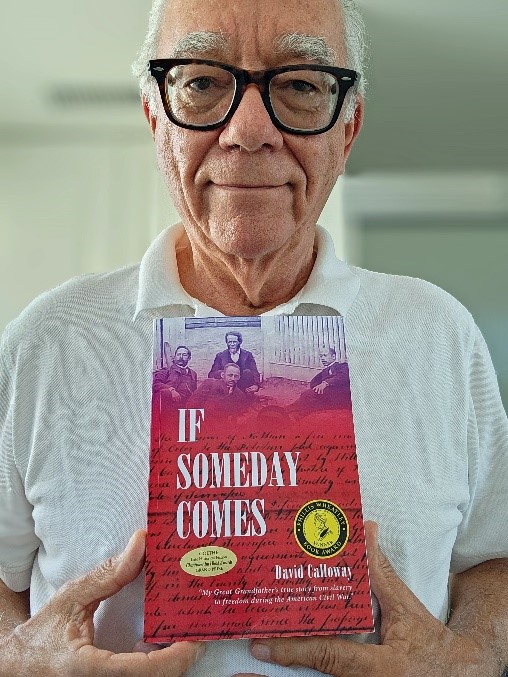
    David Calloway, If Someday Comes, White shirt, black glasses

    Chanti: What about writer’s block? How do you handle it when the words just won’t come to you?

    Calloway: Staring at an empty page with no ideas popping is tough. I write whatever comes to mind. It may have nothing to do with the book, or it may have a connection later on in the story. Some days are two sentence days, some are two-page days. I concentrate on my rights as an editor and will change or eliminate any thoughts, so I just jump right in.

    If I’m really stuck, taking a walk helps. I leave the phone at home, as I find stepping away from it resets the brain. Sometimes I imagine your main character with walking with me. And the phrase “I’ve got to sleep on it” is a maxim I refer to often, because problems are solved and ideas are generated by whatever part of the brain is working at night. It’s an approach that work for me… sometimes.

    Chanti: Those are great pieces of advice for breaking out of a block. Beyond writing, what sort of marketing tips do you have for authors?

    Calloway: Online ads are the only strategy that has worked for me. Spending lots of money in trade magazines has been a complete bust. I advertise on Amazon and Facebook. Set a budget and see how it works for you. Even so, It’s a struggle. Contacting public libraries, local papers, community clubs (Rotary, Elks, Chamber of Commerce) help – they always need luncheon speakers. I also make a point of being available for online book clubs and chats, and I have a website that has book reviews, awards, and links to other websites. www.IfSomedayComes.com. And I always encourage readers to write reviews online. It really helps others to decide to read the book.

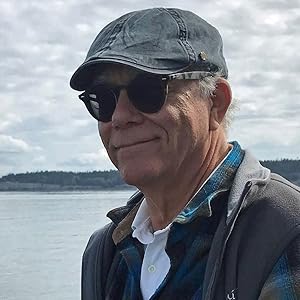
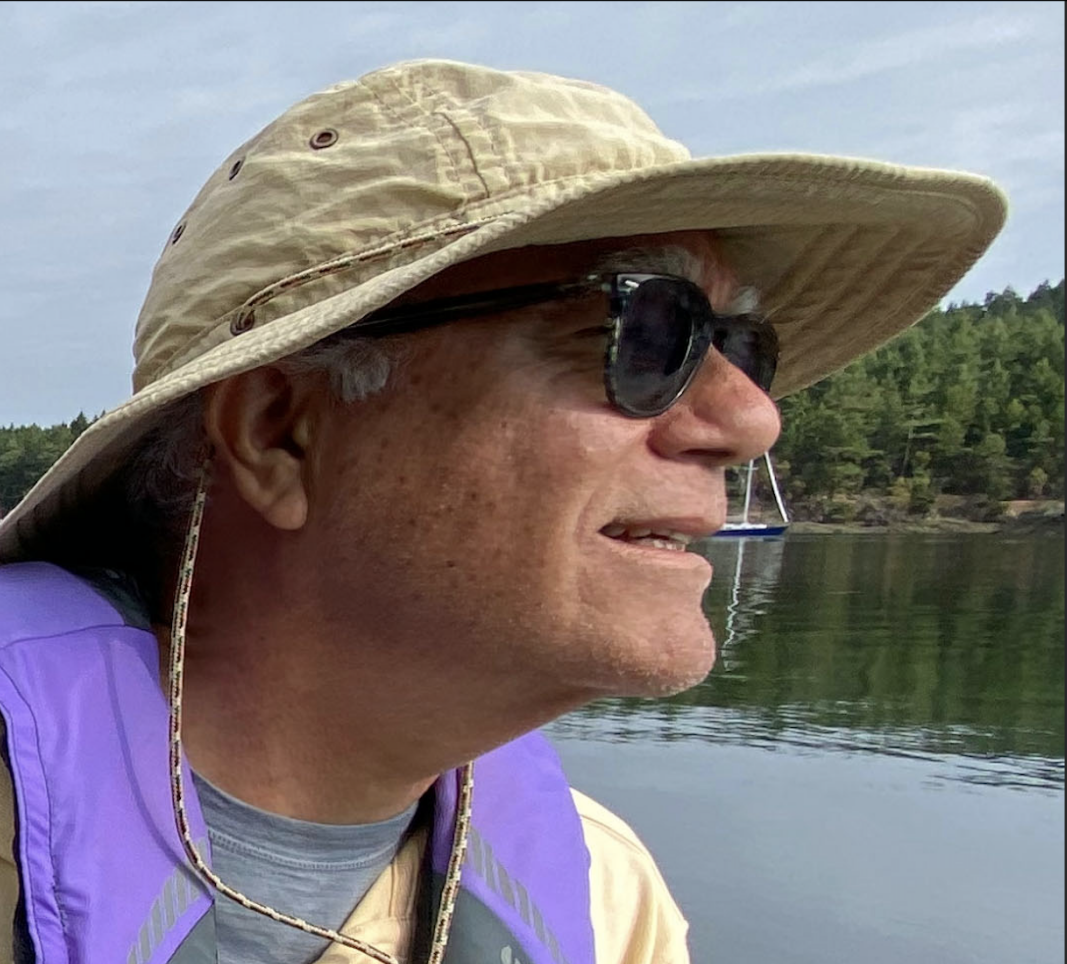
    David Calloway, water, cap, grey, sky, land

    Chanti: What is your next project? Another story about a member of your family?

    Calloway: Yes! I am working on my Grandfather James’ story as historical fiction. He was born a slave in 1860, and grew up to become a surveyor and farmer. James and his brothers – all graduates of Fisk University – worked for and with Booker T. Washington in the building of Tuskegee Institute. James ran the farms and also taught farming. He was Tuskegee’s representative sent to Washington, DC to lobby for land grants to help finance the school. Later, James was hired by the German government and traveled to Togo to teach cotton farming.

    Chanti: Who are the perfect readers for If Someday Comes?

    Calloway: The book is a story of family, both before and during the Civil War. It highlights the close relationships between owner and slave, and as was so often the case, is about one large family separated by race and class.

    The story includes the good stuff, like love, courage, ingenuity, as well as the bad stuff of violence, cruelty, famine. Everyone suffered during the war; but remarkably, George (my Great Grandfather) kept everyone alive on both sides of the color line.

    It will be a book for anyone interested in the Civil War, the experience of slavery in East Tennessee, and the relationship of whites and blacks in the South.


    man, hat, yellow shirt, water, land, sky, David Calloway David Calloway was born in Chicago and grew up in Palo Alto and Berkeley. Calloway holds an MFA from UCLA in Film Production. His first job was as an Editor, progressing to Cinematographer, then a Producer of features and television. He is a member of the Producer’s Guild, the Director’s Guild, and the Academy of Television Arts and Sciences.
    Calloway is a Director on the board of the Angel’s Gate Cultural Center and on the board of the Offshore Racing Outreach Foundation.

    Calloway lives and works in Los Angeles, California. You can find out more about David Calloway’s writing on his website.

    If Someday Comes available on Amazon in print and Kindle, and as an Audible book.

  • 10 Question Author Interview Series with Alex Sirotkin – Award-Winning Author, Interview Series, Award-Winning Books, Literary, Romantic Fiction, The Long Desert Road

    CHANTICLEER AUTHOR 10 QUESTION INTERVIEW SERIES

    With Alex Sirotkin

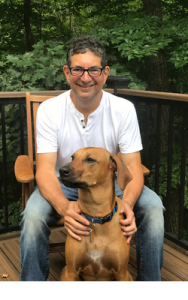
    Alex and his dog.
    Alex and his dog.

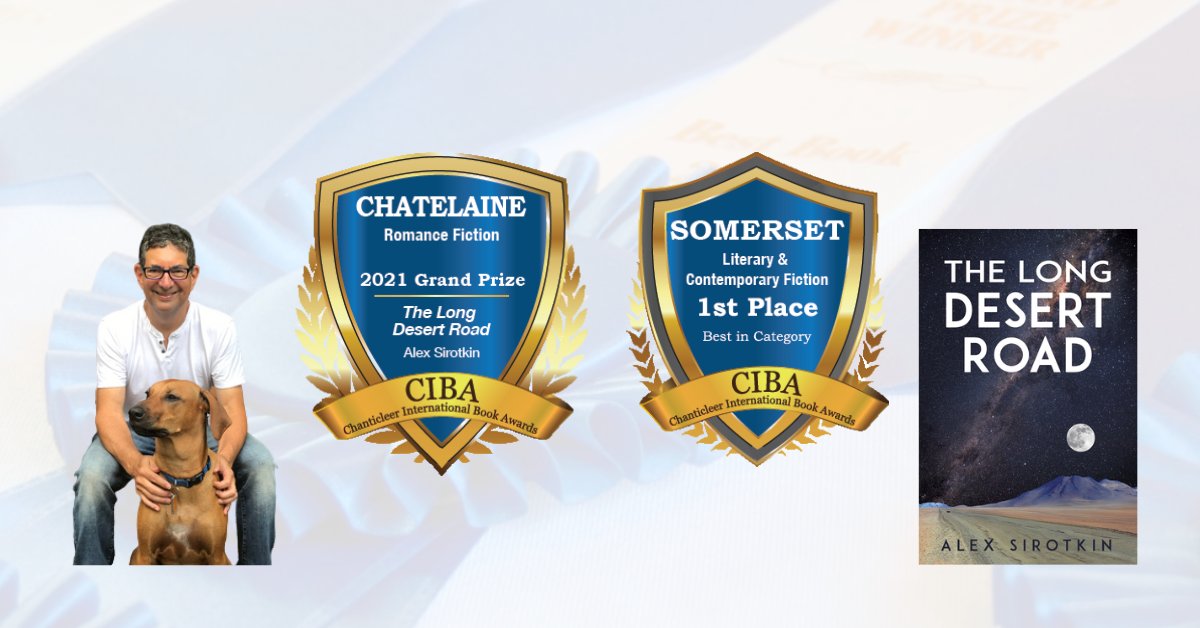
    Alex Sirotkin is a kind man with intelligent humor tucked in around the edges. He saves his angst for his writing and his law practice. And, boy, does he ever deliver! The Long Desert Road earned a 5-Star rating from our reviewers and went on to take home the 2021 CHATELAINE GRAND PRIZE! (As far as his law practice, one would do well having him on your side.) We are so proud of him for his outstanding work and being a Chanticleerian. I know you will love him as much as we do. So, without further ado, let me introduce you to award-winning author, Mr. Alex Sirotkin.

    Chanti: Tell us a little about yourself: How did you start writing?

    Sirotkin: Sure. I’m pretty old. I didn’t start writing until 2016, so that would have made me about 60. At first, I wanted to write a screenplay. I love movies, to be honest, more than books, which maybe makes me a lousy novelist. But, but…at the same time, I find that most movies are terrible! Over the years, I’d walk out of the movie theater and say to myself “Damn, I could have written a much better story than that!” So, I promised myself to try one day. And that I did.

    It didn’t take me long to realize that I didn’t know the first thing about writing a screenplay, and the apps that would assist me just seemed too complicated. I had a good idea for a story, so I wrote a book instead. My background is in law – so I can write. But it doesn’t come easily or quickly to me. Sometimes it’s painstaking. Being older, okay old, also provided the time to have many life experiences. You write what you know, and I’ve experienced a whole lot in my life, so I know a lot about which I can write. Conversely, it must be so hard for a young person in his/her twenties to be a fiction writer. For them, everything must be made up!

    Finally, I had a particular experience with my daughter that served as the underpinnings for much of the story. You see, she was bipolar and addicted to heroin. I was her primary supporter, mentor, cheerleader, and disciplinarian for the ten years prior to her death from an overdose in October 2020, during the pandemic. It was the most rewarding, uplifting, stupefying, frustrating, busy, and devastating period of my life. Obviously, it ended in disaster, but I wrote the book when she was doing well, when I had a lot of hope. The novel, therefore, is uplifting. I finished the book in January 2020 or so, and she died ten months later. My book was released three months after that. It was quite surreal.

    Chanti: That juxtaposition must have felt so strange. I cannot imagine. Thinking of the places you drew inspiration from, let’s talk a bit about genre. What genre best describes your work? And, what led you to write in this genre?

    The Long Desert Road Cover

    Sirotkin: I won my Grand Prize in Romantic literature. I won (the lesser) First Prize in Literary and Contemporary Fiction. To be honest, my book fits best into the latter genre. Sure, my book is a love story. But it’s not your typical sexy beach read, with scantily clad models on the front cover. In fact, some of my witty friends complained that there wasn’t enough (or any) sex in the book at all. (There was some, but I just didn’t go into the hot details.) I had certain things to say – call it a message – in my book, and those would be best said via literary fiction, which to me is a catch-all genre that is not the other more specific areas of writing. And it connotes, I suppose, a focus on the words, more so than one would expect from a who-done-it, or science fiction, although don’t tell that to Isaac Asimov, one of my favs. My book is therefore a slower more-deliberate read.

    Chanti: First in Category for Literary Fiction is nothing to sniff at, my friend, given the sheer numbers of entries in that division! In terms of writing, do you find yourself following the rules or do you like to make up your own rules?

    Blue and Gold Somerset First Place Winner Badge for Best in Category

    Sirotkin: Other than the law, and the Golden Rule, in writing, as in life, I’m not a big believer in hard and fast rules. In terms of writing, like any creative medium, rules might be a guide to the inexperienced novelist (like me) but ultimately one must go with his gut. I was told not to write in present tense. But I did. I was told to limit points of view, but I wrote partly in first person, and partly in third person from two POVs. I was told not to write at such a high level. In fact, someone told me that Stephen King writes at a 5th grade level. Even if I had believed this, I didn’t care. I wrote as I was trained to write, and my possible audience would hopefully appreciate the art of wordcraft, even if they had to refer to Merriam Webster from time to time. And in fact, some told me they kept a dictionary at their side while reading my book.

    My best line (top of page 161) in my eyes, took me hours to perfect, yet I think it was missed by most. Talking about Hubble the scientist (who lived in the early twentieth century) my main character, Henry said “If Hubble himself had but one character flaw, it was his inability to be humble, and such was his reputation.” Get it?  Lastly, I never had an outline for this novel. I pretended for a while to develop one, but I gave up and just started to write. What I had was a beginning and an end. Somehow I managed to meander my way through the desert to finally reach my intended resolution. I think I was a bit lucky to get there.

    Chanti: What do you do when you’re not writing? Tells us a little about your hobbies.

    Sirotkin: I certainly don’t earn a living as a novelist. I’m too poor a marketer, and I don’t write enough. So, I work in my own business. But for fun, I’ve got a lot going on. Like my main character, Henry, I always have a tune in my head. So, I whistle a lot, which annoys the heck out of my wife. And I play piano – I was trained for 9 years in classical piano, but now I just like to sound things out and improvise. I play tennis. I was really a good club player once, until age finally caught up with me. I still play, but not the man I used to be. So it goes. My wife and I hike locally with our two 90 lb. Rhodesian Ridgebacks. Finally, we love to travel, and one of our trips lay the foundation for much of my novel.

    Scout Running with J
    Scout Running with J

    Chanti: Alex, you keep talking about age, and here we are contemporaries… I’m starting to get a bit nervous! Let’s move on – quickly. How do you come up with your ideas for a story?

    Sirotkin: The ideas come from the heart. A work of literary fiction (as opposed to a detective novel, for example) has to come from within. The ideas are already there. You only must recognize them. Personally, I had difficult experiences with my daughter, a bipolar drug addict, over a ten-year period. But my story is not what you think it is. These experiences framed only a part of the story. The bigger picture for me (in terms of a novelist, and not necessarily as a dad) relates to the concept of perspective. It’s been my mind’s mantra for as long as I can recall. Whether one is talking about mental health, politics, or just getting along with one another, the key in my mind has always been a healthy perspective. The size or importance of something in relation to something else. Thinking about your problems in relation to how much worse things can be. Thinking about the positives in your life in relation to the negatives. Then grasp at the size of the Cosmos. Try to wrap your head around the enormity of the Universe. You begin to realize how each of us, and our issues, are so small. And then there’s G-d, as you know him/her/it, or some higher power, or something else, that might bind us together in a natural world. These thoughts and feelings were all there, all along while trying to deal with my daughter’s inescapable issues. The story sprang from these concepts – the hard part was putting them all together in a cohesive tail. I can’t tell you how that happened. It just did, writing with passion.

    Chanti: And you did it all so beautifully. Well said, sir. Thank you for that. What areas in your writing are you most confident in? What advice would you give someone who is struggling in that area?

    Sirotkin: A difficult, yet interesting question. I can’t say that there is one area in particular. But what comes to mind is doing the research. I intended the book to be a piece of fiction based as much in reality as I possibly could. The book in large part was about the Truth. I couldn’t base a book about the Truth, on something that wasn’t real. So, to understand certain areas of “reality” I needed to do a lot of research. Some of it surrounded the nature and mysteries of the Cosmos, what we understand of it, what we don’t, and what we are learning today. I’m no scientist, but I’m just smart enough perhaps to wrap my head around these issues sufficiently to convey them within a story. And the trick was to do the telling as efficiently as possible so as not to lose the reader in confusing detail. Me thinks I could have done that better, having heard from a few readers that they flipped through the science stuff. (And this is why you need a good editor, who tells you when enough is enough.) In any case, the internet is a limitless source of information. To understand how Hubble the scientist was able to determine that the Universe was expanding back in 1928 or so, I had to sift through dozens of articles, many of which were inconsistent with what I read in the others. I also found myself pouring over YouTube videos, or Google Maps of places I needed to describe in utter detail. My advice? Patience, Yoda. And don’t take anything for granted. Facts are facts, there are no alternative facts, and it may take a while to piece it all together. But you’ll get there.

    Chanti: Who’s the perfect reader for your book?

    Sirotkin: Let me answer this question by telling you who will likely not appreciate my novel: someone with certain expectations, someone without an open mind, someone that only likes a certain genre, and/or finally someone that wants to read a story without thinking. My book is a thinking person’s book. If you have an open mind, if you want to experience something out of the ordinary, if you want to learn about something you’ve never even heard of, then you should read my book. If you like delving into the developing personality and motivation of a character, then you will like my book. If you have a sense of humor, and are compassionate about those in dire straits, you will like my book. Most people who read it do. No writer can please everyone.

    Chanti: I like how you answered that question. What excites you most about writing?

    Sirotkin: I would write each chapter a hundred times. This is without exaggeration. I love to see the improvement with each pass. My first draft of a chapter would literally suck. Pardon that word. So, what excites me the most is seeing this evolution take place.

    Write, write, and rewrite!

    Chanti: Fascinating! Do you ever experience writers block? What do you do to overcome it?

    Sirotkin: No, I would not describe it as writer’s block. On many days, I didn’t have the time to write, attending to more mundane issues, or my work. But when I sat at my keyboard, I could always write something. The question for me was the quality of that something and was it worth keeping. How much work would be required to rehabilitate it. If you’ve ever been down, or depressed (and who hasn’t) the key for me to move on from such a state is to take action. A conversation, a confrontation if needed, a long walk, whatever. Don’t sit and brood. The same with “writer’s block.”

    Take action and write. Write anything. Write about something different. Write a letter. Write a silly poem. Or write another chapter but don’t worry about the quality. Just keep writing. And don’t think about it too much. Get back up on that horse. It will find its way home without you.

    I watch a lot of tennis. It’s amazing how badly a pro could be playing in the first set, only to make a tremendous comeback in the second. He keeps at it, playing the game. As in writer’s block, the setback was all mental! Suddenly, he’s back at the top of his game, often without a clue as to what caused his initial lapse.

    Chanti: What is the most important thing a reader can do for an author?

    Sirotkin: This is an easy one. Love his book and rave about it to him and everyone else in the world. Since I won’t make any money from this experience, at least my ego should be boosted. Big time. Sorry, I’m just mostly kidding here. Seriously? The most important thing a reader can do is to give the work the attention it deserves. If it’s a slow read, like mine might be, read it slowly. Afterward, thoughtful criticism and evaluation is most appreciated, especially if I’m to write another one. And yes, if you like the book, pass it on. The most important thing for me is that people read my book and hear what I had to say.

    Chanti: Okay friends, you heard it! If you love nothing more than a well-built, eloquent novel that addresses the hard issues of life with a strong sense of the human soul, look no further! Read Alex Sirotkin’s Award-Winning novel, The Long Desert Road. Be sure to contact the author and share your thoughts – send the book along to others with similar loves. Tell the World! You will be doing all of us a tremendous favor because good books simply must be read.

    Find our review of The Long Desert Road by Alex Sirotkin here, and buy it from Bookshop, Amazon, or Barnes and Noble! Remember, Reader Reviews really help your favorite authors!