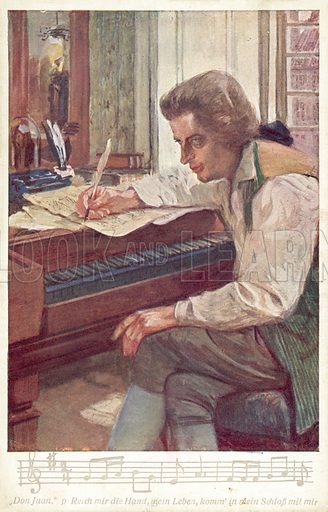
Glissando is a term from music meaning sliding or gliding over keys.
When glissando is applied to wordcraft, it means paying attention to the sound and flow of language. Sounds arrest the reader’s attention. Even if your words are not read out loud, the readerhearsthem with her/his inner ear.
All language has sound and sound communicates meaning, emotion, mood and tone. Language is also embedded with deeply appealing rhythms that, like drum beats or heart beats, that slip into the reader’s consciousness and enhance the experience of reading.
In all writing, every word exists for a reason, every sentence builds the scene or idea. Each word is a note. Sometimes you want sound to lull a reader before you slap him with a heated argument or stage a bombshell scene. Sometimes you want him to pause at the end of a string of words. Sometimes you want to march along briskly as you dispense information.
When sound is emphasized a narrative becomes poetic. When sound is deliberately employed, sentences, paragraphs and scenes have clout. Writing without themes, purpose and music is only typing and writing without paying attention to sound is flat and empty.
Sound can add or subtract to the flow of writing. Like other writing devices, flow is a nearly invisible factor, but when it’s employed, your writing will be seamless and will reflect the mood and ambiance of a particular point in a story.
A note from Kiffer: Think of a symphony.
Think of symphonies and the myriad of moods that they evoke.
A few examples:
Stravinsky’s riotous Rite of Spring
Gershwin’s sultry jazzy and brash exuberant Rhapsody in Blue
Bernstein’s fresh and challenging West Side Story
Mozart’s complex and exhilarating Jupiter
Aaron Copland’s stirring and nostalgic Symphony for the Common Man
Bear McCreary’s Symphony for Battlestar Galactica (a side note: Bear is from Bellingham)
Each symphony is written with the same twelve notes, one note at a time. Each novel, each written work, is written one word at a time.
Flow
Flow happens when ideas and stories have fluidity, connectivity, and cohesion. Flow is consciously applied as a courtesy to the reader because readers deeply resent being lost of confused when amidst a page or story. Readers also hate to be jolted or to dangle, or feel a sense of disorientation. Flow provides the map, flow connects the dots, flow grants readers firm footing. Flow aids the internal logic needed to make your ideas comprehensible. Flow will move the reader from sentence to sentence, paragraph to paragraph, idea to idea, scene to scene, and chapter to chapter with grace and ease.
Transitions
An essential technique that creates flow is transitions and it’s shocking how often writers neglect to use them. Transitions are the words, phrases, sentences or paragraphs used to bridge what has been said with what is going to be said. Simple transitions are generally, but not always, a subordinate clause placed in the beginning of a sentence or paragraph and used as a road sign indicating a change. Probably the most famous transition in writing is “meanwhile, back at the ranch.” It provides an easy shorthand and the reader knows,Ah, we’ve changed locales; we’re at the ranch again. Wonder how Jane is getting along since Luke has been on the cattle drive for three months now.
Transitions are handy devices because they can accomplish so much in only a few words. Their jobs are to signal: a change in time, a change in place, a shift in mood or tone, or a shift in point of view. Transitions also clarify relationships, emphasize, contrast or compare things, conclude actions or thoughts, and create associations.
Here are a few tips for writing with wordcraft.
When in doubt, understate. Often the most painful, emotional, or violent moments in writing works best by using a minimalist approach.
Write about subjects that mean something to you, emotionally and intellectually; that force you to question your beliefs and values.
Save lush passages for choice moments in the story, especially decisions, revelations, and reversals. If you use heightened prose every time your character feels an emotion the whole will become contrived.
Omit redundancies like grotesquely ugly, grim reminders, complete surprise, and happy coincidence.
Make certain every sentence adds something new.
Generally avoid heightened prose for endings—often the best endings are concrete or understated.
Respect word territory. If you feature an unusual word in a sentence (effervescent,rococo,unremunerated,infelicity) then don’t repeat it again in a nearby paragraph or better yet, use it only once.
Don’t forget to keep asking yourself, what does this remind me of? As you lay out sentences and scenes, but also as go through your days, look around you with an artist’s curiosity. It’s a simple question, and leads to wizardry.
Keep writing, keep dreaming, have heart. Jessica
Jessica Page Morrell
Jessica Page Morrell is a top-tier developmental editor for books and screenplays. Her articles have appeared in Writer’s Digest and The Writer magazines. She is known for explaining the hows and whys of what makes for excellent writing and for sharing very clear examples that examine the technical aspects of writing that emphases layering and subtext. Her books on writing craft are considered “a must have” for any serious writer’s toolkit.
Did you know that Chanticleer offers editorial services?We do and have been doing so since 2011.
And that our professional editors are top-notch and are experts in theChicago Manual of Style.They have and are working for the top publishing houses (TOR, McMillian, Thomas Mercer, Penguin Random House, etc.). If you would like more information, we invite you to email Kiffer or Sharon at KBrown@ChantiReviews.com or SAnderson@ChantiReviews.com.
A great way to get started is with our manuscript evaluation service. Here are some handy links about this tried and true service:
You need to care deeply about your protagonist – Jessica Page Morrell
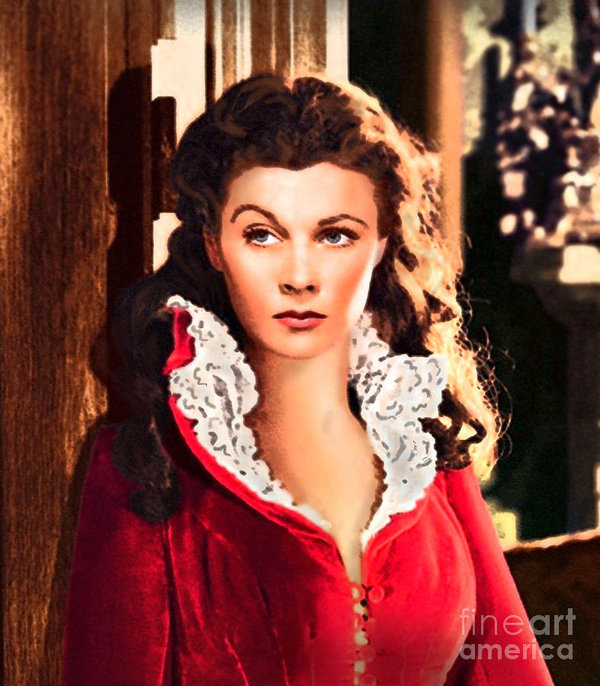
It’s impossible to write about a main character you don’t care about. And care deeply. When I say care, you can actually pity the poor sod (Quoyle in The Shipping News), or disagree with his morality as when you write an anti-hero like Scarlett O’Hara or Tyrion Lannister of the Game of Thrones series. Many readers find anti-heroes likable or relatable, but so must the writer/creator. Because fiction writing requires a serious emotional and intimate involvement.
Harry Potter of the Harry Potter Book Series by J.K. Rowling
Ideally you’ll find your protagonist fascinating, indelible, someone you can co-habitate with for at least a year if not longer. Because between first drafts and final revisions, it will take at least a year to finish your novel. This means your main player needs to be interesting to hang out with and interesting to write.
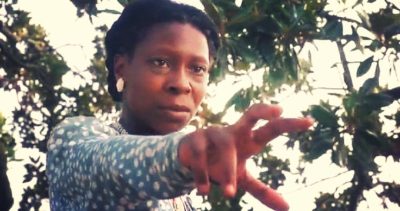
Miss Celie of The Color Purple by Alice Walker
I’ve known writers who have fallen out of love with their characters and it ain’t pretty. Especially if they created a series character. Typically they discover their creation feels stale or predictable. Similar to a failing relationship in the real world. Like those glum couples you spot in restaurants not speaking to each other; sitting in slumped misery or apathy. Of course I’m nosy and apt to spy on my fellow diners and I’ve been noticing these miserable pairings for years.
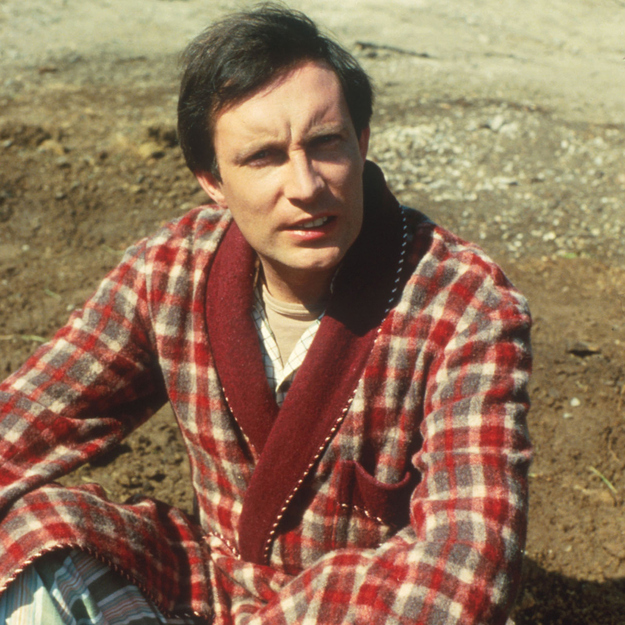
Douglas Adam’s Hitchhiker’s Guide to the Galaxy’s protagonist – Arthur Dent
Back to you and your main characters. Think long haul. Lasting commitment, curiosity oradmiration. Think not being judgy, but observant and nosy, and perhaps a bit curious.
Unforgettable or haunting protagonists are the keys to great fiction!
A few suggestions for you to keep in mind:
Character first. Plot is people.
Create an intricate backstory that will cause motivations. This does not mean to add all of that backstory to your work.
Don’t confuse protagonist with hero. Sometimes the hero saves the day for the protagonist.
Sometimes the protagonist is not a “good guy.” Examples are: Holden Caulfield from The Catcher in the Rye, Michael Corleone from Mario Puzo’s The Godfather, or Arthur Dent in The Hitchhiker’s Guide to the Galaxy by Douglas Adams.
Holden Caulfied – The Catcher in the Rye by J.D. Salinger
Give it time. It doesn’t need to be an instant attraction or intimacy, but your character should pique your curiosity.
Discover what in your character’s nature validates his/her humanity. Makes him or her worthy of your reader’s time. Some of the best protagonists are not immediately sympathetic or understandable. It can take readers time to understand them. But that’s okay. Because there will be tests along the way that reveal his/her true nature.
Your protagonist needs traits you admire, even begrudgingly.
Figure in your protagonist’s chief vulnerabilities, then exploit them.
Understand how your character’s triggers, reactions or overreactions under duress.
Consider working outyourdemons through your protagonist. Is he or she insecure? Will he feel misunderstood? What about rewriting your awkward adolescent years through your character?
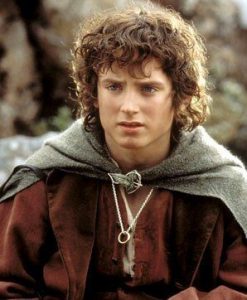
Frodo of the The Lord of the Rings series by J.R.R. Tolkien
Oh, and the protagonist should fail, fall on his face at least a few times along the way to the climax. Because your job as the master manipulator (aka author) is to blindside, torment, and thwart your characters. Again and again, so the outcome is in question and your readers are compelled to keep turning the pages.
Handy Links to other articles featuring Protagonists
Keep writing, keep dreaming, have heart. – Jessica
Jessica Morrell is a top-tier developmental editor and a contributor to Chanticleer Reviews Media and to the Writer’s Digest magazine. She teaches Master Writing Craft Classes at the Chanticleer Authors Conference that is held annually along with teaching at Chanticleer writing workshops that are held throughout the year.
Did you know that Chanticleer offers editorial services? We do and have been doing so since 2011.
Our professional editors are top-notch and are experts in the Chicago Manual of Style. They have and are working for the top publishing houses (TOR, Macmillan, Thomas Mercer, Penguin Random House, Simon Schuster, etc.).
If you would like more information, we invite you to email Kiffer or Sharon at KBrown@ChantiReviews.com or SAnderson@ChantiReviews.com for more information, testimonials, and fees.
We work with a small number of exclusive clients who want to collaborate with our team of top-editors on an on-going basis. Contact us today!
Chanticleer Editorial Services also offers writing craft sessions and masterclasses. Sign up to find out where, when, and how sessions being held.
A great way to get started is with our manuscript evaluation service. Here are some handy links about this tried and true service:
If you are partaking in NaNoWriMo, then you have made past the halfway mark by now. Congratulations!
We hope that this article will provide prompting to spur you on to the finish line!
The best fiction touches the deep layers in us. A writer achieves this effect by embedding dozens of techniques into his or her story. – Jessica P. Morrell
Dramatic Question
Compelling fiction is based on a single, powerful question that must be answered by the story climax.
This question will be dramatized chiefly via action in a series of events or scenes.
Examples:
If you are writing a romance, the question always involves whether the couple will resolve their differences and declare their love.
In a mystery the dramatic question might be will Detective Smith find the serial killer in time to prevent another senseless death?
In The Old Man and Sea, the dramatic question is will Santiago catch the big fish and thus restore his pride and reputation?
Assignments:
What is the dramatic question in Harry Potter and the Sorcerer’s Stone?
What is the dramatic question in Stephanie Myers’ Twilight Saga?
An intimate world isn’t created by merely piling on details.
It means your story world has the resonance of childhood memories, the vividness of a dream, and the power of a movie.
An intimate, simmering world is filled in with shadows and corners and dogs and ice cubes and the sounds and smells of a dryer humming on wash day and a car blaring past, with pop music shaking the windows. These details lend it authority, potency, and a palpable physical existence.
Diana Gabaldon’s The Outlander Series simmering details make this time-travel, fantasy, horror, science fiction extremely believable and immersive fiction.
Outlander — Diana Gabaldon’s details make for immersive fiction
An intimate story takes us to a specific place and coaxes us to remain there. An intimate story is lifelike and feels as real and complicated as the world the reader inhabits. When he finishes the final pages, and leaves the story world, he should feel the satisfaction of the ending, but also a huge sense of loss. Like a friend has moved to another town just when the friendship had reached a level of closeness and trust. – Jessica P. Morrell
Characters Built from Dominant Traits
Create main characters with dominant and unforgettable traits as a foundation of personality.
These traits will be showcased in the story events, will help him achieve or fail at goals, and will make the story person consistent.
For example, Sherlock Holmes’ dominant traits are that he is analytical, Bohemian, opinionated and intelligent. These traits are showcased in every story he appears in along with secondary and contrasting traits. When the character first appears in the first scene, he arrives in the story with his dominant traits intact.
Outlander’s Claire and Jamie.
Lord of the Rings‘ Gandolf
Lisa Wingate’s Before We Were Yours’ villain Georgia Tann
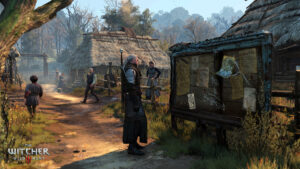
The Witcher by Andrzej Sapkowski
Emotional Need
The protagonists and main characters are people with baggage and emotional needs stemming from their pasts. These needs, coupled with motivation cause characters to act as they do.
For example, in Silence of the Lambs Clarisse Starling is propelled by childhood traumas to both succeed and heal the wounds caused by the death of her father.
Robert Dugoni’s Tracy Crosswhite in his The Tracy Crosswhite series.
Significance
The storyline focuses on the most significant events in the protagonist’s life.
Example: Robert Dugoni’s Tracy Crosswhite searches for the killer of her sister in his The Tracy Crosswhite series.
Craig Johnson’s Longmire series – Sheriff Walt Longmire whose wife was murdered.
Motivation Entwined with Backstory
Motivation, the why? of fiction, is at the heart of every scene, fueling your character’s desires and driving him to accomplish goals.
Motivation provides a solid foundation for the often complicated reasons for your character’s behaviors choices, actions, and blunders.
Motivating factors provide trajectories for character development, as a character’s past inevitably intersects with his present.
Your character’s motivations must be in sync with his core personality traits and realistically linked to goals so that readers can take on these goals as their own.
Desire
Desire is the lifeblood of fictional characters.
Not only do your characters want something, but they also must want something badly.
You can bestow on your character flaming red hair, an endearing, crooked grin and a penchant for chocolate and noir movies, but if she doesn’t want something badly, she’s merely a prop in your story, not a driving force. But if she wants to win the Miss Florida contest, take over her boss’ job, or become the first female shortstop for the Atlanta Braves, then you’ve got a character who will make things happen and a story that will be propelled by desire.
The Ring from Lord of the Rings is a perfect example of a symbol of desire on so many different levels.
Frodo and The Ring – LOTR by J.R.R. Tolkein
Threat
Fiction is based on a series of threatening changes inflicted on the protagonist.
In many stories, these threats force him or her to change or act in ways he or she needs to change or act.
Often too, what the protagonist fears most is what is showcased in a novel or short story. It can be fear of losing his family, job, or health with a dreaded outcome.
Fear of losing to a threat or threats provide interest, action, and conflict.
Causality
Events in fiction are never random or unconnected. They are always linked by causality with one event causing more events later in the story, which in turn causes complications, which cause more events, which cause bad decisions, etc.
A fictional character doesn’t arrive at easy decisions or choices.
Instead, he is burdened by difficult or impossible choices, particularly moral choices, that often make him doubt himself and question his actions.
Inner conflict works in tandem with outer conflict—a physical obstacle, villain or antagonist–to make the story more involving, dramatic, and events more meaningful.
Complications
A story builds and deepens by adding complications, twists, reversals, and surprises that add tension and forward motion.
Plots don’t follow a straight path. Instead, there are zigzags, dead ends, and sidetracks.
Complications create obstacles and conflict, cause decisions to be made, paths to be chosen.
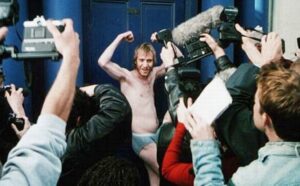
My favorite complication is one from Notting Hill when Spike is standing outside in his underwear strutting around with the paparazzi going wild for a peek at Anna Scott. How could Anna and William ever expect that complication?
A complication from Notting Hill – the film.
Midpoint Reversal
The middle of a novel comprises more than half its length.
At about the midpoint of most novels, a dramatic reversal occurs. The hunter becomes the hunted; a second murder occurs proving the detective has been wrong in his suspicions; a former lover arrives in town to complicate a budding romance.
This reversal keeps the middle from bogging down and becoming predictable and also breathes new life and often a new direction into the story.
Satisfying Ending
Every story needs an ending that satisfies the reader while concluding the plot.
A satisfying ending does not have to be “happy” or victorious or riding off into the sunset.
The final scenes, when the tensions are red hot and the character has reached a point of no return, must deliver drama, emotion, yet a logical conclusion.
This is not to suggest that every plot ends with a shoot-out or physical confrontation.
Some endings are quieter, more thoughtful. Some endings are ambivalent, some a dramatic or a violent clash of wills.
However, there is always a sense that all the forces that have been operating in your story world have finally come to a head and the protagonist’s world is forever changed.
We are cheering you on to the Finish Line! You can do it!
Jessica Page Morrell
Keep writing, keep dreaming, have heart. Jessica
Jessica Morrell is a top-tier developmental editor and a contributor to Chanticleer Reviews Media and to the Writer’s Digest magazine. She teaches Master Writing Craft Classes at the Chanticleer Authors Conference that is held annually along with teaching at Chanticleer writing workshops that are held throughout the year.
Kiffer Brown
Keep creating magic! Kiffer
Kathryn (Kiffer) Brown is CEO and co-founder of Chanticleer Reviews and Chanticleer Int’l Book Awards (The CIBAs) thatDiscover Today’s Best Books. She founded Chanticleer Reviews in 2010 to help authors to unlock the secrets of successful publishing and to enhance book discoverability. She is also a scout for select literary agencies, publishing houses, and entertainment producers.
Chanticleer Editorial Services – when you are ready
Did you know that Chanticleer offers editorial services? We do and have been doing so since 2011.
Tools of the Editing Trade
Our professional editors are top-notch and are experts in the Chicago Manual of Style. They have and are working for the top publishing houses (TOR, McMillian, Thomas Mercer, Penguin Random House, Simon Schuster, etc.).
If you would like more information, we invite you to email Kiffer or Sharon at KBrown@ChantiReviews.com or SAnderson@ChantiReviews.com for more information, testimonials, and fees.
We work with a small number of exclusive clients who want to collaborate with our team of top-editors on an on-going basis.Contact us today!
Chanticleer Editorial Services also offers writing craft sessions and masterclasses. Sign up to find out where, when, and how sessions being held.
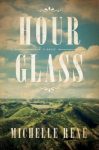
I wrote the first draft of my award-winning historical novel,Hour Glass, in sixteen days.You read that correctly—sixteen days. My experimental novella,Tattoo, was written in about three weeks. Both have been released in 2018.
Though I am intensely proud of this accomplishment, I’m not telling you this to brag. I’m telling you that you can do this, too.
“Sit down every day to write. Even if you don’t want to. A little every day.” – Michelle Rene
Sounds like a line you’ve heard before, right? Yeah, me too. It’s not that this is bad advice. Far from it. Many people find this the best way for them to consistently write draft after draft. But if you really want to knock that rough draft out of the park, I’m going to ask you to kick that notion to the curb.
I’m not magical; I’m a binge writer, and none of the ideas in this article are uniquely mine. Most of them are exercises I’ve stolen from other writers. I used to be just like you because I was led to believe novels should take years to write. I would write a chapter, go back and edit it, and then proceed to the next one. A first draft took me over a year to complete.
It wasn’t until I decided I really needed to finish my novel, I Once Knew Vincent, that I decided to shove my face in the cold, scary, deep end of the writing ocean. I went away to a writer’s retreat and forced myself to write as much as I could every day. I wrote the lion’s share of that book in six days, and those chapters were by far the best in the book.
Why is that?
Isn’t it counterintuitive that the chapters written in a whirlwind of typing be the best? I’m glad you asked, nebulous reader voice in my head. Let’s delve into that.
Why Write This Fast?
Nothing kills a book faster than never finishing that initial draft. A malaise sets in, often slowing a writer down to a crawl while they chip away over a long time and often give up entirely.
“Will I ever finish this book?” the writer asks, (fists raised to the sky for dramatic effect).
Maybe. Maybe not. That first draft is possible if you pick yourself up by your metaphorical bootstraps and do the work every day, but a large percentage of writers never cross the finish line. What a shame that is!
Strangely, there is a raw emotion that comes from writing something so fast you don’t have time to noodle it to death.
How excited are you when you first start fleshing out a story? How amazing does it feel to start naming your characters and setting up their scenes in your mind? Fan-freaking-tastic!
This is because you are in the beginning of abook affair.
Writing a book is like having a relationship. In the beginning, it’s like a honeymoon! You feel all the emotions. Love and pain and excitement and lust. Well, okay. Maybe not lust. Paper cuts hurt, so let’s not go there.
“Writing a book is like starting a new relationship.” Michelle Rene
The point is the first draft should be all elation and honeymoon. Leave the nitty-gritty for your fifteenth edited draft. You don’t want to be sitting in a rocking chair with your first draft complaining about how much he snores before you even get to edit. Taking years to write that first draft can land you in complacency town before you cross the finish line. Pour your heart and soul into the rough draft with reckless abandon.
“Pour your heart and soul into the rough draft with reckless abandon.”– Michelle Rene
“But nothing good can come from my sloppy first draft if I write it in a few weeks,” says the nebulous reader voice in my head that’s starting to sound whiny.
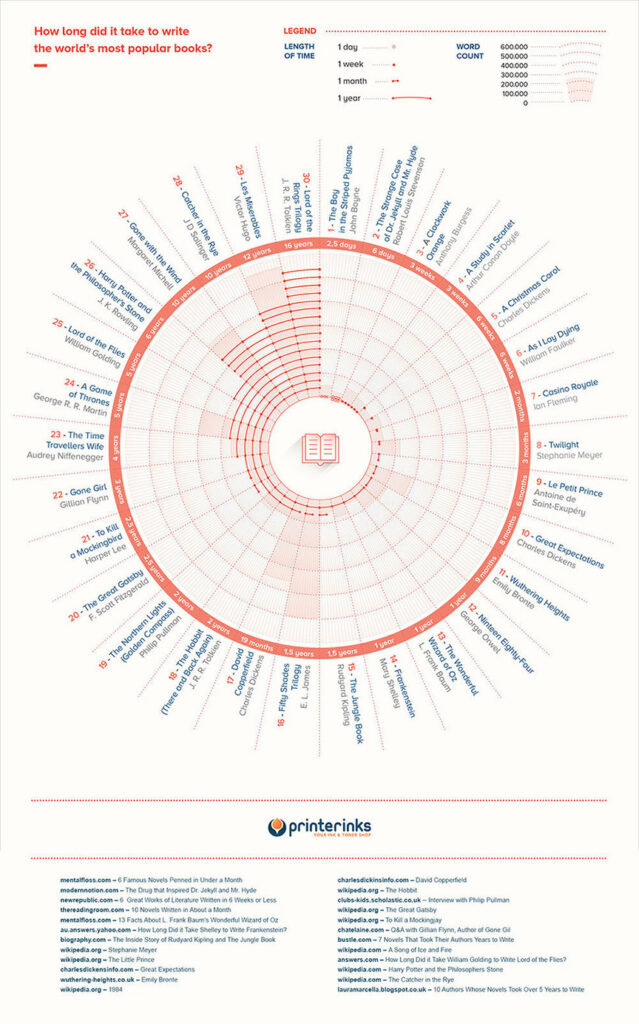
Please refer to the infographic below. It lists some of the most popular books and how long it took the writer to finish them. WhileLord of The Ringstook a whopping sixteen years to complete (no shocker there), I’d like to direct your attention to roughly a quarter of the chart that indicates books written under three months. If theBoy in the Striped Pajamaswas written in two and a half days, you can write something of quality in four weeks.
How Do I Start?
Let’s begin with talking about the snarky, three-hundred-pound elephant in the back of your mind. Your inner editor. We are going to bind and gag that jerk, and it may take fifty shades worth of rope because it’s three-hundred pounds and takes up a lot of headspace.
Sara Bale, an extremely prolific romance writer, has similar advice for your would-be-elephant editor.
“I think the biggest mistake an author makes when writing a rough draft is stopping and rereading/editing their work. The key is to keep moving forward and get the whole story out. Know the beginning and the ending. If you have those elements, the rest is easy.”
Sara Bale
“The key is to keep moving forward and get the whole story our.” Sara Bale
The passionate ideas come when the critic in our mind is silenced.
Your visceral idea is key, and I will not accept the old “I don’t know what to write about” excuse. You are here to pour your heart and soul into a story. If you are having a hard time with inspiration, here’s a handy dandy exercise to help that I stole from a writer’s workshop I attended.
Sit down with a piece of paper and a pen. Yes, a real piece of paper and pen. No cheating with keyboards. I know, I know. Your handwriting is horrible because all you do is type now. My handwriting looks like a serial killer’s ransom note, so I totally understand, but stick with me.
Next, set a timer for ninety seconds.
Hit start, write the first thing that comes to your mind and don’t stop until that timer goes off. No contemplating it. No editing your idea and wondering if Stephen King has already done it. He probably has. Just write, no excuses, for the whole ninety seconds.
Go ahead… I’ll wait…
You back? Okay. I’m not a betting woman, but I would put money on what you wrote was pretty damn good.
Whether or not that is the idea you run with doesn’t matter. It’s an exercise to get the creative juices flowing. Use that. Build your characters. Plot the story fast and loose. Fall in love with your story. Get down and dirty in that honeymoon phase…but not literally because remember the paper cuts. We talked about that.
And finally, outline! For the love of all that is holy, outline your story! Do not do this flying by the seat of your pants. That is a sure-fire way to crash and burn. It doesn’t need to be an in-depth outline. On the contrary, keep that pretty loosey-goosey, too.
My outlines are often little more than a few sentences for each chapter.
Time Management
Okay, you have your outline, your idea, and your story. Let’s do this. The clock begins when you type “Chapter One” or “Prologue” if you want to be fancy. Let’s use NaNoWriMo (National Write a Novel in a Month) rules as I find these to be the best guidelines: 50,000 words in four weeks.
So four weeks. That’s your mission.
Select a four-week span of time in your life that you can devote to writing. Don’t sabotage yourself by doing this during a family vacation or when it’s the busy season at work. Choose a month that will allow you some time to devote to this endeavor because it is important.
For that month, give up on being the best mom, husband, wife, etc. Let your family know that this is going to be what you are doing for this month, and they can have you back after it’s over. The laundry can wait. Order in food. Maybe shower because, well, hygiene.
Editor’s Note: I totally agree with Michelle. November can be an impossible time for many because of increased work demands, family demands for the approaching holidays, the doldrums due to shorter and shorter days. The main thing is to pick a time that works for you. It can be NaFebWriMo if you have to put in overtime starting in November for the holiday season, or NaJulyWriMo – if you are a teacher. Find a time period that works for you and stick with it! Put it on your calendar. Alert your friends and family.
I highly, highly, highly recommend you track your progress. Doing a rough draft during NaNoWriMo is a great idea. This happens in November, and the organization sets you up for a win. You have a word tracker, writer friends to cheer you on, and helpful articles when you get stuck. If November is not a good month for you, try a program like WriteTrack. It will help you keep up with your progress.
Insider secret: Don’t shoot for the minimum goal. If your tracker says you need to write 2,000 words that day, shoot for 3,000 or 4,000. It’s easy to fall behind only doing the bare minimum; but if you’re always ahead, you have a little breathing room.
The Black Hole of the Internet
Can someone say distractions? Turn those notifications off! Set your phone to do not disturb except for emergencies. Hang a banner on your doorknob with a picture of Gandalf saying, “Thou shall not pass!” Get away from the addicting vacuum of social media. It will be there when you get back.
“That’s all well and good if you are writing something you just made up, but what about people who need to research their content?” asks nebulous reader voice again.
WithHour Glass, I wrote a historical fiction novel about Calamity Jane. There was definitely some research involved there. I did as much as I could before the writing began, mainly broad stroke things: dates, places, and a few good details relevant to the story. Nothing more.
Research is the most unassuming trap in writing. You’re on a good writing jag, everything is flowing, and then you hit a spot where you need the name of a city or a date or a vocabulary word. You have to have that accurate information, right? So you switch to the internet and start researching. Well, that first page on a website leads you to another, which leads you to Facebook; and then before you know it, it’s been three hours, and you lost your momentum.
Broad stroke your research before you start; but while you’re writing, don’t research. If you need the name of a city, don’t go looking. Just write something like, “He rode into the sunset hoping his horse knew the way to {insert city name}.” Get the story down, and go back in later to fill in those brackets.
Write your story from the heart and with passion. Research and accuracy can be added later.
The Middle Stick
It’s right around the 30,000-word mark that this happens. The Middle Stick is what I call the point where your initial enthusiasm begins to wane, and your progress gets sluggish. What began as “yay, I’m writing a book” turns into “I don’t know if I can do this.” It happens to everyone.
This is where participating in programs like NaNoWriMo can be helpful. Having other writers in the same place can be encouraging, and they can hold you accountable. If you aren’t doing NaNoWriMo, I suggest getting a group of like-minded author friends to do this together. This is also where writing ahead of your minimum word count helps because The Middle Stick will almost certainly slow you down.
Here are some other helpful tips.
Try that writing something in ninety seconds exercise I mentioned earlier to get inspiration.
Go out of your comfort zone and experience something related to your book. For example, if you are writing a western, go see a rodeo. Get away from your computer.
Multi-award winning author, Janet Shawgo, has this to say about immersing yourself in your research outside the page when she was researching her book,Look For Me, set in the Civil War. “What helped me was putting feet on the ground at Gettysburg to get a feel of the area, what my characters saw, what they heard. To try on costumes true to that era. I walked some of the roads soldiers did in Virginia. If at all possible, put yourself there.”
Janet Shawgo Won the Chatelaine Grand Prize
Switch up your chapters. This is where outlining really helps you. If you are hitting a wall writing chapter thirteen, jump forward and write chapter twenty. Sure, you’ll have to go back to that chapter eventually, but this helps you jump over that block and continue to get your word count in.
I wroteTattooentirely this way. It’s made of seven parts of a story told chronologically backward. I didn’t write any of those parts in order. Not one. Yet, I still managed to piece them together in the end.
Just keep moving. The momentum will pick back up. You can do this.
Hurray! You Did It!
Out of breath and exhausted, you crossed that finish line. You did it! Rejoice! I told you you could do it!
Go celebrate. Treat yourself to a fancy dinner. Toast your deed with some friends. Eat a whole chocolate cake. I don’t care. Party it up because you managed to do what the vast majority of humans on this planet cannot do. Most people never dream about writing a book. Fewer attempt it. Only a small fraction actually finish a draft.
You are spectacular.
Now, put the book aside for at least a month (more like two). You will eventually go back and edit. You will fill in those empty brackets. You will allow that annoying three-hundred-pound editor elephant back into your life. But not right now. That’s for another day.
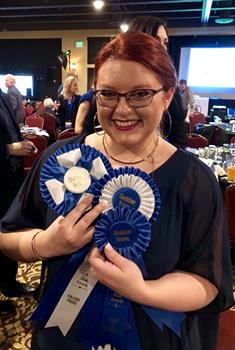
Michelle Rene and her Chanticleer Grand Prize Ribbons
Michelle Rene, the author of this blog post, is a creative advocate and the author of a number of published works of science fiction, historical fiction, humor, and everything in-between.
She has won indie awards for her historical fiction novel,I Once Knew Vincent. Her latest historical novel,Hour Glass, won the Chanticleer International Book Awards Grand Prize for Best Book. It was released on February 20th to rave reviews from Chanticleer, Kirkus and Publishers Weekly. Her experimental novella,Tattoo, was released on March 7th.
When not writing, she is a professional artist and self-described an all-around odd person. She lives as the only female, writing in her little closet, with her husband, son, and ungrateful cat in Dallas, Texas.
A special thanks go out to the authorsSara BaleandJanet Shawgofor contributing their writing expertise to help others.
Chanticleer Editorial Services – when you are ready
Did you know that Chanticleer offers editorial services?We do and have been doing so since 2011.
Tools of the Editing Trade
Our professional editors are top-notch and are experts in the Chicago Manual of Style. They have and are working for the top publishing houses (TOR, McMillian, Thomas Mercer, Penguin Random House, Simon Schuster, etc.).
If you would like more information, we invite you to email Kiffer or Sharon at KBrown@ChantiReviews.com or SAnderson@ChantiReviews.com for more information, testimonials, and fees.
We work with a small number of exclusive clients who want to collaborate with our team of top-editors on an on-going basis.Contact us today!
Chanticleer Editorial Services also offers writing craft sessions and masterclasses. Sign up to find out where, when, and how sessions being held.
(From top editor Jessica Morrell and Chanticleer’s own Kiffer Brown along with advice from Stephen King, Chelsea Cain, Ernest Hemingway, Robert Dugoni, and many more bestselling authors).
Don’t edit your first draft as you write it!
Writing your first draft should be a mad dash to get your story out of your brain. Don’t hinder it by worrying about each little detail. There will be time for that later. NaNoWriMo or not.
Not taking our word for that piece of advice?
Chelsea Cain, a bestselling thriller author (with a TV series to her credit), gives this piece of advice:
Write the bare-bones version of the scene first using mostly dialogue, and then move on and in the second draft flesh out the scenes with description and action.
Action is dialogue. Dialogue is action. –Robert Dugoni, Amazon Bestselling Author
What is YOUR STORY?
Story is essentially a problem that needs solving for the protagonist. – Jessica Morrell
What is your protagonist’s problem that must be solved—or else?
What is the worst thing that can happen next to your protagonist?
Remember that it is not your problem. It is your protagonist’s problem, obstacle, impossible dream.
Start at least one subplot. This subplot(s) should also complicate the protagonist’s goals.
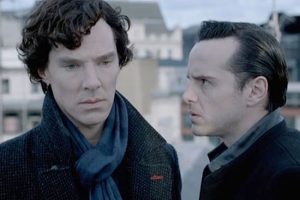
No matter when the problem begins (it’s always in Act One) the problem is weighty and vexing, perhaps insurmountable. If the problem is not immediately personal, it should become so that it will create a bond (connection) between the protagonist and antagonist. (A classic example is the connection between Sherlock Holmes and Jim Moriarty).
Sherlock Holmes and Jim Moriarty
What is the inciting event or threat?
The inciting incident might lead to the problem. This event will disrupt the status quo, demand response, and set actions in motion. It’s a threat that unbalances the story world and creates dilemmas that must be dealt with.
Remember you want to send your protagonist into new emotional territory with new challenges and pressures.
And at the same time, she will need to deal with new physical territories such as a new school (Footloose) or a different culture (Dances with Wolves) or a different legal society with different norms (Handmaid’s Tale) or a new environment (Deadwood) or a different time ( Outlander) or galaxy (Farscape).
Don’t be afraid to stage danger in benign or lovely settings or conversely gentle scenes in dangerous and gruesome settings.
Atmosphere
Allow the overall atmosphere and mood to imbue your writing from the get-go.
The atmosphere lends itself to the overall tone and mood of a work. Allow it to permeate your work as you write.
Why use atmosphere in your first draft? (or during NaNoWriMo)?
Because it will affect your mood and approach to your story.
It will make you focus on creating unease–a necessary ingredient not always considered in early drafts.
Unease contributes to writing a page-turner.
Atmosphere underlines themes–even if you don’t have your themes nailed down yet.
Here is the link to our Writer’s Toolbox article on Atmosphere
Emotional Baggage
Know your protagonist’s main emotional wound, sometimes called baggage in real life. How is it going to affect his or her ability to solve the story problem? (See the questions below to jumpstart creativity.)
Remember that Writers (that is you) should carry a notebook everywhere you go. You never know when a brilliant solution is going to appear. Jessica Morrell
If I could offer a single piece of advice about creating characters it would be this (Jessica Morrell):
Take risks with your main characters.
Make them stand out from the myriads of fiction published each year.
And don’t be afraid to allow eccentricities, quirks, and oddball ways of seeing reality.
More questions for your protagonist from Jessica Morrell—these are guaranteed to get your creative wheels turning:
First, ask yourself these questions and then “ask” your protagonist. Have your protagonist go into depth. Find out what your protagonist’s iceberg under the waterline is all about.
Photo taken in Greenland’s waters.
Kiffer suggests that you take a walk when you are considering these questions. Be sure to either take notes or record your thoughts on your smartphone while you explore your protagonist’s emotional baggage. Walk a mile in your protagonist’s shoes.
What’s the most embarrassing thing that has ever happened to you?
What is your biggest regret?
What is your superpower?
Who do you cherish most in the world?
If you could change one thing about your world, what would it be?
What is your average day or schedule?
What 5-6 words sum up your values?
What do you do after a really bad day?
How do you celebrate?
The secret you’d never tell your significant other? Your mother? Your sibling?
What reminds you of home?
What item must you always take along when traveling?
Favorite drink?
Secret vice?
Pizza or tacos? Cookies or tequila?
Favorite climate?
Reading or television to unwind?
Breakfast or coffee only?
We hope that we helping you, Dear Writer, to arm and prep yourself to get down to the writing of your next work—the reckoning.
Ernest Hemingway: There is nothing to writing. All you do is sit down at a typewriter and bleed.
Stay tuned for more NaNoWriMo Tips // Jump Start Your Novel Tips
Chanticleer Editorial Services – when you are ready
Did you know that Chanticleer offers editorial services?We do and have been doing so since 2011.
Tools of the Editing Trade
Our professional editors are top-notch and are experts in the Chicago Manual of Style. They have and are working for the top publishing houses (TOR, McMillian, Thomas Mercer, Penguin Random House, Simon Schuster, etc.).
If you would like more information, we invite you to email Kiffer or Sharon at KBrown@ChantiReviews.com or SAnderson@ChantiReviews.com for more information, testimonials, and fees.
We work with a small number of exclusive clients who want to collaborate with our team of top-editors on an on-going basis.Contact us today!
Chanticleer Editorial Services also offers writing craft sessions and masterclasses. Sign up to find out where, when, and how sessions being held.
Jessica Morrell is a top-tier developmental editor and a contributor to Chanticleer Reviews Media and to the Writer’s Digest magazine. She teaches Master Writing Craft Classes at the Chanticleer Authors Conference that is held annually along with teaching at Chanticleer writing workshops that are held throughout the year.
Keep creating magic! Kiffer
Kathryn (Kiffer) Brown is CEO and co-founder of Chanticleer Reviews and Chanticleer Int’l Book Awards (The CIBAs) thatDiscover Today’s Best Books. She founded Chanticleer Reviews in 2010 to help authors to unlock the secrets of successful publishing and to enhance book discoverability. She is also a scout for select literary agencies, publishing houses, and entertainment producers.
To NaNoWriMo or Not NaNoWriMo – These Tips will help to Jump Start Your Novel
Here are brainstorming tips from the desk of Jessica Morrell that will help to JUMP START Your Novel whether or not you are one of the thousands of writers participating in NaNoWriMo.
For the uninitiated, NaNoWriMo is an annual mad sprint, penning 50,000 words of a story at a frenzied speed while part of a writing community. Writers are divided about the effectiveness of NaNoWriMo. Some swear by it. Others swear that it is a distraction.
But whatever your take on NaNoWriMo is, I believe that you will find Jessica’s brainstorming tips useful additions to your writer’s toolbox. Kiffer Brown
Prepping for NaNoWriMo–start with character…oh and food.
If you’re making plans to take part in NaNoWriMo you will be wise to prepare. I recommend a deep house or apartment cleaning and stocking the pantry and freezer. Stock plenty of protein-rich dishes ready for the days ahead. The kind you can simply thaw or nuke. What else keeps you going? Perhaps chocolate, apples, snacks, coffee, tea, bottled water, and rewards like decent wine for milestones achieved.
Buckle Up
But with the end of October here, I also recommend that you get acquainted with your protagonist before you plunge into writing a new novel.
It’s simple really; if you get acquainted with him or her beforehand, the story will unspool with more ease and speed. Because what the protagonist wants/desires and fears the most (the dreaded alternative) will be at stake in the story.
Now, it’s likely that the protagonist’s needs and goals will shift and grow throughout the story, but you need a starting point of need and imbalance. If you begin with basic dynamics of storytelling now, then by the time the conflict heats up and things are really hairy, you’ll understand your protag’s reactions and next steps.
In fiction, needs and motivations create goals.
The protagonist’s goals will meet with opposition from the antagonist or another force. The protagonist will struggle to overcome the obstacles. These struggles create conflict and conflict fuels the whole shebang.
Goals matter. Goals define fictional characters from Woody from Toy Story to Dorothy Gale in the Wizard of Oz to Atticus Finch in To Kill a Mockingbird.
Goals are tied to dramatic structure and prevent your characters from being merely reactive.
Fictional characters don’t give up even though goals are hard to achieve.
Goals provide action, drive stories.
CHARACTERS
HUNGER GAMESby Susanne Collins
Katniss Everdeen: Her path to greatness began the day of the Reaping when she steps in to save/protect her sister Primrose from taking part in the annual and deadly Hunger Games. Leaving home with Peeta, the other Tribute from District 12, she plans to somehow stay alive because if she dies her mother and sister will not be able to survive without her. Along the way, she trains, forms an alliance with Peeta, collects allies and enemies, and ultimately fights to protect Peeta’s life too. By story’s end, their examples show how remaining true to your principles is most important of all.
The Fault in Our Stars by John Green
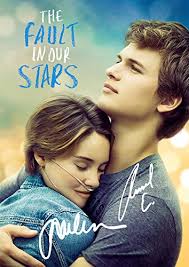
Hazel Lancaster in The Fault in Our Stars: Teenaged Hazel has been dealt a lousy hand, thyroid cancer that has metastasized into lung cancer. Her first goal, to please her mother, is accomplished when she attends a support group for kids with cancer. At this meeting, she makes friends with Augustus Waters who becomes her first love. She introduces Augustus to her favorite novel about a girl with terminal cancer and explains she wants to meet the author and understand what really happened to his family. You see, the motivation that drives Hazel is that she needs to believe her parents will be okay after she dies. (spoiler alert) Along the way Hazel and Augustus travel to Amsterdam and meet the author, lose their virginity, and Hazel realizes how much she wants to live. But Augustus has been hiding a horrible truth: his cancer has returned and he has little time left. Quite a plot twist, isn’t it? Now Hazel needs to somehow support him, cherish their last days together, then handle her grief all the while coping with her own terminal diagnosis. She comes to understand what being a survivor means and that life has meaning no matter what stage you’re at. And she comes to feel more peace about her parents, especially after she learns her mother has been getting a degree in social work.
Star Wars by George Lucas
Luke Skywalker: Skywalker is a freedom fighter from humble beginnings. His path (and character arc) begins with a restless need to escape his dead-end existence on his uncle’s barren farm. He learns that Princess Leia is leading a rebellion against the Empire and wants to join. He longs to become a Jedi Knight, or fighter pilot especially after Obi-Wan Ben Kenobi, a desert hermit, informs him that his father was a Jedi fighter and he has the ability to harness the Force. Still reluctant to leave his family, his mind is made up for him when Imperial stormtroopers savagely murder his aunt and uncle. He’s all in now. Skywalker begins training with Hans Solo, then learns the princess has been captured. His next goal is to rescue the princess, which he accomplishes with more than a few swashbuckling moves. This sets up his final, seemingly hopeless goal of taking out the Death Star and ultimately saving the Rebel alliance.
TAKEAWAYS
Notice how the protagonists’ goals powered the story?
Getting to know you….getting to know all about you…
So how are you going to get acquainted with your protagonist? There are lots of questionnaires available online to create a physical presence and backstory. My Character Cheat Sheet link is at the end of this article.
Walk a mile in their shoes…
However, it seems to me that walking along or imagining characters as if they’re with you, their creator, can be one of these best methods of getting to know someone. Especially if you want to learn what makes them tick. Or in fiction speak, their motivations. Motivations stem from a character’s past, basic nature and personality, and compelling circumstances.
Let’s repeat: Motivations create needs which create goals which fuel conflict = story.
Just try it. Step outdoors and plan to walk for at least a mile with your invisible pal at your side.
What would your character notice or remark on?
How does he/she hold his/her body?
Fast walker? Ambler? Quiet?
Hates exercise? Feels most alive when moving?
What’s on his or her mind? Distracted? Preoccupied? Impatient?
Do you remember those moments in life when you’re walking along with a friend and a profound truth slips into the conversation? Maybe it’s a tidbit or a bombshell or sharing a long-ago memory. We all have wounds and they’re often twined to a character’s internal goals and secrets. Those are the moments, the gold you’re searching for.
And although time is short with November looming, how about a short road trip with your character riding shotgun? Or can he or she tag along when you’re running errands or chauffeuring the kids? Have you ever noticed how some people are a delight to travel with and some people are a nightmare? Which one is your protagonist? A nervous, watchful traveler? Open to adventure? Afraid of the unknown? Chatty? Reticent?
Shaping your protagonist’s goals
What’s wrong or not working in his/her current situation?
What about emotional needs from the past? In other words, what’s screwing up your character?
What first, clear-cut action step can the protagonist take toward his/her goal?
Remember, a protagonist’s goals work best if they’re relatable, visible, and barely achievable. Side note: some of a character’s goals will remain ‘invisible’ since they are inner, emotional, personal growth goals.
INCITING INCIDENTS
What is the impetus to push your protagonist toward that goal?
The inciting incident such as Prim begin chosen to participate in the Hunger Games? The first plot point when Hazel meets Augustus at the support group? Dorothy’s inciting incident? Luke Skywalkers’ inciting incident?
What is your protagonist’s inciting incident?
Stay tuned for more NaNoWriMo Tips // Jump Start Your Novel Tips
Jessica Page Morrell
Keep writing, keep dreaming, have heart. Jessica
Jessica Morrell is a top-tier developmental editor and a contributor to Chanticleer Reviews Media and to the Writer’s Digest magazine. She teaches Master Writing Craft Classes at the Chanticleer Authors Conference that is held annually along with teaching at Chanticleer writing workshops that are held throughout the year.
Chanticleer Editorial Services
Did you know that Chanticleer offers editorial services? We do and have been doing so since 2011.
Our professional editors are top-notch and are experts in the Chicago Manual of Style. They have and are working for the top publishing houses (TOR, McMillian, Thomas Mercer, Penguin Random House, Simon Schuster, etc.).
If you would like more information, we invite you to email Kiffer or Sharon at KBrown@ChantiReviews.com or SAnderson@ChantiReviews.com for more information, testimonials, and fees.
We work with a small number of exclusive clients who want to collaborate with our team of top-editors on an on-going basis. Contact us today!
Chanticleer Editorial Services also offers writing craft sessions and masterclasses. Sign up to find out where, when, and how sessions being held.
A great way to get started is with our manuscript evaluation service. Here are some handy links about this tried and true service:
Fiction features a problem that needs solving and only the protagonist can solve it.
In short stories, the problem is often introduced by the inciting incident–an event that triggers or launches what follows.
In longer fiction, the inciting incident might lead to the problem. This event will disrupt the status quo, demand response, and set actions in motion. It’s a threat that unbalances the story world and creates dilemmas that must be dealt with.
The Wizard of Oz – Inciting Incident
A simple plot structure is a protagonist struggling to solve an intolerable problem and re-establish order. Jessica Morrell
No matter when the problem begins (it’s always in Act One) the problem is weighty and vexing, perhaps insurmountable. If the problem is not immediately personal, it should become so that it will create a bond (connection) between the protagonist and antagonist. (A classic example is the connection between Sherlock Holmes and Jim Moriarty).
Sherlock Holmes and Jim Moriarty
As you know, in real-life problems are sometimes unsolvable and don’t fit neatly into a satisfying narrative arc. Across the globe, there are ‘forever’ problems of climate change, financial inequities, immigrants who need homes, corporate greed, and fascism. No shallow fixes will work, though incremental changes can chip away at underlying issues.
Closer to home, you might be dealing with a job that drives you crazy, but you cannot leave; family members who refuse to reconcile; health or mental health issues that can only be coped with, not cured; or agonizing decisions about caring for elderly family members. In fact, studies have shown that depression can be linked to seemingly unsolvable problems.
This is why some people turn to fiction. Where love wins in the end, crimes are solved and justice is served, and friends or families reconcile. But in well-told tales, success never comes easy and it always exacts a toll. Often success comes from the protagonist tapping into inner resources he or she hadn’t accessed before.
Frodo and the Ring – LOTR
A FEW STORY TIPS and HANDY REMINDERS from Jessica Morrell
As the story progresses the protagonist forms a plan. Now the plan can be shaky, untested, or desperate, but readers need a strategy at work.
Force your character to solve smaller problems along the way to resolving the major story problem. A detective can dig up a much-needed witness or help a vulnerable street kid.
Endow your protagonist with specific, interesting skills and personality attributes that won’t waver and make him or her suited to the task.
Create a protagonist who is somehow lacking in something he or she needs for happiness or fulfillment.
Burden him or her with emotional baggage and needs, personal demons or addictions, then toss in cast members and subplots that distract, undermine, or hinder.
Understand how the problem makes the protagonist feel in each scene: hesitant, unaware, outgunned, overwhelmed, weak, unqualified, terrified.
Setbacks and surprises should be baked into the plot.
Oh, and the protagonist should fail, fall on his face at least a few times along the way to the climax. Because your job as the master manipulator (aka author) is to blindside, torment, and thwart your characters. Again and again, so the outcome is in question and your readers are compelled to keep turning the pages.
Jessica Page Morrell
Keep writing, keep dreaming, have heart. – Jessica
Jessica Morrell is a top-tier developmental editor and a contributor to Chanticleer Reviews Media and to the Writer’s Digest magazine. She teaches Master Writing Craft Classes at the Chanticleer Authors Conference that is held annually along with teaching at Chanticleer writing workshops that are held throughout the year.
Chanticleer Editorial Services
Did you know that Chanticleer offers editorial services? We do and have been doing so since 2011.
Our professional editors are top-notch and are experts in the Chicago Manual of Style. They have and are working for the top publishing houses (TOR, Macmillan, Thomas Mercer, Penguin Random House, Simon Schuster, etc.).
If you would like more information, we invite you to email Kiffer or Sharon at KBrown@ChantiReviews.com or SAnderson@ChantiReviews.com for more information, testimonials, and fees.
We work with a small number of exclusive clients who want to collaborate with our team of top-editors on an on-going basis. Contact us today!
Chanticleer Editorial Services also offers writing craft sessions and masterclasses. Sign up to find out where, when, and how sessions being held.
A great way to get started is with our manuscript evaluation service. Here are some handy links about this tried and true service:
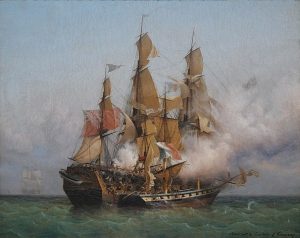
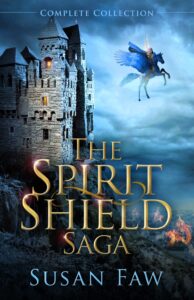
In the days when piracy was the number one concern for seafaring merchants, ships were built with one purpose in mind—to repel attacks from pirates. It was thought that a floating fortress, and a crew as ruthless as those they faced, could protect the cargo stashed in the cavernous holds.
Painting by Ambroise Louis Garneray
Bristling with cannons, the Spanish and English galleons were thought to be untakable. The pirates soon convinced them otherwise, but by the time news reached the merchant houses in both nations, ships had been lost or commandeered, and their own guns turned on newly arriving ships. Soon, the pirates had captured so many ships, their flotillas outnumbered those of their prey.
Human beings were treated and traded as cargo, just as gold or silk, sugar or tea. All were equally valued by pirates, as booty for gain.
The island of Jamaica is just one example of a place that was populated by the pirate trade. The proceeds of piracy were traded on the market until the pirated cargo could no longer be traced to the stolen goods.
Today, books are stolen, given a new title and a new cover, and then resold in the publishing industry’s market place.
Our book baby is all grown up, just waiting to be stolen away by nefarious means, and resold on some island (read market), not of our choosing. How can we, the merchant owner of our books, protect our damsel/damoiseau in distress? How can we keep the pirates from raiding our ships, and stealing our coin?
According to Investopedia “blockchain is a distributed, decentralized, public ledger.”
The block is made up of three distinct structures.
The first aspect is that the block stores information about transactions, such as the dollar amount of a purchase, and the date and time it was purchased. This information is recorded in a ledger contained within the block.
The second aspect is that the block records the ‘who’ of the transaction. It keeps a record of the purchaser as a digitally encrypted signature, which is a permanent entry on the ledger.
The third aspect is that the block records each transaction as a unique feature called a hash. Every transaction within the block has its own unique coding. No two are alike.
Why is this relevant to your damsel/damoiseau in distress, you ask?
The biggest risk factor, to the distribution of any form of electronic art, is piracy. That is the ability for that work to be stolen. The oceans of digital publishing are ripe with pirates, who are happy to steal any e-book at any time.
But they don’t even need to go that far. We practically invite the pirates to steal our work, any time we give away or sell anything on the internet because there is nothing protecting the digital rights of that book. A few words of copyright in a manuscript do nothing to prevent your work from being reproduced in any currently known format, anywhere on the planet.
Once that book is “out there” there is no getting it back. Bye, bye, sweet damsel! Dare I say it again? Not to be outdone, you send cease and desist emails to every site that has your book baby illegally uploaded for sale. Of course, they ignore you. The pirate’s code trumps all.
Blockchain.
Digitalizing your book into blocks of code, blockchain has the power to prevent your work from being stolen. That pirate ship on the horizon will smack into a reef, impossible to cross. They may try to lob a few cannon shots at your ship, to no avail.
Book Pirates be Foiled!
The only way to get to your book IS TO PAY FOR IT. Isn’t that wonderful? What a novel concept, actually being paid for your work.
“But…what will keep them from reselling it once they have a copy?” you ask.
Ah, good question. Because blockchain is an encrypted source file, your entire book is encrypted. To access that work, you must have a key, a token, to unlock it. But the token can only be used by the purchaser. It will not work for anyone else. Web-based, blockchain books are read in browsers. Currently, this means that an internet connection is required. The book is owned by the purchaser, but it still exists virtually.
A book published in blockchain cannot be copied, resold, or redistributed in any manner. It can only be read by the purchaser, using the token given to them on purchase.
Other advantages to blockchain include being able to create digital limited editions, with serial numbers attached to them to confirm they are truly limited additions. These unique books could contain anything from visual and audio art and files, interviews, etc. Anything that can be digitalized, could become part of this unique format.
So, a book in blockchain cannot ever be resold?
Ah, well that power is in your control. As the owner of the rights to distribution (by virtue of it being block chained) you can authorize a book to be resold, under rights and terms that you set. For example, let’s say that a customer bought a $50.00 limited edition from you. You could make it part of the blockchain code that resales are permitted, but that 50% of every resale comes to you. The blockchain, because of the unique coding attached to the original transaction, will know that it is that exact copy being resold and enforce the 50% deposit to your account when the transaction occurs.
If this is such a wonderful technology, why isn’t everyone using it?
Blockchain first came into being in 1991. As with all new technologies, it has to be tested and tried, before becoming mainstream. As it moves into its third decade of existence, the world of commerce is paying attention. Start-up companies, such as Bookchain, are cropping up and will be the wave of the future. As more and more of these types of companies appear in the market place, the retail organizations will be forced to adopt the technology.
I see pressure coming from the big five publishing houses, as they look for better ways to protect their investments.
Blockchain Could Put Authors At Center of Publishing Universe
The Alliance of Independent Authors (Chanticleer Reviews is a vetted partner member of ALLi) agrees:
“If this decentralized technology fulfills its promise, the outcome could be a creator-led publishing industry.
While indie authors, and the companies that serve them, are a growing presence and power in publishing, large corporate intermediaries such as Amazon still stand between authors and their readers and dominate the self-publishing marketplace. Blockchain tech may help to build the road that leads to true independence for self-publishers.” April 2018 – London Book Fair
Change comes with a cost, and the big retailers will be reluctant to embrace such technologies, as they make money off of the pirates as surely as those island ports of old. Change will have to be forced on them.
E-book piracy can be combated, we only need the sword of technology in hand and move forward.
Read the first two articles of this series by Susan Faw by clicking the links below:
Piracy—Not Just on the High Seas Part 1 of 3 by Susan Faw
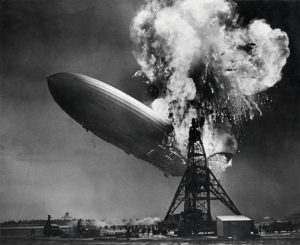
When I think of “Hindenburg,” I immediately think of the disaster, when the LZ 129 Hindenburg Zepplin caught fire while docking in early May of 1937. It was the first transatlantic passenger flight of the year the famous vessel that had already flown from Germany to Brazil.
Airship LZ 129 Hindenburg Disaster on May 6, 1937. 97 onboard; 36 fatalities. New Jersey, USA
Interesting Facts about the Airship Hindenburg (sourced from the Smithsonian Magazine, May 4, 2017)
The Airship Hindenburg was the world’s largest airship and was roughly the size of the RMS Titanic.
It was to make 10 crossings from Frankfurt, Germany to America (aircraft crossings of the Atlantic were still impossible at this time).
The Hindenburg was moored to the ground when it caught fire.
The entire disaster lasted 40 seconds.
The mystery as to why the Airship Hindenburg caught fire remains unsolved to this day according to the Smithsonian.
As I stated previously, audiobooks and podcasts were not what I thought about when the word Hindenburg was mentioned…
That was up until last fall at the 2018 Digital Book World conference. It was there when Kiffer and I met Chris Mottes, the CEO of Hindenburg Systems for Audiobooks, Podcast Audio Editing software, and Radio Broadcast Software.
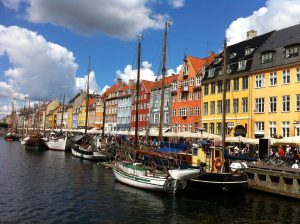
I had not thought of the cutting edge technology and communications innovators headquartered in the beautiful and ancient nordic city of Copenhagen, Denmark—Hindenburg Systems.
Colorful Copenhagen, Denmark
You may be confused at this point.
Why, you may ask, would a company want to be named after such a disaster?
Oh, that is a very good question!
On the ground that fateful day many observers and journalists were standing by to witness the landing of the Airship Hindenburg. Camera operators were recording the event. After all, it was 1937, things were starting to get tense. We needed something that would capture our collective attention and create a feeling of wonder.
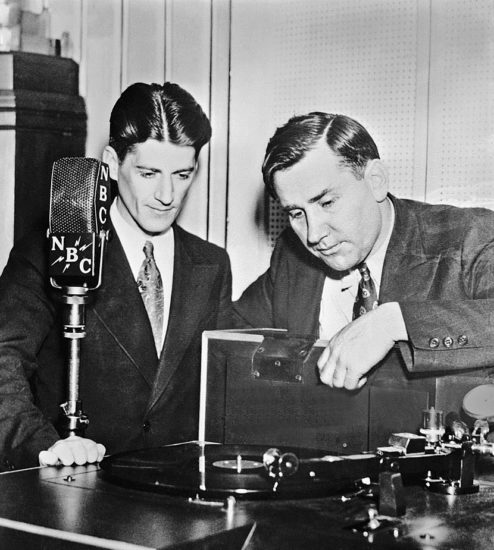
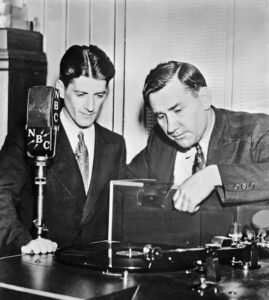
Herbert “Herb” Morrison (May 14, 1905 – January 01, 1989), a radio journalist working for WLS in Chicago had with him the latest in technology, the PRESTO Direct Disc Recorder, to record the Hindenburg’s first landing in America.
Herbert Morrison and Charles Nehlsen with the PRESTO recording equipment.
And then things went horribly wrong.
It is Morrison’s voice we hear rising above the chaos, this one reporter whose voice and name would be forever linked to the Hindenburg disaster as he stuck with his broadcast, relaying what he was seeing until the emotional toll and the horrible smoke overtook him. It was Herb Morrison’s voice that sadly proclaimed, “… Oh, the humanity…”
Morrison was using the very latest in recording technology, the Presto, that allowed this historical account to be broadcasted and archived—at the Smithsonian. It was the world’s first recorded eyewitness news report.
This is the segue to my story:
Bringing timely and important news at record speed is what Hindenburg Systems is all about.
And that is why the Hindenburg Systems team decided on the Hindenburg moniker.
“The Hindenburg Disaster marked the birth of mobile reporting and expanded the possibilities for global communication,” said Chris Mottes, CEO, Hindenburg Systems. “This is why we pay homage to the Hindenburg Disaster.”
“Radio Touches Our Hearts,” Chris Mottes, Hindenburg Systems.
Now, when I think of Hindenburg Systems, I think innovation, Scandinavian ingenuity, and a product that is both timely and necessary for today’s author (and for the Library of Congress–read on to the end of this article for more info).
After all, authors are being called upon to shoulder more and more of the burden of book discovery and marketing, whether indie-published or traditionally published. Most of us understand it’s necessary, but I’m not sure how many of us like it.
Hindenburg Systems makes the task of discoverability much easier.
Hindenburg Systems offers a platform by which authors can create, enhance, and edit their own audiobooks in the ABC Narrator. This product is not new, Libraries for the Blind have been using Hindenburg for years, and they’re not the only ones.
The same is true for the podcasting platform, Journalist Pro. Countries and organizations, schools, radio stations, colleges, and universities have been making use of Hindenburg products for a number of years, for the innovative technologies built into their systems and the ease of operation.
These are just two of the nine systems Hindenburg offers, and it was these two products that Chris Mottes and Martin Swanholm graciously awarded to our CAC19 attendees (who took his class) and the first place winners as well as our Grand Prize winners of our 2018 CIBAs.
This is Hindenburg Systems’ mission statement:
to tear down the technical divide between storytellers and their audience.
Every day 4 billion radio sets are turned on and tuned in. Stories are spread through the airwaves from the Artic to Antarctica. Podcasts are increasing this number.
From cities to rural areas. Radio gives voice to street children in Tanzania, indigenous journalists in Nepal and war correspondents covering the darkest corners of our world.
Radio touches our hearts.
The stories we hear change our perspective.Radio can strengthen communities and build nations. But despite radio being the most widespread media on the planet, there can still be a long way from storytellers to their audience.
Our mission is to close that gap! – Chris Mottes
So, when I sat down with the HS CEO the other day, I had some questions. Chris Mottes is a tall man, who speaks with a deep, accented voice. One might say he has a perfect radio voice. Charismatic and inspiring innovation aside, I thought if someone put a sword in his hand and gave him a shield, he would fill a role on the set of The Vikings rather nicely.
Chris Mottes, CEO of the global Hindenburg Systems
Being that Hindenburg Systems is a global concern, how does he do it?
Well, Mottes being a practical man, engages those who are currently working with a Hindenburg Systems product and brings them along to conferences where he exhibits his goods. The “experts” are from all over the world. When we were in Chicago, Johnathan Hurley was Mottes’ go-to guy. Hurley teaches music at a high level (over 15 years) utilizing Hindenburg Systems podcaster in his work.
We met at a greasy diner in Chicago, I believe he had the pancakes, I’m not sure what was on my plate. (Sorry Chicago! We couldn’t find the riches of your acclaimed breakfasting establishments.) Afterward, we found a gem of a coffee shop to sit and chat. The first thing I found out about Chris he is passionate about radio, coffee, rugby, and his family, not in that order.
At heart, Chris is a family man, and although his job takes him on the road nearly 80 percent of his time, he is able to recharge back in Denmark with his wife and three daughters – sometimes meeting up with them in remote locations from time to time.
Because his parents were offered work at the Royal Swazi Inn in Ezulwini, Swaziland, Chris grew up with a wider world view than most of his Scandinavian neighbors. He speaks several languages, including three Swazi dialects, and calls the world his home. When asked what his favorite places to visit are, he responds immediately: It’s a tie between South East Asia and South Africa.
Chris has been involved with several innovative companies, from noir Game Media to documentary films. But the most impressive thing Mottes told me that day was what attracts him to a business in the first place. Given that Mottes is driven to make a positive difference in the world, it’s the vision of a company that is paramount in Chris’s book. It has to be something other than making a lot of money. So, really, it is no surprise that Hindenburg Systems caught his eye and joined the team as CEO and Partner in 2011.
Hindenburg is the brainchild of CTO, Preben Friis, and Creative Director, Nick Dunkerley. Onboard as the software designer is Martin Swanholm, who along with Chris attended CAC19
Try out Hindenburg Systems for FREE — Yes, absolutely for FREE (no credit card needed)
These are the two Hindenburg System Products that authors, publishers, and podcasters absolutely should check out and take for a test drive!
Hindenburg Systems are friendly with Apple & Windows platforms! Both work equally well with the Hindenburg Systems’ software programs.
You can even exchange sessions between the two.
Hindenburg Audio Book Creator is for creating audio and talking books. It’s the ideal combination of a highly intuitive interface and sophisticated audiobook production tool. Creating audiobooks has never been simpler.
– Epub3 – DAISY 2.02 – NLS DTB – Audio Book
Hindenburg Journalist is a multitrack audio editor designed for podcasters, audio producers and radio journalists.
It might look like any another audio editor – but it’s not.
The design and features are tailored for spoken-word productions.
Hindenburg Journalist’s focus is on storytelling.
Record voice & interview
Add sound & music
Organize the material
Edit the audio
Publish the story
★★★★★
“It does the things that a journalist or podcaster needs better than other programs and almost seems magic at times. Many things that must be learned through trial and error in other programs are performed automatically in Hindenburg.”
-MarkinRussia.com
Did You Know?
The Library of Congress produces thousands of audiobooks annually using Hindenburg.
“Why did the Library of Congress choose Hindenburg?”
Prior to Hindenburg, the Library of Congress used between three to five different software packages in the audiobook
production chain, requiring highly specialized staff to serve each area. The process typically took a week of post-production per book and involved a lot of manual intervention to ensure compatibility between the different tools on the slow slog
to completion.
In 2013, when the Library of Congress was looking for an integrated, end-to-end solution —that allowed them to record and produce a complete audiobook or magazine in a streamlined environment while improving quality and reducing the number of mistakes— Hindenburg was a natural fit.
In fact, Hindenburg had already developed an audiobook creator in conjunction with the Danish and Norwegian Talking Book Libraries that solved many of the same challenges faced by the Library of Congress.
In the end, by switching to HABC, the Library of Congress was able to introduce more flexible workflows and prepare for the future with text and audio formats like EPUB3.
What is the Hindenburg Audio Book Creator?
HABC is a modern tool for fast, end-to-end production of audio and EPUB3 books. HABC allows narrators to intuitively record high-quality books and leverage automated sound engineering.
With double-digit growth in audiobooks and radio being the most widespread media on our planet (and growing), why not check out these informative links?
LINKS to other Chanticleer articles published on this extraordinary company:
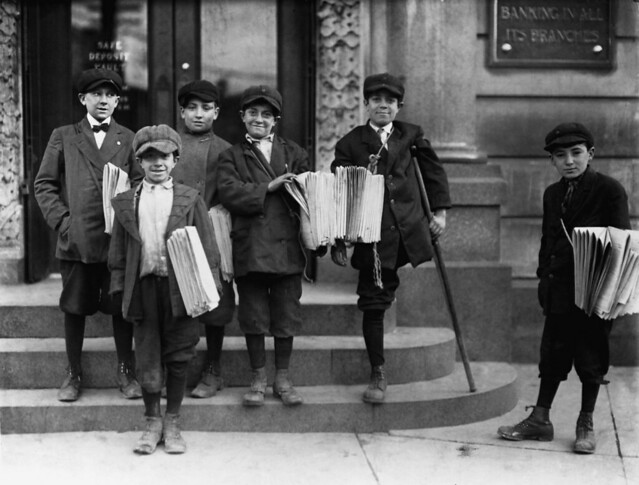
“If you’re going to have a character appear in a story long enough to sell a newspaper, he’d better be real enough that you can smell his breath.” ~ Ford Madox Ford
Newspaper Boys – New Jersey
Minor characters are too often faceless walk-ons in fiction. But that means the writer has missed a chance to create reality and complexity. ~Jessica Morrell
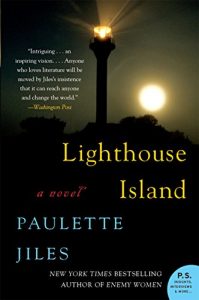
Here’s how it’s done in Paulette Jiles dystopian novel Lighthouse Island that takes place in the Pacific Northwest. This scene features two minor characters her protagonist Nadia Stepan is about to meet. Problem is, she’s on the lam in a hideous, nightmare society and the authorities are searching for her. And she’s an outlaw in a desiccated, chaotic world where danger lurks everywhere and the underclass people are perishing from thirst and deprivation. The government is a diabolical network of agencies that inflict senseless cruelty on most of its citizens while the one percent live in luxury.
The first character Nadia will meet for only a few minutes, the second one actually saves her and she spends maybe 5 minutes with him. Nadia’s trying to bluff her way out of capture–something she’s good at. At least so far.
Notice how Jiles instills them with just enough realism to underline their purpose. Notice how she manages this trick with only a few economical words.
Okay. The officer had tissue-engineered jaws square as a brick and eyes of two different colors and a scorpion tattoo on his neck. She saw him hesitate and so she turned and walked away down the narrow street and the biscuit-colored buildings of concrete whose dim and broken windows stared at each other across the pavement.
A hand shut on her elbow and shoved her forward. Nadia turned. A stout Forensics officer stared straight ahead and pushed her on. His gray hair shone short and clean under an old-fashioned watch cap with a bill and his body smelled of sweat and hot uniform cloth. She started to say something, to invent an objection and a story but he said Shut up. He was not much taller than she was but there was something about him of that proctor in high school so long ago but more unwavering and quiet.
Here are some tips for making minor characters count:
Anchor them to a time and place–a street cop, a waitress, a lounge singer, a Wall Street executive.
Give them at least one memorable characteristic. Mismatched eyes. Purple hair. A synthetic smile. Nasty yellow teeth. Vomit breath.
Create an interaction, however brief–a taxi ride, an insult or accusation, asking for directions, buying a coffee.
Nadia sneaks into the Ritz Carlton and makes it to the elevator. A guard came up. His uniform was sweaty and the hem of his pants legs were leaking threads like a fringe. He smiled at her.
All right, all right, he said. What floor?
Don’t worry about introducing them–they can simply appear.
Emergency workers in orange coveralls came running through the dust scrim and shouted at her to go back but she walked on toward them. The telephone poles were down and electrical wires curled in the rubble.
Imbue them with meaning to your protagonist. In Nadia’s world—guards, troops, cops are the enemy. And they’re everywhere.
Give them a voice if possible.
In a crowd of people who had lined up for something she saw a woman with a toddler in one arm.
Cute kid! Nadia said and slipped the badge into the toddler’s baggy pants.
The woman glared at her. Get one of your own, she said.
Jessica suggests:
Pretend that you’re walking into a room and seeing your character for the first time.
What are your firstimpressions?
Can you feel the force of his or her personality? Does he or she remind you of a celebrity? Or someone you know?
It’s not all about the specifics of appearances—some people arrive on the scene full of confidence, some are hesitant or nervous. Why? Some people stand erect, some slouch. Some have lovely voice qualities, some people bray. Some wear too much cologne, some smell of fresh air or machine oil. Use clothes, setting, and possessions, including large possessions such as cars to reveal characters.
What to AVOID!
Avoid thumbnail sketches or police blotter descriptions whenever a new character steps into your book.
(The suspect was a Latino male, 6 feet, medium build, scar on the left cheek, a tattoo of a snake on the right shoulder, wearing a black jacket, jeans, and sneakers).
This technique tends to feel contrived especially if used too often.
Also, a character doesn’t need to be described all at once, you can layer his or her appearance into the story in increments.
Avoid heavy-handed effects and characterizations. You want enough nuance to make the reader pay close attention and to enjoy discerning subtle clues. Find ways to insert subtext—the unspoken, between-the-lines innuendo.
Avoid piling it on. Here is an example of what not to do:
“Allison, a 30-something, 5 foot 8 redhead, with heavily-mascaraed blue eyes and legs for days strolled into the restaurant her green eyes flashing. Her hair was shoulder-length, her figure striking, her fingernails painted a garish purple. She wore what looked like a real mink jacket over a tight, black dress and teetered on dangerously high heels.”
Kate Pierson of the B52s
A character doesn’t need to be described all at once. Instead, try to layer details in throughout the story in increments—as one might adjust the seasonings while cooking. It is better to err on the side of less than too much. You can always add a little more “spice” if needed…
Here is the link to Part One of MINOR CHARACTERS – the SPICE of FICTION
Jessica Morrell is a top-tier developmental editor and a contributor to Chanticleer Reviews Media and to the Writer’s Digest magazine. She teaches Master Writing Craft Classes at the Chanticleer Authors Conference that is held annually along with teaching at Chanticleer writing workshops that are held throughout the year.
Did you know that Chanticleer offers editorial services?We do and have been doing so since 2011.
And that our professional editors are top-notch and are experts in the Chicago Manual of Style. They have and are working for the top publishing houses (TOR, McMillian, Thomas Mercer, Penguin Random House, etc.). If you would like more information, we invite you to email Kiffer or Sharon at KBrown@ChantiReviews.com or SAnderson@ChantiReviews.com.
We work with a small number of exclusive clients who want to collaborate with our team of top-editors on an on-going basis. Contact us today!