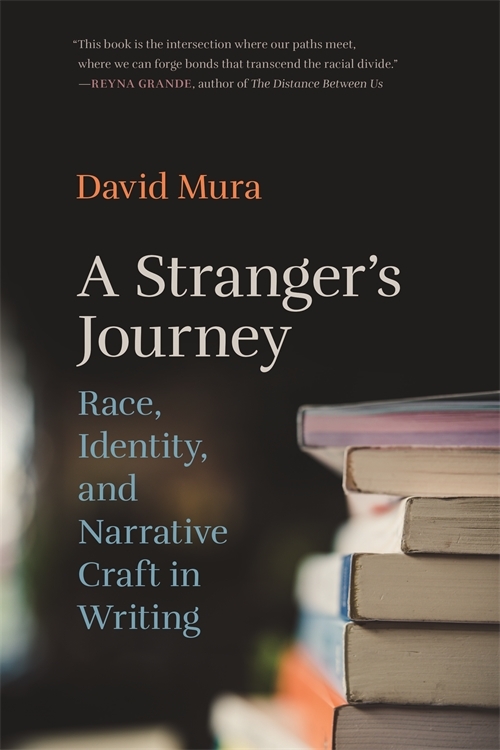
Category: Writing Craft

  • Genre as Glue for Your Story | A Chanticleer Writers Toolbox Article

    Genre as Glue for Your Story | A Chanticleer Writers Toolbox Article

    What’s My Genre?

    or

    A Primer On Genre

    One of the most frequent questions we hear at Chanticleer is “What division should I submit my story to?” All our divisions are divided by genre and sub-genres. Some can be pretty tricky to parse. For example, is your mystery novel a Not-So-Cozy Mystery, a Thriller, or a Global Thriller?

    First a breakdown on our Awards program genres, and then let’s talk about why it’s important for authors to understand their own genre.

    The Chanticleer Int’l Book Awards (CIBAs)

    We currently have 24 different divisions! Six of those are Non-Fiction, and the other 18 are some flavor of Fiction. You can see all of our Awards Divisions here. We’ll start with a focus more on the general sections on our website which are as follows:

    • Speculative Fiction
    • Mystery, Suspense, Thriller
    • Young Adult or Children’s Literature
    • Historical Fiction
    • Literary and Contemporary
    • Romantic Fiction
    • And, of course, Non-Fiction

    Remember we have the Shorts and Series Awards, too, but both of those focus within these genres above. There’s a huge swath of other genres, hence each of the above categories being broken into at least three different genres, but that’s a good place to start.

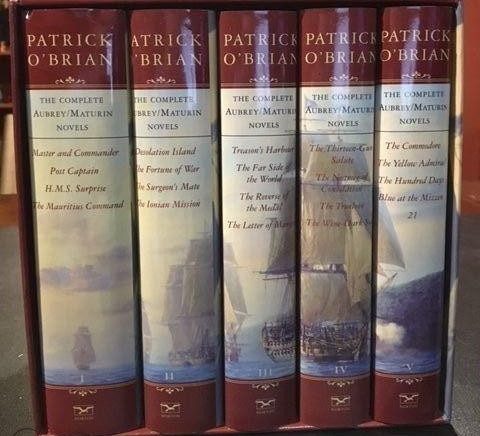
    The Complete Aubrey set of novels that cross genre boundaries
    The Complete Aubrey – Maturin Novels Set – 21 complete novels – Kiffer likes how the covers create a scene. And, yes, she has read the complete series.

    Patrick O’Brien’s Jack Aubrey and Stephen Maturin series crosses many genres: Historical fiction, action/adventure fiction, romance (yes, romance), military fiction, etc.

    The series starts in 1800 with the Napoleonic Wars and carries through to the Battle of Waterloo in late 1815.

    Some say Aubrey and Maturin are the inspiration for “inseparable fictional duos” such as Kirk and Spock of the original Star Trek TV series (79 episodes) by Gene Roddenberry, Holmes and Watson sixty stories by Arthur Conan Doyle, Joe Leaphorn and Jim Chee of the award-winning Navajo Nation mystery series by Tony Hillerman, and Walt Longmire and Henry Standing Bear of the Longmire novel series.

    Understanding Genre:

    When writing in general, it helps to think of your work in terms of different points of view. Often English teachers will refer to this as the Rhetorical Situation of your writing, which comes in the following parts:

    • Audience: Who will be reading it? This is more than people who buy your book, but also your writing group, beta readers, professional editors you pay, agents, publishing editors, bookstore employees, and then the specific people to who your book will appeal.
    • Medium: Quite literally what is it written on and how it is delivered. Paper, ebook, audiobook, graphic novels, hybrid.
    • Message: What it says
    • Genre: The conventions and context regarding how this information is typically presented
    • Purpose: The intention of the writing

    Naturally, we’re going to focus on Genre here.

    Take a moment and consider this question: What is Genre? It may even be worth pausing to write down your thoughts before continuing.

    Two hands, one holding an apple, and one holding an orange
    It’s a little more complicated than “Apples and Oranges”

    In “Dukes, Deaths, and Dragons: Editing Genre Fiction” from What Editors Do, Tor Executive Editor Diana Gill Diana Gill asks the same question, and she provides her own answer:

    “What is genre? Merriam-Webster defines it as ‘a category of artistic, musical, or literary composition characterized by a particular style, form, or content.’ Genres of fiction include mystery, science fiction, romance, fantasy, westerns, erotica, and horror. Genre fiction can be commercial, it can be literary—and it can be both.”

    A quick internet search shows that there are typical standards for most genres when it comes to word count, which can help when plotting or editing your work. Let’s look at that genre list from before, but add in word counts:

    You can read up on some more of the general rules of genre in this older, but still worthwhile blog from Ruth Harris here.

    Standard word counts for different genres are important to keep in mind as knowing how long your novel is affects your storytelling!

    • Speculative Fiction 90,000-120,000
    • Mystery 70,000-90,000
    • Young Adult 50,000-80,000 (much shorter for Early Readers and Middle Grade)
    • History 100,000
    • Literary  100,000
    • Romance, 50,000 + (shorter is usually better for romance)

    Non-Fiction is a little too varied to put a fine point on it. George Saunders tells his reader in A Swim in a Pond in the Rain that he received “the Cornfeld Principle” from movie producer Stuart Cornfeld, which states:

    “[E]very structural unit needs to do two things: (1) be entertaining in its own right and (2) advance the story in a non-trivial way.”

    George Saunders on Politics and the Future | The New Yorker
    George Saunders

    If your story is excessively long, it may be worth it to look at entire chapters and ask yourself that question. At best, you may find out you have two books, or as we have seen here at Chanticleer, three books instead of one, but no matter what happens your story will probably be stronger for it.

    A reminder from Kiffer: Remember each chapter should have its own story arc and should end in such a way that the reader can’t wait to indulge in the next chapter as the story develops its overall arc.

    Each story within a series should contain a portion of the overall arc of the series.

    This works for whatever genre or genre’s you are working in—even those with fractured time-lines.

    What is the point of genre, or, put another way, who uses genre?

    This goes back to the question of Audience when we consider a book. Remember who we said might be reading this with an eye toward genre:

    • Your Writing Circle
    • Beta Readers
    • Professional Editors
    • Agents
    • Publishing Editors
    • Bookstore employees
    • Distributors (the gauntlet of a successful sales strategy)
    • ISBN – & Cataloging
    • Library of Congress
    • Copyright
    • Your Readers!

    While understanding the genre can help you with narrative conventions and writing decisions, writing in a genre also establishes an unspoken contract between you and the reader. If you break the contract, your readers might be a little frustrated with you. That said, common forms of genre blending can be found in Young Adult Fiction, Middle Grade Fiction, and Romance Fiction.

    You might be asking why on earth you would need to even bother with a genre when all you want to do is reach your readers directly. Well, there’s a simple answer…

    Marketing! Marketing! Marketing!

    EXTRA! EXTRA! READ ALL ABOUT IT!
    What will you do to help your book be discovered?

    Knowing your genre not only helps you understand the conventions (like length) for what you are writing, but it also helps readers find your book. Think about when you go into a bookstore. Is there a section you automatically beeline for? Do you look to see if they’ve separated out Horror from SciFi and Fantasy instead of putting it all in Speculative Fiction? Are you a frequent peruser of the Local Author shelves? Having clear sections and genres (even more abstract ones like Local Authors) helps to orient your reader to best find your book!

    Author Platform = Discoverability

    In spite of how having a clear genre can help book sales, we often hear is that someone’s book defies genre, or it can only be described as the most literary fiction around, or it just doesn’t fit one of the 24 Awards divisions we offer. Well, those authors aren’t alone in that feeling.

    An interesting example of this is Kazuo Ishiguro’s book The Buried Giant. Ishiguro seemed to be reluctant to call the book fantasy, and indeed you’ll find it in the general fiction section of most book stores. (The same is true for his book Klara and the Sun, which is narrated by a robot, but somehow not science fiction.) Ursula K. LeGuin, a fervent champion of genre fiction, had this to say:

    “Familiar folktale and legendary ‘surface elements’ in Mr Ishiguro’s novel are too obvious to blink away, but since he is a very famous novelist, I am sure reviewers who share his prejudice will never suggest that he has polluted his authorial gravitas with the childish whims of fantasy.” (Read the full Guardian article detailing this here)

    Ursula K. Le Guin
    The Brilliant Ursula K. Le Guin

    So What Does Genre Do?

    Genre is a form of categorization that helps people sell your books. Ishiguro, as the winner of the Nobel Prize in Literature can sell work on his name alone. And using a genre isn’t so bad! Think about times that you’ve queried for your manuscripts or even when you see people pitching their work on Twitter’s #pitmad event. You see books advertised saying:

    • The next Harry Potter!
    • Jack Reacher fans have found their new series!
    • Friends of Tolkien fantasy will be happy here!
    • Perfect for Star Trek and Star Wars fans alike!

    While these claims may be less original than agents and publishers would like, they get the idea of genre across, and if you’re familiar with those titles you know exactly the kinds of books being described without even reading a summary.

    Then there is the advice of J.D. Barker, Master of Suspense

    CROSSING GENRES and WHY YOU SHOULD DO IT! 

    J.D. Barker asked his attendees at his presentation at a Chanticleer Authors Conference session, “What do you write? Thrillers? Mysteries? Paranormal?”

    Hands were flying up. Then he asked, “Horror?” Sharon Anderson’s hand flew up. He looked at her for a couple of seconds and said, “I guess you’ll be happy with not making much money, then.”

    Say What?

    He went on to explain how authors limit their audiences when they use certain words. Horror, it turns out, is one of those words. Many people read thrillers, quite a few read mystery novels, and who doesn’t like a good paranormal? But when you say “horror,” people tend to shy away. Sure, you’ll get your fans. But, as Barker adroitly pointed out, you may not get those readers who love the other genres – and would most likely love what you have to offer, too.

    This is important because your horror novel may contain elements of a thriller – why wouldn’t it? Likewise, your novel probably has a storyline that needs solving. The point J.D. was making is this – don’t scare away your readers by telling them your novel is only one thing. Think carefully about your marketing and promote your work in such a way as to garner the largest appeal. (Read the full interview with J.D. in our magazine.)

    JD Barker presents at CACs and VCACs.

    Having a flexible genre that fits into a more popular one (consider paranormal and horror or paranormal and romance) has the potential to greatly expand your readership.

    If you’re having trouble identifying your genre and need another pair of eyes on your work, you can always sign up for one of our Manuscript Overviews here.

    Keep an eye out!

    Did you enjoy this article? We’re planning on doing a series breaking down the ins and outs of different genres in a series of Genre Deep Dives to help you know if your work is a police procedural or a cozy mystery – or whatever else you might be writing!

    Thank you for spending part of your writing day with Chanticleer Reviews! 


    Chanticleer Editorial Services – when you are ready

    Did you know that Chanticleer offers editorial services? We do and have been doing so since 2011.

    Tools of the Editing Trade

    Our professional editors are top-notch and are experts in the Chicago Manual of Style. They have and are working for the top publishing houses (TOR, McMillian, Thomas Mercer, Penguin Random House, Simon Schuster, etc.).

    If you would like more information, we invite you to email Kiffer or Sharon at KBrown@ChantiReviews.com or SAnderson@ChantiReviews.com for more information, testimonials, and fees.

    We work with a small number of exclusive clients who want to collaborate with our team of top editors on an ongoing basis. Contact us today!

    Chanticleer Editorial Services also offers writing craft sessions and masterclasses. Sign up to find out where, when, and how sessions being held.

    A great way to get started is with our manuscript evaluation service. Here are some handy links about this tried and true service: https://www.chantireviews.com/manuscript-reviews/

    And we do editorial consultations. for $75.  https://www.chantireviews.com/services/Editorial-Services-p85337185

    Writer’s Toolbox

    Thank you for reading this Chanticleer Writer’s Toolbox article.

    Writers Toolbox Helpful Links: 

    Five Essential Book Cover Elements by Kiffer Brown

    Know Your Genre: Tips and Secrets from the Experts for Writing Bestselling Genre Fiction

    Kazuo Ishiguro thinks his fantasy novel is not a fantasy novel. Are we bothered?

    The traditional publishing tool that indie authors can use to propel their writing careers to new levels?  https://www.chantireviews.com/2016/05/15/the-seven-must-haves-for-authors-unlocking-the-secrets-of-successful-publishing-series-by-kiffer-brown/

  • BEATS & CONFLICT: The Engine for Your Book — A Chanticleer Writing Toolbox Primer Article by David Beaumier

    BEATS & CONFLICT: The Engine for Your Book — A Chanticleer Writing Toolbox Primer Article by David Beaumier

    Structure, Conflict, & Beats — Bringing it All Together

    Conflict is key to any story. Even if the stakes are low and the show is purportedly about nothing, like in Seinfeld, the characters are motivated and pushed through new changes. As writers continually produce work, we are always revisiting the ways in which we understand writing.

    Kramer, George, Elaine, and Jerry from the TV show Seinfeld
    The Cast of Seinfeld – A Series about Nothing

    One of the newest, most popular writing craft books is Jessica Brody’s Save the Cat! Writes a Novel, which promises to be the last book you’ll ever need for novel writing, but one can never have too many books, especially on craft.

    At Chanticleer, We Love to See Story Come to Life

    The biggest feedback we give to authors in our Awards or for our Editorial Reviews is that, while the story was well-written and error-free, there was not much actual story that happened in it. For that reason, we always recommend that authors commit to a Manuscript Overview to make sure they’re heading in the right direction with their Work in Progress. Read more about those here.

    So We’re Talking About Dialogue Beats Here?

    If you’re interested in making your dialogue sing, that’s wonderful, and we recommend you do work to make sure all that interstitial tissue in your book is doing what it needs to do, but this toolbox article will focus on the overarching structure questions in terms of beats. If you’re interested in reading more about dialogue mechanics this article here from Margie Lawson has some great suggestions on language and beats!

    Beats not beets!
    Beats not beets!

    We Are Talking About Conflict

    Conflict is the engine that motivates a book. It doesn’t need to be zombies coming to destroy the world, but it has to be your main character’s desire for change (which often isn’t really their true desire at the start of the story). What we’re going to look at here is the way characters are motivated and approach the ending theme as they move through the book.

    Save the Cat really shines in the way it points out that characters are often given the answer to all their life’s troubles early on, but they resist it throughout the story. One great example is Benjamin Sisko at the start of Star Trek: DS9.

    When Sisko arrives on Deep Space Nine to take command of the station, all he wants is to keep running from the past with his son Jake. He doesn’t realize that this assignment is the beginning of his journey to healing from the terrible trauma of losing his wife two years ago. All the tools are there for him to create a home where he is, but he doesn’t understand this until maybe Season 5 of the show, and by that point, his desires have totally morphed in response to the environment he found himself in.

    At least Season 4 Benjamin Sisko sitting at his desk in his Starfleet Uniform
    Captain Benjamin Sisko of Deep Space Nine (of the Star Trek Universe)

    As Sisko moves from season to season, we see each point of growth and story structure as beats from which he grows and changes.

    Story Structure as Beats

    First off, what are beats?

    Think about white space in a sketch for a painting. All the lines that make up the body of the work are the dialogue of your piece–it gives the plot, characters, and conflict a structure to work within. The beats are the color that fills it in, showing the reader a complete picture of what’s taking place. As you write, ask yourself if you’re better at overwriting and then trimming back or underwriting and fleshing out. Play to your strengths for your first draft, and then come back ready to adjust for any areas you know you’ll be weak.

    Worth Repeating

    As you write, ask yourself if you’re better at overwriting and then trimming back or underwriting and fleshing out. Play to your strengths for your first draft, and then come back ready to adjust for any areas you know you’ll be weak. David B.

    Let’s look at the overall structure of a book

    Let’s start out with Save the Cat. In this book, Brody breaks out most plots to follow the following Structure:

    • Opening Image
    • Theme Stated
    • Catalyst
    • Break into 2
    • B Story
    • Midpoint
    • All is Lost
    • Break into 3
    • Final Image

    Each of these big sections is subdivided into categories based on how many scenes move it forward, which are further defined as multi-scene beats or single scene beats. Some of them are obvious, like the Opening Image and Closing Image tend to be a single scene beat where we get in and fulfill that need for the writing, and then get out. While most of these make sense just by glancing at them (or you can figure out that Catalyst is another way of saying The Inciting Incident), here’s a quick guide to some of the wonkier names from Save the Cat.

    Cove a Save the Cat, orange background with yellow lettering and an orange cat clinging to a dangling rope

    Break Into 2 & Break Into 3

    This refers to Acts 2 and 3 of your story. Brody focuses on the 3 Act structure for novel writing, which does fit the majority of work out there. For differing ideas on how to structure a book, be sure to check out our article here.

    The focus for the Break Into parts is on marking a clear delineation between your Acts. An example Brody uses is Jane Eyre, with Act I being her mistreatment and time at school, Act II being her role as governess for Mr. Rochester, and Act III being her escape from St. John and return to Mr. Rochester as an independent woman.

    B Story

    Often the introduction of B Story introduces the character who will help your protagonist learn the theme or lesson that they will need in order to grow properly by the end of the story. They are a helper-character who represents the new world of Act II that your main character enters. Keeping with Jane Eyre, Mr. Rochester is a foil to Jane’s meekness that forces her to stand up for herself and push back against his rude brashness, pushing her to change.

    Jane Eyre and Mr. Rochester about to kiss
    Mia Wasikowska and Michael Fassbender in the 2011 Jane Eyre film – Charlotte Bronte 1847

    Clear as Mud?

    Rather than write out all of Save the Cat, Jessica Brody has already mostly done it for you here. And Brody isn’t alone in having great ideas of how to look at the intersection of conflict and structure!

    Click on the link above to read more about Brody’s 15 Beats of Story Telling. We are not affiliates of Brody or Wolf 359, but we are passionate about sharing the best tools with Chanticleerians. Kiffer

    There is a wonderful breakdown of story structure that is quite similar written by Gabriel Urbina to describe the story structure for the brilliant SciFi podcast Wolf 359, written by Urbina, Sarah Shachat, and Zach Valenti. You can read his breakdown of the story structure here and learn more about Wolf 359 here.

    Our own Jessica Morrell, of course, has a brilliant take on Story that focuses more on different aspects such as character, structure, and plot which can be found here.

    Beat Sheets Will Meet You Where You Are

    The great thing about this tool is you can use it to plot out the work you’re planning or to analyze the work that you have. Brody’s cheat sheet linked above even offers general percentages on how long each section of the Save the Cat structure should take. Remember that different genres have different typical lengths, and keep those lengths in mind as your write and plot. And, as always, the work is yours; these are just guidelines, not hard and fast rules for success.

    Be sure to get more than your eyes on the work! Beta readers and friends are great, but nothing beats a professional Manuscript Overview you can get from Chanticleer.


    Chanticleer Editorial Services – when you are ready

    Did you know that Chanticleer offers editorial services? We do and have been doing so since 2011.

    Tools of the Editing Trade

    Our professional editors are top-notch and are experts in the Chicago Manual of Style. They have and are working for the top publishing houses (TOR, McMillian, Thomas Mercer, Penguin Random House, Simon Schuster, etc.).

    If you would like more information, we invite you to email Kiffer or Sharon at KBrown@ChantiReviews.com or SAnderson@ChantiReviews.com for more information, testimonials, and fees.

    We work with a small number of exclusive clients who want to collaborate with our team of top editors on an ongoing basis. Contact us today!

    Chanticleer Editorial Services also offers writing craft sessions and masterclasses. Sign up to find out where, when, and how sessions being held.

    A great way to get started is with our manuscript evaluation service. Here are some handy links about this tried and true service: https://www.chantireviews.com/manuscript-reviews/

    And we do editorial consultations. for $75.  https://www.chantireviews.com/services/Editorial-Services-p85337185

    Writer’s Toolbox

    Thank you for reading this Chanticleer Writer’s Toolbox article.

    Writers Toolbox Helpful Links: 

    Rhythm and Cadence and Beats, Oh Yes! by Margie Lawson

    Understanding Story Structure by David Beaumier

    How to Write Your Novel Using the Save the Cat Beat Sheet

    10 Point Story Structure

    COMPONENT LAYERS of SUCCESSFUL FICTION by Jessica Morrell 

    The traditional publishing tool that indie authors can use to propel their writing careers to new levels?  https://www.chantireviews.com/2016/05/15/the-seven-must-haves-for-authors-unlocking-the-secrets-of-successful-publishing-series-by-kiffer-brown/
  • AMPLIFY, MAGNIFY, & STIR UP TROUBLE for Your Main Characters – by Jessica Morrell – A Chanticleer Writer’s Toolbox Blog Post

    AMPLIFY, MAGNIFY, & STIR UP TROUBLE for Your Main Characters – by Jessica Morrell – A Chanticleer Writer’s Toolbox Blog Post

    —Readers Want to Spend Time Immersed in Other Permeable Realities

    Add Fuel to Your Characters’ Fires

    Always know the forces that shaped your main characters. And then give them inner demons to overcome, such as intense abandonment fears, or a lie they’ve been telling themselves. While many stories are fueled chiefly by external conflict,  when internal conflicts are staged alongside external conflict mucking up things, the whole story gets more realistic and deeper.

    Top-ranking fictional characters need to be uncomfortable most of the time. Better yet, miserable. Now, of course, your story can’t be a waterfall of tears and teeth-gnashing angst in every scene. That could lead to melodrama. But varying levels of misery should be trickling through causing tension, conflict, and uncertainty. And characters can be rattled, twitchy, discombobulated, awkward, uneasy, troubled and disturbed.

    Tips and Tricks for Shaping Your Protagonists

    One trick to increase tension is to keep track of the number of  your scenes, then track how many feature your protagonist in some kind of discomfort. Aim for high percentages. Make your protagonist worry and fear the worst.  

    Misery can be writ large–he loves me; he loves me not. It can happen in high-stakes battles or life and death circumstances, royal rivalries, ugly divorces, or the murder of a loved one. Your character can be lonely, unloved, and unappreciated. And whenever possible, in over his or her head.

    Years ago I studied psychology and sociology in college because I was planning to go into law and I wanted to understand why people turned out the way they did.  It took a few years to realize that I needed to return to my first love, stories, poetry, and all things writing.  But in one sociology class an instructor mentioned it’s likely that at least one out of three people won’t like you. This insight, true or not, stuck with me.

    Growing up and feeling pretty insecure much of the time, I wanted people to like me and was easily hurt when they didn’t. With age that’s diminished, but of course, it’s not fun if someone dislikes you for no good reason, or a perceived hurt that didn’t happen, or for the many reasons humans just don’t get along.

    In fiction, this is magnified to create conflict, pain, and troubles. ~ Jessica Morrell

    Amplify

    A few more tips.

    Small miseries amplify larger ones. Protagonists cannot always be in top form, primed for the next challenge. Sap their strength, will, confidence, and resources thus creating more uncertainty. Shape obstacles that wear down and weaken characters.

    Create insecurity–immigrants struggling to survive in their new country, business owners striving against impossible odds, a farm family trying to endure during years of drought, an unstable and volatile home life, grinding poverty that seems inescapable. Often these stories will showcase the protagonist’s main personality traits and growth.

    Stir in emotional hardships. These typically come from your character’s connective tissue to his or her past. If your main characters don’t have baggage, they’re flat. Typically, your character’s fears or weaknesses will stem from trauma, failure, or a troubled or difficult past. And whatever the baggage, it must be relatable.

    A few more ideas for your stories:

    Create situational troubles. Coming-of-age stories generally focus on the main character’s emotional growth, typically moving into adulthood. However, growth is never easy, and the character is often forced into challenges beyond his or her maturity levels. And the lessons learned will always be hard, harsh, or scary. The Finch siblings in To Kill a Mockingbird are a good example of this.

    Adult characters can be coping with bitchy, hormonal teenagers going through a bad phase, demanding, uncaring bosses, impossible deadlines, a bad news relative showing up on your protagonist’s doorstep looking for a place to crash—with a grimy, pathetic-looking toddler and an aggressive dog.

    Classic Plot Devices

    Classic plot devices can be the perfect setup for this. An example is a character moving into a new place–the new kid in school {Harry Potter and the Sorcerer’s Stone}, or the newly hired personal assistant {The Devil Wears Prada}, boss, police chief {Robert Parker’s Jesse Stone series} or sheriff.

    Offred (known as June before she was captured trying to escape into Canada) in The Handmaid’s Tale by Margaret Atwood

    Women are to be silent and are not allowed to read or be taught to read or write (only the Aunts are taught but only to keep control over the handmaids.)

    Even the “blue Gilead wives” are not allowed to read or write.

    Same for the ‘fish out of water’ scenario–the device the Back to the Future franchise exploited as Marty McFly moves around in time. So-called ‘fishes’ don’t know the rules or standards or the pecking order in the new environment. And definitely poor Arthur Dent of The Hitchhiker’s Guide to the Galaxy by Douglas Adams.

    Hitchhiker’s Guide to the Galaxy protagonist, the last known Earthling – Arthur Dent

    Your story might center around a Florida native taking a district attorney job in Alaska or a small town girl moving to Paris. Your character will always have a lot to prove and master, so naturally he or she can get off on the wrong foot and things can go downhill from there.

    Which is where antagonists and secondary characters come into the picture to stir up trouble. It’s pretty simple: fictional characters shouldn’t get along. In fact they should clash. Often. The mayor doesn’t trust the new sheriff, the cop who’s been with the force for ten years and wanted the chief of police job is sabotaging the new guy, and the 911 dispatcher just doesn’t care for him because he’s a dead ringer for a best-forgotten ex. Now, of course, protagonists need friends and allies, but if he or she doesn’t have frenemies and backstabbers, lying witnesses, out-for-revenge enemies, and other antagonists you’re overlooking a major source of conflict. The story will flatten and fizzle without these folks.

    Can you imagine Harry Potter without Draco Malfoy? Or Lord (He Who Shall Not be Named) Voldemort

    The Character Draco Malfoy preparing to duel Harry Potter
    Draco Malfoy of the Harry Potter Series – He enjoyed making Harry’s life miserable.

    At the same time don’t overlook piling on smaller, everyday, annoying, makes-life-harder miseries. And never overlook the potency of physical hardships to boost tension: Sleepless nights or a shocking homicide case so there’s no time to sleep. Headaches, hangovers, thirst, hunger, sweltering heat waves, freezing temperatures, aching backs, old injuries acting up. Stir in claustrophobia, fear of heights, and never been comfortable in the dark. Pile it on.

    And  Handy Links on Immersive Writing Craft:

    https://www.chantireviews.com/2021/05/19/crafting-words-and-lassoing-jottings-writing-advice-from-jessica-page-morrell-a-chanticleer-writers-toolbox-post/

    https://www.chantireviews.com/2019/02/02/immersive-fiction-a-different-perspective-by-jessica-morrell-and-kiffer-brown-writing-toolbox/


    Jessica Page Morrell
    Jessica Page Morrell

    Jessica Morrell is a top-tier developmental editor and a contributor to Chanticleer Reviews Media and to the Writer’s Digest magazine. She teaches Master Writing Craft Classes at the Chanticleer Authors Conference that is held annually along with teaching at Chanticleer writing workshops that are held throughout the year.


    Keep writing, keep dreaming, have heart. ~ Jessica


    Chanticleer Editorial Services – when you are ready

    Did you know that Chanticleer offers editorial services? We do and have been doing so since 2011.

    Tools of the Editing Trade

    Our professional editors are top-notch and are experts in the Chicago Manual of Style. They have and are working for the top publishing houses (TOR, McMillian, Thomas Mercer, Penguin Random House, Simon Schuster, etc.).

    If you would like more information, we invite you to email Kiffer or Sharon at KBrown@ChantiReviews.com or SAnderson@ChantiReviews.com for more information, testimonials, and fees.

    We work with a small number of exclusive clients who want to collaborate with our team of top-editors on an on-going basis. Contact us today!

    Chanticleer Editorial Services also offers writing craft sessions and masterclasses. Sign up to find out where, when, and how sessions being held.

    A great way to get started is with our manuscript evaluation service. Here are some handy links about this tried and true service: https://www.chantireviews.com/manuscript-reviews/

    And we do editorial consultations. for $75.  https://www.chantireviews.com/services/Editorial-Services-p85337185

    Writer’s Toolbox

    Thank you for reading this Chanticleer Writer’s Toolbox article.

    Writers Toolbox  a few more Helpful Links: 

    The INCITING INCIDENT: STORY, SETBACKS and SURPRISES for the PROTAGONIST – A Writer’s Toolbox Series from Jessica Morrell’s Editor’s Desk

    ESSENCE of CHARACTERS – Part One – From the Jessica Morrell’s Editor’s Desk – Writer’s Toolbox Series  


  • Search and Destroy, Cull and Extract, and Other Editorial Tactics for Your Work in Progress — A Chanticleer Toolbox Primer Article by David Beaumier & Kiffer Brown

    Search and Destroy, Cull and Extract, and Other Editorial Tactics for Your Work in Progress — A Chanticleer Toolbox Primer Article by David Beaumier & Kiffer Brown

    Now that you’ve completed your beautiful manuscript and have made several draft revisions, you are ready for the next move.

    You know, the one that comes before starting the editing process.

    A writer before having a manuscript overview terrified about what comes next for their work-in-progress. Don’t let this happen to you.

    Now for some Real-Life Ruthless Editorial Terms:

      • Reconciliation or Go Separate Ways
      • Search and Destroy (SAD)
      • Cull and Extract
      • Wrench Out Passive Voice – Mistakes Were Made
      • Clichés, Platitudes, and Banalities – Oh NO!
      • Kill Your Darlings – Stephen King
      • Are You Listening to How You Sound?

        Are You Listening to How Your Work-in-Progress Sounds? Really?

      Continue reading to the end of this post if you would like more information about these scary but necessary editing tactics.
      Some writers like to put their draft into a drawer for six weeks or so to allow themselves fresh eyes before endeavoring on one more draft revision as Stephen King recommends in his On Writing: A Memoir of Craft.

      Here at Chanticleer, we see basically two camps that writers fall into.

      • Writers who rework every sentence before moving on to the next sentence trying to reach perfection. If this is you, (And you know who you are.) then we advise you to click on this link to read an article by the multiple award-winning author, Michelle Rene.

      OR

      • Writers who bang out work and then think they are ready to publish with perhaps just a quick once over for typos. (And you know who you are.) Just upload to Amazon and you are done. Au contraire, mon ami!, as Q from Star Trek notoriety might say.
      Q from the Star Trek Next Generation Deja Q episode – Of course, the excerpt is on YouTube.

      Is this conundrum the same as the age-old question of writing style: Are you a plotter or pantzer?

      No, it isn’t. Writing styles are deeply personal. What we are discussing here is the editing process for novels.

      So, what’s a writer to do?

      Emulate what has worked successfully for traditional publishing houses.

      After your draft, but before you begin the editing process, have a manuscript overview (MOV) – an evaluation performed on your work by a professional editor. If you are with a literary agent, or if you work with a traditional publisher or acquisitions editor, this is the time to turn it over to them for their feedback.

      We hear you, “Well, if I had a literary agent or was working working with a traditional publishing house, I wouldn’t need to read this article.”

      If you don’t have any of these professionals on your team, then consider using a professional manuscript evaluation service such as Chanticleer’s. A manuscript evaluation will save you time and money and it will give you feedback about your work’s pacing, plotline, characters, atmosphere, P-O-V structure, dialog, and if you have a compelling story—one that will keep your targeted reader engaged.

      Here at Chanticleer Reviews, we come across many published works that skipped over this vital step. The work might have been copy-edited and proofed before clicking the publish button, but the story just isn’t compelling, or it has a saggy middle, or the characters are flat, or dialog stilted, or there is no “voice.” It is almost impossible for the author to “see” these issues because the story lives in the author’s head. The authors’ who receive this feedback generally exclaim to us, “But I’ve paid to have it edited. There are no typos.”

      No typos, does not a story make. However, authors and writers can create story magic. But it is difficult to get the story out of the writer’s mind and into words that communicate the “mind-film” that many authors see. This is where having an unbiased reading of your work with feedback will make your work shine. kb

      Others know there are choices they made at the end of the book that will require changes earlier in the book (maybe it started in 3rd person and the moved to 1st person). Whatever your process is, this article will help your work shine!

      The Editor – going over the ms with an MOV.

      1. Reconciliation or Go Separate Ways

      Getting Ready to Polish Now that Your Work-in-Progress has had a MOV

      There’s no universal way to use writing tools. As always, remember these are recommendations that have worked well for many of our authors, though it’s okay if they don’t work for you.

      Consider the Following for when you receive your manuscript’s MOV

      First off, give yourself time after reviewing notes from your MOV editor/agent/publisher. After receiving feedback try the following:

      • Consider recommended changes from your second pair of fresh eyes. It is good to keep in mind, that each one of the readers who decide to read your published book will be reading it with fresh eyes also.
      • Address issues. The editor will have made suggestions where needed. Deal with the biggest issues first.
      • Save a clean draft of your copy where the suggested changes don’t stand out. (Of course, you’ll want to save one where they do stand out as well, just in case.)
      • Wait two weeks.
      • Revisit the work. Ask yourself if anything stands out as odd or a change in voice.

      And, yes, sometimes, we do receive a ms that is ready to move on to either a line-edit or a copy-edit. It does happen. If this is the case, won’t you breathe easier knowing that it is ready to invest editing and shining.

      Rarely will suggestions from professional readers and editors let you down–just see the difference yourself!

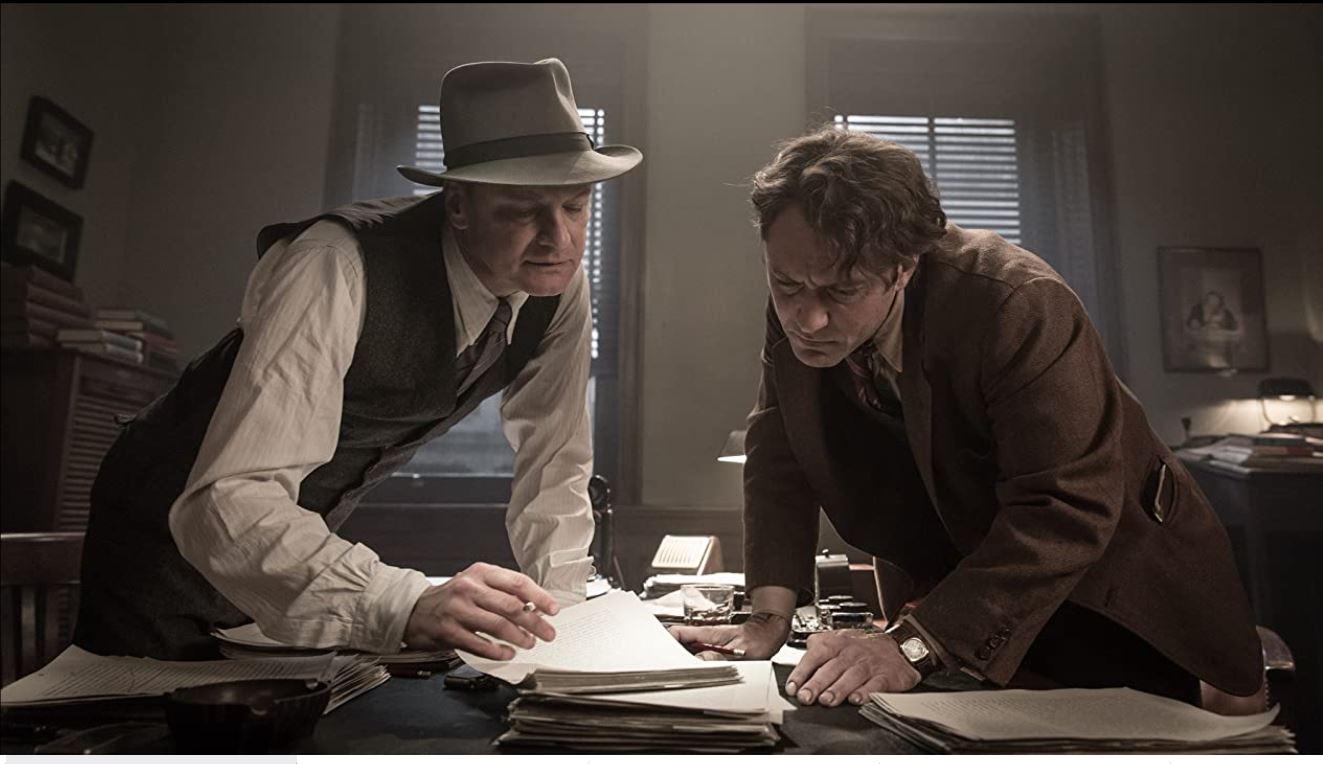
      The Editor film is based on award-winning book Max Perkins: Editor of Genius by A. Scott Berg. “Max Perkins discovered Ernest Hemingway and F. Scott Fitzgerald. But he never met anyone like Thomas Wolfe.” The film’s tagline.  Yes, even great authors such as these benefited from working with an editor.

      When you are satisfied that you have a compelling story—the work has had a manuscript overview and then you have reconciled the w-i-p with the advice given, it is  now the time to begin the Self- Editing Process! (Do the following before line editing or copy editing.)

      2. Search and Destroy (SAD)

      When we’re inspired by outside work, we love to tell you about it. The best line editing tools we know about come from Brenda Miller and Susan Paola’s book on creative nonfiction Tell It Slant, which features clear and direct steps to make your writing stronger.
      Tell it Slant, Third Edition — Brenda Miller
      First, identify all your “to be” verbs. If you can think of a comfortable, easy replacement, use it. Obviously, not all of them need to go (just glance through this article and you’ll see plenty), but a “to be” verb, while almost always the easiest choice, is not always the best choice.
      For example, here’s a piece of the short story Medusa by David Beaumier. First, with “to be” verbs shown in bold:

      She isn’t happy about it, but she had been encouraged to join Visitation to help people, not because it was personally comfortable for her. So she is sent into decontamination, followed by the sound of a seal behind her as the hermetic vacuum in front of her is opened. Her hair is only a little fluffed up by the experience, and is easily coiffed back into place after the blast of ionization that would be deadly to any foreign compounds in the air.

      Medusa
      Sometimes fluffier hair can be dangerous.

      And now revised without the repetitive verb choice:

      She doesn’t like it, but she joined the Visitation to help people, not for her own personal comfort. So into the decontamination room she goes, followed by the locking of one hermetic seal behind her and a second one in front. Her hair only needs to be patted down a little bit after the blast of ionization that should kill any foreign compounds in the air.

      3. CULL and EXTRACT

      Second, find your adverbs and adjectives. These can be the condiments and spice of your piece that really give it life, but too much mayonnaise is never a good thing, so look at each of them and see if there’s a weak verb or noun that’s being propped up by them.

      An arm holding food that it is impossible to identify due to the large amount of mayonnaise that is surely getting on the person's hand.
      Hopefully someone has a napkin

      Consider your proportion here, too. In one YA urban fantasy dredged up from the out of print pile was this unforgettable villainous dialogue spoken to the protagonist: “‘I’ll kill your whole family,’ he hissed maliciously.” While the intent is clearly to be evil, we can also see that the author didn’t trust the reader to understand that the villain wasn’t very nice.

      An adorable little girl dressed as a vampire devil
      Yes, evilly gnashing malignant teeth angrily with malintent

      4. Wrench Out Passive Voice

      The last suggestion from Miller and Paola is to look for passive voice, often indicated using “have” or “had.” A favorite trick for finding passive voice is to see if you can add “by zombies” to the end of the sentence. Like the previous rules, knowing why we use active and passive voice is important. Active voice tells us who does what to whom. Passive voice tells us what actions are done to whom, but not necessarily who did them.

      Looking to get more weasel words? Check out this article here by Jessica Morrell on decluttering your sentences.

      For a great example on passive voice, see this video below.  (It is non-partisan, we promise.) 


      5. CLICHES, PLATITUDES, and BANALITIES — Oh NO!

      Taking Advice from the Best: Jessica Morrell – Top-Tiered Developmental Editor

      Jessica Page Morrell
      Jessica Page Morrell

      Those who attended VCAC21 will know, Jessica Morrell is one of our favorite contributors. In her two workshops, Jessica goes deeper discussing the idea of “junk” words for writers. Maybe you’ve avoided all the pitfalls so far, but do you notice your characters do a lot of the following?

      Jessica’s advice on eliminating junk words can be found on the link below:

      https://www.chantireviews.com/2019/05/18/decluttering-sentences-by-eliminating-junk-words-from-jessica-morrells-editors-desk-writing-toolbox-series/

      • Shrug
      • Wrinkle their nose in disgust
      • Widen their eyes in surprise
      • Nod
      • Smile
      • Any other sort of repetitive description that doesn’t really subvert the reader’s expectations?

      What would you say your own junk words are?

      Jessica even provided a long list of words to give an idea of what hints that writing might not be as strong as we hope.

      Definitely, absolutely, particularly, actually, decidedly, quite, very, totally, mostly, dearly, ideally

      Notice how all of those are also adverbs? Keep an eye on your work!

      6. KILL YOUR DARLINGS and TOO MUCH EXPOSITION – TMIF

      Show vs Tell

      Showing and telling goes well with the debate about active and passive voice. In my mind, there is almost no writing rule more contentious or less understood than the rule that writers should always show rather than tell. Dialogue is often the heart of showing, but be careful! Occasionally dialogue can sneak in as a form of telling when it’s being used to explain something the characters probably already know for the sake of the reader. 

      Another video on the potential pitfalls of too much exposition and when dialogue tells too much. TMIF.

      We dare you to see just how long you last watching Too Much Exposition. (Kiffer lasted about 30 seconds)

      Go ahead, give it a try. We double dare you.


      So how should we define Show and Tell? Well, Showing is an example of narrative scene—something happens in real time! Meanwhile, Telling is an example of narrative description where there’s either a moment of summary or interiority, something that probably isn’t happening in real time. Like passive and active voice, there’s a time and a place for each.

      Consider the structure of your work. Has there been quite a bit of showing happening as characters flit from scene to scene? Even in a thriller, the reader will need a moment to rest, to have the narrator examine the main character’s interiority and explain a little bit of the backstory or the connection the hero makes just before solving the mystery.

      The moment where everything clicks into place often isn’t a show, but a tell, directly informing the reader that the most important discovery of the book has been made. That lets it happen fast rather than laboring to show each and every scene.

      We are quite proud of the articles on our website and to be a leading resource for writers, and you might also like some of what these websites say about writing craft:

      6. Are You Listening to How You Sound?

      Listening: The Most Powerful Tool

      The last secret here is one of the most useful things we’ve heard of for any writer or editor, and that is read your work aloud. You can ask a friend or loved one to do this for you, or you can find a screen reader that will take you through your story, but words always sound different when they’re vocal vibrations rather than fixed to a page. 

      A microphone that looks to be a blue yeti brand
      Recording yourself can also let you play back your story and, no you do not  need a fancy microphone like this.

      Reading aloud, especially for dialogue, can help you better understand your tone, and it helps you find where words may have been repeated more than necessary. Sometimes, especially if writing a play, it can help to highlight the piece with different colors based on whose speaking. If there’s an emotion that should be conveyed in the story, assign colors to each emotion and highlight lines with how they should land. Then, while reading it aloud, you can check to make sure that the assigned tones fit.

      Jessica Page Morrell has an excellent article on Glissando And Wordcraft you can read here.

      If you’re looking for voice recording software beyond Voice Memos on your phone, consider the following programs:

      In Conclusion, Remember that the Work is Always Yours 

      In the end, remember that you are the author of your work, which means you get final say. Peer review is excellent, and, as said above, it can be helpful to practice accepting all feedback and then reading your work after you’ve given it some space. 

      Remember, the earliest time we recommend submitting your work to one of our Twenty-Three divisions for the Chanticleer International Book Awards here or for a much sought after Editorial Review here is once you’ve reached the proofreading stage of your manuscript. Again, that’s the earliest we recommend sending your work in.

      For further reading on what we’ve said in the past at Chanticleer, check out parts one and two of articles written by Jessica Page Morrell here and here, plus a bulleted list of tips she put together here.

      Looking to demystify even more of the editing terminology? Learn about it here from Kiffer Brown herself.


      Chanticleer Editorial Services – when you are ready

      Did you know that Chanticleer offers editorial services? We do and have been doing so since 2011.

      Tools of the Editing Trade

      Our professional editors are top-notch and are experts in the Chicago Manual of Style. They have and are working for the top publishing houses (TOR, McMillian, Thomas Mercer, Penguin Random House, Simon Schuster, etc.).

      If you would like more information, we invite you to email Kiffer or Sharon at KBrown@ChantiReviews.com or SAnderson@ChantiReviews.com for more information, testimonials, and fees.

      We work with a small number of exclusive clients who want to collaborate with our team of top-editors on an on-going basis. Contact us today!

      Chanticleer Editorial Services also offers writing craft sessions and masterclasses. Sign up to find out where, when, and how sessions being held.

      A great way to get started is with our manuscript evaluation service. Here are some handy links about this tried and true service: https://www.chantireviews.com/manuscript-reviews/

      And we do editorial consultations. for $75.  https://www.chantireviews.com/services/Editorial-Services-p85337185

      Writer’s Toolbox

      Thank you for reading this Chanticleer Writer’s Toolbox article.

      Writers Toolbox Helpful Links: 

      First Draft in Thirty Days? No Tricks! Award-Winning Author Michelle Rene Shares How She Does It!

      Part One WRITING FICTION GUIDELINES — by Jessica Page Morrell

      An Editor’s Checklist for Manuscript Evaluations of Fiction by Jessica Page Morrell | Jump Start Your Novel – Brainstorming Tips for NaNoWriMo Season from the Editor’s Desk of Jessica Morrell

      15 Self-Editing Tips from the Editor’s Desk of Jessica Morrell

      GLISSANDO and WORDCRAFT from Jessica Morrell

      “The Strange World of Editing and the Beasts Who Inhabit It” by Kiffer Brown

      The traditional publishing tool that indie authors can use to propel their writing careers to new levels?  https://www.chantireviews.com/2016/05/15/the-seven-must-haves-for-authors-unlocking-the-secrets-of-successful-publishing-series-by-kiffer-brown/

    • Crafting Words and Lassoing Jottings – Writing Advice from Jessica Page Morrell – A Chanticleer Writer’s Toolbox Post

      Crafting Words and Lassoing Jottings – Writing Advice from Jessica Page Morrell – A Chanticleer Writer’s Toolbox Post

      “I try to pull the language into such a sharpness that it jumps off the page. It must look easy, but it takes me forever to get it to look so easy. Of course, there are those critics — New York critics as a rule — who say, Well, Maya Angelou has a new book out and of course it’s good but then she’s a natural writer. Those are the ones I want to grab by the throat and wrestle to the floor because it takes me forever to get it to sing. I work at the language.” ~ Maya Angelou

      ~ Maya  Angelou Source: Source: The Paris Review Interviews: Volume IV

      Maya Angelou’s website: https://www.mayaangelou.com/

      Maya Angelou, her gift for crafting words has forever left us with some of the most inspirational and memorable quotes of our time. “Biography” Jan 29, 2021

      Writing Advice from Jessica Page Morrell – Lassoing the Jottings and Crafting Words

      I’ve been purging my office and as I toss old receipts and rearrange books I’m finding scraps of paper with scrawls and tidbits on them. So I’m lassoing all these jottings. A single word on the back of an envelope says ‘waft’. Now, waft is in my vocabulary, and I’ve used it in writing, but these lists always inspire me. Another envelope back includes: pinprick, squatter, fusty, quisling, shacky, gawk, wheedle, moonwalk, shirk, bupkis, wraith, servile, scuttle, torpor, badger. Because if you’re not constantly gathering words you’re not growing as a writer.

      “…if you’re not constantly gathering words you’re not growing as a writer. – Jessica Morrell

      My next step is to figure out where to record these snippets. If you’re an analogue type like I am, you might have notebooks stashed all over the place. In fact, I’ve decided to stash one in my car’s glove box. Wondering why I haven’t done this years ago since I often hear information on NPR that I scribble on my hand as I’m driving. I’ve written here before about keeping a writer’s notebook, a lens to the world. Some jottings will land in my current writer’s notebook, while others will end up in specific ongoing projects.

      Jessica’s Notebooks

      Ruminate Productively. Question Thought Cycles

      Another note says: Ruminate productively. Question thought cycles. This one struck me hard. There was a tragic death in our family 3 weeks days ago and during the final weeks of my niece’s life, my thoughts returned again and again to her suffering. And her parents’ suffering. And, of course, I suffered too, sad, worried for them all, grieving the unfairness of her shortened life. I also tracked memories along years of family events and unearthed painful memories and tracked over old scars. In other words, unproductive ruminations.

      Poetry

      Sometimes it felt like I needed a lifeline to yank me free of this painful undertow. So I’ve turned to poetry before falling sleep and reading verses during the day. Such solace. And I’m falling into the poems and marveling at the poet’s imagery and turns of thought. Poetry can teach all writers. Poetry can help heal bruised and shattered hearts.[Editor’s Note: See Links above for Maya Angelou]

      Poetry can teach all writers. Poetry can help heal bruised and shattered hearts. – Jessica Morrell

      Track Complicated Emotions and Contradictory Thoughts

      Here’s another morsel: Track complicated emotions and contradictory thoughts. Since I’ve been quarantining for about a century now I’m getting worn down from too much time spent inside my head. Some days thoughts go skittering into strange places which then scare up unexpected emotions. Not always welcome emotions. So, as I ‘hear’ unhelpful inner talk, I try to stop myself. Then I backtrack into whatever I was thinking or feeling. Slow it all down and linger there. Figure out where the thought originated. Listening in to a hidden (or noisy) part of myself. Then, as I’ve been telling myself for years, thoughts aren’t like the weather. I can do something about them; question or entertain them, discard, or act on them. Instead of allowing a storm to brew.

      If you’re not prone to rumination be on the lookout for these complicated emotions on a screen or while reading a novel. For example, don’t you love it when you witness a cocktail of emotions flicker across an actor’s face? Maybe as a painful realization dawns or a joyful understanding blooms. How would you write that? Sir Anthony Hopkins starring in The Remains of the Day as the fusty head butler is an excellent example of how tiny face muscles can express a wide range of emotions.

      “The Remains of the Day” by Kazuo Ishiguro – Stevens the Butler of Darlington Hall, played brilliantly by Anthony Hopkins.

      Contradictions

      But let’s get back to contradictions. I taught online workshops last fall and in one workshop on subplots I explained the potency of contradictions while writing fiction. Contradictory needs and wants (or desires) within your main characters create delicious conflict. In The Remains of the Day, Hopkin’s character Stevens is at war with the truth. He’s blinded by his loyalty to his employer, a Nazi sympathizer, and clings to his duties instead of risking emotional intimacy–needs he dare not admit to. His elderly father dies alone while Stevens tends to an important dinner party and ignores the housekeeper’s–played impeccably by Emma Thompson– interest in him. The film is based on The Remains of the Day by Kazuo Ishiguro and is written as a first-person account by Stevens, a sometimes unreliable narrator.

      You often see this dynamic at work in romance plots and subplots. For example, a woman is attracted to bad boy types, but deep down she longs for marriage, stability, and kids. This scenario played out in Bridget Jones Diary by Helen Felding where readers and viewers recognized what was best for Bridget, but she did not. Bridget was beginning a new year and diary by vowing to cut down on cigarettes, alcohol and calories. Also on her list was to find a stable man, but of course, chaos ensued in the form of a fling with a bad boy. He was played with aplomb by Hugh Grant in the hit film version, while she overlooked stable lawyer Patrick Darcy (Colin Firth) until it was almost too late.

      Bridget Jones and one of her issues – smoking.

      Or a former addict or alcoholic has become clean and sober. All is well, until he is somehow triggered and then slips back into the bottle or ends up visiting his dealer. Meanwhile, as your reader is begging “do not go into that liquor store. Do not screw this up.” And this means your reader might be feeling contradictory feelings too–sympathy for the addiction, but enraged at the character for buckling under pressure.

      Contradictions create suspense and tension. Stay tuned because I’m going to cover this in more depth in the future.

      And as an aside:  Villains MUST Deliver

      This note was scrawled on a legal pad as I was reading a recent client’s manuscript: Villains MUST deliver. If you plop a villain or villainous group into your story they need to embody some form of evil and profound threat. He/she/they cannot remain offstage throughout. If your villains don’t threaten or scare your protagonist up close and personal, then fix the bad guy or your plot.

      Immersive Reading Experience = Resonating with Readers

      These days my notebooks are filled with mannerisms and reactions from the novels I read. In my  editing work I notice that writers use the same emotional responses in their stories. Characters repeatedly look down, shrug, or are wide eyed. I read a novel recently where the author used ‘deadpanned’ five or six times. By the third deadpan, I was wincing.

      Another reason to study other writer’s techniques is to create a more immersive reading experience. If you nail aftermaths or the viewpoint character’s experiences they will resonate with readers. Such as: startled chuff of laughter, a brittle silence settled between them, staring at him with dead, dark eyes, she flinches, settling uncomfortably, his heart started clattering around in his chest.

      Write Your First Draft with Everything You Got

      Don’t worry about finding the perfect words, the right words on your first draft. Just get your story out of your brain and into words.

      Then put the whole thing away for a few weeks or months. Come back to your draft with fresh eyes to see if the story concept is worth your editing time. Meanwhile, start a new story while this one simmers on the proverbial back burner. Have you fallen in love for one or the other?

      Here are two links that may prove helpful in unspooling the story in your brain onto the page:

      Unspooling Your Story

      How to Write Your Story in Four Weeks

      Keep writing, keep dreaming, have heart. Jessica 

      Jessica Morrell is a top-tier developmental editor and a contributor to Chanticleer Reviews Media and to the Writer’s Digest magazine. She teaches Master Writing Craft Classes at the Chanticleer Authors Conference that is held annually along with teaching at Chanticleer writing workshops that are held throughout the year. 


      Chanticleer Editorial Services – when you are ready

      Did you know that Chanticleer offers editorial services? We do and have been doing so since 2011.

      Tools of the Editing Trade

      Our professional editors are top-notch and are experts in the Chicago Manual of Style. They have and are working for the top publishing houses (TOR, McMillian, Thomas Mercer, Penguin Random House, Simon Schuster, etc.).

      If you would like more information, we invite you to email Kiffer or Sharon at KBrown@ChantiReviews.com or SAnderson@ChantiReviews.com for more information, testimonials, and fees.

      We work with a small number of exclusive clients who want to collaborate with our team of top-editors on an on-going basis. Contact us today!

      Chanticleer Editorial Services also offers writing craft sessions and masterclasses. Sign up to find out where, when, and how sessions being held.

      A great way to get started is with our manuscript evaluation service. Here are some handy links about this tried and true service: https://www.chantireviews.com/manuscript-reviews/

      And we do editorial consultations. for $75.  https://www.chantireviews.com/services/Editorial-Services-p85337185

      Writer’s Toolbox

      Thank you for reading this Chanticleer Writer’s Toolbox article.

      Writers Toolbox  a few more Helpful Links: 

      The INCITING INCIDENT: STORY, SETBACKS and SURPRISES for the PROTAGONIST – A Writer’s Toolbox Series from Jessica Morrell’s Editor’s Desk

      ESSENCE of CHARACTERS – Part One – From the Jessica Morrell’s Editor’s Desk – Writer’s Toolbox Series  


    • April Fools’ Day — Humor, Satire, and Reading Recommendations | A Chanticleer Toolbox Article

      April Fools’ Day — Humor, Satire, and Reading Recommendations | A Chanticleer Toolbox Article

      April Fools’ Day is this week! Will you be a prankster or end up with egg on your face?

      An April Fools' Day Jester

      A surprisingly old tradition, historians trace the April Fools’ Day Celebration to the change in the calendar after the Council of Trent in 1563, moving the start of the New Year to January and beginning to celebrate Spring in late March rather than at the beginning of April. Those who were slow to adapt and celebrated the wrong holidays at the wrong time were knows as April Fools. For those of you who love a deep dive, you can read more here.

      Of course, there have been other traditions of dressing up in costumes and pranking people, but the real question we want to look at is what’s funny in writing?

      Humor Writing

       FREE Girl Hipster in Bright Clothes Laughing and Smiling

      At first blush, Chanticleer only has The Mark Twain Award that appears to cater to humor writing, but we all know that humor is key for almost any story. What better way to keep the reader engaged than those laugh out loud moments?

      Interested in learning more about the Mark Twain Awards? Click here for more information and here to submit!

      We can think of a few common times of humor in writing:

      • Satire (obviously)
      • Dark Humor
      • Situational Humor
      • Self-Deprecating Humor

      Let’s go deeper!

      Satire

      One of the big keys to Satire is to always punch up. Making fun of people who are already having a tough time often leaves a bad taste in the reader’s mouth.

      One classic example of Satire is George Orwell’s Animal Farm which critiques the fascist re-envisioning of Communism by Joseph Stalin through the lens of barnyard animals. This is a darkly told satire with the intention of speaking truth to power.

      For lighter Satire, you can always look at Saturday Night Live and see their most recent jokes about whoever holds political power in the US.

      Jim Carrey as Joe Biden from SNL

      Satire often ends up with someone adopting a role they don’t actually believe to expose parts of that belief that don’t hold up well, such as Jonathan Swift’s “A Modest Proposal.”

      Dark Humor

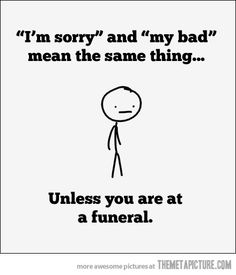
      Also known as Gallows Humor, Dark Humor looks at terrible situations and finds the irony in them.

      A stick figure saying "I'm Sorry" and "my Bad" mean the same thing...Unless you are at a funeral

      This often pops up when someone says “Well, at least it can’t get any worse!”

      Situational Humor

      This happens when the character’s position in a scene happens to be very funny. For example, in Who Mourns for Morn from Star Trek: Deep Space 9, the Ferengi bartender Quark is harangued by 4 different thieves, all looking for a cut of the estate of Quark’s best customer (now deceased). At one point, all four of them, not knowing the others are there, arrive in Quark’s quarters where he hides each of them from the previous until he has a full house!

      Quark at the center of attention with 4 phaser pistols pointed at his head
      Quark at the center of attention with 4 phaser pistols pointed at his head

      Self-Deprecating Humor

      This often can be seen in Non-Fiction work. Self-Deprecation can make people feel less intimidating and put the reader at ease with a speaker. Possibly one of the best examples of this comes from the prologue of a 1910 Calculus Textbook.

      Considering how many fools can calculate, it is surprising that it should be thought either a difficult or a tedious task for any other fool to learn how to master the same tricks. Some calculus-tricks are quite easy. Some are enormously difficult. The fools who write the textbooks of advanced mathematics—and they are mostly clever fools—seldom take the trouble to show you how easy the easy calculations are. On the contrary, they seem to desire to impress you with their tremendous cleverness by going about it in the most difficult way. Being myself a remarkably stupid fellow, I have had to unteach myself the difficulties, and now beg to present to my fellow fools the parts that are not hard. Master these thoroughly, and the rest will follow. What one fool can do, another can.

      Be careful though! A little Self-Deprecating Humor is a lovely introduction, but too much will quickly tire a reader out.

      Final Tips:

      Be Personal:

      You know what’s funny in your own life. Start there with retelling those stories to see how it works out.

      Subvert expectations:

      We’ve all seen cliches, and those have their place in all stories, but think about times when a scene did not go the way you expected. One great example is in The Last Jedi when Rey returns Luke’s lightsaber and he immediately tosses it.

      Rey offers Luke the Lightsaber
      Such hope immediately dashed

      Rule of Three

      This is one of the big places to subvert expectations. You offer two regular, expected ideas, and then follow it up with a third option that surprises

      Ex: “What are you up to today? Work? Day off? World domination?”

      Obviously, there’s often a little more time between the appearances.

      For more information on charging up your writing, consider this article on Rhythm and Cadence and Beats by Margie Lawson. 

      Chanticleer Book Reviews to make you laugh and cry

      INSYNNIUM by Tim Cole

      Grand Prize Winner for the Cygnus Awards

      The dramatic premise explored in a new novel, Insynnium, is a wild, immersive leap into a world-changing (but fictional) drug. In other hands, what could be a dystopian thriller goes one step further in author Tim Cole’s capable hands. He focuses on the humans who first discover and use the drug and weaves his story with a devilish charm.

      This is somewhat Bill Murray/“Groundhog Day” territory, a film exploring one man’s reliving a day in his life over and over until he learned new behaviors, new skills and came out of it a better man. Unlike “Groundhog,” Max McVista takes multiple doses of the drug against all advice, then somehow expands time itself in what he calls an “AUE” or “Alternative Universe Experience,” enabling him to spend months and sometimes years becoming or experiencing whatever he wishes. When returning real-time, he’s only missed a day or two. (For E=MC squared fans, it’s basically reverse engineering of Einsteinian physics.)

      Continue Reading Here

      EVIL UNDER the STARS by C.A. Larmer

      First Place Winner for the Mystery & Mayhem Awards

      Who commits a murder in a crowd of a hundred people relaxing in a park, and how did the Agatha Christie Book Club miss the entire thing from only a few feet away? In the trendy Sydney suburb of Balmain, Kat Mumford, social media interior design star, has been murdered during the inaugural Cinema Under the Stars. Her distraught husband, Eliot, is clearly the prime suspect, but at the time of Kat’s strangulation, he is nowhere near her. In fact, no one was sitting near Kat, and the crowd seems to have been so absorbed by the movie, Agatha Christie’s Evil Under Sun, that no one saw a thing out of the ordinary. 

      When Alicia Finlay and her book club realize the murder occurred right under their noses, there is no way they can just let the police handle it. When Alicia’s boyfriend, Detective Inspector Liam Jackson, actually calls her for information, she and her club decide to do a little investigating of their own. Despite being told to butt out, Alicia, Lynette, Claire, Missy, and Perry go undercover to find the killer, but the twists, in this case, will lead them down a strange path to find a crafty killer. The club must sift through the suspects: a smarmy barman, a detestable reverend, a pregnant domestic abuse victim, a mystery mustached man, a dead junky, and a hipster hubby. With few clues but many dead ends, the club will meet their most challenging mystery yet!

      Continue Reading Here

      ELEPHANTS IN MY ROOM by Christie Nicholls

      A bitingly funny collection of life-stories from Christie Nicholls – stand-up comedian, actor, and writer – made all the more piquant by her repeated insistence that she has no short-term memory. Fortunately for us, her long-term reminiscences more than make up the deficit.

      Nicholls has divided the book into four parts. In the first, “A Broad Abroad,” she recalls her experiences of traveling to far-flung places, beginning with a summer in Belém, Brazil as a child. She and her brother, for some reason nicknamed Beluga, slept in hammocks and played in a swimming pool, but much of her cherished time involved a German Shepherd named Ferdinand, from whom she learned dog talk. Raucous family bowling in Bologna, Italy, is contrasted with attendance at a staid English wedding. At a later period, Nicholls and her mother went to Sweden, where the budding comic tried her hand at stand-up in newly acquired Swedish, leading to an amusing mix-up of jargon.

      Continue Reading Here


      Chanticleer Editorial Services – when you are ready

      Did you know that Chanticleer offers editorial services? We do and have been doing so since 2011.

      Tools of the Editing Trade

      Our professional editors are top-notch and are experts in the Chicago Manual of Style. They have and are working for the top publishing houses (TOR, McMillian, Thomas Mercer, Penguin Random House, Simon Schuster, etc.).

      If you would like more information, we invite you to email Kiffer or Sharon at KBrown@ChantiReviews.com or SAnderson@ChantiReviews.com for more information, testimonials, and fees.

      We work with a small number of exclusive clients who want to collaborate with our team of top-editors on an on-going basis. Contact us today!

      Chanticleer Editorial Services also offers writing craft sessions and masterclasses. Sign up to find out where, when, and how sessions being held.

      A great way to get started is with our manuscript evaluation service. Here are some handy links about this tried and true service: https://www.chantireviews.com/manuscript-reviews/

      And we do editorial consultations. for $75.  https://www.chantireviews.com/services/Editorial-Services-p85337185

      Writer’s Toolbox

      Thank you for reading this Chanticleer Writer’s Toolbox article.

      Writers Toolbox Helpful Links: 

      Submit to the Mark Twain Awards

      The full list and calendar of all our CIBAs

      The Mark Twain Spotlight

      Rhythm and Cadence and Beats, Oh Yes! by Margie Lawson

      The traditional publishing tool that indie authors can use to propel their writing careers to new levels?  https://www.chantireviews.com/2016/05/15/the-seven-must-haves-for-authors-unlocking-the-secrets-of-successful-publishing-series-by-kiffer-brown/


      You made it to the end! Enjoy this extraordinary report from the BBC on Spaghetti Trees:

    • Character Development, Dialogue, and Beats, a Chanticleer Writers Toolbox Article by David Beaumier

      Character Development, Dialogue, and Beats, a Chanticleer Writers Toolbox Article by David Beaumier

      Understanding What Makes Good Character Development

      Character Development is a tricky matter. In this article we’ll go through the basics of setting up what your character does and how you describe them, coupled with the idea of beats in dialogue.

      A character sketch model covered in paint
      Artists all over use character models!

      Consider the following excerpt from a recent work in progress from a friend of Chanticleer:

      In the guest room we have spider plants that have often refused to die in the past. They grow everywhere and propagate like mad, their white and green spear-like leaves overflowing any pot we put them into. We keep them trimmed back carefully, letting them give us plenty of fresh oxygen while at the same time making sure our space isn’t entirely overrun.

      This description comes in the middle of getting something for another character, and there are 4 paragraphs of plant and room descriptions. Four! That’s too much narrative description that adds little to the story and does nothing to build tension. Now look at the revision of all those paragraphs:

      I head out to the kitchen. I don’t see Mom, but this is the week we’re supposed to water the plants, so I fill up our yellow watering pail with a comically long spout that aids in watering closer to the base on the plants. The red and green leafed crotons in the kitchen next to the sink are first, then the fishtail palm in the bathroom that always wants more water despite the wetness of its location, the spider plants in the office, my kalanchoe was watered last week, and then I finish with the lemon tree. The lemon trees petals are almost all gone, which means we’ll have meyer lemons soon, but any sweet smell it had recently is gone.

      Red and Green Succulent Plant

      Now, in addition to understanding that the character is looking for their mother. The plants appear in a flash, coupled with the action of being watered, and we end on the lemon tree, which promises something good, but right now seems rather lackluster, which mirrors the mood of the overall scene. This quick summary helps the story move from prolonged description that will make the reader’s eyes glaze over, and instead moves us from one point to the next.

      Interested more in secondary characters? Learn more about them from the one and only Jessica Morrell here. For more that focuses on general background characters, try this article from Skip Ferderber here.

      So when do we put in a little summary for the character?

      Renni Browne and Dave King say the following in their book Self-Editing for Fiction Writers:

      If your characters actually act the way your summaries say they will, the summaries aren’t needed. If they don’t, the summaries are misleading. Either way, your fiction is likely to be more much effective without the character summary

      In terms of time progression in a story summary is a way of storytelling where a little is described to cover a large period of time. It helps to have it balanced with scenes where action and time are equivalent, or moments of interiority where a lot happens in almost always a slow point in the narrative. However you choose to do it, make sure there’s a good balance in terms of time in your work, and that scene is often the driving force.

      A balance scale holding two question marks.

      Looking for tips to streamline your dialogue? Make it more potent with tips from Jessica Morrell here.

      Unobtrusive ways to develop Character

      • Learn their history so that when you write them it will come out intuitively
      • Show how other characters react to them directly.
      • Show how the world interacts with them as they move through it.

      That’s well and good, but how do you measure your character development? Well, we’re glad you asked:

      • How much time do you spend describing characters?
      • Are you telling us characteristics that will show up later in dialogue and action?
      • How much of the character’s history have you explored with the reader? Does the reader need all of that information, or does the story read well without it? If so, when do they need to know it

      Dialogue Mechanics

      A famous author once called dialogue the purest form of scene.

      Dialogue bubble, Photo booth props free printables

      Obviously there are moments where this is wrong, such as when the dialogue is done as a form of telling.

      “Hi Joe, I haven’t seen you since the divorce with June after you came back from the war!”

      A person answering the phone in a friendly manner
      You may remember plays where it starts out with someone answering the phone and setting up the plot by responding to the person on the other end.

      However, the idea of telling that sneaks its way most prominently into dialogue mechanics is the dialogue tag, often accompanied by an adverb. Consider Newgate Callander of The New York Times Book Review take on the wildly successful Bourne Ultimatum series:

      Mr. Ludlum has other peculiarities. For example, he hates the “he said” locution and avoids it as much as possible. Characters in “The Bourne Ultimatum” seldom “say” anything. Instead, they cry, interject, interrupt, muse, state, counter, conclude, mumble, whisper (Mr. Ludlum is great on whispers), intone, roar, exclaim, fume, explode, mutter. There is one especially unforgettable tautology “‘I repeat,’ repeated Alex.’

      The book may sell in the millions, but it’s still junk.

      Let’s take it further and look at even more examples of redundant or overemphasized dialogue tags:

      • “I’ll kill your whole family,” he hissed maliciously.
      • “You can’t be serious,” she said in astonishment.
      • “Give it to me,” she demanded
      • “Here it is,” he offered.
      • “Is it loaded?” she inquired?

      These all share one thing—they fear the use of “said.” Sure, sometimes a word other than “said” will help break things up for variety’s sake, but “said” is almost always proper and good to use.

      “Said” is essentially a punctuation mark for readers. It serves the purpose of helping them track who said what in a dialogue.

      See what Peter Greene says about realistic dialogue in his interview here.

      Adverbs: Friend or Foe

      2016-2017 Psychic Yes Or No Oracle - Get Accurate Answers
      To be or not to be

      Adverbs are the enemy much of the time in dialogue. There is almost always a better word to use. Putting in a prop like the dreaded -ly will make your dialogue seem weak, even if it isn’t.

      The only real exception to the rule is with the dialogue tag “said” because it’s so ubiquitous that it can allow for some extra description on occasion. Remember, the dialogue will often do the work of setting the tone for you.

      Gabriel García Márquez would eliminate all adverbs from his writing, choosing instead to use the word in another form.

      For example, instead of “he said softly” I would write “he said, his voice soft”

      A few general tips:

      • Pronoun substitutions are fine
      • Renaming the character can be wonky. Dave, Mr. Winchester, The Sheriff, the officer, the lawman, CHOOSE!
      • New speaker/new action means a new paragraph!
      • Ending with a dialogue tag uses a comma. Ending with an action uses a period. Ex: “Hey there,” he said. vs “Hey there.” He scratched his chin.
      • This indicates interruption: “Now wait just—”
      • This indicates trailing off: “Now wait just a second…”

      Again, consider how you measure these things.

      • Check your dialogue for explanations. Consider bringing a highlighter for this job.
      • Cut the explanations and reread your dialogue. If it reads worse, you may need to rewrite your dialogue.
      • Mark every adverb related to dialogue. How many of them are based on adjectives describing emotion? Which ones can you cut?

      Woman student highlighting with text marker in document

      Beats in Character Development

      Let’s pause here to talk a little bit about beats and figure out how to us them to balance out dialogue. Again, using an example from Self-Editing:

      “But didn’t you promise…” Jessie said.

      “I did nothing of the sort,’ Tyrone said.

      “Now, look, you two—” Dudley said.

      You stay out of this,” Tryon said.

      VS.

      “But didn’t you promise…” Jessie said.

      “I did nothing of the sort,’ Tyrone said.

      Dudley stepped between them and held up his hands. “Now, look, you two—”

      Tyrone spun on him. “You stay out of this.”

      Just like the saids, there can be too many beats, so be careful how you balance it.

      Think about white space in a sketch for a painting. All the lines that make up the body of the work are the dialogue of your piece–it gives the plot, characters, and conflict a structure to work within. The beats are the color the fill it in, showing the reader a complete picture of what’s taking place. As you write, ask yourself if you’re better at overwriting and then trimming back or underwriting and fleshing out. Play to your strengths for your first draft, and then come back ready to adjust for any areas you know you’ll be weak.

      Glass Painting : 10 Steps (with Pictures) - Instructables

      The beats tie your dialogue together. Map them by marking the descriptions you have interspersed within your dialogue.

      Make your beats sing by seeing what Margie Lawson has to say about rhythm and cadence here.


      Chanticleer Editorial Services – when you are ready

      Did you know that Chanticleer offers editorial services? We do and have been doing so since 2011.

      Tools of the Editing Trade

      Our professional editors are top-notch and are experts in the Chicago Manual of Style. They have and are working for the top publishing houses (TOR, McMillian, Thomas Mercer, Penguin Random House, Simon Schuster, etc.).

      If you would like more information, we invite you to email Kiffer or Sharon at KBrown@ChantiReviews.com or SAnderson@ChantiReviews.com for more information, testimonials, and fees.

      We work with a small number of exclusive clients who want to collaborate with our team of top-editors on an on-going basis. Contact us today!

      Chanticleer Editorial Services also offers writing craft sessions and masterclasses. Sign up to find out where, when, and how sessions being held.

      A great way to get started is with our manuscript evaluation service. Here are some handy links about this tried and true service: https://www.chantireviews.com/manuscript-reviews/

      And we do editorial consultations. for $75.  https://www.chantireviews.com/services/Editorial-Services-p85337185

      Writer’s Toolbox

      Thank you for reading this Chanticleer Writer’s Toolbox article.

      Writers Toolbox Helpful Links: 

      Supporting Cast – Taking Risks with Your Secondary Characters – From the Editor’s Desk of Jessica Morrell

      Putting More Character into Your Characters – by Skip Ferderber

      How He Increased Book Sales, Writes Realistic Dialogue, and Structures His Writing — Award-winning Author Peter Greene Shares His Tips and Tools

      TIPS for POTENT DIALOGUE by Jessica Morrell

      Rhythm and Cadence and Beats, Oh Yes! by Margie Lawson

      The traditional publishing tool that indie authors can use to propel their writing careers to new levels?  https://www.chantireviews.com/2016/05/15/the-seven-must-haves-for-authors-unlocking-the-secrets-of-successful-publishing-series-by-kiffer-brown/

    • Understanding Story Structure — A Chanticleer Toolbox Primer Article by David Beaumier

      Understanding Story Structure — A Chanticleer Toolbox Primer Article by David Beaumier

      Start with the Heart 

      Henry Cavill responds to 'Enola Holmes' copyright lawsuit
      Henry Cavill stealing our hearts as Sherlock in the movie Enola Holmes. He definitely stole Kiffer’s.

      When we look at writing craft, it can help to start general and then move on to specifics. Start with questions to help orient yourself toward how you will edit the work:

      • What do you see as the genre?
      • What is the climax?
      • How do you imagine the story’s structure?
      • What is the heart of the story?

      The heart of the story can be more generally understood as theme, but it really boils down to where does the blood flow in the veins of the writing. I make sure that is always in my mind when editing for an author, and I recommend it for any writer who is working on a piece.

      Write down the heart of your story somewhere you can always look at it—on a sticky note near your writing area, at the bottom of the document you’re working in, anywhere you can see it. Having the heart of the piece as an easy reference point lets us keep an eye on the destination as we write or edit toward the end.

      The Evolving Nature of Structure 

      Get ready for book recommendations! In terms of structure, David recommends Jane Alison’s Meander, Spiral, Explode, which sets the bar for how we can reimagine the shape of our books. Most stories won’t tell their author what their structure is supposed to look like until they are nearly finished. 

      Meander, Spiral, Explode: Design and Pattern in Narrative by Jane Alis – Catapult

      Most of the time when we think of the structure of a story, we think of the Aristotelian spear. But story structure can look like anything! A spiral, a flower, a canoe, an inverted spear. Of course, there’s nothing wrong if your story structure does fall into this classic description, but keep in mind that doesn’t mean we close ourselves off to all other structures.  

      A Writer's Cheatsheet to Plot and Structure
      Aristotelian Spear story structure

       Alison takes the idea of seeing the structure literally, recommending that writers draw out the shape of the story. To do this, she recommends visualizing summary like this “__” a scene like this “–” and a still spot (interiority or a moment where the narrator pauses and explains events) as “·”. This is the example of the structure she sees when blocking out a section of Vikram Chandra’s “Shakti”

      __ __ __ __ — — — · —   

      You can see the pattern beginning to form, four moments of summary, followed by three scenes, a still spot, and then finishing with a scene. What do your own stories look like?

       Again, usually this structure becomes visible as the story reaches completion, allowing the author to see the images and metaphors that really shape it.  

       Narration in Four Parts 

      A Stranger's Journey

      The next section here owes much to David Mura’s Book A Stranger’s Journey. At the start of his chapter “Four Questions Concerning the Narrator” Mura simply asks: 

      1. Who is the narrator?
      2. Whom is the narrator telling her story to?
      3. Where is the narrator telling the story?
      4. Why is the narrator telling the story?

      These simple questions open up most stories in wonderful ways that surprise and delight their authors. It changes the idea of the narrator just being the main character in their present (if so, is the narration in present first person, and does the reader only get information the main character knows?). Or perhaps the narrator is you, the author; remember you are a living, breathing, ever changing being, while your narrator becomes fixed in time the moment you put down your pen and stop the editing process. Understanding this allows the writer to slow down and understand the perspective of narration in their story.  

      Why did Drax say, “Why is Gamora”? - Quora
      From Avengers: Infinity War

      Let’s look at a short story attributed to Ernest Hemingway to better understand these questions of narrator. The story is as follows:

      For sale: baby shoes, never worn

      • Who is the narrator? We could say a newspaper or even the person who wrote the advertisement, possibly the parent of this child. We could also say that Hemingway is telling the story since he was asked to write a six word story.
      • Who is the narrator speaking to? Anyone who might want to buy baby shoes. If Hemingway is the narrator, then it’s also with the secondary desire to make the reader sad since the tragedy implied by baby shoes that have never been worn weighs heavily on us.
      • Where is the narrator telling the story? In the newspaper? A sign in a window?
      • Why is the narrator telling the story? Hard question. Maybe honestly just to sell the baby shoes. Maybe to find closure and remove the last reminders of their loss. Maybe in the hopes that someone will reach out.

      In examining the narrator and understanding the relationship the narrator has with the reader, we create work with richer tone, voice, and a better understanding of what information needs to be shared.  

      All in Good Measure 

      Amazon.com: Self-Editing for Fiction Writers, Second Edition: How to Edit Yourself Into Print (9780060545697): Browne, Renni, King, Dave: Books

      The next book recommendation is Renni Browne and Dave King’s Self-Editing for Fiction Writers. While many of their chapters are excellent, their fourth one, “Proportion” stands out among many craft books as a unique topic. The quickest way to say this is to simply ask the writer to say what they mean to say, and then move on without spending too much time repeating the point. Often, this repetition breaks the sense of proportion needed for the story, leaving the weakest repeat to carry the weight of the scene in which it appears.

      An example of this would be if the sunset was described as two Polaroids being jammed together to make the sky and land, and then describing again how the rocky cliffs were at odds with the soft clouds of sunset. Remember, choose which one seems stronger and cut the weaker one. 

      Most craft books touch on this as the idea of trusting the reader. Write the best story you can imagine writing, and then, after showing it to readers, you’ll understand if the way you wrote it made sense or not. Taking too much time to belabor your point will make it seem overwrought and overwritten to the point that the reader might lose interest (something I always fear when writing about proportion).  

       All Together

      So, the key parts of craft I’m looking at here are: Heart, Structure, Narration, and Proportion. Of course, there are the traditional ones that we hear about everywhere:

      • Dialogue
      • Character
      • Plot
      • Voice
      • Beat
      • The ever present struggle between show and tell.

      Of course it’s important to have a good grasp of the basics, you can’t have the four elements above without them! But understanding how you’ll put it all together in the end is what makes a work really sing.


      When we finish our first draft our work suddenly transforms into a behemoth that’s impossible to approach. We’ll give you some great advice here, though if you’re at the point where you’ve done all this the next step is to find some extra eyes for your work. For an unbiased evaluation  that will help you better understand what works and what needs to be improved in your book, check out our Manuscript Overviews editorial service here. Remember Kiffer’s advice to have a manuscript assessment prior to beginning line editing or copy editing. A manuscript overview/evaluation will save you time, money, and will improve your work-in-progress.

      The CIBAs – Discovering Today’s Best Books and Authors

      If you’ve read through this and think “I’ve done all this, and I’m ready for the next step!” Congratulations! We would recommend putting some positive attention on your book at this point. You can enter it in a Chanticleer International Book Award Contest here or submit it for a professional Editorial Review here. And remember, it never hurts to do both.

      Looking for more story structure? You can find many articles here from a search of our site. 


      Chanticleer Editorial Services – when you are ready

      Did you know that Chanticleer offers editorial services? We do and have been doing so since 2011.

      Tools of the Editing Trade

      Our professional editors are top-notch and are experts in the Chicago Manual of Style. They have and are working for the top publishing houses (TOR, McMillian, Thomas Mercer, Penguin Random House, Simon Schuster, etc.).

      If you would like more information, we invite you to email Kiffer or Sharon at KBrown@ChantiReviews.com or SAnderson@ChantiReviews.com for more information, testimonials, and fees.

      We work with a small number of exclusive clients who want to collaborate with our team of top-editors on an on-going basis. Contact us today!

      Chanticleer Editorial Services also offers writing craft sessions and masterclasses. Sign up to find out where, when, and how sessions being held.

      A great way to get started is with our manuscript evaluation service. Here are some handy links about this tried and true service: https://www.chantireviews.com/manuscript-reviews/

      And we do editorial consultations. for $75.  https://www.chantireviews.com/services/Editorial-Services-p85337185

      Writer’s Toolbox

      Thank you for reading this Chanticleer Writer’s Toolbox article.

      The traditional publishing tool that indie authors can use to propel their writing careers to new levels?  https://www.chantireviews.com/2016/05/15/the-seven-must-haves-for-authors-unlocking-the-secrets-of-successful-publishing-series-by-kiffer-brown/

    • The Eyes Have It – From the Editor’s Desk of Jessica Morrell – a Chanticleer Writer’s Toolbox blog post

      The Eyes Have It – From the Editor’s Desk of Jessica Morrell – a Chanticleer Writer’s Toolbox blog post

      Into every writer’s life problems rear their snaggley heads.

      At times we lapse into dullness, we lean on crutch words, we make typos and gaffs. We write with clichés.

      Punch Almanack 1885

      Our plots wander, our characters confuse, and our endings fall flat.

      Because writing is hard. Yep.

      And writers are at a natural disadvantage  because we use computers and the familiarity of our words on the screen breeds a kind of blindness. Sometimes the more often you read your own words, the less you’re able to identify their strengths and weaknesses.

      With that in mind, I want to call your attention to a simple technique in writing fiction:

      Using characters’ eyes to reveal emotion and  meaning.

      This is a reminder to  pay more attention to how your characters look, stare, and express emotions. If eyes are the windows to the soul, then match your characters’ expressions  to the exact emotion or reaction needed. – Jessica Morrell

      Here are some suggestions for getting your characters’ eyes to reveal emotion and meaning:

      1. Figure out your crutch phrases and go-to moves. A few that appear too often  are eyes widening, teary eyed, blank stares,  blurred vision, stared straight ahead, watched like a hawk, she looked him straight in the eye, eyes darting, piercing stares, blinking back tears, eyes narrowing, smoldering looks, deep-set eyes, and steely-eyed. Avoid also cliched colors like baby blue, emerald, and chocolate.
      2. Make certain that the character’s eyes are appropriate to the scene. Too often characters gaze down at the floor or at their hands. Now, these gestures typically indicate discomfort or avoidance, but sometimes writers just sow them into a scene when that’s not the intended effect.
      3. Don’t. Feature. All. Your. Characters. Reacting. The. Same. Way.
      4. Avoid strangeness and viewpoint slips such as His eyes smiled at me or Her face fought against tears. Three words to keep in mind – POINT OF VIEW.
      5. Ditch the hobbit staring. Hobbit staring is a term I learned from a movie buff friend. He coined it from the Lord of the Rings films when the camera lingers too long on stares between two characters as if that demonstrates some deep meaning or message. Because often it does not. We’ve all seen this in films. Imagine how this will have your readers skimming the pages.
      6. If you’ve watched the delightful and deservedly popular series The Queens Gambit you’ll notice characters staring at each other a lot. Because it’s appropriate.
        THE QUEEN’S GAMBIT (L to R) MATTHEW DENNIS LEWIS as MATT and ANYA TAYLOR-JOY as BETH HARMON in episode 102 of THE QUEEN’S GAMBIT Cr. PHIL BRAY/NETFLIX © 2020

        Because they’re seated a few feet across from each other in earnest and sometimes excruciating combat.  Because they’re often trying to psych each other out. And the onlookers are staring intently at the board trying to guess the next moves of the two players.

      7.  Question every tear. I sometimes ask writers to count every scene where a character ends up weeping, wet-eyed, or with tears leaking down wet cheeks. This request comes from noticing how weeping and sobbing are overused resulting in melodrama, excess sentimentality, or depicting a character as too emotional for her own good. And the good of the story. Too much weeping and the story gets soggy and dull. And please, just forget single tears. Please.
      8.  Mix it up. Often a writer’s most used crutch words are look and see. However, in real life people gape, squint, spot, gander, gawk, ogle, stare, gaze, study, inspect, scan, scout, spy, study, inspect, notice, note,  peek, peep, peer, and rubberneck.
      9. Expand  your repertoire of descriptions: haunting, beckoning, steady, stormy, mocking, mournful, lifeless, sultry, goopy, teasing, pitiless, glassy.
      10. Stir in a little weirdness. Many people have mismatched eyes. Then there are droopy eyes, people with different colored eyes, bloodshot eyes, Rasputin eyes, lazy eyes, buggy eyes, one working eye, wandering eyes, piggy and close-set eyes.
      11.  Study how and when successful authors use close-ups. If you never focus the camera lens on a character’s face during an emotionally-charged scene, then readers cannot enter the moment and feel what the characters are feeling.
      12. Study actors. Notice how their eyelids raise a bit to show interest or droop to indicate the lack of interest. Note how they leer, seduce, flash anger, hide their true feelings.
      Beth Harmon knows she will win several moves out in this scene of Queen’s Gambit

      If you’re serious about writing, you must notice subtext and how to convey it. And that often begins with the eyes.

      Keep writing, keep dreaming, have heart. Jessica

      Jessica Page Morrell

      Jessica Page Morrell

      Jessica Morrell is a top-tier developmental editor and a contributor to Chanticleer Reviews Media and to the Writer’s Digest magazine. She teaches Master Writing Craft Classes along with sessions at the Chanticleer Authors Conference that is held annually along with teaching at Chanticleer writing workshops that are held throughout the year. 

      Don’t delay. Register today!

      This year the CAC21 will be held virtually. Registration will include access to video recordings of the conference.

      April 21- 25, 2021.   Multichannel Marketing for Authors and Intermediate and Advanced Writing Craft


      Chanticleer Editorial Services – when you are ready

      Did you know that Chanticleer offers editorial services? We do and have been doing so since 2011.

      Tools of the Editing Trade

      Our professional editors are top-notch and are experts in the Chicago Manual of Style. They have and are working for the top publishing houses (TOR, McMillian, Thomas Mercer, Penguin Random House, Simon Schuster, etc.).

      If you would like more information, we invite you to email Kiffer or Sharon at KBrown@ChantiReviews.com or SAnderson@ChantiReviews.com for more information, testimonials, and fees.

      We work with a small number of exclusive clients who want to collaborate with our team of top-editors on an on-going basis. Contact us today!

      Chanticleer Editorial Services also offers writing craft sessions and masterclasses. Sign up to find out where, when, and how sessions being held.

      A great way to get started is with our manuscript evaluation service. Here are some handy links about this tried and true service: https://www.chantireviews.com/manuscript-reviews/

      And we do editorial consultations. for $75.  https://www.chantireviews.com/services/Editorial-Services-p85337185

      Writer’s Toolbox

      Thank you for reading this Chanticleer Writer’s Toolbox article.

      Writers Toolbox Helpful Links: 

      The INCITING INCIDENT: STORY, SETBACKS and SURPRISES for the PROTAGONIST – A Writer’s Toolbox Series from Jessica Morrell’s Editor’s Desk

      ESSENCE of CHARACTERS – Part One – From the Jessica Morrell’s Editor’s Desk – Writer’s Toolbox Series