Lay Out the Welcome Mat for Productivity and Imagination
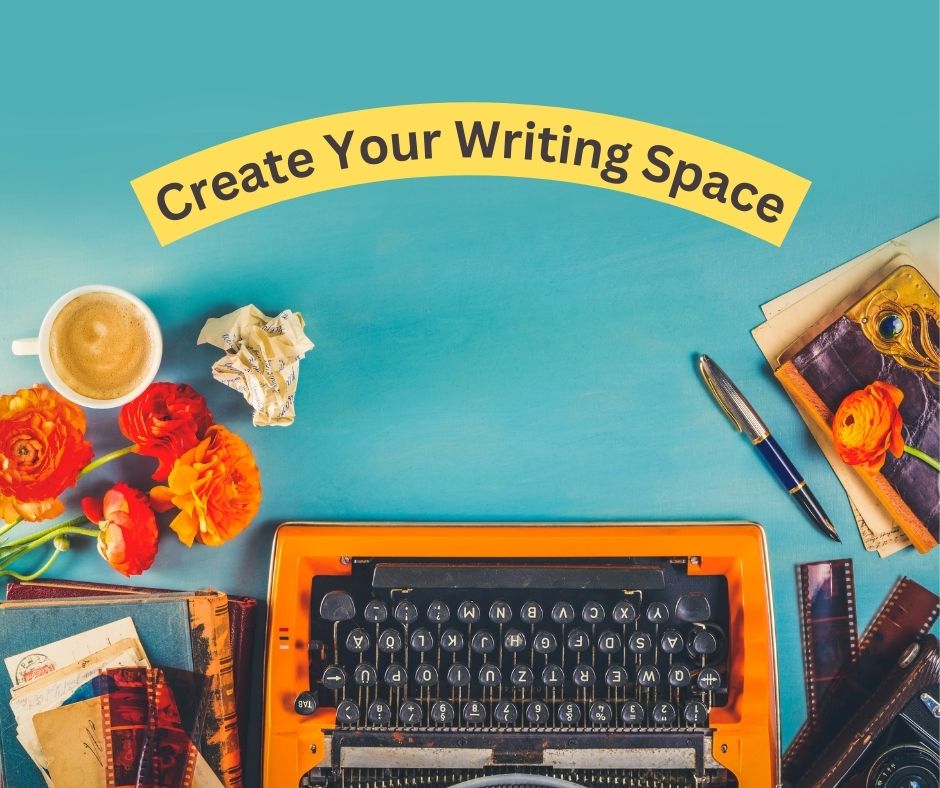
Creating an effective writing space is more than just finding a quiet corner with a comfortable chair and a sturdy desk. It’s about creating an environment that nurtures your imagination, enhances focus, and inspires productivity. Whether you’re a seasoned writer or just starting out, the space in which you write plays a crucial role in your overall writing experience.
Having a good writing space is crucial to a writer!
Writers can find a million excuses to put off sitting in the chair and getting some thoughts on paper (well, okay – monitors), but by setting the right environment in your work space you’ll find it’s easier to get started, maintain the flow, and finish faster because a good work space can
Minimizes Distractions: Whether it’s a separate room, a quiet corner, or even a specific coffee shop, having a designated area signals to the mind that it’s time to focus solely on writing.
Boosts Creativity: Personalizing the space with inspiring decor, books, or artwork can stimulate ideas and encourage innovative thinking.
Enhances Comfort and Ergonomics: A well-designed space ensures writers can work for extended periods without discomfort or strain.
Creates a Routine: Having a consistent writing space helps establish a ritual around writing, making it easier to get into the flow and maintain momentum.
Reduces Mental Barriers: When your space is personalized and clutter-free, writers can focus more on their ideas and less on external chaos.
Inspires Discipline: Writers are more likely to stick to their writing goals when they have a dedicated area that reinforces their commitment to the craft.
Creating an effective writing space is a personalized process that balances functionality, comfort, and inspiration.
Here are practical steps to help you design a writing space that enhances your productivity and creativity:
1. Choose the Right Location: Select a quiet area in your home or a favorite spot where you feel comfortable and can focus without interruptions. Natural light is beneficial, so consider proximity to windows if possible.
2. Personalize Your Space: Surround yourself with items that inspire you. Whether it’s motivational quotes, artwork, plants, or personal mementos, these can contribute to a positive and creative atmosphere. However, avoid clutter that could become distracting.
3. Invest in Comfortable Furniture: Your writing desk and chair should be ergonomic and supportive. Ensure your desk height allows for comfortable typing or writing without strain. Consider a chair that promotes good posture and allows you to sit for extended periods without discomfort.
4. Organize Your Supplies: Keep essential writing materials within easy reach. This includes pens, notebooks, reference books, and any other tools you frequently use. A tidy workspace contributes to mental clarity and reduces distractions.
5. Manage Technology Wisely: Minimize digital distractions by organizing your computer desktop and using apps or tools that block social media or other distracting websites during focused writing sessions.
6. Ensure Good Lighting: Proper lighting is essential for reducing eye strain and maintaining alertness. If natural light is insufficient, invest in a desk lamp with adjustable brightness and color temperature.
7. Create a Distraction-Free Zone: Establish boundaries with household members or roommates to respect your writing time and space. Consider noise-canceling headphones or background music if it helps you concentrate.
8.Maintain Cleanliness and Order: Regularly de-clutter and organize your writing space to keep it conducive to creativity and productivity. A clutter-free environment promotes clear thinking and focus.
9. Establish a Ritual: Develop a pre-writing ritual that signals your brain it’s time to write. This could involve making a cup of tea, lighting a candle, or reading a few pages from a favorite book to transition into a focused writing mindset.
10. Evaluate and Adjust: Periodically assess your writing space to ensure it continues to meet your needs. Experiment with changes in layout, decorations, or routines to optimize your productivity and comfort.
Minimize distractions and maximize your writing production by tailoring your writing space to support your workflow and see how your writing space transforms into a sanctuary for inspiration and productivity.
Thank you for joining us for this Writer Toolbox Article
There is so much to learn and do with Chanticleer!
From ourBook Award Programthat has Discovered the Best Books since the early 2010s to our Editorial Book Reviews recognizing and promoting indie and traditional authors, Chanticleer knows your books are worth the effort to market professionally!
When you’re ready,did you know that Chanticleer offers editorial services?We do and have been doing so since 2011.
Our professional editors are top-notch and are experts in the Chicago Manual of Style. They have and are working for the top publishing houses (TOR, McMillian, Thomas Mercer, Penguin Random House, Simon Schuster, etc.).
If you would like more information, we invite you to email us at info@ChantiReviews.com for more information, testimonials, and fees.
We work with a small number of exclusive clients who want to collaborate with our team of top-editors on an on-going basis. Contact us today!
Chanticleer Editorial Services also offers writing craft sessions and masterclasses. Sign up to find out where, when, and how sessions being held.
A great way to get started is with our manuscript evaluation service, with more information available here.
And we do editorial consultations for $75. Learn more here.
Travel Writing beckons us to leap into the unknown!
Travel writing tells us to buy that plane ticket, jump on that train, or gas up the car to chase after the dream of earning a living writing about the many incredible places you find when you step outside your front door. But all dreams require a little forethought.
The Annual Kite Festival in Rockaway Beach, OR is an exciting spectacle of high-flying kites, handled by masterful kite operators. -Dena
Here are our top tips for how to hit it out of the park with travel writing and make your journey compelling!
Getting the Story
1. Find the Story
Just like it is with all writing meant to sell, writers must stay abreast of trends to ensure their work is marketable.
Online and print travel magazines are a good place to start. Day trips are always a hot topic, and you can follow local and regional periodicals to stay up to date on what’s new in your area. A general periodical focused on travel will provide you with a wider view of interesting places to explore.
Travel associations and travel and tourism offices are a treasure chest for travel writers! Their representatives work hard to steer you in directions that are timely, interesting, and full of possibilities for a great article. Cultivating these relationships will reward you with insider information, guided press tours, and future writing opportunities.
Remember to reach out to your Circle of Influence, too! Reaching out to your traveling friends and associates to find the places they are most interested in will also give you valuable insight. Where do they want to go? How will they spend their time when they get there? What questions do they have that you can find the answers for? The answers to these questions will be a catalyst for a compelling article that reaches the right readers.
Finally, you’ll want to consider your own interests when looking for your next travel story. Think about what you enjoy when you travel, and contact those groups directly to find out what is new and exciting so you can help promote it for them. If the relationship goes well, they may come to know you as a dependable writer and eventually reach out to you with story ideas!
One of the most delicious burgers in the Pacific Northwest is found at Mock Crest Tavern in North Portland, OR. Juicy and flavorful! – Dena
2. Research
Good research will help you find an interesting angle for your article and lead you to those bits of lesser known information that will elevate your article above the others focusing on the same topic.
Gather the information given to you by the tourism associations and other groups, then do a little research on your own to find interesting details to give your story a unique spin. For example, if you are writing about the best hiking boots to wear on extreme hikes, find out who the designers are and what makes them experts in hiking footwear. By doing this you’ll be telling readers of your articles you are an authority on travel topics they are interested in.
Beautiful glass art fills Robert Adamson’s Island Art Glass Studio on Whidbey Island, WA. I visited while on a press tour for the Whidbey Island Arts Council and found the many colors mesmerizing. And watching his artists work in their glass blowing shop was a special treat! – Dena
3. Get the Inside Scoop
People love hearing from the locals, and locals love telling people about places and events they love near their home.
Adding quotes from people who are involved in events or owners of restaurants, hotels, or activities will provide depth, color, and validity to your article. Convey their enthusiasm for their events/activities and let the reader feel it through compelling writing.
Not only will you be creating a great article with quotes, readers will be given an insider’s view into the experience as they learn the basic information that will enable them to book their next big adventure! Get out your old journalism notes to get the “who, what, why, where, and when” information to fill in your article and up the value of the content, then find one or two quotes that will add interest to your article, and be sure to cite the person if required.
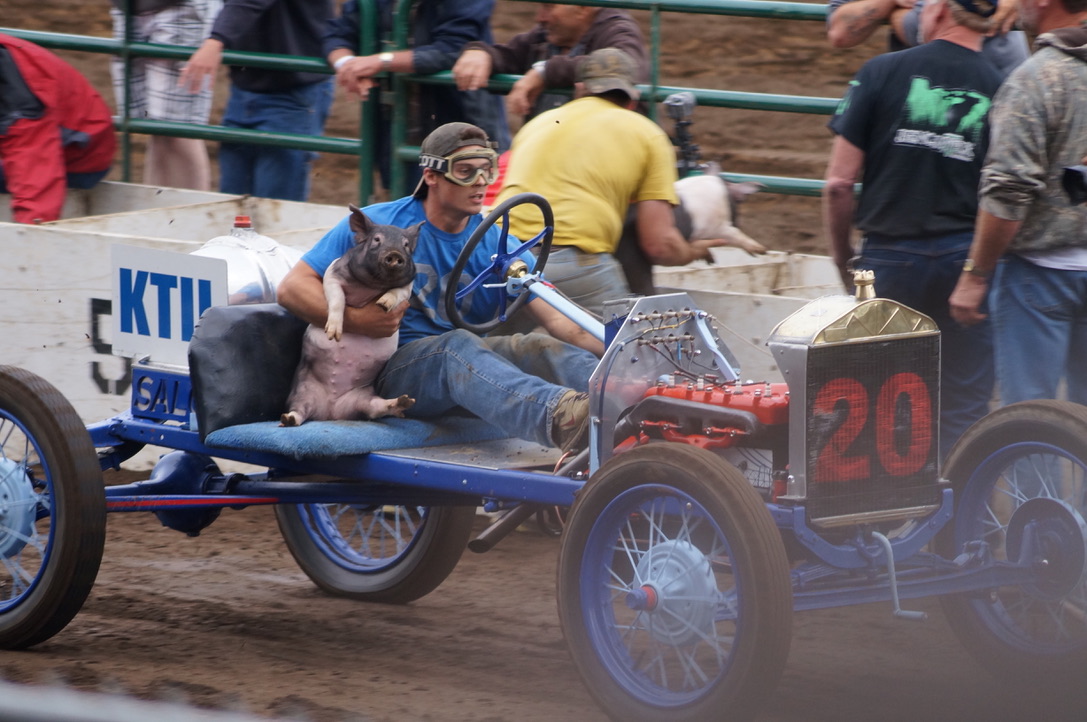
Tillamook, OR’s annual “Pig and Ford” races have been a fan favorite since 1923. Drivers must stop in the middle of the race to catch a pig and take him for a ride. It’s a wild and thrilling event! – Dena
4. A Personal Perspective
It’s time to put yourself into the writing!
What was your experience like? Seek out those special moments that really connected with you and tell them as if you were talking to a friend who is about to visit the same place. Use your five senses to infuse your article with compelling, sentient writing the reader can connect with and feel confident they understand what you’ve experienced. Keep in mind, you want to be honest in your writing, and keep negativity out if you want to be invited back for future writing gigs.
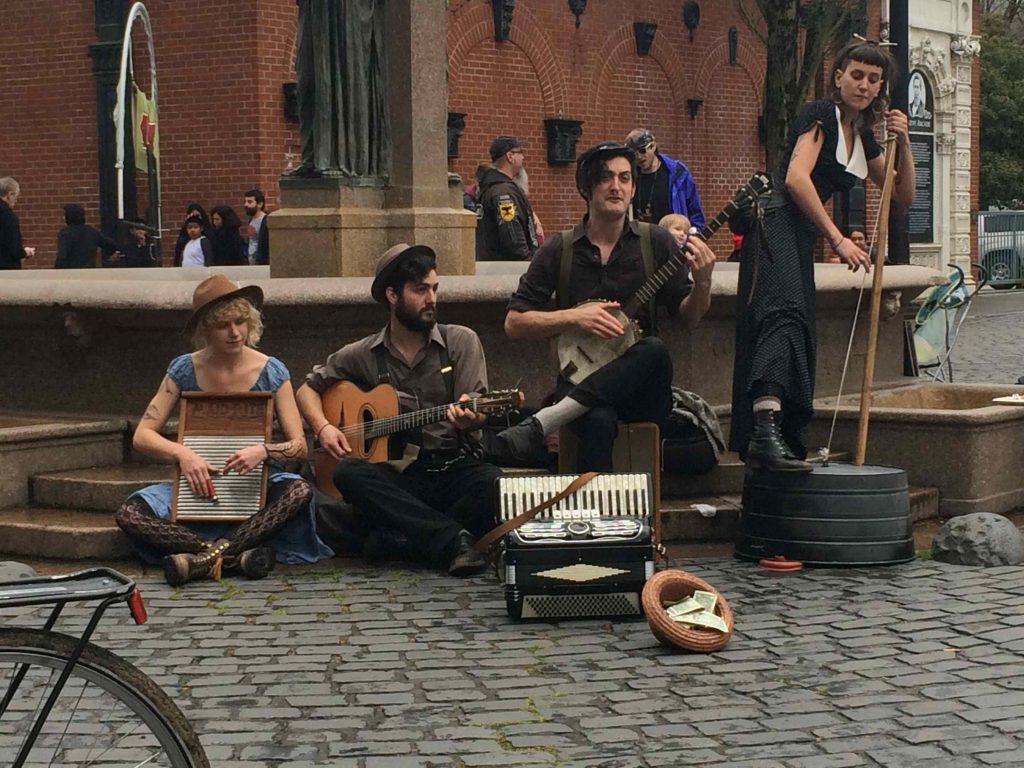
I ran across the street band playing at Portland, OR’s Skidmore Fountain. Their music made me think of Appalachian music from the past. – Dena
Travel writing is an exciting adventure, both on the road and on the page! Starting off right with these tips in mind will help you get the story, write an interesting article, and get noticed by the people who need good writers to get the word out to support their local tourism. Whether you travel across the world or down the block, you’ll find endless amounts of inspiration for your travel writing adventure.
Interested in travel writing? Here are just a few great authors writing about their adventures!
In Cassandra Overby’s encyclopedic guide Explore Europe On Foot, readers are taken through a step-by-step process of dreaming, planning, and hopefully soon experiencing memorable, slow travel ventures of a lifetime. Whether it’s choosing a route and destination, deciding what to pack, finding appropriate accommodations and food options, or dealing with inevitable challenges, Overby supplies a world of information in this colossal foot travelers’ bible.
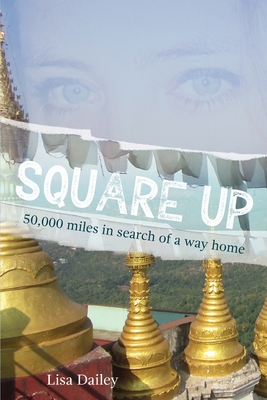
Square Up: 50,000 Miles in Search of a Way Home By Lisa Dailey
Although she and her husband had planned to take their family on a ’round-the-world adventure, she didn’t expect their plans to come together on the heels of grief, after losing seven family members in five years. Square Up shows us that travel not only helps us understand and appreciate other cultures, but invites us to find compassion and wisdom, heal from our losses, and discover our capacity for forgiveness, as well as joy.
Thank you for joining us for this Writer Toolbox Article
There is so much to learn and do with Chanticleer!
From our Book Award Program that has Discovered the Best Books since the early 2010s to our Editorial Book Reviews recognizing and promoting indie and traditional authors, Chanticleer knows your books are worth the effort to market professionally!
The traditional publishing tool that indie authors can use to propel their writing careers to new levels? Check it out here!
Do you have a book about travel that deserves to be discovered? You can always submit your book for an Editorial Review with Chanticleer!
Chanticleer Editorial Review Packages are optimized to maximize your digital footprint. Reviews are one of the most powerful tools available to authors to help sell and market their books. Find out what all the buzz is abouthere.
You can see our full list of Non-FictionBook Awardsis a great way to get your book discovered!
Anytime you advance in the Chanticleer Int’l Book Awards, your name and book are promoted right here on our website, through our newsletter, and across social media. One of the best ways to engage in long tail marketing!
Now pack your bags, grab your laptop, and get exploring, writing, and creating great stories!
Your story’s point of view affects one thing above all else — description.
Simply put, Point of View (POV) determines through what eyes we see, what ears we hear, what skin we feel, what nose we… well, you get it.
Can you discover the Point of View?
Readers tend to get invested in description that makes them think— about the characters, the setting, what will happen next. Different POVs have different limitations in what you can show, and how you can show it. But so too do they have particular strengths. So, how can we work with our chosen POV to make mentally-engaging prose?
Let’s take a look at a few descriptive techniques that flourish within and illuminate the strengths of different POVs: First person, Third Person Limited, Third Person Omniscient, and Second Person.
First Person — the Motivated Storyteller
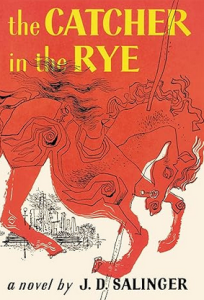
In this novel, Holden Caulfield takes him time revealing what’s bothering him. Slowly, his painful teenage life unfolds itself before the reader. He’s an untrustworthy narrator, so be careful with what you believe.
There’s a special kind of intimacy in First Person. A vulnerability on both our parts. You’re the audience of a storyteller— me! And because it’s my story, surely I’m most qualified to decide on which details are important, right?
Every smell on the wind, little shifting of another person’s posture, texture beneath my fingertips, it’s here because I want it to shape my tale. This is not the objective world, but a carefully-cut slice of it steeped in my thoughts. So, you should be able to put together my motivations and even beliefs based on how I describe my rival’s wine-stained manor, with its air of mismatched perfumes no doubt imported from some overworked farmland on the Rouge Isles, and fine fat jewels resting so brazenly in his family’s recently-designed crest.
First Person and Third Person Limited — the Revealing Vision
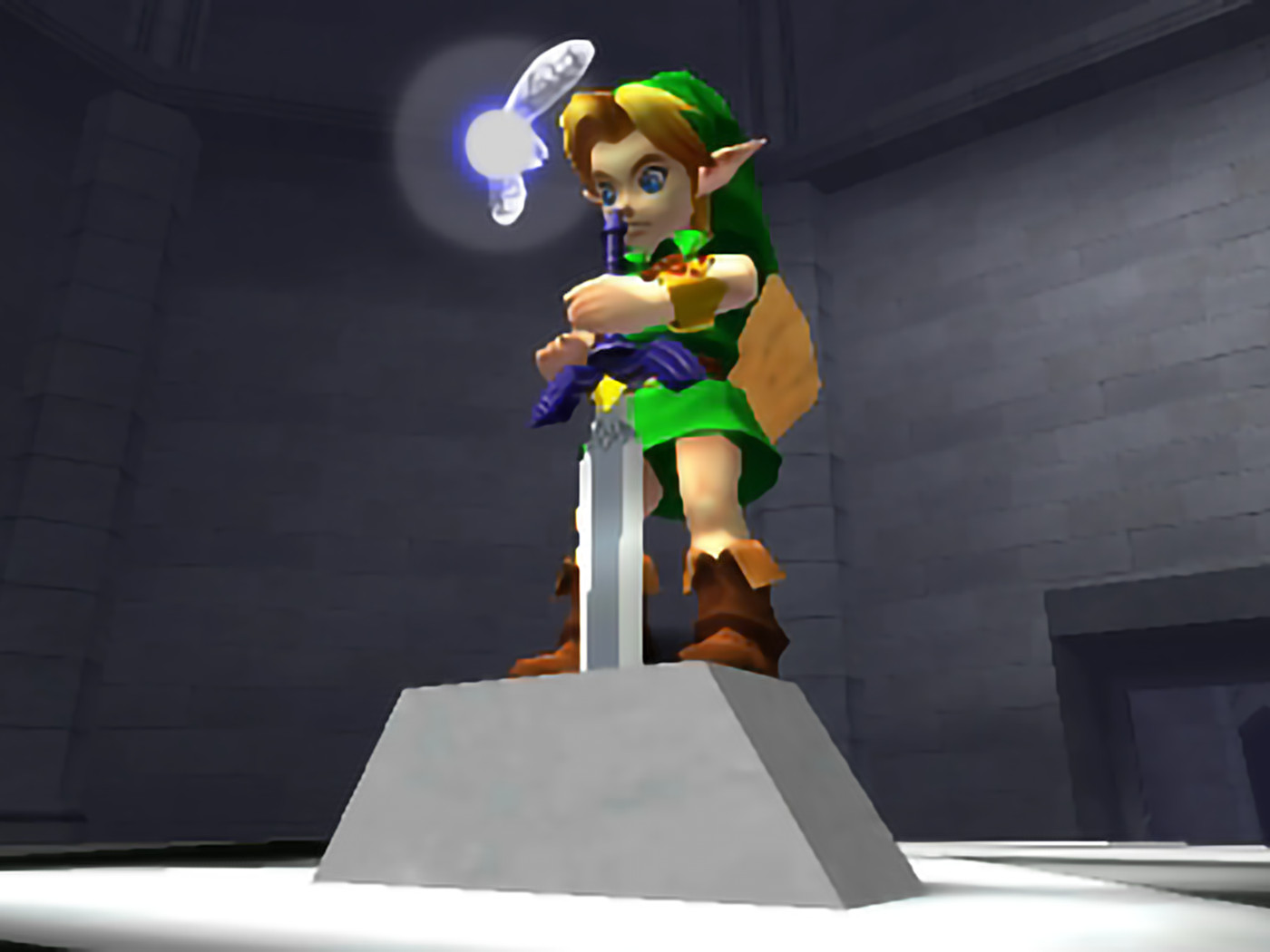
Many videogames, like The Legend of Zelda – pictured above – use a literal Third Person Point of View that lets you follow directly behind your character as you play, but the camera always only sees your avatar.
These two POVs share much in common, sometimes being nearly identical except for the pronouns. And while these narrators can be intentional with their descriptions (even unreliable), sometimes the details in the prose can reveal more about them than they would ever choose to tell.
What sensory information the POV character notices will say something about who they are, how they feel, and even their connections to other characters. Fear might draw their eyes to the heavy doors, the arched roof with its fingers of shadow scratching at the beams, the way the thick walls seem to snuff all sound to a breathless mumble. A former musician, finished with their old craft, might walk down a long tunnel with their footsteps bouncing through the air in soft, irrepressible vibrato rhythm. Someone who spends all day cooped up in an office might bask in the cardinal feathers of a sunset — or fail to notice them at all, as the asphalt presses a growing soreness up through their back.
Third Person Limited — the Reframed Importance
Harry Potter is a classic example of third person limited. Everything happens from Harry’s perspective and is colored by his opinion, but sometimes the reader has a chance to catch view of something beyond what Harry sees.
One way that Limited often varies from First is in its use of multiple perspectives. Not all Limited books have these, of course, but those that do can employ a powerful means of recontextualization.
How does one character experience a setting, event, or interaction as opposed to how the next character does? Do they see each other differently than they each see themselves? Can they plant a question in the reader’s mind?
A ‘sweet smile and warm handshake’ from the mountain guide might show Francis to be merely trusting in her own perspective, but that same guide’s ‘wolfish grin and cloying grip’ from Gabriel’s perspective would reframe Francis’s trust to actually be naiveté. Or, perhaps Gabriel has some paranoia eating away at him. Guess you’ll have to keep reading to find out.
Third Person Omniscient — the Two-Faced Medium
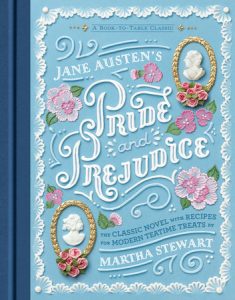
In Pride and Prejudice the narrator moves easily from person to person, showing you what everyone feels and thinks. You know what Mr. Darcy’s opinion is when it’s important, and you know what Elizabeth Bennett’s opinion is almost all the time.
Finally, the objective truth of things. Where First Person is a personal storyteller, this narrator is like that of a Greek play, come to reveal all the narrative’s most interesting corners — no matter how well hidden.
Omniscient prose has a powerful ability to indulge in two opposed modes.
On the one hand, the narrator can use their voice to match information and detail to the sincere experience of the characters, keeping readers close. A spacefaring diplomat might walk down a quiet observation deck, cool glass soothing the tension out of his fingers, an endless crowd of stars looking on in support of his mission of peace with a strange alien species. But elsewhere, deep in the space station, a bomb ticks down.
This contrast of perspective can radically alter the tone of descriptions, even so much as to invert them completely — a slow, contemplative walk becomes dreadful, every detail the narrator lingers on meaning a few more ticking seconds.
Second Person — What do You Have to Do with It?
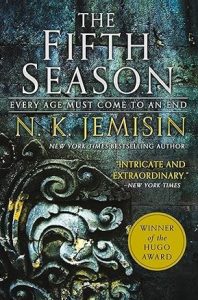
The Hugo Award winning start to the Broken Earth Trilogy has one third of the story told in the second person. The story follows a “you” named Essun who goes on a journey to save her daughter.
Second Person is more commonly used in instructional or how-to guides. “You should then add peanut butter” would be an example. This is an uncommon point of view in prose writing as it can invite the reader to identify with someone who shares very little in common with them. That sharing of identities can disconcert the reader, but it can also make them more receptive to even more creative styles of storytelling.
Locating the reader in Second Person gives them a chance to experience and imagine a world totally outside of their own realm of understanding.
These techniques are useful beyond POV
Unreliable narrators don’t have to speak in first person, and dramatic irony can easily be used with multiple limited POVs. These are guidelines, not rules. But, when you’re working through your writing — editing a passage or trying to tease out exactly how to paint a mental picture — consider how you can use the inherent abilities of your chosen perspective to get the sparks flying in your readers’ minds.
Thank you for joining us for this Writer Toolbox Article
There is so much to learn and do with Chanticleer!
From our Book Award Program that has Discovered the Best Books since the early 2010s to our Editorial Book Reviews recognizing and promoting indie and traditional authors, Chanticleer knows your books are worth the effort to market professionally!
When you’re ready,did you know that Chanticleer offers editorial services?We do and have been doing so since 2011.
Our professional editors are top-notch and are experts in the Chicago Manual of Style. They have and are working for the top publishing houses (TOR, McMillian, Thomas Mercer, Penguin Random House, Simon Schuster, etc.).
If you would like more information, we invite you to email us at info@ChantiReviews.com for more information, testimonials, and fees.
We work with a small number of exclusive clients who want to collaborate with our team of top-editors on an on-going basis.Contact us today!
Chanticleer Editorial Services also offers writing craft sessions and masterclasses. Sign up to find out where, when, and how sessions being held.
A great way to get started is with our manuscript evaluation service, with more information availablehere.
And we do editorial consultations for $75. Learn morehere.
You’ve arrived at the last page of your story and written those crucial, beautiful words: “The End.”
Finished at last!
Well done! You deserve some time to rest before you dive into the next step of editing your story.
Now, one key piece of advice here is there isn’t a wrong time to put your work in front of a professional for feedback. While this article will take you through steps that will bring your book to be as strong as you can possibly make it on your own, we all are of different skillsets, so if something isn’t for you, that’s when you bring in a professional editor.
It is an objective evaluation of a story idea that is fully formed with a beginning, middle, and end, but still in an early draft stage. The MOV comes before Line Editing and Copy Editing.
No matter who you pick to perform a Manuscript Overview for your book, you should get one. The amount of time and money it saves on editing by being more general and help you go further with your own writing is on thing, but the most important part is it helps keep your book focused and your narrative strong. Traditional Publishing Houses use them, and it makes sense to follow suit.
Typically, an MOV will cover
compelling nature of story
dialogue
character development
does the scenery and setting work with the story
backstory issues
professionalism of editing & formatting
continuity of storyline
plotting and plot-hole issues
writing craft
So, the question remains, how do you get your book to that point: fully formed with a beginning, middle, and end. How do you get it to the best point you can do on your own?
The Reverse Outline
Once you’ve finished your manuscript, even if you already have an outline, you can create one that reflects the actual book you’ve written. From this point, you can edit that outline of your book as is. Working within the outline to create a roadmap to revision often feels much more approachable.
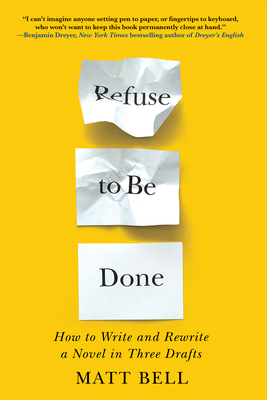
Next off, we have a recommendation from Matt Bell, author of Refuse to Be Done.
Rewrite your book.
You can have the draft you wrote printed out, off to the side, on a separate monitor, whatever feels comfortable, but rewrite it using your new outline as a guide.
Bell’s theory behind this is that you will copy and paste a bad line (or duplicate scene). But you won’t rewrite a bad line.
Not sure where to start in creating your outline? Jessica Brody’s beat sheet from Save the Cat! Writes a Novel can help. Brody breaks down the story into actionable beats you can aim for to keep your book flowing along. Check out her breakdown of story beats here!
Once you’re done rewriting the book, it helps to go through and check to see if you’ve met the goals of a new outline. Ask yourself if your story has a beat and if you can dance to it.
A standard Chanticleer MOV takes 6-9 weeks to finish. While that’s going on, we recommend following D.D. Black’s critical advice whenever you’re in writing limbo: Write the next thing.
Not only will that get you out of your head and allow you to be more objective with your manuscript when it comes back, but it will put you ahead of the game for the next book.
What do our authors say about our MOVs? Read recent testimonials here!
Wow, huge thank you for this second review! It’s so detailed and very much what I was hoping for. The specifics about moving content and clarity are spot on. I knew it needed structural improvements but I was too close to do it. Please pass on my sincere thanks for this work! I’ve only started some of it & already feel a better flow. I’m hoping to possibly even cut about 10k words to make it tighter. – Sheridan Genrich author of REWIRED: Optimise Your Genetic Potential
I’m writing to gratefully acknowledge receipt of the Manuscript Overview of my book. I am so pleased to have this close reading and incredibly helpful insights. These comments are far more beneficial than anything I had expected. It will be a pleasure addressing the editor’s critiques and trying out his concrete suggestions. Please extend to him my genuine gratitude. Chanticleer crows again! – John Feist, author of Edged in Purple and many more
I finally got this copied and read. It’s just what I wanted it to be—a skillful job. I knew there were the kind of holes the editor mentioned, but he’s given me a plan for the revisions. Please pass on my thanks. – Linda Brugger, columnist and accidental author
Please thank the reviewer for a very relevant and detailed review of my manuscript, ANKANAM. I plan to incorporate all his notes! – Vee Kumari, author of Ankanam.
This was just what I needed. I am looking at the book with a new focus and have already started working up the suggested changes. The first thing I did was remove those items the editor mentioned should be deleted. It was a bit painful but necessary. There was plenty of meat in his review, which took me a while to digest, but changes are on the way. These will take some time, but I will likely be interested in the Manuscript Reconciliation process. I can tell the editor spent quite some time researching some of the issues raised in the book, which I greatly appreciated. It helped me see the book more from the reader’s perspective than mine. Please pass along my sincere thanks. – Jim Leonard
Thank you for joining us for this Writer Toolbox Article
There is so much to learn and do with Chanticleer!
From our Book Award Program that has Discovered the Best Books since the early 2010s to our Editorial Book Reviews recognizing and promoting indie and traditional authors, Chanticleer knows your books are worth the effort to market professionally!
When you’re ready,did you know that Chanticleer offers editorial services?We do and have been doing so since 2011.
Our professional editors are top-notch and are experts in the Chicago Manual of Style. They have and are working for the top publishing houses (TOR, McMillian, Thomas Mercer, Penguin Random House, Simon Schuster, etc.).
If you would like more information, we invite you to email us at info@ChantiReviews.com for more information, testimonials, and fees.
We work with a small number of exclusive clients who want to collaborate with our team of top-editors on an on-going basis.Contact us today!
Chanticleer Editorial Services also offers writing craft sessions and masterclasses. Sign up to find out where, when, and how sessions being held.
A great way to get started is with our manuscript evaluation service, with more information availablehere.
And we do editorial consultations for $75. Learn morehere.
You’ve finished your first work in progress, and written those fateful words: THE END. Then, like a good writer, you revise it, one, two, seven, eight times! You’ve spent well over a year with the work, and you’re either ready to begin querying or you’ve decided that you don’t want to deal with the gatekeepers in the publishing industry. Whichever describes you, your book is ready to see the world!
The many hats worn by authors
Or is it?
Here are some questions (but certainly not all) to ask yourself before you publish your work:
Have you asked a professional to look your work over?
Have you considered how you’re going to format the interior?
What are you going to do for cover design?
What medium do you want to publish in? Physical, ebook, audio?
What company do you want to use to publish your work?
How will you market your book?
It’s too much!
If that feels overwhelming, there’s a reasonable explanation. Publishing is a business, and a different person is often paid to help answer each of these questions in a traditional publishing environment. Self-Published Authors frequently serve as their own project manager, meaning they are the head editor, publisher, marketer, and designer for their book. Don’t be afraid to set ambitious goals, and also remember to be gentle with yourself as this process takes serious time.
We’re going to make two basic assumptions going forward: 1. You want an ISBN, and 2. You’re doing this because you have the budget to do so.
Now, let’s start with the first bullet point on the list.
Having a Professional Review Your Book
The Overview
One of the biggest issues we come across with books is that there’s no story. The writing is crisp, clean, even gorgeous, but the most that can be said for the novel is it’s well-written. The plot does not compel and the characters do not drive. In the words of Anne Lamott:
“Any plot you impose on your characters will be onomatopoetic: PLOT.”
For those reasons, we recommend having a Manuscript Overview first, whether you receive that from us or from someone else. Professionals who understand the writing industry and work with publishers are uniquely situated to give you feedback on whether or not you have a story that people will want to read and buy.
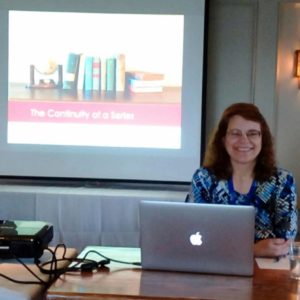
Kiffer Brown with an overview presentation
A good Manuscript Overview will examine the following:
Compelling nature of story
Dialogue
Character development
Does the scenery and setting work with the story
Backstory issues
Professionalism of editing & formatting
Continuity of storyline
Plotting and plot-hole issues
Writing craft
This stage comes before line and copyediting, as you still have plenty of work to do in bringing the work up to being the best it can be. You can read more about our suggestions surrounding Manuscript Overviews here.
Line Editing, Copy Editing, and Proof Reading
While we have all the general information about this on our Editorial Services page, those thoughts and definitions are worth repeating here. Our Editorial Coordinator can discuss with you about whether or not your work needs more development before moving onto the next stage in editing.
Line Edit
If your story still has developmental issues (dialogue, plotting, character development, etc.), your work would benefit from a Line Edit. Line Editing is a line-by-line edit to make sure that each sentence pushes the story forward and creates just the right amount of pacing and tension. Each and every word should count!
Line Edit Review is a final check that all issues and concerns have been addressed by the author and that new problems have not been created in the reworking of the manuscript.
Copy Edit
WorldKeeper Diane Garland always has excellent suggestions to track your story
We highly suggest that you have a Style Sheet Guide created that is the basis of your story-bible. A Style Sheet Guide will ensure that your characters’ names, place names, conventions (examples are: Happy Christmas instead of Merry Christmas or blond or blonde or using kilometers instead of miles), jargon, pet names, time frame, and more — the attention to detail that will set your work apart from the fray.
After reworking the manuscript and addressing the editor’s suggestions, then the work should be ready for a Copy Edit with an editor with fresh eyes.
Copyediting is a mechanical edit. It focuses on grammar, punctuation, spelling, typos, continuity errors, and timeline errors.
If a Style Sheet has been generated, then the manuscript will be edited using it to ensure consistency.
Proof Read
A proof read with a third set of fresh eyes is the final reading to catch the inevitable typos and glitches.
If a Style Sheet was generated prior to the copy edit, then it will be used in the final proofing of the work.
Proofing comes before formatting. Formatting is determined by the publishing platform.
As we get into the nitty gritty details of proof reading, that’s a good time to examine the often forgotten question of formatting.
Professional Touch
Call in the pros!
Many authors rightly find themselves wrapped up in the joys and beauty of their work. This devotion to writing is what makes them so good at what they do, and it is important to have an outside, less biased perspective to help you along. Often a key part of a story or character exists only in the author’s mind, and somehow it never found its way onto the page. Hiring extra eyes really can make the difference when it comes to your book being excellent as opposed to just another of the millions of published titles a year.
That’s all the time we have for this article. We’ve covered the importance of having professional eyes on your book. In a future article we’ll look at:
Interior Format
Cover Design
Mediums of Publishing
Self-Publishing Companies
Marketing
Stay tuned!
Thank you for joining us for this Writer’s Toolbox Article!
Our 12th Anniversary Chanticleer Authors Conference (CAC24) will be April 18-21, 2024, where our 2023 CIBA winners will be announced. Space is limited and seats are already filling up, so sign up today! CAC24 and the CIBA Ceremonies will be hosted in Beautiful Bellingham, Wash. Sign up and see the latest updates here!
When you’re ready,did you know that Chanticleer offers editorial services?We do and have been doing so since 2011.
Our professional editors are top-notch and are experts in the Chicago Manual of Style. They have and are working for the top publishing houses (TOR, McMillian, Thomas Mercer, Penguin Random House, Simon Schuster, etc.).
If you would like more information, we invite you to email Kiffer or David at KBrown@ChantiReviews.com or DBeaumier@ChantiReviews.com for more information, testimonials, and fees.
We work with a small number of exclusive clients who want to collaborate with our team of top-editors on an on-going basis.Contact us today!
Chanticleer Editorial Services also offers writing craft sessions and masterclasses. Sign up to find out where, when, and how sessions being held.
A great way to get started is with our manuscript evaluation service, with more information availablehere.
And we do editorial consultations for $75. Learn morehere.
If you’re confident in your book, consider submitting it for a Editorial Book Reviewhereor to one of our Chanticleer International Awardshere.
Writer’s Toolbox
Thank you for reading this Chanticleer Writer Resolutions article.
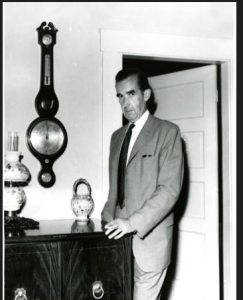
We are getting ready to do some long-awaited (no thanks to Covid) and much needed remodeling on our 100-year-old-plus bungalow. A little known fact of our old home is that Edward R. Murrow’s parents lived here and Mr. Murrow visited them often. Below is a photo of Mr. Murrow visiting his parents in the house that I now live in.
A photo of Edward R. Murrow visiting his parents’ house in Bellingham, Wash.
In moving my office (read: organize boxes of notebooks, composition books, and small pieces of paper), I am compelled to go through them and decide which ones I will toss, which ones I will need to consolidate, and which of the aforementioned I will deem worthy of keeping. While I was flipping through these individual journals, I saw the following snippets of note-taking from leaders and top authors in the publishing industry.
How many of you have these in your writing lair?
Writing Notebooks
Without further ado here are a few of the found gems that I found while going through a few of my notebooks:
Write the slow stuff fast and the fast stuff (aka action scenes) slow to increase tension. In other words, “Tell” the slow stuff and “Show” the Fast Stuff.
When writing you either need to advance the plot or reveal more about a character.
Chapters should have arcs to them and cliffhangers to keep the reader turning pages.
The first and last sentences of each chapter are the most important.
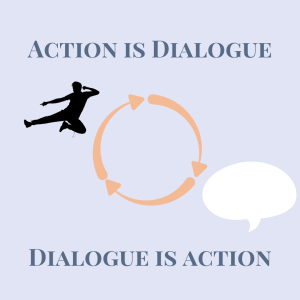
Dialogue is action. Action is dialogue (Robert Dugoni).
Only add backstory in on an as-needed basis. Does it advance the story? If not, don’t add it.
Start scenes with action. End scenes with action.
And, finally, Subplots must be woven in. They are tools for the author to:
Delay the main plot
Distract the protagonist
Heighten mood
Affect pacing
Add foreshadowing
Shows transformations
Ramp up the main plot
After years of attending conferences and living and breathing the writing world, it’s a joy and a gift to come across these treasures from the best in my home office. I hope you find these jottings as helpful as I have.
Now back to trying to beat back chaos in my office. I will do another post about the jottings and notes that I find during my re-organization.
We’d love to hear from you and your notes and jottings!
Keep on Writing! The world needs good books now more than ever! – Kiffer
As a developmental editor, I help writers in many ways, including layering in sensory data to make their stories more immersive.
I’m always gleaning information and trying to understand how the brain and nervous system work. I’m learning that it’s easy to use the latest neuroscience research and you can too.
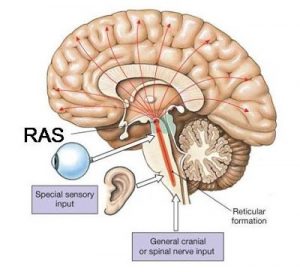
The brain works hard to protect humans from risk. Risk assessment happens via thereticular activating system, a gatekeeper between your conscious and unconscious mind. It filters through all the information coming in from your sensory organs including possible dangers, then reacts.
RAS is the GATEKEEPER between our conscious and unconscious.
Our brain is inundated with millions of messages whenever we’re awake. Without the RAS we’d be overloaded with stimulus, our heads noisy and cluttered, always on the alert, never able to focus. When messages slip past the reticular activating system, they become conscious thoughts, emotions, or both. So again, the RAS works to keep us safe and sane in a sometimes dangerous world.
What I love about studying the brain is how possible it is to change our thoughts, the way we see the world, and ultimately our brains.Because we can train and reset our brains. Another reason to learn about the reticular activating system is that it can help us focus when we most need to focus.
The RAS can filter out the white noise of your life while you write away.
Editor’s Note: An example of RAS is how parents can filter out the extremely loud noise of a plane taking off, but can hear if their baby is stirring. Or how a student can study in a loud cafeteria, but is disturbed by pages being rustled or someone tapping their fingers or clicking a pen in the next carrell while in the library.
But the RAS has many tasks. It manages what information {stimulus} you receive, arousal, and motivation. As you can imagine, is a huge job, but the brain has so many responsibilities such as regulating the body and creating memories. The RAS is located in the brain stem, the most primitive part of our brain. It is responsible for fight-or-flight responses, our wakefulness, and our ability to focus. It shapes how we perceive our world, dangers and all.
Learning about the RAS means writers can tap into its powers.
RAS can help us focus, remember, and achieve goals. One simple trick is to focus on what you want to achieve, not what youcannotdo, or what is clouding your attention. Stop worrying about the extra five pounds you’ve gained, or gray hairs and wrinkles, and how your neighbor doesn’t mow his lawn. Stop telling yourself your latest chapter or draft sucks.
The RAS listens to our signals and prioritizes the ones that are most important. If you focus on negative thoughts, the RAS will deliver more reasons to worry and fret. So, feed your RAS signals that are most helpful to your writing goals. Spend time mulling over your stories instead of fretting about them. Imagine that your characters are hanging out with you. Search for the good in your work and life and the RAS will notice. And you’ll be creating new neural pathways.
So, let me repeat this easy hack if you don’t already employ it:
Take mental snapshots throughout your days. But don’t focus on sights only–weave in all your senses. Last night I could hear the wind in the trees and smell wood smoke which has natural cozy associations which further imprinted the moment in my memory.
Let me give you a quick example.
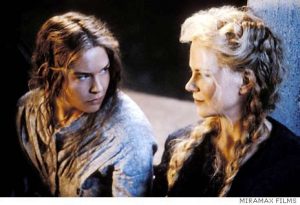
Charles Frazier’sCold Mountain–one of the most immersive novels I’ve ever read–has two main characters separated by war. New to the Cold Mountain region, Ada, a minister’s daughter and genteel lady, is struggling to survive the Civil War after her father dies. Trouble is, she has no practical survival skills and is slowly starving, but too proud to ask for help. This is when another young woman, Ruby, comes into her life and teaches her the exhausting array of skills and tasks needed to keep them fed and warm. After Ruby’s arrival, gone are Ada’s mornings of sleeping in. Here’s a small segment of Ada adjusting to Ruby’s new regime:
So Ada would walk down to the kitchen in her robe and sit in the chair in the warm stove corner and wrap her hands around a cup of coffee. Through the window the day would be starting to take shape, grey and loose in its features. Even on days that would eventually proved to be clear, Ada could seldom make out even the palings of the fence around the kitchen garden through the fog. At some point Ruby would blow out the yellow light of the lamp and the kitchen would go dim and then the light from outside would rise and fill the room. It seemed a thing of such wonder to Ada, who had not witnessed many dawns.Cold Mountain, Charles Frazier
The Swangers notice Ada is struggling to maintain the farm so they send Ruby Thewes to help out. Cold Mountain by Charles Frazier
There are only a few simple details here, yet the sense of dawn arriving is powerful, isn’t it? And it’s Frazier demonstrating the beginning of Ada’s character arc.
Think in pictures, vignettes, and scenesso you can re-create them on the page.
Strive to always capture meaningful moments. This is why it helps to stop time whenever possible by focusing your attention and deliberately storing images. Train yourself to become a visual thinker. If you’re ‘not a visual type’, then study how other people do it from advertisers to public speakers.
Pay attention to your dreams and write them down if possible. Take notes on books you read, films you watch and hikes you take.
Here is a scene from my RAS moment last winter:
Foggy, drizzly weather here in the Pacific Northwest. Last night I stepped out onto my porch to see if the moon was visible. The current moon phase is a waxing crescent. Low clouds had moved in obscuring the moon and stars, the air was cold enough to be bracing, and snow was falling in the higher evaluations. Walking into a coldish reality is such an easy jolt to the senses.
I came back indoors and sat for a minute replaying the night scene I’d just witnessed. Deliberately storing it away.
Do you do this too? Small habits and tweaks can be so useful to writers.
If you stop to focus on things that are important to you, it sharpens your perceptions and teaches your brain what you value.
And work at giving your RAS a jolt, like stepping out into a cold night or dancing in warm summer rain showers. Play music to either soothe or energize while you write. Recently I suggested here that like me, you visit a library or bookstore, go to the shelf where your future books will be housed, and imagine your titles there. It’s a simple trick to cue your reticular activating system.
Vivid, clear intentions communicate to your conscious mind which in turn speaks to your RAS and subconscious. In turn, they help you achieve goals because they expect the goals to happen.
Keep writing, keep dreaming, have heart. – Jessica
Jessica Page Morrell
Jessica Morrell is a top-tier developmental editor and a contributor to Chanticleer Reviews Media and to the Writer’s Digest magazine. She teaches Master Writing Craft Classes along with sessions at the Chanticleer Authors Conference that is held annually along with teaching at Chanticleer writing workshops that are held throughout the year.
Be sure to click on her name above to visit her website that has a wealth of writing craft advice.
“Children understand that ‘once upon a time’ refers not only – not even primarily – to the past, but to the impalpable regions of the present, the deeper places inside us where princes and dragons, wizards and talking birds, impassable roads, impossible tasks, and happy endings have always existed, alive and bursting with psychic power.” ~ Stephen Mitchell
From the first must-be-transporting words to the shattering conclusion, readers demand layers of fantastical invention. It all begins with a captivating opening salvo.
“Once upon a time” or “A long, long time ago” makes a promise to your readers. Open these pages and you’ve been wrested from your 21st century sphere. You are about to enter a kind of dream world, encounter wonderment, and find age-old conflicts wearing fantastical guises.
While fantasy is untethered from our current world, as in real life, don’t make promises you cannot keep. You’ve got to deliver an adventure so potent it invades the reader’s senses and alters his or her heartrate. Your adventure needs a diverse cast, a clash of titans, and the wondrous–dragons soaring overhead, ancient spells and curses, night walkers, or battles fought over lands or pride or brute necessity.
Khal Drugo – Game of Thrones
Opening sentences are everything
They start the whole transporting apparatus to assure readers they’ve landed in a faraway time and place. Amid a world of richly embroidered textures, sights, tastes, smells, and sounds all while entanglements with a fascinating cast of characters are underway. A world that has a carefully built history, scenes unfolding in distinct reality replete with atmosphere, tension and mood.
Is Your Opening Delivering:
Characters tossed off balance somehow by a force outside themselves.
A nettling question emerges that demands answers.
Something is amiss. The opening acts typically create threats. Humans are biologically programed to respond to threat, but will go along for the ride anyway. Because, after all, the threat is long ago and far away.
Introduce story people we’ll never meet in the real world. Story people we just can’t quit. People we can follow up close. So close we can hear their laughter or scorn, smell the stink from their terror, or experience what has lit their fierce desires.
Readers need to care about who is threatened. Some aspect of the main characters need to be identifiable, possibly pitiful, worrying, or vexing. Has life already handed your protagonist near-starving rations or brutality? Or has a royal family member longed to escape to an ordinary life?
No matter if dreaded, or later regretted, a choice must be made. {Excuse the almost-rhyme.”}
Note from Kiffer: This is where I paused to reread the opening lines of A Song of Fire and Ice by George R. R. Martin, Pride and Prejudice by Jane Austen, and The Flight Attendant by Chris Bohjalian. Yes, each one delivered!
“Perfect words in perfect places”
Which brings us to oh-so important first lines with those perfect words. Let’s forget about first person or third person for now.
Start with a powerful moment.
Don’t be afraid to startle the reader.
Always create a mood and perhaps a stirring dread.
As in these examples:
“The island of Gont, a single mountain that lifts its peak above the storm-racked Northeast Sea, is famous for wizards.” Ursula K. Leguinn,A Wizard of Earthsea
“Logen plunged through the forest, bare feet slipping and sliding on the wet earth, the slush, the wet pine needles, breath rasping in his chest, blood thumping in his chest. He stumbled and sprawled onto his side, nearly cut his chest open with his own axe, lay there panting, peering through the shadowy forest.” Joe Ambercrombie, The Blade Itself
“The children were playing while Holston climbed to his death; he could hear them squealing as only happy children do.” Hugh Howey, Wool
“Sometimes, I fear I’m not the hero everyone thinks I am.” Brandon Sandborne,Mistborn:The FinalEmpire
“When Lilia was four years old, her mother filled a shallow dish with her blood and fed it to the boars that patrolled the thorned fence.” Kameron Hurley,The Mirror Empire
Something is surely amiss, right? I’m especially struck by the opening ofThe Blade Itselfbecause I’ve hiked many a wet forest living here in the Pacific Northwest. But not barefoot. Never barefoot.
And what is a felling night?Feeding a child’s blood to boars? Shiver. Make that an icy shiver.
I need to know more, don’t you?
Take care. Have heart. Jessica
Jessica Page Morrell
Jessica Morrell is a top-tier developmental editor and a contributor to Chanticleer Reviews Media and to the Writer’s Digest magazine. She teaches Master Writing Craft Classes along with sessions at the Chanticleer Authors Conference that is held annually along with teaching at Chanticleer writing workshops that are held throughout the year.
Jessica Morrell’s Classes and Workshops at CAC22
June 23 – 26, 2022 at the Hotel Bellwether, Bellingham, Wash.
You can register for her Master Writing Class here – Using Film Techniques for Writers
Using Film Techniques for Fiction Writers– Camera angles, method acting for getting into a character’s pov, and creating subtext and tight dialogue
Your Brain on Writing
Captivating Co-Starsthat add depth to your work-in-progress
Just as every dark and stormy night, dinner party, holiday gathering, or bustling office on payday are infused with mood, so are scenes in the best fiction.
Mood affects, resonates, and reinforces the reader’s emotions, aids in understanding key moments, and enhances his or her immersion into the story events.
Mood is the feel or atmosphere or ambience of a story or scene.
ALL writing should evoke a mood.
Miranda at “that” dinner party that takes place in the STATION ELEVEN series. The tension is palpable.
Mood is the Soundtrack of Fiction aka Mood as Backdrop
Mood is omnipresent in the best books much like the soundtracks of notable films. As with movies without a soundtrack, fiction is not complete and captivating without having moods as a backdrop. Mood makes readers worry about heroines stranded in lonely castles and fog-bound moors. It feeds suspense and tension, and is in fact inseparable from them. It is essential to genres like horror, thrillers, and action, but is necessary to every moment in every story where you want a reader to feel a certain way. You can stage your characters in dramatic events but without setting up the proper mood, the characters’ actions will fall short.
Mood is What Readers Feel While Reading Your Story.
Mood is what the reader feels while reading a scene or story. It’s not the reader’s emotions, (though mood is designed to influence them) but the atmosphere (the vibe) of a scene or story. It’s the tornado heading for Dorothy Gale’s Kansas farm. In the film, once the viewers spot that towering tunnel and witness winds lashing the countryside, fear sets in. Will Dorothy make it to cellar in time?
It’s what the reader notices, what gets under his or her skin. Not all readers will experience/perceive the same mood from a scene, although the writer tries to achieve a particular feel common to every reader.
A quick example from everyday life–candlelight is soothing and soft; overhead fluorescent lights are harsh and even irritating.
Tip: Mood should change and vary as the story moves forward. Moods in subplots should vary from the main storyline.
Why Mood?
Deepens the reader’s experience.
Creates cohesion.
Enhances tension and suspense.
Evokes emotions, creates emotional connections to the characters and their situations.
Works with reader’s nervous system.
Underlines themes.
Mood helps fiction become more immersive, alive, lifelike and creates a backdrop for drama.
Mood is Created by a Range of Literary Devices:
Setting
Conflict
Imagery
Sensory Details
Characters Reacting and Responding in Scenes.
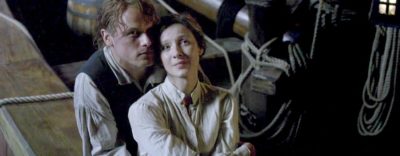
Diana Gabaldon’s Outlander series is an exemplary example of infusing mood into scenes: joy, fear, longing, betrayal, expectation, disappointment, and so on.
Evoking mood in fiction – Outlander by Diana Gabaldon
Use Descriptive Language to Induce Moods
While setting is most commonly used to induce moods, descriptive language is a potent tool and that decreases or amps up tension. In Dean Koontz’s psychological thriller The Face, a horrific storm lashes Los Angeles a few days before Christmas adding a delicious shiver of danger and tension. The weather is referred to in each scene, causes things to happen and creates an ominous, the ‘world-is-askew’ mood. For example, he writes, “In the witches’ cauldron of the sky, late-morning light brewed into a thick gloom more suitable to winter dusk.”
Mood is created on a word-by-word basis by choosing sensory details that stir emotions, but also by orchestrating pacing. Slow down for important moments, places readers need to savor. Pacing naturally speeds up when excitement is high, conflict is intense, action is nonstop. Short sentences and paragraphs communicate excitement, urgency, panic, anger, shock, and violence. Short sentences land a gut punch and demand readers keep zipping through the text.
While most stories, especially short stories, have an overarching atmosphere, the ambience or vibe of a story will change over time and change in intensity.
Mood is linked to tension and suspense and getting under your reader’s skin.
Use mood to foreshadow.
Remember that a vague or pallid setting will create vague and pallid emotions/reactions in your readers. – Jessica Morrell
Example as Mood as Backdrop
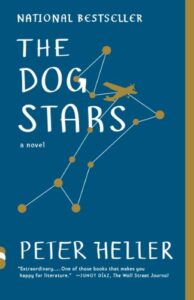
Peter Heller’s brilliant novel The Dog Stars takes place in a future where the world has been ravaged by a pandemic that’s killed off most of the population. If that wasn’t bad enough, the natural world is dying off too. He wrote it in 2012. I’m a sucker for a post-apocalyptic novel, even when they’re shockingly prescient. I cannot recommend enough this beautiful, compelling, heart-wrenching story that invaded my thoughts for days while reading it. This backdrop to the state of affairs the protagonist Hig exists in, is dropped in on page 6.
“In the beginning there was Fear. Not so much the flu by then, by then I walked, I talked. Not so much talked, but of sound body—and of mind, you be the judge. Two straight weeks of fever, three days 104 to105, I know it cooked my brains. Encephalitis or something else. Hot. Thoughts that once belonged, that felt at home with each other, were now discomfited, unsure. Depressed, like those shaggy Norwegian ponies that Russian professor moved to the Siberian Arctic I read about before. He was trying to recreate the Ice Age, a lot of grass and fauna and few people. Had he known what was coming he would have pursued another hobby. Half the ponies died, I think from heartbreak for their Scandinavian forests, half hung out at the research station and were fed grain and still died. That’s how my thoughts are sometimes. When I’m stressed. When something’s bothering me and won’t let go. They’re pretty good, I mean they function, but a lot of times they feel out of place, kinda sad, sometimes wondering if maybe they are supposed to be ten thousand miles from here in a place with a million square miles of cold Norwegian spruce. Sometimes I don’t trust my thoughts not to bolt for the brush. Probably not my brain, probably normal for where we’re at.”
“I don’t want to be confused: we are nine years out. The flu killed almost everybody, then the blood disease killed more. The ones who are left are mostly Not Nice, that is why we live here on the plain, why I patrol every day.”
Example of Mood Setting the Stage
“Stop that you’ll fall.”
A week’s worth of snow has compressed into ice, each day’s danger hidden beneath a nighttime dusting of powder. Every few yards my boots travel farther than my boots intended, and my stomach pitches, braced for a fall. Our progress is slow, and I wished I’d thought to bring Sophia on a sled instead.
Reluctantly, she opens her eyes, swivels her head owllike, away from the shops, to hide her face in her sleeve. I squeeze her gloved hand. She hates the birds that hang in the butcher’s window, their neck iridescent feathers cruelly at odds with the lifeless eyes they embellish.
I hate the birds too.
Adam says I’ve given the phobia to her, like a cold or a piece of unwanted jewelry.
“Where did she get it from them?” he said when I protested turning to an invisible crowd, as if the absence of answer proved his point. “Not me.”
Of course not. Adam doesn’t have weaknesses.
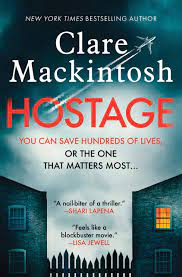
This is the opening salvo for Hostage written by Clare Mackintosh, a ‘locked room’ thriller. The locked room in this story is a London to Sydney flight. It feels like a thriller doesn’t it? Those creepy dead birds, dangerous snow, and the husband-wife conflict signal something bad is going to happen.
Keep writing, keep dreaming, have heart. Jessica
Jessica Page Morrell
Jessica Morrell is a top-tier developmental editor and a contributor to Chanticleer Reviews Media and to the Writer’s Digest magazine. She teaches Master Writing Craft Classes along with sessions at the Chanticleer Authors Conference that is held annually along with teaching at Chanticleer writing workshops that are held throughout the year.
Jessica Morrell’s Classes and Workshops at CAC22
June 23 – 26, 2022 at the Hotel Bellwether, Bellingham, Wash. In Real Life and Virtual!
Using Film Techniques for Fiction Writers– Camera angles, method acting for getting into a character’s pov, and creating subtext and tight dialogue
Your Brain on Writing
Captivating Co-Starsthat add depth to your work-in-progress
Let’s discuss using closeup “shots” of your characters in fiction. Filmmakers have a large repertoire of techniques that writers are wise to study and borrow. Closeup camera angles are powerful in film and an important technique fiction writers need to emulate throughout their stories.
When to Use a Wide Angle in Your Scenes
I write many, many notes and suggestions to my editing clients, some within the pages of the manuscript, some included in a long, detailed memo. At times I suggest a wide angle or establishing shot to introduce setting and atmosphere–especially helpful when a character arrives at a new place or when major action is about to go down.
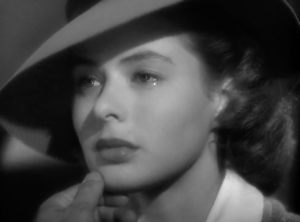
“We’ll always have Paris.” Casablanca Original Book: Everyone Comes to Rick’s by Murray Bennett and Joan Alison in 1940.
When to Use Closeups
However, I’m certain that every story I’ve worked on needed more ‘closeup’ shots of characters, so I suggest when to bring the viewpoint– fiction’s camera lens–closer. In film or television the director and cameraman have lots of choices about how to use distance to achieve drama. There are full shots, medium, long, POV, closeup and extreme closeups. A closeup shot tightly frames the actor’s face and signals significance. They’re typically used to portray deep emotions and create connection between audience and actor. There are also ‘extreme close-ups’ where the camera lingers on a subject, usually the actor. But close-ups can also focus on hands and body parts, props, jewelry, or other objects of interest.
Be Cognizant of What You Are Revealing to Your Readers in Your Closeups
Obviously closeups are intimate because they’re revealing. They showcase significant emotions, realizations, decisions, and important moments or actions. They also reveal when characters have something to hide.
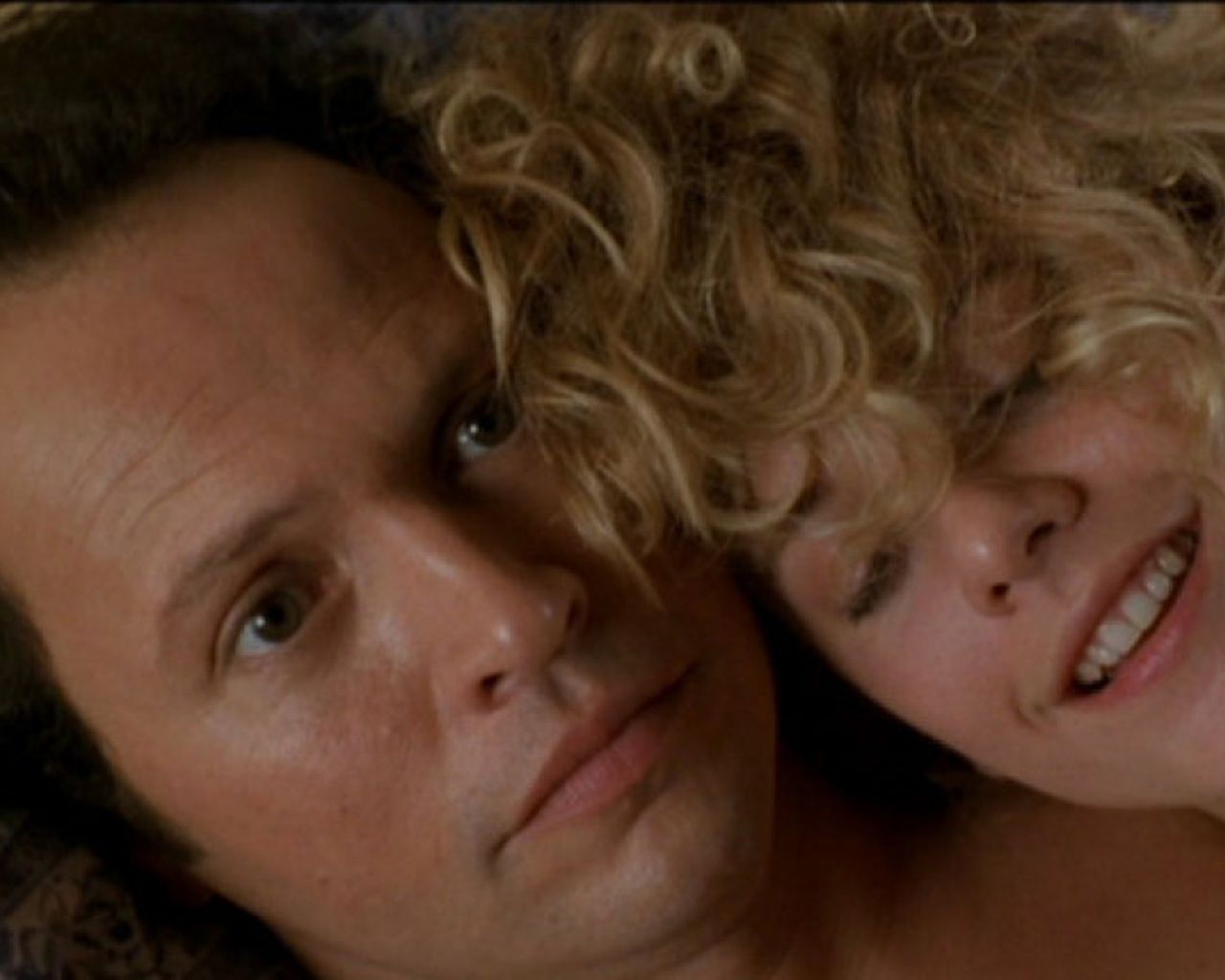
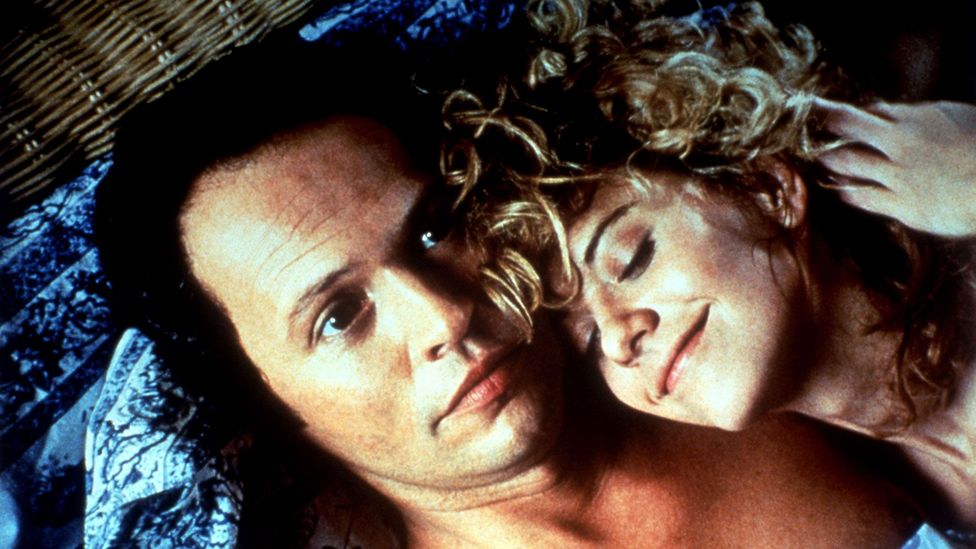
When Harry Met Sally – The SCENE that set the story. By Nora Ephron
Romance films and dramas employ these shots especially when characters are surprised, shocked, filled with dread, or when feelings shift. Closeups, naturally, are often used in horror and suspense films to increase the audience members’ heartbeat. Alfred Hitchcock was fond of using them, such as in the grisly shower scene inPsycho. You know the one.
Convey important moments, reversals, revelations.
Enhance threat and danger.
Enhance evil and malevolence.
Shock value as when a monster or villain is in the frame.
Focus on, reveal a character’s state of mind.
Slow the pacing.
Portray damage, pain, the cost paid by characters.
Allow readers to see the world through the character’s eyes. * See The Eyes Have It post link below.
Reveal closeness, intimacy, estrangement, coldness between characters.
Suggest or define character arc.
Show other ‘sides’ of a character, including subtler traits.
Illustrate a character’s emotional bandwidth, as in how she or he handles the best of times and the worst of times.
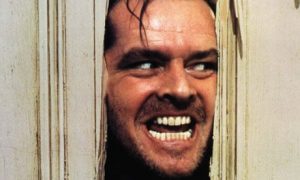
In scenes that contain violence, brutality, or horror, a closeup amplifies the dangers as in the ‘here’s Johnny’ moment inThe Shiningwhen Jack Torrence, played by Jack Nicholson is terrorizing his family. Notice how it’s clear that he’s sunk into madness.
The unforgettable “Here’s Johnny” scene in The Shining.
As you’re revising, make sure that during the most poignant moments in the story, readers are pulled in. Allow your readers to witness emotions flickering across the character’s face. Let them sense what’s churning beneath a character’s exterior.
Notice Beth’s hands, her eyes, her posture. The juxtaposition of the watch she wears versus the clock on the wall. Her black and white dress adjacent to the black and white chess board. See how she is capturing the white pawns.
Beth Harmon knows she will win several moves out in this scene of Queen’s Gambit
Jessica Morrell is a top-tier developmental editor and a contributor to Chanticleer Reviews Media and to the Writer’s Digest magazine. She teaches Master Writing Craft Classes along with sessions at the Chanticleer Authors Conference that is held annually along with teaching at Chanticleer writing workshops that are held throughout the year.
Jessica Classes and Workshops at CAC22
Using Film Techniques for Fiction Writers– Camera angles, method acting for getting into a character’s pov, and creating subtext and tight dialogue
Your Brain on Writing
Captivating Co-Starsthat add depth to your work-in-progress