Category: Reviews

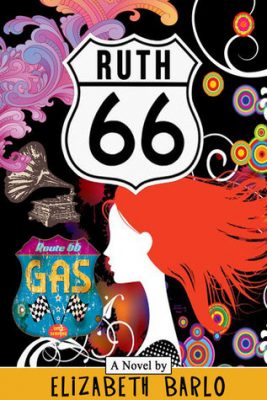
  • RUTH 66 by Elizabeth Barlo – Humorous, YA, Family & Social Issues

    RUTH 66 by Elizabeth Barlo – Humorous, YA, Family & Social Issues

    When a banged-up old bus pulls into his family’s driveway, Charlie has no idea that the rattling junker would be his ride to freedom. For years he’d been suffering under the thumb of a cold-hearted mother and a vindictive twin sister, while his father languished behind bars for tax fraud. The only family member with whom the young man held a loving bond was his grandfather, Opa Bill. Since Bill’s recent death, Charlie has been holding it together by listening to the music he and his grandfather loved. That musical thread weaves its way throughout the story as a sort of narrative jukebox.

    Now Charlie’s respectable Oma Ruth has careened back into his life in a shocking new incarnation: a freewheeling hippie in kaftan and beads, unafraid to swap barbed words with her appalled daughter, nor to insist that Charlie accompany her on her road trip. He’s dead-set against it – he’d just found his dream job at a record store – and is disgusted when his mother dumps him on her mother without hesitation.

    So Charlie sets out with Ruth – and, as it turns out, with Opa Bill, whose urn rests on the dashboard. At first, Ruth’s bizarre behavior and Charlie’s resentment at being dragged along make for a very uncomfortable ride. She insists on traveling without modern technology, but when she relents and allows his iPod and a new stereo system, the thaw begins.

    Although Route 66 is the road they travel as they head west, this is no travelogue about nostalgic remnants of yesterday. This is a journey of discovery: of Charlie’s strength and capacity to love, of Ruth’s ability to be honest with herself, of her secrets and those of her late husband, and of the people who will teach them along the way.

    There’s the comical Count Doobie, and Jonas the Swede, who appreciates Ruth’s beauty and makes her feel truly free. There’s also heartbroken Barry, who, with his daughter Rosie, barely keeps afloat a strip joint in the middle of nowhere, Texas. And there’s even Charlie’s embittered sister Becky, who rediscovers compassion and her affection for her twin away from their mother’s toxic influence.

    Above all, there’s Rosie, the beautiful young woman who pines for her missing mother and valiantly offers to become a stripper to help her father’s business. She sets Charlie’s heart and hormones on fire, turning him into a bumbling puppy before he learns to overcome his insecurities and grow into a hero of sorts. Their relationship becomes entangled in the revelation of Ruth’s secrets, but the resolution is both satisfying and a bit of a relief.

    A word of caution to the straight-laced reader: Ruth has embraced the hippie lifestyle to its fullest, and so you’ll find pot-smoking, swearing, nudity, and sex, as Charlie and Rosie let loose their teenage hormones and Ruth re-engages her lost libido. But far more than that, there is love, forgiveness, and bravery on this journey, not to mention a lot of laughs, some wonderfully wacky moments, and at times exciting and literally explosive revelations.

    5 Star Best Book Chanticleer Reviews round silver sticker

  • The HARRIET CLUB: A NOVEL of SAN FRANCISCO by Kathe Maguire – Literary, Y/A Mystery/Thriller, Romance

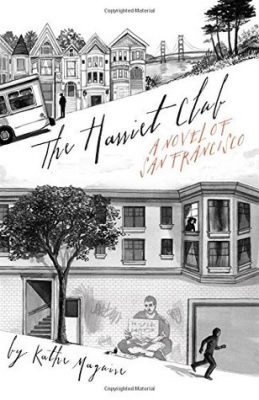
    The HARRIET CLUB: A NOVEL of SAN FRANCISCO by Kathe Maguire – Literary, Y/A Mystery/Thriller, Romance

    In 1999, 13-year-old Virgil McCormick disappeared without a trace while waiting for the 43 Masonic bus. Thus, the Harriet Club was born, with 8-year-old Harriet, and her friends Nikki, Dahlia, and Casey, each longing to find out what happened to Virgil. Especially Harriet.

    Ten years later, new leads in the cold case have emerged, including suspicious sketches by city graffiti artist Blinky, and the “Spatterer,” someone eager to erase all Blinky’s creations. Harriet’s obsession with the case hasn’t waned, even amid her life with her two moms, two dads, and their sometimes unpredictable lifestyle. The question now is whether The Harriet Club is up to the task of closing the Virgil McCormick case once and for all, as the teenagers face college applications, neglectful parents, substance abuse, and sexual advances from older men. With a complex and diverse cast of characters and incongruous developments at every turn, The Harriet Club definitely has their work cut out for them.

    Kathe Maguire brings a dark, twisted humor to this mystery/thriller, demonstrating that in seemingly idyllic San Francisco, the city’s shadows can run deep and sinister. Maguire also does a great job of inserting local culture and color through realistic settings and dialogue. For example, Virgil’s fictional mystery is intertwined with San Francisco’s real-life cases of kidnapped children in the area, including Kevin Collins, Jaycee Dugard, and others, adding a dark and suspenseful element.

    This is a well-written and well-paced novel that will capture readers from the opening pages all the way until the end. With exquisite description and visceral imagery, the story definitely tends more on the literary rather than the commercial side, but the break-neck pacing won’t leave genre readers disappointed. There are lots of moving pieces and plots that Maguire skillfully weaves together into a compelling read.

    Although the main players in this story are teens, each with different shades of diversity, a much-needed trait in YA literature, this is not a typical YA mystery, and parents should be cautioned that the inclusion of graphic language, talk about sex, scenes of drug use, and themes makes this gritty story a selection for teens at least 16 and older. Dog lovers should also be cautioned of certain scenes involving animal violence. Regardless, this is a must-read for those looking for a compelling mystery that incorporates razor-sharp wit. Those from and in Northern California, and those who wish they were, will also relish in the book’s authentic setting and textures.

    Obsession and dedication go hand in hand in Kathe Maguire’s The Harriet Club, a hard-core Y/A mystery thriller set in the shadow of San Francisco.

    5 Star Best Book Chanticleer Reviews round silver sticker

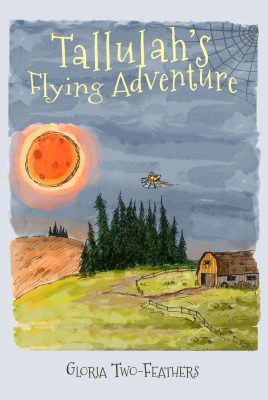
  • TALLULAH’S FLYING ADVENTURE by Gloria Two-Feathers – Fable, Native American, Children’s Story

    TALLULAH’S FLYING ADVENTURE by Gloria Two-Feathers – Fable, Native American, Children’s Story

    A fable with an ancient feel, this story of a plucky spider and her tiny bird companion rests comfortably in the story-telling tradition of Native American peoples.
    Tallulah is unusual in a number of ways. Born last and alone after her many siblings had already left the cocoon of the Mother Spider, she is not black but white “with golden eyes and soft golden hair on her long slender legs.” Then, instead of hustling off like the others to explore the wide world, she decides to make her home in the old barn where she was born. She soon befriends a horse named Buck, who gives her the name Tallulah. Buck is the Keeper of the Meadow, and he and Tallulah become great friends. But one day, Buck falls ill and it will be up to Tallulah to save him, and by saving him, to save the meadows that are dying without his daily grazing visits.

    Fortunately, she meets another friend who can assist her on her mission, a tiny bird stuck in a web in the rafters. He will help her get to the Old Forest and the home of the Great Grandmother Tree. Tallulah has always longed to fly, and the bird teaches her how to harness her web to make a flying craft. Together they find the Great Grandmother Tree, where the Great Grandmother herself, recognizing Tallulah’s talent and persistence, instructs her in how to save Buck.

    This is a book for children that people of all ages can appreciate for its multi-layered charms. There are simple but endearing pen and ink illustrations, and every chapter begins with a quotation from Native American lore, such as this, from the Wisdom of the Elders: “We are each a thread in the web of life, strengthened by the promise of our dreams.” The story itself has many symbols and harks back to a simpler time when children learned such natural but surprisingly mature themes from their elders. Tallulah embodies many admirable qualities, making her a role model of bravery and persistence, while Buck and the bird represent friendship and loyalty. The book offers a small list of Lakota words interspersed in the narrative. Thus, it offers many ways to learn.

    Gloria Two-Feathers comes from a combined Scottish and Native American heritage and studied extensively with a Lakota elder. Story-telling springs naturally from her background, allowing her to create, in Tallulah’s Flying Adventure, a tale ideal for reading aloud and sure to engage the reader as much as the listener.

    5 Star Best Book Chanticleer Reviews round silver sticker

  • The WELL: WHAT HAPPENS WHEN the MIND RELEASES but the HEART SUSTAINS by Colleen Golden – Aging Parents, Heartwarming, Coma

    The WELL: WHAT HAPPENS WHEN the MIND RELEASES but the HEART SUSTAINS by Colleen Golden – Aging Parents, Heartwarming, Coma

    The subtitle of Colleen Golden’s lovely book, The Well, asks a searching question:  “What happens when the mind releases but the heart sustains?”  There are few greater mysteries and that’s exactly why this charming and touching novel will appeal to so many readers.

    At the outset, the central character, seventy-six-year-old Grace, has been in a coma for a few months. That doesn’t stop the feisty and funny protagonist from addressing readers, however, and taking us with her on a transcendental journey in which we’ll meet many of her family members and friends.

    While her grown children sit in her room at the nursing home and worry about her being in a seemingly vegetative state, Grace hears every word. The voices seem to be coming from deep within a well, and she sits gingerly on the edge of that well, sometimes leaning over it to eavesdrop more carefully. She reminisces about her life spent in the Midwest, musing about her dimming short-term memory, and shares vivid recollections of flappers (she herself is a great dancer), the first telephones, the excitement over indoor plumbing, radios, televisions, highways, and rockets to outer space.

    It’s a joy to spend time with Grace in this limbo dimension because she’s a thoroughly engaging storyteller and a very astute observer of the human condition. While she seldom judges, she’s quick to point out mischief, like the time one of her sisters stole a boyfriend from another sister, or when teenagers slipped into a vacant house for a romantic rendezvous. So many of Golden’s characters are familiar; they remind us of people we’ve known, people we’ve lost, and people we dearly miss.

    As time goes by, Grace realizes she can do more than just listen to people. She experiments with “dissolving” into their thoughts and discovers that she can help them solve dilemmas and find their way out of difficult and sometimes dangerous situations. She herself finds her way to her old kitchen, where she’s happiest, and starts to bake. While she used to make delicious cakes and pies, she now kneads the dough to fashion a puppy who bounds to life and becomes an adored companion. Well, if that works, why not make people? She does just that, an entire cast that includes old friends and her deceased husband who looks just as he did when he was a handsome, young man.

    Grace creates streets and buildings and before long has created an entire town which she names “Possibilities.” Not bad for an elderly woman in a coma! There are reasons, revealed carefully, for all of Grace’s creativity, as well as lessons to be learned from these paranormal sojourns. Grace has lived a long life but there are loose ends to be tied before she discovers what the next chapter holds for her.

    This material in a less gifted author’s hands might run the risk of sentimentality or frivolity, but Golden wisely has Grace contemplate the sadness of life, along with the joy. There are nocturnal activities at the nursing home that, when discovered, enrage and devastate her children.

    Everyone knows heartache and loss, and Grace has lived long enough to experience her share. In a moment that brings Emily of Our Town to mind, Grace glimpses her deceased mother, describing the scene thus:  “The sun’s brilliance silhouettes her against the horizon, and bedazzles the grass into a field of emeralds.”  Golden’s prose is imbued with a wistful nostalgia, so perfect for a book that considers the variedness of life and the questions of death.  While we don’t know all the answers, this novel helps us realize that because “love makes a good conduit,” the possibilities are, indeed, endless.

    5 Star Best Book Chanticleer Reviews round silver sticker

  • The LAST CRUSADER KINGDOM: DAWN of a DYNASTY in TWELFTH-CENTURY CYPRUS by Helena  P. Schrader

    The LAST CRUSADER KINGDOM: DAWN of a DYNASTY in TWELFTH-CENTURY CYPRUS by Helena P. Schrader

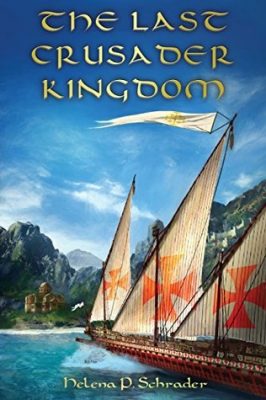
    In the Introduction and Acknowledgements section of her fascinating novel, The Last Crusader Kingdom: Dawn of a Dynasty in Twelfth-Century Cyprus, Helena P. Schrader notes that “. . . the historical basis for this novel is very thin,” and that the book serves as “a fictional depiction of events as I believe they could have happened.” Upon finishing the book, one concludes that only the rare reader would disagree with Schrader’s version of the historical events that comprise her narrative. Her comprehensive research and impressive scholarship are evident on every single page. This is a work of historical fiction, admittedly, but Schrader clearly was tireless in exhuming every possible detail to piece together as authentic a history of medieval Cyprus, 1193-1198, as possible.

    The establishment of a Latin Kingdom on the formerly Byzantine island of Cyprus in the late twelfth-century is as engrossing and intricate a chapter in history as possible, one that involved a plethora of cultures, religions, family dynasties, battles, treaties, and, inevitably, human greed and vanity. Schrader addresses both public and private lives and demonstrates how their intertwining shaped history. She considers all classes of society, from barons to beggars. It would be easy to get lost amongst the riveting and numerous details, but the author takes the reader by the hand and offers a guided tour to people, places, and events. The novel includes a Cast of Characters, Genealogical Charts for the Houses of Jerusalem, Lusignan, and Ibelin, as well as historical maps of Cyprus and the Outremer. Her Historical Notes underscore the depth of her research, and she also provides a glossary to orient the reader with historical and regional terms.

    Schrader matches her exhaustive research with a thoroughly captivating narrative. Her prose shimmers with elegant confidence and wit. The story traces how this strategically positioned island, formerly fraught with the greatest animosity between the inept and despised Frankish ruler, Guy de Lusignan, and the Greek Orthodox natives is pacified even after the influx of Latin immigrants.  How all this came about is as exciting and adventurous tale as anyone could imagine. Schrader pays keen attention to how power is grasped, nourished, and maintained, and her tale demonstrates the essential and timeless balance of politics, religion, economy, and public relations. Although the novel takes place in medieval times, much of it could serve as a primer for twenty-first-century global politics and diplomacy.

    One might expect the medieval world to be dominated by men, yet the author fully addresses the lives of women. Obviously siring male heirs was of importance in the twelfth century, but Schrader does not limit episodes involving female characters to pregnancy and birth. She emphasizes their role as astute advisers to their husbands and other male relations. The women understood that marriages were opportunities for strategic alliances and personal power. Queens and wives of public figures were keenly aware of the critical public relations roles they played in binding their subjects to the ruling families.

    The reader also learns a wealth of information on shipbuilding, irrigation, aqueducts, woodcarving, piracy, on and on.  The Last Crusader Kingdom is not just the story of key families ascending to power; it’s also an enlightening overview on the state of technology, the arts, and crime at the close of the twelfth century. The reader trusts Schrader’s depiction of events as accurate in large part because her meticulous research makes every scene vivid and memorable.  Schrader matches her exhaustive historical research with a thoroughly captivating narrative.  Her prose shimmers with elegant confidence and wit.

    Helena P. Schrader is an author who doesn’t just bring history to life but one who reminds us that each passing moment is also history. To understand the events reported on the front pages of today’s newspapers, there’s no greater teacher than the past. The Last Crusader Kingdom is filled with lessons we’d be foolish to neglect.

       5 Star Best Book Chanticleer Reviews round silver sticker

  • MIST-CHI-MAS by J.L. Oakley – Historical Fiction, Pacific Northwest, Literary

    MIST-CHI-MAS by J.L. Oakley – Historical Fiction, Pacific Northwest, Literary

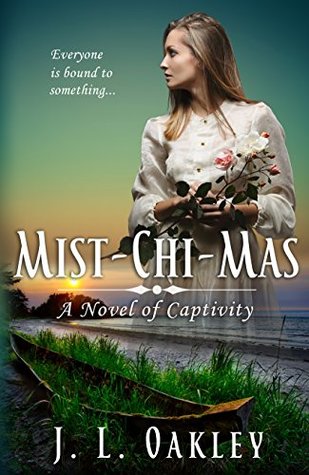
    A masterful work of historical fiction that charts a deeply compelling romance set in the Pacific Northwest during the fascinating but under-reported second half of the nineteenth century. Award-winning author, Janet Oakley brings us another exceptional work from her heart, Mist-chi-mas: A Novel of Captivity.

    It is 1860 and Washington Territory is rich with a diversity of cultures. British and American military camps are posted on San Juan Island, both groups awaiting the decision of an international committee as to which country will be awarded the land. It will take more than a decade for the committee to determine what is to be the water boundary between Washington and British Columbia.

    Although a previous incident involving a shot pig almost instigated a war, at the start of the Mist-chi-mas, the two military encampments are respectful of the other’s turf and co-exist well.  There’s a bit of society in the area, ladies’ teas and picnics take place, and plenty of business dealings due to the ubiquitous presence of the Hudson Bay Company.

    In addition to the relative newcomers to the Pacific Northwest are the native peoples, a number of Indian tribes, the Haida, the Saanich, and the Songhees peoples, as well the “Kanakas,” the Hawaiians who have been here since the early nineteenth century. Attitudes toward the native peoples vary, with some being appreciative of their contributions to the shipping, trading and lime works industries, and others being condescending or outright violent towards them.

    The history of this area comes vividly to life through the romance of a widow, Jeannie Naughton, and Jonas Breed. Jeannie is the niece of the Scotsman, Archibald Campbell, a major representative of the Hudson Bay Company in the Pacific Northwest, and has arrived from England with her young son. Her reasons for beginning life anew in a foreign land are mysterious and mired in scandal.

    In contrast, everything is known about Jonas Breed, a man whose ethnic heritage and experiences reflect the geography and culture of the region. The orphan of an American trader in the South Pacific and a Welsh mother, he grew up speaking English and Hawaiian. As a youth, he was captured by the Haida and was made a “mist-chi-mas,” a slave.  After several years of servitude, he saves the life of his captor and his status changes.   He is grateful for all he has learned from the Haida, and when he asks for his freedom, it is granted. The Haida respect and trust him.

    Breed’s closest companions and friends are members of the tribal peoples, and he will prove his love and loyalty to them repeatedly. He’s as at home on land as he is on water, reads Ralph Waldo Emerson, and is certainly the most self-reliant character in the book. He may remind some of Natty Bumpo, James Fenimore Cooper’s hero in The Last of the Mohicans.

    The Americans and the British generally regard Breed with great admiration, although there are those who envy him and seek his downfall. In turn, someone threatens Jeannie with his knowledge of her hidden past. Despite this, Jeannie and Jonas find love but also tremendous danger at every turn. Jeannie comes to understand the truth of Breed’s words, “We are all mistchimas.” Some are enslaved by external forces, some by inner forces. Their relationship will prove to be as complicated and compelling as the historical events of the novel.

    J.L. Oakley deserves tremendous recognition for the clearly exhaustive and meticulous research she did in writing Mist-chi-mas. With writing so clear and vivid, Oakley brings time and place to life leaving readers captivated by her craft. She invokes the mountains and the waters with such descriptive beauty and fully creates her characters against this panoramic landscape that challenges and shapes them.

     Can love blossom between the most unlikely pair in a multi-cultural, tension-ripe environment? Author J.L. Oakley breathes life into an often forgotten part of Pacific Northwest history in her beautifully penned novel, Mist-chi-mas: A Novel of Captivity–destined to be a regional classic.

    5 Star Best Book Chanticleer Reviews round silver sticker


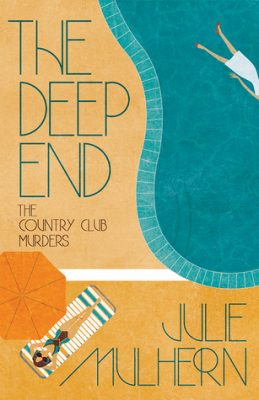
  • The DEEP END by Julie Mulhern – Woman Sleuth, Thriller/Suspense, Cozy Mystery

    The DEEP END by Julie Mulhern – Woman Sleuth, Thriller/Suspense, Cozy Mystery

    It’s 1974 and Ellie Walford Russell is doing fine, except for the fact that her husband is missing and his girlfriend is dead.

    Ellison Walford Russell is a married housewife and artist living in Kansas City during the early summer of 1974. Following her desire to paint has left her in the midst of an unpleasant marriage, held together for the sake of her young teen daughter, Gracie. Ellison was raised in the upper fringe of society, where expensive designer clothing and tennis games at the club are the usual topics of discussion, the place where her domineering mother Frances and her estranged husband Henry would like her to stay. But when something happens to one of the least-liked women in town, even Ellison’s passion for art won’t be able to protect her from the dark and swirling clouds of gossip and intrigue.

    Julie Mulhern’s book is a well-handled whodunit cozy mystery that thoroughly entertains. The main character, Ellison, or “Ellie,” sees colors and patterns and as an artist describes things using a rich and vivid vocabulary. It’s 1974, a time period when many wives struggled to be independent of their husbands and some husbands, like Ellie’s, didn’t like the change. Mulhern does a great job in setting an accurate sense of the historic period, complete with references to drinking a specific diet soda, discussing Watergate at cocktail parties, and women who might wear purple Muumuu dresses. But the era doesn’t become the centerpiece. Rather, it’s more like important background discussion, never distracting from the plot at hand but reminding readers of the changes for women during that time period, changes mirrored in Ellie’s personal growth. Ellie’s mother, Frances, and young daughter, Gracie, serve as other fine and subtle examples of society’s shift across a single generation.

    The men in Mulhern’s work also have an interesting time. Ellie’s husband, unable to accept her growing artistic skills and independence, turns his controlling impulses into ones of humiliation and infidelity. Is it any wonder that Ellie’s world begins to spin out of control when her husband’s mistress is murdered and he is nowhere to be found? It seems everyone has something to say and advice to give, as more and more things go wrong.

    Two men, in particular, are at odds each certain they know what Ellie should be doing. One is an old friend, a lawyer, a handsome man her mother would like to see her date. His name is Hunter Tafft, a tall and distinguished fellow who is a member of the same club. The other is a police detective, Officer A. Smith, with deep brown eyes and deeper convictions, a man who makes her blush when she’d least like to. Using this trio of characters, Mulhern sets Ellie not only in the middle between two strong-minded men but between two levels of society and two levels of the law. The tension is fruitful.

    Overall, The Deep End is a book that will engage the reader in every chapter as they seek to solve the many crimes, both present and implied. Ellie Russell is a colorful person in more ways than one, and the other characters are more than a background to her, adding depth to the story in unusual ways.

    Funny, compassionate and endearing “The Deep End” is a well-crafted cozy, with just a touch of the exotic life, murder and mayhem, and the Bundt cake brigade to hook readers into devouring the rest of Julie Mulhern’s series, The Country Club Murders.

    5 Star Best Book Chanticleer Reviews round silver sticker


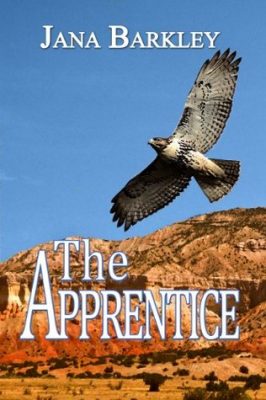
  • The APPRENTICE by Jana Barkley – Contemporary Women’s Literature, Falconry, Cancer

    The APPRENTICE by Jana Barkley – Contemporary Women’s Literature, Falconry, Cancer

    Forty-three-year-old Sam’s secure life is unraveling. It’s not just that her marriage ended two years ago, or that her job leaves her exhausted, or even that her son has essentially become a food-and-laundry-services-only visitor. It’s the combination of a cryptic phone call from her doctor’s office and the crushing claws of an improperly imprinted raptor that spin Sam down an entirely new adventure as an apprentice in the art of falconry.

    Since an apprentice needs a sponsor, Sam considers friendly Mary Kate or knowledgeable Mike, but unfortunately neither is close enough geographically for it to work. Instead, they suggest the best choice is clearly the mysterious (bordering on surly) Hank Gerard. He has experience raising and flying a wide variety of birds. So with gentle prodding, she and Hank become sponsor and apprentice, and Samantha’s life changes forever. She’s no longer a lonely, harried corporate marketing executive. She’s a falconer in training.

    Unfortunately, she’s a would-be falconer fighting a terminal cancer diagnosis. Sam tries valiantly to keep up with this physically demanding new hobby, but both the disease and the chemotherapy intended to cure it put a strain on her efforts. Readers may find it improbable that someone going through cancer treatment will feel up to full tilt running through a field a few days after chemo. Some patients will, of course, but some won’t. It might pull some readers out of the story if they have had a rough experience themselves or know someone who has.

    Sam’s challenges of learning the art of falconry progress alongside her chemo treatments, and the growing tension between her and her sponsor:  “The next step is a psychological one, too, and probably the biggest. He has to jump from his perch and come toward you in order to get his meal, now. In other words, he’s jumping toward the big scary thing—you.” (p. 119)

    It comes as no surprise that the author is an expert instructor at West Coast Falconry. The company is based in Northern California and offers classes, instruction and public education in the 5000-year-old sport.

    The Apprentice transports the reader to a raw, natural world, one with fields of sweet smelling sage, soaring hawks and diving falcons. The language and beauty of falconry is woven expertly into the narrative, providing the reader a glimpse into a rarified world while providing believable, relatable characters.

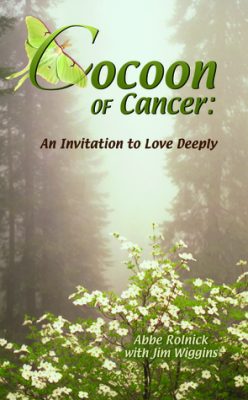
  • COCOON of CANCER: an INVITATION to LOVE DEEPLY by Abbe Rolnick & Jim Wiggins – Spiritual & Mental Healing, Personal Transformation, Living with Cancer

    COCOON of CANCER: an INVITATION to LOVE DEEPLY by Abbe Rolnick & Jim Wiggins – Spiritual & Mental Healing, Personal Transformation, Living with Cancer

    When author Abbe Rolnick’s husband Jim Wiggins slipped off a ladder in 2013, he was told he had osteopenia and would need to rest his back. He and Abbe went to Africa, but the pain persisted, in fact, got worse. Finally, the author “…got the call, the one every person dreads.” Jim had cancer, a rare, aggressive form called Multiple Myeloma. The plasma in his bone marrow had increased, taking over the normal cells, causing anemia and acidity that began to eat away at his spine. Life for Abbe and Jim would never be the same. What followed was a total disruption: for Jim it involved chemo, radiation, stem cell implants, pain, weight loss, and even height loss; for Abbe, an exploration of basic fears, and, of course, the deepest terror of loss of a loved one.

    Rolnick’s book is told for the most part in a series of emails among friends and family. Since she is a fiction writer (River of Angels, Color of Lies) she was able to express her feelings to others, especially to Jim, in a manner both poignant and poetic. She recounts the couple’s simple acceptance, the moments of despair, and the daily activities and routines they shared despite the discouraging limitations of Jim’s medical necessities. Whenever possible, the couple cuddled at night, exchanged kisses, watched funny, upbeat fare on television. The memoir is remarkable for these moments, balanced by the necessary, at times dreadful and dire medical information that impinged on their lives every day for a year. The couple had to live away from home, ask family for help, including cells donated by a brother, and rely on the kindness and expertise of strangers. As Rolnick puts it, “Cancer explodes with ramifications.” Jim’s round-robin emails form an especially touching piece of the narrative as he attempts to apply logic, masculine bravado and a mild sense of humor to the horrors he is experiencing.

    The author offers advice on keeping up with insurance issues, dealing with the caregiver role, with fears, and with the ultimate uncertainty. She doesn’t know, nor does anyone, how long remission might last. She advises being honest with doctors and with oneself, and notes that her viewpoint was often the most helpful, especially when Jim would deny he had pain while she observed how much pain he really felt from his overt reactions like groans and grimaces. At one point, the cancer clinic lab made a massive mistake; handling it judiciously but firmly was a learning experience. Two people, the author believes, can perhaps take in the totality of the problems. She describes the year as like being in a cocoon—dominated by the disease, yet growing and changing within.

    Leaving us saddened but cautiously relieved by the end of her account, with Jim at home, forming a new life around continued treatments, Rolnick has taken us on a journey, tough and full of dangers, but with a quiet resting place for now—and now is all that matters.

    5 Star Best Book Chanticleer Reviews round silver sticker

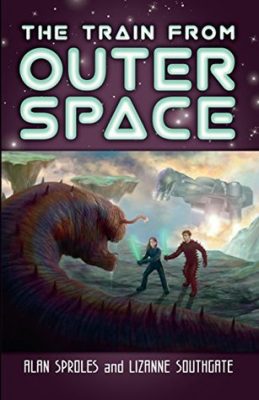
  • The TRAIN from OUTER SPACE by Alan Sproles and Lizanne Southgate – Middle-Grade, Alien Invasion, Wormholes, Magic Trains

    The TRAIN from OUTER SPACE by Alan Sproles and Lizanne Southgate – Middle-Grade, Alien Invasion, Wormholes, Magic Trains

    Don’t you just hate it when a train from outer space tries to swallow up you and your dog whole in the grassy plains behind your house? And don’t you just hate it when your planet is suddenly sucked through a wormhole and placed smack dab in the middle of a couple even bigger planets? And isn’t it just the worst when you realize that all of the above is all part of some game, that your world is just a cue ball for someone to propel across the pool table that is the universe?

    Well, in The Train from Outer Space, that’s exactly the situation twelve-year-old Brady finds himself in, scrambling to make sense of it all while at the same time prevent what looks to be Armageddon on a scale no one could have ever imagined.

    In Alan Sproles and Lizanne Southgate’s spirited sci-fi adventure for the middle-school set, insanity is the new normal for planet Earth. Introduced to the reader and Brady is a zany and mysterious universe filled with bizarre life forms, the likes of which no one has ever seen. Chief among them is the tiny, gelatinous being Brady and his spunky best friend Franky refer to as “Li’l Dude,” whose crashed space module heralds the advent of the train.

    At first, their new extra-terrestrial companion seems to be more disgruntled than dangerous, but little do they know a whole mess of trouble follows Li’l Dude to their big blue home in the form of Rotaxis, an alien creature who repositions Earth in a brand new solar system.

    With little time and planetary fallout imminent, Brady and Franky find they are the only ones equipped to discover the truth behind Li’l Dude’s presence and find a way to reverse the wormhole and send themselves back to the Milky Way. Only they soon realize there’s only one way to accomplish their goal. They must board the train from outer space.

    Energetically comical without undermining true, human development, The Train from Outer Space thrusts its protagonists into a world of imagination and color that only seems to accentuate their even more vibrant personalities. While the supporting cast is equally wacky and fun, it’s Brady’s growth during the adventure that ties up the story nicely, as he searches for purpose and a newfound sense of family following the death of his father. Only through loyalty and teamwork will he finally find what he’s looking for… not to mention save the entire planet.

    5 Star Best Book Chanticleer Reviews round silver sticker