
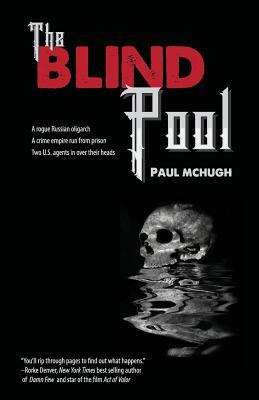
The Blind Pool won First Place in the 2018 CIBAs in the CLUE Awards. Congratulations!
 Imagine you’re stuck in traffic on a hot Florida Overseas Highway when you notice a group of rough-looking motorcyclists roaring down the highway between the cars. Irritating and enviable. But then, the leader of the group suddenly stops at a Cadillac and smash in the driver’s side window with his helmet. What would you do? Would you step in? Would you pretend you didn’t see it?
Meet Dan Cowell, the man who steps in, and his girlfriend, Linda Parker, who cannot stand idly by while bullies terrorize the elderly couple inside the car.
Heroes. But, now our heroes are in trouble. And just like Anton Chekov was so fond of saying, “Where there’s water, someone’s gonna go in…” * our heroes plummet over the railing and into the waters below. Welcome to the opening scenes of Paul McHugh’s thriller, The Blind Pool.
The rest of the novel keeps up the thrilling and suspense-filled pace. Dan and Linda survive the fall, but their adventures are far from over. The leader of the gang understands that Dan and Linda survived the fall, which means they can identify him. His identity is at the center of interlaced mysteries, each a jagged puzzle piece on a deadly board.
Our heroes need professional protection. Enter Carl Blackadar, Dan’s buddy from his service days, a guy with more military and federal connections than anyone on the planet. His girlfriend, Melanie Olson, as sassy as she is smart, is a journalist who has recently been dismissed from the FBI for insubordination. Before that, she was the wife of a U.S. congressman, a position that still enables her to wield political clout. A moment in her company and no one is surprised about the insubordination charge; no one tells this feisty fireball what to do, and heaven help the misguided fool who tries.
Dan’s and Carl’s investigations about the motorcycle gang take them to Ecuador where they discover a retired Russian general turned top-level gangster following the fall of the Soviet Union. His office is an extravagant yacht, and here McHugh delivers exemplary scenes of crimes committed on the water in the dark of night. Meanwhile, Linda and Melanie undertake their own investigation in Texas, posing as a journalist and photographer, where they scrutinize a privately-owned prison with highly suspect practices and uncover the prison’s most notorious prisoner, Ted James Burnett, a man who murdered his parents in an insidious fashion. The women also take in the local color, including running interference with an annoying and odd tattoo artist who has ties to the prison. How does all of this relate to the motorcycle gang on the highway? In myriad and intricate ways that will have readers guessing and holding their collective breath until almost the last pages of the book.
The action takes place in the present tense, giving an immediacy and added suspense to already alarming situations. Much of the plot is moved forward by dialogue, and what dialogue it is! Witty, snappy, satiric, funny, anything but dull. Each of the four main characters has a distinctive conversational style, but the women especially shine. From Linda’s broken English to Melanie’s fluid charm, each can deliver a verbal punch when the situation calls for it. It’s a pleasure to read a novel that so celebrates the intricacies and art of the verbal take-down.
This can’t be the end for these characters—Paul McHugh must carry on and give us more! At a time when the interference of foreign governments and gangsters in American life is much in the news, those who spend time with The Blind Pool will want a sequel. Not only that, but it would be a pleasure to read a prequel. Given the bits and pieces we know about our four main characters and how they came to know each other, I’d love to read a book that sets The Blind Pool in motion. It’s rare that a reader roots for a before and after, but, to his credit, Paul McHugh leaves us wanting just that.**
*Chekov actually said, “Remove everything that has no relevance to the story. If you say in the first chapter that there is a rifle hanging on the wall, in the second or third chapter it absolutely must go off. If it’s not going to be fired, it shouldn’t be hanging there.”
**Hot off the press! Mr. McHugh just informed us that a prequel is forthcoming. Also, he is hard at work on a sequel!
“A thrilling ride!” Chanticleer Reviews
“From Florida’s Overseas Highway to Ecuador, our heroes are hot on the trail of organized corruption that may spell their doom. A hold-your-breath thrill-ride that does not disappoint.” – Chanticleer Reviews
- Writing: Excellent
- Sex: Nudity, sexual violence
- Violence: Several scenes involve physical violence and torture
- Narration: Third Person
- Tense: Present
- Mood: Highly suspenseful


 Word of warning: I’m a bit of a self-help junkie, so Cyndy Sheldon’s Gestalt as a Way of Life is right up my alley. As one of the movement’s founders, Ms. Sheldon provides a valuable and instantly useable advice in this approachable introduction to Gestalt Therapy.

 When it comes to high-adventure Science Fiction, why should adults have all the fun? Alexander Edlund’s novel, Keelic and the Pathfinders of Midgarth proves that younger readers want in on the action.
 Over is a sci-fi novel of big ideas: the scourge on the future by today’s environmental negligence, the effects of biological warfare, even the development of a faster-than-light warp drive that opens the door to a future among the stars.
 Mae Keaney is looking for a way back to her childhood, back to safety, and finds it in a property on Chappaquiddick Island. A wind-tattered cottage and an old boathouse she envisions as a café will be her haven, as long as she can keep her regrets and sorrows hidden.
 Madison Cruz wants a breakthrough acting job, money in her purse, and fun with the sexy guys vying for her attention. Instead, she delivers singing telegrams for a living. Then her grandfather gives her mysterious evidence that must be kept sealed and hidden, he disappears, and now, spies are watching her every move. In other words, Madison’s life is a hot scheming mess!

 What’s more fun than Neanderthals? How about Neanderthals on the high seas? Now that we have your attention…
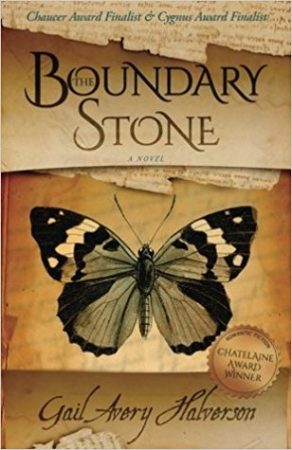
 Catherine Abbott has everything a young lady of quality could wish for in England, 1660’s. She lives on her father’s comfortable estate in the village of Wells, Buckinghamshire and she’s soon to be wed to Miles Houghton, a childhood friend recently returned from several years in France. For Miles, the wedding is just the ticket to free him from his rather large gambling debt. His heart isn’t in it, though, as he still yearns for the Parisian nightlife.

 Hana Samek Norton begins her epic and engrossing novel of historical fiction, The Serpent’s Crown; A Novel of Medieval Cyprus, with this quotation: “It sometimes happens that exploits, however, known and splendidly achieved, come, by length of time, to be less known to fame, or even forgotten among posterity.” (Itinerarum Peregrinorum et Gesta Regis Ricardi) How fortunate for readers, then, that the author brings to life a captivating chapter of history that occurred in Cyprus and Jerusalem in the early thirteenth century.
 Alisdair “Dair” Fitzstuart, spy and war hero, wants to enjoy a carefree life now that his service to his country is over. After spending years creating the daredevil reputation that has earned him fame beyond his heroic war efforts, he’s eager to return to the London town life, sample the season’s beauties, and carouse with his lifelong friends, but when his latest escapade literally throws him into the arms of Rory Talbot, his plans are turned upside down.