Category: Reviews

  • To DREAM the BLACKBANE: A Novel of the Anomaly by Richard J. O’Brien  – Paranormal, Mystery/Caper, Fantasy

    To DREAM the BLACKBANE: A Novel of the Anomaly by Richard J. O’Brien  – Paranormal, Mystery/Caper, Fantasy

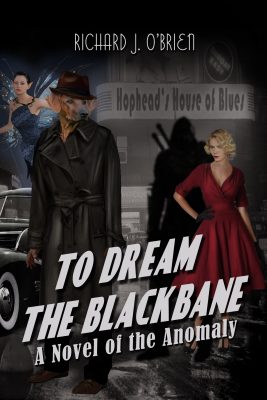
    If you liked Alice in Wonderland as a child, To Dream the Blackbane: A Novel of the Anomaly may captivate you now. While not suitable for children, this dark fantasy engages the reader with strange and unique characters, gritty, Sam Spade-like dialogue, and fanciful imagery.

    In 2063, sixty years after The Anomaly, during which everything changed, in a world now populated by pedigreed humans, hybrids, and a whole gamut of imagined and legendary creatures from other planes of existence, the canis sapien, Wolfgang Rex, operates as a private eye in Chicago’s hybrid ghetto. He is assisted by his secretary, Sally Sandweb, a fun-loving faerie with blue and black wings, and green-tinged skin.

    One evening, two locally venerated vampires barge into Wolfgang’s office to enlist his services. Like the Templar’s treasure was stolen from Jerusalem, a sacred vampire scroll was taken from their lair atop the Sears Tower whilst they slept. After they make him an offer he can’t refuse, Wolfgang agrees to recover the scroll, and a disapproving Sally draws up the contract.

    Shortly after, he has another visitor, Charlotte Sweeney-Jarhadill, from Beggar Creek, Louisiana, who wishes to hire Wolfgang to exorcize the ghost of a Confederate soldier who’s been hanging around her home and bothering her. After another offer he can’t refuse, and deciding he has some leeway on time with the vampires, Wolfgang agrees to do the exorcism.

    Little does he know that these two cases would involve life-threatening danger, and ultimately change the course of his life forever—whatever and wherever forever may be.

    The ensuing story takes Wolfgang to stygian places in Chicago, and to rural Louisiana where Wolfie learns that reality is elusive, whom you can trust isn’t always clear, and there’s no safe place.

    Like the 2063 reality imagined in this story, its tone and mood fluctuate. At times, Richard J. O’Brien’s story seems merely a dark fantasy—a kind of 21st century American gothic with unique settings and characters that keep the reader engaged. At other time, it feels more like a tongue-in-cheek, “gotcha” kind of yarn where the author uses satirical humor, exaggerated characters, and intriguing situations, to entertain fantasy fans. The story’s ambiguous ending contributes to this perception. We hope this means there is more to come!

    One thing is certain, though, when you close the book a haunting suspicion may just well remain: has O’Brien used this genre as a vehicle for a symbolic allegory, addressing certain long-held religious beliefs and currently trending social and political events? In short, To Dream the Blackbane: A Novel of the Anomaly is a curious, provocative read that lingers on. One that we recommended.

  • CATARI: A Novella by Karl G. Larew – Mystery, Psychological, Literary

    CATARI: A Novella by Karl G. Larew – Mystery, Psychological, Literary

    Maxwell Roux introduces us to his story with a Prologue, beginning with a minds-eye picture of a grand house in New Orleans. It is a soft, blossom-scented spring evening. From his hiding place behind a tree, he sees Catari step out on the wrought-iron balcony, fan in hand. Her gown is unbuttoned at the top, revealing her pale complexion glowing in the moonlight, contrasted by her dark-brown eyes and hair. Max had flown down from New York late that afternoon to surprise her, but he chooses to enjoy her beauty from the solitude of the dark garden for a moment before their blissful reunion ensues—marred only by the unpleasant gaze of her step-father.

    This sketch is now a memory of what had been a happy engagement—until Max unforgivably accused Catari of having an ungrateful heart, as Enrico Caruso sang of in “Core n’grato,” a song both of them knew and loved.

    The story begins when Max is called to another grand house, in Fontano, Italy, the home of Catari’s beloved Gran’papa, Il Barone di Fontano. He hears the Requiem Mass sung by a local choir at the funeral of his beloved Catari—only 27 years old—and sees her casket placed in the Fontano Crypt on the grounds of the family villa. It is there that he hears the gossip that Catari was drunk when she fell into the pool at 2:00 AM, as well as the comment by her step-father, Hugh Fontane, that Max, as nothing but an “ex-boyfriend,” has no right to be present. But the Baron had invited him to come, and then to stay at the villa. Later that evening, he and Max talk as friends about their beloved Catari. Max had visited the villa with her several times, and the two men like and trust each other. Finally, fatigue sends them to bed—Max in the room where he had slept before.

    Max awakes at 2:00 AM, somehow urged to go to the pool. He senses Catari’s presence and hears her voice, “I did not want to die. I did not want to die like this.” He hears his own voice, “I’ll find out…how and why, Catari.”

    Thus is this sad love story transformed into a murder mystery, its solution sought by Max, Darlene (Catari’s close friend), and the Baron. Larew’s tale is filled with family history, dating back to the Fontane brothers who fought in Napoleon’s Army in the conquest of Lombardy and were rewarded with the land on which the villa stands; the Fontano brothers who served in the Italian Resistance during WWII; and the Fontano family’s current history in the making. The Three Musketeers, as they decide to call themselves, question the servants and several villagers and search the property inside and out. They engage the help of the family doctor, who had examined the body and found a lesion on the back of Catari’s head. The doctor does not believe that she was drunk. They work with the Chief of Police, who is intrigued when he learns about the pilfering activities of the servants.

    As he has done in previous books of greatly different natures—their characters ranging from WWII military families to Good and Bad vampires—Karl Larew skillfully brings his characters to life. In Catari, he artfully draws not just their natures, but oddities of their physical features, speech, and movement, such as town gossip Madame Cavalli, who finally runs out of words, and the rude and overbearing Hugh Fontane, bursting into the villa declaring that he will have the Baron declared incompetent, thereby revealing his own incompetence. Larew’s knowledge of military history stands him in good stead, as well.

    Max fulfills the poolside promise he made to the ghost of Catari, to “find out…how and why,” but I won’t spoil the how and why for the reader. Nor will I tell you what happens to the Three Musketeers. I’ll say only that, for many reasons, this book offers a good read.


  • PRIVATE MONEY LENDING: How to Consistently Generate a Passive Income Stream by Gustavo J. Gomez, Ph.D. – Budgeting & Money Management, Analysis & Strategy, Personal Finance

    PRIVATE MONEY LENDING: How to Consistently Generate a Passive Income Stream by Gustavo J. Gomez, Ph.D. – Budgeting & Money Management, Analysis & Strategy, Personal Finance

    Are you in retirement, or close to it, wondering how you’re going to make ends meet pulling from your portfolio? Well, you’re not alone if you’re staying up at night thinking about how low-interest rates are killing your investments.

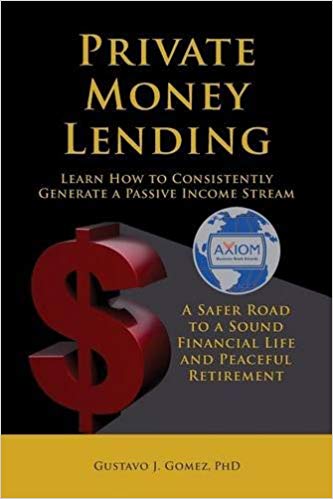
    In a practical and easy to read format, Gomez explains to investors the particulars of a little known, yet potentially lucrative investment technique that can handle the ups and downs of the stock market. Unlike stocks, the underlying security of private money lending is a tangible asset – brick and mortar, so there is another layer of protection for you, the investor.

    But what is Private Money Lending? According to Gomez, it refers to a private individual or organization that lends money. Typically, when you’re looking for financing, you would go to a bank. With private funds, on the other hand, you’re going to an individual or organization that specializes in this type of lending. The upside of private money lending is that it’s less regulated, which means less red tape. The icing on the cake, he says, is that these investments have consistently generated 9 to 12 percent returns* – not bad considering stock market investments have averaged closer to 7 percent, and with much more fluctuations. We can’t forget the economic crash of 2008 when many stock market investments plummeted close to 40 percent.

    In a nutshell, amid the 2008 economic crash, the Federal Reserve lowered interest rates to help boost the US economy, the author explains in fluid and well-organized chapters. The general thinking was to reduce interest rates to encourage people to borrow money, who then would go on to buy more products – all good for the American economy. However, those same low-interest rates translated to less growth for those in retirement. Private money lending offers an alternative strategy that could generate a “predictable, safe, and consistent income stream that this low-interest rate environment does not currently permit,” Gomez says.

    No investment comes without risk, Gomez reminds his readers, so his bottom line advice for investors: do your homework (start with this book), find out who is offering the loan, and check they have a good track record.

    Even though the content derives from Gomez’s doctoral research and dissertation conducted at Florida Christian University in Orlando, it’s not academic in style. In fact, you will find it conversational and accessible, with a thorough glossary of terms (e.g., origination fee, negative amortization, and Private Mortgage Insurance) and recommended reading to further your knowledge.

    Whether you’re in your golden years relaxing on a sandy beach or fast approaching retirement, you will want to read Gustavo Gomez’s Private Money Lending: Learn How to Consistently Generate a Passive Income Stream.

    *as of the book’s publishing (2015)


    Private Money Lending Learn How to Consistently Generate a Passive Income Stream won First Place in the 2017 CIBAs for Instruction & Insight!

  • The GIFT of the TWIN HOUSES: Book One, The Perils of a Reluctant Psychic by V & D Povall – Ghosts, Mystery/Suspense, Psychic

    The GIFT of the TWIN HOUSES: Book One, The Perils of a Reluctant Psychic by V & D Povall – Ghosts, Mystery/Suspense, Psychic

    Six-year-old Sarah Salas blurts out a piece of information she could not have known at a friend’s birthday party. The neighbors begin to gossip about this, calling wee Sarah “evil” and “witch.” In a jiffy, things get uncomfortable. So uncomfortable, in fact, Sarah’s parents to sell their home and relocate to protect their daughter. 

    From that moment on, Sarah’s parents beg her to ignore and suppress her natural psychic abilities. Completely. What’s a six-year-old to do?

    Sarah, eager to please her parents, buries her abilities throughout her life. As a consequence of suppressing such a strong aspect of her character, Sarah inhibits the most essential part of herself: the ability to be transparent, intimate with another living soul. So much so, that her first fiancé leaves her at the altar. Suffering the humiliation, she shuts down another part of herself: her sexuality.

    And the story would end there, but for the fact that upon her early retirement, Sarah heads out to parts unknown, driving with a purpose, but lacking conscious intent. She is, for the first time in decades, allowing that ‘other’ part of her to lead the way. It is only when she truly lets go of the restraints set upon her in childhood that she finds herself in the foothills of the Cascade Mountain Range in Washington state.

    Following a private path, she stops her car in front of a beautiful and compelling home. The house has a note attached to the door indicating it is for sale.

    This house, she knows, must be the reason why she’s here.

    What follows is a whirlwind of characters, both living and deceased, that import their stories into a meaning narrative that forms the basis of the book. And there are a lot of stories to be told: from forbidden love to murder and more. As Sarah opens up to her long, supposedly dormant psychic talents, she creates a path toward understanding the people who once lived in this house – and its twin – and how they wove their DNA into the rooms, floors, and wall, and moreover, how they affect the lives of those still living. The gift is in the telling, and how love conquers all.

    Husband and wife writing team, David and Victoria Povall, bring their talents to the page to introduce the characters in book one of The Perils of a Reluctant Psychic series. The writing is fine with a sweet romance set in the middle of it that lovers of paranormal romance books of a certain age will relish. What is clear, is there are plenty more storylines and adventures in store for Sarah Salas and her rediscovered psychic abilities – and more romantic adventures with her handsome soulmate. A paranormal romance with a happy ending and a promise of more to come! A win!


    The Gift of the Twin Houses by V&D Povall is also available on Barnes & Nobles and iBooks.

  • The ONE APART by Justine Avery – Family Saga, Fantasy, Metaphysical/Visionary

    The ONE APART by Justine Avery – Family Saga, Fantasy, Metaphysical/Visionary

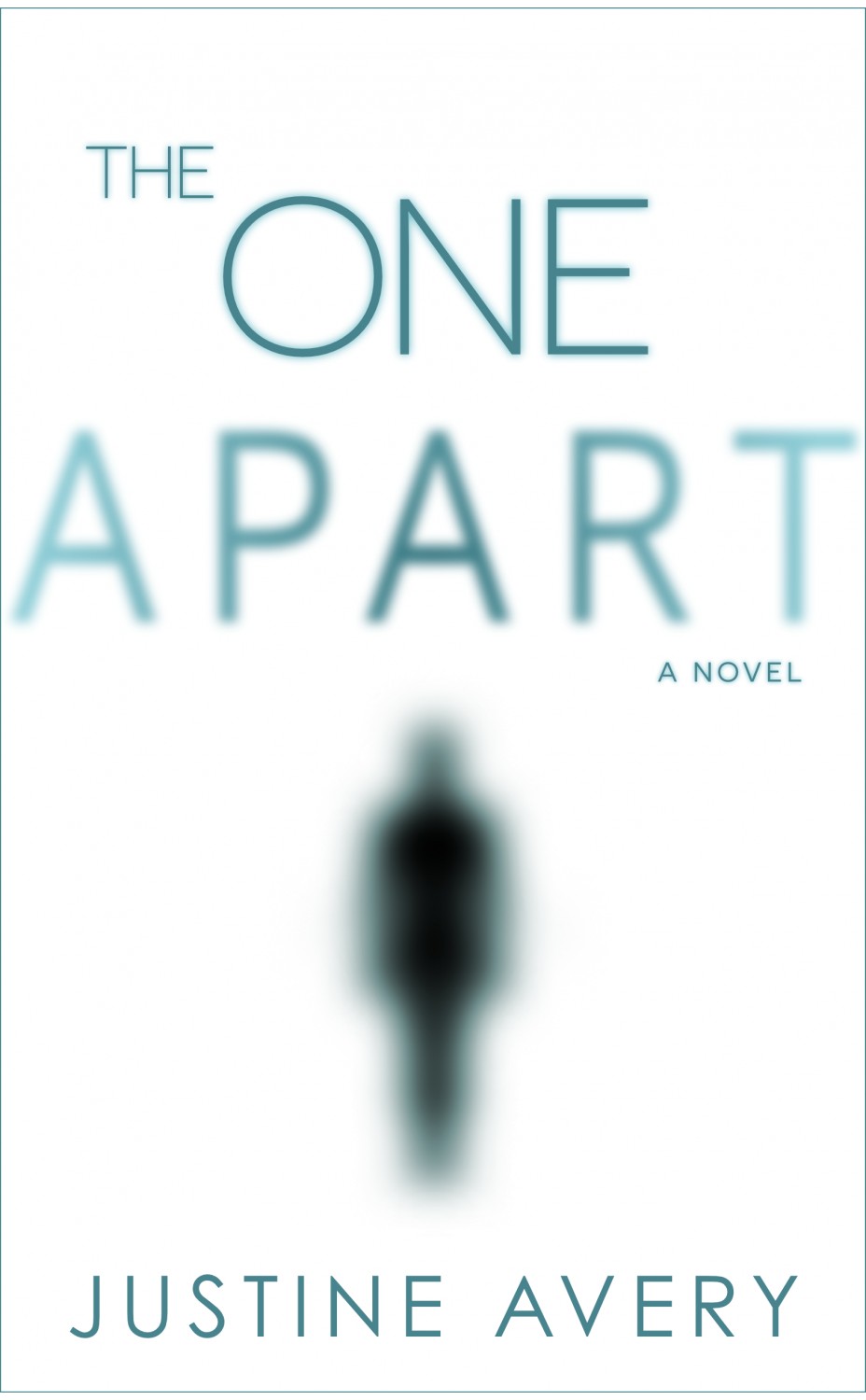
    A perfect blend of realism, fantasy, and deep spirituality awaits those who open Justine Avery’s novel, The One Apart. It is what readers bring to the novel – faiths, belief systems, philosophical dilemmas – that will influence and shape their perceptions of this fascinating and compelling read. Avery’s book, like life, is full of instruction for those who want to be fully aware.

    Aware of what?

    Everything—including awareness itself.

    This is certainly the case for the main character, Aaron, a remarkable boy who lives with his mother, Sancha, and his grandmother, Maria. Although she’d planned to give Aaron up for adoption, Sancha bonds so deeply with her son at birth that she can’t fathom life without him. His grandmother realizes his uniqueness, too, as the newborn communicates with her through blinking his eyes. He makes astonishing progress through developmental milestones, walking and reading within the first months of life.

    As a toddler, he speaks with the wisdom of a timeless soul. Maria suspects that these physical and mental feats indicate that her grandson is chosen for a special purpose, but she hopes he’ll live as normal a life as possible. He’s distracted, however, by a malevolence that only he can see.  As Aaron comes of age, he strives to act normal and blend in, but his very few close friends and girlfriend notice his preoccupation, his never being fully present in this world.

    There’s a reason for Aaron’s constant distraction, for his never feeling a part of this life; he is connected to “the Apart,” the other-worldly dimension that is both removed from human existence, “corporeality,” but ever at hand. Since childhood, he has sensed that his true name is Tres and that his existence as Aaron is somewhat play-acting. His hyper-awareness alerts him to his “OnLooker,” a sort of guardian angel who’s a liaison between Aaron and the sagacious luminary beings of the Apart that consult and advise on Aaron’s tutelage.

    Much of the book involves Aaron learning, with the instruction of his OnLooker, how to fully experience awareness, to understand that every moment is this moment despite previous lives and the variety of life’s experiences. At a critical juncture in the novel, Aaron is given a choice, one that will impact his own existence dramatically but also that of all other beings. The author adroitly merges Aaron’s worldly existence and his relation to the realm of the Apart in a poignant and satisfying conclusion to the novel.

    This is a quiet book, one that allows the reader the time and space to experience life with its main characters. The stillness is at times deeply peaceful, at other times eerie and ominous. The novel illustrates the power of compassion and empathy, but also the chilling consequences when power is exercised for self-serving purposes.

    While the character of Aaron has similarities to various religious and mythic figures, the author has also imbued him with a uniqueness and a relevance to our times. This book will stay with you long after you finish it, a hallmark of excellent literature. Justine Avery’s The One Apart inspires deep contemplation of self, community, and individual and collective purpose.


    The One Apart won First Place in both
    OZMA and SOMERSET Awards in 2017!


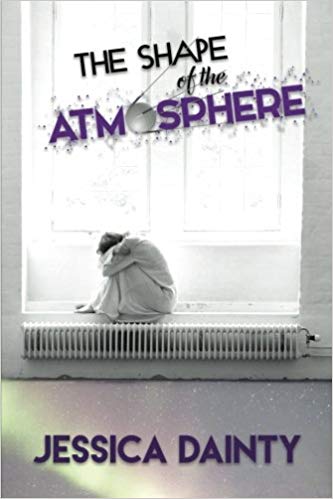
  • The SHAPE of the ATMOSPHERE by Jessica Dainty – Literary, Psychology, Women’s Fiction

    The SHAPE of the ATMOSPHERE by Jessica Dainty – Literary, Psychology, Women’s Fiction


    Jessica Dainty’s, The Shape of the Atmosphere is remarkable for its startling realism, its gritty young heroine, and its hopeful conclusion.

    When Gertie’s father and sister are killed in an accident on Gertie’s sixteenth birthday in 1957, she is left with one cherished memory: viewing the heavens with her father on the night of the world-changing Sputnik flight.

    After the funerals, Gertie wounds herself as a way of coping with her inner anguish, after which her alcohol-addicted mother commits her to an insane asylum. Such institutions were considered modern and scientifically advanced for their time, but as author Jessica Dainty frankly depicts, Gertie’s new home is a combination prison and torture chamber. The naïve but intelligent girl soon becomes acquainted with such therapies as immersion in icy cold water and electroshock (both designed to calm the inmates), as she gradually gets to know her fellow patients, the women on Ward 2.

    Gertie observes that some of her companions are not mentally ill at all: one has a speech defect that he is struggling on his own to correct, and another has Down Syndrome. Yet such people – anyone not wanted by family – are consigned to such asylums and often get lost in its labyrinthine system. Gertie slowly gains inner resolve, becomes an advocate for her rights and those of her companions, and starts an in-house newsletter that tells their stories. But when her compositions find their way outside the walls of the asylum, she is forced to take even bolder measures.

    Dainty writes this traumatizing tale as though she’d lived it, so starkly painful and remarkably poignant are her portraits of Gertie and her fellow sufferers. She portrays the doctors as caring only up to a point, mainly interested in maintaining a full house of captive mental “cases” to keep the income rolling in. One staff member is sympathetic toward Gertie, but most are cold and indifferent, strictly allowing only 3-minute bathroom breaks, a single towel at communal shower times, and almost no time spent unmonitored.

    Treatments such as electroshock (Electro Convulsive Therapy, ECT) are performed differently today for the treatment of severe depression, treatment resistant depression, severe mania, catatonia, and agitation and aggression in dementia patients (Mayo Clinic: https://www.mayoclinic.org/tests-procedures/electroconvulsive-therapy/about/pac-20393894), for example. But today, this treatment is done under general anesthesia and at reduced levels. This was not the case in the 1950s or in Dainty’s harrowing novel. ECT was conducted without any form of anesthesia and often without patient’s consent.

    Reminiscent of the less enlightened times also is the blatantly denigrating attitude shown towards people of color and other minorities. The author’s descriptions of daily life in a mental institution of the 1950s are filled with scenes of mistreatment tantamount to torture. But many readers will find the story inspiring, especially as Gertie, sustained by images of space travel, finds her own stars to aspire to and reaches out to help others. Debut novelist Dainty is a high school teacher with many points of contact with the teens she hopes to engage with this evocative coming-of-age saga.

    The Shape of Atmosphere won First Place in the 2022 Goethe Book Awards for Post-1750s Historical Fiction.

  • WINDHOLLOW and the AXE BREAKER, Windhollows Book 3 by Trayner Bane – Children’s Books, Action/Adventure, Fantasy

    WINDHOLLOW and the AXE BREAKER, Windhollows Book 3 by Trayner Bane – Children’s Books, Action/Adventure, Fantasy

    Part Three of the Windhollows series takes off with a bang, as we find an evil female on our hero’s trail and a sneaky scientist up to his old nefarious tricks.

    The book opens with a stirring encounter between the glimmering being who was once Billy Molskin’s girlfriend, Skylar, in a contest of wills with Nila Windhammer. Nila previously transformed the schoolgirl into a monster called the Spent of Jealousy, using Dr. Rip Stinker’s toxic Essence of Ripinum.

    Into the fray comes Blast, a once-powerful creature who had been given the task of guarding Skylar. His failure makes him more determined than ever to intervene, but Nila forces him out into the Formidable Fields where he is doomed to lose his memory or his freedom. To accomplish his banishment, Nila wields the Malus wand, a gift from her father and her weapon of eternal vengeance against those who killed her parents.

    Meanwhile, Stinker and his faithful pet Pootrick are entering the Silent Pass where Stinker plans to enslave its inhabitants, the nomadic Silencians. But after disabling some of them with Ripinum, he is confronted by Nila, who informs him that they have a far more important mission. They must locate Billy, who is on a quest to find a mystical staff that contains powers she wants for herself.

    Billy, with help from his friends Teddy and Wendy, is indeed looking for the staff, finding clues from ancient books and soon realizes he also needs to get possession of four magic stones. Could these be connected to a bracelet of three orange cubes found by Stinker when he attacked the Spent of Hatred? Could they be the work of the immortal Stonehammer?

    Billy’s determination is temporarily sapped by the lingering illness of his father, who may have a clue to the missing stone collection. When his father passes away, Billy will finally access the inner strength he needs to put the legendary weapon, Axe Breaker, to its proper use and win a momentous victory.

    Fans of the Windhollows series will note this story is taking on topics of significant proportions. Themes of the death of a parent, the coming-of-age of the young hero and the hard-fought triumph over evil give this volume greater gravitas, perhaps moving it towards a perception of Billy as a kind of Beanian Hobbit: ready to take up the call to duty, even if it means putting himself in harm’s way.

    All in all, this is a perfect read for those seeking adventure!


    *Special note: Author Trayner Bane has a delicious recipe for BackFire Cookies on his website! He’s requesting his readers try the recipe and post a photo on the Windhollows Facebook page: https://www.facebook.com/TheWindhollows

    This book can be ordered here.

    Please follow the links to read the Chanticleer Reviews for Air of Vengeance and Darkness Falls

  • Books for Veterans Day –  Honoring Those Who Have Served in the Armed Forces

    Books for Veterans Day – Honoring Those Who Have Served in the Armed Forces

    Veterans Day honors and celebrates the service of all U.S. military veterans.
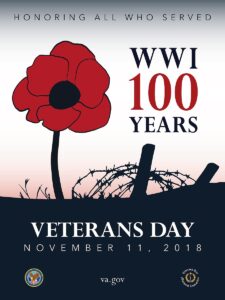
    November 11th, 2018, Veterans Day,  also celebrates the 100th anniversary of the end of World War I. The hostilities were formally ended at the 11th hour of the 11th day of the 11th month of 1918. 

    Honoring those who are serving, have served, and those who have fallen while in military service is a tradition here at Chanticleer Reviews.

    We here at Chanticleer Reviews have had the honor of reviewing top novels by written by outstanding authors whose stories enlighten, remind,  empathize, and creates a better understanding with those who have served in the armed forces.

    It is our pleasure to share these titles with you that bring important moments in history along with poignant storytelling to their readers.
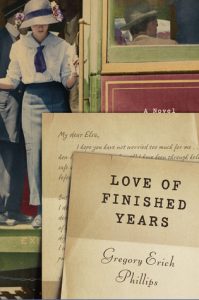
    Love of Finished Years by Gregory Erich Phillips,  WWI, Immigration, sweatshops

    Chanticleer International Book Awards Grand Prize Winner 

    From the riveting opening that takes place in NYC’s Lower East Side’s sweatshops until its gripping conclusion after World War I, this enthralling novel vividly portrays the desperate times of German immigrants landing at Ellis Island in search of a better life intertwined with the story of a young man and his heroic military service during WWI.
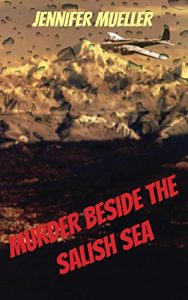
     

     Murder Beside the Salish Sea by Jennifer Mueller  WWII, Japanese Internment, PNW

    A Mystery & Mayhem Book Award First Place Winner

    Brock Harker, World War II fighter pilot returns home to the Pacific Northwest on leave. He’s searching for a little peace once he finds his half Japanese wife who vanished while he was away. What he finds is Murder Beside The Salish Sea by author Jennifer Mueller, who artfully pulls Brock into an intriguing plot that hides the darkest of secrets.
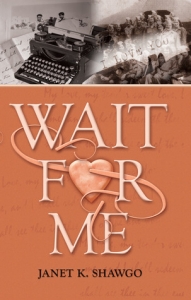
     

    Wait For Me – Janet Shawgo      WWII and Historical Romance

    Goethe (formerly Chaucer) Book Awards First Place Winner

    The often-unknown role of women in wartime as travel nurses and pilots, as well as the use of herbs for natural healing, add interesting and relative historical content to this engaging American saga.
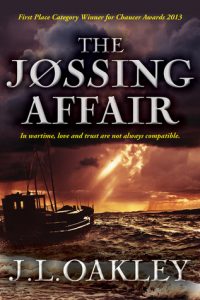


    The Jøssing Affair by J.L. Oakley  – WWII, Norway, Resistance Fighters

    Goethe Book Awards Grand Prize winner for Historical Fiction

    A profound work of historical fiction recounting the Norwegian Resistance to the Nazi Occupation. A testimonial to the underground heroes who put aside personal safety for a cause much bigger than themselves. Their courage is acknowledged in this superbly gripping novel.


    A Crowded Heart by Andrea McKenzie Raine   PTS, Veterans, Military, Social Issues

    Shortlisted for the Somerset Book Awards

    The wide ensnaring net of the aftershocks of war is poignantly portrayed here — powerful and deeply affecting!

    Raine wisely expands the narrative of the novel to reveal the wide net of war. Willis is not the only victim; the people in his life experience the after-shocks of fighting as well. 

    Not to give up on those who have already given up on themselves is the challenge. Raine reminds us that doing so requires a full heart, indeed, a crowded heart.

    Watch Over Me by Eileen Charbonneau   WWII, Espionage, Code Talkers, Thriller

    Chatelaine Book Awards First Place Award Winner

    In a world of half-truths, crooked policemen, spies, and impersonators, the real question is who to trust. Watch Over Me shows a living portrayal of 1940s New York spinning wildly in the madness of espionage, where secrets and sacrifices threaten the bond of love and the hope of family.


    Non-Fiction Works that were written by Veterans
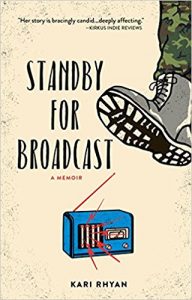
    Standby for Broadcast by Kari Rhyan     PTSD, Wartime nursing, Social Issues

    I & I Book Awards – Grand Prize Winner

    Rhyan served nearly twenty years in the US Navy as a nurse, her final deployment taking place in Afghanistan to a medical unit run by the British where Rhyan upheld her duties to aid others, while inwardly feeling unprotected and helpless. After witnessing the many tragedies of war, primary among them multiple amputations, she comes home scarred in mind. Her trauma becomes so obvious that she is sent to a special private unit.

    Rhyan’s memoir is frank, insightful, and a powerful reminder of the toil taken by those who wrestle with the fallout of the carnage of war. She also reminds us of the resiliency of the human spirit and the power of hope.
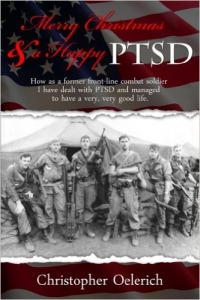
    Merry Christmas and a Happy PTSD by Christopher OelerichMerry Christmas and a Happy PTSD by Christopher Oelerich, author & Vietnam Veteran

    Shortlisted for the Journey Book Awards

    “A very personal, no-holds-barred yet ultimately empowering discussion of PTSD and its effects on those who suffer from it.” – CBR

    The book has been written in a ‘How To’ format for combat soldiers which is reflected in examples and language.

    “I went away to war one person and came back another, and in my wildest dreams would never have chosen to be the one who came back…I was a twenty-year-old Warrant Officer Helicopter Pilot fresh out of flight school when I arrived in South Vietnam in May of 1969 and was assigned to B Troop 7/17 Air Cav in Pleiku.  I joined the Scout Platoon and spent my entire tour as a Scout Pilot in the Central Highlands, and in that time saw my friends killed, captured, wounded and lose their minds.
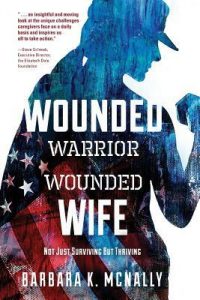
    Wounded Warrior, Wounded Wife by Barbara McNally

    This ground-breaking initiative offers advice and hope to those who are trying to understand and cope with war’s many aftershocks.

    “The critical issues surrounding post-traumatic stress among America’s wounded warriors is expanded here to include the challenges and concerns of military wives and families.

    Barbara McNally was working as a physical therapist when she watched helplessly as a man jumped off a bridge to his death. Feeling involved in his tragedy, she learned he was a wounded veteran. The experience spurred her to find out more about PTS and its effects on those who have participated in war. Gradually her attention focused on the plight of the wives of these wounded military survivors.”

    If you have a moment, take time to watch this video that offers an intimate look into the chaotic and demanding lives of military spouses as they adjust to living with mentally and physically injured combat veterans. Please feel free to share.
    Some interesting current statistics regarding U.S. Veterans*

    • 22 veterans, on average, commit suicide every day.
    • The suicide rate for younger veterans (18 -29) is 7 times higher than their civilian peers.
    • The rate of suicide among veterans is 21 percent higher than the rest of the country.
    • The suicide rate of among female veterans is a 140 percent higher than their civilian peers.
    • No one knows how many military spouses and families members commit suicide.
    • There are 18.8 million veterans living in the United States.
    • 3.8 million of these veterans are disabled (2014).
    • U.S. military is the world’s second largest (China’s army is the largest) and troops are deployed across the globe.
    • It is believed that 45 percent of all veterans who served in the Middle East are disabled.

    And another interesting and enlightening link from the PEW RESEARCH CENTER – The FACT TANK regarding Veterans in today’s society.

    Honoring those who are serving, have served, and those who have fallen while in military service is a tradition here at Chanticleer Reviews.

    With Appreciation and Gratitude to Veterans who are actively serving and have served. THANK YOU! 

    *Sources: U.S. Department of Veterans Affairs, American Community Survey 2015, United States Census Bureau.

    Just a Note from the blog post author, Kiffer Brown:

    On a personal note, many of my family members have served their country (many of whom have passed) and are serving their country: my father (deceased), my brother (with us but 100% disabled), my nephew Robert is currently serving in the Air Force,  my dear Aunt Ellen (WWII nurse – she passed away recently), my cousin Billy Wayne (first 100 to die in Vietnam), and many other cousins to numerous to mention here.

    This is my small way of honoring and recognizing my relatives for their service to our country.

    Thank you for taking the time to read my annual Veterans Day blog post.

    Semper Fi – Kiffer



  • RESUMED INNOCENT (A Sam Tulley Novel, Book 1) by Rene Fomby – Legal Thriller, Mystery/Suspense, Contemporary Literature

    RESUMED INNOCENT (A Sam Tulley Novel, Book 1) by Rene Fomby – Legal Thriller, Mystery/Suspense, Contemporary Literature

    Rene Fomby’s gripping novel, Resumed Innocent, is both a courtroom drama and a personal drama. In the book’s forward, Fomby tells readers that the story is “semi-autobiographical,” noting that as a criminal law attorney, he has found that “The reality of day to day criminal practice in Texas is simply too unreal to be believed.”  And, yet, he manages to convince the reader of the gruesome reality of crime scenes as well as the harsh reality of courtroom politics.  The guilty aren’t always those being held in jail cells; attorneys and judges don’t escape Fomby’s scrutiny, and the reader is made aware of just how complicated criminal law in Blair County, Texas, truly is.

    Fomby opts for a female protagonist to relay what’s just and unjust in a criminal law attorney’s daily life. Samantha Tulley, Sam for short, a widow with a small daughter, is as sharp as they come. She’s savvy enough to detect when a defendant is being railroaded or a judge is being underhanded. Her intelligence and wit, however, put her at risk for reprisals, acts of vengeance that will put her life at risk and have the reader turning pages as quickly as possible to keep up with a plot that escalates with action and suspense.

    Her clients, people accused of heinous crimes, are beyond fortunate to have Sam representing them. She defends a woman accused of plunging a knife into her former boyfriend multiple times and a man accused of murdering his wife and two small children. In one of the most riveting chapters of the book, the reader observes voir dire, jury selection, and witnesses Sam calculating who will and won’t support her client, all the while maintaining an expression that would sink her most formidable opponent at the poker table. This chapter alone would make the book a worthy read, but it’s packed with fascinating nuggets of courtroom drama throughout.

    Sam’s personal life is equally fascinating but also fraught with danger. Her deceased husband was the son of an eccentric member of the Catholic Traditionalist Movement, a group that rejects Vatican II and believes mass should be celebrated only in Latin. William Tulley didn’t approve of his son’s marriage to Sam, a Jewish woman, and is now demanding that a paternity test to be done on Sam’s young daughter. His first wife, Luke’s mother, resides in Italy and holds information that will enlighten Sam as to her father-in-law’s motives. Sam has enough enemies, in and out of the court system, to keep the reader guessing who is attempting to harm – even kill her. She has an advocate, however, in Harry, her intern who is a law student at Baylor University and whose family has had their own run-ins with Sam’s father-in-law.

    This book will certainly appeal to lawyers and law students, but also to anyone who loves a good courtroom drama. It’s also for readers drawn to strong female characters. Sam Tully is a working mother, a widow, an advocate for the wrongfully accused, and the friend you’ve always wanted.  You’ll finish this novel eager to continue her adventures in a forthcoming book.


  • TWELVE SECULAR STEPS: AN ADDICTION RECOVERY GUIDE by Bill W. – Twelve-Step Program, Addiction/Recovery, Self-Help

    TWELVE SECULAR STEPS: AN ADDICTION RECOVERY GUIDE by Bill W. – Twelve-Step Program, Addiction/Recovery, Self-Help

    If you’re familiar with Alcoholics Anonymous, then you’ve heard the phrase, “One day at a time,” “Keep it simple,” and “This too shall pass” – slogans designed to help the alcoholic resist the urge to drink. Borrowing another popular AA slogan, “Take what you need and leave the rest,” alcoholic Bill W. (not the co-founder of AA) lays out his version of the AA steps in Twelve Secular Steps: An Addiction Recovery Guide.

    A biologist with a Ph.D. and 20 years in research and education, Bill W. knew he needed help with his addictions. He followed the AA program but was uncomfortable with the “God” language, so he created his own path, rejiggering the steps as a secular version shifting the focus from a “Higher Power” to himself. In Chapter 1, he explains his critical moment: “I froze when I looked into the mirror, for I didn’t recognize the face looking back. The veil of denial was lifted, and I saw clearly what I had become: a pathetic addict, slowly killing myself day by day. I realized that the problem, truly, was ME.”

    Unfortunately, some folks who enter “the rooms” of AA or other 12-Step recovery programs are turned off by the spiritual connection required. In this thought-provoking and well-designed guide, Bill W. tries to show that by altering the faith-based language of the traditional AA steps, there is incredible value for anyone wanting to get a grip on their addiction. The latter part of the book is devoted to the design and implementation of such a plan, getting the addict or alcoholic to build 90 days of sobriety.

    Twelve-Step recovery was introduced in 1939 when Bill Wilson published a primary text Alcoholics Anonymous, often called “The Big Book.” Of course, detractors have argued that the secular version is not considered the AA program, but Bill W. (author of this book) knew the value of the work as he was surrounded by alcoholics and addicts who desired a non-religious version or pre-existing relationship with God.

    Drawing from his science and medical background too, Bill W. devotes an entire chapter to the Biology of Addiction, showing an illustration of how dopamine affects the brain and explaining how the brain’s limbic system and frontal cortex change significantly during an addiction spiral.

    The conversational tone peppered with personal anecdotes from the author’s life makes for an easy read. After reviewing the 90-day plan and how to work the traditional steps with a secular flair, this reviewer had hoped the author might supply a final word of encouragement. Instead, Twelve Secular Steps ends with a challenge, which when all is said and done, is appropriate.

    This book is intended for anyone uncomfortable with the religious aspect of AA’s fundamentals yet ready to take personal responsibility for their recovery. Bill W. assures his readers that the three ingredients to successful recovery are adhering to a “One day at a time” attitude, following the steps and leaning on a support network of family and friends.

    Twelve Secular Steps is an alternative path rooted in the individual rather than God, and has been helpful for some recovering addicts assembling a recovery toolbox. Friends and family members with a loved one suffering from addiction can also benefit greatly by learning how gut-wrenching yet wonderful the lifelong path of recovery can be.