Category: Reviews

  • FEDERAL PRISON HANDBOOK – The Definitive Guide to Surviving the Federal Bureau of Prisons by Christopher Zoukis – Survival Guide, Non-Fiction, Federal Prison

    FEDERAL PRISON HANDBOOK – The Definitive Guide to Surviving the Federal Bureau of Prisons by Christopher Zoukis – Survival Guide, Non-Fiction, Federal Prison

    In the Federal Prison Handbook-The Definitive Guide to Surviving the Federal Bureau of Prison, Christopher Zoukis has meticulously identified, collected, and organized a compendium of information regarding life in federal prison. Zoukis’ straightforward writing, free of personal bias or opinion, is neither mysterious nor titillating—reality is not sensationalized—it’s not fiction, it’s the facts.

    However, if through some twist of fate, you or a loved one finds yourself in the unthinkable situation of going to prison, it may become the best book you’ve ever read.

    Consider. You’ve been sentenced to serve time in one of the Federal Bureau of Prisons’ 125 stand-alone facilities, a private contract facility, or a satellite prison camp scattered throughout the United States. You, who need directions to find your way through Costco to the deli, must now enter an unfamiliar world with its own lexicon, rules, and consequences. How will you survive?

    As a thirty-year-old federal prisoner, incarcerated since he was a high school senior, Zoukis speaks authoritatively to that question—and other issues you haven’t even considered—and, why would you, with no previous experience or points of reference.

    Zoukis has created a comprehensive guide to seemingly all aspects of prison life—from entering the front doors to the time you leave. He provides annotated, specific information regarding life in this mandated setting, a community which exists within both real and figurative walls. Its written and unwritten rules allow little latitude for divergent behavior or personal desires. And, perhaps equally important, Zoukis delineates the unique customs and unwritten social mores of prison culture.

    Each handbook section cites and explains rules and regulations in detail, as well as providing practical tips, based upon the author’s experiences, observations, and information garnered from extensive interviews of fellow prisoners.  The Federal Prison Handbook disabuses some of the sensationalism created by fiction, tell-alls, and media in general, regarding sexual abuse, gang violence, power hierarchies, and such. The topics are objectively elucidated within the context of the prison rules, consequences, and the overall prison culture.

    Unlike many popular “survival” books, the Federal Prison Handbook will probably not give the reader an emotional rush or provide an epiphany regarding the meaning of life. However, it could prove invaluable to counselors, lawyers, families, and individuals who find themselves facing incarceration in the federal prison system.

    Federal Prison Handbook-The Definitive Guide to Surviving the Federal Bureau of Prison won First Place in the Instruction & Insight Awards in 2017.


  • TWO COINS: A Biographical Novel by Sandra Wagner-Wright – Biographies & Memoirs, Women in History, European History

    TWO COINS: A Biographical Novel by Sandra Wagner-Wright – Biographies & Memoirs, Women in History, European History

    Author Sandra Wagner-Wright brings to life a story rife with “politics, power struggles, and patriarchy” in her newest historical novel Two Coins.

    Mary Pigot is Lady Superintendent of the Ladies’ Association Female Mission in Calcutta, India. Born and raised in Calcutta, Mary is well acquainted with the climate, culture, and customs of the locals. Her diligence to faithfully spread God’s Word to the peoples of India while showing respect to their traditions places her in high esteem among the Ladies’ Association in Scotland.

    In walks William Hastie, the new principal of the Scottish College, ten years into Mary’s position. His mission is to “restore harmony” between the Scottish College and the Female Mission. The only problem is that his definition of “restoring harmony” has to reflect Scottish principles. William realizes from the get-go that he has significant work to do when he recognizes Mary’s relaxed and unorthodox ways. As a result, friction immediately builds between the two.

    While Mary continually contends with William’s nitpickiness, things grow from bad to worse when querulous Georgiana Smail comes on board as Mary’s assistant. Unbeknownst to Mary, Georgiana makes a detailed account of Mary’s faults and sends her findings in a report to the Ladies’ Association in Scotland. Mary returns to Scotland to defend her good name. More issues brew, this time involving her worst enemy, William Hastie. In the process of finding a solution to her ever-rising problems, the last thing she expects is to take William to court for libel.

    Award-winning author Sandra Wagner-Wright brings to life an unprecedented event of the latter half of the 19th century. Based on actual events, Two Coins grew to fruition when she got wind of the case of Pigot vs. Hastie amid her research on missionary work in India. Original sources proved Mary Pigot to be a woman ahead of her time as marked by her professional accomplishments and tenacity for upholding her rights.

    Building a plot from first and secondary sources is nothing to sneeze at, especially when details need to be presented in a way that identifies a novel as historical fiction. To Wagner-Wright’s credit is her ability not only to collect details but also breathe life into them. One of the most notable aspects of Two Coins is that it is written in present tense, which allows readers to feel as though they are experiencing a past event in real time.

    Wagner-Wright takes her story one step further by designing her narrative in the first person and then alternates it between viewpoints from Mary and William (mainly), and (periodically) James Wilson, a close associate, and friend of Mary’s. The constant shifting while following a steady timetable allows the narrative to flow freely from one chapter into the next.

    Two Coins keeps to the vernacular of the era with all of its patriarchally-laced social norms. Here the author includes a well-developed cast of primary and secondary characters that are mostly, though not exclusively, composed of historical figures. Scenes are a lively mix of engaging dialogue delicately balanced with a backset of nuances befitting British India—extreme temperatures (heat to monsoons), food, living conditions, adaptations due to climate (i.e., mosquito netting, nutshell-filled mattresses to keep away rodents), and Hindi terminology.

    Tension (sprinkled with sarcastically comedic moments) rises with the court proceedings that are intertwined with unexpected plot twists. Two Coins, with its overtones to women’s rights, is nothing less than a stellar and ageless novel.

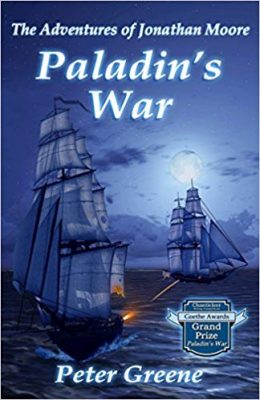
  • PALADIN’S WAR, The Adventures of Jonathan Moore, Book 3 by Peter Greene – Historical Fiction, Y/A Action/Adventure, 19th Century

    PALADIN’S WAR, The Adventures of Jonathan Moore, Book 3 by Peter Greene – Historical Fiction, Y/A Action/Adventure, 19th Century

    Grand Prize Winner for Goethe Awards: Paladin's War by Peter GreeneThe magic of living in 19th century England comes to life in the early chapters of Peter Greene’s delightful, but also exciting, story—with British Navy Midshipman Jonathan Moore and daughter of the Governor of the Bahamas, Delain Dowdeswell, enjoying the fashionable new treat of ice cream, then joining their friends and family members at the boat race in Dover on a beautiful day. Granted, that wasn’t how everyone lived, and even these special few lived daily lives far less comfortable than do most ordinary people today. But they didn’t know that.

    Jonathan is the son of Admiral Nathaniel Moore, who had been imprisoned in France during the Napoleonic wars. This happenstance orphaned the boy, who lived a sorry few years on the streets of London until he was found by his father’s friend, Captain Walker. The admiral was eventually rescued, and he and Jonathan were reunited. Delain and her sisters, Penelope and Rebecca, had been sent by their parents to live with the Walkers, who, with the help of Barbara Thompson, were tasked with teaching the sisters to become ladies. That seems unlikely for the irrepressible, fourteen-year-old adventuress, Delain, who once stowed away on the HMS Poseidon, from which she fired more than one cannon shot in battle!

    Shortly after the race at Dover, however, the young midshipman, also fourteen, boards the HMS Paladin, along with his former street friend Sean Flagon, soon to become a Marine captain, board the HMS Paladin, leaving their friend Delain behind as they head straight into an adventure way beyond their expectations. Not surprisingly, Delain soon finds herself in a spy adventure right in London. And perhaps not so strangely for these three musketeers, their adventures overlap.

    Greene paints not only the scenes in London but those on the Mediterranean, the Adriatic, and even the Black Sea with vivid color and action. He allows us to experience life on the sailing ships of His Majesty’s Royal Navy, telling us what the officers and crew wear, what they eat, where they sleep, how they talk, and especially what they do. As Peter Greene writes in his Acknowledgments, he “hoped to create a series that would capture the excitement and thrill of being on one of His Majesty’s wind-powered warships in the [Lord] Nelson era.”

    The action on the HMS Paladin, as well as her sister ship, the HMS Echo, mostly unbeknownst to each other, rise to a fever pitch as they find themselves engaged in an explosive battle not with the French, but with the Russians and even the Turks! As you might guess from the overall tone of Greene’s story, the British, at least most of them, live to return to England.

    This book was such fun to read. I’m hoping Peter Greene will give us a Book Four. Meanwhile, those who haven’t read Books 1 and 2 of The Adventures of Jonathan Moore, Warship Poseidon, and Castle of Fire, as well as a number of earlier books, will have some good reading to tide them over.

    5 Star Best Book Chanticleer Reviews round silver sticker


  • BEYOND CONTROL by Lawrence Verigin – Eco-Thriller, Spies & Politics, Thriller/Suspense

    BEYOND CONTROL by Lawrence Verigin – Eco-Thriller, Spies & Politics, Thriller/Suspense

    Now we reap the bitter consequences of what was diabolically sown in the first two books in the award-winning, exciting Dark Seed trilogy. In author Lawrence Verigin’s third book, the agents of The Club have implemented their evil plan and drive forward in complete denial of the unintended consequences that are now Beyond Control and threaten all human life on earth. Can these perils be stopped and reversed? Nick Barnes and his team have been left discredited and seemingly powerless to vanquish the dark forces behind this ecological thriller.

    Nick Barnes finds himself victim to his own circumstances that are now also Beyond Control. At the start of this book, he struggles against convincing evidence that cleverly frames him for a serious crime, landing him in jail.

    The twisting tale turns as the enemy runs its ominous empire unchecked. There is no guarantee that Nick’s plan will work, yet as the group sets out to track the evil conspirators across the globe, tragic environmental dangers loom on the horizon. The Club follows the trail of chaos left in the wake of the enemy and are able to understand the global catastrophic events that will ensue if the evildoers cannot be stopped. However, not everyone is able to see the truth in what these few see. Denial is powerful and feels safer than the dire truth Nick and his companions offer.

    In fact, the members of the Club see the lethal dangers growing quickly because their foes’ inexcusable misuse of the science they are now wielding without understanding and without conscience. It’s up to Nick and his band to act, but their fight is against deluded fanatics, and in such fights, painful losses are inevitable. Is a final showdown with The Club something Nick’s group can win?

    Author Lawrence Verigin writes to entertain while bringing attention to socially relevant subjects. His research into agricultural science is impressive, seamlessly weaving information into the narrative of the story, giving readers a satisfying and captivating set of novels.

    Beyond Control is a fight to save the earth’s population from the seeds of devastation. It’s a thrilling portrait of our hero’s will to treasure life. However, Nick is up against a completely different worldview, and the stakes in this venture are high. Against him, greed is being led by a brutally selfish, power-hungry adversary who coldly explains his evil actions as justification being in the eye of the beholder.

  • The SUGAR MERCHANT by James Hutson-Wiley – Medieval, Historical Fiction, Spy & Church

    The SUGAR MERCHANT by James Hutson-Wiley – Medieval, Historical Fiction, Spy & Church

    Narrated by a boy who grows up in a monastery and is trained to be a spy, The Sugar Merchant is set in the late 11th Century when the Great Crusades were on the verge of erupting in Europe and the Middle East.

    When Thomas is forced to flee after rebels attack his family, he is finally discovered, ragged and starving, by a giant of a man named Leofric. Taken under the wing of the monks at Eynsham Abbey, Thomas is educated while accepting the strict discipline of the Benedictine order. In his late teens, he is surprised and disappointed to learn he will not join the Order but will be employed as an agent and spy. His task will be to find, secretly copy and send back manuscripts written by Islamic scholars. These documents contain knowledge that the Catholic Church needs to maintain its control.

    Accompanied by Leofric, who taught him the arts of war based on his own checkered past as a mercenary, Thomas travels to Spain, to the city of Granada (called Gharnatah at the time). His travels will take him through the known Catholic realms and beyond, and, paradoxically, afford him the chance to meet, befriend and be aided in the abbey’s mission by good men of other faiths, both Muslim and Jew. As a cover for his work for Eynsham, he adopts a persona as a merchant of sukkar, or sugar, a commodity that will soon have excellent trading value. When a beautiful Muslim girl crosses his path, all that he has been taught will come into question as he strives to do what he believes to be right.

    James Hutson-Wiley writes about places he knows, having traveled in the Near East and Europe in his career in international finance. And he has obviously done extensive and intensive historical research to compose this multi-layered story. The plot, and Thomas’s peregrinations through it, encompasses subjects as vast and diversified as the burgeoning sugar trade to the hierarchy of the Catholic Church.

    The author paints a vivid picture of such ancient places as Lundenburh (London), Al Mariya (Almeria) and Granada. But he has also created an empathetic hero in the young Thomas who, without the burden of bias though mindful of his moral duty, is able to see beyond religious differences and choose genuine friendships with people of other beliefs.

    The Sugar Merchant combines medieval lore with adventures on land and sea, stirring romance, arcane information about daily life in Europe in with the time frame, and all-encompassing religious tolerance that has significance for today’s world.


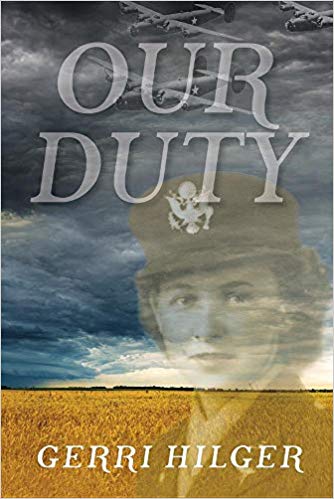
  • OUR DUTY by Gerri Hilger – Friendship, World War II, Military Romance

    OUR DUTY by Gerri Hilger – Friendship, World War II, Military Romance

    Our Duty opens with a group of nursing students sunbathing on the roof of their apartment. Pauline Garrity, aka Polly, has a little bit of fun and decides to sunbathe sans robes. While this stirs some of the girls up a bit, others know Polly is only being Polly. When a fighter plane does a fly-by on a training mission, Polly has a little more fun.

    Here’s a story of World War II with a slightly different bend. Rather than focus on the horrors of what was happening in the trenches, Gerri Hilger centers her novel around Polly and her close-knit group of friends who are attending nursing school together. Our Duty is a novel for fans of lighthearted historical fiction with a sprinkling of cozy romance and a thread of Christianity.

    The first part of the novel follows Pauline Garrity, aka Polly, alongside her close friend Aggie and their schoolmates as they navigate their studies and personal lives while attending nursing school in the early 1940s. There are inter-peer rivalries to contend with, gossip that occasionally falls into the mean-spirited category, and the looming presence of the war which begs the question—which of the young women will choose to enlist after graduation?

    Polly and friends persevere through nursing school and graduate with their degrees, and then each promptly goes her own way. Aggie enlists in the service while Polly stays in the States and works in a maternity ward, often calling on the Lord to give her strength as she helps new mothers whose husbands have enlisted. Life continues on, however, despite the war, and Polly soon finds herself becoming more and more involved with a charming young man named Johnny.

    In Our Duty, Hilger tackles the hefty topic of why some people enlist while others try their hardest to stay home. It should be noted that all of the characters’ reasons for avoiding war have everything to do with family responsibilities and less to do with worrying about whether or not one may die as a result of enlisting.

    Our Duty is largely based on the lives of the author’s family and ends with Hilger discussing what happened to the characters after the story’s end as well as her family’s ties to one another and the war. And while the book focuses on the nurses, the war is never out of the minds of our characters, as letters and news come in detailing the horrors and heartaches of life and death on the battlefields of war. In the end, Hilger has gifted us with a WWII historical fiction with a lighthearted side and an enjoyable sweet romance on the side.

    5 Star Best Book Chanticleer Reviews round silver sticker

  • To DREAM the BLACKBANE: A Novel of the Anomaly by Richard J. O’Brien  – Paranormal, Mystery/Caper, Fantasy

    To DREAM the BLACKBANE: A Novel of the Anomaly by Richard J. O’Brien  – Paranormal, Mystery/Caper, Fantasy

    If you liked Alice in Wonderland as a child, To Dream the Blackbane: A Novel of the Anomaly may captivate you now. While not suitable for children, this dark fantasy engages the reader with strange and unique characters, gritty, Sam Spade-like dialogue, and fanciful imagery.

    In 2063, sixty years after The Anomaly, during which everything changed, in a world now populated by pedigreed humans, hybrids, and a whole gamut of imagined and legendary creatures from other planes of existence, the canis sapien, Wolfgang Rex, operates as a private eye in Chicago’s hybrid ghetto. He is assisted by his secretary, Sally Sandweb, a fun-loving faerie with blue and black wings, and green-tinged skin.

    One evening, two locally venerated vampires barge into Wolfgang’s office to enlist his services. Like the Templar’s treasure was stolen from Jerusalem, a sacred vampire scroll was taken from their lair atop the Sears Tower whilst they slept. After they make him an offer he can’t refuse, Wolfgang agrees to recover the scroll, and a disapproving Sally draws up the contract.

    Shortly after, he has another visitor, Charlotte Sweeney-Jarhadill, from Beggar Creek, Louisiana, who wishes to hire Wolfgang to exorcize the ghost of a Confederate soldier who’s been hanging around her home and bothering her. After another offer he can’t refuse, and deciding he has some leeway on time with the vampires, Wolfgang agrees to do the exorcism.

    Little does he know that these two cases would involve life-threatening danger, and ultimately change the course of his life forever—whatever and wherever forever may be.

    The ensuing story takes Wolfgang to stygian places in Chicago, and to rural Louisiana where Wolfie learns that reality is elusive, whom you can trust isn’t always clear, and there’s no safe place.

    Like the 2063 reality imagined in this story, its tone and mood fluctuate. At times, Richard J. O’Brien’s story seems merely a dark fantasy—a kind of 21st century American gothic with unique settings and characters that keep the reader engaged. At other time, it feels more like a tongue-in-cheek, “gotcha” kind of yarn where the author uses satirical humor, exaggerated characters, and intriguing situations, to entertain fantasy fans. The story’s ambiguous ending contributes to this perception. We hope this means there is more to come!

    One thing is certain, though, when you close the book a haunting suspicion may just well remain: has O’Brien used this genre as a vehicle for a symbolic allegory, addressing certain long-held religious beliefs and currently trending social and political events? In short, To Dream the Blackbane: A Novel of the Anomaly is a curious, provocative read that lingers on. One that we recommended.

  • CATARI: A Novella by Karl G. Larew – Mystery, Psychological, Literary

    CATARI: A Novella by Karl G. Larew – Mystery, Psychological, Literary

    Maxwell Roux introduces us to his story with a Prologue, beginning with a minds-eye picture of a grand house in New Orleans. It is a soft, blossom-scented spring evening. From his hiding place behind a tree, he sees Catari step out on the wrought-iron balcony, fan in hand. Her gown is unbuttoned at the top, revealing her pale complexion glowing in the moonlight, contrasted by her dark-brown eyes and hair. Max had flown down from New York late that afternoon to surprise her, but he chooses to enjoy her beauty from the solitude of the dark garden for a moment before their blissful reunion ensues—marred only by the unpleasant gaze of her step-father.

    This sketch is now a memory of what had been a happy engagement—until Max unforgivably accused Catari of having an ungrateful heart, as Enrico Caruso sang of in “Core n’grato,” a song both of them knew and loved.

    The story begins when Max is called to another grand house, in Fontano, Italy, the home of Catari’s beloved Gran’papa, Il Barone di Fontano. He hears the Requiem Mass sung by a local choir at the funeral of his beloved Catari—only 27 years old—and sees her casket placed in the Fontano Crypt on the grounds of the family villa. It is there that he hears the gossip that Catari was drunk when she fell into the pool at 2:00 AM, as well as the comment by her step-father, Hugh Fontane, that Max, as nothing but an “ex-boyfriend,” has no right to be present. But the Baron had invited him to come, and then to stay at the villa. Later that evening, he and Max talk as friends about their beloved Catari. Max had visited the villa with her several times, and the two men like and trust each other. Finally, fatigue sends them to bed—Max in the room where he had slept before.

    Max awakes at 2:00 AM, somehow urged to go to the pool. He senses Catari’s presence and hears her voice, “I did not want to die. I did not want to die like this.” He hears his own voice, “I’ll find out…how and why, Catari.”

    Thus is this sad love story transformed into a murder mystery, its solution sought by Max, Darlene (Catari’s close friend), and the Baron. Larew’s tale is filled with family history, dating back to the Fontane brothers who fought in Napoleon’s Army in the conquest of Lombardy and were rewarded with the land on which the villa stands; the Fontano brothers who served in the Italian Resistance during WWII; and the Fontano family’s current history in the making. The Three Musketeers, as they decide to call themselves, question the servants and several villagers and search the property inside and out. They engage the help of the family doctor, who had examined the body and found a lesion on the back of Catari’s head. The doctor does not believe that she was drunk. They work with the Chief of Police, who is intrigued when he learns about the pilfering activities of the servants.

    As he has done in previous books of greatly different natures—their characters ranging from WWII military families to Good and Bad vampires—Karl Larew skillfully brings his characters to life. In Catari, he artfully draws not just their natures, but oddities of their physical features, speech, and movement, such as town gossip Madame Cavalli, who finally runs out of words, and the rude and overbearing Hugh Fontane, bursting into the villa declaring that he will have the Baron declared incompetent, thereby revealing his own incompetence. Larew’s knowledge of military history stands him in good stead, as well.

    Max fulfills the poolside promise he made to the ghost of Catari, to “find out…how and why,” but I won’t spoil the how and why for the reader. Nor will I tell you what happens to the Three Musketeers. I’ll say only that, for many reasons, this book offers a good read.


  • PRIVATE MONEY LENDING: How to Consistently Generate a Passive Income Stream by Gustavo J. Gomez, Ph.D. – Budgeting & Money Management, Analysis & Strategy, Personal Finance

    PRIVATE MONEY LENDING: How to Consistently Generate a Passive Income Stream by Gustavo J. Gomez, Ph.D. – Budgeting & Money Management, Analysis & Strategy, Personal Finance

    Are you in retirement, or close to it, wondering how you’re going to make ends meet pulling from your portfolio? Well, you’re not alone if you’re staying up at night thinking about how low-interest rates are killing your investments.

    In a practical and easy to read format, Gomez explains to investors the particulars of a little known, yet potentially lucrative investment technique that can handle the ups and downs of the stock market. Unlike stocks, the underlying security of private money lending is a tangible asset – brick and mortar, so there is another layer of protection for you, the investor.

    But what is Private Money Lending? According to Gomez, it refers to a private individual or organization that lends money. Typically, when you’re looking for financing, you would go to a bank. With private funds, on the other hand, you’re going to an individual or organization that specializes in this type of lending. The upside of private money lending is that it’s less regulated, which means less red tape. The icing on the cake, he says, is that these investments have consistently generated 9 to 12 percent returns* – not bad considering stock market investments have averaged closer to 7 percent, and with much more fluctuations. We can’t forget the economic crash of 2008 when many stock market investments plummeted close to 40 percent.

    In a nutshell, amid the 2008 economic crash, the Federal Reserve lowered interest rates to help boost the US economy, the author explains in fluid and well-organized chapters. The general thinking was to reduce interest rates to encourage people to borrow money, who then would go on to buy more products – all good for the American economy. However, those same low-interest rates translated to less growth for those in retirement. Private money lending offers an alternative strategy that could generate a “predictable, safe, and consistent income stream that this low-interest rate environment does not currently permit,” Gomez says.

    No investment comes without risk, Gomez reminds his readers, so his bottom line advice for investors: do your homework (start with this book), find out who is offering the loan, and check they have a good track record.

    Even though the content derives from Gomez’s doctoral research and dissertation conducted at Florida Christian University in Orlando, it’s not academic in style. In fact, you will find it conversational and accessible, with a thorough glossary of terms (e.g., origination fee, negative amortization, and Private Mortgage Insurance) and recommended reading to further your knowledge.

    Whether you’re in your golden years relaxing on a sandy beach or fast approaching retirement, you will want to read Gustavo Gomez’s Private Money Lending: Learn How to Consistently Generate a Passive Income Stream.

    *as of the book’s publishing (2015)


    Private Money Lending Learn How to Consistently Generate a Passive Income Stream won First Place in the 2017 CIBAs for Instruction & Insight!

  • The GIFT of the TWIN HOUSES: Book One, The Perils of a Reluctant Psychic by V & D Povall – Ghosts, Mystery/Suspense, Psychic

    The GIFT of the TWIN HOUSES: Book One, The Perils of a Reluctant Psychic by V & D Povall – Ghosts, Mystery/Suspense, Psychic

    Six-year-old Sarah Salas blurts out a piece of information she could not have known at a friend’s birthday party. The neighbors begin to gossip about this, calling wee Sarah “evil” and “witch.” In a jiffy, things get uncomfortable. So uncomfortable, in fact, Sarah’s parents to sell their home and relocate to protect their daughter. 

    From that moment on, Sarah’s parents beg her to ignore and suppress her natural psychic abilities. Completely. What’s a six-year-old to do?

    Sarah, eager to please her parents, buries her abilities throughout her life. As a consequence of suppressing such a strong aspect of her character, Sarah inhibits the most essential part of herself: the ability to be transparent, intimate with another living soul. So much so, that her first fiancé leaves her at the altar. Suffering the humiliation, she shuts down another part of herself: her sexuality.

    And the story would end there, but for the fact that upon her early retirement, Sarah heads out to parts unknown, driving with a purpose, but lacking conscious intent. She is, for the first time in decades, allowing that ‘other’ part of her to lead the way. It is only when she truly lets go of the restraints set upon her in childhood that she finds herself in the foothills of the Cascade Mountain Range in Washington state.

    Following a private path, she stops her car in front of a beautiful and compelling home. The house has a note attached to the door indicating it is for sale.

    This house, she knows, must be the reason why she’s here.

    What follows is a whirlwind of characters, both living and deceased, that import their stories into a meaning narrative that forms the basis of the book. And there are a lot of stories to be told: from forbidden love to murder and more. As Sarah opens up to her long, supposedly dormant psychic talents, she creates a path toward understanding the people who once lived in this house – and its twin – and how they wove their DNA into the rooms, floors, and wall, and moreover, how they affect the lives of those still living. The gift is in the telling, and how love conquers all.

    Husband and wife writing team, David and Victoria Povall, bring their talents to the page to introduce the characters in book one of The Perils of a Reluctant Psychic series. The writing is fine with a sweet romance set in the middle of it that lovers of paranormal romance books of a certain age will relish. What is clear, is there are plenty more storylines and adventures in store for Sarah Salas and her rediscovered psychic abilities – and more romantic adventures with her handsome soulmate. A paranormal romance with a happy ending and a promise of more to come! A win!


    The Gift of the Twin Houses by V&D Povall is also available on Barnes & Nobles and iBooks.