Category: Reviews

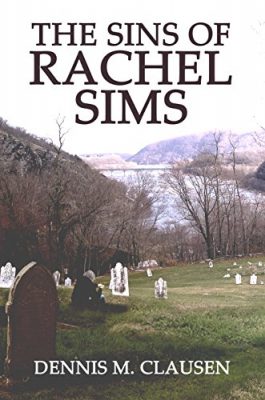
  • The SINS of RACHEL SIMS by Dennis M. Clausen – Absurdist Fiction, Historical Fiction, Psychological

    The SINS of RACHEL SIMS by Dennis M. Clausen – Absurdist Fiction, Historical Fiction, Psychological

    With a nod to Nathaniel Hawthorne and the accused adulteress Hester Prynne in his renowned literary classic, The Scarlet Letter, Dennis Clausen sheds a familiar light on the central character in the multi-faceted psychological tale The Sins of Rachel Sims. In this intriguing two-fold drama, a desperate young woman searches for her own true identity while simultaneously unraveling the mystery behind a woman’s disappearance from decades in the past.

    In May of 1952, the dark-haired Midwestern beauty Rachel Sims mysteriously disappears from the haunting riverbanks of Hodges Island. While gossip mongers spout that the immoral young wife ran off with a well-dressed gentleman from Iowa, the local cemetery caretaker, “Crazy Charlie,” insists he sees Rachel, aka “The Lilac Lady,” walking the island on quiet spring evenings.

    Some twenty years later, Laura Fielding, a graduate student at the University of Minnesota, begins to question who she really is when she stumbles upon an incriminating letter that suggests the couple that raised her are not her biological parents, and the three have been living with stolen identities. The startling information gives Laura a pause and reasons to question her broken relationships and a diagnosed bonding disorder.

    The upheaval triggers her obsessive need to uncover the truth. With the help of eccentric psychiatrist Ned Finley and his friend Aurther Schlepler, a proven psychic who’d helped police with difficult cases – though now a patient in the Farmington Mental Hospital – Laura attempts to find answers about her past and explore the secrets of her childhood memory. Through a combination of regressive hypnosis, a psychic’s intuition, professional insight, and Laura’s own detective work, a winding journey leads her to the area of Point Tyson and reveals plausible a connection to the vanishing Rachel Sims.

    Far beyond a typical cloak-and-dagger rendering, Clausen weaves a more subtle, yet palpable essence of evil lurking in the shadows of this double-edged story. From threatening messages warning characters to “stay away” to the heated glow of a lit cigarette in the dark, Clausen expertly gives his readers nuances of suspense that serve to heighten the drama and keep us glued to the page.

    Through a detailed narrative, Clausen creates an artful balance of people and place. Here Laura’s investigation takes her on a circuitous path showcasing both beauty and danger, from the natural Hodges Island environment where fragrant lilacs bloom amidst an overgrowth covering hidden death traps.

    Legend maintains Hodges Island was inhabited by warrior spirits and “Heaven’s Outcasts” and Laura needs help to unravel this mystery along with the deep secrets of the puritanical church community and the self-righteous male-dominated religious enclave attempting to hide its own sins. To Laura’s benefit, an eclectic group of die-hard locals including – but not limited to – record clerks, diner patrons, and gravestone cutters offer bits of information to help her piece the puzzle together.

    The plot is moved at a steady pace, with action going back and forth between the past and present. A recurring dream from Laura’s childhood serves as an essential connector for these two timeframes. While she contemplates old photographs or finds hidden Bible inscriptions, the feelings of déjà vu are always with her and enhanced in the text with Laura’s italicized thoughts and feelings about her past and the meaning behind the newly found discoveries.

    Like the regressive therapy used to tap into Laura’s childhood, Clausen’s tale revisits a once-thriving rural community ensconced in a history shadowed by lies and deceit. Above all, it proves a well-crafted, compelling read for those drawn to intricate layers of mystery that confront long-buried secrets.

    The Sins of Rachel Sims by Dennis Clausen was Shortlisted in the 2017 CIBAs, in the M&M  Awards for Mystery Novels.


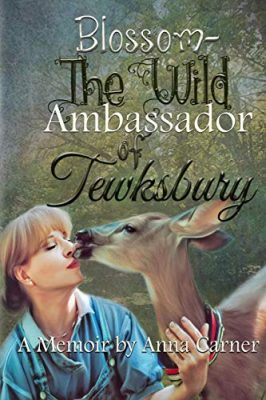
  • BLOSSOM – The WILD AMBASSADOR of TEWKSBURY by Anna Carner – Wild Animal Rescue, Memoir, Nature & Ecology

    BLOSSOM – The WILD AMBASSADOR of TEWKSBURY by Anna Carner – Wild Animal Rescue, Memoir, Nature & Ecology

    Author Anna Carner was living in a horse-friendly farming area of New Jersey in 1999, when she encountered a newborn fawn, barely breathing, near her home. The animal seemed to be communicating its need to her, and, with some experience of animal and human care, Carner set out to revive the fawn.

    She took the baby deer into her house and nursed her back to health. When she and her husband, Pino, saw the fawn curled up asleep with the family dog, the couple knew they had a new pet. Her name, Blossom, seemed suited to her sweetness and soft, gentle beauty.

    But the couple lived in an area where some people consider the deer population a problem; pests to be eliminated, hunting a necessary and enjoyable sport. As Blossom grew and began to range out with other, wilder kin, Carner realized she would have to take extreme methods to shield her from danger.

    Carner and Pino created posters with the animal’s picture and a plea not to hurt Blossom. Some neighbors were sympathetic, but others were cynical. Some even made a practice of stalking Blossom and harassing Carner. One man claimed to have the deer in captivity, demanding a ransom for her return. Carner’s efforts to protect Blossom gradually took root in the community and soon neighbors joined in; other stray deer were saved and adopted. A widespread movement was started that included the possibility of spaying by vaccination to limit the deer population without the violence of hunting.

    In writing her memoir of the years with Blossom, Carner revisits her own past and the violence she suffered as a baby at the hands of her father; injuries that required hospitalization and subsequent treatment for much of her youth. These recollections give her empathy for Blossom and other suffering creatures, and no doubt the reason she is passionate about her role as a rescuer.

    Blossom, as she so vividly describes her, was an ideal patient and pet that seemed to speak at times, and to obey commands almost like a canine. The deer’s sensitivity to her human caregivers is perhaps extraordinary or may reflect what many “wild” creatures are capable of, given a chance. The chapters are interspersed with poems by Jeanne Hamilton Troast, a fellow animal enthusiast. Through action and rich, well-crafted dialog, Carner highlights her endeavors to promote better care of all animals based on the experience she and Pino shared as they cherished their time with Blossom.

    Carner writes both for convinced animal lovers and, additionally, for those who may never have given the issues much thought, offering strong evidence of the worth of living in harmony with deer and other creatures whose perceived harmfulness has been to some extent created by our human rules and boundaries, not by their natural inclinations.

    Not just a sweet deer with a fantastic story, Blossom is the subject for the Nat’l Geographic NATURE documentary. To view a 4-minute video of Blossom’s story please click here.  Blossom was also featured in National Geographic’s Nature presentation, “The Private Life of Deer.” Please click here to see the film.


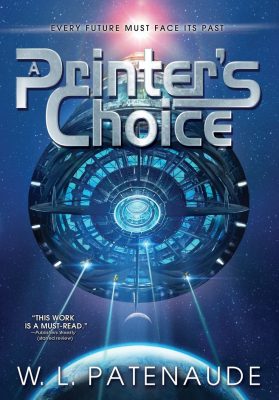
  • A PRINTER’S CHOICE by W. L. Patenaude – Sci-Fi/Cyber-Tech, Mystery, Literary

    A PRINTER’S CHOICE by W. L. Patenaude – Sci-Fi/Cyber-Tech, Mystery, Literary

    W. L. Patenaude’s suspenseful and philosophical novel, A Printer’s Choice, opens in the near future, 2088, and not all is well in the universe.

    Earth is plagued with famine, war, and violent religious extremism. Oceans have risen to deadly levels, and wildfires and storms continue unabated. The world’s resources are being strained and no recovery is in sight. In fact, things are so dire that parents can opt to have themselves euthanized in exchange for the government’s providing for their children’s health and education.

    Elsewhere in the cosmos, a murder has rocked “upside,” a conglomeration of locales in space that are being rapidly developed through a tense and volatile collaboration between engineers and builders. This murder is a first in the “New World” and the circumstances surrounding it set the stage for an investigation that will not only uncover the murderer but also will cause readers to ponder the very essence of human existence.

    Enter Father John Francis McClellan, a Roman Catholic priest in this thirties with a military background. He has been summoned by the Archbishop of Boston and the Vatican to travel to the New World to investigate the homicide. From the outset, the case presents enigmatic details. For example, the victim, Father Tanglao, a Dominican priest, had inexplicably been working as a laborer in the orbits.

    Like everyone else, Father McClellan wonders why a priest was upside where any expression of any faith is strictly prohibited. Was Father Tanglao’s murder connected to one of the engineers or a fellow builder? Could there be a connection to the murderous zealot with a messianic complex, Juan Carlos Solorzano?

    McClellan does know that Father Tanglao had dealings with a high-tech 3D printer, a machine with recesses of “Deep Intellect.”  McClellan has his own history with these sentient machines, encounters that have given him the experience necessary to delve into relations between people and devices possessing artificial intelligence.

    The printers have the ability to design their own upgrades as well as reproduce themselves. “New Athens” was built easily and rapidly by the printers and, given the disasters on Earth, there is an imminent need for worlds to be built in space as quickly as possible.

    The engineers argue that the checks and balances those in charge wish to implement will only hold progress back because they believe they can regain control over the machines down the road. The question will arise, what separates a human programmer from a mechanical one capable of critical thinking? And who “programmed” people? What transpires between McClellan and a specific machine includes a riveting and deeply thought-provoking discussion of trust and free will.

    Clearly, Patenaude is well versed in the readings of Aristotle, St. Thomas, St. Augustine, and Descartes, for starters, and likely a host of philosophers and theologians. His ability to draw upon multiple disciplines and to weave religious and philosophical allegories into characterization and plot put him at the forefront of literary thinkers. Suffice to say, this novel is profoundly deep and thought-provoking.

    While this book will appeal to sci-fi lovers and anyone game for a murder mystery in outer space, it should also spark the interest of anyone interested in grappling with theories of existence and the ultimate power of free will. A priest traveling to an entirely new world in the cosmos and finding that it’s still necessary to wrestle with the age-old questions of faith make for a powerful tale.


  • The ACCOUNTANT’S APPRENTICE by Dennis M. Clausen – Magic Realism, Mystery, Philosophical/Apocalyptic

    The ACCOUNTANT’S APPRENTICE by Dennis M. Clausen – Magic Realism, Mystery, Philosophical/Apocalyptic

    Philosophically sophisticated, the supernatural mystery of Dennis M Clausen’s The Accountant’s Apprentice is reminiscent of the classic apocalyptic comedy Good Omens while bringing its own unique and serious take on the fight against good and evil.

    Justin Moore is a priest on leave after witnessing a murder in his parish office. He is haunted by the events and struggles with making sense of what happened and why the assailant spared him.

    Living in a small rundown studio apartment, Justin makes ends meet by becoming the driver of a mysterious neighbor who calls himself A.C. and claims he is an accountant. But Justin quickly becomes suspicious of his new employer when he fails to find any information about A.C or his company. To make matters worse, Justin attracts the attention of local police after not one, but two neighbors die while living in the apartment across the hall from him.

    As Justin investigates the strange events he is connected to, he begins to question his state of mind, unable to pinpoint the agenda and motives of his mysterious employer. Whenever Justin finds answers, several more questions appear as more and more people connected to him end up dead. In the end, Justin learns that there are forces at work above his understanding and that he has an important part to play in it all.

    Dennis M Clausen is a masterful writer that creates a full and multi-faceted story in a relatively small package. In what starts out as a mystery with a spiritual backdrop, the plot quickly brings in philosophical questions about the good and evil of our capitalistic society and what effects artistic genius has on the world. There are also touches of the supernatural that come into play as Justin tries to make sense of the mysteries around him.

    Clausen develops Justin Moore with a level of mystery to the character, who can arguably be seen as an unreliable narrator. Not much is known about Justin and his life before the traumatic incident he witnesses, and the details of that event change ever so slightly every time he goes back to those memories. These changes and other events cause Justin to question his reality and make him an interesting narrator. Even less is known about the characters A.C. and Ilsa, but they both undergo their own satisfying character development by the story’s end.

    A compelling novel, The Accountant’s Apprentice, leaves many areas of the story unexplored and underdeveloped in a way, perhaps to maintain a mysterious atmosphere. Certainly, its effect will leave readers longing to know what happens next. Perhaps a sequel? (We hope!)

    Clausen employs multi-genre storytelling here, and this approach makes the book a screaming success. In that complexity, there is a literary feast. It is spiritualistic, philosophical, supernatural, mysterious – and apocalyptic. In other words, this story has a charismatic appeal for everyone.


  • WHAT THEY DON’T KNOW by K. V. Scruggs – Medical Thriller, Medical Mystery, Conspiracy Thrillers

    WHAT THEY DON’T KNOW by K. V. Scruggs – Medical Thriller, Medical Mystery, Conspiracy Thrillers

    Global Thriller Blue and gold badgeAuthor K. V. Scruggs proves that What They Don’t Know can kill. When left unchecked, public policy propelled by the best of intentions is still subject to the greed and corruption of those with the power to implement it. Scruggs takes us on a frightening journey where pervasive technology paired with behind-the-scenes corruption can hide grave results from the trusting, and now vulnerable, citizenry.

    Cheyenne Rose lives a glamorous life as a Talk Show Host who sensationalizes the stories of the guests interviewed on her program titled, ‘The Stories That Matter.’  The unexpected adventures of one family on her show irrevocably touch Cheyenne’s heart. She has no idea that her own life is about to be inextricably tied to them and their troubles.

    This young family’s infectious innocence and zest for life spread through Cheyenne and her audience. They attribute their blessings to the new government health care system that has implemented complete access to health care for all – including a life-saving surgery for one of their sons. Cheyenne reports that streamlined efficiencies built into this medical care solution are celebrated by patients, doctors, nurses, and practitioners. It almost seems too good to be true.

    In order to have the peace of mind that comes with such effective health care, small intrusions into individual privacy, hardly noticeable, are necessary. For example, the technology tracking your vital medical signs can dispense pharmaceuticals you may need. In addition, this miracle tech monitors an individual’s activities to ensure they get enough sleep, exercise, and, well, maybe also keeps track of other personal information.

    When an ugly surprise lay ahead for the guest family on Cheyenne’s show, events prompt her to ask questions that government officials don’t want to answer. But how can she stay one step ahead of a political adversary who knows her perhaps better than she knows herself? Now Cheyenne is plunged into the midst of a dangerous struggle that threatens the lives of those close to her, and ultimately her own.

    The author, a physician by day, threads her mastery of medical knowledge throughout this thrilling novel, making it terrifyingly believable. Her writing is suspenseful and exciting, with dynamic characters who heighten the fast-paced mystery.  K.V. Scruggs enjoys writing about thought-provoking medical issues, and the outcome is nothing short of a heart-pounding thriller.

    This dramatic tale explores what can be hidden within the deep, dark crevices of getting what you want.

    What They Don’t Know won 1st Place in the 2017 CIBAs in Global Thrillers Awards!


  • SAXXONS in WITHERSTON: Witherston Murder Mystery by Betty Jean Craige – Cozy Mystery, Women Sleuths, Multiculturalism/Family Drama

    SAXXONS in WITHERSTON: Witherston Murder Mystery by Betty Jean Craige – Cozy Mystery, Women Sleuths, Multiculturalism/Family Drama

    In 1968, Tyrone Lewis was murdered by KKK members for daring to love Allie Camhurst, a white preacher’s daughter. Tyrone and Allie had secretly been dating for months, and when Allie discovered she was pregnant, the two planned to elope when four men in white robes and hoods stabbed Tyrone and raped Allie. Fearing for her life, Allie escaped her hometown of Witherston, Georgia, and began a new life with a new identity.

    Fifty years later, Witherston is again the scene of what appears to be a racially-motivated murder, but this time Crockett Wood, a member of a white supremacist group known as the Saxxons, has been shot to death. The killing comes hard on the heels of a controversial decision by the Witherston town council which recently voted to make Witherston a sanctuary city, taking in and aiding illegal aliens by refusing to cooperate with ICE (Immigration and Customs Enforcement) and drawing criticism both within and without. This small town becomes split along racial lines, and tensions boil over as the past and the present collide when Dr. Charlotte “Lottie” Byrd, a retired college professor, opens her own investigation into Tyrone’s case and finds its twisted connection to Wood’s recent murder.

    The fictional town of Witherston, Georgia, is an American patchwork quilt of diversity, and racism plays a prominent role. From a native Cherokee village to same-sex couples who call the small town home, Witherston is a celebration of heterogeneity, a microcosm for modern America. Though the majority of citizens feel their community is advanced and forward-thinking, it becomes clear that prejudice is not dead when the Saxxons threaten the town – mirroring events occurring in America in recent times. As the threats become more vicious, the Witherstonians must decide whether to let the hate of some overwhelm the lives of all. A clear message emerges in the attitude of characters like Lottie, Beau Lodge, and the Arroyo twins. Despite the hate-spewing white supremacists, the townspeople band together and choose happiness and unity over fear and factions.

    Lottie’s nephews, Jaime, and Jorge Arroyo, and their friend Beau Lodge are the true champions of the novel both literally and figuratively. As biracial millennials, these seventeen-year-olds represent all that is good in ignoring racial distinctions and, instead, celebrating those differences. The boys are smart and clever and most importantly, courageous in the face of prejudice. It is through that bravery that the culminating events occur.

    Saxxons in Witherston is sure to find its audience among those who enjoy history, as the author has done her research, and fans of the Witherston Murder Mystery series.


  • BECOMING JONIKA by PJ Devlin – Coming of Age, Multiculturalism, Historical Fiction/Young Adult

    BECOMING JONIKA by PJ Devlin – Coming of Age, Multiculturalism, Historical Fiction/Young Adult

    Immersed in the nostalgia of classic summer camp experiences, Becoming Jonika is the coming-of-age story of Joni Byrnes, who, after finding herself on the wrong side of the law, receives a second chance at St. Augustine of Hippo’s summer camp in the trouble-ridden summer of 1969.

    Set against the backdrop of the Vietnam War and the aftermath of Martin Luther King Jr.’s assassination, Joni Byrnes is just trying to live a normal teenage life. At the cusp of high school, Joni’s parents send her to Redwood Academy, where they believe Joni will become their ideal daughter. In reality, Joni is quickly labeled by her elite classmates as a loser and an outcast, and the only place Joni feels like herself is in a swimming pool.

    One day after practice, she meets Ishmael, who used to be on her neighborhood swim team and is now recently returned home after being discharged from the military. Ishmael treats Joni like she is special, and because of her insecurities and desire to be loved and accepted by others, she falls head-over-heels for him and follows him down a dangerous path that lands her in a courtroom at the mercy of a judge.

    Instead of sending her to Juvie, the judge gives Joni the opportunity to make amends. She becomes the swimming instructor at a camp for young African-American children. Becoming an outcast yet again as the only white counselor, Joni learns about of her campers’ and co-counselors’ home lives. She sees their courage and perseverance and tries to move on from her own past; becoming her own person in the face of expanding generational and racial divides.

    The hand-drawn look of the cover and the journal-like appearance of the interior create a physical representation of Joni’s report to the judge, pulling readers in and immersing them into the story. The descriptions of the inescapable humidity of summer, the coolness of pool water, and the sweetness of bug juice all feel within reach. In addition to the rich descriptions of Joni’s surroundings, PJ Devlin achieves authentic characterization in the development of Joni and those she encounters throughout the novel.

    Joni’s feeling of being an outcast and a loser hits her upon arrival to Camp St. Augustine of Hippo, where she is different in every way from the people around her. In a heart-to-heart with Joni, one of the counselors’ is explicit about what being at camp means, “For us, that’s freedom. For you, camp’s a prison. That’s the difference.”

    As the summer progresses, Joni is given the name Jonika and finds herself surrounded by people who like her despite their differences. Jonika describes these feelings in her report, “We were different on the outside but not on the inside.”  By summer’s end, she’s uncertain about returning to her old life, but takes courage from the powerful lessons she learned at summer camp. She leaves Joni’s problems and insecurities in the past and instead becomes the person she chooses to be — Jonika.

    Becoming Jonika by PJ Devlin won 1st Place in the 2017 Dante Rossetti Awards for Young Adult Fiction.


  • WARSHIP POSEIDON (The Adventures of Jonathan Moore, Book 1) by Peter Greene – Coming of Age, Maritime War, Treasure Hunt – Action / Adventure

    WARSHIP POSEIDON (The Adventures of Jonathan Moore, Book 1) by Peter Greene – Coming of Age, Maritime War, Treasure Hunt – Action / Adventure

    Author Peter Greene often read to his two children at bedtime. But one night, the bookshelf held nothing that enticed them. So, as he explains in the Acknowledgements to this book, he decided to tell them a story. The first words that came out of his mouth were: “Twelve-year-old Jonathan Moore lived in a three-sided wooden box at the end of a dark and filthy alley.” Thus was born the title character of The Adventures of Jonathan Moore, who Greene decided should be “as normal and as human as any real child,” whether in the nineteenth or the twenty-first century.

    In England of the early 1800s, help for orphans was the duty of family or church. When twelve-year-old Jonathan Moore’s mother dies, and he hears nothing from his father, a Navy captain, he shuns appealing to either family or church. Thus, he finds himself homeless on the streets of London. Fortunately, he makes friends with a boy of similar age, Irish-born Sean Flagon. Together, the boys manage to sweep enough London chimneys to keep them from starving, until one rainy day when first Sean and then Jonathan are snatched by a group of men and soon find themselves in a cage strapped to a cart headed for the Chatham docks. They’ve been “pressed” into service on one of His Majesty’s warships, the Poseidon, which they soon discover isn’t such a bad lot at all.

    The two boys look in awe at the rows of cannon (cannon being both singular and plural in England). And when shown to the closet of a room that is to be their new quarters, they realize that, though tiny, it’s dry, and there are rope hammocks to sleep in, wrapped in blankets. That certainly beats a leaky wooden box in an alley, with a piece of board for a cover. Better yet, they’re soon sitting at tables on the main deck, where hot fish stew is served for dinner (as it is most days, they soon learn), accompanied by hardtack or softtack (hard bread or rolls). The next morning Jonathan awakes to see huge white sails unfurled in the wind. The Poseidon is underway.

    Much adventure and not a little danger await them, from one side of the North Atlantic to the other. After all, England is at war against France, and Napoleon Bonaparte has many fine French warships. One of them is the Danielle, which the Poseidon and her crew encounter more than as they make way from Lisbon to the Bahamas.

    The aim of both these enemy warships is to search for an ancient Spanish treasure chest, which an equally ancient map indicates is buried on Skull Eye Island. On peaceful days at sea, there are lessons to be learned about being a seaman—taught aboard ship by experienced sailors, junior and senior officers, and even Captain Walker. The boys’ lessons also include fencing and swordsmanship, which stand in good stead when they must battle the French crew aboard the Danielle.

    This thrilling tale of high adventure is not without an element of poignancy, however. Jonathan senses that several on board the Poseidon knew or know about his father, Captain Nathaniel Moore, who the boy had assumed was dead. They seemed to recognize him by name, and they treat him with more caring and respect than the other young boys, including his friend Sean. Yet, they consistently change the subject when he tries to question them.

    Exciting and fast-moving as Warship Poseidon is, the tale is rendered even better by its author’s skill as a storyteller. Greene has thoroughly researched this era—including its shipbuilding, the administrative management of both English and French Navy vessels, the design of the warships themselves, and how their crews lived aboard them and battled from them. The story is presented in infinite detail, painted in vivid color, and written in a literary style. Much care has gone into the characters’ speech—emulating the language of the time while ensuring that it can be understood by its twenty-first-century readers, whether they be young or old—since this tale is one to be read with pleasure by all generations.

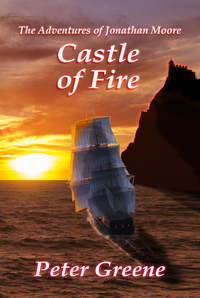
    To Peter Greene we would say—in British parlance both then and now—”Huzzah! Huzzah! Huzzah!” So, have great fun reading Warship Poseidon and then proceed without delay to Books Two and Three: Castle of Fire and Paladin’s War. But don’t stop there! Mr. Greene declares there may be a prequel in the works as well as another type of series beginning!


  • WISSAHICKON SOULS: A Wissahickon Creek Story (Vol. 1) by PJ Devlin – U.S. Historical Fiction, African American Fiction, African American Romance

    WISSAHICKON SOULS: A Wissahickon Creek Story (Vol. 1) by PJ Devlin – U.S. Historical Fiction, African American Fiction, African American Romance

    Claire Penniman, a free black born in the Germantown section of Philadelphia in the early 1800s, is only six years old when she’s indentured to Raymond and Anna Williams, white landowners who have known her family for years. Elizabeth and Moses, Claire’s parents, have already indentured their older son, Samuel, to the Williams in hopes that both children will learn reading, writing, and arithmetic as well as valuable life skills in exchange for working the land and tending the animals.

    Wissahickon Farm quickly becomes part of Claire. She immediately befriends five-year-old Lawrence, the youngest Williams son. As Claire and Lawrence grow older, so does their bond. Anna agonizes over her son’s attachment to the black girl, and her relationship with Claire suffers. Near the end of her twelve-year indenture, Claire and Lawrence’s love leads to pregnancy. The teenagers marry and run away to Haiti, a newly independent country of liberated slaves, to live together in peace as man and wife. Over time, however, hardship and disaster chip away at their love, and Lawrence struggles to find his place in a country where he’s called, the blanc.

    Set in the early 19th century when trains are new and steamboats rule, Wissahickon Souls spans thirty years in the life of Claire Penniman. She grows from an impetuous, daring little girl to a strong, independent woman. Claire’s journey, both physically and mentally, showcases the trials of African Americans in the 1800s. Though Claire’s family has a long history of living in freedom in a Northern city, they are far from free. Prejudice lurks around every bend in Germantown and Philadelphia, and the Penniman family keeps a dangerous secret – the family “business.”

    For decades, the Penniman family has helped runaway slaves find safe havens by delivering hundreds of “packages” farther north, giving permanent refuge to some of the runaways they save. Through the fictional Penniman family, Devlin shows the commitment and courage of people who risked much in the cause of freedom.

    An important motif of Wissahickon Souls revolves around sewing. Claire’s sewing skills become the tie that binds and the fix for broken things. She learns her craft from her mother and grandmother, just as she learns to help slaves to freedom from her father. Claire not only sews clothing to support her family, but she’s also adept at stitching together wounded flesh. Respect for her skill leads to repeated calls for help. Her excellent hand proves racial division can be transcended.

    Lawrence and Claire’s love story is a tragedy reminiscent of Romeo and Juliet. The innocence of their first love becomes victim to profoundly rooted racism, including the subtle but soul-sapping racism of Lawrence’s righteous mother. From vicious white men to a raging flash flood, Lawrence repeatedly saves Claire but is unable to stand beside her in public.

    In childhood, Claire’s spirit and friendship blind Lawrence to their racial differences. Her pregnancy forces him to confess their love to his parents, who refuse to accept the relationship. After marrying and traveling to Haiti, the teenage couple faces unimaginable daily hardships – made worse by Haitians acceptance of Claire while mocking Lawrence as the blanc.

    Lawrence’s increasing alienation drives him to drink and gamble, and he loses Claire’s respect. During ten years of exile, they and their two children struggle to find their place, and their love falters. The death of Lawrence’s father, Raymond, provides the impetus to return to Philadelphia and separate lives – Lawrence to Wissahickon Farm; Claire and the children to her family home.

    Though this is Claire’s story, Lawrence’s mother, Anna, plays a crucial role. Despite her recognition of Claire’s intelligence and savvy, Anna’s world is ruled by the impregnable boundaries of cultural presumptions about the African race. The theme of Wissahickon Souls plays out fully through Anna’s soul searching and her ultimate decision.

    Even in graphic scenes depicting racism’s horror, Devlin’s writing is beautiful and professional. The historical setting is authentic. Readers will walk alongside Claire on her sprawling journey as a freeborn black in the early 19th century when slavery was the rule of the land.


  • The TIME TRAVELER PROFESSOR, Book One: SILENT MERIDIAN by Elizabeth Crowens – Steampunk, Sherlockian, Time Travel

    The TIME TRAVELER PROFESSOR, Book One: SILENT MERIDIAN by Elizabeth Crowens – Steampunk, Sherlockian, Time Travel

    A budding concert pianist delves into the realms of spiritism, sexuality, and scary foreshadowing through his time travel adventures in Elizabeth Crowens’ steampunk novel, Silent Meridian.

    John Patrick Scott, a conservatory student, meets with Arthur Conan Doyle in Edinburgh, Scotland under unusual circumstances because of an elusive and mysterious red book. Arthur, lacking inspiration and tired of his Holmes character, covertly employs John as a ghostwriter. The two also indulge in the transmigration of souls and time travel. The latter topic is of high interest to the young aspiring musician since he has already accrued a handful of time-travel experiences via a mechanism of his creation. Although Arthur introduces John to nightly practices of communicating telepathically, John doesn’t include the beloved author in his time-traveling adventures until years later.

    John’s time-traveling skills sharpen to the point that he no longer needs his device and uses his grandfather’s timepiece instead. He becomes particularly fixed on exploring his past, especially his school days at the Underground University; he includes Wendell Mackenzie, his old schoolmate, on his adventures—some of which John escapes just in the nick of time. Over time, John finds it difficult to distinguish between time travel and dreams and seeks the help of Sigmund Freud and Carl Jung. His adventures take a dark turn when they predict an impending war.

    Sherlock Holmes’ enthusiast, Elizabeth Crowens, spins a wild tale riddled with glimpses of stories and themes from the early 20th century. Crowens’ quirky narrative, which covers sixteen years, could easily befit behind-the-scenes to John’s ghostwriting connections to Doyle’s published works: The Man with the Twisted Lip, The Adventure of Charles Augustus Milverton, and The Adventure of the Greek Interpreter, to name a few.

    Scenes regularly flip from John’s music studies and his time-travel quests, and are heavily punctuated with references to prominent historical figures and their thematic connections of the era, such as H.G. Wells, J.M. Barrie, Jules Verne (fantasy and sci-fi); Sigmund Freud, Carl Jung (psychology); and Aleister Crowley, Theodore Reuss (metaphysical). While sexual identity plays a close second to the last parenthesized theme scenes, providing only innuendos. John continuously processes his particular leanings, weighing his feelings as a woman in some of his time-travel ventures and amid affairs against Doyle’s and Wells’ free-love beliefs.

    Crowens balances nonfiction with fiction by incorporating memorable characters, such as Whit, John’s annoying tutor, and Finn (who John dubs Sherlock), John’s “Jiminy Cricket” guide who is only visible to John and comes and goes as he pleases. Sure to be a new favorite for Sherlock Holmes’ aficionados, Silent Meridian’s cliff-hanging closure is a perfect segue to the second book in Crowens’ The Time Traveler Professor series, A Pocketful of Lodestones.