Category: Reviews

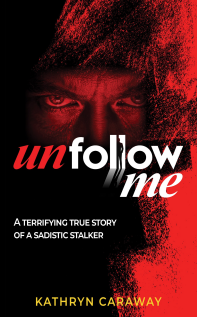
  • UNFOLLOW ME by Kathryn Caraway – Memoirs, Stalking, Contemporary Social Issues

    UNFOLLOW ME by Kathryn Caraway – Memoirs, Stalking, Contemporary Social Issues

    When you’re a target of stalking, “Each day is a fight to stay alive. Even while sleeping, you must be ready.” So reveals Kathryn Caraway in Unfollow Me, a spine-tingling true crime novel tracing a life shattered by severe stalking.

    Although the author uses the pseudonym “Kathryn Caraway” throughout this novel to protect her identity, her harrowing tales of being the target of a stalker and fighting for her rights to freedom and safety are a testament to the real danger she was exposed to. Caraway’s experience creates a compelling story of one woman’s brave quest for justice against her torturer.

    Kathryn emotionally, mentally, and physically falls apart at the hands of a violent, ubiquitous presence. Despite the severity of the crimes committed against her, Kathryn’s concerns are routinely dismissed as irrational and hysterical by law enforcement officials, lawyers, and even long-time friends.

    Before a malicious intruder targets her, Kathryn is a beloved mother, a wonderful friend, and a confident employee. But after she is introduced to Todd, he begins to slowly strip her life from her control.

    Todd absorbs Kathryn’s routines and destroys any sense of safety. He starts hurtful rumors that damage her reputation and cause her to doubt herself and others around her. He invades an office space in her home, installs secret security cameras and listening devices, tracks her car, kidnaps her dog, clones her phone, and befriends her abusive ex-husbands, making her life a living nightmare.

    His aggressive actions only increase in extremity and frequency.

    Overtime, Kathryn’s circle of trusted people becomes smaller. Her sleep and mental health degrade as she spends every second aware of her vulnerability and Todd’s proximity. Any sense of normalcy is turned upside down as Kathryn is forced to become a ghost observing the shambles of her previous life.

    An inspiring story of survival, Unfollow Me brings awareness to the horrors of stalking and its devastating effects on the mental health of those targeted.

    Despite the seemingly endless suffering and anxiety, Kathryn remains steadfast in her commitment to defend her safety and punish Todd for his crimes against her and his other targets. Juggling hundreds of pages of documented incidents in a black binder, Kathryn assembles a case against Todd. Her sacrifices and bravery serve as an eye-opening lesson to readers on the lack of resources for those subjected to stalking and how to support those who are in danger.

    Caraway’s true-to-life novel focuses much-needed attention on stalking as a crime, its consistent dismissal by law enforcement, and the suffering of those who have been targeted

    Caraway not only shares her first-hand experience as a person who’s been the target of a sadistic stalker, but also the lack of compassion by those who are supposed to protect her. Left to fend for herself, Kathryn spends three years advocating for her own survival as any semblance of trust for others is demolished, which leads her to distrust her own mind. “My sole focus was on survival,” she writes. “Life, as I knew it, had become unbearable.”

    Caraway’s diligent attention to detail, a practice learned from years of scrupulous incident documentation, allows her to craft a truly captivating story. Readers will find themselves clenching every muscle in anticipation as Unfollow Me unfolds, horrified and enraged, but ultimately inspired.

    Unfollow Me by Kathryn Caraway won Grand Prize in the 2024 CIBA Journey Awards for Overcoming Adversity in Narrative Non-Fiction.


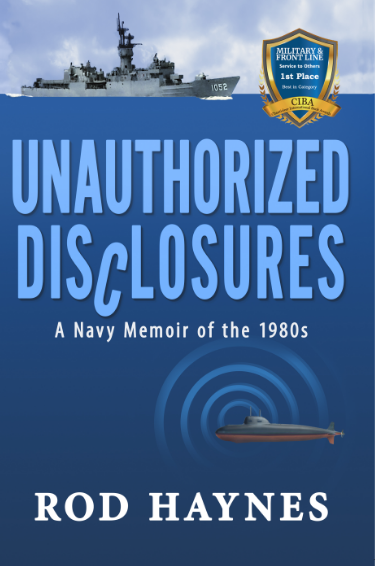
  • UNAUTHORIZED DISCLOSURES: A Navy Memoir of the 1980s by Rod Haynes

    UNAUTHORIZED DISCLOSURES: A Navy Memoir of the 1980s by Rod Haynes


    Rod Haynes’s memoir Unauthorized Disclosures: A Navy Memoir of the 1980s portrays military life without filter, transcending glamorous and heroic images to explore the daily struggles, leadership challenges, emotional battles, and personal growth during his decade of military service.
    We first meet Rod as a young man trying to navigate a directionless civilian life. The burdens of unemployment, fractured family relationships, and an identity crisis lead him to a chance encounter in Seattle with ‘Space Case’, an eccentric, troubled, yet honest character. The relationship offers a glimpse at rock bottom—which Rod fears most.

    Rod decides to join the Navy because he needs employment.

    We follow Rod to Officer Candidate School (OCS), a mentally and physically grueling journey toward adapting to a new leadership role. He tells of the essence of leadership taught in the school, which emerges not through the wearing of a uniform, but through sacrifice, battling doubt, and a drive to look out for others. Marching in sleeting rain, performing relentless drills, and encounters with hard-nosed instructors, Rod ultimately survives the intense pressure of military training with the assistance of a fellow Officer Candidate, a prior enlisted sailor willing to show Rod survival techniques in a high stress military training environment.

    Rod must transition his lessons from theory to practice in real Navy life as he’s assigned to USS Joseph Hewes, a Navy frigate.

    The narrative intensifies with shipboard politics, the real-time pressure of a safety officer’s role, and new tests in leadership. With little glamour found in the life of a junior naval officer, there are gritty chores to perform and relentless demands to address. A racial incident prompts Rod to explore biases and inequalities within, demonstrating that leadership involves more than adherence to rules—it also means standing up for moral principles.

    Rod is no longer the confused youth who once wandered the streets of Seattle; he is now a leader whom people follow and trust, a role that comes with profound responsibilities. As USS Joseph Hewes is deployed into the perilous waters of the North Atlantic, Rod and his crew face challenges not only from Soviet submarines but also from icy winds and raging storms.

    Though a physically perilous experience, Rod emerges from the storm with new admiration for the Captain’s ship-driving skills and thanks that the entire crew survived the tempest.

    This enlightening memoir lays out Rod’s journey from an inexperienced, self-doubting officer to a dependable leader. His portrayal of real life in Ronald Reagan’s era of building a larger Navy is vivid and well researched.

    It’s a journey in which his nerves are constantly tested by drills, unpredictable emergencies, and unforgiving deck watches. He must also confront something that no class or training manual could prepare him for: losing a fellow officer and good friend to an accidental drowning overseas shatters Rod with a sense of helplessness. He realizes that being a leader entails not just issuing commands but also being accountable for the consequences, regardless of the pain that accompanies the orders.

    The character of Ellen Kincaid introduces an important layer of gender equality to the memoir through her silent strength and resilience.

    Haynes does not confine Ellen’s character to a clichéd romantic subplot. Instead, she possesses an independent arc, maintaining a strong presence in the Navy’s male-dominated environment and contributing meaningfully to Rod’s development.

    In October 1983, the USS Joseph Hewes was performing naval gunfire support duty off the coast of Beirut, Lebanon at the time of the Hezbollah attack on the US Marine compound at Beirut International Airport. Haynes’s eye-witness account of 241 US Marines killed during the attack on the morning of October 23, 1983 is a sobering reminder of the dangerous duty he is engaged in.

    Unauthorized Disclosures by Rod Haynes stands out as a narrative combining the authenticity of a memoir with the emotional depth of fiction. Every chapter serves as a lesson. The reader encounters reflections on duty, dignity, or the bonds of camaraderie. It’s an honest story of a life that transcends the honor of uniforms and medals, capturing the inner pain, growth, and resilience of the human spirit.

    Unauthorized Disclosures by Rod Haynes won First Place in the 2024 CIBA Military and Frontline Awards for Service to Others Non-Fiction.


  • VALLEY Of The GIANT SNAKES: Adventure Ace Book One by Mac Bell, Illustrated by Andrew Vanderbilt – Children’s Books, Action & Adventure, Picture Books

    VALLEY Of The GIANT SNAKES: Adventure Ace Book One by Mac Bell, Illustrated by Andrew Vanderbilt – Children’s Books, Action & Adventure, Picture Books


    After crash-landing his jet, young Ace must embark on an epic adventure through the treacherous Valley of Giant Snakes in this fun tale about imagination by Mac Bell and illustrated by Andrew Vanderbilt.

    Valley of the Giant Snakes, the first installment of the Adventure Ace series, takes readers journeying with Ace through a vast and fantastical wilderness.

    Ace encounters a humongous moth gliding overhead, casting an ominous shadow on this unknown world. He weaves his way through a forest of colossal mushrooms as he walks to a mountain in the distance.

    A pair of mysterious eyes glow inside a tunnel, and a giant snake blocks Ace’s path when he backs away. Ace has only his ingenuity to make it past the beast.

    Andy Vanderbilt’s illustrations hearken back to the adventure cartoons of the 70s and 80s, with a fresh look for the modern day.

    Just as you can see the influence of cartoons like Jonny Quest in the story’s action, you can see it in the strong color blocking and dynamic linework.

    Valley of the Giant Snakes delivers its action with a lightness and sense of adventure perfectly fit for young children.

    Adventure Ace will take 5-8 year olds through a land as exciting as it is imaginative. Young readers will enjoy challenging themselves with a few new words, and those who aren’t reading yet will find themselves captivated by the images as they listen to the story.

    Just like any great adventure, the story finishes with a surprising twist!

    Valley of the Giant Snakes by Mac Bell, illustrated by Andrew Vanderbilt, is a promising opener for the Adventure Ace series. Exciting, fearless, and always using his imagination, Ace encourages his young fans to come up with adventures of their own.


  • LITTLEST MANO At BEDTIME by Anita Dromey, Illustrated by Taranggana – Picture Books, Children’s Animal Stories, Children’s Bedtime Books

    LITTLEST MANO At BEDTIME by Anita Dromey, Illustrated by Taranggana – Picture Books, Children’s Animal Stories, Children’s Bedtime Books


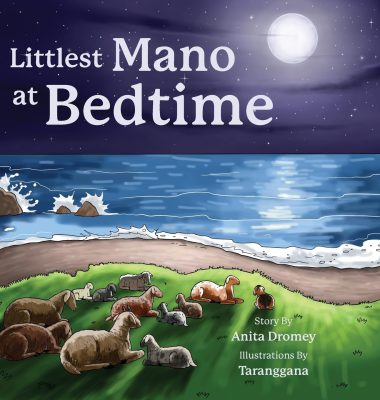
    In Littlest Mano at Bedtime by Anita Dromey, illustrated by Taranggana, Mano wants to keep grazing and playing in the hills when his mamma calls him to come down to the shore.

    The rest of the goats wait for Mano, who only comes when his mamma asks him to lead the group. But Mano trips in the evening darkness and loses his chance to lead the procession. Once he and all the other goats reach the ocean, he promises not to make them wait so long next time.

    Littlest Mano at Bedtime is a great evening book for children learning to read.

    Dromey writes in a consistent rhyming scheme, making the rhythm easy to grasp and read along with.

    This story teaches the importance of listening and cooperating with others, and does so with a soft hand fitting for very young readers.

    Mano’s mother speaks gently even as he insists on staying in the hills. She comforts him when he trips and keeps the other young goats from giving him too hard a time. Mano learns to temper his love for playing in the hills with the practical wisdom of his mom, who encourages him to try leading the herd again in the future.

    Lintang Pandu, through her art studio Taranggana, colors vibrant and soothing landscapes through which the goats walk.

    Her softly-shaded colors match the comforting tone of the story perfectly. Backgrounds start with the warm pastel tones of sunset highlighting Mano’s favorite verdant hills. As evening falls, the illustrations incorporate cool colors that fill the sea and night sky.

    Along with its effectiveness as a bedtime book, Littlest Mano at Bedtime introduces young readers to a herd of uniquely-colored goats, giving children plenty to hold their attention.

    With its nursery-rhyme writing and adorable goat characters, Littlest Mano at Bedtime will help children practice their reading skills and, like Mano, wind down for sleep.


  • THE LAST RIVAL: A Time of Our Choosing by Kyle Palmer – Alternate History, Post-WWII, Action & Adventure

    THE LAST RIVAL: A Time of Our Choosing by Kyle Palmer – Alternate History, Post-WWII, Action & Adventure

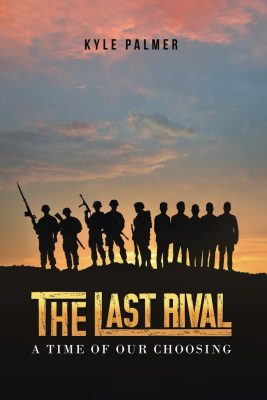
    The Last Rival: A Time of Our Choosing by Kyle Palmer is a modern take on the mid-20th century style of pulp-fiction, combining the genre’s brazen and entertaining storytelling with reflections on the deeper meaning behind all the action. This masculine romp through history dares to imagine the aftermath of World War II—in a slightly different world.

    The story opens in Washington, DC, in 1946, through the eyes of a fictionalized “Wild Bill” Donovan. The real Wild Bill was an American soldier and intelligence officer, perhaps best-known for founding the CIA. Author Kyle Palmer deftly weaves such historic details into his fictionalized account of American history, offering readers a chance to learn as they come along for the ride.

    From the machinations of government in Washington, DC, The Last Rival spirals into the wild resurgence of a World War II threat. The powers of the Third Reich haven’t truly been neutralized.

    A highly skilled team gathers to shut down the power of the lingering Nazis, and it must be done in the greatest secrecy. The project brings together characters like rugged veteran Jim Bolden, his former commanding officer Jack Powell, and the formidable physicist (and unapologetic womanizer) Lew Weinman. This small group of hand-selected men is whisked away to rural Montana for training—where the story really ramps up.

    As their mental and physical resolve is tested, personalities clash. But in the shadow of their common enemy, the men seem to unite as they learn more about what it will take to bring down this final threat.

    With the training in Montana complete, they travel south, taking on a cross-border journey to their harrowing destination.

    Along the way, Palmer brings up fascinating relics of the past, like “bat bombs,” incendiary devices strapped to hibernating live bats developed but never used during World War II. These strange-but-true historic details lend realism to a story that can veer toward the fantastical with the sheer bombast and undeterred strength of the main characters pushing past the realm of believable heroics.

    As the men close in on their target, they tangle with growing trouble and excitement. They’re assisted by a short list of allies, including two women who’ve been biding their time in Nazi country until help could arrive. Readers meet many more such characters who add complexity to the story.

    The Last Rival propels toward a climax of total action, complete with twisting loyalties.

    In some ways, the book’s denouement is its most lingering element. No end is left untied; every character has a clear finale, happy or not. But rather than wrapping things up summarily, Palmer leaves his characters with a fascinating reflection on philosophy and religion, calling back to earlier moments in the book. It’s such thoughtful and surprising moments of insight that set Kyle Palmer’s The Last Rival apart from its simpler pulp-fiction predecessors.


    Chanticleer Book Reviews 4 star silver foil book sticker

  • ONE KISS by Michelle Ashton – Memoirs, Spirituality, Inspirational

    ONE KISS by Michelle Ashton – Memoirs, Spirituality, Inspirational

    One Kiss by Michelle Ashton is a poignant and emotionally unvarnished memoir of life through loss, healing, and the grim, lovely battle of being human.

    One Kiss feels like a private journal—vulnerable, scattered at times, terribly real and sympathetic. Readers walk beside someone who’s still dealing with life’s challenges—working through heartbreak, trying to heal, stumbling, getting back up, and asking big questions she hasn’t yet found the answers to.

    Much of this book circles around Ashton’s deep, complicated attachment to Noah, the man she calls “Adonis” and her “Twin Flame.” She relates with painful but relatable honesty how it feels like to wait, to hope, to wonder if you should hold on or walk away. Who hasn’t sat there refreshing their messages or praying for a sign that maybe this time things will turn out differently?

    But One Kiss reveals far more than just romantic longing, as Ashton opens her everyday life to the reader.

    She shares her love for her brother Seb, the joy she gets from her niece and nephew, and the little experiences that remind her she’s still fighting. One moment, she’s breaking down over a memory that haunts her or a silence that’s too loud, and in the next moment, she’s belting out songs in the car or laughing with the kids. That mix of grief and light feels so real because our complex lives rarely offer just one emotion when we struggle.

    Ashton’s spiritual experiences thread through One Kiss.

    She talks about seeing signs, feeling nudged by something bigger, and wondering if the universe (or angels or God) is trying to guide her. She never comes across like she’s trying to preach or claim some special wisdom, but rather attempting to make sense of her own experiences with touching authenticity.

    Through her “One Kiss” project (which gives the book its name), Ashton wants to do something meaningful by helping survivors, protecting animals, and making the world a little less cruel. Even when she’s burned out or doubting herself, she keeps circling back to that powerful question: “How can I turn my pain into something useful?”

    One Kiss foregoes a typical memoir structure, reading like a conversation over coffee as someone pours their heart out.

    It rambles and loops back on itself at times, lending to its casual and personal tone. In the end, what may stick with the reader isn’t just Ashton’s heartbreak or her spiritual reflections, but her stubborn resilience. She’s learning, piece by piece, how to keep moving when everything feels stuck, how to keep loving even when it’s messy and painful, and how to slowly start building the life she wants to live.

    Michelle Ashton’s One Kiss maintains its conversational and realistic style even when it becomes passionate or fragmentary, which complements the narrative since it welcomes readers to empathize with their own experiences. You will likely discover elements of yourself here from times when you’ve felt sad, lost, and weary. The text is not flawless, but healing is not either and that’s what makes it hit close to home.


  • BACK to ONE by Antonia Gavrihel – Contemporary Romance, Family Life, Audiobook

    BACK to ONE by Antonia Gavrihel – Contemporary Romance, Family Life, Audiobook

    Antonia Gavrihel shows off superb storytelling and narration skills in her audiobook, Back to One, where passion, family, and, most importantly, friendship clash in an emotionally intimate slow-burn romance.

    When Catherine Leigh meets famous actor Kyle Weston at a Hollywood party, an unbreakable bond snaps into place. But, while Cate and Kyle each acknowledge this intense connection, their life situations make a courtship impossible. Cate is happily married, and Kyle’s career leaves him with little time for any personal ties.

    The two vow to take romance off the table and love each other as best friends—or at least try to.

    Cate and her young family help reinvigorate Kyle’s strained relationship with his son Scott, while Kyle revives Cate’s acting career. This surprisingly wholesome romance focuses on the support that two true friends can give each other, and how it forms a strong foundation to lean on during difficult times.

    Back to One, Gavrihel’s debut novel, was quickly followed up with three additional books in the series of the same name. This audiobook version brings even more vibrancy to her work.

    The audiobook’s dynamic and engaging character voices highlight Gavrihel’s entertainment background and family ties. She’s obviously comfortable in front of a microphone as she breathes life and emotion into each one of her characters.

    A captivating audio adventure from a perfect light beach read, Back to One delivers the feeling of a summery getaway no matter where readers are when listening to this engaging tale of star-crossed lovers. Gavrihel’s exceptional imagery and narration transport readers from Hollywood to Montana and New Orleans to Aruba.

    The greatest strength of this novel are the characters who bond and conflict with the perfect blend of drama and realism.

    The story’s villains are unsympathetic troublemakers motivated almost exclusively by lust or greed. Their schemes provide unending fuel for dramatic fire and leave the reader hoping their karma will come back to haunt them.

    The two incorruptible main characters stand out amidst their unethical antagonists. Cate is both flirtatious and innocent, reliant on the overprotectiveness of her older brother and Kyle to maintain her dignity and safety. Kyle fills the role of a self-identified player who feels guilty about not being there for his son while traveling for work.

    Gavrihel uses familiar romance tropes, infusing them with the atypical conflict of two lovers who attempt to put their true feelings aside for the sake of the other people in their lives.

    What makes the two characters unique is the care they show for their families and their genuine, though at times strained, commitment to platonically loving each other.

    Readers’ interest will be piqued with the ever-present question of whether or not their commitment to being friends will persevere despite their true feelings for each other. This sweet twist makes Back to One a perfect romance for readers who want some feisty drama and a bit of steamy tension, but nothing graphic, which can be a tough combination to find in contemporary adult romance.

    Ultimately, Antonia Gavrihel’s Back to One is an emotional romance that provides a unique perspective on the ties between friendship and love—and how difficult it can be to suppress the latter. Gavrihel’s impassioned narration and tension within the story create a compelling audiobook that’s nigh on impossible to pause.

    Back to One by Antonia Gavrihel is available through the above links and right here through Spotify!


  • DISABILITY Is HUMAN: The Vital Power of Accessibility in Everyday Life (Audiobook) by Stephanie W. Cawthon PhD – Disability Advocacy, Ableism, Accessibility

    DISABILITY Is HUMAN: The Vital Power of Accessibility in Everyday Life (Audiobook) by Stephanie W. Cawthon PhD – Disability Advocacy, Ableism, Accessibility


    In the audiobook Disability is Human: The Vital Power of Accessibility in Everyday Life, Dr. Stephanie W. Cawthon advocates for the rights and needs of a group that is often underrepresented, ignored, or misunderstood.

    This exceptional audio version of Disability is Human has a companion workbook for those interested in incorporating its ideas into programs, institutional practice, or daily life. The audio version covers the book to the last letter and is easy to comprehend.

    Cawthon contrasts ableism against accessibility, including her own experiences as a person born deaf who uses hearing aids and sign language to communicate. She tells of a time before anti-discrimination laws were enacted to protect disabled peoples’ rights and make the world available to everyone.

    Cawthon comes to this conversation with deep, personal knowledge of the issues faced by disabled people.

    As a child she received speech training at a special school for disabled children, but when she was seven years old her family moved to California and enrolled her in a mainstream Catholic school. To navigate the new hearing-centered learning environment she had to sat in the front row and read lips.

    After graduating, Cawthon went on to attend Stanford University, where she dove into early research on assessing accessibility for deaf children. This gave her the opportunity to explore what it fully meant to be disabled in today’s modern world.

    Disability is Human helps the reader understand many of the ways that one in four people might experience a disability.

    She emphasizes the need for understanding and suggests ways we can improve accessibility to a population that wants and needs to participate within this complex world—a world with buildings that lack a ramp to higher levels for people in wheelchairs, or lectures that don’t provide sign language interpreters to enable a deaf person to understand what is being said.

    Cawthon organizes her chapters around the concept of accessibility for all people, how to address some of the most glaring shortfalls, and how to discuss the topic of disability without making disabled people feel diminished or less-than. Her discussion isn’t coined in terms of victimization, but rather what accommodations could be authentically inclusive for all levels of abilities and not impose further barriers on a person who may already be struggling to engage in everyday life.

    Readers will find both expert knowledge and first-hand experience in this timely and important discussion.

    As the narrator of her own book, Cawthon reads with clarity and precision, and her years of training in enunciation and public speaking shine through. She doesn’t deviate from her text and even takes time to describe each graphic in the book.

    Cawthon lists her resources at the end of the book, guiding readers to explore more on the subject. She also includes a “Time to Reflect” section with focused questions and suggestions at the end of each chapter, and a “Creator Call Out” that offers links to other experts in the disability community who are working hard to break down barriers within their own spheres of influence.

    Readers in education, health, and business will find Disability is Human: The Vital Power of Accessibility in Everyday Life both engaging and informative. Cawthon provides valuable insights to help shape our perspective and encourages readers to engage in the conversation around accessibility in a meaningful way.


  • DISABILITY Is HUMAN: The Vital Power of Accessibility in Everyday Life by Stephanie W. Cawthon PhD – Disability Advocacy, Ableism, Accessibility

    DISABILITY Is HUMAN: The Vital Power of Accessibility in Everyday Life by Stephanie W. Cawthon PhD – Disability Advocacy, Ableism, Accessibility


    In Disability is Human: The Vital Power of Accessibility in Everyday Life, Dr. Stephanie W. Cawthon advocates for the rights and needs of a group that is often underrepresented, ignored, or misunderstood.

    Disability is Human offers a broad scope of examples and advice that has proven to enhance lives through accessibility, whether implemented in programs, institutional practice, or daily life. The book also has a companion workbook for those interested in incorporating its ideas into programs, institutional practice, or daily life.

    Cawthon contrasts ableism against accessibility, including her own experiences as a person born deaf who uses hearing aids and sign language to communicate. She tells of a time before anti-discrimination laws were enacted to protect disabled peoples’ rights and make the world available to everyone.

    Cawthon comes to this conversation with deep, personal knowledge of the issues faced by disabled people.

    As a child she received speech training at a special school for disabled children, but when she was seven years old her family moved to California and enrolled her in a mainstream Catholic school. To navigate the new hearing-centered learning environment she had to sit in the front row and read lips.

    Cawthon attended the Standford University, where she dove into early research on assessing accessibility for deaf children. This gave her the opportunity to explore what it fully meant to be disabled in today’s modern world.

    Disability is Human helps the reader understand many of the ways that one in four people might experience a disability.

    She emphasizes the need for understanding and suggests ways we can improve accessibility to a population that wants and needs to participate within this complex world—a world with buildings whose stairs deny a person in a wheelchair, or a lecture that doesn’t provide a sign language interpreter for a deaf person.

    Cawthon organizes her chapters around the concept of accessibility for all people, how to address some of the most glaring shortfalls, and how to discuss the topic of disability without making disabled people feel diminished or less-than. Her discussion isn’t coined in terms of victimization, but rather what accommodations could be authentically inclusive for all levels of abilities and not impose further barriers on a person who may already be struggling to engage in everyday life.

    Readers will find both expert knowledge and first-hand experience in this timely and important discussion.

    Cawthon lists resources at the end of the book, guiding readers to future reading. She includes a “Time to Reflect” section with focused questions and suggestions at the end of each chapter, and a “Creator Call Out” offers links to other experts in the disability community who are working hard to break down barriers within their own spheres of influence.

    Readers in education, health, and business will find Disability is Human: The Vital Power of Accessibility in Everyday Life engaging and informative. Cawthon provides valuable insights to help shape our perspective and encourages readers to engage in the conversation around accessibility in a meaningful way.


  • SOMETHING I KEEP UPSTAIRS by J.D. Barker – Supernatural Thriller, Mystery, Horror

    SOMETHING I KEEP UPSTAIRS by J.D. Barker – Supernatural Thriller, Mystery, Horror


    An old and hungry thing wakes beneath the house on Wood Island. It calls out to another generation of children. In J.D. Barker’s supernatural mystery, Something I Keep Upstairs, a circle of New Castle teenagers digs up the unholy secrets of those who came before them.

    When the hermit Geraldine Rote dies without clear cause, her grandson Spivey inherits Wood Island and the historic house upon it. He plans to spend the summer as a carefree sixteen-year-old rather than submitting to another round of cancer treatments. With the help of the mysterious estate lawyer Marston, Spivey escapes his parents’ reach.

    At first, the island becomes a perpetual party, drawing an endless stream of kids and alcohol. But only a few learn the truth behind Wood Island’s dark stories.

    Billy Hasler goes along with the strange rituals that self-styled witch Alesia introduces to their friend group. He defends Spivey from their parents trying to wrestle legal control of his inheritance away. But both on Wood Island and among the older generation of New Castle, Billy begins to see a dangerous influence overtake the people he knows best.

    A missing girl, a doorway to the dead, and a demand for sacrifice leave Billy unable to tell who might get—or already have—blood on their hands.

    Billy struggles to protect himself and his friends without being ousted from their ghastly project. Local Police Chief Whaley roots through decades-old evidence to figure out the strange cycles of death surrounding Wood Island. Among those who were already claimed by the thing on that solitary rock, some push the kids away from that same fate while others lure them further in, eager to feed the beast.

    Drawing on the real-world ghost stories of New England, Barker creates a familiar small-town setting before revealing the horrors beneath the surface.

    The cast of teens embody the emotional struggles and reckless passion of adolescence. Spivey becomes swept up in the excitement of his inheritance and the social standing it gives him. He doesn’t consider the danger he’s putting himself and his fellows in—not until it’s too late to back out. Billy, even as he worries his friends might be taking their rituals too far, can’t bring himself to abandon his girlfriend Kira Woodward.

    Everyone wants to belong among their friends and loved ones. The only question is how much they’re willing to sacrifice for it.

    These mundane, relatable character conflicts both contrast and give emotional weight to the growing supernatural terrors. We fear and root for the teens because they feel like people we might know in our own lives—or might have been ourselves.

    This grounding character work makes each mystery impactful as Barker ties the tragedies of the island to those of the cast themselves.

    Something I Keep Upstairs holds a wealth of mystery fitting to its New England inspiration.

    The implausible coincidences around Geraldine’s death lead Whaley to the strangeness of Marston’s family law practice and the particulars of the will, which in turn only reveal further questions about the sinister power within Wood Island itself. The abduction of fifteen-year-old Lily Dwyer hangs over myriad characters as a dreadful implication of what their peers or family might be capable of.

    As the supernatural threats become undeniable, Barker reveals a blood-chilling history that confirms just how much danger the characters have welcomed upon themselves. Small details seeded throughout the early parts of the story take on new, terrible implications.

    By the time Billy learns what sort of beast his friends have awoken, they’re all caught in its jaws.

    Over the course of a Stygian summer storm, Something I Keep Upstairs pits its characters against a roaring, famished death. Uncovering the past might give them the chance to avoid repeating it, but not without a hair-raising fight.

    A tale of adolescence in the shadow of sacrifice, a mystery that relishes the mythic power of the dead, and a relentless supernatural thriller, Something I Keep Upstairs will—like its ancient villain—grasp myriad readers with no intention of letting go.


    5 Stars! Best Book Chanticleer Book Reviews