Category: Reviews

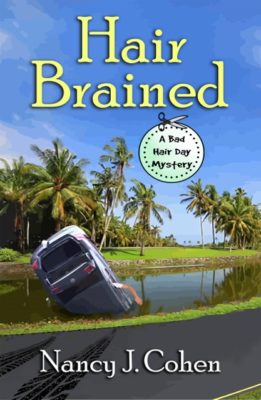
  • HAIR BRAINED: The Bad Hair Day Mysteries, Book 14 by Nancy Cohen – Cozy Mystery, Amateur Sleuths, Women Sleuths

    HAIR BRAINED: The Bad Hair Day Mysteries, Book 14 by Nancy Cohen – Cozy Mystery, Amateur Sleuths, Women Sleuths

    A young infant and a flurry of disturbing information enter Marla’s life in Nancy Cohen’s newest mystery, Hair Brained: The Bad Hair Day Mysteries, Book 14.
    Marla Vail’s expectations of bringing in a joyful and prosperous New Year immediately dwindle when she learns that her friends, Tally and Ken Riggs, have gone missing, leaving Luke, their four-month-old son, in the care of the babysitter. Since Marla is listed as guardian of Luke, she and Dalton, her husband, have no choice but to bring Luke to their home. Marla faces the “great unknown” with a ray of hope that she would be hearing from her friends soon. But that never happens.

    A trip to the hospital confirms Marla and Dalton’s worst fears. A car accident leaves Ken deceased and Tally in ICU and comatose. Now Marla has to find a way of juggling caring for Luke while running her busy hair salon. Amid the abrupt changes under horrific circumstances, Marla has no idea that there is much more behind the car crash, especially when one of Ken’s colleagues is murdered.

    If you haven’t already heard of Nancy Cohen, where have you been? The award-winning mystery author pens unique and fascinating stories about a somewhat underdog mid-thirties hairdresser who has a fetish for detective work. And why not, considering her husband is a police detective? The odd stylist-sleuthing combo makes for fresh and tantalizing reading for a wide-range audience that goes well-beyond mystery aficionados.

    Cohen’s writing style is surefooted, and her characters are vibrant and varied (multicultural, racially mixed), as in Hair Brained, the fourteenth installment of her Bad Hair Day Mysteries series. Marla, Cohen’s featured character, may have had her past set of traumatic situations, but that doesn’t seem to stop her when she senses something awry. A feisty woman-of-action, Marla faces fear trembling but determined to win over dark and seemingly unconquerable conditions even with an infant in her arms. 

    One would think that characters would be commonplace in laid-back Florida, but that’s far from the truth. From warm and caring family members and well-meaning people scarcely eking out a living to an imaginative mix of surly folk, Cohen’s cozy represents folks from various backgrounds befitting amalgamated Floridians. The action builds with a slew of twists, turns, and near nail-biting climactic tension. 

    The hair-raising, fast and delightful cozy mystery, Hair Brained: The Bad Hair Day Mysteries, Book 14 won First Place in the CIBAs 2018 M&M Awards for Cozy Mystery Novels. 

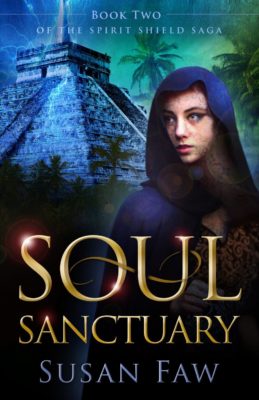
  • SOUL SANCTUARY: Book Two of the Spirit Shield Saga by Susan Faw – Epic Fantasy, Magic/Fantasy, Young Adult Folklore & Fairy Tales

    SOUL SANCTUARY: Book Two of the Spirit Shield Saga by Susan Faw – Epic Fantasy, Magic/Fantasy, Young Adult Folklore & Fairy Tales

    A savage civil war is consuming the Primordial tribes. With heavy losses for both Spirit and Flesh Clans, each side is taking extreme measures to secure Cathair and the mysterious forests and mountains surrounding it. Controlling Avery and Cayden Tiernan would ensure that victory. Born the children of royals from both clans and meant to unify the land, the twins have always been exceptional. It isn’t until much later that they learn they are Spirit Shields, godlings returned to Earth to help mankind and nature.
    The twins aren’t the only godlings in the kingdom. Artio, released from her heavenly prison through a blood merging of bear and man, and Helga, Great Mistress of wicked souls, seek to rule man and spirits and take revenge on the twins, whatever the cost to the humans in their path. With Queen Alcina and Marea, spiteful High Priestess whose place has been usurped by Avery, the twins must fight to reunite and save humanity from annihilation at its own hands while fighting their sisters, both with designs on being the sole god of the Primordials.

    This second installment of the Saga series has complicated plot twists. From the ever-changing loyalties of godling and man to the emerging backstory of Avery and Cayden, the novel throws the reader into the action and adventure on a non-stop flight through the intrigue and back-stabbing of Cathair. Fantasy readers will love the healing unicorns, fighting phoenixes, helpful werewolves, and bossy pegasusi. A mixture of world mythologies unites the familiar with the innovative, creating an intriguing blend and a truly unique setting.

    Susan Faw is a masterful storyteller, and Soul Sanctuary’s strength lies in its multifaceted telling of myths and legends. With alternating points of view showing all perspectives of this battle of souls, the novel encompasses a tale as vast and varied as the kingdom itself. Readers may wish to dip into the first book in the series, Seer of Souls, to settle into this outstanding read.

    Whether man or godling, no character is safe from the machinations of others, creating a network of subterfuge. The twins, Avery and Cayden, were born tools of unification but are also the chosen habitat of returning godlings, Alfreda and Caerwyn, who give up immortality for the chance to save the souls of man. Cayden must maintain the Well of Souls where souls reside until rebirth. Avery is the keeper of animal souls meant to pass on and be reborn. Because of their influential positions both as mortals and godlings, everyone seeks them.

    The clans are controlled by their high priests, who sacrifice both spiritually and physically at will. Artio herself, a mixture of animal, man, and thunder, is created by the Flesh Clan, who quickly learn controlling her is much harder than it appears. Artio, though, is a slave to her revenge plot against Helga. Helga, trapped within a mountain, controls the souls of the lost and the former human queen, Alcina, but falls victim to her own jealousy of Artio, which led to her captivity. Unable to cut the strings of control and create their own destiny, all of the characters are mere “pieces on a giant chessboard, being pushed to and fro.”

    Within this puppet-master world, the characters learn that only their combined strengths will win the day. Nowhere is this more evident than in the duo of Avery and Cayden. Though kept separate by the force of their siblings and the clans’ trickery, twin-power will save the people of this besieged land. But even if the dynamite duo manages to reunite, real success will hinge upon some critical, human and nonhuman characters who help the godlings along the way. Only with the teamwork of man and beast will the souls of all be saved.

    Soul Sanctuary: Book Two of the Spirit Shield Saga won First Place in the CIBA 2017 Dante Rossetti Awards for Y/A Fiction.


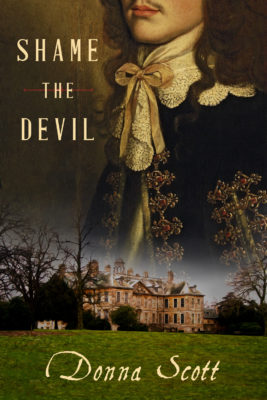
  • SHAME the DEVIL by Donna Scott – Historical Romance, Historical British & Irish Literature, Scottish Historical Fiction

    SHAME the DEVIL by Donna Scott – Historical Romance, Historical British & Irish Literature, Scottish Historical Fiction

    Colin and Roddy Blackburne are sent into indentured servitude in England in 1643 with their father. Gavan Blackburne supported the divine right of King Charles I. Still, after the tragic death of his wife that both Colin and Roddy witnessed, he relinquishes his efforts to protect the remainder of his family.
    The Blackburnes become stable hands at Appleton Hall, where the viscount’s daughter Emma quickly catches the eye of young Colin. Emma is curious about the young Scots in the stable and drags along Alston, the son of Lord Stillingfleet. The four children start a friendship that intertwines their lives forever.

    By 1648 the King is being tried for treason. Emma and Alston are facing pressure to find suitable matches for marriage, and both have secrets to hide. Emma and Colin have professed their love for each other, while Alston has fallen for Stephen Kitts, a man who has a dark past and devious intentions for the future. Colin is forced to flee the day before his family’s servitude ends, leaving only a letter behind. Tragedy strikes when Roddy’s jealousy causes him to betray the young lovers ending in unforeseen consequences.

    Scott’s writing is magnificent. One of the first signs of her skill is how quickly the real-world melts away when reading. History buffs will enjoy the way Shame the Devil effortlessly interlaces the complex historical backdrop into the narrative, while those reading for the romance will not be overwhelmed with historical exposition. While the history of the setting is a crucial element of the story, it mainly shows up in character dialog. The way characters talk about and react to the political tensions of mid-seventeenth-century England fuels the conflicts of the novel and demonstrate how character-driven a story can be.

    The English Civil War takes a back seat to the book’s real action, secrets, and lies. Naturally, in a story of forbidden romances, there is plenty of betrayals, but there is just as much steadfast love. A well-written book like Shame the Devil makes readers invested in the likable characters and the unlikable ones. All of the main characters are complex and feel real within each page. Scott manages to make the character’s flaws and motivations believable and make sense within the narrative to make each character’s story feel complete.

    The intricately woven secrets and lies against the backdrop of an unprecedented dethroning of the monarchy make Shame the Devil a page-turning experience. Historical fiction and romance fans should not miss out on this book. Highly recommended.

    Shame the Devil won First Place in the CIBA 2014 Chaucer Awards for Early Historical Fiction novels.


  • FAIRFIELD’S AUCTION: A Witherston Mystery by Betty Jean Craige – Animal Cozies, Women Sleuths, Cozy Mystery novels

    FAIRFIELD’S AUCTION: A Witherston Mystery by Betty Jean Craige – Animal Cozies, Women Sleuths, Cozy Mystery novels

    There is a point in time when what is done cannot be undone. That’s a tough lesson to learn for the attendees at Fairfield’s Auction. Most of them are residents of Witherston, a rural town in Georgia. The items up for auction represent the history of a divided community. After all, what is the community? Is it property to be bought and sold and owned, as the white settlers viewed it? Or is it land not to be divided but shared as the original Cherokees believed? And the historic items that are on display to be auctioned, is it right that the tomahawks and Cherokee blowguns stolen from the tribes be sold at high prices by the settlers’ descendants? Who really owns the history that is on sale? And is ownership worth killing for? Disagreement can lead to murder.

    Mr. Hempton Fairfield is an antique dealer of Cherokee artifacts. His auction is enthusiastically attended. As the character, Neel points out, “ ’Lots of people like history . . . We want to know our ethnic and cultural roots.’” But not everyone supports this sale of historic items. There are protestors with signs saying the Cherokees were robbed. Tension is high as the bidding proceeds. The final surprise for sale is an African Grey parrot. Outrage ignites again. Residents are appalled to see for sale an apparently abused, talking, living animal being. Charlotte Byrd is herself determined to save this bird named Doolittle, and take the saucy animal home with her.

    After the auction, the police are kept busy as threats are made and then bodies begin to turn up in the town. Who could be the killer in their midst? There are ominous text messages to investigate a suspenseful hunt to match specific Cherokee artifacts to descendants’ families, and what follows is one wild. It seems that no one knows anything, and no one is talking, except the African Grey Parrot. With the abuse that bird has seen, those comments are certainly alarming. Charlotte’s family and friends are tenderly training Doolittle to see a bright future for himself. And then there are the chickens. Lots of chickens. Everywhere. This mystery is filled with humor and passion, and an urgency to bring the killer to justice before another person, or animal, is murdered.

    Craige challenges her readers to track physical clues, to follow tech clues through texts and blogs, and also to re-examine preconceptions and perspectives. It’s a soulful glimpse into a time and history of rural Georgia, and how the deeds of yesteryear impact the populations of today. History cannot be undone. It’s what you do with today that will create tomorrow’s history. How will you affect your descendants? That is the question that Witherston will face.

    Fairfield’s Auction: A Witherston Mystery won First Place in the CIBA 2017 M&M Awards for Mystery novels.


  • FORGOTTEN RAGE: Never Forgive. Never Forget (Book One in the Forgotten Series) by Melodie Hernandez – Serial Killers, Detective, Mystery/Thrillers, Pacific Northwest

    FORGOTTEN RAGE: Never Forgive. Never Forget (Book One in the Forgotten Series) by Melodie Hernandez – Serial Killers, Detective, Mystery/Thrillers, Pacific Northwest

    In Forgotten Rage: Never Forgive. Never Forget, Melodie Hernandez introduces Detective Luz Santos. Young, attractive, and smart, Santos works in Seattle, Washington, a city known for dark, rainy days. Hernandez sets the stage for a serial killer whose victims are not the rich and famous, but the homeless.

    Detective Santos rushes to the first murder scene, and soon, we are embroiled in the professional and personal life of one tough cop. Santos’ heart belongs to Cheech, her Chihuahua, but Santos holds out hope, after several failed relationships, of finding the elusive partnership she’s always hoped for.

    Ms. Hernandez filters the story through the lens of savvy Latina cop, Detective Santos, who is hell-bent on finding this killer before the killer finds her. As she works to exhaustion, she also struggles with her own demons and nightmares.

    But Santos is relentless, and when she arrives at the scene of the second murder victim, the potential killer is found asleep nearby with the murder weapon on him. But Santos isn’t convinced.

    Meet Nick Mason, a former attorney turned homeless guy. After his arrest for the murder of victim number two, he knows enough about the law to keep his mouth shut. Once Santos discovers his pre-homeless-identity and the reason he’s on the streets, the two become embroiled in a race to find a ruthless killer who is spiraling out of control. Luz stays ahead of the killer by a hair. As the bodies pile up, the clues come in too few and too almost too late.

    Hernandez weaves lines from her original poem through the book to introduce chapters. The lines are from the killers POV, and they are chilling, to say the least. Another stroke of genius comes when Hernandez inserts chapters written in the first person from the killer’s POV, which brings us up close and personal with a deranged killer. But Santos is far from understanding the basics, for example, is the killer male or female? Hernandez keeps us guessing to the end when they find the last clue.

    Hernandez presents a protagonist both human and relatable with a satisfying ending that ties up all the loose ends just enough for her fans to beg for book two.  This fast-paced mystery will have you reading into the night to find out what happens next. A page-turner extraordinaire, one that we highly recommend diving into.

    Forgotten Rage won First in Category in the CIBA 2018 CLUE Awards for thriller novels.


  • The FORTUNE FOLLIES by Catori Sarmiento – Dark Fantasy/Horror, Alternative History – Sci-fi, Romance

    The FORTUNE FOLLIES by Catori Sarmiento – Dark Fantasy/Horror, Alternative History – Sci-fi, Romance

    In a dystopian future, two young women struggle for livelihood, love, and a better future in the very altered city of Seattle.

    Sarah Igarashi came to Seattle out of desperation in 1949. World War II has ended, but not as described in our history books. It was won through the invasion of Japan by American military aided by metal robots known as Iron Boys, an invention of a manufacturing genius, Robert Sinclair. Sarah sees in the lights and new transportation systems of Seattle while she attempts to reunite with her cousin Penelope.

    Both young women survived the internment camps during the war, but Penny, receiving the bulk of the family inheritance, lives in a large house shared by other relatives – a luxury compared to anything Sarah has ever known. She will have to work and pay rent to Penelope, which will mean long, dreary shifts in a Sinclair factory for pennies a day.

    As Sarah begins to see what America has become, she longs for something better. Forced out on her own, she discovers that immigrants like herself are targets of violence and oppression. But a group calling itself the Patriots is quietly initiating a rumble of rebellion, speaking out for equality in a society that has become increasingly stratified. Sarah is gradually drawn to them despite the danger of involvement and the over-reaching power of the Sinclair-dominated system.

    Awarding winning author Sarmiento was raised in the Pacific Northwest and has lived in Japan, so the settings and the diverse cultures of this fascinating fantasy are well within her ken. The most curious and attractive feature of her novel is that the plot is based around family failings and restarts, with the futuristic twists serving more as background and color for the personalities and their clashes and reconciliations. Instead of being “about” the new technologies that have changed the world for better or worse, as is generally the case in future fiction, The Fortune Follies is about people seeking comfort, safety, and some hope of success in an unpromising atmosphere of gloom and overarching avarice.

    Japanese speech, characters, and culture provide a further layer of interest. The reader will see Penny’s search for love, slowly warming her cold, arrogant exterior, while Sarah’s determination to stop the greed machine will overcome her need for personal security. Though their differences are notable and a source of constant tension, both women find solace in music.

    Sarmiento’s broad vision makes this novel work, with careful and smart details as the treatment of immigrants and the poor still rankle in today’s real America. The reader could envision a sequel involving a war between people and machines, but that, of course, if up to the author.

    The Fortune Follies won First Place in the CIBA 2018 CYGNUS Awards for Science Fiction novels.


  • KLEE WYCK JOURNAL (The Making of a Wilderness Retreat) by Lou McKee – Small Homes & Cottages, Canadian Exploration History, Pre-Confederation Canada, Pacific Northwest

    KLEE WYCK JOURNAL (The Making of a Wilderness Retreat) by Lou McKee – Small Homes & Cottages, Canadian Exploration History, Pre-Confederation Canada, Pacific Northwest

    Lou McKee’s Klee Wyck Journal is a beautiful sharing of a bold adventure played out in the wilds of Canada’s West Coast. Here the love of kayaking and the outdoors leads to a dream fulfilled and a revealing memoir that artfully showcases the building of a remote cabin retreat, the power and beauty of nature, the love of family and friends, and the value of self-discovery.

    As an avid kayaker and camper, Lou McKee often explored the coastal areas of Washington and British Columbia. A trip to Vancouver Island ultimately turned into a yearly tradition. Lured by one particular stretch of beach, Lou and her fellow travelers decided to stake their claim on an area they affectionately christened “Klee Wyck.” The moniker was an homage to noted Canadian artist and writer Emily Carr, whose work was inspired by the natural landscape and indigenous people of the Pacific Northwest coast.

    While the wild and pristine setting was clearly a draw for tent camping, overcast skies and torrential rains eventually forced Lou’s spirited clan to consider more secure sheltering. Over the next several years, a practical and cozy little cabin in the woods begins to take shape. In this naturalist’s playbook the homey structure evolves through a combination of brains and brawn, as well as the creative use of cedar beach logs, reclaimed wood, prefab materials imported from the city, and numerous found objects. Amidst the likes of an artfully designed mosaic-type floor featuring cedar rounds and beach gravel filling, a sacred lookout and miniature garden created in memory of a friend’s deceased daughter, a rare glimpse of ethereal white rainbows or “spy-hopping” whales, each subsequent year brings together McKee, family members, and friends for shared work and play, stories, celebrations, mouth-watering innovative meals, and the continuous expansion of the charming wilderness dwelling.

    In this captivating blend of words and imagery, McKee’s colorful first-person narrative documents daily happenings, observations, and continuing work on the cabin. It renders intricate sketches of the local flora, fauna, and a bounty of natural treasures gathered from the beach. McKee’s background as a painter, illustrator, greeting card artist, and designer translate as an integral part of this journal. Whether a favorite piece of camping gear, like the candle lantern that served as a welcoming front porch light, the humorously adorned “hoo-hah” sculptures created at the shore, intricate seaweed ruffles, or smoothly polished sea stones ultimately interpreted as powerful, enlarged pastel paintings, the finely detailed ink and colored pencil drawings provide an ideal visual complement to McKee’s remarkable unfolding story.

    Each chapter covers a new season at the family compound and lists a new roll call of visitors. Here ages range from a visiting 6-year-old granddaughter to an active 80-something-young friend. McKee’s well-crafted work effortlessly chronicles the wild curiosities of this coastline neighborhood. McKee’s journal entries always speak to her core sentiments from the flight of kissing ravens or confrontations with roaming bears to hidden places for gathering mussels and clams for the steamy chowder pot. We agree with her when she says, “This experience should be everybody’s accessible right…. Nature is still the most healing entity.”

    The far-reaching sea is a constant presence in McKee’s writing, commanding respect with both its lulling tranquility and rolling intensity. While a knowledgeable seafarer, weather, winds, and white-capped waves can give rise to concern from even the most experienced of kayakers, facing down such fears proved a crucial component in McKee’s Klee Wyck experience.

    This is more than a memoir relating a vacation retreat; this is the story of a woman going after her dream with vision, determination, ingenuity, imagination, and purpose. McKee not only brings family and friends along for the ride, but the resulting Klee Wyck Journal is like a personal invitation for readers to journey into the Canadian wilderness and experience coastal life through an artist’s keen eye. This unique takeaway of being in a homespun cabin by the sea is lovely, heartfelt, and inspiring.

    Klee Wyck Journal (The Making of a Wilderness Retreat) won First Place in the CIBA 2018 Instruction & Insight Awards for Non-fiction work.


  • The SUBURBAN MICRO-FARM: Modern Solutions for Busy People by Amy Stross – Fruit Gardening, Sustainable Gardening, Garden Design, Gardening & Horticulture Reference

    The SUBURBAN MICRO-FARM: Modern Solutions for Busy People by Amy Stross – Fruit Gardening, Sustainable Gardening, Garden Design, Gardening & Horticulture Reference

    Author, educator, and urban farmer Amy Stross offers a comprehensive look at how to repurpose a small yard in the city for basic sustenance and so much more.

    Award-winning writer Stross has composed a thoroughly practical guide to everything a reader would need to know to do what she did: transform a yard into a farm. Acknowledging that the ground surrounding a town dwelling is hardly what one thinks of when one thinks farmland, Stross draws from her personal experience to show precisely how the transformation can take shape. Her colorfully illustrated manual gives the basics for managing an ample garden space, or micro-farm, almost down to the minute (in fact, seven minutes twice a day).

    Stross was caught between jobs and challenged to make the best use of time and space. Growing the kinds of foods her family liked to eat on a tenth of an acre, preparing and preserving them and, at times offering produce for sale became her grand quest. She shares the wisdom she gained as she gradually moved from beginner to experienced farmhand, to teacher of others. She tells readers what, why, and how to grow sustainable crops from the depths of the soil on up.

    One bias Stross invites us to overcome is that gardens are ugly and should be hidden. She blasted that notion by using the “parking strip” – that piece of land between the sidewalk and the street – for cherry trees, providing not only the beauty of the spring blooms but, after a few years, an abundance of cherries for jams and preserves. She makes useful suggestions about how to explain one’s project to perhaps skeptical or critical neighbors. She recounts our American history of Victory Gardens as a success story supporting the home garden venture. If we can, why should we not provide a good portion of our edibles by our own labor? Later, the author became involved in community gardening, learning from, and helping others in a socially responsible setting.

    Stross’s book combines memoir and good humor with an encyclopedic knowledge of the subject. She starts with soil with composting readily available substances like coffee grounds and eggshells, then covers annual plantings and planning with a micro-farm calendar. Instead of seeing hills, rocks, and other barriers as problems, Stross shows how these can be utilized in the overall strategy of garden planning. Stross goes on to recommend specific plants for specific purposes such as hedgerows, shady areas, and saleable products like cut flowers and homemade soaps. Following her example, readers can become writers, teachers, and sharers of the vast body of information she presents. The Suburban Micro-Farm projects Stross’s personal win-win-win-win: readers will learn, learners will do, doers will share, and all will be the better for it.

    The Suburban Micro-Farm: Modern Solutions for Busy People won First Place in the 2018 CIBAs for Instruction and Insight.


  • The SECRET of the MOON by Anthony Allaway – Metaphysical Sci-Fi, Fantasy, Myths & Legends

    The SECRET of the MOON by Anthony Allaway – Metaphysical Sci-Fi, Fantasy, Myths & Legends

    In a world once nearly obliterated by war, mankind has been put under the control of powerful religious forces. However, not all humans are convinced of the beneficence of their rulers. A young man named Axel is destined to combat the evil that pervades his realm.

    Axel is an introspective young man, partner to Val, his beautiful true love, with whom he shares many secrets from childhood. He questions the meaning of life, the mysteries of the cosmos, even the works of God. His nemesis Lucinder is the offspring of a mother raped and savagely beaten by his priest father, leaving him with no feelings of love or compassion, only hatred underpinned by a deep cynicism.  Now known as the Serpent Priest, Lucinder and his goddess-like lover Shira hold thousands in thrall, promulgating rigid religious doctrine. When Axel learns that Lucinder is planning a global upheaval, he knows he must act before Lucinder has a chance to exact his wrath.

    First, Axel urges his little band of loyal companions to retreat by entering the Enchanted Forest.

    The forest is seen as a mysterious, dangerous place, but Axel reveals that he spent time in the forest as a child and that there are forces of good within its shadows. From a Buddha-like human figure and heavenly visions, Axel will learn why he has been chosen and what sacrifices he will make in an epic battle against evil.

    In this engaging debut fantasy, Anthony Allaway writes with an undeniable flair for the genre with tropes reminiscent of Tolkien and C. S. Lewis.

    He uses Biblical lore, European mythology, and ancient folklore in his story, though all are clothed in illusion and metaphor. One example is the fruit tree that stands in the middle of the Enchanted Forest, the tree from which Axel and Val eat the fruit. As a consequence of taking and eating the fruit, the children are banished from the Temples of Avalon, where the monks reside. But from the fruit, in Allaway’s mystical depiction, Axel is given revelations about the powerful secret of the moon.

    The author has created vibrant characters: innocent children; nefarious priests; memorable females like the generous-hearted Grace and the nasty-minded Shira; and angelic beings who seem a cross between the pure spoken of in religious literature and the all-seeing but humanly flawed celestial overseers described in Greek mythology.

    The blend of heady philosophy and an action-packed plot forms a colorful, page-turner-of-a novel.  Allaway’s story is the stuff dreams are born out of, easily envisioned in cinematic images that will appeal to all imaginative readers.

    Chanticleer Book Reviews 4 star silver foil book sticker

  • TOKYO TRAFFIC by Michael Pronko – International Crime Thriller, Detective Story, Crime Thriller/Suspense

    TOKYO TRAFFIC by Michael Pronko – International Crime Thriller, Detective Story, Crime Thriller/Suspense

    Michael Pronko’s novel, Tokyo Traffic, the third book in the Detective Hiroshi Series, will pull you in from the first page and keep you turning to the final word. He develops a mystery/thriller that gives nothing away while leading us down dark back alleys in his exotic Japanese Tokyo Prefecture setting.

    The title, Tokyo Traffic, catches our imagination, as though the book might explore densely populated Tokyo and the traffic that gets snarled on freeways and down narrow dori’s, or the pedestrian traffic that surges through Shinjuku and down crowded sidewalks almost shoulder to shoulder in a sea of humanity. And actually, he captures both of those meanings in his book, but he also explores the underlying theme of human trafficking, especially of underage girls.

    Pronko develops a rich cast of characters and builds a dangerous and evolving world in which they play hide and seek. Sukanya, a fourteen-year-old Thai girl and overall kickboxing badass, is our first point of view character. She escapes a murder scene with clothes she scavenges, a wad of bills, a laptop, an iPad, and thus begins the wild ride, Tokyo Traffic. 

    Sukanya runs from Kenta, another badass, but one who finances the porn and human trafficking, while racing his Nissan GT-R down Tokyo’s highways and byways, avoiding the law and Kirino. Kirino would like to teach him a lesson, the hard way.

    Our hero, Detective Hiroshi, finds himself in the middle of a Tokyo that most tourists never see. Hiroshi chases Kento and Kirino, a larger fish in the human trafficking pond. They race from the docks of Yokohama to hard porn studios in downtown Tokyo. Hiroshi follows the money, and Pronko gives us the world of crime using cryptocurrency and blockchain technology.

    This is a convincing backdrop that doesn’t overpower us with corruption and porn but focuses on the characters and their struggle to survive. Pronko handles his plot and world-building deftly and creates a sympathetic vehicle to explore and bring light to the horrors of what it might be as a child caught up in the drug-addled world of human trafficking and child porn.

    Tokyo Traffic is a fast-paced thriller that introduces us to a world we might have heard about on the news. Pronko develops characters that leap off the page. We want them to escape, we want them to get caught, we want them to solve the case, and Pronko keeps us guessing right to the end, as we wonder who will eventually win in this high stakes game of humans for sale.

    This book will not disappoint, in fact, you won’t be able to put it down.


    (Find a link to The Moving Blade, review here)