Category: Reviews

  • EXPLORE EUROPE on FOOT by Cassandra Overby – General Europe Travel Guide, Walking Guide, Mountain Climbing

    EXPLORE EUROPE on FOOT by Cassandra Overby – General Europe Travel Guide, Walking Guide, Mountain Climbing

    A Blue and Gold Badge that reads I & I Instructional & Insightful Non-fiction 2018 Grand Prize Explore Europe on foot cassandra overbyDue to COVID-19 sweeping across continents, travel restrictions are at an all-time high. With the general population being placed on lockdown, the need for social distancing, and hunkering down moving towards an indefinite timeframe, some much-needed armchair travel adventures couldn’t come at a better time.
    Here in Cassandra Overby’s encyclopedic guide Explore Europe On Foot, readers are taken through a step-by-step process of dreaming, planning, and hopefully soon experiencing memorable, slow travel ventures of a lifetime. Whether it’s choosing a route and destination, deciding what to pack, finding appropriate accommodations and food options, or dealing with inevitable challenges, Overby supplies a world of information in this colossal foot travelers’ bible.

    A personalized introduction draws us into Overby’s early disillusionment with travel, and what she felt was its all-too-often focus on the inauthentic global itinerary. A 2015 extended European tour with her now-husband, Mac, soon changed her mind. The trip filled with long walks and opportunities to live like locals ultimately rekindled her traveling desires and made her realize this slower, off-the-beaten-path journey mode offered a much more genuine and rewarding experience, and truly “opens the door to trail magic.” Along with the best natural beauty a region has to offer, Overby showcases such travels as an opportunity to glimpse varied cultures up close and personal. Foot travel is a chance to learn the rhythm of a region’s daily life and participate in everything from the likes of a shared meal to chores on a farm, or sing-a-longs at the local watering hole.

    The book includes specifics of 15 hand-picked walks from classics like the Tour du Mont Blanc in France and Italy, to lesser-known routes like King Ludwig’s Way in Germany and Portugal’s Rota Vicentina, as well as options for shorter wanderings. A planning section covers everything from travel companions and arranging transportation, to obtaining passports and plane tickets, to making reservations and buying travel insurance. Pre-trip exercises for both body and mind, along with detailed packing information offer shared knowledge for a positive travel experience. Beautiful interspersed photographs help take us around the globe. Whether the “meres” of England’s Lake District or the dunes of Eng Chebbi in the Sahara Desert, whirling dervishes in Turkey or a special message of “Joy” spelled out in stone along Scotland’s West Highland Way, all capture the heart of Overby’s enthusiasm.

    The rich narrative is woven throughout with poetic descriptives. Consider the beauty of an Icelandic trek rendered as ” … intricate designs swirled in the earth by crawling and cooling lava, brave wildflowers that don’t mind a challenge.” Even a simple Spanish proverb of “On a long journey, even a straw weighs heavy”, highlights an important message about the need for light, versatile packing. Clearly the author’s smart advice about bringing home the best souvenir from a trip coincides with the less incumbrance sentiment in suggesting travelers return to their homeland with the practical nuance of a new custom or attitude, i.e. perhaps enjoying the lingering dinners practiced in France, or realizing the importance of family as viewed in the Italian culture.

    Overby’s shared anecdotes and experiences provide a nice change-up amidst the facts and figures featured throughout the chapters, particularly if the book is read from start to finish. Readers will find the information overwhelmingly beneficial in terms of necessary specifics for trip planning. Also, the book’s easily followed design allows readers to meander through chapters and dream of where they will go when they can.

    Overby’s own foot-travel enthusiasm ignited similar passions with family and friends, and ultimately became the impetus for a new life’s calling and writing this book. In the resulting Explore Europe On Foot, this walking aficionado now serves as both guide and inspirational cheerleader to help all wannabe hikers turn their dreams into reality someday.

    Explore Europe On Foot won the CIBA 2018 GRAND PRIZE Insight & Instruction Awards and remains one of our favorites.


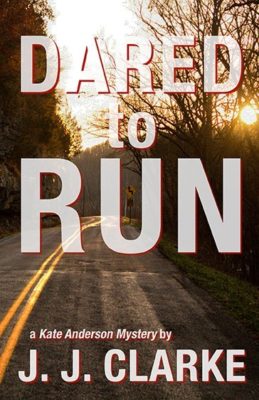
  • DARED to RUN: A Kate Anderson Mystery, Book 1 by J. J. Clarke – Suspense/Thriller, Hard-boiled Mystery, Female Sleuth

    DARED to RUN: A Kate Anderson Mystery, Book 1 by J. J. Clarke – Suspense/Thriller, Hard-boiled Mystery, Female Sleuth

    In this stirring whodunit by writer J. J. Clarke, a young woman flees from an evil-minded stalker and finds herself in an underground of female supporters who know how to protect her.
    Kate Anderson is tough – tough enough to work in law enforcement and use a gun if she has to, but she is being pursued by a man named O’Dell who has her number – and may have her cornered. O’Dell is crafty, determined, and never loses sight of his prey.

    Only a few people know about Kate’s dilemma – a former workmate, her new boss, and the grandfather who took her in (and taught her to stand up for herself) after the accidental death of her parents long ago. With some unusual advice and training from a women’s consortium that includes Dennis/Denise and a big, protective dog named Sic’em, Kate feels safe most of the day but knows that at night, her stalker is out there somewhere, watching and waiting. When her grandfather is threatened, all her strategies fall apart. O’Dell is found dead, and she has no choice but to flee. Luckily she now has the backup of experienced, similarly maltreated women who work in tandem to whisk her out of the state, give her a new name, new home, and new purpose. It is only when an old friend passes away that Kate realizes she has to go back home, no matter what the consequences.

    Clarke writes this thriller novel like she was born to the task, inventively including in her lively cast of characters a cadre of Dolly Parton lookalikes and some very fierce nuns. She allows her heroine to be both a dead-on shootist and a first-rate pie chef. The men in her wildly twisting story are equally complex, from Dennis/Denise to the kindly granddad who may have a few scurrilous skeletons in his closet. All these freaks, friends, and feisty females will show Kate their true colors when push comes to shove.

    With action on every page and a gift for conveying disturbing realities, Clarke quickly sweeps the reader into Kate’s perils, showing her leading lady’s strengths, bravado, and resilience. In fact, Clarke’s professional background in law enforcement gives her work extra punch, from inside knowledge of police procedure to the punchy dialogue. Readers will surely enjoy all members of the ensemble, from nuns to hard-boiled cops. 

    Dared to Run is the first book in the Kate Anderson Mystery series, Dared to Return is the second. Clarke weaves her magic in this new must-read series for women seeking to be, as Kate’s grandfather says, “fiercer and smarter” – and for anyone who likes gritty mysteries with a keep-you-guessing-until-the-very-end. Dared to Run is currently a CIBA 2019 CLUE FINALIST for Suspense/Thriller Fiction. Recommended!


  • The QUISLING FACTOR by J. L. Oakley – Historical European History, Wartime Fiction, Historical Military Thriller

    The QUISLING FACTOR by J. L. Oakley – Historical European History, Wartime Fiction, Historical Military Thriller

    During World War II “quisling” became a byword for a particular type of traitor, one who not only betrays their own country but also actively collaborates with the invaders. The origin of the term was taken from an actual person, a Norwegian named Vidkun Quisling, who didn’t merely cooperate with the Nazis but actually headed a collaborationist regime in his own country.
    The Quisling Factor takes place in the immediate post-war period, as the Nuremberg Trials are gearing up in Germany. Norway is conducting its own post-war legal purge of collaborators at all levels of government.

    The story is a direct follow-up to the author’s award-winning World War II novel, The Jøssing Affair. This second novel focuses on the physical and emotional toll of war, and its precarious weight of peace on the survivors.

    While the events of J. L. Oakley’s latest novel directly relate to those in The Jøssing Affair, each book is quite capable of standing alone. The first one deals directly with the dangers of war, particularly for those who were part of the anti-Nazi resistance. The Quisling Affair is a peacetime story. While the novel definitely deals with the war’s aftermath, it also sits on the chilling crossroad between a spy thriller and Nordic noir, as the dangers faced by former intelligence officer, Tore Haugland, his wife Anna and his Norwegian family face in two directions.

    During the war, Tore was captured by the Gestapo, then tortured by Henry Oliver Rinnan, a Norwegian who ran a notorious organization that targeted resistance organizations in the Trondheim region. He is now scheduled to testify against Rinnan and his vicious gang. While those leaders are in prison, someone on the outside clearly does not want Tore to testify. His family is being threatened to perhaps block his testimony. There is also the possibility of betrayal from within. Not all of Tore’s Norwegian family is willing to accept his half-German, half-American wife as they are unable to separate their suffering at the hands of the Nazis from her heritage.

    This meticulously researched historical epic delves deeply into the traumas of all the survivors, whether military, resistance, or civilian, as well as peering into the abyss that lies between the horrors behind them and the hopefully brighter future ahead. The reader sees into Tore’s mind and empathizes with the way that his war continues to eat at him – and his heart that has chosen not just to survive but to love again.

    We highly recommend The Quisling Factor for readers looking for an exceptional post-WWII story, for a fantastic thriller with both espionage and domestic elements, and for anyone who loves Nordic noir and would like to see it set in another era. This book is a winner.

    The Quisling Factor won the Hemingway Book Awards Grand Prize for the 2020 Chanticleer Int’l Book Awards.


  • CELIA’s HEAVEN by Nancy Canyon – Magic Realism, Family Saga, Contemporary Literature

    CELIA’s HEAVEN by Nancy Canyon – Magic Realism, Family Saga, Contemporary Literature

    It’s as if a large chunk of her heart was wrenched away in an instant. Celia’s twin sister died suddenly in a terrible accident. Now Celia is haunted by this dear sister who is gone forever. Moreover, the emotional distance between herself and her parents, the only family that’s left behind, is painful. From her hell on earth, she yearns for her own, Celia’s Heaven, where all could be right again. But the road to Heaven is paved with broken promises and a shattering revelation.
    Celia leads an unsatisfying life. The residents in her town are repulsed by her because she works as a stripper. Her father berates her for her life choices. She gets it, but she makes good money, and money is hard to turn down. Although Celia’s boyfriend asks her to marry him, she still likes to be with other men and acts on her impulses. Amid the emotional chaos, Celia continues to look for a miracle. The only thing on the horizon, however, is the worst winter snowstorm in years, and it could be deadly.

    On the anniversary of her twin’s death, Celia reminisces about the times the two shared together.  But something weird is happening, she is seeing glimpses of her twin – even hearing messages from her. What is she trying to say? Is there some warning to communicate? Or is it some secret she needs Celia to know? Her sister’s spirit is restless, and Celia is trying to understand and help. Perhaps by helping her sister, she will be helping herself as well.

    Nancy Canyon’s beautifully written story has a smooth, crisp, surface tone with an underlying, pulsing energy. Fascinating, conflicted characters will grab any reader’s interest right from the start. Even the dialogue is masterful for what is said and what is left unsaid. All in all, Canyon shines at painting detailed, intense character portraits that spring to life and find their way right into the heart of the reader. Each character struggles to reconcile the choices they’ve made that affect them and those around them. But now they face fears about what is to come. The powerful writing takes the reader into the intimate journeys of Celia, her boyfriend, and others including her sister. These are women and men who live in quiet desperation, and thoughtfulness, praying for a better life and hoping to survive.

    Set against a backdrop of a nightmarish snowstorm, Canyon’s characters are put to the test, trying to survive the current situation that seems to have supernatural strength and the emotional turmoil they each face. Is peace a possibility? Is happiness and love too much to hope for? Celia’s twin may know something that will change lives forever if only Celia discovers the key to unlock her message.

    Celia’s Heaven won First in Category in the CIBAs 2013 PARANORMAL Awards.


  • LIVING WHERE the RABBITS DANCE (Choestoe Book 2) by J.R. Collins – American Western Fiction, Native American Literature, Coming of Age Fiction

    LIVING WHERE the RABBITS DANCE (Choestoe Book 2) by J.R. Collins – American Western Fiction, Native American Literature, Coming of Age Fiction

    In this stirring, coming of age saga by J. R. Collins, an old man shares his recollections of a time when the good old life was turning bad in his home region of the Tennessee mountains.


    Jebediah, known as Jeb, Collins was born in 1815 in a place known to the local Cherokee Indians as Cho-E-Sto-E, “Land of the Dancing Rabbits.” Owing to their closeness and their many shared needs, the family is, in a sense, adopted by the Cherokees. Jeb’s brother marries a Cherokee girl, and he himself is blessed by a sort of spiritual brotherhood with a Cherokee boy named Wolf who was born the same night as he. The story, a sequel to Collins’ earlier work, The Boy Who Danced with Rabbits, opens in 1827 as Jeb and Wolf, just on the brink of adolescence and able to act in manly ways, go on a hunting expedition. They slaughter a huge wild boar and are enjoying their conquest when renegade Indians enter their camp, demanding to know the whereabouts of a female slave who has run away into the woods. The intrepid lads manage to turn their intruders away and set out on their own to find the woman, after being alerted to her possible location by a panther, known in that part of the world as a “painter” cat. They find her nearly dead. Wolf sets her in a cave known to his people for its healing powers, where a huge bear will remarkably take part in her care before Jeb’s sister Anne can arrive with herbs and other remedies she has learned from her Cherokee relations.

    But lurking in the hills at that time are many, even greater dangers, as Jeb and Wolf learn when they encounter two surveyors for the United States Army, even now planning what will someday be called the “Trail of Tears,” driving the indigenous people abruptly, violently, from their spiritual and physical homeland. The reminiscences of Jeb as an old man give hints of that shameful time to come, while he sees his younger self resting rather easily after having helped to save the dying woman who, it evolves, has reason to rejoice at being found by members of Wolf’s tribe.

    Collins was raised in the area about which he writes so knowledgeably. He has an ear for the local dialect that runs throughout the narrative, and sensitive awareness of local lore with its powerful undertones of Native American culture and history. His sense of the tight connection between humans – both Irish and Cherokee – and the land they occupy is a dominant theme, along with the deep distrust both have for government men and the miners that have come to strip the area of its store of gold. Many supernatural events also demarcate the story, like the bear’s healing attention on the wounded escapee, and the many etheric visions experienced by Jeb as he realizes he is growing into manhood through his perils and victories.

    Those with a love of the old ways – both the real, factual events of America’s early development and the mystical imponderables that infuse the natural world of its native peoples – will savor Collins’ dramatic Choestoe series as thus far conceived, and wait excitedly for the next episode.

    Living Where the Rabbits Dance (Choestoe Series, Book 2) won First in Category in the CIBA 2018 LARAMIE Awards for American Literature.


  • SOLAR REBOOT by Matthew D. Hunt – Post-Apocalyptic Science Fiction, Action/Thriller, Dystopian Fiction

    SOLAR REBOOT by Matthew D. Hunt – Post-Apocalyptic Science Fiction, Action/Thriller, Dystopian Fiction

    There’s a lot about life on earth that we take for granted. Most of us go about our daily lives, but what would happen if the sun shot out a gigantic solar flare. Would we survive? What would happen to us?

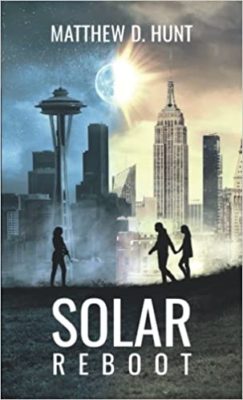
    In Solar Reboot, a giant solar flare destroys the world’s power grids, disrupts the Internet, television, and radio communication, and is an all-around nightmare for air traffic controllers. Add tidal waves and gigantic storms to the mix, and it becomes evident that life on earth will change profoundly.

    Alex Robinson, his wife Cameron, and daughter Piper get to find out how tough it will become. On a trip to New York City, Alex and Piper expect to be home in Seattle in a few days. For Alex, a park ranger, flying back will be a relief from the hustle and bustle of Manhattan. But when the sky turns purple, power disappears. Internet and broadcast communication all but ceases, and there are multiple reports of planes crashing to earth all over the planet, Alex quickly discovers the only way he’ll be able to return home will be to drive. It turns out that even driving is its own form of hell.

    Meanwhile, Cameron in Seattle is also experiencing the effects of the solar flare. An ER nurse with military experience, she’s urged by her husband to pack up and leave the city with as much food and medical supplies as possible. She has indulged Alex’s survivalist leanings with some skepticism, but as tension mounts at home, she wonders if he may not have been right. Finally, she decides to leave for their well-stocked mountain cabin, accompanied by her older next-door neighbor, Bettie, who decides that life in the mountains might be safer than dealing with a frightened, angry citizenry at home.

    Life is difficult for both halves of the separated Robinson family. There is no easy way to find a way home for Alex and Piper. Driving becomes undependable. Picking up rides, finding horses, and even back-packing become the only means they have of completing their journey. However, that doesn’t help when blinding rainstorms wash away roads, bridges, and, on more than one occasion, the vehicles they’re using. If that weren’t bad enough, other people whose lives have been disrupted often turn ugly as they forage for food and supplies, hunker down with weapons to protect their hoards and homes.

    Of equal importance is Piper’s diabetic condition. It’s not a problem in society as it once was, but what happens when the insulin she and her father carry runs out and pharmacies are virtually all closed?

    Cameron’s trip to their mountain cabin community might seem to offer her a more comfortable life. Don’t count on it. When she and Bettie reach the mountains, they find contentious, sometimes dangerous people. Some would love to invade their community and others inside their boundaries, intent on doing things their own way. Some even kill to get what they want. She becomes the de facto leader in the compound and forced to make difficult decisions of life and death.

    Hunt has delivered a solid punch to our collective solar plexus. The pressure doesn’t let up as this separated family use their physical and mental resources to reunite, each half fighting against the elements and their fellow human beings to survive until they can be together. While some might consider this a science fiction novel, it is grounded in life as we know it makes it more of a book on survival. Solar Reboot is a testimony to the human spirit under virtually impossible conditions, and a tribute to people’s ability to survive under the most challenging conditions.

    Solar Reboot won First Place in the 2018 CIBAs for Science Fiction novels.

  • HENRY CASTLEWAITE and the PORTRAIT of DOOM by Richard Groseclose – Children’s Fantasy Books, Paranormal & Urban Fantasy for Children, Children’s Fantasy & Magic Books

    HENRY CASTLEWAITE and the PORTRAIT of DOOM by Richard Groseclose – Children’s Fantasy Books, Paranormal & Urban Fantasy for Children, Children’s Fantasy & Magic Books

    When 11-year-old orphan Henry Castlewaite is delivered to his new foster family in tiny, rural Terwilliger Tennessee, the only sure thing is he is back in the town where he grew up, but that’s about it. After a terrible accident, Henry is suffering from amnesia and doesn’t remember that he’s a wizard, no matter how many times his chaperone from the Castle Family Trust tells him that this is so.

    But Henry is a wizard who doesn’t remember anything about his powers or his past, only that he will see his best friend Gwendolyn on the school bus in the morning. It is also clear that while Henry may not remember much about Terwilliger, the residents of the little town remember a lot about him. Especially his new family, where the other boys tease him unmercifully and the local gossip girls haven’t decided whether they have crushes on him or want to vilify him at every turn.

    He even has mortal enemies he does not recall. But he also has another friend, Ben, who seems to come from an even stranger background than Henry. And who appears to have amnesia as well.

    On the run from those bullies, Henry and Ben discover the old mining tunnels under the school along with the evil wizard who seems to have convinced most of the teachers that Henry needs to be captured and brought to him – clearly not for Henry’s own good.

    Once Henry, Ben, and Gwendolyn realize that they have all lost parts of their memories, they stop trusting the adults around them and are determined to find out the truth for themselves. They are all in danger.

    The development of this world where our hero can see the magic hidden in plain sight certainly weaves its own spell. In short, Groseclose presents a fun, adventure-filled new series that promises to fill the gap in children’s fantasy literature left by Rowling’s last book in the Harry Potter series. That’s a big gap, but readers who zipped through the Potter world and those who’ve not had the opportunity to dive in will surely feel at home here. After all, it’s not every day readers experience the pandemonium that ensues when a two-headed dragon is brought to life in the middle of an art museum!

    As Henry and his friends delve ever deeper into the strangeness of the world that the adults are attempting to hide from them, they uncover deep secrets, hidden depths, and evil witches and wizards who look to Henry to resurrect a long-dead mystery. And they’re not planning to let anyone stand in their way.

    In this world of candle spirits, hidden portals, memory enhanced letters, and time-traveling magical creatures, Henry and his friends take on a quest that will save the world – or end it. Each twist and turn in the story opens up a new world of adventure, even as it shakes our heroes’ world to its foundations.

    Readers seeking stories that weave magic, adventure, friendship, and danger surrounding a Boy-Who-Must-Not-Be-Named, complete with evil wizards and desperate quests, need to look no further than Henry Castlewaite for their next reading adventure.


  • HENRY: A Polish Swimmer’s True Story of Friendship from Auschwitz to America by Katrina Shawver – Jewish Holocaust History, Historical German Biographies, Jewish History

    HENRY: A Polish Swimmer’s True Story of Friendship from Auschwitz to America by Katrina Shawver – Jewish Holocaust History, Historical German Biographies, Jewish History

    Katrina Shawver, a journalist for a Phoenix newspaper, was seeking a story for her weekly column. She had heard from a friend that a Holocaust survivor named Henry Zguda and his American wife, Nancy, lived in Phoenix. She called Zguda and was invited to come to his home, only a few blocks from her own. Shawver quickly bonded with both Henry and Nancy. Then she and Henry decided to have a series of weekly interviews, which she would draw on for her column and, later, for a book—this biography.

    The horror story of Henry Zguda, a Catholic Pole born and raised in Krakow, Poland, begins with Henry walking down the street toward the YMCA for swim practice in 1942. A Gestapo car screeches to a stop beside him. Two men leap out, arrest Henry on the spot, throw him into the car, and take him to prison. After several days of torture, a practice used by the Gestapo to obtain information (of which Henry had little), he is taken to the train station and shoved into a cattle car so filled with people that it is impossible to do anything but stand, shoulder to shoulder. The door is slammed shut, and the train pulls out of the station. Henry has no idea what fate awaits him.

    Most of his fellow passengers were Jews, which Henry was not, but under these circumstances, it made no difference. They did what they could to accommodate each other over days of travel, until they reached their final destination, Auschwitz. Many of the Jews would find themselves in the gas chamber in short order. Only those strong enough to work were allowed to live—at least long enough to finish building the camp.

    His story covers more than two years in Auschwitz and Buchenwald. As a young man, he is characterized by his courage and tenacity to live under the most horrendous circumstances and his valor and compassion in helping his fellow prisoners—most of whom he met there, and some who had been childhood friends in Krakow. Somehow, Henry never lost hope, which would have been a death knell…as it was for many prisoners. He characterizes himself as lucky, very lucky.

    Henry tells Shawver about his youth in Krakow. Most of all, his love for swimming. Henry was a member of the swim team at the YMCA founded and built by Americans. Despite the German presence, he had fun with his family and friends.

    It is with some reluctance that he begins to give her details of his years in the concentration camps, but that is what she needs to know. Supporting his memories are photographs obtained after the war as well as official cards recording his Auschwitz registration, train passenger lists, personal effects inventories, and records of money sent to him by his family. These offer interesting details of life in the camps, as do some of Henry’s more pleasant memories. Prisoners participated in theater performances and concerts for the prison staff and their families as audiences.

    As the interviews proceed, Henry intuits when it is time for him to tell Shawver what transpired as the camps’ main objective—killing Jews—was fulfilled. He explains how Jewish prisoners met their fate through such horrible means as being left, still alive, hanging from hooks in dark basements; being lined up in rows and shot to death in view of other prisoners, including family members; being told they must remove their clothing to have showers, only to be herded naked into the gas chambers (their clothing left behind as booty for the guards who led them to their fate); or being tortured to death by nonchalant Germans.

    But in 1944, WWII finally drew to a close. As American forces approached the concentration camps, the Germans fled. The prisoners were free! Some prisoners left on their own, while others awaited the Americans bringing food, clothes, medical care, and the means to go home. Henry returned to Krakow, to spend time with his mother and earn money for her to continue living there and for him to emigrate to America.

    It was difficult for Henry to relate his story, and it is difficult for us to read it. Still, both Henry and Shawver saw in this effort a purpose—to warn all people that they must do everything possible to ensure that the atrocities of WWII never occur again.

    Henry: A Polish Swimmer’s True Story of Friendship from Auschwitz to America won First Place in the CIBA 2018 Journey Awards for Memoir.


  • EVERYONE DIES FAMOUS by Len Joy – American Literature, Small Town Saga, Literary

    EVERYONE DIES FAMOUS by Len Joy – American Literature, Small Town Saga, Literary

    Tornadoes and bomber strikes rival one another in the destruction they leave behind, except that bombers have a predefined target, and tornadoes follow an opportunistic path—one that even experts cannot predict. Len Joy deftly shows what happens when a tornado hits the town of Maple Springs, Missouri, on July 18, 2003.

    A vicious whirlwind storm cuts a narrow path of destruction, sometimes turning one side of a street into rubble while leaving the other unscathed. Needless to say, the people of Maple Springs are changed forever in a matter of minutes.

    The stage is set with considerable color and evocative language. Joy breathes life into his characters of all walks of life: land developers, car dealers, teachers, police officers, military veterans, a couple of basket weavers, a tattoo artist, and even a former baseball legend turned jukebox restorer. The kind of people you find in small towns. They all know each other and often help each other. But they also hurt one another. They marry, they divorce, or maybe they don’t bother to divorce, and they gossip. Oh yes, they gossip. In Maple Springs, one can certainly see more than a little flavor of “Peyton Place.” That’s life in the ‘small town.’

    Dancer Stonemason is trying to manage the jukebox restoration business started by his son Clayton, recently killed in a car accident. Having already lost his wife to cancer, Dancer now lives alone in Clayton’s house. His other son, Jim, owns the successful Stonemason Chevrolet dealership and doesn’t find much time to visit, but does find time enough to sell his brother’s house.

    Dancer has to move out—jukeboxes and all, which he is trying to do with the help of a recent Iraq War veteran, Wayne Mesirow, who owns a truck big enough to carry the jukeboxes. No longer living with his wife Anita and their two children, Wayne hopes to join a touring rock group.

    Meanwhile, Anita is dating land developer Ted Landis, who bought an 1880s riverboat that is now docked at Landis Landing on the Caledonia River. Having spent a fortune repairing The Spirit of St. Joseph, Landis is throwing a major party, with music by the Confederate Pirates, the group Wayne hopes to join. But as the townspeople head for the river, thunder and lightning erupt, the clouds taking on an eerie yellow cast. The suspense begins to build.

    Back in town, the Stonemasons are transforming the Chevy showroom into a ballroom for a reception.

    Daughter Kayla is marrying Barry on Monday. With the work almost done, Jim and Paula head home. Minutes later, the wind hits the glass door so hard that Barry can barely close it. He and Kayla head for the parts storeroom, but then hear a banging on the door. People are calling out for help. They return to let a teenage boy and girl in—then go out to help a man and three women reach the showroom.

    Barry sees a “swirling white spiral…hovering over the mall like an alien spacecraft…” It “pinballs down Main Street…chewing up the Tastee-Freeze, leaving chunks of concrete, twisted rebar, pickup-stick configurations of aluminum siding…” The huge Stonemason sign is ripped down. Then a car skids into the drainage ditch. Barry and Kayla know they must help the father holding his young son and the mother with an infant in her arms clambering out of the car.

    Dancer, at home, is surprised when he calls Russell for dinner, and the dog doesn’t come. He finds Russell perched on a log in the river, which is now a torrent of water. Dancer has to rescue Russell; he’s Clayton’s dog. Held by a rope tied to his belt loops, he slides into the river.

    Soon the sun comes out, and the sky is blue once again. The tornado has left town. And this is just the beginning of the book. What happens to the town – and its inhabitants, make this a story you won’t quickly put down. Highly recommended.


  • LOVE’S MISADVENTURES  (Book One of the Mason Siblings Series) by Cheri Champagne – Historical Military Romance, Regency Romance, Clean & Wholesome Romance

    LOVE’S MISADVENTURES (Book One of the Mason Siblings Series) by Cheri Champagne – Historical Military Romance, Regency Romance, Clean & Wholesome Romance

    Miss Annabel Bradley needs a husband before she is officially an old maid. At the ripe age of twenty-five, she has been virtually “shelved” by the ton. Anna is eager to begin a family, and though she’s been reared on a healthy diet of adventure novels, she is willing to settle for any suitable match as long as she can begin the family she has always wanted.  Anna knows exactly with whom she wants to share her life, her lifelong friend Lane Mason. Growing up on neighboring estates, Anna and Lane couldn’t be more perfect for each other, and even though they both know their marriage would provide an easy companionship, Lane has a secret that forces him to keep Anna at arm’s length. Despite loving Anna since they were teenagers, he can’t in good conscience marry her without first finding a solution to his problem. Anna isn’t willing to wait forever, and when another lord of the peerage shows interest in her, Anna must decide whether to follow her heart or take what might be her only chance for a family, but after Lane and Anna are kidnapped, both make life-changing decisions that seal their fates.

    Love’s Misadventures has all the hallmarks of a romance lover’s dream. The wealthy, most-desired gentleman of the season, Lord Devon is the hunky blonde heartthrob, unafraid to come to the rescue of his lady love but sensitive enough to pack the perfect picnic. Annabel embodies the smart, ahead-of-her-time heroine who doesn’t want to settle for a loveless marriage but will do whatever she must to protect her family, and even though the novel has that comfort-food feel, it gives the reader with one huge surprise. Lane is a virgin. Not only is Lane inexperienced in the ways of love, but he also isn’t even sure he can perform his “husbandly duties.” While it is entirely typical to find this trait in the female protagonist, seeing it in the hero makes this novel a standout.

    The friendship between Lane and Annabel will leave the reader touched and a little envious. So often, the plot of romance novels has lust that evolves into love, but Love’s Misadventures begins with friendship, a lasting friendship, that is put through so many challenges. Like a horse in a race, Lane doesn’t realize how fortunate he is to have found the love of his life in his best friend until he stands to lose her to another man, and Anna will sacrifice respectability to find love in the arms of the man who knows her better than anyone in the world.

    In Cheri Champagne’s first novel in the Mason Siblings Series, readers will find the love and fire they expect from a historical romance but with refreshing twists that make the novel all its own.

    Love’s Misadventures won First Place in the CIBA 2017 CHATELAINE Awards for Romantic fiction.